10-year zero emission bus order pipeline
Published 16 March 2026
Applies to England, Scotland and Wales

© Crown copyright 2026
This publication is licensed under the terms of the Open Government Licence v3.0 except where otherwise stated. To view this licence, visit nationalarchives.gov.uk/doc/open-government-licence/version/3 or write to the Information Policy Team, The National Archives, Kew, London TW9 4DU, or email: psi@nationalarchives.gov.uk.
Where we have identified any third party copyright information you will need to obtain permission from the copyright holders concerned.
This publication is available at https://www.gov.uk/government/publications/10-year-zero-emission-bus-order-pipeline/10-year-zero-emission-bus-order-pipeline
The zero emission bus order pipeline
The zero emission bus (ZEB) order pipeline brings together data on anticipated ZEB orders from local transport authorities and bus operators.
It shows total forecast ZEB orders by year over a 10-year period (2026 to 2035), based on data as of 4 November 2025.
The pipeline provides a view of anticipated ZEB procurement across the sector. This supports better planning, investment and capacity management for UK bus manufacturers.
By presenting aggregated demand forecasts, the pipeline offers:
- strategic visibility for all manufacturers to plan production, workforce, and supply chain requirements
- market confidence to encourage investment in fleet production, innovation, and zero-emission technology
- consistency and transparency across the sector allowing operators, policymakers, and suppliers to better coordinate future procurement timescales – this information is presented in an aggregated and non-commercially sensitive manner, ensuring that it enhances market visibility without raising any competition or collusion concerns
- improved alignment with decarbonisation and public transport goals ensuring that manufacturing capability keeps pace with policy ambition and fleet replacement cycles
Total new ZEB orders
Graphic 1 – likelihood of ordering new ZEBs (total)
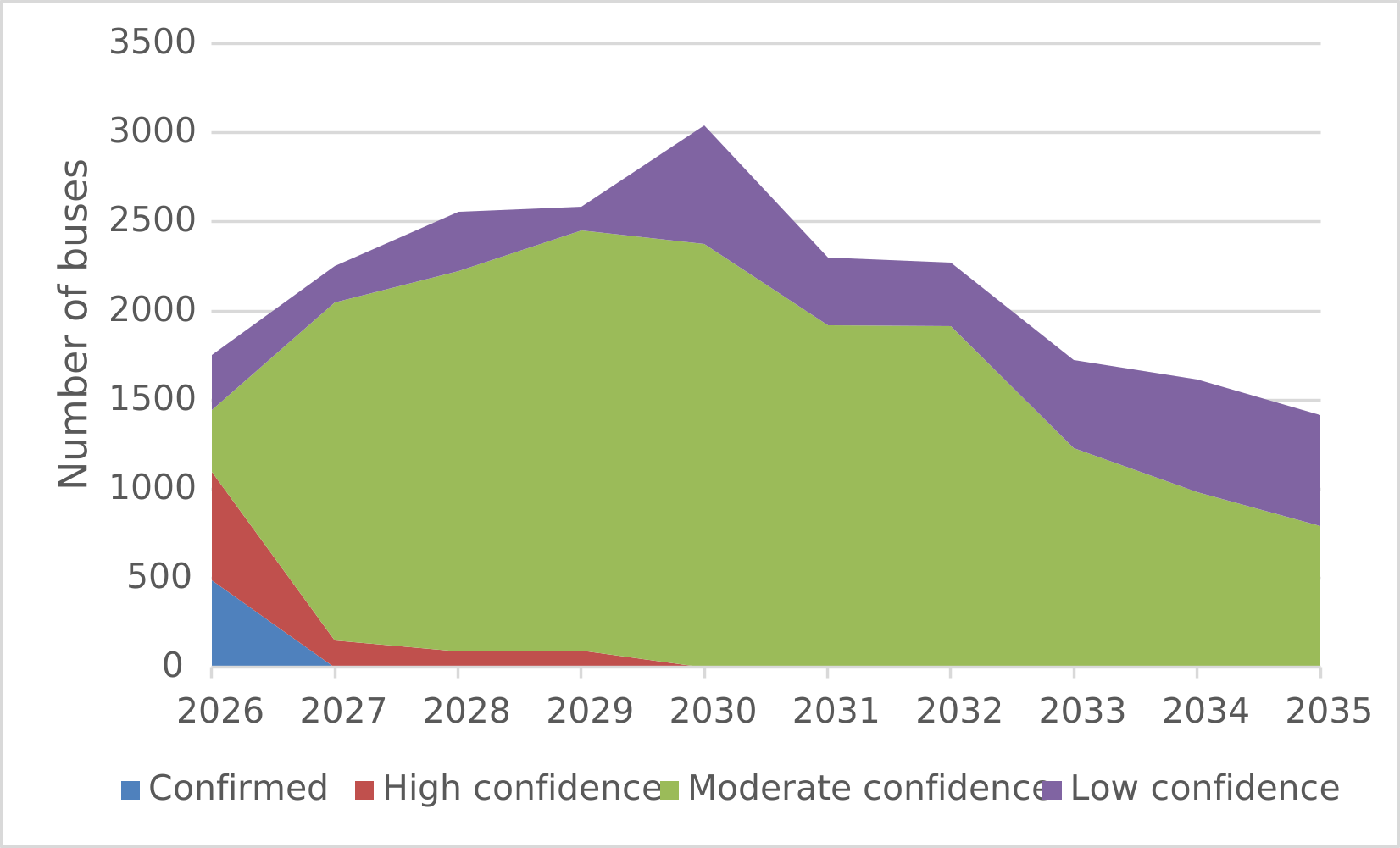
This indicates a strong long-term demand pipeline and highlights a sustained market for vehicle manufacturers, supporting continued investment in production capacity and supply chains.
The total purchases add up to an estimated 23,381 ZEBs over the next 10 years.
Table 1 – upper and lower estimates of likely ZEB orders for next 10 years
| Year | Lower estimate | Upper estimate |
|---|---|---|
| 2026 | 1450 | 1750 |
| 2027 | 2050 | 2250 |
| 2028 | 2225 | 2550 |
| 2029 | 2450 | 2575 |
| 2030 | 2375 | 3050 |
| 2031 | 1925 | 2300 |
| 2032 | 1925 | 2275 |
| 2033 | 1225 | 1725 |
| 2034 | 975 | 1625 |
| 2035 | 800 | 1425 |
| Total | 17,400 | 21,525 |
Single-deck ZEB orders
Graphic 2 – likelihood of ordering new ZEBs (single-deck)
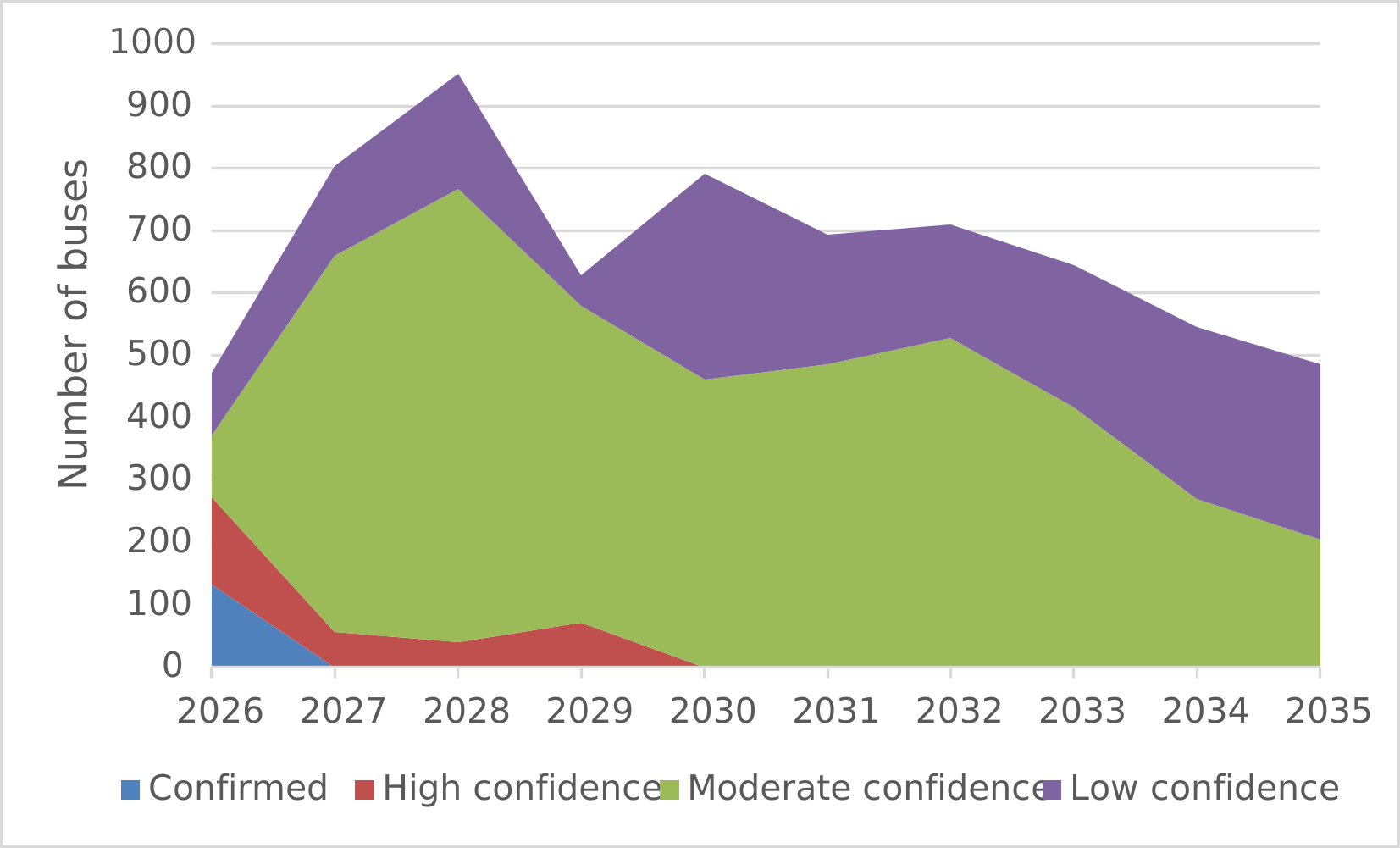
Single-deck buses remain a smaller but essential segment. Ongoing demand highlights continued importance for suburban, rural and inter-urban routes.
For single-deck ZEBs, the total purchases add up to an estimated 6,726 over the next 10 years.
Double-deck ZEB orders
Graphic 3 – likelihood of ordering new ZEBs (double-deck)
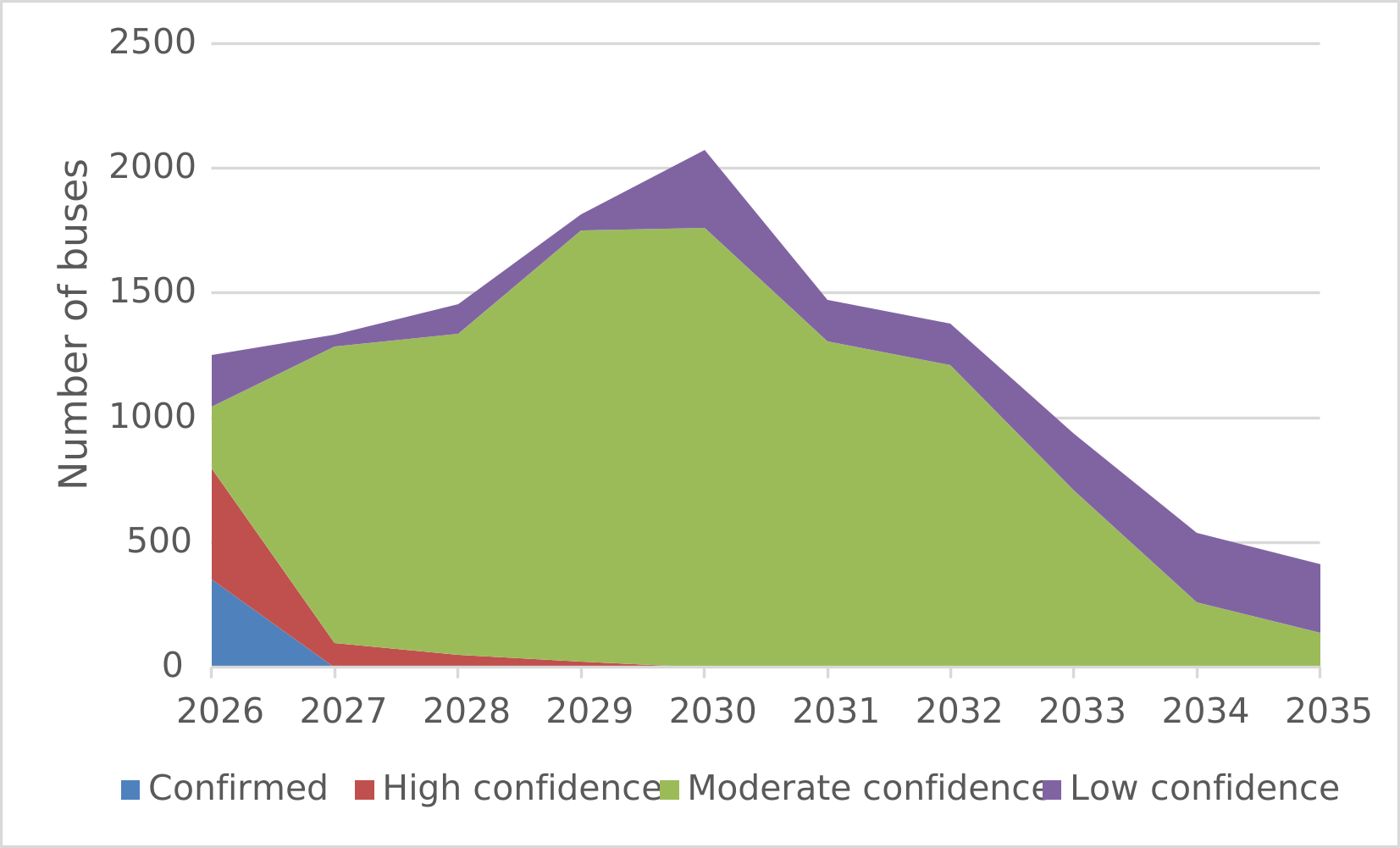
Double-deck ZEBs represent the largest share of expected demand. This reflects their central role in high-capacity urban routes and continued replacement cycles in major metropolitan authorities and aligns with zero-emission fleet strategies in dense city areas.
For double-deck ZEBs, the total purchases add up to an estimated 12,673 over the next 10 years.
Other ZEB orders
Graphic 4 – likelihood of ordering new ZEBs (other buses)
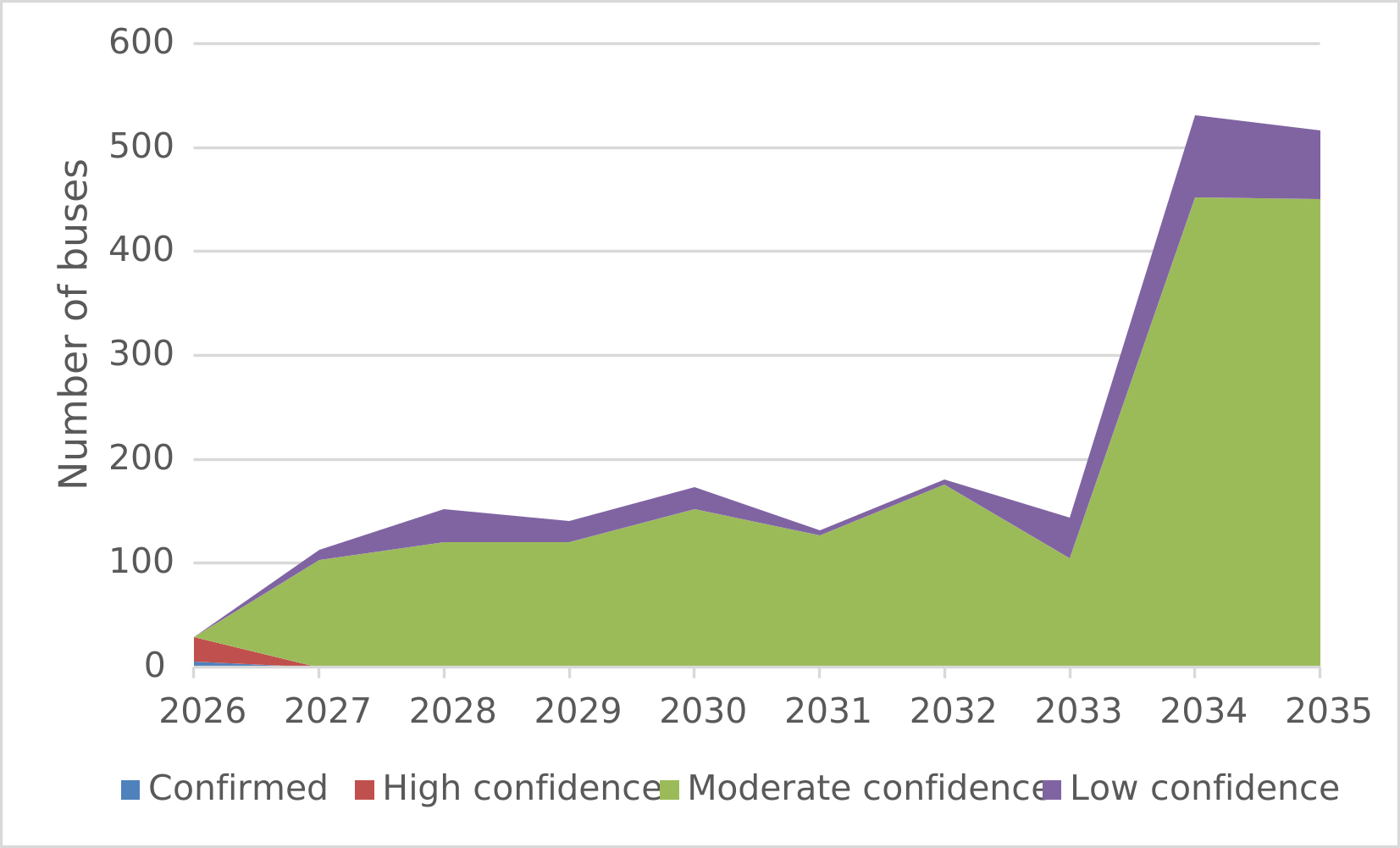
This demonstrates market diversity, including mini, midi and slimline buses, which maintain public transport access for rural or semi-rural routes where roads are too narrow for conventional buses.
For other ZEBs, the total purchases add up to an estimated 2,112 over the next 10 years.
UK Bus Manufacturing Expert Panel
Publication of this pipeline was one of the key objectives of the UK Bus Manufacturing Expert Panel.
Notes on the data
This pipeline represents the majority, but by no means all, of anticipated ZEB orders across the UK over the next decade. It does not capture procurement plans of all small and medium-sized operators.
All data has been anonymised and should be interpreted as indicative rather than definitive.
The data has been presented according to confidence bands (confirmed, high confidence, moderate confidence, low confidence) reflecting the likelihood of orders materialising. Confirmed orders have been contractually agreed or formally announced. Confidence ratings were self-reported by local transport authorities and bus operators.
The data has not been broken down by geography, as this adds little analytical value and may inadvertently disclose commercially sensitive data.
This document does not conform to the formal statistical publication requirements and is not classified as official government statistics.