New local powers to keep pavements clear for those who rely on them most
Local councils will be given the power to crack down on problem pavement parking.
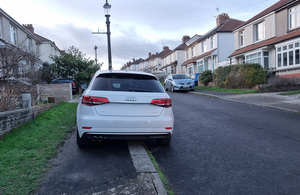
- keeping pavements clear helps parents with pushchairs, wheelchair users and blind or partially sighted people travel more safely and independently
- local leaders know their streets best and will intend on being given the power to take action where pavement parking causes the greatest problems locally
- this locally-led approach supports the government’s drive to make transport and public spaces more accessible, improving safety while recognising local parking needs
Disabled people will benefit from new local powers being made available to local leaders across England to introduce pavement parking restrictions across their area, helping keep them clear and accessible for everyone who uses them, while allowing exemptions where needed.
Blocked pavements can create serious barriers for parents with pushchairs, wheelchair users, blind and partially sighted people and older people, limiting independence and making everyday journeys harder and less safe.
Following a public consultation, the Department for Transport has confirmed that local leaders will be given new and improved legal powers to make it easier to restrict pavement parking across wider areas, rather than relying on the previous approach, where action is often limited to individual streets and requires lengthy, complex processes.
Local leaders know their streets best and are best placed to respond to local needs. Under the new approach, local leaders will be able to decide to take action on pavement parking in their area, and they will retain flexibility where they deem pavement parking may still be acceptable.
Local Transport Minister, Lilian Greenwood, said:
Clear pavements are essential for people to move around safely and independently, whether that’s a parent with a pushchair, someone using a wheelchair, or a blind or partially sighted person.
That’s why we’re giving local authorities the power to crack down on problem pavement parking, allowing more people to travel easily and safely and get to where they need to go.
Guide Dogs’ Chief Executive, Andrew Lennox, said:
After years of campaigning, we welcome the announcement to give councils greater powers to tackle problem pavement parking.
Cars blocking pavements are a nuisance for everyone, but especially dangerous for people with sight loss, who can be forced into the road with traffic they can’t see. Pavement parking is also a barrier that shuts people out of everyday life. When pavements are blocked, people with sight loss lose confidence, independence and the freedom to travel safely. This stops people accessing work, education and social opportunities.
We look forward to working with the government and local authorities to ensure these changes are introduced quickly and consistently enforced so pavement parking becomes a thing of the past.
RAC Senior Policy Officer, Rod Dennis, said:
Our research shows a clear majority of drivers agree that no pavement user should be made to walk or wheel into the road because of someone else’s inconsiderate parking.
These proposals should clear the way for councils to prevent pavement parking where it causes problems, but permit drivers to partially park on pavements where doing so helps keep traffic flowing and doesn’t inconvenience other people.
Mayor of the West Midlands, Richard Parker, said:
Clear pavements matter. For parents with pushchairs, wheelchair users and people who are blind or partially sighted, a blocked pavement is not a minor inconvenience – it can stop a journey altogether and is a risk to people’s safety.
Most drivers want to park safely and considerately and these new powers help in areas where dangerous parking causes real problems.
Giving decisions to local leaders means solutions that reflect how our streets actually work. It’s a practical step that helps people move around safely, confidently and independently in their own communities.
The department will set out guidance to help local authorities use these powers in a proportionate and locally appropriate way later in 2026.
By putting decision-making closer to communities, the approach supports safer, more inclusive streets that work better for everyone. This forms part of the government’s Plan for Change, making transport more accessible and inclusive and supporting growth by ensuring our streets and public spaces work for all.
Roads media enquiries
Media enquiries 0300 7777 878
Switchboard 0300 330 3000