Major international science meeting begins in Manchester
Environment Secretary opens international meeting on business and biodiversity
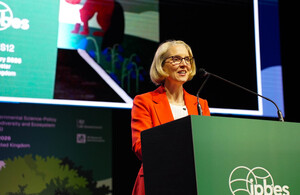
A thousand of the world’s leading scientists and policymakers from nearly 150 countries are gathering in Manchester this week for a vitally important summit, supported by the UN and hosted by the UK government.
The Intergovernmental Science-Policy Platform on Biodiversity and Ecosystem Services (IPBES) are meeting to discuss action on tackling one of the defining challenges of our time – halting the loss of nature.
Often described as the ‘IPCC for biodiversity’, IPBES provides policymakers with objective scientific assessments about the state of the planet’s biodiversity, ecosystems and the contributions they make to people, as well as providing the tools to help us better protect the natural world.
This year’s meeting, running until 8 February, focuses on the crucial link between business and biodiversity, with the goal of approving a groundbreaking Business & Biodiversity Assessment. This intergovernmental report, if approved, will help businesses understand their relationship with nature and practical steps they can take to protect it.
Hosting this landmark intergovernmental meeting in Manchester is expected to deliver a £3.1 million boost to the local economy, bringing delegates from around the world to the city and securing Manchester’s status as hub for nature-positive business and innovation.
In a speech at the opening plenary session this morning, the Environment Secretary Emma Reynolds relayed a message to delegates on behalf of His Majesty The King, which described the “unprecedented triple crisis” of biodiversity loss, climate change, and pollution. His Majesty’s message reminded delegates they “possess the knowledge to reverse this crisis and transition towards an economy that prospers in harmony with nature” and expressed his wish that the outcome of this week’s meeting “will help shape concrete action for years to come”.
Speaking at the opening plenary, Environment Secretary Emma Reynolds said:
Around the world, momentum is building. Countries are restoring wetlands and forests. Communities are reviving degraded landscapes. Businesses are increasingly investing in nature as they have realised it delivers real returns. The tide for nature is beginning to turn.
But we cannot afford to slow down. The window to halt biodiversity loss by 2030 is narrowing. We need to build on that momentum – and we need to do it now. That is why organisations like IPBES matter more than ever. At a time when some are stepping back from international cooperation, the rest of us must step forward. Together we will demonstrate that protecting and restoring nature isn’t just an environmental necessity, it’s essential for our security, our economy, and our future.
The UK’s commitment to multilateralism remains steadfast. We believe that by working together – sharing knowledge, aligning policies, and holding one another accountable – we can halt and reverse biodiversity loss by 2030. This week, we come together to approve the Business and Biodiversity Assessment. This is multilateralism in action. This is what global cooperation looks like.”
The Environment Secretary went on to address the urgency of multilateral action, the critical role of science, and the opportunities for businesses – noting that nature-positive investments can build resilience into supply chains and drive innovation in biotechnology, sustainable agriculture, and green finance.
Louise Heathwaite, Executive Chair of the Natural Environment Research Council, part of UK Research and Innovation, said:
This meeting marks an important milestone for business and biodiversity. Organisations that understand and manage their impacts on nature are better equipped to secure resilient supply chains, minimise risk, and unlock new opportunities for sustainable economic growth. UK researchers have been central to developing the evidence base that enables businesses to assess and respond to nature‑related risks. UKRI is proud to have supported the UK science that has made this assessment possible.
Gemma Harper, Chief Executive of the Joint Nature Conservation Committee (JNCC) said:
IPBES-12 represents a crucial moment for strengthening the science-policy interface on biodiversity. JNCC is proud to contribute our expertise to these important discussions, helping to ensure that the most robust evidence informs decision-making at the highest levels.
The business case for nature has never been clearer. All businesses depend on nature and the services it provides: from pollination and clean water to climate regulation and fertile soils. Companies that act on their nature-related dependencies and impacts will be better positioned to manage risk, build resilience and seize opportunities in the transition to a nature-positive economy. We look forward to productive discussions that will help translate scientific understanding into practical action for governments, businesses and communities worldwide.
The UK is committed to taking a leading role on the world stage to tackle the twin threats of climate change and nature loss. We appointed two UK Special Representatives for Climate Change and Nature who work to boost our diplomatic engagement and strengthen our international partnerships.
The UK Special Representative for Nature Ruth Davis and Nature Minister Mary Creagh will also be attending IPBES this week to support the work of the panel, drive business investment in nature and encourage business to be transparent with full nature related financial disclosures.