Green light for £25m Greatham North East Flood Alleviation Scheme
Planning approval for the Environment Agency’s Greatham North East flood alleviation scheme has now been granted by Hartlepool Borough Council.
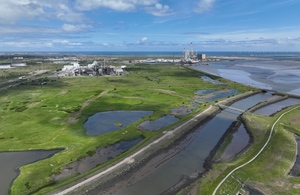
The project site, including Greatham Creek and Greenabella Marsh. Copyright: Environment Agency
- The new scheme is part of the £30m Tees Tidelands Programme and will combat coastal erosion.
- The project will reduce flood risk, restore intertidal habitats and reconnect local communities with the estuary.
- Construction will take approximately 2 years and help manage flood risk over the next 50 years.
The £25m scheme will help reduce the flood risk for Hartlepool and help to combat coastal erosion. It will provide better flood protection to nationally important industry and infrastructure while restoring lost intertidal habitat.
Construction is due to start in early 2027 and last for approximately 2 years. It is part of the wider £30 million Tees Tidelands Programme that aims to realign flood defences, restore intertidal and river habitats, and reconnect tributaries and local communities with the estuary.
What the scheme involves

Greenabella embankment constructed out of slag boulders and in a poor condition. Copyright: Environment Agency
The scheme includes constructing a new 1.5km long embankment at Greenabella Marsh, followed by breaching the existing Greenabella embankment to provide better flood resilience and mitigate the impacts of climate change.
Clay to construct the embankment will be excavated from Marsh House Farm, an area of land owned by the Environment Agency, close to the site. Once excavated, the land at Marsh House Farm will form a saline lagoon, creating valuable habitat. Repair works are also planned on Greatham Creek embankment.
Improving resilience to climate change

Greatham Creek embankment is to be repaired as part of the project. Copyright: Environment Agency
A large area of mudflats and saltmarsh on the Tees Estuary will be restored which will provide valuable habitat for wildlife and capture tonnes of carbon each year. This valuable habitat has been lost over the past 200 years due to industrialisation, and less than 10% of the original intertidal habitats is estimated to remain.
Joe Reed, Project Manager for the Environment Agency, said:
The exciting project will improve the area’s resilience to the changing climate and will improve defences in this area to manage flood risk over the next 50 years. With the creation of new vital habitat for wildlife, it will improve biodiversity in the area and help people reconnect with nature.
Structural investigation identified that Greatham Creek embankment and Greenabella embankment are both in a poor condition. Both are difficult to maintain due to the way they were constructed, out of slag boulders in the late 19th century, a by-product of industry at the time.
We will now continue to work on the relevant licences and consents required prior to starting the construction phase early next year and continue to engage with landowners.
The scheme has wide support from local industry and various nature conservation bodies, including Natural England and the RSPB.
Further information
The most recent project that has been completed as part of the wider Tees Tidelands programme is the Greatham Marsh Restoration project.