18th century dog sculpture at risk of leaving the UK
A temporary export bar has been placed on an 18th century terracotta sculpture of a dog by Anne Damer
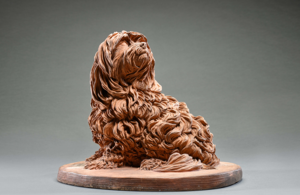
‘Shock Dog’ by Anne Damer
- Export bar is to allow time for a UK gallery or institution to acquire the sculpture
- The sculpture has been valued at £635,000 (plus VAT of £27,000 which can be reclaimed by an eligible institution)
An export bar has been placed on Anne Damer’s 18th-century ‘Shock Dog’ sculpture in an effort to protect this rare surviving terracotta model.
Anne Damer was one of Britain’s pioneering sculptors and is recognised as the first woman to achieve prominence in this field. Damer was an honorary exhibitor at the Royal Academy for over 30 years, from 1784 to 1818, and showcased more than 30 of her works.
Shock Dog is one of Damer’s rare surviving sculptures of a domestic pet. She was well known for such works during her lifetime and has since been recognised as the first specialist in this field. A Shock Dog was typically a small, rough-coated dog (like the Maltese) favoured in 18th-century Britain.
Works of this kind were a significant part of a broader British tradition, dating back to the early 18th century, that focused on portraying beloved animals in both paintings and sculpture.
Culture Minister, Baroness Twycross said:
Anne Damer was the first female trailblazer in her field of work and contributed to the tradition of creating artworks of domestic pets.
I hope that a UK institution or gallery can be found to keep this terracotta Shock Dog in Britain, where generations can continue to appreciate the work of this celebrated female sculptor and admire this wonderful example of realism.
Mark Hallett, Committee Member:
Anne Seymour Damer was one of Britain’s earliest women sculptors, and an artist who was highly regarded by her peers. She regularly displayed her works at Georgian London’s leading exhibition venue, the Royal Academy, and gained renown as a portraitist not only of people but also of animals. Her terracotta Shock Dog shows her at her most expressive and accomplished, and conveys the presence of a beloved pet with extraordinary fidelity and liveliness. Preserved in pristine condition, and still capable of generating wonder thanks to its intricate artistry and uncanny realism, this is a work that fully deserves to be kept for the nation.
The Committee made its recommendation on the basis that the sculpture met the first, second and third Waverley criteria for its outstanding connection with our history and national life, its outstanding aesthetic importance and its outstanding significance to the study of the work, career and working practices of Damer, one of the first major female sculptors; as well as the development of representing animals in portraiture.
The decision on the export licence application for the sculpture will be deferred for a period ending on 29 April 2026 inclusive. At the end of the first deferral period owners will have a consideration period of 15 Business Days to consider any offer(s) to purchase the sculpture at the recommended price of £635,000 (plus VAT of £27,000 which can be reclaimed by an eligible institution). The second deferral period will commence following the signing of an Option Agreement and will last for four months.
Offers from public bodies for less than the recommended price through private treaty sale arrangements, where appropriate, may also be considered by the Minister. Such purchases frequently offer substantial financial benefit to a public institution wishing to acquire the item.
Notes to editors
- Organisations or individuals interested in purchasing the sculpture should contact the RCEWA on 02072680534 or rcewa@artscouncil.org.uk.
- Details of the ITEM are as follows: Anne Seymour Damer (Combe Bank, Sevenoaks, Kent 1748-1828 London), Shock Dog. A life-sized sculptural portrayal in the round of a small Maltese breed of dog. Terracotta, 30 x 38 x 31 cm. Signed on the integral base: ANNA./ ƩEIMOPIƩ./ ΔAMEP. EΠOEI. [‘Made by Anne Seymour Damer’]; and inscribed: 1795
- Provenance: Bequeathed by the sculptor to her cousin and heir, Louisa Johnston (née Campbell; 1776-1852); thence by family descent. Sold Sotheby’s, London, 2 July 2025 (lot 352).
- The Reviewing Committee on the Export of Works of Art and Objects of Cultural Interest is an independent body, serviced by Arts Council England (ACE), which advises the Secretary of State for Culture, Media and Sport on whether a cultural object, intended for export, is of national importance under specified criteria.