Voluntary carbon and nature markets: raising integrity - summary of responses (accessible webpage)
Updated 26 March 2026

© Crown copyright 2026
This publication is licensed under the terms of the Open Government Licence v3.0 except where otherwise stated. To view this licence, visit nationalarchives.gov.uk/doc/open-government-licence/version/3 or write to the Information Policy Team, The National Archives, Kew, London TW9 4DU, or email: psi@nationalarchives.gov.uk.
Where we have identified any third party copyright information you will need to obtain permission from the copyright holders concerned.
This publication is available at https://www.gov.uk/government/consultations/voluntary-carbon-and-nature-markets-raising-integrity/public-feedback/voluntary-carbon-and-nature-markets-raising-integrity-summary-of-responses-accessible-webpage
Executive Summary
Clean growth is a central pillar of the UK’s long‑term economic strategy. Crucial to achieving clean growth are the steps we must all take to achieve deep decarbonisation and a nature-positive future. High‑integrity voluntary carbon and nature markets can support that ambition by mobilising private finance into additional emissions reductions and removals, restoring ecosystems, and spurring innovation, while reinforcing the primacy of deep decarbonisation and nature restoration.
Under the right conditions, these markets could be worth between $5-20 billion by 2030, and $60-270bn by 2050[footnote 1]. The UK is well placed to lead global efforts, working with international partners, as the world’s green finance capital, a key supporter of developing countries’ access to carbon and nature finance, and an advocate for high integrity rules under the UNFCCC. London is a leading global hub for sustainable finance and market infrastructure, with deep expertise in legal, accounting and risk services. We are using that foundation to raise the bar on market integrity and accelerate demand for high‑quality credits in the UK and overseas.
Last year’s Voluntary Carbon and Nature Markets consultation invited views on how six Principles, announced by the Chancellor in November 2024, could be put into practice to help these markets achieve more of their potential. The government is grateful to stakeholders for taking the time to respond, as the exercise drew a high volume of responses from across the carbon and nature market value chain, which has strengthened our evidence base. These responses are summarised in this document, which is being published in advance of the formal government response, due over the summer.
The government is committed to building the pipeline for carbon and nature investment in the UK. We recently published a response to the Call for Evidence on increasing private investment into nature. The evidence suggests a strong appetite for private action, contingent on long-term certainty, streamlined governance, and blended finance to de-risk early-stage investment. We also published a Land Use Framework, providing the framework for private investment to deliver long-term and joined-up decision making on land use.
We continue to work with the British Standards Institution (BSI) to develop a world-leading suite of Engineered Greenhouse Gas Removal and Nature Investment Standards. Recently launched standards on biodiversity and nutrients, alongside a proposed system of assurance, provide the UK with a consistent, trusted nature standards framework that can support investment and ensure environmental improvements are genuine. Building on this, we are shaping the international standard‑setting processes that influence how corporates and investors use credits and make credible claims. Work is ongoing to improve corporate sustainability reporting through the application of the International Sustainability Standards Board standards, climate and nature transition plans, and supporting UK uptake of the Taskforce for Nature-related Financial Disclosures (TNFD).
Taken together, this work will strengthen confidence in these markets and support responsible participation, aligned with international best practice.
Unlocking international action and aligning these efforts will be key to these markets’ success. At London Climate Action Week last year, the government launched the Coalition to Grow Carbon Markets in partnership with Singapore and Kenya. The Coalition is building political support to unlock demand, and its governmental members, now numbering eleven, have committed to develop incentives and stronger recognition for those using these markets responsibly, based on shared principles announced at COP30. To help support supply, government added to its portfolio of support programmes by committing technical assistance at COP30 to a Global Green Growth Institute programme to facilitate Article 6 access.
The UK finance sector, including the City of London, continues to drive innovation and raise integrity in markets through new products and services that enhance transparency, mitigate risks and reduce friction. The government remains committed to ensuring that the sustainable finance industry, including the UK’s VCNM ecosystem, has the long-term certainty it needs to scale and focus on key opportunities presented by the broader use of VCNMs.
The government recognises that actions to build integrity are critical for the market to achieve more. This publication sets out what respondents have told us and where stakeholders see the greatest opportunities and challenges.
Introduction
On 17 April 2025, the Department for Energy Security and Net Zero published the consultation Voluntary carbon and nature markets: raising integrity, which closed on 10 July 2025. The consultation sought views on the government’s proposed policy and governance framework for helping to ensure the integrity of voluntary carbon and nature market credits, and how those credits are used. It was launched in response to calls from business, finance, farming and environmental stakeholders for clarity on the government’s approach, and to wider recommendations for stronger integrity and transparency in these markets.
Voluntary carbon and nature markets can enable organisations to support climate and environmental action through the purchase and use of credits. For these markets to develop responsibly and realise their potential, it is important that credits deliver the outcomes they claim, that their use does not displace ambitious action within value chains, and that any related claims and disclosures are clear and credible.
Approach to the consultation
Respondents were able to reply online, by email or in writing. This document summarises the views submitted in response to the consultation. Next steps will be published separately in the formal government response.
What we consulted on
The consultation expanded on the government’s six Principles for Voluntary Carbon and Nature Market Integrity and invited views on how each principle could be implemented through guidance, policy and, where appropriate, regulation. It also invited views on several cross‑cutting topics that could support access, integrity and trust, including market infrastructure, data and assurance.
The consultation sought views on a set of proposals and questions spanning the full end‑to‑end market, including:
- Using credits in addition to ambitious action within value chains, including views on the role of claims guidance and how good practice should be recognised.
- Using high‑integrity credits, including views on approaches to assessing credit quality and the role of validation and verification.
- Measuring and disclosing credit use, including whether and how disclosure elements could be reflected in UK guidance.
- Planning ahead, including the role credits could play in net‑zero aligned transition plans.
- Making accurate green claims, including options for improving clarity on terminology and the potential role of a standard.
- Co‑operating to support growth of high‑integrity markets, including steps to improve coherence, reduce friction and strengthen interoperability domestically and internationally.
Responses to the consultation
We received 200 responses from a wide range of stakeholders, including businesses and financial institutions, project developers and intermediaries, civil society and environmental groups, standards and assurance bodies, academics and public sector organisations. Collectively, responses highlighted strong support for improving integrity, confidence and usability in voluntary carbon and nature markets. Respondents emphasised the need for clear, internationally aligned expectations on the appropriate use of credits, robust approaches to credit quality, and transparent reporting and claims. Across the principles, responses also stressed the importance of proportionality, clarity on enforcement and assurance, and avoiding unnecessary fragmentation in a rapidly evolving standards landscape.
Figure 1: Number of responses by broad stakeholder type.

Note: Respondents could select multiple stakeholder types, hence totals are not mutually exclusive and will not equal the total number of individual responses. Internal assessment was made to group a longer list of stakeholder types into the ones you see above.
Figure 1 shows that the respondent mix is dominated by Credit Suppliers (64) and Advocacy Groups (63), followed by Market Intermediaries (49) and Professional Services (38), with more limited input from Governance/standards bodies (26), Financial Institutions (20) and Corporate Buyers (17), and relatively low representation from Academia (12), Government/public bodies (7) and Other stakeholders (4). Because respondents could select multiple stakeholder types, these stakeholder categories are not mutually exclusive as respondents could select multiple categories; each cut is therefore a sub‑sample of the 200 respondents and overlaps with others.
Methodological note
For questions with a Yes/No element, responses were categorised into four groups: Yes (unqualified agreement) where respondents clearly supported the proposal without material caveats; Yes qualified (conditional agreement) where support was contingent on specific factors being addressed; No (unqualified disagreement) where respondents opposed the proposal outright; and No qualified (conditional disagreement) where opposition applied under particular conditions. Where answers were unclear, neutral, or did not provide a directional view, these were recorded separately, and blank or explicit non‑answers were classified as “no response”. Free‑text comments accompanying closed questions were reviewed to ensure that implicit support or opposition was reflected appropriately in the coding.
For analysis of open text questions, thematic analysis was carried out and descriptive terms such as “some”, “several”, “many” and “most” were applied consistently and reflect the proportion of respondents mentioning a theme. All analysis underwent a structured quality‑assurance process to ensure that summaries accurately reflected the underlying submissions and were reported in a balanced and proportionate manner.
Overview of responses by principle
Principle 1: Use credits in addition to ambitious actions within value chains
- Respondents underlined the use of credits in addition to, and not as a substitute for, ambitious value‑chain decarbonisation (including Scope 3) or the avoidance of upfront nature degradation, with guardrails to protect against greenwashing risk.
- Many comments related to whether recognising the Voluntary Carbon Markets Integrity Initiative (VCMI) Claims Code would improve clarity and consistency, with frequent emphasis that any recognition should remain non‑mandatory at this stage and supported by practical implementation guidance.
- Respondents raised issues of accessibility and feasibility (including for SMEs and hard‑to‑abate sectors), including administrative burden and cost.
- There was sustained interest in how “high integrity” should be evidenced in practice, including the relationship between claims approaches, credit quality benchmarks and verification.
- Views on interim or directional claims emphasised that wording should be clear, measurable where possible, and understandable to non‑experts, with safeguards to avoid misinterpretation.
Principle 2: Use high integrity credits
- Responses broadly supported use of minimum quality benchmarks (including the Integrity Council for the Voluntary Carbon Market (ICVCM) Core Carbon Principles and UK Nature Investment Standards) to strengthen trust and comparability, while emphasising the need for clear guidance on practical application and transitional arrangements.
- Respondents highlighted limitations of high-level programme standards for ensuring the integrity of individual projects. They highlighted the potential role of complementary tools, including ratings, where these are transparent, comparable and appropriately governed.
- A recurring theme was proportionality of costs and complexity, including potential impacts on smaller projects and domestic schemes, alongside calls for safeguards relating to social and biodiversity outcomes.
- For voluntary nature markets, respondents stressed the importance of credible standards, clear registries, and robust MRV to support outcomes beyond carbon.
Principle 3: Measure & disclose the planned use of credits as part of sustainability reporting
- Responses indicated mixed use of existing reporting guidance and a desire for clearer, more specific guidance on voluntary market participation, including credit use, claims and Scope 3 considerations.
- Respondents frequently emphasised interoperability with international disclosure regimes and existing standards to avoid duplicative reporting.
- Respondents called for more decision‑useful disclosure that improves clarity on what credits are used, why they are used, and how integrity risks are assessed and managed, balanced against commercial sensitivity in some areas.
- Traceability and data infrastructure (including registry evidence, identifiers and machine‑readable approaches) were raised as practical enablers of transparency.
Principle 4: Plan ahead
- Many respondents recognised a potential role for credits within net zero‑ and nature positive-aligned transition plans, most often as a complement to emissions reductions and within the mitigation hierarchy, including for hard‑to‑abate residual emissions.
- Views stressed the importance of transparency in transition plans, including the role, scale, type and quality of credits and how these change over time.
- There was broad support for additional guidance, including templates and sector‑sensitive examples, with repeated emphasis that guidance should be proportionate and internationally aligned.
- Respondents also highlighted that nature credits raise distinct considerations, including how outcomes and safeguards are evidenced and disclosed.
Principle 5: Make accurate green claims using appropriate terminology
- Respondents frequently linked unclear claims terminology to increased reputational and legal risk and to reduced participation (including through “greenhushing”, the practice of under-reporting corporate climate and nature actions to avoid scrutiny, reputational or regulatory risk).
- Many supported greater clarity through government‑defined terms and/or a UK claims standard, aligned with international best practice and accompanied by practical guidance on evidence and verification.
- Responses emphasised that claims frameworks should reduce confusion while avoiding unnecessary complexity or UK‑specific divergence.
Principle 6: Co‑operate with others to support the growth of high integrity markets
- Responses highlighted the importance of coordinated capacity building, particularly to strengthen MRV capacity and capability and registry infrastructure, including in emerging markets and developing economies.
- Respondents identified the value of interoperability initiatives that reduce fragmentation across standards and registries and improve alignment between voluntary and compliance approaches.
- Participation barriers raised included cost, complexity, timelines, and legal/accounting uncertainty, with particular impacts for SMEs and smaller developers. There was strong support for open, Application Programming Interface (API) enabled registries, interoperable data standards, and digital MRV tools capable of reducing cost and improving consistency across projects.
Cross‑cutting enablers
- Respondents raised the role of stable, coherent governance arrangements and data infrastructure in improving integrity and scaling investment, including for Article 6.4 approaches and engineered removals. Confidence is linked to robust assurance and clear claims rules.
Summaries
Principle 1: Use credits in addition to ambitious actions within value chains
Question 1: Do you agree with the government’s proposal to recognise VCMI’s Claims Code as representative of international best practice? Please explain your answer.
Summary of responses:
157 of the 200 respondents answered this question. 106 respondents agreed with the proposal in principle (68 of those with additional conditions); 46 disagreed with the proposal (44 of those with additional conditions); and 5 provided varying views that neither supported nor opposed, as shown below in figure 2.
Figure 2: Percentage of respondents split by answer for Question 1: Do you agree with the government’s proposal to recognise VCMI’s Claims Code as representative of international best practice? Please explain your answer.

Respondents who agreed with the proposal to recognise the Voluntary Carbon Market Integrity Initiative (VCMI) Claims Code as representative of international best practice typically framed the Code as a helpful baseline that could bring greater clarity, consistency and confidence to corporate claims and voluntary carbon market participation. However, this support was frequently conditional or qualified, with respondents emphasising that any government recognition should remain non-mandatory, at this stage, and be paired with practical steps to address implementation barriers.
Respondents who disagreed with the proposal generally did so on one or more of three grounds: (i) limited uptake of the Code since its launch, making “international best practice” claims premature; (ii) concerns about governance/legitimacy and the risks of government endorsing a single voluntary initiative; and/or (iii) a preference for alternative reference points. Some also argued that rules agreed under Article 6 of the Paris Agreement should be considered as international best practice for credits used in voluntary climate action, rather than guidance set by voluntary initiatives.
Overall, respondents concentrated on the practical consequences of recognition: whether it would materially improve clarity and trust while remaining usable across diverse company types and sectors, and whether the market is ready to support it. Many responses emphasized the adoptability of the Code (including its accessibility for small and medium enterprises and hard-to-abate sectors), the design and communication of claims (including the tier labels and permitted language), and the definition and evidencing of “high integrity” (especially the role of Core Carbon Principles (CCPs), project ratings, and interim eligibility routes).
A material cross-cutting consideration was the tension between a desire to coalesce around a common reference point and the risk of prematurely elevating a voluntary initiative with limited uptake. Respondents offered differing solutions: some preferred conditional recognition of VCMI as one benchmark among others, while others preferred government-set principles on the use of carbon credits that independent initiatives could align with, and convergence through stronger incentives or mandating elements of adoption.
Question 2: Do you have any views on VCMI’s guidance for Scope 3, noting that the final version may be published during this consultation period?
Summary of responses:
123 of the 200 respondents answered this question. Whilst many respondents were broadly supportive of the VCMI Scope 3 Action Code of Practice (S3A Code), framing it as a pragmatic response to persistent Scope 3 measurement and control challenges, most responses provided mixed and qualified views.
Many supportive responses were explicitly conditional on the S3A Code maintaining a clear hierarchy: credits as a complement to, not a replacement for, ambitious action within value chains, with transparent disclosure of barriers and progress.
Across all responses, respondents focused most on how Scope 3 shortfalls can be addressed without weakening decarbonisation incentives, and how the approach is communicated to avoid misleading claims and greenwashing risk. A second major focus was guardrail design, particularly around any emissions gap threshold and any phase out date, with contrasting views on both the appropriate level of restriction and on sectoral practicality. A third recurring focus was practical implementation - data quality, assurance, interoperability with existing standards and reporting regimes, proportionality for Small and Medium-sized Enterprises (SMEs) and complex value chains, and accessibility for hard to abate sectors.
Several respondents:
- Argued that without a corrective route for Scope 3 emissions, companies may be deterred from setting targets due to reputational risk associated with missing them, and that interim credit use could mobilise climate finance at pace.
- Highlighted practical constraints with the S3A Code, including limited availability of eligible high integrity credits and implications for market functioning, and issues for UK specific methodologies that may not yet meet certain labels.
- Called for phased implementation of such approaches, noting progressive improvements in data quality, stronger digital traceability, and independent third-party assurance to support credibility.
Some respondents:
- Emphasised that guidance in this area must include sector specific examples and tailored application, particularly for hard to abate sectors and complex value chains
- Expressed strongly critical views, including arguments that the approach is conceptually flawed, risks undermining climate ambition, or that the S3A Code should not be endorsed as a single “best practice” route.
Question 3: Should the UK Government explore this concept further?
The VCNM Consultation invited views on whether it would be useful to have a broader potential interim claim or means to recognise organisations’ use of high integrity carbon credits in respect of emissions reductions from Scopes 1-3 that cannot be feasibly achieved in the short term, alongside an explanation of why this is not feasible.
Summary of responses:
118 of the 200 respondents answered this question. 98 respondents felt that the UK Government should explore the concept further (61 of those with additional conditions); 16 felt that they should not (13 of those with additional conditions); and 4 provided varying views that neither supported nor opposed.
Figure 3: Percentage of respondents split by answer for Question 3: Should the UK Government explore this concept further?

Most respondents to this question expressed support for the UK Government exploring the concept further, commonly linking this to the difficulty of addressing Scope 3/value chain emissions and the perceived need for credible interim recognition pathways that encourage action now rather than delay.
Many framed their support as conditional on strong integrity guardrails (e.g., transparency, time limits, and credible standards), close alignment with existing international frameworks and claims guidance/architecture such as VCMI, rather than creating duplicative UK-specific approaches, and the need to ensure accessibility for SMEs and hard-to-abate sectors.
Several who were supportive in principle emphasised sequencing (e.g., needing more clarity first) or raised concerns about the administrative burden of data gathering and the risk of adding further complexity.
Some opposed further exploration or questioned its value, arguing that market-based mechanisms should not be used to “address” Scope 3, that interim claims could weaken incentives to reduce emissions, or that the work would duplicate existing efforts.
Question 4: Do you have views on the proposed criteria above and others that could apply? - Please tell us more here.
In relation to a potential interim claim or means to recognise organisations’ use of high integrity carbon credits in respect of emissions reductions from Scopes 1-3 that cannot be feasibly achieved in the short term, the VCNM Consultation set out, and invited views on, proposed criteria, and others that could apply.
Summary of responses:
94 of the 200 respondents answered this question. Most respondents supported the overall aim of improving integrity, clarity and confidence in carbon (and in some responses, nature) claims, although many expressed conditional support for the proposed criteria, emphasising the need for final criteria to be workable, proportionate, and avoid inadvertently discouraging participation.
Many called for clearer guidance on what is “sufficient”, for standardised data gathering and accessible information, and cautioned on risk of confusion and fatigue among businesses if criteria are unclear or if multiple overlapping standards proliferate. Conversely, some expressed concerns about over prescription (e.g., strict credit eligibility requirements or rigid time limits).
Several respondents also emphasized that, whatever the criteria, claims should be communicated in a way that does not mislead audiences into equating credit use with achievement of net zero or delivery of reduction targets.
Some expressed clear opposition to introducing or recognising interim claims at all, arguing that the proposed criteria were not strong enough to manage perceived risks of greenwashing and weakened incentives for in-value-chain decarbonisation.
Overall, responses suggest respondents see value in clearer criteria and guardrails, but want the framework to avoid fragmentation, to be proportionate and enforceable, and to provide clearer decisions on credit eligibility, the removals/reductions balance, and the transparency and assurance expectations that underpin credibility.
Question 5: Is there alternative language to ‘towards Paris alignment’ that could recognise the above actions in a way that is attractive, accurate and understandable?
In relation to a potential interim claim or means to recognise organisations’ use of high integrity carbon credits in respect of emissions reductions from Scopes 1-3 that cannot be feasibly achieved in the short term, the VCNM Consultation tested ‘towards Paris alignment’ or similar language for the claim (subject to the composition of final criteria) and invited views on alternatives.
Summary of responses:
84 of the 200 respondents answered this question. Most respondents concurred that the wording of any interim claim matters for credibility and uptake, but views diverged on whether “towards Paris alignment” should be retained, replaced, or retained only with clearer definition and guardrails.
Whilst some respondents considered the existing phrase acceptable or adequate (for example where it is framed as a directional claim that avoids over claiming), and did not see a need for alternative language, several offered alternative phrases and labels, most commonly seeking wording considered clearer to non-experts, more measurable, or less open to misinterpretation.
Many respondents highlighted the need for: (i) a clear distinction between “trajectory” and “destination”; and (ii) for quantifiability. Several respondents stressed that claims should be tied to measurable milestones and transparent disclosures, rather than suggestive phrasing alone.
Many also cautioned that “towards Paris alignment” could blur distinctions between companies that have credible net zero strategies and those making initial or interim efforts, and recommended language that explicitly communicates interim status (e.g., “in progress”, “transitional”, “provisional”) and avoids implying full alignment.
Some respondents expressed stronger concerns, arguing that “Paris aligned/alignment” has a specific meaning in other contexts (or should be reserved for Paris Agreement mechanisms), and that applying it here risks confusion or credibility issues.
Overall, respondents placed high importance on language that is clear, credible and understandable, with recurring calls for definitions, safeguards and testing to ensure any claim is not misleading and supports—rather than substitutes for—real-world decarbonisation.
Question 6: Which organisation(s) could help develop and apply the concept?
The consultation sought views on which organisations could help develop and apply an interim approach to recognising the use of high‑integrity carbon credits for residual Scope 1–3 emissions that cannot feasibly be reduced in the near term.
Summary of responses:
88 of the 200 respondents answered this question. Many respondents provided specific suggestions on which organisations could help develop and apply the concept, with most favouring use of existing voluntary carbon market entities, and use or adaption of existing claims architecture, alongside calls for strong UK Government convening and regulatory alignment to reduce fragmentation and greenwashing risk. Many expressed conditional support for “custodians” or delivery partners, where governance, independence, and interoperability could be demonstrated.
Most respondents emphasized practical implementation through engagement with claim users, use of existing registries and data infrastructure, and (for nature-linked applications) involvement of public bodies and NGOs with on-the-ground expertise, while managing conflicts of interest.
Several respondents questioned whether certain existing bodies had achieved sufficient “product-market fit”, highlighting concerns on conflicts of interest and undue influence, while also listing some steps that could be considered to mitigate this. Conversely, a small minority argued for market-led approaches with minimal public-sector direction.
Overall, respondents focused on anchoring the development of this concept in established integrity/claims and credit-quality bodies, complemented by standard-setting and independent assurance to translate principles into auditable practice.
Question 7: Is there an appetite amongst stakeholders for further standardisation of high integrity insetting approaches for industries, particularly the Forestry, Land and Agriculture (FLAG) sector?
Summary of responses:
Of the 200 respondents, 116 responded to this question. 107 respondents said there was appetite (13 of those with additional conditions); 4 said there was not (1 of those with additional conditions); and 5 provided varying views that neither suggested there was or was not appetite for further standardisation.
Most responses agreed or strongly agreed that there is an appetite for standardisation of high-integrity insetting approaches. This was mostly in relation to the Forestry, Land Use and Agriculture (FLAG) sector, with other sectors including marine, housing, energy and aviation also mentioned. Climate change mitigation was often cited as the key driver for insetting, with a few responses citing biodiversity and nature impacts too.
Many responses referred to the need for standardisation of specific elements. This included accounting methodologies, noting the differences between ‘intervention’ and ‘inventory’ accounting, permanence and additionality requirements. Responses also highlighted the need for standardisation of Monitoring, Reporting and Verification (MRV) processes, particularly in relation to the FLAG sector, and alignment with international approaches (such as the Science Based Targets Initiative on accounting and VCMI on claims).
Figure 4: Percentage of respondents split by answer for Question 7: Is there an appetite amongst stakeholders for further standardisation of high integrity insetting approaches for industries, particularly the FLAG sector?

Several respondents raised risks or concerns that need to be addressed if standardisation is to be successful. Common concerns included traceability, power imbalances in food supply chains, and low-integrity insetting leading to greenwashing. Some responses also diverged around the need for insetting markets, with some suggesting price premiums rather than credits.
While some responses opposed insetting or felt that existing standards were sufficient and should be recognised as such, there was broad consensus that further clarity is needed. Responses highlighted the importance of clarity on the definition and scope of insetting, whether it covers reductions or removals (or both), and how insetting relates to offsetting to ensure credible claims.
Question 8: What other support could help reduce barriers to, or facilitate, insetting?
Summary of responses:
106 of the 200 respondents answered this question. Responses proposed a number of measures to reduce barriers to, or facilitate, insetting. The role of policy and regulation was the most prominent, with suggestions to formally recognise insetting as an acceptable approach within established reporting frameworks (such as the Taskforce on Climate-related Financial Disclosures and Taskforce on Nature-related Financial Disclosures). Incentives to stimulate increased demand were also noted, such as mandating adoption of reporting frameworks, tax incentives, and blended finance. Many responses also highlighted the need for greater clarity and guidance on high-integrity approaches, particularly around accounting methodologies and insetting claims.
Capacity building and supply-side support were consistently mentioned, with respondents raising the need for upskilling and landowner/project developer support. For the latter, financial support and digital tools were cited as being able to partially overcome upfront costs (for activities such as baselining) and facilitate transparent data sharing.
Some responses also mentioned a need for collaboration to enable landscape-scale action. Collaboration was mentioned in terms of cross-sector stakeholder collaboration, ‘pre-competitive collaboration’ (such as between farmers, processors and food retailers), and regarding aggregation of supply (with a view to making propositions more “investable”).
Principle 2: Use high integrity credits
Question 9: Do you have any concerns with, or feedback related to the proposal to endorse ICVCM’s CCPs and their accompanying Assessment Framework, as representing a minimum quality requirement?
Summary of responses:
153 of the 200 respondents answered this question. 98 respondents did not have concerns with the proposal, and of those 72 qualified their position with additional feedback or comment. 53 respondents had concerns with the proposal, all of whom qualified their position with additional feedback or comment. 2 respondents provided neutral responses.
Figure 5: Percentage of respondents split by answer for Question 9: Do you have any concerns with, or feedback related to the proposal to endorse ICVCM’s CCPs and their accompanying Assessment Framework, as representing a minimum quality requirement?

Many respondents supported the government endorsing Integrity Council for the Voluntary Carbon Market’s (ICVCM) Core Carbon Principles (CCPs) and accompanying Assessment Framework as a minimum quality requirement, with many respondents viewing CCPs as a credible, science-based benchmark that could improve trust, comparability and reduce greenwashing in the voluntary carbon market.
This support was qualified by several respondents who endorsed the CCPs in principle but stated that they should be accompanied by clear guidance for practical application, should include transitional arrangements, and could not be treated as exclusive (that there needs to be space for other principles and frameworks rather than an over-reliance on a single standard).
Several respondents who supported the CCPs emphasised that they should be treated as a ‘floor not a ceiling,’ providing room to go beyond what is required while also being reviewed and updated as science and evidence progress.
In terms of concerns, one of the most common was that CCPs are largely methodology/programme-level and therefore cannot guarantee consistent integrity at individual project level, creating risks of both false positives and false negatives. Additional concerns included the limited CCP-labelled supply and the relatively slow pace of ICVCM assessments, which create the potential for a bottleneck in the market, as well as the potential impact on UK domestic schemes due to governance eligibility criteria. For the latter, some respondents called for explicit transition plans and resourcing to support domestic schemes toward CCP eligibility or interim equivalence routes.
Solutions proposed by respondents to these concerns included longer phase in periods, and interim/permanent recognition of equivalence of other high integrity frameworks. Other issues cited by respondents involved calls to include clearer rules and safeguards around social development and biodiversity, including benefit sharing and protections against social harm. Some respondents highlighted the value of complementary risk management mechanisms (such as assurance structures, liability approaches, insurance/guarantees) to manage delivery and reversal risks beyond CCP labelling.
Question 10: Do you have any views on the accompanying use of carbon credit ratings assessments by Carbon Credit Rating Agencies (CCRAs), or any other steps or guidance that could help identify high integrity credits at the project level?
Summary of responses:
123 of the 200 respondents answered this question. Responses were broadly supportive of using CCRAs as a complementary input to programme- or methodology-level frameworks (notably the ICVCM CCPs).
Many respondents described project‑level ratings as a way to address a perceived “project‑level blind spot” in existing approaches, by providing additional insight into risks such as additionality, permanence and leakage, helping buyers to differentiate quality within the same programme or methodology.
Perhaps therefore, unsurprisingly, support was frequently qualified; most commonly by emphasising that CCRAs should be decision-support tools rather than definitive gatekeepers, and that their use would require clearer standards for transparency, consistency and governance.
Transparency and comparability were two themes that came up the most in respondent comments. Respondents frequently called for clearer disclosure of rating criteria, assumptions, underlying data sources and treatment of uncertainty, alongside some degree of standardisation to reduce confusion where different agencies produce divergent outcomes for similar projects. Those who gave suggestions to help mitigate these issues often suggested that government guidance could help buyers: interpret ratings consistently and understand what ratings do and do not capture.
Qualifications and concerns were also raised around governance (including conflicts of interest) and costs/complexity. For the former, several respondents noted that for‑profit business models and fee structures could undermine perceived independence and suggested that some form of oversight or minimum standards for independence (paired with audits) could mitigate against this risk. In terms of cost concerns, several respondents noted that for smaller projects the costs of assessment could be unaffordable, and that there was a risk of duplication for UK projects that are already using or comply with existing validation/verification and domestic standards. Finally, a small number also urged that high integrity assessments reflect wider factors beyond carbon including biodiversity outcomes, community impacts, land tenure, and benefit sharing, to ensure project-level integrity reflects real world delivery.
Question 11: Do you have any views on the potential measures above that could accompany CCP endorsement, or any others not listed?
The VCNM Consultation set out, and invited views on, several discrete measures that could accompany any endorsement of ICVCM CCPs and their accompanying Assessment Framework and improve the coherence of relevant policy, guidance, and regulation.
Summary of responses:
103 of the 200 respondents answered this question. Respondents generally viewed CCP endorsement as one component of a wider integrity system, with many proposing additional measures to ensure endorsement is credible and workable in practice. At the same time, some cautioned against adding further requirements where this risks additional complexity, duplication with existing standards/due diligence processes, or increased costs that could deter participation (particularly for smaller UK projects) or reduce the share of finance reaching projects on the ground. Some respondents clarified that proportionate accompanying measures would include practical buyer guidance, due diligence checklists, training, accessible registries, and disclosure and transition arrangements that build on existing frameworks. Several respondents also suggested that complementary tools such as ratings, insurance, public registries, and digital Monitoring, Reporting and Verification (MRV) could help strengthen confidence and manage residual risk but generally argued these should support decision-making in a flexible way rather than become multiple mandatory conditions of market participation.
Themes mentioned by several respondents include the need for transparency and disclosure, the issue of project level due diligence, and the capacity to assure and verify which would ensure the integrity of CCP labels. For the former, respondents suggested that registries be accessible for verification and credit‑specific reporting be required to improve traceability and reduce double counting, noting that both could be improved by digital infrastructure. Some respondents noted that transparency measures may deliver integrity benefits without constraining supply in the way that introducing additional overlapping standards would. For project level diligence and the issue of capacity, suggestions included clearer expectations on buyer due diligence, buyer guides/checklists and training, recognition of independent verification and advisory services alongside ratings, and investment in validation/verification capacity to reduce costs and delays, particularly for smaller developers.
Additional themes that were less frequently mentioned by responses included maintaining flexibility and international alignment (recognising equivalent high‑integrity frameworks and avoiding over‑reliance on a single scheme), ensuring UK domestic schemes remain viable through transition/equivalence pathways (with proportionality for small UK projects), and complementing standards with risk management tools such as insurance/guarantees and approaches to reversal risk. Additionally, some respondents emphasised the importance of legal clarity and claims oversight, including aligning with UK anti‑greenwashing rules and clearer guidance on permissible claims.
Question 12: What are the necessary components to effectively mobilise voluntary nature markets to deliver against international nature finance targets? How can the UK support development of these components?
Summary of responses:
95 of the 200 respondents answered this question. Respondents identified a broad range of components needed to effectively mobilise voluntary nature markets to deliver against international nature finance targets. The most prominent themes across responses were around governance, policy stability and/or alignment, and implementation support and guidance.
Respondents highlighted the need for policy to provide a stable, coherent foundation for voluntary nature markets, aligning national rules with international frameworks (e.g. the International Advisory Panel on Biodiversity Credits, Kunming-Montreal Global Biodiversity Framework and National Biodiversity Strategies and Action Plans), and signalling long-term government commitment. Responses also underlined the need for UK leadership. Examples included facilitating capacity building in the global south deploying UK legal and regulatory expertise to establish robust market frameworks, and the role of the City of London in setting up insurance markets.
Many respondents also mentioned the need for strong, inclusive governance frameworks and robust market infrastructure to ensure credible and efficient markets. Examples included high-integrity standards, clear rules and transparent registries. Respondents also placed particular emphasis on digital monitoring platforms to enable transparent, auditable systems for Monitoring, Reporting and Verification (MRV), and science-based metrics capable of measuring biodiversity, water, soils and other ecosystem outcomes to enable the fungibility of credits.
Clear demand drivers (such as regulatory obligations) and blended finance were also noted as essential in unlocking corporate investment and driving progress towards the UK’s domestic and international climate and nature goals.
Implementation support to complement this demand, in the form of practical guidance and technical assistance, was also noted by a number of respondents.
Question 13: Do you think there are any additional considerations around assurance for BSI Nature Investment Standards that the government should take into account?
Summary of responses:
67 of the 200 respondents answered this question. 52 respondents noted additional considerations around assurance for BSI Nature Investment Standards for government to take into account; 13 did not propose any additional considerations (2 of those with additional conditions); and 2 provided varying views that neither supported nor opposed.
Figure 6: Percentage of respondents split by answer for Question 13: Do you think there are any additional considerations around assurance for BSI Nature Investment Standards that the government should take into account?

Several responses were supportive of independent third-party assurance and accredited certification for the Nature Investment Standards (NIS), on the basis of reducing bias and increasing market trust and confidence.
Some responses also focused on ensuring assurance processes are simple, inclusive, transparent, and proportionate, to avoid exclusion of, for example, small projects or innovative approaches. There were requests to consider the expertise and number of assurance bodies required to perform assurance against the NIS. Other key areas raised included oversight of assurance processes through clearly published evidence, the establishment of a central registry, and ongoing monitoring and auditing.
Several respondents expressed support for the NIS programme and highlighted the importance of alignment with international standards and frameworks, such as the ICVCM and the International Advisory Panel on Biodiversity Credits (IAPB).
Question 14: Do you believe that current standards adequately reflect the potential impacts of indirect land use change and fully account for net environmental impacts, and if not, how could environmental impacts be fully accounted for to help prevent leakage?
Summary of responses:
86 of the 200 respondents answered this question. 22 respondents agreed that current standards adequately reflect the impacts of indirect land use change and fully account for net environmental impacts; 62 disagreed; and 2 provided varying views that neither supported nor opposed.
Figure 7: Percentage of respondents split by answer for Question 14: Do you believe that current standards adequately reflect the potential impacts of indirect land use change and fully account for net environmental impacts, and if not, how could environmental impacts be fully accounted for to help prevent leakage?

Across substantive responses, respondents generally felt that current standards do not yet fully reflect indirect land use change (ILUC) risks or wider net environmental impacts, particularly where approaches rely on project-level boundaries that may miss displacement effects (e.g., activity shifting or market leakage). Many framed this as a material integrity risk, noting that projects can deliver localised gains while shifting environmental pressures elsewhere—often with time lags and across borders—undermining the credibility of claimed climate and nature outcomes. A smaller set considered existing approaches broadly adequate in some cases, but typically with caveats that ILUC is difficult to quantify and methodologies must keep evolving.
A prominent theme was the need for improved MRV processes and infrastructure to better detect indirect impacts. Respondents proposed more systematic monitoring beyond the project footprint (e.g. “buffer zone” approaches) and greater use of satellite imagery, remote sensing, geospatial analytics and other technology-enabled methods.
Many respondents accepted that perfect quantification may not be feasible in the near term and therefore supported pragmatic risk controls such as conservative assumptions, leakage deductions and buffer approaches. Some suggested complementary risk-management tools to manage residual uncertainty where standards alone cannot eliminate leakage risk.
A further recurring point was that leakage cannot be assessed credibly if standards remain centred on carbon. Respondents called for more holistic accounting of net environmental impacts—including biodiversity, water, soils and ecosystem resilience—and, where relevant, social and governance factors such as land tenure, community rights and benefit sharing, which were seen as influencing long-term integrity and leakage risk. Some also urged stronger standardisation and disclosure (e.g., clearer templates and transparent assumptions for leakage modelling and buffers) to improve comparability and reduce selective reporting.
Finally, some respondents argued that leakage cannot be solved through project standards alone, advocating wider governance and policy levers (e.g. land-use strategy, supply-chain tools and cross-border coordination), or a shift toward landscape approaches that widen accounting boundaries.
Question 15: Do you think there are any capacity barriers or other issues faced by validation and verification bodies in the UK or internationally?
Summary of responses:
104 of the 200 respondents answered this question. 92 respondents identified capacity barriers or other issues faced by validation and verification bodies (2 of those with additional conditions); 2 did not identify any (1 of those with additional conditions); and 10 provided varying views that neither agreed nor disagreed.
Figure 8: Percentage of respondents split by answer for Question 15: Do you think there are any capacity barriers or other issues faced by validation and verification bodies in the UK or internationally?

Many respondents explained that the market lacks sufficient capacity and resources for validation and verification (V&V), and that current providers are unable to keep pace with growing demand. Respondents highlighted that the market is growing faster than Validation and Verification Bodies (VVBs) can scale, resulting in delays, inefficiencies, and concerns about integrity.
The most common issues referenced were a lack of available VVBs and inefficient, inconsistent and expensive processes. The key causes highlighted were the growing momentum and evolving complexity of voluntary carbon and nature markets, and a shortage of skilled professionals. Notable risks highlighted by respondents if V&V challenges remain unresolved include credit issuance delays, reputational damage for existing markets, and reduced investor confidence.
Responses suggested potential solutions to these issues, including ensuring consistency and robustness across V&V (for example by using standards and guidance for methodologies), and increasing training and hiring to boost VVB capacity and capability. Arguments for using digital tools and trusted VVBs were also prominent, alongside provision of regulatory oversight such as through an accreditation process. In some cases, government action was proposed.
Principle 3: Measure & disclose the planned use of credits as part of sustainability reporting
Question 16: Does your organisation use the Environmental Reporting Guidelines to guide engagement with voluntary markets? If so, could it be improved, and how?
Summary of responses:
74 of the 200 respondents answered this question. 16 respondents answered that their organisation uses the Environmental Reporting Guidelines and provided information on how it could be improved; 57 said they did not use Environmental Reporting Guidelines (ERG) to guide engagement with voluntary markets; and 1 provided varying views that neither supported nor opposed.
Figure 9: Percentage of respondents split by answer for Question 16: Does your organisation use the Environmental Reporting Guidelines to guide engagement with voluntary markets? If so, could it be improved, and how?

Responses indicated mixed levels of ERG use as a guide for engagement with voluntary carbon and nature markets. A number of respondents said they do not currently use the ERG as a primary tool for voluntary market engagement – either because they are not active in voluntary markets or because they rely mainly on other reporting and disclosure frameworks (for example Streamlined Energy & Carbon Reporting (SECR), Task Force on Climate-related Financial Disclosures (TCFD)/Transition Plan Taskforce (TPT), Corporate Sustainability Reporting Directive (CSRD)/European Sustainability Reporting Standard (ESRS), or sector-specific guidance). Where respondents did use or reference the ERG, it was more often described as a baseline reference for broader environmental reporting rather than a detailed operational guide for voluntary market engagement.
Across substantive responses, a common position was that the ERG has value as a national reference for reporting, but is viewed by many as too high-level, outdated, or insufficiently specific for voluntary and carbon nature markets – particularly in relation to credit use, claims, and Scope 3. Support for improvement focused on updating the ERG to more clearly address voluntary credit use (including clearer distinctions between avoidance/reduction/removal credits and between offsetting and insetting), and to provide clearer guidance on what can credibly be claimed from credit use (including how this relates to net zero and residual emissions) in a way that reduces greenwashing risk. Respondents also highlighted the need to strengthen ERG coverage of Scope 3 and to provide clearer guidance on how organisations should disclose Scope 3-related issues and the role of credits, while recognising practical uncertainty in data.
Another consistent theme was that any ERG update should be aligned and interoperable with international standards and disclosure regimes, to avoid duplicative reporting and improve comparability for organisations operating across jurisdictions. Respondents referenced alignment with frameworks and initiatives such as the Science Based Targets Initiative (SBTi), Voluntary Carbon Markets Integrity Initiative (VCMI), Integrity Council for the Voluntary Carbon Market (ICVCM), Taskforce on Nature Related Disclosures (TNFD) and the International Sustainability Standards Board (ISSB)/International Financial Reporting Standards (IFRS S1/S2, as well as links to transition planning frameworks such as the TPT. Many respondents also suggested making the ERG more usable through practical tools and strengthening expectations on transparency, verification and assurance (including clearer disclosure of credit attributes and registry evidence). Some respondents also proposed improvements to support digitalisation, and raised UK-specific considerations, including how domestic codes are referenced to support UK market development while avoiding perceptions of unintended bias.
Question 17: Do you agree with the proposal to reflect VCMI’s disclosure elements into the ERGs for carbon credit related disclosure?
Summary of responses:
97 of the 200 respondents answered this question. 75 respondents agreed with the proposal in principle (28 of those with additional conditions); 13 disagreed with the proposal (11 of those with additional conditions); and 9 provided varying views that neither supported nor opposed.
Figure 10: Percentage of respondents split by answer for Question 17: Do you agree with the proposal to reflect VCMI’s disclosure elements into the ERGs for carbon credit related disclosure?

There was broad support for updating the ERGs to reflect VCMI’s disclosure elements. Respondents commonly described this as a sensible update that would strengthen transparency and comparability (i.e., clearer, more consistent information on carbon credit purchases/retirements and associated claims), improving credibility for investors and the public and helping to reduce greenwashing risk. Many respondents also welcomed the proposal to align UK guidance with international frameworks (i.e., interoperability with wider reporting regimes such as ISSB/IFRS S2, CSRD/ESRS, and other integrity initiatives), noting that the ERGs were last updated in 2019 and that standards and market practice have evolved.
Support was frequently qualified by implementation considerations. A recurring theme was that disclosure improvements should include clear core credit attributes and traceability fields (e.g., type, volume, vintage, standard/methodology, project identifiers and retirement information, and, where relevant, host country and Article 6/corresponding adjustment status) to enable scrutiny and accountability. However, many respondents also stressed that disclosure of usage alone does not evidence integrity, and called for stronger quality substantiation (i.e., information that helps demonstrate credit quality at methodology and project level, including credible third‑party assessment or project‑level quality evidence). Respondents also emphasised proportionality (i.e., requirements that are achievable across different organisational sizes and reporting maturity, particularly for SMEs and less mature reporters) and cautioned against creating parallel or duplicative requirements that could increase reporting burden, especially where disclosures need to dovetail with mandatory regimes.
A small number of respondents raised concerns or disagreement, including reservations about treating VCMI as “international best practice”, preferences to rely primarily on ISSB‑aligned standards, and specific concerns about commercial sensitivity for some actors (for example, where disclosure of volumes could be strategically sensitive in trading contexts). Some respondents also noted scope boundaries, supporting stronger disclosure for carbon credits while cautioning against applying carbon‑claims disclosure logic unmodified to nature markets or non‑fungible biodiversity outcomes, and highlighting the need to avoid unintended exclusion of certain schemes or sectors.
Question 18: Are there any elements missing from the list under VCMI’s Claims Code of Practice, above, which could significantly enhance the quality of available information related to carbon credits and their use, and any which might be impractical to disclose.
Summary of responses:
83 of the 200 respondents answered this question. Responses ranged from those who viewed the VCMI Claims Code of Practice as a strong and largely comprehensive foundation for disclosure, to those who proposed targeted additions. A common qualified position was that enhancements should strengthen transparency and integrity without creating disclosure requirements that are overly onerous or commercially sensitive, which respondents felt could deter participation or inhibit action. Respondents also highlighted that some information may be impractical to disclose in all cases, particularly where disclosure could breach confidentiality arrangements or create disproportionate burden; examples raised included exact prices, supplier identity where Non-Disclosure Agreements apply, granular Scope 3 information, precise geospatial data, and commercially sensitive spend information. Several suggested tiered, aggregated or optional approaches as a pragmatic compromise.
Respondents most consistently focused on improving clarity about what is being used, why, and with what level of quality assurance. Many proposed stronger disclosure of credit pricing or value signals (for example price ranges, spend categories or other financial metrics), on the basis that this can help stakeholders assess materiality and differentiate higher‑quality purchases; others cautioned that transaction‑level prices and spend can be commercially sensitive, particularly for bespoke bilateral contracts, and supported aggregated or anonymised reporting instead. A further recurring theme was clearer specification of the purpose of credit use and the claim being made, including whether credits are being used for interim targets, residual emissions, or contribution/beyond‑value‑chain approaches, and clearer information on timing (purchase versus retirement) to support accountability and reduce risks of double claiming.
Several respondents also emphasised clearer disaggregation of credit types (including distinguishing reductions/avoidance from removals, and how permanence/duration aligns with the nature of the claim), and some proposed enhanced transparency on host‑country context and Article 6 implications (including whether credits contribute to host Nationally Determined Contributions and whether corresponding adjustments apply). Many also supported more structured reporting on co‑benefits and safeguards. A further theme was the role of data infrastructure and digitalisation in improving verifiability, with suggestions including unique identifiers, machine‑readable registry links, common data standards and Application Programming Interfaces (APIs) to strengthen traceability and reduce fraud risk.
Overall, respondents broadly endorsed the direction of the VCMI disclosure list while recommending targeted enhancements—particularly around credit type and use‑case clarity, quality substantiation and risk management, and stronger data standards—alongside careful calibration where information is commercially sensitive, difficult to standardise, or burdensome to disclose.
Question 19: Should similar disclosure elements also apply for voluntary disclosures of nature credits, noting that nature disclosures will require additional reporting on location? If not, what should be included on nature credit reporting?
Summary of responses:
79 of the 200 respondents answered this question. 70 respondents agreed that similar disclosure elements should apply for voluntary disclosures of carbon and nature credits (10 of those with additional conditions); 4 disagreed (2 of those with additional conditions); and 5 provided varying views that neither agreed nor disagreed.
Figure 11: Percentage of respondents split by answer for Question 19: Should similar disclosure elements also apply for voluntary disclosures of nature credits, noting that nature disclosures will require additional reporting on location? If not, what should be included on nature credit reporting?

The majority of respondents were in favour of similar disclosure elements for voluntary disclosure of nature credits, while noting some additional requirements specific to nature markets. These included project location and habitat elements (recognising the site-specific nature of biodiversity), and associated monitoring, measurement, and methodological information. Additional reporting elements included biodiversity and ecosystem outcomes (aligning to local, national or global biodiversity plans/targets where appropriate), whether nature credits are linked to a company’s own impacts or broader contributions, community engagement, and broader social, environmental, and economic co-benefits.
A key theme was the importance of aligning with existing frameworks (such as the International Advisory Panel on Biodiversity Credits (IAPB), Taskforce on Nature-related Financial Disclosures (TNFD) and the UK Transition Plan Taskforce (TPT)). This alignment was seen as essential to reduce the reporting burden on businesses and ensure consistency across disclosures, giving buyers the same level of confidence. Transparency around the bundling and/or stacking of carbon and nature credits was also mentioned across responses, ensuring clarity in claims supported by clear rules and metrics.
Respondents also raised additional implementation considerations for nature credit disclosures in companies’ reporting on nature impacts and dependencies. These covered standardised metrics to ensure accurate reporting and nature-specific reporting guidance (e.g. on location, land tenure, and benefit-sharing). A number of responses argued for the adoption of a phased or proportionate implementation approach, supported by education and capacity building initiatives.
Principle 4: Plan ahead
Question 20: What role, if any, could the use of voluntary carbon and nature credits play in net-zero aligned transition plans? Please tell us more.
Summary of responses:
137 of the 200 respondents answered this question. Respondents generally recognised that voluntary carbon credits and nature credits could play a role in net‑zero aligned transition plans, but most commonly with conditions and guardrails. Respondents most often framed credits as a complement to, not a substitute for, emissions reductions, with a frequently cited role in neutralising residual or hard‑to‑abate emissions as part of a credible pathway consistent with the mitigation hierarchy (i.e., prioritising real‑economy emissions reductions before credit use). Many responses also pointed to a time‑bound “bridging” role during the transition where abatement is constrained, including in relation to Scope 3/value chain challenges, provided this is transparent and does not weaken incentives for business transformation. Alongside this, some respondents were more sceptical about voluntary markets and offsetting, raising concerns about greenwashing and the risk that credit use could delay decarbonisation if not tightly framed.
A consistent theme was that any role for credits depends on high integrity and robust transparency. Respondents emphasised the importance of strong quality safeguards (for example, against double counting and weak measurement) and called for clearer expectations on disclosure in transition plans—covering the intended role of credits, the scale and type of credits used, and how integrity risks are managed—to support confidence and credible claims. Many also highlighted credits as a mechanism to mobilise private finance for mitigation, removals and nature restoration (often noting wider co‑benefits). Many respondents therefore pointed to a role for government in clarifying appropriate use cases, including through guidance and signposting to relevant frameworks. However, views diverged on how prescriptive government should be (for example, whether to introduce limits/caps or mandatory approaches versus leaving decisions to firms within an integrity framework).
Question 21: Drawing on the Transition Plan Taskforce (TPT) guidance and other relevant sources, please provide your views on what additional types of information on voluntary carbon and nature credit usage would be important for inclusion in transition plans.
Summary of responses:
89 of the 200 respondents answered this question. Overall, respondents generally supported clearer disclosure on voluntary carbon and nature credit usage within transition plans, most commonly framing this as important for credibility, comparability and trust, including to help guard against misleading claims and greenwashing. A minority cautioned that any additional requirements should be proportionate, avoid duplicating existing guidance, and be aligned with international frameworks to prevent fragmentation or UK‑specific divergence. Views were also mixed on the extent to which pricing and expenditure should be disclosed, reflecting a balance between accountability and commercial sensitivity.
Respondents most commonly asked for transition plans to set out: the purpose and role of credits (including clearer distinctions such as neutralisation of residual emissions versus contribution/beyond‑value‑chain approaches); the scale, coverage and trajectory of credit use over time (including volumes and, where relevant, how use relates to emissions scopes); and clearer information on credit type and quality, including the standard/methodology used and how integrity is assessed (often referencing recognised frameworks and labels). Many also emphasised project‑level transparency and traceability, including information that allows stakeholders to verify claims (for example registry‑linked identifiers, location and vintage). Further themes included governance, due diligence and assurance (procurement processes, oversight and third‑party verification), and risk management, particularly for permanence/durability and reversal/contingency arrangements. Respondents also noted that nature credits raise distinct considerations, with calls for clarity on how practices such as stacking/bundling are treated.
While many respondents favoured more granular transparency, a small set of respondents explicitly argued that further information was unnecessary or that any additional disclosures should remain targeted and proportionate. A small number also raised wider, less frequently repeated points (for example around broader policy design issues).
Question 22: Is there a need for additional guidance on how organisations could use credits on their transition to net zero?
Summary of responses:
106 of the 200 respondents answered this question. 96 respondents agreed that there was a need for additional guidance; 5 disagreed; and 5 provided varying views that neither supported nor opposed additional guidance.
Figure 12: Percentage of respondents split by answer for Question 22: Is there a need for additional guidance on how organisations could use credits on their transition to net zero?

There was broad support among respondents who expressed a view for additional guidance on how organisations could use carbon and nature credits within transition plans. Supportive respondents commonly framed the need as improving clarity, consistency and confidence, noting that organisations can struggle to interpret multiple (and sometimes competing) standards and initiatives. Many argued that clearer guidance would enable more responsible engagement, reduce reputational risk (including greenwashing concerns), and support more consistent practice and disclosure across the market.
A common qualification was that any guidance should reinforce the primacy of real-economy emissions reductions. Many respondents emphasised the mitigation hierarchy (i.e., prioritising avoiding and reducing emissions before using credits), arguing that credits should complement rather than replace direct abatement and be used only in clearly defined circumstances—often citing residual emissions (i.e., emissions that remain after feasible reductions have been made) as an appropriate boundary. Related to this, many highlighted the importance of sequencing across transition phases (i.e., how the role of credits should change over time as decarbonisation progresses) and cautioned against credit use masking insufficient ambition.
Respondents also emphasised the need for greater clarity on claims and terminology, particularly the distinction between neutralising residual emissions and making broader “contribution” or “investment” claims. Several asked for clearer criteria and language that can be used credibly in corporate communications.
Transparency and disclosure were another prominent theme. Many respondents argued that the most practical way to support integrity would be to set out clearer disclosure expectations (often requesting templates, worked examples, or standard information fields) to enable more consistent reporting of the purpose of credit use, the types of credits used, the basis on which credit quality is assessed, and how credit use relates to the organisation’s wider decarbonisation pathway.
Several respondents mentioned proportionality and accessibility, particularly for smaller organisations, advocating for clear, practical and tailored guidance. Respondents also called for sector-specific examples to reflect complex value chains, material Scope 3 emissions, and sectors where decarbonisation pathways are less settled.
Opposition was limited; The small number of respondents that answered “No” generally supported integrity aims but argued the priority should be simplification and harmonisation, rather than additional guidance that could add complexity. Neutral responses similarly supported integrity objectives while cautioning against over‑reliance on offsetting and questioning whether voluntary guidance would be implemented in practice.
Principle 5: Make accurate green claims using appropriate terminology
Question 23: Outside of any pre-existing disclosure requirements you might already be subject to, do you see value in making ‘net emissions’ claims and/or ‘contribution’ claims in respect of your use of carbon credits, and if not, why?
Summary of responses:
83 of the 200 respondents answered this question. 75 respondents saw value in making ‘net emissions’ claims and/or ‘contribution’ claims in respect of your use of carbon credits, outside of any pre-existing disclosure requirements; 5 did not see value; and 3 provided varying views that neither supported nor opposed.
Figure 13: Percentage of respondents split by answer for Question 23: Outside of any pre-existing disclosure requirements you might already be subject to, do you see value in making ‘net emissions’ claims and/or ‘contribution’ claims in respect of your use of carbon credits, and if not, why?

Most responses to this question showed mixed but generally positive views on the value of making claims, with many respondents seeing benefits in enabling organisations to communicate climate action, incentivise participation, and build trust. Most saw these benefits as conditional upon claims being clearly defined, transparently disclosed, and aligned with recognised integrity frameworks and the mitigation hierarchy.
Many respondents supported a dual approach—allowing both claim types—but with guardrails that make their meaning and limitations explicit, and with particular attention to avoiding confusion between progress towards targets, neutralisation of residual emissions, and voluntary finance beyond the value chain.
Several respondents saw tension between creating incentives for companies to act (and communicate action) and the risk that claims could be misused or misunderstood, and potential solutions including clearer definitions, evidence requirements, and consistent terminology (often aligned with existing international standards), so that companies can communicate progress while maintaining integrity.
Several were sceptical of ‘net emissions’ type claims, describing them as higher risk for greenwashing, weaker credibility if not strictly tied to residual emissions and high-durability removals, or too disconnected from real-world decarbonisation in the value chain. Conversely, a different minority argued that contribution claims can be too weak because they may be perceived as philanthropy rather than operational responsibility, reducing incentives and potentially shifting funding into smaller Corporate Social Responsibility budgets.
Some argued that these claims “obscure rather than clarify” accountability and proposed a different accounting framework, called for more explicit government support for voluntary credit use in response to perceived media criticism, and made the case for a highly detailed taxonomy of contribution claim types.
Question 24: To what extent is a lack of clarity on claims inhibiting wider use of voluntary credits? And what, if any, is the role of the UK Government in addressing any challenges, e.g. through official definitions?
Summary of responses:
127 of the 200 respondents answered this question. Most respondents to this question reported that lack of clarity around claims is, to great or some extent, suppressing demand for voluntary credits by heightening reputational/legal risks and driving greenhushing, and that the UK Government can play a constructive role by providing authoritative, internationally aligned definitions and guidance, supported by coherent enforcement and practical implementation tools.
Many stressed the need to balance clarity (on core terms and evidence requirements etc.) with adaptability and innovation, to ensure any guidance remains current as science and market practice evolve and highlighted the importance of harmonisation across standards and jurisdictions.
Several highlighted risks on both sides of this ‘balance’: whilst unclear claims can suppress participation, overly rigid or proliferating definitions could also create burdens, stifle innovation, or conflict with cross-border reporting and sectoral requirements, particularly if they might become embedded in inflexible regulation or fail to accommodate evolving best practice.
Some observed that clarity on claims is not the only constraint on demand, and that market development factors (such as fragmentation, infrastructure maturity, demand signals, or investment conditions) also matter.
Question 25: What are your views on Option 1, specifically: the value of UK Government-defined credit related claims terminology, and any terms that should be prioritised?
The UK Government wants buyers of credits to be able to make claims with confidence. The VCNM Consultation set out and invited views on two options the government could pursue as proportionate steps to help bring more clarity to claims.
Summary of responses:
106 of the 200 respondents answered this question. Most respondents to this question supported Option 1 as a pragmatic route to improve clarity and trust. There was a consistent view across responses that clear terminology should help reduce greenwashing risk and remove ambiguity for market participants, but many also emphasized the need to remain adaptable and not create additional confusion or compliance burden through duplication.
Many respondents highlighted that the effectiveness of UK Government-defined terminology depends on how its underlying approach is designed, implemented and governed. These respondents most commonly highlighted (i) alignment with international frameworks to avoid fragmentation, (ii) focus on a limited set of high-impact terms, and (iii) pairing definitions with practical guidance on evidence, disclosure, and verification, so that the terminology is credible and usable in practice, as key considerations.
Some respondents raised reservations or opposition, warning that UK-led definitions could inadvertently create overlap with existing standards, reduce nuance, or stifle innovation if implemented rigidly, and argued instead for direct alignment with existing approaches such as Voluntary Carbon Markets Integrity Initiative (VCMI) and other established frameworks. Some also argued that focusing heavily on detailed terminology could be less helpful than building an approach designed to evolve.
Question 26: What are your views on Option 2, specifically: the value of a UK claims standard as a mechanism for supporting greater use of high integrity carbon credits?
Summary of responses:
108 of the 200 respondents answered this question. Many respondents saw clear value in a UK claims standard as a mechanism to increase confidence in voluntary markets and enable organisations to communicate credit use credibly, while reducing confusion and perceived greenwashing risk.
Several cautioned that a UK-specific standard could add bureaucracy, duplicate existing initiatives, or create fragmentation if misaligned with international approaches. Some preferred that UK focus be on endorsing or improving existing frameworks (particularly VCMI) rather than developing a new domestic standard
Across most responses a recurring theme was that value of a UK claims standard depends on how it is positioned relative to existing frameworks. Many respondents wanted a UK claims standard that strengthens credibility and provides practical “how to claim” guidance but does so by referencing international best practice and avoiding market fragmentation.
Another consistent theme across responses was the balance between rigour and accessibility: respondents often supported assurance in principle but warned that costs and administrative burdens could exclude smaller actors unless requirements are tiered or proportionate.
Question 27: What other options could the government consider to (a) support companies in making accurate claims, that use appropriate terminology, about their use of credits in voluntary action on climate and nature, and (b) support wider understanding of, and confidence in, such claims amongst relevant stakeholders?
Summary of responses:
91 of the 200 respondents answered this question. Most respondents considered this question from two sides: first, the need for practical, low risk pathways to communicate voluntary credit use without falling into confusing or contested claims language; second, the need to provide wider audiences (consumers, investors, media, and regulators) with clearer, more consistent reference points to interpret claims and distinguish good practice from greenwashing.
Respondents frequently linked accurate claims to the availability of practical guidance, consistent alignment with recognised frameworks, and credible verification/enforcement pathways. Several warned that excessive fragmentation or duplication could fuel confusion; conversely, overly narrow standards might slow innovation in emerging climate and nature solutions. A small number took a more sceptical stance, describing claims activity as “window dressing” and calling for enforceable regulation rather than marketing-led approaches.
Most respondents focused on practical guidance and implementation tools, alignment with existing frameworks to avoid duplication, and governance mechanisms (verification/ enforcement) to reduce greenwashing risk. Many also emphasised the need for greater clarity across nature markets specifically (including stacking and Monitoring, Reporting and Verification (MRV)) and suggested that broader education, transparency infrastructure, and incentives could help build confidence and grow demand over time.
Some favoured broader, more systemic approaches from government, such as legislating a green taxonomy approach similar to European models, moving carbon market claims and liabilities into financial statements and accounting, convening international forums such as the G20 for global consensus, and shifting language away from the term “voluntary markets” as a way to reduce misunderstanding.
Principle 6: Co-operate with others to support the growth of high integrity markets
Question 28: How could global carbon market capacity building be more effectively and efficiently deployed?
Summary of responses:
91 of the 200 respondents answered this question. There was broad support for deploying carbon market capacity building more effectively and efficiently, particularly to strengthen the functioning and integrity of markets in emerging markets and developing economies. Respondents commonly noted that current support can be fragmented or duplicative, and suggested that impact would increase through tighter coordination, clearer roles and responsibilities, better alignment of funding and activities, and longer-term programmes that build enduring institutions and market infrastructure rather than focusing narrowly on individual projects. A minority cautioned that cross-country “standardisation” can be slow and politically complex, pointing to the evolution of Article 6 as a reminder to balance negotiation-heavy processes with near-term delivery and learning-by-doing.
A recurring theme was investment in the practical “plumbing” needed to scale markets with transparency and lower costs. Many respondents pointed to the need to build Monitoring, Reporting and Verification (MRV) capacity and registry systems, including digitalisation, interoperability and traceability solutions, alongside efforts to strengthen local validation and verification capacity and reduce MRV cost barriers (particularly for smaller developers and farmers). Many also referenced Article 6 readiness, including support for the institutional and technical prerequisites for authorisation processes and national frameworks, and clearer rules for interaction between voluntary and compliance approaches while managing risks such as double counting. Alongside these themes, some responses emphasised long-term, locally led institutional development (including support for local institutions, universities and civil society), and others highlighted complementary finance and demand-side measures, equity and benefit-sharing considerations, and the role of secondary-market transparency and standardised contracts in supporting market confidence.
Many stressed the importance of strengthening integrity and increasing consistency in methodologies and quality thresholds, including greater convergence on recognised integrity approaches and clearer protocols on baselines, additionality, permanence/durability and verification. Several responses linked this to investor confidence and credibility, noting the value of robust registries and transparent market infrastructure in enabling scrutiny and comparability.
Question 29: Do you see any role for additional initiative(s) to support global interoperability of carbon markets?
Summary of responses:
96 of the 200 respondents answered this question. 86 respondents agreed there was a role for additional initiative(s); 9 disagreed; and 1 provided varying views that neither supported nor opposed.
Figure 14: Percentage of respondents split by answer for Question 29: Do you see any role for additional initiative(s) to support global interoperability of carbon markets?

Across responses, there was broad recognition of a potential role for additional initiatives to improve interoperability, most commonly framed to reduce fragmentation across registries, standards and jurisdictions and to support scalable, credible cross‑border use of credits. Where respondents supported further initiatives, this was frequently qualified: respondents stressed that any new work should build on, coordinate or consolidate existing efforts (rather than add to proliferation), and should be grounded in integrity, transparency and practical implementation. A minority expressed caution about launching further initiatives, noting that the market is already crowded with bodies and programmes and that the priority should be to stabilise and coordinate what exists. Some also highlighted the pace and complexity of global processes and suggested a pragmatic sequencing approach, with the UK focusing on establishing credible domestic approaches while tracking and shaping international best practice.
Respondents’ priorities for improving interoperability centred on three areas. First, many emphasised clearer interactions between voluntary and compliance markets (including Paris Agreement Article 6 processes such as authorisation and Internationally Transferred Mitigation Outcomes (ITMOs), and compatibility with schemes such as the Carbon Offsetting and Reduction Scheme for International Aviation (CORSIA) and emissions trading systems; as well as coherent cross‑border accounting rules and aligned national frameworks to reduce operational complexity and manage double counting risks. Second, many focused on practical data and registry interoperability (common data standards, identifiers, Application Programming Interfaces (APIs) and digital infrastructure), highlighting the burden created by fragmented registry systems and proposing harmonised core data fields, common identifiers (including International Securities Identification Number (ISIN)‑style approaches), and shared metadata standards to enable credits to be tracked consistently across systems. Several pointed to existing initiatives and common data model work as a basis for convergence and suggested that a “meta‑registry” or “registry of registries” approach could improve visibility across issuance and retirements regardless of the underlying registry. Third, many highlighted the importance of government leadership and convening, noting that government endorsement and international collaboration can help markets coalesce around a smaller number of credible approaches and accelerate adoption where technical solutions already exist.
Many respondents also emphasised that interoperability must reinforce integrity. This included calls for mutual recognition and shared taxonomies for credit types and attributes (including through recognised integrity frameworks and standard‑setting processes), and for safeguards that improve traceability, transparency and fraud prevention, including auditable data exchange and standardised reporting fields. A further theme concerned the need to support interoperability at scale, including legal clarity on what a credit represents, alignment in accounting and tax treatment, and market infrastructure that supports liquidity and risk management. Some respondents also noted the relevance of interoperability to nature markets and co‑benefits, including how approaches to stacking and ecosystem outcomes could evolve in parallel to avoid further fragmentation.
Overall, respondents most consistently emphasised linking voluntary and compliance markets coherently, improving data and registry interoperability, and using government leadership and endorsement to reduce fragmentation—while cautioning that any new initiatives should be tightly coordinated and anchored in integrity and transparency.
Question 30: For existing initiatives, do you see any barriers that would stop your organisation, or others, from participating?
Summary of responses:
77 of the 200 respondents answered this question. 68 respondents said they see barriers that would stop organisations from participating; 9 said they did not; and there were no responses that provided varying views that neither supported nor opposed.
Figure 15: Percentage of respondents split by answer for Question 30: For existing initiatives, do you see any barriers that would stop your organisation, or others, from participating?

Respondents most commonly highlighted cost, process burdens and timelines. This included fees for validation/verification and ratings, internal staff time to comply, and delays or uncertainty within accreditation and registry processes, with some noting that pre‑funding and onboarding costs can be particularly challenging for smaller organisations and projects. Many also pointed to legal and regulatory uncertainty as a barrier, including lack of clarity on the treatment of credits in relevant policy and disclosure contexts and, for some, uncertainty around ownership and wider legal, accounting, tax and prudential treatment. Alongside this, respondents emphasised complexity and fragmentation across overlapping standards and frameworks, and the lack of clear, practical guidance on what is acceptable and what claims can be made, which they linked to higher transaction costs and slower participation.
A further set of responses highlighted barriers linked to market fit and incentives. Many noted gaps in coverage for emerging sectors and nature‑market models, including limited tailoring to sector‑specific methodologies or difficulties for outcomes‑based or non‑standard nature approaches that do not align easily with carbon‑credit templates. Other barriers raised by some respondents included constraints on upfront finance and cashflow (to fund feasibility and early-stage validation/verification), and technical barriers such as restricted data access or lack of interoperability across systems. A smaller number of respondents reported no significant barriers (or nonspecific to their organisation), while a small number raised more fundamental objections, including ethical concerns about offsetting.
Overall, respondents emphasised that these barriers are often interconnected and suggested that reducing burdens (cost and time), improving clarity and consistency (including legal and regulatory treatment), and ensuring initiatives are accessible and relevant to a wider range of actors and project models would help broaden participation.
Question 31: Do you think the legal status of credits in the UK is sufficiently clear? Please explain your answer and include examples where possible.
Summary of responses:
86 of the 200 respondents answered this question. 5 respondents agreed that the legal status of credits in the UK is sufficiently clear; 79 disagreed; and 2 provided varying views that neither supported nor opposed.
Figure 16: Percentage of respondents split by answer for Question 31: Do you think the legal status of credits in the UK is sufficiently clear? Please explain your answer and include examples where possible.

Respondents who considered the current legal status workable for current market activity argued that market participants already operate on an assumption that voluntary carbon and nature credits are a form of intangible property under English law. However, these respondents also emphasised that further clarity would be beneficial, particularly for insolvency outcomes, collateralisation, and cross-border consistency.
Amongst those who responded that the legal status may not be sufficiently clear, there was a theme of uncertainty stemming from the legal status of credits being left to the courts, even where they recognised that common law and recent developments may be moving towards recognising credits as a form of property or intangible asset. For example, respondents welcomed movement towards recognising novel digital assets through the Property (Digital Assets etc) Act 2025 but did not feel enough certainty yet existed for credits as an asset class.
Respondents also highlighted reliance on case-by-case court development could be slow and create uncertainty for market participants in the near term. Key questions raised by respondents include whether credits are best understood as property, a contractual right, an intangible asset, or another category, and set out why classification matters for transferability, enforceability, and broader market confidence.
Other themes raised by respondents included emphasis on ownership, title, transfer and registries. Respondents raised concerns about who holds enforceable rights at different points in the lifecycle of a credit, including where credits are held through custodians or intermediaries, how transfer failures are handled, and how registry records interact with legal title. Many linked this to insolvency and collateral, arguing that unclear treatment makes it harder for lenders and insurers to scale products and for developers to secure finance, because it can be difficult to take enforceable security over credits or to assess and price legal risk.
Some respondents raised issues specific to nature credits and land-based projects, including the need for clarity on land tenure, land sales, common grazing, and the interaction between different credit types and rules on stacking. Several argued for clearer typologies and definitions, particularly because nature-based activities can deliver multiple benefits that may be represented through different instruments.
Many respondents raised tax, and accounting treatment as a material area of uncertainty. Respondents referred to the need for clarity and more consistent guidance on when credits should be recognised on balance sheets, how VAT applies across different transaction types, and how tax treatment affects incentives and participation. Some respondents described these as barriers to scaling institutional participation and to normalising credits as a financial and commercial product rather than a discretionary expense.
Some respondents focused on the regulatory perimeter and instrument type, including uncertainty about whether credits or credit-linked products are commodities, financial instruments, or derivatives, and how this affects regulatory oversight, market conduct, and market infrastructure. There was suggestion that clearer perimeter guidance, or an approach more comparable to established markets, could support liquidity. Some also highlighted issues around claims, liability and consumer protection, including the perceived risk of greenwashing allegations or consumer protection scrutiny where legal definitions and acceptable use may be unclear.
Some respondents described the practical difficulty of operating in a landscape where multiple standards and approaches have developed in the absence of central guidance and encouraged government to provide clearer statutory definitions and recognition mechanisms to reduce uncertainty for users.
Question 32: What role, if any, should the UK play in promoting a consistent legal treatment for credits internationally?
Summary of responses:
88 of the 200 respondents answered this question. On the role UK should play internationally, respondents generally supported an active UK role, with emphasis on interoperability and integrity, working through recognised international processes such as the International Institute for the Unification of Private Law (UNIDROIT), United Nations Commission on International Trade Law (UNCITRAL) and Hague Conference on Private International Law (HCCH), and aligning with Paris Agreement mechanisms including Article 6. For example, some respondents encouraged the UK to contribute actively to the development of international principles or instruments addressing private law questions such as ownership, transfer, custody, retirement, and remedies.
Some respondents also emphasised alignment with Paris Agreement mechanisms and Article 6, including the development of consistent treatment for internationally transferred outcomes, and the interaction with other international schemes. They encouraged the UK to engage with established international standard-setting processes and to support interoperability, while noting the importance of not creating avoidable fragmentation or disproportionate burdens, particularly for sectors operating within established international frameworks.
Many emphasised interoperability and mutual recognition as key objectives. Respondents argued that clearer and more consistent legal treatment across jurisdictions would reduce transaction costs, improve cross-border confidence, support fungibility where appropriate, and enable stronger market infrastructure and investment flows. Some respondents framed this as aligning with other major jurisdictions and market mechanisms to reduce friction and improve the UK’s competitiveness as a hub for high-integrity markets.
Some respondents highlighted the role of integrity, standards and capacity building, including the UK using its influence to raise integrity internationally, support transparent registries and robust methodologies, and share expertise with developing countries and Global South partners. Some respondents also pointed to market infrastructure, including registries, digital tracking, and data interoperability as practical foundations for international consistency and reduced fraud or double counting.
A few respondents explicitly cautioned that full uniformity may not be feasible given differences in legal systems and national sovereignty and argued instead for alignment on foundational concepts and practical interoperability, without forcing a single model.
Question 33: Will the accounting treatment for credits affect your ability to participate in voluntary credits markets? What characteristics of the credit and the market for credits will be necessary to maximise participation?
Summary of responses:
67 of the 200 respondents answered this question. 63 respondents said that the accounting treatment for credits will affect their ability to participate in the voluntary credits market; 3 said it will not; and 1 provided varying views that neither supported nor opposed.
Figure 17: Percentage of respondents split by answer for Question 33: Will the accounting treatment for credits affect your ability to participate in voluntary credits markets? What characteristics of the credit and the market for credits will be necessary to maximise participation?

Across substantive responses, respondents generally agreed that accounting treatment can materially influence participation in voluntary carbon (and nature) credit markets, particularly where organisations must justify purchases internally, satisfy audit scrutiny and manage balance sheet impacts. Many respondents described the current position as one of insufficient clarity and inconsistent practice, creating uncertainty over when credits should be recognised, whether they should be treated as assets or expenses, how they should be valued, and how risks such as non-delivery or invalidation should be reflected. A smaller set said accounting treatment may not affect their own participation directly (e.g., cash basis organisations or those relying on advisers) but still emphasised that clearer accounting and tax treatment is important for market functioning, especially for banks, investors and regulated entities.
A consistent priority was the need for clear and consistent accounting standards, ideally via authoritative UK guidance and/or alignment with international standards, to reduce audit friction and prevent divergent interpretation across firms and auditors. Respondents argued that uncertainty increases perceived risk, slows decision making and can deter larger scale participation where spend becomes financially material.
Many responses focused on recognition and classification questions: whether credits should be recognised at purchase, issuance or retirement; and whether they should be treated as intangible assets, inventory or expenses—particularly where credits are bought forward, held for future commitments, or used in long duration agreements. Several noted that routine expensing can make participation appear punitive (reducing reported profits and distorting KPIs), while appropriate asset recognition (where justified) and amortisation in proportion to use could better reflect long term commitments and support internal decision making. Respondents also highlighted timing mismatches in long duration delivery/finance arrangements, where payments and obligations extend over many years.
Respondents repeatedly linked accounting to wider market enablers needed to maximise participation: tax clarity (including VAT/deductibility and consistency across transaction types), and market integrity and auditability through verified registries, clear ownership records, traceable provenance and independent verification. Many also asked that guidance differentiates between credit types and use cases (e.g., ex ante vs verified credits, forward contracts/offtake, removals vs reductions, and non-offset “nature credit” models), to reduce hesitation within finance teams. Finance focused respondents additionally mentioned implications for prudential/capital treatment and cost of capital, and some raised valuation and price transparency as constraints where observable pricing is limited. A recurring message was that accounting clarity is both a technical issue and an incentive lever but should be progressed in a coordinated way alongside legal classification, tax guidance, robust registries and market transparency.
Question 34: Do you agree with the functional requirements set out for a high integrity UK market governance framework: standards; assurance; accreditation; and regulatory oversight?
Summary of responses:
117 of the 200 respondents answered this question. 107 respondents agreed with the functional requirements set out for a high integrity UK market governance framework (22 of those with additional conditions); 2 disagreed (2 of those with additional conditions); and 8 provided varying views that neither supported nor opposed.
Figure 18: Percentage of respondents split by answer for Question 34: Do you agree with the functional requirements set out for a high integrity UK market governance framework: standards; assurance; accreditation; and regulatory oversight?

There was broad agreement with the proposed framework across responses, with a large proportion referencing the role of long-term governance infrastructure in building the credibility needed to scale VCNMs. Respondents highlighted a range of governance components, in particular the importance of regulatory oversight to reinforce accountability and transparency. High integrity standards, robust assurance and accreditation were also recognised as critical in improving market confidence and trust.
Respondents provided qualifications and additional factors for consideration, such as transparency, capacity building, digital infrastructure and inclusivity as cross-cutting enablers. Respondents asked that implementation be digital-first, with registries and market infrastructure required to provide open, machine-readable application programming interfaces (APIs) to enable real-time oversight and public transparency. Several respondents also suggested a tiered approach to Monitoring, Reporting and Verification (MRV) and assurance so that integrity requirements scale with risk and project size.
Requests for further clarity on compliance and enforcement mechanisms, and the respective roles of Devolved Governments in supporting the operation of market governance, were also raised. For example, respondents emphasised the need for clear market rules and an authorisation or registration mechanism for market participants to ensure the framework is operationally effective. Specific risks around potential conflicts of interest were also mentioned by respondents, noting the importance of robust mechanisms, clear rules, and potentially separate bodies in implementing the proposed framework.
A number of responses highlighted the importance of interoperability with global governance. Harmonisation with international standards and frameworks was seen to be critical in ensuring global credibility. Some respondents highlighted the risk of negative unintended consequences (e.g. leakage) if local or national regulation is applied to cross-border VCNM activity, calling for explicit alignment with existing schemes such as the UK Emissions Trading Scheme (UK ETS) and CORSIA to minimise contradictions.
Other notable issues mentioned included effective risk management, such as insurance and other supportive financial instruments, to help participants manage delivery risks and enhance overall market scalability. The role of exchanges and organised markets within a supervised environment was also noted to improve liquidity, transparency and risk management.
Question 35: Do you agree that the measures set out in this consultation will help to provide appropriate regulatory oversight for UK VCNMs at their current stages of development? If not, what other interventions may be appropriate?
Summary of responses:
110 of the 200 respondents answered this question. 81 respondents agreed with the question in principle (34 of those with additional conditions); 17 disagreed with the question (5 of those with additional conditions); and 12 provided varying views that neither supported nor opposed.
Figure 19: Percentage of respondents split by answer for Question 35: Do you agree that the measures set out in this consultation will help to provide appropriate regulatory oversight for UK VCNMs at their current stages of development? If not, what other interventions may be appropriate?

Many respondents agreed with the measures set out in the consultation to provide appropriate regulatory oversight for UK VCNMs at their current stages of development. These included:
- A market ombudsman function to process formal complaints and disputes.
- Establishing the appropriate level of regulatory control across each area within the market. This could take the form of authorisation to enforce market actor compliance with the required conditions, such as established standards and market rules, via a licensing or registration system.
- Creating and maintaining market infrastructure, systems and processes, such as market registries.
There was broad consensus that proportionate oversight, scaling with risk, project maturity, and operational contexts, is critical in building market trust. Through clear rules and reduced exposure to reputational and legal risk, regulatory oversight can rapidly increase confidence in environmental markets, where scale follows integrity.
However, some respondents viewed the measures as either duplicative or insufficient. This reflects broader debates about whether these markets should be treated primarily as global financial markets, trading standardised instruments and subject to existing financial regulation to tackle systemic risk, or as credence goods markets requiring specialised governance to build trust and penalise fraud. For the former, respondents suggested leveraging existing oversight structures and aligning with international best practice to streamline efforts and build trust and consistency across jurisdictions. For the latter, a system of voluntary compliance with best practice standards, with assurance provided by accredited conformity assessment bodies, was seen as insufficient to provide the level of trust and confidence to enable markets to scale.
A number of activities and actors were mentioned by respondents as priority considerations for market oversight – areas where regulation would play the intended role of driving out bad practices and amplifying good practices that have the potential to unlock growth – including, market infrastructure and data, carbon credit ratings agencies, green claims and supply-side safeguards to minimise buyer or insurer exposure in instances of credit failure.
Additional functions were also mentioned for effective market oversight, notably mechanisms for dispute resolution, market monitoring, authorisation and independent accreditation. Simplification and streamlining through the adoption and enforcement of clear standards and market rules was also reflected in a number of responses.
Various implementation considerations were raised by respondents, from potential capacity and capability constraints to the legal underpinning required to create enforceable obligations. The type of body or bodies appropriate to deliver these functions was also noted, with some respondents suggesting leveraging existing regulators where possible and piloting an industry-led Nature Market Governance Scheme.
Question 36: Do you agree with the considerations for the cross-regulatory working group, and are there any additional priorities for inclusion?
Summary of responses:
96 of the 200 respondents answered this question. 89 respondents agreed with the considerations for the cross-regulatory working group (5 of those with additional conditions); 5 disagreed (4 of those with additional conditions); and 2 provided varying views that neither supported nor opposed.
Figure 20: Percentage of respondents split by answer for Question 36: Do you agree with the considerations for the cross-regulatory working group, and are there any additional priorities for inclusion?

There was broad agreement with the proposed considerations for a cross-regulatory working group that aims to:
- Clarify existing regulatory activities to ensure project, operational, and claim integrity across the carbon and nature credit lifecycle.
- Establish whether additional regulatory activities are required to deliver the functional requirements for a high integrity market governance framework.
- Set out options for ways in which regulatory bodies might best interact with the proposed regulatory oversight function.
- Consider regulatory arrangements for international VCNMs, with a view towards global interoperability of regulatory frameworks.
A large proportion of respondents referenced the need for coherence across regulatory frameworks and guidance to build market confidence. Despite a few suggesting the proposed considerations would be insufficient – advocating instead for more ambitious structural reform of environmental regulation in the context of the recent Corry[footnote 2] and Cunliffe[footnote 3] reviews – the majority of respondents saw value in a cross-disciplinary forum to embed a coordinated approach.
Across all responses, several themes emerged. The most obvious was a strong emphasis on coordinating and clarifying existing regulatory roles rather than creating new regulatory bodies or requirements. This includes leveraging established frameworks and capabilities in financial services regulation, environmental permitting, advertising standards, and consumer protection. Simplicity, equity and access was also a prominent theme, with respondents emphasising the need for proportionate, streamlined and efficient regulatory frameworks that support market participation and unlock growth. Many respondents also emphasised the importance of ensuring that UK regulatory approaches align with and support international standards while addressing UK-specific regulatory and market characteristics.
Priority areas highlighted in numerous responses included clarification of the legal, accounting and tax treatment of credits, common digital infrastructure, and harmonised claims, advertising and disclosure frameworks. Practical considerations around working group membership and ways of working were also raised, with broad consensus around the need for transparent processes and comprehensive engagement with market stakeholders.
Chapter 7: Cross-cutting enablers
Question 37: How can Local Nature Recovery Strategies (LNRSs) and the English Devolution framework be developed to (a) encourage private funds & funders to use the spatial targeting available through LNRSs, and (b)better support increased private sector investment in nature and the development of nature & environmental markets?
Summary of responses:
53 of the 200 respondents answered this question. Many respondents agree that Local Nature Recovery Strategies (LNRSs) and the English Devolution framework hold significant potential to encourage the use of spatial targeting and unlock private finance. However, this was largely contingent on early-stage investment de-risking and rewarding alignment, through mechanisms like blended finance, match funding and higher strategic significance multipliers (building on the BNG multiplier that prioritises LNRS areas for BNG delivery).
Many respondents called for improved data accessibility and interoperability, emphasising the need for open, interactive, and easily searchable digital mapping tools to overlay spatial data on LNRS priorities and highlight local investment opportunities.
Embedding community input and engagement was another key theme, with respondents stressing the value of working with local authorities, businesses, and conservation groups to ensure benefit-sharing and long-term sustainability. It was suggested by a number of respondents that the collaborative infrastructure around LNRSs could provide a potential matchmaking tool between local project developers and national funders. Increased funding and capacity for Local Authorities (LAs) was also noted, with a view to enabling LAs to act as project aggregators and facilitators of nature finance whilst empowering local delivery.
The value of consistent policy signals and aligning the LNRS and English Devolution frameworks with planning, agriculture and development frameworks was also noted by respondents. These aim to ensure that LNRSs and devolution structures provide a more predictable investment environment and support the establishment of a long-term strategic roadmap. Respondents also highlighted the importance of clear, streamlined credit templates and contractual frameworks to facilitate funding for interventions in mapped areas.
Question 38: Would you want the UK to consider and put in place governance arrangements to enable UK project developers to sell MCA6.4ERs through the Paris Agreement Crediting Mechanism? Please provide your reasons.
Summary of responses:
83 of the 200 respondents answered this question. 73 respondents agreed they would want the UK to consider and put in place governance arrangements (65 of those with additional conditions); 8 disagreed (8 of those with additional conditions); and 2 provided varying views that neither supported nor opposed.
Figure 21: Percentage of respondents split by answer for Question 38: Would you want the UK to consider and put in place governance arrangements to enable UK project developers to sell MCA6.4ERs through the Paris Agreement Crediting Mechanism? Please provide your reasons.

The majority of respondents supported the UK considering and putting in place governance arrangements to enable UK project developers to sell MCA6.4ERs under the Paris Agreement Crediting Mechanism (PACM), commonly framing this as a way to increase market access, strengthen integrity and credibility, and unlock additional finance for UK mitigation and removals.
Respondents consistently focused on the market access and finance case for enabling MCA6.4ER sales, such as international buyers, improved demand signals, and investment viability; alongside the need for clear accounting safeguards, including corresponding adjustments, double counting/claiming prevention, and compatibility with UK domestic targets. Many also emphasised the perceived value of Article 6.4 as an integrity and credibility anchor.
Where respondents supported the approach, positions were often qualified by conditions around environmental integrity, transparency, and the interaction with the UK’s domestic targets and accounting.
A smaller number expressed reservations or opposition, typically arguing that the priority should remain on domestic mitigation and/or that international transfers could raise equity or integrity concerns, including competition with Global South finance needs, and risks associated with international trading; or cautioned against unintended consequences without robust governance and clear communications.
Question 39: If applicable, what interest do you have in buying credits through the Paris Agreement Crediting Mechanism?
Summary of responses:
36 of the 200 respondents answered this question. Across substantive responses, respondents closely tied interest in purchasing credits through the PACM to risk management (reputational, legal, and claims-related) and confidence in integrity. Respondents emphasized that PACM credits could be attractive where they provide strong governance signals under UNFCCC rules and align with Paris objectives, but that these advantages do not remove the need for clear rules on appropriate use (particularly mitigation hierarchy) and transparent quality standards.
Among respondents who did provide substantive views, interest was commonly expressed as conditional and context dependent, frequently linked to: (i) the perceived integrity and credibility of PACM; (ii) clarity over the claims that can be made, and (iii) alignment with organisational decarbonisation strategies, including mitigation hierarchy approaches. A smaller number expressed low or limited interest, including on the basis that higher-integrity options may be available outside PACM.
A substantial proportion of respondents either did not view buying credits as relevant to their role (for example, where they are standard setters or primarily developers of credits), or did not wish to comment on purchasing intentions.
A small minority made the case for government to lead by example encompassing Article 6.2 bilateral agreements, pilot investments, and potential future ETS linkage to generate scaled compliance-driven demand; others expressed explicit scepticism that PACM would represent the highest-integrity credits available.
Question 40: Is there a further role for the government to play in enabling access to high-integrity VCNMs for UK land and coastal managers to support the pipeline of credit supply? In particular are there any Monitoring, Reporting and Verification (MRV) or auditing requirements for private finance schemes that you would like to bring to our attention.
Summary of responses:
74 of the 200 respondents answered this question. 63 respondents agreed that there is a further role for government to play in enabling access to high-integrity VCNMs for UK land and coastal managers; 6 disagreed; and 5 provided varying views that neither agreed nor disagreed.
Figure 22: Percentage of respondents split by answer for Question 40: Is there a further role for the government to play in enabling access to high-integrity VCNMs for UK land and coastal managers to support the pipeline of credit supply? In particular are there any Monitoring, Reporting and Verification (MRV) or auditing requirements for private finance schemes that you would like to bring to our attention.

Many respondents raised the complexity of VCNMs and a lack of understanding of specific elements (such as standards or verification) as barriers to access. The cost and complexity of Monitoring, Reporting and Verification (MRV) was raised as a prominent barrier, impacting smaller landholders and project developers, Small and Medium-sized Enterprises (SMEs) and community-led projects in particular.
In response to the identified barriers, respondents proposed several areas where government could support access. The main areas covered were capacity-building, clear and practical guidance, public grant support, early-stage finance, and greater policy stability and alignment. For the latter, mandatory demand-drivers were raised by some respondents as necessary measures to address limited market demand, thereby unlocking supply and investment.
The need for clear and consistent MRV requirements and standardised MRV tools and frameworks were also prominent themes. Many respondents proposed support for innovative MRV technologies (such as remote sensing and eDNA) and improved data access and digital infrastructure to reduce duplication and improve consistency. Examples included investment in open-access geospatial platforms, national baselines, and shared monitoring systems, as well as trusted infrastructure (such as Application Programming Interfaces (APIs) and secure registries) for improved traceability.
Merged
41: Do you agree that the government should trial a greater degree of stacking to gather real-world data on the benefits and challenges?
42: What are the biggest challenges and opportunities of such a trial?
Summary of responses:
Of the 200 respondents, 89 responded to question 41 and 72 responded to question 42. Of those who responded to question 41, 72 agreed with the proposal in principle (20 of those with additional conditions); 10 disagreed with the proposal (5 of those with additional conditions); and 7 provided varying views that neither supported nor opposed.
Figure 23: Percentage of respondents split by answer for Question 41: Do you agree that the government should trial a greater degree of stacking to gather real-world data on the benefits and challenges?
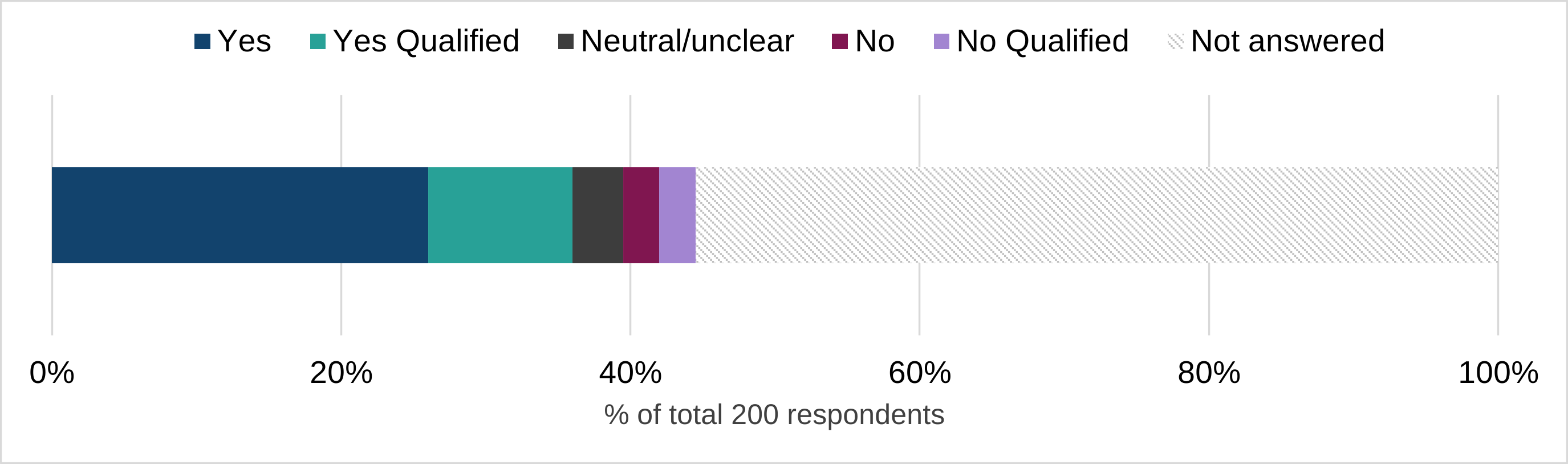
The majority of those who responded to these questions were in agreement that government should trial a greater degree of stacking to secure data on the benefits and challenges of the approach. Those in favour identified stacking as a critical incentive for landowners to develop high quality nature-based projects that maximise ecosystem functions and generate multiple revenue streams. A trial was considered an opportunity to generate evidence and valuable insights, enabling the UK to develop evidence-based guidance for nature projects that deliver multiple, integrated environmental benefits. Many respondents also saw benefits in scalable models and replicable case studies to inform clear and consistent stacking policy. However, a few respondents were not in favour of the proposed trial, some suggesting that this was not a priority for government intervention, and some flagging other models (such as blended finance or bundling) as a preferred solution for project viability.
Many respondents identified key opportunities around a stacking trial, notably in testing methodologies and verification mechanisms to assess additionality in stacked projects. Several raised that processes needed to be in place to mitigate challenges around complexity and potential integrity and credibility risks. The importance of robust quantification of benefits was raised by multiple respondents in supporting the prevention of double counting and ensuring co-benefit verification. Harmonising Monitoring, Reporting and Verification (MRV) across multiple credit types (for example, biodiversity and carbon) could be tested through the trial, alongside the development of robust methodologies for measuring benefits like soil carbon, microbial diversity, and flood risk management. A trial could also inform the development of practical governance mechanisms, registry infrastructure, and claims frameworks that maintain market integrity while enabling the monetisation of multiple ecosystem services. Another key opportunity identified was testing different accounting models, demonstrating how multi-functional land-use can be effectively delivered.
Noting the time-lag before a sufficient and representative evidence base is developed, respondents questioned the extent to which lessons could be drawn for the wider market from a stacking trial. Respondents also mentioned the potential impact of a stacking trial on market confidence and credibility, underlining the need for close engagement with buyers to understand how stacked claims influence confidence and decision making.
Question 43: What further information or actions do companies need to see to feel confident and encouraged to engage in the Voluntary Carbon Market and purchasing of high-quality engineered removals credits?
Summary of responses:
103 of the 200 respondents answered this question. Overall, respondents agreed with the premise that confidence to purchase high quality engineered removals can be strengthened, and that this will be key to scaling demand - particularly given the higher cost profile and perceived novelty of engineered removals.
Respondents most consistently pointed to confidence being unlocked by: (i) robust integrity assurance and MRV; (ii) clear claims rules and reputational protection; (iii) stable long-term policy signals; and (iv) credible demand drivers to address high costs.
Closely linked were requests for transparent market infrastructure, legal/accounting clarity, and alignment with compliance and reporting frameworks so that engineered removals can be purchased and explained in a way that boards, auditors, regulators and external stakeholders recognise as legitimate.
A number of respondents also stressed that engineered removals should be positioned within a wider mitigation portfolio and not treated as a standalone solution, while a small number expressed scepticism about the credibility or social acceptability of the space, including calls for stronger verification or public-facing trust signals.
A proportion stressed that confidence requires detailed standards embedded in compliance-linked governance, clarifying specific methodological requirements e.g., approaches to quantifying biogenic content in BECCS/CCS contexts.
Glossary
The following sets out how we are defining and using terms within the context of this consultation document. These are largely taken or adapted from terminology in publications associated with the UK Government and are provided here as working definitions for the purposes of this consultation.
Afforestation – the direct human-induced conversion of land that has not been forested for a period of at least 50 years to forested land, through planting, seeding and/or the human-induced promotion of natural seed sources.
Assurance – a process that aims to provide confidence or certainty in an outcome. The level of certainty may vary according to certain factors, such as the amount of evidence/data available, the possible error margins identified, or the techniques used to assess the data. Conformity assessment may help to achieve assurance. An assurance framework is a mechanism for providing a range of assurance activity to a market.
Baseline – description of the state of supply area in the absence of actions to supply credits to market(s).
Biodiversity credit – a certificate that represents a measured evidence-based unit of positive biodiversity outcome that is durable and additional to what would have otherwise occurred.
Buyer – party who (is registered to) buy(s) credits (in a market registry).
Carbon Market – a market which supports the trade in credits each representing a verified tonne of CO2 (or other Greenhouse Gas (GHG) in CO2 equivalent (e)) that could have been released into, or has been removed from, the atmosphere.
Co-benefits – the biodiversity, ecosystem services, and wider social, economic and cultural benefits from a nature-based activity that are not necessarily quantified, sold or traded. For example, enhancing adaptation to climate change, improved access to food and water, alleviating poverty, green job provision, improved forest governance, protecting Local and Indigenous rights, and diversified livelihoods.
Conformity assessment – the demonstration that what is being supplied meets the requirements specified or claimed. It is a process demonstrating whether specified requirements relating to a product, process, service, system, person or body have been fulfilled.
Credit – unit of additional environmental output or outcome generated through a quantification process, which can be issued into a registry and traded. Credits can be pending, or verified, and actions to supply them can be validated. Credits can be retired to support a corporate claim, based on the verified impact they represent. Different credit types represent different units of measured environmental improvements generated by different management actions that can be sold in markets.
Crediting scheme / programme – crediting schemes/programmes typically provide project design and credit supply requirements and either have proprietary methodologies or work with independent methodologies for benefit quantification and verification. They may also operate registries that issue, transfer and retire credits. In this document, crediting ‘schemes’ generally applies in the UK context, and ‘programme’ internationally.
Double counting – when multiple organisations or multiple countries claim the same environmental outcome towards more than one of the same target type, e.g. two countries each claiming the same carbon credit towards their national climate targets.
Ecosystem service – functions of the natural environment that directly or indirectly provide benefits for people.
Emerging Markets and Developing Economies (EMDEs) – developing nations that are becoming more engaged with global markets and trade but without all the characteristics of a developed market.
Environmental markets – enable the generation and trade of credits representing climate and broader environmental outcomes, for voluntary or compliance purposes.
Environmental outcome / output – environmental outcome is the measurement of the change to the environment after management action(s) has been implemented. Measurement of the immediate or short-term result of management action(s) on the environment is the environmental output. An environmental outcome might relate to the ecosystem, biodiversity, or an ecosystem service. Reduced nutrient emissions from agriculture or tree planting are examples of outputs, which can lead to improved water quality in habitats or ecosystems, or the establishment of woodlands, respectively, as outcomes. Where an environmental outcome is referred to, this could be shorthand for “outcome or output”.
Governance – rules, processes, and structures through which decisions are made, the way in which decisions are implemented, regulated and enforced, and the way in which competing interests are managed. This includes consideration of key actors, institutions, and knowledge types (and the power dynamics between them) and how they shape decisions.
Greenhouse Gas Removals – a group of methods that actively remove greenhouse gases, predominantly CO2, from the atmosphere, achieving negative emissions. The range of GGR approaches fall broadly into two categories; nature-based approaches, such as afforestation, and soil carbon sequestration; and engineering-based approaches, such as Direct Air Carbon Capture and Storage, Bioenergy with Carbon Capture and Storage, biochar, and enhanced weathering.
Greenwashing – claims in which information relating to the environmental impact of a product, brand, business or service is hidden or misrepresented.
Indigenous Peoples – considering the diversity of Indigenous Peoples, there is no universally adopted term and an understanding can be based on the following: self-identification, historical continuity, strong link to territories and surrounding natural resources; distinct social, economic or political systems, distinct language, culture and beliefs; form non-dominant groups of society; resolve to maintain and reproduce their ancestral environments and systems as distinctive peoples and communities. Indigenous Peoples can be recognised as different and distinct peoples with discreet rights and interests as expressed in international and national instruments, and in traditional laws.
Insetting – whilst there is not yet a globally agreed definition of insetting, the International Platform for Insetting, for example, defines insetting projects as “interventions along a company’s value chain that are designed to generate GHG emissions reductions and carbon storage, and at the same time create positive impacts for communities, landscapes and ecosystems”.
Integrity – defined through the fairness, honesty, transparency and other characteristics that contribute to trust in a market.
Issuance – the creation and registration of a credit, usually occurring after verification.
Land use – considerations as to how land and its natural capital is owned, used, and managed.
Leakage – displacement of negative environmental impacts to outside the supply area.
Local Communities – can include ‘communities of place’ and are people who live, work and/or spend a continuous amount of time locally to the site of a nature-based activity and whose lives could be directly impacted by associated land use changes and/or governance processes.
Market intermediary / initiative – organisations or individuals (including codes, programmes, schemes, verification and validation bodies, information providers, trading platforms, auditors, registries, market operators) that contribute to market processes.
Market participant – party that has a direct economic interest in a trade.
Market regulator – body that regulates a market through oversight and control of its rules, such as on participation or trading requirements.
Nature Market – a mechanism for the trading of credits of an environmental output or outcome.
REDD+ – ‘Reducing emissions from deforestation and forest degradation’. A voluntary framework for international cooperation developed under the UNFCCC and included in Article 5.2 of the Paris Agreement to incentivise action on forest-based emissions reductions and removals in developing countries. The ‘+’ stands for additional forest-related activities that protect the climate, namely sustainable management of forests and the conservation and enhancement of forest carbon stocks.
Registry – secure database that can uniquely register, store and track credits as they are bought, sold and retired.
Retire – Process of permanently removing a credit from a market, so that it cannot be used in any future period, by changing its status on its registry.
Scope emissions – The GHG Protocol Corporate Standard classifies a company’s GHG emissions into three ‘Scopes’. Scope 1 emissions are direct emissions from owned or controlled sources. Scope 2 emissions are indirect emissions from the generation of purchased energy. Scope 3 emissions are all indirect emissions (not included in Scope 2) that occur in the value chain of the reporting company, including both upstream and downstream emissions.
Seller – sell side counterparty in a credit transaction. The seller might be different to the supplier, e.g. where an intermediary manages a sale of credits.
Supplier – party or parties holding the rights to manage the supply area or project to generate credits, and with legal responsibility for delivering the credits’ environmental output(s) and/or outcome(s)
Unit – defined measurement of a quantity, used as a standard metric. Units can measure the state of the environment or a flow of an ecosystem service.
Validation – evaluation of management actions and other credit supply actions against their intended environmental outputs or outcomes and other requirements for the supply of credits.
Verification – process of periodic evaluation of the environmental outputs and/or outcomes achieved by management actions.
Voluntary markets – a summary term used when discussing voluntary carbon and nature markets together.
-
Source data: MSCI (2026) ↩
-
Delivering economic growth and nature recovery: an independent review of Defra’s regulatory landscape, Dan Corry, 2025 ↩
-
Independent Water Commission: review of the water sector, Sir Jon Cunliffe, 2025 ↩