Timely Payments in Income Tax Self Assessment (ITSA)
Published 23 June 2026

© Crown copyright 2026
This publication is licensed under the terms of the Open Government Licence v3.0 except where otherwise stated. To view this licence, visit nationalarchives.gov.uk/doc/open-government-licence/version/3 or write to the Information Policy Team, The National Archives, Kew, London TW9 4DU, or email: psi@nationalarchives.gov.uk.
Where we have identified any third party copyright information you will need to obtain permission from the copyright holders concerned.
This publication is available at https://www.gov.uk/government/consultations/timely-payments-in-income-tax-self-assessment/timely-payments-in-income-tax-self-assessment-itsa
Summary
Subject of this consultation
This consultation seeks views on implementing more timely payment in Income Tax Self Assessment (ITSA), following the government’s announcement at Budget 2025 on changes to the timing of payments in ITSA from April 2029. The consultation firstly considers how announced reforms for ITSA taxpayers with Pay as You Earn (PAYE) income might be implemented and secondly explores the potential for more timely payment for other ITSA taxpayers.
Scope of this consultation
This consultation sets out the government’s key areas of focus for changing the timing of ITSA payments, and seeks views on:
- the proposed design of reforms for ITSA taxpayers with PAYE income who will be required to pay their forecasted ITSA liability in-year from April 2029
- the potential for more timely payment for other ITSA taxpayers (such as those with ITSA income only)
- specifics on design, such as how and when to collect payments and safeguards needed to protect taxpayers
- support and guidance required for taxpayers and their representatives to help them transition to new payment timing
Who should read this
The government particularly welcomes responses from ITSA taxpayers affected by the changes (for example, the self-employed), employers and from representative groups and tax specialists.
Duration
The consultation will run for 6 weeks from 23 June 2026 to 4 August 2026.
Lead official
The lead officials are Helen Derbyshire and Alasdair Hawkins of HM Revenue and Customs (HMRC).
How to respond or enquire about this consultation
Please use the online form to respond to this consultation. Email enquiries or responses should be sent to timelypayment@hmrc.gov.uk.
Written responses can be posted to:
Helen Derbyshire
Timely Payment Team
HM Revenue and Customs
Trinity Bridge House
2 Dearmans Place
4th Floor
Manchester
M3 5BS
After the consultation
The government will analyse the views submitted to this consultation and publish a response in Autumn 2026. Any relevant legislation will be introduced in a Finance Bill ahead of implementation in April 2029.
Getting to this stage
In 2021, the previous government published the Timely Payment Call for Evidence Summary of Responses. The call for evidence opened the conversation about the benefits and challenges of current tax payment timings, and for moving to more frequent payments in ITSA. Respondents acknowledged that paying in smaller, more frequent instalments could offer benefits for some taxpayers, supporting better planning and budgeting, but shared concerns about adopting a ‘one-size-fits-all’ approach to more regular payments, the potential for increased administrative burden, the complexity of calculating tax liability accurately in-year and possible impacts on cashflow.
In response to stakeholder feedback, HMRC have continued to explore the benefits and challenges of more regular tax payments, recognising any reform would be a substantial change for ITSA taxpayers and should have the primary aim of supporting taxpayers to meet their tax obligations and simplifying their payments journey.
At Budget 2025, the government announced changes would be made to the timing of ITSA payments for ITSA taxpayers with sufficient PAYE income, from April 2029. These changes, and the potential for more timely payment for other ITSA taxpayers, are the subject of this consultation.
Previous engagement
In addition to the Timely Payment Call for Evidence, HMRC held informal discussions with external stakeholder forums between April and June 2025 to test appetite for reforming the Payments on Account system, which is subject to discussion under this consultation. HMRC also held a series of roundtables following Budget 2025 and shared an outline of this consultation with a range of professional and representative tax bodies to ensure the government would, via this consultation, consult on all the required elements.
1. Executive summary
ITSA taxpayers are a vital part of the UK economy, with around 12 million people filing a Self Assessment (SA) return, bringing in £48 billion of income tax revenue in 2024 to 2025. The government wants to ensure that paying tax is straightforward for taxpayers and is paid closer to real time, reducing the likelihood of late payments or taxpayers falling into tax debt. Making payments in ITSA more timely will complement other initiatives that aim to modernise the way that tax is paid, including Budget Payment Plans (BPP). Budget 2024 announced modernisation of BPP, and Budget 2025 announced a consultation into mandating Direct Debits for VAT and PAYE return liabilities. Collectively these improvements help modernise the tax system, close the tax gap, and will support taxpayers to manage their tax liabilities more easily.
Not all taxpayers within ITSA manage to make their payments on time. Around one-in-five ITSA tax bills are paid late. For many taxpayers in ITSA, there is currently a delay of up to 22 months from when the initial taxable activity takes place and when the relevant tax is paid. Late payments are in some cases linked to the timing and structure of current ITSA payment arrangements, which can make it difficult for some taxpayers to budget, affects taxpayer compliance, and means there is a greater risk of falling into tax debt. It is also not aligned with the self-assessment systems of many OECD countries, where tax is paid around 3 months after the taxable activity.
For new businesses, more timely payments in ITSA has the potential to support earlier engagement with the tax system by encouraging smaller and more regular payment habits from the outset, reducing reliance on a single, large, first ITSA bill. This approach may help mitigate the risk of early ‘bill shock’ (where an ITSA taxpayer receives their first tax bill for the full tax year, and may also be required to pay a further 50% of their next tax bill through payments on account) and supports business sustainability during the initial stages of trading.
It is important that the tax system supports regular and timely payment of tax, whilst accounting for the unique circumstances and challenges that different taxpayers face. Around 30 million taxpayers in the UK receive employment income via PAYE, where taxes are collected as earnings are paid. Around 7 million of this group are ITSA taxpayers with a separate PAYE source of income from employment or a private pension: PAYE provides a mechanism for regular payment of tax on those income sources. Payments on Account (POA) are currently required towards ITSA liabilities when a taxpayer meets certain criteria and are paid direct to HMRC by the taxpayer.
There are 2 routes for making POAs: either direct payments from the taxpayer to HMRC, or through PAYE. The government announced at Budget 2025 that ITSA taxpayers with sufficient PAYE income will, from April 2029, make POAs towards their forecasted ITSA liabilities through PAYE, each pay period. This consultation also seeks views on the potential for reform to the current POA system for other ITSA taxpayers. This document will describe these routes as ‘ITSA payments through PAYE’ and ‘direct ITSA Payments on Account (POA)’.
For ITSA taxpayers who can’t pay through PAYE, the government also wants to explore ways to support them to make more regular tax payments. Of the 9.5 million individuals in this group, around 2.5 million currently make twice-yearly POAs. As part of taking a holistic approach to real-time payments across ITSA, the government is also consulting on how the same objectives could potentially be achieved for this group.
The government recognises the challenges of more timely payment for some ITSA taxpayers, for example where there are delays in receiving the associated income, even where the chargeable activity has already taken place. This can be particularly challenging for taxpayers with seasonal or irregular income patterns, and will be carefully considered in the design of payment timings and any associated easements or safeguards.
These proposed reforms will not increase the amount of tax due; instead, they bring the timing forward so that tax is paid closer to when the income is earned. Payments will be forecasted, based on past Self Assessment returns, with taxpayers able to update their forecasts. Taxpayers will report their actual liability and reconcile their payments with a Balancing Payment, or repayment from HMRC, when they complete their Self Assessment return, as they do now.
This consultation seeks views on the proposed design of these reforms, including how and when to set payments, the appropriate safeguards to protect taxpayers, how the transition towards the reformed systems could work, and what support and guidance taxpayers will require. It also considers the effects on employers and pension providers who administer PAYE.
The government particularly welcomes views from representative groups, tax specialists, employers, payroll professionals and self-employed taxpayers. The consultation runs until 4 August 2026 and information on how to respond is set out in Chapter 7.
2. Introduction
At Budget 2025, the government announced changes to the timing of ITSA payments. From April 2029, ITSA taxpayers with sufficient PAYE income will make payments on account towards their forecasted ITSA liabilities through PAYE, each pay period. The government also announced that it will consult on the potential for other ITSA taxpayers to make tax payments more regularly throughout the year, closer to the point at which taxable activity takes place.
Current arrangements
Currently, around 12 million people file an SA return. Of these, around 7 million have both ITSA and PAYE income, and around 4.5 million have ITSA income only. Approximately 30% of individuals who file an SA tax return make POAs, and the remaining 70% either make a single payment in January following the relevant tax year or have no ITSA tax liability to pay. Some taxpayers in ITSA may be due a repayment.
Across ITSA, there is usually a delay between taxable activity and payment of the associated tax. Taxpayers with ITSA liabilities over £1,000, who have not paid 80% of their liability at source (such as through PAYE), are required to make 2 equal POAs. They are due by 31 January (10 months after the start of the relevant tax year on 5 April) and by 31 July (4 months after the relevant tax year ends). POAs are calculated based on the taxpayer’s ITSA tax return from the previous year. Any remaining balance is settled through a Balancing Payment, due on 31 January.
Taxpayers can currently amend POAs where their expected liability changes, and also have the option to use a Budget Payment Plan (BPP) to make weekly or monthly payments towards their future tax bill, spreading their ITSA payments more evenly through the year.
Policy intention and rationale
More timely payments for ITSA taxpayers will modernise the tax system and help taxpayers manage their ITSA liabilities more effectively, reducing tax debt and improving compliance. Currently, ITSA tax payments are often made long after the income was received and this can cause ‘bill shock’ especially for individuals who find it difficult to budget for larger lump-sum tax payments. At the other extreme, most UK taxpayers pay their tax on a regular basis in-year through PAYE. While ITSA income can be irregular and unpredictable, many other OECD countries, including Canada, the US, France and Australia, effectively operate self-assessment income tax systems in which tax is typically paid within a shorter period following the taxable activity.
Following this change, ITSA liabilities will instead be more spread out throughout the year for those with sufficient PAYE income. From April 2029, taxpayers will pay the first instalment of their forecasted ITSA liability for the 2029 to 2030 tax year. Thereafter, taxpayers will pay instalments of their ITSA liability each payday. For someone with steady income, this should mean their payments are largely in real time and accurately reflect their final tax bill. For taxpayers with seasonal or irregular income, they will be able to update their forecast, and their required payments will adjust accordingly. The circumstances of this group will be carefully considered in the design of payment timings and any associated easements or safeguards.
The government recognises that this will mean an adjustment period whereby liabilities due under the new payment schedule will be paid alongside those due under the existing payment schedule. It is seeking views on how to ensure this transition period is as smooth as possible. The government also recognises that ITSA taxpayers are experiencing further change in relation to reporting income and expenses through Making Tax Digital (MTD), which seeks to move record keeping closer to real time, and want to ensure taxpayers are sufficiently supported through this period of change.
Objectives and scope of this consultation
This consultation considers firstly how announced reforms for ITSA taxpayers with PAYE income might be implemented and secondly how similar outcomes might be achieved for other ITSA taxpayers. It will describe these 2 methods of making timely, in-year payments on account as ‘ITSA payments through PAYE’ and direct ITSA ‘Payments on Account (POAs)’. This consultation sets out what might change for each group and invites views on the new system including payment calculation and frequency, transitional arrangements and safeguards. It also considers issues affecting both groups, as well as issues specific to employers and pension providers who administer payments and collect tax through PAYE.
3. ITSA payments through PAYE
Current arrangements
As set out in the introduction, some payments towards ITSA taxpayers’ liability are already required through POAs in some circumstances. The changes announced at Budget 2025 will mean these POAs will instead be made more regularly through PAYE.
ITSA taxpayers with sufficient PAYE income can already choose to have some ITSA liabilities collected through PAYE, subject to some limits and meeting specific administrative deadlines (such as filing by 30 December for digital filers).
What will be different
From April 2029, the government will require ITSA taxpayers with sufficient PAYE income to make ITSA payments through PAYE each payday — divided into equal payments through the year. The government proposes that the forecasted liability payments will be based on the taxpayer’s last filed ITSA return, as this is a crystallised or complete picture of liability. Taxpayers will be able to update their forecast using more recent information to ensure it remains an accurate reflection of their expected tax bill. Under current assumptions, of the approximately 7 million taxpayers who have both ITSA and PAYE income, approximately 2.1 million have sufficient PAYE income to fall within scope of the new proposals.
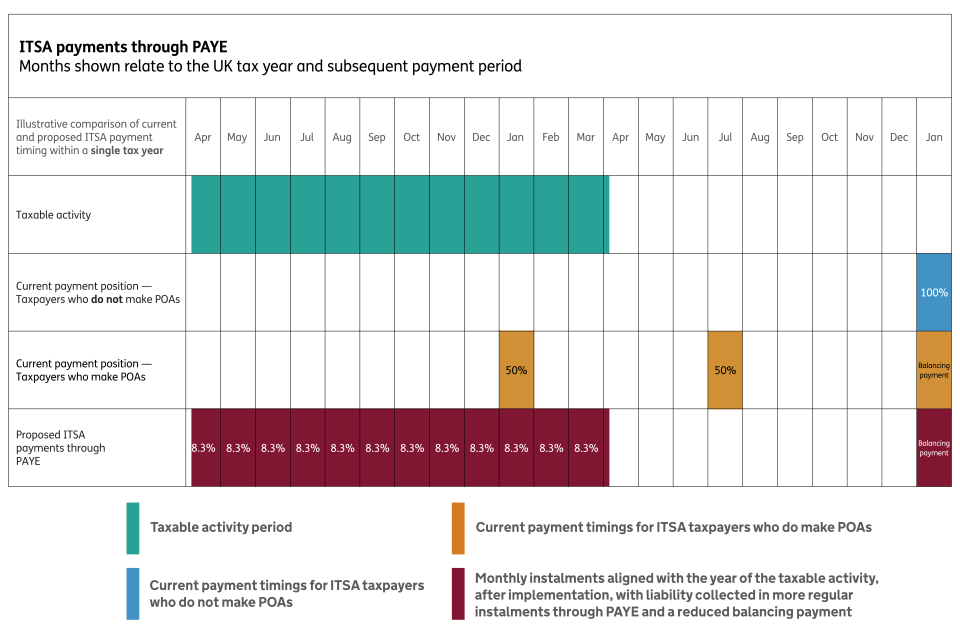
Chart 1 provides an illustration of an ITSA taxpayer’s payment timing corresponding to liabilities from a single tax year (the period in green), comparing the current position with the proposed approach for payments through PAYE. It excludes any payments that relate to liabilities from previous tax years. It shows a move away from later payment timings (blue and orange) towards equal monthly instalments aligned with the year of the taxable activity (red). Monthly amounts are shown as equal instalments, reflecting an illustrative allocation of liability across the tax year. The taxpayer may be paying ITSA liabilities from more than one tax year in the same tax period.
Chart 1: Illustrative comparison of ITSA payment positions before and after implementation of proposed ITSA payments through PAYE
Question 1: What are the benefits of the proposed approach, or are there alternative suggestions that would achieve the same policy objective?
Question 2: What are the challenges of the proposed approach, or are there alternative suggestions that would achieve the same policy objective?
Question 3: Should the government use, or give the option to use, anything else (for example, MTD quarterly updates and in the future, reputable third-party data) to inform the forecasting approach for this change?
Safeguards
Currently, the amount of tax that can be collected through PAYE in any pay period is capped at 50% of PAYE income. This cap is intended to help protect individuals’ net income. The government is testing through this consultation whether there are specific groups for whom a different threshold might be appropriate. For example, some taxpayers may prefer to have this threshold raised to enable them to have their projected ITSA liabilities collected automatically through PAYE.
Question 4: What other safeguards should the government consider?
Question 5: Which groups of taxpayers would find a different threshold helpful?
Impact on employers and pension providers
The government recognises the significant contribution employers, pension providers and payroll providers make in reporting and collecting tax through PAYE.
Employers, pension providers and payroll providers already amend the tax codes they operate through the tax year where an individual’s circumstances change the tax due. It is likely that changes of forecasted liability will also change tax codes and, at least in the early years of implementing ITSA payments through PAYE, individuals may approach their employers or pension providers with questions about their take home pay. The government welcomes respondents’ insight on how these changes are introduced while minimising the administrative burdens for those operating PAYE. It will ensure changes are well publicised to seek to mitigate the impact on those operating and paying tax through PAYE.
Employers may deduct more tax from some of their employees each payday because of the inclusion of forecasted ITSA liabilities, this may also be affected by any change in safeguards around how much can be deducted from an individual’s pay for each pay period.
Currently, employers are able to make quarterly rather than monthly payments of PAYE to HMRC when the expected amount due does not exceed £1,500 in total per month. ITSA payments through PAYE will mean that some employers will have more PAYE due and therefore may exceed the threshold. In the absence of any mitigations, this will mean that some employers will be required to make monthly payments instead. Employers are also likely to experience increased operational pressures, including managing a higher volume of tax code changes as forecasts evolve, and responding to more employee queries about the impact on their pay. Any flexibility on the 50% threshold for ITSA payments through PAYE could potentially add an additional administrative burden due to the differing limits. The government is considering what support businesses may require with this transition.
Question 6: Do employers and other payroll operators need additional safeguards for these changes?
Question 7: What support or guidance might employers benefit from?
Question 8: Are there other impacts for payroll operators that the government should consider?
Impact on taxpayers with varying income
The government recognises that some taxpayers may have complex and fluctuating PAYE and ITSA income and this may affect how their tax is collected across the year. If PAYE income is insufficient at points in the year to collect their ITSA payments through PAYE, any uncollected tax will need to be paid separately. As a result, different payment routes may apply within the same tax year, depending on individual income patterns and circumstances.
Question 9: What options should the government consider to support taxpayers who might move in and out of paying their ITSA liabilities via PAYE?
The case studies below illustrate some of the scenarios of how ITSA payments through PAYE may impact employers and taxpayers.
Case study 1
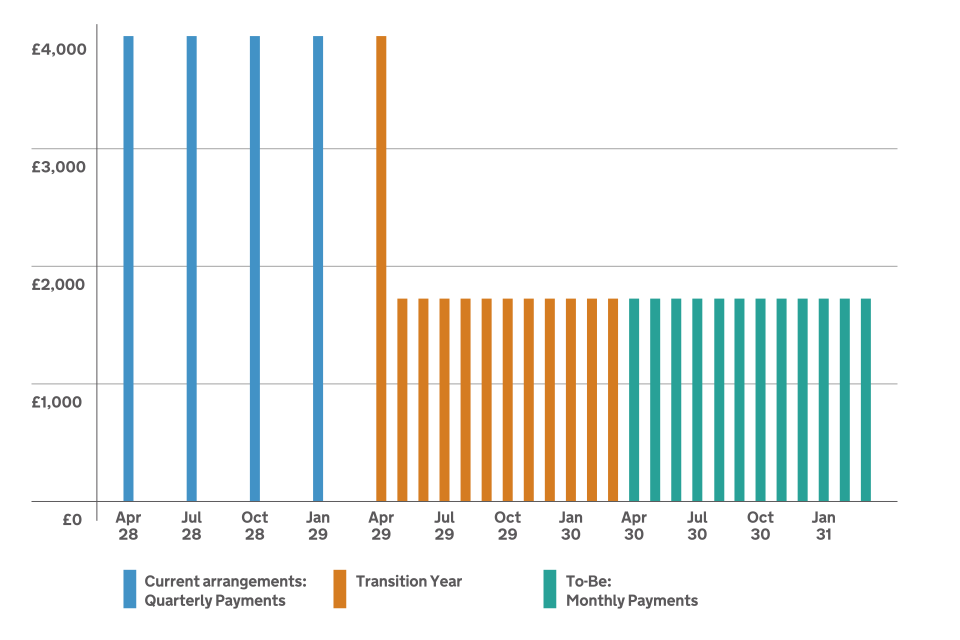
Employer administering PAYE: moving from quarterly to monthly payments
High Street Bakery Ltd employs 3 staff with a total monthly PAYE bill of £1,300 for all employees.
Current arrangements: quarterly payments to HMRC
The employer’s PAYE bill is under £1,500 per month and they pay this to HMRC quarterly in July, October, January and April for each tax year, in line with HMRC rules.
Transition year
Two of their staff also have ITSA income. From 2029, High Street Bakery Ltd will deduct a total of £400 more tax per month through PAYE. Their total PAYE will be £1,700 per month from April 2029, which is above the £1,500 quarterly payment threshold.
High Street Bakery Ltd will have to make monthly payments to HMRC from May 2029, rather than quarterly.
There is no change to the frequency of their PAYE reports.
From April 2030: monthly payments to HMRC
High Street Bakery Ltd now makes monthly payments to HMRC.
Chart 2: Current arrangements — monthly payments
Case study 2
Individual with PAYE income sufficient to collect ITSA liabilities during the year
Figures within this example are hypothetical and other likely deductions (such as pension or student loan) have been excluded for ease of understanding the customer journey.
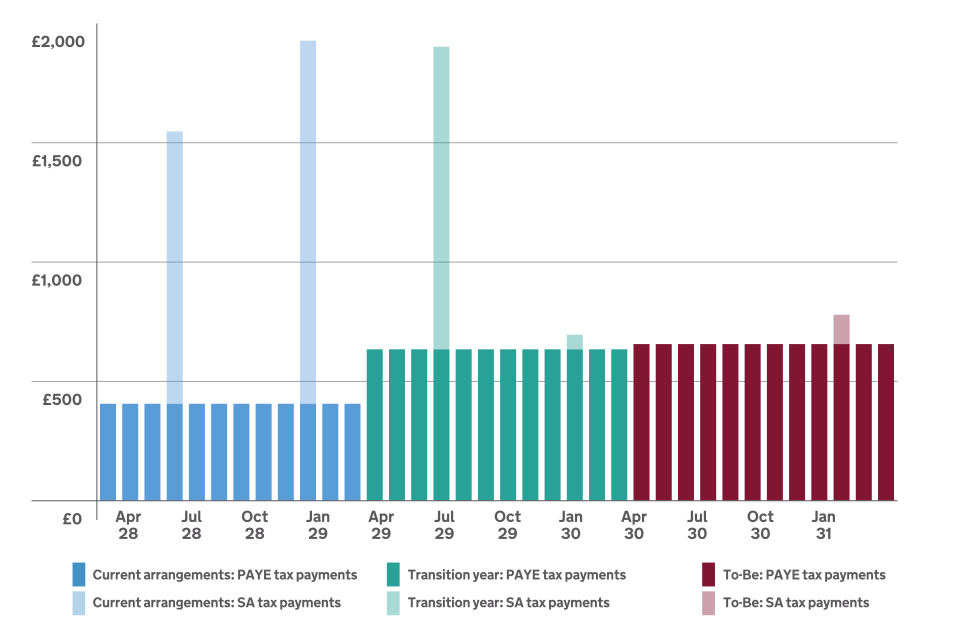
Anthony works full time at a bank earning £30,000 per year.
He also has a small self-employment business, making bespoke hand-crafted goody bags, which earns him £10,000 of income each year.
Current arrangements: separate PAYE and ITSA payments
For his job at the bank, Anthony pays tax ‘at source’ every month through PAYE.
Tax on his self-employment profits for the 2028 to 2029 tax year will be paid in 3 separate instalments with the first POA due by 31 January 2029, the second POA due by 31 July 2029. Once Anthony has submitted his Self Assessment tax return for 2028 to 2029, if the 2 POAs do not fully cover his tax liability, a Balancing Payment will be due on 31 January 2030.
Transition year
Anthony is starting to pay tax on his self-employment profits for the tax year 2029 to 2030 via PAYE as he has sufficient PAYE income to do so. The ITSA payments made through PAYE will be forecasted based on his latest Self Assessment return — which will be for the 2027 to 2028 tax year.
In addition, he makes the second POA in July 2029 on his tax liability for the year 2028 to 2029, and a small Balancing Payment in January 2030 for the previous year.
From April 2030: ITSA payments through PAYE
Following the transitional year, Anthony now has regular deductions for his ITSA payments through PAYE. Anthony’s payments through PAYE have increased but he no longer makes lump sum POAs.
When Anthony files his Self Assessment return, he may need to make a smaller Balancing Payment in January 2031, or may be due a repayment from HMRC.
Chart 3: Current arrangements — separate PAYE and ITSA payments
Case study 3
Taxpayer reporting change in circumstance that impacts how HMRC collects ITSA liability
Figures within this example are hypothetical and other likely deductions (such as pension or student loan) have been excluded for ease of understanding the customer journey.
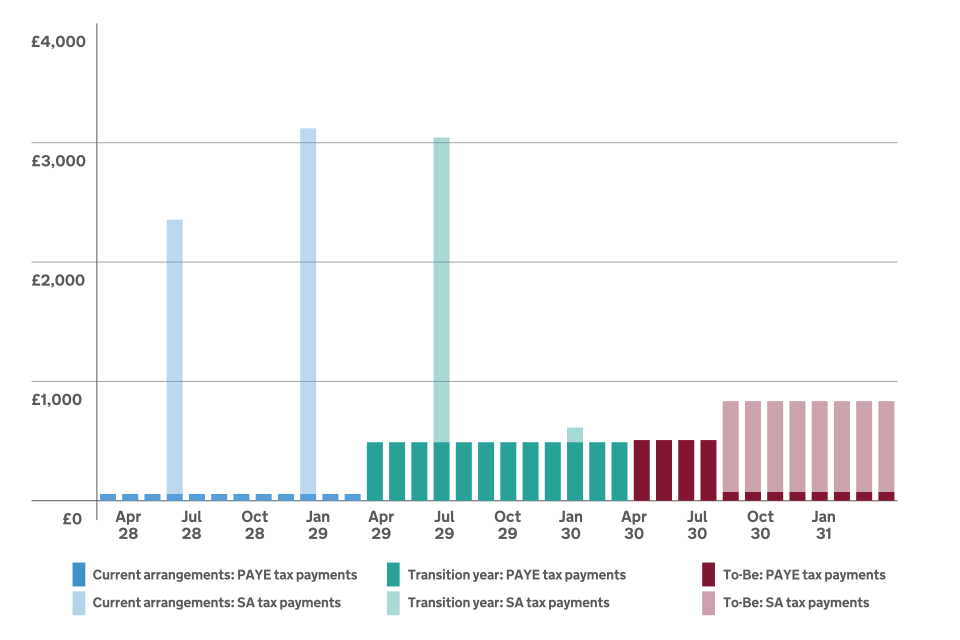
Lisa works part time as cleaner for a local school and has £15,000 PAYE income from this employment.
She is also self-employed and makes £23,000 of profits each year working as a mobile nail technician.
Current arrangements: separate PAYE and ITSA payments
For her job at the school, Lisa pays tax ‘at source’ every month through PAYE.
Tax on her self-employment profits for the 2028 to 2029 tax year will be paid in 3 separate instalments with the first POA due by 31 January 2029, the second POA due by 31 July 2029. Once Lisa has submitted her Self Assessment tax return for 2028 to 2029, if the two POAs do not fully cover her tax liability, a Balancing Payment will be due on 31 January 2030.
Transition year
Lisa is starting to pay tax on her self-employment profits for the tax year 2029 to 2030 via PAYE as she has sufficient PAYE income to do so. The amounts are forecasted based on the latest year’s Self Assessment return — which will be for the 2027 to 2028 tax year.
In addition, she makes the second POA in July 2029 towards her ITSA tax liability for the 2028 to 2029 tax year and a small Balancing Payment in January 2030 for the previous year.
From April 2030: ITSA payments through PAYE
Following the transitional year, Lisa now has regular deductions for her ITSA tax liability from her PAYE.
In July 2030, Lisa contacts HMRC to report a change in circumstance. Her business has experienced a boom, and she estimates her ITSA profits for the tax year will be £33,000. She tells HMRC and, because she no longer has sufficient PAYE income to pay towards her forecast ITSA tax (without exceeding the 50% limit), her updated tax code no longer requires the forecast ITSA tax to be deducted each payday. She will be required to pay her remaining ITSA tax separately.
If Lisa’s business was to take a downturn later in the year and she tells HMRC she has sufficient PAYE income to collect her forecast ITSA tax from, HMRC would update her tax code again so that she pays some of her forecast ITSA each payday.
Chart 4: Current arrangements — separate PAYE and ITSA payments
4. Potential reform of direct Payments on Account
The previous chapter covered reforms for ITSA taxpayers who have sufficient PAYE income to make ITSA payments through PAYE. The government would like to explore the potential for comparable reforms for other ITSA taxpayers.
Current arrangements
HMRC estimate that there are 9.5 million individuals who file a Self Assessment tax return and do not meet the criteria to have some of their ITSA liabilities collected through PAYE. Of these, around 2.5 million taxpayers make POAs. The remainder make a single payment in January following the relevant tax year, or have no ITSA tax liability to pay. Some taxpayers in ITSA may be due a repayment.
As explained in the introduction, taxpayers with ITSA liabilities over £1,000, who have not paid 80% of their liability at source (such as through PAYE) are required to make 2 equal POAs due by the end of January and July, as shown in the diagram below. POAs are calculated using known ITSA liability, typically based on the taxpayer’s ITSA tax return from the previous year. Any remaining balance is settled through a Balancing Payment which is due by 31 January following the end of the tax year, at the same time as filing. Around one-in-five payments (inclusive of Balancing Payments) are not paid on time.
Possible changes to timing and frequency of POAs
The government would like to explore increasing the frequency of POAs from April 2029, with these POAs paid in the same year as the taxable activity through direct ITSA POA. For taxpayers, this would smooth payments across the year, helping them to avoid large, infrequent payments that can be difficult to manage. It could therefore lower the risk of late payment and help to reduce tax debt. This could be achieved through, for example, monthly or quarterly payments, aligning timing more closely with ITSA payments through PAYE (see Chapter 3, chart 1).
The government recognises that ITSA income can be irregular. It is therefore seeking options to balance the potential for more regular payments with avoiding taxpayers having to make payments that do not reflect their income patterns. Direct ITSA POAs could be forecasted, based on past Self Assessment returns, with taxpayers able to update their forecasts efficiently. Taxpayers would report their actual liability and reconcile their payments with a Balancing Payment or repayment from HMRC when they complete their Self Assessment return, as they do now.
Question 10: What potential approach, including frequency of payments, would be most appropriate to achieve the policy objective, taking account of different taxpayer circumstances?
Question 11: What could the impact of more frequent payments be on taxpayers?
Changes to ITSA income
The government recognises that circumstances and ITSA income can change. Currently taxpayers can contact HMRC to request a change to their POA amount, where it no longer reflects their liability, and this capability would continue to be important under any future reforms.
Question 12: If these changes were introduced, what additional measures could the government consider to support taxpayers when their Self Assessment income changes during the year?
Payments
Currently, taxpayers can use a range of payment methods to pay their ITSA tax bill: Direct Debit, online and telephone banking, debit card (or corporate credit card), at a bank or building society, or by cheque. For regular weekly or monthly payments in advance, taxpayers can set up a BPP via their online tax account.
To reduce administrative burden for both taxpayers and the Exchequer, the government is considering how wider use of payment plans could support better payment management.
Question 13: How else might the government support taxpayers to manage more regular payments?
Question 14: Which groups of taxpayers might require additional support to access or use payment management tools?
Case Study 4
David: a self-employed plumber within payments on account
David is a self-employed plumber who commenced trading in the 2026 to 2027 tax year. He has self-employment profits of £25,000. The narrative below compares the current pattern of POAs with potential payments, if changes were introduced, over the following 2 tax years under monthly and quarterly payment options.
Current arrangements: January 2028 to March 2029
Based on his tax liability for the 2026 to 2027 tax year of £3,400, David makes 2 equal POAs towards his 2027 to 2028 tax bill of £1,700 each on 31 January 2028 (10 months after the start of the tax year) and 31 July 2028 (4 months after the tax year ends).
David’s actual liability for the 2027 to 2028 tax year was £3,900. The POAs did not cover all the tax he owed, so a Balancing Payment of £500 was required. David’s payment due on 31 January 2029 was £2,450, made up of:
- the Balancing Payment of £500 for the 2027 to 2028 tax year (£3,900 minus £3,400 POAs)
- the first POA towards the 2028 to 2029 tax year of £1,950 (half of David’s 2027 to 2028 liability)
Transition year: April 2029 to March 2030 (if changes were to be made)
David’s first POA, towards the 2028 to 29 tax year, was paid on 31 January 2029.
The second POA of £1,950, will be due in July 2029.
Plus, the potential POAs (estimated based on the 2027 to 2028 tax return) for 2029 to 2030 of £3,900. This could be spread:
- monthly: 12 payments between 6 April 2029 and 5 April 2030
- quarterly: 4 payments in, for example, April 2029, July 2029, October 2029 and January 2030
In January 2030, David submits his tax return for the 2028 to 2029 tax year, and his actual liability is £4,400. A Balancing Payment of £500, for the 2028 to 2029 tax year, would be added to the January 2030 payment.
From April 2030 (if changes were to be made)
Based on David’s tax return for 2028 to 2029 his estimated liability for 2030 to 2031 is £4,400.
This could be paid through more regular POAs, for example spread monthly or quarterly:
- monthly: over 12 payments between 6 April 2030 and 5 April 2031
- quarterly: over 4 payments in (for example) April 2030, July 2030, October 2030 and January 2031
In January 2031, David submits his tax return for the 2029 to 2030 tax year. He has paid £4,400 towards his actual liability of £4,900. A Balancing Payment of £500, for the 2029 to 2030 tax year, would be added to the January 2031 payment.
5. Issues affecting both taxpayers with and without PAYE income
The following section covers issues potentially impacting both groups of ITSA taxpayers, depending on the changes that are introduced following this consultation. ITSA taxpayers paying through PAYE will be affected by the announced changes, and other ITSA taxpayers could be affected if timely payment changes are introduced.
Transitional arrangements
While overall ITSA liabilities will remain unchanged, the time between the taxable activity and payment of the associated tax will reduce for taxpayers with ITSA and PAYE income, and could reduce for other ITSA taxpayers. In the first year, taxpayers would also be required to pay their remaining ITSA payments for the prior tax year (2028 to 2029) in accordance with the current arrangements alongside their forecasted ITSA liabilities for 2029 to 2030.
This will not require taxpayers to pay more tax than they do under the current rules, the only change is to the timing of payment.
The government is considering how to support taxpayers during the 2029 to 2030 transition period. Options may include advance payment options (such as a Budget Payment Plan), and the possibility of spreading liability for the previous tax year over a longer time frame (for example, spreading the July POA evenly over 4, 6 or 12 months, in addition to the in-year payments for 2029 to 2030). The government would welcome views on these or alternative approaches.
Payments for each tax year will be reconciled when the relevant tax returns are filed.
Question 15: How might the government best support taxpayers to manage the transitional period?
Question 16: Would the option to make voluntary pre-payments, ahead of implementation, be helpful?
Question 17: If changes were made, what transition period would be most appropriate?
Question 18: What other support would help ITSA taxpayers during the transition period?
Newly registered, or returning, ITSA taxpayers
New entrants to ITSA may not have a reliable forecast of their future liabilities, or a stable income profile, making it difficult to establish accurate regular payments, either through PAYE or direct ITSA payments to HMRC. For a taxpayer who starts trading at the very start of a new tax year, it is currently up to 22 months before they start paying the tax due. Therefore, the government considers it particularly important to support new and returning taxpayers to better manage their tax affairs from the start of their ITSA journey.
Question 19: How might the government best support new or returning taxpayers to make timely payments, when they start earning ITSA income?
Question 20: How might estimating appropriate liability for new or returning ITSA taxpayers be achieved?
Potential changes to POA criteria
Around 70% of Self Assessment individuals do not meet the current criteria to make POAs, as their tax liability in the previous year was less than £1,000 or because more than 80% of their total liability has already been deducted at source. These taxpayers instead pay their liability in one lump sum by 31 January following the end of the relevant tax year. The government is considering whether the £1,000 threshold remains appropriate.
Question 21: What could be the impact of reducing the POA threshold, or are there alternative ways to support taxpayers below the current threshold to achieve the timely payment objectives?
Choice between ITSA payments through PAYE and direct ITSA POAs
If the government were to move towards timely payments of ITSA tax through PAYE and direct ITSA POAs, it recognises there may be benefits to allowing taxpayers flexibility and a degree of choice in how they make more regular tax payments. There may be advantages to allowing taxpayers to make direct ITSA POAs instead of ITSA payments through PAYE, or enabling those who do not meet the criteria for paying through PAYE to do so if they choose (although these may create an additional administrative burden for employers).
Question 22: In what circumstances could the government consider offering taxpayers with PAYE and ITSA income the choice between making ITSA payments through PAYE, or direct ITSA POAs, such as via Direct Debit?
Impacts on agents’ role
Many taxpayers appoint an agent to manage their tax affairs. In addition to their existing responsibilities, agents will need to update their clients’ forecasts based on in-year changes (if they don’t already). HMRC is considering how to best to cater to the specific needs of agents that arise from the announced changes or possible reforms.
Question 23: What would agents find useful to enable them to carry out their role effectively under the announced changes or possible reforms?
Support and guidance
The government provides a range of support and guidance, including online and interactive guidance, webinars, enhanced support and proactive and targeted communications including through representative bodies.
The government recognises that the announced changes and possible further reforms represent a significant change in the way ITSA taxpayers make tax payments and that effective support and guidance would be required to help taxpayers transition to timely payments. The government also recognises that ITSA taxpayers are experiencing further change through MTD for ITSA, and wants to ensure taxpayers are sufficiently supported during this time of change. Certain groups of taxpayers may require tailored guidance: for example, taxpayers who receive means-tested benefits will most likely see more stable monthly net income, which may impact on overall benefit entitlement.
Question 24: What support or guidance might be most effective for taxpayers with particular challenges and needs?
Question 25: What extra support or guidance might taxpayers who qualify for financial support from the government (such as Universal Credit) need?
Question 26: What support or guidance might be most effective for tax agents?
Question 27: Are there are any additional comments you would like to make regarding the ‘timely payments in ITSA’ announced changes and possible reforms?
6. Assessment of impacts
Summary of impacts
The Exchequer impact from Budget 2025 is shown below for the ‘Timely payments through PAYE’ policy changes only, although this may vary slightly depending on any adjustments to the final policy design, as well as changes to the economic outlook. The impact of any wider POA policy changes is still to be estimated and would depend heavily on final policy choices. As usual, costings will be subject to scrutiny by the Office for Budget Responsibility (OBR).
| Year | 2025-26 | 2026-27 | 2027-28 | 2028-29 | 2029-30 | 2030-31 |
|---|---|---|---|---|---|---|
| Exchequer impact (£m) (Budget 2025 scorecard impact for More Timely Payments through PAYE) | Not applicable | Not applicable | Not applicable | +85 | +605 | +235 |
Exchequer Impact Assessment
Any Exchequer impact will be estimated following consultation, final scope and design of the policy proposals and will as usual be subject to scrutiny by the OBR.
| Impacts | Comment |
|---|---|
| Economic impact | Any economic impact of proposals taken forward will be estimated following consultation, subject to final scope and design through co-creation, and as usual be subject to scrutiny by the OBR. |
| Impact on individuals, households and families | The policy changes to ITSA payments through PAYE will have an impact on approximately 2.1m million individuals who are expected to meet the criteria to have their forecasted ITSA liability deducted from their PAYE income (based on 2023 to 2024 data). Any wider POA reforms may impact the remaining ITSA taxpayer population, depending on the final policy following consultation. Individuals with ITSA income will, if they meet certain thresholds, make POA of their ITSA tax through in-year instalments, as their profits are being earned, through PAYE. This means paying smaller but more frequent payments, closer to the time of the taxable activity. There will be no additional tax due overall as a result of these policy proposals. The changes will affect the timing of tax payments. However, there will be a transition period where tax for the previous tax year is paid alongside tax for the current tax year. Taxpayers’ cashflow and total profits for the year are sometimes uncertain, and susceptible to trading and economic conditions, which may present specific challenges for some. Also, some taxpayers may be required to make tax payments before they have received the associated income, even where the chargeable activity has already taken place. This can be particularly challenging for taxpayers with seasonal or irregular income patterns. Views on how to best support these groups are therefore sought in this consultation. These proposals are expected to make it easier for individuals and households to budget and manage their tax affairs, reduce the effect of ‘bill shock’ and reduce the likelihood of late payment fees and falling into debt. Administrative impacts and costs will vary compared to the status quo, these will strongly depend on the final policy choices. |
| Equalities impacts | Of the 2.1 million taxpayers affected by the changes to make timely payments of ITSA tax through PAYE, individuals aged between 35 to 54 (45%) and between 55 to 74 (36%) are estimated to be overrepresented in the impacted population compared to their prevalence in UK adult population (32% and 29% respectively). Males (57%) are also estimated to be overrepresented in the impacted population compared to the UK adult population (50%). Individuals from an Asian/Asian British — Indian ethnic background were estimated to be twice as likely to be in the impacted population (5.2% vs 2.7% of the UK adult population). Those belonging to the Hindu religion were also estimated to be overrepresented (3.2% versus 1.5% respectively). The groups disproportionately affected by this policy change reflect the composition of the ITSA population more broadly. The equalities impacts from any reforms to direct ITSA POAs will be set out once policy choices are finalised. |
| Impact on businesses and Civil Society Organisations | The policy change will change the cashflow for affected ITSA customers, particularly affecting self-employed individuals and small businesses. While customers would not be financially worse off overall (as only the timing of payments will change), there may be cashflow implications. This may be more acute for businesses with irregular or seasonal income until they adjust to the new measures. Furthermore, there will be a transition period where tax for the previous tax year is paid alongside tax for the current tax year. For employers and pension providers who collect tax on behalf of HMRC through PAYE, they will be collecting more tax as a result of the measures, and therefore may be more likely to have to make monthly rather than quarterly payments to HMRC. Again, there will be no additional tax overall, but it may present a cashflow challenge for certain businesses. One-off costs could include familiarisation with the change, upskilling staff in forecasting profits, and managing the transition to calculating and paying tax closer to when income or profit arises. Ongoing costs will include employers receiving and processing more coding notices in relation to employees who also have ITSA trading income. Civil Society Organisations such as Tax Aid and Citizens Advice may face additional requests for support from affected customers, especially during the transition period. |
| Impact on HMRC or other public sector delivery organisations | HMRC will finalise operational and delivery impacts when specific policy options are settled. |
| Other impacts | Any further impacts will be assessed following the consultation. |
7. Summary of consultation questions
ITSA payments through PAYE
Question 1: What are the benefits of the proposed approach, or are there alternative suggestions that would achieve the same policy objective?
Question 2: What are the challenges of the proposed approach, or are there alternative suggestions that would achieve the same policy objective?
Question 3: Should the government use, or give the option to use, anything else (for example, MTD quarterly updates and in the future, reputable third-party data) to inform the forecasting approach for this change?
Question 4: What other safeguards should the government consider?
Question 5: Which groups of taxpayers would find a different threshold helpful?
Question 6: Do employers and other payroll operators need additional safeguards for these changes?
Question 7: What support or guidance might employers benefit from?
Question 8: Are there other impacts for payroll operators that the government should consider?
Question 9: What options should the government consider to support taxpayers who might move in and out of paying their ITSA liabilities via PAYE?
Potential reform of Payments on Account
Question 10: What potential approach, including frequency of payments, would be most appropriate to achieve the policy objective, taking account of different taxpayer circumstances?
Question 11: What could the impact of more frequent payments be on taxpayers?
Question 12: If these changes were introduced, what additional measures could the government consider to support taxpayers when their Self Assessment income changes during the year?
Question 13: How else might the government support taxpayers to manage more regular payments?
Question 14: Which groups of taxpayers might require additional support to access or use payment management tools?
Issues affecting both taxpayers with and without PAYE income
Question 15: How might the government best support taxpayers to manage the transitional period?
Question 16: Would the option to make voluntary pre-payments, ahead of implementation, be helpful?
Question 17: If changes were made, what transition period would be most appropriate?
Question 18: What other support would help ITSA taxpayers during the transition period?
Question 19: How might the government best support new or returning taxpayers to make timely payments, when they start earning ITSA income?
Question 20: How might estimating appropriate liability for new or returning ITSA taxpayers be achieved?
Question 21: What could be the impact of reducing the POA threshold, or are there alternative ways to support taxpayers below the current threshold to achieve the timely payment objectives?
Question 22: In what circumstances could the government consider offering taxpayers with PAYE and ITSA income the choice between making ITSA payments through PAYE, or direct ITSA POAs, such as via Direct Debit?
Question 23: What would agents find useful to enable them to carry out their role effectively under the announced changes or possible reforms?
Question 24: What support or guidance might be most effective for taxpayers with particular challenges and needs?
Question 25: What extra support or guidance might taxpayers who qualify for financial support from the government (such as Universal Credit) need?
Question 26: What support or guidance might be most effective for tax agents?
Question 27: Are there are any additional comments you would like to make regarding the ‘timely payments in ITSA’ announced changes and possible reforms?
The consultation process
Tax Policy Making principles
Tax Policy Making
The following principles underpin the government’s approach to tax policy making:
- predictability and stability: the single major fiscal event cycle will provide a predictable and stable framework for the delivery of tax changes
- a smart and agile approach to consultation: the government will engage stakeholders fully and flexibly when developing tax policy, prioritising dynamic and frequent engagement with tax professionals at both ministerial and official levels — where formal consultation is required, it will be targeted and precise, only seeking information that is genuinely needed, and will last a proportionate amount of time
- transparency: the government is committed to transparency, and will make sure that its rationales for tax policy changes and assessments of policy impacts are clear
These principles will enable the government to deliver change quickly, whilst making sure that the impacts of tax policy changes are fully understood.
How to respond
A summary of the questions in this consultation is included at chapter 7.
Responses should be sent by 4 August 2026, by using the online form, by email to timelypayment@hmrc.gov.uk or by post to:
Helen Derbyshire
Timely Payment Team
HM Revenue and Customs
Trinity Bridge House
2 Dearmans Place
4th Floor
Manchester
M3 5BS
Please do not send responses to the Consultation Coordinator.
Paper copies of this document or copies in Welsh and alternative formats (large print, audio and Braille) may be obtained free of charge from the above address.
When responding please say if you are a business, individual or representative body. In the case of representative bodies please provide information on the number and nature of people you represent.
Confidentiality
HMRC is committed to protecting the privacy and security of your personal information. This privacy notice describes how we collect and use personal information about you in accordance with data protection law, including the UK GDPR and the Data Protection Act (DPA) 2018.
Information provided in response to this consultation, including personal information, may be published or disclosed in accordance with the access to information regimes. These are primarily the Freedom of Information Act 2000 (FOIA), the DPA 2018, UK GDPR and the Environmental Information Regulations 2004.
If you want the information that you provide to be treated as confidential, please be aware that, under the Freedom of Information Act 2000, there is a statutory Code of Practice with which public authorities must comply and which deals with, amongst other things, obligations of confidence. In view of this it would be helpful if you could explain to us why you regard the information you have provided as confidential. If we receive a request for disclosure of the information we will take full account of your explanation, but we cannot give an assurance that confidentiality can be maintained in all circumstances. An automatic confidentiality disclaimer generated by your IT system will not, of itself, be regarded as binding on HM Revenue and Customs.
Consultation Privacy Notice
This notice sets out how we will use your personal data, and your rights. It is made under Articles 13 and 14 of the UK GDPR.
Your data
We will process the following personal data:
Name
Email address
Postal address
Phone number
Job title
Purpose
The purposes for which we are processing your personal data is: ‘Timely Payments in Income Tax Self Assessment (ITSA)’.
Legal basis of processing
The legal basis for processing your personal data is that the processing is necessary for the exercise of a function of a government department.
Recipients
Your personal data will be shared by us with HM Treasury.
Retention
Your personal data will be kept by us for 6 years and will then be deleted.
Your rights
You have the right to request information about how your personal data are processed, and to request a copy of that personal data.
You have the right to request that any inaccuracies in your personal data are rectified without delay.
You have the right to request that any incomplete personal data are completed, including by means of a supplementary statement.
You have the right to request that your personal data are erased if there is no longer a justification for them to be processed.
You have the right in certain circumstances (for example, where accuracy is contested) to request that the processing of your personal data is restricted.
Complaints
If you consider that your personal data has been misused or mishandled, you may make a complaint to the Information Commissioner, who is an independent regulator. The Information Commissioner can be contacted at:
Information Commissioner’s Office
Wycliffe House
Water Lane
Wilmslow
Cheshire
SK9 5AF
0303 123 1113 casework@ico.org.uk
Any complaint to the Information Commissioner is without prejudice to your right to seek redress through the courts.
Contact details
The data controller for your personal data is HMRC. The contact details for the data controller are:
HMRC
100 Parliament Street
Westminster
London
SW1A 2BQ
The contact details for HMRC’s Data Protection Officer are:
The Data Protection Officer
HMRC
14 Westfield Avenue
Stratford
London
E20 1HZ
Consultation principles
This consultation is being run in accordance with the government’s Consultation Principles.
The Consultation Principles are available on the Cabinet Office website.
If you have any comments or complaints about the consultation process, please contact the Consultation Coordinator.
Please do not send responses to the consultation to this link.