Consumer Price Index (CPI) and the Police Pension Scheme 2015: Career average revalued earnings, government response (accessible)
Updated 5 August 2026

© Crown copyright 2026
This publication is licensed under the terms of the Open Government Licence v3.0 except where otherwise stated. To view this licence, visit nationalarchives.gov.uk/doc/open-government-licence/version/3 or write to the Information Policy Team, The National Archives, Kew, London TW9 4DU, or email: psi@nationalarchives.gov.uk.
Where we have identified any third party copyright information you will need to obtain permission from the copyright holders concerned.
This publication is available at https://www.gov.uk/government/consultations/police-pension-scheme-2015-cpi-revaluation/outcome/consumer-price-index-cpi-and-the-police-pension-scheme-2015-career-average-revalued-earnings-government-response-accessible
Introduction
1. This document sets out the government’s response to the consultation conducted between 19 January 2026 and 16 March 2026. The consultation sought views on aligning the Police Pension Scheme 2015 Career Average Revalued Earnings (CARE) scheme revaluation date of 1 April with the start of the tax year 6 April, for the purposes of revaluing active members’ pensions.
2. This response was developed using Artificial Intelligence (AI) analytical tools, with outputs quality assured by policy officials. This is in line with government policy on responsible and appropriate use of AI. This policy on the use of AI in government is available on GOV.UK.[footnote 1] Annex A of this document sets out in detail how AI was used appropriately in this response.
3. The consultation invited views on:
- To what extent do you agree or disagree with proposal to align the 2015 CARE scheme revaluation date with the start of the tax year?
- Whether there are any unintended consequences in aligning the 2015 CARE scheme revaluation date with the start of the tax year?
- Whether it is worthwhile to align the 2015 CARE scheme revaluation date with the start of the tax year?
4. This government response to the consultation will cover:
- The background to the consultation
- A summary of the consultation responses
- The government response to the specific questions and matters raised by the respondents
- Next steps
Contact Details
5. Further copies of this report and the consultation paper can be obtained by contacting Police Pensions Policy at the address below:
CPI Consultation
Police Workforce and Professionalism Unit
Home Office
2 Marsham Street
London
SW1P 4DF
Email: PolicePensionsTeam@homeoffice.gov.uk
6. Alternative format versions of this publication can be requested from the details above.
Complaints or comments
7. If you have any complaints or comments about the consultation process, you should contact the Home Office at the above address.
Background
8. The consultation paper ‘Consumer Price Index (CPI) and the Police Pension Scheme 2015 – Career Average Revalued Earnings’ was published on 19 January 2026. It invited views on the proposal to align the 2015 CARE scheme revaluation date, currently 1 April, with the start of the tax year on 6 April; as well as whether this change could give rise to unintended consequences; and whether it represents a worthwhile reform. The consultation closed on 16 March 2026, and this report summarises the responses received and how these have informed the development of the final policy position.
9. The proposal arises from a known misalignment between the scheme year and the tax year, which can result in different CPI figures being used in annual allowance calculations. In periods of inflation volatility, this can artificially inflate pension input amounts and lead to unintended tax charges, even where there has been no real increase in pension value. While this issue primarily affects a minority of members with higher levels of accrual, it raises broader concerns around fairness, transparency, and the consistency of pension tax outcomes.
10. The policy objective is to ensure that pension growth is assessed more consistently for tax purposes by aligning the CPI used for revaluation with that used in annual allowance calculations. Although aligning the revaluation date is not actuarially necessary for the integrity of the scheme and may advantage or disadvantage members differently over time, the consultation was launched in response to strong member feedback and stakeholder advocacy.
11. Similar changes have already been implemented in other public service pension schemes. In 2023, both the Local Government Pension Scheme (LGPS) and the NHS Pension Scheme aligned their CARE revaluation dates with the start of the tax year to address the same timing issue between pension revaluation and tax calculations. These changes ensured that the same CPI figure was used for both processes, reducing the risk of artificial increases in pension input amounts and unintended annual allowance tax charges. Evidence from these schemes indicates that the change can be implemented successfully, although it requires careful planning, clear guidance, and sufficient lead time for administrators.
Summary of responses
12. The consultation received a total of 38 responses. One of these responses was received beyond the deadline but has been included in the analysis.
13. One further response to the consultation was received, but it did not include any information or responses to the survey questions and has therefore been excluded from the overall total and analysis.
14. Responses were received through the online survey, or via email, largely using structured responses matching the consultation questions. In some instances, where submissions were received in an unstructured format, content has been interpreted and mapped to the most relevant question and response option.
15. The consultation responses show broad overall support for aligning the 2015 CARE scheme revaluation date with the start of the tax year. Most respondents, including member representative bodies, employers, and administrators, agree the current CPI mismatch can create artificial volatility in pension input amounts and can lead to unintended annual allowance tax charges. Aligning the dates is widely seen as improving fairness, consistency, and transparency, and bringing the police scheme into line with other public service schemes such as the NHS and LGPS.
16. Respondents also highlighted operational and transitional considerations. While many do not anticipate significant unintended consequences, a minority raised concerns about implementation complexity, including system changes, software lead times, and the need for clear communication to members. There were also concerns about short‑term impacts in the transition year, including potential unequal outcomes for members depending on timing of implementation and inflation patterns.
17. On implementation timing, most respondents, including organisations, forces and individuals, favour a start date of 2027/2028, allowing adequate time for system and administrative readiness. However, some stakeholders - particularly staff associations - advocate for earlier implementation (potentially with backdating or retrospective effect), while others caution against retrospective changes due to operational burden.
18. Overall, the evidence suggests consensus on the policy objective, with the main areas of discussion focused on timing, deliverability, and ensuring no member is disadvantaged, as reflected across the consultation responses and analysis discussion.
Responses to specific consultation questions
19. The government has considered responses based on their quality and relevance, rather than the volume of responses received. Different respondent groups are considered in line with the perspective they provide.
20. Individual respondents are recognised as offering valuable lived experience and insight into member understanding but are not treated as representative of the wider membership.
21. Greater consideration has been given to staff associations as member representative bodies, since they reflect the views of defined cohorts and provide consolidated evidence across their membership. Similar consideration has been given to employer and scheme manager organisations, which contribute essential insight on operational feasibility, implementation risks, and system‑wide impacts.
22. Scheme administrators also play an important role in highlighting delivery considerations, although their views are balanced against those representing member interests.
23. Across all groups, responses supported by evidence, technical information and those that reflected themes raised consistently were given greater consideration than unsupported assertions. Overall, the approach ensures that conclusions reflect a balanced assessment of member impact, deliverability, and technical robustness, rather than a simple count of responses.
Question 1. To what extent do you agree or disagree with the proposal to align the 2015 CARE scheme revaluation date with the start of the tax year?
24. We received 38 responses to question 1 with a range of views.
25. The most common option selected was that 32 respondents agree or strongly agree to the proposal to align the 2015 CARE scheme revaluation date with the start of the tax year.
26. Of the 38 responses, 5 neither agree or disagree, and 1 response strongly disagreed.
Figure 1: To what extent do you agree or disagree with the proposal to align the 2015 CARE scheme re valuation date with the start of the tax year?
| Agree or Disagree | Number of respondents |
|---|---|
| Strongly agree | 19 |
| Agree | 13 |
| Neither agree nor disagree | 5 |
| Disagree | 0 |
| Strongly disagree | 1 |
Figure 2: Responses to Question 1 by respondent type.[footnote 2]
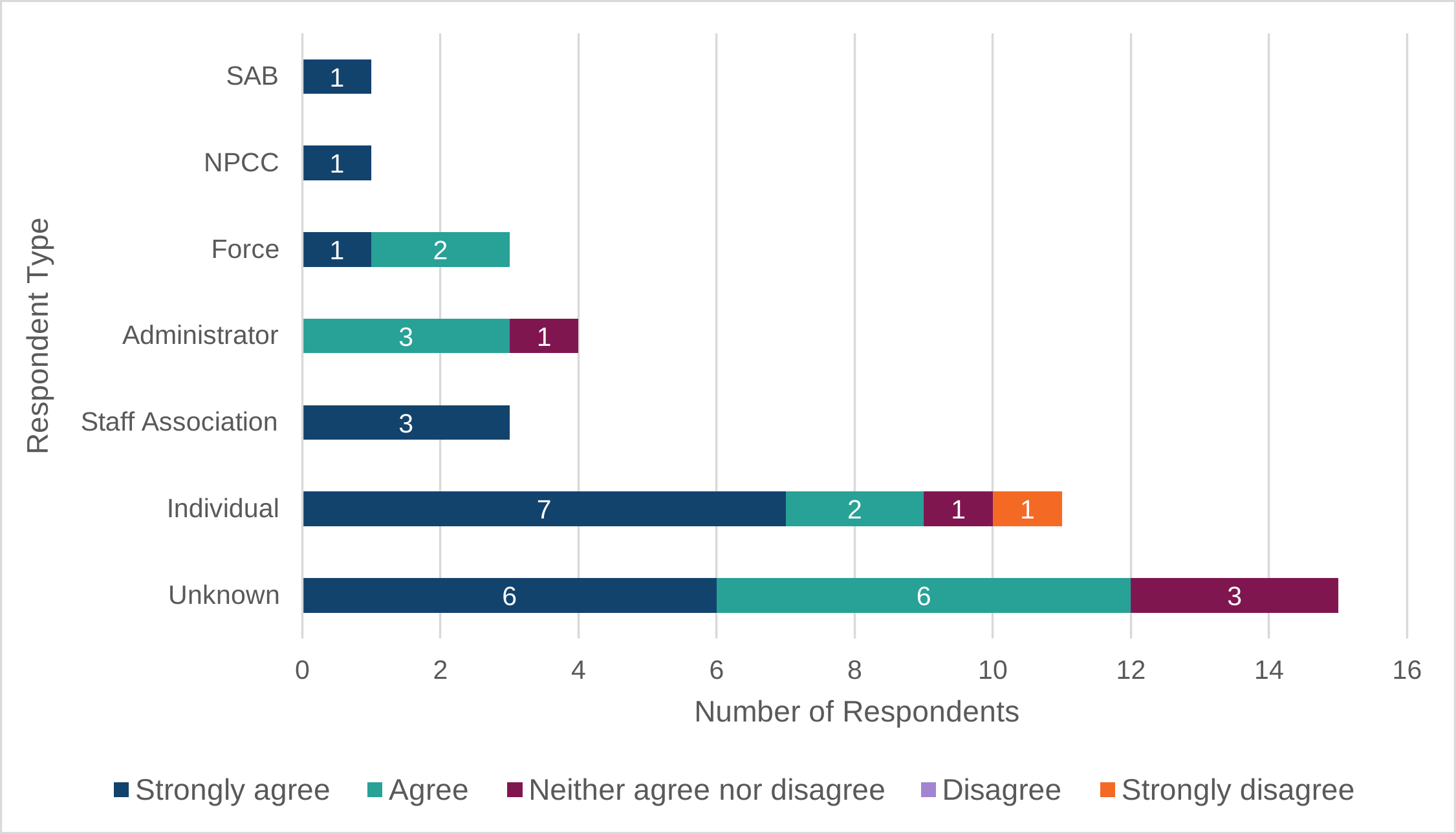
| Respondent type | Strongly agree | Agree | Neither agree nor disagree | Disagree | Strongly disagree |
|---|---|---|---|---|---|
| SAB | 1 | 0 | 0 | 0 | 0 |
| NPCC | 1 | 0 | 0 | 0 | 0 |
| Force | 1 | 2 | 0 | 0 | 0 |
| Administrator | 0 | 3 | 1 | 0 | 0 |
| Staff association | 3 | 0 | 0 | 0 | 0 |
| Individual | 7 | 2 | 1 | 0 | 1 |
| Unknown | 6 | 6 | 3 | 0 | 0 |
Question 1. Please give your reasons for agreeing or disagreeing with this proposal.
27. Of the 38 respondents, 26 provided reasons for agreeing or disagreeing with this proposal. These responses have been analysed in line with responses to question 1, with key themes summarised below.
Strongly disagree
28. One of the respondents selected that they strongly disagreed with the proposal. This is due to the perception that the change is a cost saving exercise which will be detrimental to officers. They feel that there have been a number of changes over the years to the pension scheme, causing confusion amongst pension administrators and members. They argue that policing morale is currently very low and fear that another pension scheme change would add to that.
Disagree
29. None of the respondents selected that they disagree with the proposal.
Neither agree nor disagree
30. One response from a pension administrator questioned whether there is value in making the proposed amendment as the annual allowance threshold has increased from £40,000 to £60,000 in the year 2023/24, and therefore less likely that pension growth resulting from the misaligned CPI will exceed the threshold.
31. Responses from one individual expressed frustration at changes and confusion to the pension scheme, which is now different from that which they joined originally; whilst another individual was unsure how much of a difference moving the date by 5 days would make where one year would be slightly longer than the next when being revalued.
Agree
32. 13 out of the 38 responses to question 1 agreed with the proposals, of which 9 provided their reasoning. Several respondents agreed in principle with the proposed changes. Pension administrator XPS Group[footnote 3] caveat their agreement subject to “the change not resulting in unintended detrimental financial consequences for members”.
33. The Society of Pension Professionals (SPP)[footnote 4], as well as a small number of respondents from one police force, operating within pensions and senior roles, stated that the proposal appears to be a simplification because it aligns dates. The SPP summarise their consideration as “some potential downsides but these appear minimal and primarily relate to the first year of transition i.e. Some members could see a one-off distortion of pension growth during the changeover year, and depending on inflation timing, members might gain or lose slightly. [However], the SPP believes the advantages outweigh the potential disadvantages, that the precedent of the NHS and LGPS schemes worked well and therefore agree with the proposals in principle.”
34. Some individual respondents who identified themselves as serving police officers also agreed that the proposal seems to simplify the revalue dates for members. Though one respondent expressed concern around the change, noting that “may alter the timing of pension growth for some members, so clear transitional arrangements and member communication will be very important”.
Strongly agree
35. 19 out of the 38 responses to question 1 strongly agreed with the proposal to align the revaluation date with the start of the tax year. These respondents were a mixture of individual police officers at various ranks, a pensions manager at a police force, staff associations, and the NPCC.
36. Individuals responded that the proposals would “provide financial clarity and consistency”, with the proposals seeming “to provide a fairer set of consequences to scheme members than are currently in place”, and agreement amongst a several individual respondents that the proposed change of “moving revaluation to 6 April would ensure the same CPI is used at both ends of the annual allowance (AA) test, improving fairness, predictability, and consistency with other public service schemes (e.g., NHS/LGPS), without altering members’ underlying benefits.”
37. NPCC strongly supports the proposal believing that it resolves a long-standing issue and improves fairness for members. “However, any change must be implanted with clear legislation issued in good time and with no retrospective effect. NPCC support the proposal so long as the changes can be delivered without creating unnecessary risk or cost for forces, administrator or members.”.
Government response to Question 1
38. The government has considered the responses to Question 1. A clear majority of respondents either agreed or strongly agreed that the proposal should be implemented. While neutral and dissenting views were also considered, the Government considers that aligning the scheme revaluation date with the start of the tax year is an appropriate and proportionate change.
39. The government recognises that some respondents expressed concerns about the impact of further pension changes, including in the context of recent reforms such as the McCloud remedy and associated complexities. While this consultation relates to a separate issue, these views have been noted and carefully considered.
40. The government agrees with respondents that clear and timely communication will be critical to ensure that members and administrators understand the changes and their implications. The Home Office will work with stakeholders to ensure appropriate guidance and supporting information is provided.
41. The Statutory Instrument (SI) will be available at a later date but will be ahead of the introduction of 2027/2028. This will not be consulted upon. However in lieu of the SI being available at the same time as this response, the Home Office will provide assurance to Scheme Managers to begin the necessary administration system updates whilst the SI is being developed.
Question 2. Do you think aligning the 2015 CARE scheme revaluation date with the start of the tax year will have any unintended consequences?
42. The consultation received 38 responses to question 2.
43. While 33 respondents provided a response to the closed question, a further five respondents provided only free-text comments. Where a clear view was expressed in these comments, responses were mapped to the most appropriate category.
44. Responses were categorised as indicating “Yes” where respondents identified any potential unintended consequence, including transitional or administrative impacts, even where these were described as limited or manageable. Responses were categorised as indicating “No” where respondents explicitly stated that they did not consider the proposal would give rise to unintended consequences. Responses were categorised as “unclear” where respondents did not provide a clear or definitive view on whether the proposal would give rise to unintended consequences.
45. The majority of respondents (21 out of 38) did not anticipate unintended consequences. A further 15 respondents identified potential issues, while two did not express a clear view. The potential unintended consequences identified included short-term distortions in the transition year, administrative complexity, and the need for clear communication.
Question 2. Please provide us with the evidence or reasoning to support this.
46. Of the respondents who identified potential unintended consequences, some, including both individuals and expert pensions organisations, commented on a potential one-off distortion in pension growth during the changeover year. Depending on inflation timing, respondents suggested this could see members gain or lose slightly. Accompanying these comments of potential unintended consequences is the need for clear communication and arrangements so that members and scheme administrators understand the exact changes and impacts.
47. One individual respondent believed that the proposed change appeared to be a pension cost saving exercise which is detrimental to members. Whilst another expressed their frustration with not understanding the purpose of the consultation and that they believe changes will cause more confusion. They expressed that they don’t know what their pension is worth or if other changes will be coming in the future.
48. The 21 respondents who did not anticipate any unintended consequences are a mix of NPCC, individual members, police force and staff associations. These respondents all provided either “No”, or “No” with caveats, with many going on to provide their reasoning. Two of the staff associations caveated that there would not be unintended consequences as long as the administrators and software providers manage the change efficiently and effectively.
49. Two respondents were unclear whether there would be any unintended consequences using the free text box to respond that they were “not sure” if there would be.
Table 1: Do you think aligning the 2015 CARE scheme revaluation date with the start of the tax year will have any unintended consequences?
| Response | Number of Respondents |
|---|---|
| No - There will be no unintended consequences | 21 |
| Yes - There will be unintended consequences | 15 |
| Respondent unclear whether there will be unintended consequences | 2 |
Figure 4: Responses to Question 2 by respondent type
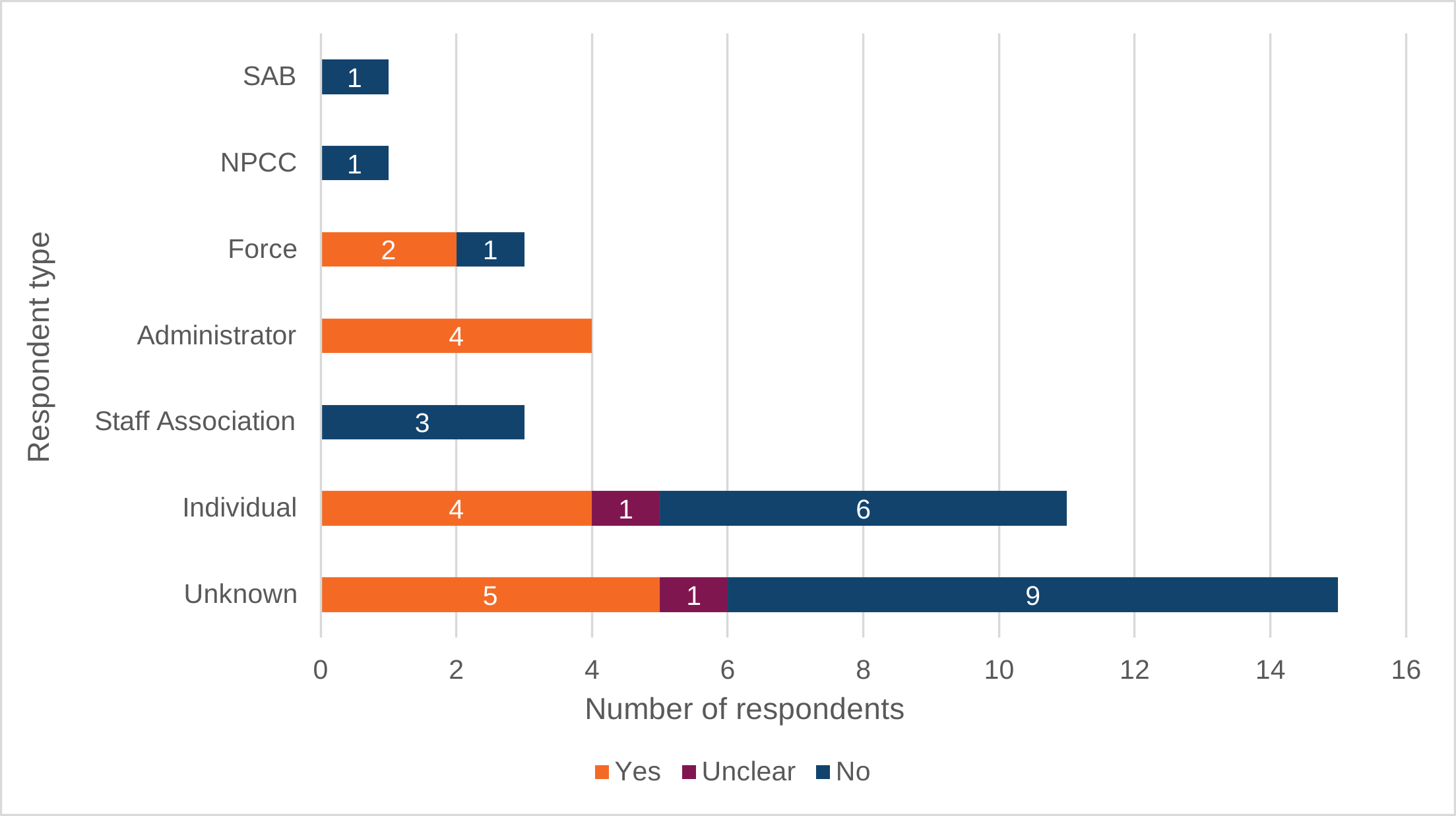
| Respondent type | Yes | Unclear | No |
|---|---|---|---|
| SAB | 0 | 0 | 1 |
| NPCC | 1 | 0 | 1 |
| Force | 2 | 0 | 1 |
| Administrator | 4 | 0 | 0 |
| Staff association | 0 | 0 | 3 |
| Individual | 4 | 1 | 6 |
| Unknown | 5 | 1 | 9 |
Government response to Question 2.
50. The government has carefully considered the responses to Question 2. While the majority of respondents do not anticipate significant unintended consequences arising from aligning the revaluation date with the start of the tax year, several respondents raised concerns relating to transition year impacts, potential short‑term distortions in pension growth, and the practical complexities of implementation. Respondents highlighted the importance of ensuring sufficient clarity for members and administrators, especially where outcomes may vary depending on inflation patterns or individual circumstances.
51. The government acknowledges these concerns and agrees there may be limited, short-term effects during the first year of implementing the alignment. However, these are expected to be temporary and are outweighed by the longer-term benefits of improved consistency and fairness in the way pension growth is assessed for tax purposes. The government recognises the importance of clear communication and will work with NPCC to ensure appropriate support is provided to understand the changes.
52. Overall, in light of the responses, the government considers that the potential unintended consequences identified do not outweigh the benefits of the proposed change and can be effectively managed through careful implementation and communication.
Question 3. What date do you think this should be implemented from?
53. The consultation received 35 responses to question 3. The majority suggested that 2027/2028 is the most appropriate date for implementation.
54. In one instance, a respondent did not select a response to the closed question but expressed a clear preference in their accompanying comments. This was mapped to the appropriate response category and included in analysis of the closed question.
Table 2: What date do you think this should be implemented from?
| Response | Number of Respondents |
|---|---|
| 2027/2028 | 20 |
| 2028/2029 | 5 |
| Other | 9 |
| No date preference provided | 3 |
| No Consensus reached | 1 |
Figure 5: Responses to Question 3 by respondent type
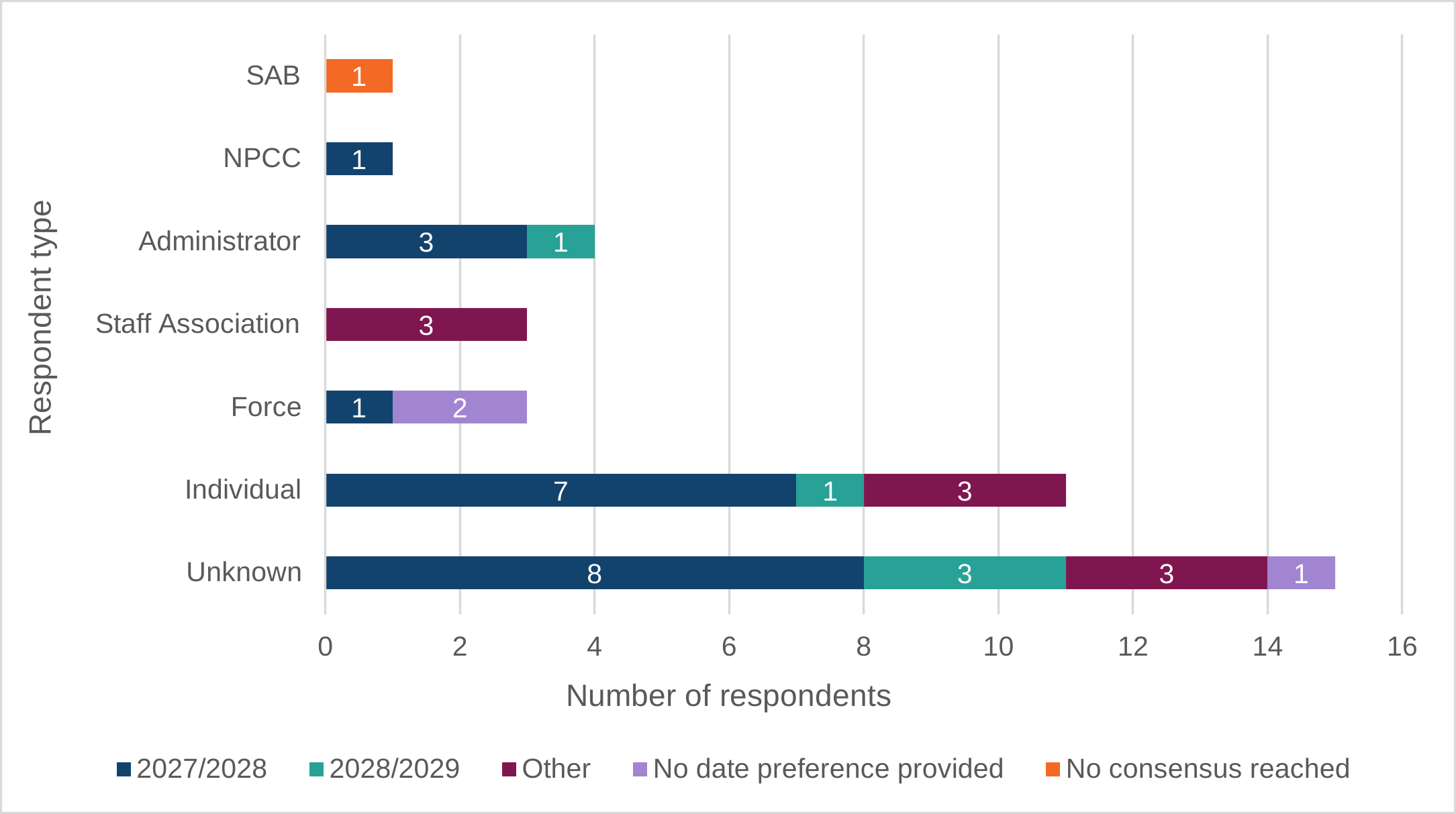
| Respondent type | 2027/2028 | 2028/2029 | Other | No date preference | No consensus reached |
|---|---|---|---|---|---|
| SAB | 0 | 0 | 0 | 0 | 1 |
| NPCC | 1 | 0 | 0 | 0 | 0 |
| Administrator | 3 | 1 | 0 | 0 | 0 |
| Staff association | 0 | 0 | 3 | 0 | 0 |
| Force | 1 | 0 | 0 | 2 | 0 |
| Individual | 7 | 1 | 3 | 0 | 0 |
| Unknown | 8 | 3 | 3 | 1 | 0 |
Question 3. Please provide evidence or reasoning to support your answer to Question 3.
55. Of the 38 respondents, 34 provided reasoning for which implementation date should be used. These responses have been analysed in line with responses to question 3, with key themes summarised below.
2027/2028
56. 20 respondents selected their preferred implementation date to be 2027/2028.
57. Respondents who favoured the 2027/2028 implementation date largely preferred this due to the lead in time required for software changes and appropriate communication for members. This includes pension administrators and the NPCC, who represent the police force as an employer.
58. Some of the respondents who selected 2027/2028 provided their reasoning that they wanted the changes implemented sooner rather than later. Some cited the NHS and LGPS have successfully implemented these changes and so see no reason why the police scheme should be delayed.
59. Pension administrators who provided responses indicated that software developments generally require a 6-12-month lead in time, once final requirements are known. This is due to work being scheduled two to three releases in advance, with enhancements delivered on a quarterly basis.
60. It has also been requested that legislation is drafted alongside the consultation response to ensure that scheme administrators and scheme managers are sighted on the regulation changes to ensure software updates are developed in time.
61. Some individual police officers responded selecting 2027/2028. Their views were that it provides an appropriate balance between allowing administrators and members sufficient time to prepare for the change, whilst avoiding any more delays in delivering the benefits of the CPI alignment. They feel that the changes should be communicated well in advance with clear transitional guidance for members and administrators.
2028/2029
62. 5 respondents selected the implementation date to be 2028/2029.
63. Respondents who supported a 2028/2029 implementation date cited the significant administrative burden arising from ongoing legislative and regulatory changes, alongside the need for system reprogramming and payroll interface updates. It was also noted that deferring implementation to 2028 would help mitigate member communication fatigue associated with another pension scheme change. This view was expressed by both pension administrators responsible for delivery and individual police officers.
Other
64. 9 respondents selected the implementation date as “other”, reflecting a range of views that sit outside the main options.
65. A number of these responses came from individual serving police officers expressing strong opposition to the proposed change. These respondents questioned whether the policy should be implemented at all and linked their concerns to broader dissatisfaction with recent pension reforms, including the McCloud remedy and perceived delays in resolving outstanding issues. These responses reflect a wider sentiment of frustration and reduced trust, with respondents emphasising the cumulative impact of repeated changes to pension arrangements. In particular, some highlighted a lack of clarity and accessible information, stating that without a clear explanation of the rationale, benefits, and potential drawbacks of the proposal, it is difficult to assess whether the change is in members’ interests.
66. Other respondents selecting “other” expressed support for earlier implementation, including from 2026/27, or for the change to be applied retrospectively once introduced. These views were expressed by both individual officers and the three staff associations. These respondents argued that members have already been adversely affected by the current arrangements and that delays in implementation risk prolonging these impacts. In some cases, retrospection was presented as a means of addressing past outcomes and ensuring that members are not disadvantaged by the timing of the policy change.
No consensus reached
67. The SAB did not reach a consensus on the implementation date, with two distinct positions emerging. Member representative groups generally support earlier implementation, drawing on previous SAB support for April 2026, and raise concerns that current impacts on members may be understated. They also suggest that retrospective application should be considered to avoid disadvantaging officers due to delays, noting the potential scale of impact may be limited.
68. In contrast, employer representatives, including the NPCC, consider April 2027 to be the earliest feasible implementation date, due to the need for draft regulations before system development can begin. They also oppose retrospective application on the grounds that it would create a disproportionate resource burden. The Association of Police and Crime Commissioners (APCC) aligns with this position.
Government response to Questions 3
69. The government has carefully considered the responses to Question 3, including the preferred implementation dates and supporting evidence provided by respondents.
70. This area of the responses is where the key policy tensions lie. The government has considered very carefully, balancing the implementation and delivery with the members and their experience.
71. While a range of views were expressed, the majority of respondents favoured implementation from 2027/2028, citing the need for sufficient lead time to enable system changes, legislative preparation, and clear communication to members. In particular, employers, administrators, and software providers emphasised that development cannot begin until draft regulations are available and typically requires a defined lead-in period to ensure accurate delivery.
Retrospection
72. The government also notes that some respondents, including member representative bodies, advocated for earlier implementation, including from 2026/27, and in some cases suggested that the change should be applied retrospectively. These views were primarily driven by concerns about fairness and the desire to address perceived impacts under the current arrangements.
73. The government recognises the fairness concerns raised by some respondents, particularly in relation to past impacts. However, the Home Office is unable to make this change retrospective due to HM Treasury legislation. The wording within the Public Service Pension Revaluation Order specifies that the 6 April effective date for the index adjustment is for NHS and Local Government Pension Schemes, for all the other public service pension schemes this date is 1 April. The Home Office has no power to apply the CPI alignment retrospectively to an earlier scheme year.
74. The government does not believe that it is generally appropriate to alter the value of previously accrued public service pensions retrospectively. Furthermore, the legislative framework for the revaluation of public service pensions provided by the Public Sector Pensions Act 2013 means that there is no straightforward way to alter the effect of past Revaluation Orders. The Revaluation Orders have a one-off effect and stop being relevant once the revaluation has occurred.
75. Pension benefits and accrued rights are possessions and are therefore protected under Article 1 Protocol 1 European Convention of Human Rights (ECHR). Reopening closed pension calculations from a previous year could create financial uncertainty, lead to additional tax liabilities on individual circumstances that the Home Office would not be aware of. This could also lead to practical member impacts creating unexpected annual allowance breaches or tax charges for years already filed.
76. Any administrative disruption due to retrospection could include reopening closed tax years, reissuing of pension saving statements, or revision of “scheme pays” provisions where the scheme can pay the annual allowance tax charge in exchange for a reduction in their pension benefits. Both the administrative disruption and the practical member impacts could cause disruption to members’ financial planning and undermining confidence in pensions. The perception that the rules are changing after the fact for members may not be well received.
77. Having considered the full range of responses, the government considers that implementation from 2027/2028 represents the most appropriate and proportionate approach. This allows sufficient time for scheme administrators and employers to prepare for the change, reduces the risk of errors or operational disruption, and ensures that the policy can be delivered effectively. The government does not consider retrospective implementation to be appropriate, given the operational complexity and resource implications identified by respondents, and the potential for uneven outcomes.
Question 4. Do you have any additional comments or considerations you would like the Home Office to be aware of regarding the proposed changes?
78. 19 responses were received for Question 4. These responses largely reiterated themes raised elsewhere in the consultation, with respondents emphasising the importance of clear communication, careful implementation, and ensuring fair outcomes for members.
Government response to question 4.
79. The government will work closely with stakeholders to ensure that implementation is supported by clear legislation, appropriate guidance, and timely communication to members and administrators.
80. Respondents highlighted fairness considerations, including the need to ensure that no group of members is disproportionately disadvantaged and that transitional arrangements are clearly explained. The government has taken these points into account and will address them through implementation planning, including in relation to the transition period.
81. In addition, some respondents reiterated views on implementation timing and the potential for retrospective application. These views have been considered alongside the responses to earlier questions and have informed the government’s overall approach to implementation.
82. Overall, the government considers that the issues raised in response to Question 4 can be addressed through careful implementation planning, clear communication, and ongoing engagement with stakeholders.
Response conclusion and next steps
Transition year
83. When the scheme changes its revaluation date from 1 April to 6 April, there has to be one transition year where the pension tax calculation straddles the old system and the new system.
84. The government notes that tax year 2027 to 2028 will be the transitional tax year to facilitate the change in the scheme revaluation date from 1 April to 6 April.
85. As a result, the revaluation for pension built up to 31 March 2028 will not be applied until 6 April 2028, falling after the end of the 2027 to 2028 tax year. Therefore, instead of being included in the 2027 to 2028 closing value, it will move into the next tax year as part of the 2028-2029 closing value.
86. Consequently, the transitional tax year will have a lower closing value compared to the value if it were calculated on the current timetable using a 1 April 2028 revaluation date. This will then feed through into a lower pension input amount given the opening value remains unchanged.
87. Following the transitional year, revaluation will occur each tax year on 6 April. This means that the timing will be aligned, with the same CPI year used consistently in the tax calculations.
88. The government wants to reassure members who retire during tax year 2027 to 2028 that they will receive the appropriate proportion of the in-service revaluation, known as the ‘leaver index adjustment’, on 6 April 2028.The government will work with the sector to support proactive and clear communications on this adjustment.
Government conclusion
- Amendments will be made to the Police Pension Regulations 2015 to ensure the scheme revaluation date is moved from 1 April – 31 March, to 6 April – 5 April.
- Amendments will also be needed to be made to HM Treasury’s Revaluation Order to include the Police Pension Scheme for England and Wales within its scope, which is published each year.
- Amendments will not be made retrospectively but will apply prospectively to the 2015 scheme.
89. The government has carefully considered the full range of consultation responses, including the strength of stakeholder support, the evidence provided, and the operational and implementation considerations raised.
90. Responses demonstrated clear and broad support for addressing the misalignment between the scheme year and the tax year, which can result in inconsistent CPI measures being used in pension tax calculations. The government agrees with respondents that this misalignment can lead to artificial volatility in pension input amounts and unintended tax outcomes, particularly during periods of inflation volatility, and that aligning the revaluation date will improve fairness, transparency, and consistency in the assessment of pension growth.
91. The government also recognises the importance of ensuring that the policy can be implemented effectively and with sufficient notice. Having considered the views of employers, administrators, and representative bodies, the Government has concluded that implementation from the 2027 to 2028 scheme year represents the most appropriate and proportionate approach, allowing adequate time for legislative changes, system development, and clear communication to members.
92. While some respondents advocated for earlier or retrospective implementation, the government has carefully considered these views and concluded that retrospective application would not be appropriate, given the legal constraints, operational complexity, and the potential for unintended and uneven impacts on members.
93. The government will continue to work closely with stakeholders, including scheme managers, administrators, and representative bodies, to support effective implementation. This will include providing clear and timely guidance, supporting system changes, and ensuring that members are given sufficient information to understand the impact of the change, including in relation to the transition year.
Equality Impact Assessment
Equalities
94. The Public Sector Equality Duty is set out in section 149 of the Equality Act 2010 and requires public authorities, in the exercise of their functions, to have due regard to the need to:
- eliminate unlawful discrimination, harassment and victimisation and other conduct prohibited by the 2010 Act
- advance equality of opportunity between people who share a relevant protected characteristic and those who do not
- foster good relations between people who share a relevant protected characteristic and those who do not
95. This involves having due regard, in particular, to the need to:
- remove or minimise disadvantages suffered by people due to their protected characteristics
- take steps to meet the needs of people from protected groups where these are different from the needs of other people
96. The equality duty covers the 9 protected characteristics: age, disability, gender reassignment, marriage and civil partnership, pregnancy and maternity, race, religion or belief, sex (gender) and sexual orientation.
97. More information on the PSED can be found here: https://www.gov.uk/government/organisations/home-office/about/equality-and-diversity
98. The proposed change is a technical amendment to the timing of pension revaluation and does not alter:
- the rate of pension accrual;
- the level of pension benefits payable; or
- the underlying structure of the scheme.
99. The proposed changes are technical amendments to fix the CPI mismatch affecting pension input calculations and CARE revaluation in current 2015 scheme and the earlier 1987 and 2006 schemes.
100. The Home Office has considered the impact of the proposed changes and concluded they do not directly engage with any of the protected characteristics. Keeping the current rules could unfairly increase tax charges for older members with longer service, or officers in more senior ranks with a larger salary, especially during periods of high inflation.
Consultation principles
101. The principles that government departments and other public bodies should adopt for engaging stakeholders when developing policy and legislation are set out in the Cabinet Office Consultation Principles 2018:
Consultation principles: guidance - GOV.UK
Annex A – use of Artificial Intelligence
102. Large language models were used to support the initial analysis of the consultation responses. Specifically, OpenAI models were used to summarise the consultation document, stakeholder submissions, supporting research, and meeting transcripts. The prompts to create these summaries were developed and processed by the Government Actuary’s Department. These summaries were reviewed against the source material and quality assured officials before being used in subsequent stages of the analysis.
103. Once quality assured, the summaries were combined into a Master Prompt which was used to support the team with their analysis using Copilot. The Master Prompt was developed by the Government Actuary’s Department and was designed to constrain Copilot’s responses to the relevant context as far as possible. Copilot was then used to help officials explore themes, retrieve information and interrogate the evidence.
104. All outputs were subject to human oversight, including checking against source material and ensuring conclusions reflected the evidence. Limitations of the use of large language models were recognised. For example, the tool may simplify mixed evidence, overlook dissenting views, or draw connections not fully within the source material. To manage these limitations, several safeguards were put in place. The Master Prompt instructed Copilot to draw only on the collated source material and to cite the origin of its answers, so that responses could be traced and challenged. A limit was placed on the number of exchanges with Copilot in any single session, beyond which the chat was refreshed. This reduces the risk of the model losing context or drawing on its broader training. Officials were directed to probe responses, ask for supporting evidence, and test for alternative perspectives rather than accept outputs at face value.
105. The use of large language models does not replace expert judgement, and outputs were treated as analytical support for officials. Decisions on the interpretation of consultation responses, the treatment of differing views, the weight given to evidence and the conclusions reached remained the responsibility of officials. The final analysis and consultation response were reviewed by analysts and policy officials to ensure they accurately reflected the underlying evidence.
106. Information shared with OpenAI is not used to train their models and was transiently processed, meaning it was processed to generate responses and not retained for model training purposes.
Annex B – List of respondents
- 10 police officers across a range of ranks (Constable to Superintendent)
- 3 Pension and People leads from 2 Police Forces
- 3 pension administrators and software providers
- National Police Chief’s Council - representing scheme managers across the 43 Police forces in England and Wales.
- Police Federation of England and Wales - Voicing the views of more than 145,000 rank and file police officers, PFEW is the official body that exists to represent and support police officers on issues such as pay, pensions, allowances, terms and conditions, as well as advising and lobbying on operational policing issues and influencing legislation.
- Police Superintendents’ Association - The PSA currently represents 1,565 serving superintendents and chief superintendents, along with retired members, across 49 police forces with regards to matters of PENSIONS and PAY. In addition to the 43 Home Office police forces, it also represents members in the British Transport Police (BTP), the Civil Nuclear Constabulary (CNC) and the crown dependency of the Isle of Man and British Overseas Territories of Bermuda and Gibraltar, namely the Royal Gibraltar Police and the Royal Gibraltar Defence Police.
- Chef Police Officers Staff Association – CPOSA represents Chief Police Officers and Staff
- The Society of Pension Professionals
- The Police Pensions Scheme Advisory Board for England and Wales
- 15 respondents where this information was not specified
© Crown copyright 2026
This publication is licensed under the terms of the Open Government Licence v3.0 except where otherwise stated. To view this licence, visit nationalarchives.gov.uk/doc/open-government-licence/version/3
Where we have identified any third party copyright information you will need to obtain permission from the copyright holders concerned.
This publication is available at:
https://www.gov.uk/government/consultations/police-pension-scheme-2015-cpi-revaluation
Any enquiries regarding this publication should be sent to us at: PolicePensionConsultations@homeoffice.gov.uk.
-
https://www.gov.uk/government/publications/ai-playbook-for-the-uk-government/artificial-intelligence-playbook-for-the-uk-government-html#principle-1-you-know-what-ai-is-and-what-its-limitations-are ↩
-
As it was optional for respondents to provide any details about themselves, there are some who are marked as “unknown” for the purposes of the graphs. ↩
-
XPS Group administer 33 of out 43 police force pensions - but they are not solely police pension administrators. ↩
-
The SPP is the representative body for a wide range of providers of advice and services to pension schemes, trustees and employers. ↩