Legislative proposals to address broadband rollout in leasehold flats: government response
Updated 19 November 2026

© Crown copyright 2026
This publication is licensed under the terms of the Open Government Licence v3.0 except where otherwise stated. To view this licence, visit nationalarchives.gov.uk/doc/open-government-licence/version/3 or write to the Information Policy Team, The National Archives, Kew, London TW9 4DU, or email: psi@nationalarchives.gov.uk.
Where we have identified any third party copyright information you will need to obtain permission from the copyright holders concerned.
This publication is available at https://www.gov.uk/government/consultations/legislative-proposals-to-address-broadband-rollout-in-leasehold-flats/outcome/legislative-proposals-to-address-broadband-rollout-in-leasehold-flats-government-response
1. Executive Summary
The government previously consulted on proposals to improve the ability of residential leaseholders to seek gigabit-capable broadband in multi-dwelling units (blocks of flats). Following machinery of government changes on 20 July 2026, responsibility for this policy transferred from the Department for Science, Innovation and Technology to the Department for Digital, Culture, Media and Sport (DCMS).
Following consultation and further policy development, the government intends to legislate through the Commonhold and Leasehold Reform Bill. The legislation will imply terms into certain leases, giving requesting tenants of flats a clear, enforceable and time-bound route to request the deployment of gigabit-capable broadband to their building and obtain a properly evidenced response confirming whether deployment is technically possible in the building. Where necessary, broadband deployment requests will be passed through the leasehold chain until they reach the responsible person for the building to which the request relates (the responsible person being as defined in the legislation). Subject to specified exceptions, the responsible person will be required to consult at least 2 relevant operators, take all reasonable steps to find out relevant information from other parties involved in the ownership or management of the building, and respond to the requesting tenant within a specified period. The response will set out whether deployment is technically possible or not, based on information provided by relevant operators, or explain where a specified exception applies.
The key elements of the measures are summarised below:
-
A requesting tenant will be able to make a request to their landlord under the lease for the deployment of gigabit-capable broadband to their building (irrespective of whether an existing gigabit-capable broadband connection is already available in the relevant building). The provisions apply through terms implied into eligible leases.
- Where necessary, a broadband deployment request will be passed through the leasehold chain until it reaches the responsible person for the building to which the request relates. This is intended to ensure that complex ownership arrangements do not prevent a request from progressing.
- Subject to specified exceptions, the responsible person will be required to consult at least 2 relevant operators, take all reasonable steps to find out relevant information from other freeholders and, where applicable, a right to manage company (RTM) or tribunal-appointed manager (TAM), and respond within a specified period.
-
The response will provide the requesting tenant with the outcome of that process, based on information provided by relevant operators, or explain where a specified exception applies.
- Requests made close together in relation to the same building can be dealt with together, avoiding unnecessary duplication, and requesting tenants cannot be required to meet costs incurred by another person in connection with their request.
The measures do not grant rights to access a building, require broadband to be installed or confer rights under the Electronic Communications Code (‘the Code’). Any subsequent deployment remains subject to the existing legal framework and any necessary rights or consents.
This approach responds to the need for requesting tenants to have a dependable route to secure engagement, while ensuring the measures remain proportionate and avoid promising an installation that may depend on subsequent Code negotiations and other matters.
2. Introduction
2.1 Background
High-speed digital infrastructure is increasingly essential for everyday life. Access to gigabit-capable broadband supports the government’s wider ambition to break down barriers to opportunity, especially for young people, and strengthens the digital foundations on which communities, public services and economic growth increasingly depend. Increased access will help more people and places share in the benefits of the UK’s digital economy and support continued investment in digital infrastructure. The government remains committed to delivering nationwide gigabit-capable broadband coverage by 2032, reaching a minimum of 99% of premises across all populated areas of the UK. According to Ofcom’s Connected Nations Spring 2026 report, as of January 2026, 88% of UK premises can access a gigabit-capable connection.
Access to gigabit-capable broadband supports greater digital participation and better access to employment, education, healthcare and online public services, as well as improved opportunities for remote and flexible working. Residents of multi-dwelling units are more likely than residents of other property types to be younger and to belong to an ethnic minority or minority religion, and improved connectivity in these buildings is therefore likely to support wider digital inclusion. By helping people access work, education, public services and social opportunities, improved connectivity can support more inclusive participation in modern life, feeling proud and part of the places we live, and help ensure that the benefits of digital opportunity are felt in every postcode.
Despite significant progress, deployment to flats, particularly leasehold flats, continues to lag other property types, and the gap is most marked in urban and suburban areas. Using Building Digital UK (BDUK) Open Market Review, HM Land Registry data and Ordnance Survey data, we find that, as of May 2026, there were approximately 1.13 million flats in England and Wales without access to a gigabit-capable connection. This represents 18.8% of self-contained flats, compared with 11.0% of all premises types. Of these c.1.13 million, an estimated 633,000 are leasehold flats that may miss out on a gigabit-capable broadband connection and would be likely to benefit from this intervention.
The government has identified a number of barriers that can slow or prevent deployment in multi-dwelling units, including difficulties identifying the parties responsible for facilitating deployment and securing timely engagement once those parties have been identified. Existing mechanisms under the Code, including the provisions introduced by the Telecommunications Infrastructure (Leasehold Property) Act 2021 for cases where parties are entirely unresponsive, have not fully addressed these challenges.
In December 2025, the Department for Science, Innovation and Technology published a consultation entitled “Legislative proposals to address broadband rollout in leasehold flats”. The consultation ran for 9 weeks, closing on 16 February 2026. It sought views on proposals to introduce measures to create:
- a new right for residential leaseholders in buildings containing 2 or more dwellings to formally request a gigabit-capable broadband connection from their freeholder;
- a corresponding duty on freeholders not to unreasonably refuse such a request, supported by a clear, time-bound process.
These proposals were intended to be a proportionate intervention, designed to encourage constructive engagement between freeholders and network operators, rather than granting operators automatic rights of access. The measures would operate alongside, and not replace, existing provisions under the Code. A Code agreement between the relevant parties would still be required before any deployment could take place.
Following consultation and further policy development, the refined approach described in the Executive Summary focuses on requiring the responsible person to make specified enquiries and provide requesting tenants with a properly evidenced response about the technical possibility of a gigabit-capable broadband connection being installed to a building. The approach takes account of different ownership and management structures for blocks of flats.
2.2 Responses Received
The consultation received 52 responses from a broad range of stakeholders. Responses were submitted through the online survey and by email. Respondents included network operators and telecommunications trade bodies; professional freeholders, property management companies and estate agencies; resident management companies and residential support groups; individual leaseholders and renters; local authorities and other parties interested in connectivity.
Chart 1: Breakdown of respondents to the consultation
| Respondents to consultation | Number of responses |
|---|---|
| Telecommunications operators and industry stakeholders | 18 |
| Freeholders and property management organisations | 11 |
| Leaseholders and residents | 15 |
| Legal and professional services | 1 |
| Local authorities | 2 |
| Other or not specified | 5 |
The government is grateful to all respondents to the consultation for taking the time to submit their views. All consultation responses have been considered as part of policy development, although for brevity, the government has not commented on all responses individually.
This document sets out the government’s response to the consultation. For each policy area, it summarises the consultation position, the responses received, and the government’s response, including any changes to the proposals in light of consultation feedback and policy development. The full list of questions included in the consultation is detailed in Annex A.
3. Empowering Leaseholders and Supporting Gigabit Broadband Deployment
The government welcomes the broad support received during consultation for measures to address barriers to gigabit-capable broadband deployment in blocks of flats. Consultation responses reinforced the government’s view that leaseholders and network operators can face difficulties progressing connectivity improvements. This is especially the case where building ownership and management arrangements are complex, the appropriate person to engage with is unclear, or engagement with deployment requests is non-committal.
For the purposes of these measures, references to a ‘tenant’ mean a tenant under a qualifying long lease (i.e. a leaseholder), rather than a tenant in the private or social rented sector.
Having considered the consultation responses, the government has refined its approach while remaining committed to empowering leaseholders to raise connectivity requests and secure meaningful engagement from those responsible for their building. The final measures therefore establish a clear, proportionate and enforceable lease-based process through which eligible leaseholders can request consideration of gigabit-capable broadband deployment.
The measures are designed to improve transparency and encourage engagement between leaseholders, landlords, intermediary parties and broadband operators. They will aid requests being routed to appropriate decision-makers for a building, ensuring that operators are consulted, and that requesting tenants receive meaningful information about a gigabit-capable broadband deployment within defined timeframes. In doing so, the measures provide leaseholders with a clearer and more effective route to pursue improved connectivity in their building.
The government has also sought to ensure that the process operates effectively across a wide range of ownership and management structures, including complex leasehold arrangements, while supporting consumer choice and competition in the broadband market. The measures encourage constructive engagement and help ensure that deployment opportunities are properly explored rather than being delayed by uncertainty or inaction.
The measures are targeted at addressing practical barriers to broadband deployment in flats, where evidence indicates that connectivity challenges remain disproportionately concentrated. At the same time, the government has carefully considered consultation feedback and refined aspects of the policy to ensure that the framework operates effectively across different building types and leasehold arrangements.
The government remains clear that the measures are intended to facilitate engagement and improve the flow of information, rather than mandate deployment outcomes. They do not confer installation rights on operators, require a landlord to agree to installation, or alter the existing framework governing access and deployment. Instead, they are intended to create better conditions for deployment by ensuring that leaseholders have a clear route to raise connectivity concerns and that those concerns receive proper consideration.
The measures will be introduced through the Commonhold and Leasehold Reform Bill and will apply in England and Wales. We continue to engage on broadband deployment issues elsewhere in the UK, including with the Scottish Government.
4. Policy Proposals, Consultation Responses and Government Response
4.1 Barriers to Deployment and the Impact of Proposals (Questions 1-14)
The consultation sought views on the nature and scale of barriers to gigabit-capable broadband deployment in blocks of flats, particularly leasehold flats. It identified difficulties for network operators in establishing the correct parties with whom to negotiate deployment arrangements, alongside a perceived lack of incentives for some freeholders to engage with operators. It asked whether these issues acted as barriers in practice and sought evidence on how often difficulties identifying the relevant party, reaching a Code agreement or obtaining a response had occurred, and how often respondents expected them to arise in future.
The consultation also invited respondents to identify other barriers to deployment and provide evidence of their frequency. It sought information on typical freeholder response times, the proportion of freeholders who had failed to engage with operators and the number approached. Respondents were asked to assess the effectiveness of existing mechanisms under the Code and the Telecommunications Infrastructure (Leasehold Property) Act 2021 in overcoming delays caused by non-responsive or uncooperative landowners, with examples. It also asked why freeholders might lack incentives to facilitate deployment and whether leaseholders themselves experienced difficulty securing upgrades because freeholders were hard to identify.
To inform assessment of the likely impact of intervention, the consultation sought data on projected deployment rates to flats both without the proposals and taking them into account. These questions were intended to help establish the extent of the problem and the additional deployment that the proposed measures might support.
4.1.1 Consultation Responses
Respondents broadly agreed that the barriers identified in the consultation are real and contribute to delays in deployment. While the difficulty of identifying the correct party to negotiate with was acknowledged, and in some instances the relevant parties remained unresponsive, the more significant challenge lies in securing timely and meaningful engagement once a party for a particular building has been identified. Network operators reported that prolonged silence or slow engagement (sometimes lasting months or years) from freeholders and other parties in the building management chain frequently results in buildings being removed from deployment plans, even where there is clear resident demand. The role of intermediate parties, such as resident management companies (RMCs), was a recurring theme, with many respondents highlighting that any intervention would need to reach parties beyond freeholders to be effective.
Respondents provided limited quantitative evidence on the precise number of additional premises the measures would serve, reflecting the demand-led nature of the proposals. However, there was a clear message that, without intervention, the gigabit-capable broadband coverage gap for leasehold flats would persist.
4.1.2 Government Response
The government’s analysis supports much of the content of responses received. Coverage tends to be lower for leasehold flats than for freehold flats. This gap is visible across the country, with leasehold flats’ overall coverage estimated to be 1.4% lower than freehold flats. The government considers that this reflects a practical issue: in leasehold buildings, the party whose agreement is needed for a connection is not usually the person who would directly benefit from it. As such, network operators can find it difficult to identify who to contact. Once they do so, further practical challenges can be faced given the number of intermediary bodies that may be engaged in the management of a building. While it is not always the case, the engagement network operators receive can be slow and result in prolonged communications or negotiations.
The measures set out below are intended to help address these issues without amending the Code. They are intended to ensure that requesting tenants receive a response within a designated time-period from their landlord under the lease, who will, in turn, engage with relevant operators.
The government recognises that these measures will not address every deployment issue raised, barrier to deployment or proposals noted in consultation responses. We recognise that their impact will also be shaped by leaseholder awareness, operator commercial priorities and the characteristics of individual buildings. However, the government considers that the measures represent a proportionate and necessary intervention to reduce delay and give requesting tenants a structured means of initiating engagement where existing mechanisms have not delivered.
4.2 Leaseholder right to request a gigabit-capable connection (Questions 15-22)
The consultation proposed a new right for residential leaseholders to request a gigabit-capable broadband connection from their freeholder. The consultation also sought views on how the right should apply across different building management arrangements and whether the scope should extend beyond residential leaseholders in flats.
The consultation set out that the right would be technology-neutral and apply to connections capable of delivering broadband services at download speeds of at least 1,000 Mbps. Although such connections are commonly delivered using fibre-optic cabling, the legislation would not prescribe a particular technology.
The right would apply individually to leaseholders holding residential leases originally granted for more than 21 years in buildings containing at least 2 dwellings. It would cover existing and future leaseholders, including those who also owned a share of the freehold but required another party’s consent for deployment. A leaseholder who has let their flat could exercise the right on behalf of their tenant.
The consultation proposed that the right should operate across different ownership and management structures, including:
-
buildings managed by RTM companies;
-
collectively enfranchised buildings;
-
buildings with intermediate leases, including shared-ownership arrangements; and
-
properties subject to a TAM.
Mixed-use buildings would be within scope where they contained more than one dwelling. However, the proposed right would not apply to leasehold houses or solely commercial premises because the evidence received by government principally concerned barriers affecting residential flats.
The government did not propose an equivalent right for commonhold unit owners. Commonhold arrangements already allow unit owners, with a seconder, to propose a vote to the commonhold association, including on installing gigabit-capable broadband. The limited number of existing commonhold units also reduced the case for a separate statutory process.
Social housing was also proposed to be excluded. The government considered that local authorities and housing associations could address deployment through existing guidance and agreements covering multiple buildings.
Overall, the proposal was intended to give residential leaseholders a clear route to initiate engagement while preserving the existing Code framework and focusing intervention on the property type where evidence indicated that barriers were greatest.
4.2.1 Summary of Responses
There was strong support for the introduction of a leaseholder right to request a gigabit-capable connection, with most respondents agreeing it should be available to any residential leaseholder of a flat. Respondents recognised that leaseholders currently lack an effective route to trigger engagement where freeholders are difficult to identify or unresponsive.
A small number of respondents questioned the need for a new right, arguing that existing mechanisms under the Code are sufficient or that freeholders already facilitate deployment where there is demand. Some respondents in buildings managed by RTM companies or under collective enfranchisement raised concerns that an individual leaseholder right could cut across existing collective decision-making arrangements.
On intermediate landlords, most respondents considered that the policy should capture structures where there may be multiple leases in places including intermediate leases/landlords, as well as RTMs, RMCs and TAMs. A smaller number argued that these parties should only have an administrative role.
Most respondents supported extending the right beyond residential leaseholders in flats to social housing, mixed-use buildings, commercial premises and renters. They believed that the same underlying barriers applied to these other property types and tenures. However, no substantive evidence was provided to support that view.
4.2.2 Government Response
The government welcomes the strong support expressed during consultation for measures that would give leaseholders a clearer route to request gigabit-capable broadband deployment in their building. Respondents recognised that leaseholders face difficulties in progressing deployment even in cases where network operators were prepared to deploy to the building in question.
The lease-based approach
The consultation proposed a new implied lease right for residential leaseholders to request gigabit-capable broadband deployment with a corresponding duty for freeholders not to unreasonably refuse. Following consultation and policy refinement, the government will continue to introduce a lease-based process through terms implied into relevant leases in England and Wales.
The final measures do not create a standalone right to request broadband deployment. They enable a requesting tenant to request gigabit-capable broadband deployment from their landlord under the lease and require the responsible person for the building to respond to the tenant on whether deployment is technically possible. In doing so, the measures provide a clear, effective and enforceable process for requesting tenants. The implied terms will apply to existing eligible leases and any leases agreed in the future. The broadband deployment request process is explained in section 4.3.2, and section 4.4.2 explains how such requests must be handled.
Targeting the measures
The consultation sought views on whether measures should extend beyond residential leaseholders in flats. While respondents generally supported wider application, the government remains of the view that intervention should be proportionate and targeted at the property types where evidence demonstrates the greatest barriers to deployment. The measures therefore continue to focus on tenants in multi-dwelling units, where deployment continues to lag other residential property types and tenants are often dependent on third parties to facilitate gigabit-capable broadband connectivity.
The government is continuing its engagement with local authorities and housing associations to support gigabit-capable broadband deployment for social renters and continuing to explore ways to support gigabit-capable broadband deployment in the private rental sector.
Gigabit-capable connections
In line with the consultation, the measures will remain technology neutral. The legislation will not prescribe fibre-optic cabling or any other technology providing it can provide a connection to a public electronic communications network capable of download speeds of at least 1,000 Mbps.
Eligible leases and buildings
The measures are intended to apply to a lease (whenever granted) in England and Wales if the lease is:
a) a long lease;
b) the lease is not a tenancy to which Part 2 of the Landlord and Tenant Act 1954 (business tenancies) applies;
c) the land demised by the lease:
i) forms part of a building;
ii) comprises or includes a residential unit; and
iii) is not commonhold land (as defined); and
d) the building of which the land demised by the lease forms part contains at least one other residential unit demised by a long lease.
A lease is a long lease if it is granted for a term of more than 21 years; certain perpetually renewable leases; specified statutory leases (including right-to-buy); and right-to-acquire leases; and shared ownership leases (as defined).
A lease (whenever granted) is also an eligible lease if:
a) the lease is a long lease;
b) the land demised by the lease is not commonhold land (as defined);
c) the land demised by the lease is or forms part of a building which contains one residential unit and one set of premises occupied for business purposes as mentioned in section 23 of the Landlord and Tenant Act 1954 (only); and
d) either: i) the lease demises the residential unit in the building, or ii) the lease demises the whole building.
This scope therefore helps leaseholders in these mixed-use buildings overcome the same barriers faced by other residential leaseholders.
Complex ownership and management arrangements
In response to consultation feedback, the measures are to account for complex building ownership and management arrangements. Section 4.4.2 explains the prescribed process that the landlord under the lease must follow when dealing with a broadband deployment request where other parties are involved in the building’s ownership or management. The measures account for: buildings where an RTM or TAM is in place; where there are intermediate leases; and where leaseholders have bought the freehold of the building (collective enfranchisement).
4.3 The Request Process (Questions 23-27)
The consultation proposed that leaseholders would exercise their right by making a formal written request to the relevant freeholder, identifying the property and requesting an appropriate gigabit-capable broadband connection. Technical or deployment details, such as building plans or specifications, would not be required. Leaseholders could include information about a potential network operator where known, but this would be optional. One question asked whether collective requests from multiple leaseholders would be permitted, recognising that deployment to a block would typically enable connections to several flats and reduce duplicate requests to the freeholder. Requests would be served in accordance with existing lease requirements or relevant landlord and tenant or commonhold legislation, rather than introducing significant new procedural requirements.
Respondents were asked whether repeat requests should be permitted where circumstances have materially changed, with the leaseholder providing information explaining that change.
Another question asked whether the right to request should apply where a leaseholder already has access to a gigabit-capable connection but is seeking an alternative connection, and on what basis this should be permitted.
4.3.1 Summary of Responses
Most respondents told us that the proposed request process was appropriate. Respondents welcomed the introduction of a clear framework for making and considering requests.
Many of the responses highlighted that the process needing to be workable in practice and raised matters in relation to enforcement (see section 4.9.2 below).
Where intermediate landlords exist, the majority of respondents considered that adjustments or clarifications to the process are required. The dominant view was that the process must clearly define responsibilities at each stage, including obligations to pass requests onward without delay and to identify the relevant decision-maker. Many respondents argued that requests should not be reset or delayed by the involvement of intermediate parties, and supported a single, consistent process that applies regardless of ownership complexity. Some respondents suggested parallel notification models to ensure all relevant parties are informed at the same time.
Most respondents agreed that a leaseholder should be able to make a request even where a gigabit-capable connection is already available to the building, emphasising the importance of competition in the broadband market to provide consumers with a range of choices.
On repeat applications, the majority of respondents agreed with the rationale for allowing them, on the basis that circumstances change over time and a refusal at one point in time should not preclude a later request.
4.3.2 Government Response
The government welcomes the strong support expressed for a clear and workable broadband deployment request process. As explained in section 4.2.2, the final measures introduce a lease-based process governing how broadband deployment requests must be handled. This is intended to empower leaseholders across a range of leasehold arrangements to raise connectivity issues and encourage engagement between tenants, the responsible person for the building to which the request relates and relevant operators, without unnecessary procedural burdens that could deter requests or slow deployment discussions.
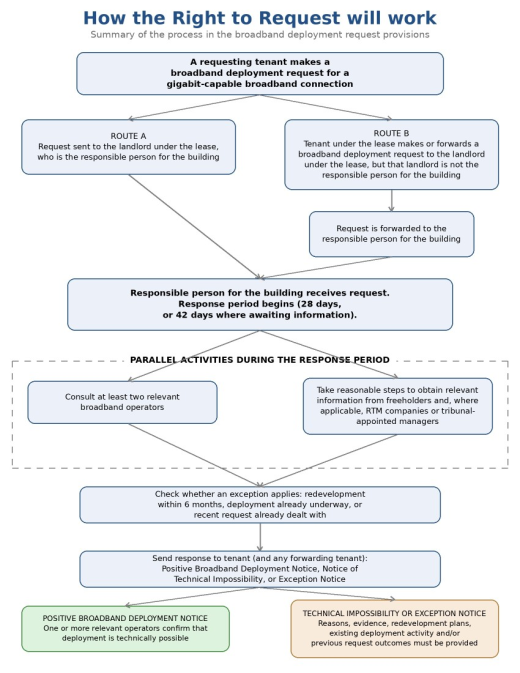
Figure 1: How the broadband deployment request process will work.
This diagram shows how the broadband request process will work. A requesting tenant begins the process by making a broadband deployment request for a gigabit-capable broadband connection.
The request reaches the person responsible for the building through one of two routes:
Route A: The tenant sends the request to the landlord named in the lease, who is also the person responsible for the building.
Route B: The tenant makes or forwards the request to the landlord named in the lease, but that landlord is not responsible for the building. The landlord forwards the request to the person responsible for the building.
Once the person responsible for the building receives the request, a response period begins. The response period is normally 28 days, or 42 days if information is still being obtained.
During the response period, two activities take place in parallel, which are:
- the person responsible for the building consults at least 2 relevant broadband operators
- the person takes reasonable steps to obtain relevant information from freeholders and, where applicable, right to manage companies or tribunal-appointed managers
The person responsible for the building then checks whether an exception applies. The possible exceptions are that:
- redevelopment is planned within 6 months
- broadband deployment is already under way
- a recent request has already been dealt with
The person responsible for the building sends a response to the tenant and to any tenant who forwarded the request. The response must be one of the following:
- a positive broadband deployment notice
- a notice of technical impossibility
- an exception notice
A positive broadband deployment notice confirms that one or more relevant broadband operators consider deployment to be technically possible.
A notice of technical impossibility or exception notice must provide the relevant reasons and evidence. Where applicable, the notice must also include redevelopment plans, details of existing deployment activity, or information about a previous request.
Making a request
Consistent with the approach proposed in the consultation and supported by respondents, the process has been designed to be straightforward and accessible. A requesting tenant will not be required to use a prescribed form, follow a formal application procedure or provide technical details or specifications that would be unknown without relevant operator engagement. To trigger the implied terms, an eligible leaseholder must in all cases send their broadband deployment request to the landlord under their lease, requesting gigabit-capable broadband to be deployed in all or part of the building containing their residential unit. The means of communicating the request are discussed in section 4.6.2.
Requests involving intermediate landlords
The government recognises respondents’ concerns about requests progressing through intermediate landlords. Where a landlord under the lease receives a broadband deployment request and is not the responsible person for the building to which the request relates but is itself a tenant of the whole or part of the building, it must forward the request to its own landlord. Where an RMC is the responsible person, the request must instead be forwarded to that company. Section 4.4.2 explains the responsibilities, notifications and time limits that apply through the leasehold chain.
Requests where connectivity already exists
The approach set out in the measures is in line with the vast majority of responses received and will support consumer choice and competition in the broadband wholesale market. The measures do not prohibit a requesting tenant from making a broadband deployment request where gigabit-capable broadband is already available in all or part of the building, including where the requesting tenant’s own residential unit already has a gigabit-capable connection. Existing connectivity does not, in itself, prevent a request from being made.
Repeat requests and changed circumstances
The government agrees with respondents that a previous broadband deployment request should not permanently prevent a requesting tenant from raising the issue again. The measures impose neither an overall limit on the number of requests nor a formal requirement to demonstrate changed circumstances before making a further broadband deployment request.
However, a specified exception means that the responsible person does not need to consult relevant operators again in certain circumstances. It applies where the responsible person for the building has previously responded to a broadband deployment request from the same requesting tenant after consulting at least 2 relevant operators. The responsible person must also be unaware of any change in circumstances justifying further consultation (see section 4.7.2). Circumstances affecting deployment can change over time (examples might include network availability, technological developments, market conditions and building-specific factors). A tenant making a further request may therefore find it helpful to draw attention to changes relevant to an exception previously relied on or to relevant operator availability for the building.
4.4 Responding to a request: Scope, process and cost of compliance (Questions 28-38, Questions 69-70)
The consultation proposed a new statutory duty on freeholders not to unreasonably refuse a leaseholder’s request for a gigabit-capable broadband connection, supported by a clear, time-bound process. The consultation set out a streamlined process under which a freeholder would be required to provide a written acknowledgement of receipt of the request within 28 calendar days, followed by a substantive formal response. The consultation also sought views on whether the process should be different where intermediate landlords are involved, whether the acknowledgement should include prescribed information, whether freeholders should be able to request additional information from leaseholders, and on the likely cost of complying with the duty.
4.4.1 Summary of Responses
There was strong support for the introduction of a freeholder duty not to unreasonably refuse a leaseholder’s request. Most respondents agreed that the duty should apply irrespective of the building’s ownership or management arrangements, including where control is exercised through an RTM, RMC, TAM or other intermediate arrangement.
A consistent theme was that the duty should operate effectively across all management layers for a building. Most respondents emphasised that intermediate landlords should be subject to clear obligations to facilitate requests and seek consent without delay. Several respondents proposed that where a request is received by a party who cannot act on it, that party should be required to pass it on promptly to the party who can. A smaller number of respondents argued that intermediate landlords should play a more limited, administrative role, passing requests promptly to the freeholder rather than acting as independent decision-makers. Some respondents also raised concerns about the “reasonableness” test, suggesting it could be interpreted inconsistently without further clarity or guidance on acceptable grounds for refusal.
There was agreement that a written acknowledgement should be required. Views were more mixed on the proposed 28 calendar day timeframe. The majority considered 28 days acceptable, but a minority, predominantly operators, argued that 28 days is too long for a basic acknowledgement and risks embedding delay at the outset. These respondents suggested shorter periods, typically 7 to 14 calendar days.
Respondents were divided on whether the acknowledgement should include prescribed information. Some, particularly network operators, argued for minimum information such as confirmation of the duty, next steps, expected timelines and contact details. Others argued that the acknowledgement should remain a simple confirmation of receipt to avoid unnecessary formality.
Most respondents opposed introducing a formal additional step allowing freeholders to request further information from leaseholders as part of the statutory process. The principal concern was that such a step could be used to delay or obstruct requests. Most respondents argued that any clarification should be handled informally and in parallel, without delaying timelines.
On the cost of complying with the duty, network operators and local authorities reported that compliance involved administrative tasks requiring minimal staff time. Freeholders, managing agents and property management bodies noted that compliance may not always be straightforward, particularly in complex ownership structures or higher-risk buildings. Most respondents considered that any costs arising from compliance should be managed through existing service charge arrangements, though a smaller number raised concerns that existing lease arrangements may not always allow such costs to be recovered.
4.4.2 Government Response
The consultation proposed a duty on freeholders not to unreasonably refuse a leaseholder’s request. The government has not taken this forward. A test of reasonable refusal would imply that the landlord decides whether gigabit-capable broadband is deployed. In practice, deployment would still depend on Code negotiations with a relevant operator and on other rights and consents, none of which these measures change. The final measures therefore imply terms into eligible leases when a broadband deployment request is made. These terms require relevant enquiries and a substantive response within a defined period. This is intended to address difficulties in securing the engagement of appropriate parties throughout lease chains and to take account of varied management arrangements for buildings.
Identifying the responsible person
A requesting tenant under an eligible lease will make their broadband deployment request to the landlord under that lease. Where the landlord is the responsible person for the building to which the broadband deployment request relates, they will be required to take forward the broadband deployment request, including contacting relevant operators unless exceptions apply (see section 4.7.2). Where the landlord is not the responsible person for the building to which the request relates but is itself a tenant of the whole or part of the building, the request must be forwarded to its landlord or where an RMC is the responsible person, the request must be forwarded to that company. Where the landlord who received the request is not the responsible person, they must generally forward the request up the leasehold chain until it reaches the responsible person. This is intended to accommodate more complex leasehold arrangements.
Under the measures, the responsible person for the building is the landlord who holds a legal estate in possession in the relevant parts of the structure and exterior of the building. If an RMC, under a lease or by virtue of an enactment, has an obligation to repair or maintain the relevant parts of the structure and exterior of the building that company is the responsible person.
Possession for this purpose does not include receiving rent and profits or having the right to receive them. The relevant parts are the structure and exterior of the building.
Superior landlords
Where a landlord who receives the broadband deployment request is itself a tenant under a superior lease demising land forming the whole or part of the building they must forward the request to the landlord under the superior lease. It must do so within 14 days beginning with the day on which it received the request. If that landlord is not the responsible person, they too must forward the request until the request reaches the responsible person. For this purpose, a superior lease is a lease superior to the lease held by the tenant who made the broadband deployment request in question.
Resident management companies (RMCs)
An RMC is the responsible person for the building where it has an obligation, under a lease or by virtue of an enactment, to repair or maintain the relevant parts of the structure and exterior of the building. Where the RMC is both a party to the lease and the responsible person, the landlord under the lease must forward the request to that company within 14 days beginning with the day on which the landlord received it.
Forwarding Requirements
Where a landlord is required to forward the request to its landlord under a superior lease, or where an RMC is the responsible person, the landlord must:
- Include the requesting tenant’s contact details when forwarding the request.
- Notify the tenant who made or forwarded the request that it has been forwarded, and give that requesting tenant the contact details of the person to whom the request has been forwarded.
- Where it forwards a broadband deployment request to another person in accordance with the implied terms, and knows that that other person is in breach of the implied terms, the landlord must take steps to enforce that breach.
Right to manage companies (RTMs) and tribunal-appointed managers (TAMs)
Under the measures, an RTM company or TAM cannot be the responsible person for the building. The landlord’s functions under this process do not transfer to an RTM company as management functions.
However, RTM companies and TAMs nevertheless have a distinct role in the process as it relates to the responsible person obtaining relevant information. The responsible person must take all reasonable steps to obtain relevant information from an RTM company with the right to manage the building or premises contained in the building, or from a TAM who has been appointed to act in relation to the building or any premises containing or contained in the building. These enquiries are explained under “Obtaining information from other building parties” below.
Acknowledgement and response periods
To reduce burdens on responsible persons, we will not take forward the proposed requirement for a separate acknowledgement of the request. Instead, the legislation will focus on the provision of a substantive response by the responsible person to the requesting tenant. The responsible person will be required to respond within 28 calendar days of receiving the request. The response period will extend to 42 days where they are awaiting the receipt of information from a person required to be consulted under the measures (see section 4.6.2 below). This provides a defined timetable while recognising that relevant information for exceptions may be held by other parties.
Operator consultation and response notices
Unless the responsible person is aware that a specified exception applies (see section 4.7.2 below), they must consult at least 2 relevant operators about whether it is technically possible for them to deploy gigabit-capable broadband in the building. Consultation must be undertaken swiftly, with a view to enabling a response within the response period (normally 28 calendar days).
Following the required relevant operator consultation, the responsible person must give the requesting tenant either a positive broadband deployment notice or a notice of technical impossibility (see Formal Response section 4.6), unless a specified exception applies (see section 4.7.2 below). Both the positive broadband deployment notice and notice of technical impossibility should include any relevant information obtained by the responsible person. The notice of technical impossibility summarises the reasons given by the relevant operators for that advice.
Obtaining information from other building parties
Unless the responsible person is the only registered proprietor of a freehold estate in the building, the responsible person must take all reasonable steps to identify and contact any other registered proprietor of the freehold estate in the building and obtain any information from them that may be relevant to the broadband deployment request. Where an RTM company has the right to manage the building or any premises within it, or a TAM has been appointed to act in relation to the building or any premises containing or contained in the building, the responsible person must also take all reasonable steps to obtain any information that may be relevant to the broadband deployment request from them. The final measures place these enquiry requirements on the responsible person, recognising that relevant information may be held by other parties involved in the building’s ownership or management. The response period is normally 28 days and extends to 42 days only where the responsible person is awaiting the receipt of information from a person required to be consulted. We will not introduce a formal preliminary step allowing the landlord under the lease to require further information from the requesting tenant before proceeding. We recognise the concern that such a step could delay or obstruct requests. Any clarification should take place informally and in parallel, without pausing the response timetable.
Compliance Costs
In line with the consultation, to protect leaseholders from meeting any costs incurred by parties in complying with the measures, provision will be made that the requesting tenant is not to be made liable to any person for any costs that are or could be incurred by that person in connection with a broadband deployment request.
Duplicate Requests
To avoid duplicated work, subsequent requests concerning the same building received by a landlord before a response notice has been issued are to be treated as having been made at the same time as the original request. This would mean that a further separate consultation would not be required over and above that required in relation to the original request - each requesting tenant would receive the same notice.
4.5 Identifying Relevant Operators (Questions 39-44)
The consultation proposed that, to establish whether a gigabit-capable broadband connection could be provided to a building, the duty holder should engage with “appropriate network operators”. An appropriate network operator was proposed as a network operator that has been granted Code powers by Ofcom, deploys infrastructure capable of hosting a gigabit-capable connection (such as fibre to the premises), and deploys infrastructure in relevant parts of the country. The consultation proposed that materials would be made available on GOV.UK to assist in identifying appropriate operators and did not propose to prescribe how contact should be made.
4.5.1 Summary of Responses
There was strong consensus across operators and property companies that the enquiries to a network operator about the availability of gigabit-capable connectivity should come from the freeholder. Network operators (taking into account relevant procedural steps) indicated that they could respond to freeholders to allow for a response within the designated time period. The majority of respondents agreed with the proposed definition of an appropriate network operator. Some respondents raised that the definition should include a geographical condition, namely that the operator is active in the area in which the building is located.
The majority of respondents supported the use of GOV.UK as a suitable place for identifying appropriate operators. Some respondents suggested signposting to existing resources, including operator coverage checkers. Respondents emphasised that materials and guidance should be operator neutral.
4.5.2 Government Response
As proposed in the consultation, the legislation will not prescribe a single method of contacting relevant operators. The measures will, however, require the responsible person to consult relevant operators swiftly, with a view to enabling the required notice to be given within the response period (normally 28 calendar days from receipt of the request). Network operators indicated that they could respond to the responsible person’s enquiries quickly enough to allow the required notice to be given within the response period. This supports the requirement that consultation is undertaken swiftly.
Section 4.4.2 above explains the responsible person’s enquiry obligations, including the requirement to consult at least 2 relevant operators unless they are aware that a specified exception applies. That consultation seeks operators’ advice on whether it is technically possible for them to deploy gigabit-capable broadband in the building. The government welcomes support for engaging suitable relevant operators; the following paragraphs explain how relevant operators are identified for this purpose.
The final measures define operator as meaning an operator within the meaning of the Code. A relevant operator, in relation to the building, means an operator that may reasonably be assumed to be capable of providing a gigabit-capable connection in an area that includes the building to which the request relates but does not already provide a connection to the building. Consultation responses broadly agreed with the proposed criteria for an appropriate network operator, but the final definition differs from them. It replaces the consultation’s criterion that an operator deploys infrastructure in relevant parts of the country with a definition tied to the area of the building. It does not retain the consultation’s separate criteria that an operator has been granted Code powers by Ofcom or deploys infrastructure capable of hosting a gigabit-capable connection. The government considers these criteria unnecessary because operators that could provide a gigabit-capable connection would capture the same companies.
The area criterion is intended to ensure that the responsible person consults relevant operators that could reasonably be expected to provide a gigabit-capable connection in the geographic area of the building.
As set out above, a relevant operator is one that does not currently provide a gigabit-capable broadband connection in the building to which the request relates. However, the measures do not prohibit a requesting tenant from making a broadband deployment request if there is already a gigabit-capable connection in the building.
To assist responsible persons in contacting relevant operators, guidance will be published on GOV.UK to support identifying and contacting relevant operators.
4.6 The Formal Response (Questions 45-56)
We asked respondents whether the proposed timeframe for providing a formal response was appropriate, how the response should be communicated, what information it should contain, and how the freeholder should engage with network operators.
4.6.1 Summary of Responses
There was strong support for the introduction of a formal written response as a clear decision point prior to Code negotiations. The majority of respondents agreed with the proposed approach.
On the 28 calendar day timeframe, the majority of respondents considered this proportionate. However, others disagreed. Freeholders, property companies and managing agents argued that 28 calendar days in which to provide a response could be challenging in more complex cases, particularly where building safety considerations, listed building status or intermediate landlords are involved. Network operators, trade bodies and leaseholder groups generally argued that a shorter and more tightly defined timetable is necessary to drive behavioural change, with several proposing a two-stage approach: a requirement to acknowledge the request within a shorter timeframe (for example 7 or 14 days) and retaining the 28 day period for issuing a full substantive formal response.
On the method of communication, the majority of respondents agreed with aligning the formal response with existing lease arrangements and statutory provisions on service. There was widespread support for allowing and encouraging digital or electronic communication, particularly email, where this is already accepted by the parties, on the basis that digital responses are quicker, cheaper and more operationally efficient.
Across questions on the content of the formal response, a clear majority of respondents supported the proposed approach. Respondents broadly expected the formal response to include a clear statement of approval or refusal, a reasoned explanation where access is refused, confirmation of operator engagement, and an explanation of why a connection could not be provided. Some respondents cautioned that refusal letters should not require the disclosure of commercially sensitive information.
On operator engagement, freeholders, property companies and managing agents valued flexibility in deciding how operator information is obtained and which operators are contacted. Network operators and trade bodies generally argued that freeholders should be expected to take reasonable steps to obtain meaningful information and should be supported by clear guidance. Some respondents suggested that freeholders may not always need to contact at least 2 operators before refusing where only one operator is viable, particularly in rural areas or buildings subject to redevelopment.
4.6.2 Government Response
The final measures require the responsible person to make the specified enquiries and give the requesting tenant a positive broadband deployment notice, or a notice of technical impossibility or, where applicable, a notice explaining a specified exception. The response period is normally 28 calendar days beginning when the responsible person receives the request, in line with the consultation proposals, and extends to 42 calendar days where the responsible person is awaiting the receipt of information from a person required to be consulted. Where a landlord who has received the request is not the responsible person and is required to forward the request to its landlord under a superior lease, or where an RMC is the responsible person the response period begins when the responsible person receives the request.
While we acknowledge concerns that a response within 28 calendar days may be challenging in more complex cases, the conditional extension to 42 calendar days accommodates the scenario where the responsible person is awaiting the receipt of information from a person required to be consulted. However, many of the issues raised by respondents as reasons for the provision of additional time concerned subsequent Code negotiations or deployment, including detailed surveys, the agreement of access rights and the resolution of planning, heritage or building-safety matters affecting installation. Those matters arise at the later deployment stage and are not matters relevant to the original proposals or the response notice that must be provided under the final measures. The notice provided to the requesting tenant by the responsible person communicates the outcome of the required enquiries about technical possibility. A 28 day defined response period is therefore appropriate to secure timely engagement.
In line with the consultation, the legislation does not prescribe how the responsible person must contact relevant operators. However, unless a specified exception applies, the responsible person must consult at least 2 relevant operators. The measures will require that consultation is undertaken swiftly to enable the required notice to be given within the response period. Where a request has been forwarded, a copy of the response notice must also be given to the person who forwarded it. Where an exception applies, the responsible person must give the notice required for that exception within the same response period, rather than leave the request unanswered.
A positive broadband deployment notice: This must state that one or more of the relevant operators that have been consulted have confirmed that it is technically possible for them to deploy gigabit-capable broadband in the building and include relevant information obtained following consultation with the proprietor of a freehold estate in the building, RTM or TAM as appropriate. It does not confirm that installation will proceed, authorise works or oblige any person to enter into a Code agreement. Any necessary Code rights and other consents must be obtained separately before deployment.
A notice of technical impossibility: This must state that all relevant operators consulted have confirmed that it is not technically possible for them to deploy gigabit-capable broadband in the building, summarise the reasons given by those relevant operators and include relevant information obtained following consultation with the proprietor of a freehold estate in the building, RTM or TAM as appropriate. This replaces the consultation’s proposed refusal decision and explanation of why the freeholder considered refusal reasonable with a notice reporting the operators’ technical advice.
We recognise respondents’ support for electronic communication, including email, as a quicker, cheaper and more efficient means of conveying requests and responses. Notices and forwarding notifications must be given in accordance with any applicable legal requirements and relevant lease or contractual provisions. Parties are encouraged to use electronic communication where it is a legally effective means of giving the notice or notification concerned.
4.7 Reasonable Request Refusals and Operator Costs (Questions 57-68)
The consultation sought views on the circumstances in which a freeholder could reasonably refuse a leaseholder’s request for a gigabit-capable broadband connection. It considered the following circumstances:
- Where 2 appropriate network operators have been contacted and have specified reasons why they are not able to provide a gigabit capable connection to a specific block of flats;
- Where 2 appropriate network operators are seeking to charge excessive amounts for a gigabit-capable connection to the building;
- Where gigabit-capable broadband services are already available within the block of flats;
- Where a freeholder is voluntarily organising a gigabit-capable connection or is in the process of responding to one or more leaseholder requests;
- Where compliance with the duty would require the freeholder to breach an existing term of a lease, any other statutory obligations or lead to derogation from grant.
Respondents were also asked about other circumstances that could justify refusal, challenges specific to intermediate landlord arrangements, and whether compliance with the proposed duty could breach existing lease terms or statutory obligations, or lead to a derogation from grant.
On network operator costs, the consultation asked whether any costs sought by operators should remain outside the new duty and be dealt with through existing arrangements for recovery, including service charges where applicable. It sought evidence on how often deployment costs exceeded operators’ typical cost per premise; when charges were sought, why and how much; and how costs varied between urban areas, suburban areas, small towns and rural areas, and according to the number of flats in a building. It also asked whether additional considerations applied to the recovery of deployment costs in intermediate landlord arrangements.
Where respondents considered that network operator costs should form part of the duty, the consultation sought views on limiting the costs passed to leaseholders through service charges. It asked whether costs above such a limit should provide a basis for the freeholder reasonably to refuse a connection at the in-principle decision stage. These questions distinguished the proposed request and response process from the costs and arrangements associated with subsequent deployment.
4.7.1 Summary of Responses
Responses on what should constitute a reasonable refusal were mixed. Some respondents supported the proposed approach, considering that it would provide a proportionate safeguard for the duty holder where a connection cannot be delivered by the market, while helping to prevent avoidance of the duty. Others argued that grounds for refusal should be narrowly defined, or that the duty holder should be required to contact a greater number of operators to demonstrate that a connection is not possible. A small number of respondents noted that in some areas, particularly rural locations, there may not be 2 operators able to provide a connection.
On network operator costs, there was broad agreement that deployment costs should be treated separately from the duty. Respondents consistently highlighted that such costs are highly variable and depend on factors including the characteristics of the building, engineering complexity and the surrounding network. Several operators indicated that they do not typically charge for deployment, while others identified circumstances in which costs may arise.
Views were more divided on how any such costs should be treated. Some respondents emphasised the importance of protecting leaseholders from additional or unpredictable charges, while others raised concerns that the duty holder may face costs that cannot be recovered where existing lease arrangements do not allow them to be passed on. On whether costs passed to leaseholders should be capped, views remained mixed, reflecting the variability of deployment costs and the existing arrangements governing cost recovery.
4.7.2 Government Response
Having considered the responses and in light of the refined approach, the government will set out in legislation an exhaustive list of exceptions on which a responsible person for the building may rely. Where the responsible person becomes aware that an exception applies, the requirement to consult relevant operators is disapplied, and the responsible person must instead give the notice required for that exception within the response period (see section 4.6.2). Until the responsible person is aware that an exception applies, they will still be required to consult relevant operators swiftly, so that a response notice can be provided within the specified time period (28 calendar days unless modified).
The responsible person will be able to rely on the following exceptions:
- Exception 1 - Planned redevelopment: Where redevelopment of the building, or part of it which would prevent the deployment of gigabit-capable broadband, is proposed to begin within 6 months beginning with the day on which the broadband deployment request was made.
- Exception 2 - Deployment already in progress: A relevant operator has already been contacted about the deployment of gigabit-capable broadband in the building and steps towards deployment are already in train.
- Exception 3 - Earlier request dealt with the subject matter: The responsible person has previously responded to a broadband deployment request from the requesting tenant and at least 2 relevant operators were consulted in response to that earlier request about the deployment of gigabit-capable broadband in the building and the responsible person is unaware of any change in circumstances that could justify a further consultation of relevant operators.
The exceptions are exhaustive and, as such, if a responsible person is not seeking to rely on these exceptions, they will be required to provide a positive broadband deployment notice, or a notice of technical impossibility (see section 4.6.2 above). The notice where each exception is relied on is detailed in the table below:
| Exception | Notice Requirement |
|---|---|
| Exception 1 - Planned redevelopment | Must summarise the redevelopment proposals and be accompanied by evidence showing the nature and timing of the proposed redevelopment. |
| Exception 2 - Deployment already in progress | Must confirm that a relevant operator has been contacted about deploying gigabit-capable broadband in the building, summarises any other steps taken towards deployment, and sets out the remaining steps to be taken and indicative timelines about the deployment to the building. |
| Exception 3 - Earlier request dealt with the subject matter | Must set out that the responsible person has previously given a notice to the requesting tenant and at least 2 relevant operators were consulted in response to that earlier request about the deployment of gigabit-capable broadband in the building, and the responsible person is unaware of any change in circumstances that would justify further consultation of relevant operators. |
The government has also considered a number of matters that respondents suggested could justify refusal, but which will not constitute exceptions:
- Network operator deployment costs: Any deployment-related costs fall outside the scope of the measures. They are governed by the Code, are not typically charged by operators, and in any event cannot be known at the point the responsible person is consulting with relevant operators, as they emerge only after survey and wayleave negotiation. As such nothing about deployment costs can be relied upon by the responsible person in the context of an exception.
- Existing gigabit-capable connectivity in the building: The presence of an existing gigabit-capable connection will not provide for an exception. The government considers that treating existing connectivity as an exception could entrench incumbent operators and narrow consumer choice, and that leaseholders should not be prevented from seeking a connection from an alternative operator. This does not affect existing wayleave agreements or commercial arrangements already in place.
- A potential breach of another statutory provision or lease terms: The measures ensure that contractual arrangements and other lease terms that conflict with the new measures cannot override the implied obligations. This prevents existing terms or parties creating terms to avoid complying with the measures. As the implied terms are not concerned with subsequent Code negotiations or deployment, the measures are not intended to interfere with obligations arising under other legislation which relate to installation (such as relevant planning and building safety considerations)
4.8 Final Confirmation (Questions 71-74)
The consultation proposed that the final step a freeholder should undertake in complying with the duty is to provide a final confirmation to the leaseholder who made the request, as to whether a connection is to be provided or not. The consultation proposed that this would not affect Code negotiations but would simply reflect the outcome, that it should be provided in writing, and that neither its content nor the method of communication should be prescribed.
4.8.1 Summary of Responses
There was clear majority support for a structured confirmation at the end of the freeholder duty process. Respondents considered that it would give leaseholders certainty as to the outcome of their request and provide a defined end point, rather than leaving the position open following the formal response.
Most respondents also agreed that the final confirmation should be provided in line with existing lease arrangements. Many respondents emphasised that electronic communication should be permitted, consistent with the views expressed on the request and the formal response.
Views were more mixed on whether the content of the final confirmation should be prescribed. Some respondents, particularly network operators, argued that it should include a description of the steps the freeholder had taken to fulfil the duty. Others, often freeholders, considered that a simple statement of the outcome would be sufficient and cautioned against adding procedural requirements at the end of a process that is already time-bound.
4.8.2 Government Response
The government will not take forward a separate requirement for final confirmation following Code negotiations. Under the refined model, the responsible person must make specified enquiries and give the requesting tenant a substantive notice within the response period: a positive broadband deployment notice, a notice of technical impossibility or, where applicable, a notice explaining a specified exception. This ensures these measures are separate from subsequent Code negotiations or deployment. A positive broadband deployment notice does not authorise works, require installation or oblige any person to enter into a Code agreement; any necessary rights and consents must continue to be obtained separately.
4.9 Enforcement (Question 75)
The consultation proposed that a leaseholder should be able to bring an action where a freeholder has not acted reasonably in response to a request. The proposed enforcement mechanism would rely on existing arrangements for breach of the terms of a lease, with cases heard in the County Court.
4.9.1 Summary of Responses
Most respondents who addressed this question agreed that the County Court route was appropriate, considering it proportionate and consistent with the existing framework for resolving lease disputes.
However, respondents also raised practical concerns. A number noted that the time, cost and complexity of bringing a claim could deter leaseholders from enforcing the duty in practice, and that this risked the duty becoming difficult to enforce for individual leaseholders. Some respondents suggested alternative or additional mechanisms, including the First-tier Tribunal, alternative dispute resolution, or a role for an ombudsman, as ways of providing a quicker or less costly route.
A number of respondents also emphasised that clear guidance and greater certainty around what constitutes a reasonable refusal would help reduce the likelihood of disputes arising in the first place.
4.9.2 Government Response
Because the requirements take effect as terms of the lease, breach of the implied terms is enforceable through existing civil remedies available for a breach of covenant (currently the County Court), with the costs of proceedings dealt with under the existing court arrangements.
Enforcement through the leasehold chain
Where a landlord who is not the responsible person is required to forward the request to its landlord under a superior lease, or where an RMC is the responsible person, and the landlord knows that other person is in breach of the implied terms, the landlord must take steps to enforce that breach. A requesting tenant may not have a direct lease relationship with a superior landlord who is not their immediate landlord and otherwise cannot enforce the implied lease terms directly against that superior landlord. However, an intermediate landlord who forwards the request is itself a tenant to a lease with their landlord, the superior landlord.
Court proceedings and future jurisdiction
We acknowledge there are advantages of proceedings being brought through the First-tier Tribunal (Property Chamber) in England and the Leasehold Valuation Tribunal in Wales. We will keep the enforcement route under review in light of any wider reforms to jurisdiction over breach of lease cases, with a view to aligning these measures with any such changes.
5. Regulation Making Powers
The measures include powers for the Secretary of State to amend narrow elements of the measures through regulations to reflect stakeholder experiences of how the measures work in practice. The powers will allow amendment of:
- the exceptions to the duty to consult relevant operators and the information to be provided in support of an exception; and
- the 14 day period for forwarding requests and the 28 -day and 42 day response periods.
6. Monitoring and Guidance
The government will monitor implementation through engagement with leaseholder, property and telecommunications stakeholders. Monitoring will focus on awareness, request volumes where available, timeliness, repeat requests, operator-contact practices and any evidence of unintended effects.
The government will publish guidance on GOV.UK to help people comply with the new measures. This will include, but not be limited to, the following areas:
- Identifying responsible persons
- Selecting relevant operators
- The information to be provided in notices
Annex A: Full list of questions outlined in the consultation.
- Question 1: Please provide your full name and if you are responding on behalf of an organisation or a group? If so, name of stakeholder.
- Question 2: To what extent do you agree or disagree that the issues referenced in this consultation act as barriers to deployment of gigabit-capable broadband in flats?
- Question 3: Where it is agreed that identification of a party to obtain Code rights from is a barrier, could you provide data as to how often this has occurred and how often you believe it will likely occur in the future?
- Question 4: Where it is believed that the ability to reach a Code agreement is the barrier to deployment of gigabit-capable broadband to flats, could you provide data as to how often this has occurred and how often you believe it will likely occur in the future?
- Question 5: How often have identified parties to negotiate a Code agreement with for the deployment of gigabit-capable broadband to flats been unresponsive, and could you provide data on how often you believe this will be a problem in the future?
- Question 6: Are there any other issues that you consider as barriers to the deployment of gigabit-capable broadband to flats?
- Question 7: Where other issues have been identified as barriers to the deployment of gigabit-capable broadband to flats, could you provide data as to how often this has occurred and how often you believe it will likely occur in the future?
- Question 8: Where a freeholder has been contacted by a network operator seeking to deploy a gigabit-capable connection, what is the typical time for a response from a freeholder?
- Question 9: What proportion of freeholders have failed to engage at all with network operator requests and how many freeholders have been contacted by network operators?
- Question 10: In your view, how effective are existing mechanisms under the Electronic Communications Code and TILPA in overcoming delays caused by non-responsive or uncooperative landowners? Please provide examples.
- Question 11: To what extent do you agree that freeholders lack incentives to facilitate gigabit-capable broadband deployment? Why?
- Question 12: Do leaseholders currently experience difficulty securing broadband upgrades because freeholders are difficult to identify? Please provide evidence.
- Question 13: In the absence of the proposals, please could you provide data on the projected deployment rates of gigabit-capable broadband to flats?
- Question 14: Could data be provided on the projected deployment rates of gigabit-capable broadband to flats taking account of the proposals?
- Question 15: To what extent do you agree or disagree with the government’s proposal to introduce a right for residential leaseholders (See Scope of the Leaseholder right) to request a gigabit-capable connection? If not, why not?
- Question 16: To what extent do you agree or disagree that any residential leaseholder of a flat should have the right to make a request for a gigabit-capable connection? If not, why not?
- Question 17: How should intermediate landlords be incorporated within the new right/obligation being proposed in respect of gigabit-capable broadband deployment requests?
- Question 18: Are you aware of any barriers to installation of gigabit-capable connection to leasehold arrangements other than to flats (for example commercial properties or houses)? If so, please specify the barriers and the type of leasehold arrangements they apply to.
- Question 19: Do you believe the right to request a gigabit-capable connection should apply to leasehold arrangements other than flats i.e. commercial properties or houses? If so, please provide data to support the position.
- Question 20: To what extent do you agree or disagree that the right to request a gigabit-capable connection should not be extended to leaseholders in local authorities and housing associations? If so, please provide data to support the position.
- Question 21: Is an intervention required to assist renters in flats gaining access to gigabit-capable broadband services? If so, would a similar right to those being provided for leaseholders be appropriate for renters and could data be provided to support the position?
- Question 22: Should the right to request apply in mixed-use buildings (residential & commercial)?
- Question 23: Do you agree or disagree that the above process is appropriate, if not what else is believed to be required?
- Question 24: Do you think that the above process should be different if there is an intermediate landlord in place in respect of a flat?
- Question 25: Do you agree or disagree that a leaseholder should be able to make a request when a gigabit-capable connection is available to the flat in question?
- Question 26: In what circumstances do you believe it would be appropriate for a leaseholder to make a request when a gigabit-capable connection is available to the flat in question?
- Question 27: Do you agree or disagree with the rationale for a repeat application being made? If not, what else do you consider relevant?
- Question 28: To what extent do you agree or disagree with the scope of the freeholder duty? Do you consider that anything further should be considered?
- Question 29: How should intermediate landlords and their proprietary interests be factored into the duties and what should their scope be, if any?
- Question 30: Do you consider it appropriate for an acknowledgement to be provided to the leaseholder’s request?
- Question 31: To what extent do you agree or disagree that no prescriptive information should be required to be included in the acknowledgement?
- Question 32: Do you consider that 28 calendar days is an appropriate time period for a relevant freeholder or their representatives to provide a written acknowledgement to a leaseholder’s request?
- Question 33: Do you consider that relevant freeholders will need additional information in the request, to consider the leaseholders request and fulfil the duty? If so, what additional information would be required?
- Question 34: Do you believe it is necessary for a formal step to be included allowing for a relevant freeholder to request additional information regarding the leaseholder’s request?
- Question 35: If so, do you believe additional time should be afforded for the provision of further information beyond 28 calendar days? If so, what would be an appropriate amount of time to obtain information prior to an acknowledgement being provided.
- Question 36: What additional costs do you believe would be incurred by a relevant freeholder should an additional step be included allowing for a request for additional information regarding the leaseholder’s request?
- Question 37: Do you consider that any additional steps are required for a freeholder to act on a leaseholder’s request?
- Question 38: Do you consider that adjustments to the process need to be made where there is an intermediate landlord?
- Question 39: How quickly do you consider that you would be able to respond to a relevant freeholder’s request for confirmation that a connection can be provided to a specific block of flats?
- Question 40: To what extent do you agree or disagree that measures should stipulate that a freeholder should contact an appropriate network operator?
- Question 41: To what extent do you agree or disagree with the criteria detailed to describe an appropriate network operator (a Code operator who deploys gigabit capable infrastructure and operates in relevant parts of the country).
- Question 42: Do you consider the provision of information on GOV.UK is a suitable means of aiding relevant freeholders with the selection of an appropriate network operator to approach? Are there alternative means of supporting relevant freeholders with appropriate network operator selection?
- Question 43: Are there materials or guidance you believe should be made available or signposted on GOV.UK to assist freeholders and their agents select an appropriate network operator?
- Question 44: Do other considerations need to apply to intermediate landlord contexts?
- Question 45: Do you consider it appropriate for a freeholder to provide a formal written response to the leaseholder in response to a request for gigabit capable connection?
- Question 46: To what extent do you agree or disagree that the formal response should be provided to the leaseholder within 28 calendar days after a request acknowledgement is sent to the leaseholder? If not, what duration do you believe would be appropriate?
- Question 47: Do you consider it appropriate that the formal response should be provided to the leaseholder in line with existing lease arrangements? If not, what method do you think would be appropriate?
- Question 48: To what extent do you agree or disagree that a formal response should either indicate that a connection is to be provided (subject to a Code agreement being reached with a network operator) or a refusal to the request for a gigabit-capable connection?
- Question 49: To what extent do you agree or disagree that a formal response with a refusal should include the rationale for why a connection is not to be provided and why the freeholder believes this is reasonable?
- Question 50: To what extend do you agree or disagree that a formal response with a refusal should include the details of the appropriate network operators approached and any reasons they have provided as to why a connection could not be provided?
- Question 51: To what extent do you agree or disagree that the rationale for why a connection is not to be provided should include the details of the network operators approached by the freeholder and the reasons as to why the network operators were unable to provide a connection?
- Question 52: To what extent do you agree or disagree that the freeholder should also set out why they believe that a refusal is reasonable?
- Question 53: To what extent do you agree or disagree with the proposal that freeholders should be free to choose how they obtain information from network operators?
- Question 54: To what extent do you agree or disagree with the factors for freeholders to consider when selecting an appropriate network operator to approach following a leaseholder request? If not, what factors do you think should be taken into account?
- Question 55: To what extent do you agree or disagree that a freeholder should have approached at least 2 appropriate network operators before providing a refusal to a leaseholder request in a formal response?
- Question .56: Do other considerations need to apply in an intermediate landlord context?
- Question 57: To what extent do you agree or disagree that 2 appropriate network operators not being able to deploy to the block of flats should constitute grounds for a reasonable refusal by a relevant freeholder?
- Question 58: To what extent do you agree or disagree that any costs requested by a network operator, and relevant to a freeholders decision, should both remain outside of the new duty and be dealt with through existing arrangements (i.e. passed on by relevant freeholders to leaseholders through service charges)?
- Question 59: Do other factors in relation to the recharging of costs of deployment need to be considered in intermediate landlord contexts?
- Question 60: How often do network operators estimate that their costs exceed their typical cost per premise for a gigabit broadband deployment to a block of flats?
- Question 61: At what point are the costs for a deployment sought by a network operator typically charged for a gigabit-capable connection for a building containing flats? If costs are charged, for what reason and how much is sought?
-
Question 62: Where network operators seek to recover their costs for a gigabit broadband deployment to a block of flats, how much does the cost vary based on the building being in an
a) urban area
b) sub-urban area
c) small town
d) rural area? - Question 63: Where network operators seek to recover their costs for a gigabit broadband deployment to a block of flats, how much does the cost vary based on the number of flats in the building?
- Question 64: Where you believe that the network operator’s costs should be considered as part of the new duty, to what extent do you believe that the costs passed on to leaseholders via service charges should be limited? To what extent do you agree that any network operator cost in excess of a limit should provide the basis for a freeholder to reasonably refuse a connection in an in-principle decision?
- Question 65: To what extent do you agree or disagree with the other circumstances identified where it may be reasonable for a freeholder to refuse a connection? Are there others where you would consider it reasonable for the freehold to refuse?
- Question 66: Are there scenarios specific to intermediate landlord contexts that are likely to present challenges?
- Question 67: Do you believe that there are other circumstances where a refusal should be deemed reasonable?
- Question 68: Do you believe that the freeholder duty would lead to breach of existing terms of a lease, any statutory obligations or lead to a derogation from grant?
- Question 69: Do you consider that the costs of complying with the freeholder duty would be minimal and could you provide an estimate as to how much you believe compliance would equate to based on each step in the process?
- Question 70: Where a gigabit-capable connection is provided to leasehold owned flats currently, what are the typical costs (excluding any network operator costs) incurred by freeholders passed on to leaseholders through service charges?
- Question 71: Do you consider it appropriate for a written final confirmation to be provided by the freeholder to the leaseholder in response to a request?
- Question 72: To what extent do you agree or disagree that the final confirmation should be provided to a leaseholder in line with existing lease arrangements?
- Question 73: To what extent do you agree or disagree that no prescriptive information should be required to be included in the final confirmation?
- Question 74: To what extent might the right to request and the freeholder duty need to be amended to account for different ownership, building management or lease arrangements, including intermediate leasehold contexts?
- Question 75: Do you consider this to be the appropriate way of enforcing the proposed freeholder duty?