Assessing the case for community batteries: call for evidence (accessible webpage)
Published 4 June 2026

© Crown copyright 2026
This publication is licensed under the terms of the Open Government Licence v3.0 except where otherwise stated. To view this licence, visit nationalarchives.gov.uk/doc/open-government-licence/version/3 or write to the Information Policy Team, The National Archives, Kew, London TW9 4DU, or email: psi@nationalarchives.gov.uk.
Where we have identified any third party copyright information you will need to obtain permission from the copyright holders concerned.
This publication is available at https://www.gov.uk/government/calls-for-evidence/assessing-the-case-for-community-batteries/assessing-the-case-for-community-batteries-call-for-evidence-accessible-webpage
General information
Why we are publishing this call for evidence
This Call for Evidence seeks to gather information on the community batteries landscape, the opportunities and benefits, the barriers to delivery and how safety can be ensured. It also publicises UK and international community battery case studies and solicits further examples.
We want to understand whether community batteries could be scaled up to provide benefits beyond individual users, enabling whole communities or parts of communities – including low‑income households and those who have not historically benefited from such technologies – to participate in and benefit from the energy transition.
Consultation details
Issued: Thursday 4 June
Respond by: Thursday 30 July
Enquiries to:
Electricity Storage Team
Department for Energy Security and Net Zero
3-8 Whitehall Place
London
W1A 2EG
Email: electricitystorage@energysecurity.gov.uk
Consultation reference: Assessing the case for community batteries
Audiences:
The government would like to hear from a wide range of stakeholders, including electricity network companies, system operators, battery installers and manufacturers, electricity suppliers, local authorities, social housing landlords, and community energy groups.
Territorial extent:
UK
How to respond
Our preference is for you to respond online at Citizen Space, but we have provided alternative options below.
or
Email: electricitystorage@energysecurity.gov.uk
or
Write to:
Electricity Storage Team
Department for Energy Security and Net Zero
3-8 Whitehall Place
London
SW1A 2EG
When responding, please state whether you are responding as an individual or representing the views of an organisation.
Your response will be most useful if it is framed in direct response to the questions posed, though further comments and evidence are also welcome.
You do not need to answer all questions.
Confidentiality and data protection
Information you provide in response to this consultation, including personal information, may be disclosed in accordance with UK legislation (the Freedom of Information Act 2000, the Data Protection Act 2018 and the Environmental Information Regulations 2004).
If you want the information that you provide to be treated as confidential please tell us, but be aware that we cannot guarantee confidentiality in all circumstances. An automatic confidentiality disclaimer generated by your IT system will not be regarded by us as a confidentiality request.
We will process your personal data in accordance with all applicable data protection laws. See our privacy policy.
We will summarise all responses and publish this summary on GOV.UK. The summary will include a list of names or organisations that responded, but not people’s personal names, addresses or other contact details.
Quality assurance
This consultation has been carried out in accordance with the government’s consultation principles.
If you have any complaints about the way this consultation has been conducted, please email: bru@energysecurity.gov.uk.
1. Introduction
1.1 Electricity storage and flexibility
The Clean Power 2030 Action Plan (published December 2024) set out the government’s plans to decarbonise the power system by 2030, as part of its wider mission to make Great Britain a clean energy superpower. Electricity demand in Great Britain is projected to at least double by 2050[footnote 1] as we electrify transport, heating and industry to decarbonise the economy. At the same time, an increasing share of our electricity will be provided by variable renewable sources such as wind and solar. To integrate these cheaper, homegrown sources of electricity and manage this transformation, Great Britain is developing a highly flexible electricity system that can shift clean electricity supply and demand in time and location, across hours, days, and seasons.
In July 2025, government set out its vision for a flexible electricity system in the Clean Flexibility Roadmap, highlighting the numerous benefits of the transition. By using clean flexibility to reduce peak demand and distributing sources of generation, we will minimise the amount of costly generation and associated network infrastructure that needs to be built in the long term, which will help to minimise consumer bills. This flexibility will also help Great Britain to build the clean homegrown energy we need to maintain security of supply, provide good jobs and growth, and protect future generations by reducing emissions.
Batteries play a particularly important role in this flexible electricity system. They enable the country to store energy for times when the sun shines less, the wind does not blow, or for prolonged periods of cold weather. They are the first port of call for keeping our electricity system at the right frequency, whilst ensuring there is enough power in the right place at the right time, covering shortages from a few milliseconds to a few hours.
Domestic batteries can enable direct savings for consumers by shifting demand away from peak times, making additional revenue by selling electricity from the battery back to the grid when needed and maximising the use of rooftop solar panels if installed. There are an estimated 1.6GWh of home batteries across ~299k households across Great Britain.[footnote 2] The government’s £15bn Warm Homes Plan will support further rollout and they are exempt from VAT until March 2027. However, uptake faces challenges: many homes lack space for battery units, and upfront costs remain a barrier despite long-term savings. These constraints mean domestic storage is an important flexibility option but cannot currently reach all households, highlighting the need for alternative solutions.
Community batteries are a nascent and untapped source of storage with the potential to contribute to the flexibility capacity required for clean power by 2030. The strength of community batteries lies in their potential to deliver benefits to new groups of consumers. For example, those that cannot be reached by domestic batteries, for both technical reasons (for example those living in flats) or financial reasons (for example low-income households), opening the opportunity to target bill savings towards those who need them most. They also provide an opportunity to foster a greater sense of local pride, empowerment and cohesion, encouraging communities to support and engage with the energy transition.
1.2 What are community batteries?
1.2.1 Definition of a community battery
A ‘battery’ is any electrochemical store of energy. Batteries, especially lithium-ion batteries, which can store large amounts of energy in a relatively small and light package and are easy to recharge, have become a huge part of our lives, powering our mobile phones, laptop computers, and even electric vehicles.
As outlined above, more and more people are installing a battery in their home to help reduce their emissions and save on their bills. Home batteries work in essentially the same way as the batteries contained in personal devices with which we are more familiar (with some slight difference in chemistry as covered in section 4). Bigger again, but still fundamentally similar, are the grid-scale batteries used to help local and national networks balance power flows in real time: these are typically made up of rows of battery units housed in shipping containers.
There is no widely accepted definition of a ‘community battery’, though the idea is simple: they are intended to benefit, and be large enough to power, multiple homes, helping each to lower bills. For this call for evidence, we will define them as batteries serving multiple homes with direct bill savings distributed to each home.
Community batteries will ordinarily be installed alongside community or privately-owned solar photovoltaic (PV) panels. Not only does this save on installation costs, but it allows the battery to charge directly from the solar panel when its power output exceeds local demand. This ‘co-location’ of batteries and solar PV is therefore often the most beneficial way to use both. However, it is not essential to the definition of a community battery, and it is entirely conceivable that a community battery be installed on a standalone basis.
The following sections include technical content on community battery categories and definition exclusions. Readers who do not need this level of detail can continue to chapter 2 if preferred.
1.2.2 Community battery categories
Within government’s overarching ‘shared residential community battery’ definition, there are several sub-categories, as illustrated (with examples) below.
Figure 1: categorisation of community batteries by connection and building type, with non-exhaustive examples
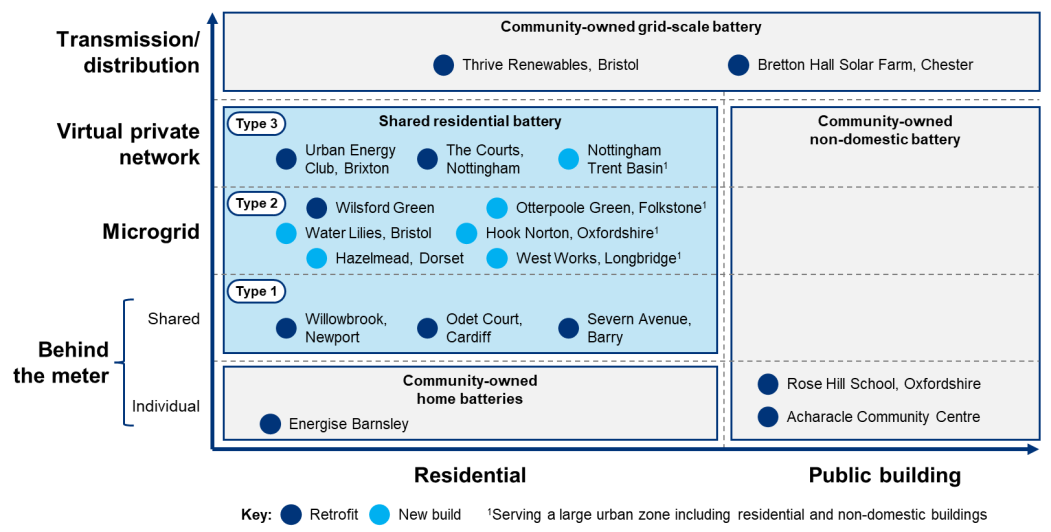
- Type 1: shared behind-the-meter. A shared battery is installed and connected behind each resident’s meter[footnote 3] in a block of flats (typically in the block’s utility room). The battery (and, if also installed, solar PV) is wired directly into each flat’s circuitry within the utility room, avoiding internal disruption to each flat. This gives residents direct bill savings and potentially a share of export revenues without switching to a specific supplier or contract. Examples include the Odet Court project in Cardiff.
- Type 2: microgrid. A battery is installed behind the development/landlord’s meter, but in front of each household’s meter, providing residents bill savings and potentially a share of export revenues. The battery serves the development as a whole, with bill savings passed on to residents that use a specified supplier (typically the battery operator). Microgrids need complex infrastructure; retrofits are technically challenging, disruptive, and expensive, so this technology is better-suited to new builds. However, microgrids have the potential to be more resilient to blackouts, as the battery and solar PV are connected directly to homes, independent from grid supply. Examples include the Water Lilies project in Bristol.
- Type 3: virtual private network. A battery is installed onsite in front of the resident’s meter, connected to the distribution network. While its electronic behaviour is similar to a small grid-scale battery (as it charges/discharges to the grid), its operator uses some or all battery revenues to deliver savings to residents. This avoids the need to retrofit new wiring into housing stock. Virtual private networks are best suited to new-builds, as residents need to switch to the same supplier and tariff to benefit, which can be defaulted for new-builds (though residents retain the right to switch supplier). Examples include the Brixton Urban Energy Club and the Nottingham Trent Basin project.
These community battery categories share a core feature in contrast to other types of battery: they directly distribute benefits (such as bill savings) across multiple households. This presents a unique opportunity to provide benefits to households unable to install their own battery, but also particular challenges: both technical and in ensuring a fair allocation of costs and benefits between households.
1.2.3 Wider community battery categories
We are aware of projects which might be considered community batteries that fall outside the definition given above. For completeness, we list these below, alongside our rationale for focusing on shared residential batteries. This does not imply that government is unsupportive of wider community battery projects or that they will not bring benefits to communities; only that they lack some of the unique complexities and barriers to uptake of the types given above.
- Community-owned grid-scale battery: a community fund invests in a battery connected in front of the meter (directly to the distribution network). This operates like a normal grid-scale battery: it will charge and discharge to the grid as market signals dictate, rather than to support its community in particular. However, the profits it makes are shared with its community owners. Examples include the Feeder Road battery energy storage project in Bristol and the Bretton Hall Solar Farm and co-located battery. The benefits these provide to communities are the revenues they earn, rather than the direct bills savings they deliver, so they are more like community ownership of a non-energy business than the community batteries we describe above.
- Community-owned non-domestic battery: a battery is installed to serve a public building (or buildings) such as a school, hospital or community centre. The bill savings are made by the owner of that public body and so benefit the local community. Examples include the Rose Hill school battery in Oxfordshire and the Acharacle Community Centre. The policy challenges and benefits to these batteries are different from the community batteries described above – there are no issues of shared use, for example – and so we do not think helpful to address them in this call for evidence.
- Community-owned home batteries: a third-party organisation, funded by grants and/or a community, installs small-scale batteries into individual homes, with the benefits distributed via individual bill savings and/or community funds. The organisation is often owned by the community and/or operates as a not-for-profit actor (for example a local authority or community energy group). Examples include Energise Barnsley. These differ from privately-owned home batteries only in their ownership, and do not present issues of shared use, and so as above these are not the focus of this call for evidence.
Respondents are invited to answer the following questions:
-
Do you agree with the government’s proposed definition of community batteries in section 1.2.1? If not, why not?
-
Do you agree with our categorisation of community batteries into: shared behind-the-meter, microgrid, and virtual private network. If not, why not?
Current, past, and prospective community battery users are also invited to answer the following questions:
3. When did you install, or when do you plan to install, a community battery?
4. What is the power rating (kW) of your battery?
5. What is the storage capacity (kWh) of your battery?
6. Is your community battery project a retrofit or new build?
7. How many households does your community battery supply?
8. Considering the categories of community battery outlined in sections 1.2.2 and 1.2.3 above, which do you think your battery falls into? Feel free to give additional details, particularly if you feel this categorisation is difficult.
2. Opportunities and benefits
Relatively few community batteries are in operation in the UK. However, evidence suggests they make a positive impact on the people who use them by reducing bills. In larger numbers, they could also smooth out demand at network level, potentially replacing other, more costly (or less clean) ways of doing so. This section presents what is known about potential benefits, and seeks further information – from community battery owners, from networks, and from anyone with relevant experience – on the opportunities available.
2.1 Bill savings
In simple terms, a battery enables its owner to save money in any or all of the following ways:
- Reducing peak electricity use: even without solar panels, a battery can allow its owner to use less power when electricity is most scarce (for example in the evening) by charging when it is most abundant (for example overnight). If the owner has a variable tariff, this can reduce overall bills.
- Getting the most out of solar PV: the battery can be used to store excess solar PV generation during sunlight hours for use in the evening, reducing the need to import electricity from the grid. This can result in savings above and beyond what solar PV alone can do, with or without a variable tariff.
- Export revenues: if the battery can export back to the grid, the owner can sell electricity to generate additional revenue for residents.
All of these savings are in principle available through community batteries. The key strength of community batteries is their ability to extend the benefits of consumer-led flexibility to households that cannot otherwise access domestic batteries. This includes low-income residents without the up-front capital required for a home battery, those living in flats, and households that lack the space needed for installation. In preparing for this call for evidence, DESNZ officials have researched a variety of local schemes, which indicate that some community batteries significantly reduce residents’ energy bills, as shown by the case studies published in this call for evidence (see section 5).
However, given we have only a handful of cases to go on, we would like to understand these impacts in greater detail. It is challenging to isolate the benefits of the community battery from co-located solar PVs, complicating return on investment comparisons to solar PVs or batteries alone (as well as other technologies such as EVs, heat pumps, and insulation). Furthermore, the costs and benefits may differ depending on the property type, location, technology configuration, etc. Costs may also fall over time as technologies develop and project owners gain experience. Gathering more information will enable us to provide clearer advice, and where necessary make more informed decisions, in future.
We are also keen to learn more about how the benefits of community batteries are, and could be, shared across their co-owners (or other beneficiaries). Options include equal bill savings for each household, savings proportionate to each household’s bill, and savings distributed to maximise an increase in EPC ratings. Each approach entails its own pros and cons, and the preferred approach will depend on the objective of each project. For example, a microgrid or virtual private network battery provider may offer an electricity price below the lowest-cost commercial supplier, to attract and retain customers, effectively distributing bill savings proportionate to each household’s bill. Alternatively, a social housing landlord may look to optimally distribute battery capacity to improve households towards a minimum EPC rating (for example, EPC C or equivalent as proposed by government in its consultation on a minimum energy efficiency standard (MEES) for socially rented homes).
If you have, have had, or plan to have a community battery, your views are welcomed on the questions below:
9. Why did you, or will you, choose to install a community battery?
10. What bill savings per household has your community battery delivered, or do you expect it to deliver?
11. What proportion of these savings come from reducing peak use, getting the most out of solar PV, and export?
12. How are these distributed amongst users of the battery, and how has this been decided?
2.2 System benefits
The government has committed to make the UK a clean energy superpower by delivering clean power by 2030 and accelerating to net zero. This will bring energy security, protect billpayers, create good jobs, and help to protect future generations from the cost of climate breakdown. Electricity demand in Great Britain is projected to at least double by 2050 as we electrify transport, heating and industry to decarbonise the economy. At the same time, an increasing share of our electricity will be provided by variable renewable sources such as wind and solar. To integrate these cheaper, homegrown sources of electricity and manage this transformation, Great Britain is developing a highly flexible grid that can shift clean electricity supply and demand in time and location, across hours, days, and seasons. In the Clean Power 2030 Action Plan, the government outlined an ambition for 10GW to 12GW of consumer-led flexibility capacity by 2030, compared to the 2.5GW operating in 2024 (excluding storage heaters). Consumer-led flexibility involves the voluntary shifting of electricity use away from peak periods to times when supply is more abundant, cheaper and cleaner. By using flexibility to reduce peak demand and distributing sources of generation, we will minimise the amount of costly generation and associated network infrastructure that needs to be built in the long term, which will help to minimise consumer bills
Given the government has so far only identified 12 planned and operational shared residential community battery projects, the sector is not currently on track to contribute significant volume towards that consumer-led flexibility ambition. However, in principle, more widespread deployment of community batteries could smooth demand, particularly in areas where personal circumstances and the housing stock make roll-out of individual home batteries more difficult. These could include GB’s 2.2m socially-rented flats, maisonettes or apartments (including over 410k which use electric-only heating and so will be particularly well-suited).[footnote 4],[footnote 5] 1.5m of England’s 1.8m socially rented flats, maisonettes or apartments are low-rise flats, which are most suited to shared residential retrofits as they maximise roof space per flat for solar PV. However, the ability to retrofit all of these flats is unknown and may be limited. It is less clear what proportion of privately-rented, or owner-occupied accommodation, might be suited to community battery ownership. For the microgrid and virtual private network models, approximately 57k new-build homes were started in 2024-25 across GB.[footnote 6],[footnote 7],[footnote 8] In England and Scotland, roughly 16k (30%) of these were affordable rent, social rent or affordable home ownership homes. More evidence is required to understand the proportion of this theoretical potential deployment is technically and financially feasible, based on existing electrical infrastructure, roof space/orientation, space for the battery, etc.
Like other forms of electricity flexibility, community batteries have the potential to reduce both demand peaks and overall demand (by making the most of solar PV). This can help to manage local grid constraints, allowing new residential developments to connect to constrained areas of the network more quickly. Community batteries could therefore act as an enabler for faster housing growth.
Current, past and prospective community battery owners are invited to answer the following questions:
13. Is your community battery project shared between (a) all socially-rented (b) all privately-rented (c) all owner-occupied or (d) a mix of tenures?
14. Does your tenure, or tenure mix, present particular challenges around installing a community battery? If so, please explain these.
Network operators and suppliers are invited to answer the question below:
15. What impact do you foresee community batteries having on the operation of the electricity system? For example, on your ability to balance the electricity system, the quantity and timing of network investment, the time to connect low carbon technology, or other system benefits.
The following questions may be of wider interest, including to battery manufacturers and installers, local authorities and other landlords:
16. Do you see community batteries as particularly suited to any type of tenure? If so, which, and how?
17. Do you see community batteries as particularly suited to any type of property? If so, which, and how?
2.3 What other benefits can community batteries bring?
The reduction in electricity costs for those directly served by a community battery does not need to be passed on to residents entirely through bill savings. In some cases, particularly when owned or operated by a community energy organisation, community batteries invest a proportion of savings or revenues back into the community. This could include local charity support, community building improvements, and energy efficiency upgrades. This can also bring non-financial benefits: by engaging in the use of funds, communities can be brought together, increasing levels of trust and engagement in other areas of community life. Similarly, a community battery project can provide an opportunity for residents to engage more directly with the energy system. The installation of the battery could be used as an educational moment for residents, to spread awareness of the potential for flexible electricity usage and smart tariffs to offer both bill savings and control. Anecdotal evidence suggests that community battery projects have fostered more positive attitudes toward net zero goals and they typically face less opposition than large infrastructure projects because the benefits are retained locally.
However, this response from residents often requires frequent and persistent engagement from project owners and the impact is likely to vary by location and demographics. Stakeholder engagement suggests that tight-knit communities that already trust energy system organisations are more likely to engage with installers, suppliers, network operators, and community energy groups. Government seeks more evidence on the impact of community battery projects on community and energy system engagement, and how this varies by community and project type.
Current and past community battery users, as well as other local residents, are invited to share views on the following questions:
18. Are the revenues of your community battery project distributed solely as bill savings, or is a portion retained for other purposes (for example community funds)?
19. What evidence do you have regarding community sentiment towards the community battery? Has it impacted the way residents interact with their community and the energy system?
20. How has residents’ energy usage changed since the installation of the community battery?
3. Barriers to delivery
While community batteries are promising in many cases, they are currently niche within the UK. This section outlines some of the challenges to wider uptake and asks respondents to provide their views on potential mitigation strategies.
3.1 Technical challenges
We are aware of at least three technical challenges involved in rolling out community batteries.
Firstly, virtual private network and microgrid projects often require bespoke software and active management to operate profitably. In addition, community batteries remain more technically demanding to plan and install than individual home batteries, reflecting both their greater complexity and the sector’s more limited hands-on experience, as economies of scale have not yet been achieved. However, these challenges should decline naturally over time, as new case studies (for example those contained in section 5) emerge and installers gain experience.
Secondly, to unlock the full bill savings potential of a community battery, its users need smart meters operating in smart mode to access the flexible tariffs residents need to benefit from peak load reduction (though community batteries can still be installed without smart meters, and residents can still benefit from making the most of their solar PV). The commitments by government and Ofgem in the Clean Flexibility Roadmap, such as Ofgem’s introduction of Guaranteed Standards of Performance and DESNZ’s consultation on regulatory interventions to improve the smart metering consumer experience, will help to lower this technical hurdle.
Thirdly, community battery grid connections can be more complex, costly and time-consuming than individual battery or solar installations due to their size and associated infrastructure. In addition, challenges associated with attaining Smart Export Guarantees (SEGs) can cut off or delay access to revenues from participating in wholesale and flexibility markets. Ofgem’s end-to-end connections obligations and DNO incentives review is tackling this by holding DNOs more to account for delivering timely connections and providing better customer service. The review could also indirectly help alleviate delays to attaining a SEG.
3.2 Financial challenges
While batteries can provide significant bill savings, as covered in section 2.1 above, these need to be set against the high upfront cost to buy and install them. While the ‘payback period’ – the time taken for total savings to exceed the initial expense – for any small-scale battery varies with several factors (the size of the unit, how and where it is installed, how it is used etc.), it can be many years. For home battery users, this can make it difficult to finance a battery without large personal savings; the Warm Homes Plan will provide support for financing the upfront cost of a domestic battery through direct support for those on low incomes and in fuel poverty, and innovative low- and zero-interest finance available to all.
Alongside this general challenge with small-scale batteries, there is an additional layer of complexity for community batteries: they are not financed by an individual household or business and therefore require some way of pooling investment risks and returns.
While for some, a community battery is the only way to get a battery, others may be able to install a home battery, so their decision could partially depend on the cost differential between the two. The need to actively manage battery usage (and potentially use a third party to do so) can erode financial margin, unlike solar PVs which generate revenue passively. It is difficult to know whether, ultimately, smaller home or larger community batteries will end up cheaper per kW/kWh: on the one hand, economies of scale should favour larger units, saving on installation costs etc; on the other hand, if the community battery market remains small worldwide, it may not attract the level of manufacture and specialisation to achieve these economies of scale. Finally, community batteries are less likely to face demand and capacity constraints than home batteries and so may be more efficient: shared battery utilisation is higher, provided each household’s usage is not perfectly correlated.[footnote 9],[footnote 10] Given these competing factors, more evidence is required to determine the return on investment for community batteries relative to other bill saving mechanisms like individual home batteries, solar PV alone, or insulation.
Given these upfront costs, financing can be a hurdle for community battery owners. Community batteries are eligible for a range of national and devolved government schemes. In Wales, the Optimised Retrofit Programme supports social landlords and local authorities to install de-carbonisation measures in social housing stock, and Ynni Cymru’s Capital Grant and guidance encourages Smart Local Energy Systems and batteries.
Additionally, community batteries will be eligible for newly announced funds from the Local Power Plan, which is providing up to £1bn of funding over this Spending Review period. GBE has launched an Expression of Interest (EOI) process inviting communities and local government to share their project ideas (including community batteries) so they can understand their readiness and suitability, and whether they might need future support or investment. Submission of an EOI does not represent a commitment by GBE to provide funding or finance, nor is it a formal application. The LPP will also provide hands-on support, explore repeatable business models and policy ambition and regulatory reform so that local projects can be developed at scale across the UK.
Community batteries may also be eligible for funding as part of the Warm Homes Fund, which was announced as part of the Warm Homes Plan. £3.3bn from the fund will be available as innovative finance for investments and loans to the retrofit sector, including £600m from low-income homes. DESNZ launched a separate call for evidence on 24th March to explore how this funding could be used most effectively, including on its potential support for community energy projects. The call for evidence closed on 1st June and we will set out further detail on the future direction for the Warm Homes Fund later in 2026.
3.3 Other challenges
Public awareness of community batteries appears to be low, yet installing one requires a level of financial commitment and technical awareness, particularly compared to solar PV projects. Owners of community batteries have argued for more guidance from national and local government, Community Energy England/Wales/Scotland, and DSOs across the installation journey. In particular, there are very few virtual private network community batteries in the UK, despite widespread adoption elsewhere, such as Australia (see section 5). The case studies published in this call for evidence will help to spread awareness.
A final consideration is the eligibility of residents for bill savings. Whilst residents can continue to use their preferred electricity supplier in the shared behind the meter model, they must use a specific supplier and tariff to benefit from the microgrid and virtual private network models. In these models, residents must use the supplier that operates the battery’s meter (for example CEPRO in the above Water Lilies example and EDF in the above Urban Energy Club example). This is significantly easier for a new-build development, where residents can be defaulted to the supplier and retained via lower prices, rather than a retrofit which requires residents to actively switch to a supplier (the Urban Energy Club was only able to distribute savings to 6% of residents for this reason).
Current and prospective community battery users are invited to answer the questions below:
21. What is the expected up-front cost of your community battery (including installation and grid connection) per home?
22. What is the annual expected maintenance cost of your community battery per home?
23. How long do you expect it to take to break even on your investment?
24. How did you, or do you plan to, finance the initial cost?
Responses are welcomed more widely on the below:
25. Are there any barriers in addition to those listed in section 3? If so, what are they?
26. How would you rank the technical, financial and other barriers in section 3 in order of importance?
27. What policy or regulatory changes would make community batteries more attractive to install? How would they make community batteries more attractive?
28. What sort of guidance would be useful for prospective or current owners of community batteries? Which organisation is best placed to provide it?
29. In addition to these barriers and the safety risks highlighted in the following chapter, are you aware of any negative consequences to the rollout of community batteries? If so, what are they?
4. Ensuring safety
Lithium-ion batteries have become part of everyday life, from phones and laptops through e-bikes and electric cars to the standalone home and community storage units on which this document focuses. For most people, use of lithium-ion batteries is without incident, but they do carry a risk of fire, particularly if improperly built or installed. That risk does not mean that batteries cannot be used safely – after all, most UK homes contain gas boilers, which similarly pose significant risks if poorly installed or maintained – but does mean that, as for gas boilers, it is important that safety is taken seriously, particularly in design and installation.
This section provides an overview of the inherent safety risks associated with battery technologies and the existing regulatory and standards frameworks that apply across domestic and grid‑scale storage. We are seeking views on whether these frameworks remain appropriate and proportionate for community batteries as deployment increases, and whether any gaps in standards, responsibilities, or risk management need to be addressed.
4.1 Introduction to battery safety risks
Like many modern appliances, from boilers to mobile phones, the components used in batteries have the potential to cause harm, and so it is important that in their manufacture, installation and use, consideration is given as to how most effectively to mitigate that harm.
Domestic and grid-scale batteries mainly use lithium‑ion chemistries, with some sodium‑ion systems emerging. Lithium‑ion and sodium‑ion cells hold large amounts of chemical energy in a compact structure. Cells are packaged into modules and packs, controlled by a Battery Management System (BMS) to keep voltage, temperature, and current within safe limits. This energy is normally stable as long as the separator keeps electrodes apart and the BMS regulates charging and temperature.
Fire incidents involving lithium‑ion batteries used in mobile applications - such as e‑bikes and e‑scooters, particularly when unlawfully retrofitted - have been documented. However, there is no evidence to suggest that fire incidents involving professionally installed domestic battery storage systems are a common occurrence. These systems are substantial, stationary units that are subject to established regulatory requirements and technical standards that apply to battery manufacture, installation, and operation. Nevertheless, risks may arise where systems are not correctly installed.
Community batteries are expected to meet the same baseline safety expectations as other energy storage assets. The overview below therefore provides context for considering whether existing frameworks remain appropriate and proportionate as the sector grows.
4.2 Grid-scale batteries
This document focuses on community batteries, but it is contextually useful to outline the safety regime that exists for larger batteries connected directly to transmission and distribution networks.
While fires have occurred at battery sites in Great Britain, they are rare. Fires at grid-scale battery sites are less frequent than those at non-domestic buildings from all sources. The latest available 5-year annual average fire incidence rate for grid-scale batteries is 0.7% (2020/21 to 2024/25),[footnote 11] lower than non-domestic building fires in England at 0.8% (2020/21 to 2024/25).[footnote 12]
This risk is mitigated by a robust regulatory framework overseen by the Health and Safety Executive (HSE). This framework requires responsible parties to take measures to ensure health and safety throughout all stages of a battery system’s deployment. It is important that those involved in the deployment of BESS sites are aware of their legal duties. HSE supports this with guidance on its website.
Where health and safety standards are concerned, best practice is reflected in common international standards such as National Fire Protection Association’s NFPA 855 Standard for the Installation of Stationary Energy Storage Systems , as well as Underwriters Laboratories’ UL9540A Test Method for Battery Energy Storage Systems (BESS) which is the critical test method for thermal runaway propagation. American standards, such as those developed by NFPA and UL, are normally applied to BESS projects in the UK as there are no currently developed UK or EU equivalent standards. These American standards are recognised globally and the UK insurance industry typically mandates them as a requirement of its insurance agreements.
The government works closely with the Electricity Storage Health and Safety Governance Group, whose members include the Health and Safety Executive (HSE), National Fire Chiefs Council, and the Environment Agency. The Governance Group is responsible for ensuring that an appropriate, robust and future-proofed health and safety framework is sustained. As part of this work, the Group has developed and published health and safety guidance for grid-scale batteries. The guidance aims to improve the navigability of existing standards and provide a clearer understanding of relevant H&S standards.
The government, through the industry-led Electricity Storage Health and Safety Governance Group, will continue to monitor the sector closely. In August 2025, DEFRA launched a consultation on including grid-scale batteries within the Environmental Permitting Regulations, to provide further safeguards and assurance. DEFRA is currently analysing feedback to this consultation and will publish a government response in due course.
4.3 Domestic batteries
For domestic battery storage systems, as with any electrical appliance, there is an inherent risk of fire which cannot be completely eliminated. As for other household appliances, government sets safety standards, but individuals and property owners are best placed to make informed decisions about installation and use, supported by certified installers, product information and the specific characteristics of their property.
A range of UK regulations and standards significantly reduce risk and ensure safe installation and operation:
- Lithium-ion batteries supplied for use in consumer products are in scope of the General Product Safety Regulations 2005. It is the responsibility of producers to ensure these batteries are safe. Businesses must also meet their obligations in the regulations to provide all relevant information, including safety warnings or instructions, with the product to enable safe use.
- A Publicly Available Specification for “Protection against fire of battery energy storage systems for use in dwellings” (PAS 63100) was released in 2024 to provide fire-safety requirements for domestic batteries in the UK. Its purpose is to establish a national safety baseline by ensuring installers understand and mitigate fire safety related hazards by specifying safe siting, protective measures and controls, thereby reducing the risk of batteries becoming a source of ignition and limiting the impact of a battery fire should one occur.
- Microgeneration Certification Scheme (MCS) standards (MIS 3012) govern installation practices for domestic batteries.[footnote 13] This standard sets out requirements for certified installers covering design, supply, and installation of electrical energy storage systems in homes. Its purpose is to ensure consistent, high‑quality, and competent installation, incorporating provisions for safe wiring, ventilation, fire protection, and commissioning checks to ensure systems are installed reliably and in line with recognised best practice.
In addition to the regulatory and standards framework set out above, the government previously commissioned a detailed review of the safety risks associated with domestic lithium-ion battery energy storage systems in 2020. This review, carried out for the Office for Product Safety and Standards (OPSS) and the then Department for Business, Energy & Industrial Strategy (BEIS), examined the operation of domestic battery systems, known incident data, potential failure modes (including thermal runaway), and the effectiveness of existing and emerging mitigation measures. The review also provides an overview of relevant safety standards and codes of practice.
4.4 Community batteries
Community batteries differ significantly from domestic batteries, in size, location and ownership. They typically have higher total power, energy capacity and voltage, serve multiple households or businesses, and may be installed in shared or public spaces where access and emergency planning needs careful thought. They can also involve varied ownership and maintenance models, which means responsibilities for ongoing safety checks must be clear. While these characteristics do not in themselves indicate a higher level of risk, they do create a different risk profile compared to domestic batteries and raise important questions about whether standards designed for small-scale, single-property installations are sufficient for community-scale projects. For example, PAS 63100 excludes dwellings over 200 m², and MIS 3012 only applies to systems below 50kW. We have identified community batteries in the UK that fall outside the scope of both standards.
We want to understand what gaps exist, whether these gaps pose any risks, and what additional measures might be needed.
Current and prospective community battery users, as well as relevant local authorities (including fire services), are invited to share views on the following:
-
Do you have any safety concerns specific to community batteries? If so, what are they and what evidence can you provide?
-
If you have or are considering a community battery, what steps have you taken to ensure its safety?
-
Do you think there should be any regulatory requirements specific to community batteries? If so, what should they be and what is your rationale?
5. Case studies
As noted, community battery projects are already operating in the UK, and we are keen to highlight some examples. Similar initiatives are emerging internationally, particularly in Australia, offering valuable lessons for UK. We are keen to share these insights while also learning from projects developed here at home.
5.1 Australia
One prominent example is Australia’s ‘Community Batteries for Household Solar’ programme, supported by A$200m in federal funding. This initiative aims to deploy around 400 community battery systems nationwide, enabling communities to store excess rooftop solar energy and access affordable power.
The programme has attracted significant attention. In June 2024, the Australian Renewable Energy Agency’s (ARENA) awarded A$124.7m in Round 1 to fund 318 batteries ranging from 50kW to 5MW. The application round for Round 2, offering A$46.3m, closed in September 2025. The Department of Industry, Science and Resources is separately administering A$29m of the available grant funding.[footnote 14]
This approach has been particularly effective in Australia because high levels of domestic solar generation means that distribution networks are often constrained by excess daytime exports, as large volumes of surplus solar generation flow back into the grid simultaneously. This can lead to grid congestion and force distribution network operators to impose export limits. Community batteries are therefore strategically installed within local distribution networks to store surplus solar energy generated during the day before it reaches the wider grid and release it during peak demand periods. This model benefits both solar and non-solar households: participants can rent storage capacity, earn credits for stored energy, and enjoy lower bills.
However, like all retrofit virtual private networks, consumers must switch to a specific supplier to benefit. While uptake has been strong in engaged suburban areas, there have been some challenges in onboarding more vulnerable households.
We are keen to explore whether this model, or similar approaches, could be adapted for the UK to deliver benefits such as bill savings for low-income households.
PowerBank Community Battery pilot, Western Australia – type 3 virtual private network[footnote 15]
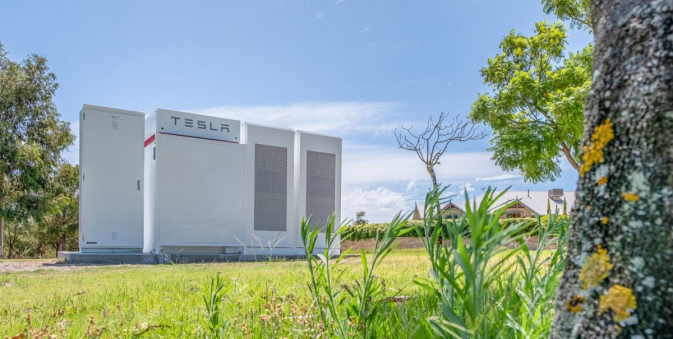
Context: PowerBank was a joint pilot by Synergy and Western Power exploring the potential of community‑scale batteries to support Western Australia’s South West Interconnected System (SWIS). Delivered across 12 metropolitan and regional locations, it was the first pilot in Australia to integrate a utility‑scale battery into an existing major metropolitan electricity network for the purpose of providing virtual storage to individual customers. The project aimed to test both the technical value of neighbourhood-embedded batteries and the commercial feasibility of offering household customers access to shared storage without the upfront cost of a home battery. There were three phases of the project: PowerBank (Meadow Springs), PowerBank2 (Falcon and Ellenbrook), and PowerBank3 (additional sites including Kalgoorlie, Vasse, Canning Vale and others).
Technical set-up: each PowerBank installation consisted of a grid‑connected community battery operated by Western Power and integrated within the local distribution network. Customers with rooftop solar were able to virtually store excess solar generation produced between 7am and 3pm in the battery. Depending on the subscription selected, participants could use up to 6kWh or 8kWh of stored energy per day to offset consumption during periods when their own solar was not generating. The system provided no physical behind‑the‑meter flow of energy; instead, storage and discharge were modelled virtually through retail billing mechanisms. The batteries provided local network benefits by absorbing excess solar export during the day and smoothing power flows in areas with increasing rooftop PV penetration.
Economics: across all three phases of the PowerBank pilot, 533 participants engaged in the virtual community battery scheme over a period of 3 years and 9 months. On average, each participant stored 6.53kWh of excess solar energy per day and consumed 6.3kWh from the community battery. The pilot demonstrated clear economic benefits for participating households, with an average annual bill saving of A$281.16 per participant.
Allume Energy, Parkside, South Australia – type 1 shared-behind-the-meter[footnote 16]
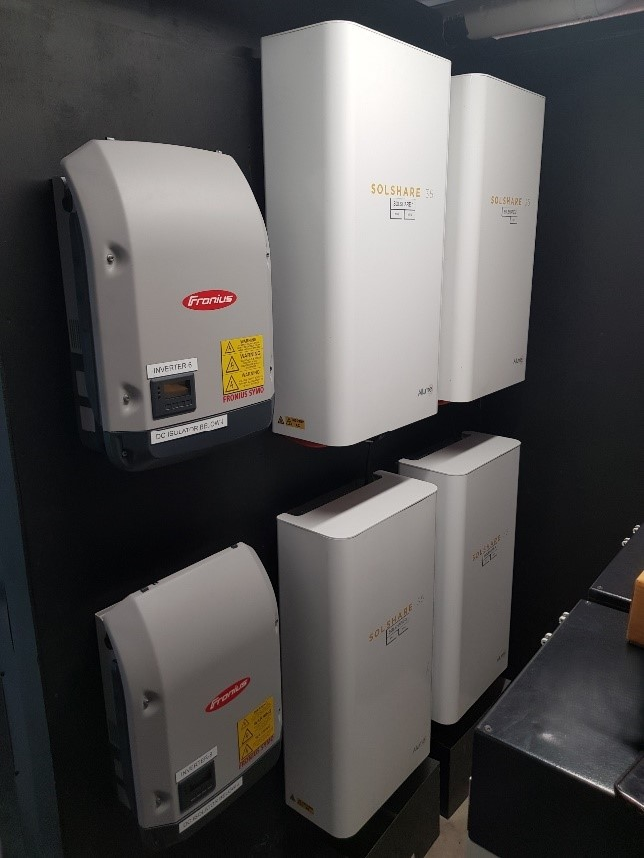
Context: in December 2019, Housing Choices Australia (HCA) completed the Mary Street project, which uses Allume Energy’s shared solar system to expand access to clean energy for residents in social and affordable housing. The initiative used the company’s SolShare platform to distribute solar power across multiple flats in a building, enabling households that cannot install individual rooftop systems to benefit from local renewable generation. Residents also benefit from shared battery storage, which increases local resilience by storing excess solar and supporting reliable operation during peak periods.
Technical setup: the development comprises 54 flats supported by a shared onsite energy system that includes four solar PV arrays with a combined capacity of 73kWp (around 1.35kWp per flat) and four communal battery units providing 40kWh of storage (about 0.74kWh per flat). The setup dynamically allocates solar generation to residents based on demand and uses the shared batteries to enhance resilience and smooth peak loads across the building.
Economics: the project has delivered environmental and financial gains by providing renewable energy to residents who have traditionally been unable to access it, despite physical roof constraints limiting the system size. Average grid electricity consumption reduced by 32% per flat and 195 tonnes of CO₂ emissions were avoided since commissioning. These reductions translate into meaningful household savings: cutting A$332 off annual electricity bills per apartment and directly addressing fuel poverty.
5.2 Europe
Beyond Australia, there are examples in European countries such as the Netherlands and Germany, where community batteries are integrated into local energy systems, often alongside community solar schemes. However, deployment remains limited, usually focusing on smaller pilot projects rather than large-scale rollouts comparable to Australia’s nationwide programme.
These examples demonstrate that community battery projects vary in technical design and ownership model. Their impact depends on a combination of factors, including market conditions, regulatory frameworks, and consumer engagement. These initiatives can provide valuable insights into how the benefits case for different consumer battery models can change under different conditions, an area we are keen to understand in more depth.
Buurtbatterij pilot project, Netherlands – type 3 virtual power network[footnote 17]
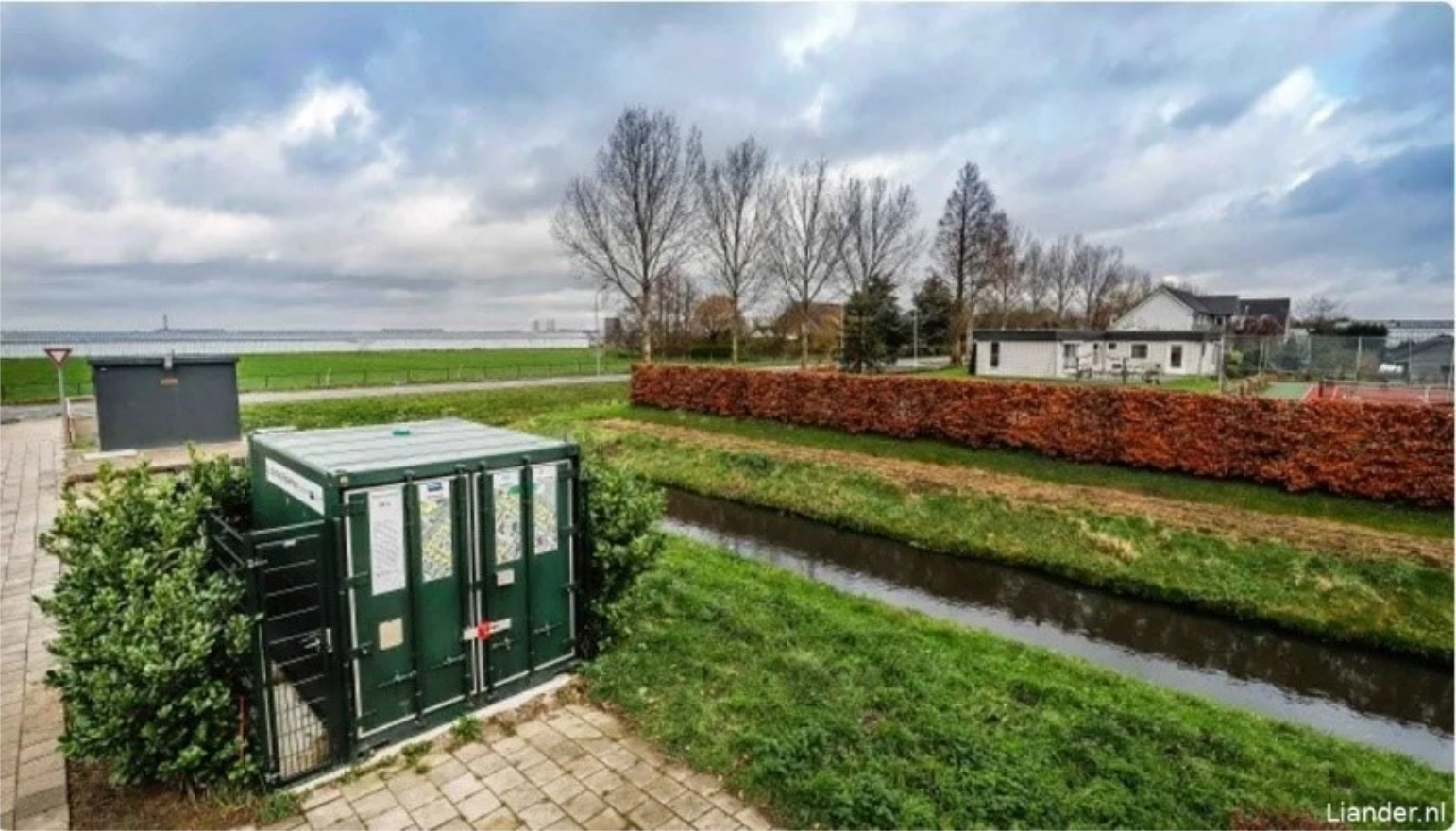
Context: in 2018, the Buurtbatterij (“neighbourhood battery”) pilot in Haarlemmermeer was initiated by Liander, the regional grid operator, in partnership with Tegenstroom, a local energy supplier that operates as part of an energy cooperative. Liander owned and operated the battery, while Tegenstroom played a key role in community outreach and coordination. 35 households took part. Participation in the project was free, though households were required to rent solar PV panels from Tegenstroom at a discounted rate, saving around €180 per year. The installation of panels was carried out in partnership with a social housing provider to ensure accessibility for a wide range of residents. The primary aim of the pilot was to stabilise the local grid, which faced increasing pressure from growing renewable generation.
Technical set up: the community battery had a capacity of 50kW/130kWh and was installed in front of the residents’ meters, connected directly to the distribution network. Each participating household was equipped with ‘Lyv Dash’, an energy management software that enabled the monitoring of energy flows and optimisation of consumption.
Economics: the pilot showed that community batteries can be beneficial for voltage management and offered revenue opportunities, such as providing balancing services through aggregators. There were consumer benefits as well: the community battery allowed residents to store surplus solar PV generation locally and draw on it when needed. The local community consumed 16,354kWh of self-generated solar energy through the battery, which is equivalent to the annual consumption of five households. However, the financial viability of the battery was low, which ultimately led to the removal of the battery in March 2021.
Flex4Energy project, Germany – type 3 virtual private network[footnote 18]
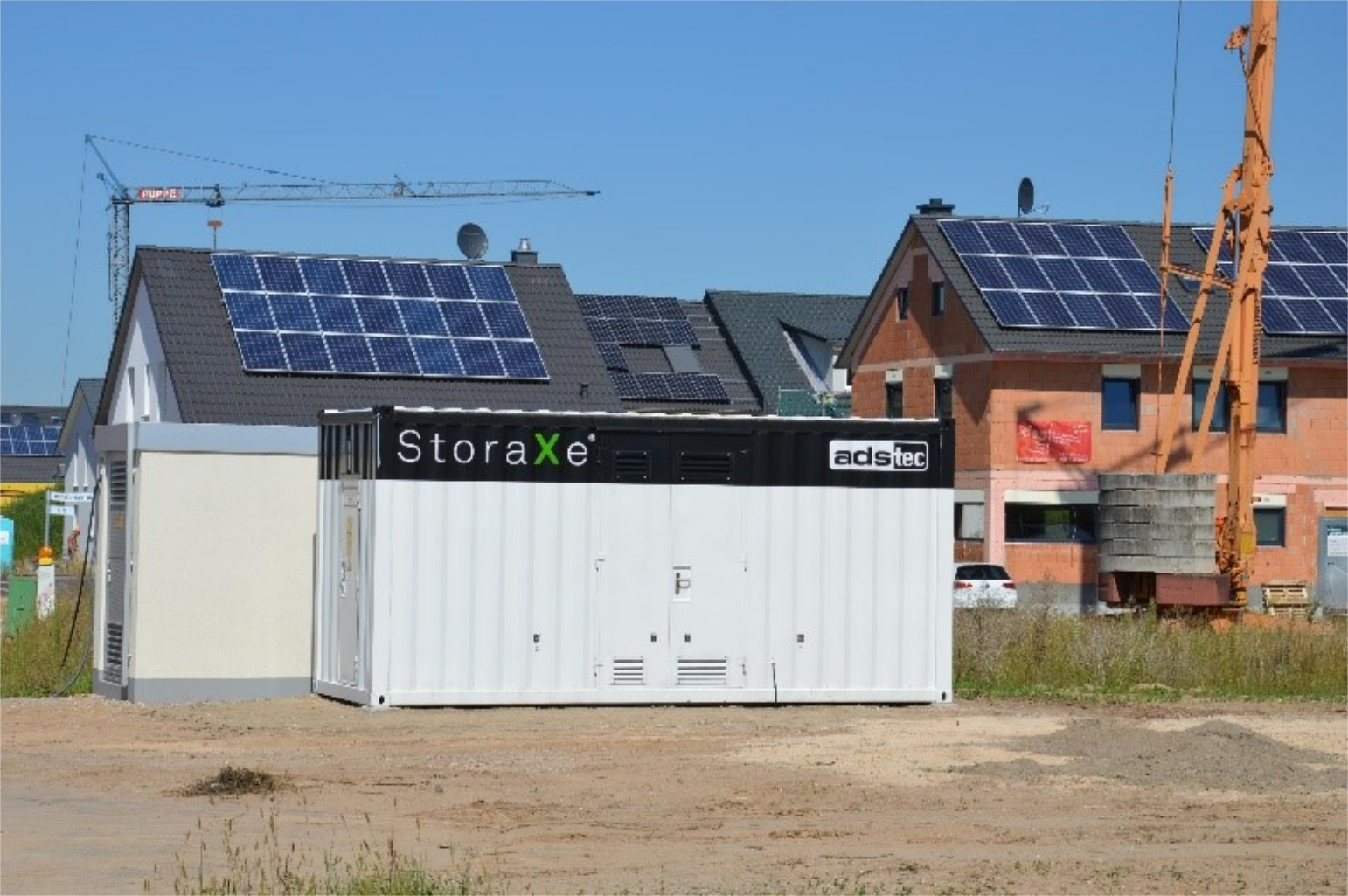
Context: the Flex4Energy project, led by ENTEGA AG between 2015 and 2018, explored how decentralised flexibility could support Germany’s energy transition while delivering tangible benefits to local communities. The pilot centred on the installation of a community battery “the Quartierspeicher” in Groß‑Umstadt, funded as part of a €4.21m programme. This shared residential battery project responded to residents’ reluctance to install individual home batteries due to space limitations and maintenance concerns.
Technical set‑up: the community battery had a capacity of 250kW/115kWh and served 23 households. The households’ PV generation was used onsite first; any surplus was automatically stored free of charge in the shared battery or exported to the low‑voltage grid. ENTEGA equipped each home with a bidirectional meter and developed software coordinating household PV systems and the neighbourhood battery so they could jointly provide self‑consumption optimisation, local grid support and participation in wider energy markets.
Economics: the community battery enabled households to use more of their own low‑cost solar power instead of purchasing electricity from the grid, increasing their self‑sufficiency from around 51% to up to 70%, directly reducing electricity bills. Households could view real‑time data on generation, export, import and self‑sufficiency. This shared storage model also allowed residents to avoid the significant upfront cost, space requirements, and ongoing maintenance associated with installing individual home batteries.
Respondents are invited to share views on the following:
33. Are you aware of community battery projects outside of the UK? If so, please provide details of these projects, including location, ownership model, and impacts.
34. What lessons should we learn from countries (for example Australia) that have scaled up community batteries effectively?
5.3 UK
Hazelmead community energy – type 2 microgrid new build[footnote 19]
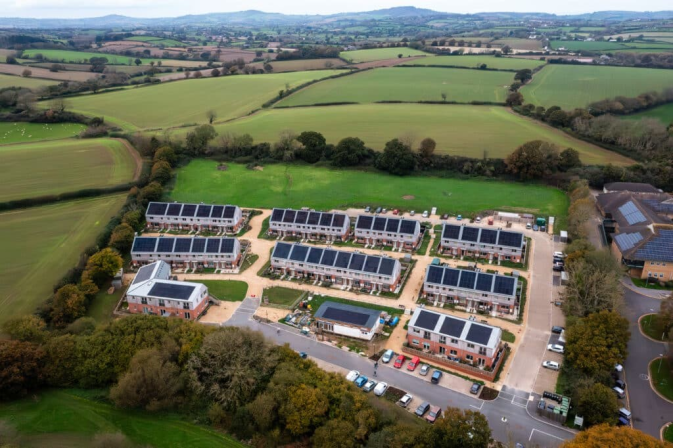
Context: in 2023, Bridport Cohousing (a community-led organisation), Barefoot Architects, Bournemouth Churches Housing Association, and Hazelmead Community Energy Limited, completed a new-build development of 54 homes installed on a microgrid in Bridport, Dorset. The project was motivated by a shortage of affordable, sustainable and community-oriented housing in the local area. The whole development cost just under £10m to construct and it is net zero in operation.
Technical setup: a microgrid was set up as the estate was developed, integrating 210kWp of rooftop solar photovoltaic panels with a 1.6MWh Tesla battery, 10 EV chargers and a small amount of wind power.
Economics[footnote 20]: by reducing electricity imports and generating export revenues, the microgrid reduced the electricity costs for the development as a whole by the equivalent of £1,300 annually per home (including costs like maintenance and insurance). However, given that this project was one of the first of its kind, the upfront investment and ongoing interest repayments exceeded these savings. As a result, whilst the project provided a 15% bill saving guarantee for residents compared to the price cap, it did so at a loss and remained financially unviable. To make the model feasible in future, a reduction in both technology and financing costs would be required. The cost of batteries has fallen significantly since 2023 and is continuing to fall. The cost of servicing the debt incurred to finance this type of project could decline over time if successful case studies are delivered and investor confidence in the approach is obtained.
Brixton Urban Energy Club – type 3 virtual private network[footnote 21]
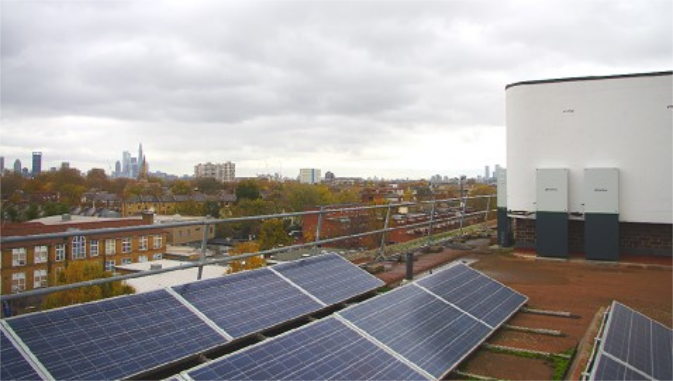
Context: in 2021, a community battery was installed alongside existing solar PV on Elmore house, a low rise 1960s block owned by Lambeth Council and managed by Loughborough Estate Management Board. UK Power Networks used £195k of innovation funding from Ofgem’s Network Innovation Allowance to test the viability of a community battery to provide flexibility services and reduce consumer bills.
Technical setup: a 10kW/20kWh battery was connected to the grid via a meter operated by EDF. This allowed EDF to virtually ‘net off’ energy provided by the battery to deliver bill savings to any EDF customers in the block of flats. They received bill credits for any solar they consumed, shared or sold to neighbours, as well as a share of the income from flexibility services. The platform optimised the use of the battery to increase residents’ savings.
Economics: the trial required residents to be on an EDF tariff which resulted in just four out of the 63 households at Elmore House receiving benefits. In the final three months of the trial, in which PV savings, battery savings and flexibility savings were all provided, the four households received total savings equivalent to ~£180 annually. However, the trial ran over winter, so electricity usage and thus savings would likely be lower over a full year.
6. Next steps
A summary of evidence received will be published following analysis of responses.
We appreciate the time and insight provided by all contributors. Your evidence will play an important role in helping us understand the benefits of community batteries, the conditions needed for their successful deployment, and any potential regulatory or policy changes that could support their rollout.
As a final question as part of this call for evidence, we would welcome views on the following:
34. What actions could the government take that would most effectively support the rollout of community batteries?
-
Electricity networks strategic framework, Appendix 1 – Electricity Networks Modelling, BEIS (2022) ↩
-
‘Behind-the-meter’, in this context, means a battery that is connected on the residents’ side of their home electricity meters. This different from ‘in-front-of-meter’, where the battery is connected on the grid side of their meters. For community batteries, the charging and discharging of the battery may be metered independently to help attribute benefits and costs to the community members. ↩
-
Common battery storage for an area with residential houses (January 2019) ↩
-
Competition between simultaneous demand-side flexibility options: the case of community electricity storage systems (2020) ↩
-
Calculated from Modo Energy Industry Metrics (Industry Metrics - Modo Energy) & internal BESS fire incidence tracking. This figure represents 4 fire incidents from a total of 184 BESS sites (as reported at the end of Q3 2025, used to align with reporting of official fire statistics) and was calculated in Feb 2026. The number of BESS sites has since increased to 193 with no additional fire incidents, so the current rate is likely lower. These figures are not official statistics as there is not a standardised approach for reporting BESS fires in English fire statistics. ↩
-
UK Gov statistics on England non-domestic fires (Fire statistics data tables - GOV.UK), England and Wales non-domestic building stock (Non-domestic National Energy Efficiency Data Framework (ND-NEED), 2025 - GOV.UK), and UK business population estimates (Business population estimates 2025). The figures refer to the average risk of a fire per year between 2020/21 to 2024/25, not the risk of a fire occurring at any point between 202/21 to 2024/25. ↩
-
PAS63100 is not directly referenced in the Battery Storage Installation Standard (MIS 3012). However, MIS 3012 does refer to the “latest edition of the IET Code of Practice”, which states that ‘stationary secondary batteries in dwellings shall be installed in a suitable location taking account of manufacturer’s instructions and PAS 63100.’ ↩
-
Source: Community Batteries for Household Solar program, DCCEEW ↩
-
Source: PowerBank, Future of community energy storage, Synergy ↩
-
Source: stakeholder engagement ↩
-
Sources: buurtbatterij Rijsenhout, Tegenstroom; stakeholder engagement ↩
-
Source: flex4energy: ENTEGA AG ↩
-
Sources: Hazelmead Community Energy case study (CEPRO, March 2024); Hazelmead: a DIY utopia designed by people, for people (Architects’ Journal, July 2025); stakeholder engagement ↩
-
Figures have not been independently verified by DESNZ ↩
-
Sources: Urban Energy Club NIA project report (April 2022); stakeholder engagement ↩