Foundering of the sailing yacht Bayesian with the loss of seven lives
Location: 0.5 nautical miles south-east of Porticello, Italy.
Accident Investigation Report 22/2026
Read our marine accident investigation report, which includes what happened, subsequent actions taken and recommendations.
Summary
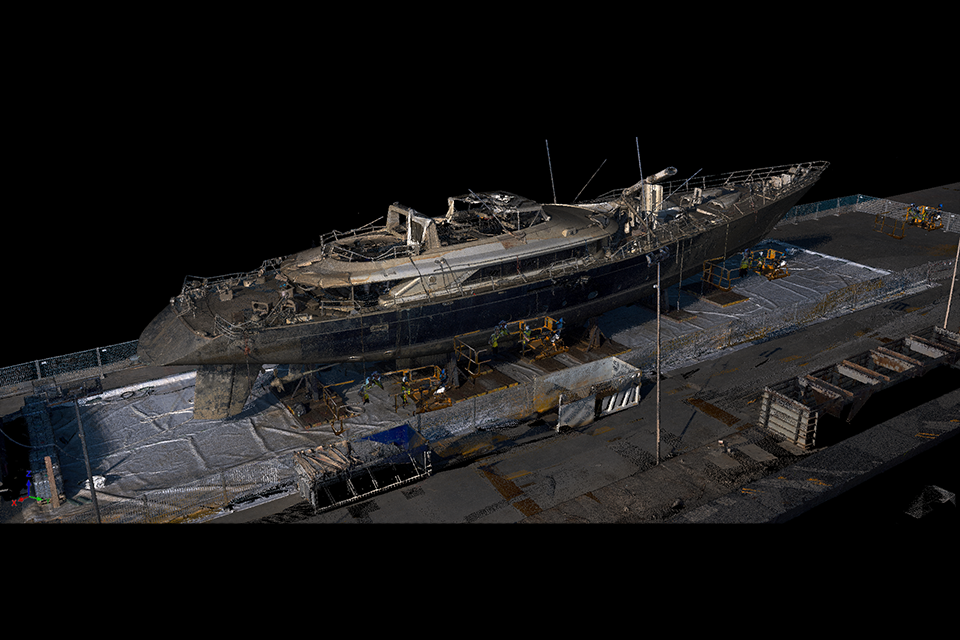
At 0406 on 19 August 2024, the private sailing yacht Bayesian was at anchor 0.5 nautical miles south-east of Porticello, Italy. A violent downburst of hurricane-force winds knocked the vessel onto its starboard side. Unable to right itself, Bayesian flooded and sank in 50m of water. Six guests and one crew member died in the accident. None of the liferafts on board automatically inflated or released from the vessel, requiring the crew to do so manually. The crew organised the survivors in the water and assisted them into a liferaft. They were later rescued by a nearby vessel and then taken ashore.
Safety issues
The investigation found that, with no sails set, Bayesian was vulnerable to knockdown in severe winds. This vulnerability was affected by its loading condition, apparent wind angle and the position of the centreboard, but had not been identified in the originally approved stability information available to the crew.
Information contained in guidance provided to mariners did not provide sufficient detail of the impact of possible weather conditions to support decision-making. The weather forecast for the area, while predominantly correct, did not indicate the risk of downbursts from the thunderstorms predicted.
Statement from the Chief Inspector of Marine Accidents
Recommendations
-
The Red Ensign Group is recommended to undertake a study of the vulnerabilities identified in this report and amend the Red Ensign Group Yacht Code and associated guidance to account for its findings.
-
The Maritime and Coastguard Agency is recommended to amend its training syllabus for yacht masters to include the risks from downbursts and severe wind gusts.
-
The Met Office is recommended to raise with the World Meteorological Organization the need to consider how low likelihood, high impact weather hazards should be represented in its data services.
-
The UK Hydrographic Office is recommended to develop and update guidance on the risks of such extreme weather in its publications.
Related publications
-
A safety flyer to the yachting industry has been produced with this report.
-
MAIB interim report on the investigation into the foundering of Bayesian, issued May 2025