INTM550086B - Hybrids: introduction: examples of interaction with transfer pricing: hybrid payer
These two examples demonstrate how Part 6A and the Transfer Pricing rules apply in the case of a hybrid payer. The diagram is the same for both fact patterns.
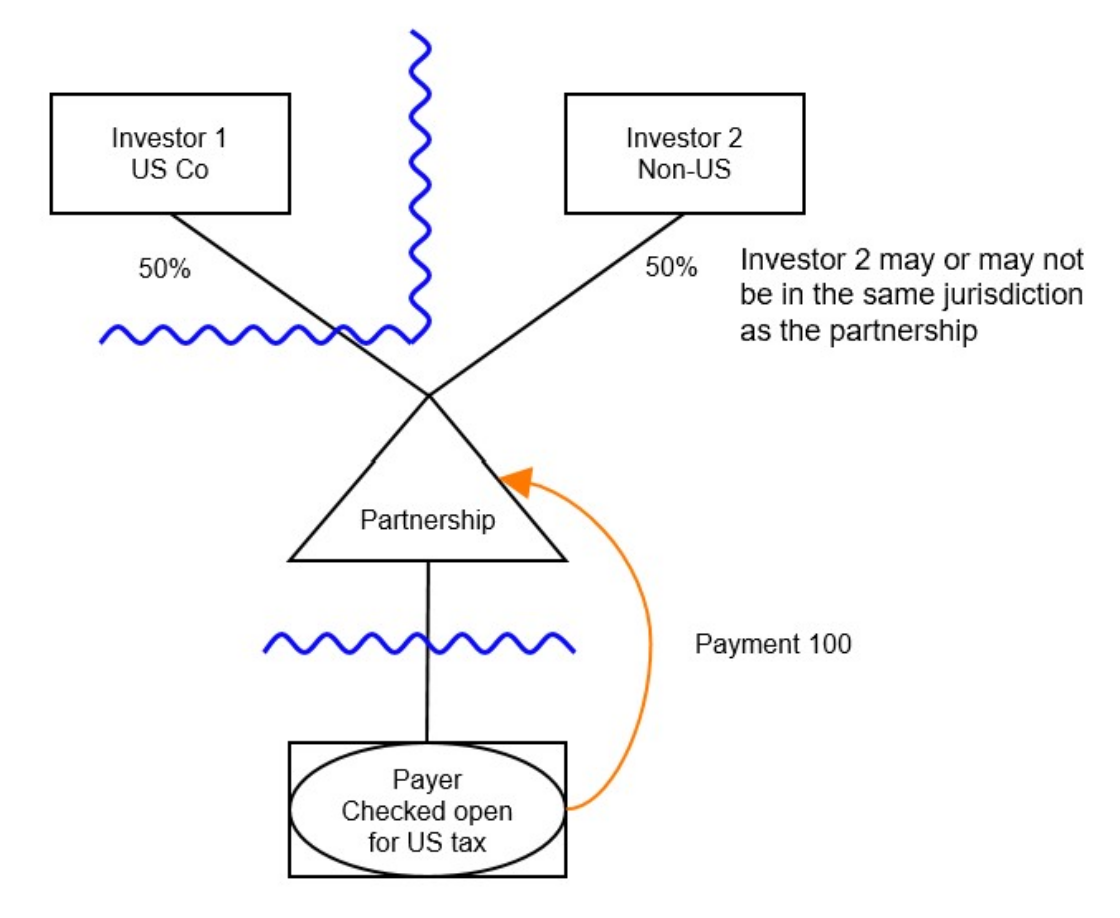
Example 1 analysis
In a scenario where:
- payment of £100 is made by the payer who is checked open for United States (US) tax purposes
- the payee is a non-US partnership
- investor 1 (US Company (Co) sees the payer as a transparent entity
- investor 2 (non-US Co) sees the payer as an opaque entity
- both investors see the partnership as transparent
Under arm’s length terms, the value of the payment between Payer and Partnership would be £60, not £100.
Applying transfer pricing with Part 6A factored in
Step 1: Test outcome of actual provision, disregarding transfer pricing rules
Payer makes payment of £100. This is the relevant deduction for part 6A purposes. Total payee ordinary income is £50. Counteraction under chapter 5 would therefore be restriction of £50 of relevant deduction to apply against dual inclusion income only. Total relief available to payer for normal use would therefore be £50.
Step 2: Test outcome of arm’s length provision
Payer makes payment of £60. This is the relevant deduction for part 6A purposes. Total payee ordinary income would be £30. Counteraction under chapter 5 would therefore be restriction of £30 of relevant deduction to apply against dual inclusion income only. Total relief available to payer for normal use would therefore be £30.
Step 3: Test if payer is a potentially advantaged person for transfer pricing purposes
Payer’s tax relief under the actual provision would be £50 available for general use and £50 available to set against dual inclusion income only. Under the arm’s length provision, it would £30 in each category. Payer is therefore potentially advantaged.
Step 4: Recompute payer’s tax position as if the arm’s length provision was imposed
Payer is taxed as if it has made a payment of £60. £30 of the resulting relief is restricted to use against dual inclusion income by chapter 5. The remaining £30 is available for general use.
To the extent relevant, corresponding adjustments would be available under section.174 if the arm’s length payment of £60 had been made.
Applying Part 6A (Chapter 5) to consider whether a further counteraction is required
Step 1: Identify relevant deduction (relief available disregarding hybrids rules)
Payer makes payment of £100. However, this exceeds the arm’s length amount so transfer pricing would require recomputation of payer’s tax position as if it was paying £360. Relevant deduction is therefore £60.
Step 2: Identify payees’ total ordinary income
Only investor 2 is recognising ordinary income. It receives £50. So, the total ordinary income of all payees is £50.
Step 3: Test if there is a hybrid payer deduction/non-inclusion mismatch
The relevant deduction is £60, and the total ordinary income of payees is £50. There is therefore a hybrid payee deduction/non-inclusion mismatch of £10.
Step 4: Apply counteraction
An amount of the relevant deduction equal to the mismatch of £10 is restricted for use against dual inclusion income only. The maximum the payer may deduct generally is therefore £50. However, since the application of the transfer pricing rules has led to a greater restriction, with £30 of relief limited to use against dual inclusion income and only £30 of relief available for general use, the counteraction has no effect in practice.
Note that if a corresponding adjustment claim was made by investor 2, part 6A would have imposed a counteraction of £30 (as total payee ordinary income would have been reduced to 30), setting a maximum deduction for general use of 30, leading to the same outcome as part 4. Part 6A would therefore have had no effect in its own right.
Example 2 analysis
In a scenario where:
- investor 1 sees the payer as a transparent entity
- investor 2 sees the payer as an opaque entity
- both investors see the partnership as transparent
- under arm’s length terms, the value of the payment between payer and partnership would be £40, not £100
Applying transfer pricing with Part 6A factored in
Step 1: Test outcome of actual provision, disregarding transfer pricing rules
Payer makes payment of £100. This is the relevant deduction for part 6A purposes. Total payee ordinary income is £50. Counteraction under chapter 5 would therefore be restriction of £50 of relevant deduction to apply against dual inclusion income only. Total relief available to payer for normal use would therefore be £50.
Step 2: Test outcome of arm’s length provision
Payer makes payment of £40. This is the relevant deduction for part 6A purposes. Total payee ordinary income would be £20. Counteraction under chapter 5 would therefore be restriction of £20 of relevant deduction to apply against dual inclusion income only. Total relief available to payer for normal use would therefore be £20.
Step 3: Test if payer is a potentially advantaged person for transfer pricing purposes
Payer’s tax relief under the actual provision would be £50 available for general use and £50 available to set against dual inclusion income only. Under the arm’s length provision, it would £20 in each category. Payer is therefore potentially advantaged.
Step 4: Recompute payer’s tax position as if the arm’s length provision was imposed
Payer is taxed as if it has made a payment of £40. £20 of the resulting deduction is restricted to use against dual inclusion income by chapter 5. The remaining £20 is available for general use.
To the extent relevant, corresponding adjustments would be available under section.174 as if the arm’s length payment of £40 had been made.
Applying Part 6A (Chapter 5) to consider whether a further counteraction is required
Step 1: Identify relevant deduction (relief available disregarding hybrids rules)
Payer makes payment of £100. However, this exceeds the arm’s length amount so transfer pricing would require recomputation of payer’s tax position as if it was paying £40. Relevant deduction is therefore £40.
Step 2: Identify payees’ total ordinary income
Only Investor 2 is recognising ordinary income. It receives £50. So, the total ordinary income of all payees is £50.
Step 3: Test if there is a hybrid payer deduction/non-inclusion mismatch
The relevant deduction is £40, and the total ordinary income of payees is £50. There is therefore no hybrid payee deduction/non-inclusion mismatch.
Since there is no hybrid payee deduction/non-inclusion mismatch, there is no counteraction.
Payer has an unrestricted deduction of £20, with a further £20 restricted to use against dual inclusion income, in accordance with the outcome of applying the transfer pricing rules.
Note that if a corresponding adjustment claim was made by Investor 2, part 6A would have imposed a counteraction of £20 (as total payee ordinary income would have been reduced to £20), setting a maximum deduction for general use of £20, leading to the same outcome as part 4. Part 6A would therefore have had no effect in its own right.