Youth Matters: State of the Nation (summary report)
This is an accessible, mobile-friendly version of the summary report for Youth Matters: State of the Nation.
Applies to England
You can also read this report as a PDF. If you are using your phone, you might need to view the PDF horizontally. The PDF version may not be fully accessible for screen readers.

Hey everyone!
We’re a group of young people from all over England, and we’ve been working with the government to figure out what it’s like to grow up here in 2025. We know things can be tough – from dealing with mental health issues to worrying about jobs and just finding safe places to be with our friends or get support. But we’re also full of ideas and ready to make things better.
We believe in our own strength and the incredible talent within our generation
The foundational report for the National Youth Strategy sets out a ‘State of the Nation’ summary of young people in England today. Commissioned by DCMS’s Secretary of State, the report highlights current patterns, challenges, and wants that are shaping young people’s lives. It draws together the voices of over 14,000 young people of the ages 10 to 21 and up to 25 for those with special educational needs and disabilities (SEN/D) who engaged in the National Youth Strategy Survey.
It also makes use of insights collated through policy engagement, qualitative data collection and wider evidence collation. The report is partially based on commissioned research that was led by Savanta and their colleagues at My Life My Say and the #iwill Movement (Volunteering Matters and UK Youth) including their Youth Collaborators. The research they undertook that has informed this report included an evidence review, focus groups, democracy cafés and a large scale national survey of young people in England.

Credited to Young Manchester
Key findings in our own words
It’s tough out there
- A lot of us are really worried about our mental health, money (seriously, the cost of living is stressful!) and just feeling safe, whether we’re online or out in our local area. It also feels like there aren’t enough free places for us to just hang out and do stuff.
The digital world
- We’re connected online, which is great for some things, but it can also mean online bullying and feeling lonely.
Everything’s connected
- The report really hammers home that all these problems aren’t separate. If you’re stressed about money, it affects your mental health. If there are no places for us to hang out, it’s harder to make friends and feel like you belong.
We’re not the problem, we’re the solution!
- The report shows how much talent, creativity, and ambition our generation has. We’re not just sitting around; we want to make a difference and have a real say in what happens. We’re ready to make change happen.
We need support that actually works
- We’re asking for better mental health support (especially in schools), more fun and affordable activities, and help with things like jobs and housing. And we want our voices to be genuinely heard in all the decisions that affect our lives.
This report captures the experiences and voices of over 14,000 young people. It’s about our lives, our challenges, and our hopes. It shows how everything is connected and why we need to work together to build a future where every young person can thrive. We’re ready to play our part. Are you?
The National Youth Strategy, Youth Advisory Group
Growing up in 2025: A young person’s reflection
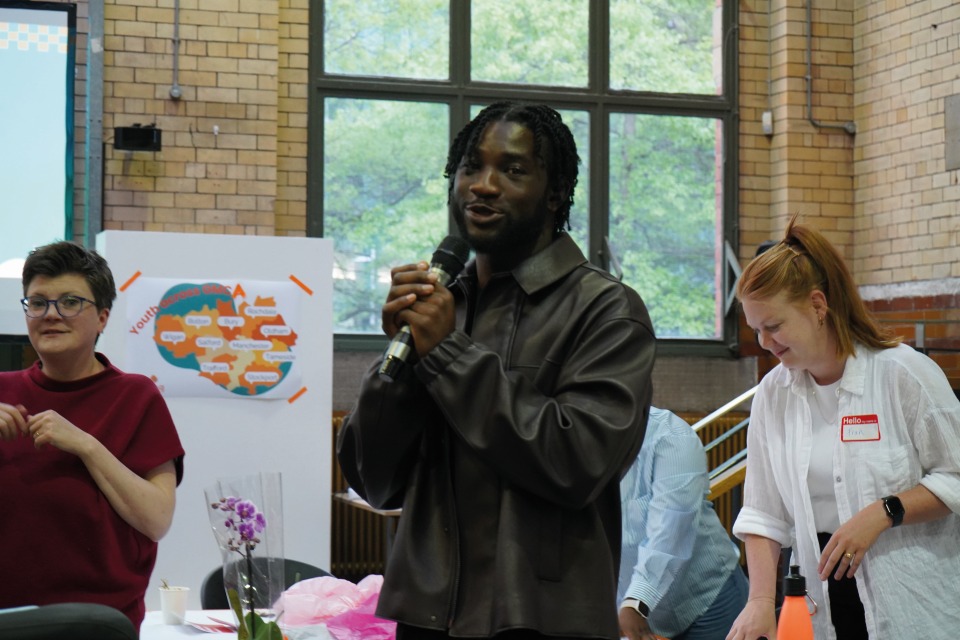
Credited to Young Manchester
It’s 2025, and though the digital world offers endless connections, sometimes I feel a strange, quiet loneliness. News headlines flash across my feed: economic uncertainty, the housing crisis, the ever present pressure of exams. It’s a lot.
Money is a constant hum of worry, especially with transport costs eating into my part-time earnings. Mental health is a big one too; my friends and I often talk late into the night about the anxiety of it all. School is another worry – the curriculum feels narrow, so focused on tests rather than the practical skills I know I’ll need for a decent job, for decent housing, for a future that feels less uncertain.
What really stings is the lack of places to just be. Outside of school, there isn’t much for my mates and I to do in person. Few youth clubs, few affordable activities, and often, the thought of getting anywhere safely, especially after dark, is a barrier. We need spaces to just hang out, make friends, and frankly, just have some fun without the constant pressure of “what next?”
Yet, despite all of it, I am still hopeful for a better future.
Being a teenager or young adult is a unique experience. We’re navigating friendships, discovering our identities, and learning skills for life, just like generations before us. But we’re also dealing with some pretty big stuff that’s unique to our time:
-
The COVID-19 lockdowns impacted our childhood and teenage years.
-
We’re the first generation to have access to the internet from the start of our lives.
This means we’re more connected than ever, but it also brings new challenges like feeling lonely, even when we’re surrounded by online friends.
I think especially where we’ve moved to quite a digital world as young people, that in-person community factor is lost.
– Young person from Hastings
- The cost of living crisis is a struggle for many. It affects everything – from being able to afford activities to worrying about our future jobs and housing.
If you can’t afford to live, that’s going to impact your health and other things, isn’t it?
– Young person from Blackpool
- Things like climate change, economic shifts and global issues add to our anxieties about the future.
What happens to us now really shapes our whole lives. If we feel safe and supportive, it sets us up for success. But if we face tough times early on, it can make things harder later. That’s why it’s so important that we get the right support now.
Sometimes, the public sees young people as a ‘problem.’ But we, and the people that know us best say that we’re socially aware and want to make a difference.
When young people feel like they’ve got a place they belong, they act like they belong.
– Young person from Newcastle
We are ambitious, hardworking, and ready to be changemakers. We want a society that gives us the tools to succeed and the space to be heard.
Key theme 1: Community connection, cohesion and belonging
It’s tough for many young people in England to feel a strong sense of belonging. The use of social media, easy digital access, and money worries all play a part. We’re seeing a real decline in affordable, safe places for us to just hang out, do activities, and play sports. These places that aren’t home or school are disappearing.
Even when places do exist, we don’t always know about them. And getting to activities can be a big problem, especially in rural areas, due to cost or lack of safe transport. We also sometimes feel judged negatively when we hang out in public.
What we hope for
We want more free, safe spaces to spend time with friends, away from home or school time. We really need more adults we can trust to help us out, give us advice, and just be there for us. It’s important that these adults actually get what we’re going through, especially with all our different backgrounds and cultures.

Credited to Young Manchester.
Key theme 2: Safety and security
Feeling safe is a worry for many of us. Many girls in the UK (53%) have seen sexist comments or hate speech online. Some online content can even influence violent behaviour.
Social media. It’s, like, do you know when you pick up your phone every day, and then you have a bunch of notifications, you never know what you’re going to open up to.
– Young person with SEN/D
- 16% of young people in the UK feel unsafe in their local areas. Young women are 7 percentage points more likely to feel unsafe than young men, and only 25% of transgender young people feel safe compared to 52% of non-transgender young people.
- Fifteen year olds in the UK spend more time on their digital devices than the average OECD country (OECD, 2025).
What we hope for
We want safer online spaces, this would improve our day to day lives. In our local communities, we want crime reduced and public spaces to feel safe for everyone.
Key theme 3: Skills for work and life
Education is super important, but it’s not always preparing us for the real world. And access to opportunities isn’t equal for everyone, especially when it comes to jobs and financial stability. Despite these hurdles, young people are ambitious and determined to gain the skills they need to succeed.
-
We want to learn things like financial literacy (taxes, interest rates, how mortgages work), cooking, and how to create CVs.
-
Young people with SEN/D and those in the lower socioeconomic group show lower levels of agreement with the idea of them being able to get help with their education and career. Those with SEN/D sometimes feel that teachers aren’t trained enough to support neurodiverse students, and there’s a lack of amenities for those with physical disabilities.
-
Finding secure, fulfilling jobs, especially outside of big cities, is a big challenge.
It’s hard growing up as someone neurodiverse in education at schools because you’re trying to fit into a system that wasn’t made for you at all.
– Young person from Newcastle
I would say the biggest worry for me is not doing well at school…it kind of links to money, stability…
– Young person (care experienced)
What we hope for
We want a broader curriculum that teaches practical life skills for adulthood. We also want more opportunities to develop skills outside of schools, through things like volunteering and work experience opportunities.
Key theme 4: Health and wellbeing
Mental health is a huge concern, with issues such as anxiety, self-harm, and loneliness disproportionately affecting individuals from disadvantaged backgrounds. It’s clear that our current support systems aren’t always working well enough. Despite these challenges, young people are highly aware of mental health issues and are actively seeking solutions and support.
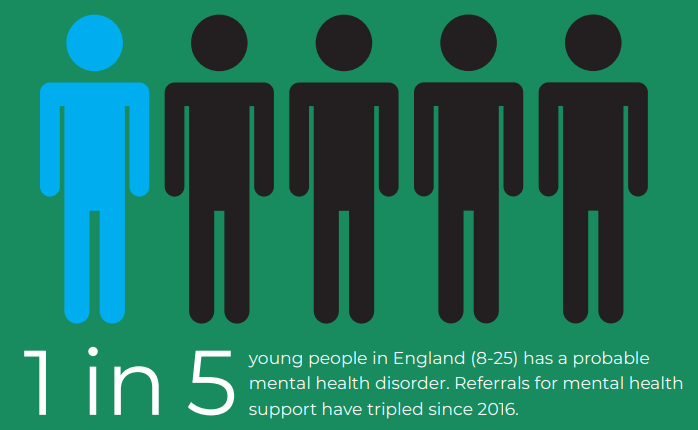
1 in 5 young people in England (8 to 25) has a probably mental health disorder. Referrals for mental health support have tripled since 2016.
If there’s no mental health support now, we’re going to fail this generation coming up, and it’s going to be, like, a generational curse that keeps growing and growing and growing.
– Young person from Exeter
-
Nearly half of young people in England (11 to 18) (44%) regularly feel lonely.
-
The health system can be hard to understand, with long waiting times for support.
What we hope for
Overwhelmingly, we want to feel happy and healthy now and in the future. We need more mental health support from a young age, especially in schools, and fast access to help when we need it.
Are we heard? Youth power and democracy
Many young people don’t feel heard by those in power, and it’s a big problem. This can make us feel like our vote doesn’t matter. Yet, young people are eager to have agency in decisions that affect them and are actively looking for ways to make their voices heard.
I feel a bit more like I’m along for the ride, rather than being able to have a say in exactly what’s happening.
– Young person from Kimberley
- Young people are the most disengaged group in the UK when it comes to voting, with estimated voter turnout in the last general election at 37% among 18 to 24 year olds.
- Only 24% of young men in the UK (11 to 30) think there are enough opportunities to share their views, compared to only 16% of young women and 9% of non-binary respondents.
- Sometimes, it feels like involving young people is just a tick-box exercise, not a genuine effort to listen.
What we hope for
We want our voices to be heard at every level of decision-making. We are ready to work together and contribute our perspectives. We need better civic and political education so we understand how to get involved and feel empowered. We also want to be involved in designing the spaces and services meant for us.
The big picture- it’s all connected!

You’ve seen how young people are facing challenges, but also how much potential we have. All these issues are linked –you can’t fix one without thinking about the others. Young people have immense talent and a strong desire to overcome obstacles, showing great hope for a brighter future.
Here’s how our worries connect:
-
Friendships and social life: Loneliness and isolation are huge. Our friendships and social life are really important to us.
-
School/college/university: The pressure to perform, a curriculum that doesn’t always feel practical enough, and a lack of mental health support in schools all contribute to stress. If we don’t feel like we belong at school, it can affect our overall well-being.
-
Money: This is a common worry. It affects everything – from being able to afford activities and transport to worrying about our future jobs and housing.
-
The future: This links directly to job security, affordable housing, and getting the right skills from education.
-
Mental health and wellbeing: This is affected by loneliness, financial stress, school pressure, and feeling unsafe.
Key takeaways
-
Places to connect
When there are fewer safe, affordable places for young people to gather (like youth clubs), it increases loneliness and isolation.
-
Skills for life
Access to activities, volunteering, and work experience helps us develop skills for work and life. These aren’t just about jobs; they build confidence, friendships, and overall well-being.
-
Voice and opportunity
If young people don’t feel heard in decisions that affect them, it can lead to disengagement and a feeling of powerlessness. This impacts our sense of belonging and our belief in a better future.
-
Disadvantage amplifies challenges
Young people from lower socioeconomic backgrounds and those with SEN/D often face even greater challenges across all these areas – from accessing activities and support to feeling safe and having a voice.
Credited to Volunteering Matters
Our vision for tomorrow- what happens next?
This report has brought our voices to the front. We’ve shown the challenges, but also our incredible ambition and desire to make a difference. Today’s youth are filled with hope and vision for the change we want to see in the world. We have set out our hopes for the future, including action from the government, from better mental health support in schools to greater involvement in decision-making. We are ready to work together.
Today’s youth are tomorrow’s nation.
There are some areas in which we can see positive trends for young people in England, including positive international comparisons when the UK as a whole (not just England) are compared to other countries. For example, students in the UK score higher than the OECD average in mathematics, reading and science (OECD, 2023). There are also some positive trends in regards to young people and the criminal justice system, for example, the number of children who have been cautioned and sentenced in England and Wales has fallen by 67% over the last 10 years (YJB, 2025). However, the findings throughout show us that there are many priority areas that need to be improved.
Addressing these challenges isn’t just good for us; it’s good for everyone. It will create a stronger, happier, and more hopeful society. We are ready to play our part. Now, it’s time for everyone else to step up, too.
Ministerial statement
For decades this country has had no national strategy for its young people. And yet, during that time, the experience of growing up in England has been transformed. This is the first generation to be entirely born into a digital world. Born in the aftermath of a global economic crash, they have experienced over a decade of austerity, political and economic turmoil and a global pandemic. In our first year we have made it our resolve to improve the lives of young people by ensuring we work as a collective across the Cabinet, including the Youth Guarantee, the Young Futures Programme and Local Youth Transformation Pilots and the Curriculum Review. But this is just the start. We want to go further.
This report sets out the reality of what it is like to grow up in England in 2025. It is a reflection of our belief that young people have a clear understanding of the challenges facing their generation and a central goal of the government must be to put them back in the driving seat of their own lives. What they present is stark.
We are determined this will change. This is the clearest picture yet of the challenges facing this generation and it runs like a thread through the National Youth Strategy. Our government will ensure that every penny we invest helps to grip the challenges facing this generation.
For too long young people have been an afterthought when it comes to decision making. Yet the future health and success of the nation depends on a safe, secure, healthy and connected generation who have the tools they need to succeed.
There are millions of young people in England that are our reasons for stepping up – and our government will.
Lisa Nandy, Secretary of State, DCMS
See full bibliography in the main report.
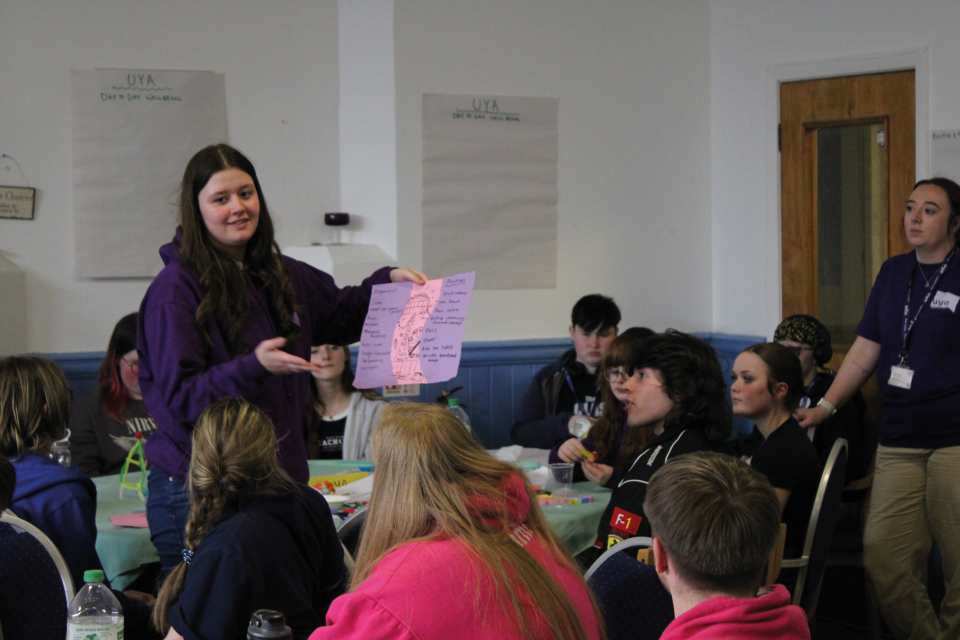
Credited to Volunteering Matters