
Youth Justice Statistics: 2024 to 2025
Published 29 January 2026
Applies to England and Wales

© Crown copyright 2026
This publication is licensed under the terms of the Open Government Licence v3.0 except where otherwise stated. To view this licence, visit nationalarchives.gov.uk/doc/open-government-licence/version/3 or write to the Information Policy Team, The National Archives, Kew, London TW9 4DU, or email: psi@nationalarchives.gov.uk.
Where we have identified any third party copyright information you will need to obtain permission from the copyright holders concerned.
This publication is available at https://www.gov.uk/government/statistics/youth-justice-statistics-2024-to-2025/youth-justice-statistics-2024-to-2025
The youth justice system in England and Wales works to prevent offending and reoffending by children. It is different to the adult system and is structured to address the needs of children.
This publication looks at data for the youth justice system in England and Wales for the year ending March 2025 (where available). It considers the number of children (those aged 10 to 17) in the system, their demographics, the offences they committed, the outcomes they received and the trends over time.
Main points
| Stop and searches of children decreased compared to the previous year | ↓ | Stop and searches of children decreased by 7% and accounted for one in five of the total stop and searches where age was known. Just under three quarters of stop and searches of children resulted in no further action. |
| First time entrants to the youth justice system fell to the lowest number on record | ↓ | There were just over 8,100 child first time entrants (FTEs). This was a decrease of 4% compared with the previous year. This was the lowest number on record. |
| Almost two thirds of children remanded to custody received a non-custodial outcome | → | Of those who did not receive a custodial sentence following a custodial remand, 25% were acquitted or had their case dismissed while 75% received a non-custodial sentence. |
| The average time from offence to completion was at its highest level | ↑ | The average time from offence to completion was 230 days the joint highest level it has been along with the year ending March 2021 which was, at the time, impacted by court closures during the COVID-19 pandemic. |
| Offences resulting in a caution or court sentence remained static | → | The number of proven offences committed by children saw no change compared with the previous year at around 35,600 offences following two consecutive year-on-year increases. |
| Sentencing of children at court increased for the third consecutive year | ↑ | The number of sentencing occasions involving children increased by 1% to around 13,000 compared with the previous year, the third consecutive year-on-year increase. |
| The number of custodial sentences decreased | ↓ | The number of custodial sentences decreased by 7% compared with the previous year to around 610. This followed the first year-on-year increase in custodial sentences of the last 10 years. |
| The number of children held in custody has fallen | ↓ | There was an average of around 420 children in custody at any one time during the year, a fall of 3% against the previous year and the lowest number on record. |
| The reoffending rate for children has decreased | ↓ | The proven reoffending rate for children decreased to 31.8%, a 0.7 percentage point decrease on the previous year. This was the first fall following two consecutive year-on-year increases. |
For technical details see the accompanying Guide to Youth Justice Statistics
We would welcome any feedback to statistics@yjb.gov.uk
Things you need to know
This publication draws together a range of statistics about children in the youth justice system from 1 April 2024 to 31 March 2025 (hereafter the year ending March 2025), where available.
The contents of the report will be of interest to government policy makers and those monitoring policy, the agencies engaged with the youth justice system at both national and local levels, academics, the voluntary and community sector and others who want to understand more about the system.
The data described in this publication come from various sources including the Home Office, the Ministry of Justice (MoJ), youth justice services (YJSs) and the Youth Custody Service (YCS). The Statistics and Analysis Team at the Youth Justice Board for England and Wales (YJB) produce this report.
Details of all the administrative databases and bespoke collections used for this report can be found in the Guide to Youth Justice Statistics which provides users with further information on the data sources, data quality and terminology.
This is an annual report, with the focus on the year ending March 2025, however much of the data used in this report is drawn from quarterly publications and there may be more up to date data available. The purpose of this report is to provide an overall summary of the youth justice system, allowing users to find everything in one place. All data referenced are available in the Supplementary Tables that accompany this report. Separate tables covering YJS level information are also available, including in an open and accessible format.
Within this publication the words ‘child’ or ‘children’ are used to describe those aged 10 to 17. When the terms ‘child or young adult’ or ‘children and young adults’ are used, it means that 18-year-olds may be included in the data.
Statistics around ethnicity are usually presented excluding those with an unknown ethnicity. In this publication, the figures for those with an unknown ethnicity have been included for arrests and sentencing occasions. This is due to the significant increase from the previous year and the volume of those with an unknown ethnicity. Comparing year-on-year changes for other ethnicities should be treated with caution for arrests and sentencing occasions due to this.
Where the publication makes reference to an ethnic group being over-represented, this is in relation to the proportion of that ethnic group in the general child population found at the 2021 census. For example, if an ethnic group made up 15% of First Time Entrants to the Youth Justice System when that ethnic group forms only 10% of the general population, this group would be considered over-represented.
In this publication, we refer to the ‘secure estate for children and young people’. This refers to the part of the secure estate that is managed by the YCS, which is primarily for children though a number of 18-year-olds may remain in this part of the secure estate until either their remand or sentence ends or they turn 19, whichever is earliest.
Percentage change and percentage point changes are used throughout the publication. Percentage change refers to the difference between two numbers from one year to the next and percentage point change refers to the difference between two percentages, which is used when comparing proportions.
Rounding conventions have been adopted in this publication to aid interpretation and comparisons. Figures greater than 1,000 have been rounded to the nearest 100 and those smaller than 1,000 to the nearest 10. Rates have been reported to one decimal place. Percentages have been calculated from unrounded figures and then rounded to the nearest whole percentage. Unrounded figures have been presented in the Supplementary Tables.
The data in this report are compared with the previous year (the year ending March 2024 in most cases) and with the year ending March 2015 where available as a long-term comparator (10 years). Any other reference period is referred to explicitly.
Statistician’s comment
This publication draws together a range of statistics about children in the youth justice system. The latest figures highlight some continued reductions in some areas and increases in others.
Black children continued to be over-represented across most stages of the youth justice system. Compared with the previous year, there have been increases in volumes involving Black children across several stages of the youth justice system, including arrests, first time entrants and children cautioned or sentenced. This follows decreases that had occurred in previous years across many of these areas.
Mixed children also continued to be over-represented across several stages of the youth justice system. Compared with the previous year, there was an increase in the proportion of Mixed children who were cautioned or sentenced. Mixed children were over-represented within the custodial remand population, and over the last 10 years, the proportion of Mixed children in custody has increased despite overall reductions in custody across all ethnic groups.
First time entrants (FTEs) to the youth justice system decreased for the second consecutive year to the lowest level on record and for the second year in a row, the number of FTEs receiving a court sentence was higher than those receiving a youth caution.
The average time from offence to completion was the joint highest level it’s been, along with the year ending March 2021 which was, at the time, impacted by court closures during the COVID-19 pandemic.
The reoffending rate was lower than the previous year. This was the first fall following two consecutive year-on-year increases. However, the number of children in the cohort increased for the second consecutive year and the number of reoffences increased for the third consecutive year.
Flows through the youth justice system, year ending March 2025
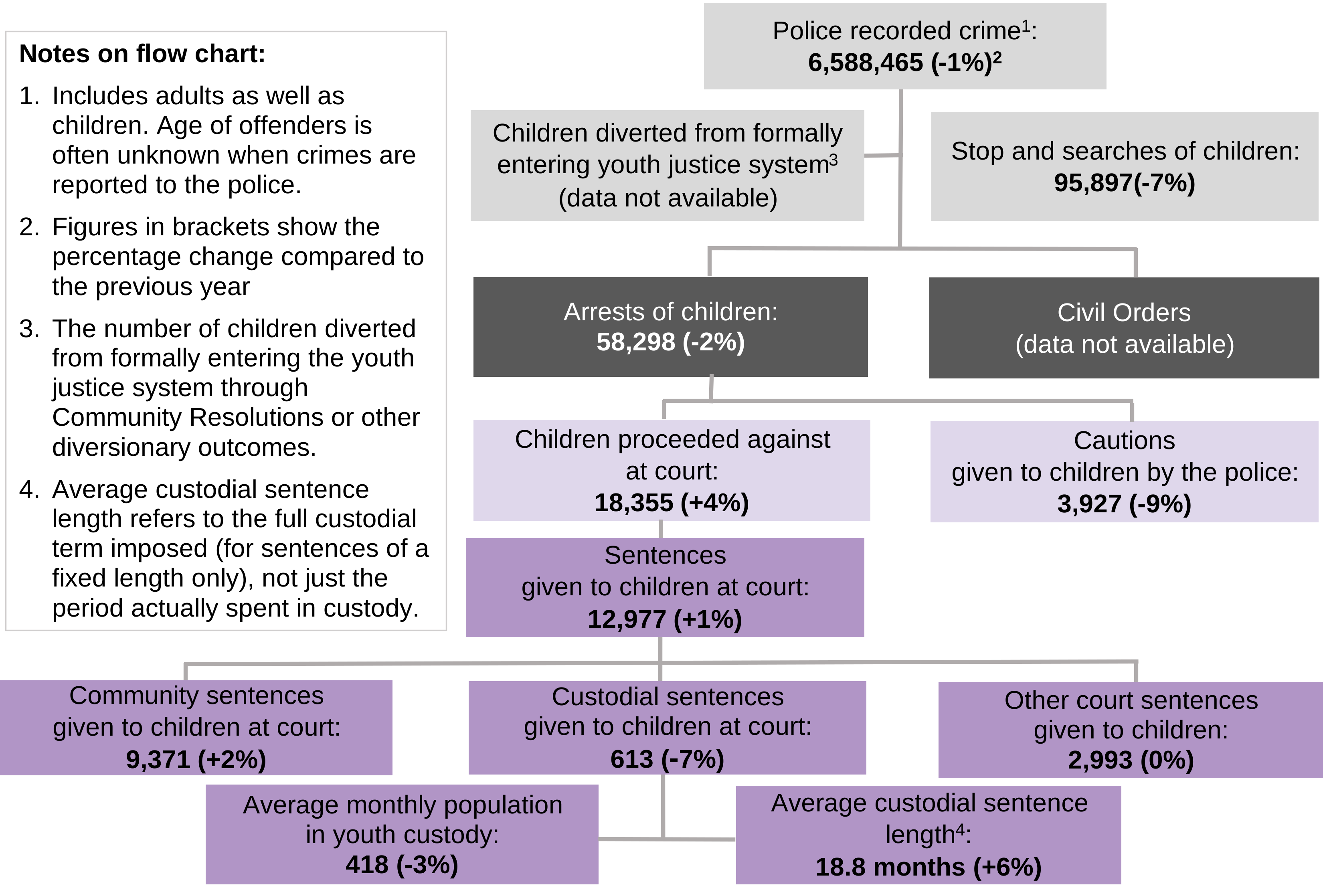
1. Gateway to the youth justice system
In the year ending March 2025:
-
There were around 95,900 stop and searches of children, a decrease of 7% on the previous year. Stop and searches involving children accounted for over one in five stop and searches where age was known.
-
Black children were involved in 18% of stop and searches (where ethnicity was known). This was 12 percentage points higher than the proportion of Black 10 to 17-year-olds in the 2021 population and the only ethnic group to be over-represented compared with the population.
-
Almost three quarters (74%) of stop and searches of children resulted in No Further Action which was a slight decrease from the previous year and the lowest proportion in the last five years. The proportion of stop and searches of children resulting in arrest remained at the same level as the previous two years at 10%.
-
In Wales and the English regions, increases in stop and searches of children were observed only in Wales and the South East, by 5% and 4% respectively.
-
There were around 58,300 arrests of children for notifiable offences. This was a 2% decrease to the previous year where there were around 59,200 arrests of children for notifiable offences. Arrests of children were 38% lower than the year ending March 2015.
This chapter covers data on stop and searches, arrests and youth cautions given to children.
1.1 Stop and searches of children aged 10 to 17
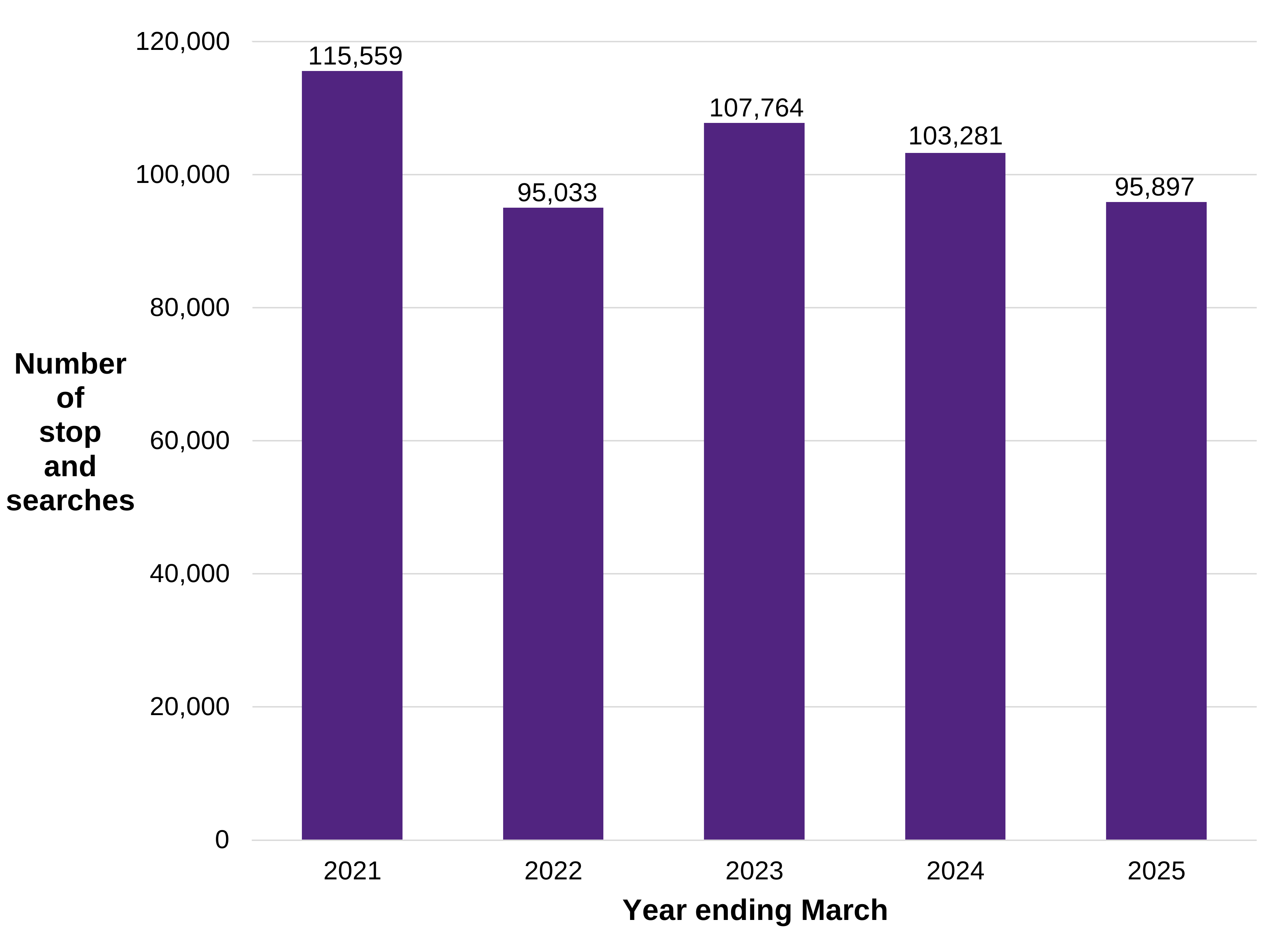
Figure 1.1: Number of stop and searches of children, England and Wales, years ending March 2021 to 2025
Supplementary Tables: Chapter 1, Table 1.1
In the year ending March 2025, there were around 95,900 stop and searches of children. This was a decrease of 7% compared with the previous year and the second consecutive year-on-year decrease. Stop and searches involving children accounted for one in five stop and searches where age was known.
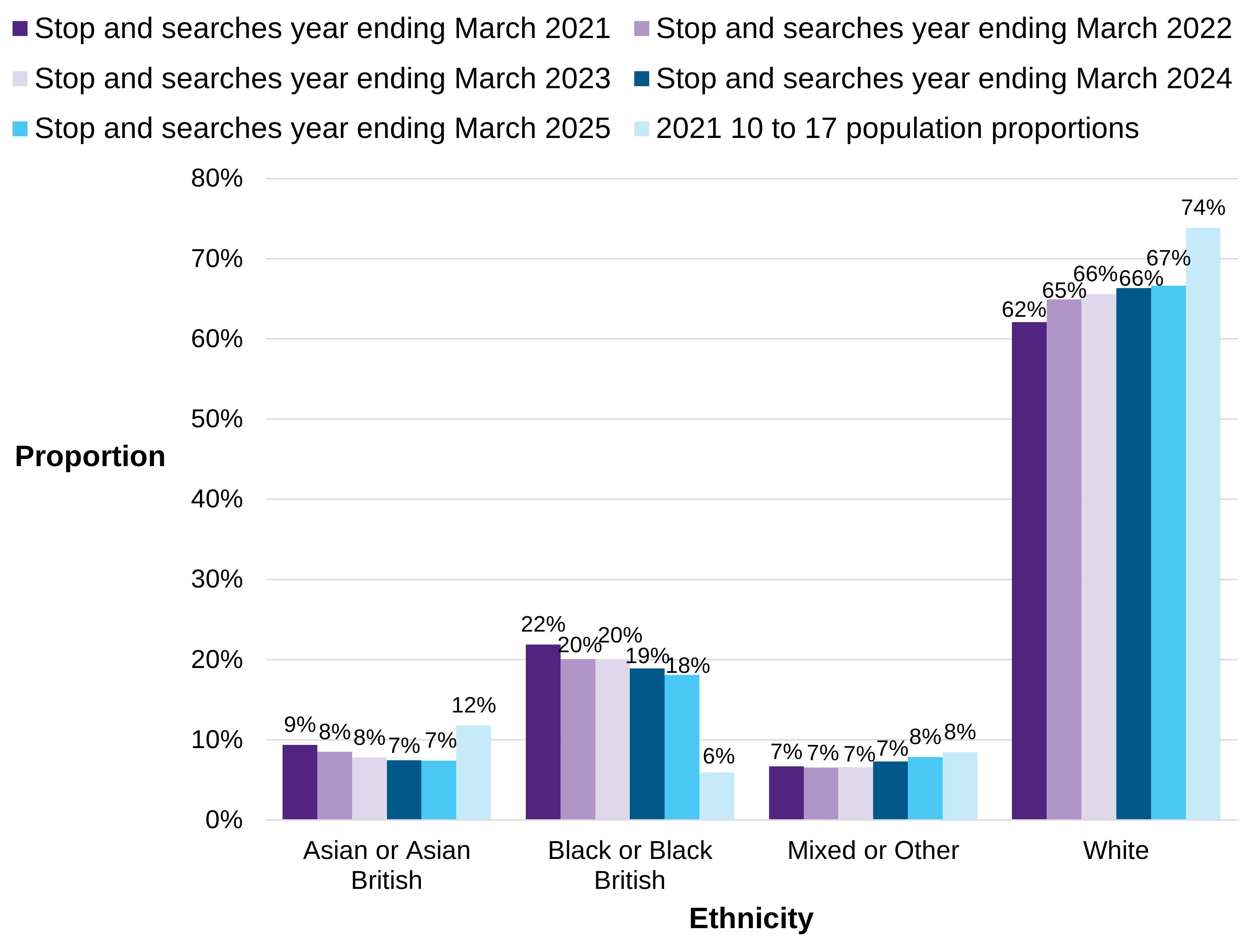
Figure 1.2: Proportion of stop and searches of children by ethnicity, England and Wales, years ending March 2021 to 2025 [footnote 1]
Supplementary Tables: Chapter 1, Table 1.1
Since the year ending March 2021, the Home Office have collected stop and search data on both the officer-observed ethnicity and the self-defined ethnicity of the person searched, for individual records. This means that if the self-defined ethnicity of the person searched was not stated, officer-observed ethnicity can be used as a replacement, for analytical purposes.
Black children were involved in 18% of stop and searches where ethnicity was known in the year ending March 2025. This was 12 percentage points higher than the proportion of Black 10 to 17-year-olds in the 2021 population and Black children were the only ethnic group to be over-represented compared with the general population. However, the extent of this over-representation has continued to decrease over time.
Compared with the previous year, there was an 11% decrease in the number of stop and searches of Black children. This was the highest decrease by ethnicity and compares to a 7% decrease for stop and searches of Asian children, a 6% decrease for stop and searches of White children and no change for stop and searches of Mixed children.
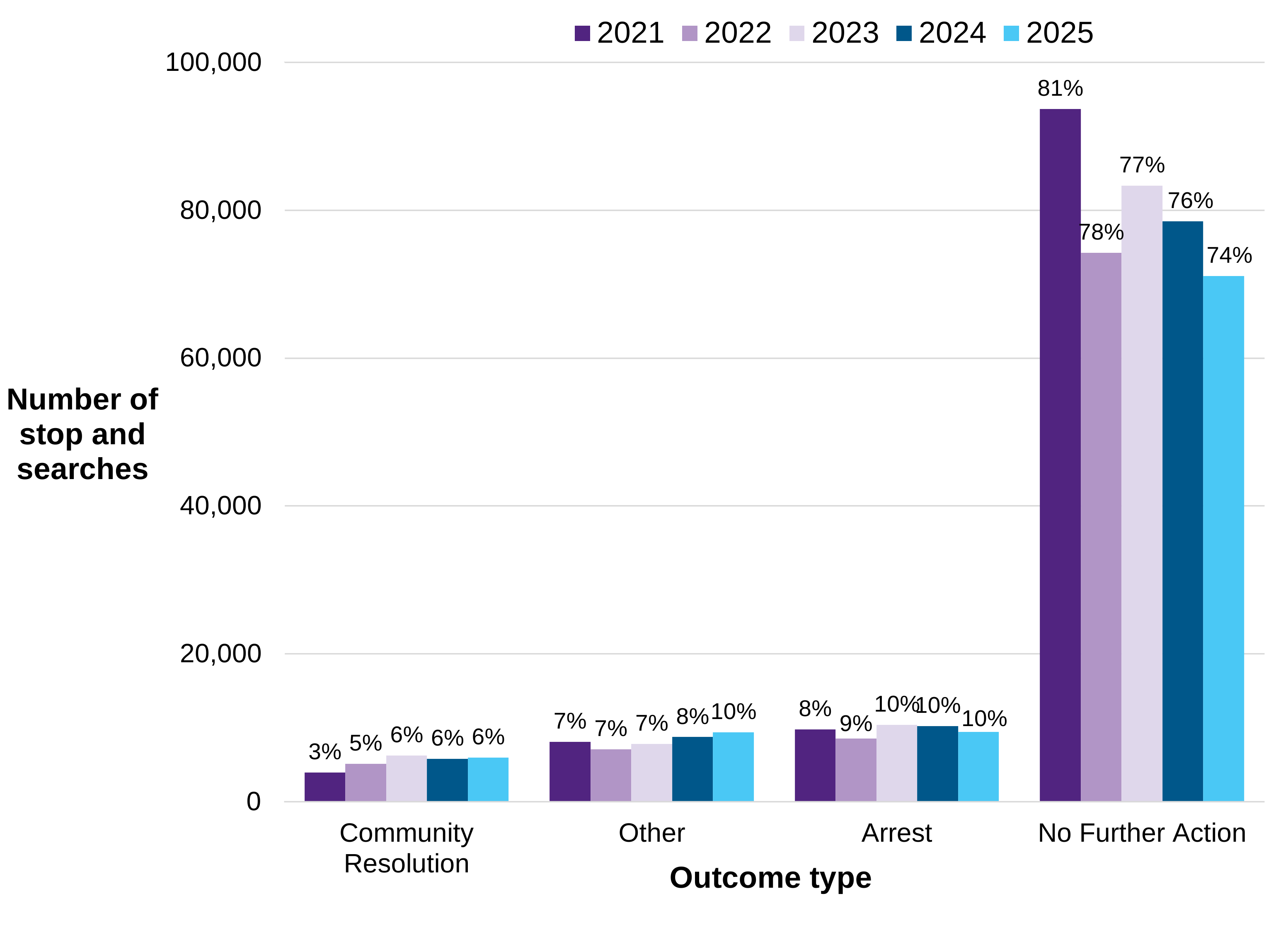
Figure 1.3: Number and proportion of stop and searches of children by outcome type, England and Wales, years ending March 2021 to 2025
Supplementary Tables: Chapter 1, Table 1.4
As figure 1.3 shows, the majority (around 71,100 or 74%) of stop and searches of children resulted in No Further Action (the lowest proportion this has been in the last five years), while around 9,400 (10%) resulted in arrest, 5,900 (6%) resulted in Community Resolutions with the remaining 9,400 (10%) resulting in other outcomes including Cannabis Warnings, Seizure of Property or Verbal Warnings.
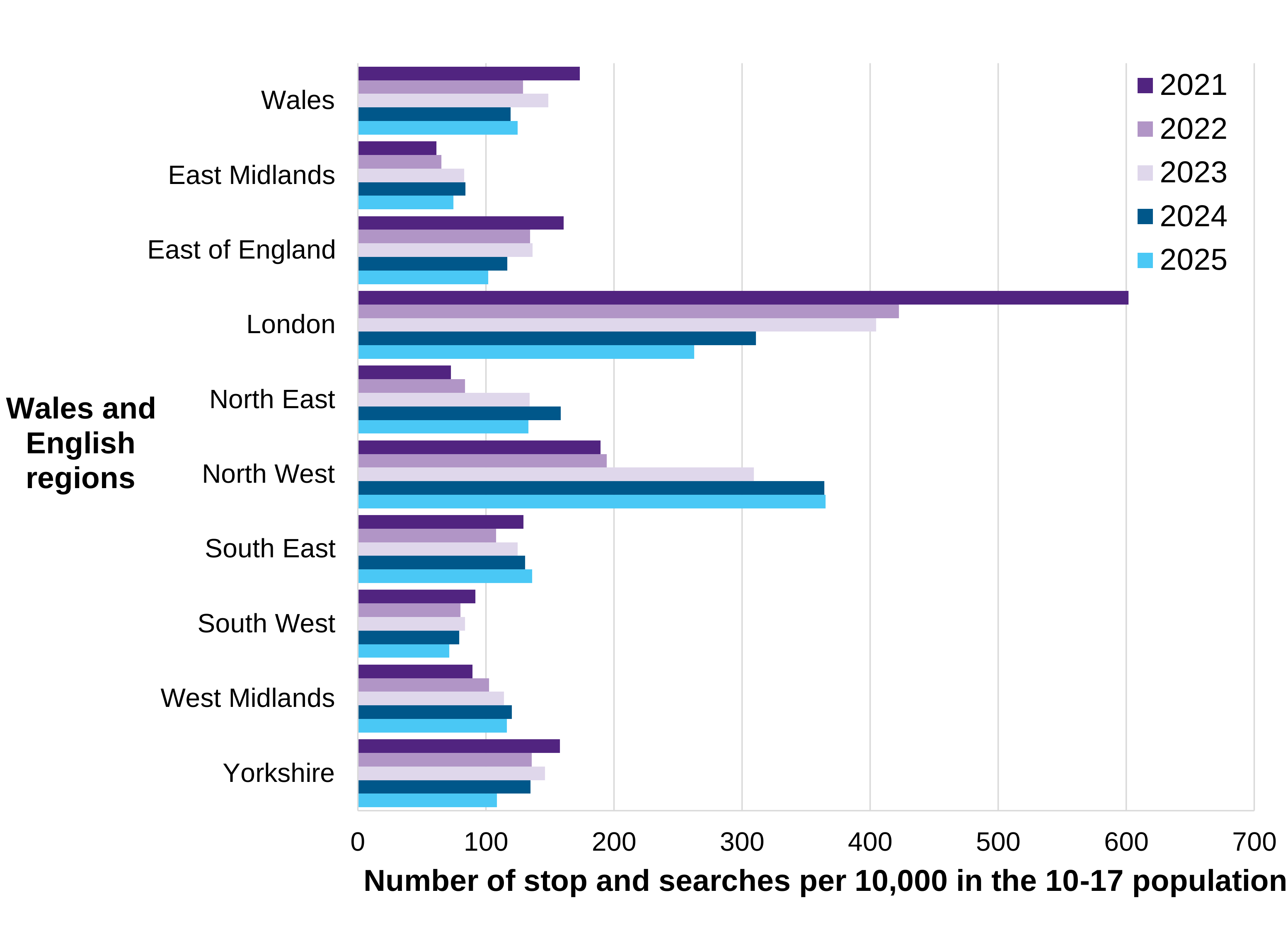
Figure 1.4: Rate of stop and searches of children per 10,000 in the 10-17 population by Wales and English regions, years ending March 2021 to 2025
Supplementary Tables: Chapter 1, Table 1.5
In Wales, there was a 5% increase in the number of stop and searches of children compared with the previous year, with around 3,600 stop and searches and a rate of 125 stop and searches per 10,000 in the 10-17 population.
In the English regions, Yorkshire and the Humber saw a year-on-year decrease of 19% in the number of stop and searches of children from around 7,100 to 5,700 (a rate of 109 per 10,000 in the in the 10-17 population), while London saw a 15% decrease in the number of stop and searches of children compared with the previous year, from just over 26,000 in the year ending March 2024 to around 22,000 in the latest year (a rate of 263 per 10,000). The only English region to see an increase was the South East, which saw a rise of 4% from the previous year.
In the year ending March 2021, stop and searches of children in the North West accounted for 12% of the national total whereas stop and searches of children in London accounted for 47%. The year-on-year changes in the last four years with increases in the North West and decreases in London have resulted the North West overtaking London as the region with the highest proportion of stop and searches of children, with 29% in the North West and 25% in London. They are also the only two regions to be over-represented in the proportion of the stop and searches compared to the 10 to 17 population, with London accounting for 15% and the North West accounting for 13% 10 to 17 population.
Supplementary Table 1.6 adds some further context to the increases in the North West by looking at individual police force areas. The number of stop and searches of children in Greater Manchester increased from around 2,300 in the year ending March 2021 to around 10,500 in the latest year – increasing to nearly five times as many, while in Cheshire, the number of stop and searches was around three times higher than the year ending March 2021, rising from around 980 to 2,700 in the latest year.
1.2 Arrests of children aged 10 to 17
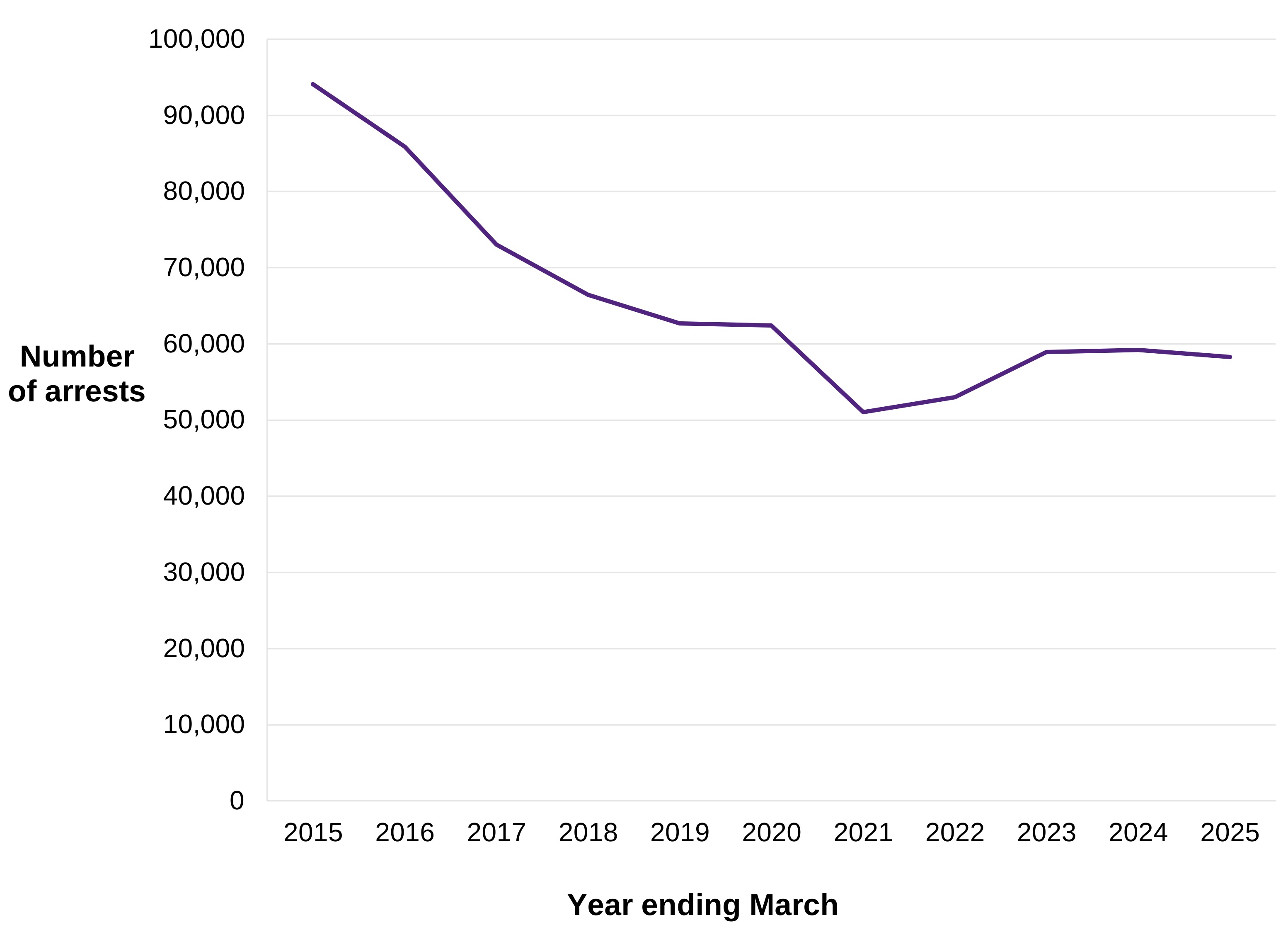
Figure 1.5: Number of arrests of children for notifiable offences, England and Wales, years ending March 2015 to 2025
Supplementary Tables: Chapter 1, Table 1.7
In the year ending March 2025, there were around 58,300 arrests of children for notifiable offences. This was a decrease of 2% compared to the previous year where there were around 59,200 arrests of children. Arrests of children were 38% lower than the year ending March 2015.
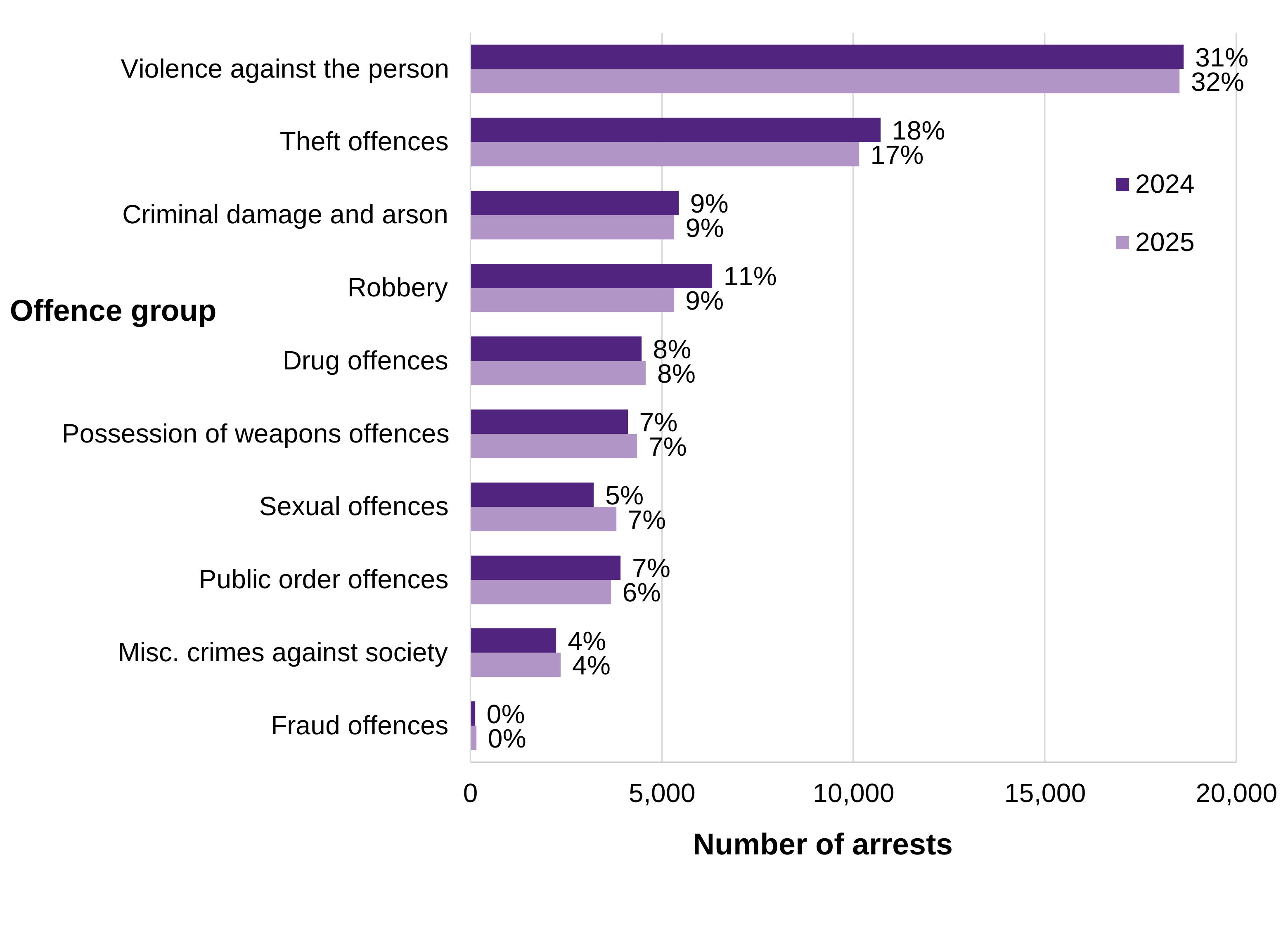
Figure 1.6: Number and proportion of arrests of children by offence group, England and Wales, years ending March 2024 to 2025
Supplementary Tables: Chapter 1, Table 1.10
Figure 1.6 shows the number of arrests by offence group for the years ending March 2024 and 2025. Violence against the person offences accounted for almost a third of arrests in each of the last two years (32% in the years ending March 2024 and March 2025). This was followed by arrests for theft offences accounting for 17% of total arrests, meaning these two offence groups made up almost as many arrests as all other offence groups combined.
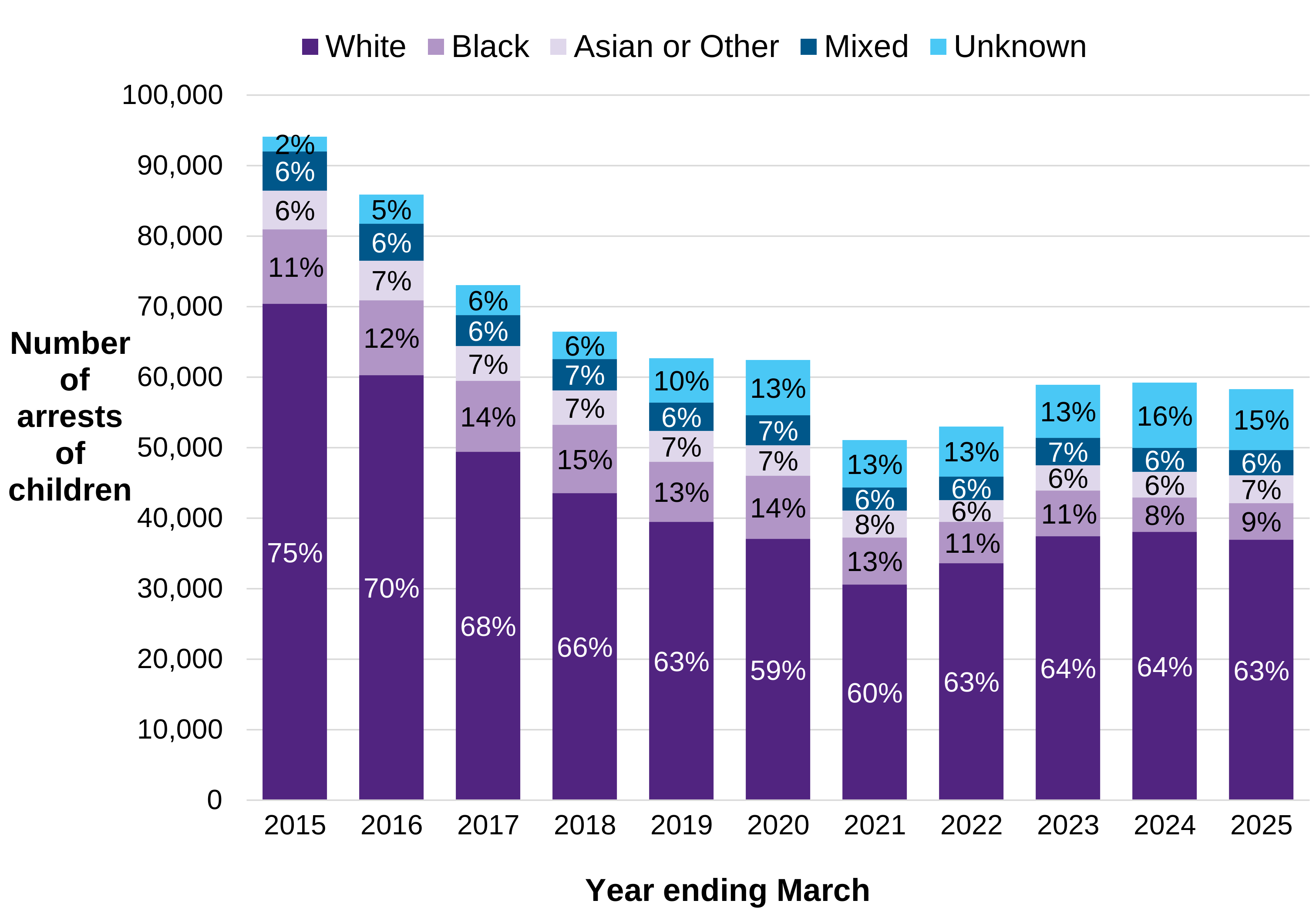
Figure 1.7: Number and proportion of arrests of children by ethnicity, England and Wales, years ending March 2015 to 2025
Supplementary Tables: Chapter 1, Tables 1.7
In the year ending March 2025, the number of arrests of White children decreased by 3% compared with the previous year, while there were increases for all other ethnicity groups, with a 7% increase for arrests of both Black and Mixed children and an 8% increase in arrests of Asian and Other children.
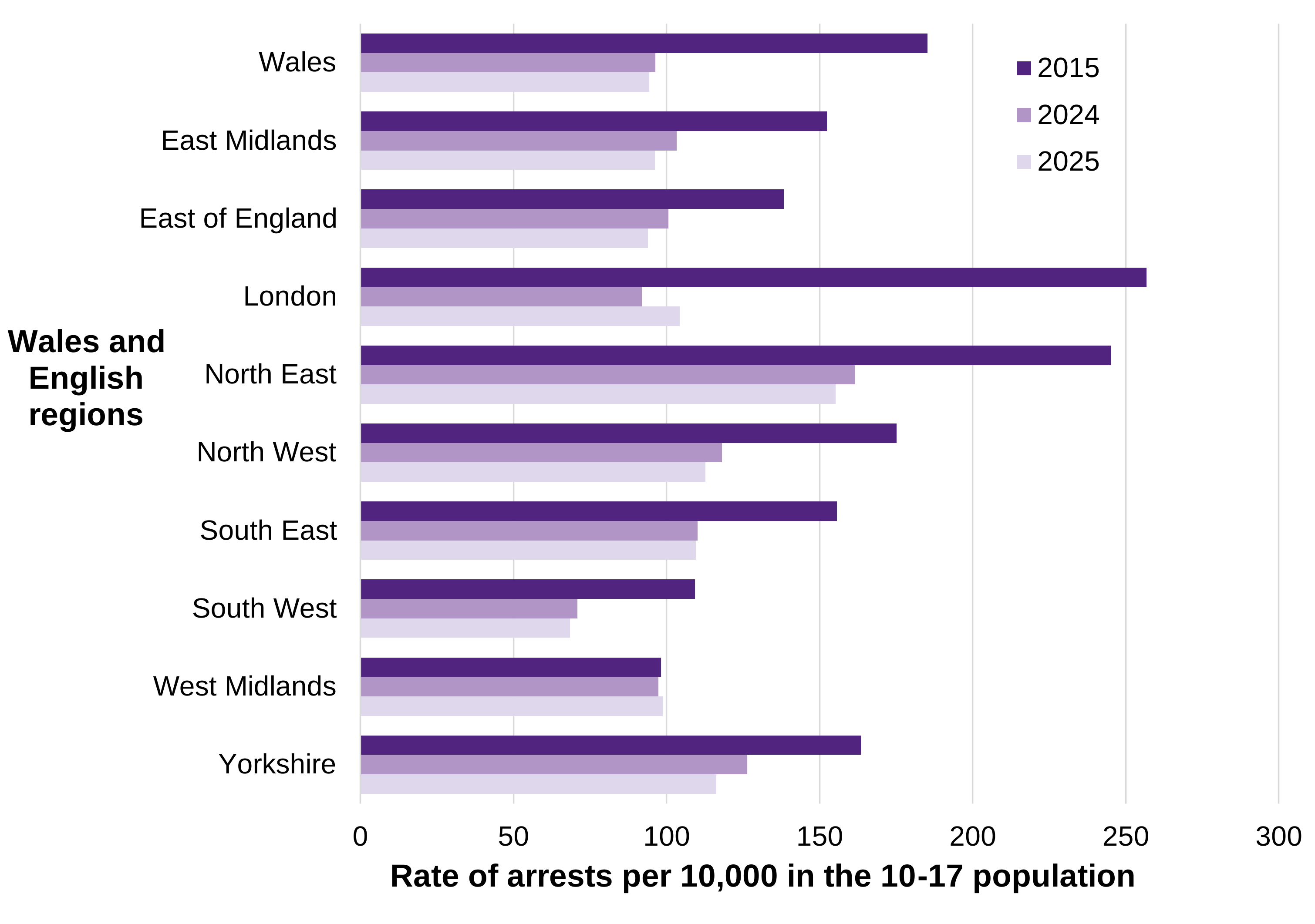
Figure 1.8: Number and proportion of arrests of children by Wales and English regions, years ending March 2015, 2024 and 2025
Supplementary Tables: Chapter 1, Tables 1.8
As shown in supplementary table 1.8, the number and proportion of arrests by region has been changing over time.
With the exception of the West Midlands, the number of arrests has fallen across all regions compared with 10 years ago, though the rate at which they have fallen has varied. London has seen the biggest decrease in arrests of children, falling by 59% from just under 21,500 in the year ending March 2015 to around 8,700 in the latest year. Over the same time period, arrests of children in the West Midlands increased by 1%, while the remaining regions saw falls between 29% and 49%.
Compared with the previous year, eight of the 10 regions saw decreases in the number of arrests of children, while there was an increase of 13% in London and of 2% in the West Midlands.
For the second consecutive year, the South East has the largest share of the number of arrests of children at 17%, compared with 15% for London.
1.3 Youth cautions
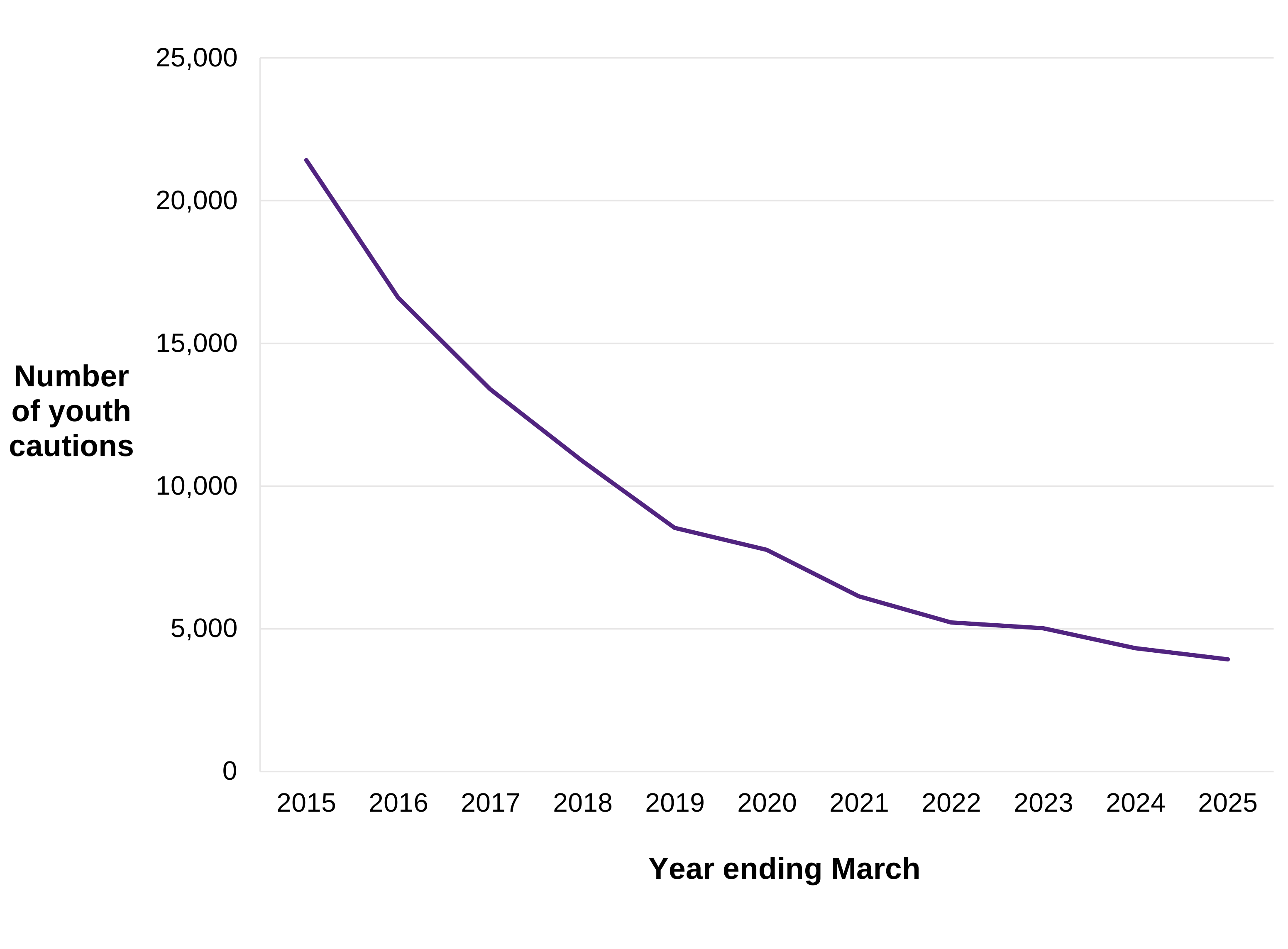
Figure 1.9: Number of youth cautions, England and Wales, years ending March 2015 to 2025
Supplementary Tables: Chapter 1, Tale 1.14
In the year ending March 2025, around 3,900 youth cautions were given to children. This is a decrease of 9% since the previous year and a decrease of 82% against the year ending March 2015.
As shown in supplementary table 1.17, compared with the previous year, the number of youth cautions increased by 30% for fraud offences (though the number of cautions was low for fraud offences with 13 in total in the latest year), by 27% for sexual offences, by 14% for criminal damage and arson offences and by 8% for possession of weapons offences compared with the previous year. In the same period, there were decreases of 38% for robbery offences, 26% for miscellaneous crimes against society, 20% for drugs offences and 13% for violence against the person offences.
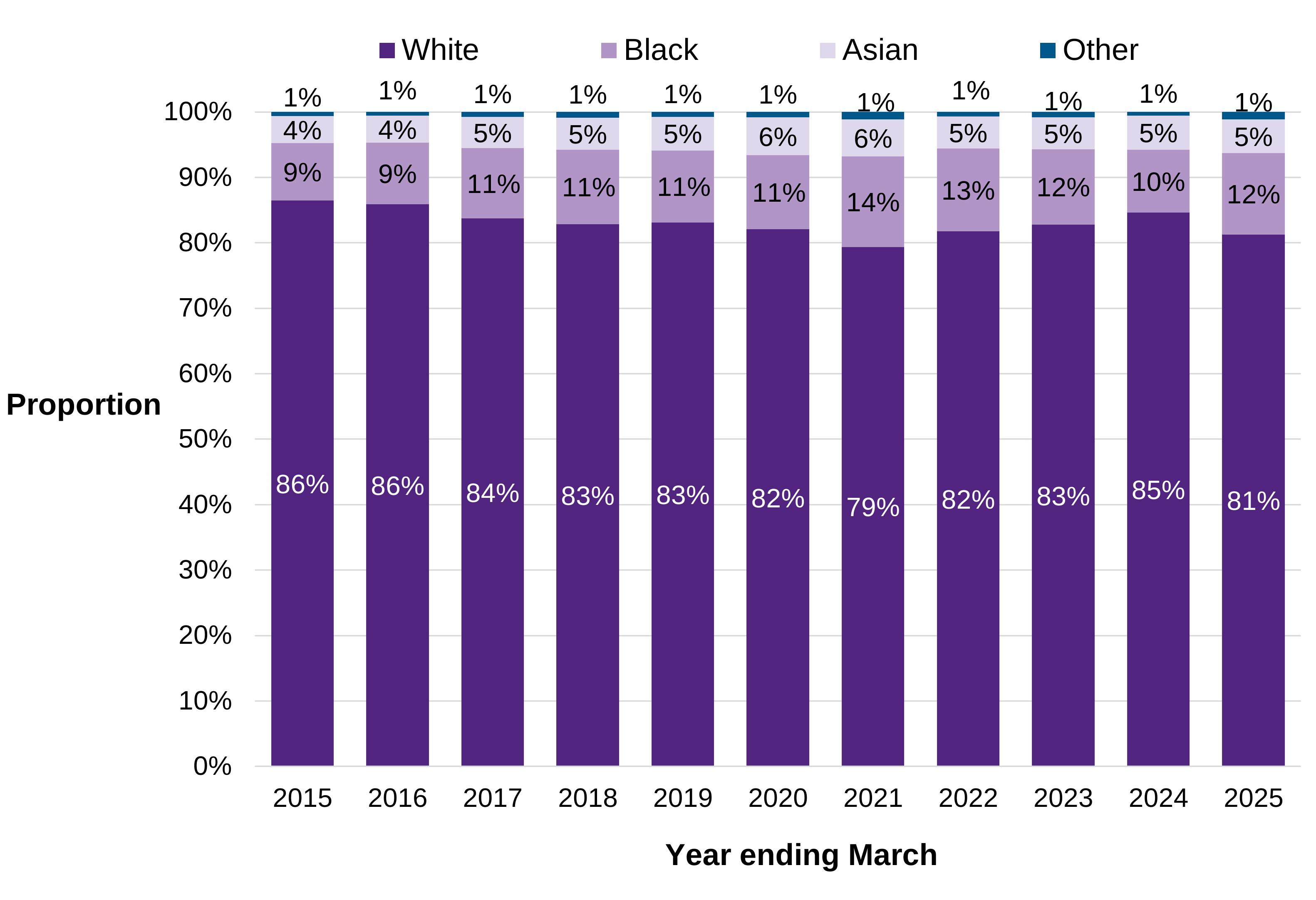
Figure 1.10: Proportion of youth cautions given by ethnicity, England and Wales, years ending March 2015 to 2025 [footnote 2][footnote 3]
Supplementary Tables: Chapter 1, Table 1.16
In the year ending March 2025, the number of youth cautions issued to Black children increased from around 350 to around 420, representing a 21% increase compared with the previous year. Over the same period, the number issued to White children fell by 10%. As a result, the proportion of youth cautions issued to Black children increased by three percentage points while the proportion issued to White children decreased by three percentage points.
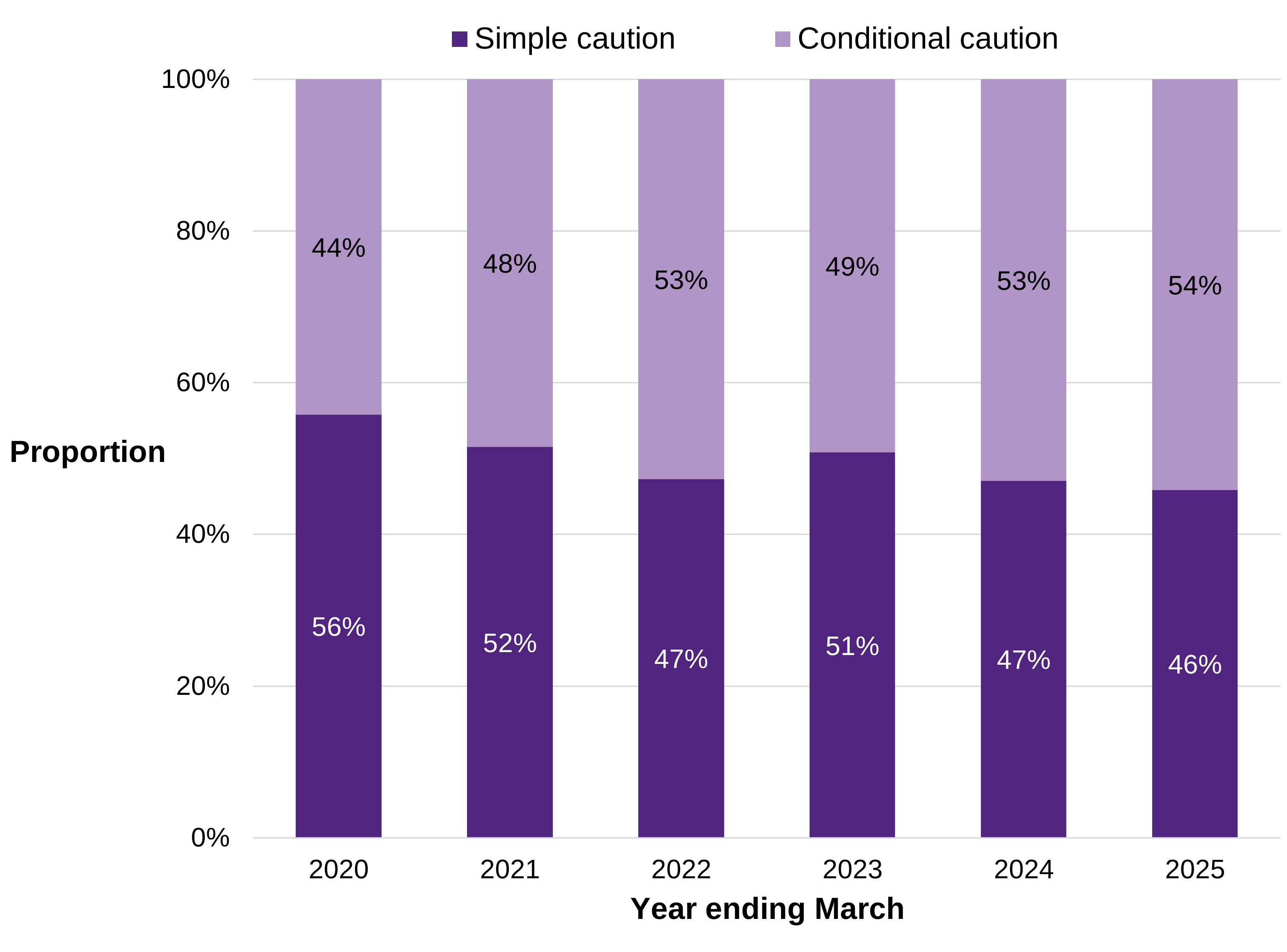
Figure 1.11: Proportion of youth cautions given by type, England and Wales, years ending March 2020 to 2025
Supplementary Tables: Chapter 1, Table 1.14
Figure 1.11 shows that conditional cautions are higher than simple cautions for the second consecutive year with an increase of one percentage point compared with the previous year.
2. First time entrants to the youth justice system
In the year ending December 2024:
-
There were just over 8,100 first time entrants (FTEs) to the youth justice system. This was a decrease of 4% from the previous year and represents the lowest level of FTEs in the time series.
-
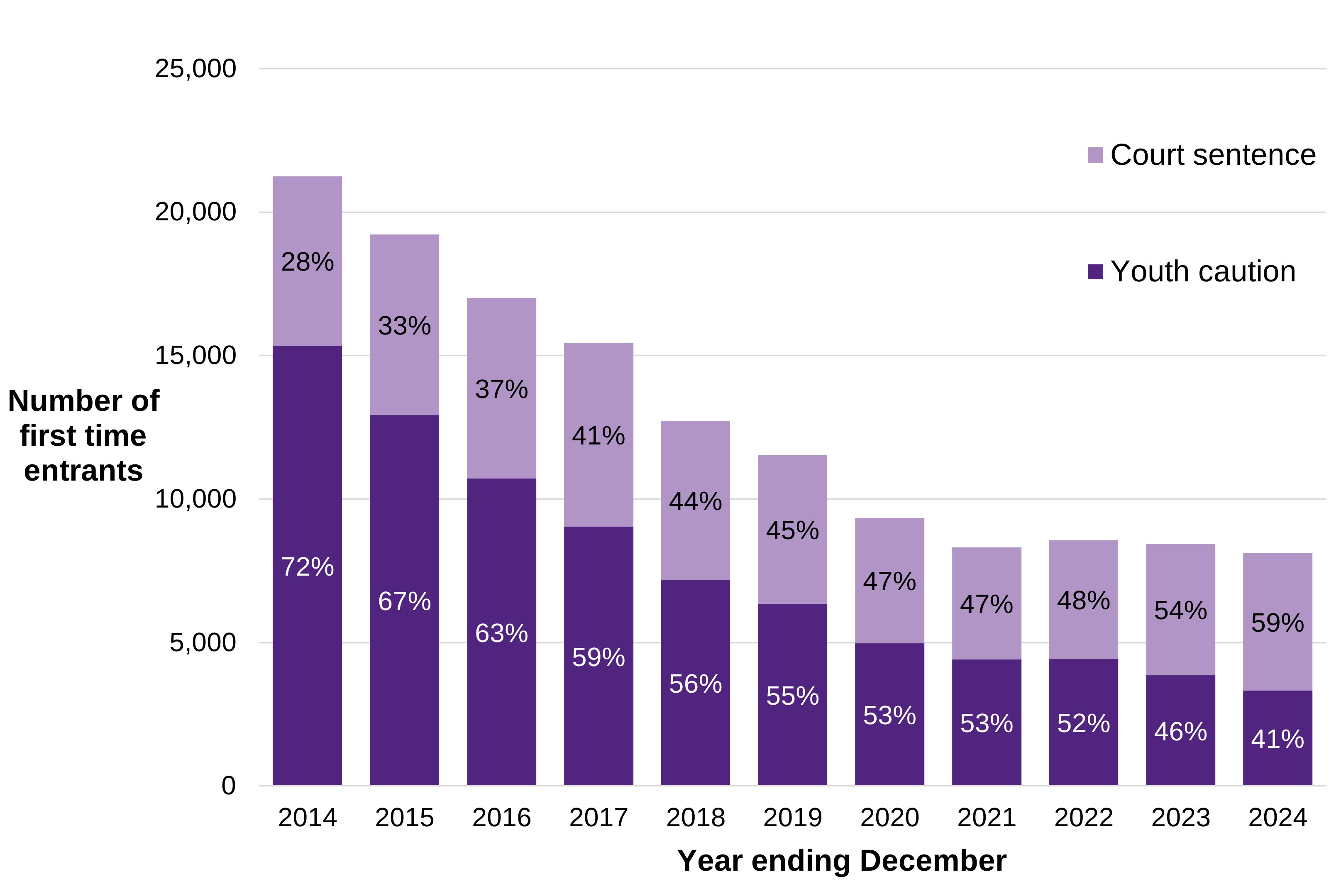
For the second consecutive year, more child FTEs received a sentence at court than receiving a youth caution, with child FTEs receiving a sentence at court accounting for 59% of child FTEs (up from 54% in the previous year). This points to an increased use of diversionary outcomes.
-
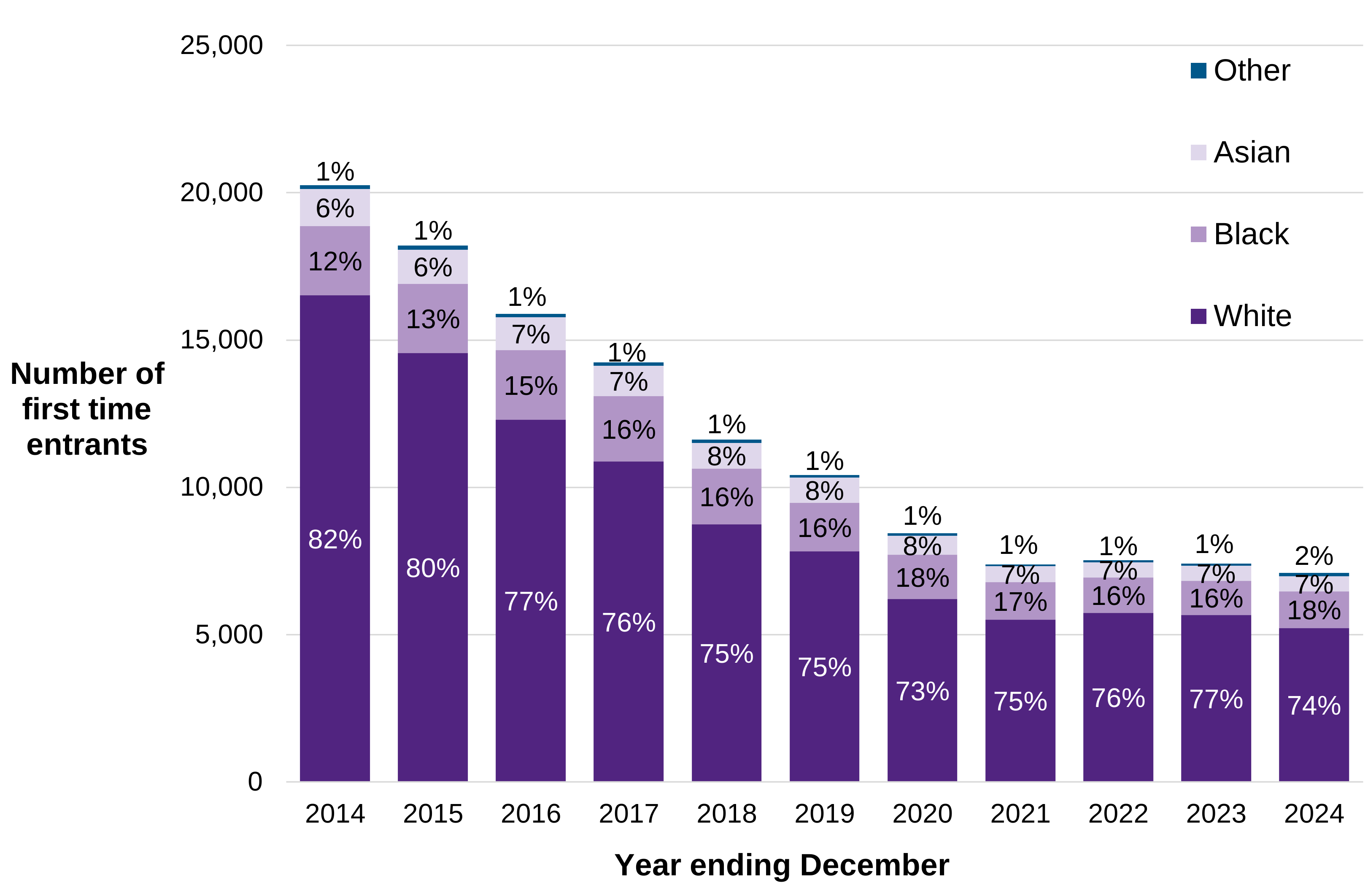
While the number of FTEs among White children decreased by 8% compared with the previous year, the number for Black children increased by 8%, the first year-on-year increase for this group in eight years. The number of child FTEs from an Other ethnic background increased by 66% from the previous year.
This chapter covers data on trends, demographics, offence and outcome types of child FTEs. An FTE is a child aged between 10 and 17 who received their first caution or court sentence and was residing in England and Wales at the time of their first offence. Data for the year ending March 2025 is not available, therefore data for the year ending December 2024 is presented in this chapter.
2.1 Trends in the number and proportion of child first time entrants to the youth justice system
Figure 2.1: Number and proportion of child first time entrants by type of outcome, England and Wales, years ending December 2014 to 2024
Supplementary Tables: Chapter 2, Table 2.5
In the year ending December 2024, there were just over child 8,100 FTEs. This was a decrease of 4% from the previous year and represents the lowest level of child FTEs in the time series.
For the second consecutive year, there were more child FTEs receiving a sentence at court than receiving a youth caution, with 59% of child FTEs receiving a sentence at court in the year ending December 2024 compared with 54% in the previous year and 28% in the year ending December 2014. The overall decrease in child FTEs and children receiving youth cautions suggests an increased use of diversionary outcomes for children.
2.2 Characteristics of child first time entrants
Age group
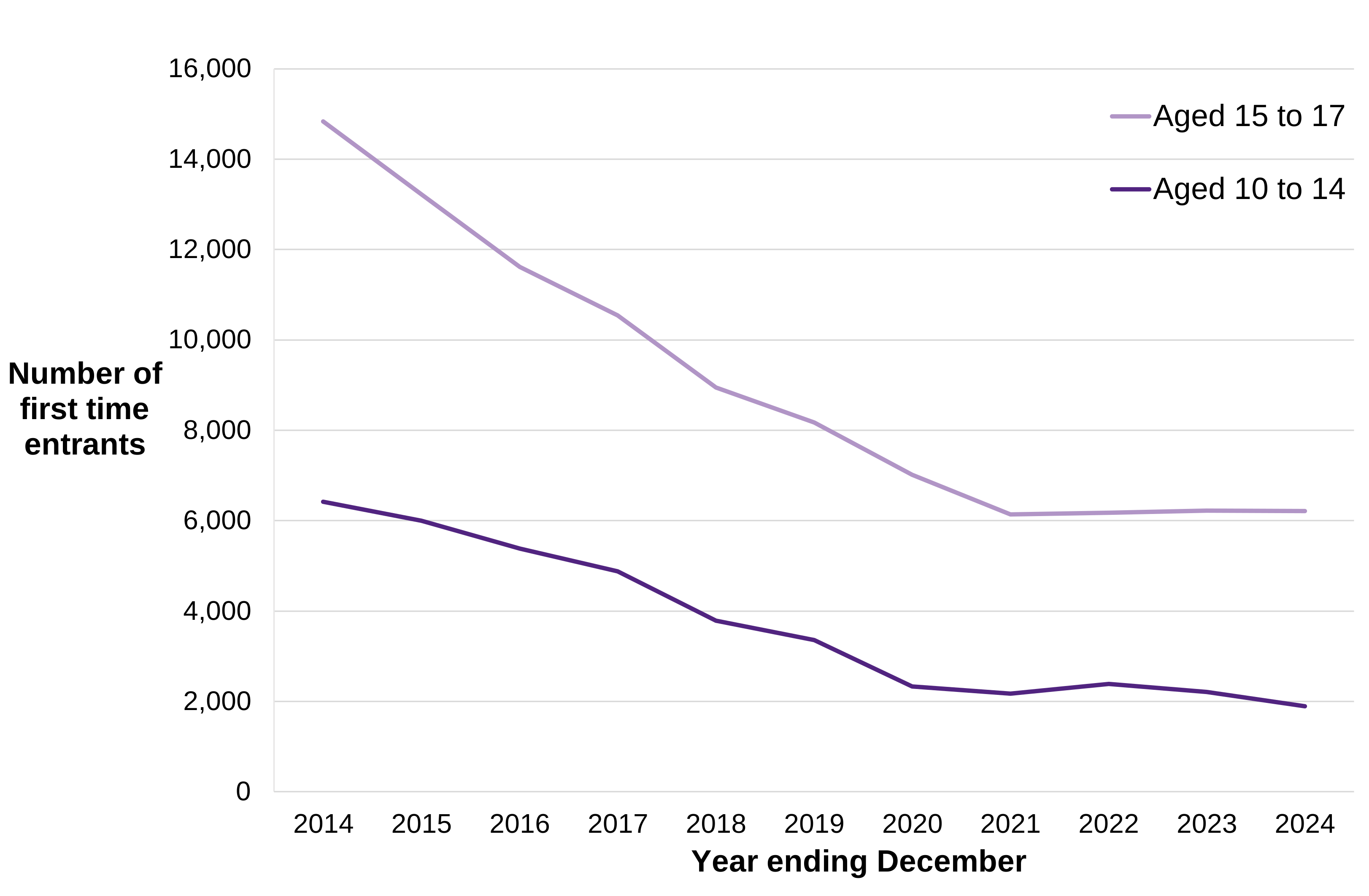
Figure 2.2: Number of child first time entrants by age group, England and Wales, years ending December 2014 to 2024
Supplementary Tables: Chapter 2, Tables 2.8
Compared with the previous year, the number of FTEs aged 10 to 14 decreased by 14% (or 310) to around 1,900, following an increase in year ending December 2022. The number of FTEs aged 15 to 17 remained at the same level as the previous year at around 6,200.
Ethnicity
Figure 2.3: Number and proportion of child first time entrants by ethnicity, England and Wales, years ending December 2014 to 2024 [footnote 4]
Supplementary Tables: Chapter 2, Table 2.8
Figure 2.3 shows there has been a downward trend in the number of child FTEs for each ethnicity over the last 10 years. Those from a White ethnic background have fallen at the fastest rate, by 68% (from around 16,500 to around 5,200) over the last 10 years, resulting in the proportion they comprise of all child FTEs, for which their ethnicity is known, reducing from 82% to 74%.
Compared to the year ending December 2014 the proportion of FTEs among children who are Black has increased from 12% to 18%. This proportion had fallen for three consecutive years but increased in the latest year.
Compared with the previous year, the number of Black child FTEs increased by 8%, the first year-on-year increase for this group in eight years. The number of child FTEs from an Other ethnic background increased by 66% from the previous year, rising from around to 80 to around 130.
Sex
As shown in supplementary table 2.2, there have always been more boys than girls among child FTEs. In the year ending December 2024, boys comprised 84% of total child FTEs[footnote 5] (a proportion that has remained broadly stable over the last six years), whilst making up 51% of the general population of 10 to 17-year-olds.
The number of child FTEs has fallen for both boys and girls over the last decade, with the larger percentage decrease seen in girls. The number of child FTEs who are girls has fallen by 72% (from around 4,600 to just under 1,300) over the last 10 years. This compares to a decrease of 59% for child FTEs who are boys over the same period (from around 16,500 to around 6,700).
2.3 Types of offences committed by child first time entrants
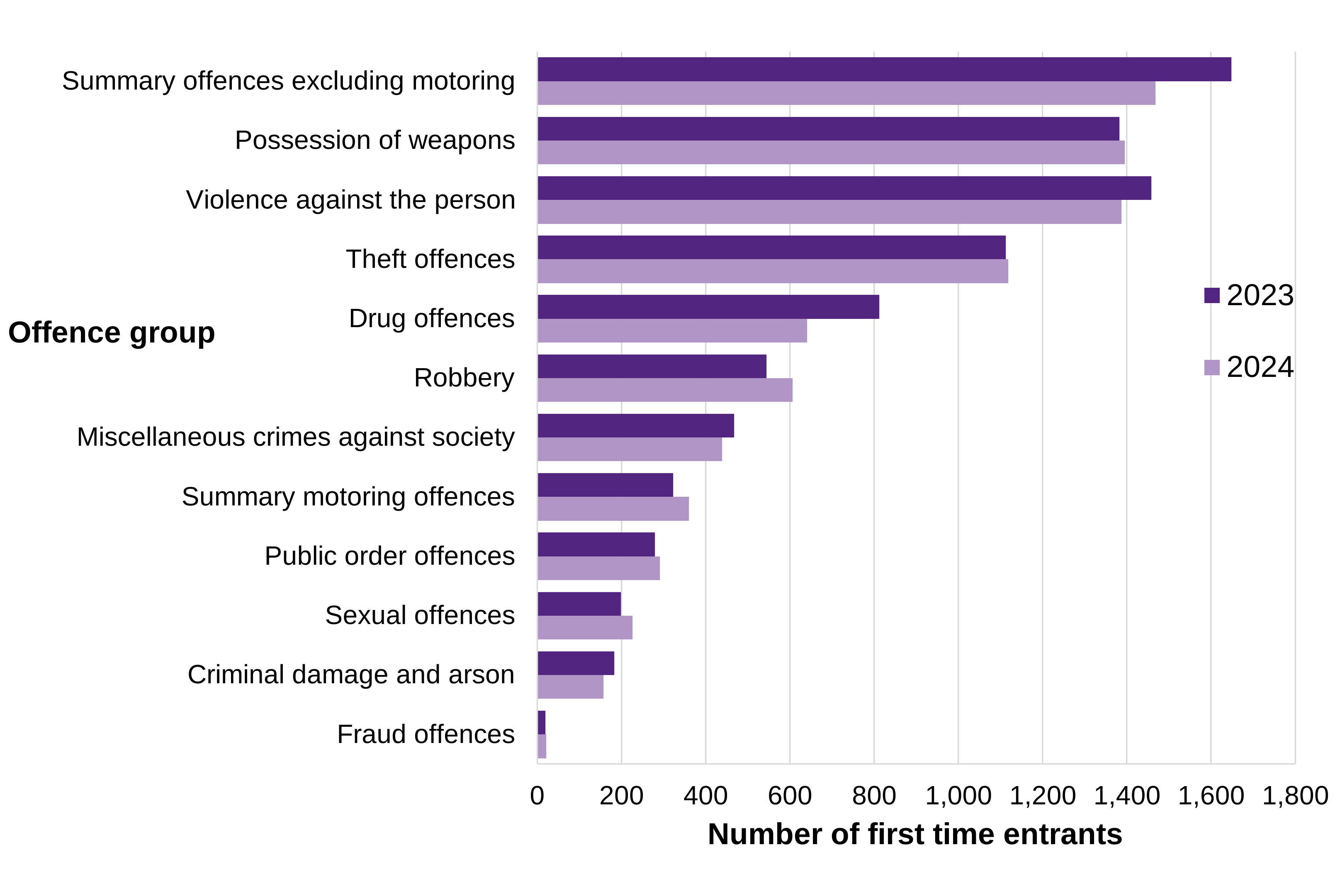
In the year ending December 2024, the three most common offences committed by child FTEs were summary offences excluding motoring (18%), possession of weapons offences (17%) and violence against the person offences (17%).
The proportion of child FTEs committing possession of weapon offences was 11 percentage points higher than 10 years ago while summary motoring offences was three percentage points higher compared to the same period. These are the only offence groups that have a higher number of child FTEs compared to 10 years ago.
Figure 2.4: Number of child first time entrants by primary offence group, England and Wales, years ending December 2023 and 2024
Supplementary Tables: Chapter 2, Table 2.2
Supplementary Table 2.2 shows that in the year ending December 2024 there were decreases compared with the previous year for child FTEs committing drug offences (down 21%), criminal damage and arson offences (down 14%), summary offences excluding motoring (down 11%) and smaller decreases for violence against the person and miscellaneous crimes against society. There were increases for child FTEs in all other offence groups with sexual offences (up 14%), robbery and summary motoring offences (both up by 11%) and public order offences (up 4%).
2.4 First time entrants in Wales and English regions
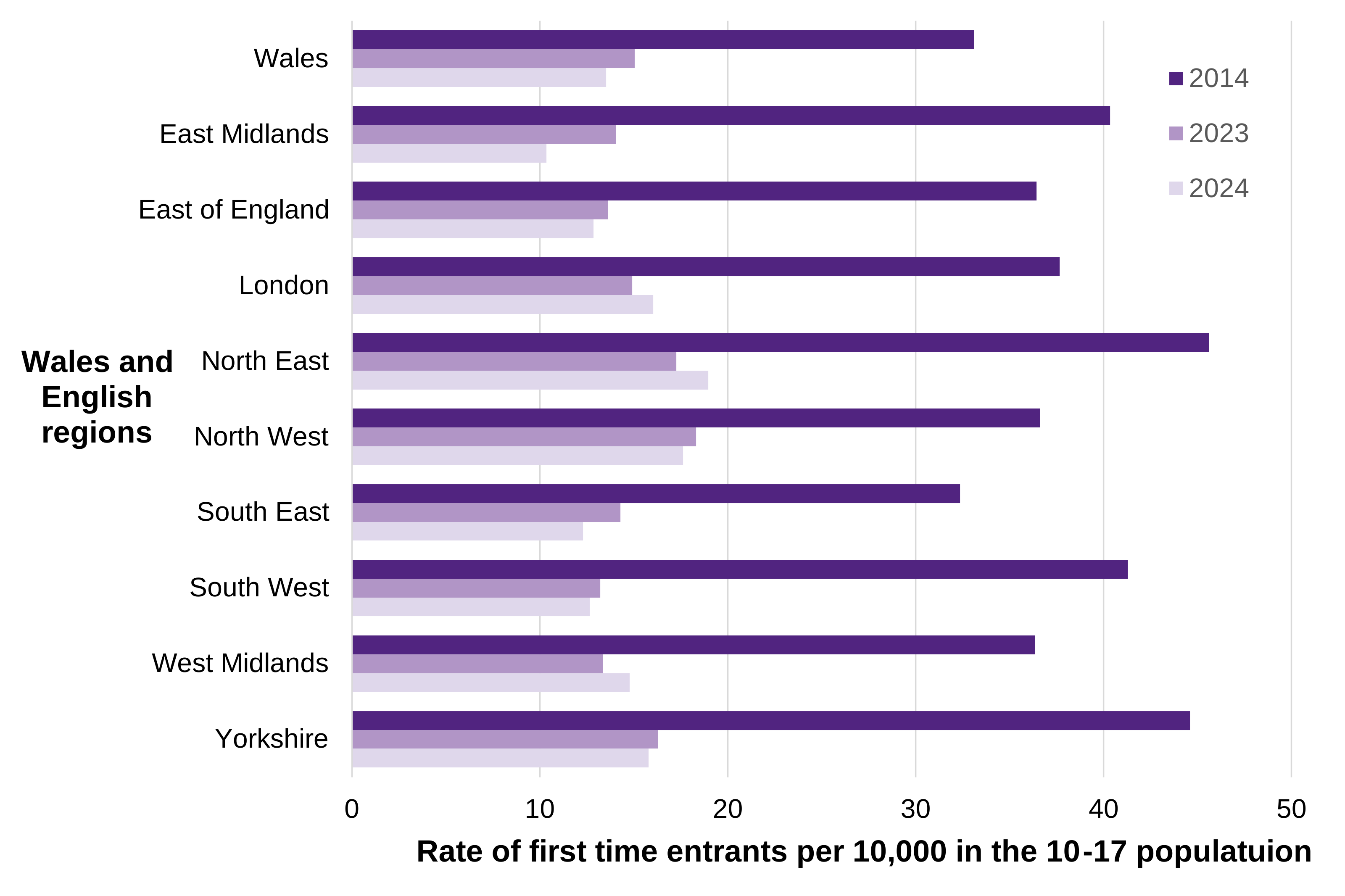
Figure 2.5: Rate of child first time entrants per 10,000 in the 10-17 population, Wales and English regions, years ending December 2014, 2023 and 2024
Supplementary Tables: Chapter 2, Table 2.9
In Wales, the number of child FTEs decreased by 10% from the previous year in the year ending December 2024 and by 59% from the year ending December 2014 to around 390 and a rate of 14 per 10,000 in the 10-17 population.
In the English regions, the West Midlands, the North East and London saw increases of 11%, 10% and 8% respectively compared with the previous year in the number of child FTEs, while there were decreases across all other regions including a 26% decrease for the East Midlands to around 470 child FTEs and a rate of 10 per 10,000 in the 10-17 population. All English regions saw large decreases compared with the year ending December 2014, ranging from falls of 52% to 74%.
3. Children cautioned or sentenced
In the year ending March 2025:
-
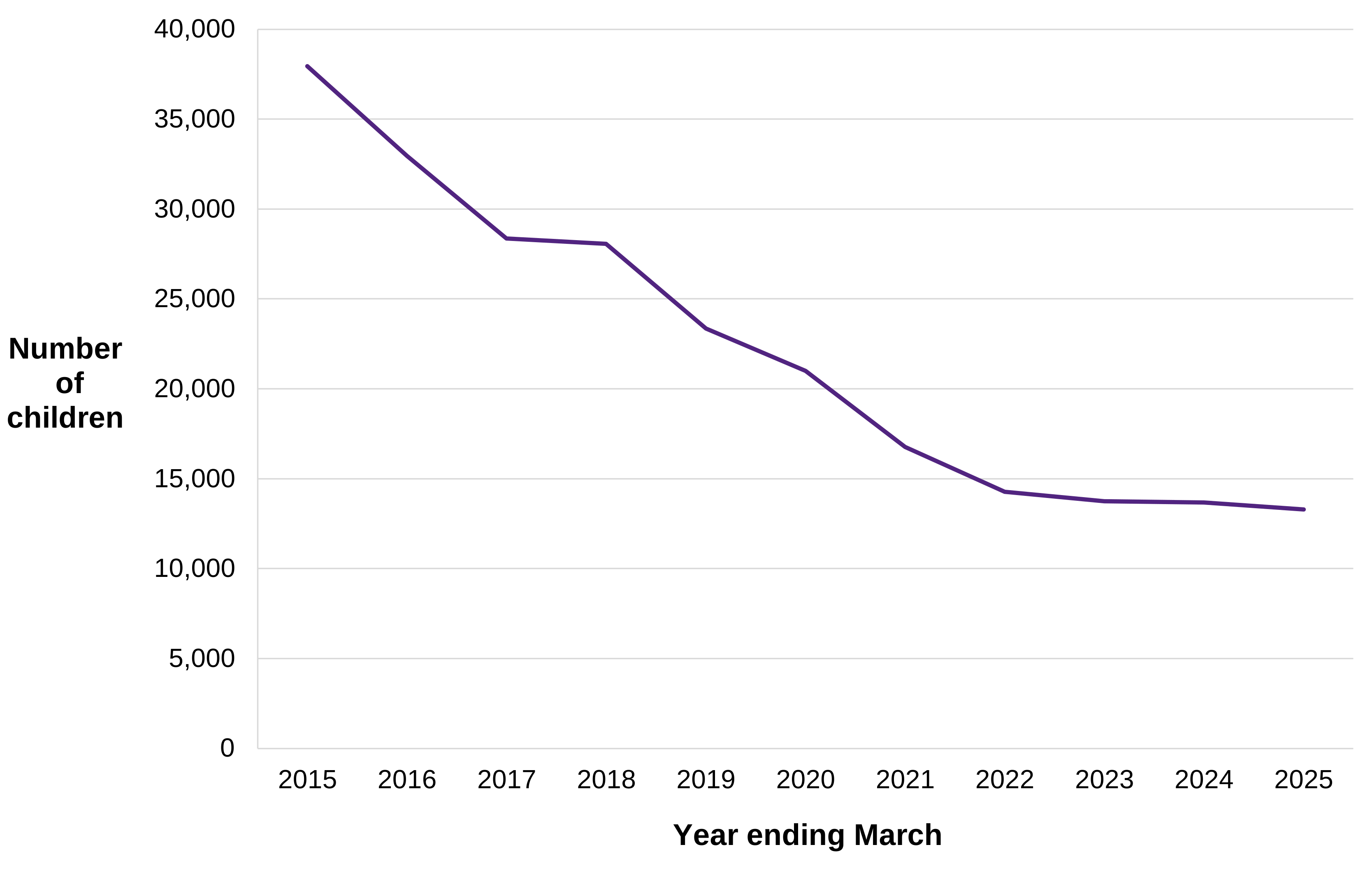
Around 13,300 children received a caution or sentence, which was a 3% decrease from the previous year and a fall of 65% from 10 years ago.
-
The number of children cautioned or sentenced in the 10 to 14-year-old age group decreased by 7% compared with the previous year, whilst the number in the 15 to 17-year-old age group fell by 2%.
-
All minority ethnic groups saw an increase in the number of children cautioned or sentenced compared to the previous year, with children cautioned or sentenced from an Other ethnic background increasing by 28% to around 340, while there was a 7% increase for both Black and Mixed children and a 6% increase for Asian children. There was a decrease of 7% in the number of White children cautioned or sentenced.
This chapter looks at the trends and demographic characteristics of children who received at least one youth caution or court sentence.
3.1 Number of children who received a caution or sentence
Figure 3.1: Number of children receiving a caution or sentence, England and Wales, years ending March 2015 to 2025
Supplementary Tables: Chapter 3, Table 3.1
Around 13,300 children received a caution or sentence, which was a 3% decrease from the previous year and a fall of 65% from 10 years ago. This long-term downward trend is likely in part due to an increase in the use of diversionary outcomes in recent years.
3.2 Demographic characteristics of children who received a caution or sentence
Figure 3.2: Age group and sex of children receiving a caution or sentence compared to the general 10 to 17 population, England and Wales, year ending March 2025
| Age 10 to 14 | Age 15 to 17 | Boys | Girls | |
| Children receiving a caution or sentence | 24% | 76% | 86% | 14% |
| 10 to 17 population | 64% | 36% | 51% | 49% |
Supplementary Tables: Tables 3.3 and 3.4
Children aged 15 to 17 accounted for 76% of the total receiving a caution or sentence, while making up 36% of the 10 to 17 population in England and Wales.
Boys accounted for 86% of the total receiving a caution or sentence compared with 51% of the 10 to 17 population in England and Wales.
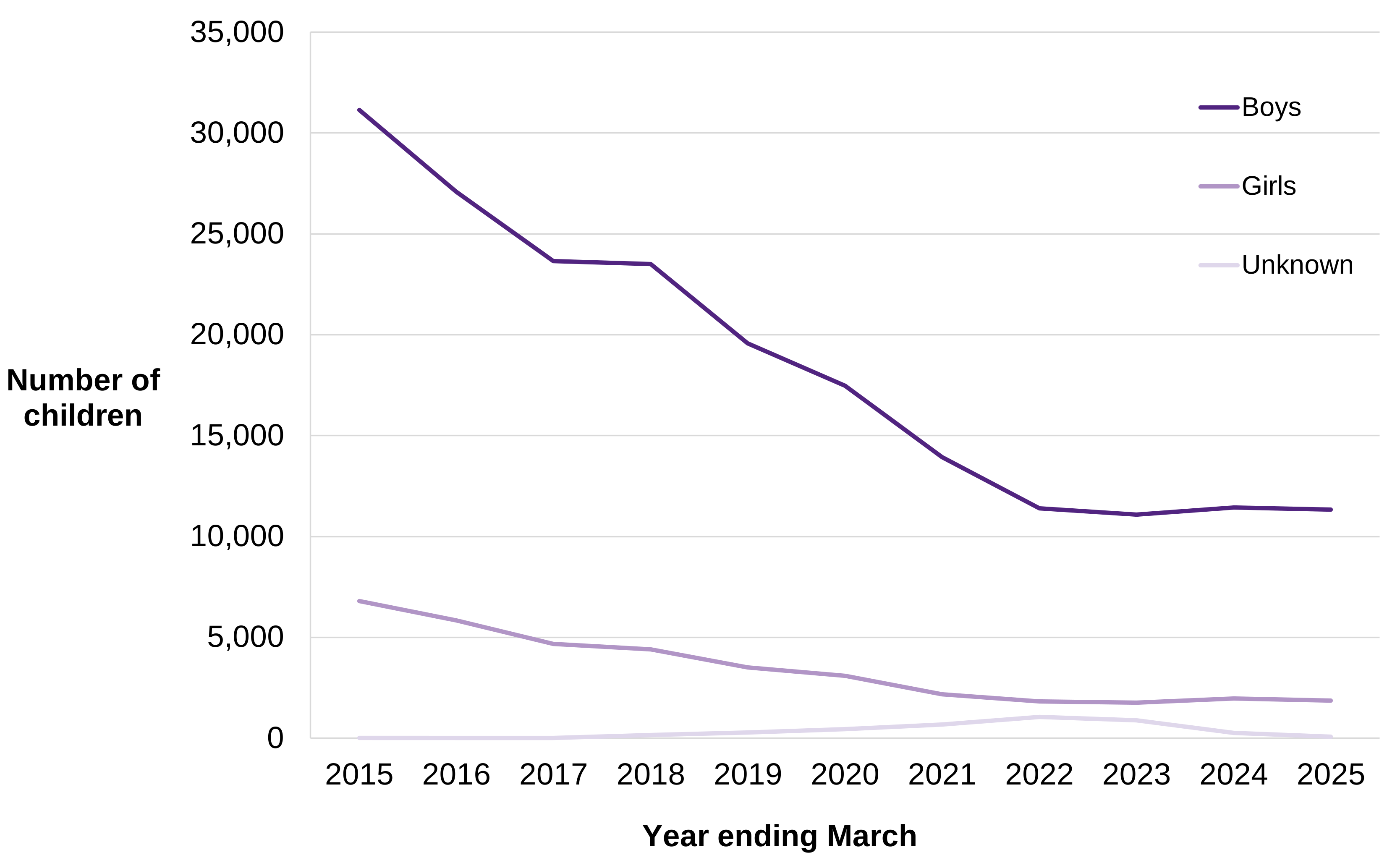
Figure 3.3: Number of children receiving a caution or sentence by sex, England and Wales, years ending March 2015 to 2025 [footnote 6]
Supplementary Tables: Chapter 3, Table 3.3
In the year ending March 2025, around 1,900 girls and around 11,300 boys received a caution or sentence. This represents a 5% decrease for girls and a 1% decrease for boys compared with the previous year. These decreases are likely to be bigger for each sex as there was a decrease of 69% in the number of children cautioned or sentenced whose sex was not known.
Compared with the year ending March 2015, the numbers of girls and boys receiving a caution or sentence have fallen by 72% and 64% respectively.
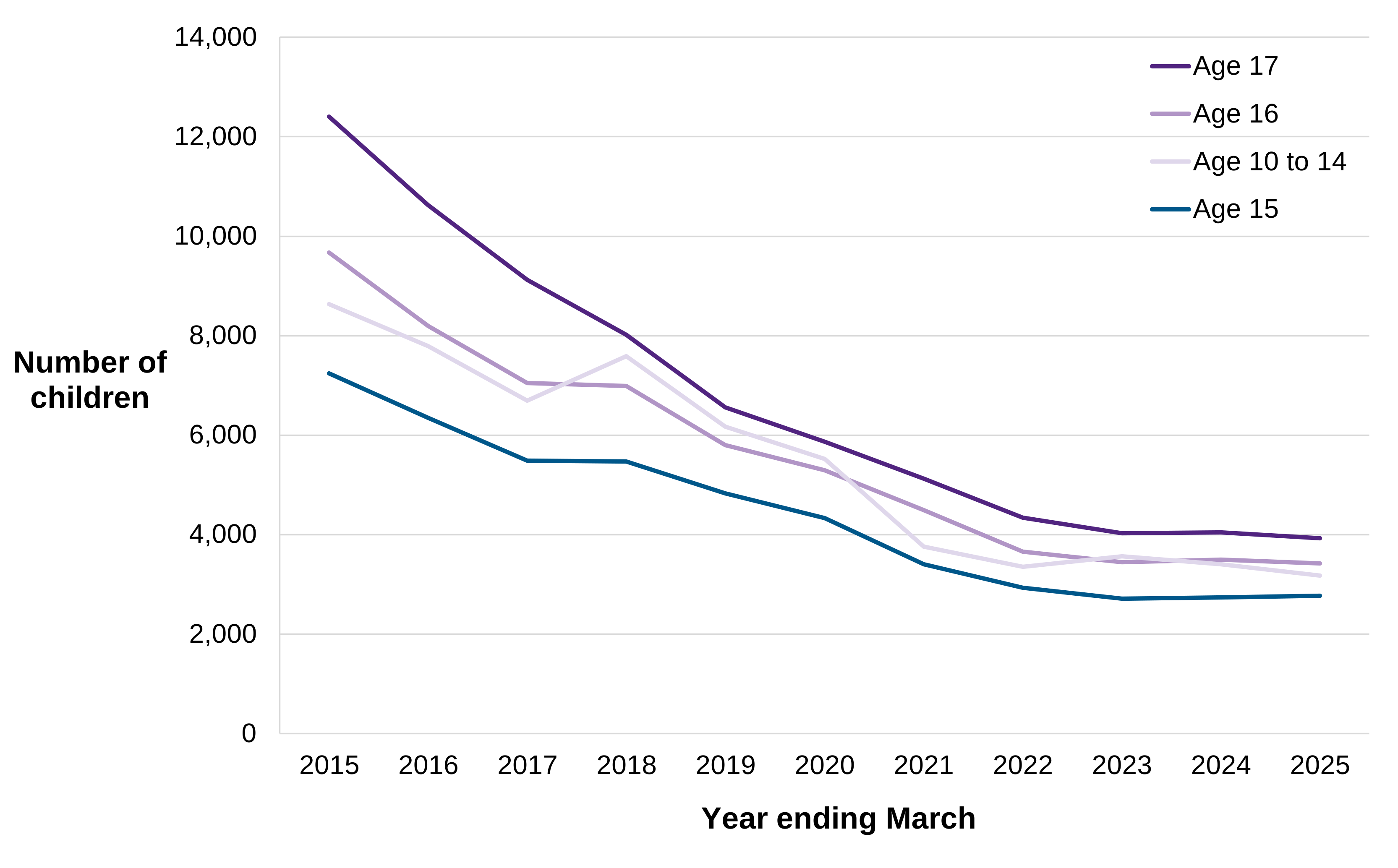
Figure 3.4: Number of children receiving a caution or sentence by age, England and Wales, years ending March 2015 to 2025
Supplementary Tables: Chapter 3, Table 3.4
In the year ending March 2025, the number of 10 to 14-year-olds cautioned or sentenced decreased by 7% compared with the previous year, while for 15-year-olds there was a 1% increase and for 16-year-olds and 17-year olds, there were decreases of 2% and 3% respectively over the same period.
The proportions of children cautioned or sentenced by age have remained broadly stable over the last 10 years.
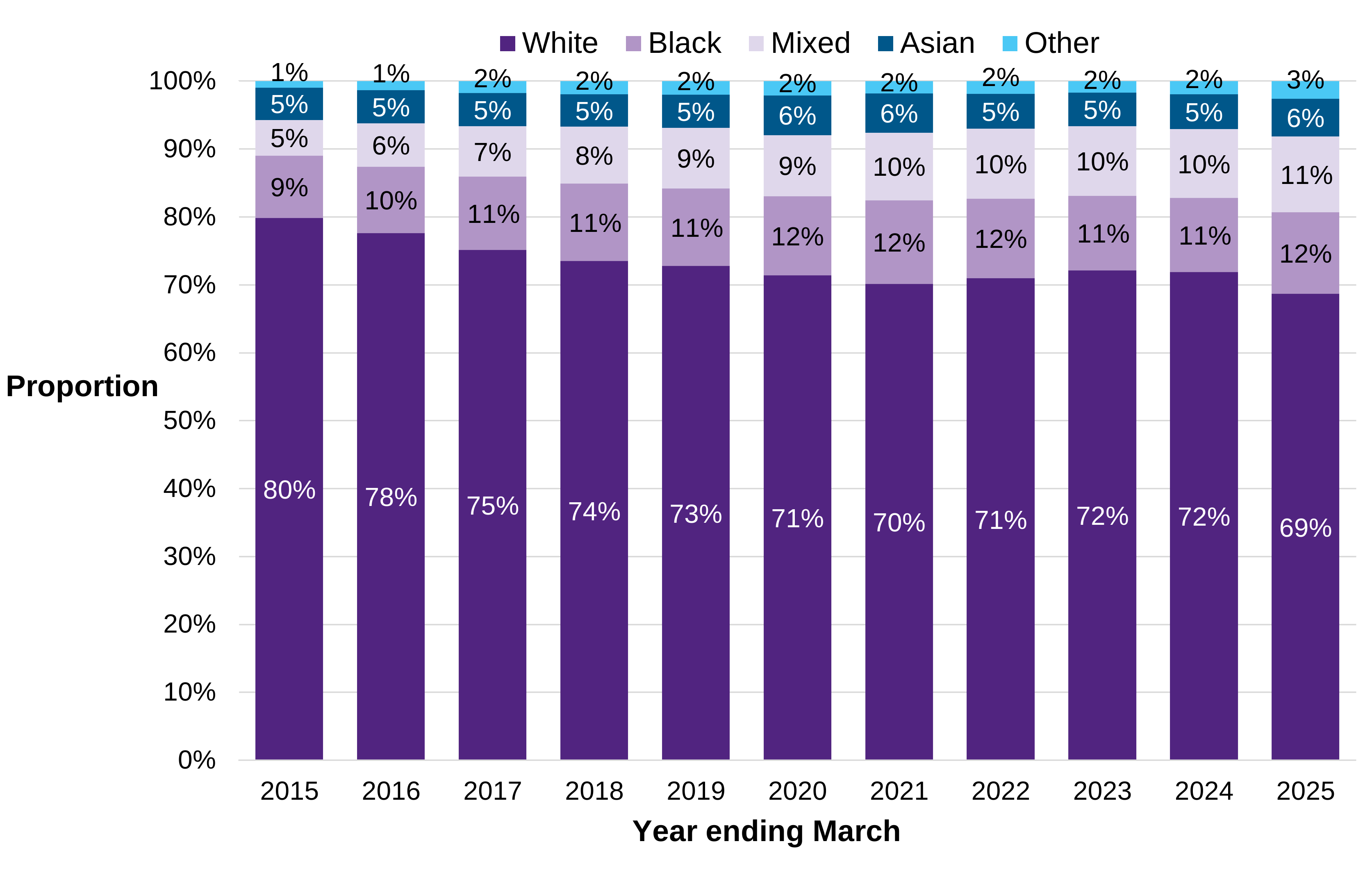
Figure 3.5: Proportion of children receiving a caution or sentence by ethnicity, England and Wales, years ending March 2015 to 2025 [footnote 7]
Supplementary Tables: Chapter 3, Table 3.1
The proportions of children cautioned or sentenced by ethnicity have been relatively consistent over the last five years. Black and Mixed children who were cautioned or sentenced remain over-represented, with 1 percentage point increases against the previous year for both ethnicities.
4. Proven offences by children
In the year ending March 2025:
-
The number of proven offences committed by children remained static at around 35,600, compared to the previous year following two consecutive year-on-year increases.
-
Proven sexual offences saw an increase for the third consecutive year, rising by 6% compared with the previous year to around 1,500, while in the same period proven drugs offences fell by 4% to around 2,500.
-
Violence against the person was the largest offence group accounting for 23% of proven offences, followed by theft and handling (14%) and possession of weapons offences (12%).
-
There were just under 3,700 knife or offensive weapon offences resulting in a caution or sentence committed by children. This is an increase of 2% compared with the previous year, and 23% higher than 10 years ago.
This chapter looks at the trends of proven offences committed by children and proven knife and offensive weapon offences. A proven offence is one which results in a caution or court sentence. The YJB have revised the offence groups this year, which means it is not possible to compare changes in proven offences by offence group compared with previous years for most offence groups. See A Guide to Youth Justice Statistics for more details.
4.1 Trends in proven offences by children
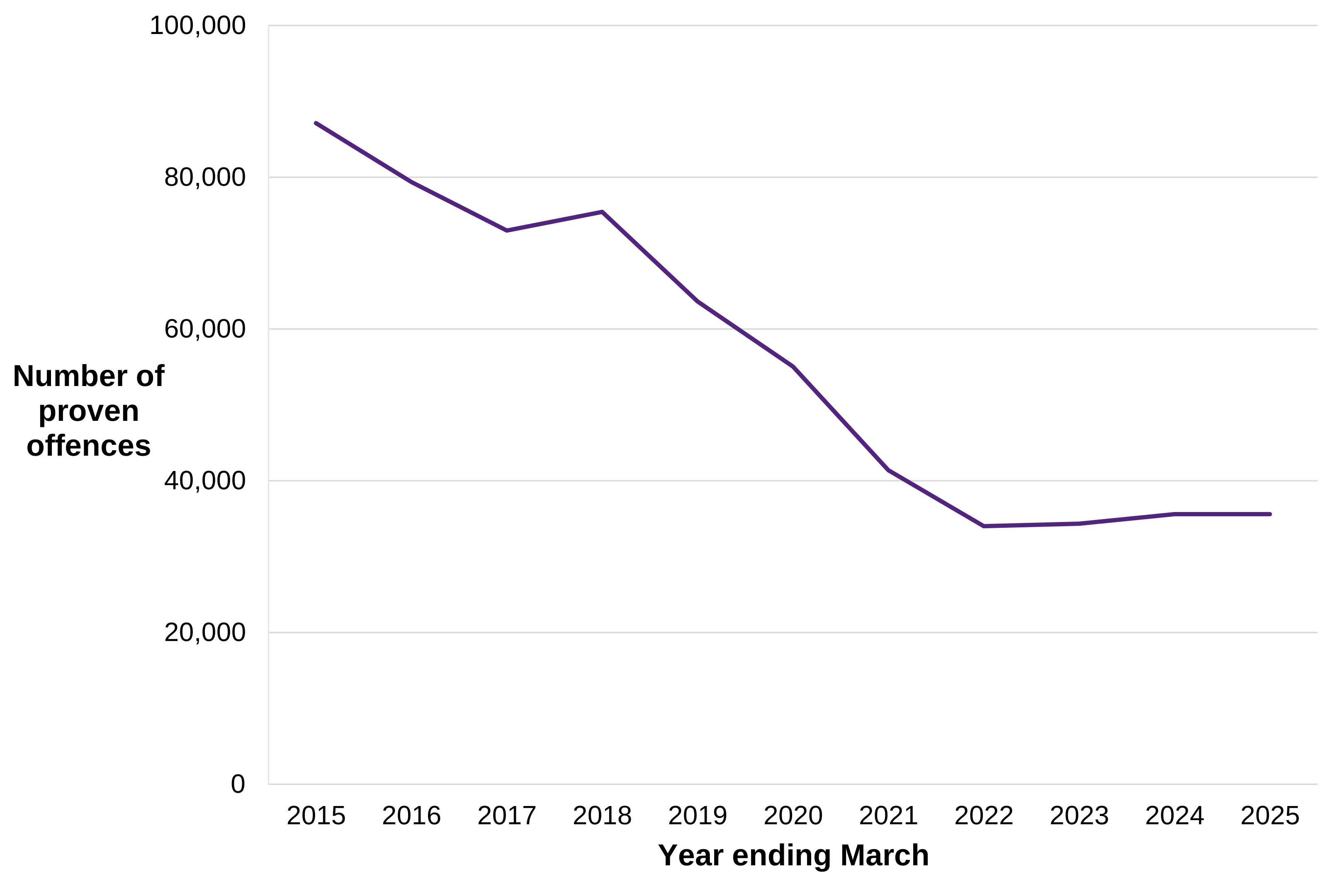
Figure 4.1: Number of proven offences by children, England and Wales, years ending March 2015 to 2025
Supplementary Tables: Chapter 4, Table 4.1
The number of proven offences committed by children remained static at around 35,600, compared to the previous year following two consecutive year-on-year increases. Compared to the year ending March 2015, number of proven offences was 59% lower in the latest year.
Offence volumes by offence group
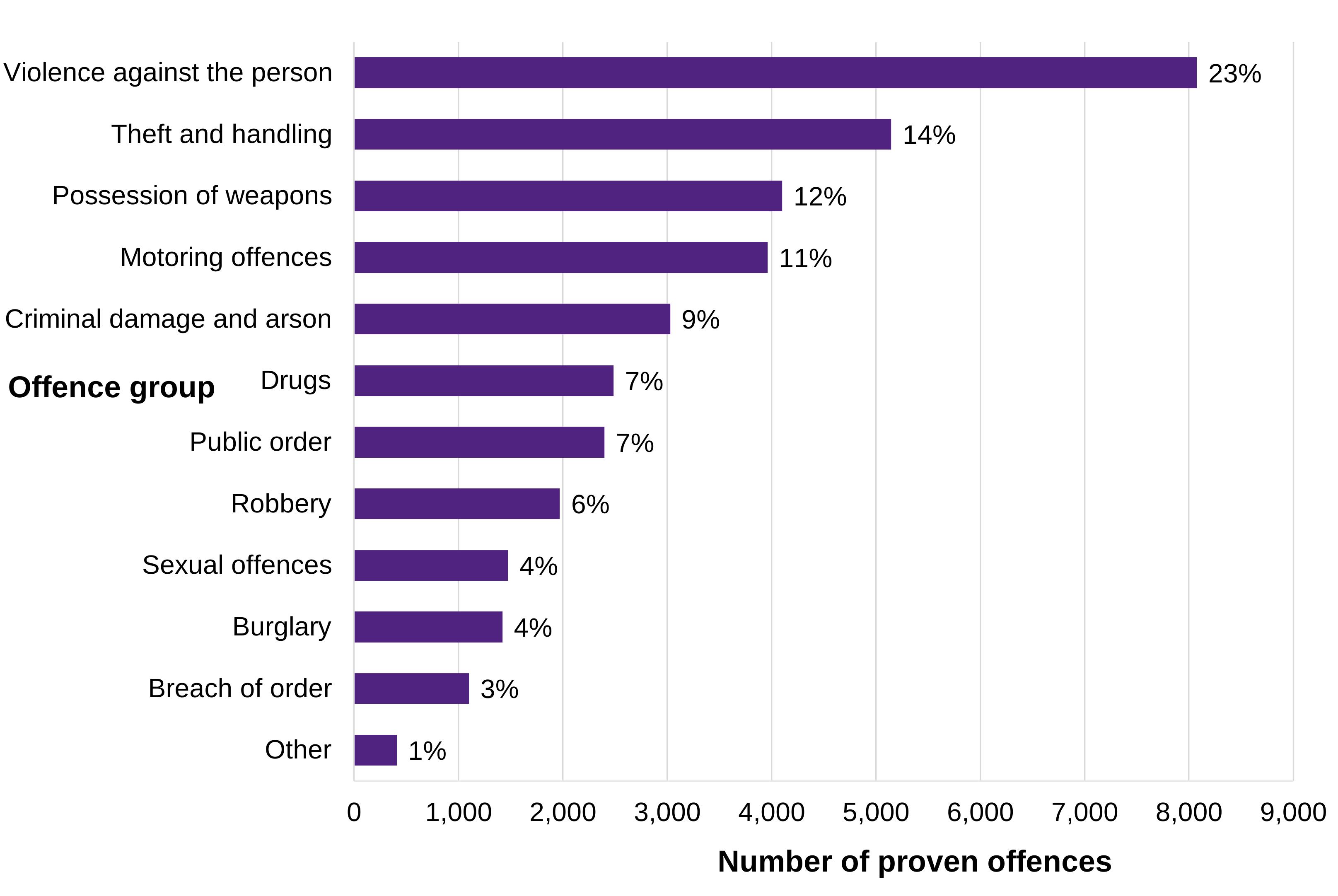
Figure 4.2: Number and proportion of proven offences committed by children by offence group, England and Wales, year ending March 2025
Supplementary Tables: Chapter 4, Table 4.1
Violence against the person offences made up almost a quarter (around 8,100) of all proven offences in the year ending March 2025. Supplementary table 4.9 provides a further breakdown of these offences and shows that 39% (around 3,100) of violence against the person offences were for common assault, while less than 1% (around 40) were for murder.
Possession of weapons offences made up the third largest offence group, accounting for 12% (around 4,100) of proven offences in the year ending March 2025. Prior to the revision of the offence groups, these offences sat within the violence against the person offence group, but it is now possible to present this data separately within the statistics.
Following the revision of offence groups, only a small number of offence groups are comparable with previous years. These are drugs, motoring offences, robbery, sexual offences and burglary. There was a 7% increase in the number of proven motoring offences compared with the previous year to around 4,000. Proven sexual offences saw an increase for the third consecutive year, rising by 6% to around 1,500, while in the same period proven drugs offences fell by 4% to around 2,500.
Supplementary table 4.7 provides a further breakdown of sexual offences and shows that in the year ending March 2025, 54% (around 800) of proven offences were related to indecent or extreme pornographic images or videos, which include creating and sharing material, while 32% (around 500) of proven sexual offences were for rape or sexual assault.
Supplementary tables 4.8a provides a further breakdown of offence type and shows that in the year ending March 2025, 70% of proven drugs offences were for possession of drugs, while 29% were for supplying drugs. Supplementary table 4.8c shows that the most common drug was cannabis accounting for 66% of proven offences by type of drug.
Supplementary table 4.3a shows that Wales accounted for 5% of overall proven offences. In the English regions, London and the South East regions each accounted for 16% of overall proven offences, followed by the North West (13%) and Yorkshire and the Humber (11%).
There were some notable variations in the types of proven offences in different regions. For example, in London, 21% of all proven offences were for possession of weapons offences, followed by 16% in the West Midlands, compared with just 6% in both Wales and the North East. Violence against the person offences accounted for the largest proportion of proven offences in Wales (23%). Among the English regions, both the South East and South West accounted for 27% of proven offences compared with just 17% in London which had the lowest proportion of violence against the person offences.
In the latest year, most proven offences were committed by children who were[footnote 8]:
-
boys (86%)
-
aged 15 to 17 (78%)
-
White (71%).
4.2 Offence group by gravity score
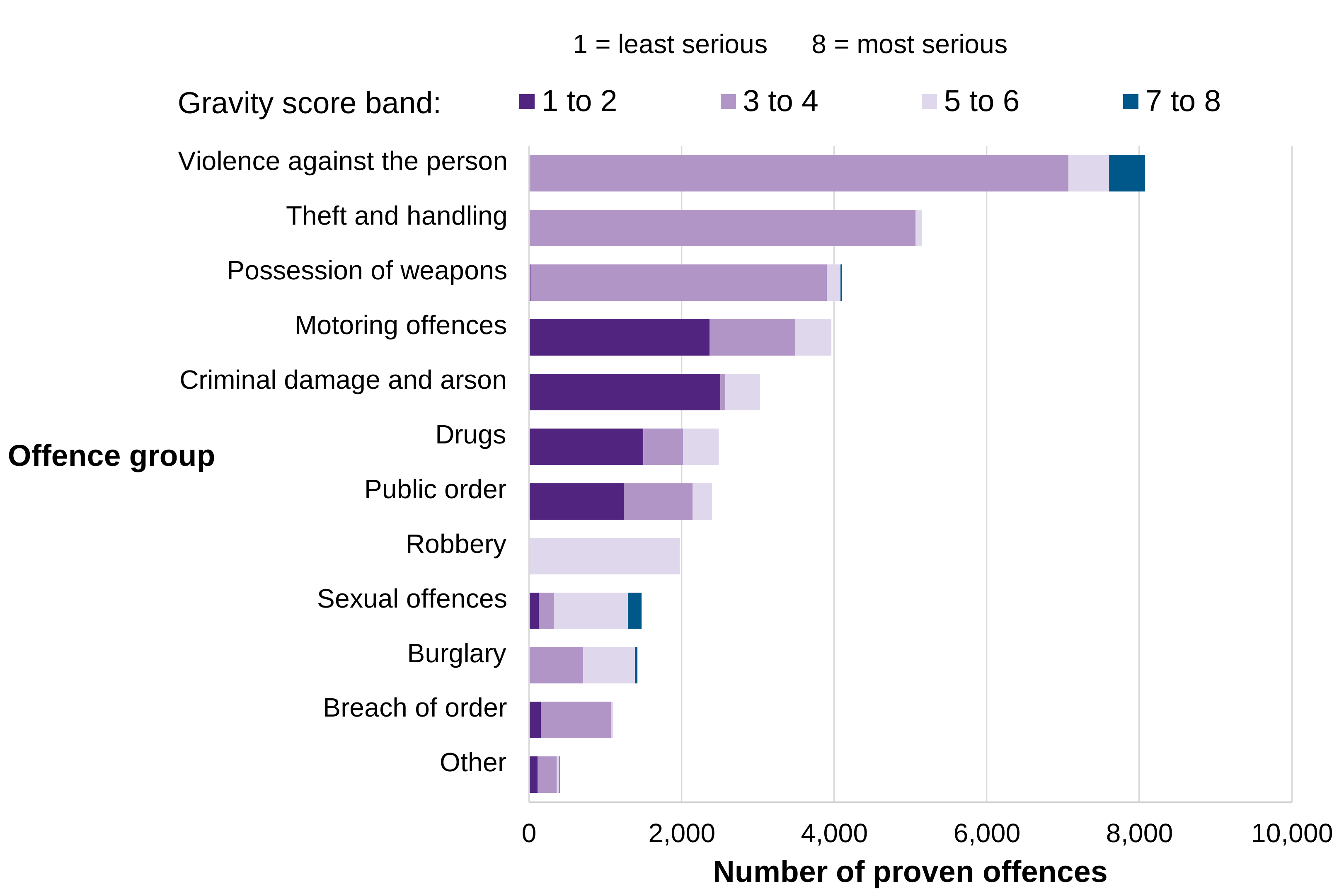
Figure 4.3: Number of proven offences by children by offence group and gravity score band, England and Wales, year ending March 2025
Supplementary Tables: Chapter 4, Table 4.6
An offence’s gravity is scored out of 8, ranging from 1 (least serious) up to 8 (most serious).
Figure 4.3 shows the violence against the person offence group made up the largest share of offences. Only a small proportion of offences (12%) within this group had a higher gravity score of 5 to 8. For offences within robbery and sexual offences, the majority had a higher gravity score of 5 to 8 (100% and 78% respectively).
In the latest year, around 250 proven offences committed by children had the highest gravity score of 8, which accounted for 1% of all proven offences. These offences were sexual offences (72%) and violence against the person (28%) (Supplementary Table 4.4).
Figure 4.4: Proportion of proven offences by gravity score band and demographic characteristics, England and Wales, year ending March 2025
| Gravity score band 1 to 4 (Less serious) | Gravity score band 5 to 8 (Most serious) | ||
| Age | 10-14 | 86% | 14% |
| Age | 15-17 | 79% | 21% |
| Ethnicity | Asian | 72% | 28% |
| Ethnicity | Black | 75% | 25% |
| Ethnicity | Mixed | 79% | 21% |
| Ethnicity | Other | 77% | 23% |
| Ethnicity | White | 82% | 18% |
| Sex | Girls | 93% | 7% |
| Sex | Boys | 79% | 21% |
Supplementary Tables: Chapter 4, Table 4.5
Figure 4.4 shows that the proportion of proven offences with a gravity score in the higher band of 5 to 8 was greater for:
-
those aged 15 to 17 (21% compared to 14% of offences committed by 10 to 14-year-olds)
-
Asian children (28%) and Black (25%), while it was 18% for White children
-
boys (21%, compared to 7% for girls).
4.3 Proven knife or offensive weapon offences committed by children
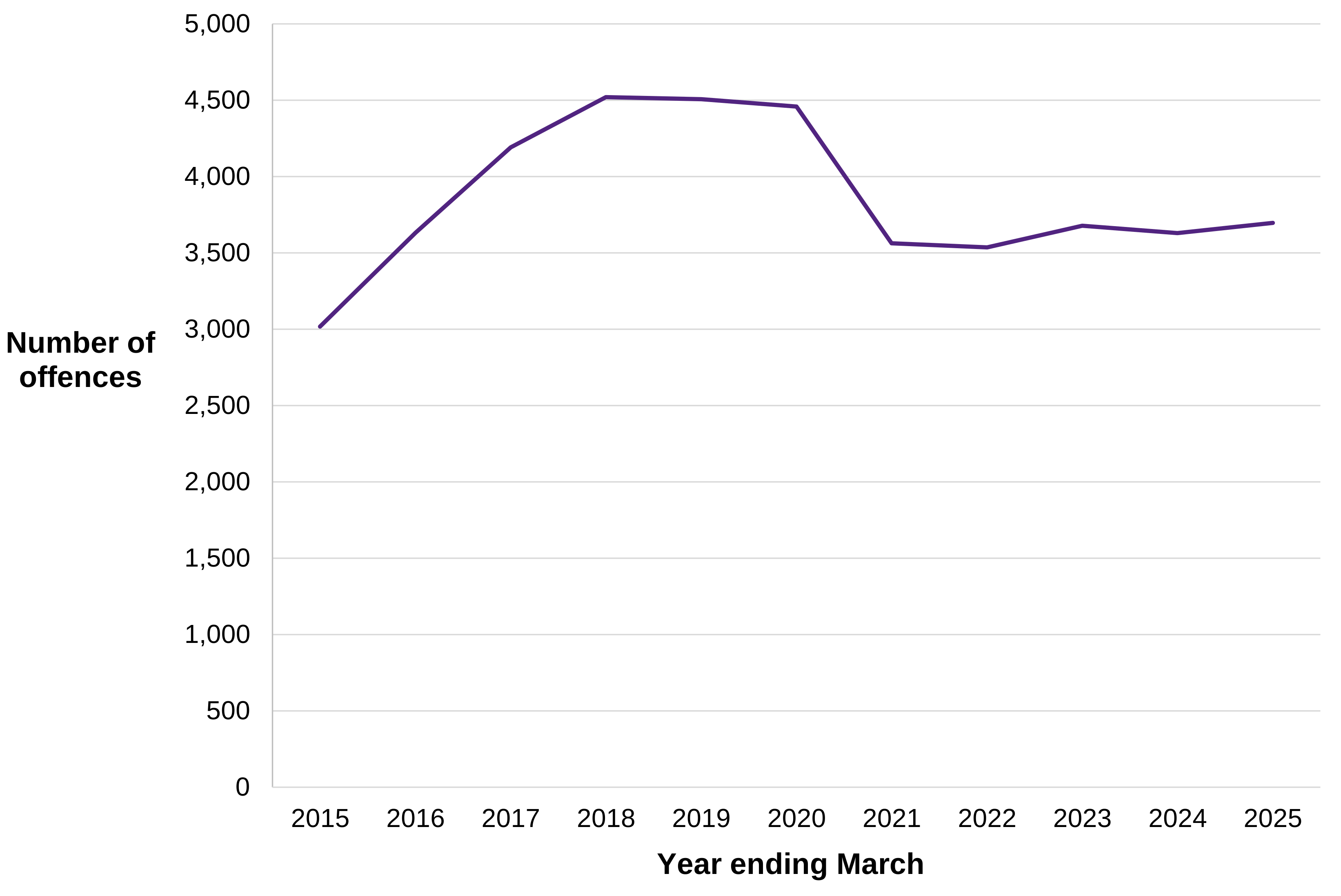
Figure 4.5: Number of knife or offensive weapon offences committed by children, resulting in a caution or sentence, England and Wales, years ending March 2015 to 2025
Supplementary Tables: Chapter 4, Table 4.10
This section covers offences for which children received cautions or sentences for possession of an article with a blade or point, possession of an offensive weapon, or threatening with either type of weapon.
In the year ending March 2025, there were just under 3,700 knife or offensive weapon offences committed by children resulting in a caution or sentence, which is 2% higher than the previous year and 23% greater than 10 years ago.
The highest proportion of knife or offensive weapon offences committed by children were in London at 28%, a similar proportion to that seen over the last five years. London also saw the highest rate of these offences, at 10.6 offences per 10,000 of the general child population.
The next highest rates were seen in the West Midlands, at 7.2 per 10,000, and the North West, at 5.7. The lowest rate was seen in Wales, at 3.3 offences per 10,000.
In the latest year, the vast majority (95%) of knife or offensive weapon offences committed by children were possession offences and the remaining 5% were threatening with a knife or offensive weapon offences.
In the year ending March 2025, 58% of disposals given to children for a knife or offensive weapon offence were a community sentence. This proportion is broadly stable over the last 10 years.
The proportion of children sentenced to immediate custody was 6% in the last year, which is slightly lower than the previous year (7%).
5. Sentencing of children
In the year ending March 2025:
-
There were just under 13,000 occasions where children were sentenced at court, which is 1% higher than the previous year. This was the third consecutive year-on-year increase in the number of sentencing occasions.
-
The number of custodial sentences decreased by 7% compared with the previous year to 610. This followed the first year-on-year increase in custodial sentences of the last 10 years in the previous year.
-
The average time from offence to completion was 230 days, an increase of nine days from the previous year and the joint highest level it’s been, along with the year ending March 2021 which was, at the time, impacted by court closures during the COVID-19 pandemic.
-
The average custodial sentence length increased by one month to 18.8 months compared with the previous year, following two consecutive year-on-year decreases.
This chapter focuses on trends of children proceeded against at court, time taken from offence to completion at court and sentences received at court by children by type of sentence. The Ministry of Justice changed the data source for these statistics which has resulted in changes to historic data published in earlier years’ publications. Details of the changes can be found on the Technical Guidance for Criminal Justice Statistics.
5.1 Children proceeded against
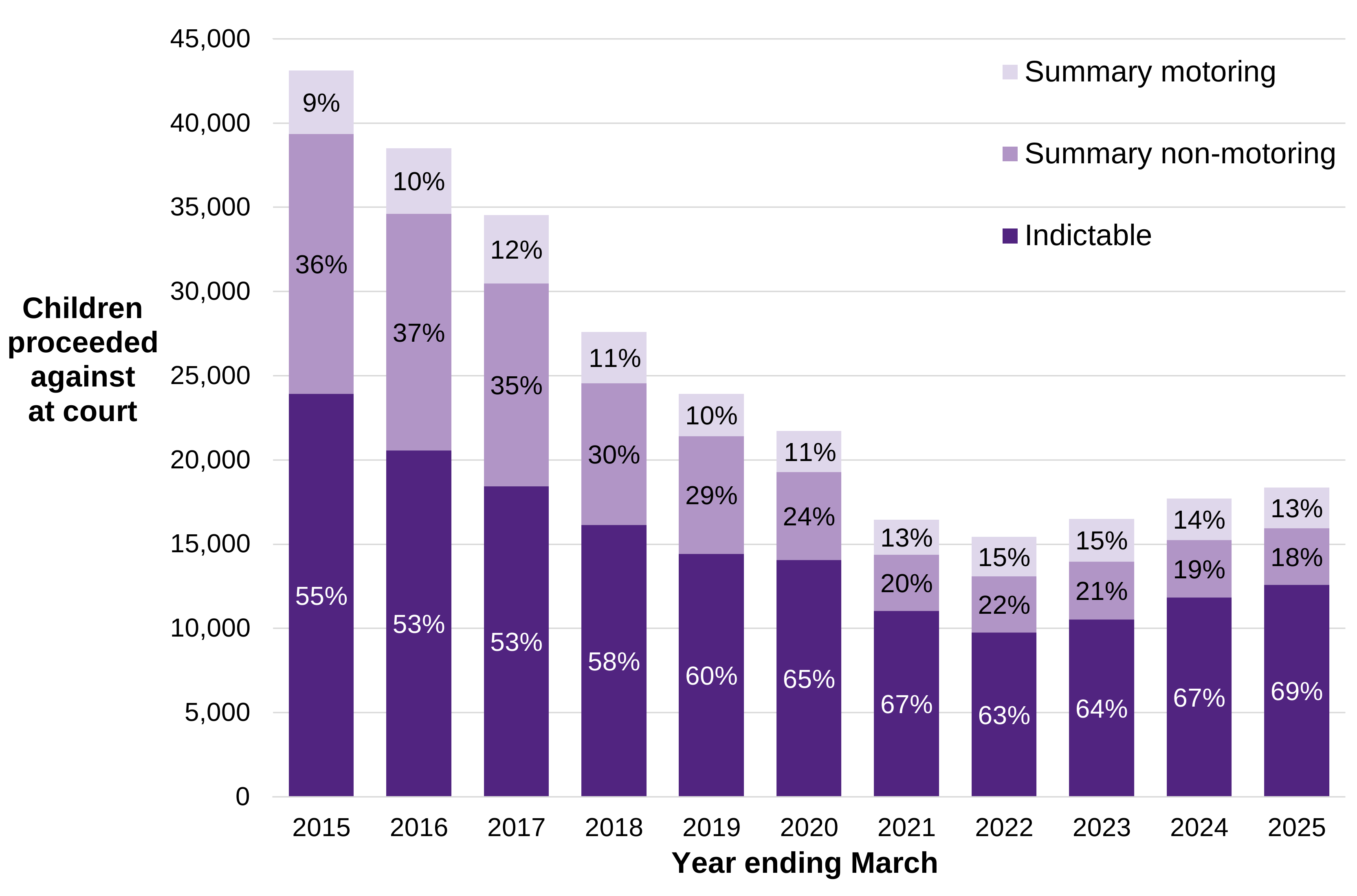
Figure 5.1: Number and proportion of children proceeded against at magistrates’ court, England and Wales, years ending March 2015 to 2025
Supplementary Tables: Chapter 5,Table 5.1
There were around 18,400 children proceeded against at magistrates’ courts in the year ending March 2025. This was an increase of 4% compared with the previous year and the third consecutive year-on-year increase, though was 57% lower than 10 years ago. Over two thirds (69%) of these proceedings were for indictable offences, 18% were for summary non-motoring offences and the remaining 13% were for summary motoring offences (Supplementary Table 5.1).
5.2 Average time from offence to completion at court
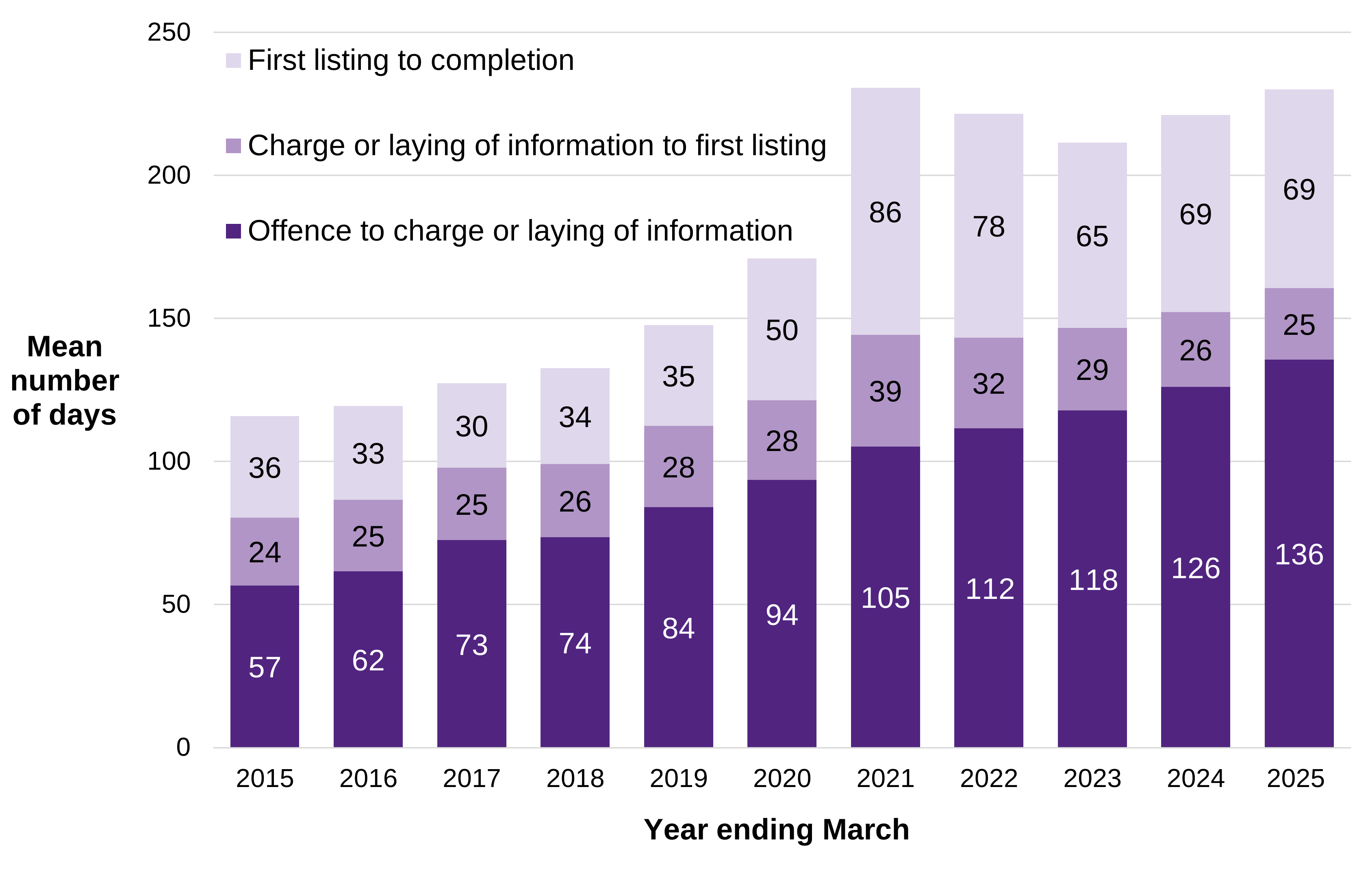
Figure 5.2: Average time in days from offence to completion at court, England and Wales, years ending March 2015 to 2025
Supplementary Tables: Chapter 5, Table 5.2
Figure 5.2 shows the average (mean) number of days taken from the day of the offence or alleged offence to the day the case was concluded at court with the child being found guilty or acquitted.
In the year ending March 2025, the average time from offence to completion was 230 days, the highest level it’s been in the time series, the same as the year ending March 2021 which was, at the time, impacted by court closures during the COVID-19 pandemic.
Figure 5.2 shows that compared with the previous year, the average days for:
-
offence to charge or laying of information increased by 10 days to 136 days
-
charge or laying of information to first listing decreased by one day to 25 days
-
first listing to completion remained the same at 69 days.
5.3 Sentencing of children at court
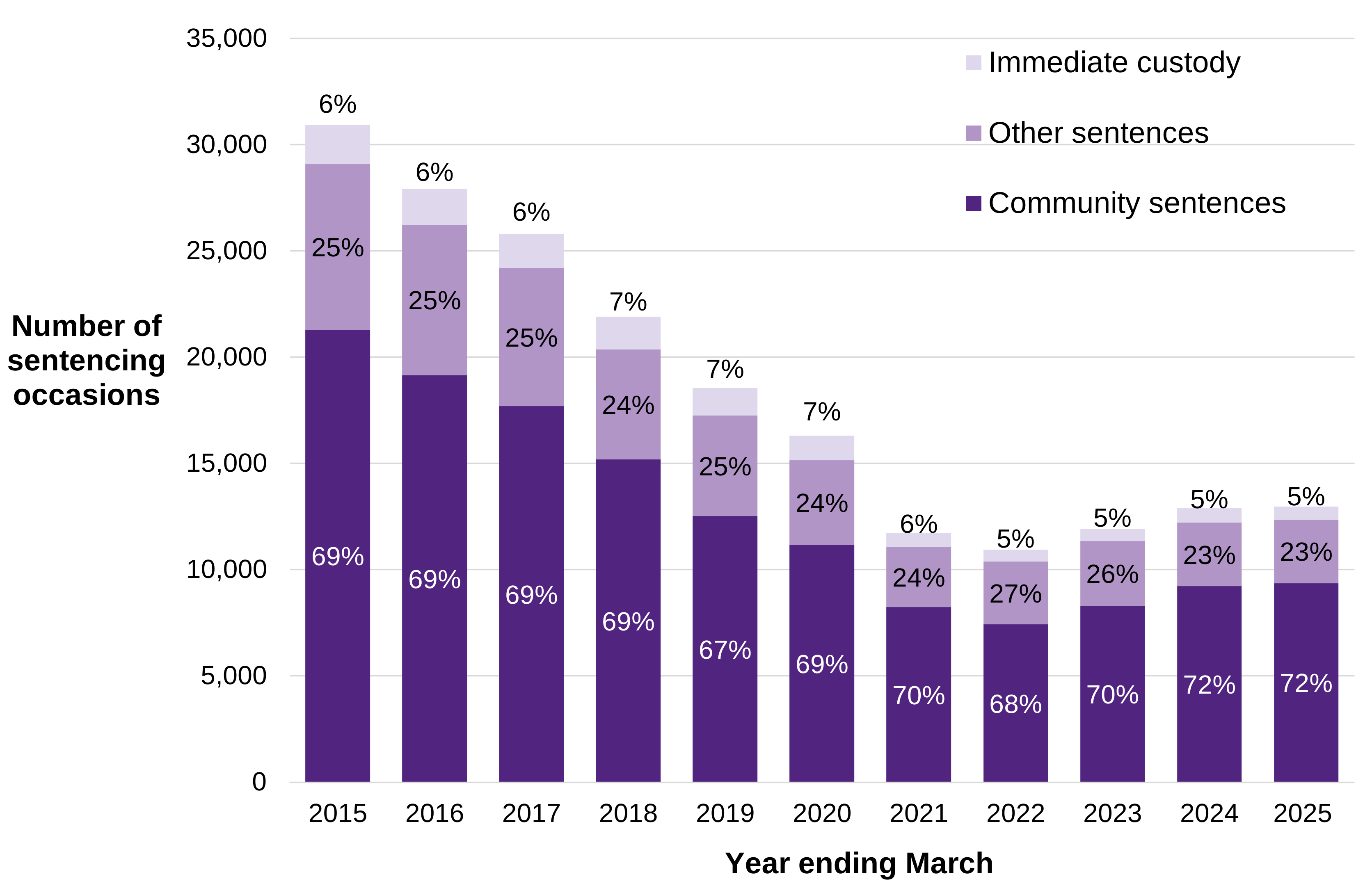
Figure 5.3: Number and proportion of sentencing occasions of children at court by sentence type, England and Wales, years ending March 2015 to 2025
Supplementary Tables: Chapter 5, Table 5.4
There were just under 13,000 occasions where children were sentenced at court in the year ending March 2025, which is 1% higher than the previous year, and the third consecutive year-on-year increase. The number of sentencing occasions was 58% lower than 10 years ago.
There was a decrease in the number of custodial sentences compared with the previous year, following the first increase for the first time in the last 10 years in the previous year. There were around 610 custodial sentences given in the year ending March 2025, compared with around 660 in the previous year (a decrease of 7%). The number of custodial sentences was 67% fewer than 10 years ago, when around 1,800 were given to children.
As Figure 5.3 shows, the proportion of custodial sentences has remained broadly stable, varying between 5% and 7% of all sentences over the last 10 years.
Supplementary Table 5.4 also shows that in the year ending March 2025, of the 13,000 sentencing occasions of children for all types of offences there were:
-
around 9,400 community sentences (an increase of 2% compared with the previous year and accounting for 72% of all sentences)
-
just under 3,000 other types of sentences (around the same level as the previous year and accounting for 23% of all sentences). These include absolute and conditional discharges, fines, and other less common disposals.
5.4 Sentencing of children by type of offence
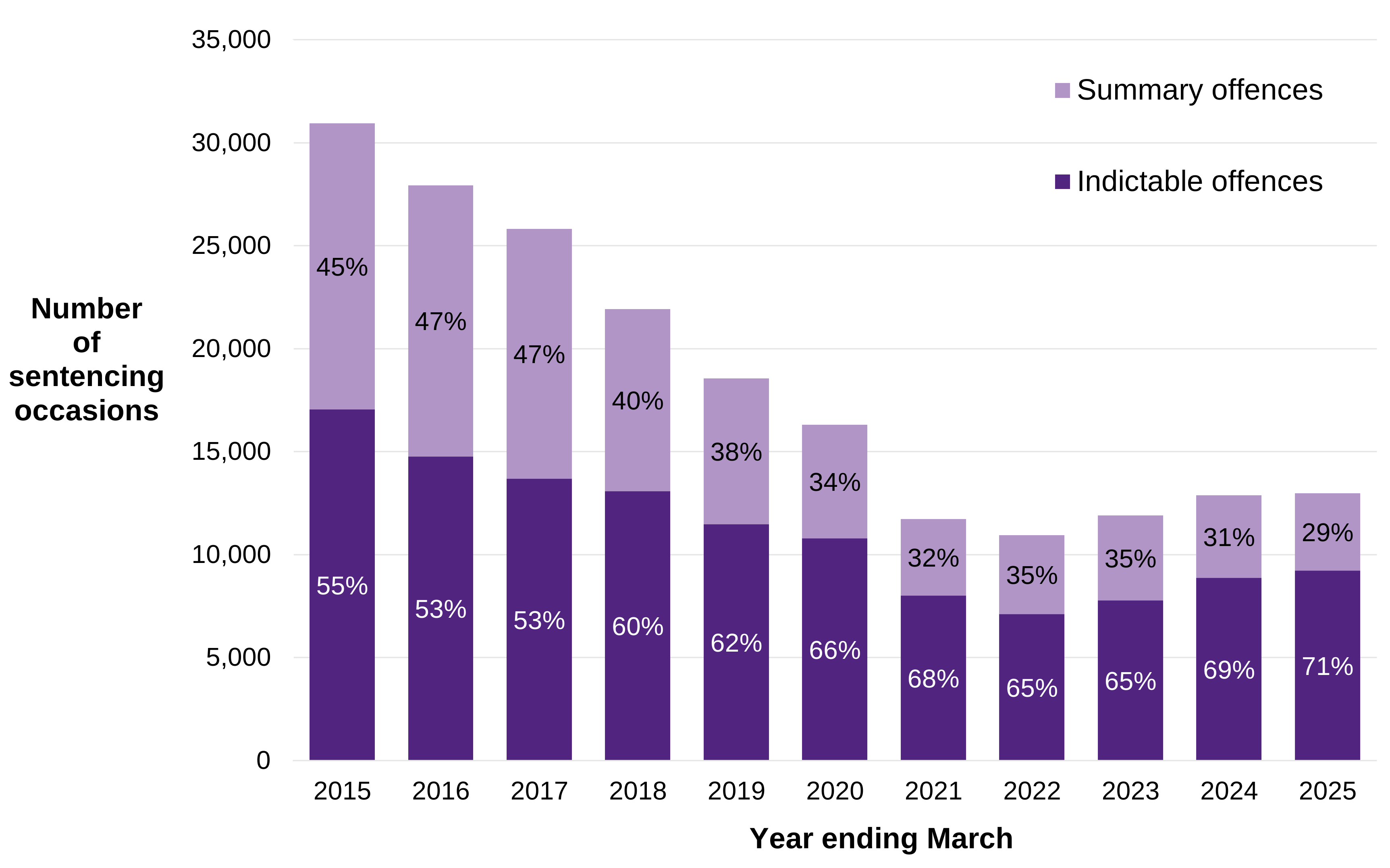
Figure 5.4: Number and proportion of sentencing occasions of children by type of offence, England and Wales, years ending March 2015 to 2025
Supplementary Tables: Chapter 5, Table 5.5
Of the 13,000 occasions in which children were sentenced in the year ending March 2025, 71% were for indictable[footnote 9] offences and 29% were for summary offences. The proportion of sentencing occasions of children for summary offences was 2 percentage points less than the previous year and the lowest it has been in the last 10 years. This may point towards an increased use of diversionary resolutions.
Of the 9,200 occasions on which children were sentenced for indictable offences in the latest year, 82% involved a community sentence, whereas of the 3,800 occasions in which children were sentenced for summary offences, 48% involved a community sentence.
In the year ending March 2025, 6% of the occasions in which children were sentenced for indictable offences involved a sentence to immediate custody, compared with 1% for summary offences.
5.5 Sentencing of children for indictable offences by ethnicity[footnote 10]
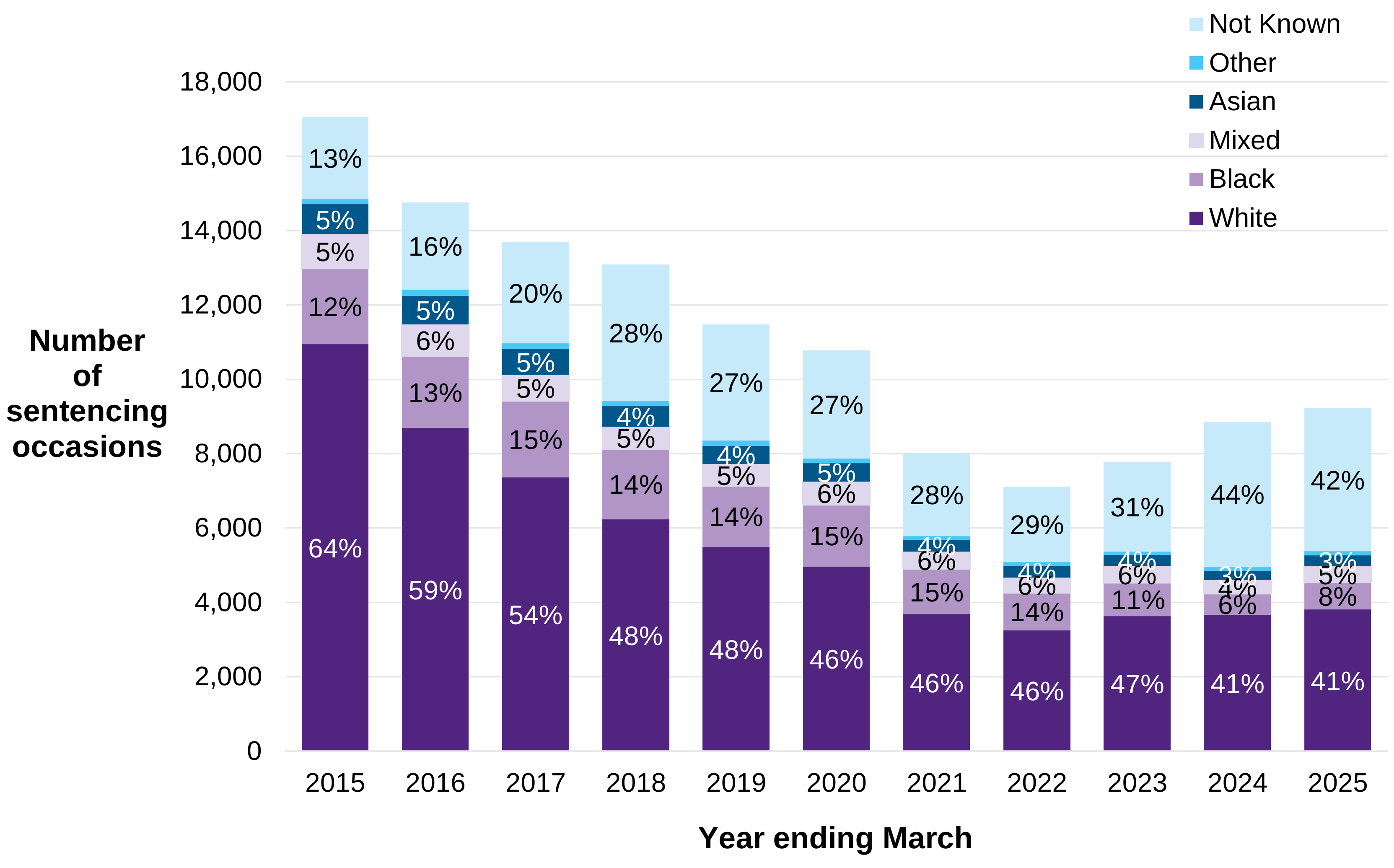
Figure 5.5: Number and proportion of sentencing occasions of children for indictable offences by ethnicity, England and Wales, years ending March 2015 to 2025
Supplementary Tables: Chapter 5,Table 5.8
In the year ending March 2025, the number of occasions on which children were sentenced at court for indictable offences varied by ethnicity, however changes compared to previous periods should be treated with caution due to the large increase in the proportion of sentence occasions where ethnicity was unknown. In the latest year there were:
-
around 3,800 sentencing occasions for children whose ethnicity was unknown, accounting for 42%, making up the largest group for the second consecutive year.
-
around 3,800 sentencing occasions for White children, accounting for 41% of total sentencing occasions (a slightly lower proportion than unknown due to the number of sentencing occasions being rounded)
-
around 730 sentencing occasions for Black children, accounting for 8% of total sentencing occasions
-
around 430 sentencing occasions for Mixed children, accounting for 5% of total sentencing occasions
-
around 300 sentencing occasions for Asian children, accounting for 3% of total sentencing occasions and
-
around 120 sentencing occasions for Other children, accounting for 1% of total sentencing occasions.
5.6 Average custodial sentence length[footnote 11]
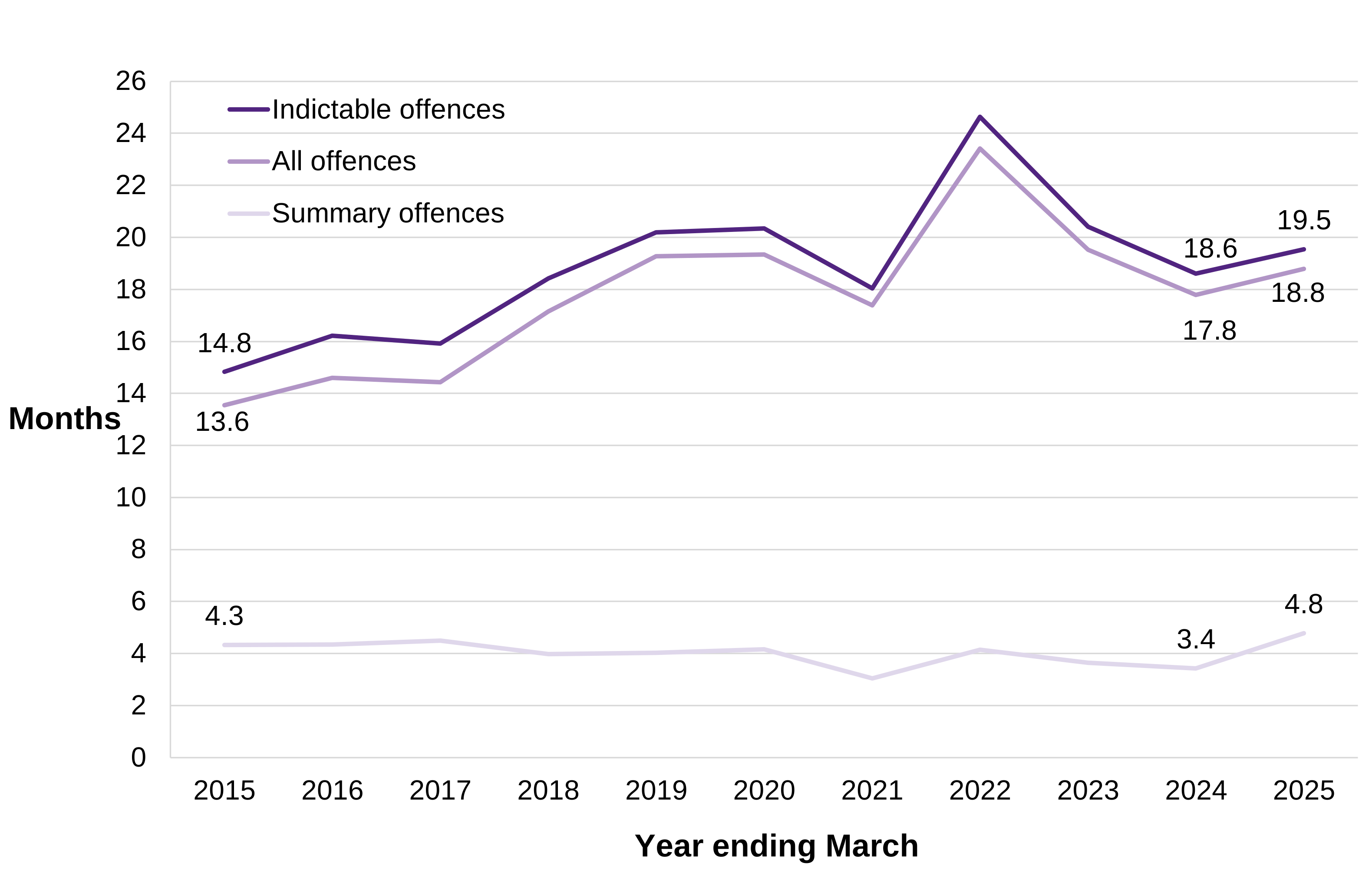
Figure 5.6: Average custodial sentence length in months by type of offence, England and Wales, years ending March 2015 to 2025
Supplementary Tables: Chapter 5, Tables 5.5
For children sentenced to custody, the average custodial sentence length varied based on the type of offence the child was sentenced for. In the latest year, the average custodial sentence length was:
-
18.8 months for all offences
-
19.5 months for indictable offences
-
4.8 months for summary offences.
The average custodial sentence length has increased by one month compared with the previous year and is five months higher than 10 years ago. However, it is almost five months lower than the peak in the year ending March 2022.
The average custodial sentence length for indictable offences increased by just under one month compared to the previous year.
For summary offences, the average custodial sentence increased by over one month to its highest level in 10 years at 4.8 months.
6. Use of remand for children
In the year ending March 2025:
-
Almost two thirds (62%) of children remanded to youth detention accommodation did not subsequently receive a custodial sentence.
-
Children remanded in custody accounted for 44% of the average custodial population for children in the latest year, a slight increase from 43% in the previous year but almost double compared with 10 years ago when it was 23%.
-
There were around 11,100 remand episodes, which was the same level as the previous year, of which the majority (78%) were bail remands, with 13% being community remands with intervention, and youth detention accommodation remands accounting for 9%.
-
Children from minority ethnic groups were overrepresented in the custodial remand population, with Black children making up over a quarter of those remanded.
This chapter presents data on trends of use of remand for children aged 10 to 17, characteristics of the custodial remand population and the outcomes for children following custodial remand. The term ‘remand to youth detention accommodation’ refers to the remand decision given at court to remand a child to custody.
6.1 Types of remand given to children
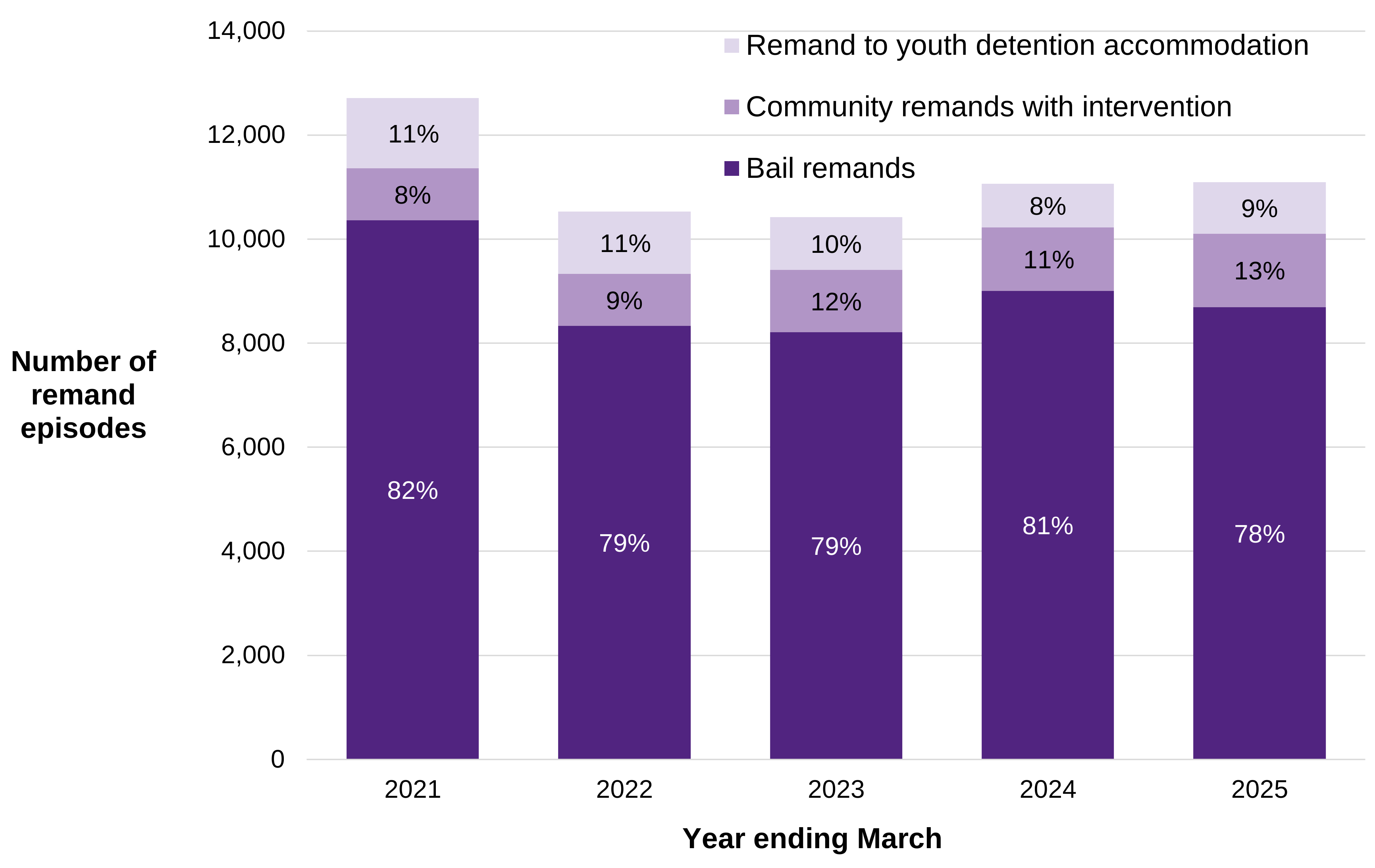
Figure 6.1: Number and proportion of remands given to children by type, England and Wales, years ending March 2021 to 2025
Supplementary Tables: Chapter 6, Table 6.2
Figure 6.1 shows the number of remand decisions made for outcomes occurring in each year. Where a child was given more than one remand decision during the court process, only the most restrictive is shown. Where a child was given multiple outcomes on the same day, only the most restrictive is counted.
There were around 11,100 remands given to children in the year ending March 2025, which was the same as the previous year. These were composed of:
-
bail remands, which accounted for 78% of total remand decisions
-
community remands with intervention, accounting for 13% of total remand decisions
-
remands to youth detention accommodation which accounted for 9% of total remand decisions.
For remand decisions given in the year ending March 2025, the breakdown of demographics (Supplementary Table 6.1) shows:
-
most episodes (88%) involved boys
-
the majority (83%) involved children aged 15 to 17
-
most episodes were given to White children (60%), while Black children and Mixed children were the next highest (18% and 14% respectively).
6.2 Average monthly population of children on remand in custody
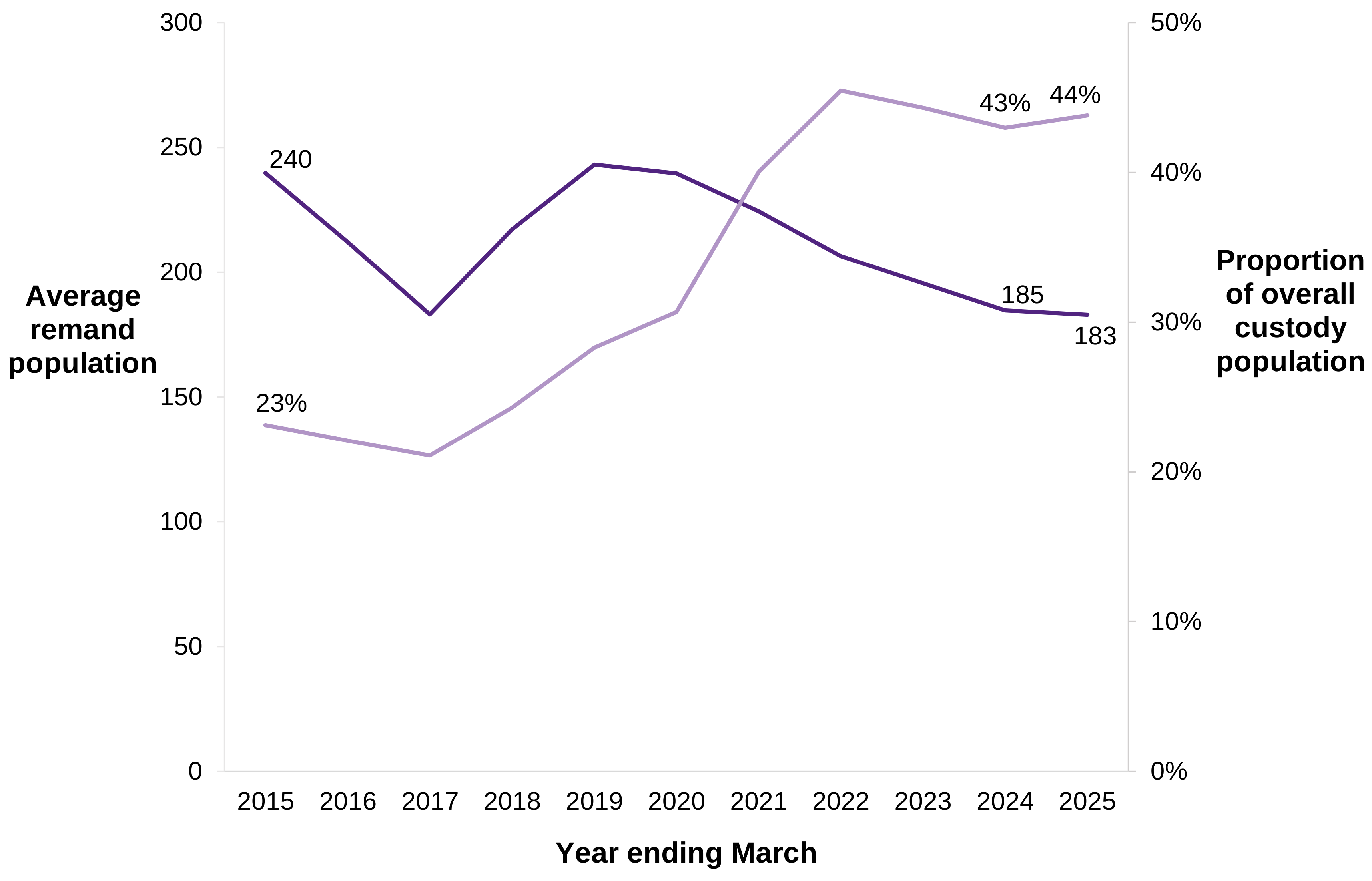
Figure 6.2: Average monthly population and proportion of children on remand in custody, secure estate for children and young people in England and Wales, years ending March 2015 to 2025
Supplementary Tables: Chapter 6, Table 6.3
There was an average monthly population of around 180 children remanded in custody at any one time in the year ending March 2025, which was 1% lower than the previous year and 24% lower than 10 years ago.
Children remanded in custody accounted for 44% of the average youth custody population in the latest year, a slight increase from 43% in the previous year, and almost double compared with 10 years ago (23%).
Supplementary Tables 6.3 and 6.4 show that for children remanded in custody, the highest numbers were:
-
in a Young Offender Institution (61%)
-
boys (96%), a proportion which has remained broadly stable over the last 10 years
-
from an ethnic minority group (62%), an increase from 59% in the previous year
-
aged 17 (52%), an increase from 49% in the previous year.
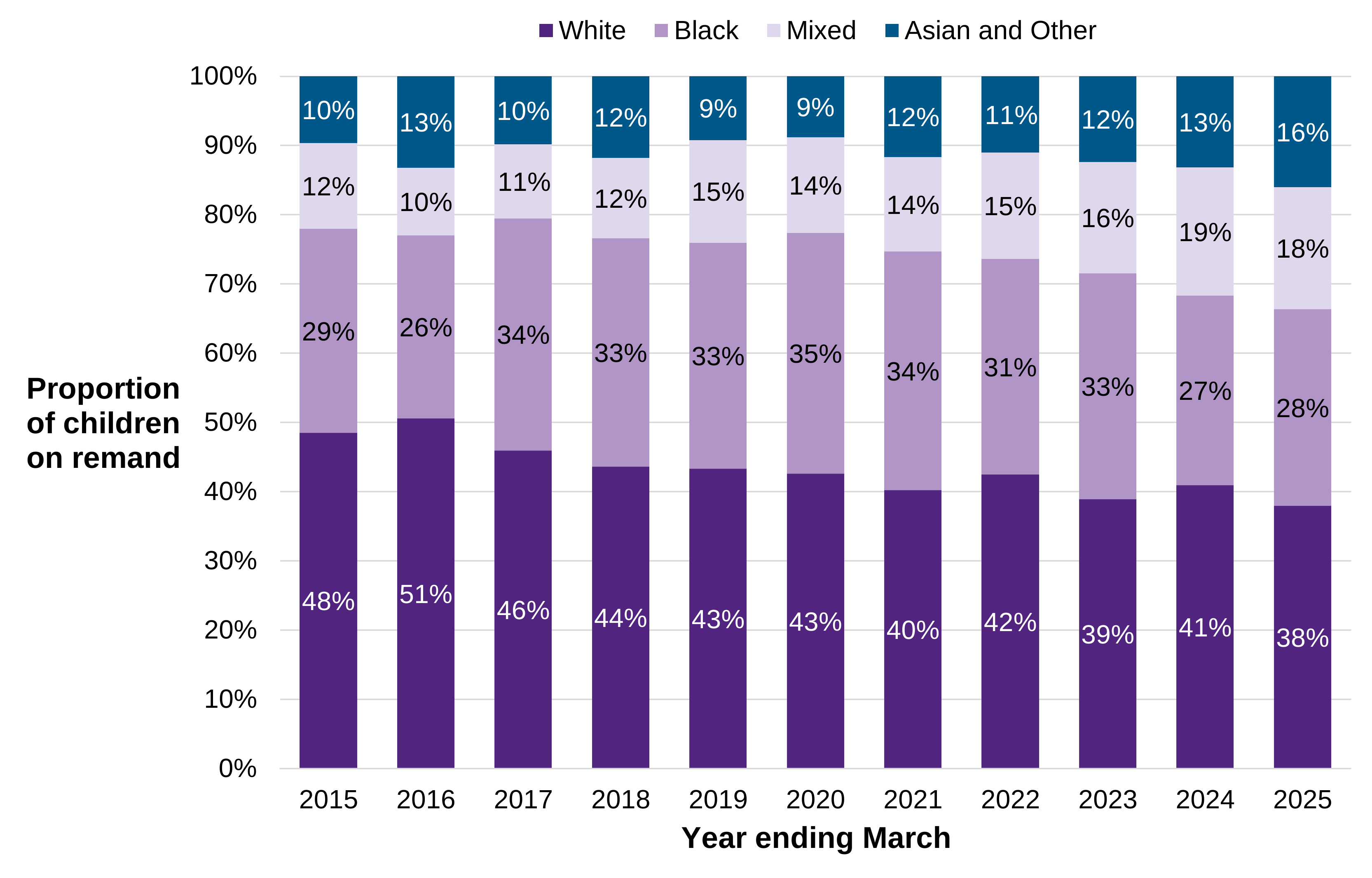
Figure 6.3: Proportion of children in custody on remand by ethnicity, secure estate for children and young people in England and Wales, years ending March 2015 to 2025 [footnote 12]
Supplementary Tables: Chapter 6, Table 6.3
Supplementary Table 6.3 shows that in the year ending March 2025, the average number of White children in custody on remand decreased by 10% compared with the previous year to the lowest level seen over the last 10 years.
In the latest year, children from minority ethnic groups continued to be overrepresented within the custodial remand population, with Black children accounting for 28% of the remand population, Mixed children making up 18% and Asian and Other children accounting for 16% of the remand population.
6.3 Outcomes for children following remand to youth detention accommodation[footnote 13]
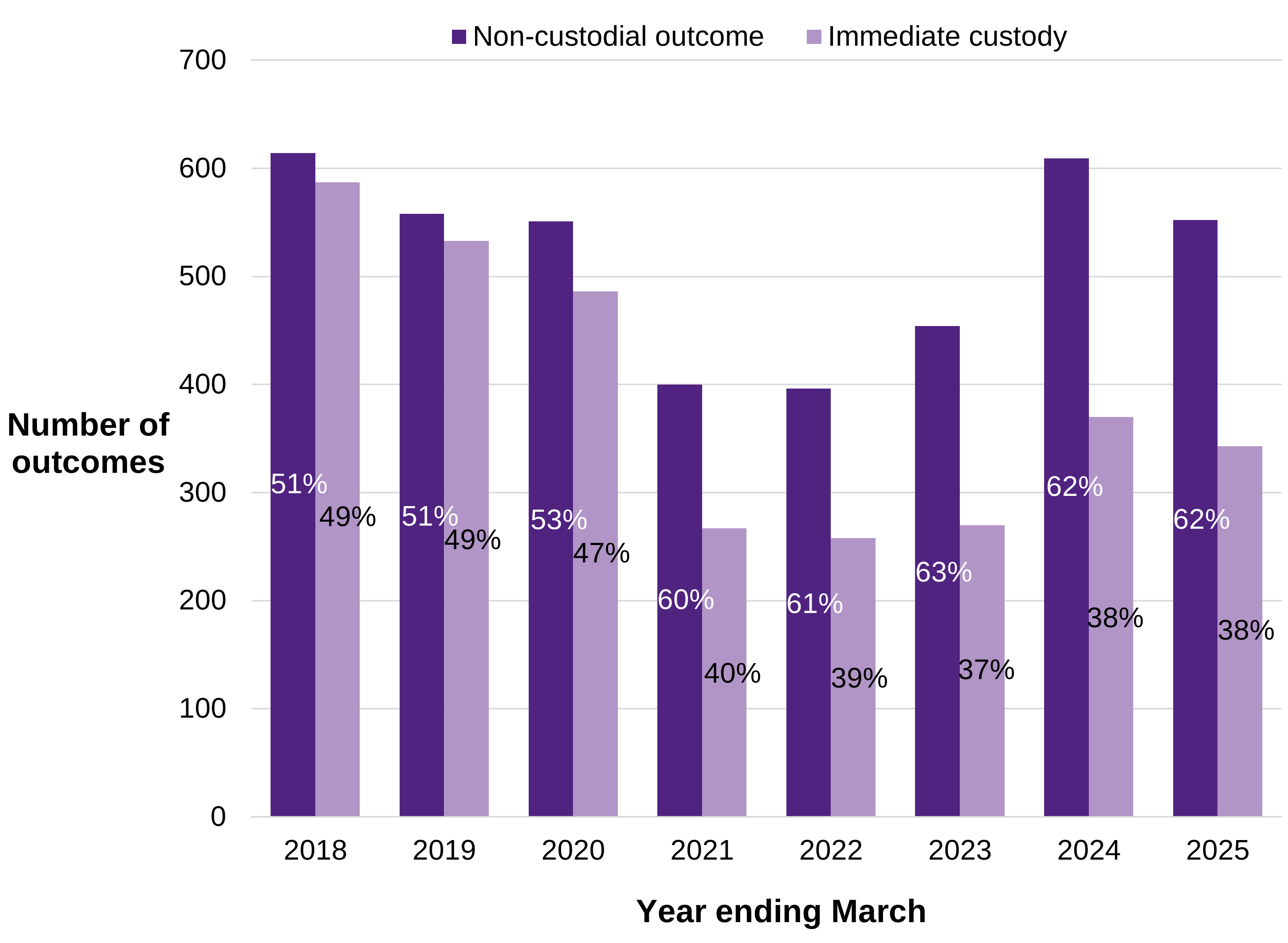
Figure 6.4: Number and proportion of outcomes following remand to youth detention accommodation by type, England and Wales, years ending March 2018 to 2025
Supplementary Tables: Chapter 6, Table 6.6
In the year ending March 2025, the number of outcomes for children remanded to youth detention accommodation was 9% lower than the previous year. Almost two thirds (62%) of outcomes for children remanded to youth detention accommodation at some point during court proceedings did not subsequently result in a custodial sentence, which was the same as the previous year.
Of the 550 outcomes which did not result in a custodial sentence, 75% resulted in a non-custodial sentence and 25% resulted in acquittal, dismissal or were not proceeded against.
The proportion of children remanded to youth detention accommodation at some point during court proceedings where a custodial sentence did not result varies by court type. For those who received an outcome at a magistrates’ court, 71% did not subsequently receive a custodial sentence compared with 48% for those who received an outcome at the Crown Court.
The proportion of outcomes for those remanded to youth detention accommodation, who did not go on to get a custodial sentence, varies by ethnicity from 67% for children from an Other ethnic background, 65% for Mixed children, 60% for White children, 53% for Black children and 52% for Asian children.
7. Children in youth custody
In the year ending March 2025:
-
There was an average of around 420 children in custody at any one time during the year, a fall of 3% against the previous year and the lowest number on record.
-
The number of young adults aged 18 held in the secure estate for children and young people fell by 40 (or 27%) to 110 in the latest year, however this is the second highest this figure has been in the last ten years.
-
The proportion of children held in custody on remand remained high at 44% (up from 43% compared to the previous year), the second largest proportion since the time series began.
-
Despite decreases in the number of Black and Mixed children in custody compared to the previous year, Black and Mixed children remained overrepresented (accounting for 22% and 18% respectively).
This chapter presents data on trends in the secure estate for children and young people in England and Wales. Data is presented for children aged 10 to 17 by demographic characteristics, offence types and legal basis for detention. Data is also presented on children aged 10 to 17 and young adults aged 18 on proportions of population by age group, length of time in custody and behaviour management. Data on the secure estate for children and young people which includes breakdowns for demographic characteristics, offence types and legal basis for children and young adults aged 18 can be found in the monthly youth custody data produced by the Youth Custody Service.
7.1 Average monthly youth custody population
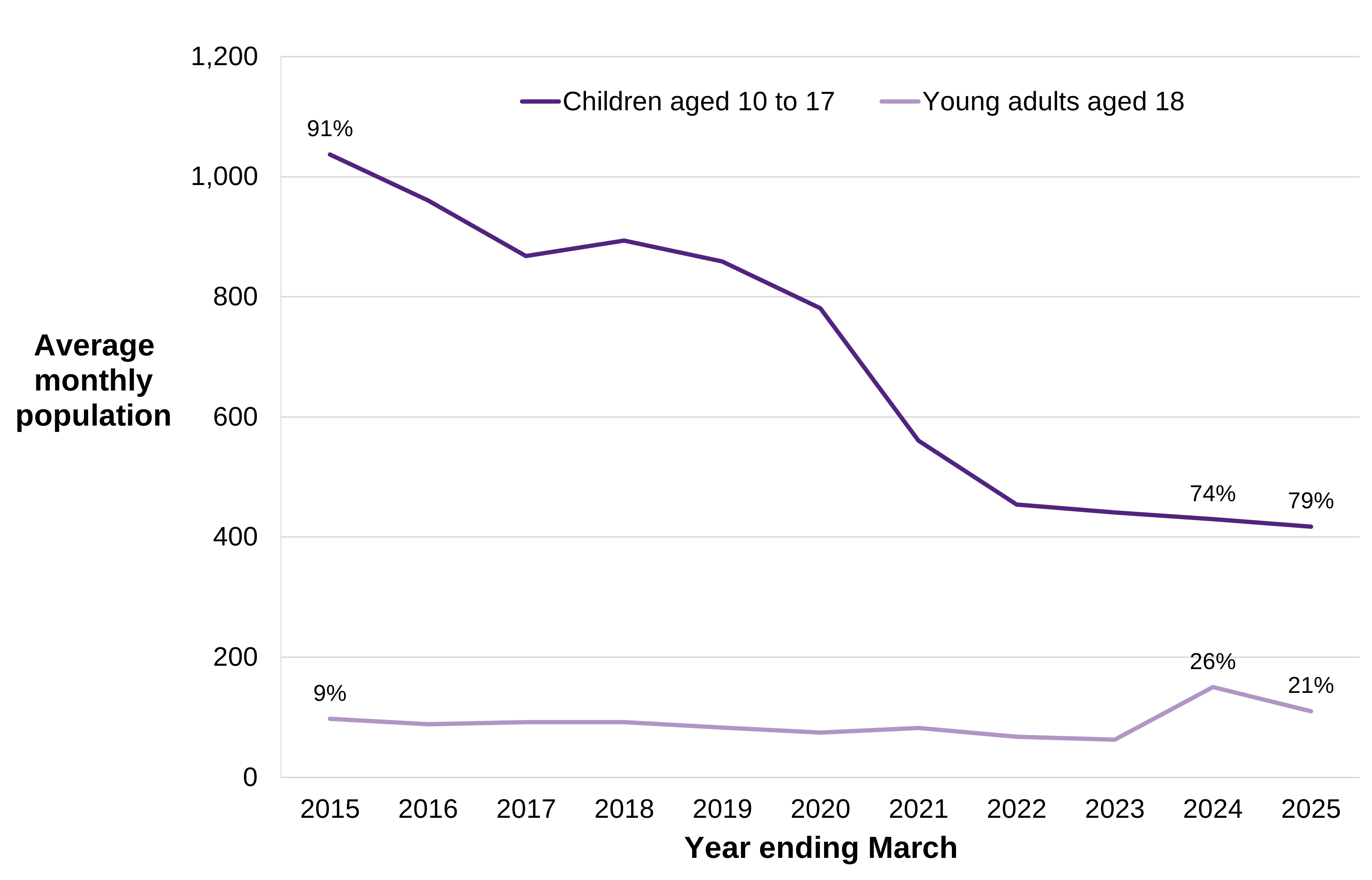
Figure 7.1: Average monthly number and proportion of children aged 10 to 17 and young adults aged 18 in custody, England and Wales, years ending March 2015 to 2025
Supplementary Tables: Chapter 7, Table 7.1
In the year ending March 2025, there was an average of just under 420 children aged 10 to 17 in custody in the secure estate for children and young people, a fall of 3% from the previous year and of 60% since the year ending March 2015.
In the latest year, the number of young adults aged 18 held in the secure estate for children and young people has fallen by 40 (27%), although this remains the second highest level in the time series. This follows an interim ministerial decision taken in December 2022, in response to capacity pressures in the adult secure estate, to delay automatic transition to the young adult estate until age 19. The proportion of young adults aged 18 in the secure estate was 21% in the year ending March 2025, compared with 26% in the previous year and 9% in the year ending March 2015.
7.2 Average monthly population of children in custody by sector
Figure 7.2: Average monthly number of children in custody by sector, England and Wales, years ending March 2015 to 2025
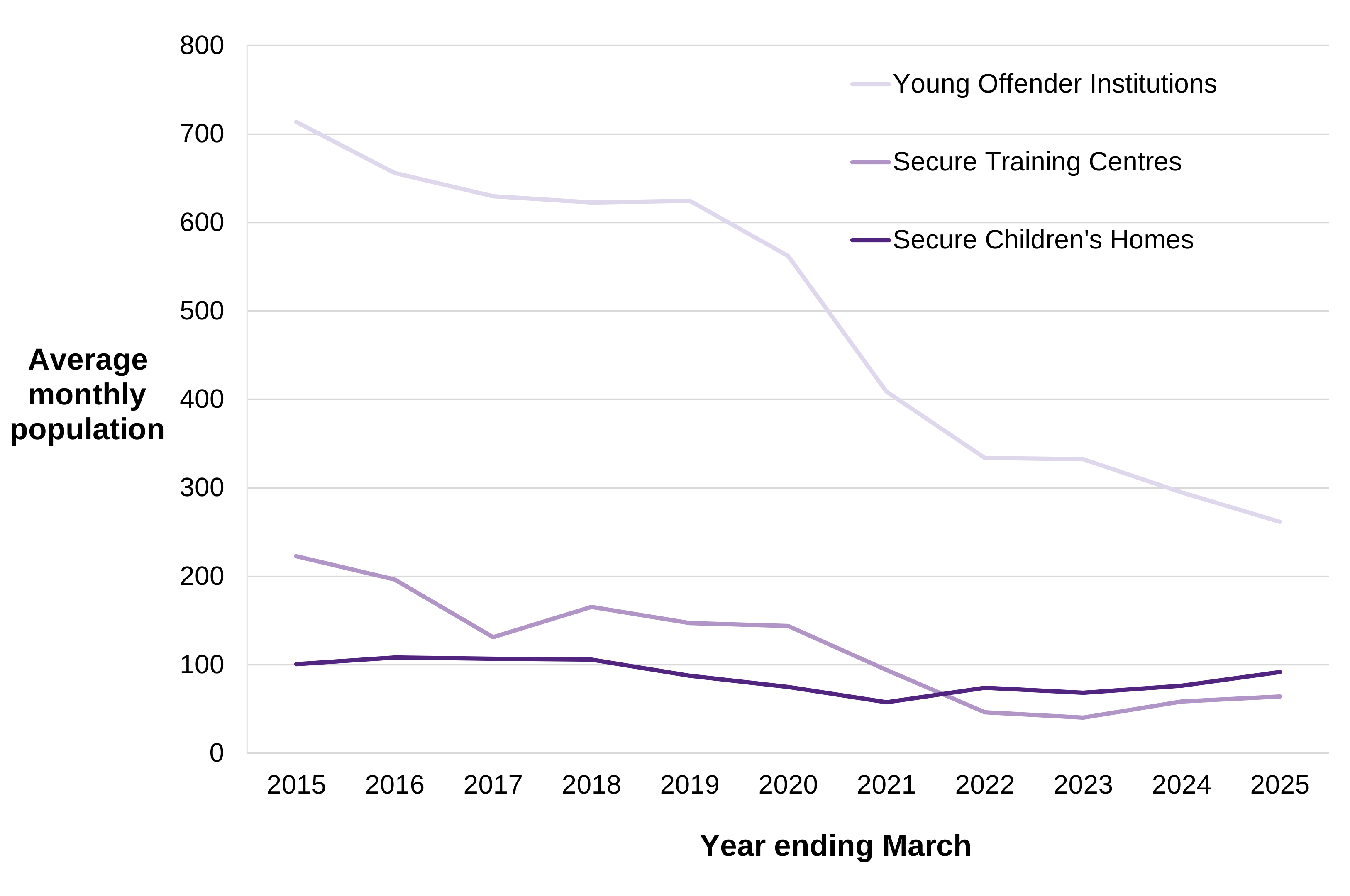
Supplementary Tables: Chapter 7, Table 7.3
As in previous years, in the year ending March 2025 the majority of children in custody were held in Young Offender Institutions (YOIs). 63% of children were held in YOIs, with 22% in Secure Children’s Homes and the remaining 15% in Secure Training Centres. From August 2024 Secure Children’s Home data contains the small number of children and young people in custody at the Oasis Restore Secure School.
7.3 Legal basis for detention of children in custody
Information on the legal basis for detention relates to the most serious legal basis for which a child is placed in custody.
Figure 7.3: Average monthly number of children in custody by legal basis for detention, England and Wales, years ending March 2015 to 2025
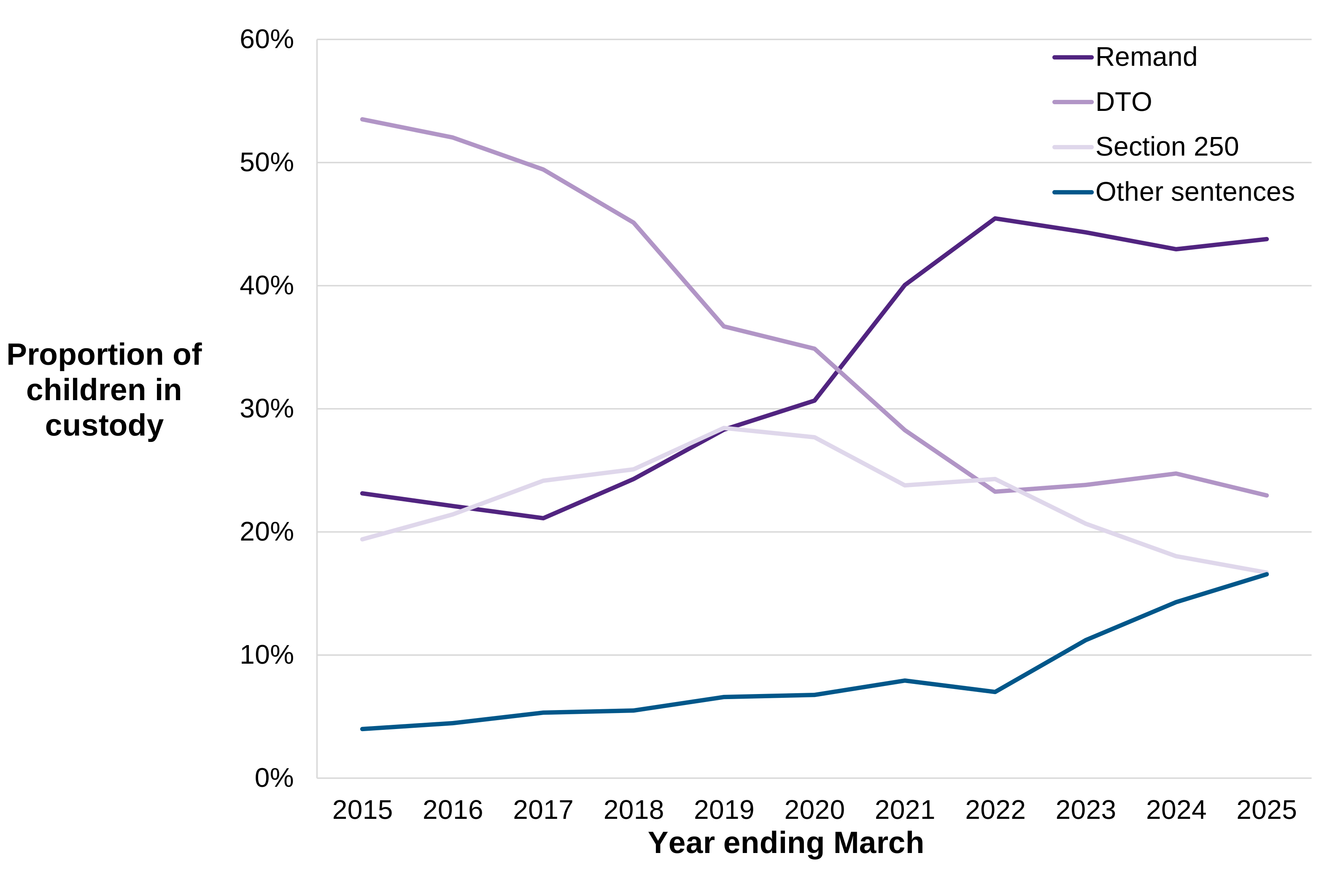
Supplementary Tables: Chapter 7, Table 7.4
Figure 7.3 and supplementary Table 7.4 show that while the number of children in custody has decreased for all legal basis types over the last 10 years, the proportions of these legal basis types have been changing:
-
44% of the children held in custody in the latest year were those on remand, which is the second largest proportion since the time series began. This figure is almost double what it was 10 years ago and up slightly from the previous year when it was 43%.
-
Children serving a Detention and Training Order (DTO) accounted for 23% of the children’s population in the latest year, down from 54% 10 years ago and slightly down from the previous year when it was 25%.
-
The proportion of those serving a Section 250 (formerly Section 91) sentence accounted for 17% of the children’s population. It had steadily increased from 19% in the year ending March 2015 to 28% in the year ending March 2019 but has now fallen for four of the last five years.
-
The proportion of children on Other sentences (such as Sections 254 and 259 sentences) are at the highest level they’ve been in the time series at 17% in the latest year, an increase of three percentage points compared with the previous year.
7.4 Offences resulting in children going into custody
Figure 7.4: Proportion of children in custody by offence group, England and Wales, years ending March 2015 to 2025
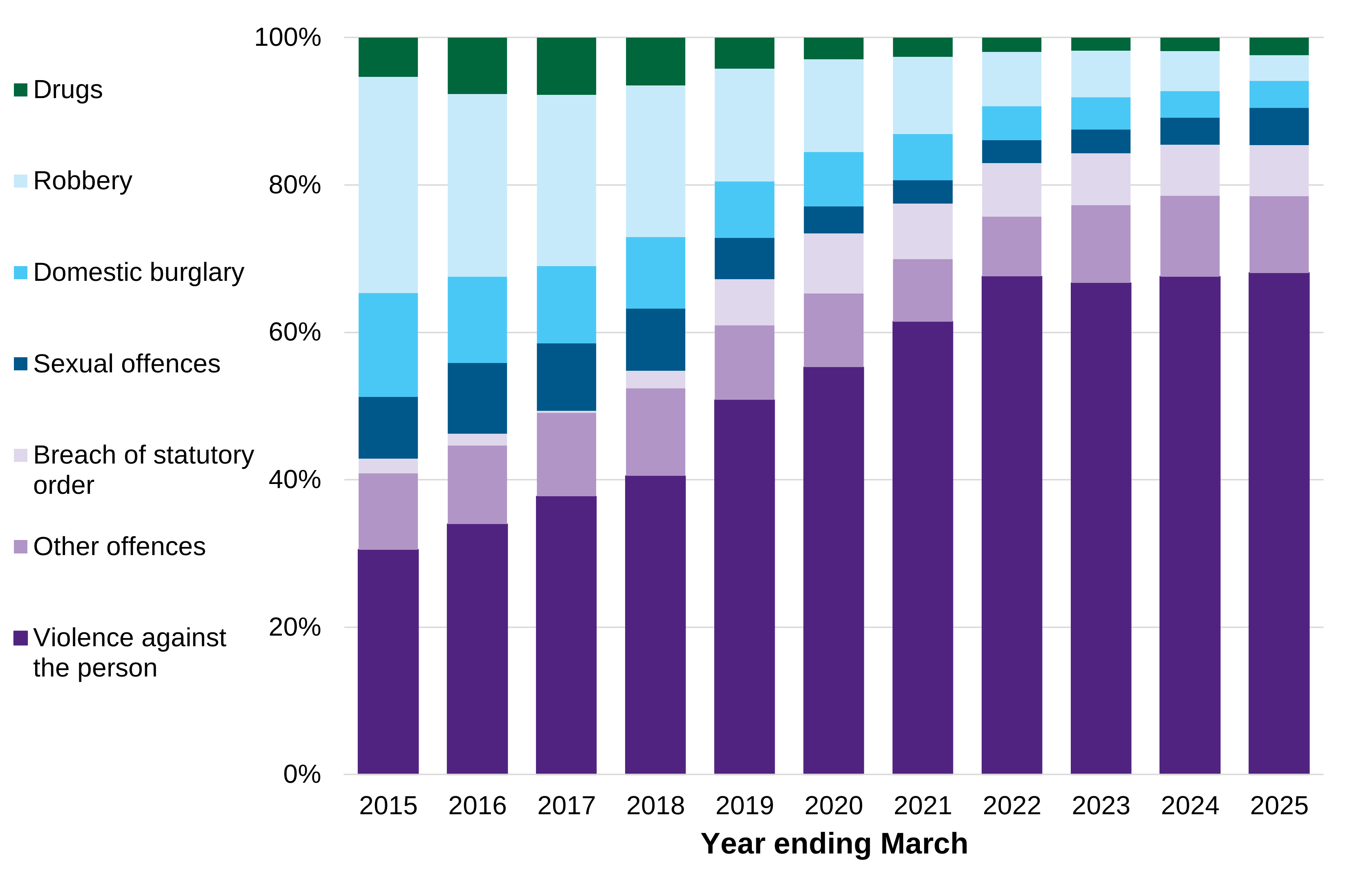
Supplementary Tables: Chapter 7, Table 7.5
Figure 7.4 shows that the proportion of children in custody for violence against the person offences has increased year on year between years ending March 2015 and March 2022 and has remained relatively stable since then. In the year ending March 2025, the proportion of children in custody for violence against the person offences was 68%, the same as the previous year. Supplementary table 7.5 shows that the average number of children in custody for violence against the person offences fell by just 10% (from around 320 to 280) between the years ending March 2015 and 2025 compared with a 60% fall for all children in custody over the same period.
Over the last 10 years, the proportion of children in custody for robbery has fallen by 26 percentage points, from 29% to 3%, representing a 95% reduction in real terms from an average of around 300 children in the year ending March 2015 to 15 in the latest year.
7.5 Demographics of children in custody
Figure 7.5: Demographics of children in custody compared to the general 10 to 17 population, England and Wales, year ending March 2025
| Aged 10 to 14 | Aged 15 to 17 | Boys | Girls | |
| Youth custody population | 4% | 96% | 98% | 2% |
| 10 to 17 population | 63% | 37% | 51% | 49% |
Supplementary Tables: Chapter 7, Table 7.7
In the latest year, most children in custody were boys (98%), which is the same as the previous year and a small increase compared to 10 years ago (96%).
Those aged 17 have made up over half of the population of children in custody in each of the last 10 years and accounted for 57% in the latest year (Supplementary Table 7.7).
Figure 7.6: Proportion of children in custody by ethnicity, England and Wales, years ending March 2015 to 2025 [footnote 14]
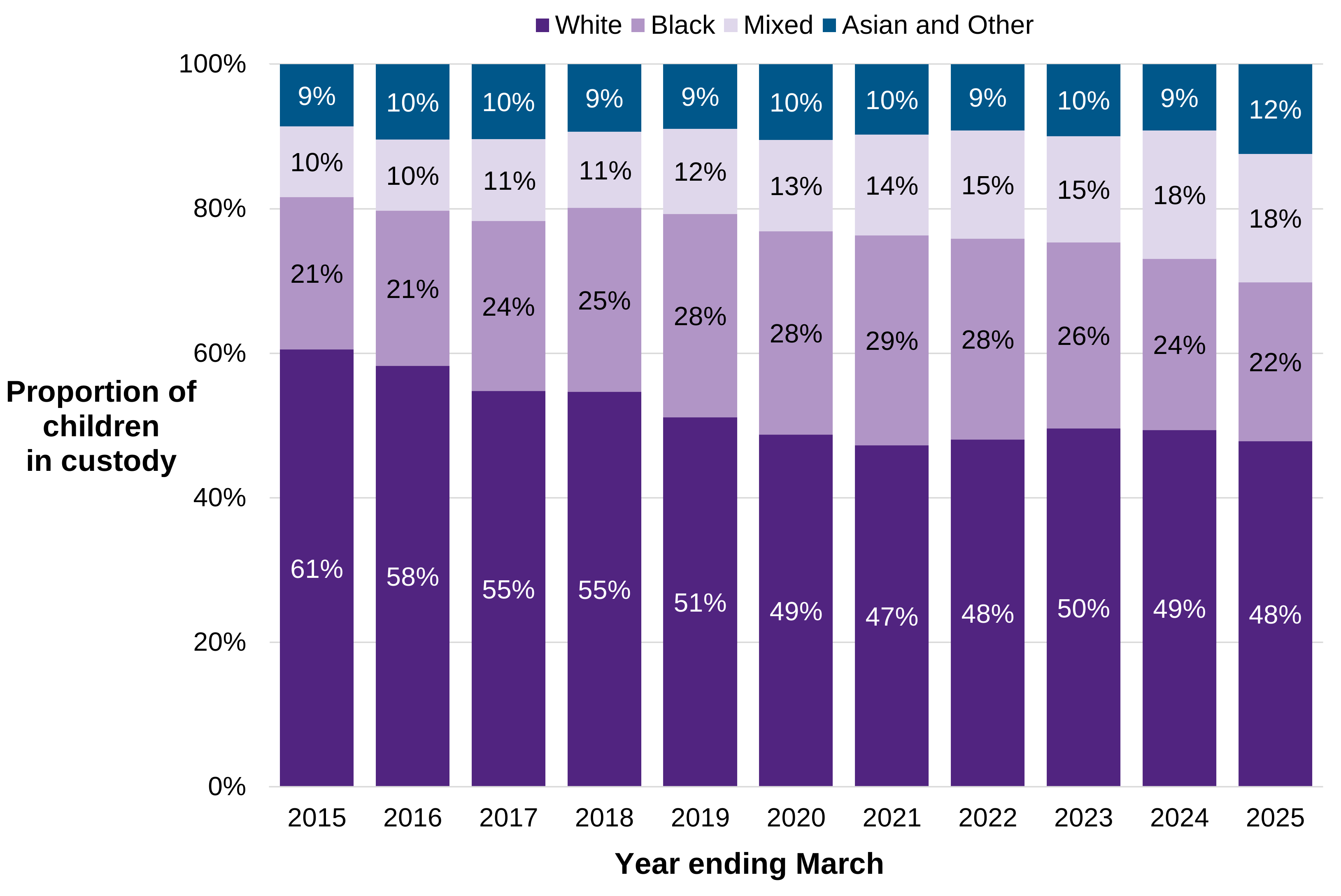
Supplementary Tables: Chapter 7, Table 7.8
While all ethnic groups have seen a decrease in the average custody population over the last 10 years, as the whole custodial population has decreased, they have been falling at different rates which has led to a change in the proportion each ethnic group comprises.
Figure 7.6 shows that over the last 10 years:
-
the proportion of White children in custody has been falling, from 61% to 48%
-
the proportion of Mixed children has increased the most, from 10% to 18%
-
the proportion of Black children is slightly higher (22% compared to 21%), though there have been decreases in each of the last four years
-
the proportion of Asian or Other children has also increased from 9% to 12% the highest level in the time series.
Supplementary Table 7.8 shows that in each of the last six years, White children made up less than half of the youth custody population, accounting for 48% in the latest year.
In the year ending March 2025, the average number of Black children in custody decreased by 11% compared to the previous year (the same year-on-year decrease was seen in the previous year) though continued to be over-represented. The number of Asian and Other children in custody increased by 29% (from around 40 to 50) compared with the previous year.
7.7 Legal basis episodes ending by nights spent in custody
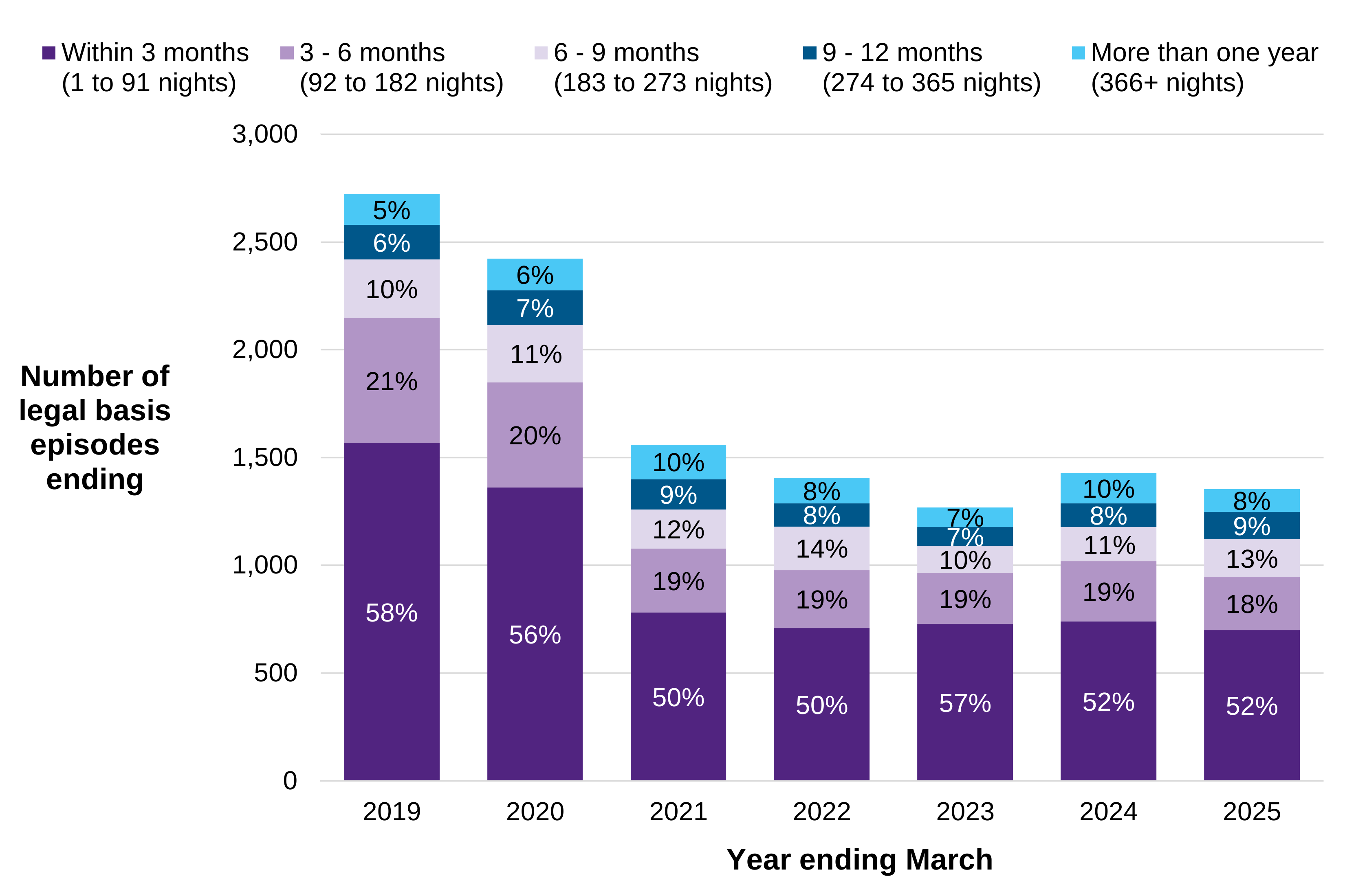
Figure 7.7: Number and proportion of legal basis episodes ending by nights spent in the custody in England and Wales, years ending March 2019 to 2025
| 2019 | 2020 | 2021 | 2022 | 2023 | 2024 | 2025 | |
| Median number of nights | 88 | 90 | 91 | 91 | 84 | 91 | 91 |
Supplementary Tables: Chapter 7, Table 7.15
In the year ending March 2025, around 1,400 legal basis episodes in custody ended. This was a decrease of 5% compared to the previous year.
In the latest year, 8% (around 110) of legal basis episodes lasted more than one year which is a small decrease compared to the previous year.
The median number of nights spent in custody per legal basis episode was 91 nights in the year ending March 2025. This was the same number of nights compared with the previous year and the joint highest number, alongside the years ending March 2022 and 2021.
7.8 Trends in the number of behaviour management incidents
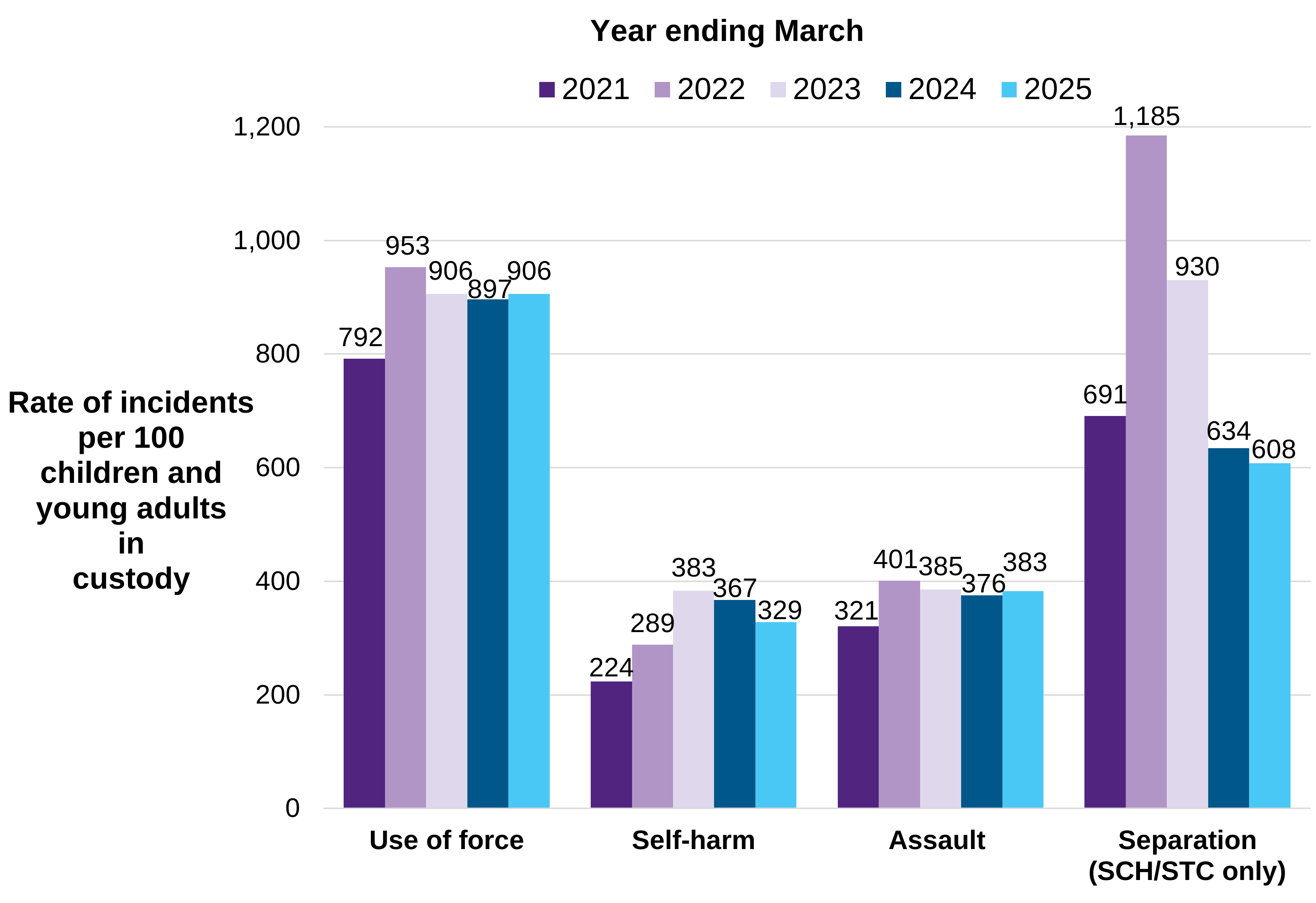
Figure 7.8: Trend in the number of behaviour management incidents for children and young adults in custody in England and Wales, years ending March 2021 to 2025 [footnote 15]
Supplementary Tables: Chapter 7, Table 7.20
In the latest year, the number of incidents per 100 children and young adults in custody increased for use of force and assaults and fell for self-harm and. Full details can be found in the Youth Custody Service publication Safety in the children and young people secure estate: Update to March 2025.
7.9 Deaths in custody
In the year ending March 2025, no children died in the secure estate for children and young people.
Between the years ending March 2015 and 2025, there were three deaths in the secure estate for children and young people (see the formal Prisons and Probation Ombudsmen Reports).
8. Proven reoffending by children
For the year ending March 2024 aggregated cohort[footnote 16]:
-
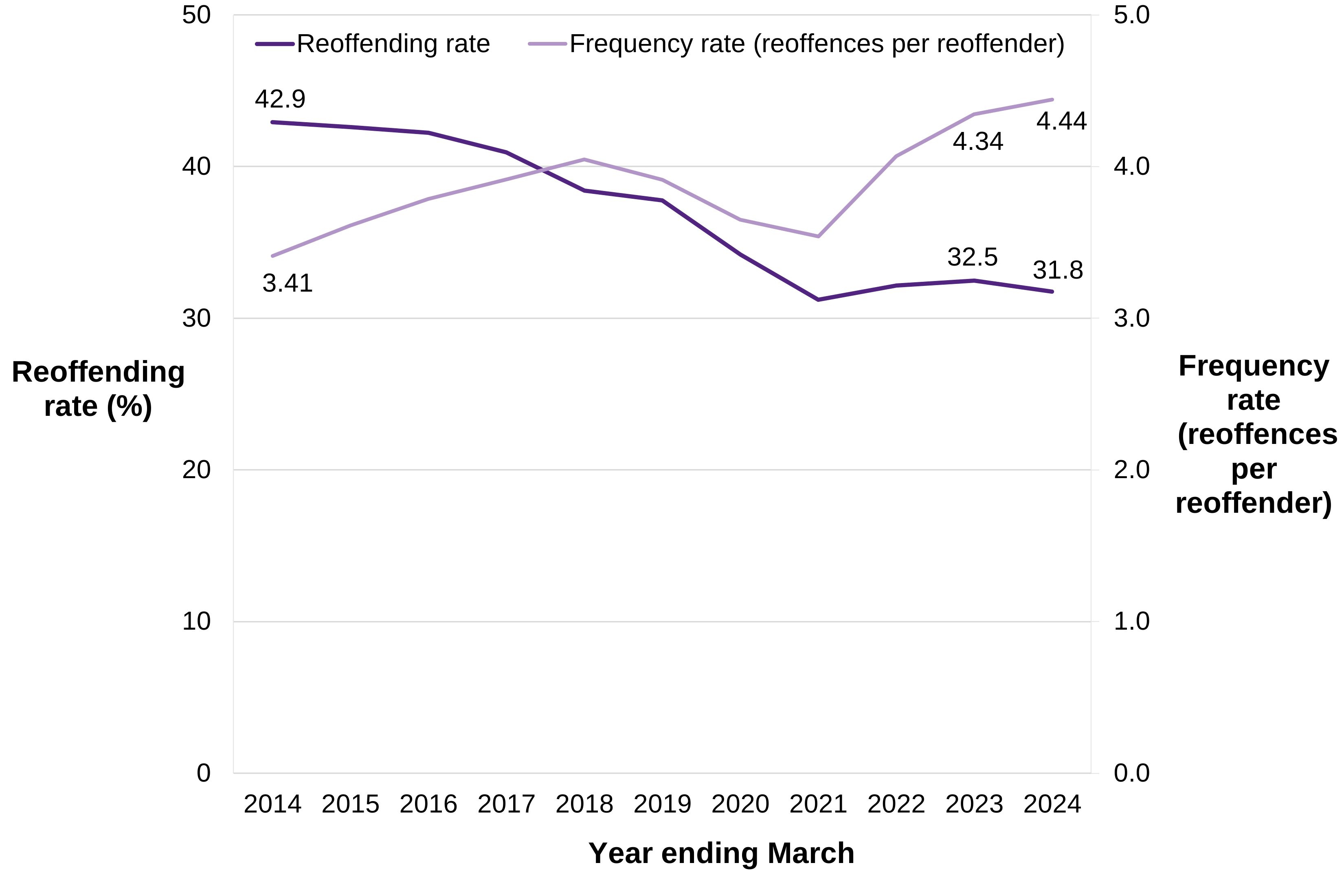
The proven reoffending rate for children was 31.8%, a 0.7 percentage point decrease on the previous year. This was the first fall following two consecutive year-on-year increases in the reoffending rate for children.
-
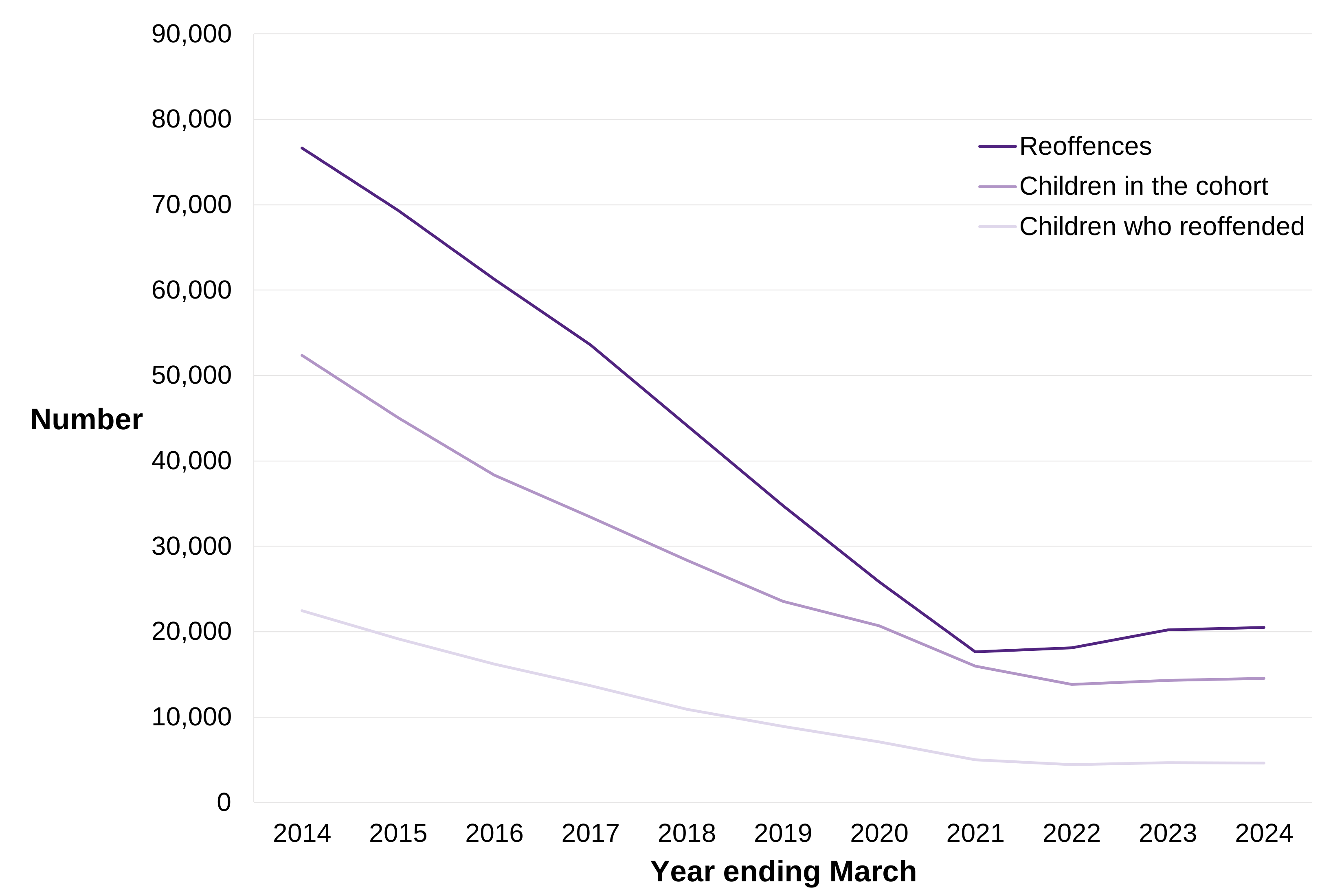
The number of children in the cohort increased for the second consecutive year, the number of reoffences increased for the third consecutive year while the number of reoffenders decreased. Compared with the previous year, the number of children in the cohort increased by 2% to around 14,500, the number of reoffences increased by 1% to around 20,500 and the number of reoffenders fell by 1% to around 4,600.
-
Children who reoffended committed an average of 4.44 reoffences per reoffender (frequency rate), the highest this rate has been in the last ten years. This is a 2% increase compared with the previous year (4.34) and 30% higher than ten years ago (3.41).
This chapter covers data on trends in proven reoffending by sentence type and demographics as well as trends in numbers of children in the cohort, children who reoffended and the number of proven reoffences committed by children.
8.1 Children in the cohort, children who reoffend and reoffences
Figure 8.1: Number of children in the cohort, children who reoffended and reoffences, England and Wales, for children entering the cohort in the years ending March 2014 to March 2024
Supplementary Tables: Chapter 8, Table 8.1a
As shown in Figure 8.1, the number of children in the cohort increased for the second consecutive year, the number of reoffences increased for the third consecutive year while the number of reoffenders decreased but was still higher than two years ago. Compared with the previous year, the number of children in the cohort increased by 2% to around 14,500, the number of reoffences increased by 1% to around 20,500 and the number of reoffenders decreased by 1% to around 4,600.
8.2 Reoffending rate and frequency rate
Figure 8.2: Reoffending rate and frequency rate for children, England and Wales, for children entering the cohort in the years ending March 2014 to March 2024
Supplementary Tables: Chapter 8, Table 8.1a
8.3 Reoffending by demographic characteristics of children
Figure 8.3: Reoffending rate for children by sex, England and Wales, for children entering the cohort in the years ending March 2014 to March 2024
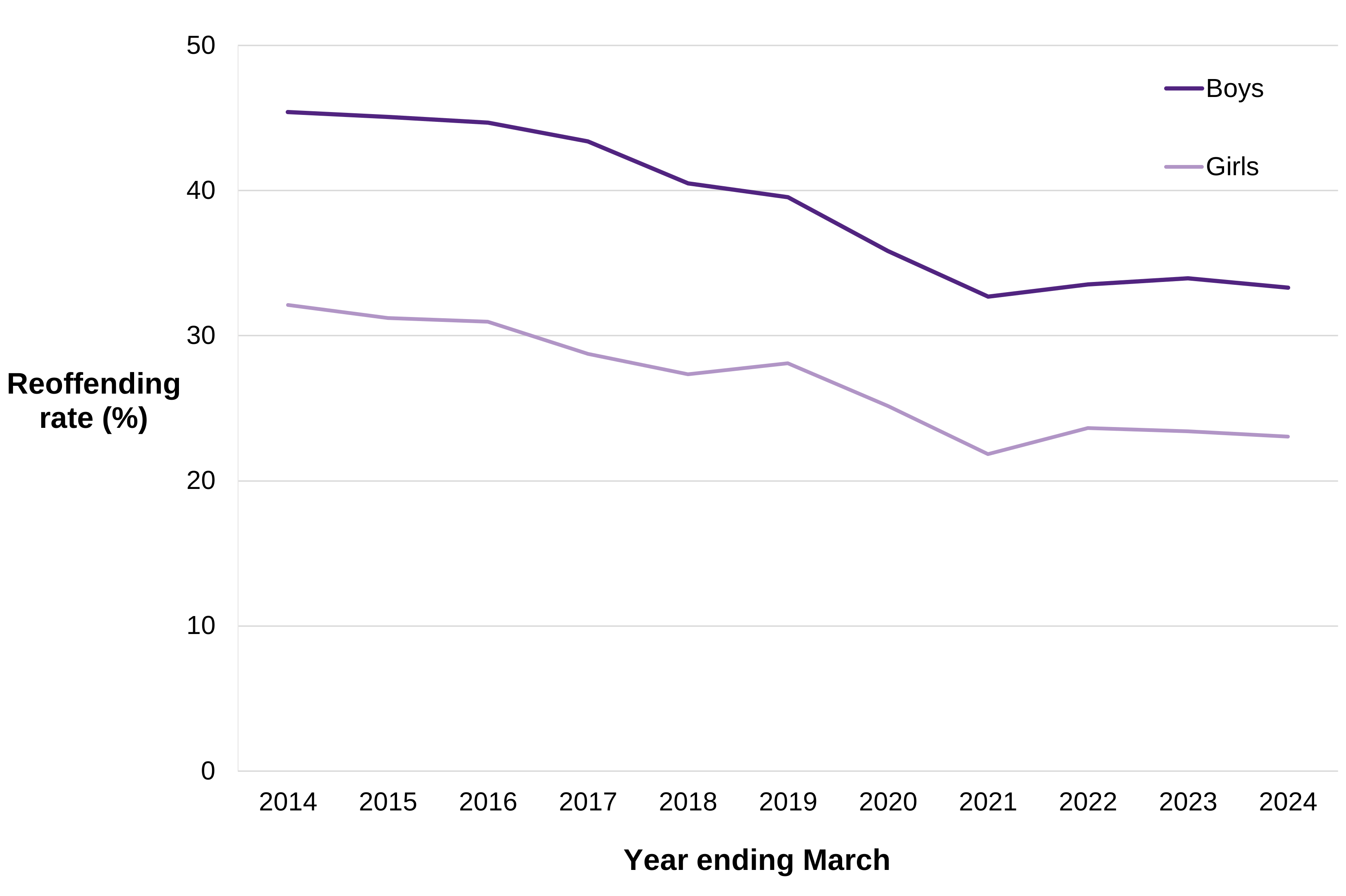
Supplementary Tables: Chapter 8, Table 8.2a
Boys have always made up the majority of the cohort, but the proportion they comprise has fallen for the first time in the last ten years. Having increased from 81% to 86% in the year ending March 2021, the proportion remained at that level for three years but fell to 85% in the most recent year (Supplementary Table 8.2a).
As shown in Figure 8.3, the reoffending rate for boys has been higher than for girls in each of the last ten years. In the latest year, the reoffending rate for boys was 33.3%, compared to 23.0% for girls. The most recent year saw a decrease for both boys and girls compared with the previous year at 0.7 and 0.4 percentage points respectively.
Supplementary Table 8.2a shows that the average number of reoffences per reoffender (frequency rate) rose by 2% to 4.33 for boys in the last year and also by 2% to 5.33 for girls, with girls having a higher frequency rate than boys for the fifth consecutive year. These are the highest values in the last ten years for both boys and girls.
Figure 8.4: Reoffending rate by age group, England and Wales, for children entering the cohort in the years ending March 2014 to March 2024
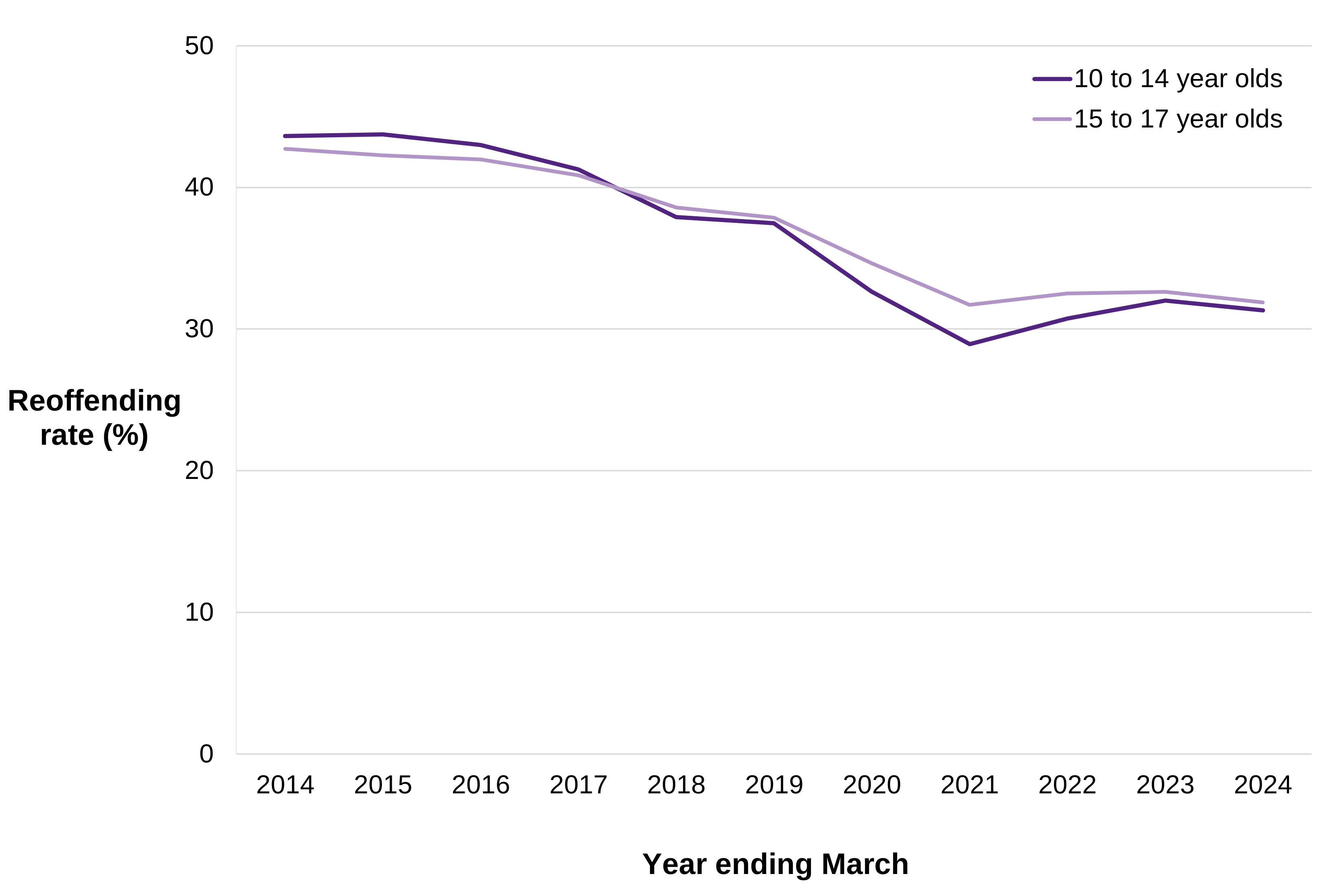
Supplementary Tables: Chapter 8, Table 8.3a
Most children in the aggregated cohort were aged 15 to 17, with the proportion rising slightly from 77% in the year ending March 2023 to 78% in the year ending March 2024 (Supplementary Table 8.3a). This was the same as in the year ending March 2014 but lower than the peak of 82% seen in the year ending March 2021.
In the latest year, 10 to 14 year olds had a reoffending rate of 31.3%, a fall of 0.7 percentage points, compared with 31.9% for 15 to 17 year olds, a fall of 0.8 percentage points from the previous year.
Supplementary Table 8.3a shows that the frequency rates for 10 to 14 year olds was higher than 15 to 17 year olds for the second successive year. The frequency rate for 10 to 14 year olds decreased by 2% compared with the previous year to 4.98 reoffences per reoffender while there was a rise of 4% for 15 to 17 year olds to 4.29 compared to the previous year.
Figure 8.5: Reoffending rate for children by ethnicity, England and Wales, for children entering the cohort in the years ending March 2014 to March 2024 [footnote 17]
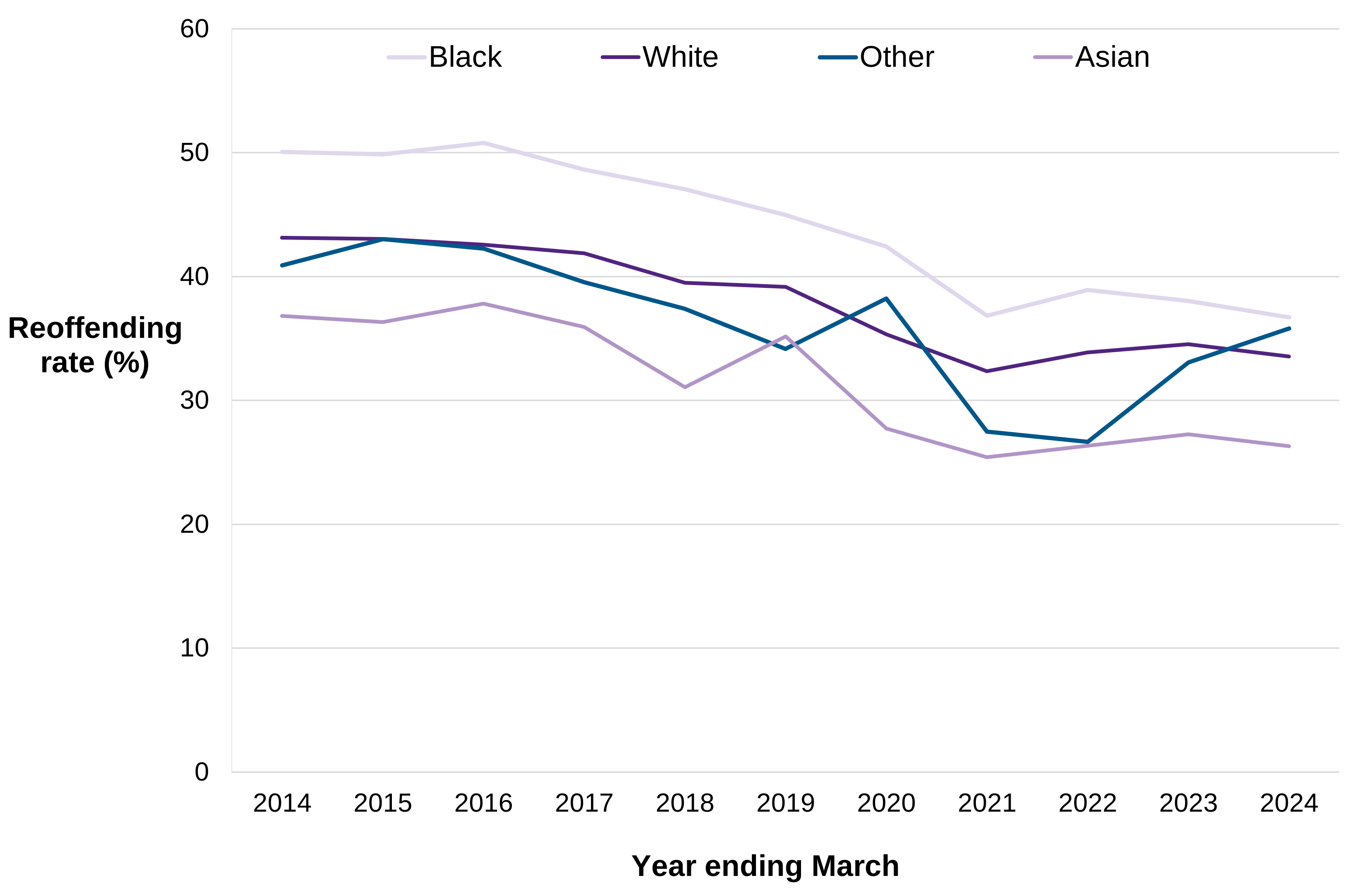
Supplementary Tables: Chapter 8, Table 8.4a
As shown in Figure 8.5, there have been falls in reoffending rates compared to the previous year for children from every ethnic group except Other. However, the number of children in the cohort increased for children from every ethnic group except Black.
The year-on-year increase in the reoffending rate for Other children was 2.7 percentage points in the latest year to 35.8%, though the relatively small numbers of children in the cohort (134) tends to make the reoffending rate for these children more volatile than other ethnic groups.
For Asian children, there was a 1.0 percentage point decrease in the reoffending rate compared with the previous year, to 26.3% and this remained the lowest reoffending rate among all ethnic groups.
The reoffending rate for White children fell by 1.0 percentage point to 33.5% after two consecutive year-on-year increases and was the second lowest reoffending rate of all ethnic groups.
The reoffending rate for Black children decreased by 1.3 percentage points compared with the previous year, to 36.7% but remained the highest reoffending rate of all ethnic groups.
8.4 Reoffending by criminal history
As might be expected, the rate of reoffending increases with the number of previous offences committed. For the year ending March 2024 aggregated cohort, those with no previous offences had a reoffending rate of 16.0%, compared to 72.4% for those who had committed 11 or more previous offences (Supplementary Table 8.6a).
Those who had committed no previous offences made up 51% of all children in the aggregated cohort, the same as the previous year and the highest proportion in the time series but committed only 18% of all proven reoffences. Those with 11 or more previous offences made up only 9% of all children in the aggregated cohort but committed 33% of all proven reoffences.
8.5 Reoffending by index offence
The offence that leads to an offender being included in the offender cohort is called the index offence. Supplementary Table 8.5a shows that for the year ending March 2024 cohort:
-
Children who committed a summary non-motoring offence as their index offence made up the largest proportion of all index offences committed by children, accounting for 19% of the cohort with a reoffending rate of 33.4%, a 2 percentage point fall from the previous year and the second lowest in the last ten years.
-
Theft offences made up the second largest index offence group, at 15%, with a reoffending rate of 44.1%, a fall of 0.3 percentage points from the previous year.
-
Children with an index offence of fraud had the highest reoffending rate, at 45.7%, although they only made up 2% of the cohort.
8.6 Reoffending by index disposal
Figure 8.6: Reoffending rate for children by index disposal, England and Wales, for those entering the cohort in the years ending March 2014 to March 2024
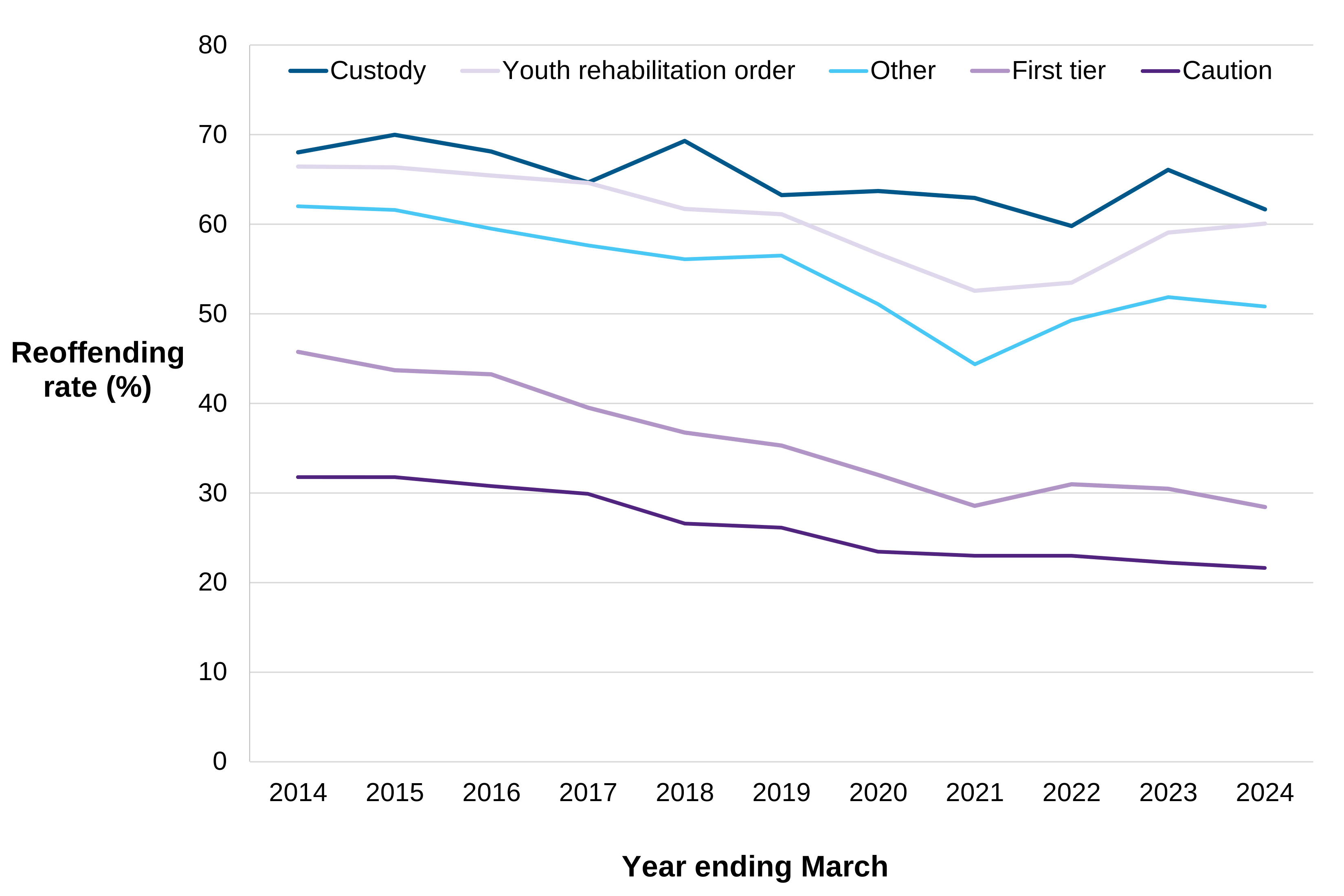
Supplementary Tables: Chapter 8, Table 8.7a
The index disposal is the caution or type of sentence the child received for their index offence.
As shown in Figure 8.6, in the year ending March 2024 aggregated cohort, children who received a caution had the lowest reoffending rate (21.6%) of all index disposal types, a fall of 0.6 percentage points from the previous year and the lowest level it’s been in the last ten years.
The reoffending rate remains highest for those released from custody, consistent with the pattern for the last ten years. For children released from custody in the year ending March 2024, 61.7% reoffended, a fall of 4.4 percentage points from the previous year but it should be remembered that small numbers mean this is subject to high volatility.
Proven reoffending rates by index disposal should not be compared to assess the effectiveness of sentences, as there is no control for known differences in offender characteristics, the offence committed, and the type of sentence given.
9. Criminal histories of children
In the year ending December 2024:
-
Children cautioned or sentenced had an average of 1.3 previous cautions or sentences, a slight increase on the previous year but still the second lowest in the time series. This was also a decrease from 2.3 in the year ending December 2014.
-
For the fifth consecutive year, the majority of children being cautioned or sentenced did not have a prior criminal history, with 57% having no previous offences.
-
Of the children cautioned or sentenced who had a criminal history of 15 or more previous cautions or sentences, 29% were sentenced to immediate custody compared to just 2% for those with no previous criminal history.
This chapter presents data on trends of criminal histories for children with a caution or conviction. Data for the year ending March 2025 is not available, therefore data for the year ending December 2024 is presented in this chapter.
9.1 Criminal histories of children
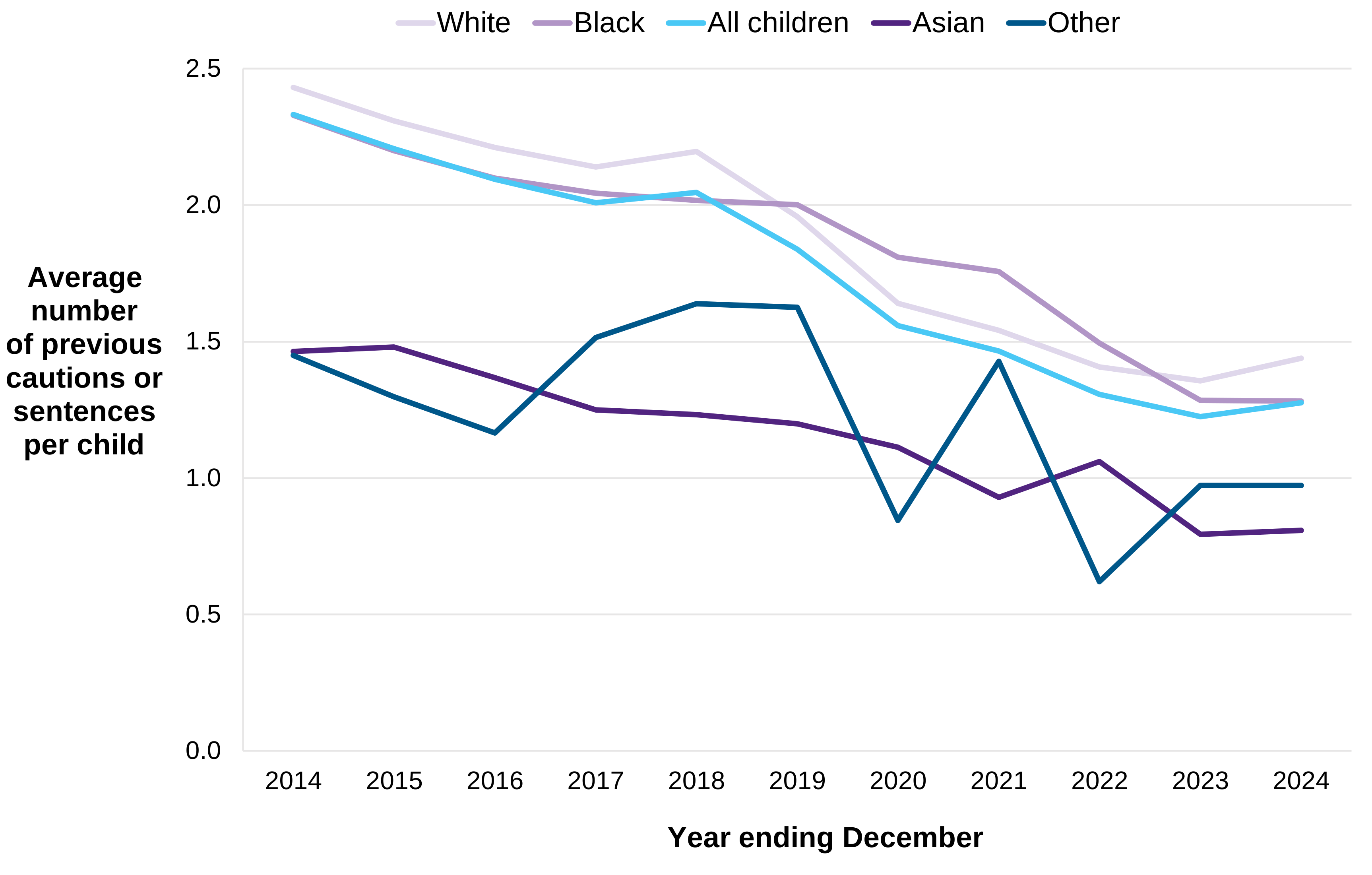
Figure 9.1: Average number of previous cautions or sentences of children cautioned or sentenced for any offence by ethnicity, England and Wales, years ending December 2014 to December 2024
Supplementary Tables: Chapter 9, Table 9.2
In the year ending December 2024, children cautioned or sentenced had an average of 1.3 previous cautions or sentences, the second lowest in the time series. This was a slight increase on the previous year (1.2) but a decrease from 2.3 in the year ending December 2014.
Figure 9.1 shows that the average number of previous cautions or sentences for children cautioned or sentenced varied by ethnicity. In the year ending December 2024, the average number of previous cautions or sentences remained stable for children from most ethnic groups but a slight increase in the overall average arose owing to small increases for White and Asian children.
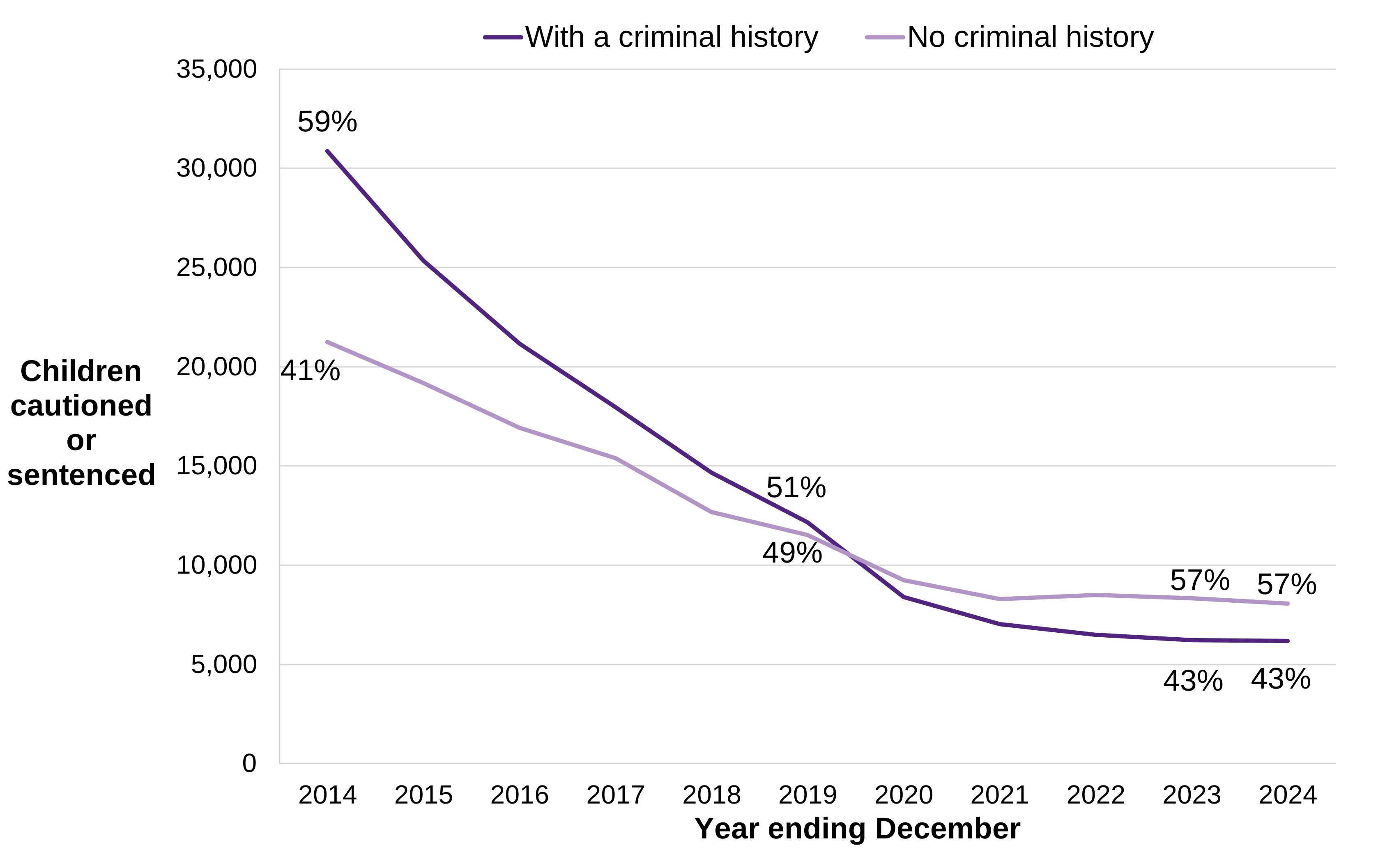
Figure 9.2: Number and proportion of children cautioned or sentenced with no criminal history compared with those with a criminal history, England and Wales, years ending December 2014 to 2024
Supplementary Tables: Chapter 9, Table 9.3
In the year ending December 2024, for the fifth consecutive year, the majority of children being cautioned or sentenced did not have a prior criminal history, with 57% having no previous offences, the same proportion as the previous year.
The number of children cautioned or sentenced with a criminal history was around 6,200. This has decreased by 1% since the previous year and by 80% since the year ending December 2014.
9.2 Criminal histories of children – indictable and summary offences
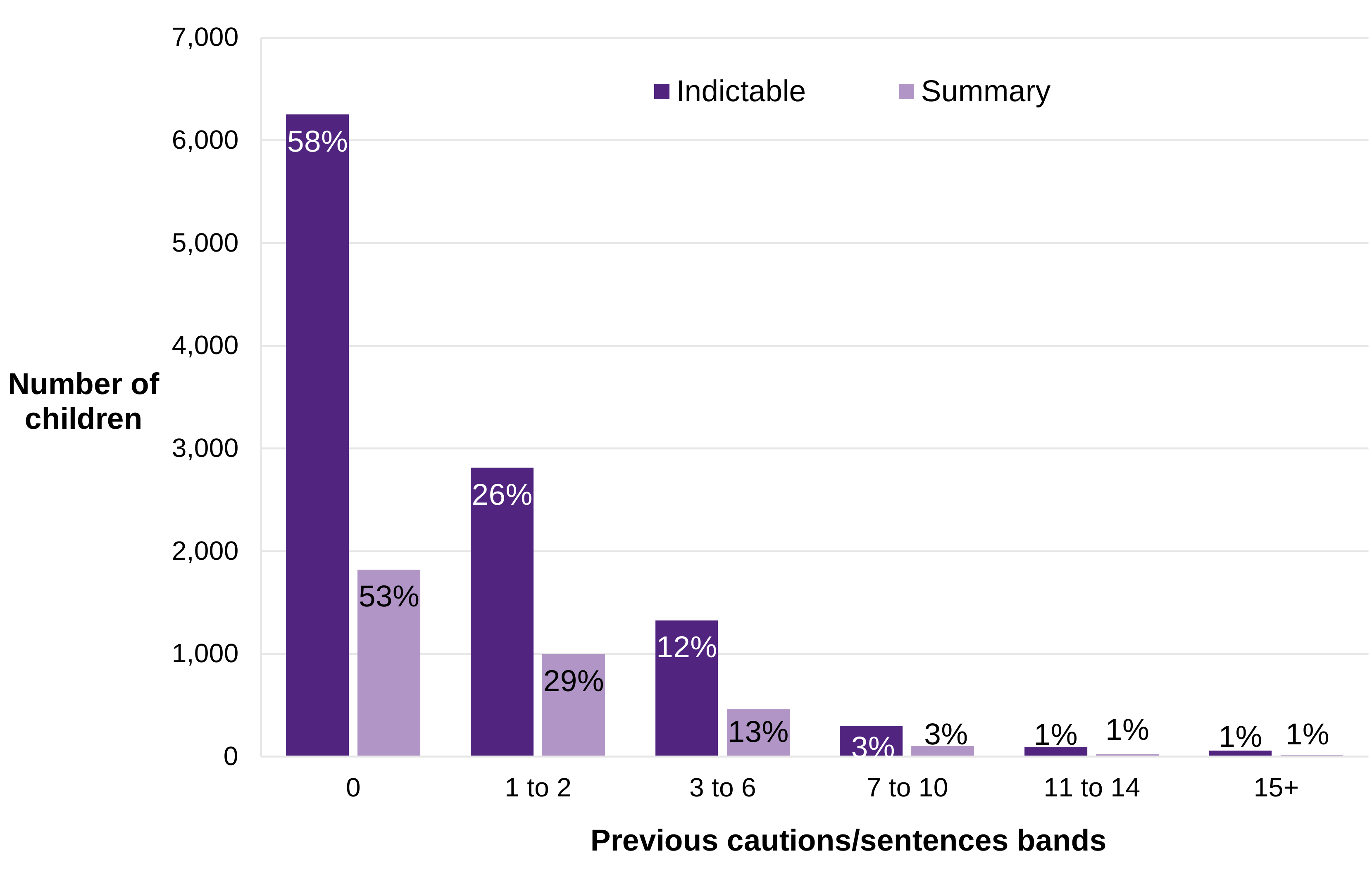
Figure 9.3: Number and proportion of children cautioned or sentenced for summary and indictable offences by number of previous cautions and sentences, England and Wales, year ending December 2024
Supplementary Tables: Chapter 9, Table 9.4
Supplementary Table 9.4 shows that while the number of summary offences were much lower than indictable offences in the year ending December 2024, (around 3,400 summary offences compared to around 10,800 indictable offences), the offending histories are quite similar despite indictable offences being more serious. 47% of children cautioned or sentenced for summary offences had a previous caution or sentence compared to 42% for indictable offences.
Figure 9.4: Proportion of children cautioned or sentenced with no criminal history compared to those with 15+ previous cautions or sentences by type of disposal, England and Wales, year ending December 2024
| Disposal type | No criminal history | 15+ cautions/ sentences |
| Caution | 41% | 1% |
| Absolute discharge | 0% | 3% |
| Conditional discharge | 3% | 28% |
| Fine | 1% | 0% |
| Community sentence | 48% | 21% |
| Immediate custody | 2% | 29% |
| Other | 4% | 17% |
| Number of cautions and sentences | 8,074 | 75 |
Supplementary Tables: Chapter 9, Table 9.4
For children cautioned or sentenced with a criminal history of 15 or more previous cautions or sentences, the largest proportion were sentenced to immediate custody (29%). For those with no previous cautions or sentences, most received a community sentence (48%).
10. Comparisons with the adult system
In the year ending December 2024:
- There were around 88,000 first time entrants (FTEs) to the criminal justice system, of which around 8,100 (9%) were children and around 79,900 were adults (91%). There was a year-on-year decrease of 4% for child FTEs and a 1% increase for adult FTEs.
In the year ending March 2025:
-
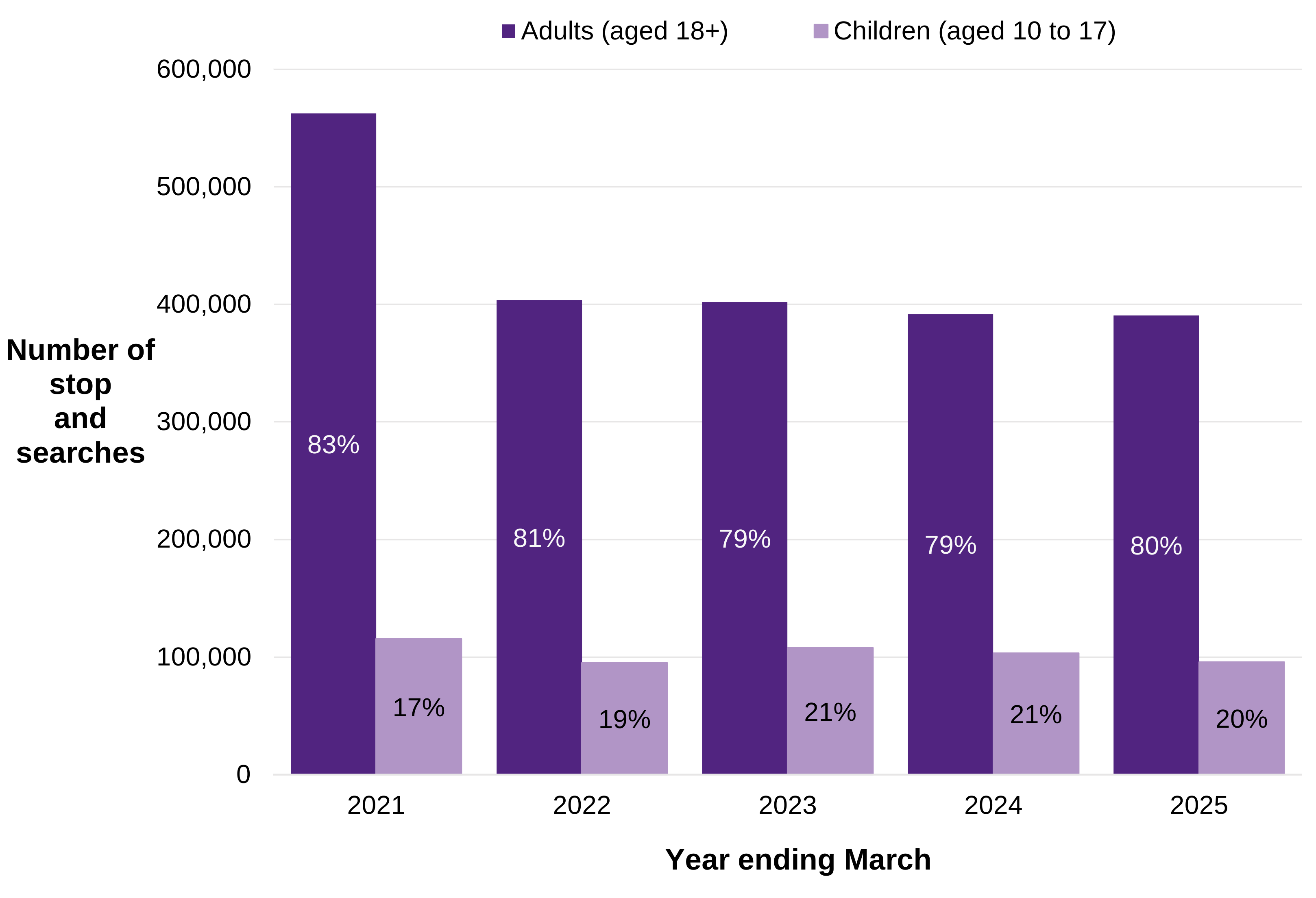
There were around 487,000 stop and searches where age was known and children accounted for 20% of these. The number of stop and searches of children decreased by 7% compared with the previous year while the volume of stop and searches of adults remained static.
-
The number of arrests of children decreased by 2% compared with the previous year to the lowest level since the year ending March 2022 while arrests of adults increased by 5% to the highest level since the year ending March 2017.
-
The number of sentencing occasions increased by 1% for children against the previous year compared with a 5% increase for adults. Children accounted for just 1% of all sentencing occasions.
For the year ending March 2024 reoffending cohort:
- Children had a higher reoffending rate (31.8%) than adults (28.0%), as has been the case for the last 10 years. The reoffending rate decreased by 0.7 percentage points for children but increased by 2.0 percentage points for adults (aged 18 and over).
This chapter looks at the comparisons at different stages of the criminal justice system between children aged 10 to 17 and adults aged 18 and over.
10.1 Stop and searches
Figure 10.1: Number and proportion of stop and searches by age group, England and Wales, years ending March 2021 to 2025
Supplementary Tables: Chapter 10, Table 10.1
There were around 487,000 stop and searches where age was known and children accounted for 20% of these which was a slight decrease compared to the previous year. The number of stop and searches of children decreased by 7% compared with the previous year while there was no change for those aged 18 and over. Just under three quarters (74%) of stop and searches involving children resulted in no further action compared with just under two thirds (64%) for people aged 18 and over.
10.2 Arrests
Figure 10.2: Number and proportion of arrests by age group, England and Wales, years ending March 2015 to 2025
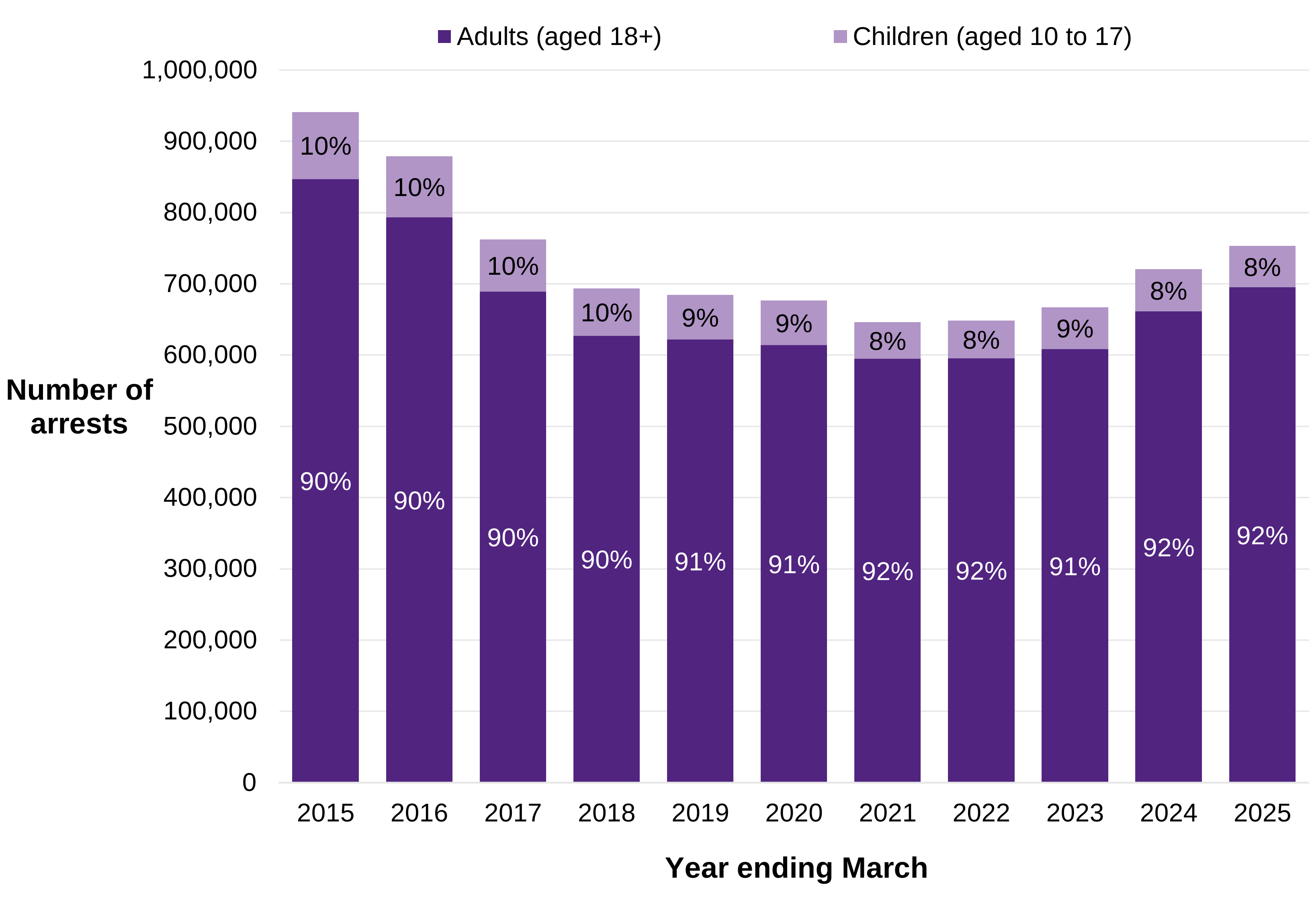
Supplementary Tables: Chapter 10, Table 10.3
There were around 753,000 arrests where age was known in the year ending March 2025 which is a 5% increase compared to the previous year, but 20% fewer compared to 941,000 arrests 10 years ago.
The number of arrests of children decreased by 2% compared with the previous year to the lowest level since the year ending March 2022 while arrests of adults increased by 5% to the highest level since the year ending March 2017.
Arrests of children comprised 8% of total arrests where age was known in the latest year, which is consistent with the last five years but less than the 10% seen 10 years ago.
10.3 First time entrants to the criminal justice system by age group
Figure 10.3: Number and proportion of first time entrants to the criminal justice system by age group, England and Wales, years ending December 2014 to 2024
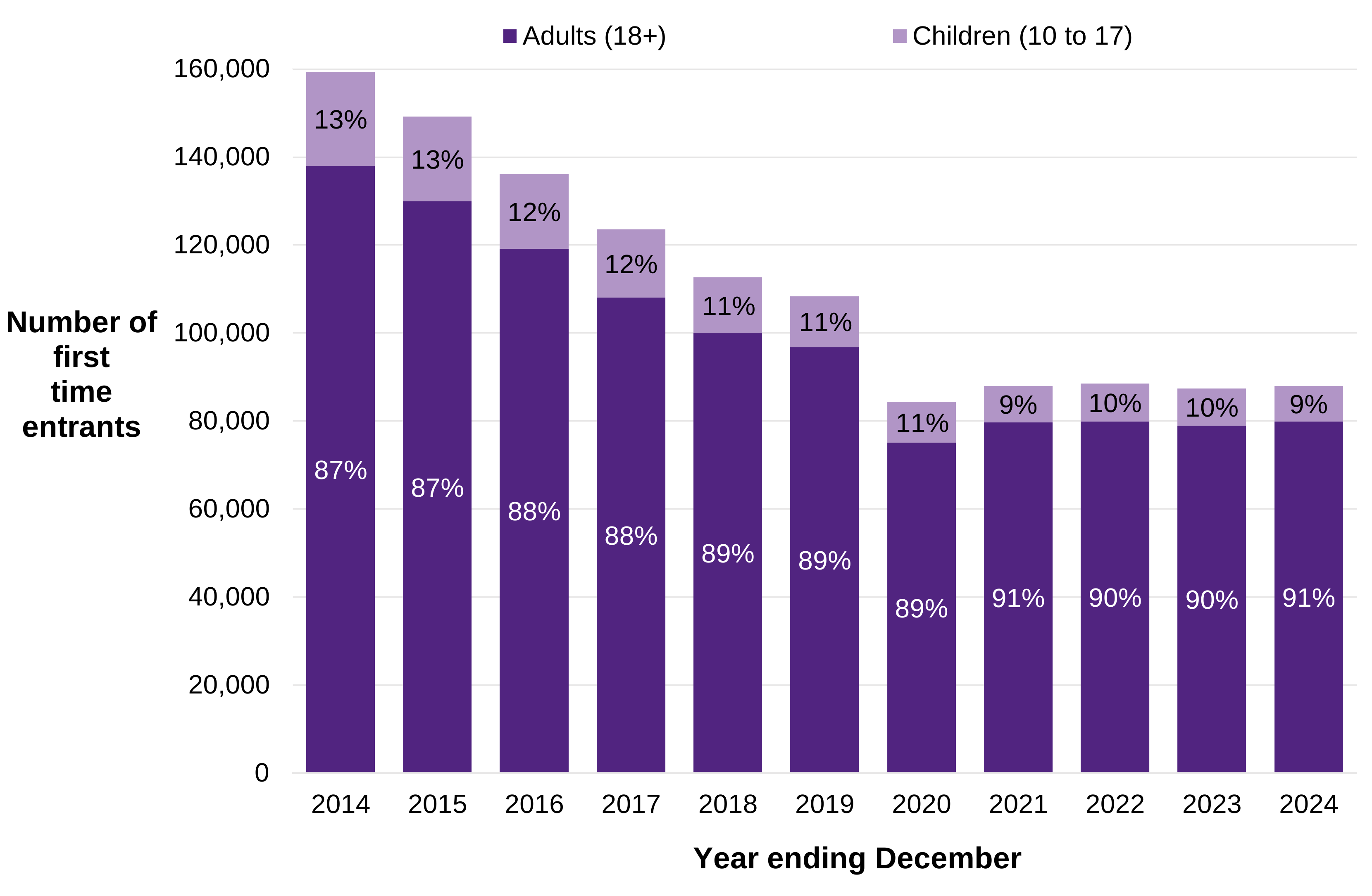
Supplementary Tables: Chapter 10, Table 10.4
In the year ending December 2024, there were around 88,000 FTEs to the criminal justice system, which was 1% higher than the previous year. The number of child FTEs decreased by 4% and the number of adult FTEs increased by 1%.
In the latest year, 9% of the overall number of FTEs were children (aged 10 to 17), a similar proportion to that seen over the last four years but reduced from 13% compared with 10 years ago.
In the year ending December 2024, the number of child FTEs is 62% lower than in the year ending December 2014, and the number of adult FTEs is 42% lower.
10.4 People sentenced at court by age group
Figure 10.4: Number and proportion of sentencing occasions of people by age group, England and Wales, years ending March 2015 to 2025 [footnote 18]
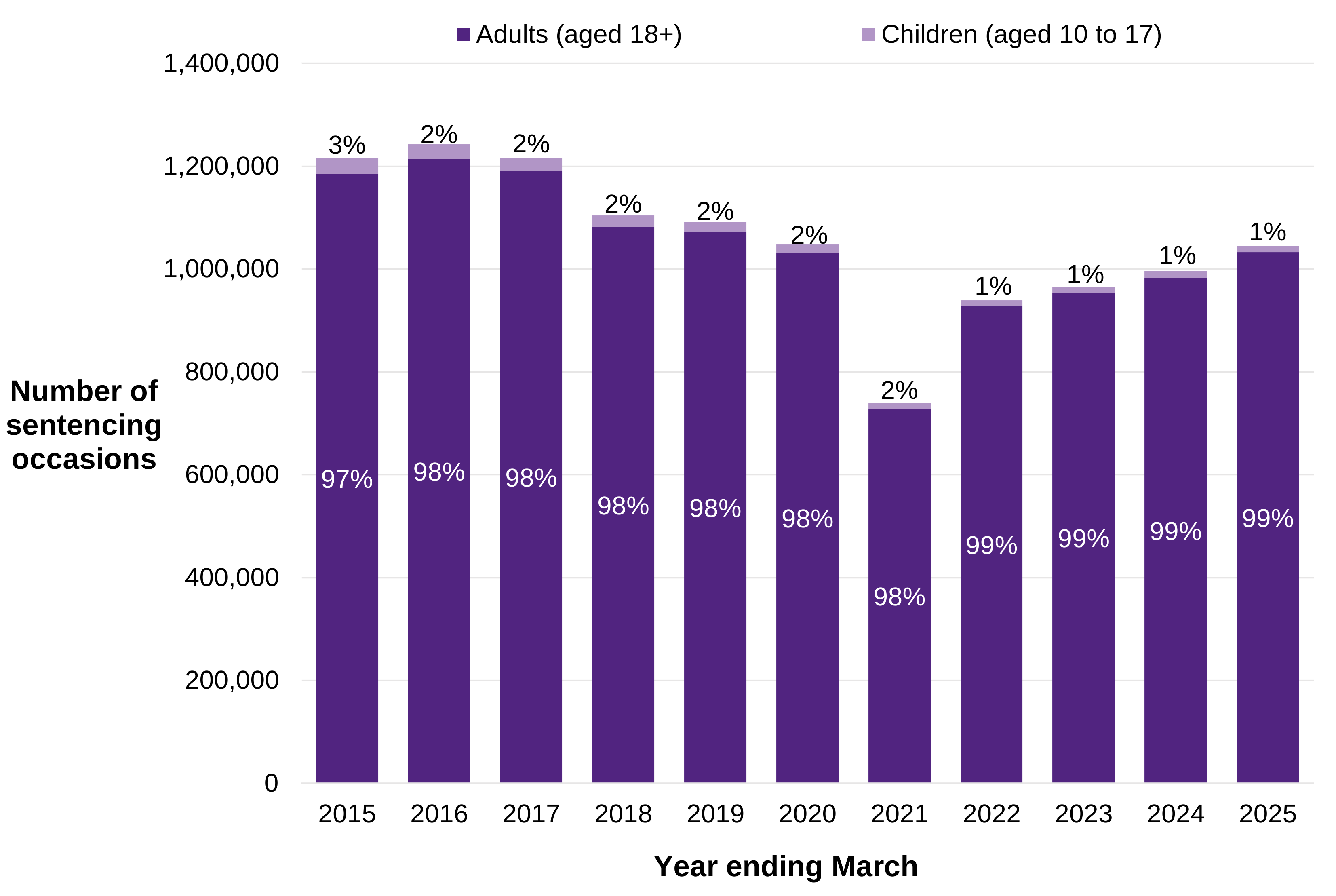
Supplementary Tables: Chapter 10, Table 10.6
In the year ending March 2025, there were around 1,046,000 court sentencing occasions where age was known. Of these, around 13,000 (1%) were for children.
The overall number of sentencing occasions increased by 5% compared with the previous year. Sentencing occasions increased for children by 1% compared with the previous year, while there was a 5% increase for adults compared with the previous year.
For indictable offences, there was an increase of 4% compared with the previous year for children and an increase of 13% for adults, while for summary offences, there was a 7% decrease for children compared with the previous year and a 3% increase for adults.
10.5 Custody population by age group
Figure 10.5: Number and proportion of people in custody by age group, England and Wales, 30th June 2015 to 2025
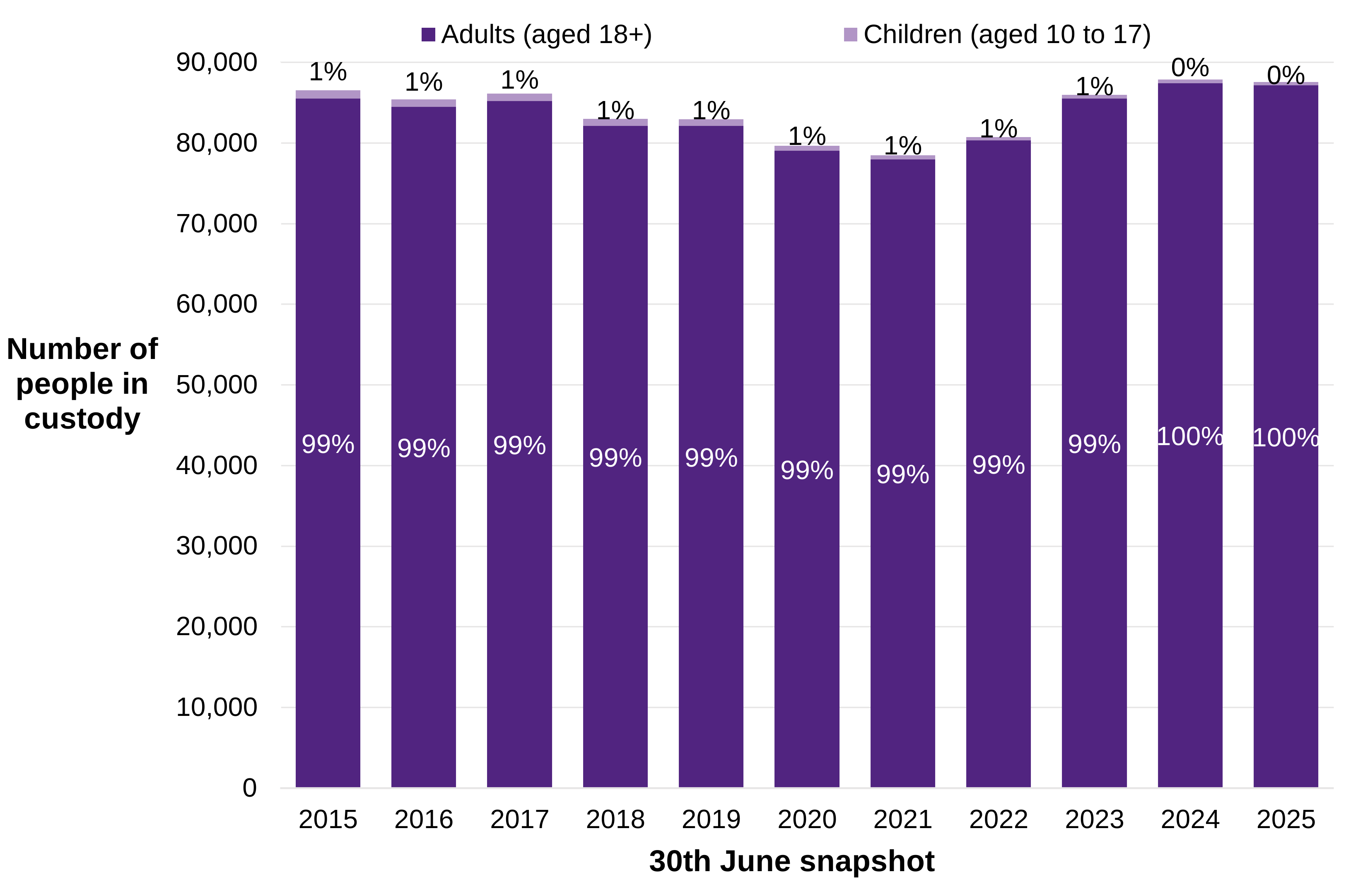
Supplementary Tables: Chapter 10, Table 10.8
On 30 June 2025 there were around 87,600 people in custody, which remained static compared with the previous year. Children accounted for 0.5% (around 430) of the custodial population while adults (aged 18+) accounted for 99.5% (around 87,200). These proportions have remained relatively stable over the last 10 years.
The custodial population for adults remained static compared with the previous year compared with a 2% decrease for children.
10.6 Knife and offensive weapon offences resulting in a caution or sentence by age group
Figure 10.6: Number and proportion of knife or offensive weapon offences resulting in a caution or sentence, by age group, England and Wales, years ending March 2015 to 2025
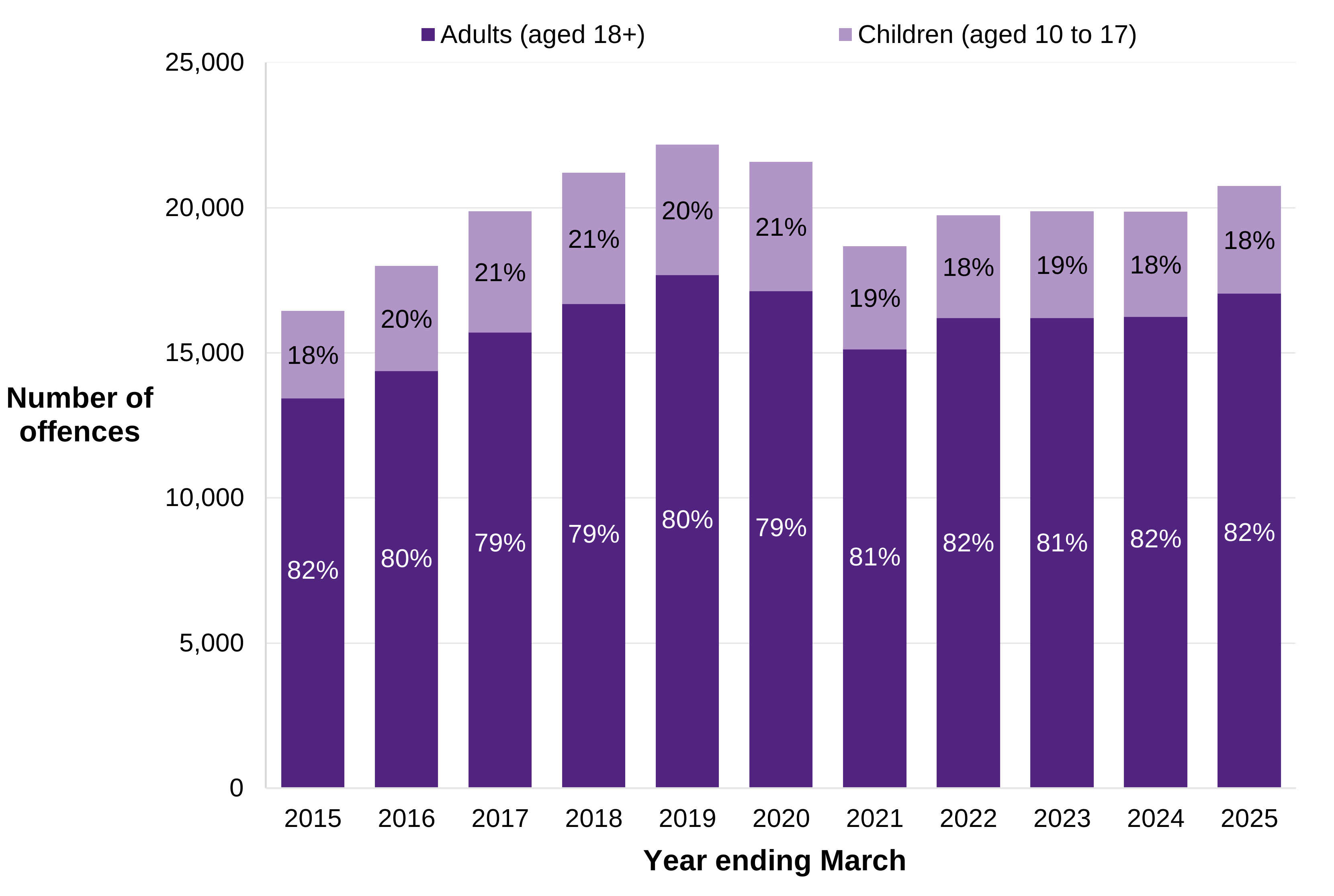
Supplementary Tables: Chapter 10, Table 10.9
In the latest year, children were involved in around 3,700 proven knife or offensive weapon offences, a 2% increase compared to the previous year. Adults were involved in around 17,000 of these types of offences, an increase of 5% from the previous year.
In the latest year, children committed 18% of proven knife or offensive weapons offences, the same proportion as the previous year.
10.7 Reoffending
Figure 10.7: Annual reoffending rates by age group, England and Wales, years ending March 2014 to 2024
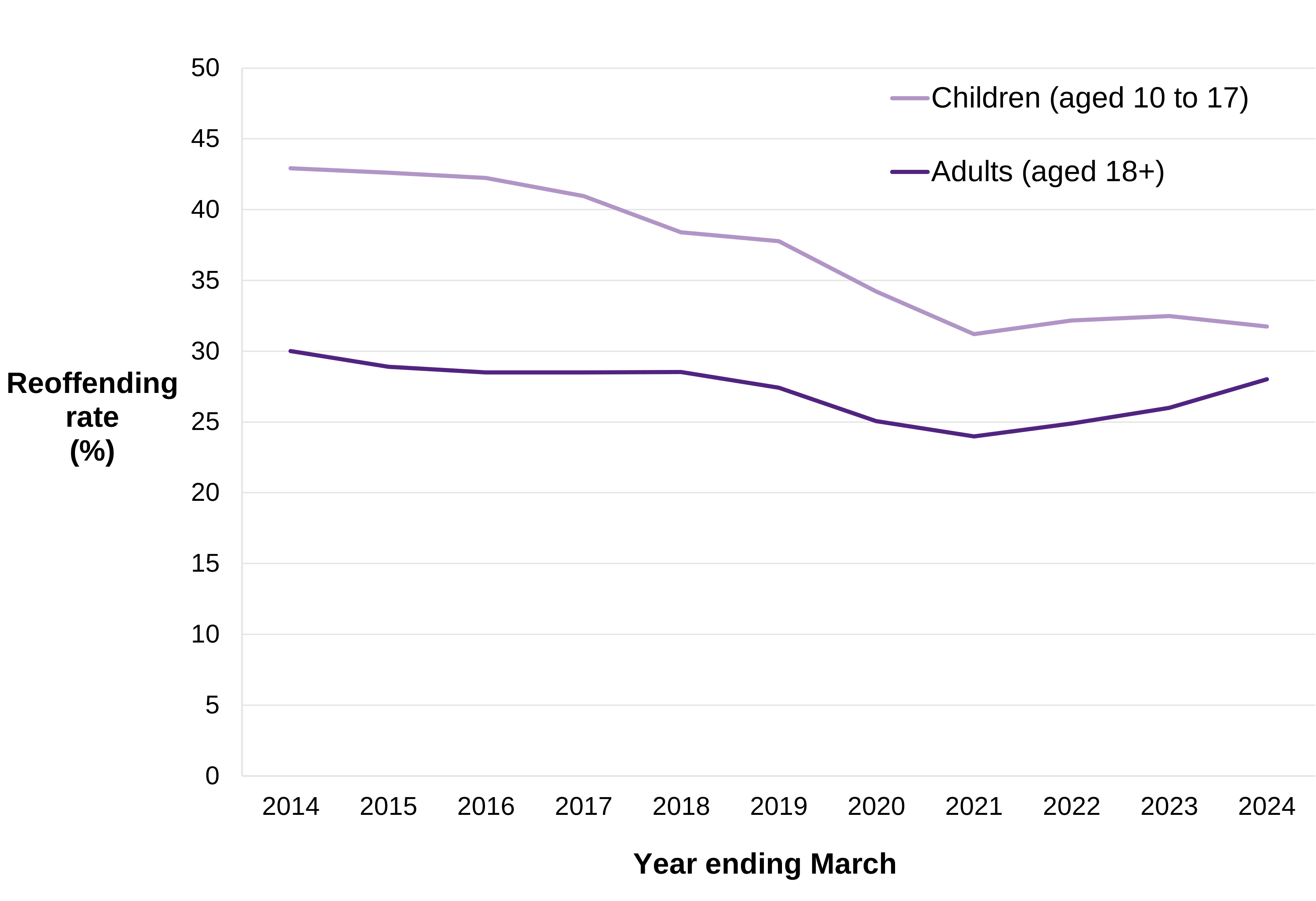
Supplementary Tables: Chapter 10, Table 10.7
For the aggregated cohort in the year ending March 2024, children had a higher reoffending rate (31.8%) than adults (28.0%), as has been the case for the last 10 years. However, the difference between them fell by more than a third as the reoffending rate for children decreased by 0.7 percentage points but increased by 2.0 percentage points for adults (aged 18 and over).
In the year ending March 2024, the number of children in the cohort increased for the second year, by 2% from the previous year. The number of adults in the cohort increased by 3% following a decrease in the previous year, while over the same period, the number of children who reoffended fell by 1% and the number of adults who reoffended increased by 11%.
Children who reoffended had a lower average number of reoffences (the frequency rate) at 4.44 than adults, at 4.75, in the year ending March 2024 following two years when it was higher.
Further information
Most of the figures in this report have been drawn from administrative IT systems, which, as with any large scale recording system, are subject to possible errors with data entry and processing and may be subject to change over time. Steps are taken to improve the completeness and accuracy of this information each year. Other figures have been taken from official published statistics, which may be National Statistics. Further details on the sources of information are given in the Guide to Youth Justice Statistics.
Accompanying files
As well as this bulletin, the following products are published as part of this release:
-
a Guide to Youth Justice Statistics providing further information on the data included in this publication and how these data are collected and processed. This includes a glossary of the terms used in this bulletin
-
set of additional annexes
-
an Infographic
-
a set of Supplementary Tables, covering each section of this bulletin
-
a set of open explorable data
-
a set of dashboards showing local level data.
Accredited official statistics
National Statistics status are ‘accredited official statistics’ that meet the highest standards of trustworthiness, quality and public value.
Accredited official statistics are called National Statistics in the Statistics and Registration Service Act 2007.
These accredited statistics were independently reviewed by the Office for Statistics Regulation (OSR) in January 2014. They comply with the standards of trustworthiness, quality and value in the Code of Practice for Statistics and should be labelled ‘accredited official statistics’.
It is the Youth Justice Board’s responsibility to maintain compliance with the standards. If concerns arise about whether these statistics are still meeting the appropriate standards, these will be discussed promptly with OSR.
Contact
Press enquiries should be directed to the Youth Justice Board’s Communications Team:
Email: comms@yjb.gov.uk
Other enquiries about these statistics should be directed to:
Rhian Manley
Head of Statistics and Analysis
Youth Justice Board
Email: rhian.manley@yjb.gov.uk
Email:statistics@yjb.gov.uk
General information about the official statistics system of the UK is available from: www.statisticsauthority.gov.uk
Next update: 28 January 2027
URL: www.gov.uk/government/collections/youth-justice-statistics
© Crown copyright
Produced by the Youth Justice Board for England and Wales
-
Where ethnicity was known. Ethnicity was unknown for 1% of stop and searches of children aged 10 to 17 in the year ending March 2025. ↩
-
Ethnicity is police officer identified. There is not a Mixed ethnicity group in officer identified ethnicities, so caution should be used if comparing with data using self-identified ethnicities. ↩
-
Where ethnicity was known. Ethnicity was unknown for 13% (around 500) of total youth cautions given in the year ending March 2025. ↩
-
Where ethnicity was known. In the year ending December 2024, the ethnicity was unknown for 12% of child FTEs. ↩
-
Where sex was known. In the year ending December 2024, the sex was unknown for 1% of child FTEs. ↩
-
In the year ending March 2025, children cautioned or sentenced where the sex was unknown accounted for 1% of the total. ↩
-
Where ethnicity was known. Ethnicity was not known for 2% of children cautioned or sentenced in the year ending March 2025. ↩
-
In the year ending March 2025, the ethnicity of the child was not known for 2% of the proven offences, and the sex of the child was not known for 2% of the proven offences. ↩
-
Indictable offences include triable either way offences. ↩
-
Data on summary level offences are not included as many defendants are not required to be present when sentenced so data on ethnicity is limited. ↩
-
Excludes life and indeterminate sentences. ↩
-
Where ethnicity was known. In the year ending March 2025, the ethnicity was unknown for 5% of the monthly average remand population. ↩
-
The Ministry of Justice changed the data source for these statistics which has resulted in changes to historic data published in publications prior to the year ending March 2023. Details of the changes can be found on the Technical Guidance for Criminal Justice Statistics ↩
-
Proportions are calculated where ethnicity is known. The ethnicity was unknown for 3% of the youth custody population in the year ending March 2025. ↩
-
Data on separations in Young Offender Institutions is only available from April 2022 and has not been included. ↩
-
Proven reoffending by children entering the cohort between April 2023 and March 2024. The focus in this chapter is on the annual data based on the aggregate of the four quarterly offender cohorts. ↩
-
This figure is based on children for whom ethnicity is known. In the aggregated cohort for the year ending March 2024, ethnicity was unknown for 8% of children who entered the cohort. ↩
-
Only sentencing occasions where age group was known are included. In the year ending March 2025, age group was unknown in 11% of sentencing occasions. ↩