The Children’s People and Nature Survey for England: 2025 update
Published 10 December 2025
Applies to England

© Crown copyright 2025
This publication is licensed under the terms of the Open Government Licence v3.0 except where otherwise stated. To view this licence, visit nationalarchives.gov.uk/doc/open-government-licence/version/3 or write to the Information Policy Team, The National Archives, Kew, London TW9 4DU, or email: psi@nationalarchives.gov.uk.
Where we have identified any third party copyright information you will need to obtain permission from the copyright holders concerned.
This publication is available at https://www.gov.uk/government/statistics/the-childrens-people-and-nature-survey-for-england-2025-update/the-childrens-people-and-nature-survey-for-england-2025-update
1. What is the Children’s People and Nature Survey?
The ‘Children’s People and Nature Survey’ (C-PaNS) provides information on how children and young people (aged 8 to 15) experience and think about the natural environment. It is run twice each year, once in term time and once in holiday time. Here we present some key findings collected in 2025.
The accredited official statistics in this publication include C-PaNS responses for 2025, including those collected during the school holidays (Wave 9, 13 to 27 August 2025) from 1,998 children and young people and those collected during term time (Wave 10, 18 September to 1 October 2025) from 1,995 children and young people. Unless otherwise stated, findings presented in this report include combined term time and holiday time data collected in 2025. Whenever the word difference is mentioned in text, we refer to statistically significant differences (based on Chi-Square tests for demographic differences and no overlapping Confidence Intervals for yearly differences).
Some key headline findings are summarised in an infographic slide pack here.
Alongside this publication, readers can access:
- This year’s questionnaire (‘CS_QXX’ below the tables refer to question labels found here).
- Data tables containing summary statistics, including a comparison of responses to each question based on age, gender, ethnicity, level of disability, region, income and rural/urban location.
- The technical report for both the Adults’ People and Nature Survey (A-PaNS) and the Children’s People and Nature Survey (C-PaNS).
- The C-PaNS raw data and data dictionary on UKDS.
- The PaNS Hub to sign up to the PaNS mailing list.
- A data viewer developed by Natural England that weights the data and provides breakdowns for many of the questions in the survey.
2. Further background detail
The People and Nature Surveys for England (PaNS), led by Natural England, are one of the main sources of data and statistics on how people experience and think about the environment. The project began in April 2020 with an adults’ survey (adults aged 16 years and older) collecting data via an online panel and has been run continuously since then.
The adults’ survey includes questions about children in the household, with adults reporting on children’s time in and experiences of nature. To build on this and ensure the views of children and young people themselves are represented, the ‘Children’s People and Nature Survey’ (C-PaNS) was first completed as a pilot between 6 and 18 August 2020 with children and young people aged 8 to 15. The pilot offered valuable insights which contributed to understanding experiences of nature during the COVID-19 pandemic.
Following this successful pilot, the survey has been adapted for use on an ongoing basis, both in school holidays and term time, to allow attitudes and behaviours to be looked at over time. Reports from previous survey years can be found in the 2021 update, 2022 update, 2023 update, and 2024 update. The Wave 1 release from 2021 provides a summary of the policy and research context for the survey.
Detailed analysis of the data for specific research questions was not within the scope of this data release. Natural England will use the data going forward to address priority questions in more detail, such as those relating to differences between groups in access to and engagement with the outdoors, comparing engagement with nature in term-time and school holidays, and looking at the role of nature in children and young people’s well-being. Some differences between groups and survey years have been included in the report to provide an example of the types of insight that the data can support.
3. Time Spent Outdoors
Children and young people reported visiting a variety of green and natural places in the last week.
Children and young people were asked about which kinds of green and natural places they had visited in the last week. Most had visited gardens (68%, similar to 2024 with 67%), park/playing field/playground (63%, similar to 2024 with 62%) and grassy areas in nearby streets (43%, similar to 2024 with 43%) (Figure 3.1). Very few (3%) children and young people reported having no visits in the last week. There were group differences in the types of green spaces visited. For example:
- Children and young people living without a disability were more likely than those living with a disability to have visited some types of green and natural places (e.g., gardens – no disability 70% vs with a disability 54%, park/playing field/playground – no disability 65% vs with a disability 50%, and fields/farmland/countryside - no disability 16% vs with a disability 13%).
Figure 3.1: Green and natural places children and young people said they had visited in the last week (weighted percentage).
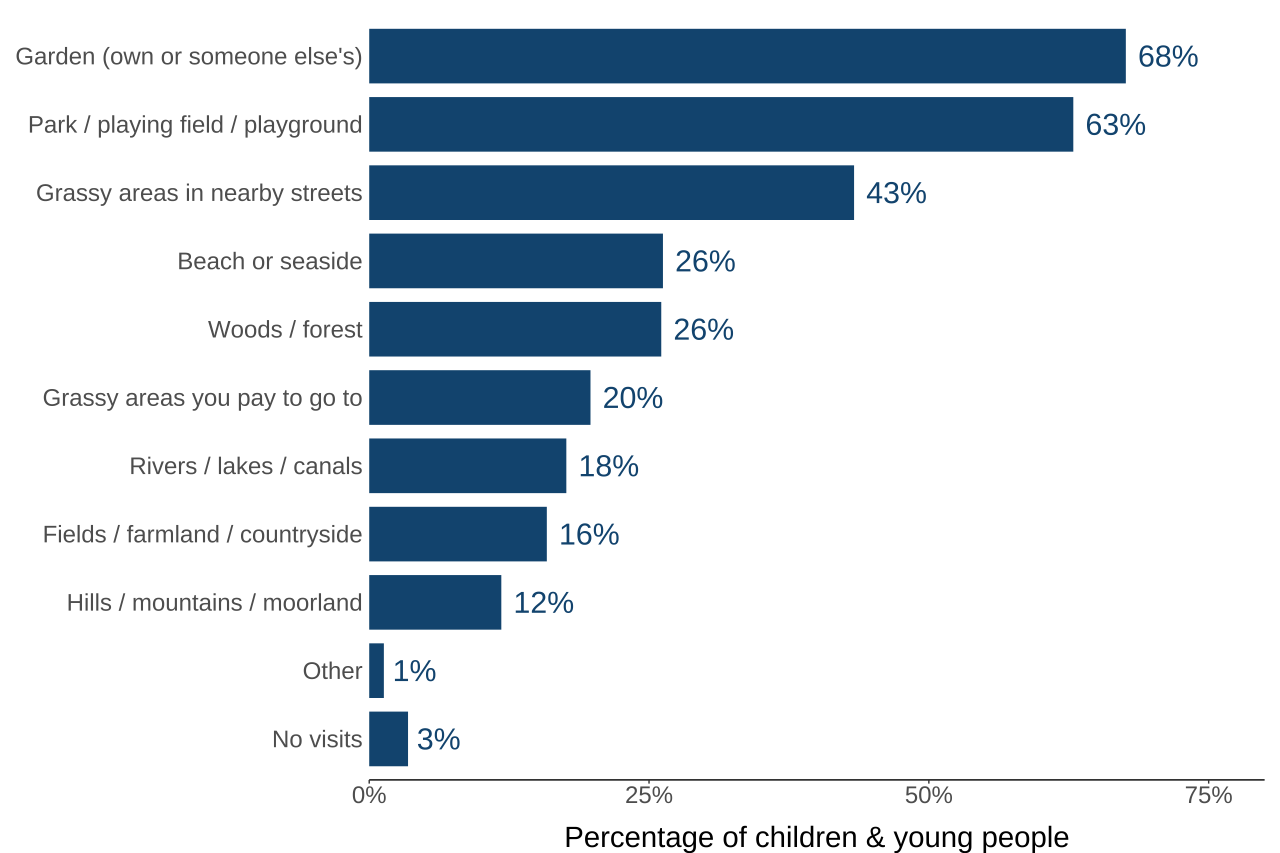
Figure notes:
- Source: CS_Q3 Have you spent time in any of these places in the last week? Please choose one or more options.
- The sample for this question is taken from the full 2025 base sample = 3,993 (combined holiday time and term time response data).
- Figure 3.1 presents the percentage of children and young people who reported visiting each of the different types of natural spaces listed: ‘Garden (own or someone else’s)’ 68%; ‘Park/playing field/playground’ 63%; ‘Grassy areas in nearby streets’ 43%; ‘Beach or seaside’ 26%; ‘Woods/forest’ 26%; ‘Grassy areas you pay to go to’ (e.g., gardens of a big house, the zoo, or city farm) 20%; ‘Rivers/lakes/canals’ 18%; ‘Fields/farmland/countryside’ 16%; ‘Hills/mountains/moorland’ 12%; ‘Other’ 1%; and, ‘No visits’ 3%. ‘Don’t know’/‘Prefer not to say’ responses are not included in this figure.
Children and young people also reported on how frequently in the past week they had spent time outside (Figure 3.2). During holiday time (Wave 9), more than half of children and young people reported that in the past week they had spent time every day or most days in their garden (66%) and other outside places (48%). During term time (Wave 10), most children and young people had spent time outside every day or most days at school (80%) in the past week and one third (35%) had lessons outside (other than physical education PE) every day or most days.
Outside of the school day, just over half of children and young people (57%) had spent time in their garden every day or most days in the past week (similar to 2024 with 54%), with 2% stating that they do not have a garden (similar to 2024 with 3%). Less than half of the children and young people (43%) spent time in other outside spaces every day or most days (similar to 2024 with 45%). There were disparities in the time spent outside in the past week by children and young people from households in different income groups (combined holiday time and term time data):
- The percentage of children and young people without access to a garden differed between income groups, with children and young people from low- and mid-income households being more likely to have no access to their own garden than children and young people from a high-income household (1% of >£50,000, 3% of £15,000 - £49,999, 7% <£15,000).
Figure 3.2: How often children and young people said they spent time outside in the past week during holiday time (Wave 9) and during term time (Wave 10) when they were at school and not at school (weighted percentage).
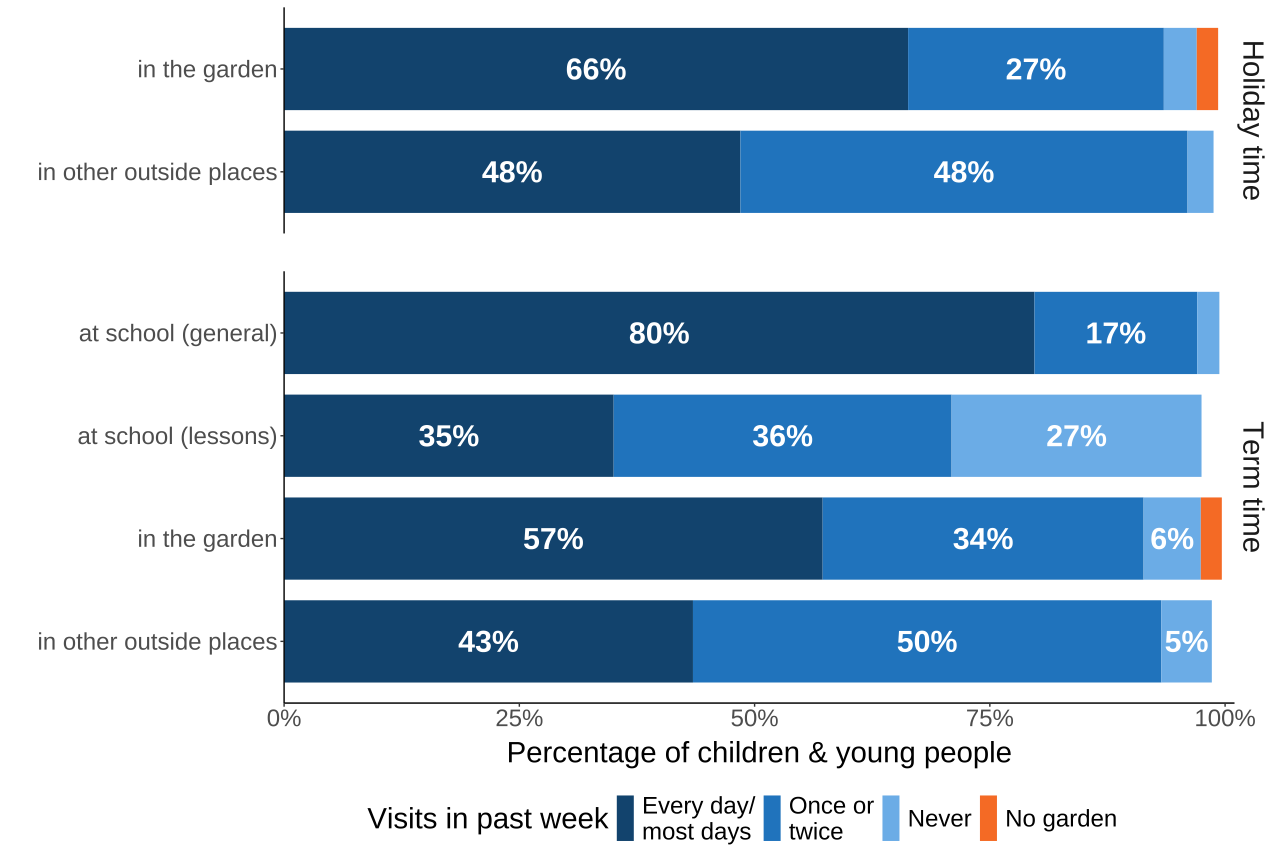
Figure notes:
- Source: CS_Q5A Thinking about the last week at school, how often have you spent time outside? Please select one answer only; CS_Q5B Thinking about the last week at school, how often have you had activities or lessons outside that were not PE? Do not count: PE lessons; breaks and lunch times; before and after school. Please select one answer only; CS_Q6A Now thinking about when you were not at school in the last week, how often have you spent any time in your own garden (if you have one)? This includes any garden that you share with your neighbours? Please select one answer only; CS_Q6B Now thinking about when you were not at school in the last week, how often have you spent time outside in places that are not your garden? Please select one answer only.
- Samples for questions CS_5A and CS_5B are taken from term time response data only = 1,995. Samples for questions CS_6A and, CS_6B are taken from the full 2025 base sample = 3,993 (combined holiday time and term time response data).
- Figure 3.2 presents how frequently children and young people reported spending time outside in the past week during holiday time and term time. During holiday time: CS_Q6A 66% ‘Every day or most days’, 27% ‘Once or twice’, 3% ‘Never’, and 2% ‘No garden’; CS_Q6B 48% ‘Every day or most days’, 48% ‘Once or twice’, and 3% ‘Never’. During term time: CS_Q5A 80% ‘Every day or most days’, 17% ‘Once or twice’, and 2% ‘Never’. CS_Q5B 35% ‘Every day or most days’, 36% ‘Once or twice’, and 27% ‘Never. CS_Q6A 57% ‘Every day or most days’, 34% ‘Once or twice’, 6% ‘Never’ and 2% ‘No garden’; CS_Q6B 43% ‘Every day or most days’, 50% ‘Once or twice’, and 5% ‘Never. ‘Don’t know’/‘Prefer not to say’ responses are not included in this figure.
Other related questions you may be interested in:
- See the questionnaire and summary tables for more information.
4. Green Spaces at School
Children and young people living with a disability were more likely to spend most of their time in nature while they were at school.
In 2024, new questions were added to the C-PaNS survey around green spaces at school during the term time. These questions aim to provide additional insight into how children access and experience green and natural spaces within the school environment, and the benefits they gain from this.
One question asks where children and young people spent most of their time in nature in the last week. Figure 4.1 shows that 34% of respondents said they spent their time in nature mostly while not at school, 38% of children and young people said they spent equal amounts of time in nature at home and school, and 28% of participants said school was the place they spent most of their time in nature. There were differences in groups of young people spending their time in nature mostly at school. For example:
- Children living with a disability (43%) were more likely to spend most of their time in nature at school than children living without a disability (25%).
Figure 4.1: Percentage of children and young people spending most of their time in nature during the last week mostly at school, equal time at school and not at school, or mostly outside of school (weighted percentage).
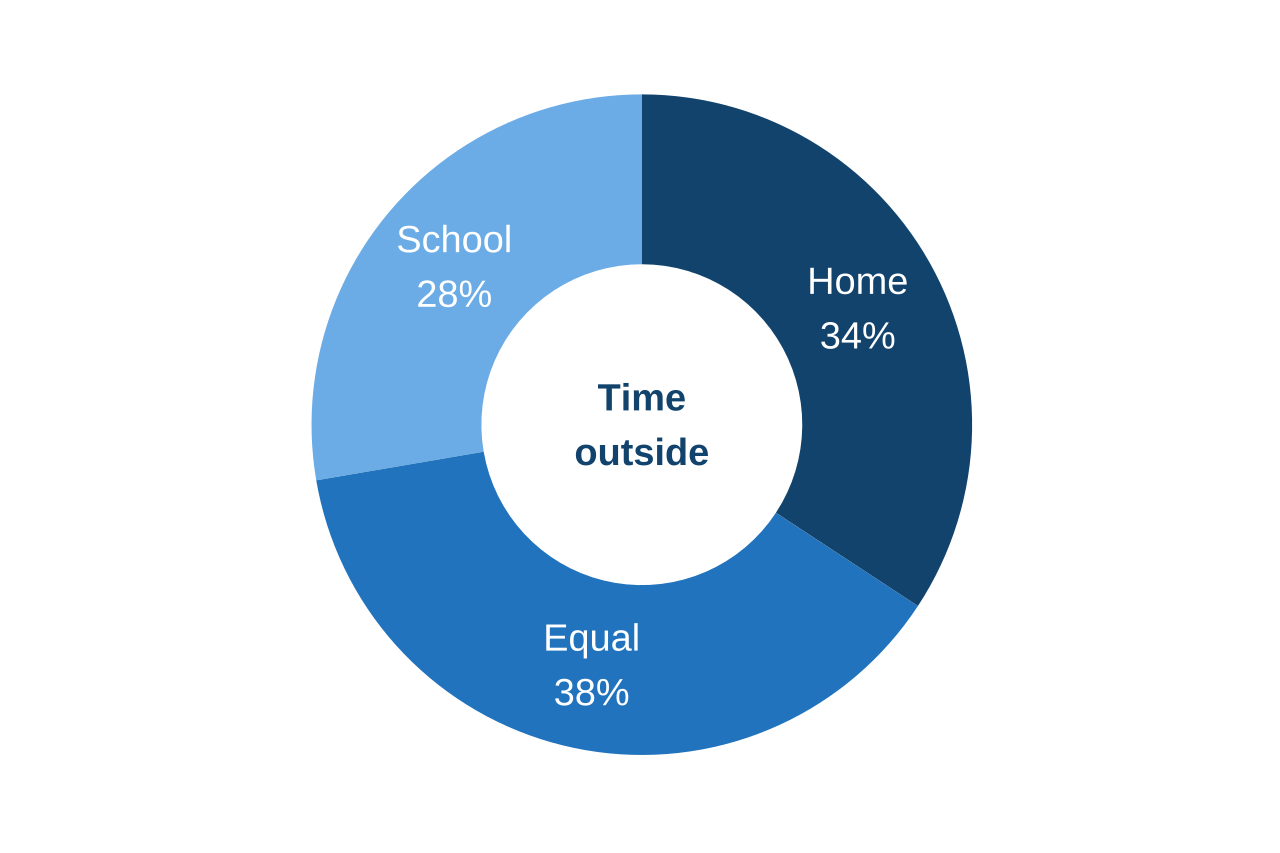
Figure notes:
- Source: CS_QX_3_A Where did you spend most of your time in nature in the last week?
- The sample for this question is taken from Wave 10 in 2025 = 1981 (only term time response data).
Another question asks about changes to the amount of nature around the school within the last year. Over one in three respondents (37%) said that there was more nature within the last year. Over half of the respondents (50%) said there was no change to the amount of nature around the school within the last year. Very few respondents (4%) reported that there was less nature. Of the children and young people who said that there was more nature around the school (37%), over seven in ten (72%) said that the increase in nature made them enjoy school more (Figure 4.2).
Figure 4.2: Of the percentage of children and young people where nature increased at their school, the percentage of how many children and young people who enjoyed school more because of it (both weighted percentage).
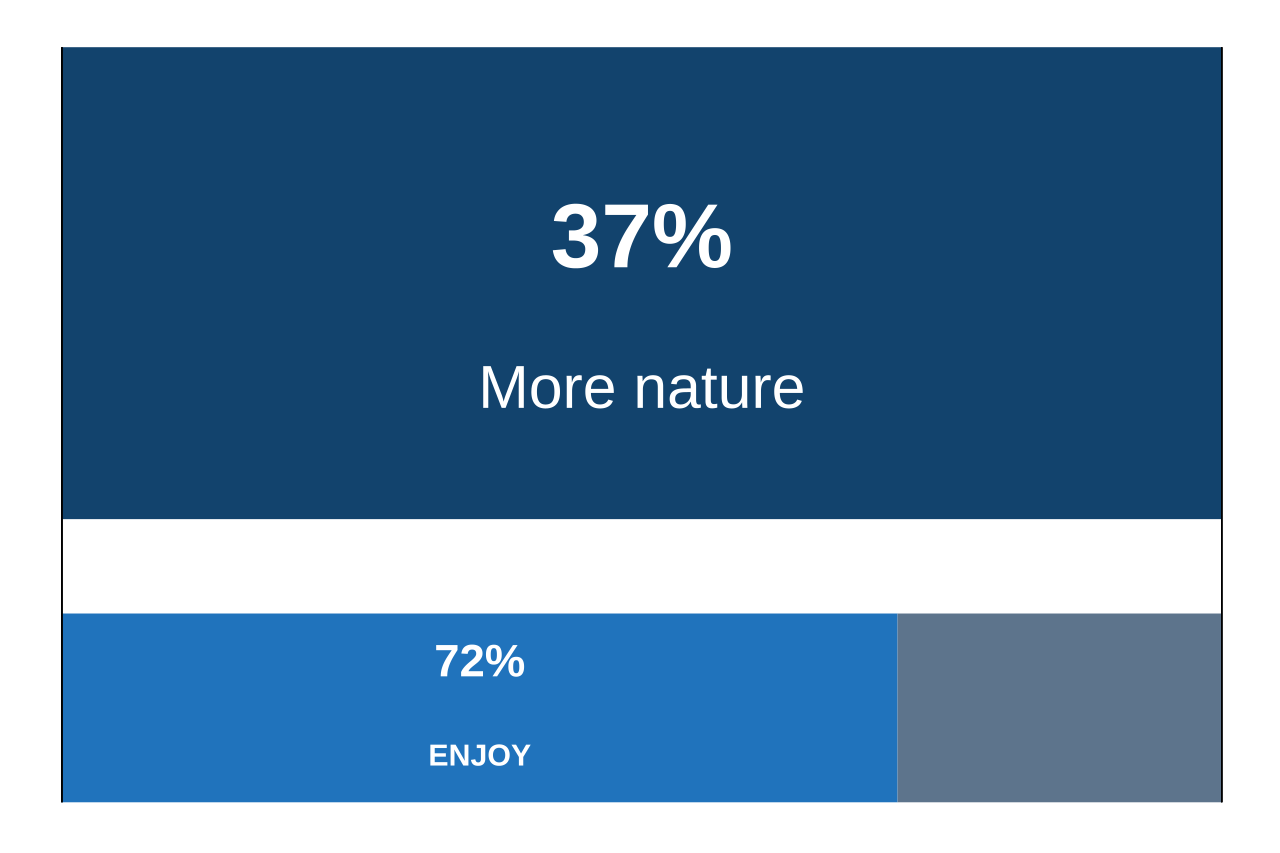
Figure notes:
- Source: CS_QX_3_B Has the amount of nature around your school changed in the last year? Answer option ‘Yes, there is more nature’ by CS_QX_3_C Has the [increase/ decrease] in nature around your school changed how much you enjoy school? Answer option ‘Yes, I enjoy school more’.
- The sample for Figure 4.2 is a sub-sample of the term-time only respondents. Sample size = 868.
In addition to understanding nature within school grounds, the survey also asked parents how often their child visited green and natural places with their school. This included trips or visits beyond the school grounds, for example to parks, forests, or beaches. Almost two thirds of the children and young people were reported to go on school trips to natural places at least once a term, or more (62%). Less than one in 10 (8%) of children and young people were reported to never go on a school trip to natural places. There were group differences for children and young people who never went on a school trip. For example:
- Children and young people from households with an income below £15,000 were more likely not to go on trips (27%) compared to children and young people from households with an income between £15,000 - £49,999 (10%), and children and young people from households with an income of £50,000 and over (5%).
Other related questions you may be interested in:
- Thinking about the outdoor spaces at your school, how much do you agree or disagree that…
- They are good places for spending time with friends [CS_QX_4_A]
- They are good places for learning [CS_QX_4_B]
- At your school there are lots of places for animals and birds to make their homes [CS_QX_4_C]
- Nature makes the school grounds more interesting [CS_QX_4_D]
- See the questionnaire and summary tables for more information.
5. Access to Green and Natural Places
Most children and young people can easily walk from their home to green and natural spaces.
Children and young people were asked about the types of green and natural places they can walk to easily from their home, either by themselves or with someone else (Figure 5.1). Around 7 in 10 said that from their home they could easily walk to a garden (71%), and around 2 in 3 said they could easily walk to a park/playing field/playground (67%). Just over half said they could easily walk to grassy areas in the streets nearby (54%) and one third said woods/forest (31%). Very few children and young people answered ‘None of the above’ (2%).
There were several differences between groups in the percentage of children and young people who reported being able to walk to green and natural places from their home. For example:
- Woods/forest were more commonly reported as being in easy walking distance by children and young people from White (35%) ethnicities compared to Mixed/Multiple (23%) ethnicities, Asian/Asian British (24%) or Black/Black British (12%) ethnicities.
Figure 5.1: Green and natural places children and young people can walk to easily from their home (weighted percentage).
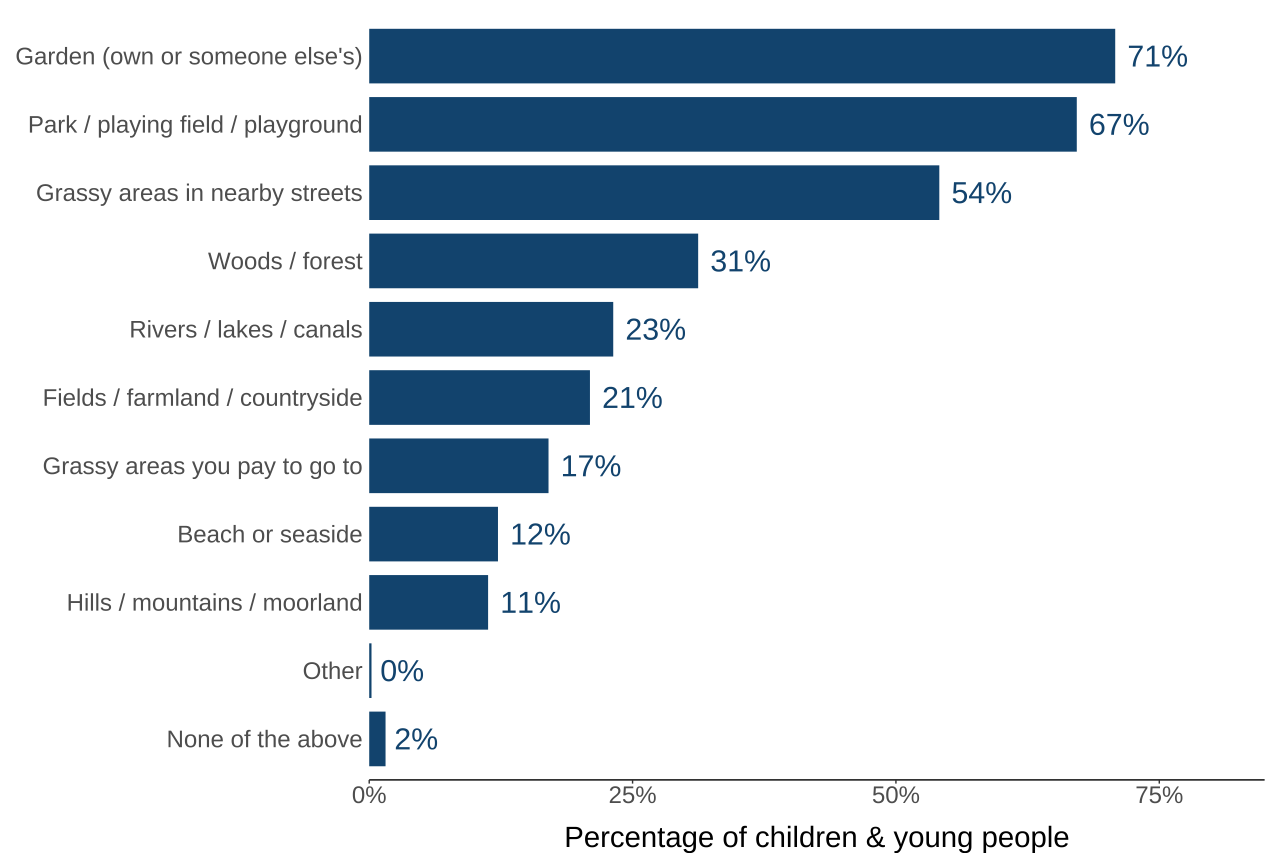
Figure notes:
- Source: CS_Q4: Which of these places can you walk to easily from your home (either by yourself or with someone else)?
- The sample for this question is taken from the full 2025 base sample = 3,993 (combined holiday time and term time response data).
- Figure 5.1 presents the percentage of children and young people who reported that they could easily walk to (on their own or with someone else) the different types of natural spaces listed: ‘Garden (own or someone else’s)’ 71%; ‘Park/playing field/playground’ 67%; ‘Grassy areas in nearby streets’ 54%; ‘Woods forest’ 31%; ‘Rivers/lakes/canals’ 23%; ‘Fields farmland / countryside’ 21%; ‘Grassy areas you pay to go to’ 17%; ‘Beach or seaside’ 12%; Hills/mountains/moorland’ 11%; ‘Other’ 0%; and, ‘None of the above’ 2%. ‘Don’t know’/‘Prefer not to say’ responses are not included in this figure.
Other questions you may be interested in:
- Access to garden/outdoor space [CS_S_Q3].
- See the questionnaire and summary tables for more information.
6. Quality of Local Natural Spaces
Children and young people generally perceive the quality of their local outdoor spaces to be high.
Children and young people were asked to rate the quality of the natural outdoor spaces near them by indicating their level of agreement with five statements. The five statements had been co-developed with children and young people as measures of different aspects of quality in a separate research project (further details can be found in the project report). These different aspects of quality relate to the natural environment, space to do things you want, human/built environment, feelings, and accessibility.
Overall, children and young people perceived the quality of their local outdoor spaces positively (Figure 6.1). Accessibility was the most positively reported, with 86% of respondents agreeing that outdoor spaces are easy to get to by walking. Over 8 in 10 (82%) of children and young people said that they feel welcome in their local outdoor spaces.
Over three quarters (78%) of respondents agreed that there are lots of places for animals and birds to make their homes, and that they are good places for playing (80%). A slightly lower 72% agreed that local green spaces are clean and well looked after.
Figure 6.1: Children and young people’s level of agreement with five statements relating to different aspects of quality of the natural outdoor spaces near them (weighted percentage).
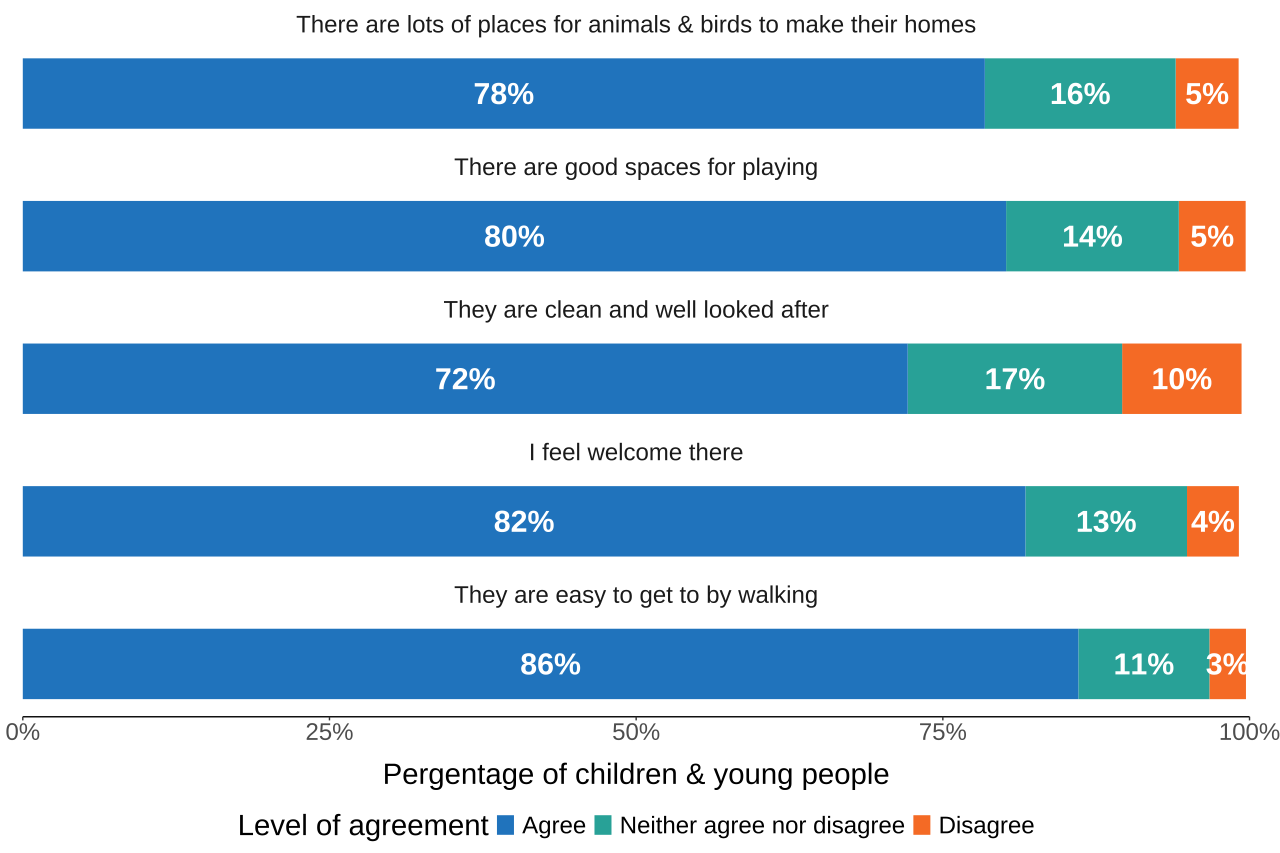
Figure notes:
- Source: CS_Q13 Thinking about the natural outdoor spaces near you. How much do you agree or disagree that A) There are lots of places for animals and birds to make their homes; B) There are good spaces for playing; C) They are clean and well looked after; D) I feel welcome there; E) They are easy to get to by walking.
- The sample for this question is taken from the full 2025 base sample = 3,993 (combined holiday time and term time response data).
- Figure 6.1 presents the percentage of children and young people who agree (net 10 –7), ‘Neither agree nor disagree’ (net 5-6), or disagree (net 0-4) with the statements relating to different aspects of quality. The findings are as follows: A) 78% agree, 16% neither agree nor disagree, 5% disagree; B) 80% agree, 14% neither agree nor disagree, 5% disagree; C) 72% agree, 17% neither agree nor disagree, 10% disagree; D) 82% agree, 13% neither agree nor disagree, 4% disagree; E) 86% agree, 11% neither agree nor disagree, 3% disagree. ‘Don’t know’/‘Prefer not to say’ responses are not included in this figure.
Other questions you may be interested in:
- See the questionnaire and summary tables for more information.
7. Engagement
Children and young people mostly use time outdoors to spend time with family and friends.
In 2024, new questions were added to the survey to understand the activities that children and young people participate in during time outdoors, as well as indoor activities that support their engagement with nature. These new insights complement existing C-PaNS findings on time spent in green and natural spaces by understanding the diverse ways in which children and young people engage with nature.
One question asked children and young people how they spend time outdoors when they are not at school (Figure 7.1). The most selected answer was spend time with family (73%), followed by spend time with friends (67%), and play sports (51%). There were demographic differences in the activities selected. For example:
- Male respondents were more likely to select play sports (60%) than female respondents (40%). Females were more likely to select play with pets (52%) than males (41%).
- The older 12 –15 age group was more likely to spend time outdoors with friends (70%) than the younger 8 –11 age group (63%), with the younger age group more likely to spend time with family (76% compared to 69% for the older age group).
Figure 7.1: How children spend their time outdoors when they are not at school (weighted percentage).
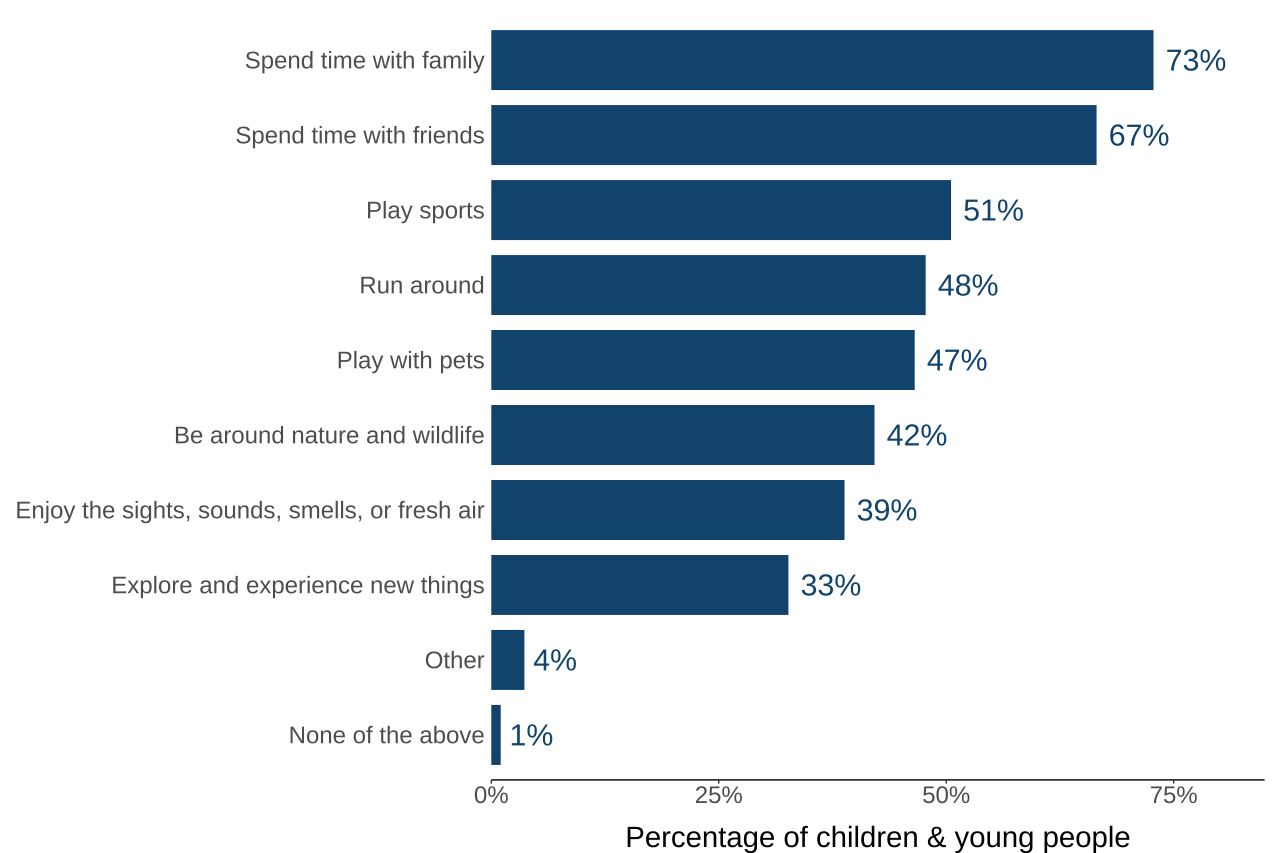
Figure notes:
- Source: CS_QY_2 How do you spend your time outdoors when you are not at school? Please select all that apply.
- The sample for this question is taken from Wave 9 in 2025 = 1,998 (holiday time response data only).
- Figure 7.1 presents the percentage of children and young people who listed at least one of these reasons: ‘Spend time with family’ (73%); ‘Spend time with friends’ (67%); ‘Play sports’ (51%); ‘Run around’ (48%); ‘Play with pets’ (47%); ‘Be around nature and wildlife’ (42%); ‘Enjoy the sights, sounds, smells, or fresh air’ (39%); ‘Explore and experience new things’ (33%), ‘Other’ (4%), ‘None of the above’ (1%). ‘Don’t know’/‘Prefer not to say’ responses are not included in this figure.
Watching TV programmes about nature is the most common way children and young people see or learn about nature outside of school.
Another question added to the survey in 2024 asks children and young people how they see or learn about nature when they are not at school (Figure 7.2). The answers selected most by children and young people were:
- Watching TV programmes about nature (56%);
- Speaking to friends and family (46%);
- Exploring or spending time in nature and,
- Seeing nature on social media or YouTube (both 42%).
There were demographic differences in the types of nature-related engagement, for example:
- Black or Black British children and young people selected watching TV programmes about nature the most (73%), compared to White (56%), Asian or Asian British (54%) and mixed or multiple ethnic groups (53%). They were also more likely to read about or see nature in books than the other ethnic groups (Black or Black British, 58%; Mixed or multiple ethnic groups, 46%; White, 34%; Asian or Asian British, 32%).
- There were also gender differences in the activities, with males more likely to see nature on social media or YouTube than females (44% compared to 39%). Females were more likely than males to engage in creative activities such as art or photography (28% compared to 22%), through clubs or other outdoor activities (23% compared to 18%), and by exploring or spending time in nature (45% compared to 40%).
Figure 7.2: How children and young people see or learn about nature when they are not at school (weighted percentage).
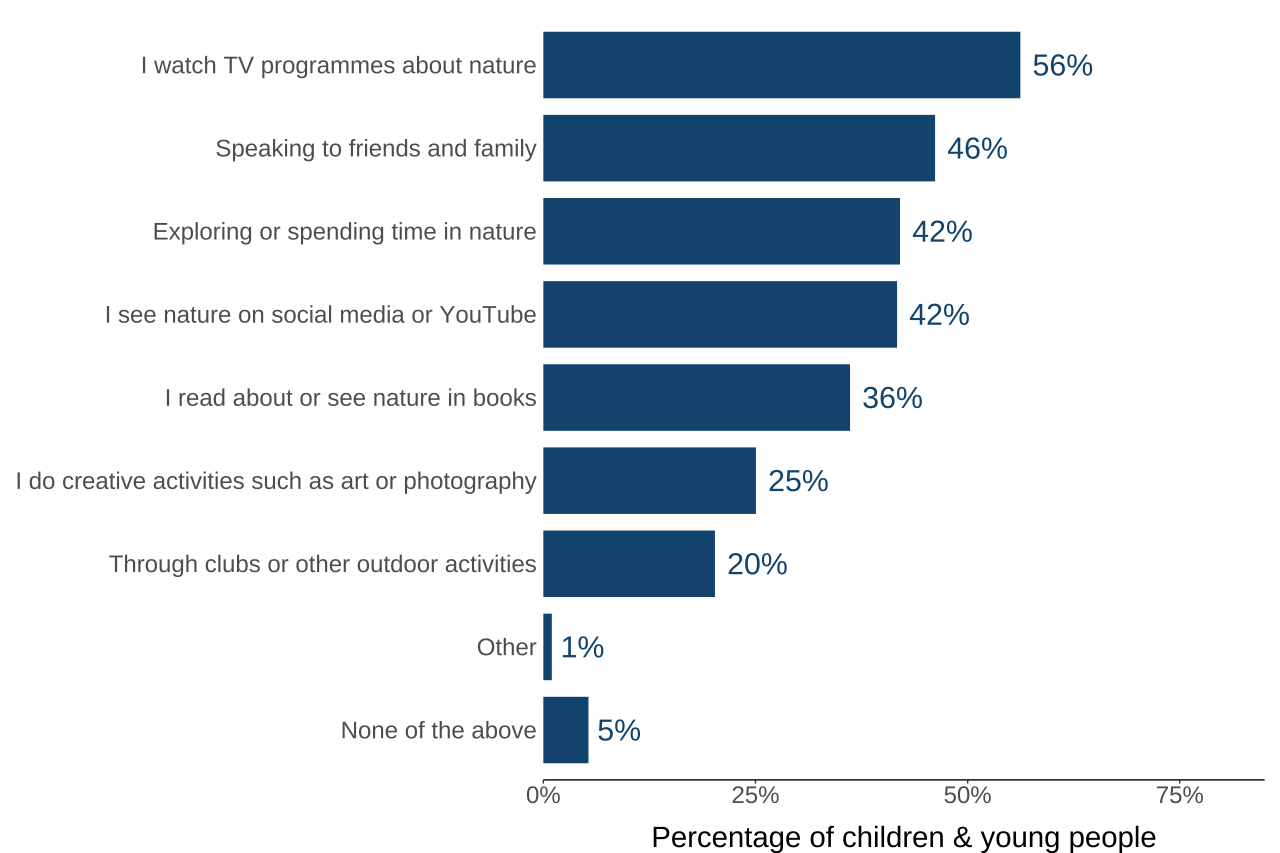
Figure Notes:
- Source: CS_QY_4: How do you see or learn about nature when you are not at school?
- The sample for this question is taken from Wave 9 in 2025 = 1,998 (holiday time response data only).
- Figure 7.2 presents the percentage of children and young people who reported that they learn about nature when they are not at school from the different options listed: ‘I watch TV programmes about nature’ 56%, ‘Speaking to friends and family’ 46%, ‘Exploring or spending time in nature’ 42%, ‘I see nature on social media or YouTube’ 42%, ‘I read about or see nature in books’ 36%, ‘I do creative activities such as art or photography’ 25%, ‘Through clubs or other outdoor activities’ 20%, ‘Other’ 1%; and, ‘None of the above’ 5%. ‘Don’t know’/‘Prefer not to say’ responses are not included in this figure.
Other questions you may be interested in:
- See the questionnaire and summary tables for more information.
8. More Time Outside
Having a playground and good weather would encourage children and young people to go outside more.
In 2023, a young advisory group was formed to provide input and feedback on C-PaNS. The young advisors developed their own question to include in the survey, which asked children and young people to rank in order of importance seven things that would encourage them to go into natural spaces more.
Playground (34%), good weather (22%), and places to play sports (14%) were the response options most often ranked as number one by children and young people (i.e., most important to encourage them to go into natural spaces more, Figure 8.1). The importance of response options differed between age groups, gender, and ethnicity in some cases. For example:
- Younger respondents (aged 8 to 11) more commonly ranked playground as number one (40%) than older respondents (aged 12 to 15, 27%). Whereas good weather was more likely to be ranked as most important by older age groups (24% vs 19%), those living in a rural area (27% compared to 22% for urban areas), and by more female than male respondents (24% vs 20%).
- The older age group ranked places to play sports more highly than the younger age group (16% vs 12%), and males also ranked this higher than females (18% vs 10%).
Figure 8.1: Percentage of children and young people that ranked each item as most important to encourage them to go in natural spaces more (weighted percentage).
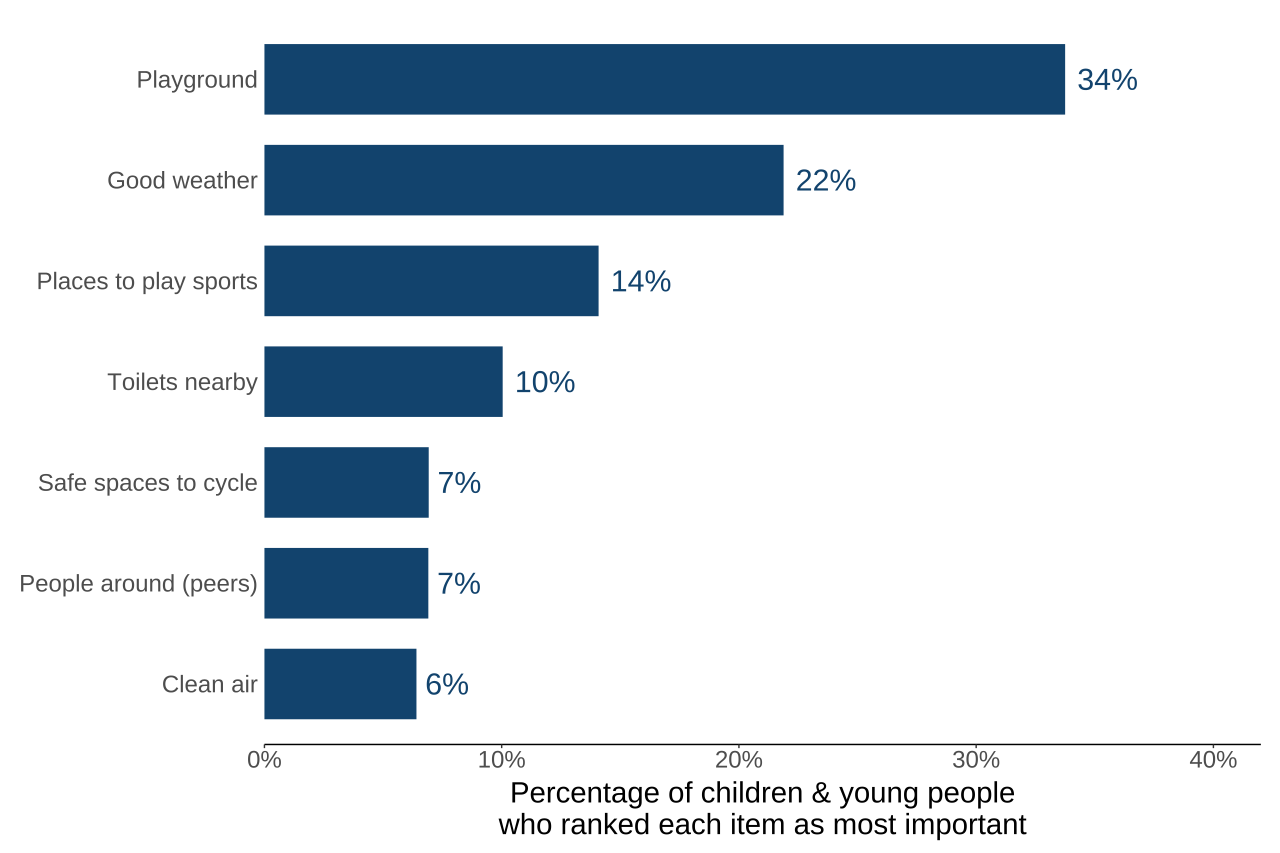
Figure notes:
- Source: CS_Q20 What would encourage you to go out into natural spaces more? Please put them in order from 1 as the most important to 7 as the least important.
- The sample for this question is taken from the full 2025 base sample = 3,993 (combined holiday time and term time response data).
- Figure 8.1 presents the percentage of children and young people who ranked each of the seven items at number 1 (most important): ‘Playground’ 34%; ‘Good weather’ 22%; Places to play sports’ 14%; Toilets nearby’ 10%; ‘Safe spaces to cycle’ 7%; ‘People around (peers)’ 7%; and, ‘Clean air’ 6%.
Other questions you may be interested in:
- See the questionnaire and summary tables for more information.
9. Enjoyment of Nature and Nature Connection
Children and young people tend to show high connection to and enjoyment of nature.
In total, 93% of children and young people surveyed agreed with the statement ‘being in nature makes me very happy’, including 40% who completely agreed and 29% who strongly agreed (Figure 9.1). Few children and young people neither agreed nor disagreed (6%) or disagreed (1%) with the statement.
Figure 9.1: Children and young people’s level of agreement with the statement ‘Being in nature makes me very happy’ (weighted percentage).
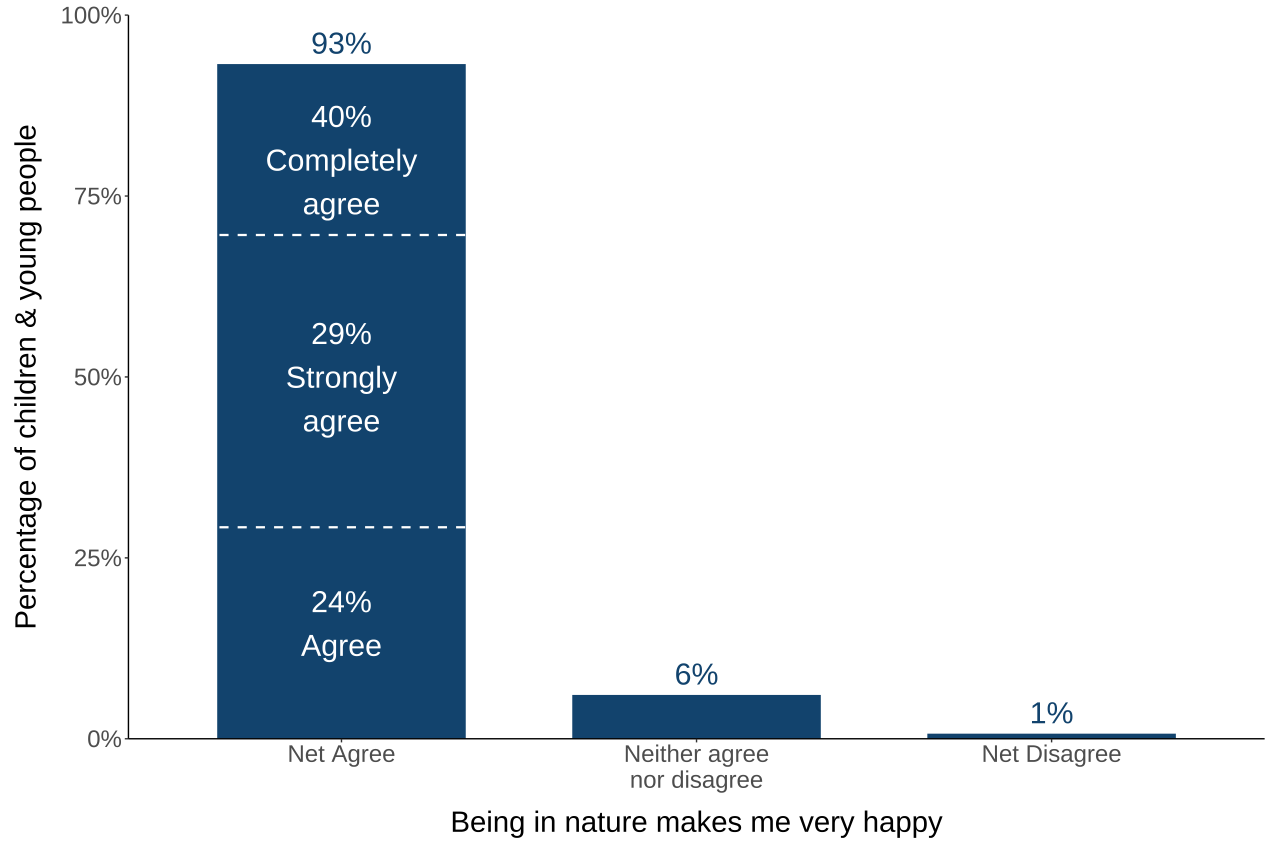
Figure notes:
- Source: CS_Q12A How much do you agree or disagree with the following: Being in nature makes me very happy. Please select one answer only.
- The sample for this question is taken from the full 2025 base sample = 3,993 (combined holiday time and term time response data).
- Figure 9.1 presents the percentage of children and young people’s level of agreement with the statement ‘Being in nature makes me very happy’. The total ‘Net Agree’ (93%) is made up of ‘Agree’ 24%; ‘Strongly agree’ 29%; and ‘Completely agree’ 40%. ‘Neither agree nor disagree’ 6%; and ‘Net Disagree’ 1%. ‘Don’t know’ / ‘Prefer not to say’ responses are not included in this figure.
The survey asked children and young people how connected to nature they feel using the illustrated ‘Inclusion of Nature in Self Scale’. The illustrated scale contains seven diagrams each containing two circles, one with the outline of a person saying ‘me’ and the other with a nature-filled scene. In each diagram, the closeness of the two circles increases, until they fully overlap. Children and young people were asked to choose the diagram which best showed how connected they felt to nature. For the purposes of reporting, nature connection has been categorised into low (A, B, C), moderate (D) and high (E, F, G).
Almost two thirds (65%) reported high nature connection, whereas under one in five (18%) reported low nature connection, and moderate connection (17%) (Figure 9.2). From the baseline of children and young people who are in the high nature connection category in 2021 (44%) and 2022 (47%), there has been a significant increase every year since (2023 (52%), 2024 (57%) and 65% in 2025). There were also differences in nature connection between groups, for example:
- Children and young people living in a household with income below £15,000 were more likely to have low nature connection (36%), than those in households with income £15,000 to £49,999 (22%), and income £50,000 and over (14%).
- Also, children and young people surveyed from Black/Black British ethnicities were more likely to report high nature connection (79%) than those from White (63%), Asian/Asian British ethnicities (66%), and Mixed or multiple ethnic groups (68%).
Figure 9.2: Nature connection of children and young people (weighted percentage).
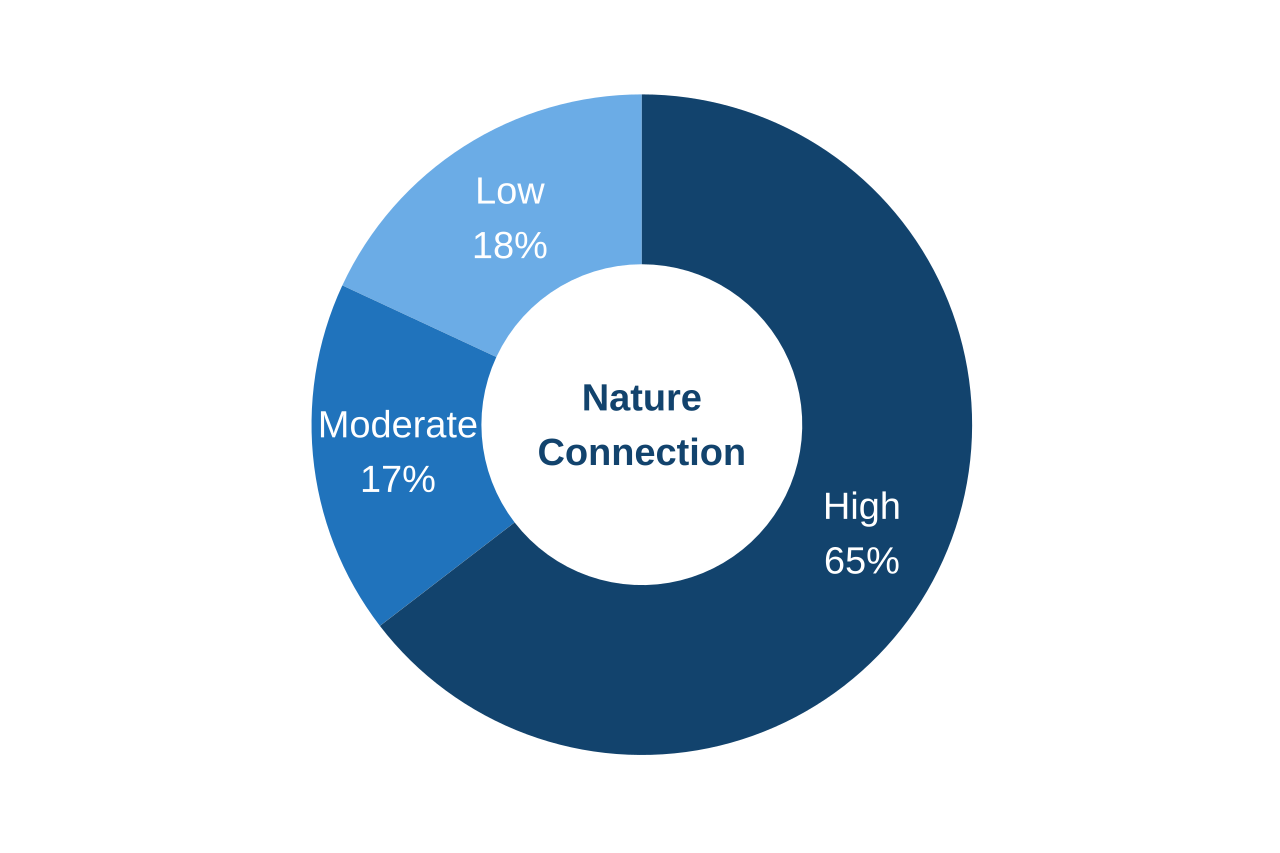
Figure notes:
- Source: CS_Q11 How connected do you feel to nature? Please choose the picture that best describes your relationship to nature.
- The sample for this question is taken from the full 2025 base sample = 3,993 (combined holiday time and term time response data).
- Figure 9.2 presents the percentage of children and young people who were ‘High’ in Nature connection (E, F, G) 65%; ‘Moderate’ in Nature Connection (D) 17%; and ‘Low’ in Nature Connection (A, B, C) 18%. ‘Don’t know’ / ‘Prefer not to say’ responses are not included in this figure.
Other related questions you may be interested in:
- How do you see or learn about nature when you are not at school? [CS_QY_4]
- Thinking about the last week at school, how often have you looked at, listened to or engaged with nature? [CS_Q5C]
- Now thinking about when you were not at school in the last week, how often have you looked at, listened to, or engaged with nature? [CS_Q6C]
- Well-being (happiness, anxiety [CS_Wellbeing_happy, CS_Wellbeing_anxious] and loneliness [CS_Wellbeing_lonely] were measured using ONS recommended measures).
- See the questionnaire and summary tables for more information.
10. Environmental Concern and Action
Children and young people are concerned about the environment and reported taking actions to try and look after it.
Most children and young people surveyed agreed that looking after the environment was important to them (85%), and that they would like to do more to look after the environment (89%).
- Level of environmental concern differed between household income groups, with household income £50,000 and over (89%) more likely to agree that looking after the environment was important to them, compared to household income £15,000 - £49,999 (80%) and below £15,000 (78%).
- Level of agreement also differed between ethnicity groups, with White respondents (83%) less likely than mixed or multiple ethnic groups (89%), Asian or Asian British (89%), and Black or Black British respondents (94%) to agree that looking after the environment was important to them.
Many children and young people reported already doing a range of things to look after the environment (Figure 10.1), including most commonly waste recycling (55%), picking up litter (52%), turning off taps while brushing teeth (48%), and turning lights off (42%). While the percentages of children and young people that reported doing some activities remained similar over the years of data collection, some activities were lower than in previous years, For example, waste recycling (71% in 2021, 75% in 2022, 65% in 2023, and 60% in 2024 versus 55% in 2025) and turning off taps (63% in 2021, 65% in 2022, 55% in 2023, and 53% in 2024 versus 48% in 2025).
Figure 10.1: Behaviours and social actions reported by children and young people to look after the environment (weighted percentage).
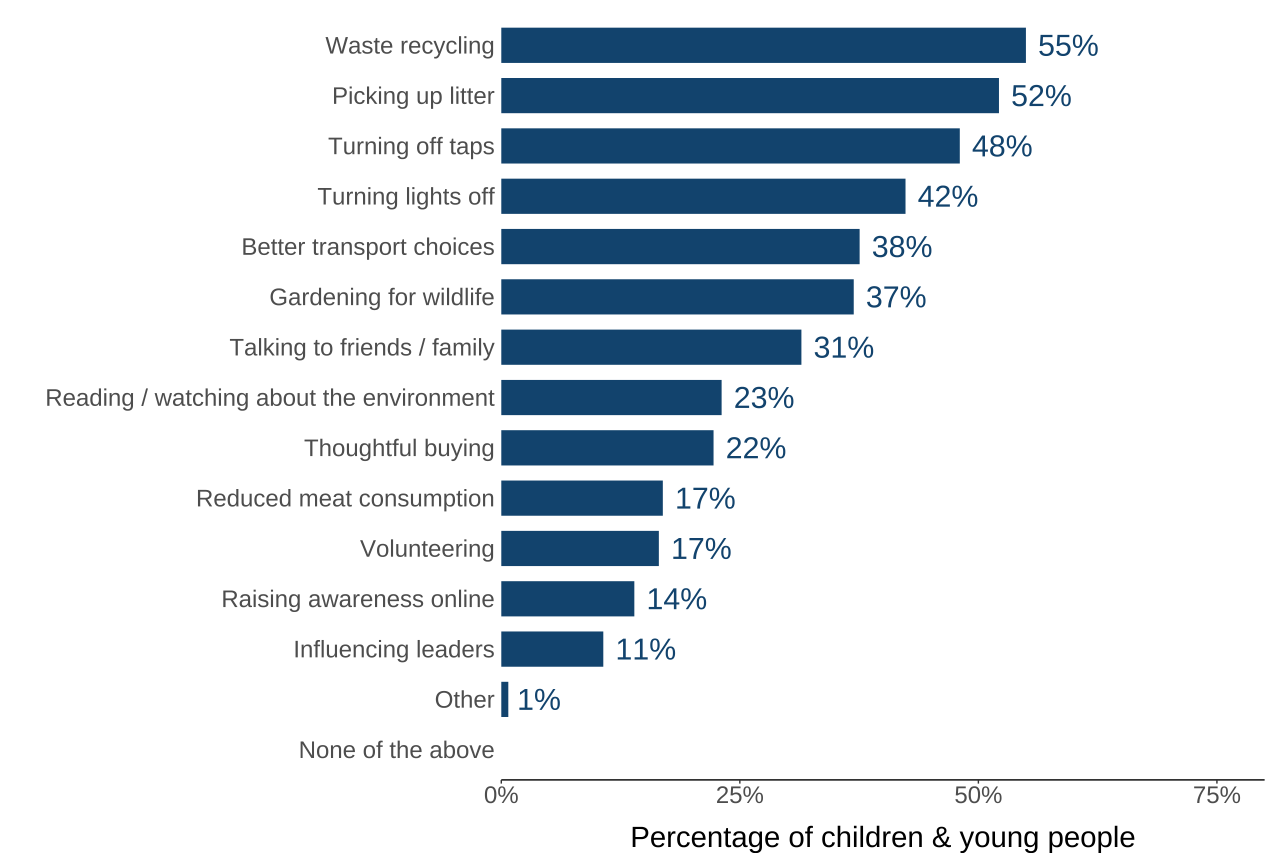
Figure notes:
- Source: CS_Q10 Which of the following things do you do to look after the environment? Please choose one or more options.
- The sample for this question is taken from the full 2025 base sample = 3,993 (combined holiday time and term time response data).
- Figure 10.1 presents the percentage of children and young people who reported doing each of the actions listed: ‘Waste recycling’ 55%; ‘Picking up litter’ 52%; ‘Turning off taps’ 48%; ‘Turning lights off’ 42%; ‘Better transport choices’ 38%; ‘Gardening for wildlife’ 37%; ‘Talking to friends/family’ 31%; ‘Reading/watching about the environment’ 23% ‘Thoughtful buying’ 22%; ; ‘Reduced meat consumption’ 17%; ‘Volunteering’ 17%; ‘Raising awareness online’ 14%; ‘Influencing leaders’ 11%; ‘Other’ 1%; and, ‘None of the above’ 0%. ‘Don’t know’ / ‘Prefer not to say’ responses are not included in this figure.
The survey also asked children and young people about their awareness of the Countryside Code. Almost half of those surveyed had heard of the Countryside Code (46%), 43% had not, and 11% were not sure. Of those that had heard of the Countryside Code, 60% heard of it through their family and 51% at school. The percentage of children and young people who had heard of the Countryside Code varied between groups, for example awareness was higher:
- Amongst 12 to 15 year olds (49%) than 8 to 11 year olds (42%),
- For young people who reported having disabilities (57%) than those who did not (44%), and
- For children and young people from households with an income over £50,000 (49%) than those from lower income households (42% £15,000 to £49,999, 37% <£15,000).
In 2024, a new question was added to the survey which asks children and young people what they think are reasons to look after nature. This question aims to provide insight into awareness of the importance of looking after or taking action for nature (Figure 10.2). The most mentioned reason was that it helps save wildlife, selected by 70% of respondents. The second most selected reasons were it makes nature better to be in, and it is good for people’s health (both 66%). The third most selected reason was to help stop climate change (51%).
Figure 10.2: Reasons to look after nature (weighted percentage)
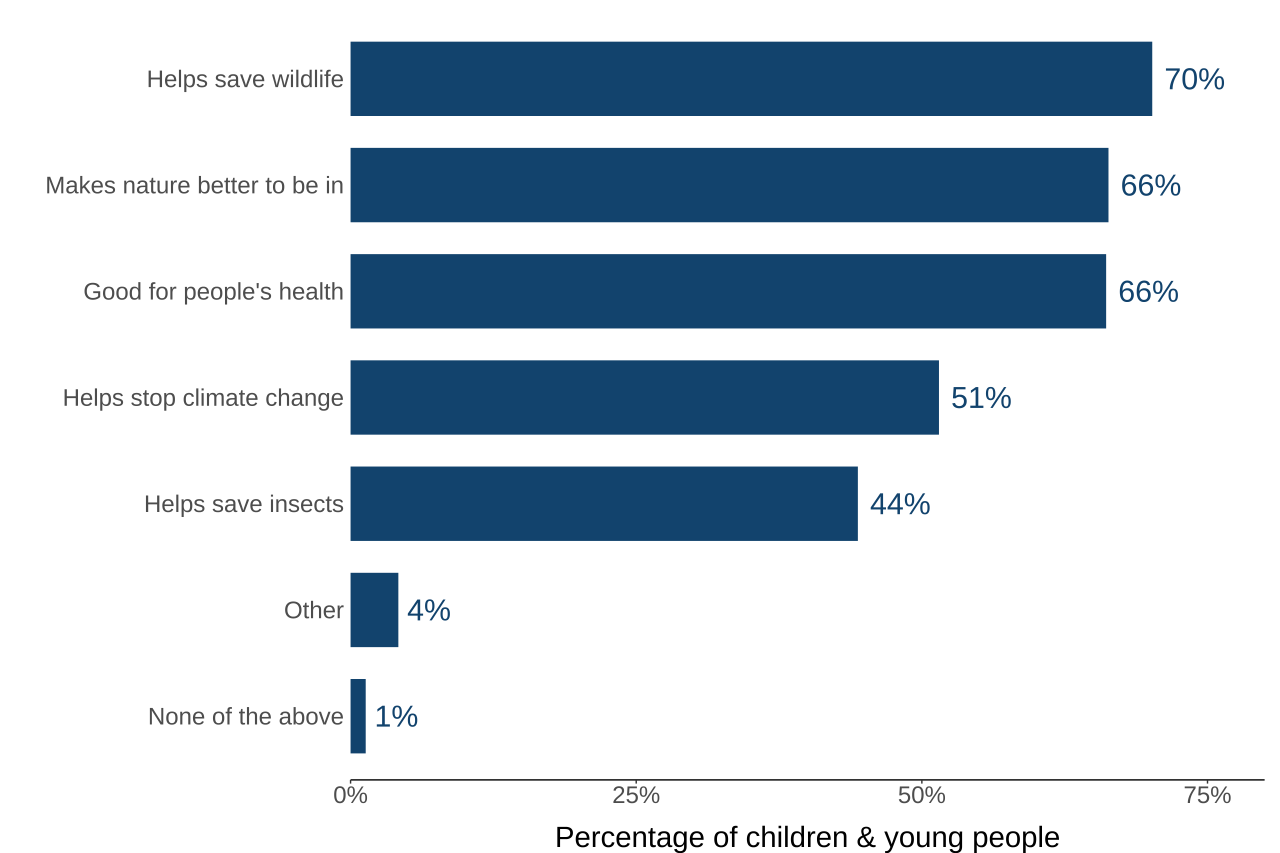
Figure notes:
- Source: CS_QY_5 Which of the following do you think are reasons to look after nature? Please select all that apply.
- The sample for this question is taken from wave 9 base sample = 1,998 (holiday time response data only).
- Figure 10.2 presents the percentage of children and young people who listed at least one of these reasons: ‘It helps save wildlife’ 70%; ‘It makes nature better to be in’ 66%; ‘It is good for people’s health’ 66%; ‘It helps stop climate change’ 51%; ‘It helps save insects’ 44%; ‘Another reason not mentioned above’ 4%; ‘None of the above’ 1%.
Other related questions you may be interested in:
- Whether children and young people think adults are doing enough to look after the environment [CS_Q12_b].
- Whether children and young people know what they can do to look after the environment [CS_Q12_e].
- What children and young people think is okay to do in outdoor spaces [CS_Q16.5].
- See the questionnaire and summary tables for more information.
11. Accredited Official Statistics
Accredited official statistics are called National Statistics in the Statistics and Registration Service Act 2007. An explanation can be found on the Office for Statistics Regulation website.
Our statistical practice is regulated by the Office for Statistics Regulation (OSR). OSR sets the standards of trustworthiness, quality and value in the Code of Practice for Statistics that all producers of official statistics should adhere to.
These accredited official statistics were independently reviewed by the Office for Statistics Regulation in January 2023. They comply with the standards of trustworthiness, quality and value in the Code of Practice for Statistics and should be labelled ‘accredited official statistics’.
You are welcome to contact us directly with any comments about how we meet these standards (see contact details below). Alternatively, you can contact OSR by emailing regulation@statistics.gov.uk or via the OSR website.
Since the latest review by the Office for Statistics Regulation, we have continued to comply with the Code of Practice for Statistics, and have made the following improvements:
- Published a development plan with timetables for future work
- Ensured that users have opportunities to contribute to development planning through our annual Research User Group (sign-up at the bottom)
- Enabled wider access to the data by publishing raw data sets through the UK Data Service
- Provided users with guidance on how statistics from our products can be compared with those produced in the devolved nations
- Published guidance on the differences between PaNS and MENE
- Improved estimates of the percentage of people visiting nature in the previous 14 days by reducing the number of respondents answering ‘don’t know’
12. Glossary
Chi-Square Test is a basic test of statistical significance between two variables. In its simplest form (the way it is used in this report) it does not control for the influence of other variables that can, in some cases, change the direction or significance of the observed relationship.
Confidence Intervals. When a survey is carried out, the respondents who take part are only a subset of those in the population and as such may not give an exact representation of the ‘true’ average in the population. The reporting uses confidence intervals to account for the fact that the survey is based on a subset of the population. A 95% confidence interval is a margin of error around an estimate, which gives a range of values within which you can be 95% confident that the true mean will lie. For instance, if 1000 people are interviewed, and 500 (50%) of them say that they agree with a statement, then you can be 95% confident that true proportion of people who agree with the statement is between 50% +/- 3% (47%, 53%).
Connection to nature has been described as an individual’s subjective sense of their relationship with the natural world, and among children and young people this may be reflected in how they think and feel about nature (e.g. whether they see nature and humanity as one), and how they experience it (e.g. to what extent they enjoy spending time in nature and benefit from it).
Green and natural spaces are defined in this survey as green and blue spaces in towns and cities (e.g. parks, canals); the countryside (e.g. farmland, woodland, hills and rivers); the coast (e.g. beaches, cliffs) and activities in the open sea; visits of any duration (including short trips to the park, dog walking etc.). They do not include: gardens; outside spaces visited as part of someone’s employment; spaces outside the UK. Additional questions are asked about private gardens.
Statistically significant differences are differences that are very unlikely to occur by chance. Statistical tests are used to determine the probability of these differences occurring. Significant differences reported at the 95% confidence estimate the difference would occur by chance only 5% of the time. At the 99% confidence level, this would only occur 1% of the time.
Weighting is used to ensure the sample is representative of the population. C-PaNS uses a ‘design weight’ to compensate for just one child per household being interviewed, and a ‘rim weighting’ to ensure the sample margins match the wider population margins for age, gender, region and ethnicity. More on this can be found in the technical report.
13. Contact
Natural England welcomes feedback on C-PaNS. Please contact the team by email: people_and_nature@naturalengland.org.uk.
If you would like to receive further information on the survey, including data releases, publications and survey changes, then visit our User Hub and sign-up to the mailing list at the bottom of the page (best viewed in Google Chrome). After signing up, if you do not receive a confirmation email, please check your ‘Junk’ or ‘Spam’ folder.
14. Pre-release Access
Pre-release access was not sought for this release.
15. Related Links
People and Nature Surveys information: Further information on the People and Nature Surveys for England.
In addition to the published reports and data releases, Natural England has developed a data viewer that weights the data and provides breakdowns for many of the questions in the survey.
Monitor of Engagement with the Natural Environment: Further information on the Monitor of Engagement with the Natural Environment (MENE) Survey (predecessor to the People and Nature Survey).