Statistics on International Development: provisional UK Official Development Assistance spend 2025
Published 9 April 2026

© Crown copyright 2026
This publication is licensed under the terms of the Open Government Licence v3.0 except where otherwise stated. To view this licence, visit nationalarchives.gov.uk/doc/open-government-licence/version/3 or write to the Information Policy Team, The National Archives, Kew, London TW9 4DU, or email: psi@nationalarchives.gov.uk.
Where we have identified any third party copyright information you will need to obtain permission from the copyright holders concerned.
This publication is available at https://www.gov.uk/government/statistics/statistics-on-international-development-provisional-uk-official-development-assistance-spend-2025/statistics-on-international-development-provisional-uk-official-development-assistance-spend-2025
1. Background
1.1. About this release
This statistical release provides provisional UK ODA figures for calendar year 2025, based on summary data with limited sector and geographic detail. Accompanying data tables can be downloaded in Open Document Format here. Final figures and full breakdowns will be published in Autumn 2026.
This is an Accredited Official Statistics publication, produced in line with the UK Code of Practice for Statistics. More information is available at Statistics at FCDO.
Calendar year figures in Statistics on International Development (SID) are not directly comparable with financial year ODA figures in other documents[footnote 1] due to different accounting bases and reporting periods. All figures in the report are in current prices (ie not adjusted for inflation or changes over time). Further information on technical terms, data sources, quality and processing are found in the Background Notes and Annexes 1-3. Recent methodological improvements are listed in Background Note [6.8]. Links to other sources of information on UK ODA can be found in Background Note [6.10].
For additional data, queries, or suggestions for improvement, please contact statistics@fcdo.gov.uk or join the new “International Statistics” group on StatsUserNetwork. We plan to review the format and content of the SID publications to ensure they meet user needs and continue to deliver statistics in the most effective and efficient way. We will keep you informed and provide information on how you can feed in your views on the SID page on GOV.UK as well as via StatsUserNetwork.
1.2. Key concepts[footnote 2]
Official Development Assistance (ODA)
ODA is an internationally agreed measure of resource flows to developing countries and multilateral organisations, which are provided by official agencies (for example, the UK Government) or their executive agencies, where each transaction meets the following requirements:
- it is administered with the promotion of the economic development and welfare of developing countries as its main objective and
- it is concessional[footnote 3], including grants and soft loans
ODA is measured according to the standardised definitions and methodologies of the OECD DAC.
Which countries are ODA eligible?
The list of countries eligible to receive ODA is set by the OECD DAC and comprises those with a Gross National Income (GNI) per capita below the World Bank high-income threshold.[footnote 4]
It includes all low, lower-middle and upper-middle income countries, except for those that are members of the G7 or the European Union (including countries with a firm accession date for EU membership). The DAC reviews the list every 3 years. Countries ‘graduate’ if they have surpassed the high-income GNI per capita threshold for the 3 consecutive years prior to a graduation year.
ODA:GNI ratio
The ODA:GNI ratio presents the total amount of ODA provided by a donor country as a proportion of its Gross National Income (GNI). An ODA:GNI target of 0.7% was first agreed internationally in 1970 by the United Nations General Assembly. The UK government made a commitment to spend 0.7% of GNI on ODA from 2013. The International Development (Official Development Assistance Target) Act 2015 placed this commitment in domestic legislation.
The UK spent 0.7% of its GNI on ODA between 2013 to 2020. In 2020, the previous UK government announced a temporary reduction to ODA spend from 0.7% to 0.5% of UK GNI from 2021, citing the impact of the COVID-19 pandemic on the economy and, as a result, the public finances. The ODA:GNI ratio temporarily increased to 0.51% and 0.58% in 2022 and 2023 respectively as a result of additional ODA made available[footnote 5] to respond to increased levels of in-donor refugee costs. In February 2025, the UK government took the decision[footnote 6] to reduce ODA spending to 0.3% of GNI by 2027 to fund an increase in defence spending and has stated its commitment to restoring ODA spending at the level of 0.7% of GNI as soon as fiscal circumstances allow.
2. Key headlines
In 2025…
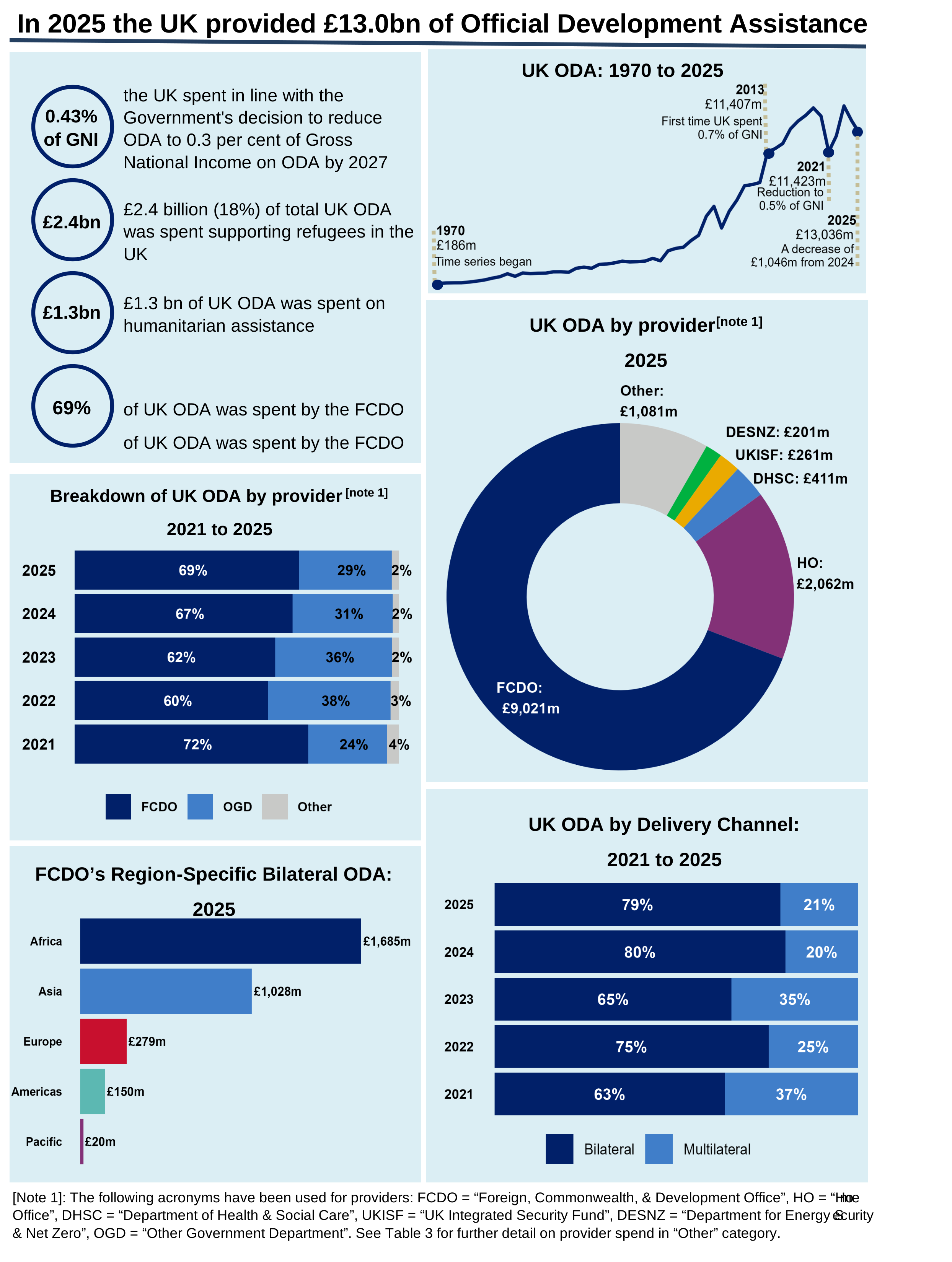
- UK ODA spend was £13,036 million, a decrease of £1,046 million (7.4%) from 2024
- the provisional ODA:GNI ratio was 0.43% (the UK spent 0.43% of its GNI on ODA), compared with 0.50% in 2024
- the decreased volume of ODA and ODA:GNI ratio reflects the UK Government’s decision to reduce ODA spending to 0.3% of GNI by 2027 to fund an increase in defence spending6
- £2,395 million was spent on support to refugees or asylum seekers in the UK[footnote 7], compared with £2,827 million in 2024 (a decrease of £432 million, 15.3%). As a share of total ODA, this was 18.3% in 2025, down from 20.1% in 2024
- the UK spent £1,294 million of bilateral ODA on humanitarian assistance in 2025, a decrease of £159 million (11.0%) from £1,453 million in 2024
- UK bilateral ODA was £10,256 million (a decrease of £1,017 million from 2024) and multilateral ODA was £2,780 million (a decrease of £29 million from 2024). For more information and definitions see chapter 4
- the Foreign, Commonwealth and Development Office (FCDO) spent £9,021 million on ODA, compared with £9,469 million in 2024 (down £448 million, 4.7%). However, the FCDO’s share of total UK ODA increased to 69.2% in 2025, from 67.2% in 2024
- non-FCDO[footnote 8] spend on ODA in 2025 was £4,015 million, compared with £4,613 million in 2024 (a decrease of £598 million,13.0%). The non-FCDO share was 30.8%, down from 32.8% in 2024
- statistics on bilateral ODA by geographic region in 2025 are currently only available for FCDO spend. Africa remained the largest recipient at £1,685 million (up from £1,601 million in 2024), followed by Asia at £1,028 million (down from £1,178 million in 2024)
3. Total UK ODA and ODA:GNI ratio
This chapter provides an overview of UK ODA in 2025. It presents the total amount of ODA provided by the UK and the ODA:GNI ratio.
Table 1 and Figure 1 show that in 2025:
- UK ODA was £13,036 million, a decrease of £1,046 million (7.4%) from 2024
- the ODA:GNI ratio was 0.43%
The decreased volume of ODA reflects the UK Government’s decision to reduce ODA spending to 0.3% of GNI by 2027 to fund an increase in defence spending[footnote 6].
Table 1: Total UK ODA, UK GNI estimates and ODA:GNI ratios (£ million) 2024 to 2025 (provisional)
| 2024 ODA £ million | 2024 GNI £ million | 2024 ODA:GNI ratio | 2025 ODA £ million | 2025 GNI £ million | 2025 ODA:GNI ratio |
|---|---|---|---|---|---|
| 14,082 | 2,825,858 | 0.50 | 13,036 | 3,021,037 | 0.43 |
Figure 1 (below) shows the historical trend in UK ODA, including the decrease in ODA and ODA:GNI ratio in 2021 caused by the reduction in ODA spend from 0.7% to 0.5%, and the decrease in ODA and ODA:GNI ratio in 2025 following the February 2025 announcement that the UK Government will reduce ODA spend to 0.3% by 2027[footnote 6].
Figure 1: UK ODA levels (£ million) and ODA:GNI ratios (%), 1970 to 2025
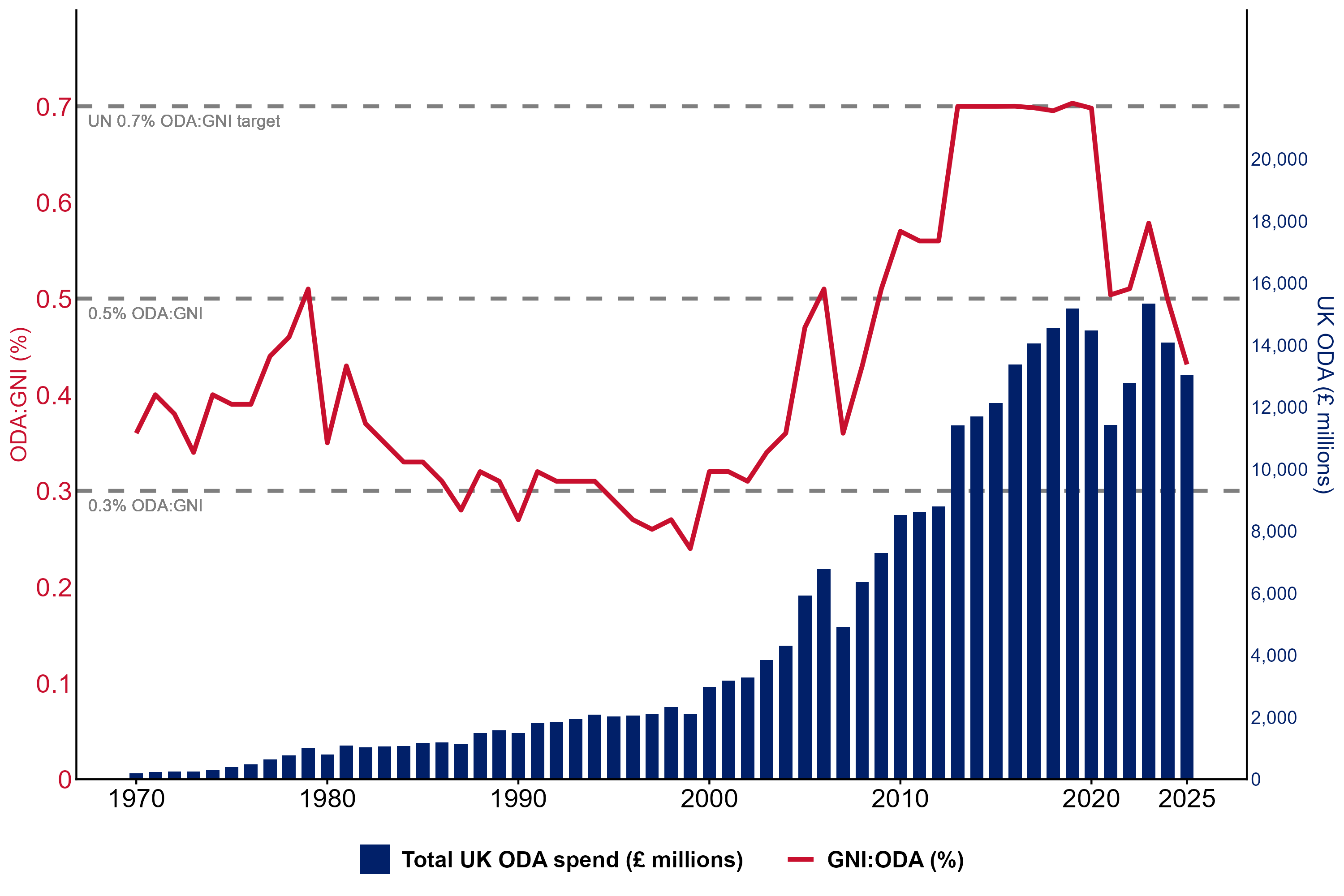
Figure 1: The blue bars are the UK ODA spend from 1970 to 2025; the red line is the calculated ODA:GNI ratio from 1970 to 2025. The top grey dashed line is the 0.7% ODA:GNI target set by the United Nations General Assembly in 1970; the middle grey dashed line is the 0.5% ODA:GNI ratio, the level around which the UK government spent ODA from 2021 to 2024; the bottom grey dashed line is the 0.3% ODA:GNI ratio, the level that the UK government has announced the ODA:GNI ratio will be reduced to by 2027[footnote 6]. From 2018 onwards, ODA changed from being measured on a cash basis to being measured on a grant equivalent basis, following a decision taken by the DAC in 2014[footnote 9].
4. Total UK ODA by provider and delivery mechanism
This chapter presents the breakdown of UK ODA by government department and other official providers, and by delivery mechanism.
Figure 2 shows a breakdown of UK ODA by government department and other official providers in 2024 and 2025. See Table 3 for a detailed breakdown of ODA by provider and comparisons between 2024 and 2025.
Figure 2: UK ODA spend by provider (£ million), 2024 and 2025
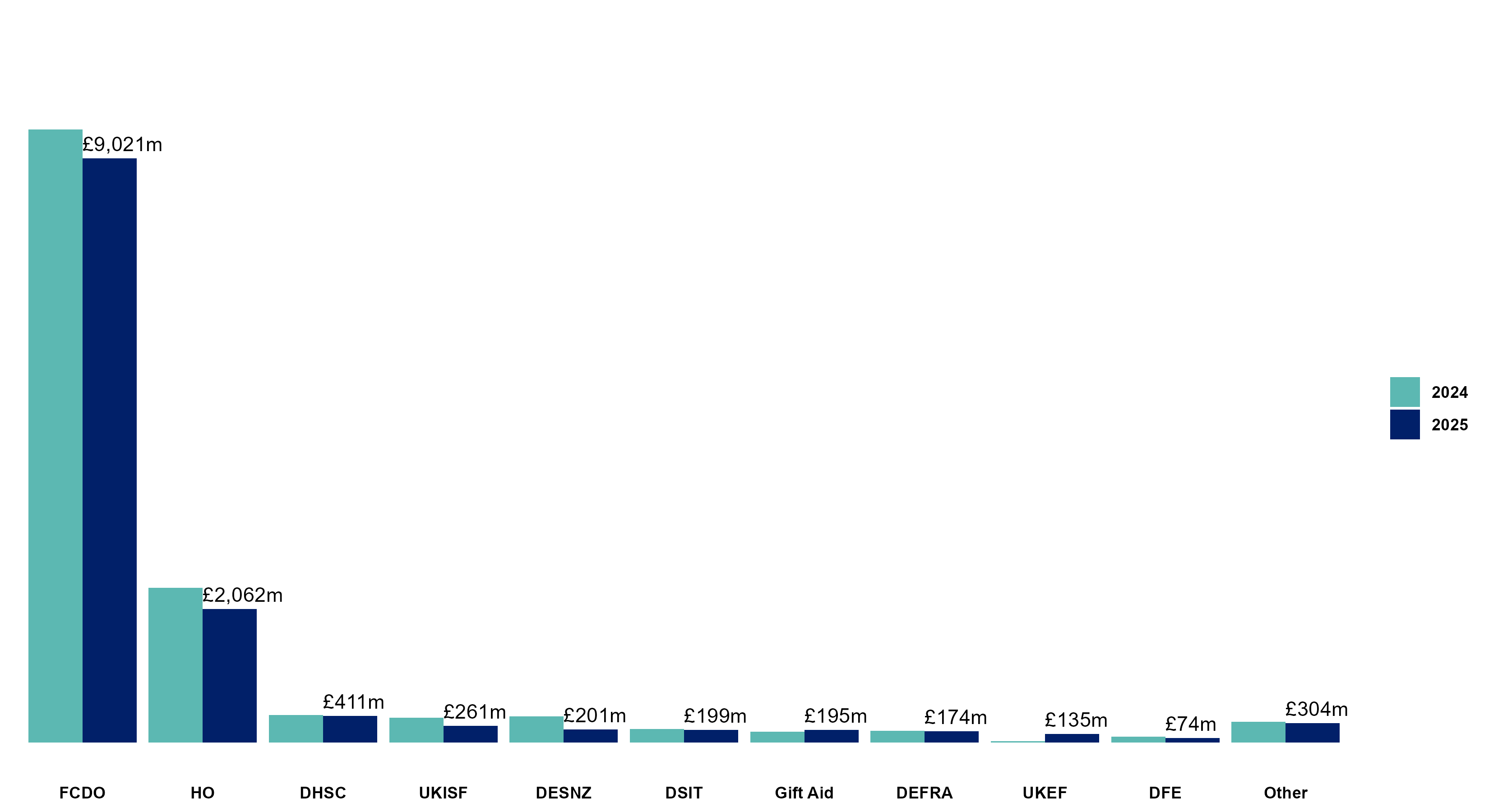
Figure 2: FCDO = Foreign, Commonwealth & Development Office; HO = Home Office; DHSC = Department of Health & Social Care; UKISF = UK Integrated Security Fund; DESNZ = Department for Energy Security & Net Zero; DSIT = Department for Science, Innovation and Technology; DEFRA = Department for Environment Food and Rural Affairs. ‘Other’ is the twelve remaining government departments and other providers. See Table 3 for the other departments and official providers of ODA. Dark blue bars = 2025, teal bars = 2024.
Most government departments and other providers saw a decrease in ODA spend between 2024 and 2025.
- Foreign Commonwealth and Development Office (FCDO) was the largest provider spending £9,021 million, a decrease of £448 million (4.7%) compared to 2024. However, FCDO’s share of total ODA increased from 67.2% to 69.2%
- Home Office was the second largest provider, spending £2,062 million, a decrease of £328 million (13.7%) compared to 2024. This was driven by a decrease in ODA-eligible support costs for asylum seekers in the UK
- other departments with large decreases were Department for Energy Security and Net Zero (DESNZ), which spent £201 million, a decrease of £207 million (50.8%), and UK Integrated Security Fund (UKISF), which spent £261 million, a decrease of £125 million (32.5%)
- the departments that saw the largest increases in ODA in 2025 were UK Export Finance (UKEF), which spent £135 million on debt relief activity, an increase from £24 million in 2024, and HM Treasury, which spent £45 million, up from £4 million in 2024
More detail on departmental spend will be available in the ‘Statistics on International Development: Final UK ODA Spend 2025’ publication in Autumn 2026.
In-donor refugee costs
ODA-eligible In-Donor Refugee Costs (IDRC) are defined by the OECD DAC[footnote 10] as costs incurred in a donor country for certain support to asylum seekers and refugees from developing countries during the first 12 months of their stay. This includes payments for refugees’ transport to the host country and temporary sustenance (food, shelter and training).
In 2025, £2,395 million of total UK ODA was spent on in-donor refugee costs (18.3% of total UK ODA). This represents a £432 million decrease (15.3%) compared to 2024 (Figure 3). ODA spend reduced across all IDRC-spending departments in 2025. More detail can be found in Table Figure 3 of the accompanying tables.
Figure 3: Total UK ODA for in-donor refugee costs in the UK: 2021 to 2025
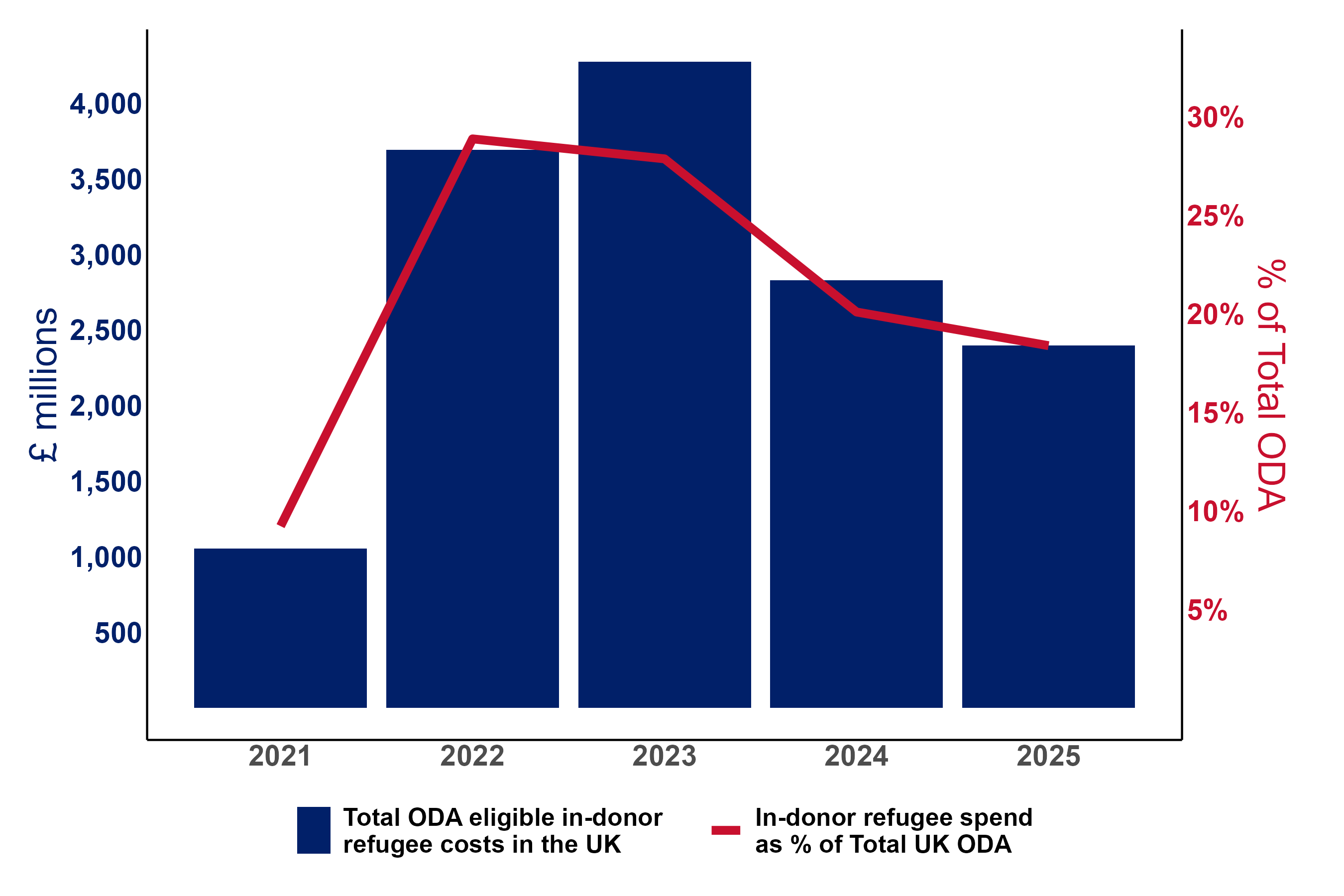
Figure 3: The blue bars are the total UK ODA for in-donor refugee costs in the UK (£ million), 2021 to 2025. The red line is the in-donor refugee costs in the UK as a % of total UK ODA.
4.1. UK ODA by delivery mechanism
There are 2 main channels of delivery for ODA: bilateral and multilateral.
Multilateral ODA
ODA that is given directly to the core budget of a multilateral organisation without specifying where or how it should be spent. It is pooled with other donors’ funding, for example, UK core funding to the International Development Association (IDA).
Bilateral ODA
ODA provided for a specific purpose (normally a particular country, region or sector) which is for specific projects in developing countries or delivered via partners, for example, UK funding to an NGO to deliver humanitarian assistance in Syria. See Chapter 5 for a breakdown of FCDO bilateral ODA by regions.
Figure 4 shows the breakdown of bilateral and multilateral UK ODA spend between 2021 and 2025.
- in 2025, £10,256 million of UK ODA was delivered through bilateral channels, a 9.0% decrease (£1,017 million) compared to 2024
- £2,780 million was delivered through core contributions to multilateral organisations. This was a decrease of 1.0% (£29 million) compared to 2024
There has been a decrease in the share of UK ODA delivered through bilateral channels (from 80.1% in 2024 to 78.7% in 2025), whilst the share delivered through multilateral channels has increased (from 19.9% in 2024 to 21.3% in 2025). More detail will be available in the ‘Statistics on International Development: Final UK ODA Spend 2025’ publication in Autumn 2026.
Figure 4: Total UK ODA by delivery channel (£ million), 2021 to 2025
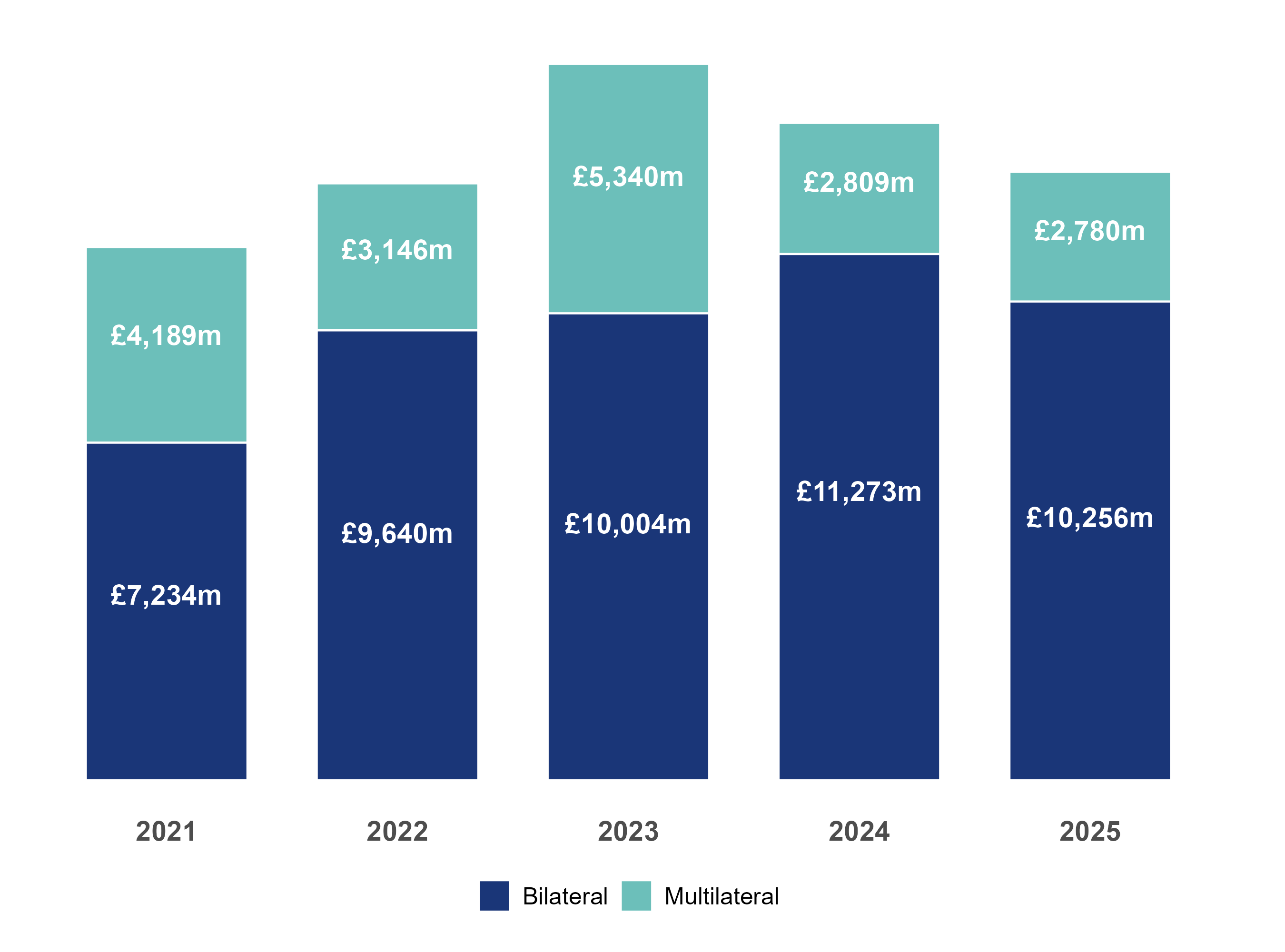
Figure 4 legend: Total UK ODA by Delivery Channel (£ million), 2021 to 2025. The blue portions of the bars represent the proportion of UK ODA spent through bilateral channels and the teal portions of the bars represent the proportion of UK ODA spent through core contributions to multilateral organisations.
In addition:
- £1,294 million of bilateral ODA was in the form of humanitarian assistance (9.9% of total UK ODA), a decrease of £159 million (11.0%) compared with 2024
5. FCDO bilateral funding to regions
This chapter presents high level information about FCDO’s bilateral ODA spend in 2025. Similar data from other providers of UK ODA is not available for this release but will be presented in ‘Statistics on International Development: Final UK ODA Spend 2025’ in Autumn 2026, alongside more detailed country-level information.
Key terms used in this chapter
The geographical breakdowns of bilateral ODA in this publication are determined by the region which benefits from the ODA spend (not by where the spend takes place).
Bilateral ODA by region includes spend which has been identified as benefitting either a single country/region or countries within a single region (referred to in this report as ‘region-specific’). It excludes spend that benefits multiple regions.
Non-region-specific bilateral ODA consists of spend on projects which cannot be identified as benefitting either a single country/region, or countries within a single region (for example, a project which benefits several developing countries across multiple regions, or ODA spend that takes place within the UK, for example scholarships, ODA-eligible administrative costs).
Figure 2 showed that total FCDO spend decreased by £448 million (4.7%) between 2024 and 2025.
Figure 5 shows that the majority of this decrease (83.5%) was in bilateral ODA, which decreased by £374 million (5.6%) from £6,731 million to £6,357 million in 2025.
Figure 5: FCDO bilateral ODA (£ million), 2024 and 2025
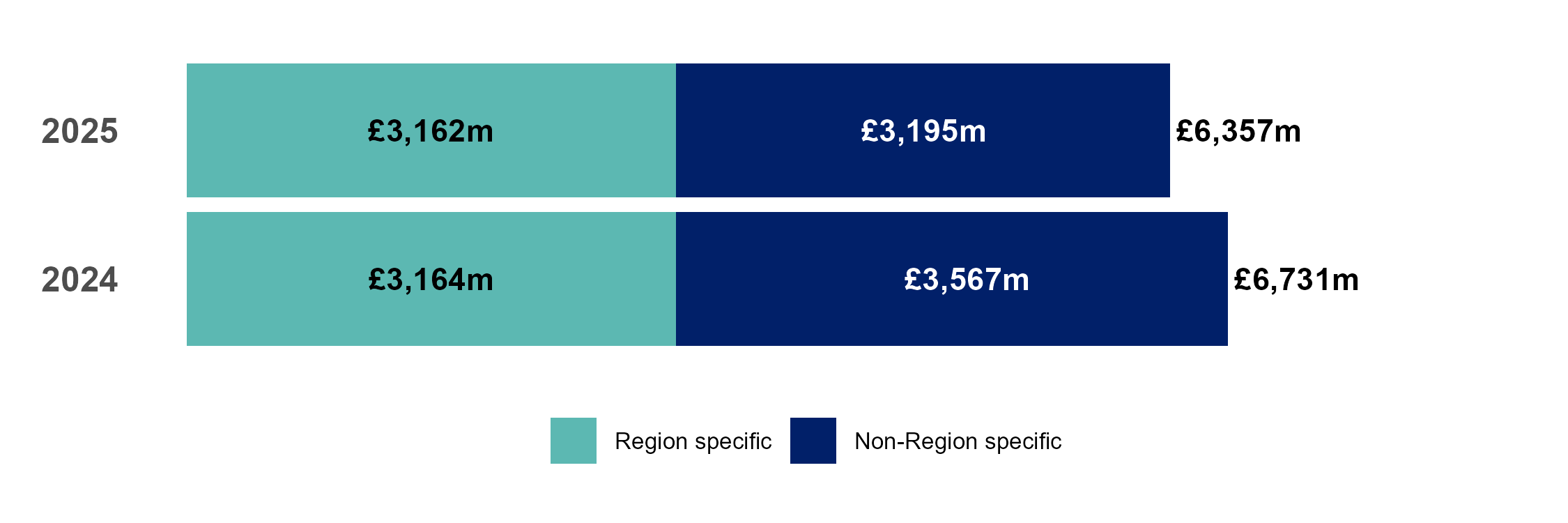
Figure 5: FCDO bilateral ODA, 2024 and 2025. The blue portions of the bars represent the proportion of FCDO bilateral ODA spent on non-region-specific and the teal portions of the bar represent FCDO bilateral ODA spent on region-specific.
5.1. FCDO bilateral ODA by region
- in 2025, the volume of FCDO bilateral ODA identified as benefitting a single country or region was £3,162 million, a decrease of 0.1 % compared to 2024
- as a share of FCDO’s total bilateral ODA, this was an increase from 47.0% to 49.7%
- figure 6 shows that the order of regions by their share of FCDO bilateral ODA remained unchanged between 2024 and 2025. The volume of FCDO bilateral ODA increased in all regions except Asia
- Africa remained the largest recipient at £1,685 million (up from £1,601 million in 2024). Asia remained the second largest recipient but saw a decrease from £1,178 million to £1,028 million. FCDO ODA to Europe increased by £11 million to £279 million, and FCDO ODA to the Americas increased by £45 million to £150 million. The Pacific region remained the smallest recipient, however it saw an increase of £7 million (56.9%) from £13 million in 2024 to £20 million in 2025
Figure 6: FCDO region-specific bilateral ODA, 2021 to 2025
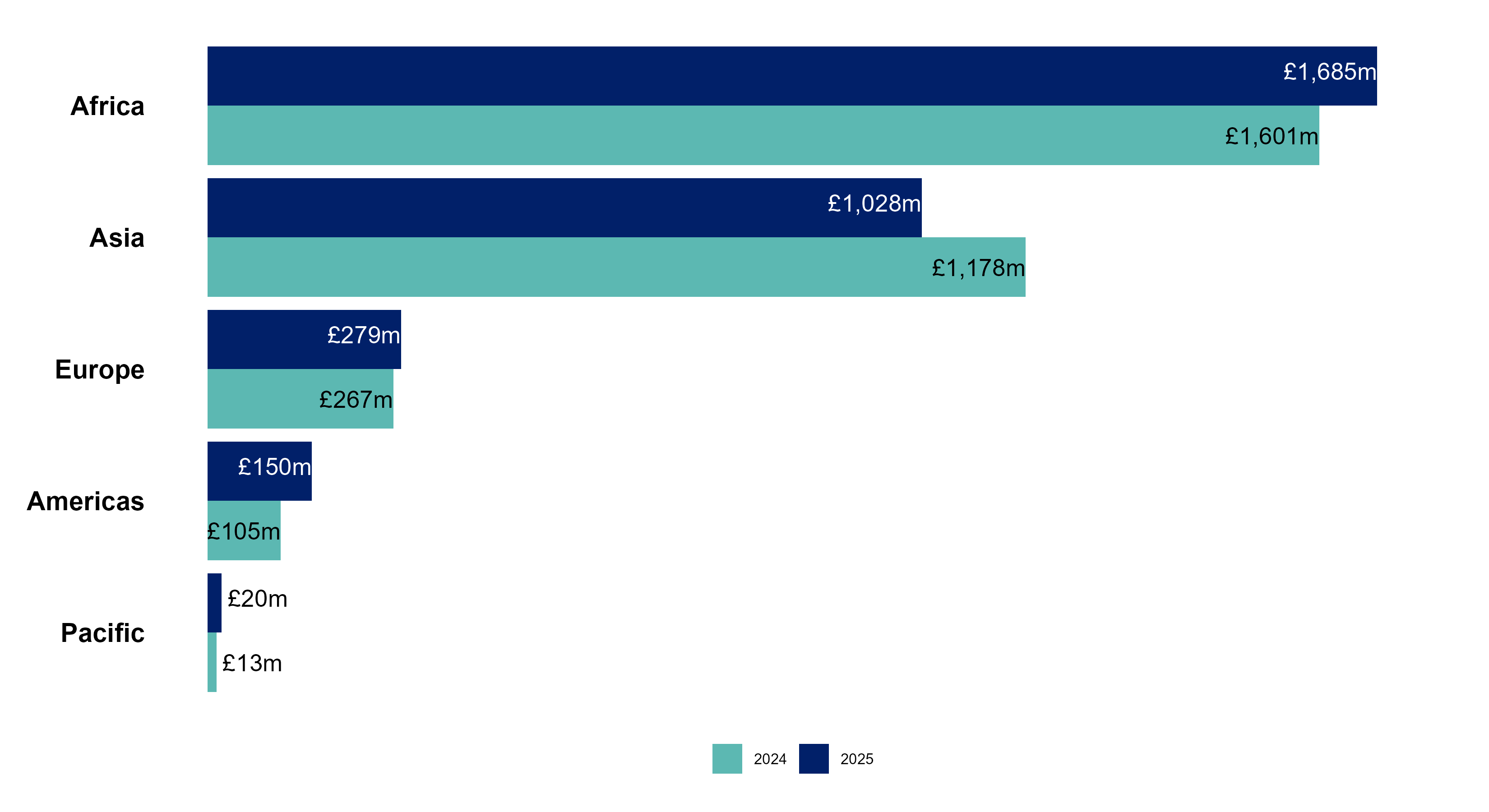
Figure 6: FCDO region-specific bilateral ODA by recipient region (£ million). Dark blue = 2025, teal = 2024.
5.2 Non region-specific bilateral ODA
Figure 5 showed that non-region-specific bilateral ODA spend by FCDO[footnote 11]amounted to £3,195 million in 2025, a decrease of £372 million compared to 2024. This accounted for 50.3% of FCDO’s total bilateral ODA spend, down from 53.0% in 2024.
To provide some detail on what is included in this figure, Figure 7 illustrates the different “types of aid”[footnote 12] which make up the FCDO’s non-region-specific bilateral ODA. 26.1% of FCDO non-region-specific bilateral ODA was in-donor expenditure (£835 million). Specific programs/funds managed by international organisations was the second largest, accounting for 23.7% (£757 million), and project-type interventions was the third largest with 23.4% (£749 million).
Figure 7: Breakdown of FCDO’s non region-specific bilateral ODA in 2025
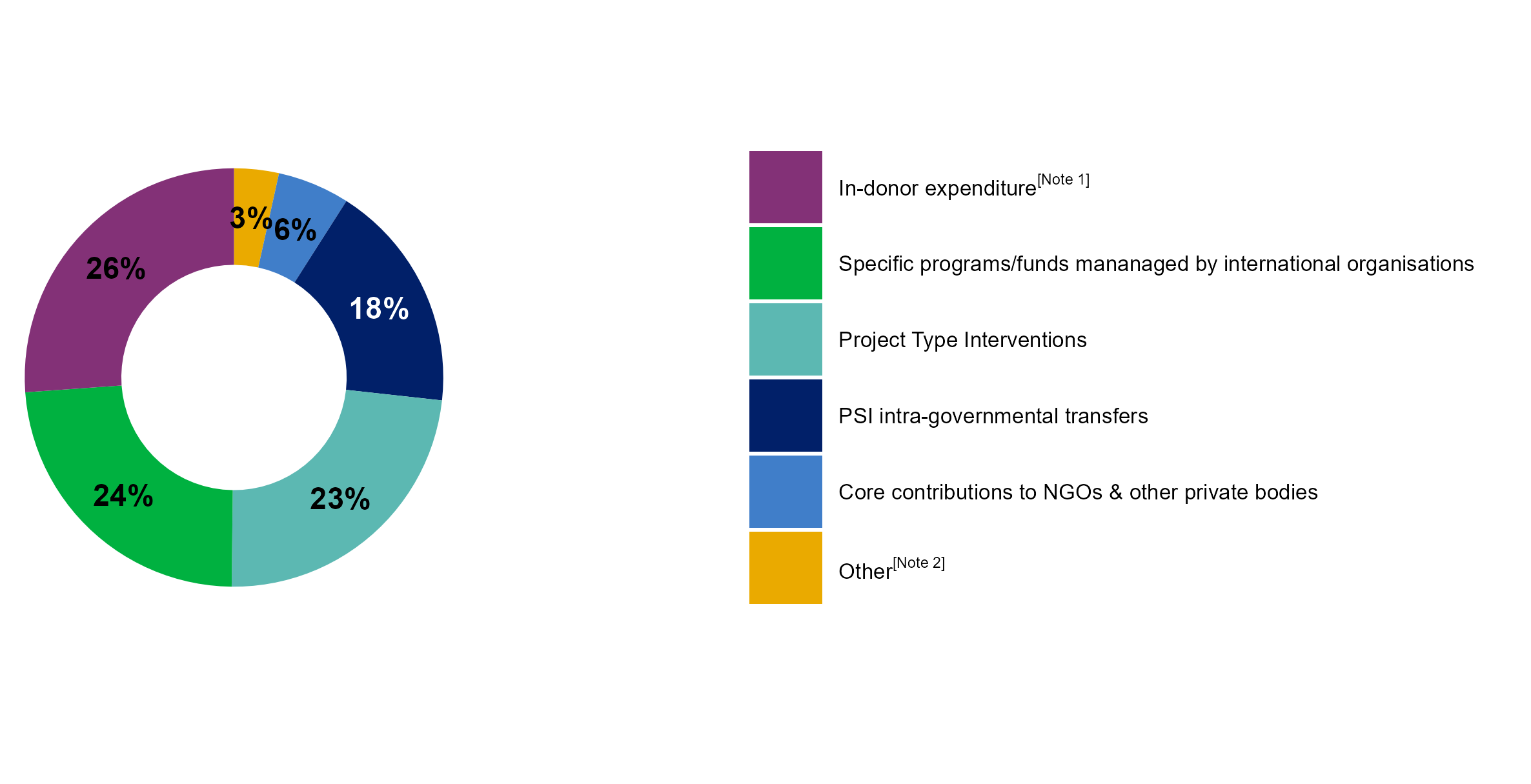
Figure 7 legend: Breakdown of FCDO’s non-region-specific bilateral ODA (%) in 2025. Purple =In-donor expenditure, green = Specific programs/funds managed by international organisations, teal = Project-Type Interventions, dark blue =PSI (Private Sector Instruments) intra-governmental transfers, light blue = Core contributions to NGOs & other private bodies, gold = Other.[Note 1] In-donor expenditure includes the administrative costs of FCDO, raising development awareness, cost of UK experts and UK scholarships. [Note 2] Other includes technical assistance, basket funds, budget support and debt relief.
6. Background notes
6.1. Definitions and sources
1. Information on the main definitions and sources used in this publication can be found in Annexes 2 and 3 of the publication.
2. UK ODA figures for this publication are derived from:
- FCDO’s Hera system of financial transactions relating to payments and receipts, which is quality assured centrally to ensure that data is complete and spend is in line with OECD definitions of ODA. The FCDO data comprised 69% of total UK ODA in 2025
- non-FCDO sources are largely derived from financial transaction data. ODA contributors also assess whether the spend is in line with the OECD definitions of ODA. A small proportion of non-FCDO spend is estimated, for example Gift Aid on ODA-eligible activity. These non-FCDO sources accounted for around 31% in 2025
3. All figures in the report are in current prices (ie not adjusted for inflation or changes over time). Users should be careful when making comparisons between the calendar year figures reported here with financial year ODA budget allocations1 as they are not directly comparable (the latter are financial year and use resource accounting methods whereas Statistics on International Development is produced on a calendar year and cash flow basis, in line with the Organisation for Economic Cooperation and Development (OECD) Development Assistance Committee (DAC) Statistical Reporting Directives).
6.2 Scope
4. This publication presents information on the UK’s Official Development Assistance (ODA) spend in calendar year 2025. Comparisons are made to calendar year 2024. It includes data from UK government departments as well as the Devolved Administrations of the UK and other providers of UK ODA. Data relating to both bilateral and multilateral ODA are included in the publication.
5. The publication does not include information on:
- private spending or donations made in support of developing countries, for example by the public, the voluntary sector or through remittances, are not part of the ODA definition and not covered in this publication
- financial year ODA budget allocations, which are set by HM Treasury. Users are advised to use caution when making comparisons between the calendar year figures reported in SID with financial year ODA budget allocations
6.3. ODA spending and reporting
6. FCDO and HM Treasury monitor spend by UK departments and funds, and movements in GNI during the year. UK ODA and the ODA:GNI ratio is reported in the calendar year following the spend, using confirmed ODA outturn spend, and GNI estimates published by the Office for National Statistics.
7. While FCDO manages its own spending on ODA, FCDO has no control over GNI nor the spending by other government departments and other sources of ODA. After final decisions on UK ODA spending are made the GNI estimate can still shift, due to later economic data for the year becoming available. So can the amount of ODA spent by other government departments and ODA contributions from non-departmental sources.
8. Between the spring and the autumn, the previous year’s ODA totals of FCDO and other government departments and contributors are finalised. Government departments provide project-level details that allow the ODA spend to be quality assured by FCDO. The ONS release further updates of GNI throughout the year. The final ODA data and the most up-to-date available GNI estimate are then used to calculate the final ODA:GNI ratio in the Autumn publication.
9. FCDO is responsible for collating data and reporting spend on UK ODA to the OECD, including the ODA:GNI ratio.
6.4. Timing and releases
10. FCDO releases 2 editions of Statistics on International Development each year:
- provisional UK ODA spend is published in the spring and includes a preliminary estimate of the UK’s ODA:GNI ratio for the previous calendar year. This is usually in April each year
- final UK ODA spend is usually published in the Autumn. This publication confirms the UK’s ODA:GNI ratio for the previous year, as well as including more detailed analysis of the UK’s bilateral and multilateral ODA, and includes the microdata used to produce the publication. The latest edition of this publication can be found on ‘Statistics on International Development: final UK ODA spend 2024’
11. Provisional 2025 ODA statistics for all members of the OECD will be published by the OECD DAC on 9 April 2026. Final data is normally published by the OECD in December.
6.5. EU attribution
12. The provisional estimate for the UK’s share of the EU ODA spend in 2025 was £147 million compared to £282 million in 2024. The UK’s share of the EU attribution fluctuates from year to year due to the speed of programme delivery, the total share of EU external programming spend that is classified as ODA and exchange rates. In addition to the normal fluctuations, the decrease in 2025 reflects the UK’s shrinking residual contributions to the EU Multiannual Financial Framework (MFF) 2014 to 2020 budget. Under the Withdrawal Agreement, the UK committed to meet outstanding contributions from the 2014 to 2020 EU budget including for external action, development and humanitarian aid programming. This means a declining tail of ODA contributions until 2029-30 and is part of the wider financial settlement in the Withdrawal Agreement.
6.6. Grant equivalent measure
13. Since 2018, Official Development Assistance (ODA) has been measured on a grant equivalent basis, following a decision taken by the DAC in 2014. For more information on the grant equivalent measure, please see our technical note.
6.7. Revisions and changes to the publication
14. The revisions process is set out in FCDO’s Revisions Policy.
6.8. Improvements and developments
User engagement
15. An important part of Accredited Official Statistics production is assessing whether a product continues to meet user needs. The ODA statistics team plan to review the format and content of the SID publications to ensure they meet user needs and continue to deliver statistics in the most effective and efficient way. We will keep you informed and provide information on how you can feed in your views on the SID page on GOV.UK as well as via StatsUserNetwork.
ODA-eligible administrative costs
16. FCDO is defined as a multi-purpose agency by the OECD, as it carries out both ODA and non-ODA activities. FCDO statisticians have produced a suitable methodology that captures the ODA eligible proportion of FCDO administrative costs. Information on this methodology can be found in our explanatory note here. Figures for 2025 include a methodology change which results in a change of £65 million (see section 5.2).
Gift Aid
17. The methodology used to estimate the ODA-eligible portion of Gift Aid can be found here. The methodology has been reviewed and strengthened to identify an updated list of charities that claim Gift Aid and work overseas which were surveyed to identify the percentage of their annual spend over the last 3 years that was for ODA-eligible activities.
18. 2025 figures included this methodological change to how Gift Aid ODA was calculated. This resulted in an increase of £18 million in 2025 figures, due to the increased percentage applied to HMRC’s Gift Aid figure (from 70.5% to 77.7%).
Private sector instruments (PSI)
19. In 2023, the OECD DAC agreed on revised methods for measuring donor effort in private sector instruments (PSI) in ODA, leading to the development of a ‘grant equivalent’ measure for ODA transactions with the private sector. There was a 2-year transition period for DAC members to adopt the new rules.
20. For the majority of UK PSI, the reported value of disbursements (i.e. spend) is not affected by the new rules (hence the grant equivalent reported in a given year will equal the value of disbursements in that year). For a small number of programmes, reflows from investments will not be reported in the year they are received but rather, reported cumulatively upon exit from the investment. For 2025, this applied to reflows from a small number of projects, totalling £30 million. Further details of the new rules can be found in Addendum 3 of the Statistical Reporting Directives and in the PSI Handbook.
The total of these 3 changes is outlined below:
| Issue | Size of change (million) |
|---|---|
| ODA-eligible administrative costs | +£65m |
| Gift Aid | +£18m |
| Private sector instruments (PSI) | +£30m |
| Total | +£113m |
6.9. Quality
21. The OECD sets the definitions and classifications for reporting on ODA internationally. These are laid out in the DAC Statistical Reporting Directives. The statistics in this report are produced in line with these directives and are subject to the quality assurance process as described in Annex 3.
22. This publication follows the FCDO statistics: statement on quality - GOV.UK guidance, which sets out the FCDO’s approach to data quality in accordance with the Code of Practice for Statistics.
23. The data in the publication is largely based on administrative data and so it is not subject to sampling error. However, these provisional statistics may change between now and the final release in Autumn 2025 as the data is further audited and assured as part of the closing of accounts and statistical quality assurance processes.
24. FCDO’s finance system “Hera” was implemented during 2022. A dedicated statistician worked on the shift between the former DFID and FCO systems to assess the impact of the new system on our statistics and ensure that FCDO ODA data can be consistently collected and reported in line with the OECD DAC directives. We will update our ‘assessment of assurance of administrative data’ (Annex 3) and provide more information about the quality assurance of data from Hera before the publication of ‘Statistics on International Development: Final UK ODA Spend 2025’.
25. The OECD Development Assistance Committee (DAC) states 5 clarifications for defining what in-donor refugee costs can be considered ODA in statistical reporting. The United Kingdom adheres to these principals to preserve ODA integrity and allow comparability between countries.
26. The UK’s methodology for estimating in-donor refugee costs is published here.
6.10. Related statistics and publications
27. The OECD provide ODA breakdowns for DAC donors (including multilaterals). This source is useful when carrying out international comparisons.
28. The Development Tracker can be used to explore details of the individual development projects that the UK is funding. This allows you to filter projects by country and sector and view further details about the project as published in documents such as the business case and annual review. The tracker uses open data on development projects, compliant with the International Aid Transparency Initiative standard, to show where funding by the UK Government and its partners is going and ‘trace’ it through the delivery chain.
6.11. Accredited Official Statistics
29. These are Accredited Official Statistics. They have been independently reviewed by the Office for Statistics Regulation (OSR) and found to comply with the standards of trustworthiness, quality and value in the Code of Practice for Statistics. These statistics were first accredited by OSR in October 2015, and a compliance review in August 2023 confirmed the accreditation.
6.12. Accessibility
30. We have formatted the summary tables which accompany the publication to ensure that they are fully accessible for use with screen readers and keyboard only navigation. This is in line with The Public Sector Bodies (Websites and Mobile Applications). We will also publish an HTML version of the report.
31. If you need any of the information published as part of the SID collections (SID 2025 or historical) in a different format, please contact us on statistics@fcdo.gov.uk.
Contact
For enquiries (non-media) about the information contained in this publication, or for more detailed information, contact:
Email: statistics@fcdo.gov.uk
Website: https://www.gov.uk/government/organisations/foreign-commonwealth-development-office/about/statistics
For media enquiries please contact the FCDO Press Office on +44 (0)20 7008 3100.
For further information on development issues and FCDO policies, please contact the Public Enquiry Point on 020 7008 5000.
-
For example, FCDO’s Annual Report and Accounts or the Written Ministerial Statement on Official Development Assistance (ODA) programme allocations 2026/2027 to 2028/2029. ↩
-
A glossary, explaining key terms used throughout this report, is available in Annex 1. ↩
-
In the case of private sector instruments it must also be “additional” developmentally and financially or in value. ↩
-
https://www.oecd.org/en/topics/sub-issues/oda-eligibility-and-conditions/dac-list-of-oda-recipients.html ↩
-
In the Autumn Statement 2022 the previous government announced additional ODA resources of £2.5 billion over 2022 to 2023 and 2023 to 2024, stating these funds were to help meet the significant and unanticipated costs incurred in supporting the people of Ukraine and Afghanistan to escape oppression and conflict and find refuge in the UK. ↩
-
https://www.gov.uk/government/speeches/prime-ministers-oral-statement-to-the-house-of-commons-25-february-2025 ↩ ↩2 ↩3 ↩4
-
Non-FCDO refers to all entities and activities that are not part of the FCDO, including other government departments, NGOs and international bodies. ↩
-
For information on the difference between the Grant Equivalent measure and the historical cash measurement please see Background Note [6.6]. ↩
-
In-donor refugee costs in official development assistance (ODA), OECD ↩
-
This includes an estimate of FCDO’s ODA-eligible administrative costs. This has been calculated using an updated methodology, which led to an increase of £65 million in 2025. For more details, see the updated explanatory note here. ↩
-
For more information on these sectors see: https://webfs.oecd.org/oda/DataCollection/Resources/DAC-CRS-CODES.xlsx ↩