Safety in Custody Statistics, England and Wales: Deaths in Prison Custody to March 2026 Assaults and Self-harm to December 2025
Published 30 April 2026
Applies to England and Wales

© Crown copyright 2026
This publication is licensed under the terms of the Open Government Licence v3.0 except where otherwise stated. To view this licence, visit nationalarchives.gov.uk/doc/open-government-licence/version/3 or write to the Information Policy Team, The National Archives, Kew, London TW9 4DU, or email: psi@nationalarchives.gov.uk.
Where we have identified any third party copyright information you will need to obtain permission from the copyright holders concerned.
This publication is available at https://www.gov.uk/government/statistics/safety-in-custody-quarterly-update-to-december-2025/safety-in-custody-statistics-england-and-wales-deaths-in-prison-custody-to-march-2026-assaults-and-self-harm-to-december-2025
Main Points
| Number of deaths decreased from the previous 12-month period | In the 12 months to March 2026, there were 352 deaths in prison custody, a decrease of 12% from 399 deaths in the previous 12 months. Of these, 67 deaths were self-inflicted, a decrease of 28% from the 93 self-inflicted deaths in the previous 12 months. |
| The rate of self-harm decreased in both male and female establishments from the previous 12-month period | In the 12 months to December 2025, the rate of self-harm was 837 incidents per 1,000 prisoners (72,753 incidents), an 8% decrease from the 12 months to December 2024, with an 8% decrease in male establishments and a 5% decrease in female establishments. In the most recent quarter, the rate of self-harm decreased by 5%, with a 3.8% decrease in the rate in male establishments and a 6% decrease in female establishments. The number of incidents decreased by 7% to 17,322. |
| The rate of individuals who self-harmed decreased from the previous 12-month period | In the 12 months to December 2025, the rate of individuals who self-harmed was 154 individuals per 1,000 prisoners (13,394 individuals), a decrease of 3.6% from a rate of 160 in the previous 12 months. The number of self-harm incidents per individual decreased from 5.7 to 5.4 in the 12 months to December 2025. |
| The rate of assaults increased from the previous 12-month period | In the 12 months to December 2025, the rate of assaults was 360 assaults per 1,000 prisoners (31,345 assaults), up 2.7% from the 12 months to December 2024. In the most recent quarter, assaults were down 8% to 7,499 incidents and the assault rate was down 7% to 86 assaults per 1,000 prisoners. |
| The rate of prisoner-on-prisoner assaults increased from the previous 12-month period | In the 12 months to December 2025, the rate of prisoner-on-prisoner assaults was 247 (21,463 prisoner-on-prisoner assaults), up 6% from the 12 months to December 2024 (with a 5% increase in the rate in male establishments and a 26% increase in female establishments). In the latest quarter, the number of prisoner-on-prisoner assaults was down 10% to 5,125 incidents. |
| The rate of assaults on staff decreased from the previous 12-month period | In the 12 months to December 2025, the rate of assaults on staff was 117 assaults per 1,000 prisoners (10,142 assaults on staff), down 4.5% from the 12 months to December 2024 (with a 6% decrease in the rate in male establishments, but a 12% increase in female establishments). In the latest quarter the number of assaults on staff decreased by 4.6% to 2,446 incidents. |
| The rate of serious assaults increased 11% of all assaults were serious |
In the 12 months to December 2025, the rate of serious assaults was 40 serious assaults per 1,000 prisoners (3,484 incidents), up 2.8% from the previous 12 months. The rate of serious prisoner-on-prisoner assaults was up 6% to 30 per 1,000 prisoners (2,610 incidents), while the rate of serious assaults on staff was down by 6% to 10 per 1,000 prisoners (908 incidents) in the 12 months to December 2025. |
If you are a journalist covering a suicide-related issue, please follow the Samaritans’ Media Guidelines for Reporting Suicide because of the potentially damaging consequences of irresponsible reporting.
If you are struggling to cope, please call Samaritans for free on 116 123 (UK and the Republic of Ireland) or contact other sources of support, such as those listed on the NHS help for suicidal thoughts webpage. Support is available around the clock, every day of the year, providing a safe place for you, whoever you are and however you are feeling.
Statistician’s comment
In the 12 months to March 2026, we have seen a decrease in the number of deaths (12% decrease). In the 12 months to December 2025, we have seen an 8% decrease in the number of self-harm incidents and a 2.8% increase in the number of assault incidents compared with the previous year. The number of incidents of assaults have increased in both male and female establishments over the past 12 months while the number of incidents of self-harm have decreased in both male and female establishments in the past 12 months. The number and rate of assaults in female establishments have reached their highest level in the time series[footnote 1].
The number of deaths has decreased from 399 to 352 in the 12 months to March 2026, with the rate of deaths decreasing from 4.6 deaths per 1,000 prisoners to 4.0 deaths per 1,000 prisoners over the same time period. Where the cause of death is known, this decrease was mainly driven by a decrease in deaths from natural causes, and to a lesser extent by a decrease in self-inflicted deaths. There were 67 self-inflicted deaths[footnote 2][footnote 3] in the latest year, a decrease from 93 in the previous year. The rate of self-inflicted deaths has remained broadly stable at around 1.0 deaths per 1,000 prisoners since the 12 months to March 2018. There were 9 homicides in the 12 months to March 2026, an increase from 6 homicides in the previous 12 months and a new peak in the time series. In the six years prior to the 12 months to March 2025, there were 1 to 3 total homicides per year.
The rate[footnote 4][footnote 5] of self-harm incidents per 1,000 prisoners in the 12 months to December 2025 decreased by 8%. There was a decrease in the rate of self-harm incidents in both the male estate (down 8% to 631 incidents per 1,000 prisoners) and in the female estate (down 5% to 5,730 per 1,000 prisoners)[footnote 6]. The rate is over nine times higher in female establishments than male establishments. The decrease in the rate in the female estate was driven by a decrease in the average number of incidents among those who self-harmed in female establishments, from 18.8 to 17.1, while the rate of individuals self-harming increased (by 4.0%). For the male establishments, the rate of individuals self-harming decreased from 153 to 146 self-harming individuals per 1,000 prisoners, while the average number of incidents among those who self-harmed also decreased by 4.2% (from 4.5 to 4.3).
The rate of assault incidents per 1,000 prisoners increased 2.7% to 360 incidents per 1,000 prisoners in the 12 months to December 2025, and the rate of serious assaults increased 2.8% to 40 incidents per 1,000 prisoners over the same period. In female establishments the rate of assault incidents increased by 19% to a peak of 666 per 1,000 prisoners, compared to an increase of 1.7% in male establishments (to 348 per 1,000 prisoners). The rate of assaults was 92% higher in female establishments than in male establishments. The proportion of assaults in female establishments that were serious remains lower, at 7% compared with 11% in male establishments, despite the rate of serious assaults being higher in female establishments (up 9% to a rate of 49 per 1,000 prisoners) than in male establishments (up 2.5% to a rate of 40 per 1,000 prisoners).
In the 12 months to December 2025, the rate of assaults on staff decreased 4.5% to 117 incidents per 1,000 prisoners, with a 6% decrease in male establishments (to 108 per 1,000 prisoners) but a 12% increase in female establishments (to 322 per 1,000 prisoners). During the same period, the rate of prisoner-on-prisoner assaults increased 6% to 247 incidents per 1,000 prisoners, with a 5% increase in male establishments (to 243 per 1,000 prisoners) and a 26% increase in female establishments (to 347 per 1,000 prisoners).
Background
Safety in custody statistics cover deaths, self-harm and assaults in prison custody in England and Wales, with figures in the summary tables in the quarterly publications presented on a 12-month rolling basis over an 11 year time series[footnote 7]. This release provides statistics on deaths of prisoners to the end of March 2026, and statistics on assaults and self-harm up to the end of December 2025.
The total prison population has remained steady in the latest year[footnote 8] following a large increase in the prison population since 2021, particularly for certain population groups such as remand[footnote 9]. As at 31st March 2026 the prison population was around 600 (0.7%) lower than at the end of March 2025. The prison population as of 31st March 2026 remains around 9,500 or 12% higher than at the end of April 2021, with the male prison population increasing by 12% and the female prison population increasing by 10% from the end of April 2021.
These changes in population should be borne in mind when interpreting changes in the numbers of incidents over time. In the context of substantial population change, rates per 1,000 prisoners more accurately describe changes in the likelihood of incidents occurring[footnote 10]. Data on deaths, self-harm and assaults are routinely presented as rates of incidents per 1,000 prisoners (as well as numbers) for all prisoners and for the male and female estates.
The comparability of statistics between 2020 and 2022 with other time periods is affected by the differing levels of restrictions implemented within prisons to limit and control the spread of the Covid-19 virus through the National Framework. These restrictions included the implementation of effective isolation of prisoners to reduce the spread of Covid-19, reverse cohorting of new prisoners into custody, and shielding of vulnerable prisoners.
Between November 2022 and November 2024, in order to make the best use of capacity across the estate in the light of recent increases in the prison population, young people were routinely retained in the Youth Custody Service (YCS) estate until their 19th birthday (rather than transferring to an adult prison on or soon after their 18th birthday, as previously occurred in most cases).
This means the age demographic in the young people’s estate, but also in adult prisons, is slightly different compared to previous years.
Supplementary annual tables, providing more in-depth statistics on a calendar year basis, underlying data files with pivot tables providing lower-level granularity, and a technical guidance document are also available alongside this bulletin, at https://www.gov.uk/government/collections/safety-in-custody-statistics.
Changes to the publication:
Assaults by type of weapon
The annual assaults tables are included within this release, and include a table showing breakdowns by weapons used in an assault (table 3.10), which has now been updated to include a breakdown of weapons categorised as either “instrument weapons” or “non-instrument weapons” and with the removal of biting as a separate breakdown.
Assaults by type of injury
The assaults by injury table (table 3.12) has updated injury breakdowns between 2013 and 2015. The figures previously only counted one injury per incident up to 2015, and all injuries per incident from 2016, but have now been updated to also include all injuries per incident between 2013 and 2015.
Assaults by sex of establishments
The annual assaults tables by sentence type (table 3.5), by weapon (table 3.10) and by injury (table 3.12) have been updated to include a breakdown for the male and female estates.
Deaths: 12 months ending March 2026
| Number of deaths increased from the previous 12-month period | In the 12 months to March 2026, there were 352 deaths in prison custody, a decrease of 12% from 399 deaths in the previous 12 months. In the most recent quarter there were 85 deaths, a decrease of 9% from 93 deaths in the previous quarter. |
| Number of self-inflicted deaths decreased from the previous 12-month period | In the 12 months to March 2026, there were 67 self-inflicted deaths, a 28% decrease from 93 in the previous 12 months. There were 13 self-inflicted deaths in the most recent quarter, remaining unchanged from the previous quarter. Quarterly deaths figures should be considered with caution due to greater volatility. |
Figure 1: Quarterly 12-month rolling rate of deaths per 1,000 prisoners, 12 months ending March 2016 to 12 months ending March 2026, with quarterly rates
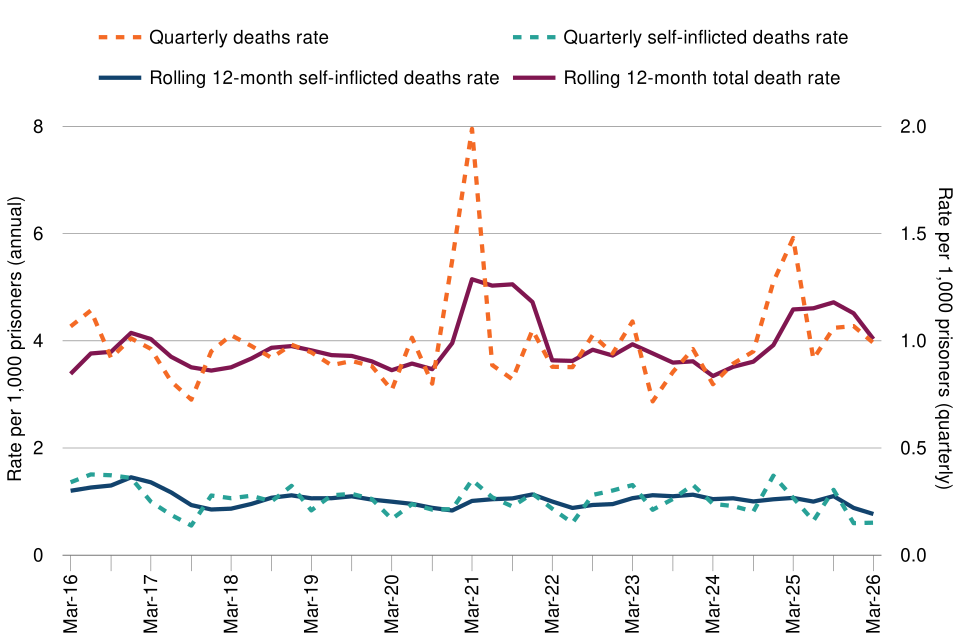
In the 12 months to March 2026, there were 352 deaths in prison custody (a rate of 4.0 per 1,000 prisoners), a 12% decrease from 399 deaths in the previous 12 months (a rate of 4.6 per 1,000 prisoners). Long-term trends and more detail are presented in the annual tables[footnote 11].
Over the same period, there were 202 deaths due to natural causes (a rate of 2.3 per 1,000 prisoners), an 18% decrease from 246 deaths by natural causes in the previous 12 months (a rate of 2.8 per 1,000 prisoners).
There were 67 self-inflicted deaths in the 12 months to March 2026 (a rate of 0.8 per 1,000 prisoners), a decrease of 28% from 93 self-inflicted deaths in the previous 12 months (a rate of 1.1 per 1,000 prisoners). The rate of self-inflicted deaths has remained broadly stable at around 1.0 per 1,000 prisoners since the 12 months to March 2018.
There were 9 homicides in the 12 months to March 2026, an increase from 6 homicides in the previous 12 months and a new peak in the time series. In the six years prior to the 12 months to March 2025, there were between 1 and 3 total homicides per year.
There were 74 deaths recorded as ‘Other’ in the 12 months to March 2026, an increase from 54 in the previous 12 months. Of those 74 deaths, 43 are ‘awaiting further information’ prior to being classified. In some cases, the results of the toxicology and post-mortem tests are inconclusive, meaning classification cannot be arrived at until a Coroner’s inquest takes place (which can be a considerable time after the death). As a result, the number and rate of deaths in the individual categories are not directly comparable with earlier years: it is likely that numbers in some categories will be revised upwards once classifications have been finalised.
In the most recent quarter there were 85 deaths, a decrease of 9% from 93 deaths in the previous quarter. There were 13 self-inflicted deaths in the latest quarter, remaining unchanged from the previous quarter. However, quarterly death figures should be considered with caution due to greater volatility and the potential for seasonal effects[footnote 12].
Self-harm: 12 months to December 2025
| The rate of self-harm incidents decreased in both the male and female estates from the previous 12-month period | There were 72,753 self-harm incidents in the 12 months to December 2025, an 8% decrease from the previous 12 months, with an 8% decrease in both male and female establishments. Over the same period the rate of self-harm incidents per 1,000 prisoners decreased by 8% in male establishments and decreased by 5% in female establishments. In the most recent quarter, there were 17,322 self-harm incidents, a 7% decrease compared to the previous quarter (decreasing 5% in male establishments and decreasing 11% in female establishments). Over the same period the rate of self-harm incidents per 1,000 prisoners decreased 3.8% in male establishments and decreased 6% in female establishments. |
| The number of individuals who self-harmed decreased in the latest year | There were 13,394 individuals who self-harmed in the 12 months to December 2025, a 3.5% decrease compared to 13,884 in the previous 12 months. The number of self-harm incidents per self-harming individual decreased 4.6% from 5.7 to 5.4 in the 12 months to December 2025. |
Figure 2: Quarterly 12-month rolling rate of self-harm incidents per 1,000 prisoners, 12 months ending December 2015 to 12 months ending December 2025, with quarterly rates
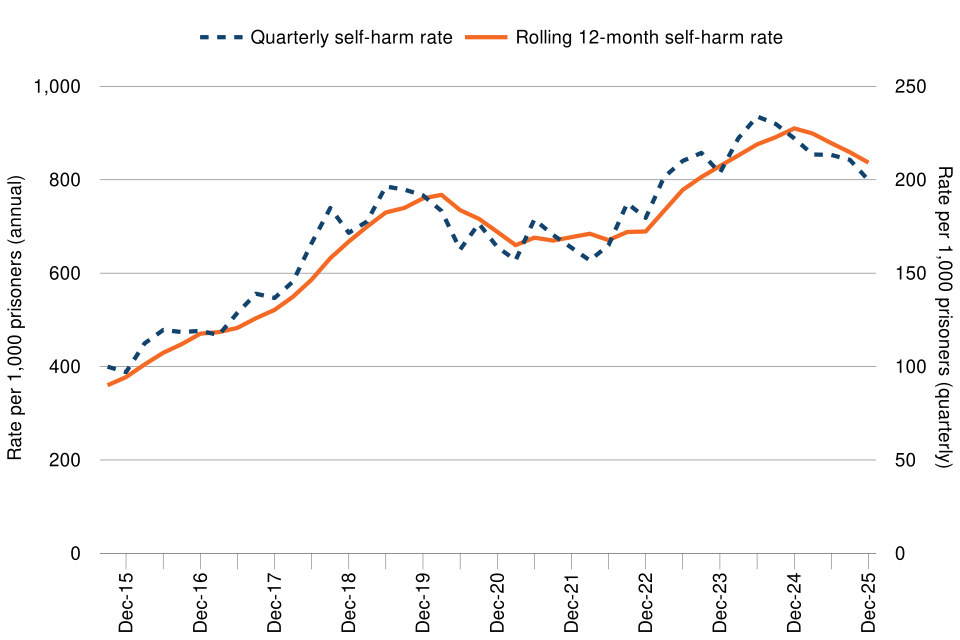
In the 12 months to December 2025, there were 72,753 reported incidents of self-harm (a rate of 837 per 1,000 prisoners). The number of incidents of self-harm decreased 8% from 79,060 in the previous 12 months. The rate of incidents in the latest 12 months decreased 8% from the previous 12 months.
On a quarterly basis, the number of incidents in the 3 months to December 2025 decreased by 7% from the previous quarter, from 18,601 to 17,322 incidents. The rate of incidents of self-harm in the three months to December 2025 decreased by 5% from the previous quarter to 200 incidents per 1,000 prisoners.
The number of individuals who self-harmed decreased by 3.5% to 13,394 in the latest 12 months, from 13,884 in the previous 12 months. The rate, or proportion, of prisoners self-harming also decreased (by 3.6%) to 154 self-harming individuals per 1,000 prisoners in the latest 12 months. The number of incidents per self-harming individual in the latest 12 months was 5.4, a decrease of 4.6% from 5.7 in the previous year. A small number of individuals who repeatedly self-harm have a disproportionate impact on this figure: just over a half (53%) of prisoners who self-harmed in 2025 did so more than once.
The number of self-harm incidents requiring hospital attendance[footnote 13] decreased by 13% (to 3,015) in the 12 months to December 2025, though it remained unchanged in the latest quarter at 752 incidents. The proportion of incidents that required hospital attendance decreased from 4.4% in the 12 months to December 2024 to 4.1% in the 12 months to December 2025.
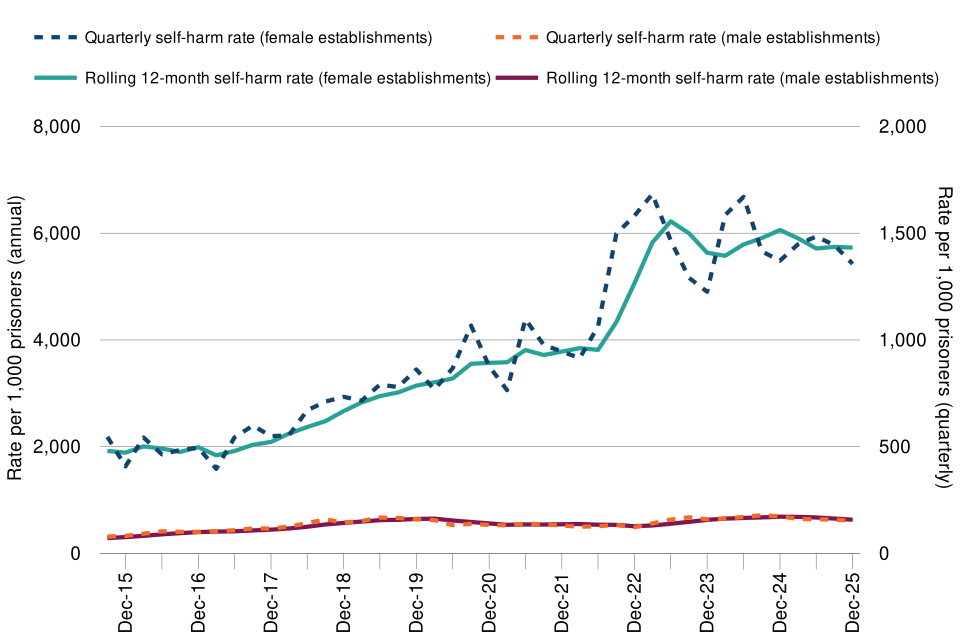
Self-harm levels differ considerably by sex. Although the number of incidents in the female estate is smaller than in the male estate, the rate of self-harm per 1,000 prisoners is much higher. In the 12 months to December 2025, there were 52,698 incidents in the male estate compared with 20,055 in the female estate, representing an 8% decrease in both male and female establishments compared to the previous year. The rate of self-harm in the female estate (5,730 incidents per 1,000 prisoners) is over nine times higher than in the male estate (631 incidents per 1,000 prisoners).
On a quarterly basis, the number of incidents in the three months to December 2025 decreased by 5% in male establishments and decreased by 11% in female establishments compared with the previous three months. The rate decreased by 3.8% in male establishments and decreased by 6% in female establishments in the latest quarter.
The number of incidents per individual who self-harmed in female establishments was almost 4 times that in male establishments. In the 12 months to December 2025 there was 17.1 incidents of self-harm per self-harming female, a decrease from 18.8 in the previous 12 months, compared with 4.3 incidents per self-harming male, a decrease from 4.5 in the previous 12 months.
The proportion of females self-harming in the latest 12 months was 336 individuals per 1,000 prisoners, an increase of 4.0% from 323 individuals per 1,000 prisoners in the previous 12 months. The decrease in the rate of self-harm in the female estate occurred despite this increase in the proportion of females self-harming, as a result of the larger proportionate decrease in incidents per individual. The decrease in the rate of self-harm in the male estate was driven by both a smaller proportion of individuals self-harming and a decrease in the number of self-harm incidents per individual (the proportion of males self-harming decreased from 153 to 146 individuals per 1,000 prisoners).
Figure 3: Quarterly 12-month rolling rate of self-harm incidents per 1,000 prisoners by sex of establishment, 12 months ending December 2015 to 12 months ending December 2025
Self-harm incidents requiring hospital attendance decreased in male establishments by 11%, to 2,729 in the 12 months to December 2025, and the proportion of incidents requiring hospital attendance decreased from 5.4% in the previous 12 months to 5.2%. In the female estate 286 self-harm incidents required hospital attendance, a 26% decrease from 389 incidents in the previous year, and the proportion of incidents in the female estate requiring hospital attendance decreased from 1.8% in the previous 12 months to 1.4% in the latest 12 months.
As Figure 3 shows, over the last decade there has been more variation in the quarterly rate of self-harm in the female estate than in the male estate. This may in part reflect the impact of the small number of individuals who repeatedly self-harm being greater in the female estate.
Key findings from from the additional self-harm tables for 2025
Custody type
In the 12 months to December 2025, in the male estate, the rate of self-harm was higher among sentenced prisoners than among remand prisoners (626 incidents per 1,000 sentenced prisoners and 550 incidents per 1,000 prisoners on remand). In the female estate, the rate of self-harm was higher among remand prisoners than among sentenced prisoners (6,172 incidents per 1,000 prisoners on remand and 5,447 incidents per 1,000 sentenced prisoners).
In the male estate, the number of self-harm incidents for prisoners on remand decreased by 15%, from 10,750 in 2024 to 9,096 in 2025, with the rate decreasing 17%, and the number of self-harm incidents for sentenced prisoners decreased by 4.7%, from 43,967 to 41,886, with the rate decreasing by 4.4%. Within the sentenced population, the rate was much higher for recalled prisoners (1,053 incidents per 1,000 prisoners) compared to the sentenced population overall (626 incidents per 1,000 prisoners) in 2025.
In the female estate, the number of self-harm incidents for prisoners on remand decreased by 13%, from 6,603 in 2024 to 5,735 in 2025, with the rate decreasing by 17%, and the number of incidents for sentenced prisoners decreased by 3.5%, from 14,400 to 13,899, with the rate increasing by 1.7% [footnote 14]. Within the sentenced population, the rate was much higher for recalled prisoners (8,337 incidents per 1,000 prisoners) compared to the sentenced population overall (5,447 incidents per 1,000 prisoners) in 2025.
For the overall prison estate, the rate of self-harm incidents for prisoners on remand (849 per 1,000 prisoners) was higher than the rate for sentenced prisoners (804 per 1,000 prisoners). Within the sentenced population, the rate was higher for prisoners serving an Imprisonment for Public Protection (IPP) sentence (1,290 per 1,000 prisoners) and recalled prisoners (1,366 per 1,000 prisoners) in 2025 [footnote 15]. The rate for IPP prisoners increased 9% from a rate of 1,189 in 2024, and the rate for recalled prisoners decreased 7% from a rate of 1,471 in 2024.
Method
The most common method for self-harm in prison was cutting/scratching: 53% of incidents of self-harm involved cutting/scratching in 2025, down from 55% in 2024, while 26% of self-harm incidents involved self-strangulation in 2025, unchanged from 2024.
Incidents involving cutting/scratching decreased 15% in the male estate in 2025. Cutting/scratching was involved in 60% of self-harm incidents in the male estate, down from 65% in 2024.
In the female estate, cutting/scratching increased 5%, and was involved in 33% of self-harm incidents in the female estate in 2025, up from 29% in 2024. Self-strangulation decreased 18%, and was involved in 54% of self-harm incidents in the female estate in 2025, down from 60% in 2024.
Location
The most common location for self-harm in prison was in cells and common areas [footnote 16]. For males, 72% of self-harm incidents were in cells and common areas in 2025, compared to 81% of self-harm incidents by females, in both cases consistent with 2024.
A higher proportion of self-harm incidents in the male estate occurred in segregation units (10% of incidents by males compared to 8% of incidents by females) and in vulnerable prisoner units (7% of incidents by males compared to 0.9% of incidents by females), whereas a higher proportion in the female estate occurred in health care locations (4.9% of incidents by females compared to 3.7% of incidents by males) and in induction locations (2.5% of incidents by females compared to 1.4% of incidents by males) in 2025, despite the female estate seeing a 39% decrease in induction locations from 2024.
Time in current prison
21% of self-harm incidents occurred within the first 30 days in custody of the current prison (21% in the male estate and 20% in the female estate). These figures have remained broadly stable in the male estate, but decreased by 5 percentage points in the female estate compared to 2024.
Frequency
Just over a half of individuals (53%) who self-harmed in 2025 did so more than once during the year. 53% of males and 59% of females who self-harmed during 2025 did so more than once during the calendar year.
Since 2015, the proportion of males who self-harmed more than once has increased from 44% to 53% in 2025 (54% in 2024), while the proportion of females who self-harmed more than once has fluctuated but increased from 56% to 59% in 2025 (57% in 2024) over the same period.
13% of self-harming females self-harmed more than 20 times in 2025 (up from 12% in 2024), 6% self-harmed 50 or more times (down from 7%), and 3.0% self-harmed 100 or more times (down from 4.4%).
3.5% of self-harming males self-harmed more than 20 times in 2025 (down from 3.9% in 2024), 0.6% self-harmed 50 or more times (down slightly from 0.8%), and 0.1% self-harmed 100 or more times (up slightly from less than 0.1%).
Age
The highest rates of self-harm incidents and individuals self-harming were in the younger age groups in 2025, continuing trends in recent years.
The highest rates of self-harm incidents were in the 18-20 (1,760 incidents per 1,000 prisoners), 21-24 (1,355 per 1,000 prisoners) and 25-29 (1,176 per 1,000 prisoners) age groups at the time of the incident. In male establishments, the highest rate was in the 25-29 age group (897 per 1,000 prisoners). In female establishments, the rate was highest in the 18-20 age group (38,859 per 1,000 prisoners).
The highest rates of individuals self-harming were also in the 18-20 (250 individuals who self-harmed per 1,000 prisoners), 25-29 (212 per 1,000 prisoners) and 21-24 (199 per 1,000 prisoners) age groups.
Ethnicity
Of those with a recorded ethnicity, the rate of self-harm per 1,000 prisoners was highest for white prisoners (1,049 incidents per 1,000 prisoners) followed by prisoners from the mixed ethnic group (593) in 2025. The rates were lowest for black prisoners (190) followed by Asian prisoners (206) in 2025. This is broadly consistent with recent years.
The rates of individuals self-harming were also highest for white prisoners (180 individuals who self-harmed per 1,000 prisoners) followed by prisoners from the mixed ethnic group (140) in 2025. The rates were lowest for Asian prisoners (64 individuals who self-harmed per 1,000 prisoners) followed by black prisoners (69) in 2025.
Nationality
The rate of self-harm per 1,000 prisoners remained higher for British prisoners (909 incidents per 1,000 prisoners) than for foreign nationals (306 incidents per 1,000 prisoners) in 2025.
The rate for British prisoners decreased by 8% from 990 incidents per 1,000 prisoners in 2024, while the rate for foreign nationals also decreased by 5% from 323 incidents per 1,000 prisoners in 2024.
The rates of individuals self-harming was also higher for British prisoners (162 individuals who self-harmed per 1,000 prisoners) than for foreign nationals (97 individuals per 1,000 individuals) in 2025.
Hospital attendance
The proportion of incidents that required hospital attendance was 4.1% in 2025, and 96% of self-harm incidents that resulted in hospital attendance were for a visit to A&E and did not require staying as an inpatient in 2025 [footnote 17]. These are broadly consistent with recent years.
In male establishments 5% of all self-harm incidents resulted in hospital attendance in 2025, broadly unchanged from 2024. In female establishments 1.4% of all self-harm incidents resulted in hospital attendance in 2025, down slightly from 1.8% in 2024. 96% of self-harm incidents in male establishments and 94% of self-harm incidents in female establishments that resulted in hospital attendance were for a visit to A&E and did not require staying as an inpatient in 2025.
Assaults: 12 months to December 2025
| Assaults and serious assaults increased from the previous 12-month period | In the 12 months to December 2025, there were 31,545 assault incidents, a 2.8% increase from the previous 12 months. Of these, 3,484 were serious assaults, up 2.9%. The rate of assaults increased by 2.7% to 360 incidents per 1,000 prisoners, and the rate of serious assaults increased by 2.8% to 40 per 1,000 prisoners in the latest 12 months. Assaults decreased by 8% in the latest quarter to 7,499 incidents and the number of serious assaults decreased by 13% to 830 incidents. |
| The rate of assault per 1,000 prisoners remained higher in female than male establishments | The rate of assault in male establishments increased by 1.7% from the previous 12 months, while the rate in female establishments increased by 19%. Assault rates for the 12 months to December 2025 remained higher in female establishments (666 incidents per 1,000 prisoners) than in male establishments (348 incidents per 1,000 prisoners). Both the number of incidents and the rate reached a new peak in female establishments in the latest 12 months. |
| Prisoner-on-prisoner assaults increased from the previous 12-month period | There were 21,463 prisoner-on-prisoner assaults in the 12 months to December 2025, a 6% increase from the previous 12 months. In the latest quarter, the number of prisoner-on-prisoner assaults decreased 10% to 5,125 incidents. In the latest 12 months, the rate of prisoner-on-prisoner assaults increased 6% to 247 incidents per 1,000 prisoners. During this period, the rate increased 5% to 243 assaults per 1,000 prisoners in male establishments and increased 26% to 347 assaults per 1,000 prisoners in female establishments, reaching a new peak. |
| Assaults on staff decreased from the previous 12-month period | There were 10,142 assaults on staff in the 12 months to December 2025, a 4.4% decrease from the previous 12 months. In the latest quarter the number of assaults on staff decreased to 2,446 compared to the previous quarter. In the latest 12 months, the rate of assaults on staff decreased by 4.5% to 117 incidents per 1,000 prisoners. During this period, the rate in male establishments decreased by 6% to 108 assaults per 1,000 prisoners but increased by 12% to a new peak of 322 assaults per 1,000 prisoners in female establishments. |
Figure 4: Quarterly 12-month rolling rate of total assaults by sex of establishment, 12 months ending December 2015 to 12 months ending December 2025, with quarterly rates
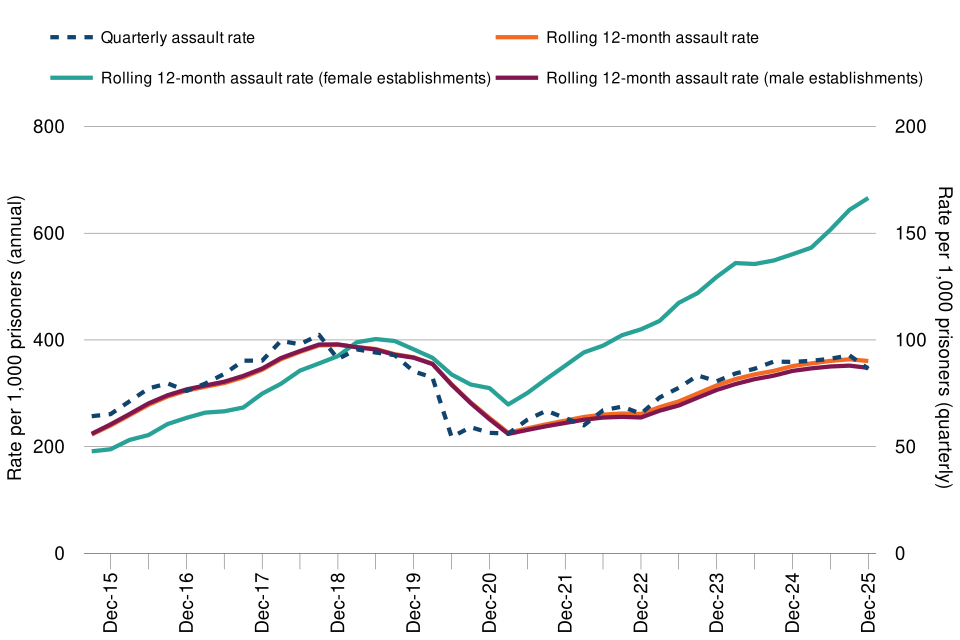
In the 12 months to December 2025, assault incidents increased by 2.8% to 31,345 (a rate of 360 incidents per 1,000 prisoners) from 30,499 in the previous 12 months. The rate of assaults in the latest 12 months was 2.7% higher than in the previous 12 months. The number of assault incidents is higher than in the 12 months to December 2019 (prior to the pandemic), but still lower than the peak in the 12 months to December 2018 [footnote 18]. The rate of assaults per 1,000 prisoners has remained lower than pre-pandemic levels of the 12 months to December 2019.
In the latest quarter there were 7,499 assaults, down 8% from the previous quarter. The number of assaults and the quarterly rate remain lower than their peak in the July to September 2018 quarter.
The number of incidents in male establishments increased by 1.9% to 29,014 in the 12 months to December 2025 (a rate of 348 per 1,000 prisoners), from 28,482 in the previous 12 months. The rate of assaults in male establishments in the latest 12 months was 1.7% higher than in the previous 12 months.
The number of incidents in female establishments increased by 16% to 2,331 incidents in the 12 months to December 2025 (a rate of 666 per 1,000 prisoners), from 2,017 in the previous 12 months. The rate of assaults in female establishments in the latest 12 months was 19% higher than in the previous 12 months. The rate and number of incidents in the female estate are now at their highest level in the time series[footnote 19].
In the latest quarter, the number of assaults in male establishments decreased by 9% to 6,896 incidents, compared to a decrease of 6% in female establishments (to 603 assaults). During this period the rate of assaults decreased 7% to 86 assaults per 1,000 prisoners, which comprises a 7% decrease in male establishments (to 83 assaults per 1,000 prisoners) and a 1.1% decrease in female establishments (to 176 assaults per 1,000 prisoners).
Figure 5: Quarterly 12-month rolling rate of prisoner-on-prisoner assaults and assaults on staff, 12 months ending December 2015 to 12 months ending December 2025, with quarterly rates
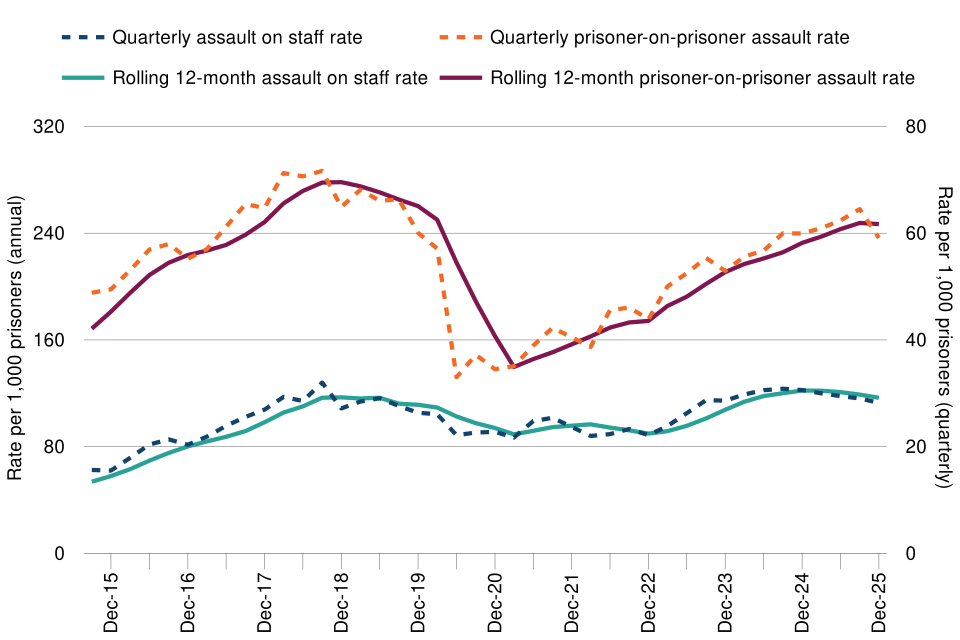
There were 21,463 prisoner-on-prisoner assaults[footnote 20] in the 12 months to December 2025 (a rate of 247 per 1,000 prisoners), an increase of 6% from the 20,222 assaults in the previous 12 months. The rate of prisoner-on-prisoner assaults in the latest 12 months was 6% higher than in the previous 12 months. In the latest quarter, there were 5,125 prisoner-on-prisoner assaults, a 10% decrease from 5,697 in the previous quarter.
There were 10,142 assaults on staff[footnote 21] in the 12 months to December 2025 (a rate of 117 per 1,000 prisoners), a decrease of 4.4% from the 10,605 assaults in the previous 12 months. The rate of assaults on staff in the latest 12 months was 4.5% lower than in the previous 12 months. In the latest quarter, there were 2,446 assault on staff incidents, a 4.6% decrease from 2,564 in the previous quarter.
The proportion of assaults on staff[footnote 22] decreased to 32% in the 12 months to December 2025, from 35% in the previous 12 months. In the 12 months to December 2025, the proportion of assaults that were on staff remained higher in female establishments (48%) than in male establishments (31%).
In male establishments, prisoner-on-prisoner assaults increased by 5% to 20,250 incidents (243 incidents per 1,000 male prisoners) in the 12 months to December 2025, and the rate also increased by 5%. Assaults on staff decreased by 6% to 9,014 incidents (108 incidents per 1,000 male prisoners), and the rate also decreased by 6%.
In female establishments, prisoner-on-prisoner assaults increased by 23% to a new peak of 1,213 incidents (347 incidents per 1,000 female prisoners) in the 12 months to December 2025, and the rate increased by 26%, also to a new peak. Assaults on staff increased by 9% to 1,128 incidents (322 incidents per 1,000 female prisoners) in the 12 months to December 2025, and the rate increased by 12%. Both the number of incidents and the rate of assaults on staff within female establishments have also reached a new peak.
Serious Assaults
| Of the 31,345 assault incidents, 3,484 (11%) were serious | In the 12 months to December 2025, there were 3,484 serious assault incidents, a 2.9% increase from the previous 12 months. The rate of serious assaults increased by 2.8% over the period. Serious prisoner-on-prisoner assaults increased by 6% to 2,610, while serious assaults on staff decreased by 6% to 908 in the 12 months to December 2025. |
Serious assaults are those which fall into one or more of the following categories: a sexual assault; requires detention in outside hospital as an in-patient; requires medical treatment for concussion or internal injuries; or incurs any of the following injuries: a fracture, scald or burn, stabbing, crushing, extensive or multiple bruising, black eye, broken nose, lost or broken tooth, cuts requiring suturing, bites, temporary or permanent blindness.
Figure 6: Quarterly 12-month rolling rate of total serious assaults , serious prisoner-on-prisoner assaults, and serious assaults on staff, 12 months ending December 2015 to 12 months ending December 2025
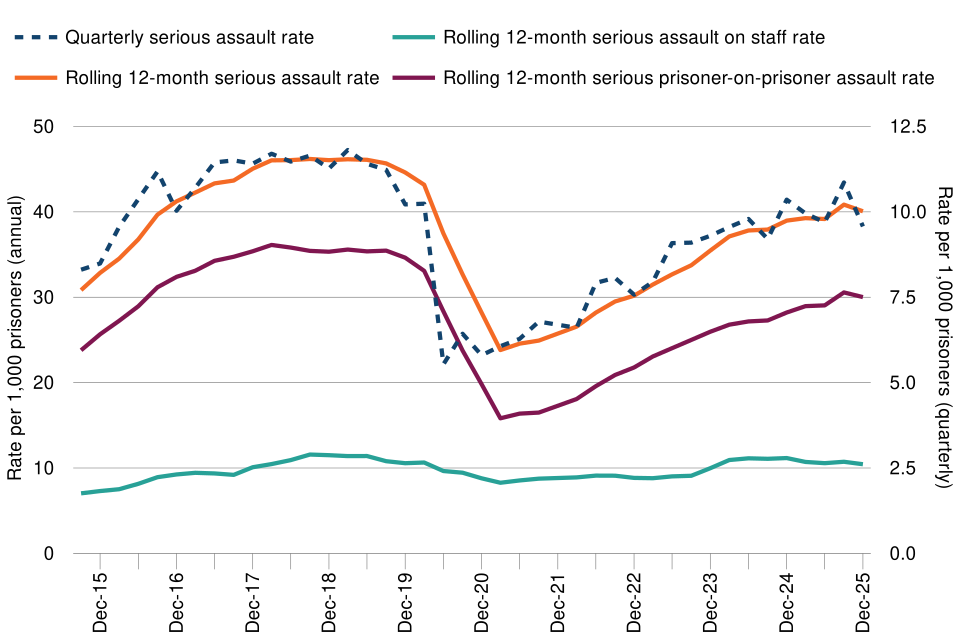
In the latest 12 months, 11% of assaults were serious assaults. This is unchanged from 11% in the previous 12 months to December 2024 and has remained broadly consistent since 2018. The proportion of all assaults that were serious remained higher in male establishments (11%) than in female establishments (7%).
In the 12 months to December 2025, there were 3,484 serious assaults (a rate of 40 per 1,000 prisoners), a 2.9% increase from the previous 12 months. The rate of serious assaults in the latest 12 months was 2.8% higher than in the previous 12 months. The rate was higher in female establishments (49 serious assaults per 1,000 prisoners) than male establishments (40 per 1,000 prisoners) and has reached a new peak within female establishments. In the latest quarter there were 830 serious assault incidents, a 13% decrease from 959 incidents in the previous quarter.
There were 2,610 serious prisoner-on-prisoner assaults (a rate of 30 per 1,000 prisoners) in the 12 months to December 2025, a 6% increase from 2,451 in the previous 12 months. The rate of serious prisoner-on-prisoner assaults in the latest 12 months was also 6% higher than in the previous 12 months. In the 12 months to December 2025, the rate of serious prisoner-on-prisoner assaults increased by 28% in female establishments (to a new peak of 32 per 1,000 prisoners), while there was a 6% increase in male establishments (to 30 per 1,000 prisoners)[footnote 23]. This is the first year to December in the time series when the rate of serious prisoner-on-prisoner assaults has been higher in female establishment than in male establishments. In the latest quarter, there were 609 serious prisoner-on-prisoner assaults, a 17% decrease from the previous quarter[footnote 24].
There were 908 serious assaults on staff (a rate of 10 per 1,000 prisoners) in the 12 months to December 2025, a 6% decrease from 970 in the previous 12 months. The rate of serious assaults on staff was also 6% lower than in the previous 12 months, with the rate decreasing 15% in female establishments (to 16 incidents per 1,000 prisoners) and decreasing 6% in male establishments (to 10 incidents per 1,000 prisoners). In the latest quarter, the number of serious assaults on staff decreased to 225 incidents (a 2.6% decrease from the previous quarter).
Key findings from additional assaults tables for 2025
The annual assaults tables include a further breakdown of the assaults figures, including a breakdown by prisoner role within each incident. A definition of each of the roles is shown below:
- Assailant: This refers to assault incidents in which there is a clear aggressor (assailant) and victim. Such incidents arise from offences of grievous bodily harm (GBH) and actual bodily harm (ABH).
- Fighter: This refers to assault incidents in which there is no clear aggressor or victim. Such cases arise from offences of affray.
- Victim: This refers to assault incidents in which there is a clear aggressor (assailant) and victim. Such incidents arise from offences of GBH and ABH.
Age
Prisoners in the 18-20 year age-group had the highest rates of incidents where they were involved as assailants (862 per 1,000 prisoners), fighters (1,008 per 1,000 prisoners) and victims (406 per 1,000 prisoners).
In general, the rate of incidents is higher where those involved are from the younger age-groups.
Custody type
Prisoners on remand had higher rates of assailants, fighters and victims than sentenced prisoners in 2025. For assailants and victims, the rate increased by more in the remand population than in the sentenced population, while for fighters the rate increased by more in the sentenced population than in the remand population in the latest 12 months.
For assailants the rates per 1,000 prisoners increased 2.5% for prisoners on remand, from 367 in 2024 to 376 in 2025, and increased 1.9% for sentenced prisoners, from 226 in 2024 to 230 in 2025.
For fighters the rates per 1,000 prisoners increased 2.7% for prisoners on remand, from 330 in 2024 to 339 in 2025, and increased by 9% for sentenced prisoners, from 172 in 2024 to 188 in 2025.
For victims the rates per 1,000 prisoners increased 7% for prisoners on remand, from 212 in 2024 to 226 in 2025, and increased by 6% for sentenced prisoners, from 123 in 2024 to 130 in 2025.
Within the sentenced population the rates are highest for recalled prisoners, although the rates for recalled prisoners are lower than the rates for remand prisoners. For recalled prisoners, there were 331 assailants per 1,000 prisoners, 246 fighters and 171 victims.
Ethnicity
Prisoners from the black and mixed ethnic groups had the highest rates of assailants and fighters, and prisoners from the mixed ethnic group also had the highest rate for victims. For black prisoners there were 408 assailants per 1,000 prisoners, 420 fighters and 139 victims. For prisoners from the mixed ethnic group there were 391 assailants per 1,000 prisoners, 350 fighters and 166 victims.
White and Asian prisoners had the lowest rates for assailants and fighters, whilst black prisoners had the lowest rate for victims (though there is much less variation between groups in the rate of victims). For white prisoners there were 243 assailants per 1,000 prisoners, 177 fighters and 153 victims. For Asian prisoners there were 193 assailants per 1,000 prisoners, 202 fighters and 149 victims.
Sexual assaults
There were 617 sexual assaults[footnote 25] recorded in custody in 2025, a 21% increase from 512 sexual assaults in custody in 2024 and the highest number in the time series. Over the same period the rate of sexual assault incidents per 1,000 prisoners increased 20%, from 5.9 in 2024 to 7.1 in 2025.
In female establishments, sexual assaults increased by 60%, from 58 in 2024 to 93 in 2025, with the rate per 1,000 prisoners increasing 65% from 16.1 to 26.6. In male establishments, there was a 15% increase, from 454 in 2024 to 524 in 2025, with the rate per 1,000 prisoners also increasing 15% from 5.4 to 6.3.
Weapons
There were 8,159 assaults where weapons were recorded in 2025. This represents 26% of total assaults, the same percentage as in 2024.
There were 2,842 incidents recorded as involving instrument weapons[footnote 26], representing 35% of incidents involving a weapon (up from 32% in 2024). Of these, 34% involved a blunt instrument (959 incidents) and 25% involved a dangerous liquid (706 incidents).
There were 3,208 incidents recorded as involving non-instrument weapons (representing 39% of incidents involving a weapon, consistent with recent years), of which 76% involved spitting (2,448 incidents).
In 2025, there were 2,273 incidents involving weapons reported as “other”.
These trends differ by sex, with 7,438 incidents in male establishments involving a weapon (26% of male incidents) compared to 721 incidents in female establishments (31% of female incidents). For males, 36% of incidents involving a weapon involved instrument weapons and 38% involved non-instrument weapons in 2025, and for females 19% involved instrument weapons and 51% involved non-instrument weapons. Spitting was the most prevalent type of weapon in both estates, represented in 41% of incidents involving a weapon in female establishments compared to 29% in male establishments.
Injuries
There were 3,030 serious injuries as a result of assaults in prison in 2025, a 1.9% decrease from 3,090 serious injuries in 2024.
Of those serious injuries, 21% resulted in a black eye in 2025, 20% were cuts requiring sutures, 13% resulted in extensive or multiple bruising, 12% resulted in a fracture, and 11% were from bites. These proportions are all similar to 2024 figures.
There were also 14,401 minor injuries as a result of assaults in prison in 2025, a 0.9% increase from 14,268 minor injuries in 2024.
Hospital attendance
0.2% of assault incidents required attendance at hospital as an inpatient in 2025, and 1.9% required treatment for concussion or internal injuries. These figures remain broadly stable relative to previous years.
Further Information
Accredited official statistics status
National Statistics are accredited official statistics[footnote 27] that meet the highest standards of trustworthiness, quality and public value.
All official statistics should comply with all aspects of the Code of Practice for Official Statistics. They are awarded National Statistics status following an assessment by the UK Statistics Authority’s (UKSA) regulatory arm. The UKSA considers whether the statistics meet the highest standards of Code compliance, including the value they add to public decisions and debate.
These accredited official statistics were independently reviewed by the Office for Statistics Regulation in March 2013. They comply with the standards of trustworthiness, quality and value in the Code of Practice for Statistics and should be labelled ‘accredited official statistics’.
It is the Ministry of Justice’s responsibility to maintain compliance with the standards expected for National Statistics. If we become concerned about whether these statistics are still meeting the appropriate standards, we will discuss any concerns with the UKSA promptly. National Statistics status can be removed at any point when the highest standards are not maintained, and reinstated when standards are restored.
Future publications
Our statisticians regularly review the content of publications. Development of new and improved statistical outputs is usually dependent on reallocating existing resources. As part of our continual review and prioritisation, we welcome user feedback on existing outputs including content, breadth, frequency and methodology. Please send any comments you have on this publication including suggestions for further developments or reductions in content.
Accompanying files
As well as this bulletin, the following products are published as part of this release:
- A technical guide providing further information on how the data are collected and processed, as well as information on the revisions policy and legislation relevant to sentencing trends and background on the functioning of the criminal justice system.
- A set of summary tables for the latest quarter, and annual tables up to the latest calendar year.
- Underlying data files with pivot tables, giving lower level granularity.
Contact
Press enquiries should be directed to the Ministry of Justice press office: Tel: 020 3334 3536 Email: https://www.gov.uk/government/organisations/ministry-of-justice/about/media-enquiries
Other enquiries about these statistics should be directed to:
Prison Safety Statistics Analysis Team
Analysis Directorate,
Ministry of Justice,
102 Petty France,
London,
SW1H 9AJ
Email: OMSQ-SiC-publications@justice.gov.uk
Our statistical practice is regulated by the Office for Statistics Regulation (OSR). OSR sets the standards of trustworthiness, quality and value in the Code of Practice for Statistics that all producers of official statistics should adhere to. You are welcome to contact us directly, using the details above, with any comments about how we meet these standards. Alternatively, you can contact OSR by emailing regulation@statistics.gov.uk or via the OSR website.
Next update: July 2026
URL: https://www.gov.uk/government/collections/safety-in-custody-statistics
© Crown copyright
Produced by the Ministry of Justice.
Alternative formats are available on request from OMSQ-SiC-publications@justice.gov.uk
-
The time series for assault incidents starts in 2000, and self-harm incidents starts in 2004. ↩
-
Apparent cause is based on the HMPPS classification of deaths in prison custody. Self-inflicted deaths are any death of a person who has apparently taken his or her own life irrespective of intent. This not only includes suicides but also accidental deaths as a result of the person’s own actions. This classification is used because it is not always known whether a person intended to die by suicide. ↩
-
Any death of a person who has voluntarily taken their own life - a verdict determined at inquest. As inquests will not have occurred at the time HMPPS publishes deaths statistics, HMPPS makes no attempt to attribute intent (which is the responsibility of the coroner/inquest). HMPPS does not produce official statistics on suicides but does monitor inquest verdicts to ensure that classifications of deaths are consistent. ↩
-
Rates reflect the changes in the number of incidents, as well as the changes in prison population over time. More information can be found in the accompanying guide. Data on population statistics are published in the Offender Management Statistics Quarterly publication https://www.gov.uk/government/collections/offender-management-statistics-quarterly. ↩
-
See Guide to Safety in Custody Statistics for a summary of how rates are calculated. ↩
-
A greater percentage decrease in the female population than the male population means that female prisoners now make up a slightly smaller proportion of the overall estate in the latest period. Because the rate of female self-harm is much higher than that of male self-harm, this shift in the population composition has contributed to the decrease in the overall rate, causing it to decrease more than the male and female estates individually. ↩
-
Data on deaths is published three months ahead of self-harm and assaults. Therefore, the deaths annual publication and tables are published alongside the Safety in Custody quarterly update to September publication. ↩
-
The prison population decreased throughout 2024 due to factors including “End of Custody Supervised License” and earlier release from certain determinate sentences (“SDS40”). ↩
-
https://www.gov.uk/government/collections/offender-management-statistics-quarterly. Quarterly population data to December 2025 is published in Offender Management Statistics Quarterly Bulletin, England and Wales Quarterly. ↩
-
The comparability over the year of other measures that are based on self-harming individuals (such as the number of incidents per self-harming individual, or the proportion of incidents requiring hospital attendance) are not affected by changes in population size. ↩
-
Data on deaths are published three months ahead of assaults and self-harm, therefore, the annual publication Deaths in prison custody for 1978 to 2025 is published in the Safety in Custody quarterly update to September 2025 ↩
-
Seasonal effects refer to variation in time series data that occur at regular intervals (typically intervals shorter than a year e.g. monthly or quarterly). ↩
-
An incident of self-harm requiring hospitalisation does not only reflect the seriousness of the incident. This also depends on the healthcare facilities at the establishment, which vary across the estate. ↩
-
A greater decrease in the female sentenced population means this represents an increase to the rate of self-harm despite a decrease in the number of incidents. ↩
-
These rates respectively include all recalled prisoners and all IPP prisoners so some of the population in these categories will overlap. ↩
-
The ”normal” category includes non-specialist areas such as cells and common areas. ↩
-
An incident of self-harm requiring hospitalisation does not only reflect the seriousness of the incident. This also depends on the healthcare facilities at the establishment, which vary across the estate. ↩
-
From April 2018, assault figures exclude incidents occurring within the youth estate so figures from before this time are not fully comparable to those after the exclusion. ↩
-
The time series for assault incidents starts in 2000, and self-harm incidents starts in 2004. ↩
-
This figure includes any prisoner-on-prisoner assaults where there may also have been an assault on staff. ↩
-
There was a change in how staff assaults have been recorded from April 2017, this has simplified how incidents involving staff are identified, however it is possible this has increased the recording of incidents. Please see the Guide to Safety in Custody statistics for further information ↩
-
Some assault incidents may be recorded as both a prisoner-on-prisoner assault and an assault on staff, so the sum of the two categories may exceed the total number of assaults ↩
-
The time series for assault incidents starts in 2000, and self-harm incidents starts in 2004. ↩
-
Due to a low number of incidents for serious assaults, a small increase or decrease in incidents can lead to a large percentage change. ↩
-
Sexual assaults are any assault where the victim believes it to have been of a sexual nature, and where all of the following occur – they intentionally touch another person, the touching is sexual, the victim does not consent to the touching, they do not reasonably believe the other person consents, and the touching can be with any part of the body or with anything else. ↩
-
A group of potentially dangerous objects commonly used as weapons, which it can be helpful to distinguish from use of bodily fluids or food (though ‘dangerous liquids’ can include hot drinks or similar due to the potential to scald). ↩
-
Accredited official statistics are called National Statistics in the Statistics and Registration Service Act 2007. ↩