Road lengths in Great Britain: 2025
Published 12 February 2026

© Crown copyright 2026
This publication is licensed under the terms of the Open Government Licence v3.0 except where otherwise stated. To view this licence, visit nationalarchives.gov.uk/doc/open-government-licence/version/3 or write to the Information Policy Team, The National Archives, Kew, London TW9 4DU, or email: psi@nationalarchives.gov.uk.
Where we have identified any third party copyright information you will need to obtain permission from the copyright holders concerned.
This publication is available at https://www.gov.uk/government/statistics/road-lengths-in-great-britain-2025/road-lengths-in-great-britain-2025--2
About this release
This annual release presents estimates for the length of road in Great Britain maintained at public expense.
These estimates are based on information from a range of sources, including Ordnance Survey and local authorities. The data relates to the length of roads as of April 2025. Detailed statistical tables can be accessed online via the road length statistical series.
To note, some of the figures in this release may not sum due to rounding.
These are accredited official statistics and were independently reviewed by the Office for Statistics Regulation in February 2013. For more information, see the about these statistics section.
Headline figures in this release
In 2025, the total length of roads in Great Britain was estimated to be 247,200 miles.
There were 32,000 miles of major road in Great Britain in 2025, consisting of:
- 2,300 miles of motorway (98.9% centrally managed, 1.1% locally managed)
- 29,700 miles of ‘A’ road (18.4% centrally managed, 81.6% locally managed)
There were 215,200 miles of minor road in Great Britain in 2025, consisting of:
- 18,900 miles of ‘B’ road
- 196,300 miles of ‘C and U’ road
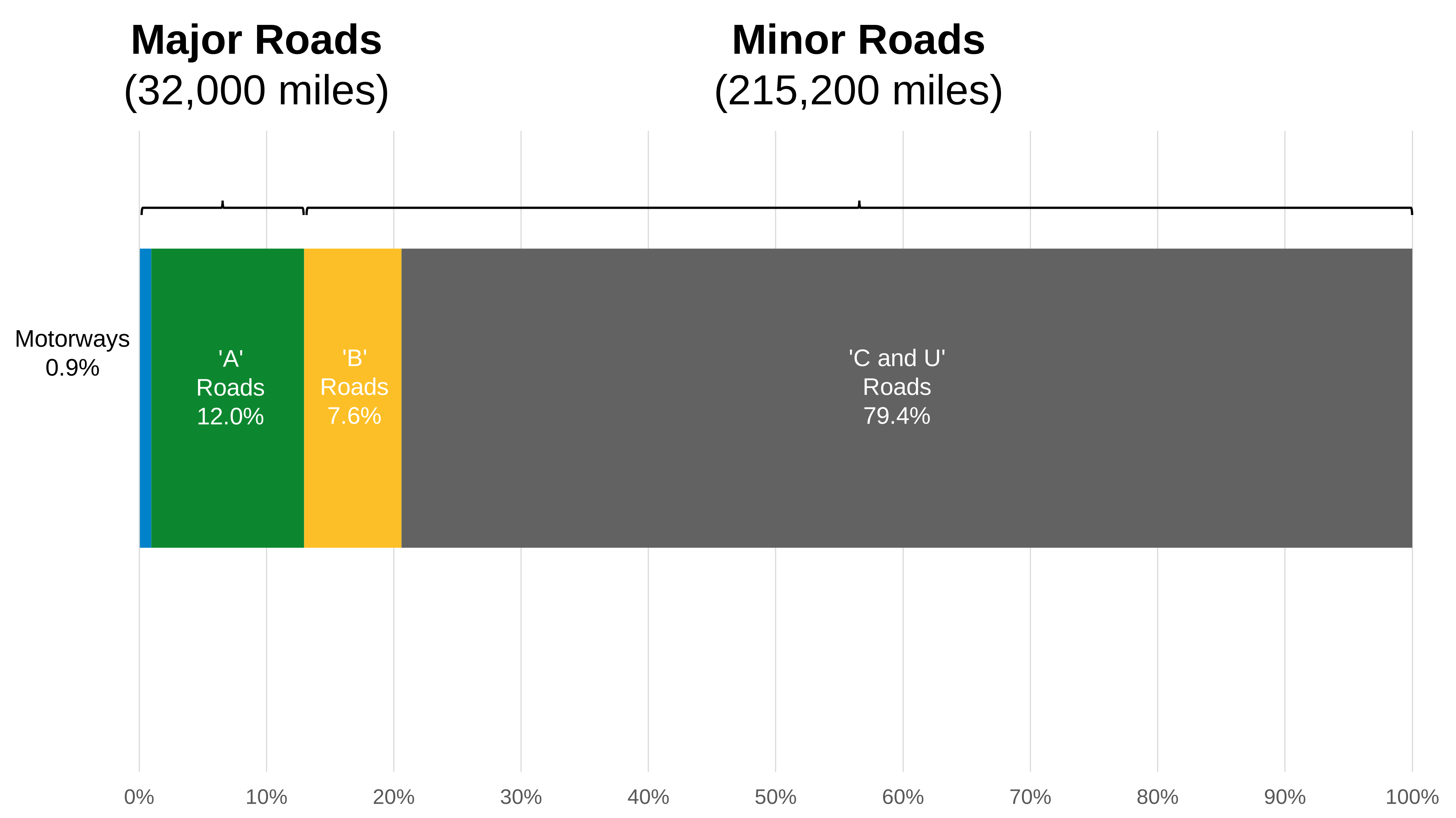
The proportion of the total road length by road classification (see Chart 1) consisted of:
- 0.9% motorway
- 12.0% ‘A’ road
- 7.6% ‘B’ road
- 79.4% ‘C and U’ road
Chart 1: A horizontal bar chart showing the percentage of road length by road classification, in Great Britain, in 2025 (RDL0103, RDL0203)
Roads in Great Britain (see Infographic 1)
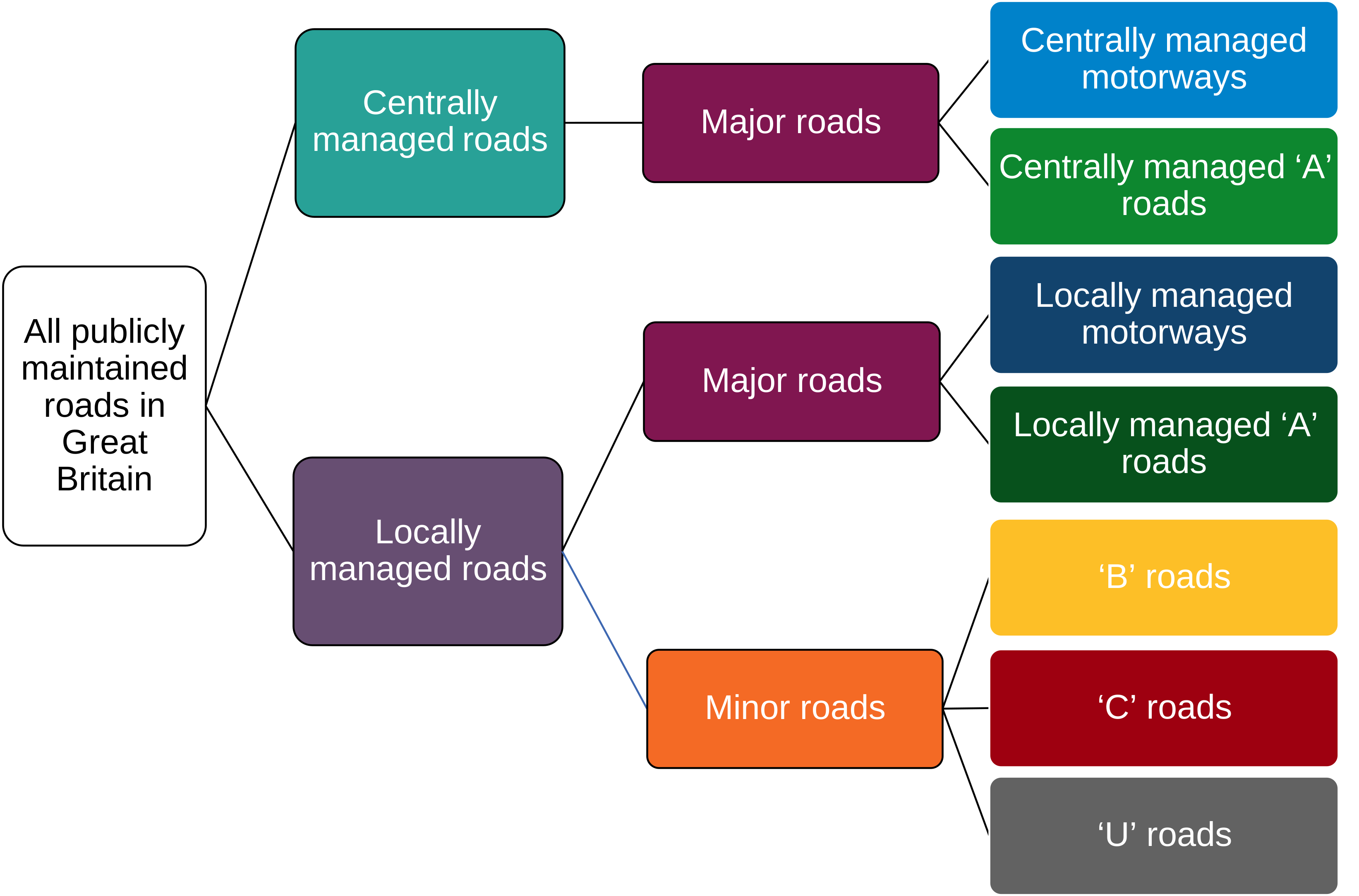
By length, most roads in Great Britain are managed locally (by a local highway authority or Transport for London). These include all minor roads (‘B’, ‘C’ and ‘U’ roads), and some major roads (locally managed ‘A’ roads and locally managed motorways).
The rest of the major road network is managed centrally by National Highways (formerly Highways England) in England, the Welsh Government in Wales, and Transport Scotland in Scotland. The centrally managed road network in England makes up the Strategic Road Network (SRN).
Motorways, ‘A’, ‘B’ and ‘C’ roads are classified roads, and ‘U’ roads are unclassified. ‘U’ roads are made up of roads that have a variety of uses but they are typically residential streets or rural lanes.
The lengths of ‘C’ and ‘U’ roads have been combined in this publication due to data constraints. Separate lengths for ‘C’ and ‘U’ roads are currently only available in years when the department runs an additional data collection. This was last conducted for 2022 road lengths, with data available in Table RDL0103.
For further information see the notes and definitions.
Infographic 1: A flow diagram showing the breakdown of road types and their management, in Great Britain
Trends over time
In 2025, there were 247,200 miles of road in Great Britain. This was 6,100 more miles than in 2005 (a 2.5% increase).
Most of the 6,100-mile change seen over the last 20 years is due to the changes in minor road lengths. There were 5,300 more miles of minor road in Great Britain in 2025 than in 2005 (a 2.5% increase) mainly driven by an increase in ‘C and U’ roads.
Table 1: Breakdown of road length (thousand miles) by road type and management, in Great Britain, in 2005, 2015 and 2025 (RDL0103, RDL0203)
| Year | Centrally Managed Motorways | Locally managed Motorways | Centrally managed ‘A’ Roads | Locally managed ‘A’ Roads |
|---|---|---|---|---|
| 2005 | 2.2 | 0.03 | 5.4 | 23.6 |
| 2015 | 2.2 | 0.03 | 5.3 | 23.8 |
| 2025 | 2.3 | 0.03 | 5.5 | 24.2 |
Chart 2: A bar chart showing the length of major road (thousand miles), by road type and management, in Great Britain, in 2005, 2015 and 2025 (RDL0103, RDL0203)
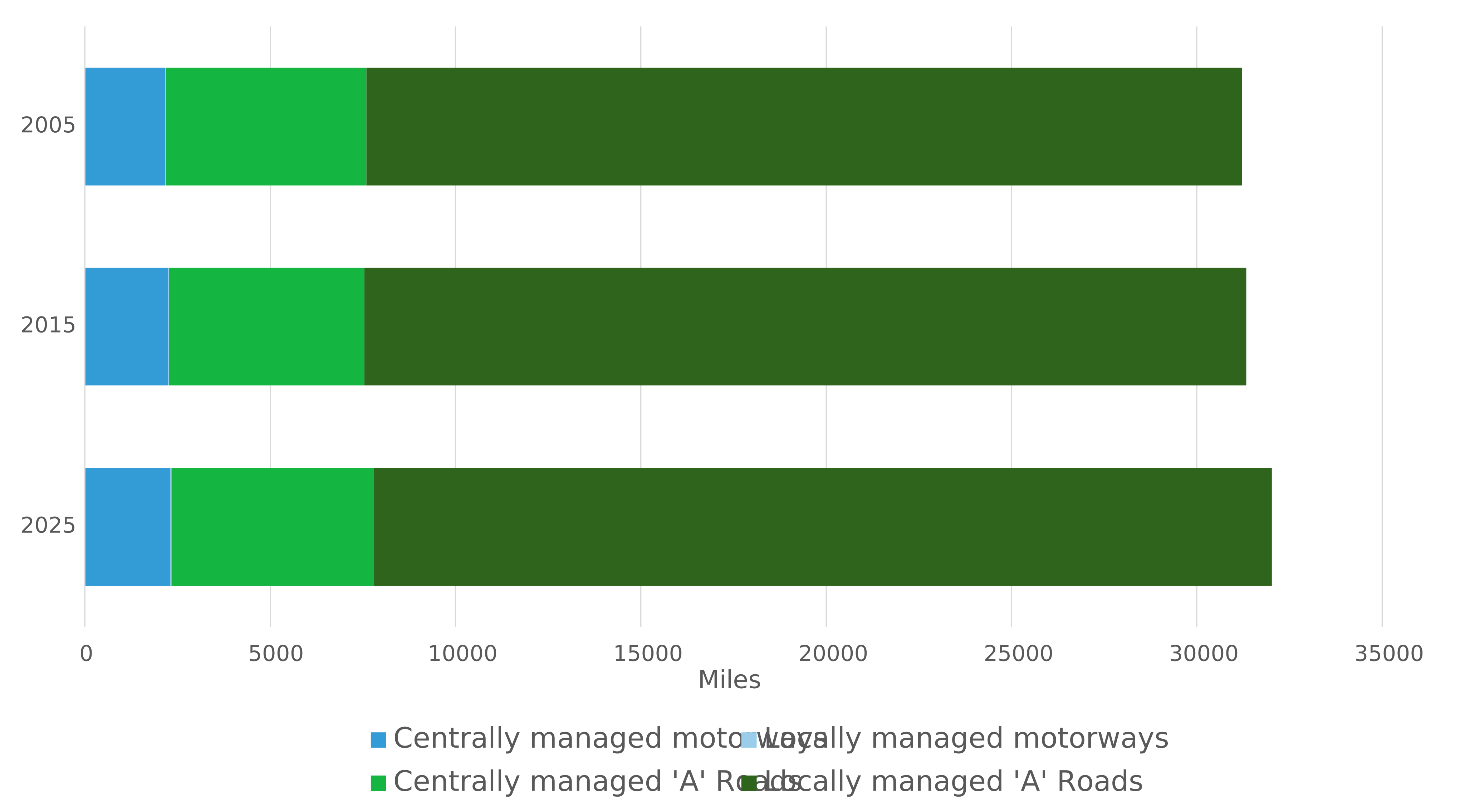
The remainder of the increase in road length between 2005 and 2025 was accounted for by an 800-mile increase in major roads in Great Britain, marking a 2.6% growth. The majority of this growth came from ‘A’ roads (see Chart 2), which grew by over 650 miles during the same period.
Locally managed ‘A’ roads grew from approximately 23,600 miles in 2005 to around 24,200 miles in 2025, reflecting a 600-mile increase.
The ongoing improvement work to Ordnance Survey MasterMap Highways means that year on year changes in road length estimates can be due to a several reasons. These include methodological improvements and road reclassification, in addition to the construction or demolition of roads.
Other changes that have likely impacted road length estimates in recent years include improvements to the digitised road networks held by local authorities, alongside the transfer of housing estate roads to management by a third party (also known as the un-adoption of roads).
Road length by country
Of the 247,200 miles of road in Great Britain in 2025:
- 188,900 miles (76.4%) of road were in England
- 21,100 miles (8.5%) were in Wales
- 37,200 miles (15.0%) were in Scotland
Table 2 below shows the varying composition of each country’s road network by road type (please note that these numbers may not sum to the same total due to rounding).
Table 2: Breakdown of road length (thousand miles) by country and road type, in Great Britain, in 2025 (RDL0101)
| Centrally managed Major Roads | Locally managed Major Roads | All Major Roads | ‘B’ Roads | ‘C and U’ Roads | All Minor Roads | Total Roads | |
|---|---|---|---|---|---|---|---|
| England | 4.6 | 18.0 | 22.5 | 12.5 | 153.9 | 166.4 | 188.9 |
| Wales | 1.1 | 1.7 | 2.7 | 1.9 | 16.5 | 18.4 | 21.1 |
| Scotland | 2.1 | 4.6 | 6.7 | 4.6 | 25.9 | 30.4 | 37.2 |
| Great Britain | 7.8 | 24.3 | 32.0 | 18.9 | 196.3 | 215.2 | 247.2 |
Chart 3: A series of doughnut charts showing the proportion of road length classified as major or minor road, for each country in Great Britain, in 2025 (RDL0101, RDL0201)
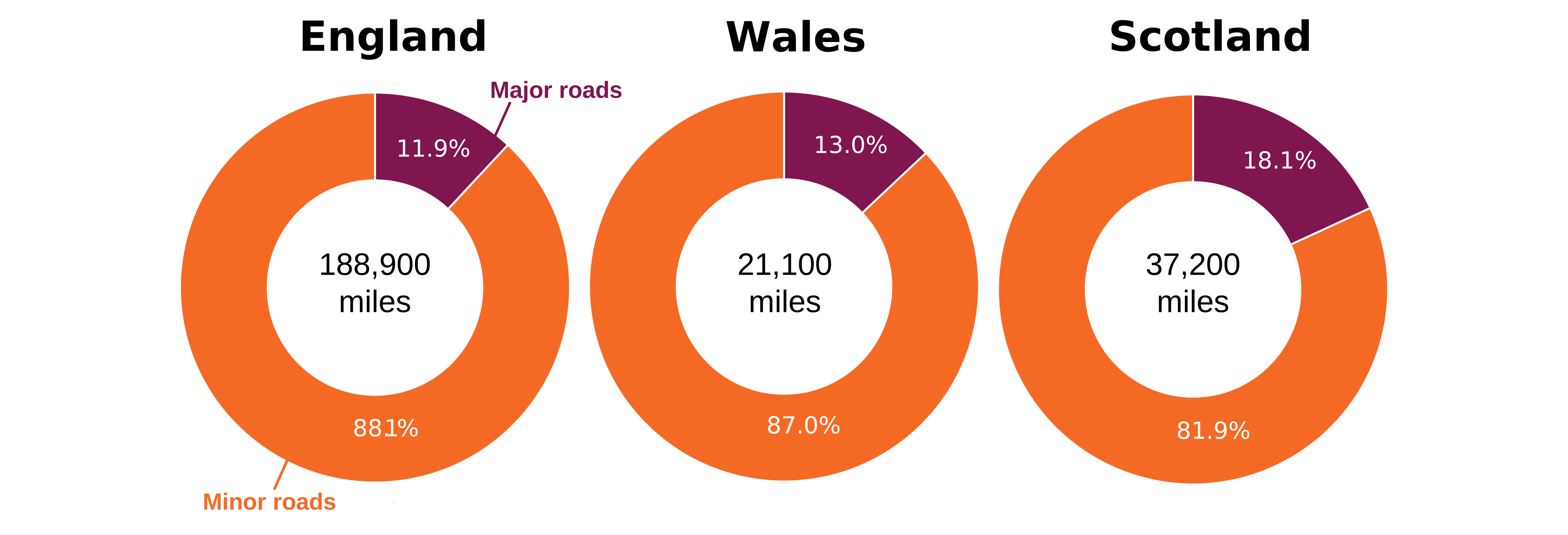
In 2025, of the 188,900 miles of road in England, 22,500 miles (11.9%) were major roads. This was a smaller proportion of the road network than in Wales where there were 2,700 miles (13.0%), and in Scotland where there were 6,700 miles (18.1%) of major roads (see Chart 3).
Chart 4: A bar chart showing the proportion of major road length, by country and management, in Great Britain, in 2025 (RDL0101, RDL0201)
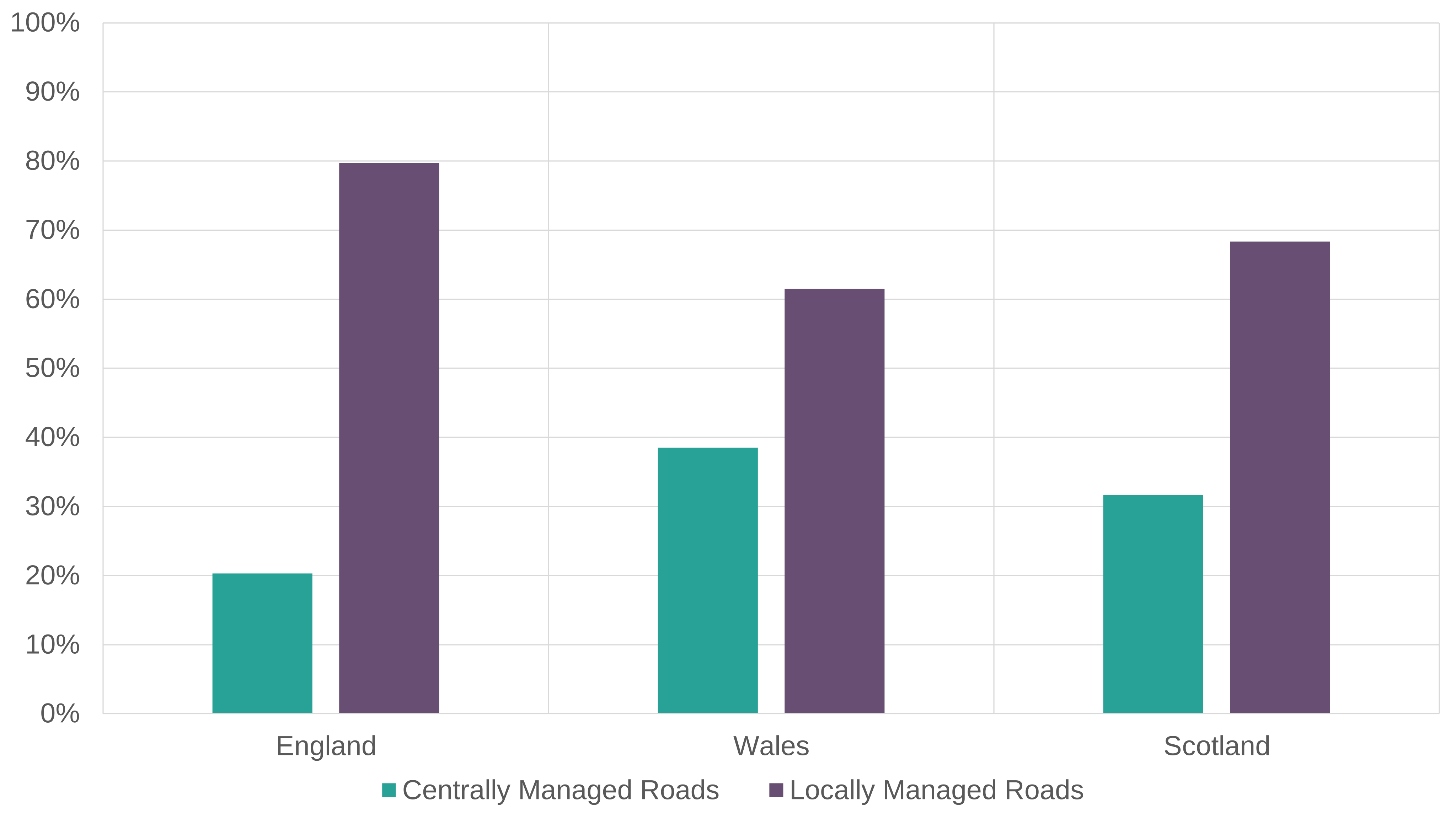
In England, the SRN (all centrally managed motorways and ‘A’ roads) was 4,600 miles long and made up 2.4% of the total length of road in England, but 20.3% of major road length.
Centrally managed roads made up a higher proportion of the major road network in both Wales (38.5%) and Scotland (31.7%) (see Chart 4). The composition of these centrally managed roads differed in each country, with 42.5% of centrally managed roads classified as motorways in England, compared to only 8.3% in Wales and 14.0% in Scotland.
Rural and urban breakdowns
In 2025, most road length in Great Britain was rural, with:
- 75.4% of ‘A’ roads
- 79.9% of ‘B’ roads
- 57.4% of ‘C and U’ roads being classed as rural
Chart 5: A bar chart showing the proportion of ‘A’ road and minor road length classified as urban or rural, by country in Great Britain, in 2025 (RDL0101, RDL0201)
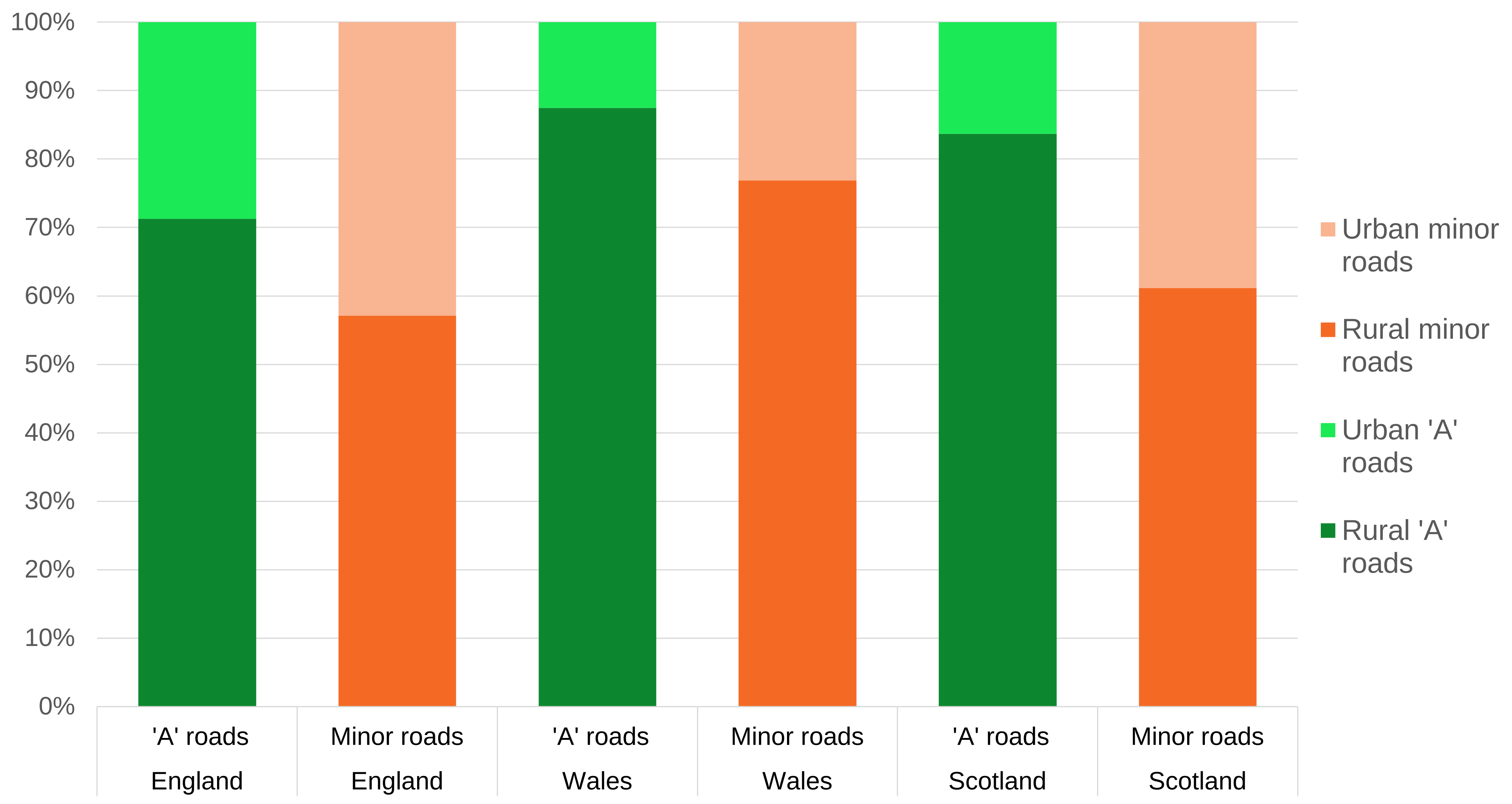
Just as the makeup of the road network by road type varied between England, Wales and Scotland, so did the proportion of urban and rural road length. Wales had a higher proportion of ‘A’ roads classified as rural (87.5%) than England (71.3%) or Scotland (83.7%). Wales also had a higher proportion of minor roads classified as rural (76.9%) than England (57.1%) or Scotland (61.2%) (see Chart 5).
Additional geographic breakdowns have been provided for Sub-national Transport Bodies and Combined Authorities for 2025 in tables RDL0102,and RDL0202.
Background information
Rounding
Figures quoted in this publication are rounded to the nearest 100 miles. Raw differences and percentage changes are always calculated from unrounded numbers.
Urban or rural classifications
The urban or rural classification of a road is based on the size of the population in the local area. As of April 2025, the population data defining the urban or rural classification for England and Wales was based on the 2011 census, for Scotland this was based on 2020 census data.
As the population data is not updated annually, the urban or rural classification may not reflect the latest population. For example, when a new housing development is built on a brown field site, the new roads built to feed this development will be classified as “rural” based on the current urban or rural classification. If the urban or rural classification were to be updated, the increased population size from the new housing development would lead to the area to be reclassified as “urban”. This example may partially explain the gradual increase in rural roads as new roads are built to feed new developments in previously unpopulated areas.
The time delay between updates of this population information means that there is normally a step change in the relative length of urban and rural roads when the classifications are updated. Due to this, year-on-year comparisons of urban and rural road lengths should be made with caution.
Traffic and road length in England
Vehicle activity is unevenly distributed across Great Britain’s road network.
In 2024, 65% of the motor vehicle miles travelled were on motorways and ‘A’ roads, despite comprising only 13% of the road network by length.
On an average day in 2024, 55 times more vehicles travelled along a typical stretch of motorway than a typical stretch of minor road (‘B’ roads, ‘C’ roads and unclassified roads).
More information can be found in the Road traffic estimates in Great Britain: 2024.
The figures presented above are referring to the latest published statistics. ‘Road Traffic Estimates in Great Britain: 2025’ is provisionally scheduled for release in June 2026.
Scotland and Wales estimates
The Scottish and Welsh Governments produce their own separate road length estimates. The road length estimates for Scotland and Wales in this publication are produced by the UK Department for Transport, using the same methodology and at the same point in time for the whole of Great Britain, to provide road length estimates for Great Britain on a consistent basis.
Road length estimates produced by the devolved governments:
Transport Scotland: Scottish Transport Statistics 2024 - Chapter 4 - Road Network
Welsh Government: Stats Wales - Road lengths and conditions
Northern Ireland estimates
The Department for Transport produce road length statistics for Great Britain and this report does not contain road length estimates for Northern Ireland.
It is not possible to produce road length estimates for Northern Ireland using the same methodology as this report because the underlying data provided by Ordnance Survey MasterMap Highways covers Great Britain only.
Road length estimates for Northern Ireland have been published as official statistics by the Department for Infrastructure Northern Ireland from 2024. Prior to this, these estimates have been made available as management information.
Road length estimates for Northern Ireland:
Northern Ireland Road Length Statistics
Methodology changes
Historically, the primary source for road length statistics has been the data collection exercise known as the R199b consultation. This exercise, last run in 2022, occurred every 3-5 years and asked each local authority in England to provide estimates for the length of their road network, broken down by road classification.
In years where the R199b exercise was not conducted, data from Ordnance Survey’s MasterMap Highways product has been used to update road length estimates using growth factors.
From 2026 onwards, the department will change to using data from OS Mastermap Highways products as the sole source of information. This is the result of a program of work reviewing the data processing and quality for ‘C’ and ‘U’ roads between the Department for Transport, Ordnance Survey and Geoplace. This will include information about maintenance provided by NSG street custodians within each authority. This will allow the department to identify ‘U’ roads maintained at public expense and enable the annual publication of separate ‘C’ and ‘U’ road statistics, which were not previously possible.
Further technical and methodological information
Further information about these statistics is available, including:
-
road length statistics: data tables
-
road length statistics: notes and definitions
-
road length statistics: methodology and quality note
Future road length statistics publications
The department is continuing to assess the OS MasterMap Highways Network dataset to produce improved estimates of road length in future. The product is continuously being developed with Ordnance Survey (OS), GeoPlace and other stakeholders. If you have any questions, please email road lengths.
Instructions for printing and saving
Depending on which browser you use and the type of device you use (such as a mobile or laptop) these instructions may vary.
You will find your print and save options in your browser’s menu. You may also have other options available on your device. Tablets and mobile device instructions will be specific to the make and model of the device.
How to search
Select Ctrl and F on a Windows laptop or Command and F on a Mac.
This will open a search box in the top right-hand corner of the page. Type the word you are looking for in the search bar and press enter.
Your browser will highlight the word, usually in yellow, wherever it appears on the page. Press enter to move to the next place it appears.
About these statistics
These official statistics were independently reviewed by the Office for Statistics Regulation in February 2013. They comply with the standards of trustworthiness, quality and value in the Code of Practice for Statistics and should be labelled ‘accredited official statistics’.
Accredited Official Statistics are produced to high professional standards set out in the Code of Practice for Official Statistics. They undergo regular quality assurance to ensure customer needs are met. Details of ministers and officials who receive pre-release access to these statistics up to 24 hours before release can be found in the pre-release access list.
Contact details
Road length statistics
Email road.length@dft.gov.uk
Media enquiries 0300 7777 878
To hear more about DfT statistical publications as they are released, follow us on X at DfTstats.