Plastic Packaging Tax (PPT) statistics commentary
Updated 27 August 2026

© Crown copyright 2026
This publication is licensed under the terms of the Open Government Licence v3.0 except where otherwise stated. To view this licence, visit nationalarchives.gov.uk/doc/open-government-licence/version/3 or write to the Information Policy Team, The National Archives, Kew, London TW9 4DU, or email: psi@nationalarchives.gov.uk.
Where we have identified any third party copyright information you will need to obtain permission from the copyright holders concerned.
This publication is available at https://www.gov.uk/government/statistics/plastic-packaging-tax-ppt-statistics/plastic-packaging-tax-ppt-statistics-commentary
Headline statistics
The headlines for Plastic Packaging Tax (PPT) statistics are:
-
Plastic Packaging Tax revenue accrued by HM Revenue and Customs (HMRC) in the financial year 2025 to 2026 totalled £250 million, decreasing by 4% compared to 2024 to 2025, which totalled £261 million
-
as of 13 August 2026, there were 5,142 businesses registered for PPT
-
of the total tonnage of plastic packaging manufactured in and imported into the UK, 37% was declared as taxable under PPT
-
of the remaining 63% of plastic packaging tonnage manufactured in and imported into the UK, 51% met the 30% or more recycled plastic threshold, 11% was either exported, intended for export or converted and less than 1% was exempt because it was used for the immediate packaging of human medicines
About this release
PPT was announced at Budget 2018 and introduced on 1 April 2022. The tax applies to manufacturers and importers of plastic packaging components which contain less than 30% recycled plastic. It was introduced to provide a clear economic incentive to use recycled plastic in packaging and stimulate an uptake in recycling and collection of plastic waste. The PPT Tax Information and Impact Note published on GOV.UK includes information explaining the tax design in more depth.
This official statistics publication provides an overview of the tax returns for PPT, including data regarding the registered population, for the financial year of 2025 to 2026 compared to the previous financial years. Feedback on the content of the statistics would be welcomed to maximise its intended impact on users.
Care should be taken when interpreting these figures as the extent of future revisions is not yet known. The figures are not seasonally adjusted so particular care should be taken when looking at the quarterly information.
Plastic packaging manufacturers and importers declare their plastic packaging on fixed quarterly accounting periods ending in June, September, December and March, with returns and payments due by the last working day of the following month.
As PPT went live in April 2022, the first returns for April to June 2022 were submitted in July 2022. This first return is labelled as 2022 to 2023 Q1 to align with the financial year quarters.
Throughout this publication, dates for revenue and tonnages of plastic relate to the relevant accounting periods where tax became liable, not the dates that businesses submitted their returns or paid their taxes. Revenue figures are estimates of accrued revenue. Further information on this can be found in the background and references and the quality report.
The rate applied to taxable plastic packaging was as follows:
-
£223.69 per tonne for the financial year of 2025 to 2026
-
£217.85 per tonne for the financial year of 2024 to 2025
-
£210.82 per tonne for the financial year of 2023 to 2024
-
£200.00 per tonne for the financial year of 2022 to 2023
Rate information can be found in the PPT Guidance published on GOV.UK.
Revenue
Figure 1: PPT quarterly revenue from chargeable plastic packaging manufactured in and imported into the UK in each financial year
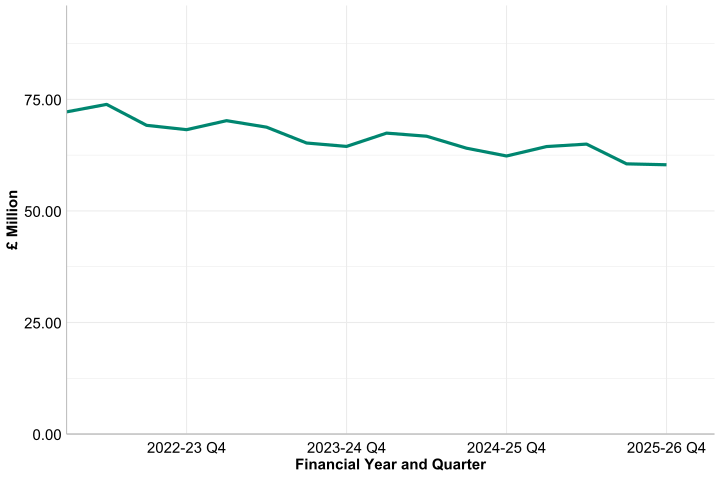
Figure 1 shows a gradual decline in PPT revenue since its introduction. Revenue has been lower in the second half of the financial year than in the first half, on average 6% lower. Note the data has not been seasonally adjusted.
Total plastic packaging manufactured and imported in the UK
Businesses that manufacture or import plastic packaging into the UK over 10 tonnes within a 12-month period must declare the amount of plastic packaging manufactured or imported to HMRC.
Table 1: total amount of plastic packaging imported and manufactured in the UK (thousands of tonnes)
| Financial year | Imported into the UK | Manufactured in the UK | Total |
|---|---|---|---|
| 2022-23 | 1,724 | 1,709 | 3,433 |
| 2023-24 | 1,363 | 1,645 | 3,008 |
| 2024-25 | 1,388 | 1,750 | 3,138 |
| 2025-26 | 1,390 | 1,580 | 2,970 |
Table 1 shows the total amount of plastic packaging declared and the amount of this that is either manufactured in or imported into the UK. Total plastic packaging declarations have decreased by approximately 13% between financial years 2022 to 2023 and 2025 to 2026.
Figure 2: proportional split of plastic packaging manufactured in and imported into the UK in each financial year
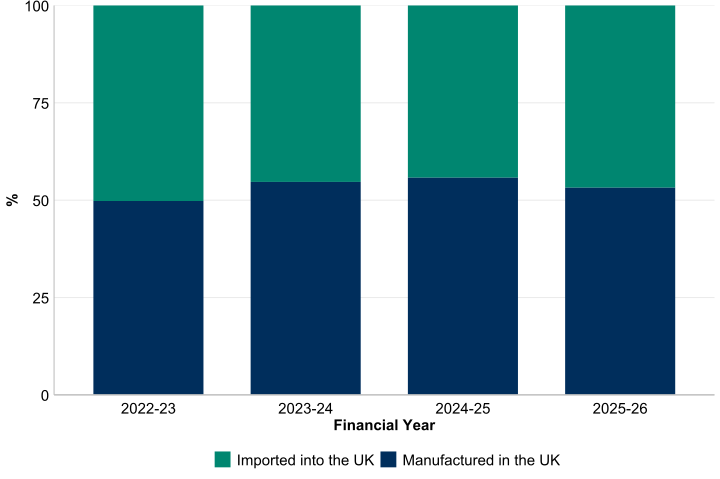
Figure 2 illustrates the proportional split between the imported and manufactured plastic packaging declared. The proportional split is similar in all financial years.
Taxable plastic packaging compared to relieved and exempt plastic packaging
Table 2: total amount of relieved and exempt and taxable plastic packaging (thousands of tonnes)
| Financial year | Relieved and exempt | Taxable | Total |
|---|---|---|---|
| 2022-23 | 2,034 | 1,399 | 3,433 |
| 2023-24 | 1,753 | 1,255 | 3,008 |
| 2024-25 | 1,944 | 1,194 | 3,138 |
| 2025-26 | 1,863 | 1,107 | 2,970 |
Table 2 shows that there has been a downward trend in the amount of taxable plastic packaging since the introduction of the tax. The level of relieved and exempt plastic packaging has fluctuated but remained relatively stable overall.
Figure 3: proportional split of relieved and exempt plastic packaging and taxable plastic packaging in each financial year
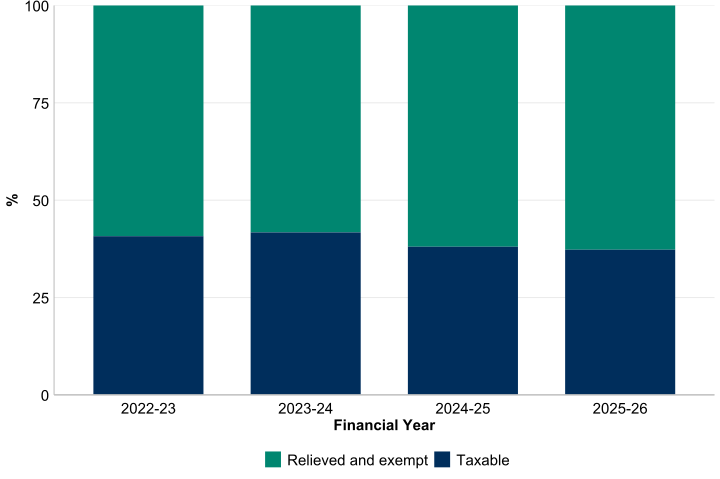
Figure 3 shows that taxable plastic packaging has consistently made up a minority share of total plastic packaging. In 2025 to 2026 this made up 37%, compared to 41% in 2022 to 2023.
Relieved and exempt plastic packaging
Businesses are required to report to HMRC plastic packaging that is relieved or exempt from the tax. There are three scenarios where businesses can do this:
-
Businesses can claim tax relief if their chargeable plastic packaging components are exported out of the UK or converted into another chargeable plastic packaging component by claiming a tax credit. Additionally, businesses can defer the tax where they intend to directly export the plastic packaging component within the next 12 months. Liability for the tax is cancelled where the export takes place within that period. From here on, and in the data that follows, this is referred to as “exported or converted”.
-
Businesses can claim an exemption from PPT if the plastic packaging is used for the immediate packaging of human medicinal products.
-
Businesses must report where their plastic packaging contains 30% or more recycled plastic.
HMRC does not collect data about the recycled content in plastic packaging that is exported or converted or used for the immediate packaging of human medicinal products.
Table 3: total amount of plastic packaging that was relieved or exempt (thousands of tonnes)
| Financial year | 30% or more recycled content | Exported and converted | Human medicine products | Total |
|---|---|---|---|---|
| 2022-23 | 1,290 | 723 | 21 | 2,034 |
| 2023-24 | 1,400 | 331 | 22 | 1,753 |
| 2024-25 | 1,569 | 354 | 21 | 1,944 |
| 2025-26 | 1,506 | 337 | 20 | 1,863 |
Table 3 shows the following:
-
the amount of plastic packaging declared as having 30% or more recycled content has increased since the start of the tax and reached its highest level in 2024 to 2025
-
the amount of plastic packaging exported and converted has remained at under half its highest level in 2022 to 2023
-
the amount of plastic packaging used for the immediate packaging of human medicinal products was significantly lower than the other categories and made up less than 1% in all financial years
Figure 4: proportional split of plastic packaging relieved and exempt in each financial year
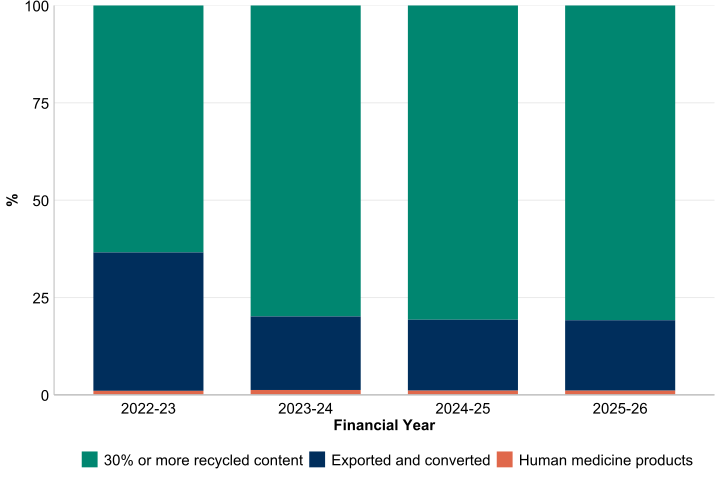
Figure 4 represents the proportional split of plastic packaging that was relieved and exempt in all financial years. The figure shows that plastic packaging containing 30% or more recycled content made up by far the largest proportion of relieved and exempt plastic packaging.