Planning Inspectorate statistical release 23 October 2025
Published 23 October 2025
Applies to England

© Crown copyright 2025
This publication is licensed under the terms of the Open Government Licence v3.0 except where otherwise stated. To view this licence, visit nationalarchives.gov.uk/doc/open-government-licence/version/3 or write to the Information Policy Team, The National Archives, Kew, London TW9 4DU, or email: psi@nationalarchives.gov.uk.
Where we have identified any third party copyright information you will need to obtain permission from the copyright holders concerned.
This publication is available at https://www.gov.uk/government/statistics/planning-inspectorate-statistical-release-23-october-2025/planning-inspectorate-statistical-release-23-october-2025
1. Introduction
This statistical release provides summary information on appeals, which represent the highest volume (in terms of number of cases) of the Planning Inspectorate’s work. For details of what cases are included within the release see the textbox after Table 9.
These statistics are produced each quarter, and the focus is on timeliness of decision-making, an area of particular interest for stakeholders. Information on the decisions that have been made is also included; and on the number of Inspectors available to make those decisions.
We have released two Excel files with tables at the same time as this report. The tables show the number of cases received, decided and allowed since 2010, broken down by case type.
Planning Inspectorate Quarterly and Annual Volume Statistics - GOV.UK
These statistics have been published to ensure everyone has equal access to the information and to support the Planning Inspectorate’s commitment to release information where possible.
This statistical bulletin provides:
- The time taken to reach decisions
- Appeals, decisions and events held, from October 2024 to September 2025
- The number of open cases
- The number of Inspectors
- The number of section 78 appeals received compared to decided, and the proportion allowed, in the last 5 years
The Planning Inspectorate
The Planning Inspectorate makes decisions and provides recommendations and advice on a range of land use and planning-related issues across England.
The Planning Inspectorate deals with planning appeals, national infrastructure planning applications, examinations of local plans and other planning-related and specialist casework in England. The Planning Inspectorate is an executive agency, sponsored by the Ministry of Housing, Communities and Local Government.
1.1 Summary
Time to decide cases
The median decision time for cases decided in September was 20 weeks.
Median timeliness by procedure type is shown in the summary table below.
| Procedure type | Last 12 months | September 2025 |
|---|---|---|
| Written Representations | 25 weeks | 19 weeks |
| Hearings | 26 weeks | 24 weeks |
| Inquiries | 32 weeks | 29 weeks |
| All Cases | 25 weeks | 20 weeks |
The median time for planning cases was 20 weeks in September 2025. The 12-month median was 25 weeks. The median decision time has been coming down over the last year as seen in Figure 1 below.
Enforcement decisions made in September 2025 had a median decision time of 68 weeks, with the 12-month median being 60 weeks.
The median time for planning appeals decided by inquiry under the Rosewell Process in September was 27 weeks and over the 12 months to September 2025 was 28 weeks.
Decisions
The Planning Inspectorate made 19,341 appeal decisions in the last 12 months, an average of 1,612 per month. The number of decisions in September 2025 was 1,653.
There were 18,010 decisions made on written representations during the last 12 months, with 1,574 in September 2025.
There were 923 decisions made on hearings during the last 12 months, with 59 in September 2025.
There were 408 decisions made on inquiries during the last 12 months, with 20 in September 2025.
Planning Inspectors
There were 448 Inspectors employed by the Planning Inspectorate at the end of September 2025.
Section 78 Appeals
The allowed rate for Section 78 planning appeals was 31% for July 2025 to September 2025. Figure 8 shows that the Planning Inspectorate has decided more cases than were have received for 8 out of the last 9 quarters.
Please note the Planning Inspectorate has reordered this release to make it easier to read. As a result of this the tables have been reordered as well, please refer to Annex F for how they have changed.
To help determine whether this has been helpful, please send any feedback on these changes to: statistics@planninginspectorate.gov.uk
2. Decision Timeliness
It is important for people to know how long an appeal is going to take, so that they can make informed plans and decisions. This section covers the timeliness of decisions (i.e., how long it takes to make a decision) across appeal casework.
Planning Inspectors work on a broader range of work than the cases featured in this release. For example, they also work on examining Nationally Significant Infrastructure Project applications, Local Plans, Compulsory Purchase Order applications and many other specialist licencing/ application types.
How is timeliness measured
The time to make a decision is measured from the time the Inspectorate have enough information for the case to proceed (it is deemed ‘valid’) to the time a decision letter is issued. This means that any delay in ‘validating’ the appeal is included in the time to make a decision.
The decisions made in a given month will include those that started many months before, and thus do not give an accurate indication of how long appeals submitted, or deemed ‘valid’ in that month, will take.
Table 1 below shows that the median time to make a decision, across all cases in the last 12 months, was 25 weeks. The median time for decisions made in September 2025 was 20 weeks. Figure 1 shows the monthly median has ranged from 20 to 29 weeks over last 12 months.
Table 1 also shows the mean decision time for the last 12 months is 32 weeks. Each month the median is less than the mean, due to the impact of very long cases. This is illustrated in figure 1. Also included in the table is the standard deviation of decision timeliness, which is a measure of variation.
Table 1: Median, Mean and Standard Deviation of Time to Decision; October 2024 to September 2025
Note 1: This table includes revisions to previously published data. Please see Annex E for further information.
| Month | Oct-24 | Nov-24 | Dec-24 | Jan-25 | Feb-25 | Mar-25 | Apr-25 | May-25 | Jun-25 | Jul-25 | Aug-25 | Sep-25 | Total |
|---|---|---|---|---|---|---|---|---|---|---|---|---|---|
| Valid to Decision (median weeks) | 29.0 | 28.9 | 28.1 | 28.0 | 28.0 | 25.9 | 25.9 | 24.5 | 24.6 | 22.0 | 19.9 | 20.0 | 25.4 |
| Valid to Decision (mean weeks) | 33.5 | 34.3 | 36.2 | 33.7 | 32.9 | 31.2 | 30.9 | 31.3 | 32.0 | 30.0 | 29.3 | 29.6 | 32.0 |
| Standard Deviation (weeks) | 20.1 | 22.2 | 36.1 | 21.9 | 20.3 | 21.7 | 21.2 | 24.0 | 25.8 | 25.8 | 28.1 | 27.4 | 24.9 |
Source: Horizon
What are mean, median, and standard deviation?
| Measure | Definition |
|---|---|
| Mean | The total time taken divided by the number of cases. Also referred to as the ‘average’. A measure of how long each case would take, if the total time taken was spread evenly across all cases. |
| Median | This is the time taken by the ‘middle’ case if all cases were sorted from quickest to longest |
| Standard deviation | This is a measure of variability or spread. It is calculated by examining how much each value differs from the mean. A higher standard deviation means the individual decision times vary more widely around the mean. A lower standard deviation would demonstrate greater consistency in the Planning Inspectorate’s decision timeliness. |
Figure 1: Median and Mean Time to Decision; October 2024 to September 2025.
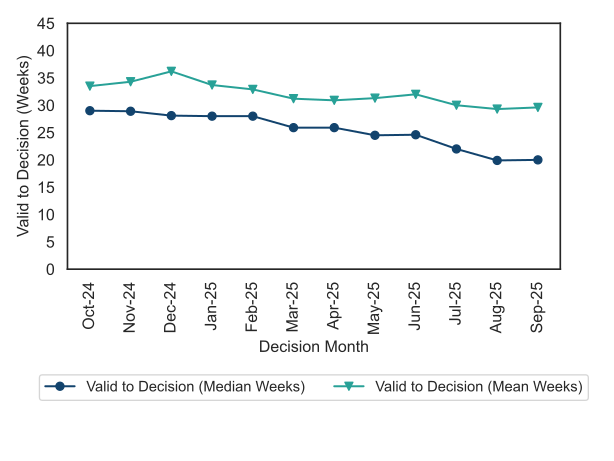
Line chart showing data in Table 1 (above)
Source: Horizon
3. Decisions, Events & Open Cases
The Planning Inspectorate has made 19,341 appeal decisions in the last 12 months. There were 1,653 cases decided in September 2025, with a monthly average of 1,612 over the past 12 months.
Table 2 below shows the monthly breakdown with the highest number of decisions in July 2025 and lowest in December 2024.
The number of events recorded for September 2025 was 1,887, with a monthly average of 1,644 over the past 12 months.
The median valid to decision time was 20 weeks in September 2025, as shown in Figure 2 and Table 2 below.
There are no clear trends for the number of events and decisions per month. However, the Christmas break typically impacts on the number of events arranged for December.
Figure 2: Number of events held, decisions issued and median time between valid date & decision date; October 2024 to September 2025.
Note: Annex C has this chart for just decisions (previously Figure 3)
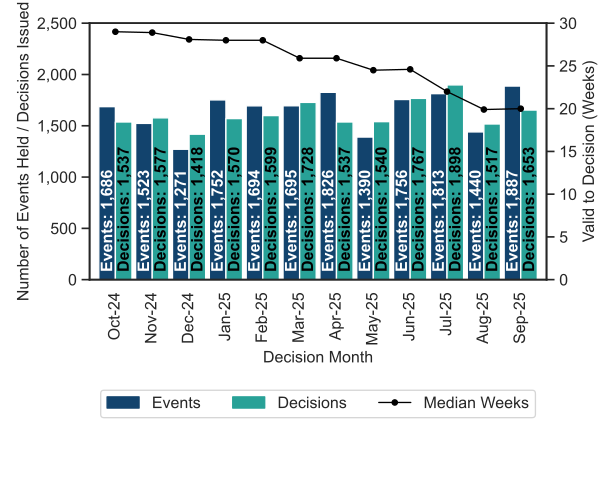
Bar and Line chart showing data in Table 2 (below)
Source: Horizon
Table 2: Number of events held, decisions issued and median time between valid date & decision date; October 2024 to September 2025.
Note: This table includes revisions to previously published data. Please see Annex E for further information
| Month | Oct- 24 | Nov- 24 | Dec- 24 | Jan- 25 | Feb- 25 | Mar- 25 | Apr- 25 | May- 25 | Jun- 25 | Jul- 25 | Aug- 25 | Sep- 25 | Total |
|---|---|---|---|---|---|---|---|---|---|---|---|---|---|
| Events held | 1,686 | 1,523 | 1,271 | 1,752 | 1,694 | 1,695 | 1,826 | 1,390 | 1,756 | 1,813 | 1,440 | 1,887 | 19,733 |
| Decisions | 1,537 | 1,577 | 1,418 | 1,570 | 1,599 | 1,728 | 1,537 | 1,540 | 1,767 | 1,898 | 1,517 | 1,653 | 19,341 |
| Median weeks | 29.0 | 28.9 | 28.1 | 28.0 | 28.0 | 25.9 | 25.9 | 24.5 | 24.6 | 22.0 | 19.9 | 20.0 | 25.4 |
Source: Horizon
Figure 3 below shows the number of cases received, closed and open for each of the last 12 months. The number of cases closed has exceeded the number of cases received for the past 12 months. The number of open cases has been reducing steadily over the past 12 months
Figure 3: Number of cases received, closed and open; October 2024 to September 2025.
Note: The number of cases closed is higher than the number of decisions, as it includes cases where an appeal is withdrawn, notice is withdrawn, or the appeal is turned away.
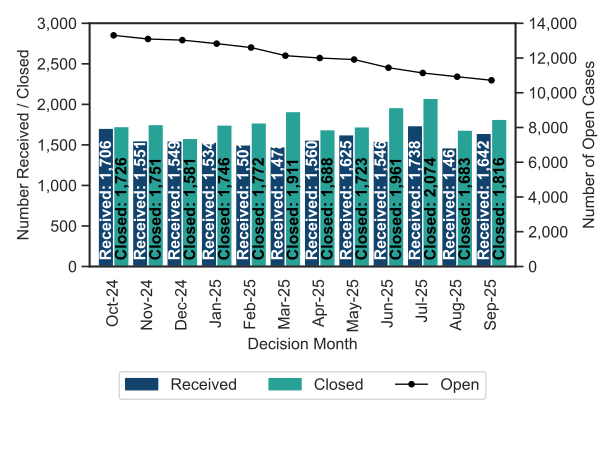
Bar and Line chart showing data in Table 3 (below)
Source: Horizon
Table 3: Number of cases received, closed and open; October 2024 to September 2025.
Note 1: This table includes revisions to previously published data. Please see Annex E for further information
Note 2: There is a known anomaly that means that the number of open cases does not exactly follow the volumes of cases closed or received (for example the number of open cases can increase between months even though the number closed exceeded the number received). The main reasons for this have been identified and are detailed in the Background Quality Report.
| Month | Oct- 24 | Nov- 24 | Dec- 24 | Jan- 25 | Feb- 25 | Mar- 25 | Apr- 25 | May- 25 | Jun- 25 | Jul- 25 | Aug- 25 | Sep- 25 | Total |
|---|---|---|---|---|---|---|---|---|---|---|---|---|---|
| Received | 1,706 | 1,551 | 1,549 | 1,534 | 1,501 | 1,478 | 1,560 | 1,625 | 1,546 | 1,738 | 1,465 | 1,642 | 18,895 |
| Closed | 1,726 | 1,751 | 1,581 | 1,746 | 1,772 | 1,911 | 1,688 | 1,723 | 1,961 | 2,074 | 1,683 | 1,816 | 21,432 |
| Open Cases: all casework | 13,305 | 13,094 | 13,030 | 12,828 | 12,604 | 12,136 | 11,999 | 11,913 | 11,442 | 11,138 | 10,923 | 10,718 |
Source: Horizon
Ministry of Housing, Communities and Local Government release information on Planning application data here - Live tables on planning application statistics
At the end of September 2025, the Planning Inspectorate had 10,718 cases open. More information on how the number of open cases has changed over the past 12 months, is in Table 3 and Figure 3 above.
The open cases comprised of 9,481 cases being handled through written representations; 404 through hearings; and 442 through inquiries, as well as 391 not currently allocated a procedure type. This is not the number of ‘live’ hearings and inquiries since it includes cases where the event (hearing or inquiry) has yet to start, as well as those where the event has finished but the decision has yet to be issued.
Table 4: Open cases by procedure and stage, as of end of September 2025.
Note 1: There are 391 cases that have no procedure type recorded (see Background Quality Report for more detail) These are excluded from the row and column totals in the table below. They have been added to the overall total.
Note 2: There is a known anomaly that means that the number of open cases does not exactly follow the volumes of cases closed or received (for example the number of open cases can increase between months even though the number closed exceeded the number received). The main reasons for this have been identified and are detailed in the Background Quality Report.
| Stage | WR | HRG | INQ | Total |
|---|---|---|---|---|
| Case received but yet to be deemed valid | 257 | 5 | 7 | 269 |
| Case deemed valid but yet to “start” | 925 | 121 | 175 | 1,221 |
| Case started but decision not yet issued | 8,299 | 278 | 260 | 8,837 |
| Total | 9,481 | 404 | 442 | 10,327 |
Source: Horizon
4. Decisions by Procedure
The large majority of decisions over the past 12 months (18,010) were made on written representations. This is 93% of all appeal decisions made. Table 5 shows that written representation decisions have varied from 1,303 to 1,794 per month over the past 12 months.
There were 923 decisions made on hearings during the last 12 months, the monthly average being 77. During September 2025, 59 decisions were made for hearings. In September 2025, 20 decisions were made for inquiries. Decisions for inquiries per month over the last 12 months have ranged between 20 and 65.
Table 5 below gives the numbers of appeal decisions made broken down by whether the case was dealt with by written representations, hearings, or inquiries.
Table 5: Appeal Decisions by Procedure; October 2024 to September 2025.
| Month | Oct- 24 | Nov- 24 | Dec- 24 | Jan- 25 | Feb- 25 | Mar- 25 | Apr- 25 | May- 25 | Jun- 25 | Jul- 25 | Aug- 25 | Sep- 25 | Total |
|---|---|---|---|---|---|---|---|---|---|---|---|---|---|
| Written Representations | 1,421 | 1,454 | 1,303 | 1,427 | 1,441 | 1,581 | 1,454 | 1,421 | 1,695 | 1,794 | 1,445 | 1,574 | 18,010 |
| Hearings | 85 | 77 | 85 | 115 | 93 | 109 | 63 | 75 | 50 | 64 | 48 | 59 | 923 |
| Inquiries | 31 | 46 | 30 | 28 | 65 | 38 | 20 | 44 | 22 | 40 | 24 | 20 | 408 |
| Total | 1,537 | 1,577 | 1,418 | 1,570 | 1,599 | 1,728 | 1,537 | 1,540 | 1,767 | 1,898 | 1,517 | 1,653 | 19,341 |
Source: Horizon
Figure 4 – Appeal Decisions by Procedure; October 2024 to September 2025.
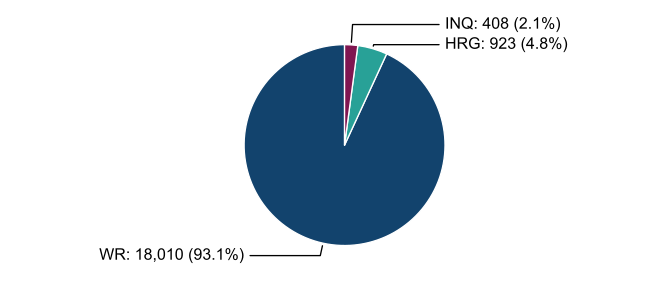
Pie chart showing totals from Table 5 (above)
Procedure Type
Table 6 below shows decision timeliness broken down by the procedure type. Hearings and inquires have typically been more variable than written representations. Because over 90% of cases are by written representation, the timeliness measures for written representations are similar to the measure across all cases.
Where a small number of cases has been decided, the average timeliness (whether mean or median) is less meaningful as a measure than where there are many cases.
Median times are less affected by a small number of large values than mean times, so are the focus of this commentary. The median time for written representations over the 12 months to September 2025 is 25 weeks. The median time for hearings over the 12 months to September 2025 is 26 weeks. The median time to decide for inquiries over the 12 months to September 2025 was 32 weeks.
Table 6: Mean and Median Time to Decision, with Standard Deviation, by Procedure; October 2024 to September 2025.
Note 1: This table includes revisions to previously published data. Please see Annex E for further information
Key: WR= Written Representations; HRG= Hearings; INQ= Inquiries; All= All Cases
| Measure | Procedure | Oct- 24 | Nov- 24 | Dec- 24 | Jan- 25 | Feb- 25 | Mar- 25 | Apr- 25 | May- 25 | Jun- 25 | Jul- 25 | Aug- 25 | Sep- 25 | Total |
|---|---|---|---|---|---|---|---|---|---|---|---|---|---|---|
| Valid to decision (median weeks) | Written Representations | 29.0 | 28.9 | 28.0 | 27.6 | 27.9 | 25.5 | 25.9 | 24.1 | 24.4 | 21.9 | 19.4 | 19.4 | 25.1 |
| Valid to decision (median weeks) | Hearings | 30.1 | 34.9 | 35.0 | 35.4 | 27.9 | 26.9 | 24.1 | 23.6 | 23.4 | 22.4 | 23.4 | 23.7 | 26.3 |
| Valid to decision (median weeks) | Inquiries | 27.4 | 27.5 | 35.4 | 39.9 | 51.0 | 27.3 | 48.2 | 29.1 | 34.2 | 26.4 | 32.1 | 28.9 | 31.5 |
| Valid to decision (median weeks) | All Cases | 29.0 | 28.9 | 28.1 | 28.0 | 28.0 | 25.9 | 25.9 | 24.5 | 24.6 | 22.0 | 19.9 | 20.0 | 25.4 |
| Valid to decision (mean weeks) | Written Representations | 32.6 | 33.5 | 32.3 | 32.9 | 31.7 | 30.1 | 30.4 | 31.1 | 31.7 | 29.5 | 29.2 | 29.4 | 31.1 |
| Valid to decision (mean weeks) | Hearings | 45.3 | 51.3 | 91.7 | 36.1 | 42.6 | 44.6 | 31.9 | 28.8 | 30.5 | 40.1 | 29.7 | 34.2 | 43.7 |
| Valid to decision (mean weeks) | Inquiries | 41.7 | 32.8 | 50.9 | 66.9 | 44.0 | 39.3 | 64.6 | 40.9 | 54.0 | 38.1 | 34.6 | 36.6 | 43.9 |
| Valid to decision (mean weeks) | All Cases | 33.5 | 34.3 | 36.2 | 33.7 | 32.9 | 31.2 | 30.9 | 31.3 | 32.0 | 30.0 | 29.3 | 29.6 | 32.0 |
| Standard Deviation (weeks) | Written Representations | 18.8 | 20.9 | 20.2 | 20.4 | 19.4 | 20.1 | 20.4 | 24.2 | 25.7 | 25.3 | 28.5 | 27.5 | 23.0 |
| Standard Deviation (weeks) | Hearings | 28.1 | 36.8 | 107.7 | 17.9 | 29.1 | 33.1 | 19.2 | 16.5 | 16.6 | 35.3 | 15.6 | 25.8 | 44.7 |
| Standard Deviation (weeks) | Inquiries | 33.3 | 18.4 | 32.4 | 55.9 | 17.5 | 30.5 | 44.0 | 26.5 | 37.6 | 26.5 | 17.8 | 24.1 | 31.7 |
| Standard Deviation (weeks) | All Cases | 20.1 | 22.2 | 36.1 | 21.9 | 20.3 | 21.7 | 21.2 | 24.0 | 25.8 | 25.8 | 28.1 | 27.4 | 24.9 |
| Decisions | Written Representations | 1,421 | 1,454 | 1,303 | 1,427 | 1,441 | 1,581 | 1,454 | 1,421 | 1,695 | 1,794 | 1,445 | 1,574 | 18,010 |
| Decisions | Hearings | 85 | 77 | 85 | 115 | 93 | 109 | 63 | 75 | 50 | 64 | 48 | 59 | 923 |
| Decisions | Inquiries | 31 | 46 | 30 | 28 | 65 | 38 | 20 | 44 | 22 | 40 | 24 | 20 | 408 |
| Decisions | Total | 1,537 | 1,577 | 1,418 | 1,570 | 1,599 | 1,728 | 1,537 | 1,540 | 1,767 | 1,898 | 1,517 | 1,653 | 19,341 |
Source: Horizon
The standard deviation information indicates that for all three procedures, there is considerable variation, meaning times are widely spread about the mean.
Planning Inquiry Decisions
For planning appeals decided by the inquiry process, The Planning Inspectorate has been implementing recommendations from the Rosewell review.
The median time for inquiries under Rosewell process over the 12 months to September 2025 is 28 weeks and the median time to decision for September 2025 was 27 weeks.
Table 7: Decisions, Median and Mean Time to Decision, Planning Inquiry Cases under Rosewell Process; October 2024 to September 2025.
Note: where there are fewer than 20 decisions, the measures mean, median and standard deviation are less meaningful.
| Month | Oct- 24 | Nov- 24 | Dec- 24 | Jan- 25 | Feb- 25 | Mar- 25 | Apr- 25 | May- 25 | Jun- 25 | Jul- 25 | Aug- 25 | Sep- 25 | Total |
|---|---|---|---|---|---|---|---|---|---|---|---|---|---|
| Decisions | 14 | 27 | 10 | 11 | 23 | 15 | 12 | 18 | 15 | 22 | 7 | 11 | 185 |
| Valid to Decision (median weeks) | 28.2 | 27.4 | 29.4 | 24.0 | 25.1 | 27.0 | 28.1 | 28.5 | 34.0 | 26.4 | 38.6 | 26.7 | 27.6 |
| Valid to Decision (mean weeks) | 30.4 | 27.0 | 28.1 | 28.4 | 27.3 | 30.2 | 35.0 | 35.1 | 35.9 | 30.7 | 41.1 | 30.2 | 30.9 |
| Standard deviation of decision (weeks) | 11.3 | 5.0 | 4.1 | 12.0 | 8.4 | 7.9 | 17.3 | 13.6 | 13.8 | 9.4 | 12.8 | 13.4 | 11.4 |
Figure 5 below shows the mean and median time to decision for planning inquiry cases under the Rosewell process.
Figure 5: Median and Mean Time to Decision, Rosewell Inquiry Process; October 2024 to September 2025.
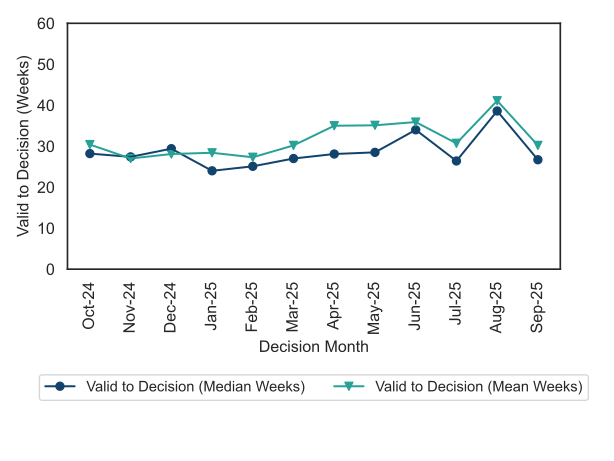
Line chart showing data in Table 7 (above)
Source: Horizon
Most inquiry decisions now being issued are under the revised ‘Rosewell’ process but some inquiries, for example those that are linked together with associated enforcement cases, do not follow the Rosewell process.
Table 8: Decisions, Planning Inquiry Cases under non-Rosewell Process; October 2024 to September 2025.
| Month | Oct- 24 | Nov- 24 | Dec- 24 | Jan- 25 | Feb- 25 | Mar- 25 | Apr- 25 | May- 25 | Jun- 25 | Jul- 25 | Aug- 25 | Sep- 25 | Total |
|---|---|---|---|---|---|---|---|---|---|---|---|---|---|
| Decisions | 0 | 1 | 1 | 1 | 1 | 0 | 1 | 4 | 2 | 0 | 1 | 0 | 12 |
Source: Horizon
5. Decisions by Casework Category
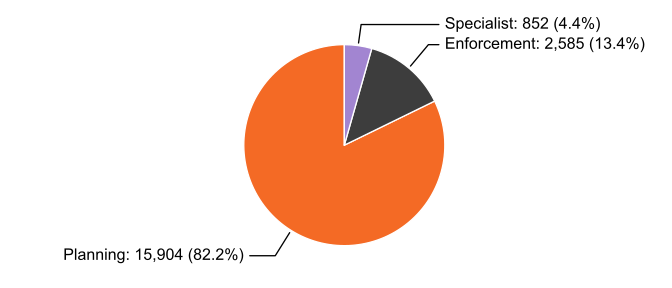
The majority of cases decided over the past 12 months were planning (15,904). This is about 82% of all appeal decisions made. There were 2,585 enforcement decisions and 852 specialist decisions. These totals are also shown in Table 7 below and Figure 5 below.
Trends for planning decisions show similar patterns to written representations. The average number of enforcement decisions over the past 12 months was 215. Specialist casework figures continue to vary each month, from a high of 112 in June 2025 to a low of 40 in August 2025.
Table 9: Appeal Decisions by Casework Category; October 2024 to September 2025.
| Month | Oct- 24 | Nov- 24 | Dec- 24 | Jan- 25 | Feb- 25 | Mar- 25 | Apr- 25 | May- 25 | Jun- 25 | Jul- 25 | Aug- 25 | Sep- 25 | Total |
|---|---|---|---|---|---|---|---|---|---|---|---|---|---|
| Planning | 1,249 | 1,331 | 1,171 | 1,254 | 1,311 | 1,436 | 1,286 | 1,254 | 1,454 | 1,556 | 1,277 | 1,325 | 15,904 |
| Enforcement | 213 | 189 | 195 | 227 | 226 | 241 | 195 | 204 | 201 | 238 | 200 | 256 | 2,585 |
| Specialist | 75 | 57 | 52 | 89 | 62 | 51 | 56 | 82 | 112 | 104 | 40 | 72 | 852 |
| Total | 1,537 | 1,577 | 1,418 | 1,570 | 1,599 | 1,728 | 1,537 | 1,540 | 1,767 | 1,898 | 1,517 | 1,653 | 19,341 |
Source: Horizon
What are Planning cases? The Planning category includes s78 planning appeals, householder appeals, commercial appeals, listed building consent appeals, advertisement appeals, s106 planning obligation appeals and Called In Planning Applications.
What are Enforcement cases? Enforcement covers enforcement appeals (i.e., appeals against the issue of an enforcement notice served by a local planning authority for alleged breaches of planning control), enforcement listed building notice appeals and lawful development certificate appeals.
What are Specialist cases? Specialist casework includes Common Land, Rights of Way orders (including Schedule 14 cases), Purchase orders, Tree Preservation Orders, High Hedges appeals, Hedgerow appeals, Wayleave, Compulsory Purchase Orders, Secretary of State, Transport, Environmental Permitting Appeals and Coastal Access. Additional casework types have been added to this category over time.
Figure 6 – Appeal Decisions by Casework Category; October 2024 to September 2025.
Source: Horizon
Casework Category
The nature of the cases the Planning Inspectorate deal with varies widely and several factors play a part in determining how long it takes to make a decision. One such factor is the type of casework. Table 10 below shows the time taken to decide, in planning cases, in enforcement cases, and in specialist cases, as does Figure 6.
The median time to decision for planning cases (there are many more of these decisions than in the other categories) is lower than for enforcement cases; and less variable than the times for specialist cases.
Table 10: Median, Mean and Standard Deviation of Time to Decision – Planning, Enforcement, Specialist Cases; October 2024 to September 2025.
Note 1: This table includes revisions to previously published data. Please see Annex E for further information
| Appeal Type | Measure | Oct- 24 | Nov- 24 | Dec- 24 | Jan- 25 | Feb- 25 | Mar- 25 | Apr- 25 | May- 25 | Jun- 25 | Jul- 25 | Aug- 25 | Sep- 25 | Total |
|---|---|---|---|---|---|---|---|---|---|---|---|---|---|---|
| Planning Cases | Valid to decision (median wks) | 27.1 | 26.9 | 26.0 | 26.4 | 25.9 | 23.7 | 23.9 | 22.7 | 22.3 | 20.1 | 17.9 | 17.7 | 23.3 |
| Planning Cases | Valid to decision (mean wks) | 28.3 | 28.7 | 27.5 | 27.6 | 26.8 | 25.1 | 25.1 | 24.5 | 24.4 | 22.1 | 20.6 | 20.1 | 25.0 |
| Planning Cases | Standard deviation of decision (weeks) | 11.4 | 13.3 | 12.7 | 11.9 | 11.0 | 12.1 | 12.7 | 13.6 | 14.4 | 11.4 | 12.5 | 11.6 | 12.7 |
| Enforcement Cases | Valid to decision (median wks) | 52.9 | 70.1 | 56.0 | 54.1 | 51.0 | 55.6 | 59.6 | 52.6 | 65.9 | 59.4 | 73.1 | 67.9 | 59.3 |
| Enforcement Cases | Valid to decision (mean wks) | 56.4 | 65.9 | 80.1 | 61.0 | 60.1 | 60.2 | 63.3 | 61.6 | 68.2 | 64.7 | 73.8 | 69.4 | 65.2 |
| Enforcement Cases | Standard deviation of decision (weeks) | 28.4 | 30.1 | 73.4 | 33.3 | 28.0 | 31.8 | 28.7 | 33.6 | 36.7 | 37.8 | 37.1 | 37.1 | 38.3 |
| Specialist Cases | Valid to decision (median wks) | 53.6 | 64.1 | 66.9 | 48.4 | 72.9 | 70.4 | 36.4 | 64.8 | 69.0 | 83.1 | 91.8 | 76.1 | 67.7 |
| Specialist Cases | Valid to decision (mean wks) | 57.6 | 62.8 | 73.0 | 52.7 | 68.2 | 67.8 | 52.9 | 62.5 | 69.9 | 76.6 | 88.6 | 75.9 | 66.7 |
| Specialist Cases | Standard deviation of decision (weeks) | 37.5 | 42.6 | 38.4 | 31.0 | 26.5 | 30.7 | 30.8 | 36.9 | 32.4 | 38.6 | 52.1 | 30.8 | 36.9 |
Source: Horizon
Annex A gives information on median and mean time to decision, with standard deviation, for the three procedure types, split by planning, enforcement, and specialist casework categories.
Enforcement decisions made in the past 12 months had a median decision time of 59 weeks.
There are considerably fewer specialist cases which means results are more liable to be distorted by extreme values.
Figure 7 – Median Time to Decision by Casework Category: October 2024 to September 2025.
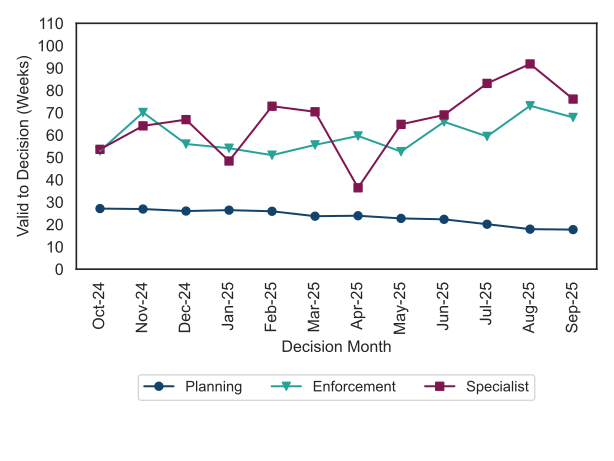
Line chart showing data in Table 10 (above)
Source: Horizon
Note that this release includes information on the mean and median times from valid to decision, for selected appeal types. The information published also breaks down the time for each stage of the process. See Annex B for further details.
6. Inspectors
Table 11 below shows the number of Inspectors in the Planning Inspectorate in each month from October 2024 to September 2025. This includes headcount (i.e. the number of different individuals) and full-time equivalents (FTE) where those working part time are counted in proportion with their contracted hours. There were 448 Planning Inspectors employed by the Inspectorate in September 2025 – with a full-time equivalent of 405.
Table 11: Planning Inspectors – Headcount and FTE; October 2024 to September 2025 (at end of month)
| Month | Oct- 24 | Nov- 24 | Dec- 24 | Jan- 25 | Feb- 25 | Mar- 25 | Apr- 25 | May- 25 | Jun- 25 | Jul- 25 | Aug- 25 | Sep- 25 |
|---|---|---|---|---|---|---|---|---|---|---|---|---|
| Headcount | 433 | 431 | 431 | 457 | 457 | 457 | 455 | 452 | 448 | 446 | 445 | 448 |
| FTE | 392.7 | 390.9 | 391.1 | 414.7 | 415.1 | 414.8 | 412.5 | 408.7 | 404.5 | 403.2 | 402.0 | 404.5 |
Source: Employee Central
As above, Planning Inspectors work on a broader range of work than the appeals featured in this release. Please note that data on Planning Inspectors is only applicable to salaried employees (it does not include fixed term contract Inspectors or Planning Appeal Decision Suppliers, previously referred to as non-salaried Inspectors).
7. Exploring Section 78 Planning Appeals
The Inspectorate has published a series of tables of quarterly data alongside this bulletin. Some of the data published is on casework types that The Planning Inspectorate deals with that are larger in scale, but smaller in volume, than the appeals decisions that are the subject of the preceding sections of these statistics. Some examples of this are Nationally Significant Infrastructure Projects and Local Plans, where volumes never go into the hundreds, and the time between submission to report issue can be over a year. Other data breaks appeals down into more detail than in the monthly totals.
Appeals against refusal of Planning Permission (Section 78 appeals)
The largest volume of casework dealt with by the Planning Inspectorate are appeals against refusal of Planning Permission, which are made under section 78 of the Town and Country Planning Act 1990. The analysis below deals with just this casework type although figures for other casework types can be found in the published tables.
Number of appeals received compared to decisions issued.
In the last twelve months, October 2024 to September 2025, there have been 8,907 Section 78 planning appeals (s78) received, 7.1% lower than for the period October 2023 to September 2024.
In the last five years (October 2020 to September 2025) the highest level of quarterly receipts (2,832) occurred in January to March 2021 and the highest number of decisions (2,879) was in October to December 2020. Over the past year the average number of receipts per quarter was 2,227 and the average number of decisions per quarter was 2,590.
The number of appeals received in July to September 2025 (2,242) was 6.3% lower than the same period in 2024.
Figure 8: Number of s78 Planning appeal, receipts and decisions, 2020/21 to 2025/26, by quarter
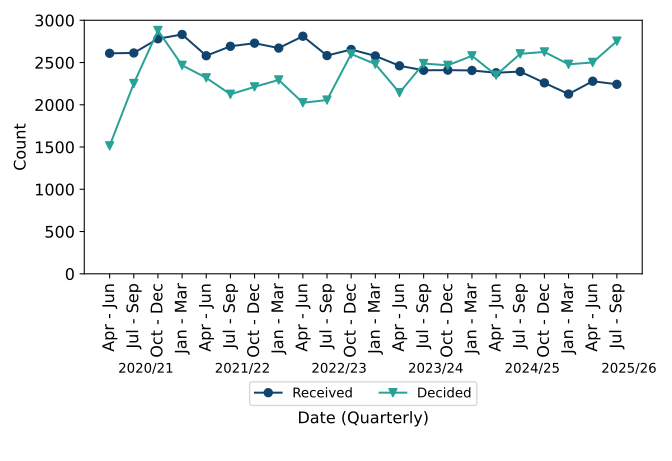
Line chart showing data in Table A in Annex D
Source: Horizon & Picaso. Full published data in Tables 2.1 and Table 2.4.
See Annex D, Table A, for full data table.
The number of decisions issued in July to September 2025, was 10.1% higher than the previous quarter and 5.8% higher than the corresponding quarter last year.
Appeals Allowed
The percentage of Section 78 planning appeals that were allowed in the latest quarter was 31%, lower than in the previous quarter (see figure 9). There were 856 appeals allowed between July and September 2025, 61 more than in the previous quarter. (see Figure 11).
The consistency in the overall percentage allowed is heavily influenced by the number of written representations appeals allowed, as this procedure type contributes by far the greatest number of decisions each year. There has been slightly more variation in the percentage allowed for hearings and inquiries. See Figure 10 below for further details.
Figure 9: S78 planning appeals, percentage allowed, 2020/21 to 2025/26, by quarter
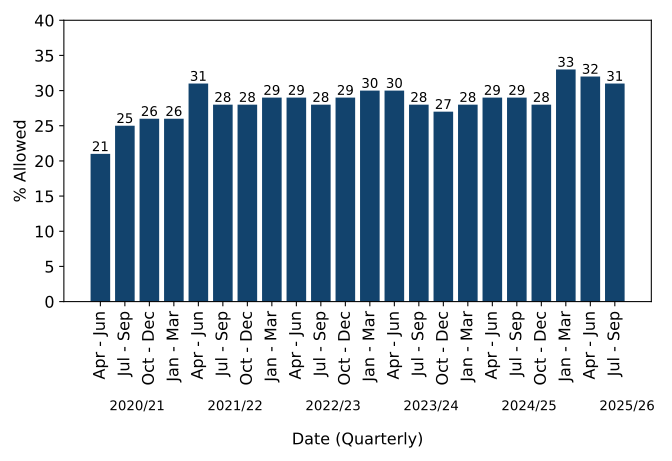
Bar chart showing data in Table B in Annex D
Source: Horizon & Picaso. Full published data in Table 2.4 s78 planning appeals decided. See Annex D Table B, for full data table
Figure 10: S78 planning appeals, percentage allowed by procedure type, 2020/21 to 2025/26, by quarter
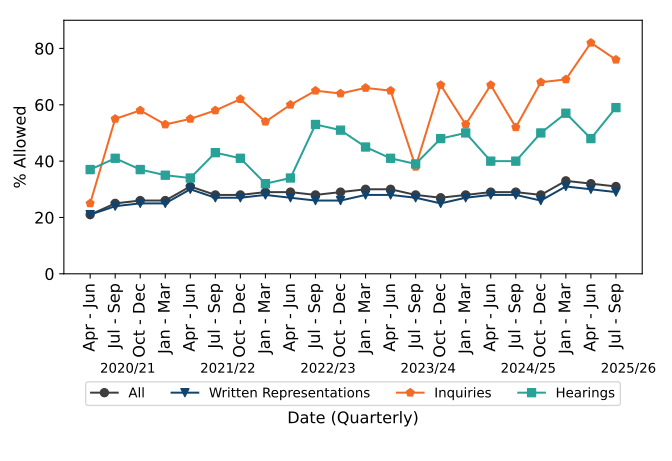
Line chart showing data in Table B in Annex C
Source: Horizon & Picaso. Full published data in Table 2.4 s78 planning appeals decided. See Annex D Table B, for full data table
8. Annex A – Mean and median time to decision, with standard deviation, for planning, enforcement, and specialist casework
Planning
Note 1: where there are fewer than 20 decisions, the measures mean, median and standard deviation are less meaningful.
Note 2: This table includes revisions to previously published data. Please see Annex E for further information
| Planning | Measure | Oct- 24 | Nov- 24 | Dec- 24 | Jan- 25 | Feb- 25 | Mar- 25 | Apr- 25 | May- 25 | Jun- 25 | Jul- 25 | Aug- 25 | Sep- 25 | Total |
|---|---|---|---|---|---|---|---|---|---|---|---|---|---|---|
| Written Representations | Decisions | 1,187 | 1,264 | 1,115 | 1,192 | 1,236 | 1,363 | 1,227 | 1,183 | 1,408 | 1,495 | 1,233 | 1,280 | 15,183 |
| Written Representations | Median Average Weeks | 27.3 | 27.0 | 26.1 | 26.4 | 26.0 | 23.7 | 23.7 | 22.4 | 22.1 | 20.0 | 17.4 | 17.3 | 23.1 |
| Written Representations | Mean Average Weeks | 28.2 | 28.5 | 27.4 | 27.4 | 26.7 | 25.0 | 24.8 | 24.2 | 24.1 | 21.9 | 20.3 | 19.8 | 24.8 |
| Written Representations | Standard Deviation Weeks | 11.3 | 12.7 | 12.6 | 10.9 | 10.9 | 12.0 | 12.3 | 13.5 | 14.1 | 11.5 | 12.4 | 11.5 | 12.5 |
| Hearings | Decisions | 48 | 39 | 45 | 50 | 51 | 58 | 46 | 49 | 29 | 39 | 36 | 34 | 524 |
| Hearings | Median Average Weeks | 24.0 | 22.6 | 22.6 | 25.6 | 23.9 | 22.7 | 23.8 | 23.0 | 23.0 | 21.1 | 23.3 | 22.9 | 23.1 |
| Hearings | Mean Average Weeks | 28.5 | 35.3 | 27.9 | 30.6 | 27.7 | 26.1 | 26.4 | 25.2 | 25.2 | 22.7 | 27.7 | 25.3 | 27.4 |
| Hearings | Standard Deviation Weeks | 13.7 | 26.6 | 14.5 | 11.7 | 12.3 | 14.2 | 9.5 | 9.8 | 9.8 | 9.9 | 10.9 | 9.2 | 13.8 |
| Inquiries | Decisions | 14 | 28 | 11 | 12 | 24 | 15 | 13 | 22 | 17 | 22 | 8 | 11 | 197 |
| Inquiries | Median Average Weeks | 28.2 | 27.4 | 30.9 | 24.4 | 25.1 | 27.0 | 29.1 | 28.1 | 34.0 | 26.4 | 37.3 | 26.7 | 27.9 |
| Inquiries | Mean Average Weeks | 30.4 | 28.6 | 32.3 | 42.0 | 27.9 | 30.2 | 42.4 | 37.2 | 42.0 | 30.7 | 38.5 | 30.2 | 33.5 |
| Inquiries | Standard Deviation Weeks | 11.3 | 9.6 | 13.8 | 46.5 | 8.7 | 7.9 | 30.5 | 19.0 | 28.1 | 9.4 | 13.8 | 13.4 | 20.1 |
| All Cases | Decisions | 1,249 | 1,331 | 1,171 | 1,254 | 1,311 | 1,436 | 1,286 | 1,254 | 1,454 | 1,556 | 1,277 | 1,325 | 15,904 |
| All Cases | Median Average Weeks | 27.1 | 26.9 | 26.0 | 26.4 | 25.9 | 23.7 | 23.9 | 22.7 | 22.3 | 20.1 | 17.9 | 17.7 | 23.3 |
| All Cases | Mean Average Weeks | 28.3 | 28.7 | 27.5 | 27.6 | 26.8 | 25.1 | 25.1 | 24.5 | 24.4 | 22.1 | 20.6 | 20.1 | 25.0 |
| All Cases | Standard Deviation Weeks | 11.4 | 13.3 | 12.7 | 11.9 | 11.0 | 12.1 | 12.7 | 13.6 | 14.4 | 11.4 | 12.5 | 11.6 | 12.7 |
Enforcement
Note 1: where there are fewer than 20 decisions, the measures mean, median and standard deviation are less meaningful
Note 2: This table includes revisions to previously published data. Please see Annex E for further information.
| Enforcement | Measure | Oct- 24 | Nov- 24 | Dec- 24 | Jan- 25 | Feb- 25 | Mar- 25 | Apr- 25 | May- 25 | Jun- 25 | Jul- 25 | Aug- 25 | Sep- 25 | Total |
|---|---|---|---|---|---|---|---|---|---|---|---|---|---|---|
| Written Representations | Decisions | 163 | 139 | 144 | 158 | 153 | 174 | 176 | 160 | 185 | 203 | 176 | 229 | 2,060 |
| Written Representations | Median Average Weeks | 52.9 | 72.0 | 56.0 | 71.3 | 63.4 | 57.1 | 60.8 | 64.4 | 66.4 | 60.0 | 81.4 | 72.9 | 63.9 |
| Written Representations | Mean Average Weeks | 54.8 | 70.0 | 59.8 | 67.0 | 62.2 | 62.1 | 63.6 | 69.1 | 70.4 | 66.4 | 80.2 | 72.9 | 66.9 |
| Written Representations | Standard Deviation Weeks | 26.2 | 28.0 | 26.0 | 30.4 | 29.1 | 29.5 | 26.5 | 32.6 | 35.7 | 36.7 | 34.6 | 36.3 | 32.3 |
| Hearings | Decisions | 36 | 33 | 35 | 60 | 35 | 47 | 14 | 25 | 13 | 19 | 10 | 20 | 347 |
| Hearings | Median Average Weeks | 77.4 | 75.4 | 104.6 | 36.3 | 46.7 | 60.6 | 25.6 | 37.7 | 20.1 | 49.4 | 23.4 | 23.9 | 37.7 |
| Hearings | Mean Average Weeks | 67.5 | 63.5 | 174.2 | 40.3 | 57.6 | 62.9 | 37.8 | 31.9 | 27.6 | 61.8 | 25.9 | 41.0 | 63.2 |
| Hearings | Standard Deviation Weeks | 27.1 | 33.1 | 125.9 | 21.0 | 33.5 | 35.6 | 22.7 | 14.6 | 13.2 | 44.6 | 10.9 | 30.4 | 62.4 |
| Inquiries | Decisions | 14 | 17 | 16 | 9 | 38 | 20 | 5 | 19 | 3 | 16 | 14 | 7 | 178 |
| Inquiries | Median Average Weeks | 26.0 | 28.0 | 43.4 | 62.1 | 51.0 | 27.3 | 136.7 | 33.1 | 132.6 | 34.0 | 23.9 | 29.1 | 41.1 |
| Inquiries | Mean Average Weeks | 47.4 | 37.0 | 56.8 | 92.5 | 54.1 | 37.7 | 125.5 | 38.0 | 106.7 | 46.3 | 27.6 | 35.9 | 50.0 |
| Inquiries | Standard Deviation Weeks | 44.3 | 24.4 | 36.0 | 66.0 | 13.3 | 32.3 | 18.0 | 26.6 | 43.0 | 36.5 | 14.0 | 29.9 | 37.4 |
| All Cases | Decisions | 213 | 189 | 195 | 227 | 226 | 241 | 195 | 204 | 201 | 238 | 200 | 256 | 2,585 |
| All Cases | Median Average Weeks | 52.9 | 70.1 | 56.0 | 54.1 | 51.0 | 55.6 | 59.6 | 52.6 | 65.9 | 59.4 | 73.1 | 67.9 | 59.3 |
| All Cases | Mean Average Weeks | 56.4 | 65.9 | 80.1 | 61.0 | 60.1 | 60.2 | 63.3 | 61.6 | 68.2 | 64.7 | 73.8 | 69.4 | 65.2 |
| All Cases | Standard Deviation Weeks | 28.4 | 30.1 | 73.4 | 33.3 | 28.0 | 31.8 | 28.7 | 33.6 | 36.7 | 37.8 | 37.1 | 37.1 | 38.3 |
Specialist
Note 1: where there are fewer than 20 decisions, the measures mean, median and standard deviation are less meaningful.
Note 2: This table includes revisions to previously published data. Please see Annex E for further information
| Specialist | Measure | Oct- 24 | Nov- 24 | Dec- 24 | Jan- 25 | Feb- 25 | Mar- 25 | Apr- 25 | May- 25 | Jun- 25 | Jul- 25 | Aug- 25 | Sep- 25 | Total |
|---|---|---|---|---|---|---|---|---|---|---|---|---|---|---|
| Written Representations | Decisions | 71 | 51 | 44 | 77 | 52 | 44 | 51 | 78 | 102 | 96 | 36 | 65 | 767 |
| Written Representations | Median Average Weeks | 51.6 | 61.0 | 61.4 | 48.4 | 73.9 | 68.0 | 36.4 | 63.7 | 71.4 | 83.1 | 94.7 | 75.9 | 66.1 |
| Written Representations | Mean Average Weeks | 57.1 | 58.8 | 69.9 | 50.6 | 67.9 | 62.6 | 50.6 | 60.6 | 70.6 | 76.1 | 90.1 | 75.2 | 65.3 |
| Written Representations | Standard Deviation Weeks | 38.5 | 39.7 | 41.1 | 30.1 | 26.5 | 28.7 | 30.9 | 36.3 | 33.3 | 39.2 | 54.9 | 30.8 | 37.4 |
| Hearings | Decisions | 1 | 5 | 5 | 5 | 7 | 4 | 3 | 1 | 8 | 6 | 2 | 5 | 52 |
| Hearings | Median Average Weeks | 56.1 | 90.9 | 92.6 | 43.6 | 89.8 | 94.6 | 98.7 | 126.4 | 49.7 | 93.7 | 84.4 | 84.6 | 79.8 |
| Hearings | Mean Average Weeks | 56.1 | 107.2 | 88.7 | 43.0 | 82.1 | 97.1 | 87.8 | 126.4 | 58.1 | 92.7 | 84.4 | 88.5 | 82.6 |
| Hearings | Standard Deviation Weeks | 0.0 | 54.2 | 15.6 | 10.2 | 20.3 | 19.5 | 15.5 | 0.0 | 17.6 | 20.7 | 3.9 | 37.3 | 31.0 |
| Inquiries | Decisions | 3 | 1 | 3 | 7 | 3 | 3 | 2 | 3 | 2 | 2 | 2 | 2 | 33 |
| Inquiries | Median Average Weeks | 66.0 | 77.9 | 87.3 | 81.0 | 56.4 | 113.9 | 56.3 | 102.9 | 77.5 | 53.7 | 68.7 | 74.6 | 77.9 |
| Inquiries | Mean Average Weeks | 68.0 | 77.9 | 88.2 | 76.5 | 45.2 | 95.4 | 56.3 | 86.8 | 77.5 | 53.7 | 68.7 | 74.6 | 73.5 |
| Inquiries | Standard Deviation Weeks | 16.5 | 0.0 | 4.3 | 34.6 | 19.6 | 30.8 | 0.0 | 30.7 | 10.9 | 31.6 | 10.1 | 6.8 | 27.7 |
| All Cases | Decisions | 75 | 57 | 52 | 89 | 62 | 51 | 56 | 82 | 112 | 104 | 40 | 72 | 852 |
| All Cases | Median Average Weeks | 53.6 | 64.1 | 66.9 | 48.4 | 72.9 | 70.4 | 36.4 | 64.8 | 69.0 | 83.1 | 91.8 | 76.1 | 67.7 |
| All Cases | Mean Average Weeks | 57.6 | 62.8 | 73.0 | 52.7 | 68.2 | 67.8 | 52.9 | 62.5 | 69.9 | 76.6 | 88.6 | 75.9 | 66.7 |
| All Cases | Standard Deviation Weeks | 37.5 | 42.6 | 38.4 | 31.0 | 26.5 | 30.7 | 30.8 | 36.9 | 32.4 | 38.6 | 52.1 | 30.8 | 36.9 |
9. Annex B – Detailed Information on timeliness (September 2025)
The information below shows the number and length of decisions made in September 2025:
Note: when there are fewer than 20 decisions the measures mean, median and standard deviation are less meaningful.
| Casework Type | Procedure Type | Median (weeks) | Mean (weeks) | Decisions |
|---|---|---|---|---|
| s78 planning appeals | Written Representations | 18.9 | 21.7 | 842 |
| s78 planning appeals | Hearings | 23.0 | 25.4 | 33 |
| s78 planning appeals | Inquiries | 25.4 | 30.2 | 10 |
| Householder appeals | Written Representations | 11.3 | 14.0 | 332 |
| Enforcement appeals | Written Representations | 72.9 | 72.9 | 229 |
| Enforcement appeals | Hearings | 23.9 | 41.0 | 20 |
| Enforcement appeals | Inquiries | 29.1 | 35.9 | 7 |
The smaller the number of decisions, the less helpful the mean and median are as measures for summarising performance. Particular care should be taken when there are fewer than twenty decisions.
The information published below shows the time taken for different stages of the appeals process:
Note: Only cases with both dates recorded appear in this table, meaning that numbers for cases decided and events recorded may be lower than those presented elsewhere.
| Measure | s78 Written Representations | s78 Hearings | s78 Inquiries | Householder appeals |
|---|---|---|---|---|
| Weeks between valid date & start date | ||||
| Median (average) | 0.7 | 1.9 | 2.9 | 0.6 |
| Mean (average) | 1.2 | 3.3 | 2.9 | 0.8 |
| Cases that started in September 2025 | 730 | 29 | 14 | 363 |
| Weeks between start date & event date | ||||
| Median (Average) | 12.2 | 14.2 | 16.5 | 7.0 |
| Mean (Average) | 14.7 | 18.9 | 28.6 | 9.0 |
| Cases where an event occurred during September 2025 | 892 | 44 | 14 | 400 |
| Weeks between event date & decision date | ||||
| Median (average) | 3.7 | 5.3 | 7.4 | 2.1 |
| Mean (average) | 4.9 | 5.8 | 10.5 | 3.8 |
| Cases that have been decided in September 2025 | 840 | 33 | 10 | 331 |
Explanation of date terminology
| Valid date | When a case is deemed to have been validly received. Note – this is not always the date the case was validated. If a case is validated after the date it was validly received, it is the date it was validly received that is the valid date. |
|---|---|
| Start date | When a timetable, on how the appeal will progress, is issued to both the appellant and local authority. This timetable tells the appellant when to submit the information the Inspectors need to determine the appeal. It also tells the local authority when to notify interested parties about the appeal. |
| Event date | When the site visit, hearing, or inquiry occurred. |
| Decision date | When the decision was issued by The Planning Inspectorate. |
Find out more about the process here - https://www.gov.uk/appeal-planning-decision/after-you-appeal
10. Annex C – Number of decisions October 2024 to September 2025.
Note this is previously Figure 3 that has been moved due to the reorder.
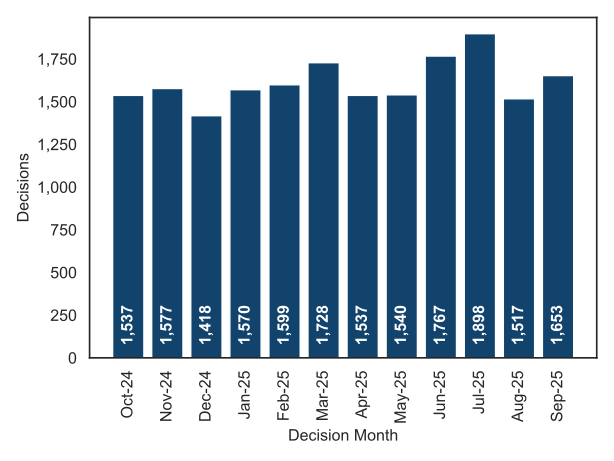
Bar chart showing decisions per month from Table 2
11. Annex D – Volume Tables
ANNEX D, Table a: s78 planning appeals received and decided, by quarter since 2020/21
| Year | Quarter | Received | Decided |
|---|---|---|---|
| 2020/21 | Apr - Jun | 2,609 | 1,514 |
| Jul - Sep | 2,613 | 2,252 | |
| Oct - Dec | 2,781 | 2,879 | |
| Jan - Mar | 2,832 | 2,467 | |
| 2021/22 | Apr - Jun | 2,580 | 2,319 |
| Jul - Sep | 2,692 | 2,124 | |
| Oct - Dec | 2,729 | 2,212 | |
| Jan - Mar | 2,671 | 2,294 | |
| 2022/23 | Apr - Jun | 2,811 | 2,024 |
| Jul - Sep | 2,582 | 2,056 | |
| Oct - Dec | 2,654 | 2,601 | |
| Jan - Mar | 2,578 | 2,481 | |
| 2023/24 | Apr - Jun | 2,461 | 2,143 |
| Jul - Sep | 2,408 | 2,488 | |
| Oct - Dec | 2,410 | 2,467 | |
| Jan - Mar | 2,406 | 2,579 | |
| 2024/25 | Apr - Jun | 2,379 | 2,351 |
| Jul - Sep | 2,393 | 2,603 | |
| Oct - Dec | 2,259 | 2,625 | |
| Jan - Mar | 2,127 | 2,479 | |
| 2025/26 | Apr - Jun | 2,279 | 2,501 |
| Jul - Sep | 2,242 | 2,753 |
ANNEX D, Table b: s78 planning appeals, percentage allowed by procedure type, 2020/21 to 2025/26
| Year | Quarter | Written Representations | Hearings | Inquiries | All |
|---|---|---|---|---|---|
| 2020/21 | Apr - Jun | 21% | 37% | 25% | 21% |
| Jul - Sep | 24% | 41% | 55% | 25% | |
| Oct - Dec | 25% | 37% | 58% | 26% | |
| Jan - Mar | 25% | 35% | 53% | 26% | |
| 2021/22 | Apr - Jun | 30% | 34% | 55% | 31% |
| Jul - Sep | 27% | 43% | 58% | 28% | |
| Oct - Dec | 27% | 41% | 62% | 28% | |
| Jan - Mar | 28% | 32% | 54% | 29% | |
| 2022/23 | Apr - Jun | 27% | 34% | 60% | 29% |
| Jul - Sep | 26% | 53% | 65% | 28% | |
| Oct - Dec | 26% | 51% | 64% | 29% | |
| Jan - Mar | 28% | 45% | 66% | 30% | |
| 2023/24 | Apr - Jun | 28% | 41% | 65% | 30% |
| Jul - Sep | 27% | 39% | 38% | 28% | |
| Oct - Dec | 25% | 48% | 67% | 27% | |
| Jan - Mar | 27% | 50% | 53% | 28% | |
| 2024/25 | Apr - Jun | 28% | 40% | 67% | 29% |
| Jul - Sep | 28% | 40% | 52% | 29% | |
| Oct - Dec | 26% | 50% | 68% | 28% | |
| Jan - Mar | 31% | 57% | 69% | 33% | |
| 2025/26 | Apr - Jun | 30% | 48% | 82% | 32% |
| Jul - Sep | 29% | 59% | 76% | 31% |
ANNEX D, Table c: s78 planning appeals, number allowed by procedure type, 2020/21 to 2025/26
| Year | Quarter | Written Representations | Hearings | Inquiries | All |
|---|---|---|---|---|---|
| 2020/21 | Apr - Jun | 304 | 19 | 2 | 325 |
| Jul - Sep | 537 | 17 | 6 | 560 | |
| Oct - Dec | 695 | 38 | 22 | 755 | |
| Jan - Mar | 588 | 39 | 16 | 643 | |
| 2021/22 | Apr - Jun | 632 | 40 | 39 | 711 |
| Jul - Sep | 536 | 40 | 29 | 605 | |
| Oct - Dec | 553 | 41 | 24 | 618 | |
| Jan - Mar | 595 | 31 | 36 | 662 | |
| 2022/23 | Apr - Jun | 509 | 37 | 34 | 580 |
| Jul - Sep | 484 | 60 | 31 | 575 | |
| Oct - Dec | 602 | 89 | 51 | 742 | |
| Jan - Mar | 639 | 66 | 42 | 747 | |
| 2023/24 | Apr - Jun | 555 | 61 | 30 | 646 |
| Jul - Sep | 618 | 54 | 26 | 698 | |
| Oct - Dec | 558 | 63 | 40 | 661 | |
| Jan - Mar | 644 | 63 | 27 | 734 | |
| 2024/25 | Apr - Jun | 607 | 46 | 29 | 682 |
| Jul - Sep | 672 | 60 | 25 | 757 | |
| Oct - Dec | 642 | 63 | 36 | 741 | |
| Jan - Mar | 695 | 90 | 37 | 822 | |
| 2025/26 | Apr - Jun | 699 | 56 | 40 | 795 |
| Jul - Sep | 762 | 63 | 31 | 856 |
12. Annex E – Revisions to the data tables
This Annex lists all revisions made to the data since the last statistical release.
Note: Classed as a revision are any values which have changed by more than five (when measuring number of decisions/ cases) or more than 0.5 weeks (for mean, median or standard deviation of weeks).
| Table | Revisions |
|---|---|
| Table 2 | Events Held: October, November and December 2024, March, April and June 2025 |
| Table 2 | Decisions: January 2025 |
| Table 3 | Received: November 2024, February, April, May and June 2025 |
| Table 3 | Closed: January 2025 |
| Table 3 | Open: October, November, and December 2024 and January, February, March, May and June 2025 |
| Table 5 | Written Representations: January 2025 |
| Table 5 | Total decisions: January 2025 |
| Table 6 | Hearings Valid to decision (Median weeks): February 2025 |
| Table 6 | Hearings Valid to decision (Mean weeks): February and June 2025 |
| Table 6 | Inquiries Valid to decision (Mean weeks): June 2025 |
| Table 6 | Hearings Standard Deviation (weeks): December 2024 and June 2025 |
| Table 9 | Specialist: January and June 2025 |
| Table 9 | Total decisions: January 2025 |
| Table 10 | Specialist: Valid to decision (Median weeks): October 2024, January, February, March, May and June 2025 |
| Table 10 | Specialist: Valid to decision (Mean weeks): October and December 2024, January, February, March and June 2025 |
| Table 10 | Specialist: Standard deviation of decision (weeks): January and May 2025 |
| Annex A Enforcement | Written Representations (Decisions): March, May and June 2025 |
| Annex A Enforcement | Written Representations (Median weeks): March 2025 |
| Annex A Enforcement | Hearings (Decisions): December 2024 and January 2025 |
| Annex A Enforcement | Hearings (Median weeks): December 2024 and January 2025 |
| Annex A Enforcement | Hearings (Mean weeks): December 2024 |
| Annex A Enforcement | Inquiries (Decisions): June 2025 |
| Annex A Enforcement | Inquiries (Median weeks): June 2025 |
| Annex A Enforcement | Inquiries (Mean weeks): June 2025 |
| Annex A Enforcement | Inquiries (Standard Deviation): June 2025 |
| Annex A Specialist | Written Representations (Decisions): October and December 2024, January, February, March, April, May and June 2025 |
| Annex A Specialist | Written Representations (Median weeks): January, February, May and June 2025 |
| Annex A Specialist | Written Representations (Mean weeks): October and December 2024, January, February, March, April and June 2025 |
| Annex A Specialist | Written Representations (Standard Deviation): May 2025 |
| Annex A Specialist | Hearings (Decisions): January, February, May and June 2025 |
| Annex A Specialist | Hearings (Median weeks): January, May and June 2025 |
| Annex A Specialist | Hearings (Mean weeks): May and June 2025 |
| Annex A Specialist | Hearings (Standard Deviation): January, May and June 2025 |
13. Annex F – New table order information
| Previous Table Number | New Table number |
|---|---|
| Table 1 Number of events held, decisions issued and median time between valid date & decision date | Table 2: Number of events held, decisions issued and median time between valid date & decision date; |
| Table 2: Number of cases received, closed and open | Table 3: Number of cases received, closed and open |
| Table 3: Appeal Decisions | Removed due to repeating information |
| Table 4: Appeal Decisions by Procedure and Casework Category | Spilt into two tables: Table 5: Appeal Decisions by Procedure, Table 9: Appeal Decisions by Casework Category |
| Table 5: Median, mean and Standard Deviation of Time to Decision | Table 1: Median, mean and Standard Deviation of Time to Decision |
| Table 6: Mean and Median Time to Decision, with Standard Deviation, by Procedure | Table 6: Mean and Median Time to Decision, with Standard Deviation, by Procedure |
| Table 7: Decisions, Mean, Median and Standard Deviation of Time to Decision – Planning, Enforcement, Specialist Cases; | Table 10: Decisions, Mean, Median and Standard Deviation of Time to Decision – Planning, Enforcement, Specialist Cases; |
| Table 8: Decisions, Mean and Median Time to Decision, Planning Inquiry Cases under Rosewell Process | Table 7: Decisions, Median and Mean Time to Decision, Planning Inquiry Cases under Rosewell Process |
| Table 9: Decisions, Planning Inquiry Cases under non-Rosewell Process | Table 8: Decisions, Planning Inquiry Cases under non-Rosewell Process; |
| Table 10: Open cases by procedure and stage | Table 4: Open cases by procedure and stage |
| Table 11: Planning Inspectors – Headcount and FTE | Table 11: Planning Inspectors – Headcount and FTE |
14. Background notes
Data sources
Horizon / Picaso – The main casework management systems used for processing appeals casework (note that Picaso is no longer a live system).
Employee central – The Human Resources system database used to store all information regarding members of staff.
Compliance with the Code of Practice for Statistics
These statistics have been published in accordance with the Code of Practice for Statistics, which cover trustworthiness, quality, and value. They have been pre-announced, and publication is overseen by the Head of Profession.
Technical Notes
A Background Quality Report is published alongside this Statistical Release. It provides more detail on the quality of statistics in this publication.
| Data quality | Data on cases is taken from a live casework system, and details of cases can change for a number of reasons even after a decision has been made. We are seeking to get a better understanding of the nature and volume of these changes and will provide further information as it is available. We carry out regular checks on the quality of our data and may undertake ad hoc data cleansing exercises. Therefore, all the data for the last 12 rolling months is published in provisional form. We have indicated in this publication any data where a number of cases has changed by more than five cases in a month; or where a measure (mean, median or standard deviation) has changed by more than 0.5 weeks. |
|---|---|
| Measuring weeks | Data are measured in days and then converted to weeks. Note that not all decimal values are possible where converting days to weeks. 1 day is 1/7 of a week, or 0.14 weeks (to two decimal places). 2 days = 0.29; 3 days = 0.43; 4 days = 0.57; 5 days = 0.71; 6 days = 0.86. When these are used to calculate averages, or displayed to one decimal place, the result will not equate to a full day which can be misleading: it may appear that we are measuring part days (e.g. 19.8 weeks) but we only measure in whole days. |
Glossary
| Term | Explanation |
|---|---|
| Appeals | The right to appeal a planning decision made by a local authority is a key feature of the planning system, as is appealing when an authority is taking too long. |
| Appeals decided | Number of appeals by the date the appeal was decided by The Planning Inspectorate. |
| Appeals received | Number of appeals by the date the appeal was received by The Planning Inspectorate. |
| Applications | Planning Inspectorate manage the application process for proposed Nationally Significant Infrastructure Projects (NSIPs) within England and Wales in line with the 2008 Planning Act. |
| Closed | The total number of appeals decided, withdrawn, or turned away. |
| Decision | The outcome of the case e.g. appeal allowed or rejected. The date of the decision is taken as the date a decision letter is sent to the appellant. |
| Event | A site visit, hearing, or inquiry (may be virtual) |
| Event Type | The different options of how an Inspector visits a site for a written representations appeal. |
| Examinations | The process of examining local plans is dealt with by the Planning Inspectorate. Every Local Planning Authority is required to have a local plan. This includes a vision for the future and plan to address housing needs in the area. When a Local Planning Authority has finished preparing and consulting on a local plan it must be submitted to the Secretary of State who appoints an Inspector to carry out an independent examination. |
| FTE | Full Time Equivalent – a count of employees where those working part time are counted in proportion with their contracted hours. |
| Headcount | Total number of staff employed regardless of how many hours they work (i.e. the number of different individuals). |
| Hearings | A hearing involves the submission of written evidence by the main parties and a hearing once all the written submissions have been received. This takes the form of a round-the-table discussion (in person or virtually) that will be led by the planning inspector. It allows for all parties to respond to any questions that the inspector might have, and to let everyone make their case known. Source: Planning Portal |
| Inquiries | An inquiry is usually used for complex cases where legal issues may need to be considered. The main parties will usually have legal representatives to present their case and to cross-examine any witnesses. Prior to the inquiry date, the Planning Inspectorate will expect to have received various documents from all parties that will be taking part in the appeal. These may include statements of case and proofs of evidence from expert witnesses. Third parties may also take part. The inquiry will be led by the inspector and will follow a formal procedure. At some point during or on conclusion of the inquiry the inspector and the main parties will undertake a site visit. Source: Planning Portal |
| Live appeals | Number of live appeals in that have an appeal valid date but no end date (either decision date or a closed date, e.g. for appeals that have been withdrawn). |
| Mean | The total time taken divided by the number of cases. Also referred to as the ‘average’. A measure of how long each case would take, if the total time taken was spread evenly across all cases. |
| Median | This is the time taken by the ‘middle’ case if all cases were sorted from quickest to longest |
| Open Cases | Number of cases that have been received but on which a decision has not yet been made/ issued. Will differ from Live Appeals as it includes those received but not yet verified. |
| Procedure Type | The method by which The Planning Inspectorate processes and decides appeals. |
| Standard deviation | This is a measure of variability or spread. It is calculated by examining how much each value differs from the mean. A higher standard deviation means the individual decision times vary more widely around the mean. |
| Written Representations (includes Rights of Way Schedule 14) | Most planning appeals are decided by the written representations’ procedure. With this procedure the Inspector considers written evidence from the appellant, the LPA and anyone else who has an interest in the appeal. The site is also likely to be visited. |
15. Contact Us
The Planning Inspectorate welcome feedback on our statistical products. If you have any comments or questions about this publication or about our statistics in general, you can contact us as follows:
Media enquiries 0303 444 5004
email press.office@planninginspectorate.gov.uk
Public enquiries email statistics@planninginspectorate.gov.uk
Please note we are currently reviewing our statistics with a view to making them as clear and helpful as possible for users. We would be delighted if you could contact us via the address below with any views on this approach; particularly on what content would be most useful and why.
email statistics@planninginspectorate.gov.uk
If you require information which is not available within this or other available publications, you may wish to submit a Request for Information under the Freedom of Information Act 2000 to the Planning Inspectorate. For more information, see: https://www.gov.uk/make-a-freedom-of-information-request/the-freedom-of-information-act