Planning Inspectorate Ministerial Measures - Experimental Statistics 21 May 2026
Published 21 May 2026
Applies to England

© Crown copyright 2026
This publication is licensed under the terms of the Open Government Licence v3.0 except where otherwise stated. To view this licence, visit nationalarchives.gov.uk/doc/open-government-licence/version/3 or write to the Information Policy Team, The National Archives, Kew, London TW9 4DU, or email: psi@nationalarchives.gov.uk.
Where we have identified any third party copyright information you will need to obtain permission from the copyright holders concerned.
This publication is available at https://www.gov.uk/government/statistics/planning-inspectorate-ministerial-measures-experimental-statistics-21-may-2026--2/planning-inspectorate-ministerial-measures-experimental-statistics-21-may-2026
1. Introduction
This report provides information on how the Planning Inspectorate has performed against measures by which Ministers agreed to assess the organisation’s casework performance for appeals.
These measures are:
- Measure A: Appeals valid on first submission
- Measure B: How long appeals take (There is also an ambition for more consistent, timely decisions)
- Measure C: Customer satisfaction
- Number of cases quality assured
Full details of these are available.
For measure A, this report covers the period October 2024 to December 2025.
Measure B covers the 12 months from April 2025 to March 2026.
For measure C, survey fieldwork was carried out in April and early May 2023.
Measure D covers the three months January to March 2026.
These statistics are designated as Official Statistics in Development. Any feedback would be welcome. Please send comments to statistics@planninginspectorate.gov.uk
2. A. Appeals Valid on First Submission
Ambition: Proportion rising annually and ambition to reach 100%
For appeals received during October to December 2025, 59.7% were valid first time1. Table 1 shows the proportion valid on first submission over the year.
The figures in this time series are revised at each publication as some cases take many months to be validated.
Table 1 - Proportion of Appeals Valid on First Submission, By Quarter, for Appeals Received October 2024 to December 2025.
| Appeals Received | Oct - Dec 2024 | Jan – Mar 2025 | Apr – Jun 2025 | Jul – Sep 2025 | Oct – Dec 2025 |
|---|---|---|---|---|---|
| % Valid First Time | 51.0% | 52.0% | 52.2% | 53.6% | 59.7% |
Source: Horizon and Manage Appeals
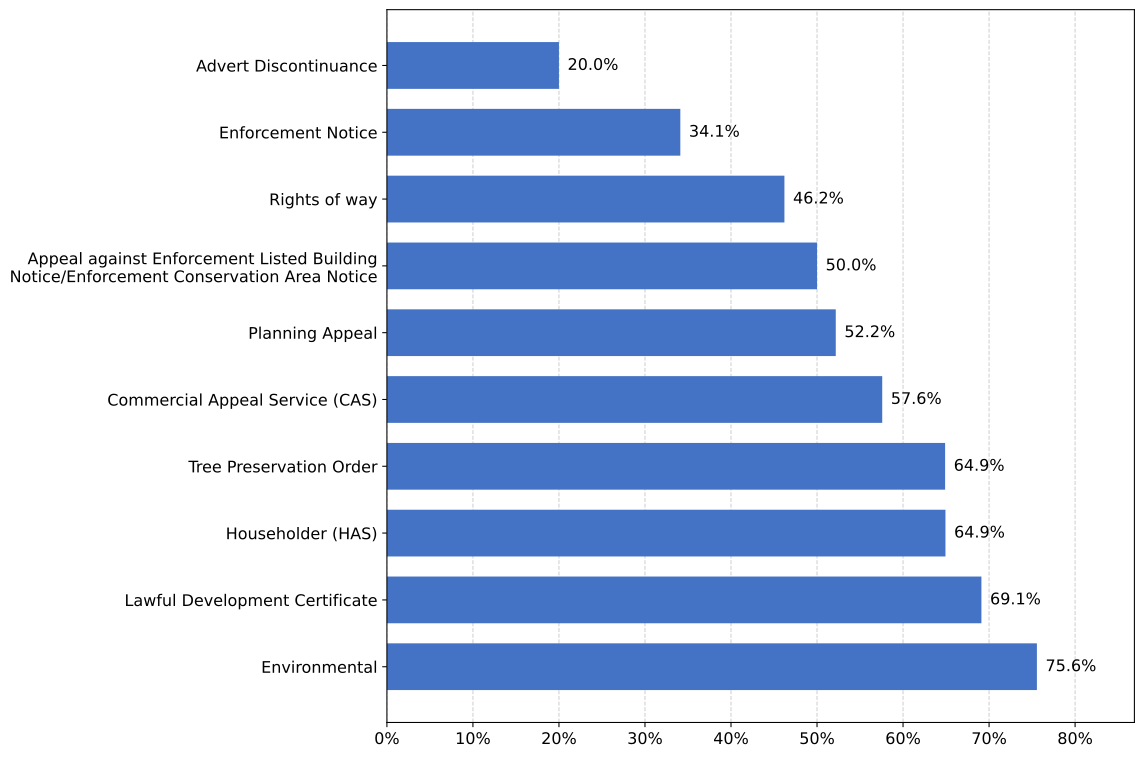
Figure 1 – Proportion of Appeals Valid on First Submission for Selected Casework Types, Cases Received January 2024 to December 2025.
Source: Horizon and Manage Appeals
3. B. How Long Appeals Take
Ambition: As an initial milestone in making more consistent, timely decisions - The Planning Inspectorate should be working towards consistently achieving decisions in these ranges:
- Appeals decided entirely using written evidence in 16 – 20 weeks.
- Appeals decided including at least some evidence through hearing or inquiry in 24 - 26 weeks (30 weeks to recommendation for called in or recovered cases)
Note: We have removed Rights of Way cases from this measure as they have different target times. For more information see the BQR.
This section provides information on how long it has taken to make decisions in the last 12 months (in this case, April 2025 to March 2026).
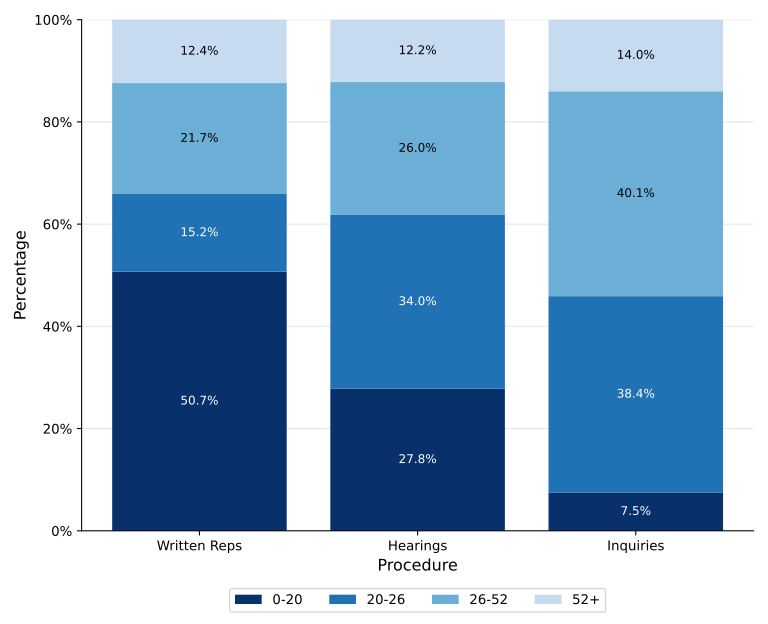
Figure 2 below shows the proportion of cases decided:
- within 20 weeks ;
- within 26 weeks (but more than 20 weeks);
- within 52 weeks (but more than 26 weeks); and
- more than 52 weeks.
The data applies to all cases decided in the year to the end of March 2026 and is broken down by the procedure used to arrive at the decision. The data for this Figure is available at Annex B.
Figure 2 shows that a larger proportion (14.0%) of cases decided by inquiries take more than a year than those decided by written representations (12.4%).
It also shows that a greater proportion of cases decided by written representations are decided within 20 weeks (50.7%) than those decided by hearings (27.8%) or inquiries (7.5%).
Figure 2: Time for Valid to Decision, for Decisions April 2025 to March 2026.
Source: Horizon and Manage Appeals
Measures set by the Minister that apply to cases decided wholly by written representations are shown in Annex C.
Consultation If you would like to make a suggestion on which information you would like to see; or would like to have the chance to comment on any proposals on what is published, please contact us via statistics@planninginspectorate.gov.uk
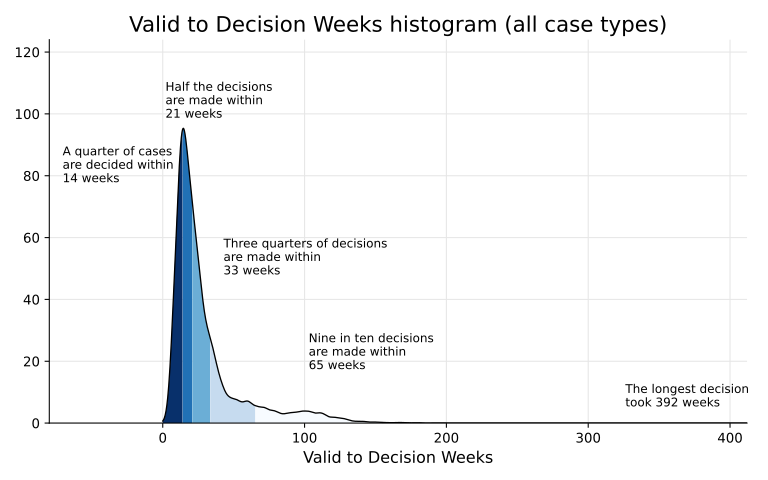
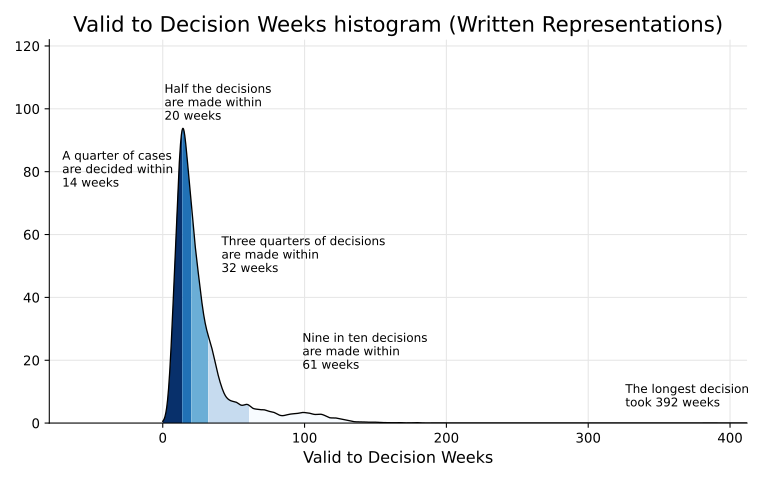
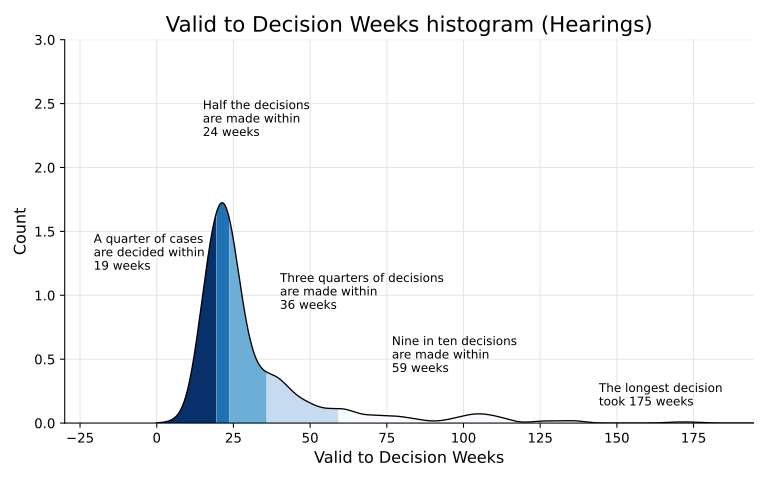
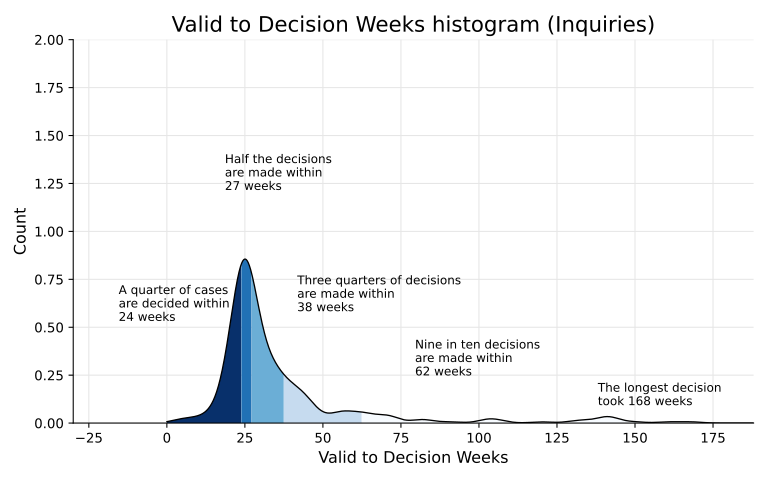
Figure 2 shows the proportion of cases decided in time bands. Figure 3 below shows more detail. It gives the full spread of time taken to decide cases, providing visibility of those cases far outside the accepted range. It shows all cases decided in the 12 months to the end of March 2026; and a breakdown by the decision procedure.
Figure 3 shows:
- The spread of time taken to decide for all cases, is similar to the spread for those decided wholly by written representations. This is because the large majority (17,984/19,356 which is 93%) of cases are decided this way.
- Three quarters of cases decided wholly by written representations are decided within 32 weeks. The corresponding time for three quarters of cases decided wholly or partly by hearings is 36 weeks and for those wholly or partly by inquiries is 38 weeks.
- Nine in ten cases decided wholly by written representations are decided within 61 weeks. The corresponding time for nine out ten cases decided wholly or partly by hearings is 59 weeks and for inquiries it is 62 weeks.
Figure 3 – Spread of time taken to decide cases (in weeks), for cases decided April 2025 – March 2026.
Note: The figure for “Half the decisions are made within” is the 50th percentile; this is the same as the median time to decide these cases, which is how this is presented in the quarterly Official Statistics publication.
Source: Horizon and Manage Appeals
The Ministerial measure requires information on how long appeal decisions take from valid receipt to decision , with information on various percentiles.
Ambition: Decision time for 50th percentile falling. Decision time for 90th percentile falling faster than 50th percentile.
The ambition is that cases are decided more quickly, and the time taken for longest cases is reduced. If the ambition is met, the gap between the 50th percentile and 90th percentile needs to reduce.
A percentile is a measure that shows the value below which a given percentage of the values in a group of numbers fall. For example, if we tell you the 25th percentile for decision times, then you know that 25% of decisions are issued in less time (or the same time) as that.
Table 2 below shows the 25th, 50th, 75th and 90th percentiles for valid to decision, in weeks, for the decisions made from April 2025 to March 2026. Note that these match the timings given in text on the shapes in Figure 3 above.
Table 2 - Percentiles for Valid to Decision (in weeks) for decisions made April 2025 to March 2026 – and number of decisions in that time. Note: There are 415 appeal decisions in the last year that have no procedure type recorded (see Background Quality Report for more detail) These are excluded from the procedure totals in the table below. They have been added to the overall total.
| 25th Percentile | 50th Percentile | 75th Percentile | 90th Percentile | 100th Percentile | Total Decisions | |
|---|---|---|---|---|---|---|
| Written Representations | 14 Weeks | 20 Weeks | 32 Weeks | 61 Weeks | 392 Weeks | 17984 |
| Hearing | 19 Weeks | 24 Weeks | 36 Weeks | 59 Weeks | 175 Weeks | 650 |
| Inquiry | 24 Weeks | 27 Weeks | 38 Weeks | 62 Weeks | 168 Weeks | 307 |
| All | 14 Weeks | 21 Weeks | 33 Weeks | 65 Weeks | 392 Weeks | 19356 |
Source: Horizon and Manage Appeals
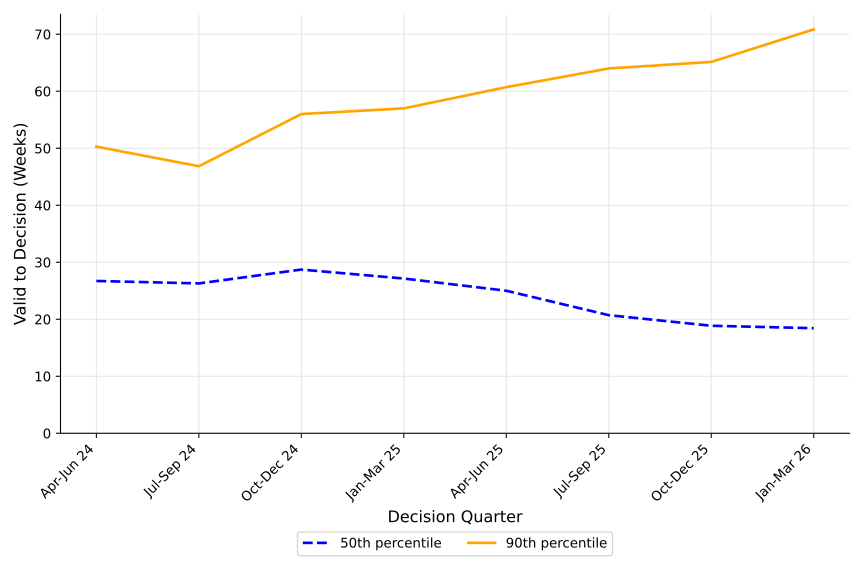
If performance changes, it will be more quickly apparent by looking at quarterly data than 12 monthly data. Annex D shows the same percentiles, for decisions in the three months January to March 2026. There are relatively few hearings and inquiries in each quarter, which means quarterly percentiles for these appeals are susceptible to extreme values - so they should be viewed with caution.
Figure 4: All Appeal Decisions, 50th and 90th Percentile for Valid to Decision, By Quarter, April 2025 to March 2026.
Source: Horizon and Manage Appeals
Table 3 - All appeal Decisions, 50th and 90th percentiles of Valid to Decision (weeks), April 2024 – March 2026.
| Decision made: | Median | 90th Percentile | Gap |
|---|---|---|---|
| Apr - Jun 24 | 27 Weeks | 50 Weeks | 24 Weeks |
| Jul - Sep 24 | 26 Weeks | 47 Weeks | 21 Weeks |
| Oct - Dec 24 | 29 Weeks | 56 Weeks | 27 Weeks |
| Jan - Mar 25 | 27 Weeks | 57 Weeks | 30 Weeks |
| Apr - Jun 25 | 25 Weeks | 61 Weeks | 36 Weeks |
| Jul - Sep 25 | 21 Weeks | 64 Weeks | 43 Weeks |
| Oct - Dec 25 | 19 Weeks | 65 Weeks | 46 Weeks |
| Jan - Mar 26 | 18 Weeks | 71 Weeks | 52 Weeks |
Source: Horizon and Manage Appeals
The table above covers all appeal decisions. Annex F gives figures for appeals decided wholly by written representations; wholly or partially through hearings; and wholly or partially through inquiries.
4. C. Customer Satisfaction
Ambition: Proportion of customers reporting satisfaction with the Planning Inspectorate’s services rising annually
No new valid customer satisfaction score is available for this reporting period.
The Planning Inspectorate has gathered feedback from customers who contacted customer services. This was deliberately collected to understand and improve the experience of customers engaging with the service. This feedback relates only to a subset of customers (those who contacted customer service) so is unlikely to be representative of all customers. As such it is not suitable for measuring overall customer satisfaction.
The most recent available valid data is the 2023 baseline score of 56.8.
PINS is planning future activity to collect data on customer satisfaction.
5. D. Number Of Cases Quality Assured
Ambition: There is no minimum number or percentage ambition on this measure.
During the three months January to March 2026, 1,413 appeal cases were quality assured. These are shown in Table 4 below.
Table 4 - Number of appeal decisions quality assured, October to December 2025.
| Number | Category | Explanation |
|---|---|---|
| 168 | Inspector Manager team reading | Inspector Managers are expected to review a proportion of their Inspectors’ decisions post-decision. This is to ensure quality standards and to identify learning opportunities and to check for consistency with the relevant quality framework. |
| 278 | APOs | Recommendations made by Appeals Planning Officers (APOs) are all reviewed as part of routine quality assurance before a decision is issued by an Inspector. |
| 967 | Inspector in Training – pre-decision | Most decisions made by Inspectors in Training (IITs) are reviewed for teaching purposes. Each review is by an experienced Inspector. |
| 1,413 | Total Appeal decisions |
Source: MiPINs
To put these totals in context, the 1,413 appeal decisions quality assured constitutes over a quarter (31%) of all decisions (4,558) issued over that period.
Table 5 shows the number of cases quality assured, beyond appeal cases, for the same quarter. These are much larger, more complex cases than the typical appeal case.
Table 5 - Number of Other Cases Quality Assured, January to March 2026.
| Number | Category | Explanation |
|---|---|---|
| 14 | Local Plans | All Plan examination reports and letters are quality assured as part of the examination process. 14 Plan examination final reports were issued in this quarter. Quality assurance activity for examinations yet to be completed also progressed during the period. |
| 3 | Nationally Significant Infrastructure Projects (NSIP) | All NSIP decisions are quality assured as part of the examination process. 3 recommendation reports were submitted to the Secretary of State this quarter. |
Source: Local Plan and NSIP case records
6. Annexes
Annex A - Proportion of Appeals Valid First Time for Selected Appeal Types, Appeals Received January 2024 to December 2025.
| Appeal Type | Proportion Valid on First Submission | Number of Appeals Received |
|---|---|---|
| Planning Appeal | 52.2% | 9085 |
| Householder (HAS) | 64.9% | 4142 |
| Enforcement Notice | 34.1% | 2335 |
| Lawful Development Certificate | 69.1% | 915 |
| Commercial Appeal Service (CAS) | 57.6% | 533 |
| Rights of way | 46.2% | 255 |
| Environmental | 75.6% | 129 |
| Appeal against Enforcement Listed Building Notice/Enforcement Conservation Area Notice | 50.0% | 63 |
| Advert Discontinuance | 20.0% | 7 |
Source: Horizon and Manage Appeals
Note: Appeals not yet validated are included in the number of appeals received but excluded from the calculation on proportion valid on first submission
Annex B: Proportion of Appeals decided within 20, 26 and 52 weeks - Decisions April 2025 to March 2026. Note: Rights of Way have been removed from this, see BQR for more information.
| Within 20 weeks | Within 26 weeks | Within 52 weeks | More than 52 weeks | |
|---|---|---|---|---|
| Wholly Written Representations | 50.7% | 15.2% | 21.7% | 12.4% |
| Wholly Hearings | 27.8% | 34.0% | 26.0% | 12.2% |
| Wholly Inquiries | 7.5% | 38.4% | 40.1% | 14.0% |
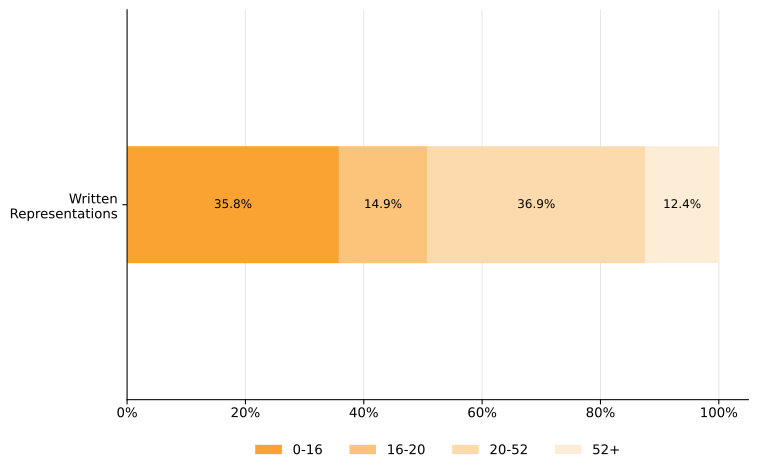
Annex C: Decisions made wholly through written representations – Decisions April 2025 to March 2026 - Weeks from valid to Decision.
Performance against Ministerial measures – note this takes different groupings (16 weeks and 20 weeks) Note: Rights of Way have been removed from this, see BQR for more information
Annex D - Percentiles for Valid to Decision (in weeks) for decisions made January to March 2026 and number of decisions in that time. Note: There are 70 appeal decisions in the last quarter that have no procedure type recorded (see Background Quality Report for more detail) These are excluded from the procedure totals in the table below. They have been added to the overall total. Note: Rights of Way have been removed from this, see BQR for more information
| Procedure | 25th percentile | 50th percentile | 75th percentile | 90th percentile | 100th percentile | Total Decisions |
|---|---|---|---|---|---|---|
| Written Representation | 13 Weeks | 18 Weeks | 31 Weeks | 71 Weeks | 392 Weeks | 4232 |
| Hearing | 20 Weeks | 25 Weeks | 33 Weeks | 48 Weeks | 169 Weeks | 139 |
| Inquiry | 24 Weeks | 26 Weeks | 33 Weeks | 44 Weeks | 120 Weeks | 78 |
| All | 14 Weeks | 18 Weeks | 33 Weeks | 71 Weeks | 392 Weeks | 4519 |
Source: Horizon and Manage Appeals
Annex E - Appeal Decisions, 50th and 90th percentiles of Valid to Decision (weeks), April 2024 to March 2026 - by procedure.
Note: all measurements are in weeks
Wholly by written representations
| Decision made: | Median | 90th Percentile | Gap |
|---|---|---|---|
| Apr - Jun 24 | 26 | 46 | 20 |
| Jul - Sep 24 | 26 | 43 | 17 |
| Oct - Dec 24 | 28 | 50 | 22 |
| Jan - Mar 25 | 27 | 50 | 23 |
| Apr - Jun 25 | 24 | 53 | 28 |
| Jul - Sep 25 | 20 | 55 | 35 |
| Oct - Dec 25 | 18 | 62 | 44 |
| Jan - Mar 26 | 18 | 71 | 53 |
Wholly or partially through Hearings
| Decision made: | Median | 90th Percentile | Gap |
|---|---|---|---|
| Apr - Jun 24 | 29 | 91 | 62 |
| Jul - Sep 24 | 28 | 90 | 62 |
| Oct - Dec 24 | 34 | 104 | 70 |
| Jan - Mar 25 | 32 | 80 | 48 |
| Apr - Jun 25 | 24 | 43 | 19 |
| Jul - Sep 25 | 23 | 95 | 72 |
| Oct - Dec 25 | 24 | 63 | 39 |
| Jan - Mar 26 | 25 | 48 | 23 |
Wholly or partially through Inquiries
| Decision made: | Median | 90th Percentile | Gap |
|---|---|---|---|
| Apr - Jun 24 | 47 | 100 | 52 |
| Jul - Sep 24 | 28 | 76 | 48 |
| Oct - Dec 24 | 28 | 72 | 44 |
| Jan - Mar 25 | 34 | 75 | 41 |
| Apr - Jun 25 | 33 | 112 | 79 |
| Jul - Sep 25 | 26 | 53 | 26 |
| Oct - Dec 25 | 26 | 56 | 30 |
| Jan - Mar 26 | 26 | 44 | 18 |