Offender employment outcomes - statistical summary
Published 30 July 2026
Applies to England and Wales

© Crown copyright 2026
This publication is licensed under the terms of the Open Government Licence v3.0 except where otherwise stated. To view this licence, visit nationalarchives.gov.uk/doc/open-government-licence/version/3 or write to the Information Policy Team, The National Archives, Kew, London TW9 4DU, or email: psi@nationalarchives.gov.uk.
Where we have identified any third party copyright information you will need to obtain permission from the copyright holders concerned.
This publication is available at https://www.gov.uk/government/statistics/offender-employment-outcomes-update-to-march-2026/offender-employment-outcomes-statistical-summary
1. Introduction
This summary presents the main findings from the most recent ‘Offender employment outcomes’ publication.
The Probation Service in England and Wales is responsible for supervising offenders serving community sentences, or those released on licence from prison. There are 12 probation regions across England and Wales: 11 probation regions in England and one in Wales.
2. Employment at 6 weeks post release from custody for supervised cases
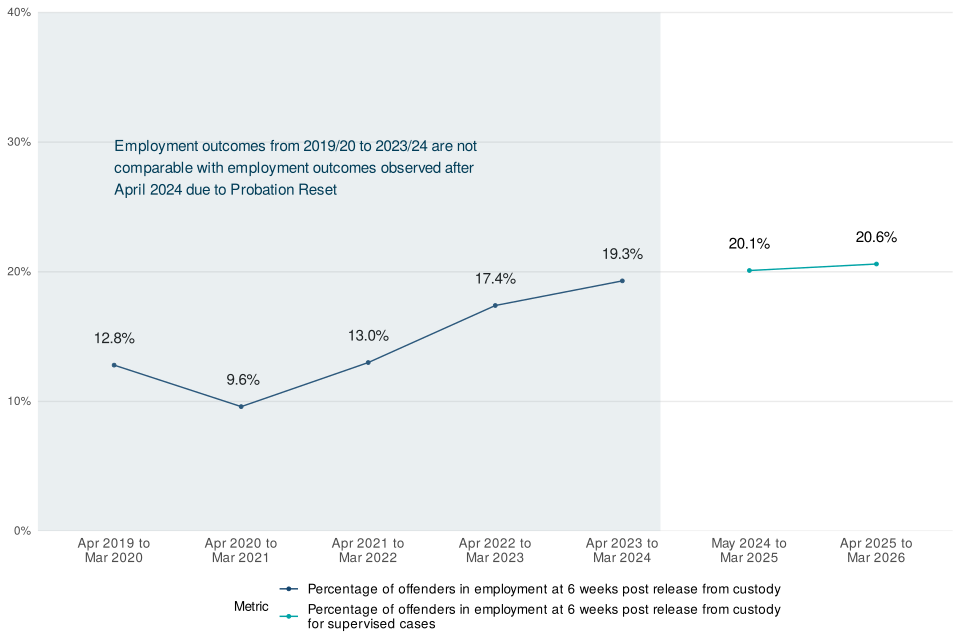
- In the year to March 2026, 20.6% of offenders were employed at 6 weeks post release from custody (excluding those who are eligible for Probation Reset, unavailable for work, or those whose employment status is unknown)
- From May 2024 to March 2025, 20.1% of offenders were employed at 6 weeks post release from custody (excluding those who are eligible for Probation Reset, unavailable for work, or those whose employment status is unknown).
- Caution should be exercised when comparing employment figures across previous years. The 2025 release of ‘Offender employment outcomes’ was based on 11 months of performance data from May 2024 to March 2025. Figures in the 2026 publication are derived from data over a complete performance year from April 2025 to March 2026.
Figure 1: Percentage of offenders in employment at 6 weeks post release from custody, by performance year, April 2019 to March 2026, England and Wales
(Source: 2023/24 Employment at 6 weeks post release from custody data tables, Table 2; 2025/26 Employment at 6 weeks post release from custody for supervised cases data tables, Table 2)
2.1 Outcomes by region
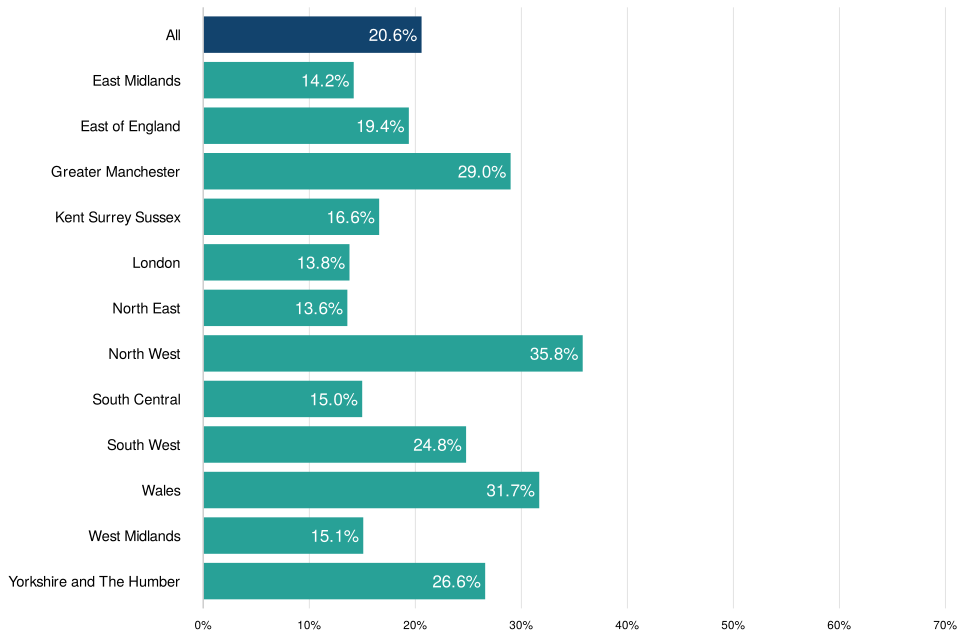
- Of the 12 probation regions across England and Wales, the North West reported the highest level of employment at 6 weeks post release from custody, with 35.8% of offenders in employment.
- Of the 12 probation regions across England and Wales, the North East reported the lowest level of employment at 6 weeks post release from custody, with 13.6% of offenders in employment.
Figure 2: Employment at 6 weeks post release from custody for supervised cases, by region, April 2025 to March 2026
(Source: 2025/26 Employment at 6 weeks post release from custody for supervised cases data tables, Table 3)
3. Employment at 6 months post release from custody for supervised cases
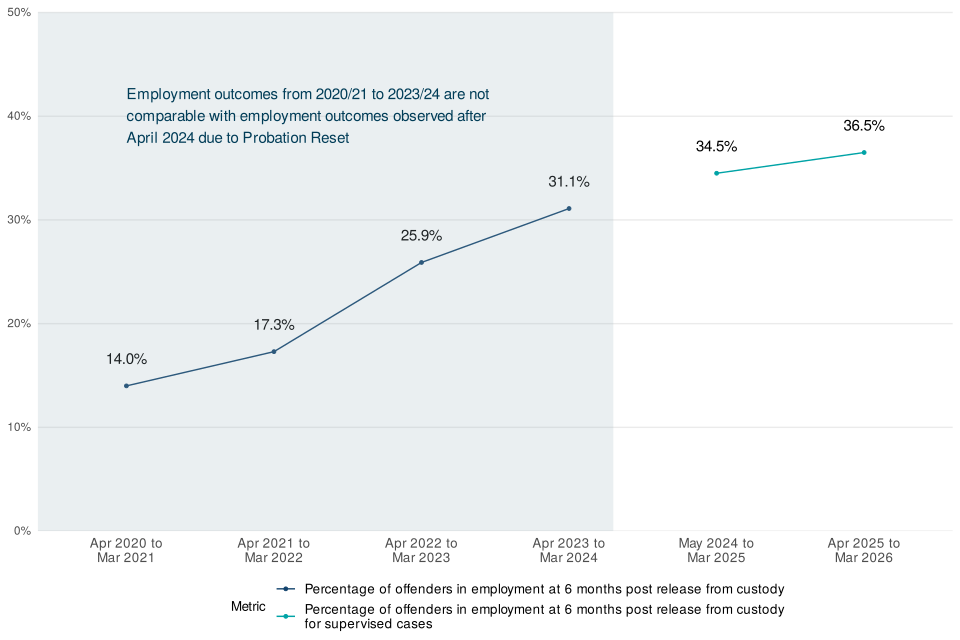
- In the year to March 2026, 36.5% of offenders were employed at 6 months post release from custody (excluding those who are eligible for Probation Reset, unavailable for work, or those whose employment status is unknown)
- From May 2024 to March 2025, 34.5% of offenders were employed at 6 months post release from custody (excluding those who are eligible for Probation Reset, who are unavailable for work, or those whose employment status is unknown).
- Caution should be exercised when comparing employment figures across previous years. The 2025 release of ‘Offender employment outcomes’ was based on 11 months of performance data from May 2024 to March 2025. Figures in the 2026 publication are derived from data over a complete performance year from April 2025 to March 2026.
Figure 3: Percentage of offenders in employment at 6 months post release from custody, by performance year, April 2020 to March 2026, England and Wales
(Source: 2023/24 Employment at 6 months post release from custody, Table 2; 2025/26 Employment at 6 months post release from custody for supervised cases data tables, Table 2)
3.1 Outcomes by region
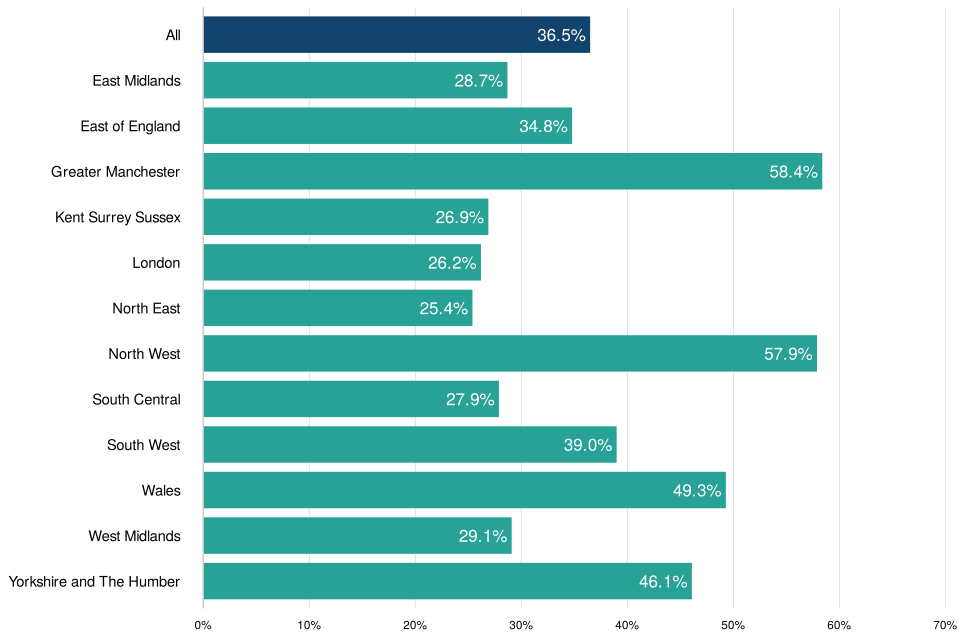
- Of the 12 probation regions across England and Wales, Greater Manchester reported the highest level of employment at 6 months post release from custody, with 58.4% of offenders in employment.
- Of the 12 probation regions across England and Wales, the North East reported the lowest level of employment at 6 months post release from custody, with 25.4% of offenders in employment.
Figure 4: Employment at 6 months post release from custody for supervised cases, by region, April 2025 to March 2026
(Source: 2025/26 Employment at 6 months post release from custody for supervised cases data tables, Table 3)
4. Employment at 6 months post community disposal for supervised cases
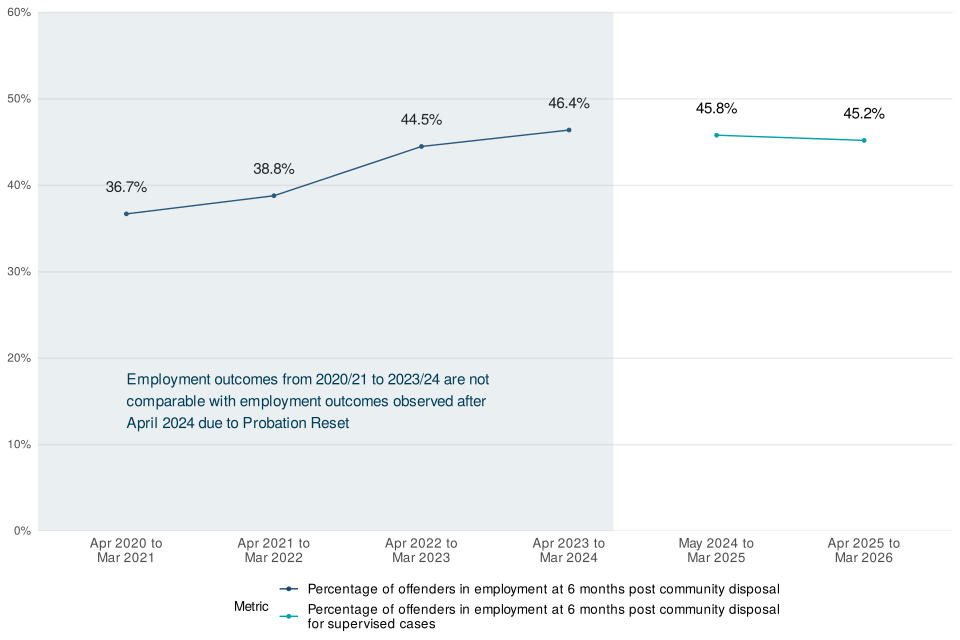
- In the year to March 2026, 45.2% of offenders were employed 6 months following community disposal (excluding those who are eligible for Probation Reset, unavailable for work, or those whose employment status is unknown)
- From May 2024 to March 2025, 45.8% of offenders were employed 6 months following community disposal (excluding those who are eligible for Probation Reset, those who are unavailable for work, or those whose employment status is unknown).
- Caution should be exercised when comparing employment figures across previous years. The 2025 release of ‘Offender employment outcomes’ was based on 11 months of performance data from May 2024 to March 2025. Figures in the 2026 publication are derived from data over a complete performance year from April 2025 to March 2026.
Figure 5: Employment at 6 months post community disposal, by performance year, April 2020 to March 2026, England and Wales
(Source: 2023/24 Employment at 6 months post community disposal, Table 2; 2025/26 Employment at 6 months post community disposal for supervised cases data tables, Table 2)
4.1 Outcomes by region
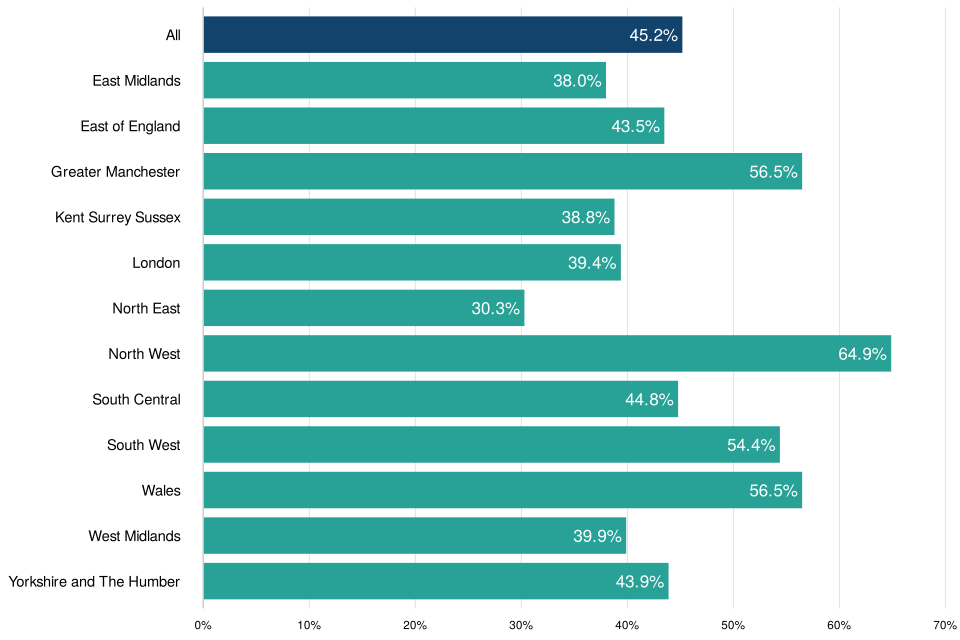
- Of the 12 probation regions across England and Wales, the North West reported the highest level of employment at 6 months post community disposal, with 64.9% of offenders in employment.
- Of the 12 probation regions across England and Wales, the North East reported the lowest level of employment at 6 months post community disposal, with 30.3% of offenders in employment.
Figure 6: Employment at 6 months post community disposal for supervised cases, by region, April 2025 to March 2026
(Source: 2025/26 Employment at 6 months post community disposal for supervised cases data tables, Table 3)
5. Further insights
5.1 Outcomes by sentence length
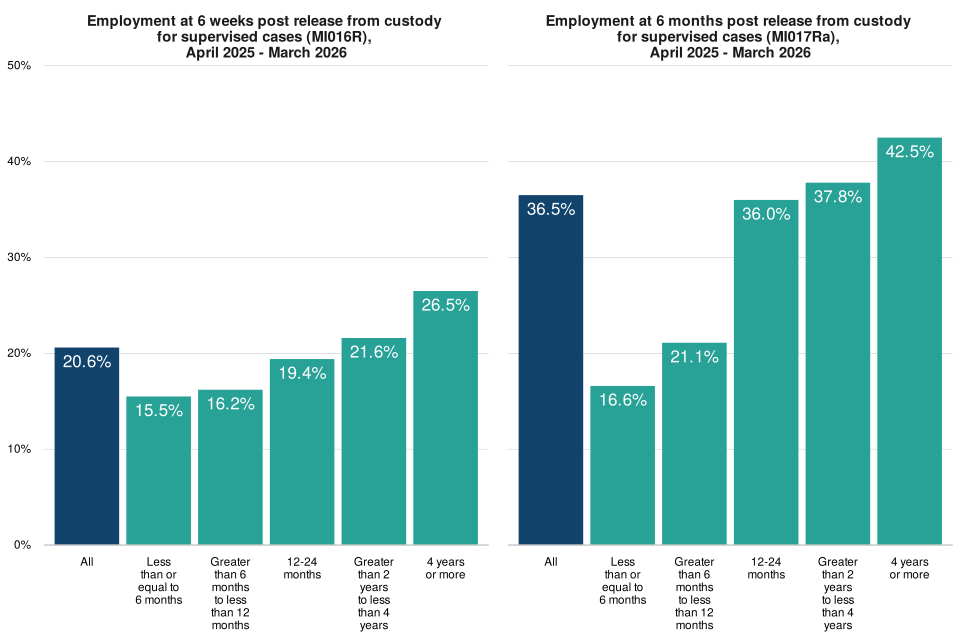
Employment outcomes data suggest there is a relationship between custodial sentence length and employment rates. Offenders serving longer custodial sentences generally have better employment outcomes both at 6 weeks and at 6 months post release from custody.
Figure 7: Offender employment outcomes at 6 weeks post release from custody and 6 months post release from custody, by sentence length, April 2025 to March 2026
(Source: 2025/26 Employment at 6 weeks post release from custody for supervised cases data tables, Table 8; 2025/26 Employment at 6 months post release from custody for supervised cases data tables, Table 8)
5.2 Outcomes by sentence type
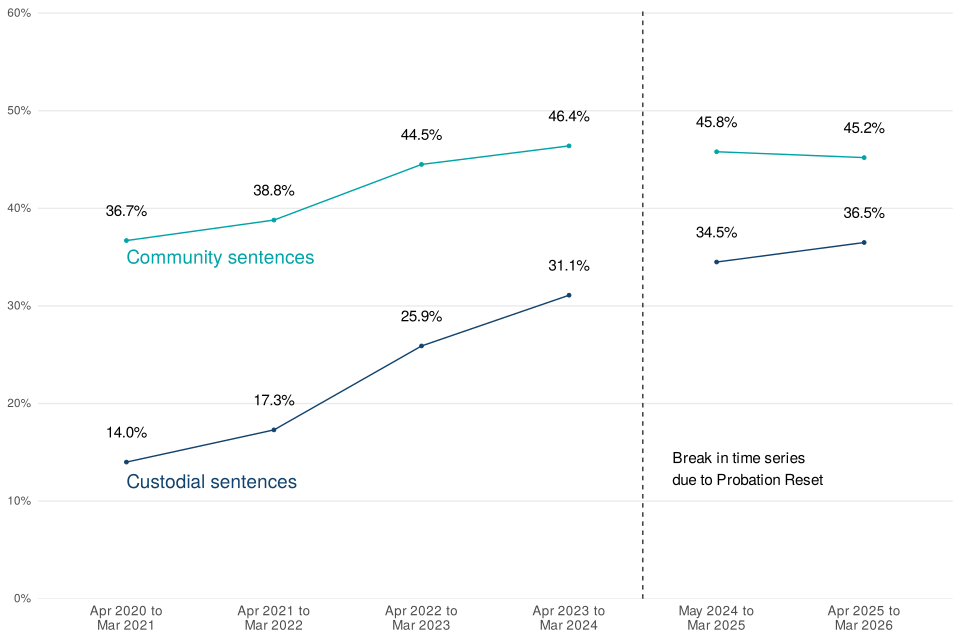
Over time, the gap between employment rates for those serving custodial sentences and those serving community sentences has been narrowing.
In the year to March 2021, there was a difference of 22.7 percentage points between offenders serving custodial sentences and offenders serving community sentences. This gap has narrowed to 8.7 percentage points in the year to March 2026.
Figure 8: Offenders in employment at 6 months post release from custody and 6 months post community disposal, by performance year, April 2020 to March 2026
(Source: Employment at 6 months post release from custody data tables, Table 2; Employment at 6 months post community disposal data tables, Table 2)
5.3 Other characteristics
There are differing levels of outcomes between groups within the characteristics of sex, age band, ethnicity, and offence type, however, differences in cohort sizes should be considered when interpreting potential disproportionality.
Sex
Across all employment measures, between 1 April 2025 and 31 March 2026:
- the ‘unemployed’ category represents the largest proportion of offenders for both males and females.
- lower employment rates are seen for females in comparison to males.
- a larger proportion of females are unavailable to work in comparison to males.
Age band
Across all employment measures, between 1 April 2025 and 31 March 2026:
- the highest employment rates are seen in the 25-29 and 30-39 age bands.
- compared with other age bands, offenders aged 18-20 and 21-24 represent the largest proportion of unemployed offenders, and are among the lowest proportions classified as unavailable for work.
- compared with other age bands, offenders aged 60 and over represent the smallest proportion of unemployed offenders, and largest proportion classified as unavailable for work.
Ethnicity
Between 1 April 2025 and 31 March 2026:
- those serving custodial sentences, higher employment rates were seen in the White, Asian or Asian British, and Unknown ethnicity groups.
- higher employment rates of offenders serving a community sentence were seen among White, Asian or Asian British, and Other ethnicity groups.
- the Black or Black British ethnicity group experience the poorest employment outcomes across all employment measures.
Offence type
Between 1 April 2025 and 31 March 2026:
- individuals convicted of theft offences, robbery, or possession of weapons offence types consistently recorded the highest levels of unemployment across all employment measures.
- compared to other offence types, a larger proportion of offenders serving a custodial sentence for sexual offences were categorised as being unavailable for work.
6. Further information
As well as this bulletin, the following products are published as part of this release:
- Offender employment outcomes – statistical guidance
- Offender employment outcomes – England and Wales data tables
- Offender employment outcomes - regional data tables
Enquiries about these statistics should be directed to:
E Stradling
Email: crosscuttingperformanceenquiries@justice.gov.uk
7. Official statistics
Our statistical practice is regulated by the Office for Statistics Regulation (OSR). OSR sets the standards of trustworthiness, quality and value in the Code of Practice for Statistics that all producers of official statistics should adhere to.
You are welcome to contact us directly with any comments about how we meet these standards.
Alternatively, you can contact OSR by emailing regulation@statistics.gov.uk or via the OSR website.