Health visitor service delivery metrics, 2025 to 2026: statistical commentary
Updated 3 November 2026
Applies to England

© Crown copyright 2026
This publication is licensed under the terms of the Open Government Licence v3.0 except where otherwise stated. To view this licence, visit nationalarchives.gov.uk/doc/open-government-licence/version/3 or write to the Information Policy Team, The National Archives, Kew, London TW9 4DU, or email: psi@nationalarchives.gov.uk.
Where we have identified any third party copyright information you will need to obtain permission from the copyright holders concerned.
This publication is available at https://www.gov.uk/government/statistics/health-visitor-service-delivery-metrics-data-for-2025-to-2026/health-visitor-service-delivery-metrics-2025-to-2026-statistical-commentary
What’s new
Indicators for the 4 post-birth early years mandated health and development reviews have been updated with data for England, regions and local councils for 2025 to 2026.
Universal health and development reviews
All families are eligible for 5 health and development reviews in pregnancy and the early years. These should ideally be delivered face to face with a health visitor or under their supervision.
The 5 statutory health and development reviews are:
- antenatal health and development review, for women more than 28 weeks’ pregnant
- new birth health and development review, for children between 1 day and 2 weeks old
- 6-to-8 week health and development review, for children between 6 and 8 weeks old
- 12-month health and development review, for children between 9 and 15 months old
- 2-to-2-and-a-half-year health and development review, for children between 24 and 30 months old
Main findings
This update shows that:
- the coverage of most post-birth universal health and development reviews in England increased in 2025 to 2026 when compared with 2024 to 2025, apart from the percentage of new birth health and development reviews, which has decreased. All 4 health and development reviews have coverage of over 80%
- there are differences in coverage between regions and local councils
Detailed findings
New birth health and development reviews
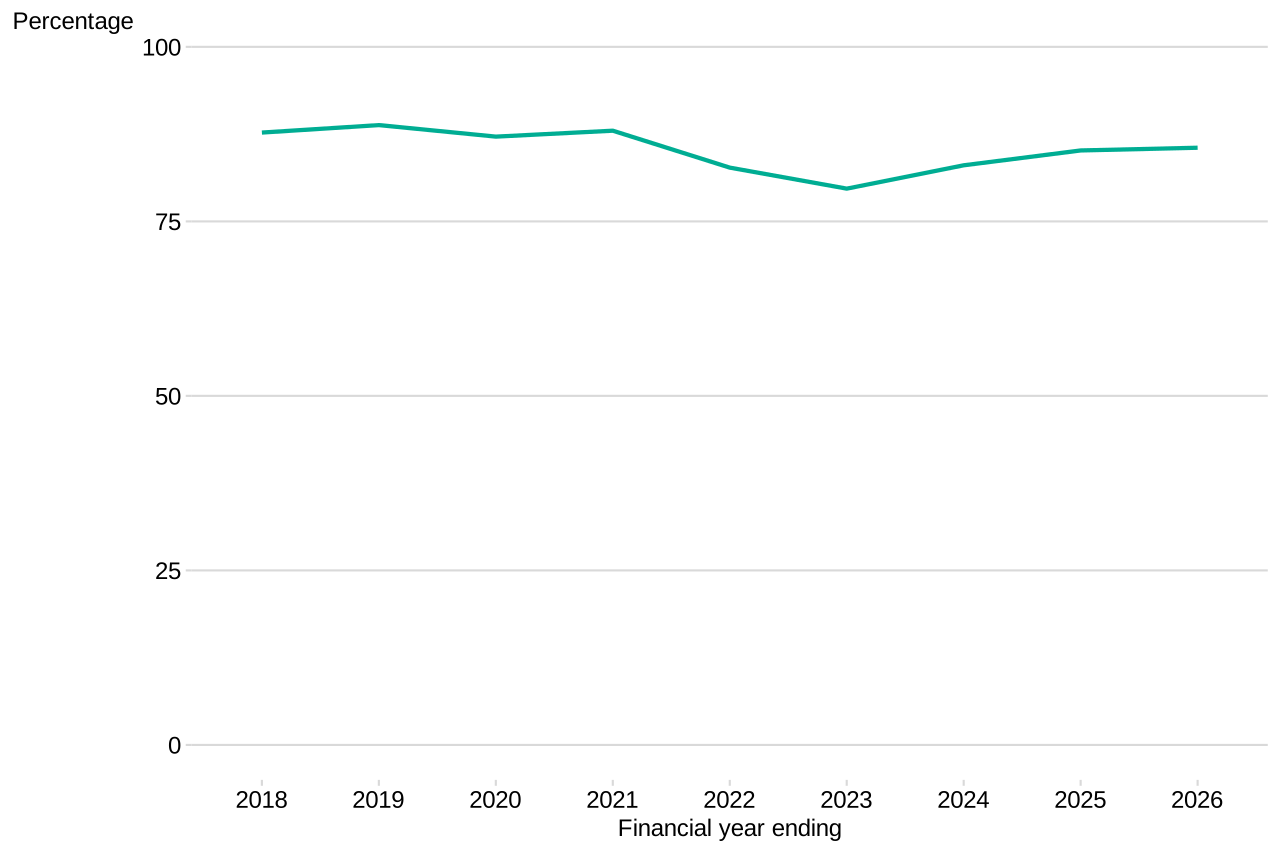
In 2025 to 2026, 85.5% of infants received their new birth health and development review within 14 days of birth - an increase from 2024 to 2025 (see figure 1 below).
Figure 1: percentage of infants in England who received a new birth health and development review within 14 days, 2017 to 2018 to 2025 to 2026
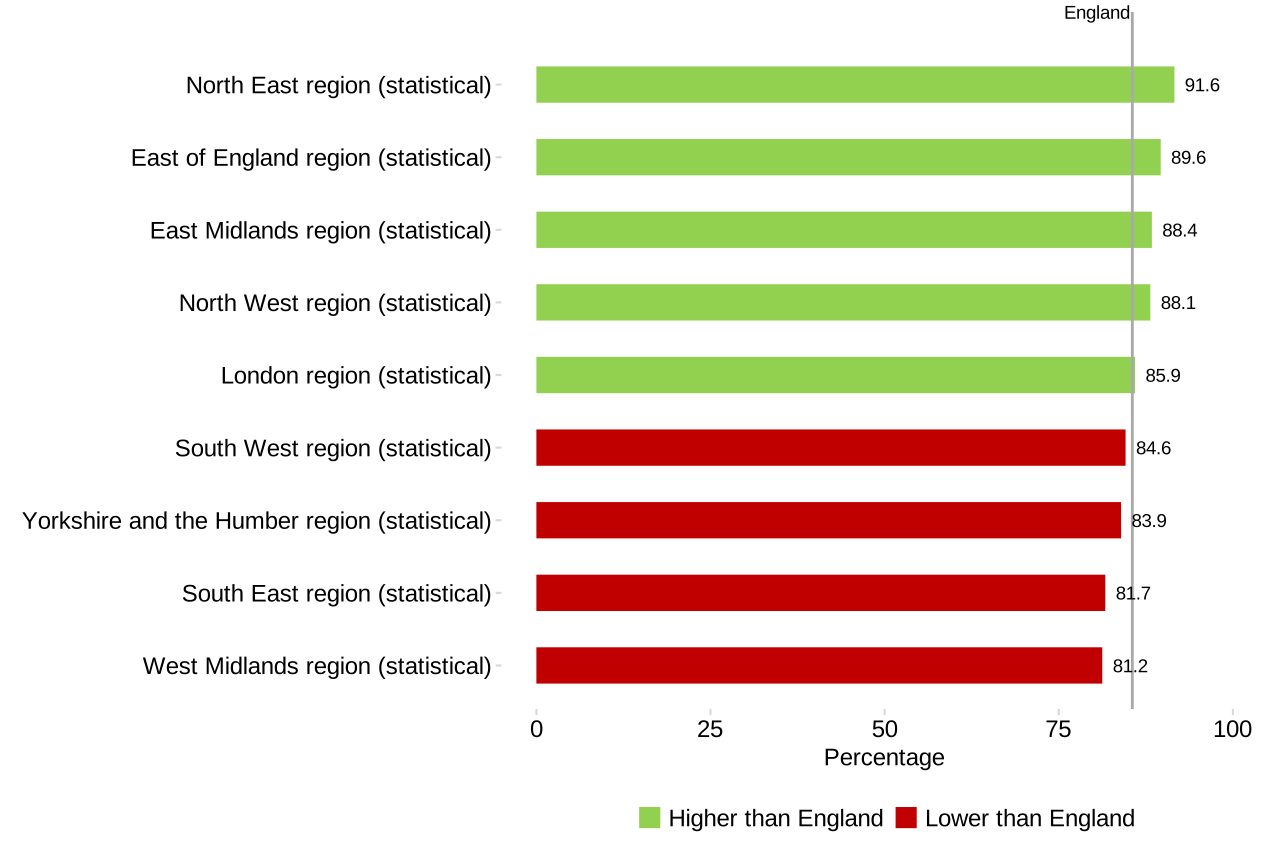
Coverage varied across regions and local councils. Among regions, the lowest percentage of infants who received a new birth health and development review within 14 days was in the West Midlands (81.2%) and the highest in the North East (91.6%) (see figure 2 below). Among local councils where a value could be calculated, coverage ranged from 1.6% to 98.8% in 2025 to 2026. Nearly all local councils had coverage of over 90% when all new birth health and development reviews (occurring before or after 14 days) are considered.
Figure 2: percentage of infants who received a new birth health and development review within 14 days, English regions, 2025 to 2026
6-to-8-week health and development reviews
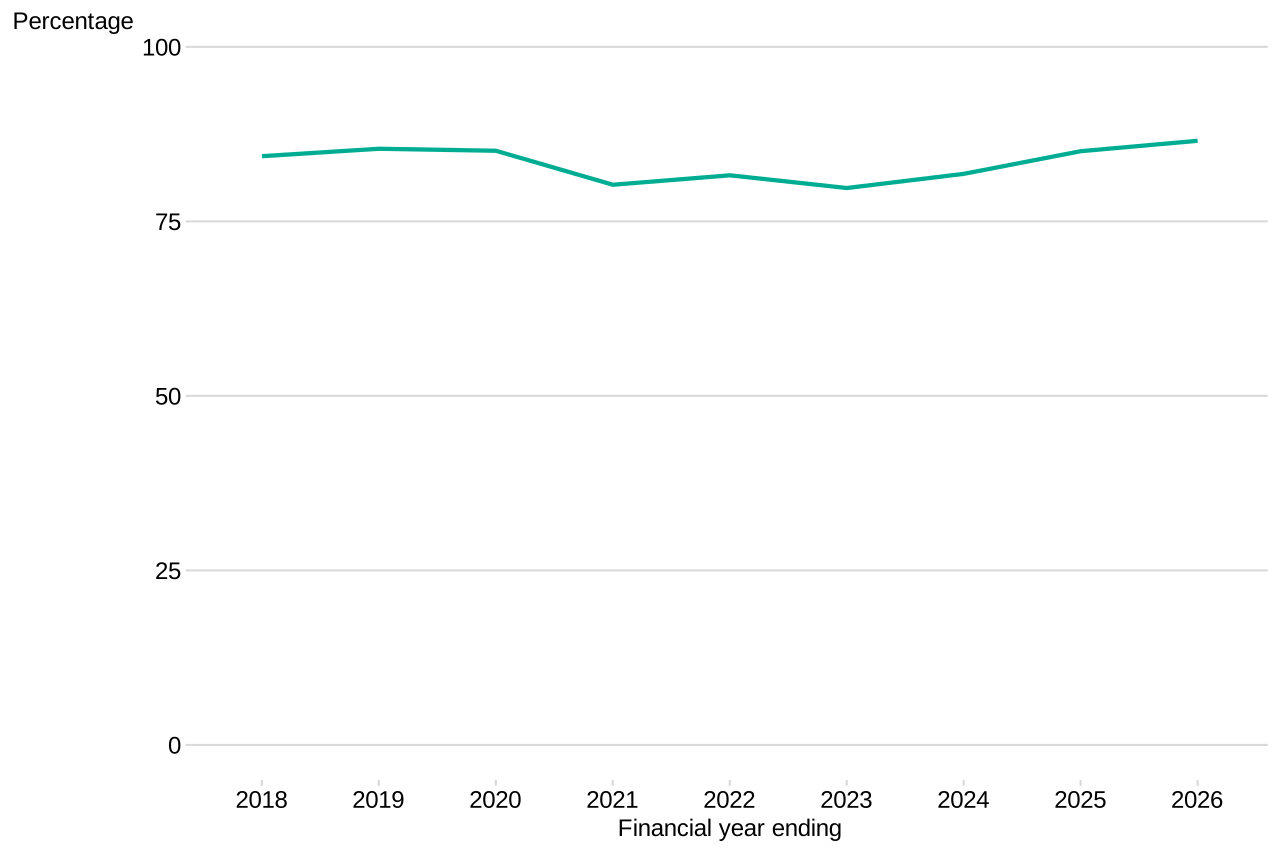
In 2025 to 2026, 86.5% of infants received their 6-to-8-week health and development review within 8 weeks - an increase from 85.1% in 2024 to 2025 (see figure 3 below).
Figure 3: percentage of infants who received a 6-to-8 week health and development review within 8 weeks, 2017 to 2018 to 2025 to 2026
Coverage for the 6-to-8-week health and development review varied across regions and local councils. Among regions where a value could be calculated, it ranged from the lowest at 77.3% in Yorkshire and the Humber to the highest at 91.9% in the North East. Among local councils where a value could be calculated, coverage ranged from 10.1% to 98.8%.
12-month health and development reviews
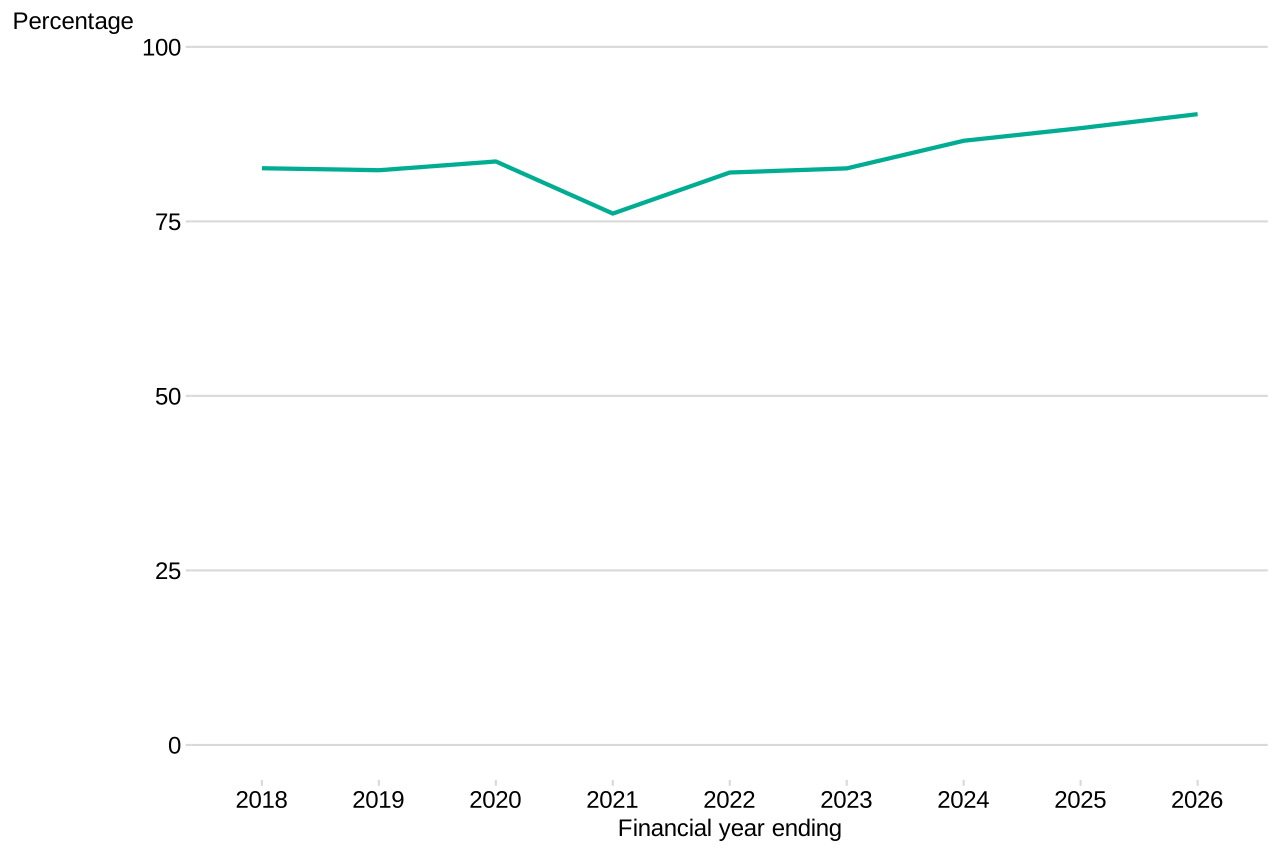
In 2025 to 2026, 90.4% of children received their 12-month health and development review by the time they were 15 months old (see figure 4 below). This is an increase from 88.4% in 2024 to 2025.
Figure 4: percentage of children who received a 12-month health and development review within 15 months, 2017 to 2018 to 2025 to 2026
Coverage for the 12-month health and development review varied across regions and local councils. Among regions where a value could be calculated, it ranged from the lowest at 84.3% in London to the highest at 95.1% in the North East. Among local councils where a value could be calculated, coverage varied from 60.8% to 99.0%.
2-to-and-a-half-year health and development reviews including those with a completed Ages and Stages Questionnaires Third Edition (ASQ-3)
In 2025 to 2026, 81.3% of children received their 2-to-2-and-a-half-year health and development review - an increase from 80.8% in 2024 to 2025 (see figure 5 below). The percentage of children who completed ASQ-3 as part of their health and development review also increased from 93.9% in 2024 to 2025 to 95.0% in 2025 to 2026.
Figure 5: percentage of children who received a 2-to-2-and-a-half-year health and development review, 2017 to 2018 to 2025 to 2026
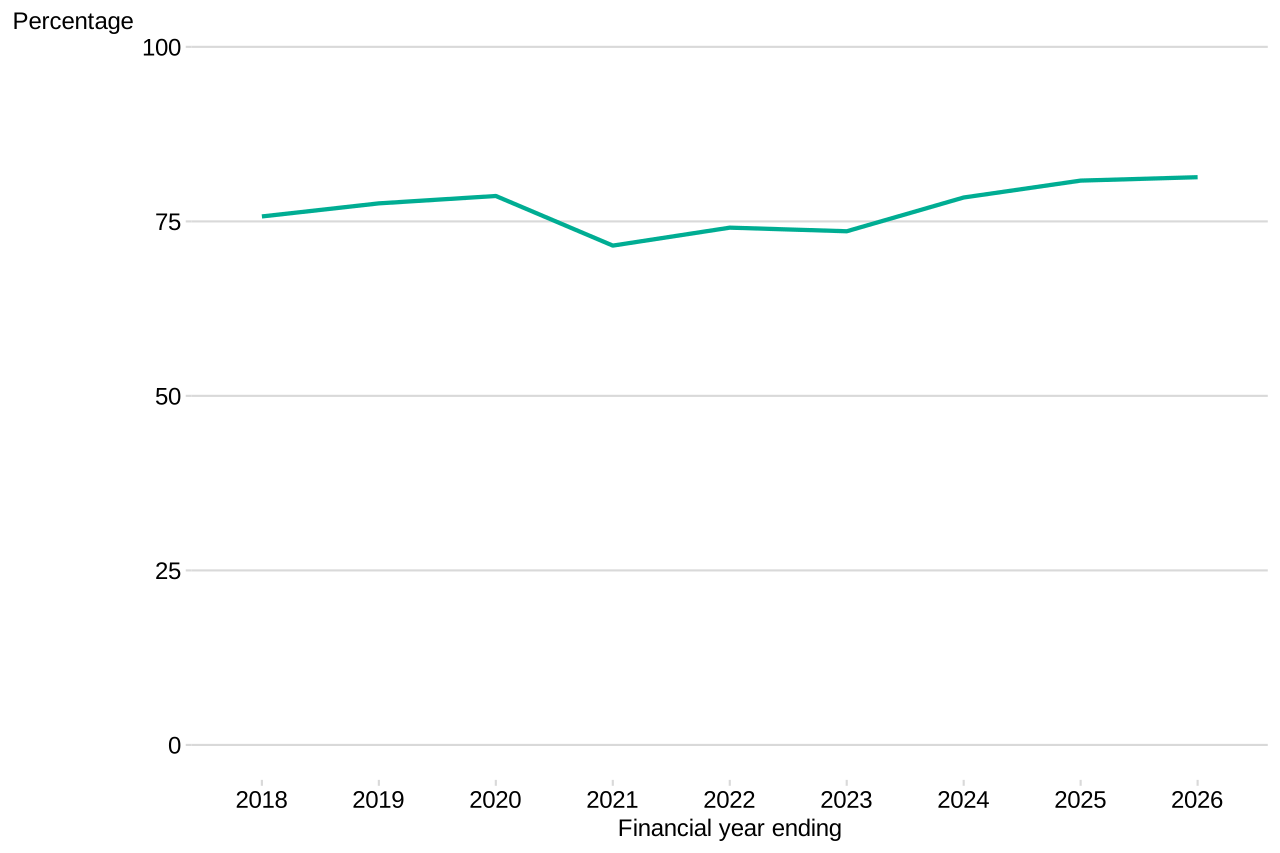
Coverage for the 2-to-2-and-a-half-year health and development review varied across regions and local councils. Among regions where a value could be calculated, it ranged from the lowest at 70.8% in the East of England to the highest at 90.8% in the North East. Among local councils where a value could be calculated, coverage ranged from 27.5% to 100%.
Background
The information in this publication shows service coverage and related health outcomes for services funded through the local authority public health grant for children’s public health services for ages 0 to 5 years. This includes the coverage of universal health and development reviews, breastfeeding at 6 to 8 weeks and child development outcomes aged 2.
The data comes from the Office for Health Improvement and Disparities’ (OHID’s) interim reporting system for children’s public health 0 to 5 years. The Children’s public health 0 to 5 years: national reporting technical guidance contains full details of the health visiting, breastfeeding and child development indicators, including definitions and methodology.
Caution should be used when interpreting these figures as it is a voluntary data collection and there is not full coverage. Any figures shown at a region or England level, or by deprivation, are based on an aggregate total of local councils within those areas who supplied data items that complied with validation criteria for each indicator.
The health and development reviews may be targeted towards children who are likely to need more support. This includes those living in the most deprived areas and children who are known to be vulnerable due to family or other circumstances. This may contribute to low coverage of reviews or a smaller number of children meeting the expected level of development for some local councils.
The Community Services Data Set (CSDS) will be used as the basis for these metrics in the longer term, once the data quality has reached a suitable standard.
The data is also available on Fingertips.
Contact information
For media enquiries, contact the Department of Health and Social Care media team.
For all other enquiries relating to the statistics or to offer feedback on the publication, email interimreporting@dhsc.gov.uk.