Health Assessment Statistics: Personal Independence Payment and Work Capability Assessments, January 2021 to July 2026
Updated 15 September 2026
Applies to England, Scotland and Wales

© Crown copyright 2026
This publication is licensed under the terms of the Open Government Licence v3.0 except where otherwise stated. To view this licence, visit nationalarchives.gov.uk/doc/open-government-licence/version/3 or write to the Information Policy Team, The National Archives, Kew, London TW9 4DU, or email: psi@nationalarchives.gov.uk.
Where we have identified any third party copyright information you will need to obtain permission from the copyright holders concerned.
This publication is available at https://www.gov.uk/government/statistics/health-assessment-statistics-pip-and-wca-to-july-2026/health-assessment-statistics-personal-independence-payment-and-work-capability-assessments-january-2021-to-july-2026
1. Introduction
This publication presents statistics on Personal Independence Payment (PIP) assessments and Work Capability Assessments (WCAs) completed in Great Britain between January 2021 and July 2026. It covers completed assessment volumes by completion route and, for assessments involving a claimant consultation, the distribution of consultations between telephone, video, and face-to-face channels.
Under both PIP and WCA processes, all referred cases are initially subject to a paper-based review, during which a healthcare professional reviews the available evidence. The paper-based review precedes any decision about whether a claimant consultation is required and is not a consultation channel. Where the available evidence is sufficient to complete the assessment without consulting the claimant, the case is completed through a paper-based clearance. Where the available evidence is insufficient, a consultation with the claimant is required and may be conducted by telephone, video or face-to-face.
Assessment volumes include all completed assessments. These comprise paper-based clearances and assessments involving a claimant consultation. Consultation channel percentages describe how consultation assessments were distributed between face-to-face, telephone and video channels once a claimant consultation was required. Assessments completed through a paper-based clearance are presented separately because they do not involve a claimant consultation.
In October 2025, the government announced a target for 30% of PIP and WCA consultations to be conducted face-to-face. This publication presents monthly consultation channel proportions to provide a consistent basis for monitoring how consultation channels have been used over time.
2. Main stories
Between January 2021 and July 2026 (figures are rounded):
- 5.6 million PIP assessments and 3.6 million WCAs were completed in Great Britain
- 980,000 PIP assessments and 470,000 WCAs were completed through a paper-based clearance and did not require a claimant consultation
- 4.6 million PIP assessments and 3.1 million WCAs involved a claimant consultation. Consultation channels included telephone, face-to-face, and video
- Telephone was the most common consultation channel, accounting for 86.5% of PIP consultations and 80.2% of WCA consultations over the period
- Face-to-face consultations became more common over time. By July 2026, they accounted for 14.6% of PIP consultations and 23.0% of WCA consultations
- Video consultations played a relatively small role, accounting for 5.1% of PIP consultations and 6.7% of WCA consultations over the period as a whole
3. What you need to know
The Functional Assessment Service (FAS) contracts commenced in September 2024, bringing PIP assessments and WCAs under a single service. This publication covers activity before and after the start of the contracts, and the charts include a marker indicating when they commenced.
The series begins after significant changes to assessment delivery during the COVID-19 pandemic, when face-to-face assessments were substantially reduced and remote assessment channels became more widely used.
PIP helps with some of the extra costs caused by long-term disability or ill-health. It can also be claimed under special rules by people with a life-limiting illness who are approaching the end of their life.
Universal Credit (UC) and Employment and Support Allowance (ESA) claimants may undergo a WCA to determine the level of health-related support they receive. This publication includes both UC and ESA WCAs and does not distinguish between the two benefit types.
This publication covers completed PIP and WCA assessment reports returned to the Department for Work and Pensions (DWP) by contracted assessment providers. Not all PIP and WCA cases involve a contracted assessment provider, and department-internal assessment activity, including assessments undertaken by the Health Assessment Service, is outside the scope of these statistics.
From March 2022, in Scotland, PIP has been gradually replaced by Adult Disability Payment (ADP). New claims have been made to ADP since rollout was completed across Scotland in August 2022, with existing PIP claimants transferring to ADP between 2022 and June 2025.
These statistics are published two calendar months in arrears for both PIP assessments and WCAs to allow time for retrospective changes to be captured. Further information on sources and methodology is available in the accompanying background and methodology note.
4. How to read the charts
The volume charts show all completed PIP assessments and WCAs. They distinguish between paper-based clearances and assessments involving a telephone, video or face-to-face consultation.
The percentage charts include assessments involving a claimant consultation only and show how these were distributed between telephone, video and face-to-face channels. Assessments completed through a paper-based clearance are excluded because they do not involve a claimant consultation.
The volume charts use the following shorthand for assessment completion routes:
- Telephone: assessment involving a telephone consultation
- Paper: assessment completed through a paper-based clearance, without a claimant consultation
- Video: assessment involving a video consultation
- F2F: assessment involving a face-to-face consultation
Consultation channel percentages are shown by month to illustrate how the balance between face-to-face, telephone and video consultations has changed over time.
5. PIP assessments
Telephone consultations accounted for the largest share of PIP assessments since 2021
PIP assessment volumes completed per month in Great Britain, by completion route, January 2021 to July 2026
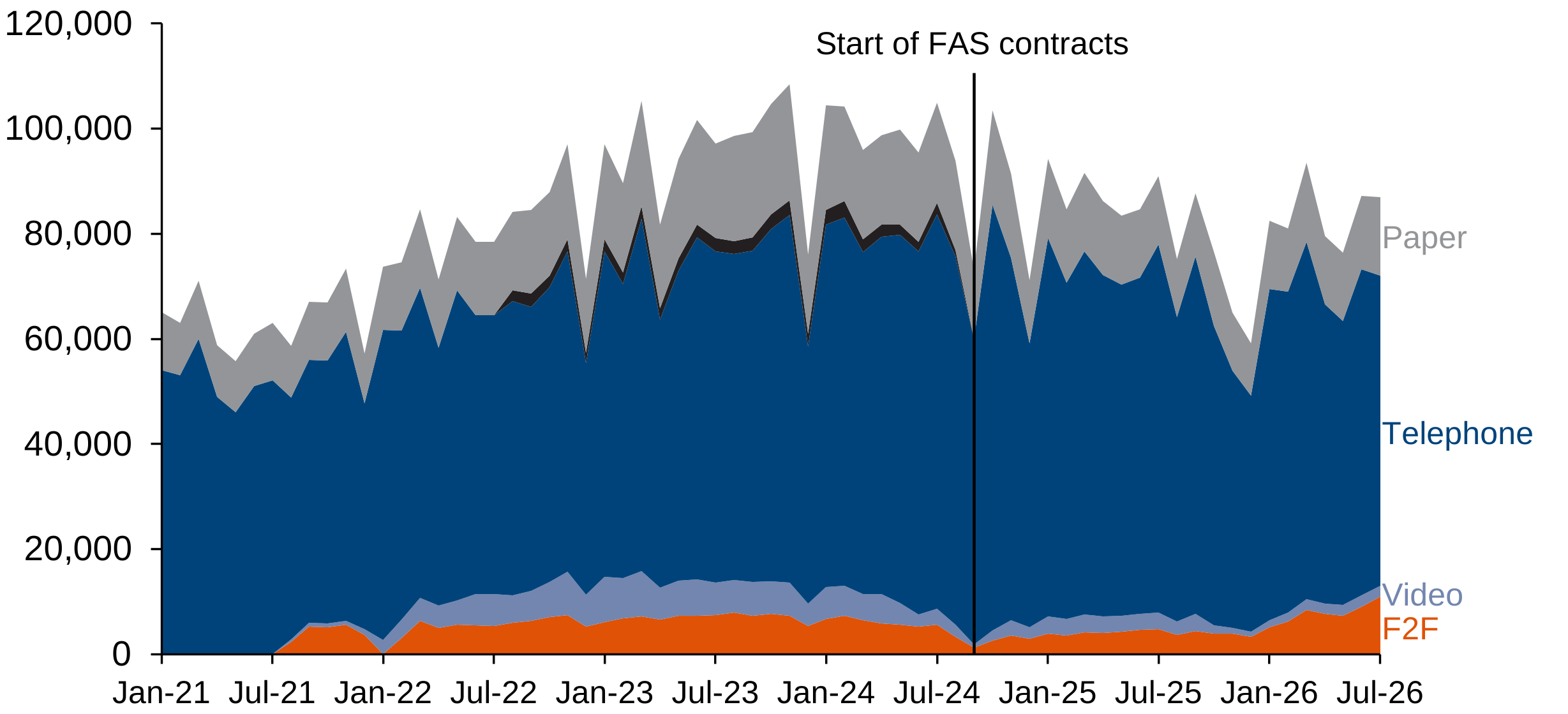
Note: Assessments shown in black were completed with a claimant consultation, though the exact consultation channel used was not recorded.
5.6 million PIP assessments were completed in Great Britain between January 2021 and July 2026. Of these, 4.6 million involved a claimant consultation, while 980,000 were completed through a paper-based clearance and did not require a claimant consultation.
Assessments involving a telephone consultation accounted for the largest share of completed PIP assessments throughout the period. Paper-based clearances were consistently the second-largest completion route.
Face-to-face assessments accounted for a larger share of assessments than video assessments and increased from very low levels in the first half of 2021.
6. PIP consultation channels
Telephone remained the most-used PIP consultation channel
PIP consultation assessments by channel as a percentage of all consultations, Great Britain, January 2021 to July 2026
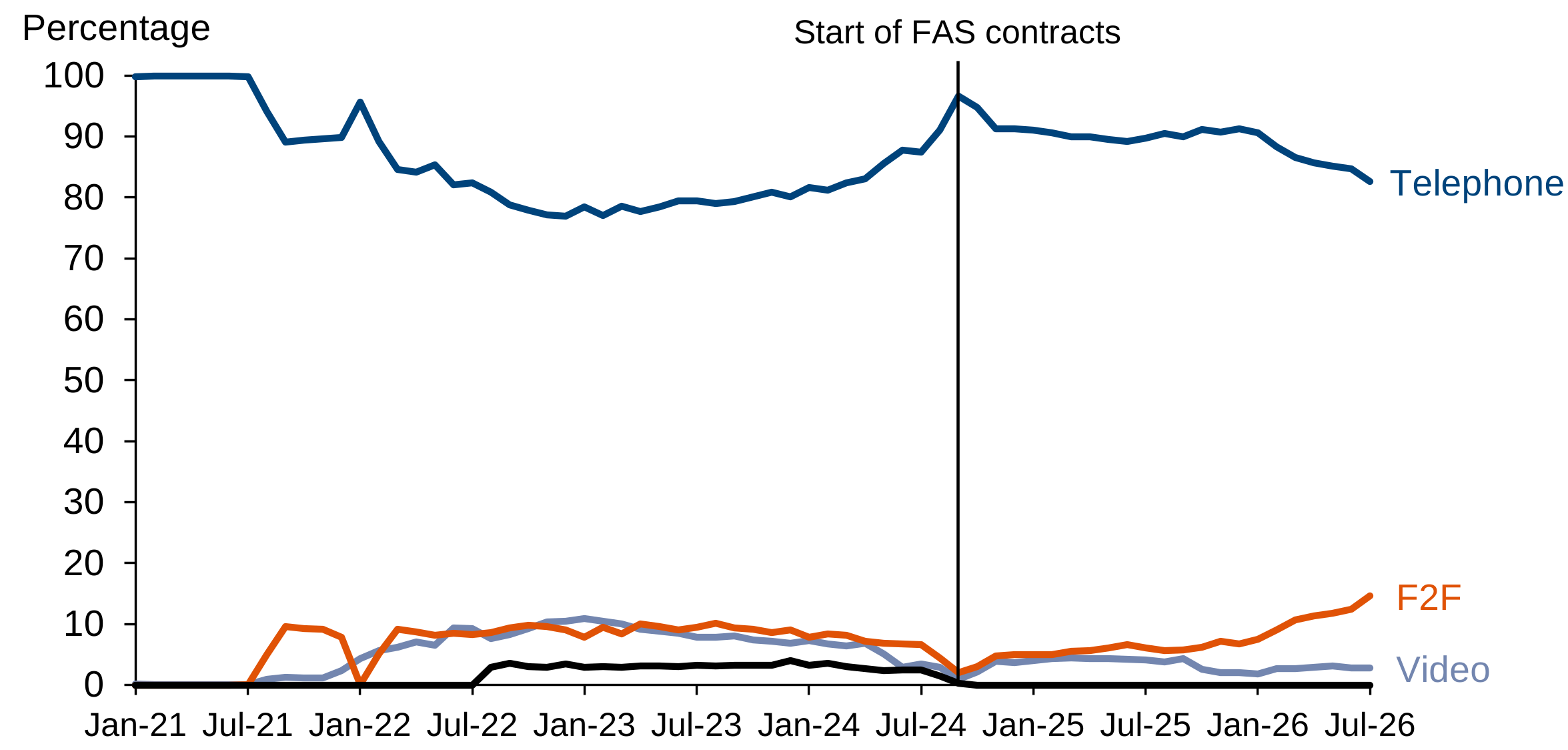
Note: Assessments shown in black were completed with a claimant consultation, though the exact consultation channel used was not recorded.
Telephone remained the main PIP consultation channel between January 2021 and July 2026, accounting for 86.5% of consultations overall. Its share fell from around 100% during the first half of 2021 as the mix of consultation channels broadened, reaching 82.6% in July 2026.
Face-to-face consultations increased from very low levels in early 2021 and accounted for 14.6% of consultations in July 2026, compared with 7.2% across the period as a whole.
Video consultations peaked at 10.9% in January 2023 before declining and stabilising at lower levels. They accounted for 5.1% of consultations across the period and 2.8% in July 2026.
7. Work Capability Assessments
Telephone consultations accounted for the largest share of WCAs
WCA volumes completed per month in Great Britain, by completion route, January 2021 to July 2026
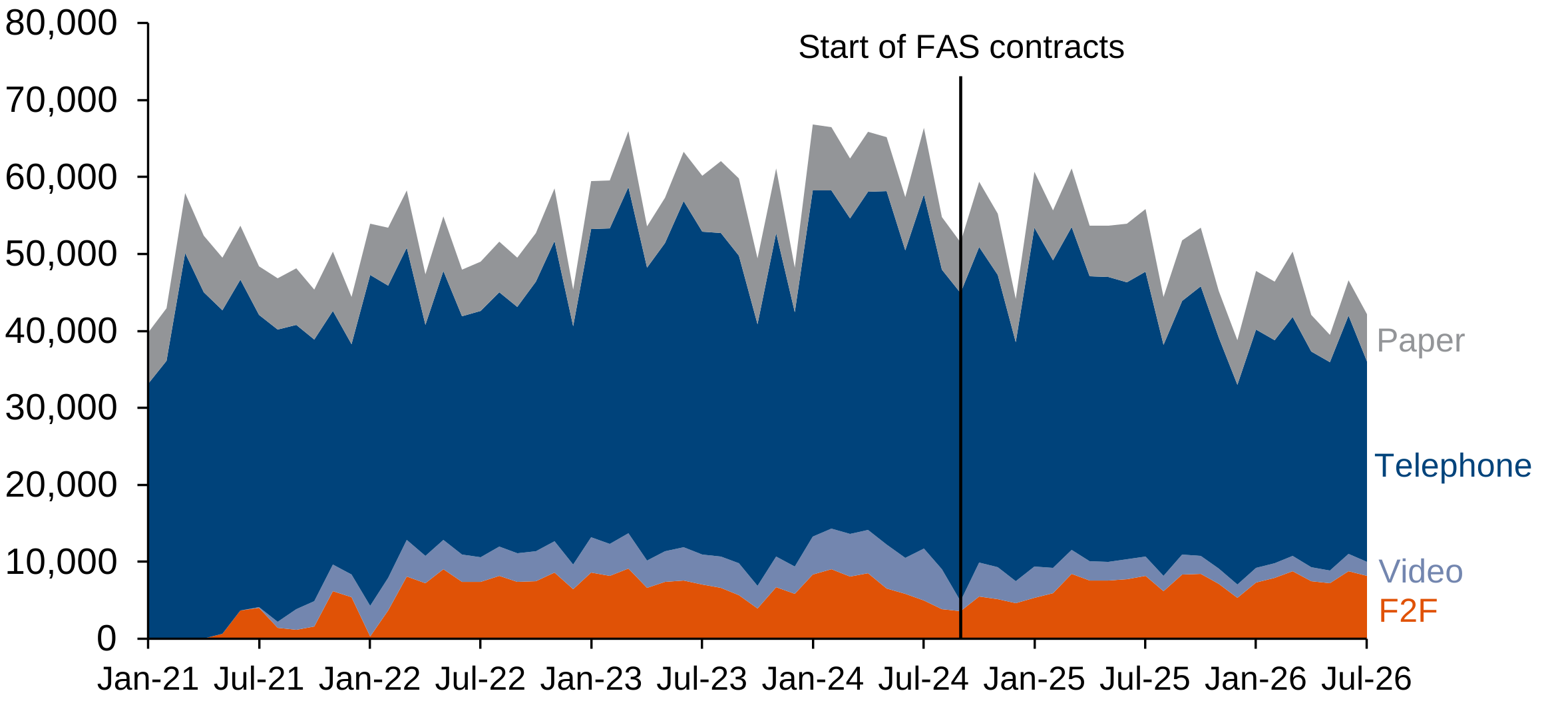
3.6 million WCAs were completed in Great Britain between January 2021 and July 2026. Of these, 3.1 million involved a claimant consultation, while 470,000 were completed through a paper-based clearance and did not require a claimant consultation.
Assessments involving a telephone consultation accounted for the largest share of completed WCAs throughout the period. Paper-based clearances and assessments involving a face-to-face consultation alternated as the second-largest completion route, while assessments involving a video consultation generally accounted for the smallest monthly volumes.
Face-to-face assessments increased from low levels in 2021 and accounted for a larger share of completed WCAs than video assessments.
8. WCA consultation channels
Telephone remained the most-used WCA consultation channel
WCA consultations completed per month in Great Britain, by channel, as a percentage of all WCA consultations, January 2021 to July 2026
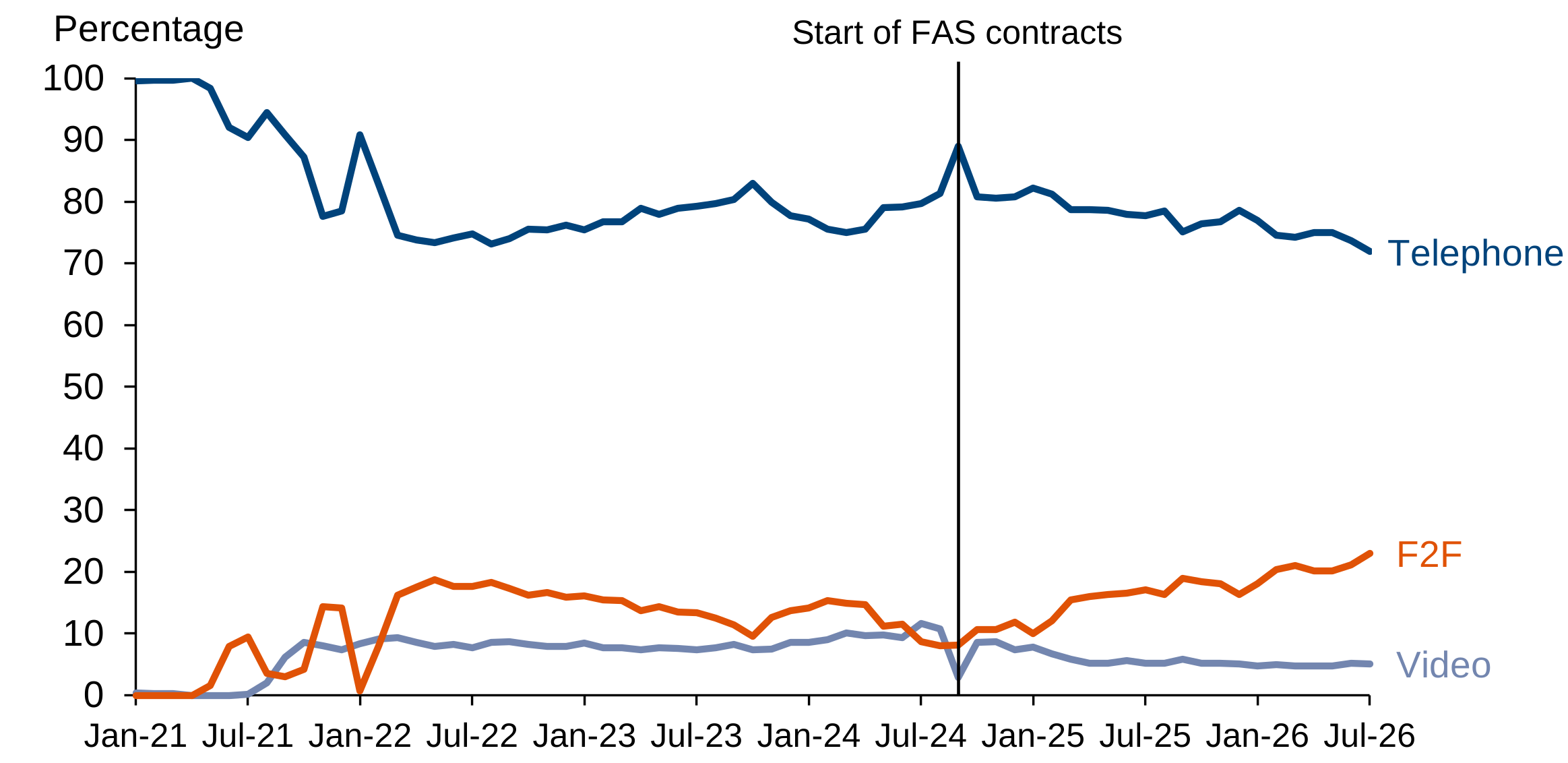
Telephone remained the main WCA consultation channel between January 2021 and July 2026, accounting for 80.2% of consultations overall. Its share fell from 100.0% in April 2021 as the mix of consultation channels broadened and reached 71.9% in July 2026.
Face-to-face consultations increased from very low levels during 2021 and accounted for 23.0% of consultations in July 2026, compared with 13.1% across the period as a whole.
Video consultations were introduced during 2021 and increased initially, before peaking and subsequently declining. They accounted for 6.7% of consultations across the period as a whole and 5.1% in July 2026.
By July 2026, almost one in four WCA consultations were completed face-to-face, compared with around one in seven PIP consultations.
9. Proportions of consultation channels used for PIP assessments and WCAs
Consultation channels used for PIP and WCAs, percentage of consultation assessments, Great Britain, January 2021 to July 2026
| Consultation channel | PIP | WCA |
|---|---|---|
| Telephone | 86.5 | 80.2 |
| Face-to-face | 7.2 | 13.1 |
| Video | 5.1 | 6.7 |
| Unknown channel | 1.3 | 0.0 |
Percentages shown in this table are based on consultation assessments and exclude paper-based clearances, which do not involve a claimant consultation.
A small proportion of PIP assessments are known to have involved a claimant consultation, but the consultation channel was recorded as unknown. These are shown separately in the table above.
Telephone was the most frequently used consultation channel for both PIP and WCAs. Face-to-face consultations accounted for a larger share of WCA consultations (13.1%) than PIP consultations (7.2%). Video consultations accounted for a relatively small share of consultations in both benefits.
Note: Percentages are calculated as proportions of assessments involving a claimant consultation and exclude assessments completed through a paper-based clearance. Further information on data sources and methodology is available in the accompanying background and methodology note and supporting tables.
10. About these statistics
Rounding
Published volumes are rounded in line with the table below. Individual volumes and totals are rounded separately, so component figures may not add exactly to totals. Percentages are calculated from unrounded figures and then rounded to one decimal place, so they may not sum to exactly 100.0%.
| From | To | Round to nearest |
|---|---|---|
| 0 | 1,000 | 10 |
| 1,001 | 10,000 | 100 |
| 10,001 | 100,000 | 1,000 |
| 100,001 | 1,000,000 | 10,000 |
| 1,000,001 | 10,000,000 | 100,000 |
| 10,000,001 | 100,000,000 | 1,000,000 |
11. Contact information and feedback
DWP welcomes your views on these statistics. We would be interested in hearing what you use them for and how suitable they are for your requirements.
Feedback or queries about these statistics can be sent by email to: chea.hastatistics@dwp.gov.uk. We are only able to reply to questions about the statistics.
Press enquiries should be directed to the DWP Press Office.
Publication Lead: Olatunde Akinlade
Author: Charles Stoker