Fire safety remediation in social housing in England 2025-26: Quarter 4
Published 25 June 2026
Applies to England

© Crown copyright 2026
This publication is licensed under the terms of the Open Government Licence v3.0 except where otherwise stated. To view this licence, visit nationalarchives.gov.uk/doc/open-government-licence/version/3 or write to the Information Policy Team, The National Archives, Kew, London TW9 4DU, or email: psi@nationalarchives.gov.uk.
Where we have identified any third party copyright information you will need to obtain permission from the copyright holders concerned.
This publication is available at https://www.gov.uk/government/statistics/fire-safety-remediation-in-social-housing-in-england-2025-26-quarter-4/fire-safety-remediation-in-social-housing-in-england-2025-26-quarter-4
Introduction
Ensuring that tenants live in good quality, safe homes is a fundamental responsibility of all social housing landlords (landlords). As part of meeting that responsibility, building safety remains a key priority, including ensuring that tenants living in multi-occupied, medium and high-rise buildings are safe from fire safety risks.
This publication provides an overview of the status of fire safety remediation for buildings owned by registered social landlords at an aggregate level.
The analysis presented in this publication uses data collected through the Fire Safety Remediation Survey (FRS). This is a self-reported census of stock for which landlords are responsible that measure more than 11 metres in height or have 5 storeys or more, referred to in this publication as ‘relevant buildings’.
The data from the survey relate to:
-
landlords’ obligations under the Fire Safety (Regulatory) Order 2005 for assessing fire safety risks associated with the relevant parts of those buildings;
-
risks landlords have identified, particularly in relation to external wall systems (EWS) and;
-
landlords’ plans for remediating buildings they have identified as having life critical fire safety risks.
These statistics are drawn from our FRS data collection and are being published as Official Statistics in Development.
Building safety
It is for boards and councillors to understand landlords’ legal obligations in relation to managing the safety of buildings and seek assurance that they are being met, and that any identified risks are being well managed and promptly remedied. Ensuring organisations have robust systems and processes underpinned by accurate and up to date data on fire safety and its management, is a key aspect of ensuring that tenants are safe in their homes.
We recognise the seriousness with which landlords take these obligations, and it is important that the work landlords are doing to address fire safety risks in buildings continues at pace, including the remediation of dangerous cladding. Where necessary, landlords are expected to provide measures to mitigate and manage the risks to the safety of tenants until remediation works can commence and/or complete. Landlords should be aware of the Remediation Acceleration Plan published by the government in December 2024, which proposed new expectations of landlords on their completion of remediation works or the plans they have in place, dependent on building height.
FRS requirements
For the purposes of this survey, the definition of responsible entity is the organisation that has the legal obligation or right to carry out the remediation works, having primary responsibility for the repair of the property (as per the Building Safety Fund definition).
Landlords were asked to report on the current remediation status of those relevant buildings where the most recent Fire Risk Assessment (FRA) or Fire Risk Appraisal of External Walls (FRAEW) identified a Life Critical Fire Safety (LCFS) defect.
Survey data coverage
The Quarter 4 survey was issued to all large landlords (those owning 1,000 or more units of social stock), small landlords (those owning fewer than 1,000 units of social stock) who reported previously that they were responsible for relevant buildings, and any landlord who had not responded to any previous surveys. The survey is designed to capture data on relevant buildings for which landlords are the responsible entity on a specific date.
Landlords were asked to complete the survey on a registered group basis, where this applied, or as an individual return, where it did not. The survey required landlords to provide aggregate level information to RSH for all relevant buildings where they are the responsible entity. Local Authority Registered Providers (LARPs) were asked to complete the survey on a voluntary basis as this return is not currently on the Single Data List.
Other data sources
In addition to the survey return for RSH, in which landlords report on their stock at an aggregate level, landlords were also asked to submit fire safety remediation data at an individual building level using the National Remediation System (NRS) administered by Homes England (HE).
Overall coverage
Through the FRS, RSH holds data on the relevant building stock for 99.5% of landlords (1,474 out of the 1,481 on our register). This includes those landlords that have reported they are not the responsible entity for any relevant building. The regulator holds data from 100% of large Private Registered Providers (PRPs) and large LARPs. Large landlords account for 97% of all social housing units in the sector and also 97% of all relevant buildings.
Quarterly changes
Changes to reporting
The NRS is now the single source for building level data for all relevant buildings over 11 metres, replacing the previous requirement for providers to submit the Building Level Survey alongside their FRS. Collection of the Q4 2025/2026 FRS survey coincided with the ongoing data collection at the building level into the NRS. Landlords have been asked to input data into the NRS which may impact on figures in the FRS as data is subjected to increased review.
The number of relevant buildings reported by a landlord in each FRS can change due to acquisition or loss of buildings, or through new intelligence about a building that brings it within or takes it outside the scope of the definition.
Furthermore, group structure changes and new registered landlords can change the number of landlords reporting data. We advise caution in interpreting data changes over time as they may be influenced, at least in part, by a change in the number of reported buildings and their assessment status at each quarter end.
Data validation and cleansing may be conducted with particular focus on some areas of the FRS, especially when new questions are introduced. This can mean that landlords may need to review their data more closely for these areas.
For more information, see the data quality note and the accompanying technical notes and definitions.
Key facts
| 17,081 relevant buildings reported | 28.8% (425) of all landlords report being responsible for at least one relevant building in this quarter. 61% of these were large landlords. |
| 99.9% of buildings reported have had a fire risk assessment | Fire risk assessments have been undertaken on 99.9% of all relevant buildings reported, with all outstanding fire risk assessments expected to be carried out before the end of next quarter. |
| 1,977 buildings were identified as having EWS related LCFS defects | 1,977 buildings (11.6% of all assessed relevant buildings) were identified as having an external wall system (EWS) related life critical fire safety (LCFS) defect. |
| 76% of buildings with EWS related LCFS defects will be remediated within five years | 1,503 of the 1,977 buildings with EWS related LCFS defects are expected to be remediated within the next five years. In addition, remediations works are complete for a further 6.7% (132) of buildings that are awaiting confirmation from a building works assessment. |
Figures based on data submitted by 99% of landlords, including from 100% of large PRPs and large LARPs.
Building stock
| Reporting landlords are responsible entities for 17,081 relevant buildings. | 70% of these buildings are 11-18 metres in height. | PRPs are responsible for 54.5% of relevant buildings while LARPs are responsible for 45.5%. |
Relevant buildings reported by size
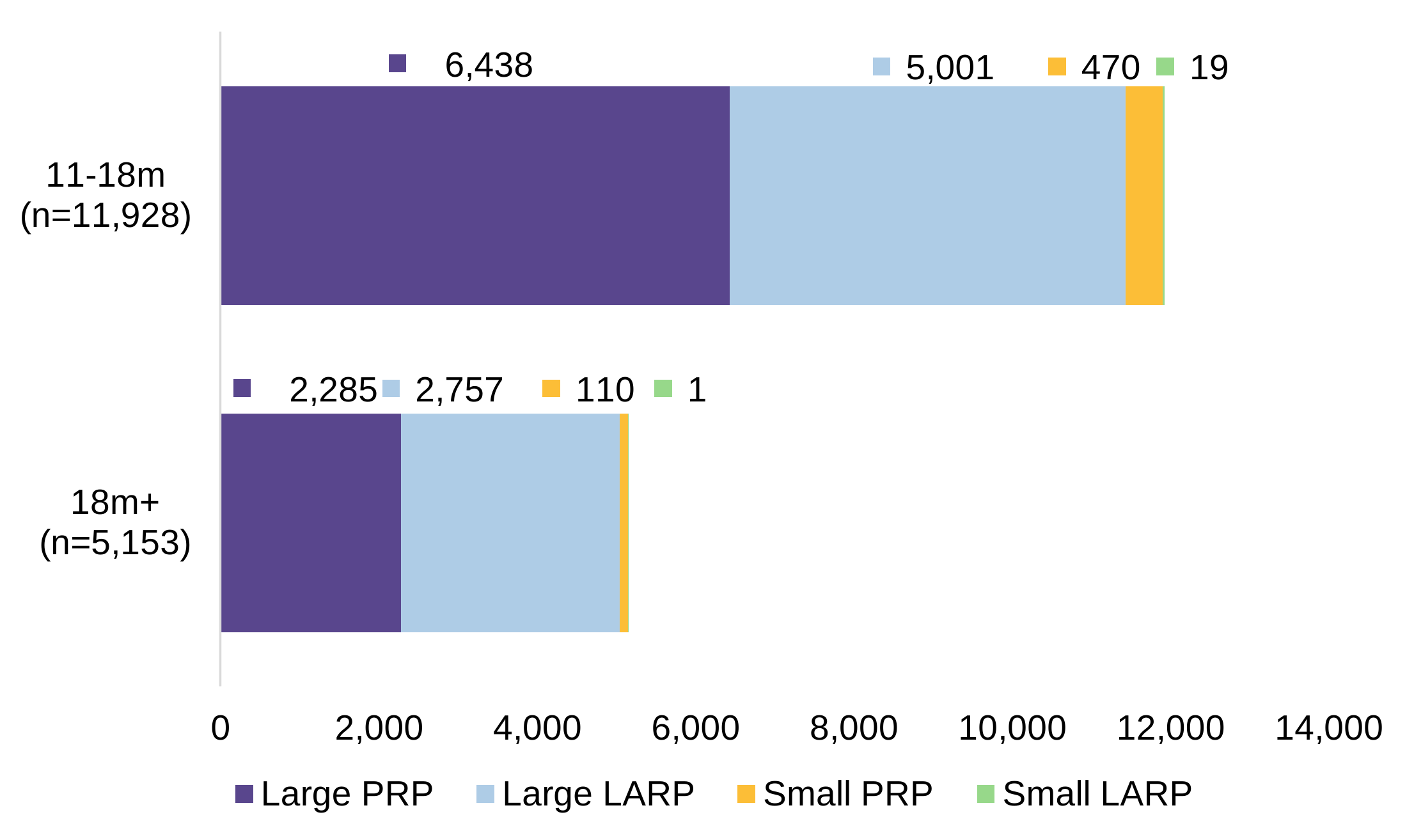
| Provider type | 11-18m buildings | 18m+ buildings | All buildings | % of 11-18m buildings | % of 18m+ buildings | % of all buildings |
|---|---|---|---|---|---|---|
| Large PRP | 6,438 | 2,285 | 8,723 | 54.0 | 44.3 | 51.1 |
| Large LARP | 5,001 | 2,757 | 7,758 | 41.9 | 53.5 | 45.4 |
| Small PRP | 470 | 110 | 580 | 3.9 | 2.1 | 3.4 |
| Small LARP | 19 | 1 | 20 | 0.2 | 0.0 | 0.1 |
- PRP refers to private registered providers and LARP refers to local authority registered providers
- Large providers are those owning 1,000 or more units of social stock whereas small providers are those owning fewer than 1,000 units of social stock
In Q4 2025/2026, landlords reported being responsible for 17,081 relevant buildings which is similar to the previous quarter (17,010).*
70% (11,928) of these buildings measured 11-18 metres, with the remaining 30% (5,153) measuring over 18 metres.
54.5% (9,303) of relevant buildings were owned by PRPs with the other 45.5% (7,778) owned by LARPs. 96.5% (16,481) of relevant buildings are owned by large registered providers.
*Several landlords have reported undertaking remeasurement and data review exercises which has contributed to the increase in the number of buildings reported this quarter. This could be due to the establishment of the NRS causing landlords to review their reported data.
Findings
Fire risk assessments and defect identification
| FRAs have been undertaken on 99.9% of all relevant buildings. | 1,977 of assessed relevant buildings are identified as being affected by EWS related LCFS defects. |
Buildings assessed as having EWS related LCFS defects
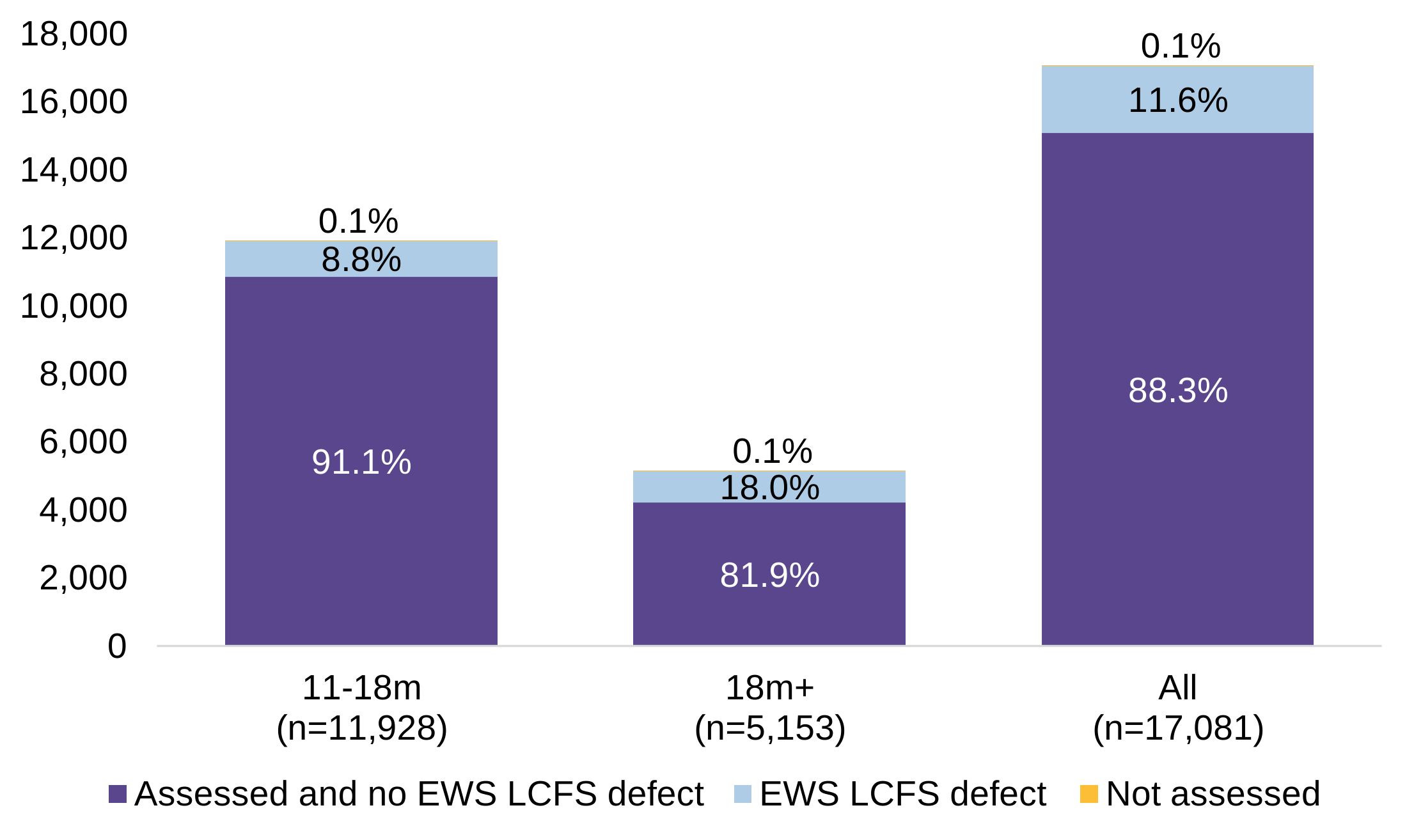
| Defect type | 11-18m buildings | 18m+ buildings | All buildings | % of 11-18m buildings | % of 18m+ buildings | % of all buildings |
|---|---|---|---|---|---|---|
| Assessed and no EWS LCFS defect | 10,867 | 4,219 | 15,086 | 91.1 | 81.9 | 88.3 |
| EWS LCFS defect | 1,047 | 930 | 1,977 | 8.8 | 18.0 | 11.6 |
| Not assessed | 14 | 4 | 18 | 0.1 | 0.1 | 0.1 |
Fire risk assessments (FRAs) have been undertaken on 99.9% of all relevant buildings. All other buildings that require an FRA are expected to be assessed before the end of this quarter.†
11.6% (1,977) of all relevant buildings reported were assessed as having EWS related LCFS defects in their latest FRA.
Within the rest of this report, we refer to those buildings which have EWS related LCFS defects (the 11.6% of relevant buildings assessed via a building works assessment) as ‘affected buildings’.
† In Q4, landlords confirmed that outstanding buildings that require an FRA are vacant blocks awaiting sale or demolition or buildings where the FRA is no longer considered valid and is due to be assessed in the next quarter.
Remediation status
| Landlords report that remediation work is in progress on 11.7% (232) of affected buildings. | Landlords report that work is complete on 8.6% (171) of affected buildings (this includes those still awaiting building control sign off). This is very similar to 8.9% (171) in the previous quarter. |
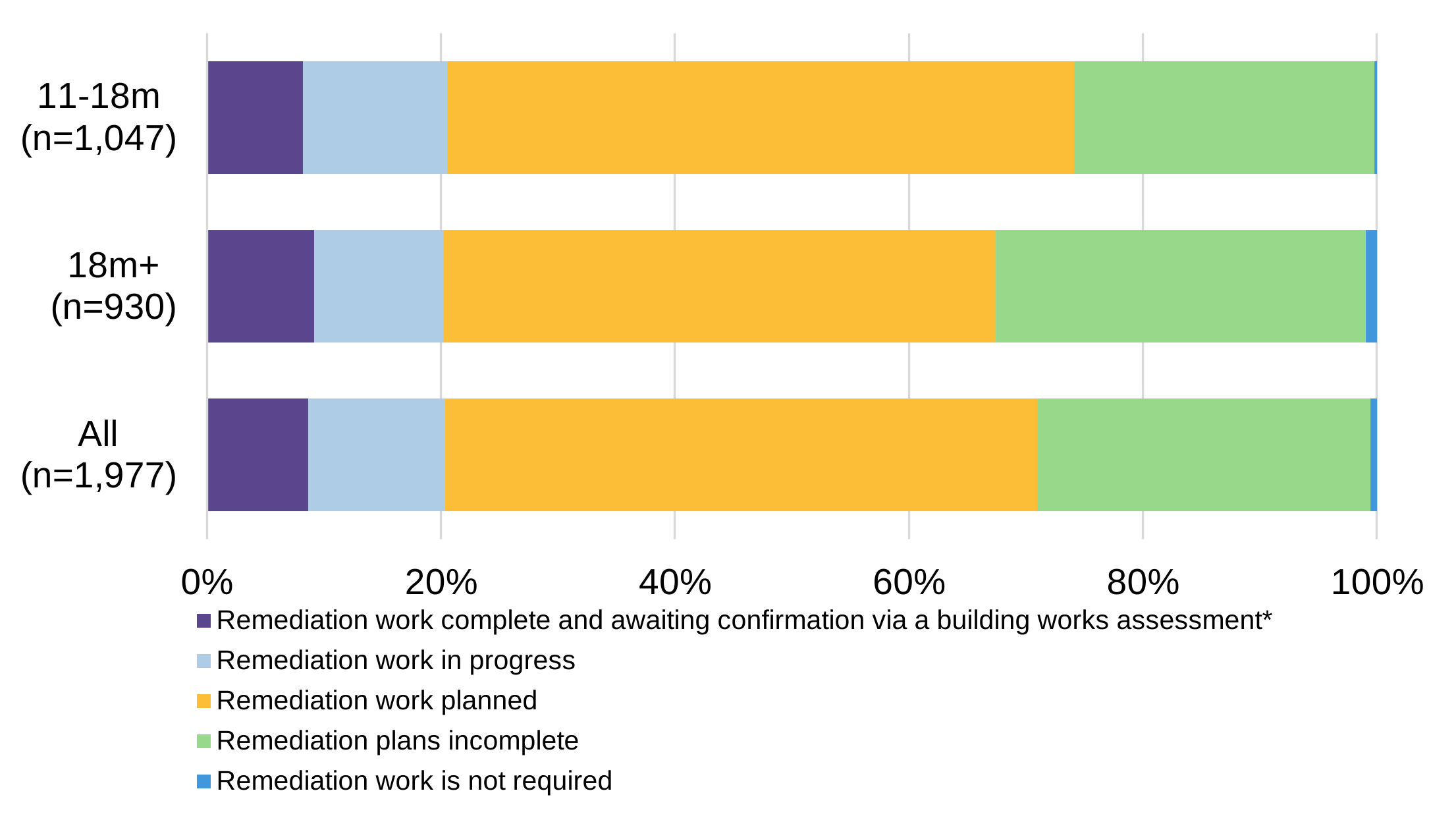
| Remediation status | 11-18m buildings | 18m+ buildings | All | % of 11-18m buildings | % of 18m+ buildings | % of all buildings |
|---|---|---|---|---|---|---|
| Remediation work complete | 86 | 85 | 171 | 8.2 | 9.1 | 8.6 |
| Remediation work in progress | 129 | 103 | 232 | 12.3 | 11.1 | 11.7 |
| Remediation work planned | 561 | 439 | 1,000 | 53.6 | 47.2 | 50.6 |
| Remediation plans unclear or incomplete | 269 | 294 | 563 | 25.7 | 31.6 | 28.5 |
| Work is not required | 2 | 9 | 11 | 0.2 | 1.0 | 0.6 |
*’Remediation works complete’ in this chart includes those where the works are complete but where building control sign off has not yet been secured.
There are plans in place to remediate a further 50.6% (1,000) of affected buildings. There are 28.5% (563) of buildings which have incomplete plans, a slight increase from the previous quarter (26.7%).
Responses to follow up engagement indicates that remediation timelines can slip due to a range of factors, including navigating complex legal arrangements, awaiting decisions from the Building Safety Regulator, and supply chain delays.
Caution should be employed in interpreting changes in these data as buildings reported are not necessarily the same in each quarter. Those remediated and reassessed are excluded, and newly reported buildings with EWS related LCFS defects will be included each quarter.
Remediation timescales for commencement of works
| Landlords reported that work had already started on 20.4% (403) of affected buildings. | Works are due to commence on 16.9% (334) in the next six months, and a further 46.6% (921) within the next five years. |
Remediation commencement periods
Buildings assessed as having EWS related LCFS defects
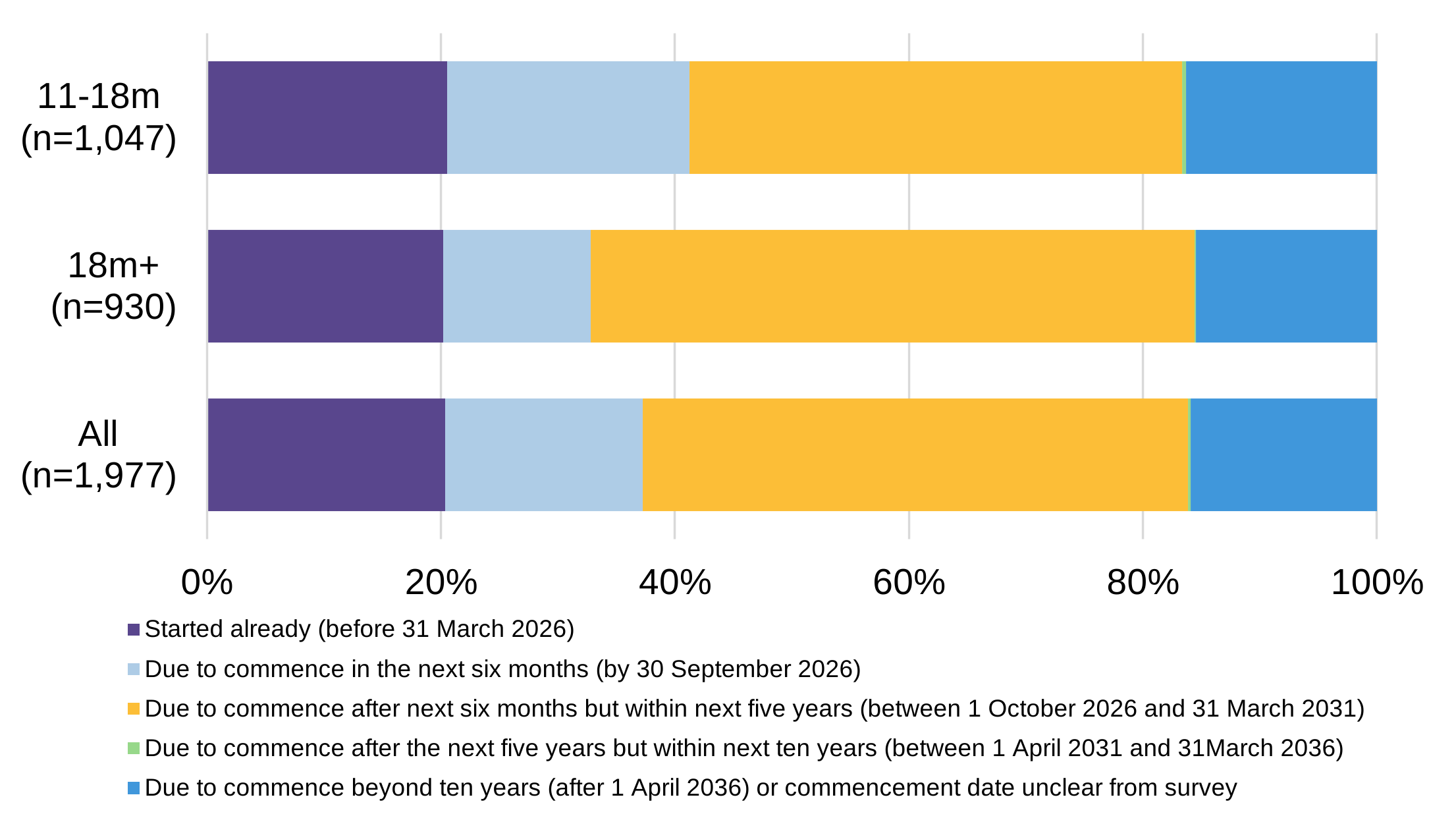
| Commencement period | 11-18m buildings | 18m+ buildings | All | % of 11-18m buildings | % of 18m+ buildings | % of all buildings |
|---|---|---|---|---|---|---|
| Started already (before 31 March 2026) | 215 | 188 | 403 | 20.5 | 20.2 | 20.4 |
| Due to commence in the next six months (by 30 September 2026) | 217 | 117 | 334 | 20.7 | 12.6 | 16.9 |
| Due to commence after next six months but within next five years (between 1 October 2026 and 31 March 2031) | 441 | 480 | 921 | 42.1 | 51.6 | 46.6 |
| Due to commence after the next five years but within next ten years (between 1 April 2031 and 31March 2036) | 3 | 1 | 4 | 0.3 | 0.1 | 0.2 |
| Due to commence beyond ten years (after 1 April 2036) or commencement date unclear from survey | 171 | 144 | 315 | 16.3 | 15.5 | 15.9 |
Landlords reported that works have started or are due to commence within the next five years on 83.9% (1,658) of affected buildings.
0.2% (4) of affected buildings have an expected works commencement date within five to ten years’ time.
15.9% (315) of affected buildings have an expected works commencement date that is beyond ten years or is unclear.
Caution should be employed in interpreting changes in these data as buildings reported are not necessarily the same in each quarter. Those remediated and reassessed are excluded, and newly reported buildings with EWS related LCFS defects will be included each quarter.
Remediation timescales for completion of works
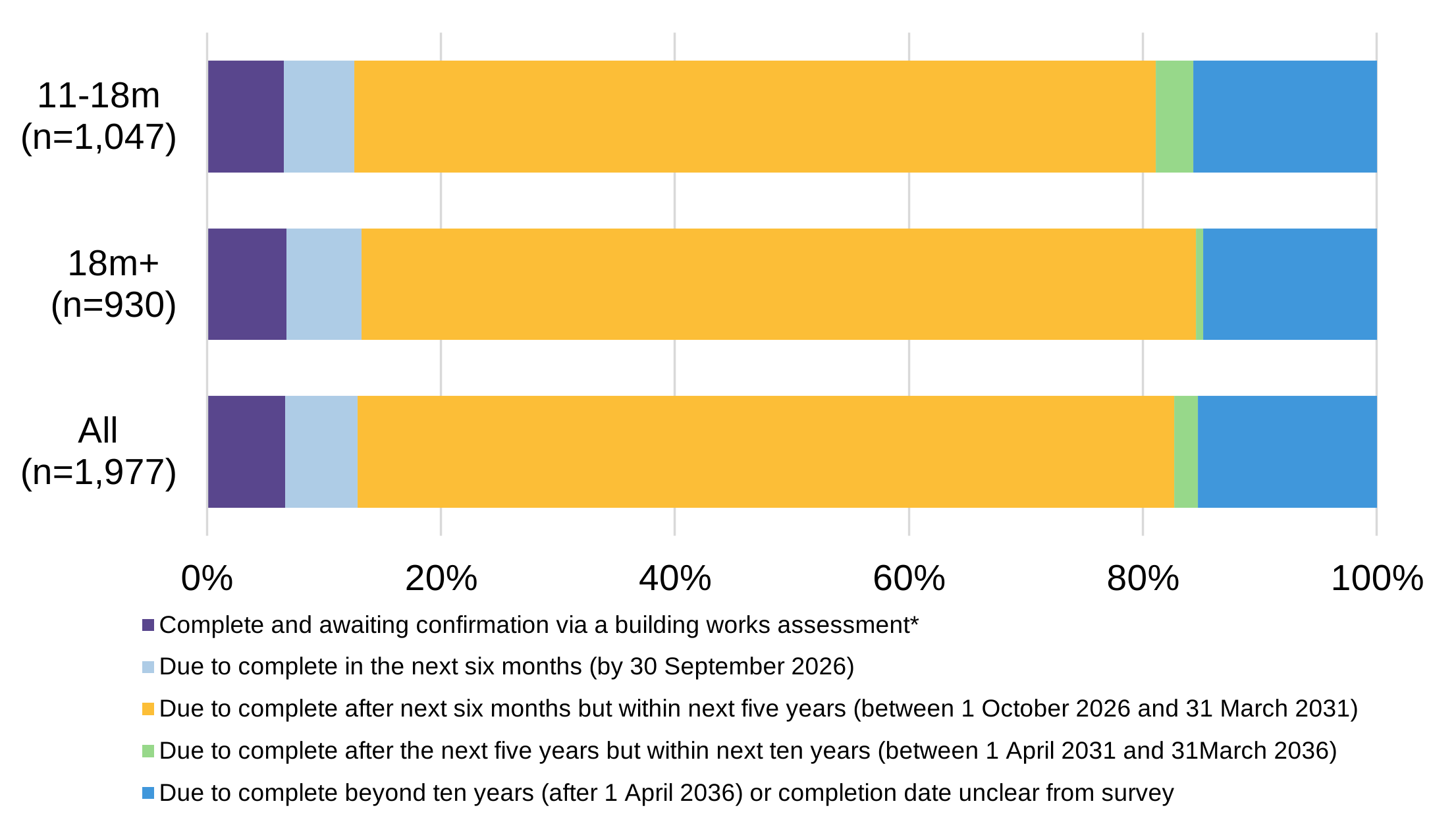
| 76% (1,503) of affected buildings are due to be completed within the next five years. | A further 2.0% (40) of affected buildings are due to be completed in beyond five years but within the next ten years. | 15.3% (302) of affected buildings have a completion date that is beyond ten years or is unclear from the survey response. |
Remediation completion periods
Buildings assessed as having EWS related LCFS defects
| Completion period | 11-18m buildings | 18m+ buildings | All | % of 11-18m buildings | % of 18m+ buildings | % of all buildings |
|---|---|---|---|---|---|---|
| Complete and awaiting confirmation via a building works assessment* | 69 | 63 | 132 | 6.6 | 6.8 | 6.7 |
| Due to complete in the next six months (by 30 September 2026) | 63 | 60 | 123 | 6.0 | 6.5 | 6.2 |
| Due to complete after next six months but within next five years (between 1 October 2026 and 31 March 2031) | 717 | 663 | 1,380 | 68.5 | 71.3 | 69.8 |
| Due to complete after the next five years but within next ten years (between 1 April 2031 and 31 March 2036) | 34 | 6 | 40 | 3.2 | 0.6 | 2.0 |
| Due to complete beyond ten years (after 1 April 2036) or completion date unclear from survey | 164 | 138 | 302 | 15.7 | 14.8 | 15.3 |
*’Remediation works complete’ in this chart includes those where the works are complete but where building control sign off has not yet been secured.
When asked for estimated remediation timescales, landlords reported that works for 78% (1,543) of affected buildings are due to be completed in the next ten years. This includes 6.2% (123) which are due to be completed in the next six months.
Landlords also report that remediation works are completed for 6.7% (132) of affected buildings. These are buildings where the remediation works have been completed but the building is awaiting confirmation via a building works assessment.
Caution should be employed in interpreting changes in these data as buildings reported are not necessarily the same in each quarter. Those remediated and reassessed are excluded, and newly reported buildings with EWS related LCFS defects will be included each quarter.
Remediated EWS related LCFS defects
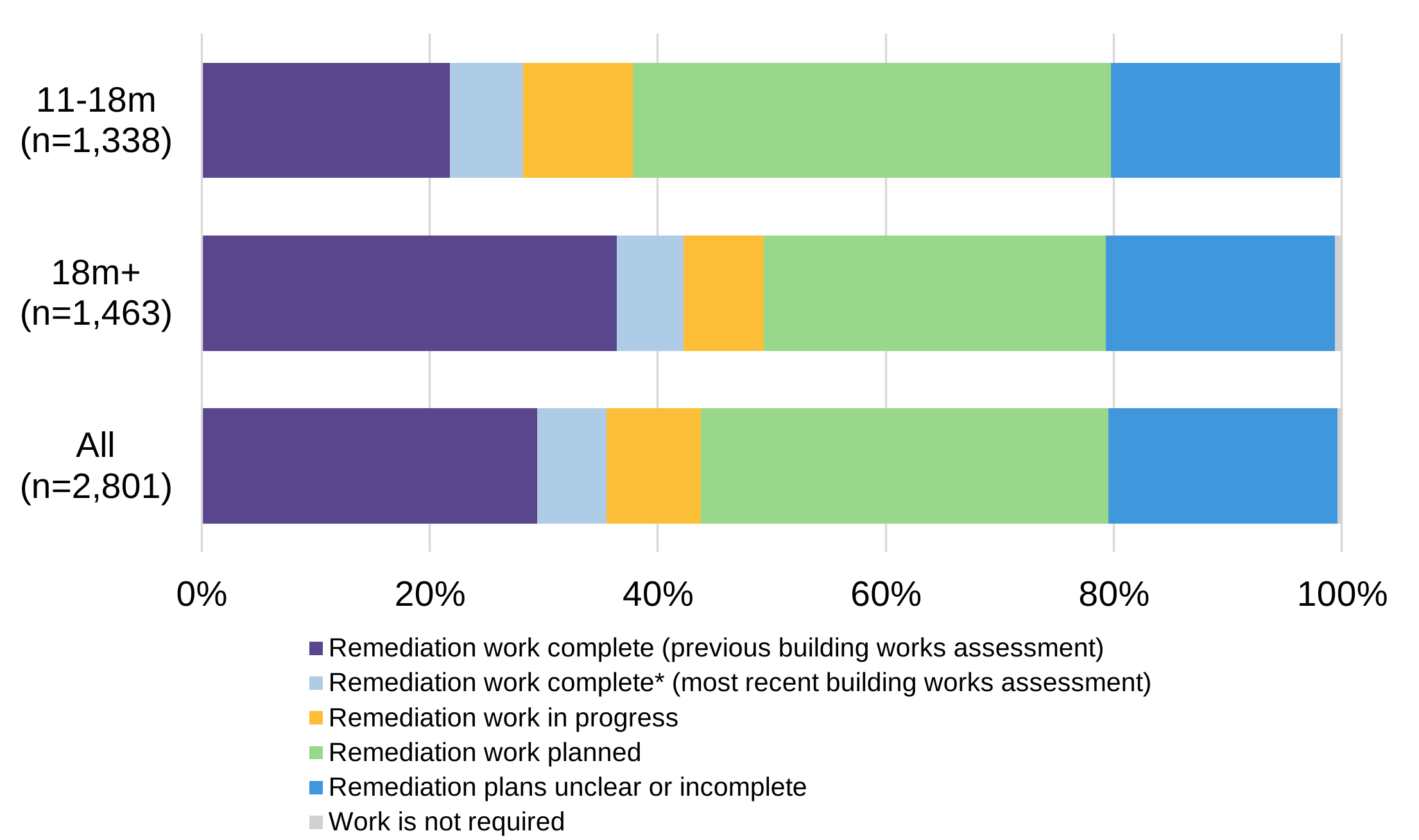
| The majority of relevant buildings reported (14,262 83.5%) have been assessed to have no outstanding or historic† EWS related LCFS defects in any building works assessment since 14 June 2017. | Of the 2,801 buildings that have been identified as having EWS related LCFS defects, 995 (35.5%) have been remediated historically, or are completed and are awaiting a new building works assessment. |
Buildings assessed as having EWS related LCFS defects
| Completion status | 11-18m buildings | 18m+ buildings | All | % of 11-18m buildings | % of 18m+ buildings | % of all buildings |
|---|---|---|---|---|---|---|
| Remediation work complete (previous building works assessment) | 291 | 533 | 824 | 21.7 | 36.4 | 29.4 |
| Remediation work complete (most recent building works assessment) | 86 | 85 | 171 | 6.4 | 5.8 | 6.1 |
| Remediation work in progress | 129 | 103 | 232 | 9.6 | 7.0 | 8.3 |
| Remediation work planned | 561 | 439 | 1,000 | 41.9 | 30.0 | 35.7 |
| Remediation plans unclear or incomplete | 269 | 294 | 563 | 20.1 | 20.1 | 20.1 |
| Work is not required | 2 | 9 | 11 | 0.1 | 1 | 0.4 |
*’Remediation works complete’ in this chart includes those where the works are complete but where building control sign off has not yet been secured.
2,801 relevant buildings have been assessed to have an EWS related LCFS defect. Remediation work has been completed historically on 824 (29.4%) of these buildings.
In addition, there are a further 171 (6.1%) buildings where the remediation work is complete but the building is awaiting confirmation through a building works assessment.
† Historic remediation in this publication refers to buildings where remediation work for an EWS related LCFS defect was previously identified as being required in a building works assessment (on or after 14 June 2017), but where the most recent building works assessment (prior to 31 March 2026) no longer identifies any EWS related LCFS defects.
Next steps
Landlords are expected to take timely action to remediate LCFS defects from the buildings they are responsible for, so that tenants are safe and can feel safe in their homes. It is for boards and councillors to ensure these plans are delivered. Risks to tenants in any interim period before works are complete, including whilst works are being undertaken, must be fully understood, with landlords taking the necessary mitigating actions to protect tenants.
We will continue to monitor the performance of landlords in remediating relevant affected buildings and the progress they are making against their plans, with the survey continuing to be issued on a quarterly basis.
We will engage with landlords in the course of our regulation, including through our ongoing programme of inspections.
We will follow up with landlords whose returns indicate that they may be an outlier in progressing remediation work, including those who have reported unclear plans. We will hold discussions with them on their remediation plans and how they are mitigating the risks associated with fire safety defects, which are not yet remediated.
Data quality note
The RSH survey returns are subject to an internal validation process through the NROSH+ system, which helps to minimise data entry errors. We have found the aggregate level results of this survey to be broadly consistent with our regulatory understanding of landlords’ progress on remediation and with the results of the previous survey.
We hold data for 99% of landlords. This means that, although response coverage is very good and data accuracy is improving, the data may not provide a complete picture of fire safety remediation plans across all relevant buildings in the sector. All large PRPs and LARPs responded to the Quarter 4 2025/2026 survey. In total, 6 small landlords have not responded to any survey. It should be noted that small landlords are much less likely to be a responsible entity for any relevant buildings.
We expect landlords to follow the guidance provided with the survey to ensure responses are accurate. As we analyse submissions, we monitor the quality of data provided and engage directly with landlords where we have concerns about data accuracy.
Glossary of terms
External wall system (EWS)
The external wall system (EWS) is made up of the outside wall of a residential building, including cladding, insulation, fire break systems, etc.
Large provider/ small provider
A large provider is a registered provider that owns 1,000 or more social housing units/ bedspaces. A small provider is a registered provider that owns fewer than 1,000 social housing units/ bedspaces.
Life critical fire safety (LCFS) defects
LCFS are defined as defects, shrinkages, faults or other failings in a building that give rise to fire safety risks identified by a fire risk appraisal of external wall construction or a fire risk assessment (or equivalent) undertaken to industry standards.
Local Authority Registered Provider (LARP)
Local authorities who own social housing must be registered with the RSH.
Private Registered Provider (PRP)
PRPs refer in this document to providers of social housing in England that are registered with the Regulator of Social Housing (RSH) and are not local authorities. This is the definition of PRP in the Housing and Regeneration Act 2008.
Relevant building
A residential building measuring 11 metres plus or that have 5 storeys or more. Where we refer to 11-18 metre buildings, this includes those that have 5 or 6 storeys and where we refer to 18 metre plus buildings, this includes buildings with 7 storeys or more.
Feedback
Why not have your say on our statistics for 2026/27?
Email feedback to enquiries@rsh.gov.uk or rate how this document meets your needs.