Creative industries statistics commentary: September 2026
Published 17 September 2026

© Crown copyright 2026
This publication is licensed under the terms of the Open Government Licence v3.0 except where otherwise stated. To view this licence, visit nationalarchives.gov.uk/doc/open-government-licence/version/3 or write to the Information Policy Team, The National Archives, Kew, London TW9 4DU, or email: psi@nationalarchives.gov.uk.
Where we have identified any third party copyright information you will need to obtain permission from the copyright holders concerned.
This publication is available at https://www.gov.uk/government/statistics/creative-industries-statistics-september-2026/creative-industries-statistics-commentary-september-2026
1. Introduction
This is an Official Statistics publication produced by HM Revenue and Customs (HMRC). It provides information on tax reliefs and expenditure credit claims made for the Film, High-End Television (HETV), Animation, Children’s Television, Video Games, Theatre, Orchestra, and Museums and Galleries Exhibition Tax Reliefs, for the financial years up to March 2025.
In the publication tables we have included detailed breakdowns of claims made for Audio-Visual Expenditure Credits (AVEC) and Video Game Expenditure Credits (VGEC) for the first time. As the existing tax reliefs (for films, high-end TV, children’s TV, animation and video games) will continue until 31 March 2027, the publication covers claims for both the tax reliefs and the expenditure credits that will replace them.
The statistical tables are published on the main page of this publication alongside a link to this commentary document, together with the background information and quality report.
This is an annual release, and the next release is planned to be in Summer 2027.
All figures are provided on an accruals basis. This means that claims are allocated to the financial year in which the claimant’s accounting period ends. Tables 1.1 to 8.1 provide statistics on the total number of claims and amount paid for each relief per financial year, while tables 1.2 to 8.2 provide breakdowns by claim size. There is a lag in the data as companies have a year after the end of their accounting period to file their Corporation Tax return, and a further year to make, withdraw or amend a claim for the Creative industries tax reliefs. In tables 1.2 to 5.2, which cover the audio-visual reliefs, the bands provide aggregated figures across the tax reliefs and expenditure credits.
Statistical contacts: J. Fox and M. Rowe-Brown; ct.statistics@hmrc.gov.uk
Media enquiries: HMRC Press Office; news.desk@hmrc.gov.uk
2. Summary
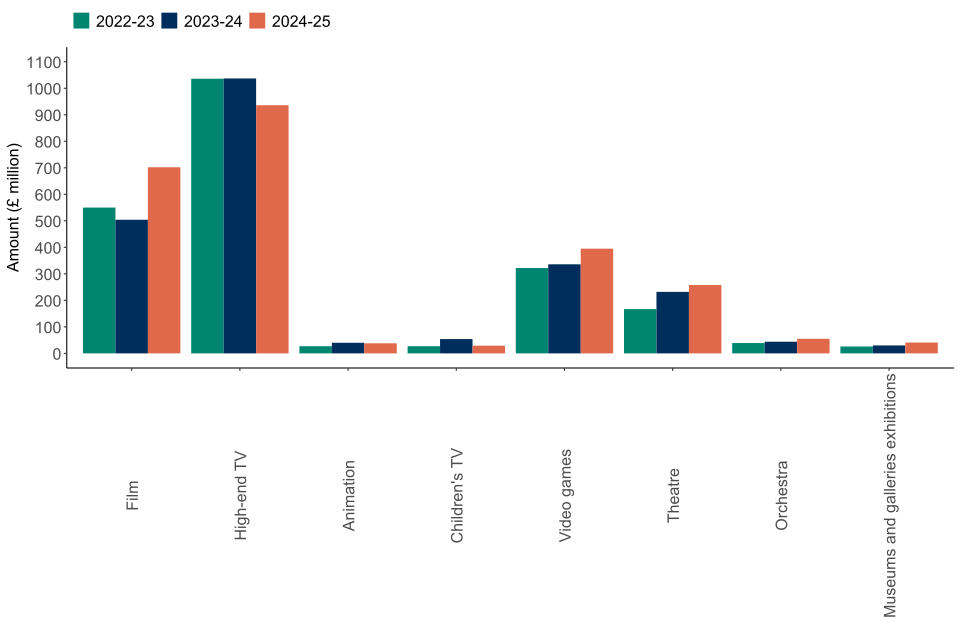
A total of £2.45 billion of relief was paid out in relation to the 2024 to 2025 financial year, across all the Creative industries tax reliefs and expenditure credits. This is an increase from £2.28 billion in relation to the 2023 to 2024 financial year. The largest increases related to films, video games and museums and galleries exhibitions, with the largest decreases seen in the value of HETV and children’s TV claims. For claims relating to the 2024 to 2025 financial year, HETV Tax Relief (including AVEC) accounted for 38% of the total amount paid out and Film Tax Relief (including AVEC and independent films) accounted for 29% of the total (figure 1 and table 1). This represents an increased share of relief paid for films and a decrease for HETV programmes compared to the previous year.
This is also the first publication to include a detailed breakdown of claims made for AVEC and VGEC. Tables 1.1 to 5.1 provide information on claims made for both the Creative industries tax reliefs and AVEC/VGEC. Note that claims for a single production may be made under both the tax reliefs and expenditure credits. In the totals columns of tables 1.1 to 5.1, such cases are represented as 2 individual claims, but for one company/production. Figures for the total number of companies and total number of productions are aggregated across both the old and new schemes to ensure consistency with previous years.
Table 1: Number of companies, claims, projects, and amount of creative industries tax relief paid out (£ million) in relation to the 2024 to 2025 financial year
| Relief | Number of companies | Number of claims | Number of projects | Amount of relief paid |
|---|---|---|---|---|
| Film | 885 | 1,145 | 1,025 | 702 |
| High-end TV | 580 | 830 | 730 | 936 |
| Animation | 95 | 145 | 130 | 38 |
| Children’s TV | 65 | 105 | 110 | 29 |
| Video games | 560 | 1,065 | 1,185 | 395 |
| Theatre | 1,350 | 1,405 | 4,655 | 258 |
| Orchestra | 265 | 260 | 710 | 55 |
| Museums and galleries exhibitions | 340 | 345 | 3,085 | 41 |
| Total | 4,140 | 5,300 | 11,630 | 2,454 |
Figure 1: Creative industries tax reliefs (£ million, accruals basis) paid in relation to financial years ending 2023, 2024 and 2025. Figures include claims for both tax reliefs and expenditure credits.
3. AVEC and VGEC
The 5 audio-visual tax reliefs (for film, HETV, children’s TV, animation and video games) are being phased out and replaced by expenditure credits, AVEC and VGEC. During the transitional period, companies may choose whether to claim for the tax reliefs or the expenditure credits for their current productions. However, productions that commenced on or after 1 April 2025 must claim under the expenditure credits, and all productions must claim the expenditure credits from 1 April 2027.
The latest statistics are based on claims received up to and including 3 August 2026, and cover accounting periods up to and including the 2024 to 2025 financial year. There was a substantial increase in claims made for AVEC, and to a lesser extent VGEC, compared to the tax reliefs in the 2024 to 2025 financial year.
Table 2 shows the total number and value of claims made for AVEC and VGEC by relief type, covering claims in the 2024 to 2025 financial years. Figures are uplifted to account for claims yet to be received.
Table 2: Number of companies, claims, productions, and value of expenditure credits paid out (£ million) for AVEC and VGEC, 2024 to 2025.
| Relief | Number of companies | Number of claims | Number of productions | Amount of relief paid |
|---|---|---|---|---|
| AVEC — Film | 165 | 250 | 225 | 515 |
| AVEC — Independent film | 130 | 145 | 130 | 57 |
| AVEC — High-end TV | 250 | 365 | 325 | 670 |
| AVEC — Animation | 55 | 85 | 75 | 31 |
| AVEC — Children’s TV | 40 | 50 | 50 | 24 |
| VGEC | 115 | 210 | 220 | 116 |
In the sections that follow, where an individual tax relief (for example Film Tax Relief) is referenced, this will represent claims made for both the tax reliefs and the expenditure credits.
Additional tax relief for visual effects (VFX)
From 1 April 2025, companies can claim an enhanced 39% rate of AVEC on their UK VFX costs (increased from 34%). Additionally, the 80% cap on qualifying costs will be removed for UK VFX costs. Qualifying VFX costs incurred from 1 January 2025 will be eligible.
To ensure proper targeting and safeguard the policy from abuse, the additional tax relief will only be available to companies when the production has received a final certificate from the British Film Institute (except where the project is abandoned). This means claims can only be made for the completion period (or a subsequent period). The completion period is the accounting period when the production is completed.
Since the additional relief for VFX is only available on expenditure incurred in the final 3 months of the reporting year, and the final certificate requirement will delay some claims, there have not been sufficient claims for VFX costs in the reporting period to include in this publication. We expect to report on the value of relief for VFX costs in next year’s publication.
4. Film Tax Relief
Film Tax Relief (FTR) allows qualifying film production companies to make a deduction in their taxable profits, surrender a loss in return for a payable tax credit, or both. Companies may also claim AVEC for film productions, which offers a 34% taxable credit on their qualifying expenditure. A company may make several tax relief claims for a film during the production process. A claim may cover several films.
Since FTR was introduced in 2007, companies have made claims for 4,550 films and £7,108 million has been paid out.
Number and value of claims by financial year
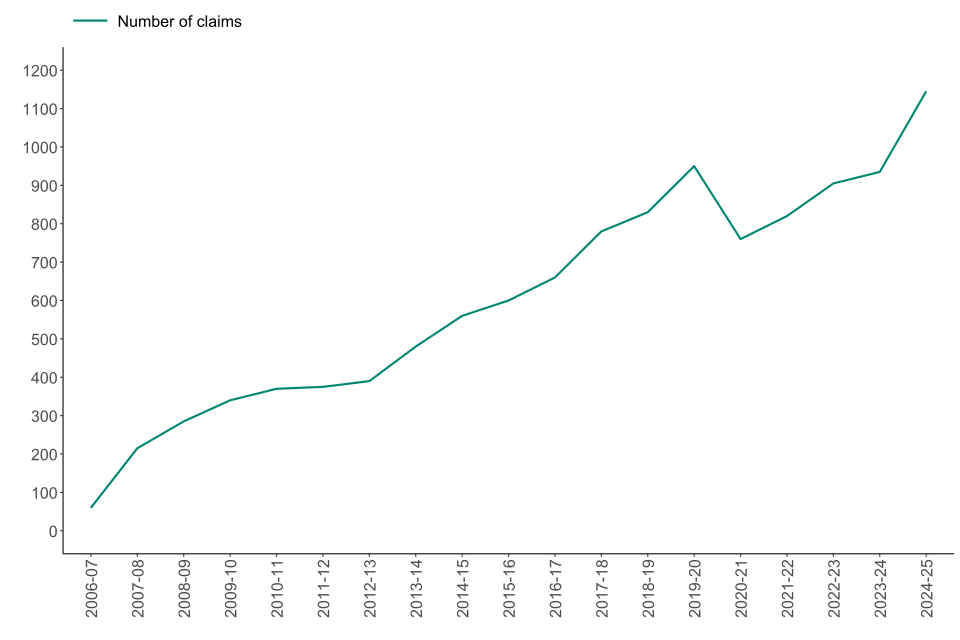
There were 1,145 claims made for FTR, AVEC — Film and AVEC — Independent Film in relation to the 2024 to 2025 financial year, totalling £702 million of relief paid out. This is a 39% increase in the amount of relief paid compared with the previous year (figure 2). This increase is mainly driven by a greater amount paid out relating to high-value claims (over £5m). The number of claims for film productions also increased by 21% since the previous year (figure 3), although some of this growth is due to claims for single productions being made across both FTR and AVEC.
The value of relief for film productions in relation to 2024 to 2025 represents an all-time high. This is likely in part due to the increased take-up of AVEC, under which some productions that would previously have claimed as HETV are now claiming as films. In addition, the higher rate of relief of Independent Film Tax Credit (IFTC) is likely to increase the relief paid on film productions in the coming years.
Independent Film Tax Credit
Claims for the new IFTC element of AVEC could be submitted from 1 April 2025. To qualify for the IFTC, a film must pass a new test administered by the British Film Institute (BFI). Films will need to meet one of the following conditions:
- have a UK writer (national or resident)
- have a UK director (national or resident)
- be certified as an official UK co-production
Films must also have a budget of up to £23.5m. For films that qualify for IFTC, an enhanced expenditure credit of 53% can be claimed on the first £15m of production expenditure. In the 2024 to 2025 financial year, an estimated £57m of relief was paid in relation to 145 claims.
Figure 2: Amount of Film Tax Relief paid (£ million, accrual basis) relating to financial years ending 2007 to 2025
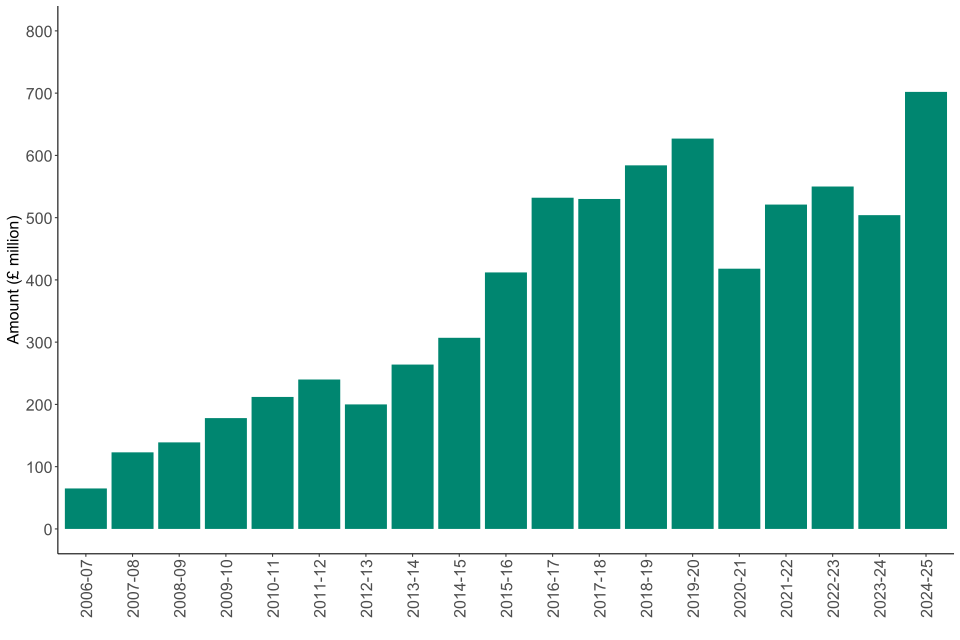
Figure 3: Number of Film Tax Relief claims, financial years ending 2007 to 2025
Of all claims made in relation to the 2024 to 2025 financial year, 67% were for £100,000 or less, similar to the previous year. Despite only 3% of claims relating to the 2024 to 2025 financial year being for over £5 million, these accounted for 67% of the total amount paid.
5. High-End Television Tax Relief
High-End Television (HETV) Tax Relief allows qualifying production companies to make a deduction in their taxable profits, surrender a loss in return for a payable tax credit, or both. Companies may also claim AVEC for HETV productions, which offers a 34% taxable credit on their qualifying expenditure. A company may make several tax relief claims for a programme during the production process. A claim may cover several programmes.
Since HETV tax relief was introduced in 2013, companies have made claims for 1,965 programmes and £5,878 million has been paid out.
Number and value of claims by financial year
There were 830 claims made for HETV relief in relation to the 2024 to 2025 financial year (figure 5), totalling £936 million of relief paid out. This is a decrease of -10% from the previous year (figure 4). Some of this fall may be due to the transition to AVEC, as some feature length productions which previously claimed HETV relief will now claim as a film if they have a theatrical release.
Figure 4: Amount of HETV Tax Relief paid (£ million, accrual basis) relating to financial years ending 2014 to 2025
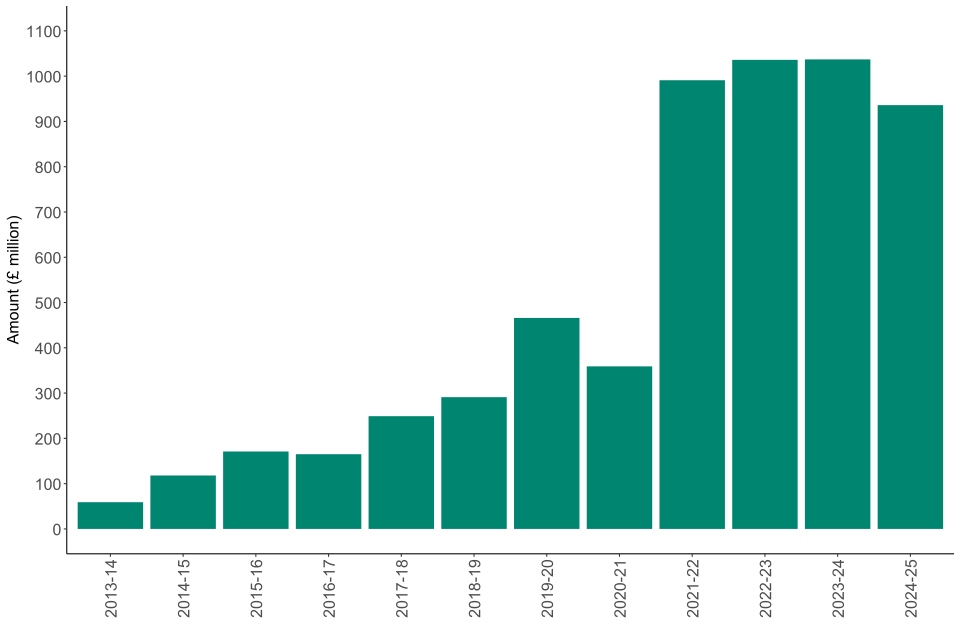
Figure 5: Number of HETV claims, financial years ending 2014 to 2025
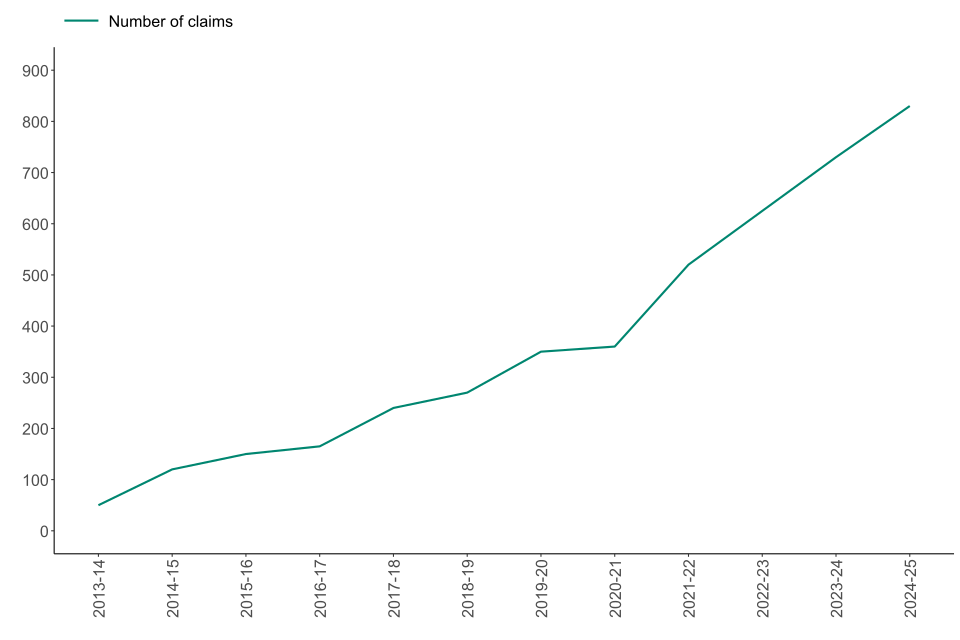
For claims relating to the 2024 to 2025 financial year, 49% were for £250,000 or less. However, these only accounted for 3% of the total amount paid. High-value claims (over £2 million) accounted for 71% of the total amount paid, slightly lower than the 73% figure for the previous year.
6. Animation Tax Relief
Animation Tax Relief (ATR) allows qualifying animation companies to make a deduction in their taxable profits, surrender a loss in return for a payable tax credit, or both. Companies may also claim AVEC for animated productions — both TV shows and films — which offers a 39% taxable credit on their qualifying expenditure. This is a 5% higher rate than standard AVEC. A company may make several tax relief claims for a programme during the production process. A claim may cover several programmes.
Since ATR was introduced in 2013, companies have made claims for 725 programmes and £244 million has been paid out.
Number and value of claims by financial year
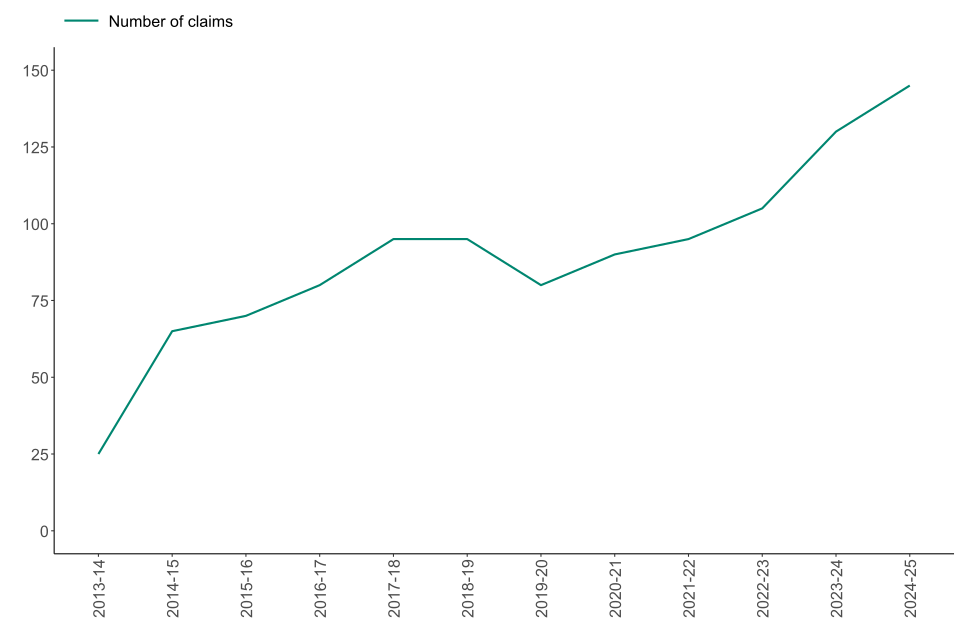
There were 145 claims made for ATR in relation to the 2024 to 2025 financial year, totalling £38 million of relief paid out (see figure 6 and figure 7). This represents a small decrease in relief paid compared to the previous year. Claims have increased, however, this is likely due to the duplicating effect across ATR and AVEC, as the number of companies claiming relief for animated productions has fallen since financial year 2023 to 2024.
Figure 6: Amount of Animation Tax Relief paid (£ million, accrual basis) relating to financial years ending 2014 to 2025
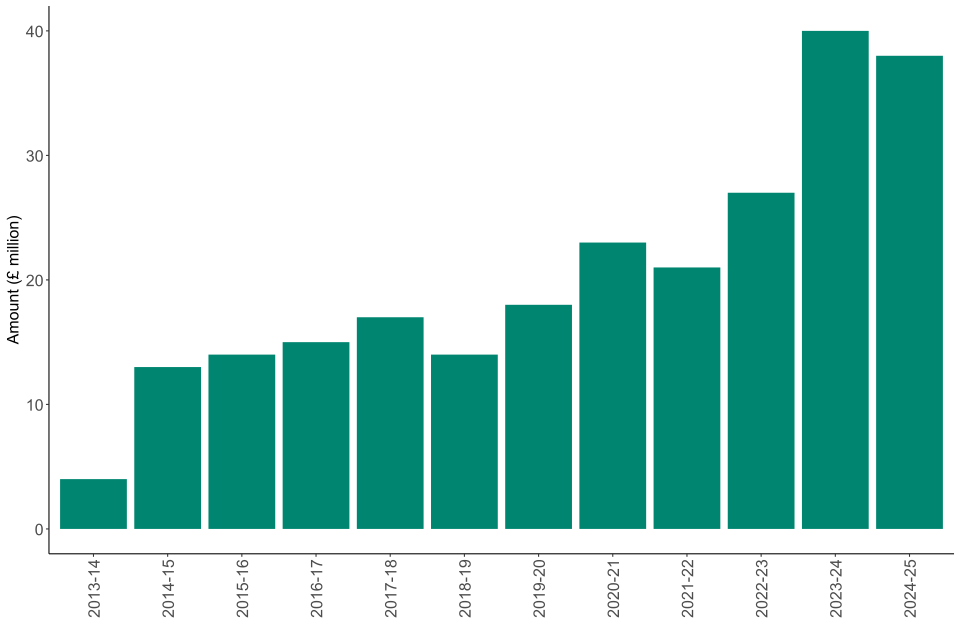
Figure 7: Number of Animation Tax Relief claims, financial years ending 2014 to 2025
For claims relating to the 2024 to 2025 financial year, 31% were for values of over £250,000, similar to the previous year. These claims accounted for 84% of the total amount of relief paid.
7. Children’s Television Tax Relief
Children’s Television Tax Relief (CTR) allows qualifying companies to make a deduction in their taxable profits, surrender a loss in return for a payable tax credit, or both. It is an extension of the high-end television and animation reliefs, but is specifically aimed at the producers of children’s television programmes. Companies may also claim AVEC for children’s TV productions, which offers a 39% taxable credit on their qualifying expenditure. This is a 5% higher rate than standard AVEC.
Since CTR was introduced in 2015, companies have made claims for 845 programmes and £236 million has been paid out.
Number and value of claims by financial year
There were 105 claims made for CTR in relation to the 2024 to 2025 financial year (figure 9), totalling £29 million in relief paid out (figure 8). This is a fall of 46% from the previous year, driven by a drop in high-value claims.
Figure 8: Amount of Children’s TV Tax Relief paid (£ million, accrual basis) relating to financial years ending 2016 to 2025
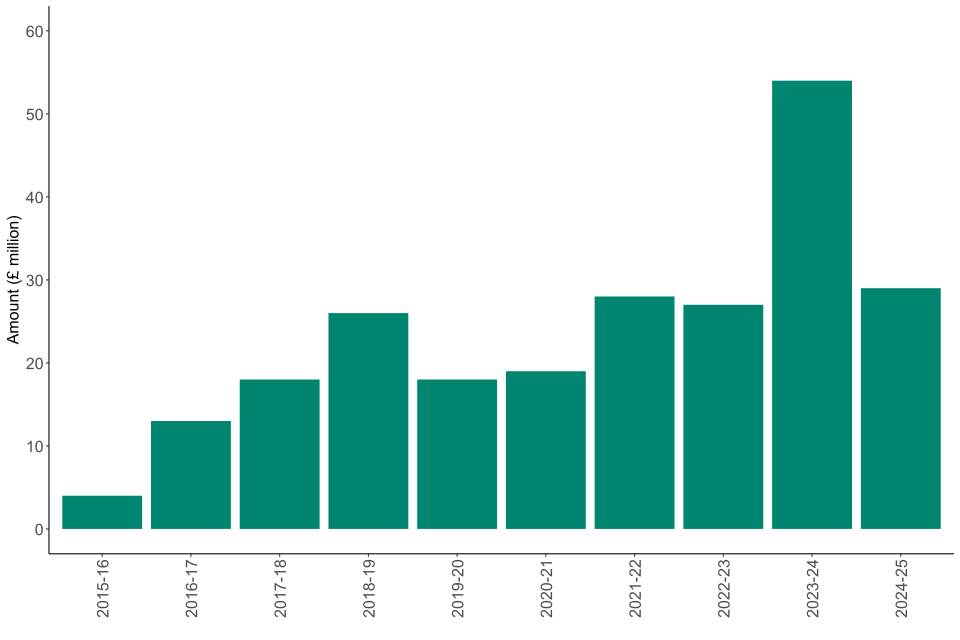
Figure 9: Number of Children’s TV Tax Relief claims, financial years ending 2016 to 2025
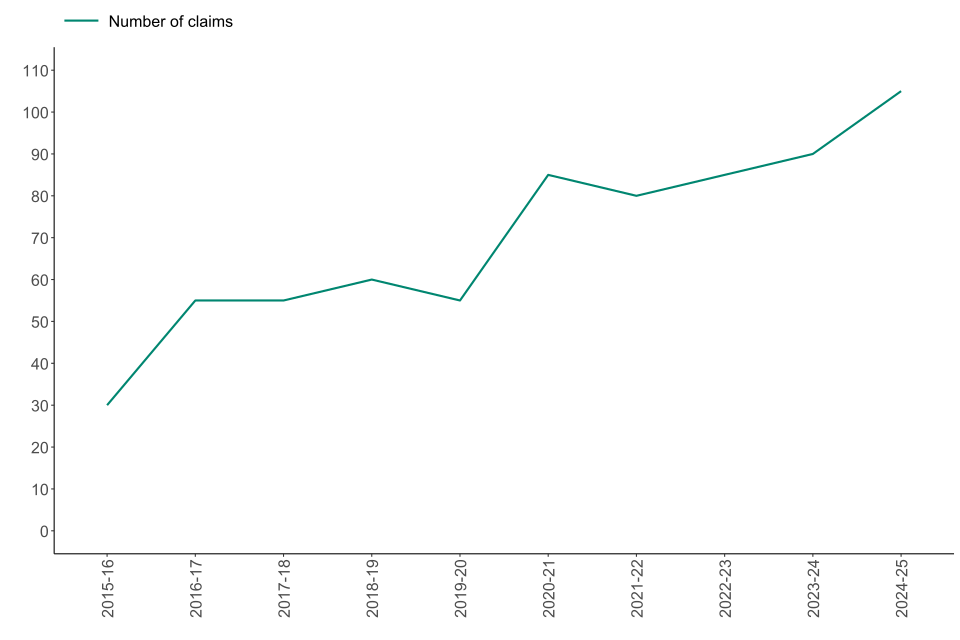
Only 14% of the claims made in relation to the 2024 to 2025 financial year were for amounts over £500,000, but these accounted for 72% of the total amount of relief paid. This is 11% lower than the previous year, when claims for amounts over £500,000 represented 83% of relief paid.
8. Video Games Tax Relief
Video Games Tax Relief (VGTR) allows qualifying video games companies to make a deduction in their taxable profits, surrender a loss in return for a payable tax credit, or both. Companies may also claim VGEC for video game productions, which offers a 34% taxable credit on their qualifying expenditure. A company may make several tax relief claims for a game during the production process. A claim may cover several games.
Since VGTR was introduced in 2014, companies have made claims for 3,685 games and £2,273 million has been paid out.
Number and value of claims by financial year
There were 1,065 claims made for VGTR in relation to the 2024 to 2025 financial year (figure 11), totalling £395 million of relief paid out. The amount of relief paid increased by 18% compared with the previous year (figure 10). This is mainly due to a rise in mid- and high-value claims of between £100,000 and £2m. Relief for video games has grown consistently in both the number and value of claims since its introduction.
The large increase in the number of claims compared to the previous year is partly due to the duplicating effect of claims being made for both VGTR and VGEC for single production as companies transition to the new schemes. Although the number of claims increased by 72%, the number of video game productions increased by 20%, closer to the 18% increase in value of relief paid.
Figure 10: Amount of Video Games Tax Relief paid (£ million, accrual basis) relating to financial years ending 2015 to 2025
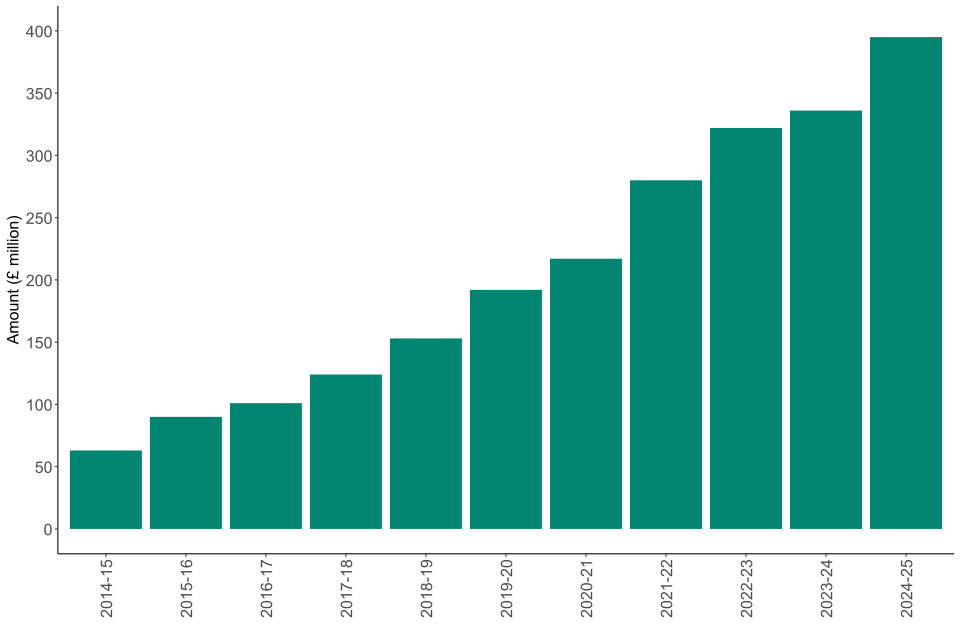
Figure 11: Number of Video Games Tax Relief claims, financial years ending 2015 to 2025
The majority of claims relating to the 2024 to 2025 financial year tended to be for smaller amounts, with 57% of all claims being for £50,000 or less; however, these claims only represent 2% of the total amount of relief paid. Claims over £500,000 account for 82% of the total amount of relief paid. This proportion is similar to the previous year.
9. Theatre Tax Relief
Theatre Tax Relief (TTR) was introduced in September 2014. Unlike the audio-visual reliefs, theatrical production companies are not required to pass a cultural test to be eligible to claim tax relief. A theatre production company may make several claims during the production process. A claim may cover several productions.
Since TTR was introduced, companies have made claims in relation to 33,670 productions and £1,130 million has been paid out.
Number and value of claims by financial year
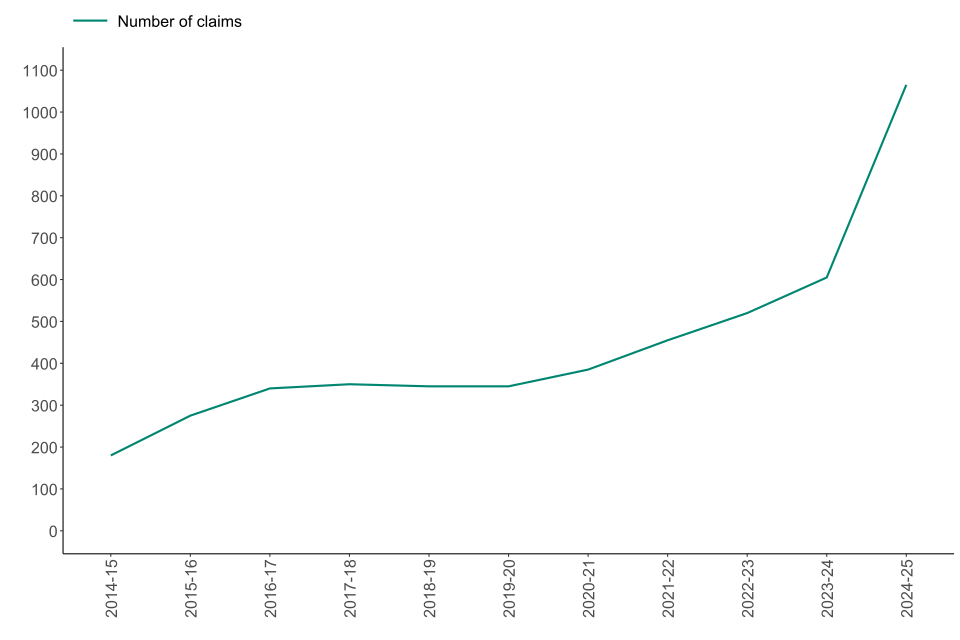
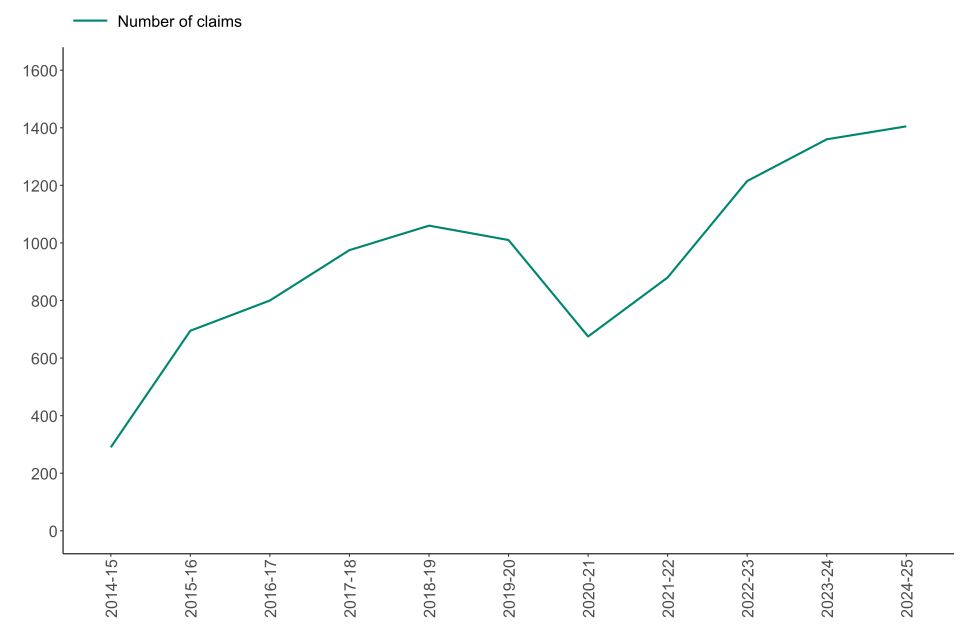
There were 1,405 claims made for TTR in relation to the 2024 to 2025 financial year, totalling £258 million in relief paid out. This is a 3% increase in claims (figure 13) and a 11% increase in relief paid (figure 12) compared to the previous year.
In 2021, the government introduced a temporary increase in the relief rates of TTR, Orchestra Tax Relief, and Museum and Galleries Exhibition Tax Relief, for productions which commenced production on or after 27 October 2021. This increased the tax credit rate for touring or orchestral productions to 50% and non-touring productions to 45%, from 25% and 20% respectively: more than doubling the value of relief available. As a result, the value of TTR relief has increased substantially in recent years, with almost all claims now applying the increased rates of relief, which did not previously affect all productions. The increased relief rates may have also contributed to an increase in the number of claims, which are now over double pre-COVID levels.
At Spring Budget 2024, the relief rates were permanently set at 45% for touring productions and orchestras and 40% for non-touring productions. The new rates apply from 1 April 2025.
Figure 12: Amount of Theatre Tax Relief paid (£ million, accruals basis) relating to financial years ending 2015 to 2024
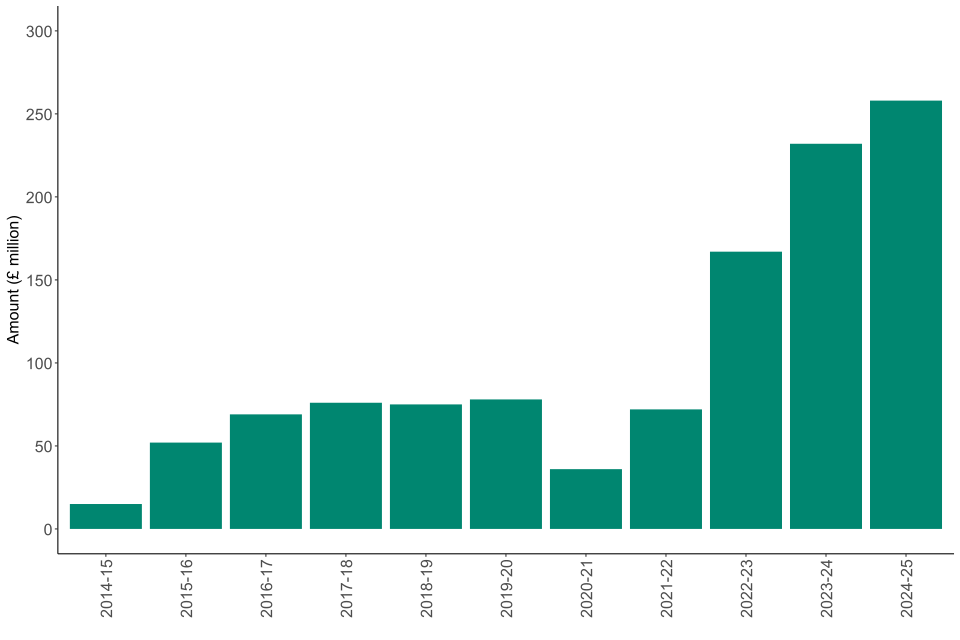
Figure 13: Number of Theatre Tax Relief claims, financial years ending 2015 to 2025
The highest proportion of claims made in relation to the 2024 to 2025 financial year is for smaller amounts, with 22% of all claims being for £10,000 or less. In comparison, claims of over £500,000 represented just 9% of the claims made but 66% of the total amount of relief paid.
10. Orchestra Tax Relief
Orchestra Tax Relief (OTR) was introduced in April 2016. Orchestral production companies are not required to pass a cultural test to be eligible to claim tax relief. An orchestral production company may make a number of claims, receiving payments at stages throughout the production process. A claim may cover several productions. If a company has made a concert series election covering multiple productions, then the series of concerts is treated as a single production.
Since OTR was introduced, companies have made claims for 5,200 productions and £216 million has been paid out.
Number and value of claims by financial year
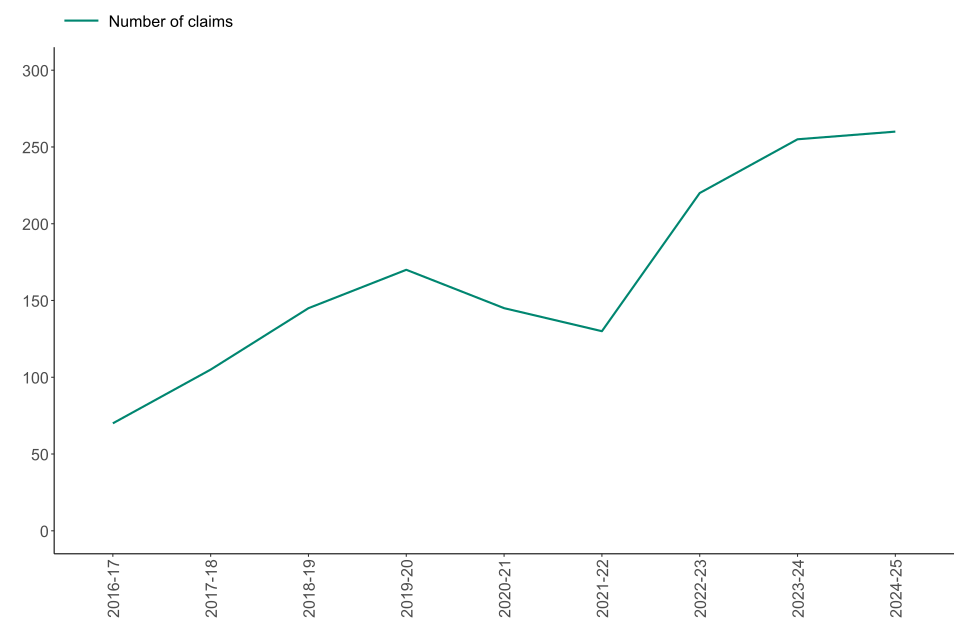
There were 260 claims made for OTR in relation to the 2024 to 2025 financial year (figure 15), totalling £55 million in relief paid out. This is a 25% increase in amount paid out compared to the previous year (figure 14).
Figure 14: Amount of Orchestra Tax Relief paid (£ million, accruals basis) relating to financial years ending 2017 to 2025
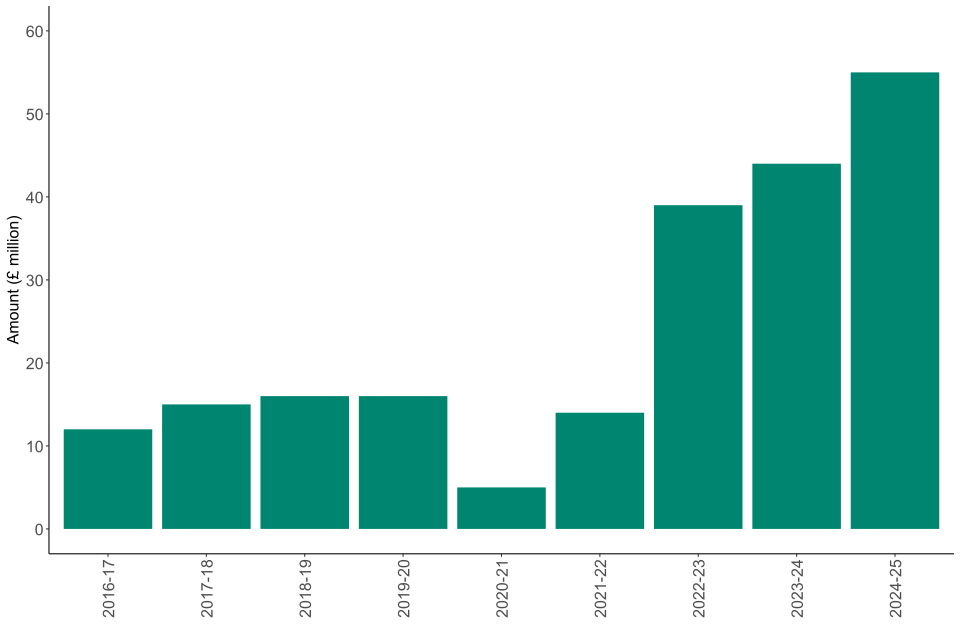
Figure 15: Number of Orchestra Tax Relief claims, financial years ending 2017 to 2025
Claims of £5,000 or less represented 21% of the claims relating to the 2024 to 2025 financial years. While only 12% of all claims were for amounts over £250,000, these represent 85% of the amount of relief paid.
11. Museums and Galleries Exhibition Tax Relief
Museums and Galleries Exhibition Tax Relief (MGETR) was introduced in April 2017. Exhibitions are not required to pass a cultural test to be eligible to claim tax relief. Relief is only available to charitable companies, and to companies wholly owned by charities and local authorities. Tax credits are capped per exhibition at a maximum of £100,000 (touring) or £80,000 (non-touring). A museum or gallery may make a number of claims, receiving payments at stages throughout the exhibition process. A claim may cover several exhibitions.
Since MGETR was introduced, companies have made claims for 14,530 exhibitions and £163 million has been paid out.
Number and value of claims by financial year
There were 345 claims made for MGETR in relation to the 2024 to 2025 financial year, totalling £41 million in relief paid out. This represents a 39% increase in the number of exhibitions, and a 37% increase in the amount of relief paid compared to the previous year (figure 16 and figure 17). This is driven by an increase in claims for over £200,000, in part due to the increase in relief rates for MGETR.
Figure 16: Amount of Museums and Galleries Exhibition Tax Relief paid (£ million, accruals basis) relating to financial years ending 2018 to 2025
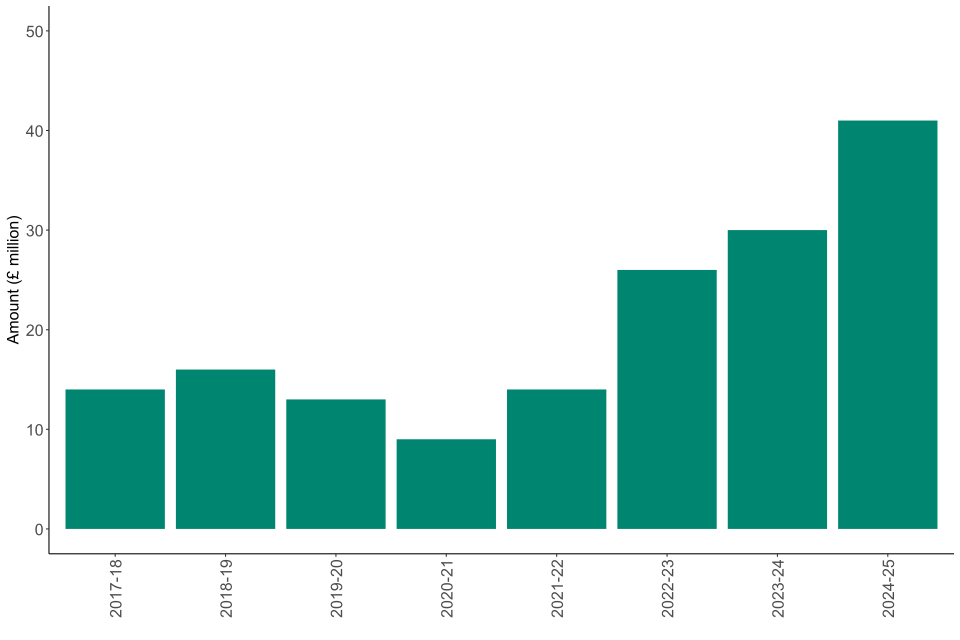
Figure 17: Number of Museums and Galleries Exhibition claims, financial years ending 2018 to 2025
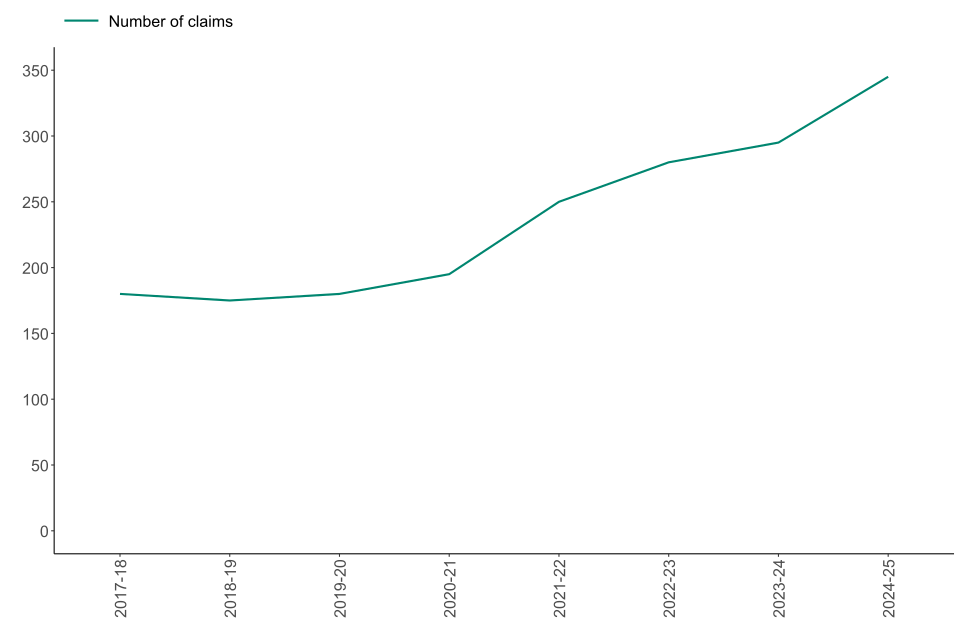
The highest proportion of claims made in relation to the 2024 to 2025 financial year is for smaller amounts, with 30% of all claims being for £25,000 or less. Only 14% of claims were for over £200,000, but these accounted for 59% of the total amount of relief paid.