Civil Justice Statistics Quarterly: July to September 2025
Published 4 December 2025
Applies to England and Wales

© Crown copyright 2025
This publication is licensed under the terms of the Open Government Licence v3.0 except where otherwise stated. To view this licence, visit nationalarchives.gov.uk/doc/open-government-licence/version/3 or write to the Information Policy Team, The National Archives, Kew, London TW9 4DU, or email: psi@nationalarchives.gov.uk.
Where we have identified any third party copyright information you will need to obtain permission from the copyright holders concerned.
This publication is available at https://www.gov.uk/government/statistics/civil-justice-statistics-quarterly-july-to-september-2025/civil-justice-statistics-quarterly-july-to-september-2025
1. Main Points
| Increase in County Court claims, driven mostly by money claims | Compared to the same period in 2024, County Court claims from July to September 2025 were up 4% to 479,000. Of these, 400,000 (84%) were money claims (up 4%). |
| Damages claims were up 16% to 29,000 | The increase in damages claims was driven by a rise in other damages claims[footnote 1] (up 96% to 17,000) compared to the same quarter in 2024. |
| The number of claims defended, and the number of trials increased compared to the same period in 2024 | There were 76,000 claims defended (up 11%) and 14,000 claims that went to trial in July to September 2025 (up 9%) compared to the same quarter in 2024. |
| Median time taken from claim to hearing has fallen for all tracks | The median time taken for small claims to go to trial was 39.0 weeks in July to September 2025, 5.9 weeks faster than the same period in 2024. The median time taken for fast/intermediate/multi track claims to go to trial was 5.1 weeks faster than the same period last year, at 60.0 weeks in the current quarter. |
| Judgments were up 12% and default judgments were up 13% | Judgments were up 12% (to 331,000) in July to September 2025, compared to the same period in 2024; with 94% of these being default judgments. |
| Enforcement applications fell to 9,400 and orders fell to 8,600 | Enforcement applications were down 34%, and enforcement orders were down 16% in July to September 2025 when compared to the same quarter in 2024. |
| Warrants issued decreased to 39,000 | Warrants issued were down 45% when compared to the same quarter in 2024. |
| 970 judicial review applications | There were 970 applications for Judicial Reviews in Q3 2025, up 42% on Q3 2024. |
This publication gives Civil County Court and Judicial Review Statistics for the latest quarter (July to September 2025), compared to the same quarter in 2024. Should users wish to compare against earlier time periods, they can do so using the accompanying statistical tables. For more details, please see the supporting document.
Statistics on the Business and Property Court for England and Wales have also been published alongside this quarterly bulletin as Official Statistics. For technical detail, please refer to the accompanying support document.
A visualisation tool that provides further breakdowns of the civil county court cases in a web-based application can be found here. For general feedback on the tool and related content of this publication, please contact us at: CAJS@justice.gov.uk
2. Statistician’s comment
County court claims received, defended, gone to trial and judgments all increased this quarter compared to the same quarter in 2024. The increases in claims defended and judgments bring volumes to their highest levels since Q3 2019. In contrast, warrants issued, enforcement-related applications and orders made decreased over the same period, with warrants issued and enforcement-related applications falling to the lowest levels since Q2 2021 and Q3 2020 respectively. These volumes are largely driven by bulk user behaviour and as such can fluctuate significantly, therefore it is too early to say whether this trend will continue.
The median average time taken for small track and fast/intermediate/multi track claims to reach trial decreased this quarter, by 5.9 and 5.1 weeks compared to the same quarter in 2024.
There were 970 judicial review applications received this quarter, up 42% on the previous year, to the highest level since Q4 2017, mainly driven by a rise in civil (other) applications.
3. Claims Summary
County court claims were up 4% on the same quarter of 2024, driven mostly by money claims.
Non-money claim volumes were at 50,000, down 5% when compared to the same quarter in 2024.
Figure 1: Quarterly County Court claims by type, Q3 (July to September) 2020 to Q3 (July to September) 2025 (Source: table 1.2)
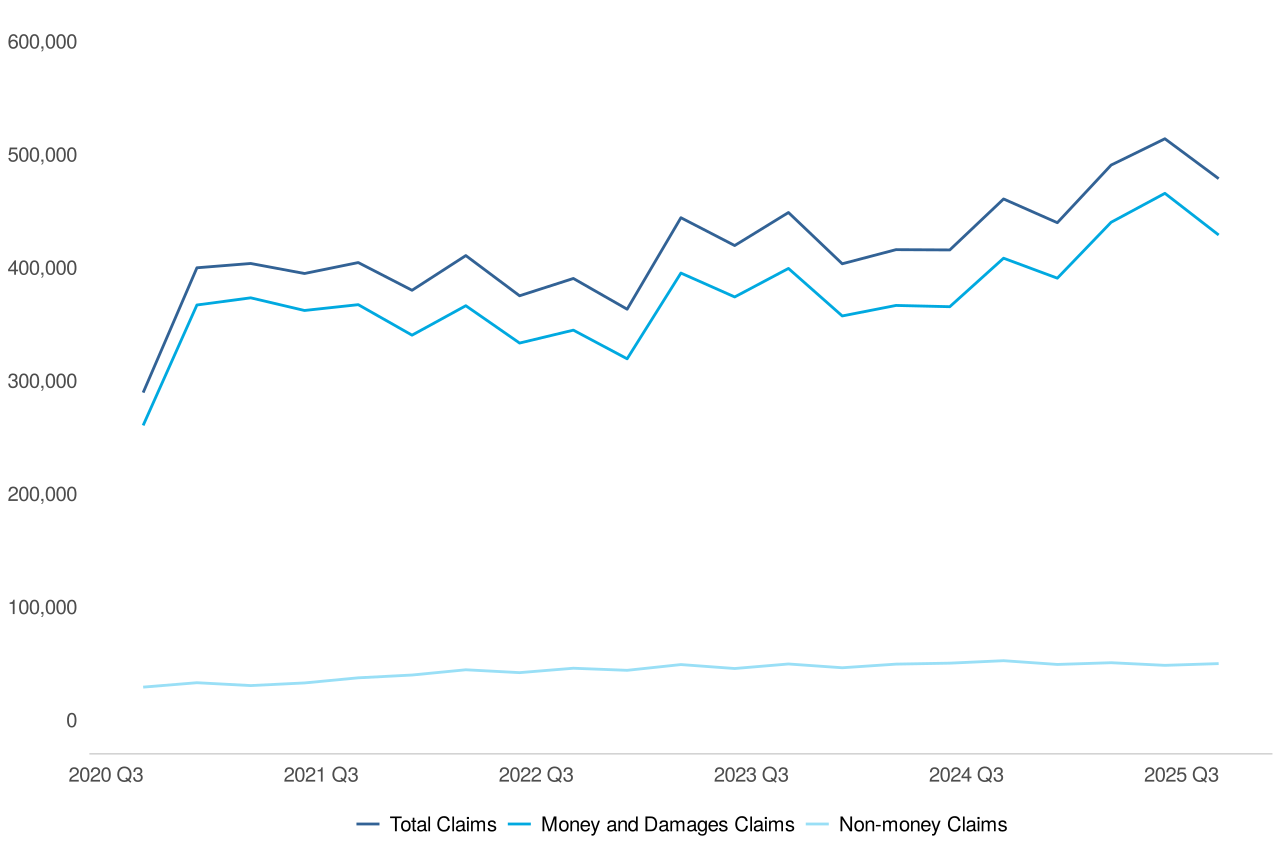
In the most recent quarter, total claims were up 4% compared to the same period in 2024 (from 461,000 to 479,000). Of these, 429,000 were money and damages claims, up 5% from July to September 2024 (from 408,000). Money and damages claims made up 90% of all claims in July to September 2025, up 1pp on its share in July to September 2024.
Non-money claims generally decreased between 2015 and Q1 2020. Following a sharp drop in Q2 2020 due to Covid19, these volumes rose gradually from Q3 2020 to a high of 52,000 in Q3 2024. In the current quarter, these claims were down 5% (from 52,000 to 50,000) compared to the same period in 2024, mostly driven by a decrease in Mortgage and Landlord Possession claims.
Within non-money claims, ‘other’ non-money claims showed a general decline from 2018. This decrease is likely to be partly the result of whiplash reforms reducing the volume of road traffic accident claims going to court. However, since Q2 2022, these have remained relatively stable, down 1% (to 18,000) in the latest quarter compared to the same period in 2024.
Similarly, Mortgage and Landlord Possession claims have followed a long term downward trend decreasing from a peak of 60,000 in January to March 2014 to 29,000 in the same period in 2020. Following the impact of Covid-19, when it fell to 3,200, the lowest recorded, volumes increased gradually to 32,000 claims in July to September 2024. Since the beginning of 2024, these have remained relatively stable with 30,000 claims recorded in July to September 2025, down 8% compared to the same quarter of 2024 (32,000 claims). Further details can be found in the Mortgage and Landlord Possessions publication here.
Claims for return of goods increased steadily to a high of 3,500 in July-September 2018 but have since declined. Following a further decline due to the impact of Covid-19 to 700 in Q2 2020, there has been recovery in these figures and volumes have remained relatively stable since Q1 2022, around pre-covid levels, although there is some quarterly volatility within this series. This quarter, volumes are down 2% (from 2,400 to 2,300) compared to the same period in 2024.
4. Money and Damages Claims
Money claims were up 4% (to 400,000 claims) in July to September 2025 compared to the same quarter in 2024.
Damages claims[footnote 2] were up 16% to 29,000, driven by an increase in other damages claims (up 96%) to 17,000 compared to the same quarter in 2024.
Figure 2: Money claims by monetary value, Q3 (July to September) 2020 to Q3 (July to September) 2025 (Source: civil workload CSV[footnote 3])
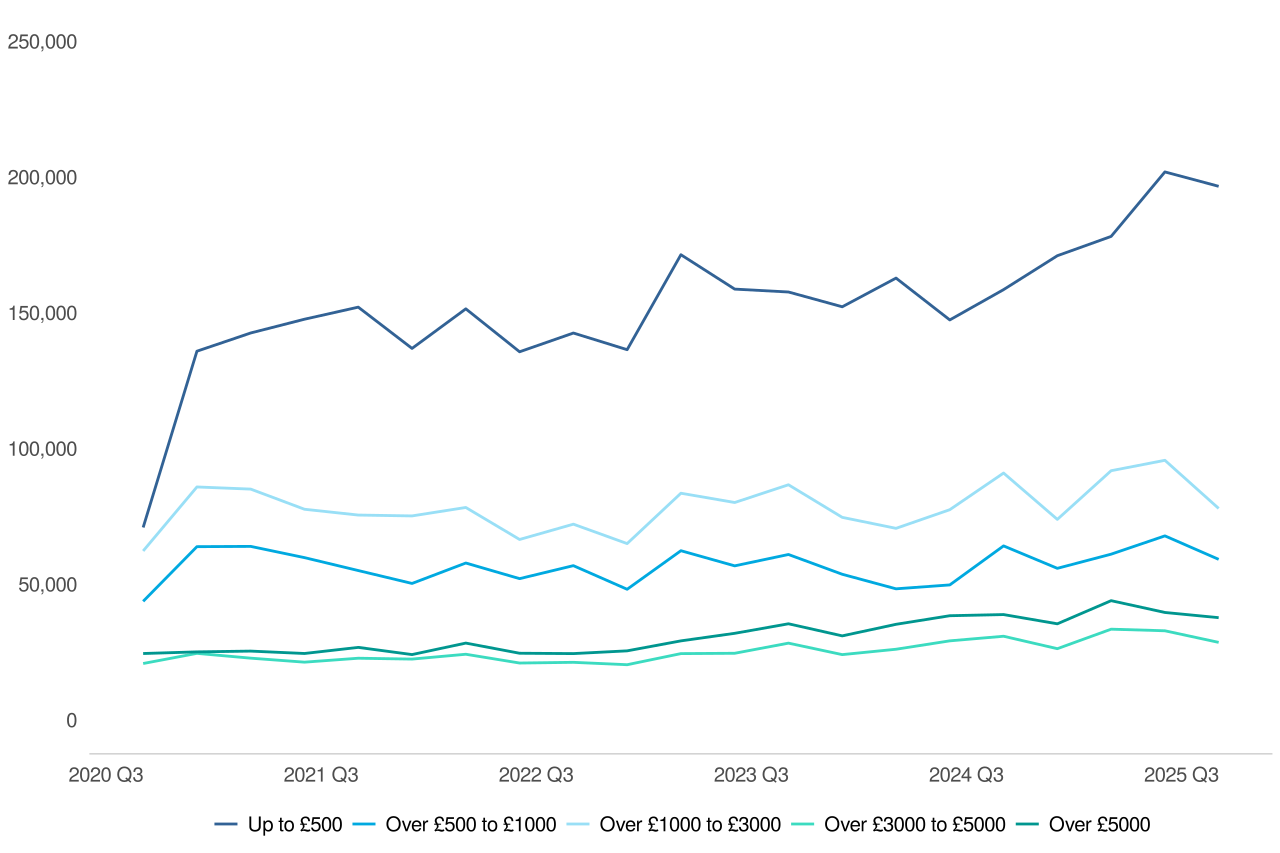
Almost all (over 99%) money claims are processed and issued at the Civil National Business Centre (CNBC)[footnote 4]. There were 399,000 such claims at the CNBC in July to September 2025 (up 4% on the same quarter in 2024).
The increase in the volume of money claims is driven by claims valued under £500. These were up 24% to 197,000 claims in the period July to September 2025 compared to the same quarter in 2024.
Damages claims – made up of personal injury and other damages claims - have fluctuated between 21,000 and 38,000 claims each quarter over the last five years (since July to September 2020). In the current quarter, volumes were up 16% to 29,000 compared to the same period in 2024. This was driven by an increase in other damages claims, up 96% from 8,700 to 17,000. Other damages claims volumes can be prone to volatility in quarterly volumes. These accounted for 60% of all damages claims in the most recent quarter, up 25pp compared to July to September 2024, when they accounted for 35% of all damages claims. The volume of other damages claims have increased in recent quarters due to claims issued for limitation purposes following the introduction of the Pre-Action Protocol for Personal Injury Claims. This is for claims arising from an accident on or after 31 May 2021 which are below the Small Claims Limit in Road Traffic Accidents. The limitation period for these claims is three years and, as such, limitation claims have been received from the 1 June 2024 onwards.
Personal injury claims[footnote 2] showed general decreases between Q3 2020 and Q1 2022, falling from 33,000 to 18,000, but have remained relatively stable since Q4 2022.
4.1 Allocations (table 1.3)
In July to September 2025, 33,000 money and damages claims were allocated to track, down 19% (from 41,000) compared to the same period in 2024. Compared to July to September 2024, of these allocations:
- 22,000 were allocated to small claims, down 19% on July to September 2024. This accounts for 68% of all allocations (unchanged compared to the same quarter of 2024);
- 8,400 were allocated to fast track, down 20% on July to September 2024. This accounts for 25% of all allocations (compared to 26% of all allocations in the same quarter of 2024);
- 690 were allocated to intermediate track, up 82% on July to September 2024. This accounts for 2% of all allocations (compared to 1% of all allocations in the same quarter of 2024), although these are expected to increase as the new track is embedded;
- 1,500 were allocated to multi-track, down 30% on July to September 2024. This accounts for 5% of all allocations (unchanged compared to the same quarter of 2024);
Note that the nature of reporting allocations data means the series can show short-term fluctuations, and larger changes when revised. Therefore, caution should be taken when comparing the current quarter to previous data in the time series.
5. Defences (including legal representation) and Trials
The number of claims defended was up 11% to 76,000 compared to the same quarter in 2024.
The number of trials was up 9% to 14,000 compared to the same quarter in 2024.
Median average time taken for small claims was 39.0 weeks (5.9 weeks faster compared to the same quarter in 2024) and for fast, intermediate and multi track claims it was 60.0 weeks (5.1 weeks faster than July to September 2024).
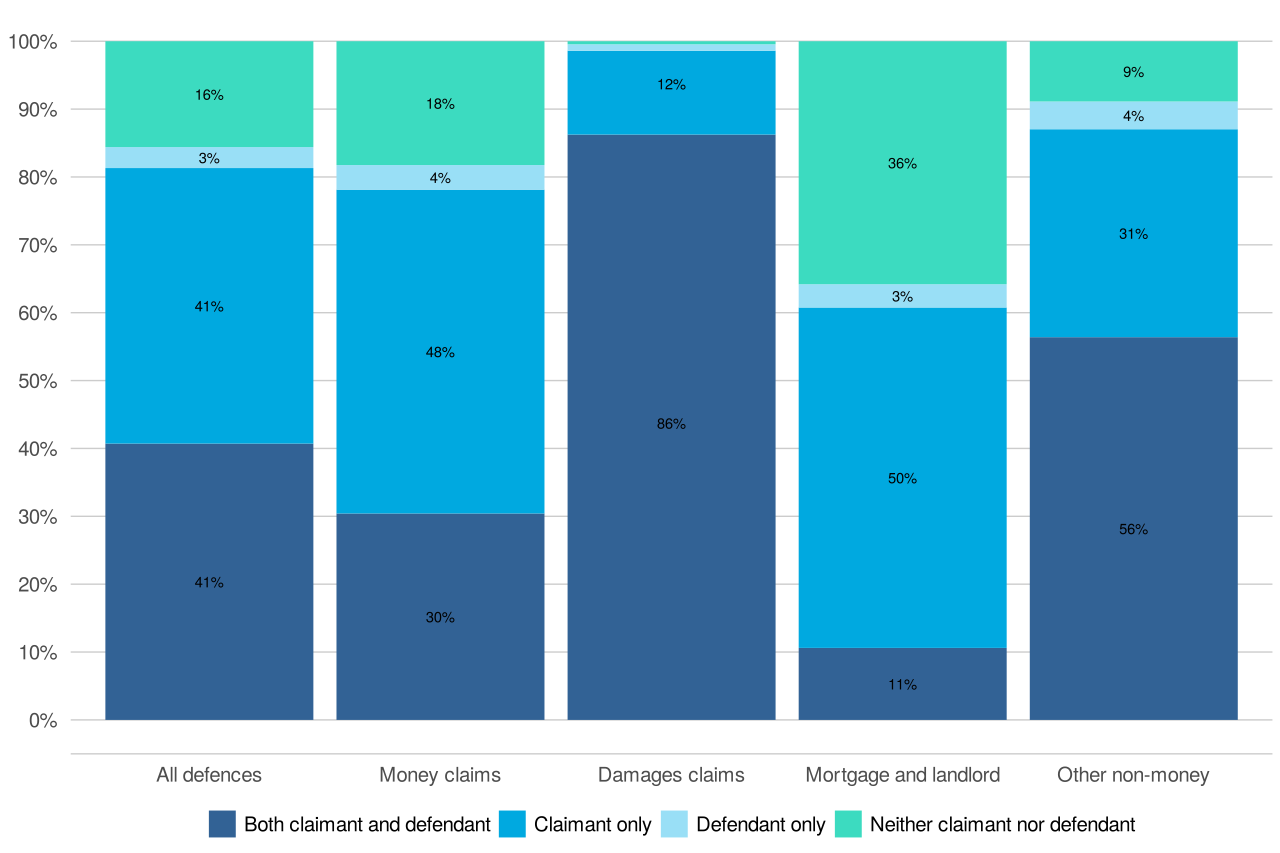
Of those claims defended in July to September 2025, 41% had legal representation for both claimant and defendant, 41% had representation for claimant only, and 3% for defendant only. Most (86%) damages claim defences had legal representation for both the defendant and claimant, compared with 30% of money claim defences.
Figure 3: Proportion of legal representation for each type of defence, July to September 2025 (Source: table 1.6)
The total number of claims defended was up 11% in July to September 2025 compared to the same quarter in 2024, from 69,000 to 76,000 cases. This rise is a consequence of the increase in claims seen in recent quarters. Money claim defences were up 22% from 46,000 to 56,000 compared to July to September 2024. On the contrary, a decrease was seen in defended damages claims (down 9% from 17,000 to 15,000).
5.1 Trials and Time Taken to Reach Trial (table 1.5)
Defended cases which are not settled or withdrawn, generally result in a trial. In total, there were 14,000 trials in July to September 2025, up 9% compared to the same period in 2024. Of the claims that went to trial, 11,000 (77%) were small claims trials (up 9% compared to the same quarter in 2024) and 3,200 (23%) were fast, intermediate and multi-track trials (up 12% from the same quarter of 2024).
Timeliness data for the intermediate track has been included with the Fast and Multi track trials data from Q3 2024.
Figure 4: Average (mean/median) number of weeks from claim being issued to initial hearing date, Q3 (July to September) 2020 to Q3 (July to September) 2025 (Source: table 1.5)
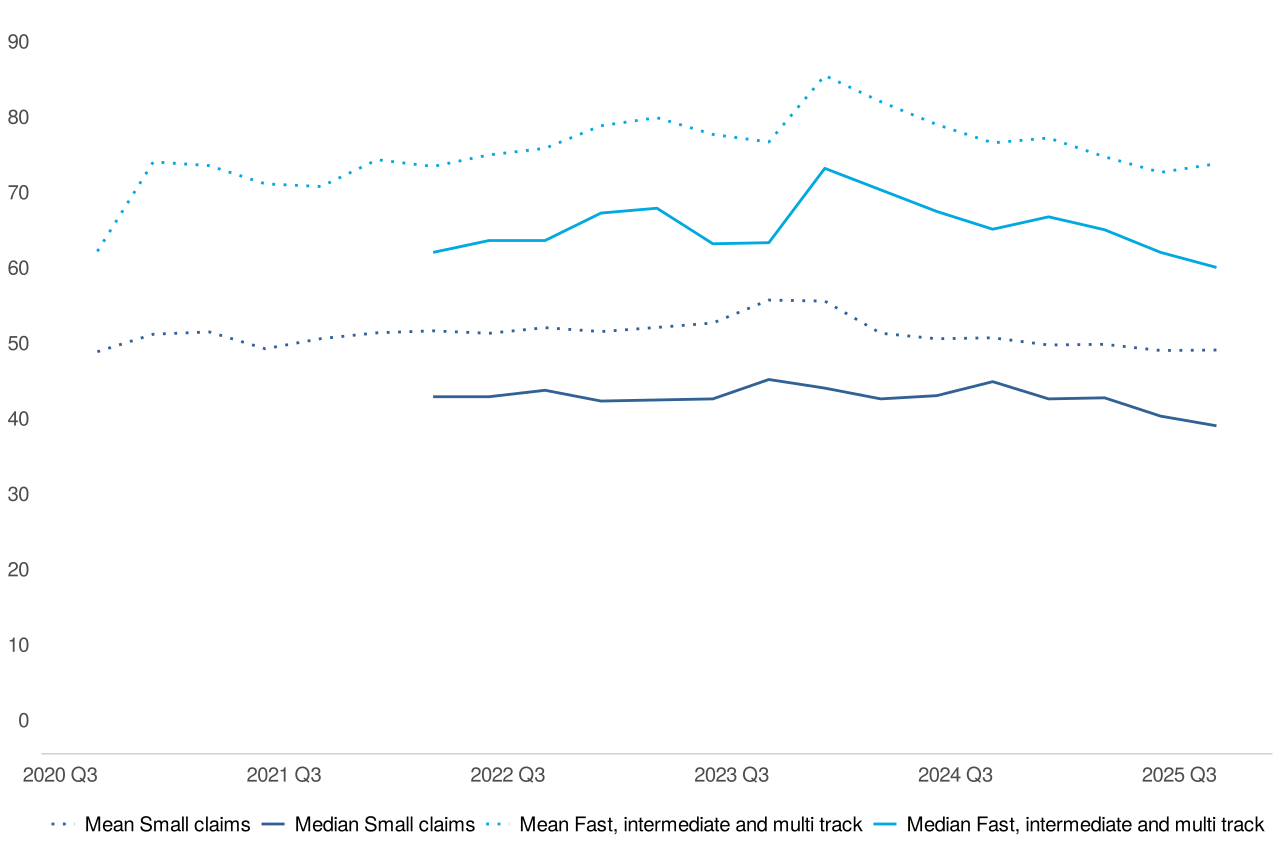
In July to September 2025, it took a median time of 39.0 weeks between a small claim being issued and the claim going to trial, 5.9 weeks faster than the same period in 2024. The Timeliness metric for Small Claims only includes those cases concluding at trial rather than those concluded through other routes like mediation. There is regional variation within this metric with longer waiting times experienced in London and the South East.
Mediation is being fully integrated as a key step in the court process for small civil claims valued up to £10,000. This, when successful, results in outcomes which are not used within the timeliness calculations. Statistics on small claims mediation can be found here.
For fast/intermediate/multi track claims, it took a median time of 60.0 weeks to reach a trial, 5.1 weeks faster than in July to September 2024.
Covid-19 and associated actions led to an uptick in time taken for all claims to reach trial. Prior to this, a sustained period of increasing receipts had increased the time taken to hear civil cases and caused delays to case progression.
6. Judgments
Judgments were up 12% compared to the same quarter in 2024.
Figure 5: All claims, judgments and default judgments, Q3 (July to September) 2020 to Q3 (July to September) 2025 (Source: tables 1.2 and 1.4)
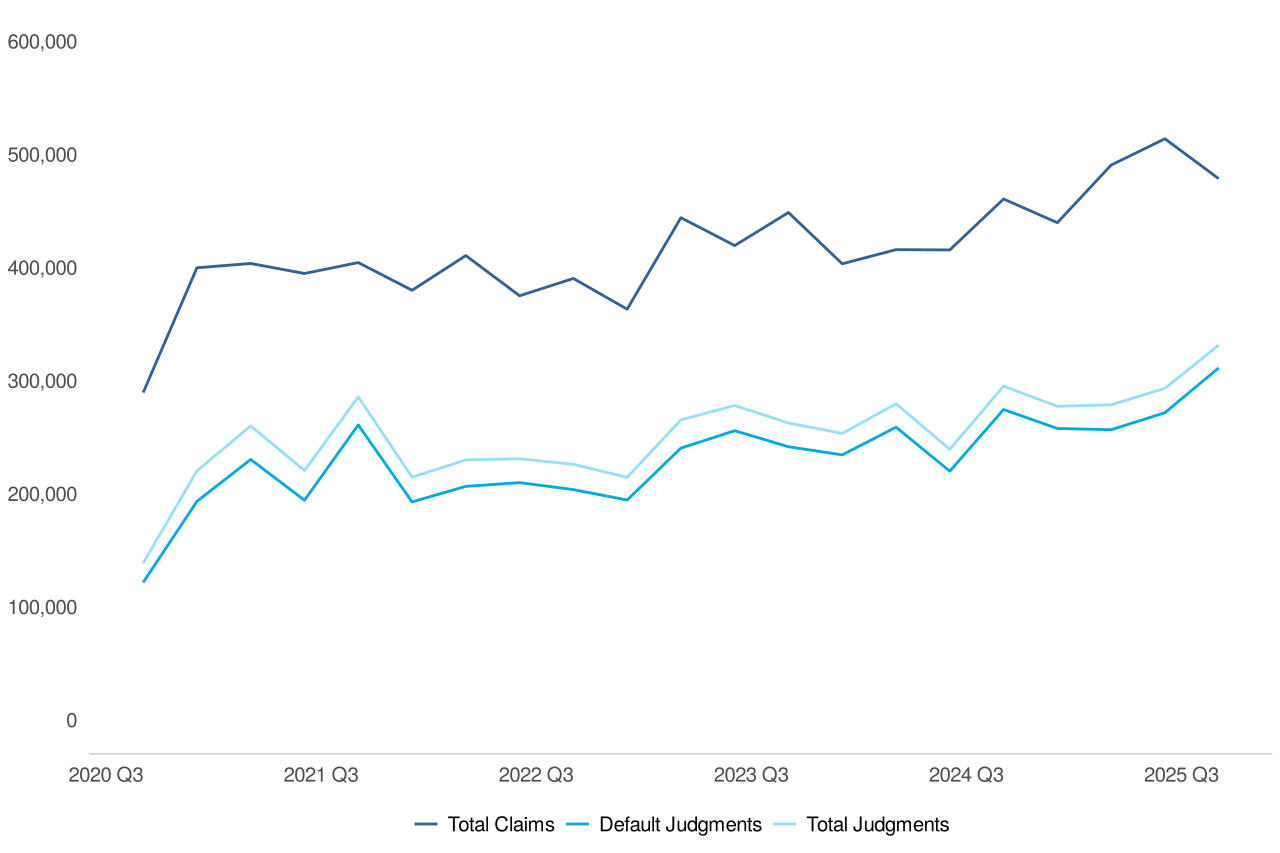
There were 331,000 judgments made in July to September 2025, up 12% compared to the same quarter of 2024. Of these, 94% were default judgments, up 1pp on its share in July to September 2024. These remained relatively stable between 2018 and 2022, with around 9 out of every 10 judgments resulting in a default judgment. The proportion has generally increased from 2023, from 91% in Q1 2023 to 94% in Q3 2025.
The second largest type of judgment was ‘admissions’[footnote 5], of which there were 11,000 in July to September 2025, down 5% on the same quarter in 2024 (from 12,000). ‘Admission’ judgments accounted for 3% of all judgments in the current quarter.
7. Warrants and Enforcements
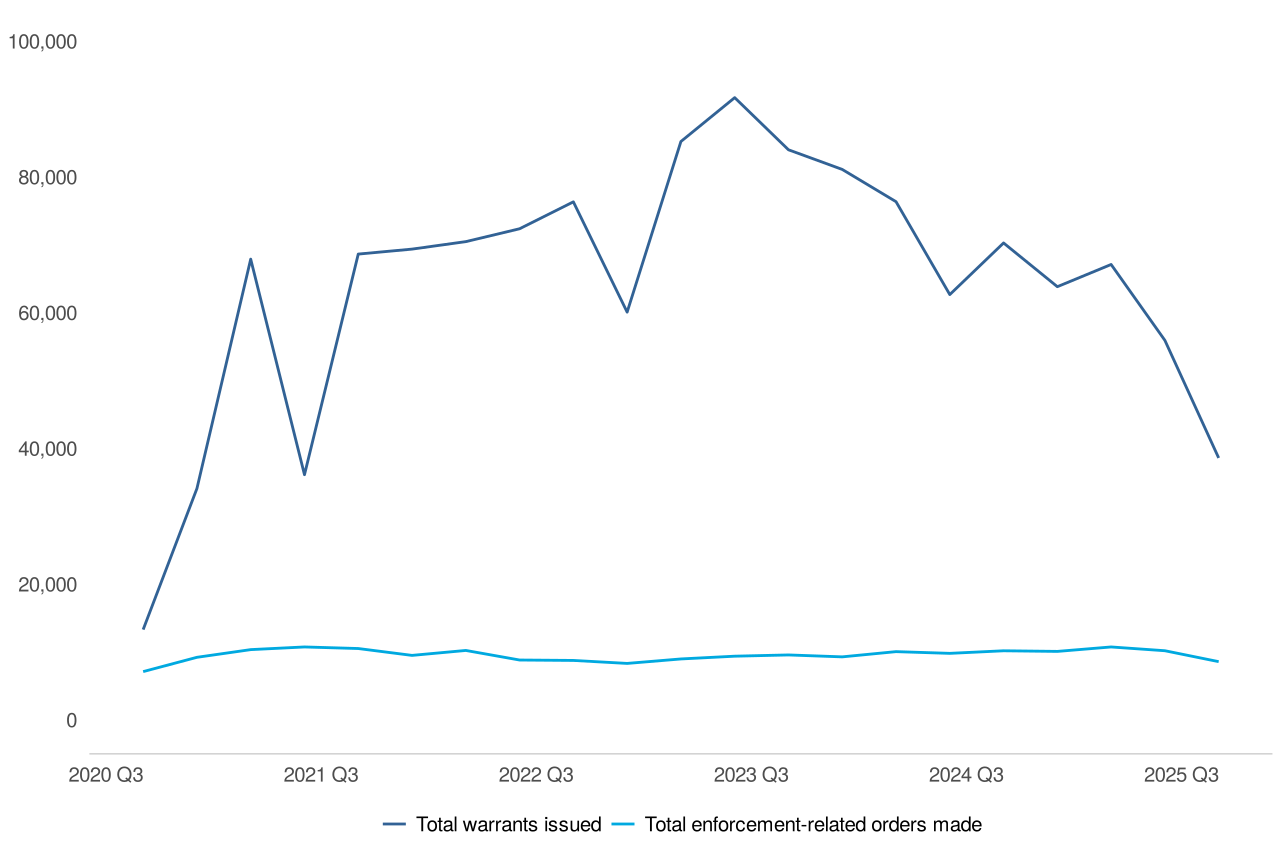
Warrants issued were down 45% when compared to the same quarter in 2024.
Enforcement applications were down 34% and enforcement orders were down 16% when compared to July to September 2024.
Figure 6: Warrants and enforcements issued – Q3 (July to September) 2020 to Q3 (July to September) 2025 (Source: tables 1.7 and 1.8)
7.1 Warrants (table 1.7)
In the latest quarter (July to September 2025) there were 39,000 warrants issued, down 45% (from 70,000) on the same quarter in 2024. Warrants of control accounted for 59% of total warrants, and were down 59%, from 55,000 to 23,000, compared to the same period in 2024. These volumes are largely driven by bulk user behaviour and as such can fluctuate significantly. A judgment can be enforced for six years after it is made, so demand may return in subsequent quarters.
There were 16,000 possession warrants issued in July to September 2025, up 3% on the same quarter in 2024. These had a general upwards trend from Q3 2020, following a sharp drop in Q2 2020 due to the impact of Covid-19, yet have remained relatively stable since the start of 2024.
7.2 Enforcements (table 1.8)
In July to September 2025, there were 9,400 enforcement-related order applications (which include attachment of earnings orders, charging orders, third party debt orders, administration orders, and orders to obtain information), down 34% compared to the same quarter of 2024. All application types decreased, attachment of earnings (AoE) applications down 46%, third party debt applications down 15%, charging order applications down 27% and administration orders applications down 23%.
There were 8,600 enforcement-related orders made in July to September 2025, down 16% compared to the same quarter of 2024. AoE, charging orders and orders to obtain information fell, down 29%, 11% and 14% respectively (from 2,400 to 1,700, 5,700 to 5,100 and 1,800 to 1,600 respectively), driving the overall fall in volumes.
Over the longer term, there has been a decreasing trend in enforcement-related applications received and orders made since 2009, possibly due to claimants’ preference for using other methods instead to retrieve money, property or goods.
8. Judicial reviews[footnote 6]
There were 970 judicial review applications received in Q3 2025, up 42% on Q3 2024 (680).
Figure 7: Judicial Review Applications, by type; Q3 2020 to Q3 2025 (Source: JR CSV)
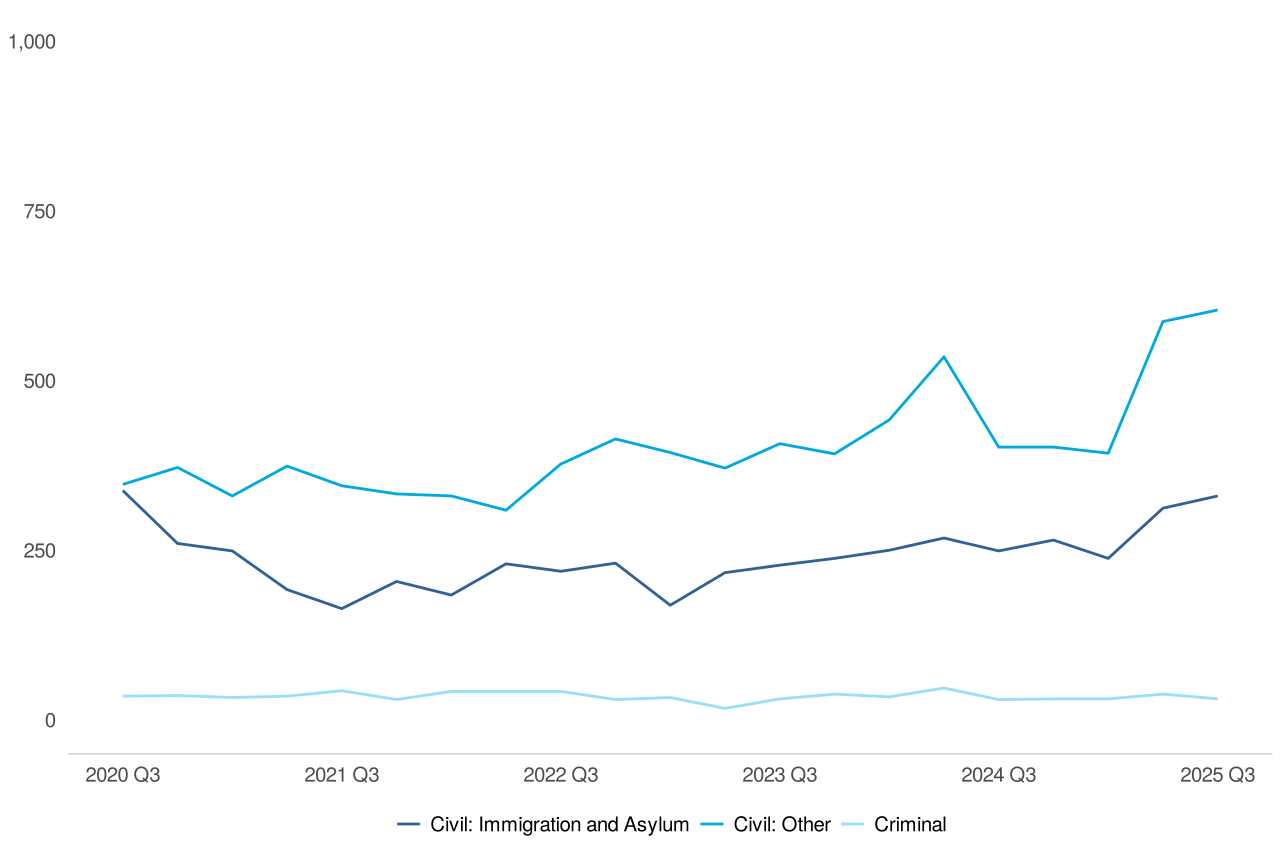
Of the 970 applications received in Q3 2025, 330 were civil immigration and asylum applications, 600 were civil (other)[footnote 7], which recorded its highest level since the start of the time series, and 31 were criminal, up 33%, 50% and 3% respectively on Q3 2024. Of the civil immigration and asylum cases, 1 has since been transferred to the UTIAC.
Of the applications that were made in Q3 2025, 15% are now closed. Of the total applications, 210 reached the permission stage in Q3 2025, and of these:
- 11% (23) were found to be totally without merit.
- 46 cases have already been granted permission or granted permission in part to proceed and 120 were refused at the permission stage. 1 case refused at permission stage has so far gone on to be granted permission at the renewal stage.
- 47 cases were assessed to be eligible for a final hearing and of these, 6 have since been heard.
- The mean time from a case being lodged to the permission decision was 49 days. Although timeliness for cases being lodged to final hearing are included in the tables, this is based on too few cases to be meaningful. The actual average time taken for these cases will only be known when they have had time to work their way through the system.
8.1 Applications lodged against departments (table 2.5)
Table 2.5 presents judicial review figures by defendant type (i.e. individual government department or public body). This table provides the number of judicial review applications lodged, permission granted to proceed to final hearing, and decisions found in favour of the claimant at final hearing.
The information presented is derived from the ‘defendant name’ – a free text field completed by the claimant, which is matched and grouped by department. All efforts have been made to quality assure the data presented. However, this is a manually typed field, and as such is open to inputting errors and should be used with caution.
The key findings for Q3 2025 are:
- Home Office had the largest number of JR applications lodged against them, with 290 applications. Of these, 7 have so far been granted permission or granted permission in part to proceed to final hearing (2% of applications) to date.
- The second largest recipient of JR cases was the Local Authorities, with 287 cases received, of which to date 25 have so far been granted permission or granted permission in part to proceed to final hearing (9% of applications).
- The third largest recipient was the Ministry of Justice, having 132 applications lodged against it. Of these, 6 have so far been granted permission or granted permission in part to proceed to final hearing (5% of applications) to date.
A more granular view of the JR data by department and case type can be found in the data visualisation tool found here. Feedback is welcome on this tool to ensure it meets user needs.
9. Further information
9.1 Provisional data and revisions
The statistics in the latest quarter are provisional and revisions may be made when the next edition of this bulletin is published. If revisions are needed in subsequent quarters, these will be annotated in the tables.
9.2 Accompanying files
As well as this bulletin, the following products are published as part of this release:
- A supporting document providing further information on how the data is collected and processed, as well as information on the revisions policy and legislation relevant to civil justice.
- The quality statement published with this guide sets out our policies for producing quality statistical outputs for the information we provide to maintain our users’ understanding and trust.
- A set of overview tables (also available in accessible format) and CSV files, covering each section of this bulletin. These can be found here.
- A set of tables providing statistics on the Business and Property Courts of England and Wales, also available in accessible format.
- A Judicial Review data visualisation tool (to provide a more granular view of the JR data by department and case type). This can be found here.
- A Sankey tool which shows case progression of civil cases in the county courts is here.
- A Civil data visualisation tool to provide a more granular and interactive view of cases through the civil claims system. This can be found here.
9.3 Rounding convention
Figures greater than 10,000 are rounded to the nearest 1,000, those between 1,000 and 10,000 are rounded to the nearest 100 and those between 100 to 1,000 are rounded to the nearest 10. Less than 100 are given as the actual number.
9.4 National Statistics status
National Statistics status are accredited official statistics that meet the highest standards of trustworthiness, quality and public value.
Accredited official statistics are called National Statistics in the Statistics and Registration Service Act 2007. These accredited official statistics were independently reviewed by the Office for Statistics Regulation in January 2019. They comply with the standards of trustworthiness, quality and value in the Code of Practice for Statistics and should be labelled ‘accredited official statistics’.
It is the Ministry of Justice’s responsibility to maintain compliance with the standards expected for National Statistics. If we become concerned about whether these statistics are still meeting the appropriate standards, we will discuss any concerns with the Authority promptly. National Statistics status can be removed at any point when the highest standards are not maintained, and reinstated when standards are restored.
9.5 Future publications
Our statisticians regularly review the content of publications. Development of new and improved statistical outputs is usually dependent on reallocating existing resources. As part of our continual review and prioritisation, we welcome user feedback on existing outputs including content, breadth, frequency and methodology. Please send any comments you have on this publication including suggestions for further developments or reductions in content.
9.6 Contacts
Press enquiries should be directed to the Ministry of Justice (MoJ) press office:
Emily Cornish - email: pressofficecourtslaw@justice.gov.uk
Other enquiries about these statistics should be directed to the Courts and People division of the Ministry of Justice:
Matteo Chiesa - email: cajs@justice.gov.uk
Next update: 5 March 2026
-
This category includes all damages claims that are not related to personal injury. ↩
-
Since the launch of the Damages Claims service in May 2021 to March 2025 some cases submitted to the damages claims portal have been incorrectly assigned as personal injury case type, even in cases which should have been classified as other damages claims. This means data during this period is not comparable to the rest of the series, and so caution should be used when looking at historic trends. ↩ ↩2
-
Following the alignment of the fees for online and paper civil money and possession claims in May 2021, figure 2 shows all data with the updated claim brackets for comparison, a further breakdown of these brackets is available within the CSV. The CSV shows updated claim brackets from 2021. ↩
-
This includes claims for the Civil National Business Centre (CNBC), Courts and Tribunals Service Centre Salford, and County Court Online. ↩
-
Judgment by admission is where the defendant admits the truth of the claim made. ↩
-
The judicial review data are Official Statistics ↩
-
Civil (other) includes Homelessness, Town and Country Planning, and Disciplinary Bodies. For a full list of topics included in civil (other) please see section 3.2 of the publication guidance. ↩