Child Benefit Statistics: annual release, data at August 2025
Published 23 April 2026

© Crown copyright 2026
This publication is licensed under the terms of the Open Government Licence v3.0 except where otherwise stated. To view this licence, visit nationalarchives.gov.uk/doc/open-government-licence/version/3 or write to the Information Policy Team, The National Archives, Kew, London TW9 4DU, or email: psi@nationalarchives.gov.uk.
Where we have identified any third party copyright information you will need to obtain permission from the copyright holders concerned.
This publication is available at https://www.gov.uk/government/statistics/child-benefit-statistics-annual-release-august-2025/child-benefit-statistics-with-small-area-statistics-2025
Overview
This National Statistics publication includes details of the number of families claiming Child Benefit at 31 August 2025, the number and ages of children within those families and their geographical location. Population counts at country and English region level are shown, as well as by local authority and parliamentary constituency (Westminster and Scottish) in the United Kingdom. This publication also includes Child Benefit small area statistics, published separately prior to 2022 in the Child Benefit small area statistics collection. These include annual geographical estimates at Lower Super Output Area, Super Data Zone and Data Zone in the United Kingdom. National Statistics are accredited official statistics.
Contact details
For queries or feedback on this publication, please contact:
For press queries, please contact:
Main headlines
On 31 August 2025, there were:
-
7.55 million families claiming Child Benefit, with 6.87 million families in receipt of Child Benefit payments - this is a decrease of approximately 67,000 claiming families and a decrease of 40,000 families in payment when compared to August 2024
-
685,000 families who chose to opt-out of receiving payments
-
12.73 million children in families claiming Child Benefit, and 11.73 million children in payment recipient families - this is a decrease of approximately 183,000 children in claiming families and a decrease of 127,000 children for whom payment is received since August 2024
-
one million children in families who had opted out of payments
Figure 1: The number of families and children within those families claiming and in receipt of Child Benefit payments
(Source data: HMRC Child Benefit administrative data)
About the data in this release
The latest data on Child Benefit for August 2025 shows a continued downward trend in the number of families claiming Child Benefit and the number of families receiving Child Benefit payments.
The rate of decline in families claiming Child Benefit between August 2024 and August 2025 was 0.9%. This is slightly higher than the previous year, which saw a decline of 0.4%.
The number of families receiving Child Benefit payments has fallen slightly, reducing by 0.6% between August 2024 and August 2025. This slight reduction returns to the downward trend seen before last year when this population had remained stable between August 2023 and August 2024. However, the rate of reduction was slightly greater between August 2022 and August 2023 at 1.5%.
The number of families opting out of payments grew year on year from the introduction of the High Income Child Benefit Charge (HICBC) in 2013 up to 2023. Following changes to the HICBC threshold on 6th April 2024, this number of opt outs has declined for two years in a row, reducing by 3.8% when compared to August 2024. Details on the HICBC and threshold changes can be found in the High Income Child Benefit Charge section below.
What’s new in this publication?
In this publication, we have introduced a provisional estimate for the number of individuals with a HICBC liability and the tax revenue from that for the tax year ending 2025. This is one year earlier than would have been typically included due to the availability of data from Self Assessment returns.
More details about this estimate are explained in the HICBC section within this publication.
Trends in Child Benefit claimants 2015 to 2025
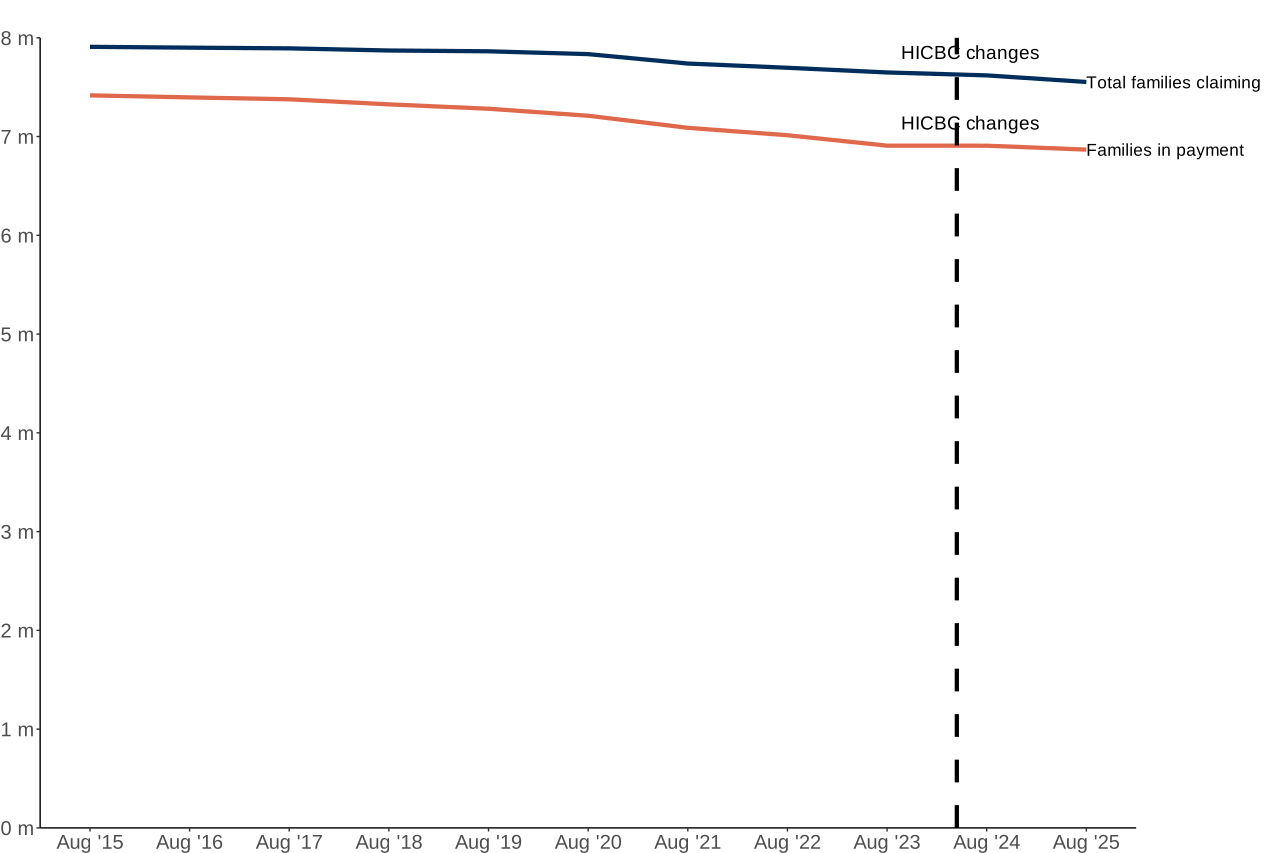
Figure 2: The number of families claiming Child Benefit and those in receipt of payment, August 2015 to August 2025
(source data: HMRC Child Benefit administrative data)
Since the HICBC changes were introduced in April 2024, the downward trend in the number of families in payment (observed since the HICBC was introduced in 2013) has reduced.
In August 2025:
-
there were 7.55 million families claiming Child Benefit for 12.73 million children, and 6.87 million families in receipt of Child Benefit payments for 11.73 million children
-
the number of families receiving Child Benefit payment is at its lowest level since HM Revenue and Customs (HMRC) began producing these statistics in 2003
-
the rate of decline for all Child Benefit claims has increased slightly this year.
At Spring Budget 2024, the threshold at which a person became liable for the HICBC was raised from £50,000 to £60,000. This is likely to have levelled the downward trend seen in families in payment since the introduction of the HICBC in January 2013
High Income Child Benefit Charge (HICBC)
In January 2013, the Government introduced the HICBC. This tax charge does not affect a child’s entitlement but Child Benefit claimants or their partners, whichever has the highest income, are liable to repay some or all of their entitlement if their income exceeds a certain threshold. Child Benefit recipients affected by the HICBC can choose to “opt-out” of receiving payments and negate the need for the charge to be paid.
Between January 2013 and April 2024, the threshold at which a person becomes liable for the HICBC was fixed at £50,000 per year. For those with incomes between £50,000 and £60,000, the rate at which HICBC was charged was equal to 1% for every £100 of income that exceeded £50,000, meaning that those with incomes of £60,000 or more were liable to repay their full Child Benefit entitlement.
On 6 April 2024, the net income threshold for the HICBC was increased to £60,000. The taper rate was also reduced by half, so those with income between £60,000 and £80,000, are liable to repay 1% for every £200 of income that exceeds £60,000. This means that Child Benefit entitlement is required to be fully repaid at incomes exceeding £80,000.
There is more information on the HICBC and HICBC changes.
For the latest statistics on the number of those liable for HICBC and the amount of money paid in HICBC liability, see statistics on HICBC section below.
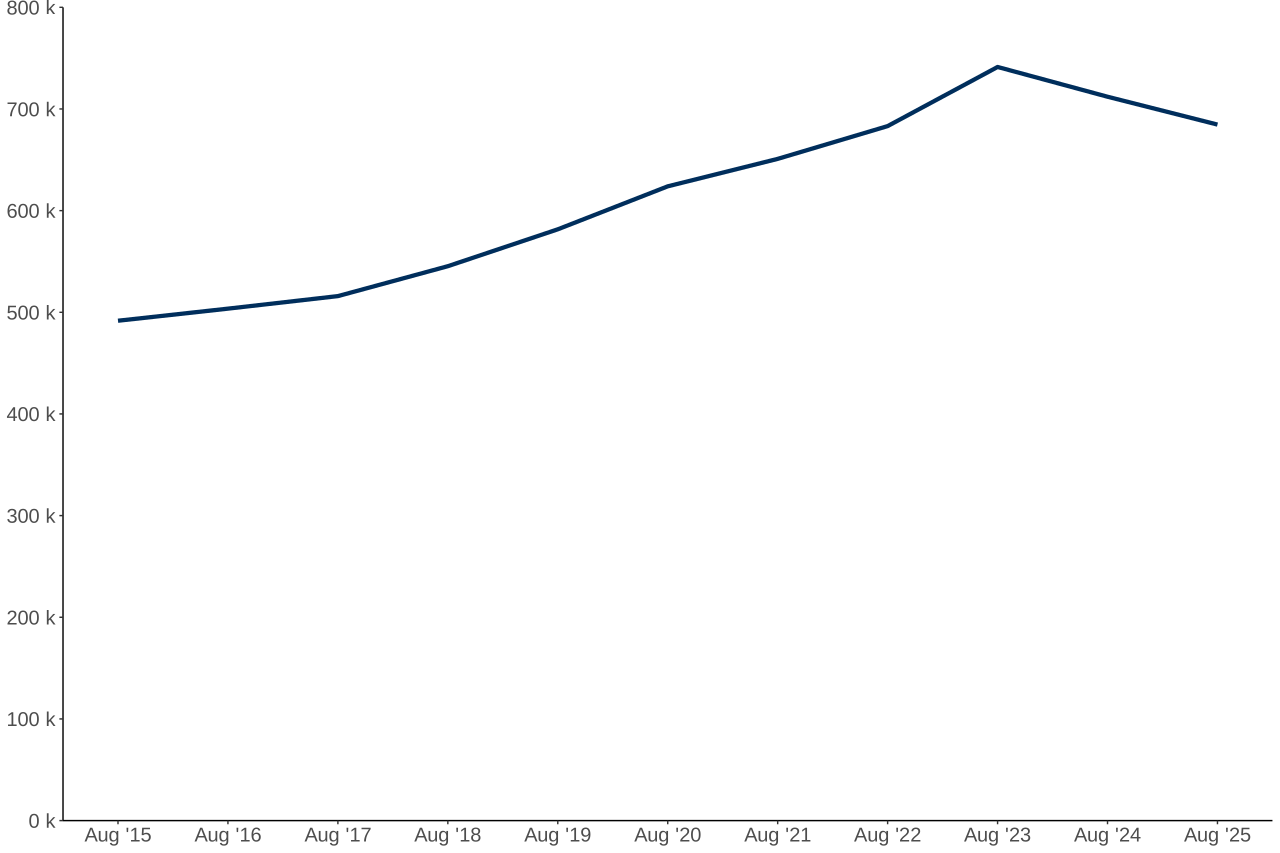
Figure 3: The number of families opted out of receiving Child Benefit payments, August 2015 to August 2025
(source data: HMRC Child Benefit administrative data)
From 2013 to 2023, the total number of families opting out of Child Benefit payments increased year on year. Since August 2023, this trend has ceased, with the number of families opting out of payment declining steadily between August 2023 and August 2025, as shown in figure 3. This change in trend is likely due to the changes made to the HICBC bringing more families under the income threshold.
In August 2025, 685,000 families chose to opt-out of payments, a decrease of 3.8% since August 2024
Take-up rate of Child Benefit
Families have three choices when their child is born. They can claim Child Benefit and receive payments, they can claim and opt-out of payments, or they can choose not to claim. The Child Benefit take-up rate represents the proportion of all children eligible for Child Benefit who are being claimed for (including those children within families that have opted out of receiving Child Benefit payments).
The Child Benefit take-up rate is calculated using three separate data sources. These are:
-
administrative data: used to calculate the caseload – the estimated number of children and young people for whom Child Benefit is being claimed regardless of whether those claiming on their behalf have opted out of Child Benefit payments as part of HICBC
-
population data: national and sub-national population estimates and projections produced by the Office for National Statistics (ONS) - this publication uses updated population projections which include figures calculated using the latest census data and are subject to revision. These have varied by age of child which will in turn affect the take-up rates of Child Benefit by age
-
the Labour Force Survey (LFS): a quarterly household survey which covers education and training activities of young people aged 16 and over
Rates are estimated by dividing administrative data totals by population figures. For those aged 17 to 19, the population figures are first multiplied by participation rates in full-time non-advanced education, estimated from the LFS. Figures are calculated at May rather than August due to uncertainty about whether 17 to 19 year olds in August have left education or are temporarily absent.
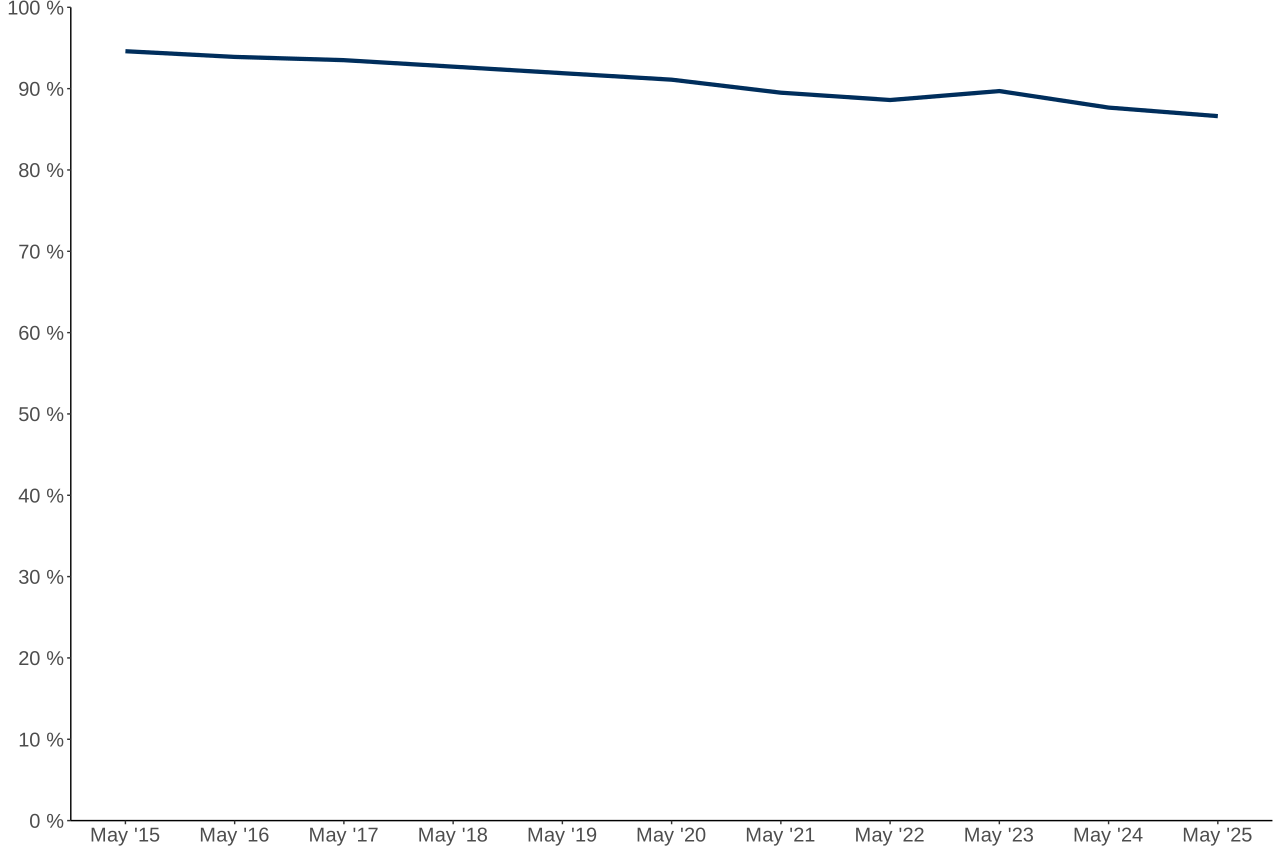
Figure 4: The percentage of eligible children for whom Child Benefit is claimed, May 2015 to May 2025
(source data: HMRC Child Benefit administrative data, ONS population data, and LFS)
Key points to note from figure 4:
-
since 2013, the take-up rate of eligible children for whom Child Benefit is claimed has reduced steadily year on year (except for a slight increase in 2023), from a high of 97% in 2012 to its lowest level in 2025 of 87%
-
the overall reduction is likely related to the introduction of the HICBC in 2013, which meant that some families no longer claimed Child Benefit, knowing that they would need to pay a tax charge or opt-out of payment
-
from 2020 to 2022, the impact of the pandemic may have had a further effect in pushing down claims
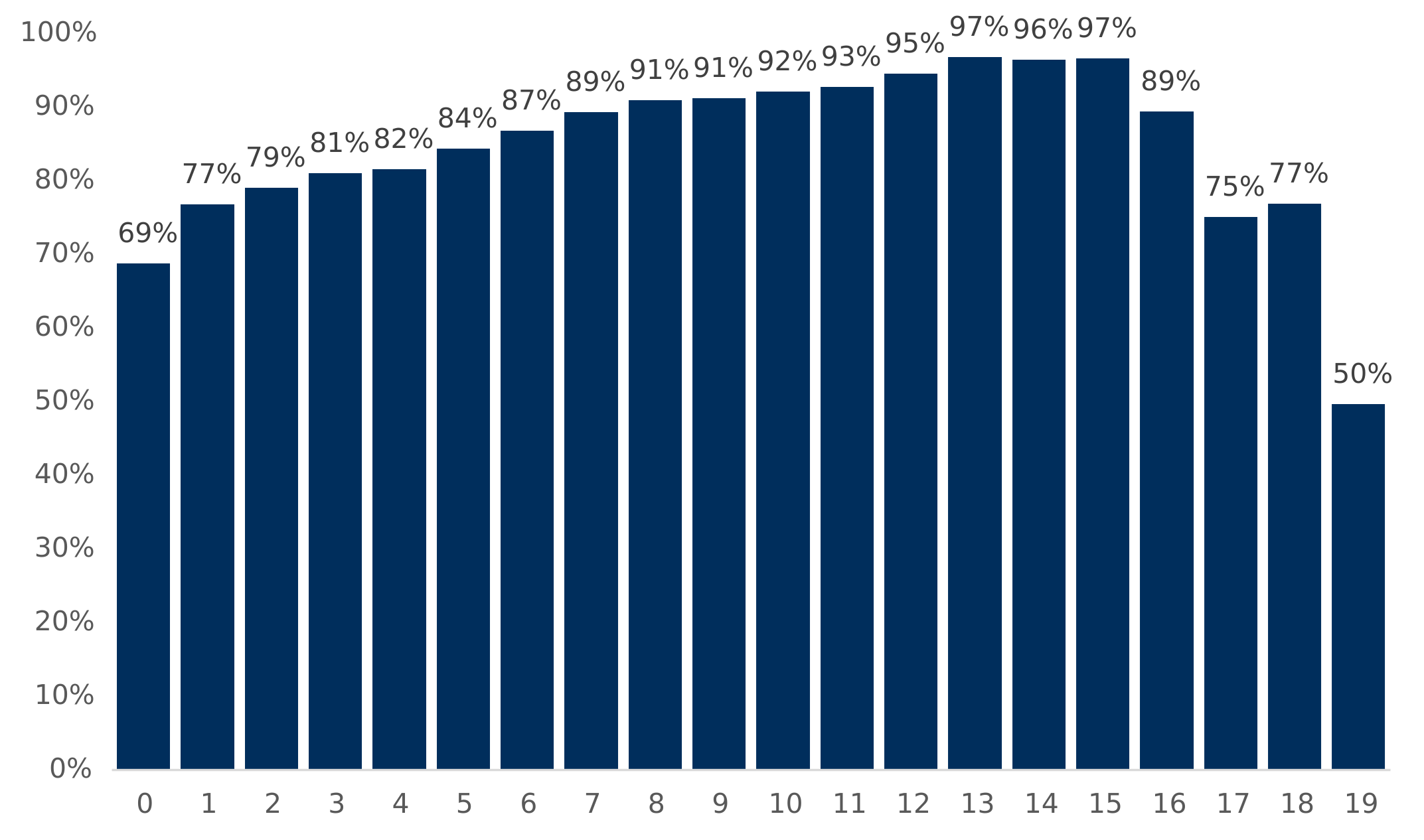
Figure 5: The percentage of eligible children for whom Child Benefit is claimed by individual age, at May 2025
(source data: HMRC Child Benefit administrative data, ONS population data, and LFS)
Key points to note from figure 5:
-
for younger children (aged 12 and under), there are larger proportions for whom Child Benefit is not being claimed - again, this difference is largely explained by the introduction of the HICBC, which meant that some families do not claim Child Benefit, knowing they would either need to opt-out of payment or pay a tax charge
-
children aged 0 to 5 have a lower take-up rate, which ranges from 69% to 84% - the particularly low take-up rate for children aged 0 to 3 is likely due to the HICBC, while for children aged between 4 to 5 could be attributed to the pandemic and its legacy
-
disruption to official processes (such as birth registrations) and the circulation of Child Benefit claim forms in hospitals, disruption to formal and informal networks of face-to-face information-sharing for new parents, and the wider disruption to people’s lives may have impacted decisions around claiming Child Benefit in 2020 and 2021, mainly affecting children aged 4 and 5 in this analysis
-
Child Benefit take-up is lower for young people aged 16 and over. Child Benefit can only be claimed for those children aged 16 and over if they are in full-time non-advanced education (FTNAE) and parents or carers may not always re-claim as young people move out of, and back into FTNAE, especially if they have opted out of receiving payment
-
further, after the age of 12, National Insurance credits are no longer received and after 16 a young person has already been assigned their National Insurance number - consequently, there is little incentive for families who have opted out of receiving payments to confirm their child is continuing in FTNAE, with such children dropping out of claims
-
see more information on FTNAE
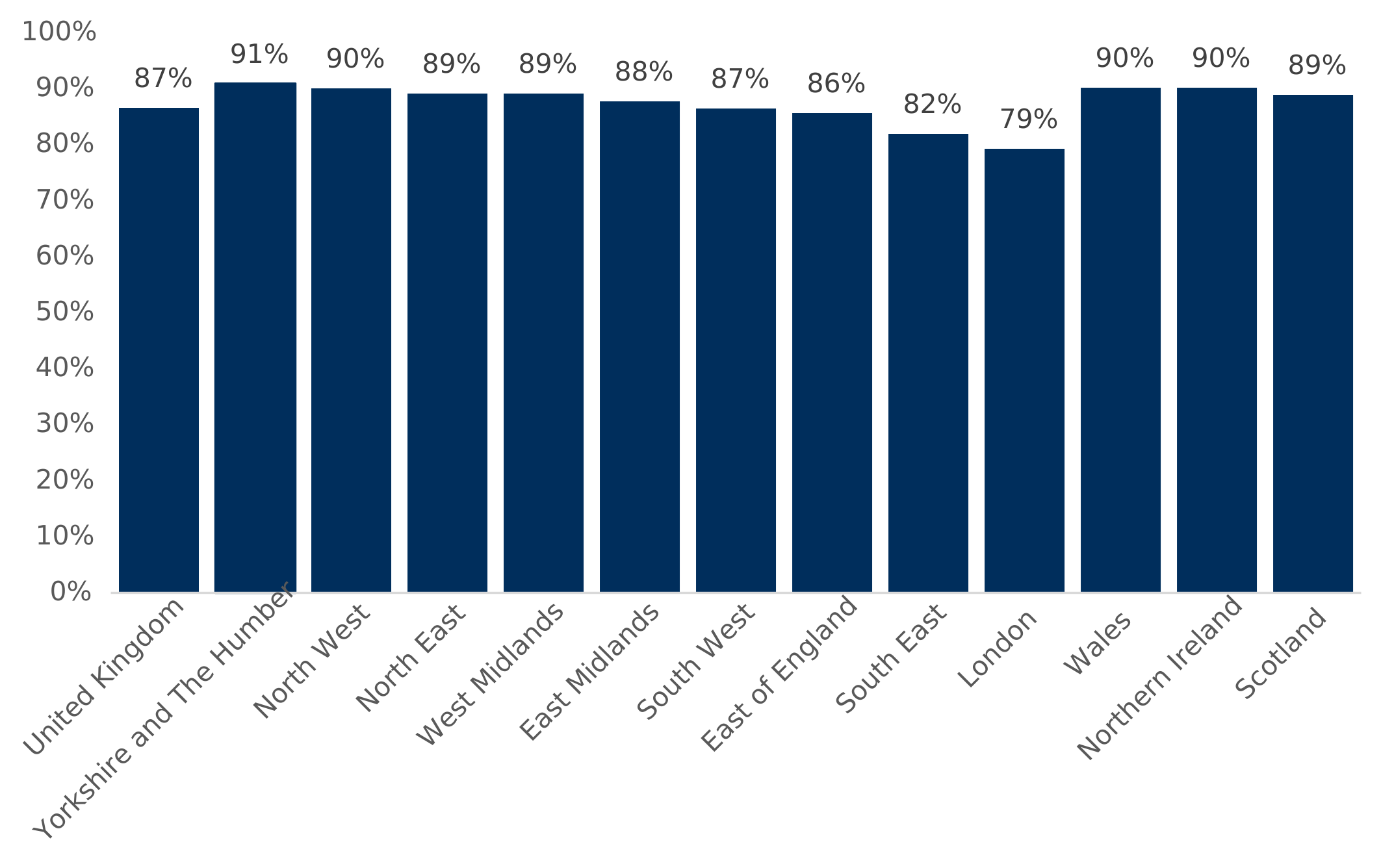
Figure 6: The percentage of eligible children for whom Child Benefit is claimed by country and English region, at May 2025
(source data: HMRC Child Benefit administrative data, ONS population data, and LFS)
Key points to note from figure 6:
-
most regions have a take-up above or around the UK take-up rate of 87%
-
the East of England, South East and London have take-up rates below the take-up rate seen in the UK
-
Wales, Northern Ireland and Scotland all experience a take-up rate higher than the UK rate ranging from 89% to 90%
Child Benefit statistics by family characteristics
Child Benefit statistics by family size
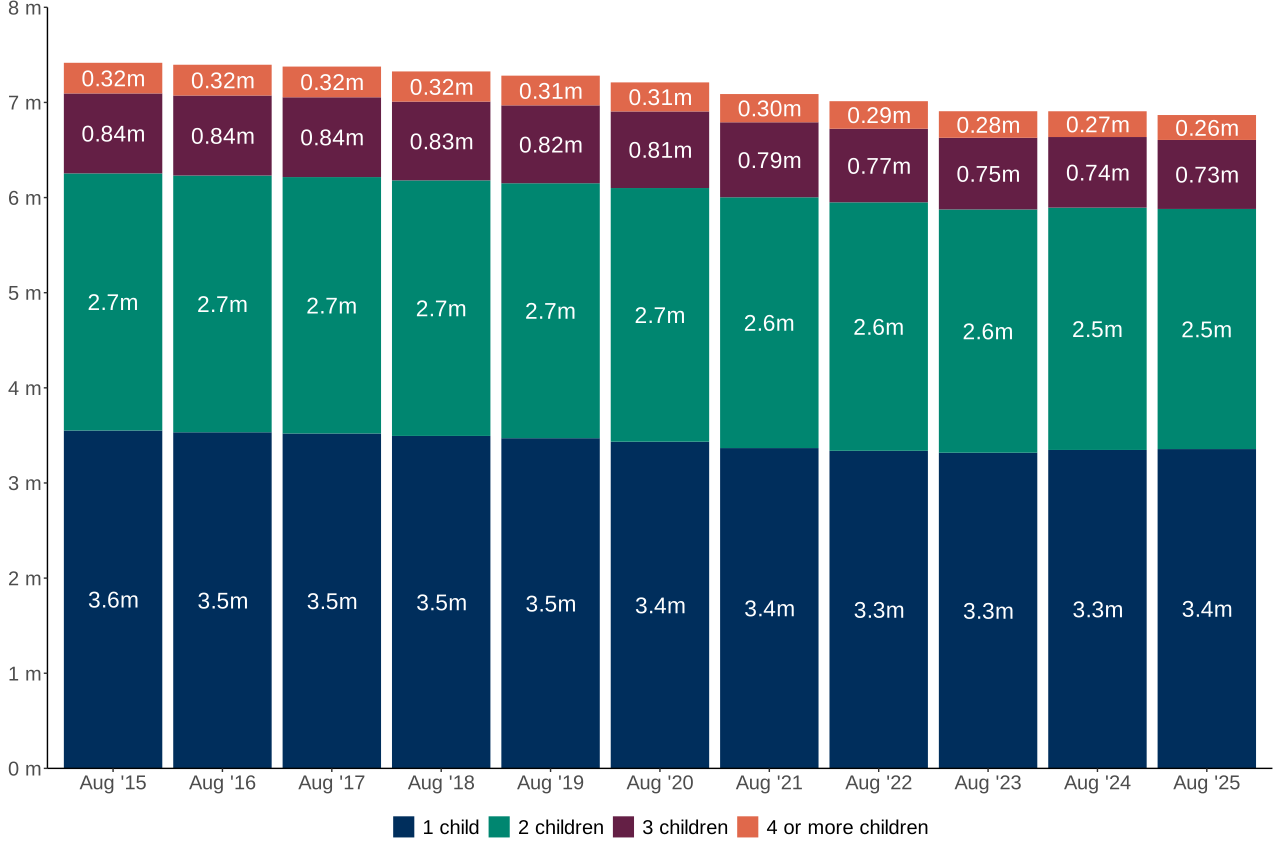
Figure 7a: The number of families in receipt of Child Benefit payments broken down by family size, August 2015 to August 2025
(source data: HMRC Child Benefit administrative data)
Key points to note from figure 7a are:
-
since 2013, possibly HICBC related, there has been a steady reduction in the number of families receiving Child Benefit payments across all family sizes, with the largest reductions in families with two or fewer children - however, the number of families with two or fewer children has remained relatively stable over the last four years with families with one child increasing slightly
-
at August 2025, there were 3.4 million families receiving Child Benefit payments for one child, 2.5 million families with two recipient children, and 725,000 families with three recipient children - this is a decrease of 195,000, 179,000, and 115,000 respectively since 2015
-
families in receipt of Child Benefit for four or more children have remained relatively stable - the figure for 2025 currently stands at 262,000
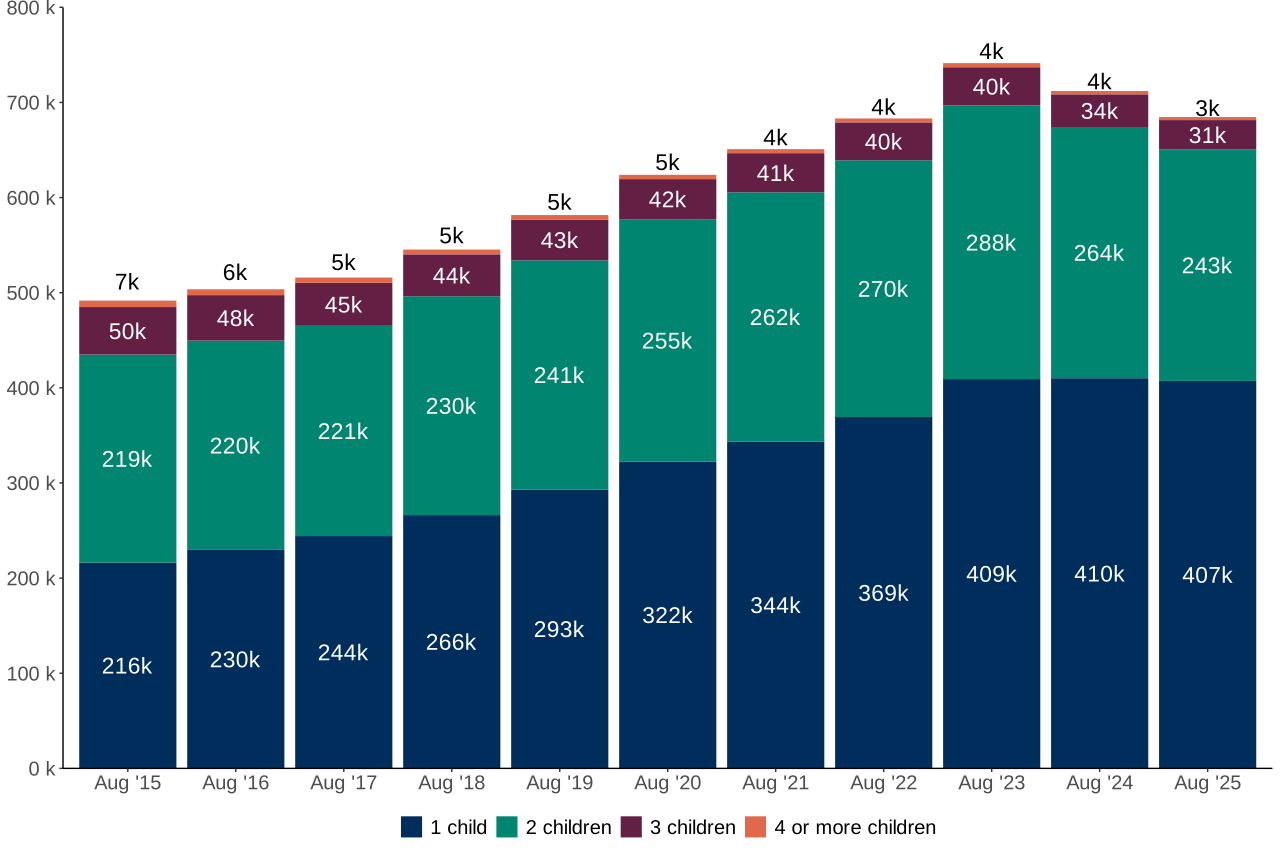
Figure 7b: The number of families opted out of Child Benefit payments broken down by family size, August 2015 to August 2025
(source data: HMRC Child Benefit administrative data)
Key points to note from figure 7b are:
-
since the introduction of the HICBC in 2013 until 2023, the number of families opting out of Child Benefit payments overall has increased year on year, however there has been variations within different family sizes
-
since 2024, the overall number of families opting out of Child Benefit payments has reduced for the first time, again with variations within family size - this is likely due to the changes made to the HICBC in April 2024 bringing more families under the income threshold
-
since August 2023, the number of families with 1 child opting out of payment has remained relatively stable, increasing slightly in 2024 before decreasing to 407,000 in August - similarly, families with four or more children also remained relatively stable while the number of families with two to three children opting out saw a decline of 21,000 and 3,000 respectively
-
5% of opt-out families have three or more children, compared with 14% of families in payment - however, those who have opted out of payments may not inform Child Benefit when they have subsequent children since they would not receive any payment, and so any comparisons to those receiving payment should be treated with caution
Child Benefit statistics by age of children
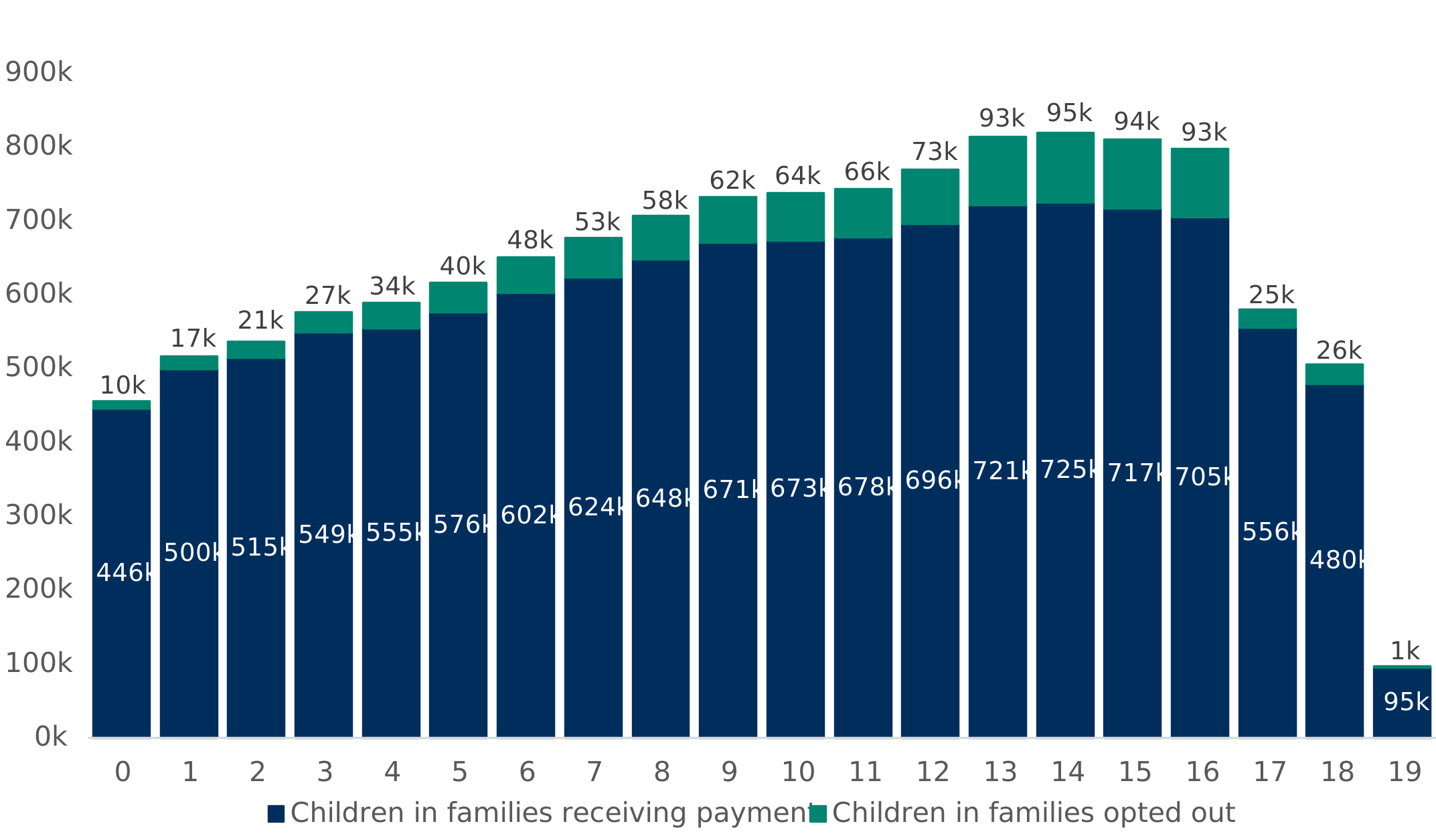
Figure 8: The number of children in families who have opted in and out of receiving Child Benefit payments by individual age at August 2025
(source data: HMRC Child Benefit administrative data)
Key points to note from figure 8:
-
the highest number of children in receipt of Child Benefit payments were aged between 13 and 16
-
the lower number of recipients aged 12 and under is likely due to the introduction of the HICBC in 2013
-
with the exception of children aged 16, the number of children aged 14 and above within in-payment Child Benefit claims was higher than levels seen in August 2024, with increases ranging from 2,000 to 16,000
-
generally, there are fewer children aged 17 and over within in-payment Child Benefit claims due to the eligibility criteria for this age group
-
for opted out families, the lower number of children at ages 12 or younger is likely due to families being subject to the HICBC - these families will have the option of claiming and then opting out of receiving payment or not claiming to begin with
-
for children aged 17 and over, there are fewer families registered as having opted out of receiving Child Benefit payments
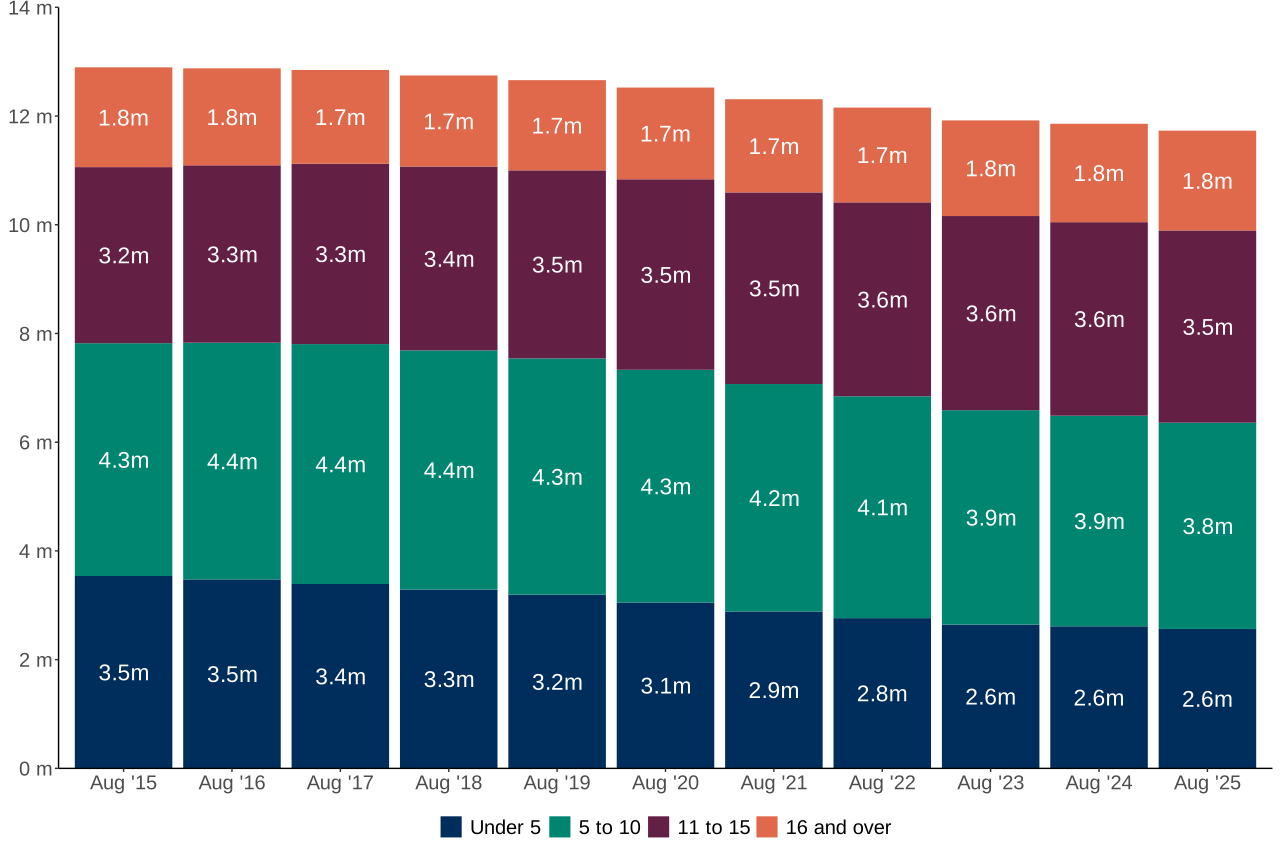
Figure 9a: The number of children for whom Child Benefit payment is received by age group, August 2015 to August 2025
(source data: HMRC Child Benefit administrative data)
Key points to note from figure 9a are:
-
the number of children aged 10 and under for whom Child Benefit payment is received has been on a steady downward trend since 2015 and fell by 28% for under 5s and 11% for those aged between 5 and 10 between August 2015 and August 2025
-
the levels for those aged between 11 to 15 and 16 and over for whom payment is received has seen slight fluctuations since 2015 ranging between 3.2 million to 3.6 million and 1.7 million to 1.8 million, respectively
-
across all age categories, the number of children for whom Child Benefit payment is received has remained stable since August 2024
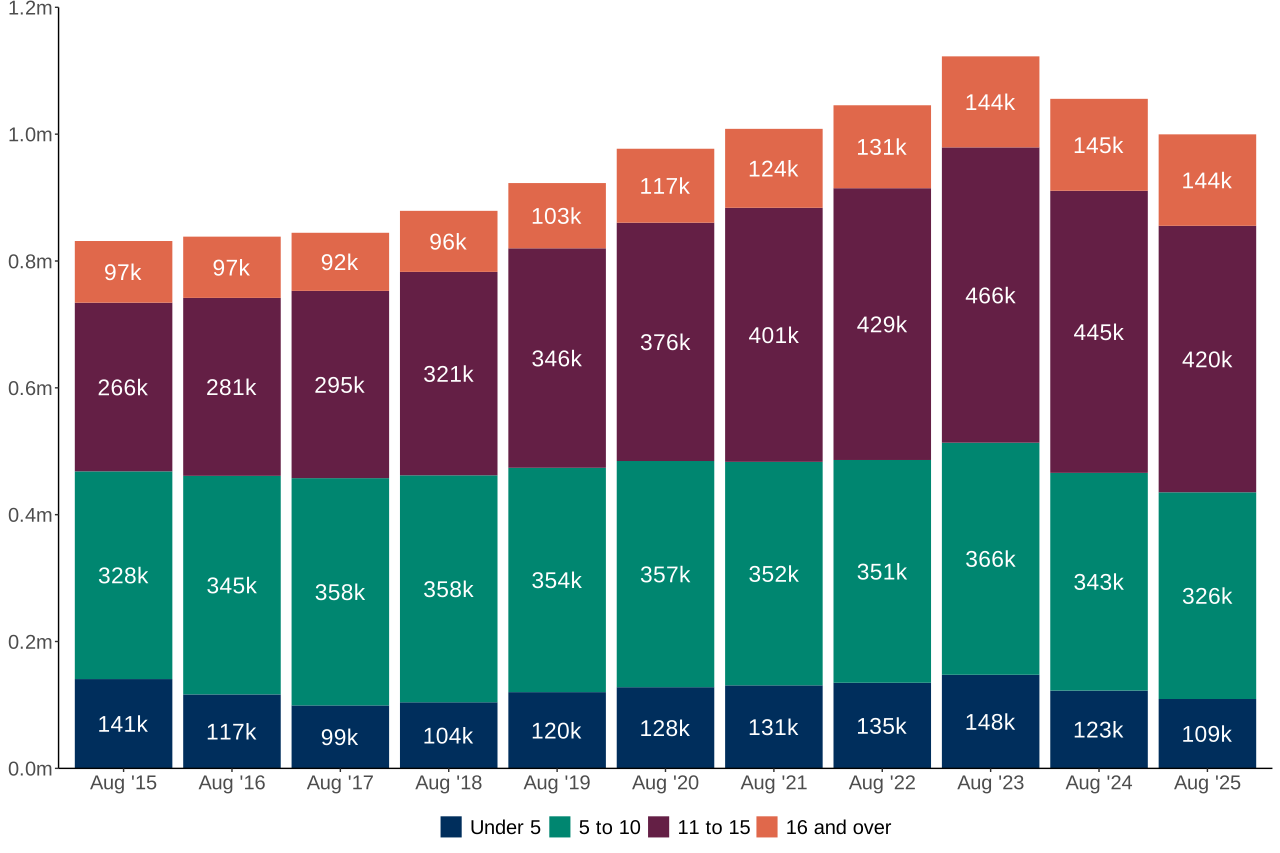
Figure 9b: The number of children within families who have opted out of Child Benefit payments by age group, August 2015, to August 2025
(source data: HMRC Child Benefit administrative data)
Key points to note from figure 9b are:
-
since the introduction of the HICBC until 2023, the number of children within families overall who are opting out of Child Benefit payments increased year on year
-
since 2024, the number of children in opted-out families has reduced - this is likely due to the changes made in April 2024 bringing more families under the HICBC income threshold
-
since 2023, the number of children aged 15 and under in opted-out families has reduced, with those aged under 5 decreasing by 11%, those aged 5 to 10 decreasing by 5%, and those aged 11 to 15 decreasing by 6%
-
the number of children aged 16 and over in opted-out families has decreased by 1,000 since last year - between August 2021 and 2024, this category showed increases, which fluctuated in magnitude and increasing by 7,000 between August 2021 to 2022, 13,000 between August 2022 and 2023, 1,000 between August 2023 and 2024
Child Benefit statistics by geographical location
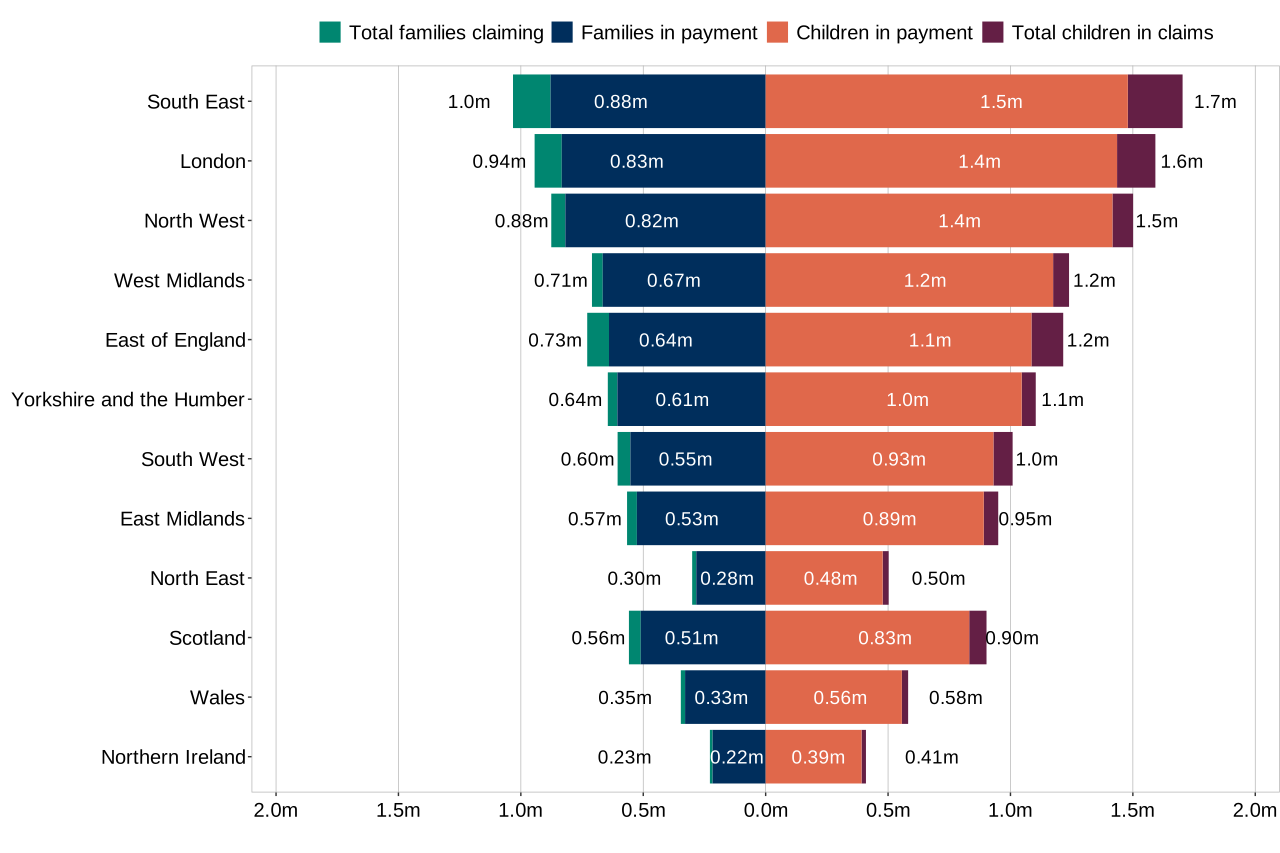
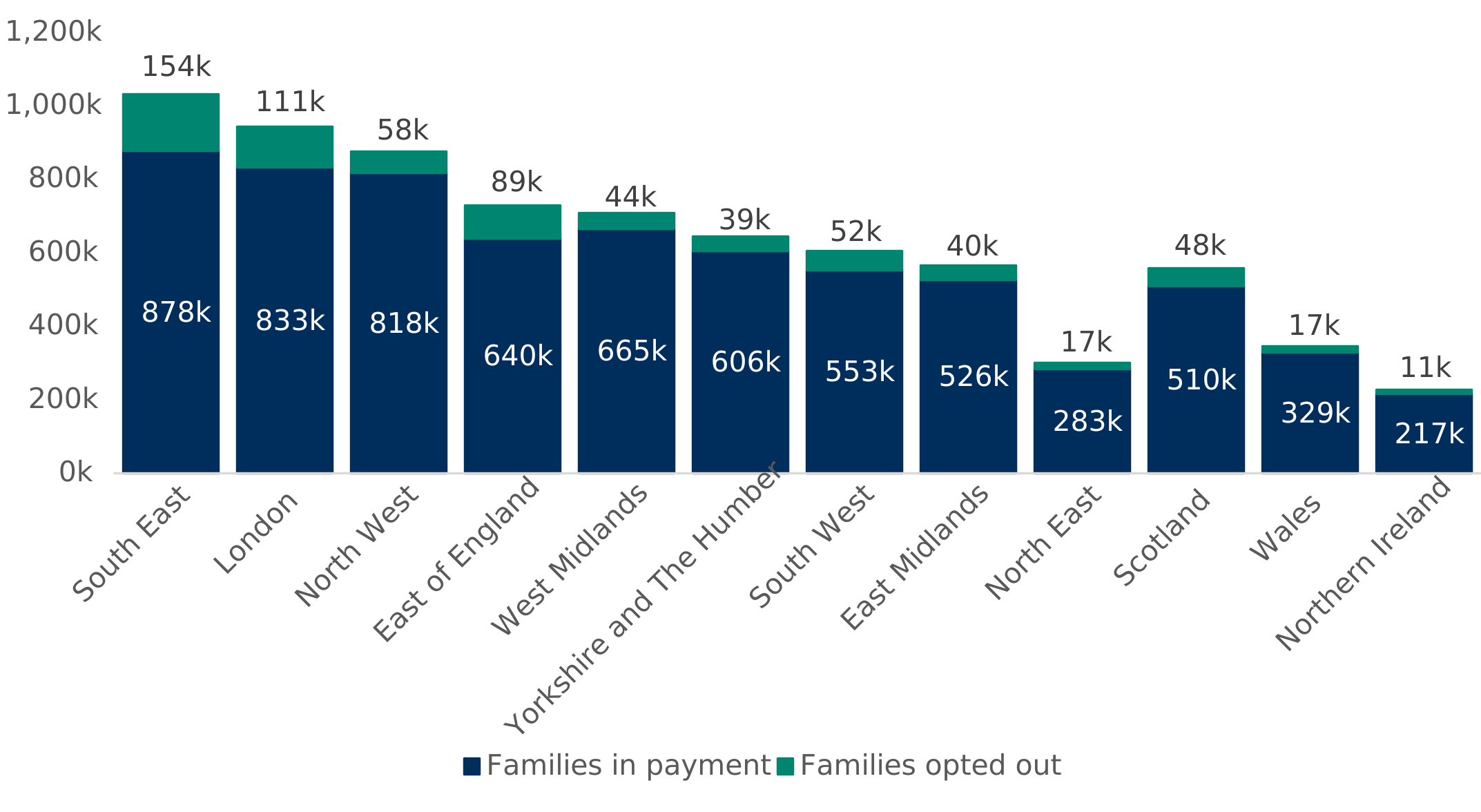
Figure 10: The number of families who have opted in and out of receiving Child Benefit payments by country and English region at August 2025
(source data: HMRC Child Benefit administrative data)
Key points to note from figure 10:
-
the South East, London, and the North West have the highest number of families in receipt of Child Benefit payments - this is in line with the 2024 mid-year population estimates produced by the ONS
-
as well as having the highest number of families in receipt of Child Benefit payments, the South East and London also have the largest number of families opting out of payments, with the North West having relatively lower figures
-
this is likely due to a higher number of families being impacted by the HICBC in the South East and London, due to higher average income in those regions
Child Benefit statistics for smaller geographies can be found in the set of tables published with this release.
Child Benefit claimants by sex
For those 6.87 million families in receipt of Child Benefit payments, 85% of claimants are women (5.87 million) compared to 15% of claimants who are men (1.00 million)
The same pattern is seen in the 685,000 families who have opted out of receiving Child Benefit payments, where 84% of claimants are women (575,000) compared to 16% of claimants who are men (109,000)
Since the migration from the Child Benefit Computer System (CBCS) to the Child Benefit System (CBS) in 2021, there have been improvements in the quality of the descriptive information that accompanies Child Benefit data. This has decreased the number of cases in payment with an unknown sex compared to pre-2021 figures.
Statistics on the High Income Child Benefit Charge (HICBC)
Those who choose to pay the HICBC tax charge will need to pay an amount equivalent to some or all of the Child Benefit that they or their partner is entitled to receive.
These statistics include a provisional estimate of the numbers of taxpayers and the total value of liabilities in tax year ending 2025, the first year following the change in the HICBC threshold and taper rate in April 2024. From tax year ending 2025 onwards, the tax charge applies to Child Benefit recipients or their partners whose incomes were over £60,000 per year, with the charge increasing to the full value of Child Benefit entitlement at £80,000 per year. Prior to this date, the initial threshold was £50,000, with the charge reaching the full value of entitlement at £60,000.
More details are set out in the background and technical information.
The amount to pay depends on an individual’s ‘adjusted net income’ and the amount of Child Benefit the claimant is entitled to. Adjusted net income is total taxable income minus certain tax reliefs, for example: trading losses (for the self-employed), Gift Aid charity donations, and pension contributions.
The chart below shows the number of customers earning above the HICBC threshold who continued to receive Child Benefit payments and had a corresponding tax charge liability in relation to the years shown. The year the charge relates to may differ from the year when it was actually paid. The total value of tax charge revenue in relation to each year of liability is also shown.
Figure 11: The number of Self-Assessment taxpayers with a HICBC liability and value of HICBC tax revenue, tax year ending 2015 to tax year ending 2025
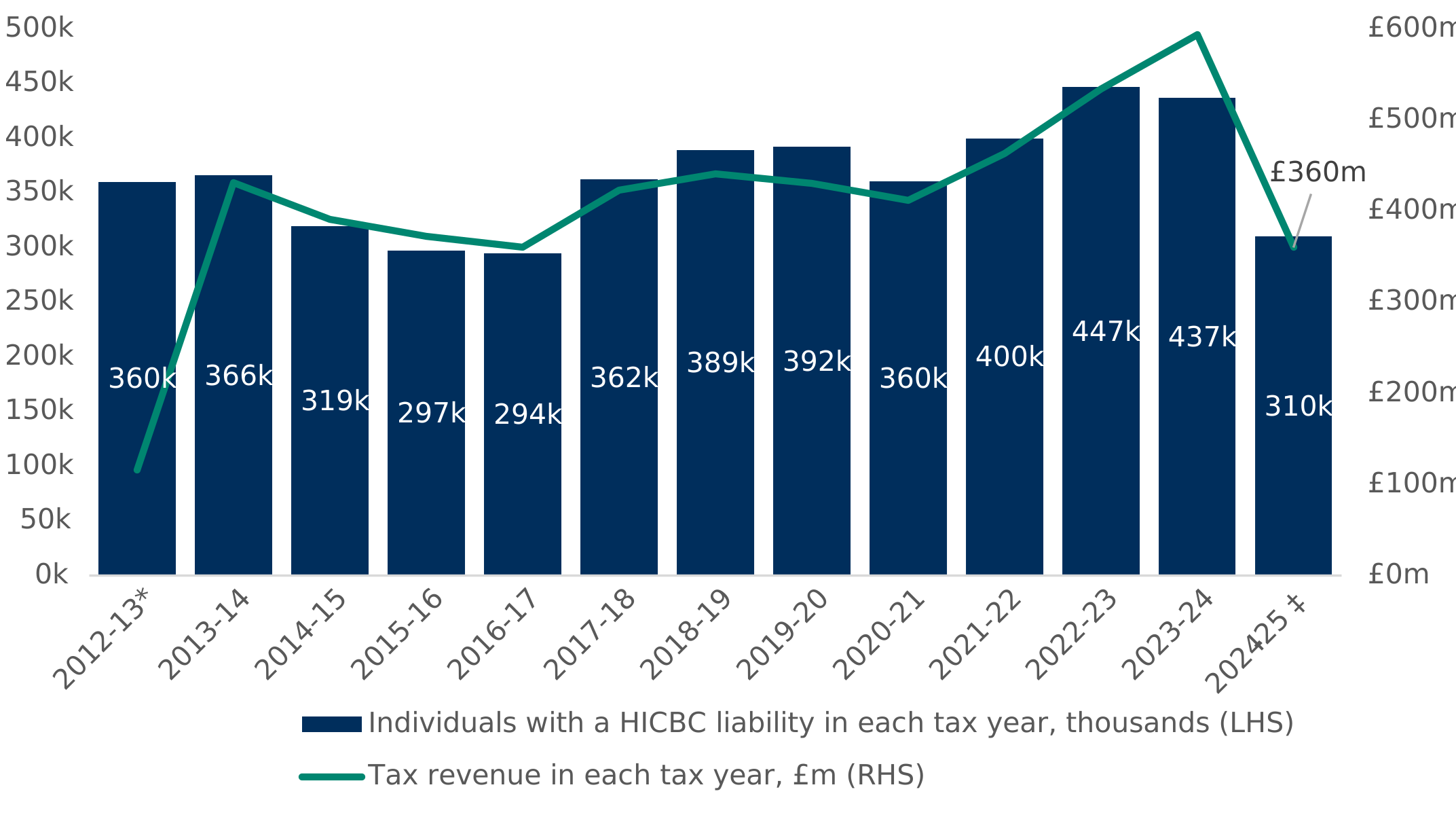
*The introduction of the HICBC in 2013 ‡ Provisional estimate
The provisional tax year ending 2025 estimates are based on an upward adjustment to the most recent values from tax returns containing HICBC. As the Self-Assessment deadline for tax year ending 2025 was only a few months prior to the release date of this publication, figures are based on data to February 2026, with an uplift of approximately 9% applied to individuals, and 8% to revenue, to account for late tax returns and compliance activity in the year following the SA deadline. This upward adjustment is based on historical patterns of taxpayer behaviour. Earlier years’ figures are not adjusted as they are likely to be closer to their final values, but could also increase further: for example, based on previous years, we may expect the tax year ending 2023 and tax year ending 2024 figures to increase by around 1 to 2% once final self-assessment data has been received. All figures up to 6 years prior to the latest year are revised in line with latest tax data, to reflect retrospective adjustments to liabilities.
The number of taxpayers declaring a HICBC liability along with the tax revenue received has fluctuated between the introduction of HICBC in tax year ending 2013 and tax year ending 2024, before falling markedly in tax year ending 2025 due to the changes to the threshold and the taper rate. For tax year ending 2025, it is estimated that 310,000 individuals had a total HICBC liability of £360 million, compared to 437,000 individuals with liabilities of £593 million in tax year ending 2024.
More detailed analysis of the latest year of non-provisional data (tax year ending 2024) shows:
- of those with a HICBC liability, 75% are men and 25% are women - this is a similar split to previous years
- 99% of those with a HICBC liability paid income tax at the higher rate or above, compared to 1% below the higher income tax rate
Background and technical information
What is Child Benefit?
Child Benefit is a payment that you can claim for your child. It is usually paid every four weeks but in some cases can be paid weekly. The payment can be claimed by anyone who qualifies. Child Benefit is paid to those responsible for children (aged under 16) or qualifying young people. The latter includes those who meet one or more of the following:
a) in full-time non-advanced education or (from April 2006) on certain approved vocational training courses and who are under 19, or are aged 19 and have been on the same course since their 19th birthdays. (Note: those reaching 19 up to 9 April 2006 ceased to qualify on their 19th birthdays)
b) entered for future external examinations, or are in the period between leaving education (or exams finishing) and the week containing the first Monday in September (or similar dates after Easter and in early January, if earlier), and are not in work (there are slight variations for Scotland)
c) aged under 18 who have moved directly from full-time education to being registered for work or training with the Careers service.
You can receive Child Benefit for a child that does not live with you. However, if your child lives with someone else, you can only receive Child Benefit if:
a) you pay towards the upkeep of your child
b) what you pay is at least the same as the amount of Child Benefit you get for your child
c) the person bringing up your child is not getting Child Benefit for them - if you and another person both claim Child Benefit for the same child, only one of you can receive it
You do not have to be a parent to claim Child Benefit, however you do need to be responsible for a child to qualify.
In this publication “families” refers to singles or couples where one of the adults is responsible for looking after a child or dependent young person. In a small proportion of cases (1 to 2%), two adults are claiming for different children in the same family. This means the total number of claimants is a slight overstatement of the total number of Child Benefit families.
Awards are also subject to residence criteria being satisfied. Under UK domestic law a family is eligible to receive Child Benefit if they are present and ordinarily resident in the UK. Citizens of European Economic Area (EEA) countries are able to claim Child Benefit as long as they meet the requirements of the right to reside test, which amongst other requirements means that they must generally be in employment, in self-employment, be self-sufficient, or be a student. From 30 June 2021, families from EEA countries were required to apply for European settled status to continue receiving or make a new Child Benefit claim.
There are two separate amounts, with a higher amount for your eldest (or only) child and a lower amount for each of your other children. Following a 10.1% rise in tax year ending 2023 to tax year ending 2024 and a 6.7% rise in tax year ending 2024 to tax year ending 2025, Child Benefit payments have risen by 1.7% in the tax year ending 2025 to tax year ending 2026. This has resulted in Child Benefit increasing from £25.60 to £26.05 per week for the eldest child, and for each subsequent child increasing from £16.95 to £17.25 per week.
For further information about who can claim please refer to the HMRC pages on GOV.UK.
Rounding
Some figures have been independently rounded to the nearest 5. This can lead to components not summing to totals as shown.