Provisional cereal and oilseed production estimates for England 2026
Updated 8 October 2026

© Crown copyright 2026
This publication is licensed under the terms of the Open Government Licence v3.0 except where otherwise stated. To view this licence, visit nationalarchives.gov.uk/doc/open-government-licence/version/3 or write to the Information Policy Team, The National Archives, Kew, London TW9 4DU, or email: psi@nationalarchives.gov.uk.
Where we have identified any third party copyright information you will need to obtain permission from the copyright holders concerned.
This publication is available at https://www.gov.uk/government/statistics/cereal-and-oilseed-rape-production/provisional-cereal-and-oilseed-production-estimates-for-england-2026
This release contains the first estimate of the 2026 English cereal and oilseed harvest. Data are not yet available for Scotland, Wales and Northern Ireland but will be included within the final production estimates for the United Kingdom in December 2026.
For detailed area, yield and production results go to the accompanying data set.
Key points
-
The yields of total barley and oats saw falls in for 2026, whereas the yields of wheat and oilseed rape saw increases. The planted area of total barley, wheat and oats decreased from 2025 to 2026, whereas the planted area of oilseed rape increased.
-
The provisional estimate of the 2026 English wheat harvest is 10.8 million tonnes, an increase of 0.8% on 2025. This is due to an increase in yield counteracting the decrease of planted area.
-
The provisional estimate of the 2026 English barley harvest is 3.7 million tonnes, a decrease of 11% on 2025. This comprises a 23% decrease in spring barley production partly offset by a 1.7% increase in winter barley. This is the smallest harvest of total barley since 2012.
-
Oat production fell in 2026, due to an 21% decrease in area and an 11% decrease in yield. This is the smallest harvest of oats since 2012.
-
Oilseed rape production is estimated to have increased by 43% to 1.0 million tonnes in 2026. This was driven by a 36% increase in area and a 6% increase in yield.
-
Wheat straw production is estimated to increase by 24% to 3.2 million tonnes.
Section 1: Area, yield, production and straw
Despite good drilling and planting conditions in autumn 2025, the hot weather and limited rainfall during the growing season hampered the 2026 cereal and oilseed harvest. There has been much variation in yields between regions, with northern regions generally faring slightly better than more southern regions.
1.1 Areas
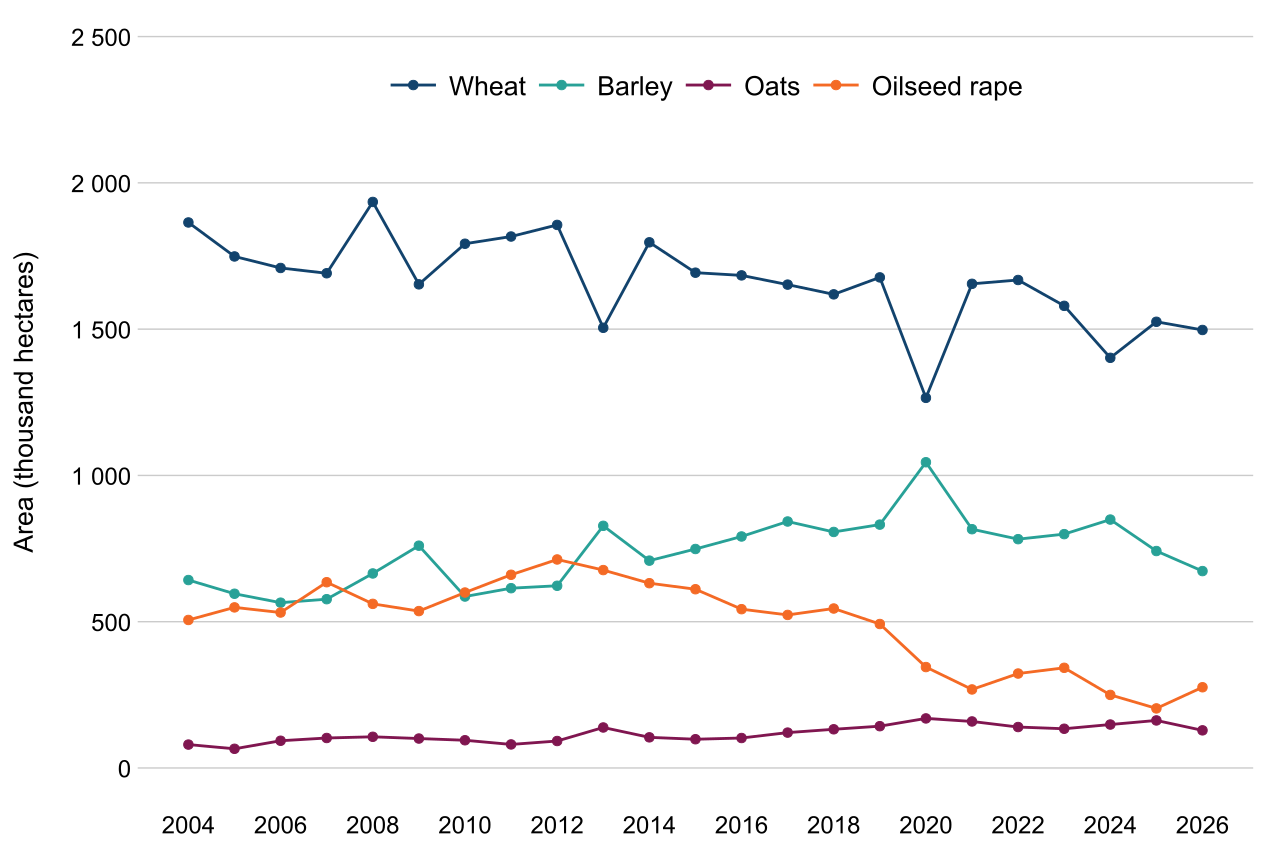
The wheat area saw a small decrease of 1.8%. The oats area decreased by 21% from 162 thousand hectares to 129 thousand hectares (Figure 1). Total barley planted area fell by 9.2% in 2026, driven by the 17% decrease in planted spring barley, partly offset by a 1.6% increase in planted winter barley.
The oilseed rape area increased by 36%, rising from 204 thousand hectares in 2025 to 276 thousand hectares in 2026.
Figure 1: England crop areas between 2004 and 2026
1.2 Yields and production
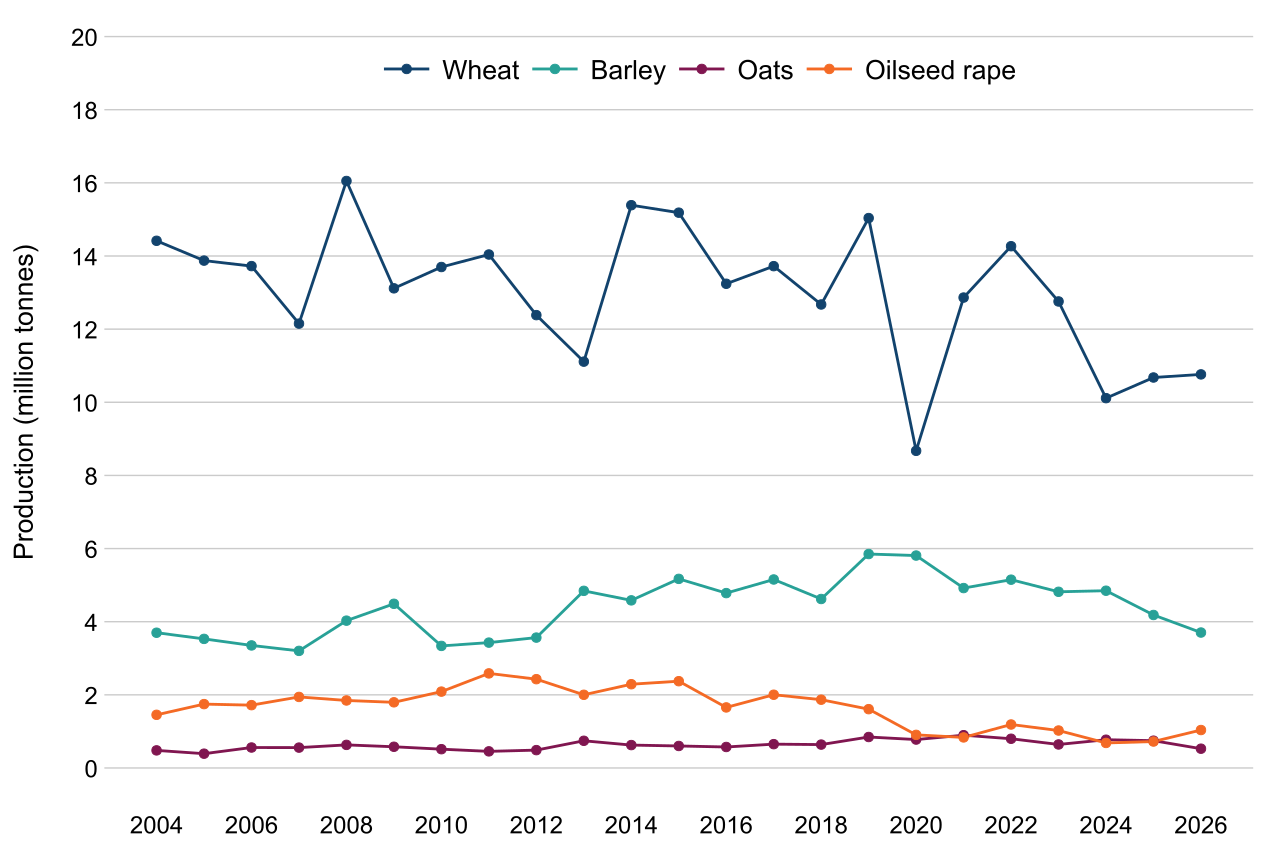
The provisional estimate of the 2026 English wheat harvest is 10.8 million tonnes, a slight increase of 0.8% on 2025. This is due to an increase in yield in all regions, apart from East of England and South East (overall yield increased by 2.7% to 7.2 tonnes per hectare (t/ha)). Wheat production increased in all northern and midlands regions, while the South East, South West and East of England saw decreases. Yorkshire and the Humber showed the largest production increase (6.5% since 2025) and the highest yields were seen in the North East (8.4 t/ha).
The provisional estimate of the 2026 English barley harvest is 3.7 million tonnes, a decrease of 11% on 2025. This comprises a 23% decrease in spring barley production, partly offset by a modest increase in winter barley, rising by 1.7%. Overall yields for spring barley decreased by 8.0%, while winter barley yields remained at 6.6 t/ha. All regions saw reductions in production for 2026 for total barley, with the exception of Yorkshire and the Humber, which saw a 2.1% increase.
In 2026, oats production fell by 29% to 527 thousand tonnes and the overall yield decreased by 11% to 4.1 t/ha compared to 2025. Average regional yields vary from 6.2 t/ha in the North East to 3.4 t/ha in the South West.
Oilseed rape production increased by 43% to 1.0 million tonnes in 2026. This was driven by a 36% increase in area, and the 5.9% increase in yield. Production of oilseed rape increased in all regions, with the North East seeing the largest increase of 53%.
Figure 2: England crop yields between 2004 and 2026
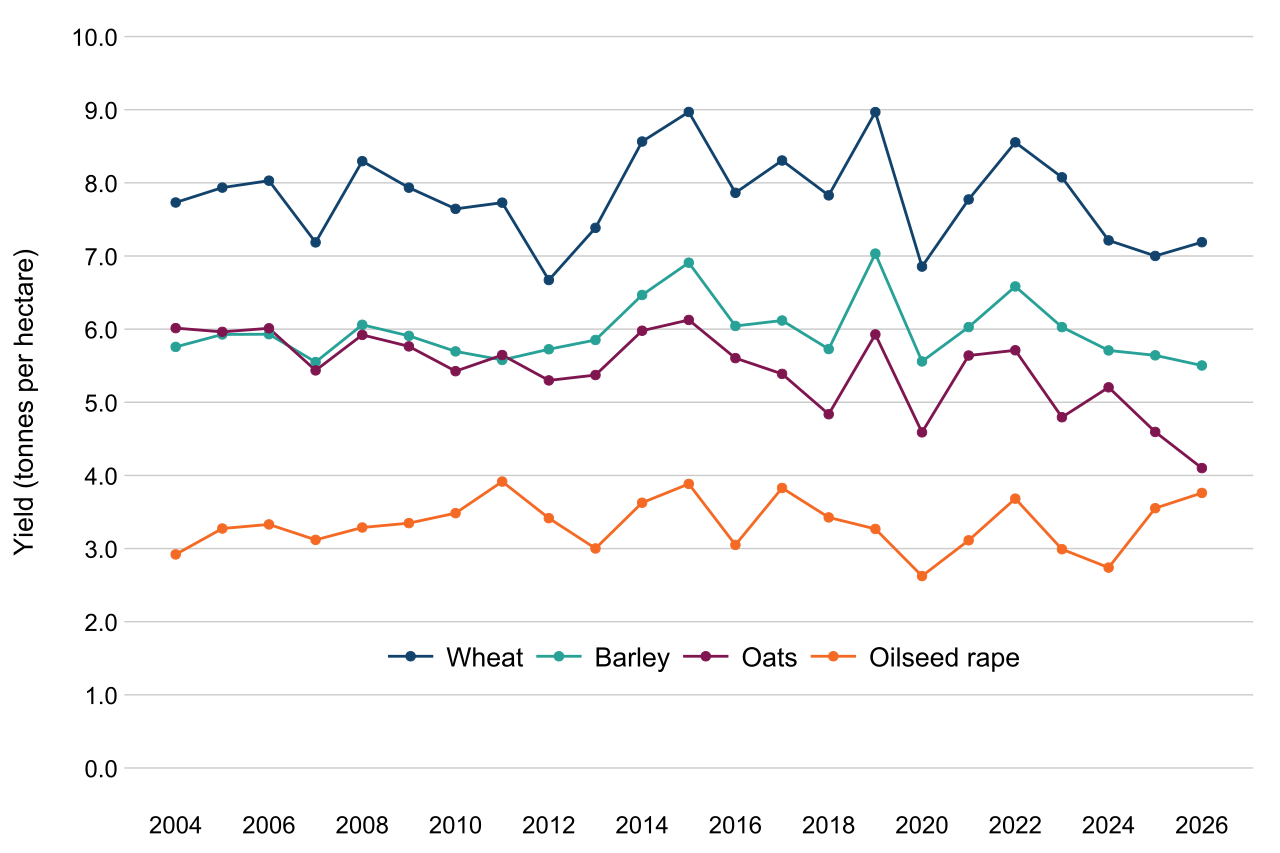
Figure 3: Provisional cereal and oilseed production in England between 2004 and 2026
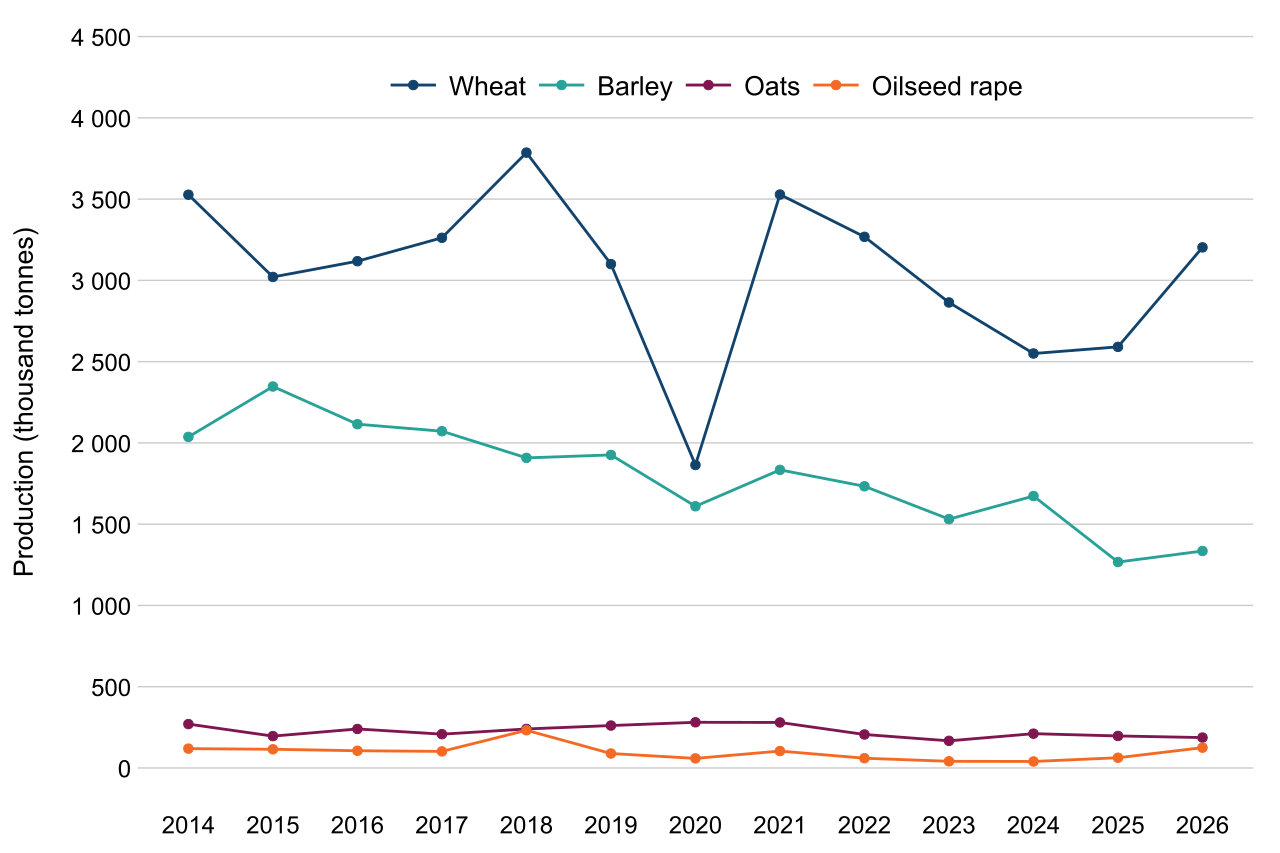
In 2026, straw production increased for all the wheat, barley and oilseed rape, while production of oats straw decreased. Wheat straw production remains dominant with 3.2 million tonnes (an increase of 24% on 2025, the highest wheat straw production since 2022. Barley straw production increased by 5.4% to 1.3 million tonnes, oats straw fell by 5.1% to 187 thousand tonnes and oilseed rape straw increased by 98% to 125 thousand tonnes (see Figure 4).
Figure 4: England straw production between 2014 and 2026
The most common use for straw was sold/exchanged for feed/bedding, accounting for 42% of straw production, followed by home use bedding/feed, accounting for a further 32% of straw production (see Figure 5), this is consistent with previous years.
Figure 5: Usage of straw in England as a percentage of productions between 2021 and 2026
| Year | Home use bedding/feed | Home use biomass | Home use for other purposes | Sold/ exchanged for feed / bedding | Sold for biomass | Sold for other purposes | Total |
|---|---|---|---|---|---|---|---|
| 2023 | 41% | 1% | 1% | 35% | 8% | 15% | 100% |
| 2024 | 34% | 1% | 1% | 41% | 10% | 13% | 100% |
| 2025 | 34% | 1% | 0% | 42% | 11% | 12% | 100% |
| 2026 | 32% | 1% | 1% | 42% | 10% | 15% | 100% |
Notes:
- The sum of the components may not equal 100% due to rounding.
Section 2 Methodology: Provisional estimates of 2026 England cereal and oilseed rape production
2.1 England
Results are based on provisional results from the Cereal and Oilseed Rape Production Survey, a representative sample of cereal and oilseed rape growers across English regions and farm sizes. These early results are based on the valid responses from 1,500 farms (26% respondent rate).
The Cereal and Oilseed Rape Production Survey gathers data on production tonnages and moisture content for the various cereal and oilseed rape crops and seeks confirmation of the planted areas for these crops gathered from the June Census of Agriculture and Horticulture. The survey also gathers data on straw tonnage for these crops as well as straw production end usage.
2.2 Moisture content adjustment
Production was typically standardised to 14.5% moisture content for cereals and 9.0% for oilseed rape but since 2022, following discussions with stakeholders, we agreed that the production data will only be adjusted for farms which have reported moisture content above 14.5% for cereals and 9.0% for oilseed rape. Any production data which has been reported with lower moisture contents has not been adjusted. In an average year this would make little difference to the production total, e.g. in 2021, this new approach would have reduced wheat production by only 0.1%.
This new methodology gives a more representative estimate of the volume of actual crop available for use in the industry.
For detailed moisture content results for England and the English regions go to the accompanying data set
2.3 Changes to survey design
There are no changes to the survey in 2026
2.4 Data notes
The cereal production (tonnage) figures include tail corn, cereals still to be harvested for grain, grain to be crimped and cereals intended for seed production. The figures exclude crops which have become unfit for harvesting, carryover stocks from the 2025 harvest, bought in grain and crops harvested as wholecrop for silage.
2.5 Revisions
Area and yield figures
Regional areas for June 2025 have been replaced with the final breakdowns from the June Survey of Agriculture. Regional yields have been recalculated as a result, although any changes are very minor. National areas, yields and all production figures remain unchanged (which the exception of England and UK oilseed rape, as mentioned above).
2.6 Final 2026 harvest statistics
Full UK results will be published on 10th December 2026 and will include the final harvest figures for England as well as those for Scotland, Wales and Northern Ireland.
2.7 Feedback
We welcome feedback and any thoughts to improve the publication further. Please send any feedback to: Farming-Statistics@defra.gov.uk.
Section 3: What you need to know about this release
3.1 Contact details
The responsible statistician: Will Drabble
Team: Farming Statistics - Department for Environment, Food and Rural Affairs
Email address: Farming-Statistics@defra.gov.uk
Telephone: 03000 600170
3.2 Accredited official statistics
Accredited official statistics are called National Statistics in the Statistics and Registration Service Act 2007. An explanation can be found on the Office for Statistics Regulation website. Our statistical practice is regulated by the Office for Statistics Regulation (OSR). OSR sets the standards of trustworthiness, quality and value in the Code of Practice for Statistics that all producers of official statistics should adhere to.
These accredited official statistics were independently reviewed by the Office for Statistics Regulation in 2014. They comply with the standards of trustworthiness, quality and value in the Code of Practice for Statistics and should be labelled ‘accredited official statistics’.
You are welcome to contact us directly with any comments about how we meet these standards (see contact details above). Alternatively, you can contact OSR by emailing regulation@statistics.gov.uk or via the OSR website.
Since the latest review by the Office for Statistics Regulation, we have continued to comply with the Code of Practice for Statistics, and have made the following improvements:
- Reviewed and amended the validation checks carried out on response data including validation against new administrative data sources to better assure ourselves of the quality of the statistics.
- Enhanced trustworthiness by removing pre-release access.