Cereal and oilseed production in the United Kingdom 2025
Updated 8 October 2026

© Crown copyright 2026
This publication is licensed under the terms of the Open Government Licence v3.0 except where otherwise stated. To view this licence, visit nationalarchives.gov.uk/doc/open-government-licence/version/3 or write to the Information Policy Team, The National Archives, Kew, London TW9 4DU, or email: psi@nationalarchives.gov.uk.
Where we have identified any third party copyright information you will need to obtain permission from the copyright holders concerned.
This publication is available at https://www.gov.uk/government/statistics/cereal-and-oilseed-rape-production/cereal-and-oilseed-production-in-the-united-kingdom-2025
This release contains the final estimate of UK 2025 cereal and oilseed harvest.
For detailed area, yield and production results by country and regions in England go to the accompanying data set.
Key points
-
All the main cereal crops saw reduced yields in 2025 compared to 2024, except for winter barley. Wheat and oats areas both increased from 2024, whereas both spring and winter barley fell. Oilseed rape area fell as yields increased.
-
The final estimate of the 2025 UK wheat harvest is 12 million tonnes, an increase of 7.3% on 2024. This is due to a 9.1% increase in area to 1.7 million hectares, tempered by a 1.7% decrease in yield to 7.2 tonnes per hectare.
-
The final estimate of the 2025 UK barley harvest is 6.4 million tonnes, a decrease of 10% on 2024. Spring barley saw a 16% fall in production and a 5.4% fall in yield, whereas winter barley saw a 1.2% increase in production and a 7.2% increase in yield.
-
In 2025, oat production fell by 2.3% to 963 thousand tonnes. This is due to an increase in area (8.8% to 198 thousand hectares) and a decrease in yield (10% to 4.9 tonnes per hectare).
-
Oilseed rape production increased by 7.0% to 893 thousand tonnes in 2025. A decrease in area of 18% was offset by a higher yield up 30% from 2024 to 3.7 tonnes per hectare.
-
Straw production varied across the main cereal crops and oilseed rape. Wheat straw production is estimated to remain steady at 2.6 million tonnes, Barley straw production, however, fell in 2025 by 24% to 1.3 million tonnes.
Section 1: Area, yield, production and straw
Initial good weather meant that the 2025 harvest progressed quickly, with many growers finishing ahead of a typical year. However, in September, wet weather hindered the ability to harvest remaining crops towards the end of the season, resulting in a mixed picture across the UK with considerable variability in yield between regions and countries.
1.1 Areas
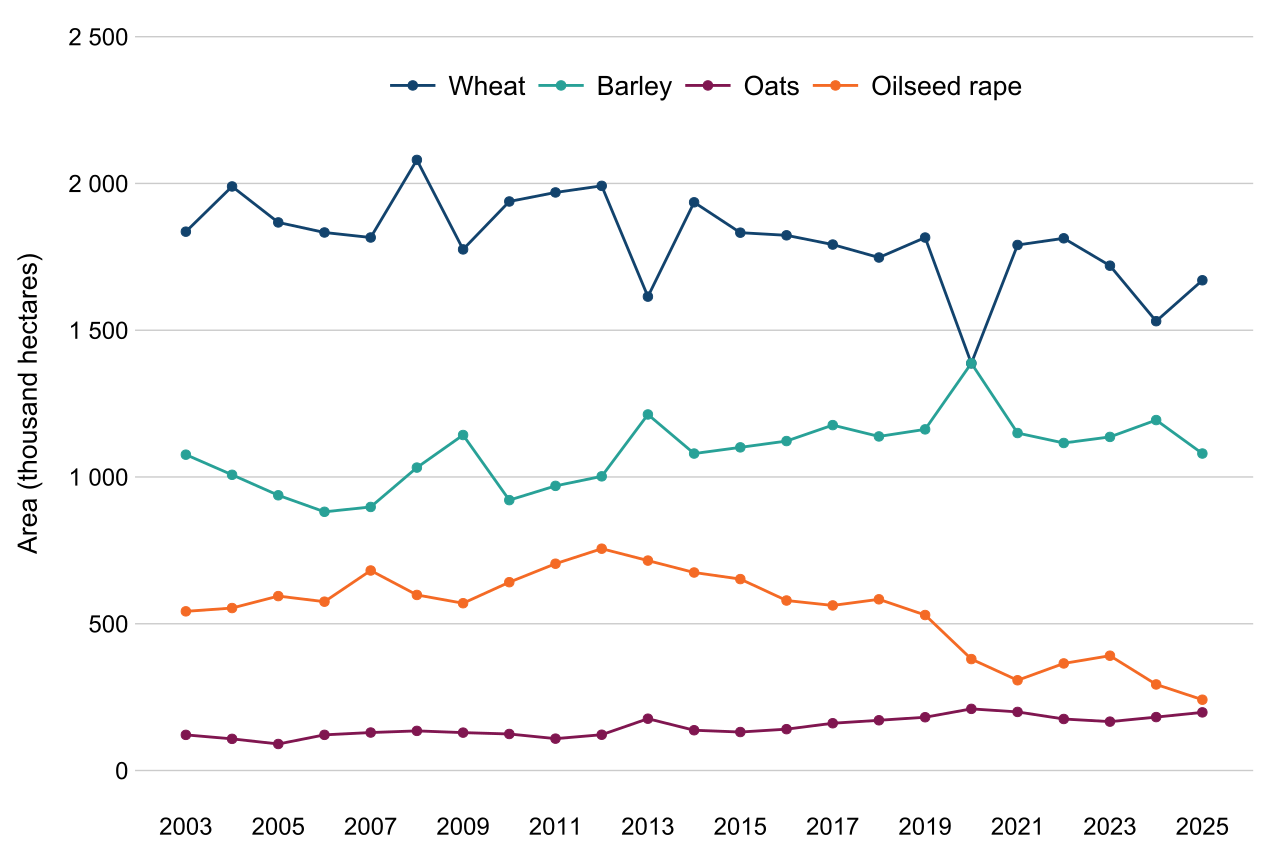
The wheat area in 2025 increased by 9.1%, while spring and winter barley saw decreases of 11% and 5.6%, respectively. The area planted with oats rose by 8.8%, from 182 thousand hectares to 198 thousand hectares (Figure 1). Total barley area was below its 5-year average, whereas both wheat and oats were above.
The area planted with oilseed rape decreased by 18% in 2025, falling from 293 thousand hectares in 2024 to 241 thousand hectares. This area sits below the five-year average and continues the downward trend observed since 2012.
Figure 1: United Kingdom crop areas between 2003 and 2025
1.2 Yields and production
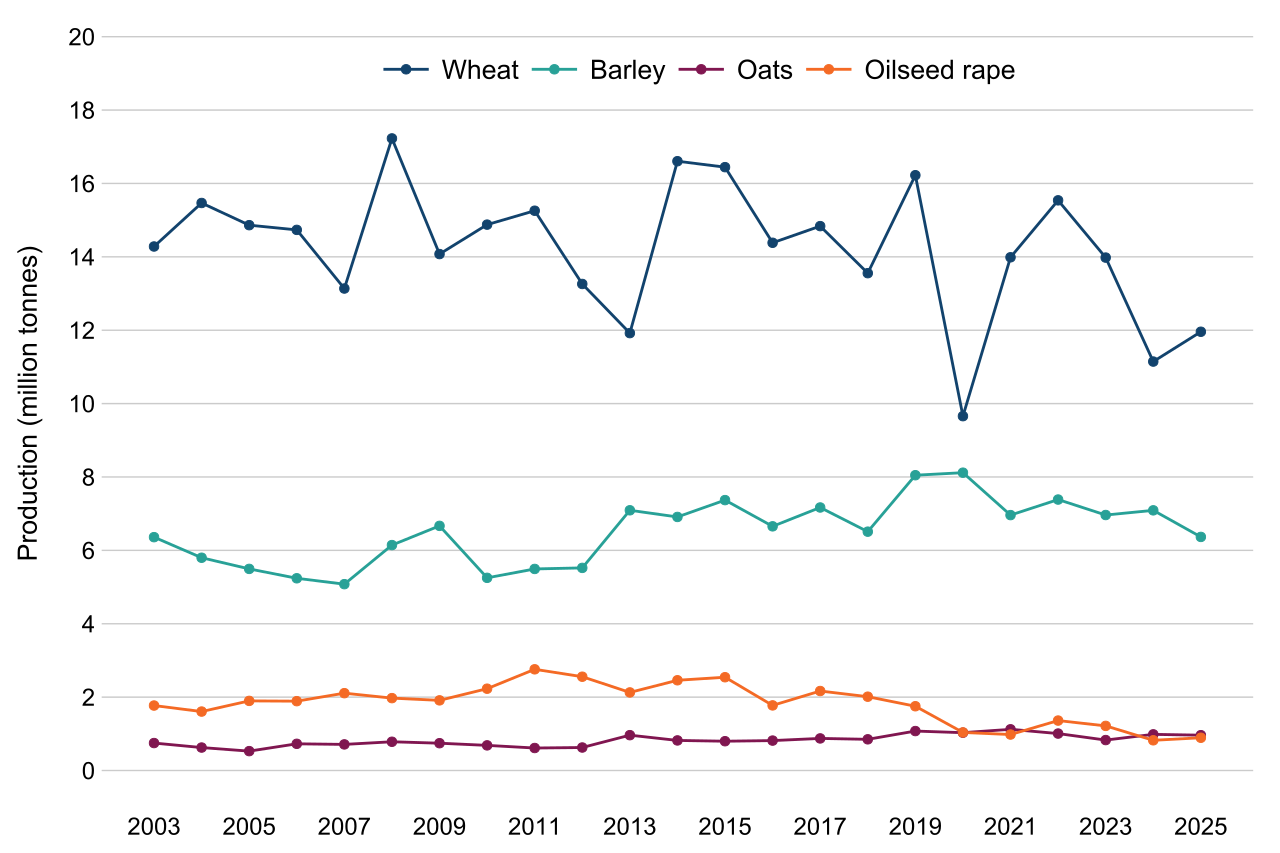
Production for the UK 2025 harvest varied between cereals and oilseed rape. Wheat is still the predominant crop with production of 12 million tonnes (an increase of 7.3% on 2024). This is a result of an increase in planted area in all regions. However, average yield declined by 1.7% to 7.2 tonnes per hectare (t/ha), caused mainly by a fall in yield in both England and Wales. Wheat production rose in all UK countries and in almost every English region, with the exception of the Eastern region and the South West. Wheat yields increased in all northern English regions, Scotland and Northern Ireland. The North East showed the largest proportional increase in both production and yield.
The 2025 UK barley harvest is 6.4 million tonnes, a decrease of 10% on 2024. This comprised of a 16% decrease in spring barley to 3.9 million tonnes and a 1.2% increase in winter barley to 2.5 million tonnes. Although winter barley yields increased by 7.2% to 6.8 t/ha, the overall impact was offset by a 5.4% decline in spring barley yields to 5.4 t/ha, contributing to the downward trend in total production. Total barley yield and production remain below the 5-year average. In 2025, total barley production fell in all regions apart from the North East of England and Northern Ireland.
Oats production fell by 2.3% to 963 thousand tonnes, below its 5-year average. This was driven by a decrease in yield by 10% to 4.9 tonnes per hectare. Oats yields fell in every region apart from the North West and Merseyside and Northern Ireland.
Oilseed rape production is 893 thousand tonnes, up 7.0% on 2024, largely driven by the increase in yield of 30%. All regions saw an increase in yield in 2025.
Figure 2: United Kingdom crop yields between 2003 and 2025
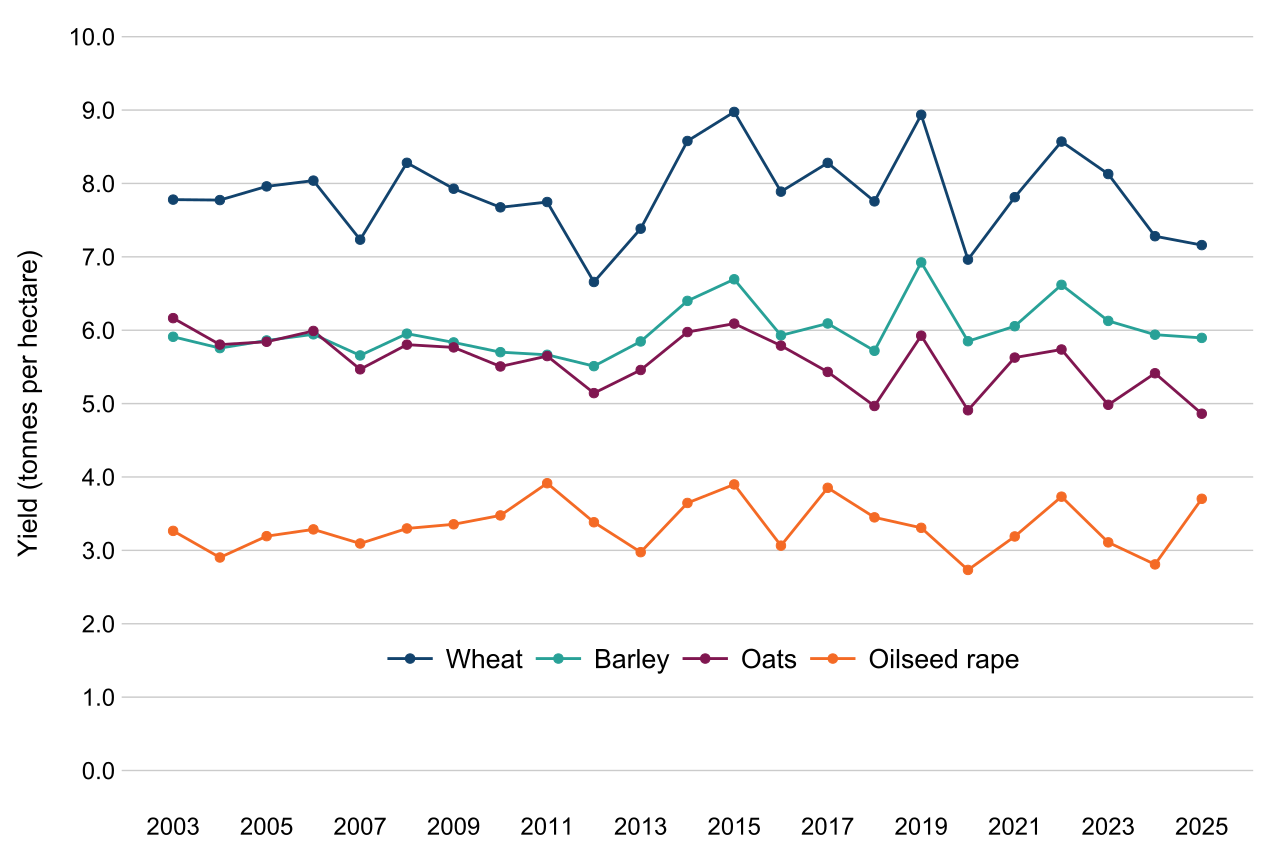
Figure 3: United Kingdom crop production between 2003 and 2025
In 2025, straw production varied across the main cereal crops and oilseed rape, reflecting shifts in crop areas and yields.
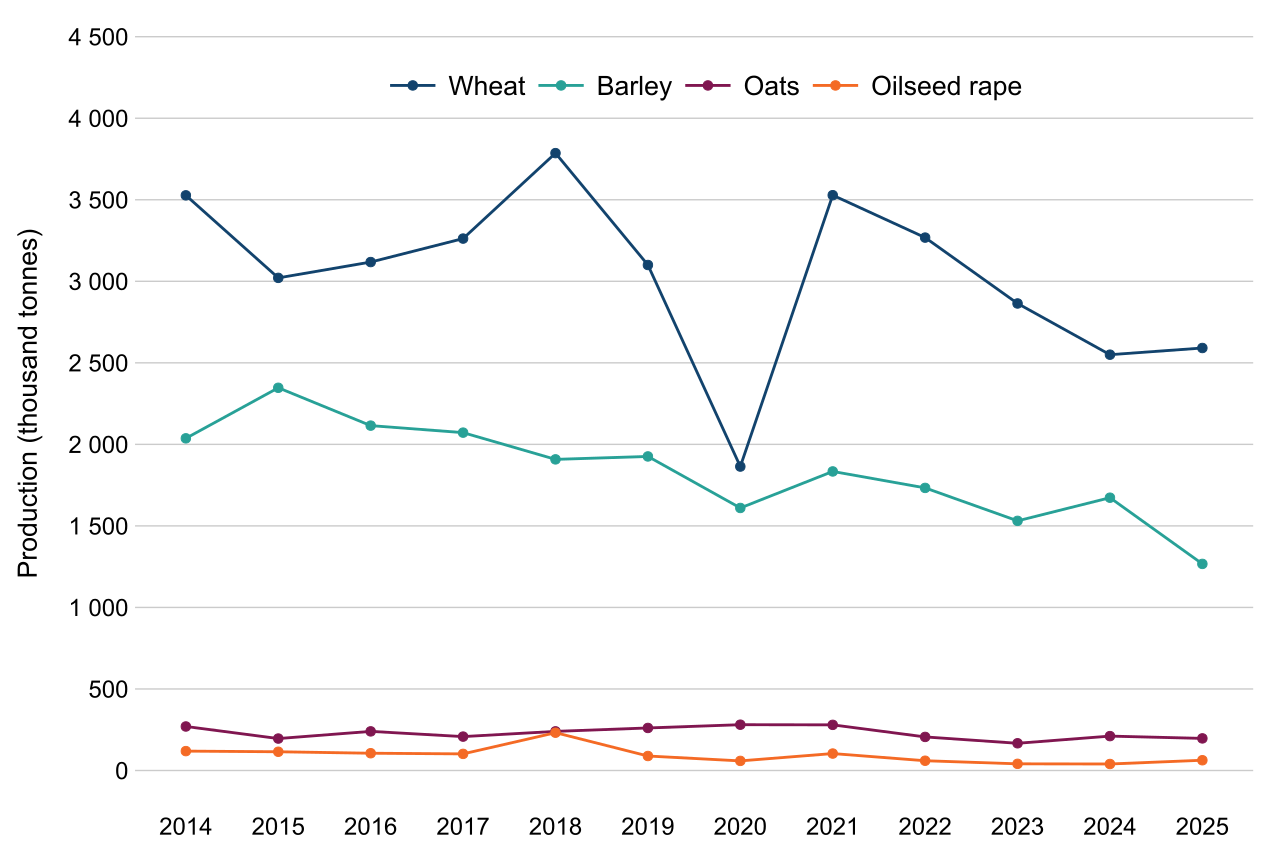
Wheat straw production remained dominant, increasing slightly to 2,591 thousand tonnes. Barley straw output fell by 24% to 1,267 thousand tonnes, while oats straw declined by 6.6% to 197 thousand tonnes. In contrast, oilseed rape straw is estimated to increase by 58% to 63 thousand tonnes (Figure 4).
Figure 4: England straw production between 2014 and 2025
The most common use for straw was sold/exchanged for feed/bedding, accounting for 42% of straw production, followed by home use bedding/feed, accounting for a further 34% of straw production (Figure 5). This has continued the trend seen in 2024, where more straw is sold or exchanged than kept for use on the farm.
Figure 5: Usage of straw in England as a percentage of productions between 2021 and 2025
| Year | Home use bedding/feed | Home use biomass | Home use for other purposes | Sold/ exchanged for feed / bedding | Sold for biomass | Sold for other purposes | Total |
|---|---|---|---|---|---|---|---|
| 2022 | 41% | 1% | 1% | 34% | 11% | 12% | 100% |
| 2023 | 41% | 1% | 1% | 35% | 8% | 15% | 100% |
| 2024 | 34% | 1% | 1% | 41% | 10% | 13% | 100% |
| 2025 | 34% | 1% | 0% | 42% | 11% | 12% | 100% |
Notes:
- The sum of the components may not equal 100% due to rounding.
Section 2 Methodology: Final estimates of 2025 UK cereal and oilseed rape production
2.1 England
Results are based on final results from the Cereal and Oilseed Rape Production Survey, a representative sample of cereal and oilseed rape growers across English regions and farm sizes and are based on the valid responses from 1792 holdings (36% response rate).
The Cereal and Oilseed Rape Production Survey gathers data on production tonnages and moisture content for the various cereal and oilseed rape crops and seeks confirmation of the planted areas for these crops gathered from the June Census of Agriculture and Horticulture.
2.2 Moisture content adjustment
Production was typically standardised to 14.5% moisture content for cereals and 9.0% for oilseed rape but since 2022, following discussions with stakeholders, we agreed that the production data will only be adjusted for farms which have reported moisture content above 14.5% for cereals and 9.0% for oilseed rape. Any production data which has been reported with lower moisture contents has not been adjusted. In an average year this would make little difference to the production total, e.g. in 2021, this new approach would have reduced wheat production by only 0.1%.
This new methodology gives a more representative estimate of the volume of actual crop available for use in the industry.
For detailed moisture content results for England and the English regions go to the accompanying data set
2.3 Changes to survey design
There are no changes to the survey in 2025.
2.4 Data notes
The cereal production (tonnage) figures include tail corn, cereals still to be harvested for grain, grain to be crimped and cereals intended for seed production. The figures exclude crops which have become unfit for harvesting, carryover stocks from the 2024 harvest, bought in grain and crops harvested as wholecrop for silage.
2.5 Revisions
A clerical error for the 2024 oilseed rape production figure for England has been corrected. This has affected the England yield and UK total production and yield, which have also been changed.
Regional areas for June 2024 have been replaced with the final breakdowns from the June Survey of Agriculture. Regional yields have been recalculated as a result, although any changes are very minor. National areas, yields and all production figures remain unchanged (which the exception of England and UK oilseed rape, as mentioned above).
2.6 Wales
No yield data were collected for Wales. The Welsh production figures have been estimated on a regional basis within Wales using the final regional results of the June 2024 Survey, extrapolated to match the June 2025 final results, along with the yields for the English regions bordering Wales. Final results for Wales were published on 9th December 2025 by the Welsh Government on their website.
For further details contact Agricultural & Rural Affairs Statistics, Welsh Government, Cathays Park, Cardiff, CF10 3NQ (telephone: Cardiff 03000 255049). E-mail: stats.agric@gov.wales
2.7 Scotland
The 2025 final estimates of yield and production are based on land use areas estimated from the Agricultural Census and production data collected through the Cereal Survey.
For further details contact Scottish Government: RESAS Statistics (Agriculture) Email: agric.stats@gov.scot
2.8 Northern Ireland
Yield figures are derived from an annual survey of cereal farms in NI. Farms are selected from the census population using a stratified random method. DAERA Farm Account Officers complete a cereal survey questionnaire with each farm selected. The information is collated with mean yields calculated for each cereal type. Cereal yields are then combined with the respective cereal areas from the latest census to derive production figures.
For further details contact DAERAsurveys@daera-ni.gov.uk
2.9 Provisional 2026 harvest statistics
Provisional England results are expected to be published in October 2026, with UK estimates published in December 2026. The definitive publication date will be announced on the research and statistics webpage on gov.uk.
2.10 Feedback
We welcome feedback and any thoughts to improve the publication further. Please send any feedback to: farming-statistics@defra.gov.uk
Section 3: What you need to know about this release
3.1 Contact details
Responsible statistician: Will Drabble
Team: Farming Statistics - Department for Environment, Food and Rural Affairs
Email: farming-statistics@defra.gov.uk
Tel: 0300 060 0170
3.2 Accredited official statistics
Accredited official statistics are called National Statistics in the Statistics and Registration Service Act 2007. An explanation can be found on the Office for Statistics Regulation website. Our statistical practice is regulated by the Office for Statistics Regulation (OSR). OSR sets the standards of trustworthiness, quality and value in the Code of Practice for Statistics that all producers of official statistics should adhere to.
These accredited official statistics were independently reviewed by the Office for Statistics Regulation in 2014. They comply with the standards of trustworthiness, quality and value in the Code of Practice for Statistics and should be labelled ‘accredited official statistics’.
You are welcome to contact us directly with any comments about how we meet these standards (see contact details above). Alternatively, you can contact OSR by emailing regulation@statistics.gov.uk or via the OSR website.
Since the latest review by the Office for Statistics Regulation, we have continued to comply with the Code of Practice for Statistics, and have made the following improvements:
- Reviewed and amended the validation checks carried out on response data including validation against new administrative data sources to better assure ourselves of the quality of the statistics.
- Enhanced trustworthiness by removing pre-release access.