Main findings: area SEND inspections and outcomes in England as at 31 December 2025
Published 16 July 2026
Applies to England

© Crown copyright 2026
This publication is licensed under the terms of the Open Government Licence v3.0 except where otherwise stated. To view this licence, visit nationalarchives.gov.uk/doc/open-government-licence/version/3 or write to the Information Policy Team, The National Archives, Kew, London TW9 4DU, or email: psi@nationalarchives.gov.uk.
Where we have identified any third party copyright information you will need to obtain permission from the copyright holders concerned.
This publication is available at https://www.gov.uk/government/statistics/area-send-inspections-and-outcomes-in-england-as-at-31-december-2025/main-findings-area-send-inspections-and-outcomes-in-england-as-at-31-december-2025
This is the main findings report for the area special educational needs and/or disabilities (SEND) inspections and outcomes in England 2025 release. The following are also available:
- underlying data
- methodology
- pre-release access list
Summary
This release contains:
- outcomes of area SEND full inspections carried out between 1 January 2025 and 31 December 2025
- outcomes of area SEND monitoring inspections carried out between 1 January 2025 and 31 December 2025
- outcomes for all area SEND inspections carried out under the current framework (between 1 January 2023 and 31 December 2025)
Main findings
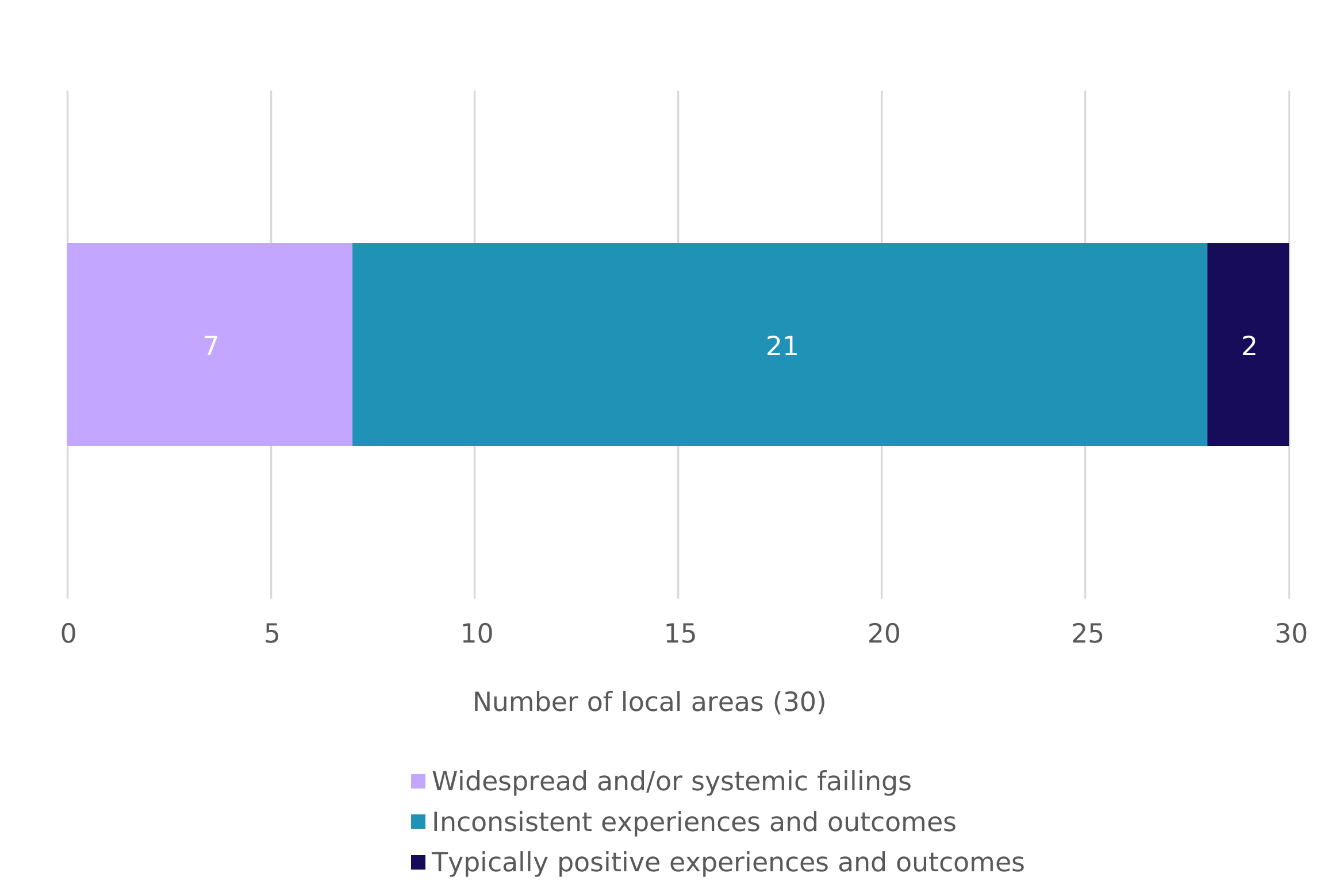
- In 2025, there were 30 full inspections. In 2 (7%) of these inspections, we found that the SEND arrangements of the local area partnership typically led to positive experiences and outcomes for children and young people with SEND. In 21 (70%) inspections, we found that arrangements led to inconsistent experiences and outcomes for children and young people with SEND. In the remaining 7 (23%) inspections, we concluded that there were widespread and/or systemic failings in arrangements for children and young people with SEND.
- Throughout 2025, there were 5 monitoring inspections, and in all of these, all priority actions had been addressed.
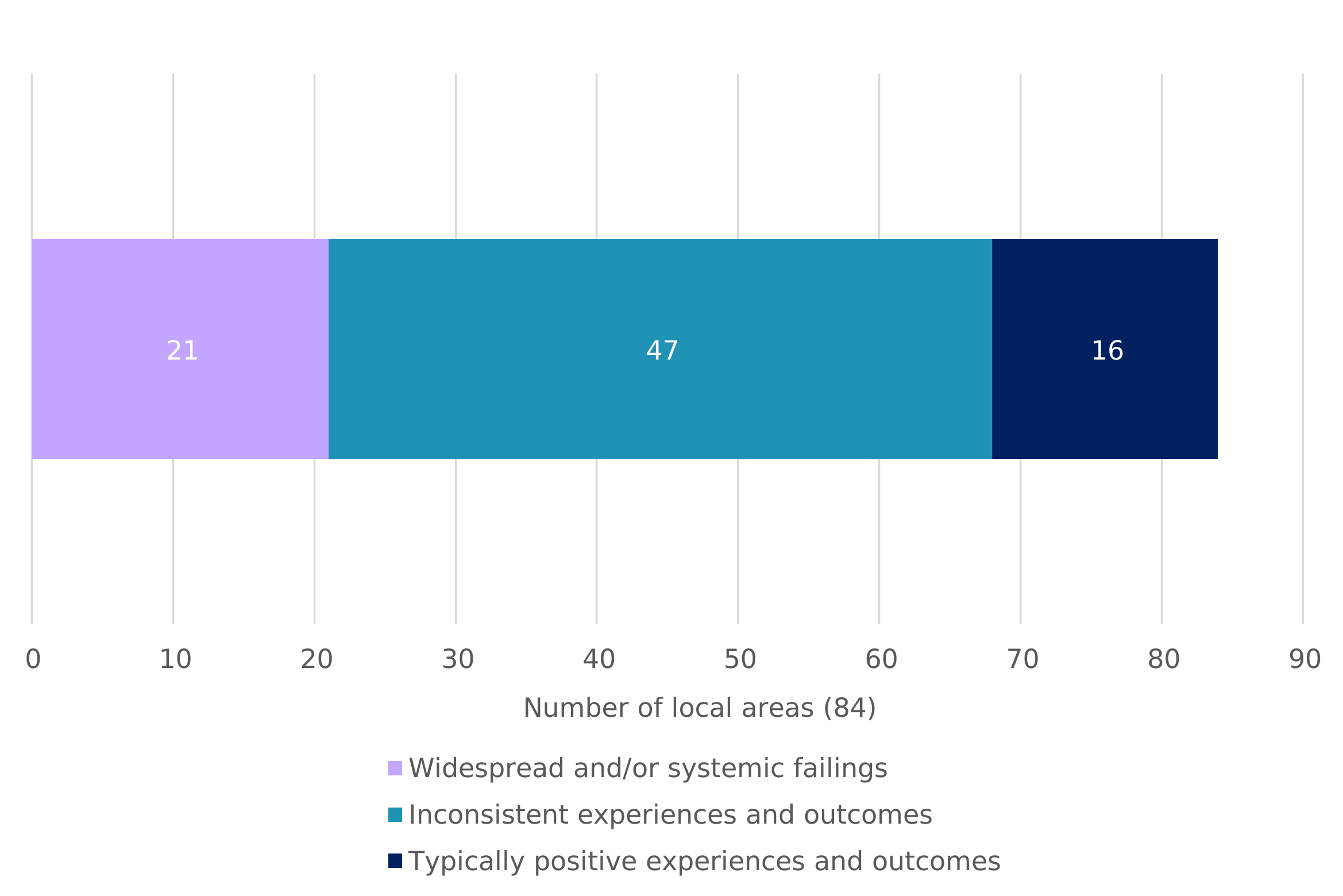
- Since January 2023, 84 full inspections have been carried out in local areas across England. In 47 (56%) inspections, which was the majority, we found that arrangements led to inconsistent experiences and outcomes for children and young people with SEND. In 16 (19%) inspections, we found that arrangements typically led to positive experiences and outcomes, and in 21 (25%) inspections we found widespread and/or systemic failings in arrangements for children and young people with SEND.
Introduction
Ofsted and the Care Quality Commission (CQC) carry out joint inspections of local areas at the request of the Secretary of State for Education under section 20(1)(a) of the Children Act 2004.[footnote 1] More details on current and previous frameworks can be found in the accompanying methodology document.
Inspections evaluate how well members of a local area partnership work together to improve the experiences and outcomes of children and young people with SEND. The focus is not on inspecting the specific individuals who work in the local area partnership.
When evaluating the local area partnership, inspectors focus mainly on how effectively the local authority and integrated care board jointly plan, evaluate and develop services for children and young people with SEND. However, they also consider the duties of other area partners, which are set out in the Children and Families Act 2014 and described further in the SEND code of practice.
Inspections evaluate arrangements for all children and young people with SEND aged 0 to 25 covered by the SEND code of practice, including those who have an education, health and care (EHC) plan and those who receive special educational needs (SEN) support.
In January 2025, there were 639,000 children and young people aged up to 25 with an EHC plan. There were additionally over 1.2 million pupils receiving SEN support in school. Overall, 19.5% of children and young people in school are designated as having SEND.[footnote 2]
All local areas will receive a full inspection at least once during a 5-year period. However, the frequency and type of inspection activity in any individual local area will be based on previous inspection outcomes and any relevant additional information received by Ofsted and CQC.
In January 2023, Ofsted and CQC began carrying out joint inspections of local services for children and young people with SEND under the new inspection framework.[footnote 3] The aim is for all local area partnerships to have received a full inspection by the end of 2027.[footnote 4]
There are 3 possible full inspection outcomes, leading to different subsequent inspection activity:
- The local area partnership’s SEND arrangements typically lead to positive experiences and outcomes for children and young people with SEND. The local area partnership is taking action where improvements are needed.
- The local area partnership’s arrangements lead to inconsistent experiences and outcomes for children and young people with SEND. The local area partnership must work jointly to make improvements.
- There are widespread and/or systemic failings leading to significant concerns about the experiences and outcomes of children and young people with SEND, which the local area partnership must address urgently.
Ofsted and CQC will carry out monitoring inspections in local areas that were found, at a full inspection, to have widespread and/or systemic failings and were required to produce a priority action plan (area SEND). Inspectors will evaluate whether the local area partnership is taking effective action against each area for priority action set out in the full inspection report.[footnote 3]
In this publication, we occasionally summarise inspection outcomes for ease of presentation. This publication covers all area SEND inspections completed during 2025. Reports for these inspections have all been published.
Inspections between 1 January 2025 and 31 December 2025
During the 2025 calendar year, we carried out 30 full inspections in local areas across England.
In 2 inspections, we found that the local area partnership’s SEND arrangements typically led to positive experiences and outcomes for children and young people with SEND. The local area partnership was taking action to make improvements where these were needed.
In 21 inspections, we found that the local area partnership’s arrangements led to inconsistent experiences and outcomes for children and young people with SEND. The organisations making up the local area partnership needed to work together to make improvements.
In the remaining 7 inspections, we concluded that there were widespread and/or systemic failings that led to significant concerns about the experiences and outcomes of children and young people with SEND, which the local area partnership needed to address urgently. These local area partnerships had to prepare and submit a priority area SEND action plan to His Majesty’s Chief Inspector (HMCI) addressing the areas for priority action that we identified.
Figure 1: Inspection outcomes for full inspections carried out in 2025
1. Number of local areas in brackets.
View data in an accessible table format.
Inspections between 1 January 2023 and 31 December 2025
Since we introduced the new area SEND framework, we have carried out 84 full inspections of local areas across England.
In 16 inspections, we found that the local area partnership’s SEND arrangements typically led to positive experiences and outcomes for children and young people with SEND. The local area partnership was taking action where improvements were needed.
In 47 inspections, we found that the local area partnership’s arrangements led to inconsistent experiences and outcomes for children and young people with SEND. The organisations making up the local area partnership needed to work together to make improvements.
In the remaining 21 inspections, we concluded that there were widespread and/or systemic failings that led to significant concerns about the experiences and outcomes of children and young people with SEND, which the local area partnership needed to address urgently. Local area partnerships had to prepare and submit a priority area SEND action plan to HMCI addressing the areas for priority action that we identified.
Figure 2: Inspection outcomes for full inspections as at 31 December 2025
1. Number of local areas in brackets.
View data in an accessible table format.
Monitoring inspections
Monitoring inspections are required for the local areas that were identified as having widespread and/or systemic failings at their full inspection. These inspections will evaluate and report on what the local area partnership has done to address the areas for priority action that Ofsted and CQC identified at the previous full inspection.
Since the introduction of the current area SEND inspection framework, 21 out of 84 full inspections have found that the inspected areas had widespread and/or systemic failings, meaning that a monitoring inspection will follow for those local areas. So far, 5 monitoring inspections have been completed as at 31 December 2025. All 5 of those local area partnerships have worked effectively to address all priority actions. Monitoring inspections will follow in due course for those local area partnerships.
Full inspection outcomes by year
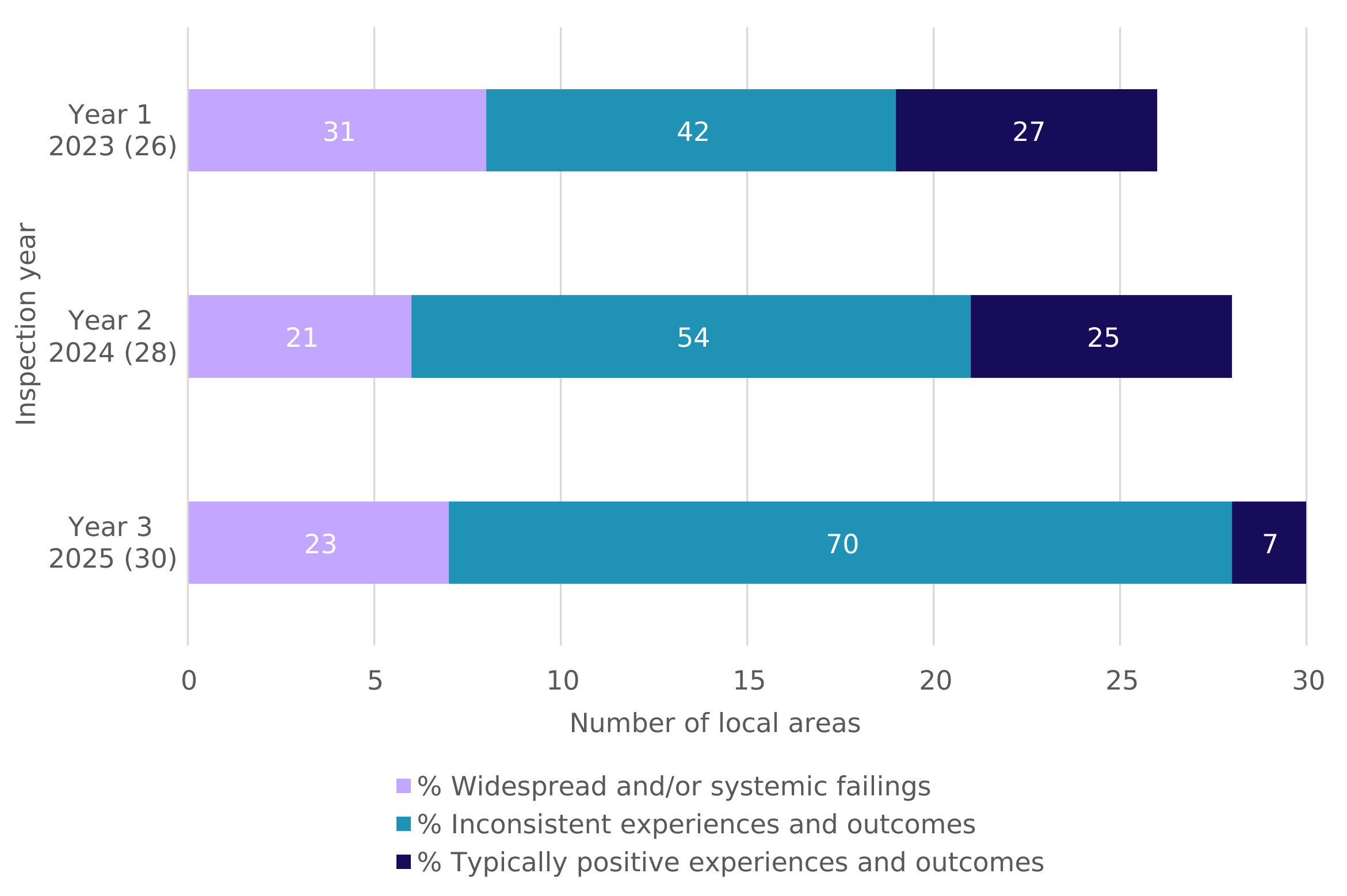
Figure 3: Inspection outcomes for full inspections by year from 2023 to 2025
1. Number of local areas in brackets.
2. Percentages are rounded and may not add to 100.
View data in an accessible table format.
This current area SEND inspection framework has been used to inspect local areas since 2023. Ofsted aims to ensure that there is an even spread of inspections within a given year. The number of inspections has increased slightly over time; there have been 4 more inspections in 2025 than in 2023.
Over the years, the most common outcome has been that the local area partnership’s arrangements led to inconsistent experiences and outcomes for children and young people with SEND. In 2025, the number of inspections finding that the local area partnership’s arrangements led to typically positive experiences and outcomes was 7%, down from 25% in 2024 and 27% in 2023. By contrast, the number of inspections finding that the local area partnership’s arrangements had widespread and/or systemic failings remained relatively stable from 2024 (21%) to 2025 (23%).
Figure 4: Map showing full inspection outcomes by local area as at 31 December 2025
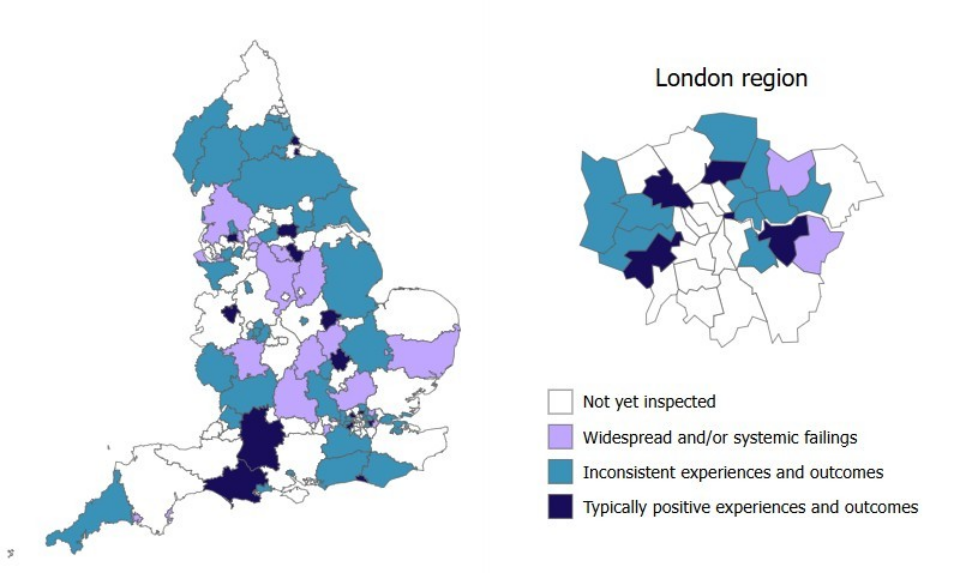
1. The map of England with a close-up of the London region shows the inspection outcomes listed in the inspection data spreadsheet of this publication.
See the last worksheet in the area SEND inspection data spreadsheet.
Outcomes by Ofsted region
Figure 5: Inspection outcomes for full inspections by Ofsted region as at 31 December 2025
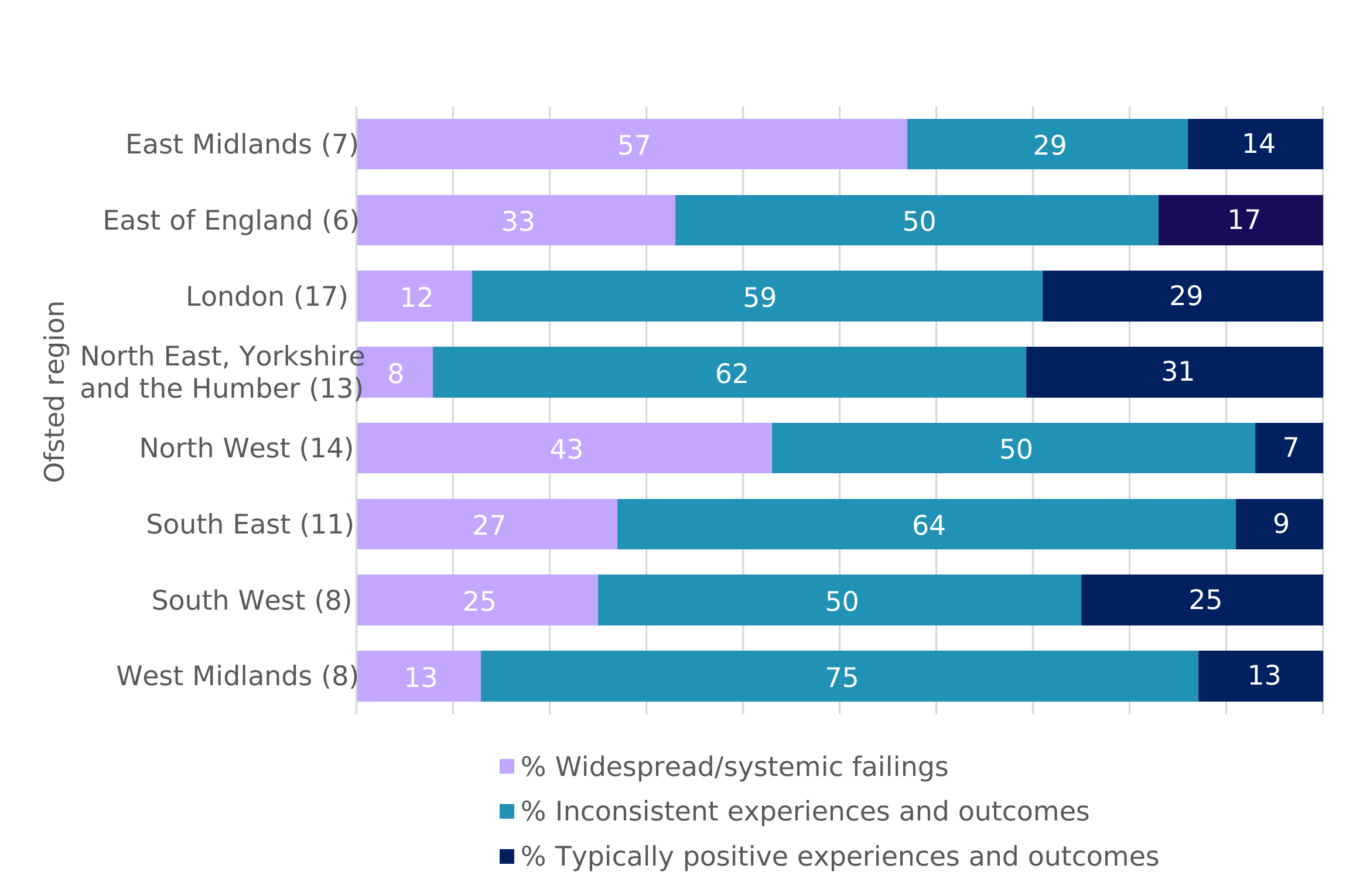
1. Number of local areas in brackets.
2. Percentages are rounded and may not add to 100.
View data in an accessible table format.
In the East Midlands, 4 out of the 7 inspected areas (57%) have been found to have widespread and/or systemic failings, leading to significant concerns about the experiences and outcomes of children and young people with SEND that the local area partnership must address urgently. This is the highest proportion in the country by some margin. By contrast, North East, Yorkshire and the Humber is the Ofsted region with the lowest number of inspected areas found to have widespread and/or systemic failings (8%) and the highest number of inspected areas where the arrangements typically led to positive experiences and outcomes for children and young people with SEND (31%).
Next steps
The 3 possible outcomes of full inspections lead to different subsequent inspection activities.
Local area partnerships with typically positive experiences and outcomes for children and young people with SEND will usually receive a full inspection within 5 years.
If a local area partnership’s arrangements lead to inconsistent experiences and outcomes for children and young people with SEND, it will usually receive a full inspection within 3 years.
If there are widespread and/or systemic failings leading to significant concerns about the experiences and outcomes of children and young people with SEND, which the local area partnership must address urgently, the local area partnership is required to submit a priority area SEND action plan. It will usually receive a monitoring inspection within around 18 months, and a full inspection within about 3 years.
Regardless of their inspection outcome, local area partnerships will be invited to participate in engagement meetings with Ofsted and CQC.
Glossary
Definitions of terms are in the statistical glossary.
Further information
Contacts
If you are a member of the public and have any comments or feedback on this publication, please contact Clare Atkinson on 0333 077 7300 or the ILACS and ASEND Inspection Insight Team data.areasend@ofsted.gov.uk.
Press enquiries should be sent to our press team on pressenquiries@ofsted.gov.uk.
Acknowledgements
Thanks to Noopur Naik for her contributions to this statistical release.
Annex: data tables for figures
This section contains the underlying data in an accessible table format for all figures.
Data for Figure 1: Inspection outcomes for full inspections carried out in 2025
| Group | Widespread and/or systemic failings | Inconsistent experiences and outcomes | Typically positive experiences and outcomes | Total |
|---|---|---|---|---|
| Local areas | 7 | 21 | 2 | 30 |
See Figure 1.
Data for Figure 2: Inspection outcomes for full inspections as at 31 December 2025
| Group | Widespread and/or systemic failings | Inconsistent experiences and outcomes | Typically positive experiences and outcomes | Total |
|---|---|---|---|---|
| Local areas | 21 | 47 | 16 | 84 |
See Figure 2.
Data for Figure 3: Inspection outcomes for full inspections by year from 2023 to 2025
| Inspection Year | Widespread and/or systemic failings (%) | Inconsistent experiences and outcomes (%) | Typically positive experiences and outcomes (%) | Total (local areas) |
|---|---|---|---|---|
| 2023 | 31 | 42 | 27 | 26 |
| 2024 | 21 | 54 | 25 | 28 |
| 2025 | 23 | 70 | 7 | 30 |
See Figure 3.
Data for Figure 5: Inspection outcomes for full inspections by Ofsted region as at 31 December 2025
| Region | Widespread and/or systemic failings (%) | Inconsistent experiences and outcomes (%) | Typically positive experiences and outcomes (%) | Total |
|---|---|---|---|---|
| East Midlands | 57 | 29 | 14 | 7 |
| East of England | 33 | 50 | 17 | 6 |
| London | 12 | 59 | 29 | 17 |
| North East, Yorkshire and the Humber | 8 | 62 | 31 | 13 |
| North West | 43 | 50 | 7 | 14 |
| South East | 27 | 64 | 9 | 11 |
| South West | 25 | 50 | 25 | 8 |
| West Midlands | 13 | 75 | 13 | 8 |
See Figure 5.
-
A local area is the geographic footprint of a local authority. ↩
-
Figures sourced from Department for Education statistical publications: Education, health and care plans, reporting year 2025 and Special educational needs in England, academic year 2024/25. ↩
-
HMCI commentary: publishing our new area SEND framework, published 29 November 2022. ↩ ↩2
-
‘Local area partnership’ refers to those in education, health and care who are responsible for the strategic planning, commissioning, management, delivery and evaluation of arrangements for children and young people with SEND who live in a local area. ↩