Work and Pensions Secretary statement on the Milburn review into young people and work
The Rt Hon Pat McFadden MP, Secretary of State for Work and Pensions, responded to the publication of the independent Milburn review into young people and work.
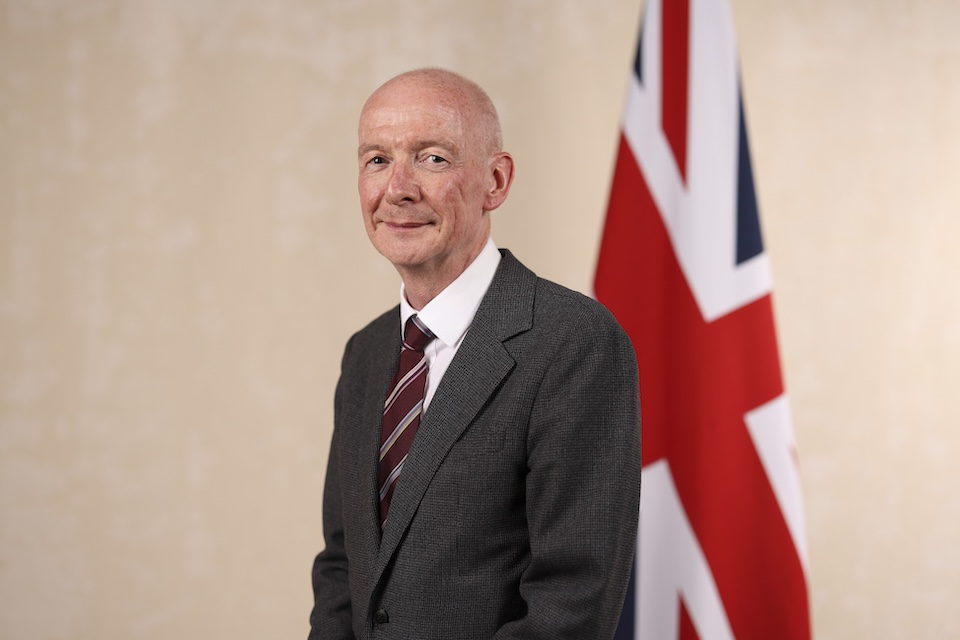
With your permission, Mr Speaker, I would like to make a statement on the Milburn review into young people and work.
This morning, Alan Milburn published a landmark report, setting out a radical blueprint for a new settlement with young people.
I want to thank Mr Milburn and his team for their outstanding work. Sometimes a review deals with an issue so fundamental that it alters what we see as the contract between Government and society.
And I believe this is one such report.
Because one million young people not in education, employment or training creates a human cost that no country should ask its young people to bear.
It robs them of the thing that is most important to their lives – the prospect of a good future.
And it demands a response that is much more than a conventional departmental response – it has to be one that goes from education to health to employment and more.
There is a narrative out there that describes young people as snowflakes and shirkers. We reject that entirely.
The fault does not lie with the young people themselves – they want to work, they want to learn.
It is for us to make sure that they have a chance to do so. So our message to young people - the message from me, from the Prime Minister, from the whole Cabinet – is that we value you, we believe in you and we want you to have a future.
That is why when the Cabinet met this morning to discuss the report, the Prime Minister and the whole Cabinet endorsed the need for a whole new system for young people – one that puts work and opportunity at its heart – with earlier intervention, stronger support, more devolution, and clear expectations to take part.
One that changes the question the state asks to a much deeper and more fundamental question, and that is how do we help people live the fullest life.
Today, I want to set out what Alan Milburn has proposed, and the next steps the Government will take.
His report is clear that this has been a long time coming. He says: “the NEET issue is not new. The NEET rate has hardly been below 10% in 25 years. It has become a fact of life.”
And that is what we must change.
In the future, we should judge the success of the welfare state not just by a snapshot of people’s monthly incomes, but by the story of people’s lives. By their ability to achieve their full potential.
And that is why we need a new settlement for young people, just as we announced [political content redacted] a new settlement for older people, with a reformed Triple Lock and a new National Care Service.
And this new settlement must give people the best chance of higher living standards for the whole of their lives. It must change the equation that sees us spend £25 on the consequences of inactivity for every pound that we spend on opportunity.
And that work has already begun. Our £2.5 billion Youth Guarantee; fully funded apprenticeships for the under 25s; more work experience places, hiring incentives for employers, youth hubs in every community, and for the long-term young unemployed – a guaranteed fully-funded six-month job.
But we must do more. Alan Milburn is right to argue for a new system that is more personalised, more devolved and focussed on participation first.
Instead of asking a young person to prove what they cannot do, the system should begin by asking what they need to build a future.
So his first key recommendation is for a new Opportunity and Support Guarantee – backed by legislation – so that every young person who is not earning or learning, has a credible route into education, training, an apprenticeship, high-quality work experience or a job. And we support this recommendation.
His second recommendation is for a more personalised system which treats people as human beings not as departmental clients – with employment, education, skills, health and wider support brought together around the person. And crucially, that this be delivered locally. The Government also accepts this second recommendation. More local delivery, with proper standards and accountability for outcomes.
This is common in other countries with significantly lower rates of youth inactivity – because local leaders have the knowledge, the relationships and the networks to connect young people to the support and opportunities that make sense for them.
Every eligible young person who falls out of education or work should have one place to turn, one trusted person responsible for helping them, and one plan bringing together the support they need.
And in this new system, opportunity must be matched by responsibility. So where someone can participate, they should be expected to take up the support available.
The report recommends a youth allowance which people will receive whilst they receive help from the Youth Opportunity Service, with extra support for care leavers and those outside the family home.
It says young people whose disabilities or health conditions create significant, enduring additional costs, including those with conditions that fluctuate, should continue to receive help with those costs, and that support should not be put at risk if they start work.
And because people should not always have to wait for a national assessment for short term help, it proposes a dedicated locally held fund to help with one-off costs, or temporary cash support.
And for those with the most severe and lifelong conditions where work is not a realistic prospect, Alan Milburn recommends a stronger safety net providing dignity and security, and an end to unnecessary reassessments.
The report points out that, in some cases, extra cash may not always be the right way to support a young person.
And that is because, where participation is realistic, the right priority should be earlier and more intensive support with their health, education and employment to help them build a better future.
To help change the situation we have right now where a 20-year-old who signs on for long term sickness benefits is more likely to mark their 30th birthday and still be on those benefits than to have had a steady job in any of the intervening 10 years.
And as the Prime Minister said to the Cabinet this morning, delivering this new settlement will require a genuinely cross government effort.
And that is why the Government is committing today to the creation of a new Youth Opportunities Unit which will report directly to the Prime Minister. We will also work with the devolved governments to ensure that the benefits of local delivery and personalised support are available for young people throughout the United Kingdom.
These are significant commitments to begin building this new settlement.
And there is a further step that we can take immediately for young people who have already spent too long out of work.
The Jobs Guarantee that I launched earlier this year provides for a fully funded, six-month job matched to a young person’s skills. Alan Milburn recommends making this available after 12 months on Universal Credit, rather than 18. I agree, and we will do that.
I am also hugely grateful to businesses in the retail, hospitality and tourism sectors for their recent announcements to hire a total of 250,000 young people not in education, employment or training over the next few years.
In the weeks ahead, the work of change will continue. I am already working with colleagues from the Departments of Health, Education and across Government to put in place a better support offer from now.
We will have the Timms Review reporting soon.
In the new year, the Government will publish a White Paper and, following that, legislation.
And then the House will decide whether to continue with the current system. [Political content redacted] which far too readily signs people off and writes them off.
Or to bring in a new settlement for young people which puts opportunity, participation and work at the heart of the welfare system and at the heart of the wider challenges that young people are facing.
I put forward this response today not because it’s a tough decision but because it is the right decision.
Carrying on as we are has too high a human cost, too many wasted lives and too much spent on failure rather than opportunity.
[Political content redacted] we believe that people from all backgrounds and all parts of the country should fulfil their full potential. That is what will change lives for the better, that is what will bring more hope, and I commend this statement to the House.