Remaking the State Annual Conference 2026
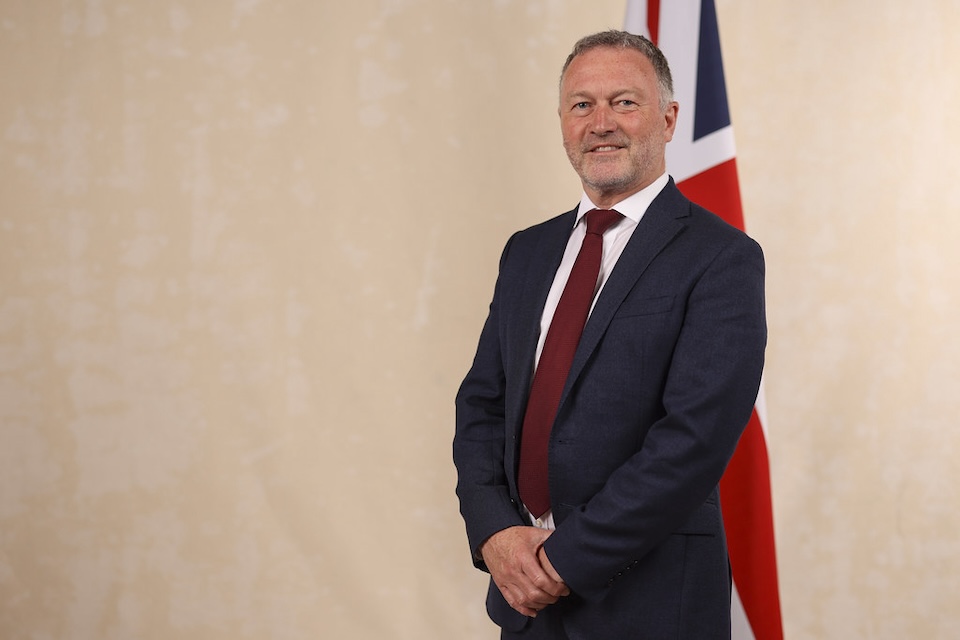
Speaking at the Remaking the State Annual Conference in London, Communities Secretary Steve Reed set out reforms to put more power in the hands of communities.
The UK is the world’s fifth biggest economy, and the second biggest in Europe after Germany.
Yet seven out of ten of the poorest regions in Northern Europe are in England.
And the gap between England’s richest and poorest regions is one of the widest anywhere in Europe.
[Political Content Removed]
While London has the highest average incomes in the country, it also has very high levels of deprivation with more than one in four Londoners living in poverty, a third higher than the national average.
We have created a situation where here, in one of the richest countries on earth, we have economic divides between regions and within communities that are so deep they are pulling our country apart.
So, what needs to change?
Ours is one of the most over-centralised countries in Europe and the damage we see all around us stems from that fact.
Germany, where power is much more evenly spread across the country, has nothing like the same level of regional inequality.
England’s regions lacked the power to steer themselves away from their decades-long journey towards ruin.
Politicians made promise after promise to fix things, but their failure ultimately broke that trust in politics.
[Political Content Removed]
The inequalities of wealth we see all around us are linked to the unequal distribution of power in our country.
This Government is tackling that,
And as Andy Burnham made clear on Monday, he intends to continue that work. [Political Content Removed]
First, devolution by default.
We are redistributing power from Whitehall to the regions following the principle of subsidiarity so that decision-making moves as close as is strategically sensible to the people affected by it.
Second, place-based delivery will learn from neighbourhood working and the previous Total Place agenda, integrating services at the local level, with more pooled budgets so resources can be redirected to meet locally defined priorities.
And third, we will empower service users relative to service providers so decisions and public services become more directly accountable and responsive to people’s real needs.
We know from experience that this pushes towards more relational and preventive public services, and we recognise it requires resources to help service users and communities take back power and agency for themselves.
This Government is overseeing the biggest transfer of power out of Whitehall in a generation.
Our landmark English Devolution and Community Empowerment Act makes devolution the default option.
It gives mayors new powers over transport, planning, housing, and regeneration.
That allows them to grow their economies in a more inclusive way – the opportunity to put more money in more people’s pockets.
But the Act is the floor, not the ceiling, of our ambition.
We want to see more power in the hands of more people.
Every region that wants devolution will have it.
And we want to go further in deepening devolution, including fiscal devolution. If we trust places to lead, we must trust them with the tools to do it.
Fiscal devolution creates new incentives for economic growth, because local communities reap the rewards from local success.
And it means we can move away from reliance on a top-down and fragmented grants system towards long-term planning for investment.
The Overnight Visitor Levy is our first step towards that, something that’s already commonplace in Europe and North America.
England attracts over 130 million overnight visits each year – local leaders will be able to harness this, and put more money into local priorities.
The Right to Request allows mayors to take over more powers as their capacity grows.
The first round concluded in May, and as a result all mayors will now have the final say on mass transit projects, including trams, in their regions.
We want mayors to have a bigger role in public service reform, but we know the complexity of public service boundaries makes this difficult. So we are committed to more boundary alignment across different public services.
Greater Manchester and South Yorkshire will have Deputy Mayors for Health for the first time, connecting health outcomes with a wider range of the services and circumstances that influence them.
Liverpool, South Yorkshire and the North East will pioneer new approaches in education, the arts, and flood management, and we will extend those powers to other regions as we learn what works best.
Many mayors have made the case for taking more control over skills and employment support, and the challenges we face with one in six young people not in employment, education or training underscore the urgency of that.
The Netherlands has successfully tackled similar challenges by localising these services, and we can learn from their experience.
Integrated settlements give mayors local control over a single budget covering transport, regeneration, housing, skills, the environment, health, and public service reform.
Thanks to the flexibility this offers, we already see mayors building new stations in Liverpool City Region, opening up land for housebuilding in West Yorkshire, and upgrading the bus network in Greater Manchester.
But there is much further to go as we end Whitehall micromanagement and set England’s regions free.
The way people perceive politics is through what they see around them. The state of their street and neighbourhood, the kind of home and lifestyle they can afford. After the broken promises of the past, people will no longer trust politicians’ words.
They want ‘change you can feel’ on their street and in their community.
That requires a new focus on place.
Places are where people live, where their most important relationships exist, and what gives them a sense of belonging.
We can improve places by giving people more direct control.
I’ve seen it for myself.
Back when I was a councillor, I helped a housing estate in Brixton set up a residents’ management organisation where their housing managers report into an elected residents’ board. Services have improved dramatically ever since.
I saw community groups - churches, businesses, the voluntary sector, young people themselves - come together to make a huge impact in reducing violent youth offending when the council opened up its funding and spaces to their ideas.
And I saw a dying food market brought back to life when a social enterprise brought together businesses, owners and the council and opened up empty units to start-up businesses on low or no rent for the first few months of their existence. A fantastic example of community-led regeneration.
The key is finding new ways to give service users and citizens a bigger say. Politicians too often focus on the provider of public services rather on their users. But it’s users’ insights that are the key to improvement – and that’s true whether those services are run in the public or the private sector.
Our Pride in Place programme operates in this way.
Almost 300 of our poorest communities are receiving up to £20m each to transform life and life chances for the people living there.
But decisions about how that money is spent will be taken by local people not by politicians, because local people know best what needs to change in their own area.
Learning from this we will use models of co-production and citizen empowerment to give people a real say over the day-to-day decisions and public services that profoundly affect their lives.
Not just devolution from Whitehall to the regions, but double devolution so people hold power in their own hands. At a time when people have lost trust in politics, it’s time for politicians to show that we trust people. That is how trust will be rebuilt.
Over-centralisation has made our country weaker.
We need a new settlement that opens up power to our regions and our communities in a way we’ve never seen in this country before.
This Government is already leading change with our current Prime Minister, and the likely next one is committed to driving that change further and faster.
For all of us who believe in reform of our state, public services and democracy, this is an exciting moment.
The prize is immense.
Economic growth that benefits everyone everywhere.
Public services that respond directly to the real and changing needs in people’s lives.
A politics that respects the places and relationships that give people a sense of belonging, purpose and meaning in their lives.
We live in a world facing profound change.
But if we get this right, if we rebuild the foundations that will keep our country strong, we can face that future together with confidence and with hope.