Minister Pollard speech at ADS Annual Dinner 2026
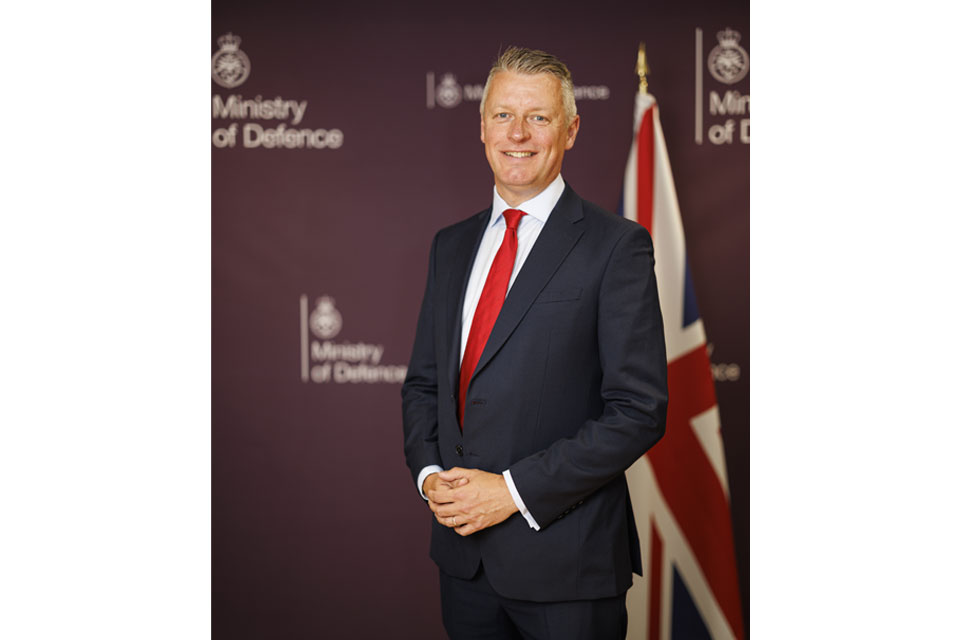
Minister for Defence Readiness and Industry, Luke Pollard MP, delivered a keynote speech at the ADS Annual Dinner.
Thank you Kevin, and good evening everyone.
It’s a real pleasure to join you tonight.
Once again ADS has done a magnificent job bringing together 1,000 leaders from across the sector to enjoy a splendid dinner and excellent company and to kick 2026 off in some style.
Looking around the room, I know we have companies here in close competition for defence contracts.
We have innovators racing each other to launch new technologies onto the market.
We have defence correspondents looking to land a scoop ahead of their rivals.
And we have MPs from across the political divide who usually stare each other out on opposite sides of the House of Commons.
But it’s nights like tonight when we’re reminded of the bonds that unite everyone in this remarkable industry, facing a new era of threats.
The shared principles and convictions of a great many people, working collectively across a vast array of businesses and organisations with a clear and common objective.
To strengthen Britain’s security at a time when the world is growing increasingly polarised and dangerous.
So I want to start this evening by thanking every one of you for what you do.
You’re not just leaders within this sector.
You’re torchbearers for defence within wider society.
And collectively, you’re one of the fastest developing industries within our economy.
A quick glance at the ADS Facts and Figures document for 2025 tells us that the entire sector now has a combined turnover of £100 billion adding £42 billion of value to the UK economy each year and representing growth of almost two-thirds over the past decade.
You’re part of a defence industry that directly supports over 460,000 highly skilled and well-paid jobs.
Highlighting the importance of this thriving sector.
And, I believe, the unprecedented opportunities to grow in the years ahead.
ADS has proved that defence is an engine for growth, and the MOD’s own facts and figures tell the same story.
We hope to increase those numbers even further, to demonstrate this to the public.
But the future is more unpredictable than at any time in recent memory.
The Ukraine war is about to enter its fifth year. Putin is threatening Europe’s borders. And the UK is facing cyber attacks on a daily basis indeed, since we started this evening, based on average statistics, approximately 20 cyber attacks have taken place against UK defence – and 50,000 new cyber threats were identified in the UK.
So everyone in defence needs to step-up to get our Armed Forces to warfighting readiness.
I’m proud to be part of a Ministerial team, headed by the Defence Secretary, MinAF, MinVP, MinLords, and myself.
In the same way, it’s a privilege to work with Rich Knighton, Chief of the Defence Staff and Roly Walker, Gwyn Jenkins, and Harvey Smyth, respective Chiefs of the Army, Royal Navy and Royal Air Force.
But it’s not just those wearing lots of gold braid I’m honoured to work alongside. It’s all our servicemen and women, and our veterans. The people working to support them, from logistics, health and recruitment to cooks and cleaners and of course, the supply chain across the country.
Our military is only as strong as the industry that supports it.
One year ago, the Defence Secretary stood here, and made a number of key pledges.
He promised a Strategic Defence Review that would hardwire-in the lessons of Ukraine. Delivered.
He promised a Defence Industrial Strategy that would finally treat industry as a strategic partner. Delivered.
He vowed to appoint a National Armaments Director to help lead a programme of Defence Reform. Delivered.
And he promised investment.
All delivered.
The SDR in the summer was followed by the Industrial Strategy in September.
Our excellent new NAD, Rupert Pearce, is already busy reforming procurement, and driving a new commercial approach in the Department.
And we’ve gone well beyond our pledge to spend 2.5% of GDP on defence by next year setting out a pathway to 3% in the next parliament, and promising a historic rise to spend 5% of GDP on national security by 2035, by far the largest sustained increase in defence spending since the end of the Cold War.
We are using more of our increasing defence budget on British companies. And for avoidance of doubt, if you’ve got a British postcode, you are a British company.
Now, I know there’s frustration about the timing of the Defence Investment Plan.
But when we came into government, we inherited a programme that was overcommitted, underfunded and unsuited to the threats we face today.
The decisions being taken now concern investments worth hundreds of billions of pounds over the next decade.
And I can assure you, that finalising the plan is the single highest priority in the Department.
It is the first line-by-line review of defence planning in 18 years.
It will transform our Armed Forces by backing our defence industrial base providing them with the most advanced battlefield technology available and equipping them to fight and win.
Nothing matters more than getting this plan right, and finally putting defence on a sustainable footing.
It will benefit from close engagement with defence companies and SMEs, to make sure we deliver the most robust and effective Investment Plan that responds directly to your concerns.
I can’t stress enough, that bringing you closer into UK Defence is a two-way process.
We can only achieve our goals with your full involvement, and your unique expertise on how to make the system work better, and how to make it radically different.
More of the same is not an option.
One of the things industry has been asking for is a place where SMEs can get advice, support, and connect to opportunities in defence.
A single front door that makes things easy.
On a visit to Scotland yesterday, we established the Office for Small Business Growth, specifically to meet those needs.
No more bouncing about between departments. No more guessing who to call. No more hearing that you’re too small to matter.
And we’re backing this with real money.
£7.5 billion committed to small businesses by 2028. That’s a fifty per cent increase in money allocated directly by this Department.
And we expect the primes to follow suit.
Our ambition is to reach every SME with something to offer UK defence and that includes companies which don’t think of themselves as defence firms yet – Kevin, that’s membership growth for you.
So, if you’re running a small defence business or you know someone who is we’d love you to come and talk to us.
And we’re on the hunt for something else.
Somewhere in this country – maybe in this room tonight – is a company that will transform how we fight.
It might be a startup working on autonomous systems. A scale-up developing AI for logistics. A spinout from a university with a breakthrough in materials science.
Wherever those transformational ideas are coming from, we want to find them, and back them.
That’s why we’ve ringfenced 10% of our equipment budget for novel technologies.
It’s why UK Defence Innovation now has a protected budget of £400 million a year.
And it’s why we are creating a fund of up to £20 million to support the search for the next defence unicorns.
A British company, solving global defence problems, selling to the world.
If that’s you – or if it’s your ambition – we’re ready to talk.
We’ll also run a ‘Dragon’s Den’ style event to provide seed funding for new ideas at an early stage of development.
Because if you’re willing to take risks, we must be willing to take them too.
But keeping with tradition as some of you who have heard me speak before might know I like to set a little homework.
Just as we are putting up the money and delivering the reforms we need industry to raise its game too.
The challenge is to make tangible improvements to the fundamentals of supply chain manufacturing.
That means commitments to better productivity.
It means hitting timelines and controlling costs and if things aren’t working, being honest about it.
We talk a lot about innovation in technology. But just as vital is innovation in how you work.
The old cost-plus culture has to go.
We want to reward agile companies that take risks, move at pace, and deliver change.
And we want exportability.
Whenever feasible, platforms should be designed with export in mind from day one.
Because UK requirements alone won’t sustain the industrial base we need.
We must sell to the world.
And speaking of international matters, as we enjoy our dinner 1,500 miles away from Kyiv, I’m always reminded at this time of year of the men, women and children once again huddled in air raid shelters never knowing what Putin may have in store for them tonight.
And I think of the hundreds of thousands of families mourning their loved ones.
The need for warfighting readiness has never been more acute.
This is the blunt reality of Putin’s illegal invasion of Ukraine.
But whenever peace comes, we will be ready to deploy our troops, through the Coalition of the Willing.
And because someone from the FSB is always listening, we implore you to return any Ukrainian child immediately, safely and unconditionally.
So, now we’ve laid the foundation for change, it’s time to get on and deliver.
As we reinvigorate our Armed Forces, and move into a period of historic growth for defence spending it goes without saying that we are entering a period of enormous opportunity for the supply chain.
Yes, opportunities for commercial success.
Opportunities to spread the benefits of investment across our nation.
But also to join together as true partners in this critical national endeavour.
That’s why we are forging a much closer partnership between industry, innovators and investors fuelling a virtuous circle between strong defence, a growing economy, and stable society.
This is our country.
And this is our shared future.
So let’s write the next chapter of defence history together.
Thank you. Have a great evening.