Martyn Oliver's speech at the Schools and Academies Show 2026
Sir Martyn Oliver, Ofsted's Chief Inspector, spoke at the Schools and Academies Show in Birmingham.
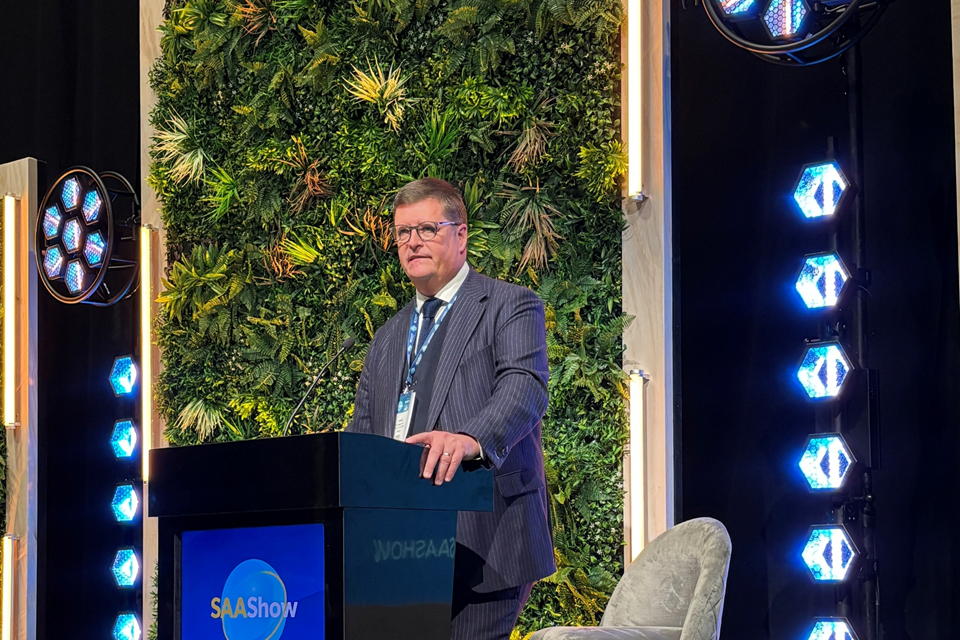
Morning, everyone, and thank you for having me in Birmingham this morning.
It’s good to be here at the beginning of the conference.
I’ve said many, many times that I spent 30 years of my career leading schools in some of the country’s most challenging contexts.
I know what it is to make decisions like the ones you make every day. To worry about this child’s home life, or that child’s absence. To make the most of very limited resources. To set long-term priorities while looking out for your staff every day and maintaining good relationships with parents and carers.
And I also know what it’s like to be juggling all this when you receive the Ofsted call.
I can’t change the former. Our profession is a noble one that comes with its own unique pressures.
But I can improve the latter. I can alleviate the unnecessary pressures that come with inspection.
I would love to tell you more now about how that might look, but at the moment I’m busy in talks with the Department for Education and the leadership unions about some changes that aim to do that.
We’ll have more to say about those changes very soon, so please look out for those when they land.
Our independent complaints review pilot
We have already made improvements in this space. Recently, I announced that Ofsted is piloting an independent complaints review service.
The complaints review service introduces independent external oversight and it has the power to advise on whether Ofsted should reopen inspection judgements – a first!
We are piloting this with schools during this academic year. As part of this pilot, you can ask for a review of how Ofsted handled your complaint.
The review is undertaken by an independent body, through a contract held by the DfE. I would like to stress very, very clearly: it is independent of Ofsted.
The pilot includes, for the first time ever, reviewing the outcome of the complaint, including where aspects were linked to what we found on inspection.
If a complaint includes grading, I, as His Majesty’s Chief Inspector, can decide to set aside a published report card and arrange a new inspection.
It would be fair to ask: why can’t the independent reviewer do this?
By law, only His Majesty’s Chief Inspector, delegated to my inspectors, can make grading decisions.
But if a reviewer were to recommend that I look again at a grade, I would certainly take that recommendation seriously.
When this pilot ends, we will work with the trade unions to decide what happens next. No decisions will be made without proper conversations, and I’ll listen very carefully to every piece of feedback.
Sharing experiences and insight
My inbox is always open. I had a CEO of a trust, Andrew Berry, write to me recently.
In his email, he told me frankly that when he first read the renewed inspection framework he was sceptical: concerned about pressure, and unconvinced that Ofsted had changed for the better.
And then two of his schools, part of the Tilian Partnership Trust, got the call in the same week.
It’s a moment I remember well and always try to keep in my mind as HMCI.
Mr Berry’s circumstances might be familiar to some of you, too – the heads of both schools were new in their roles, with less than a year’s experience.
But during the inspection process, his mind was changed.
By the inspectors who were focused on assuring the headteachers from the very first phone call.
By their flexibility, adapting the inspection day around the school’s context.
By the focus on wellbeing – described by Mr Berry as a ‘genuine golden thread’ through all the activities.
I was pleased to read his account, and I’ve also been pleased to celebrate positive grades over the last year. When I’m at events like this one it’s great to be able to stand up and name some names, point to great practice happening all over the country.
Like that happening at Tweendykes School in Hull.
Here, attendance and behaviour are ‘exceptional’. Staff understand the reasons for pupils’ behaviour and provide precisely tailored and effective support to help pupils manage their emotions. Most pupils have significant medical needs and disabilities – but attendance has remained high over time, including for disadvantaged pupils, because staff remove barriers early.
At Filton Avenue Primary in Bristol, personal development and wellbeing were found to be ‘exceptional’.
Inspectors found that leaders have carefully considered how to use every aspect of school life to support pupils’ wider development. There’s a focus on oracy, which is interesting right now, that helps pupils understand the power they have to impact others and shape their communities. Pastoral support is woven through all aspects of school life, and school life is designed to build pupils’ character, resilience and sense of responsibility.
And at Riverside School in Essex, 4 areas were found to be ‘exceptional’, including leadership and governance.
Leaders are relentless in their pursuit of excellence, they understand every aspect of the school’s provision and they act quickly when something does not meet their high expectations. Staff receive expert training through a remarkable coaching programme. Early career teachers get bespoke guidance that helps them develop rapidly. Leaders also act as role models of professionalism and share their expertise with other schools.
I ask those of you who do receive positive grades, particularly those who are graded as ‘exceptional’ in any evaluation area, to do the same: to share your practice and help other schools to improve.
Many of you have been doing so, in just the last few weeks I have seen schools throwing open their doors to share their ‘exceptional’ practice and I thank every one of them for doing that and everyone who visits them.
We are a proud profession but never too proud to learn from each other and share what works for children.
Ofsted are also opening up another way to get under the skin of positive practice.
In the New Year we will be using our podcast to speak to schools who have received an ‘exceptional’ grade.
We’ll be probing them on their practice and digging into the specific priorities, interventions and activities that are driving those ‘exceptional’ experiences for their pupils.
In our first episode we speak to leaders at Westgate Hill Primary School in Newcastle, who had a mix of ‘expected standard’ and ‘strong standard’ grades, with an ‘exceptional’ grade for their inclusion work.
We will dive into how they use additional funding like the pupil premium, how they build really strong relationships with parents, and how they help children return to mainstream classrooms when they’re ready to do so.
I’m grateful to Nick and to Karl from Westgate Hill Primary for having that conversation with us.
Because we often get asked, ‘How can I get ‘exceptional’ in this area?’. ‘How can I go from ‘expected standard’ to ‘strong’ and to ‘exceptional’?’
Our toolkits set this out clearly. But I know that hearing from real leaders in real schools in contexts similar to your own can provide the inspiration and validation that informs your own journey of continued improvement.
I hope that we’ll get to speak to many more of you in the new year – from every corner of the country, from all sorts of different contexts.
Considering context
I will pause on that issue of context.
I have listened to your concerns on this issue. And I have always been clear that my inspectors must take context into account. I do not want you to be penalised for working in a more challenging local area or for taking on children who have more complex behaviours and needs. But I do want to know that their needs are being met.
Every day we see schools defying the odds in really difficult circumstances.
Targeted and relentless support that ensures that a child shows up every day. Strategies for managing behaviour that keep a child in the classroom, without negatively affecting other pupils. Pastoral support that gives children someone to talk to when things are difficult at home.
As I said at the start, I spent 30 years working with children facing all these issues and more, in some of the country’s most disadvantaged areas. I have been there. I know, in my very bones, that it is hard in Redcar and Middlesborough – harder than it is in other parts of the country.
It can feel like trying to swim against a current, while watching others navigate much calmer waters.
That is why we look at the progress made against starting points.
That is why our view is broad – looking at data over time and taking into account SEND, free school meals, children in need, stability and deprivation levels and so on.
That is why we use our similar schools model to compare your school with others swimming in currents like yours – rather than those sailing through smoother waters.
That being said, my 30 years of experience has shown me first-hand that good wishes alone do not change outcomes for these children. Even my most noble thoughts and intentions could, by themselves, not turn lives around.
A solid education does. The stability of attending school regularly and the positive exam results to show for it do.
These are the things that set children and young people up well in life.
So while we all know it is harder in some places, none of us, especially those of us who have worked – or do work – in challenging schools expect less of anyone.
It’s why this country spends billions of pounds supporting children with the pupil premium, special educational needs and disabilities, and those in care.
The difficult role Ofsted has to play is to determine, without fear or favour, the extent to which this support is working.
Where are children falling behind? Where can we do more? And where are teachers and leaders already making a difference in the most challenging circumstances?
We have to be able to report this back, fully and truthfully, to parents and to the government.
Our responsibility is always to balance getting it right for children with getting it right for you, the adults who work with them. I am striving every day to get that balance right, and I’ll continue to do so.
That is why our toolkits are built, very precisely, on the expectations that are already set out in the professional and statutory standards that underpin our profession.
That is why we will recognise your context fully, through data and through what we see and discuss with you on inspection.
That’s why we are pushing ourselves to improve through changes like our work on similar schools, our complaints pilot, and the upcoming changes that we’re working on with the Department for Education and leadership trade unions.
Conclusion
As I said at the beginning, we cannot take away every pressure of your roles. Increasing SEND needs, falling rolls, getting the right specialist staff… we recognise those pressures although we cannot control them.
But we can reduce the undue pressure of inspection.
We hear, every day, from leaders whose inspection experiences have been fair, collaborative, informative and enriching. We are seeing the ‘expected standard’ grade most often across all our report cards – indicative of all the really great practice out there. And we know that inspection is a catalyst for leaders to make positive change and achieve even better outcomes for children.
Pushing for ever-higher standards includes pushing ourselves at Ofsted, too. I am committed to improving things for every one of you as professionals as well as for the children we’re all here to serve.
Thank you. I hope you enjoy the conference, and I’ll take some questions.