Government response to Parliamentary and Health Service Ombudsman’s (PHSO) Investigation into Women’s State Pension age communications and associated issues
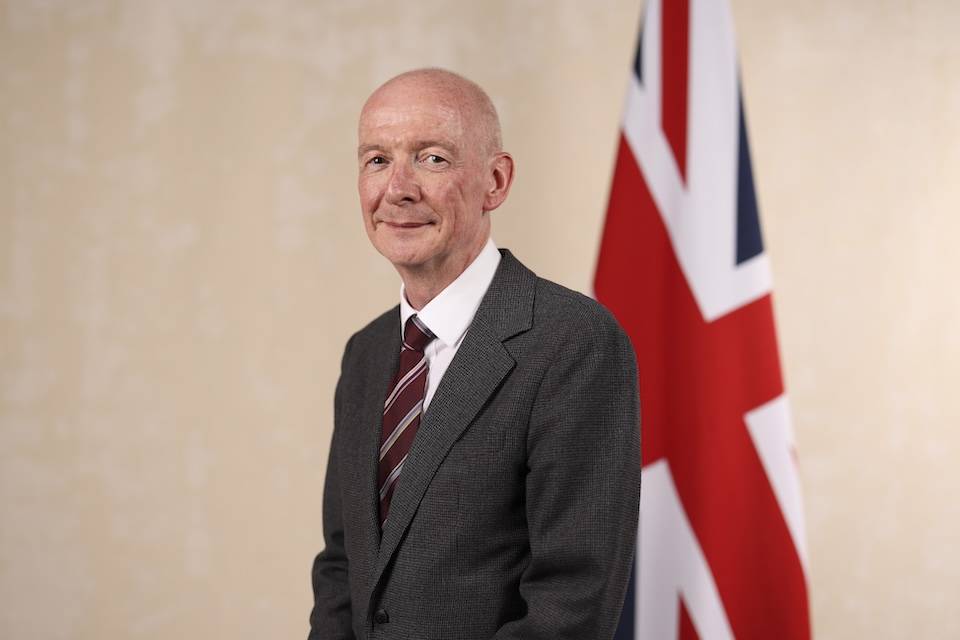
The Secretary of State for Work and Pensions Pat McFadden delivered a speech to Parliament to announce the Government's new response to the PHSO State Pension age communication investigation as it relates to communications on State Pension age.
Read the Government’s new response in full.
Madame Deputy Speaker, in November, I informed the House that the Government would make a new decision in response to the Parliamentary and Health Service Ombudsman’s report into the way changes to the State Pension age were communicated to women born in the 1950s.
This followed relevant evidence coming to light as part of legal proceedings challenging the original decision announced by my predecessor in December 2024.
We have now concluded the process to make a new decision and are placing copies of the Government’s full response in the Libraries of both Houses.
Before I turn to the substance, I think it is important to be clear what this decision and statement is about and what it is not.
There are legitimate and sincerely held views about whether it was wise to increase the State Pension age. In particular, whether the decision taken in 2011 [political content redacted] to accelerate equalisation and the rise to the age of 66 was the right thing to do or not.
But the issue that we are discussing today is not about the merits or otherwise of past policy decisions on the State Pension age.
What the Ombudsman investigated was how changes to the State Pension age were communicated, and whether within a specific and narrow time period, there was maladministration and injustice and if so, whether it warrants compensation.
In March 2024 the Ombudsman published their final report into this.
[Political content redacted]
In December 2024 the then Work and Pensions Secretary, my Right Honourable Friend, the member for Leicester West, set out the Government’s response, having considered all the information provided to her.
However, given relevant research from 2007 about the effectiveness of sending letters, subsequently emerged that had not been provided to my Right Honourable Friend. I wanted to ensure the right and proper process was followed to take account of this alongside information previously considered.
Of course, I asked the Department not just to consider the 2007 report, but also to undertake new searches as part of an extensive review of relevant historical documents to help inform this new decision.
Madame Deputy Speaker, we accept that individual letters about changes to the State Pension age could have been sent earlier.
For this, I want to repeat the apology that my Right Honourable Friend gave – on behalf of the Government, and I am sorry that those letters were not sent sooner.
We also agree with the Ombudsman that women did not suffer any direct financial loss from the delay.
However, the question is about the impact of the delay in sending those letters.
The evidence taken as a whole, including from 2007, suggests the majority of 1950s-born women would not have read and recalled the contents of an unsolicited pensions letter, even if it had been sent earlier.
Furthermore, the evidence also suggests that those less knowledgeable about pensions – the very women who most needed to engage with a letter and where it might have made a difference – were the least likely to read it.
So an earlier letter would have been unlikely to make a difference to what the majority of women knew about their own State Pension age.
Indeed, the 2007 report concluded Automatic Pension Forecast letters only had a negligible impact on pension knowledge and planning, and the Department stopped sending them.
The evidence shows that the vast majority of 1950s-born women, already knew the State Pension age was increasing – thanks to a wide range of public information, including through leaflets, education campaigns, information in GP surgeries, on TV, radio, cinema and online.
To specifically compensate only those women who suffered injustice would require a scheme that could reliably verify the individual circumstances of millions of women. That includes whether someone genuinely did not know their State Pension age was changing, and whether they would have read and remembered a letter from many years ago and acted differently. It would not be practical to set up a compensation scheme to assess conclusively the answers to these questions.
As for a flat-rate scheme that would cost up to £10.3 billion and would simply not be right or fair, given it would be paid to the vast majority who were aware of the changes.
I have heard calls for compensation aimed at lower income pensioners – and we have focused in the past 12 months on raising Pension Credit uptake – but in the context of this decision – a scheme focused on any single income group, still does not specify who may or may not have suffered injustice.
And that is why, Madame Deputy Speaker, in taking this new decision, the Government has come to the same conclusion on compensation as my Right Honourable Friend, the previous Secretary of State announced in December 2024.
I know that many people feel the State Pension age should not have gone up in the way that it did. [Political content redacted].
But I repeat what I said at the start of my statement: this is a different issue to the one that Ombudsman investigated and that we are responding to today, which relates to the communication of changes in the State Pension age and narrowly to a delay in sending letters over a relatively short period.
The changes from 2011 underline the importance that decisions on the State Pension age carry and the impact they have on people’s lives. I take seriously the need to weigh carefully any future changes.
That is why, with the Ombudsman, the department has been developing an action plan for the future. Work on that stopped pending today’s new decision, and I can confirm that it will now resume.
This also underlines why we are determined to ensure that all pensioners on lower incomes – the majority of whom are women – have a better life in retirement [political content redacted].
[Policital content redacted]
We introduced Pension Credit, which is vital in topping up the incomes of the poorest pensioners – with women consistently making up the majority of those benefiting [political content redacted].
And we are ensuring that more pensioners get that extra income with the biggest ever campaign to increase take up. This saw tens of thousands of more awards to the Pension Credit in the year up to November, compared to the previous year.
In addition, our commitment to the Triple Lock for this Parliament means that women will see their State Pension rise by up to £575 this year, with incomes up to £2,100 pounds a year higher by the end of the Parliament. Indeed, overall spending on the State Pension is set to be over £30 billion a year higher by the end of this Parliament, compared to 2024/25.
And we are putting record investment into the NHS, meaning thousands more pensioners are getting the operations and treatment that they need, rather than being left in pain on waiting lists.
That is the positive difference that this government is making.
Madame Deputy Speaker, I believe it was right to review the evidence, and that having done so, we have made the right decision based on due process and the body of evidence.
And at the same time, looking to the future, we are taking important steps to support women in retirement and help them to build a better life for themselves and their families.
And I commend this statement to the House.