Economic Secretary to the Treasury speech for UK Digital Assets Week
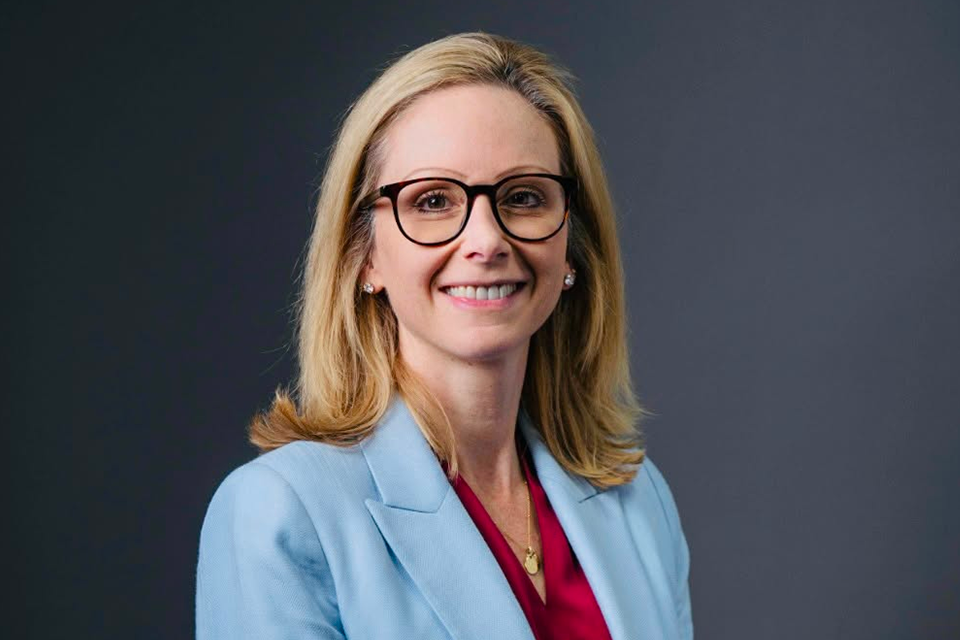
The Economic Secretary to the Treasury delivered her speech at UK Digital Assets Week.
Thank you, and good morning everyone.
It is a real pleasure to open UK Digital Assets Week.
Just across the road are the Crown Jewels: some of the most valuable assets in the country, protected by centuries of law, institutions and very serious-looking security. And here we are, discussing assets of a very different form, but those that will undoubtedly play a very significant role in our country’s future and indeed our future prosperity.
And, the question facing us today is not whether digital technologies will change financial services.
They already have.
The question is whether we in the UK are prepared to move quickly enough and ambitiously enough to shape that change.
And my message today is very simple.
We are prepared, we are moving quickly, and we are more than ambitious enough to lead the world in digital assets.
When we take a step back, and we should take a step back, looking at the last couple of centuries, it’s fair to say that we are used to technological development giving us new products and new services.
But on occasion, technology changes something more fundamental: it changes the infrastructure on which an economy operates.
The move from paper to electronic trading transformed our financial markets in the 1980s and 1990s.
And I believe the shift from electronic markets to truly digital markets will prove just as significant.
This isn’t just about getting rid of paper or putting existing processes onto a slightly better computer system.
It is asking whether the architecture of finance itself can be better.
Whether assets can move more efficiently.
Whether transactions can settle faster.
Whether collateral can work harder.
Whether new forms of money can improve payments.
And whether technology can open markets to greater competition and innovation.
That is why digitalisation is not a niche technology agenda.
It is an economic agenda.
A competitiveness agenda.
And, increasingly, a national endeavour.
Government can create the conditions.
Regulators can provide clarity, confidence and appropriate safeguards.
But it is firms, investors and entrepreneurs who will deploy capital, build products and compete in these markets of the future.
That partnership is the basis on which the UK will succeed.
As we take this partnership forward, we also need to work closely with international partners to realise the benefits and avoid fragmented markets.
I am keenly aware of this as we gear up for our Presidency of the G20 in 2027.
Of course, saying that we want to succeed is the easy bit.
The substantive question is what we are actually doing about it.
And that is where I think the UK story is at its most compelling.
Last year we published our Wholesale Financial Markets Digital Strategy, built around market optimisation, transformation and leadership.
We are removing legacy processes;
Creating the regulatory environment in which new infrastructure can develop;
Building a regulatory framework for cryptoassets and stablecoins;
We are putting our own sovereign issuance onto digital infrastructure.
And critically industry is forging the path ahead.
That is why I appointed Chris Woolard as our Wholesale Digital Markets Champion.
His first report in July set out a clear challenge: that tokenised markets are fundamental to the future of financial services, and that the decisions we take now will help determine whether the UK remains at the heart of the next generation of global markets.
Since then, Chris has announced the composition of his industry action groups, bringing together firms from across the sector to tackle the practical barriers to adoption.
It is fantastic to see both the variety of firms and the seniority of the people involved. I would like to thank everyone involved in the process for committing your time and enthusiasm to this project.
That commitment matters.
Because the challenge now is not proving that the technology works.
It is creating the conditions in which markets can adopt it at scale.
The prize is significant. And this is a moment when the UK has an opportunity to move as one, be brave, and establish itself at the forefront of the next generation of global financial markets.
We can see momentum building across the system.
Take the Digital Securities Sandbox.
The Sandbox was designed to give firms a route from testing new technology to using it in live UK financial markets.
And that journey is now happening.
In July, HSBC became the first firm to receive approval to operate a live Digital Securities Depository in the Sandbox.
ClearToken has become the second firm to receive that approval.
That is real progress.
And as part of making sure the sandbox continues to work for firms, we intend to lay secondary legislation over the coming months to support the delivery of digital services and issuances in the DSS.
So we are moving from experimentation to live activity, with digital financial-market infrastructure trading digital securities here in the UK.
DIGIT is a symbol of the government’s commitment to this agenda, and of its willingness to play an active role in digitalisation.
The Digital Gilt Instrument – DIGIT - will be a digitally native UK Government debt issuance issued onto the HSBC Orion platform in the Digital Securities Sandbox.
The DIGIT pilot issuance in the first quarter of 2027. And, we are taking steps to prepare for potential further issuances, subject to the success of that first transaction.
To support the government’s objectives, HSBC and LSEG are working together to develop a bilateral link - the first of its kind - which will allow investors to access DIGIT through either infrastructure.
We are intending to list DIGIT as the first digital asset on the LSEG main market. And we are engaging the sector more widely to support the delivery of the pilot.
Today, I am pleased to be able to announce that we have appointed six firms to act as Joint Lead Managers for the pilot issuance of DIGIT.
This is an important moment for the project and is another major step toward delivering on our ambitions for digital assets in the UK.
These institutions will bring vast experience from both traditional sovereign debt issuances, and from digital markets, and their appointment reaffirms the commitment to ensuring the success of DIGIT.
The United Kingdom’s strength comes from being one of the world’s great meeting places for international capital.
And our ambition is that the same should be true of digital capital markets. One of the objectives of DIGIT is to act as a catalyst to support the development of DLT.
We want to build an ecosystem that connects the world with the UK right at the centre.
But digital securities are only one part of this transformation.
If we are going to build genuinely digital markets, we also need to think about digital money.
There is little point transforming one half of a transaction if the other half remains dependent on older technology.
And this is an area where developments are moving quickly.
Our approach is not to pick which form of digital money will ultimately win.
Instead, our job is to create conditions in which responsible innovation can compete.
Stablecoins.
Tokenised commercial bank deposits.
A diverse system, where different forms of money play their own role and can be freely exchanged.
And over recent months we have made substantial progress towards putting that framework into practice.
This year marked an important change in the UK’s approach to cryptoassets.
We moved from debating the shape of regulation to implementing it.
The regulations I took through in February bring a broad range of cryptoasset activities within the FCA regulatory perimeter from 25 October 2027.
In June, the FCA published a substantial package of final rules and guidance covering stablecoin issuance, regulated cryptoasset activities, prudential requirements and more.
And just last month, the FCA published its final perimeter guidance to help firms understand where authorisation will be required. The application window opened last week (30 September) for firms seeking to use the transitional arrangements.
That is a significant step forward.
We want businesses to build here.
We want them investing here.
Hiring here.
And launching products here.
Being a leading digital assets centre means having standards as well as ambition.
The two go hand in hand.
Trust is an asset.
Clear rules are an asset.
And a jurisdiction in which consumers, investors and counterparties know where they stand has a genuine competitive advantage.
Our approach to stablecoins brings that philosophy to life.
Stablecoins have real potential to support growth and make financial markets more efficient.
They can enable faster, lower cost transactions, more efficient settlement and new forms of innovations, including programmable payments.
But that potential can only be realised if stablecoins are appropriately regulated and truly stable.
That is why we have acted to create a clear regulatory framework for stablecoins in the UK.
Through the cryptoassets regulatory regime, we have established a regulated activity for issuing stablecoins, giving firms certainty to invest, innovate and grow.
And we are continuing to refine that framework.
In September, we laid legislation making targeted amendments to the cryptoassets regulations, following extensive engagement with industry.
These changes are designed to provide greater certainty for firms providing stablecoin payment services and to remove barriers to important use cases.
As many of you will know, we are consulting on reforms to the payments regulatory framework, including proposals to bring UK-issued stablecoin within the payments services perimeter.
The amendments to the cryptoassets regime will ensure firms are not required to secure cryptoasset permissions now, only to seek reauthorisation following the planned payments reforms.
Taken together, these are the building blocks for a credible and competitive UK stablecoin market.
We also recognise that stablecoins are inherently global.
That is why international cooperation matters.
Through the Transatlantic Taskforce, we are working with the United States to promote appropriate alignment on stablecoins; helping to provide firms with the confidence and clarity they need to operate across borders.
Because if we get this right, stablecoins could be transformative for consumers, businesses and financial markets alike.
We are also considering how we use our powers to establish Overseas Recognition Regimes for digital assets.
And this brings me back to the bigger picture.
It is easy to view each of these initiatives separately.
But that misses the point.
These are different components of the same strategy.
Transactions need digital forms of money with which they can settle.
A digital asset needs infrastructure on which it can be issued, traded, settled and held.
That infrastructure needs appropriate regulation.
Markets need standards and interoperability between platforms
Firms want government vision, to enable innovation to follow and capital to flow.
And international markets require connectivity across borders.
Money. Assets. Infrastructure. Regulation. Industry adoption. International connectivity.
That is the package.
And it is why I am so optimistic about the UK’s prospects.
Because few jurisdictions can combine everything that Britain can.
Deep capital markets.
Global financial institutions.
World-class regulators.
A strong legal system.
A thriving technology sector.
And an international financial centre that has spent centuries adapting itself to the needs of global commerce.
Digitalisation doesn’t make those advantages irrelevant.
It gives us an opportunity to renew them.
But we cannot be complacent.
Other jurisdictions are moving quickly.
Leadership in the next generation of financial markets will be earned by jurisdictions that can combine innovation, regulation, infrastructure and adoption.
That’s why we’re laying the necessary foundations for success.
There is a lot still to do, but we are making substantial progress.
And I want the markets of that future to be built, connected, financed and scaled here in the United Kingdom.
That is the opportunity.
That is our ambition.
And that is the national endeavour I hope everyone in this room will join us in delivering.
Thank you.