Economic Secretary to the Treasury speech at UK Private Capital
The Economic Secretary to the Treasury delivered her speech at UK Private Capital.
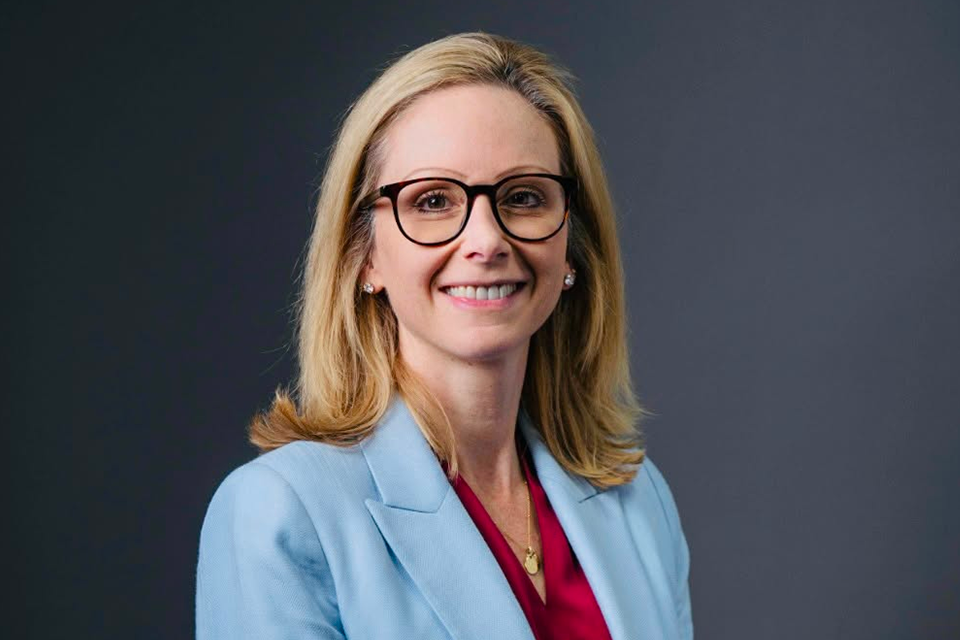
Thank you very much indeed. Good morning everyone, thank you very much indeed for inviting me to join you here in Paternoster Square this morning.
It won’t be lost on you I’m sure, on any of you here that it’s a very fitting location actually, for this summit.
For centuries, you’ll all be aware, this corner of the city has been a place where ideas, commerce and capital have come together. And just a few steps away in St Pauls, this area has been rebuilt, during war, fire and economic change.
But it’s always emerged stronger, and more prosperous.
And look for me that serves as a really vital reminder that economic progress comes from ideas being backed, from businesses being built, and investment being channelled, into opportunity.
And that is exactly why private capital matters. Because behind every single investment there is the potential to be helping a company expand, to be developing a new technology, to be creating jobs and contributing towards of course to the growth that raises living standards right across the country.
[political redaction]
A lot has happened since March. We of course have a new Prime Minister, and a new Chancellor.
But exactly as you say I’m appointed back as Economic Secretary to the Treasury, and I’m really delighted to be back. It’s a privilege to work once again with all of you, alongside a sector that helps drive growth and opportunity right across the country.
As the world’s second-largest asset management hub, and the world’s most international asset management centre, we’ve got a wealth of expertise and influence which we are very rightly proud of, and it’s fair to say, others much envy.
And I was really struck by the theme of this summit, investing for a better economy.
Because to my mind that is exactly what this sector does, exactly what you’re all doing. You’re all making decisions every single day about where capital is allocated, which businesses to support, which innovations to scale and ultimately the direction of the UK economy for years and years ahead. It is hugely valuable, and hugely impactful work.
And as I said I’m really delighted to be working again with you to make the UK one of the best places in the world to manage investment and deliver the best outcomes for savers and investors right across the nation.
Now today I want to convey to you a very simple message. We want you investing in Britain. We want you growing British businesses and helping to build Britain’s future. And in that endeavour, this government will be your partner. And we will be a good partner.
Now let me flesh that out a bit I’m going to talk a little about the past, move the present and then importantly move on to the future of the sector as well.
So the wheels I think we’ve already set in motion, the reforms we’re taking forward to support growth and innovation the trends and opportunities across technology and AI, I’ll come back to that, that we need to grasp to make sure that Britain maximises its competitive advantage and continue to realise the extremely large potential of the UK and our businesses of the future.
This year’s Mansion House speech was a chance to measure delivery against the Financial Services Growth and Competitiveness Strategy that we launched last year – and it’s a strategy that the new Chancellor, has been very clear remains fully committed to.
So in 2025 in that strategy, we set out a clear plan to strengthen the UK’s position as a leading global financial centre, and of course to make sure that financial services are supporting growth right across the country, and growth in our real economy.
And at Mansion House one year on, we set out the strong progress, the really strong progress, the tangible progress we have made on delivering, on that plan.
The important measures: consumer participation in capital markets, helping more people build the long-term financial security that we know investing can provide.
We also welcomed the launch of the industry-led ‘Invest for the Future’ campaign to promote the benefits of investing to the public, and the industry-led review to reform how firms talk about the risks, and benefits, of investing.
Our Investment Management Taskforce’s Technology Working Group has been working very hard to flesh out the answers to questions about how to improve the digital retail investment ecosystem.
And our work too, some of that progress too, also includes legislative action, with the Financial Services and Markets Bill already having been introduced to Parliament, that takes forward, some of those key reforms that we have committed to in the strategy, including on the SMCR and Financial Ombudsman reforms as well..
Mansion House this year was not just an opportunity for reflection, but also an opportunity to push the Strategy forward and to drive more growth, more investment and support a more competitive sector as well.
And critical to that opportunity of course is the partnership, as I said between government and industry. And that is exactly why I’m so delighted to be here today. And I know that you’re convening experts from across the sector to share their insights on where the UK excels, and indeed where we can go further as well.
And as a government as we said in that strategy we are committed to making the UK a world leader for managing private market assets, and we recognise that in that, Government has a central role to play in enabling that success, that’s exactly why we’ve been taking those decisive steps to improve the regulatory and the business environment in which you operate.
That includes the draft SI that we laid in July on our proposed reforms to the Alternative Investment Fund Management Regulations – we’re of course working with the FCA to streamline that regime, to make it more effective, to make it more proportionate, and making it easier for asset managers to do business in Britain.
I also want to mention the ambitious package of reforms for VC fund managers we’re taking forward to ensure the rules are properly calibrated to the activity that VC firms are undertaking.
However, I want to mention this point and I did say in March as well, I think we do need to recognise that with any growing sector, the welcome growth of the private markets , it brings with it new risks, it does bring with it new risks. You will be very conscious of talk of that in the press, the increased global parliamentary focus on vulnerabilities.
You’ll know of course this year, G7 Finance Ministers and Central Bank Governors agreed that potential risks in the private credit ecosystem, including those interconnections with banks and insurers, call for continued monitoring.
And in that regard I want to thank everyone in this room, many of whom I’ve spoken to individually but I want to thank all of you here for being involved in SWES, you know why you’re doing it, you know why it’s so important, but thank you for taking part in that.
The government, the regulators and all participants in the SWES will gain those insights which I’m sure will be entirely invaluable, insights into the sector, insights into the risks throughout that process.
But look, more broadly when it comes to getting regulation right, this of course will help ensure private markets can continue to channel investment into innovative firms and growing businesses, supporting that productivity growth and that economic growth we want to see right across this country.
And in terms of pensions just for a moment this is a really important set of reforms we’ve been pushing forward. We’ve been working, as you know, in partnership with industry, backing really ambitious initiatives such as the Mansion House Accord, delivering major reforms through the Pension Schemes Act to drive that consolidation in the sector, supporting long-term investment and delivering better outcomes for savers.
We are very encouraged to see that early progress on the Accord. We have seen new investment announcements, firms building up their in-house capabilities, and developing new routes into private markets.
And it’s building on the foundations of the investment review, our focus is now also turning to adequacy at an individual level.
Because as we all know, a pensions system that delivers for savers can also unlock productive investment in the UK economy, supporting growth while strengthening retirement outcomes.
And I think that it’s fair to say that the first Pensions Commission stands as one of the most successful examples of long-term policymaking in quite some time, and since then, the Government has of course simplified the State Pension to provide a strong foundation in retirement, and introduced automatic enrolment, bringing nine in ten eligible employees into pension saving.
But look, all of that said, we know that there are still too many people are still not saving enough for retirement. And that is exactly why, 20 years on now, the government has established the second independent Pensions Commission, to review those levels of saving and identify changes that are needed for a fair and sustainable pensions system.
You’ll be aware that the Commission has published its interim report, diagnosing levels of undersaving across the population – and it finds that 40 per cent of working-age adults – approximately 15 million people – are on course to fall short of retirement adequacy benchmarks.
But look, we think about what drove the success of the first Commission, and I think that was their efforts to engage the industry and build that consensus. And I know the Commissioners now see this as critical for durable reform and indeed will be very interested in your views.
So I would encourage all of you in this room to respond to their call for views with reflections on the interim report and the challenges as you see them, that lie ahead.
Now of course I said that I would come back to AI, of course no speech at the moment is complete without a fair mention of AI. It’s very much in the headlines, often, especially most recently for negative reasons. But I want to recognise, alongside those efforts that are going on from a financial stability point of view, which in my view is an extremely important part of the puzzle, AI is one of the most powerful drivers of future productivity, and that’s exactly why at this year’s Mansion House a couple of months ago we set out our ambition for the UK to be the fastest adopter of AI in the G7 – ensuring that we not only develop world leading technologies, but capture those economic benefits through higher productivity, stronger firms and better jobs.
And then subsequent to that at London Tech Week, the then-Chancellor set out delivery on the four areas in her Mais Lecture on AI and innovation: which to the extent you don’t remember I will reiterate: infrastructure, companies of the future, adoption and managing the transition.
And then the government we have two AI Champions for financial services, they have developed an adoption plan which was published in July. And that Adoption Plan is very much focused on supporting innovation whilst maintaining of course the high standards of consumer protection, operational resilience and of course trust in the financial system.
That Adoption Plan makes a series of recommendations, as we are now taking these recommendations forward, working with industry working with regulators to try and maintain that momentum and ensure the UK Financial Services sector remains a global leader in the safe, responsible and effective use of AI.
The prize when it comes to AI is not simply greater efficiency, it goes to this wider aim that all of you in this room share with me for a more competitive financial services sector that is attracting global capital, supporting innovation and driving economic growth in the country all over.
So look I shall not say anymore about AI, there is much much more I could say but I’ll leave it there.
And I was want to end by saying thanks once again for allowing me to join you today. And thank you again on behalf of the entirety of the government and the new Chancellor for everything that everyone in this room is doing to contribute to the current success of our economy and indeed the future success of our economy, and alongside the economy of course I mean the country too. And I’ll end finally, by reiterating that really simple message that I began with, this government welcomes your contributions and your investment in Britian’s future. And we will be a good partner to you in that endeavour.
Thank you.