Defence Secretary Wes Streeting MP: Speech at the 2026 LGBTQ+ Defence Awards.
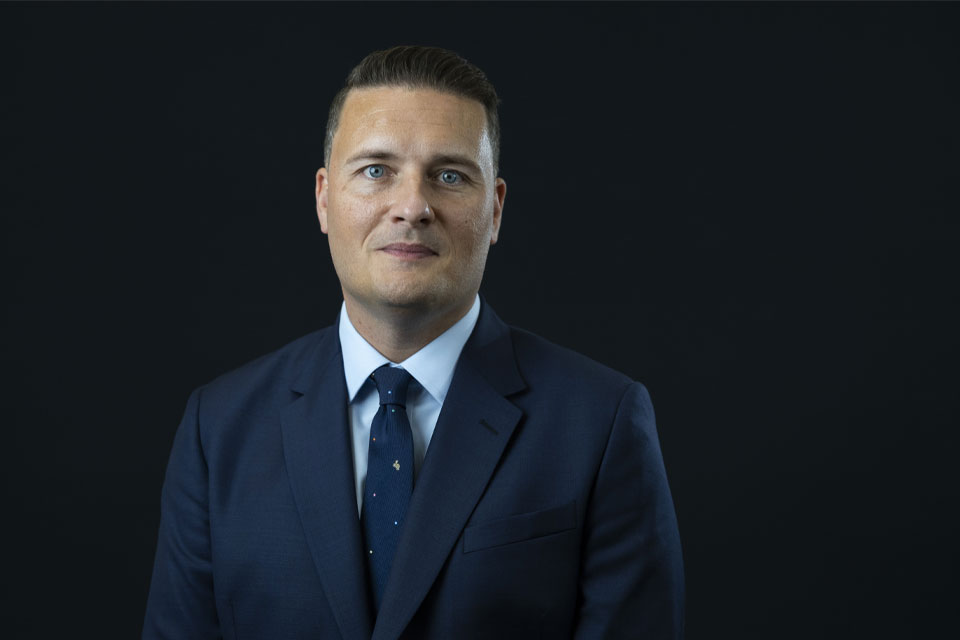
Transcript of the speech given by Defence Secretary, Wes Streeting MP, at the 2026 LGBTQ+ Defence Awards.
Tonight we stand on the shoulders of giants.
In defiance of those who do not accept who we are, or who we love, or how we present ourselves to the world.
In defence of the values of freedom, equality, and democracy – the things that make this country great.
In celebration of our LGBTQ+ community in all of its diversity – and particularly this evening those of you whose stars have shone most brightly and whom we all look to as role models.
We are able be here this evening because of Jeanette Smith and Graeme Grady, and Duncan Lustig-Prean and John Beckett.
Jeanette and Graeme, dismissed from the Royal Air Force in 1994 after being outed as lesbian and gay.
Duncan and John discharged from the Royal Navy in 1995 and 1993 respectively for the same reason.
All of them removed in accordance with the policy of the department I now lead, the Ministry of Defence – a policy that was deemed unlawful thanks to the cases brought to the European Court of Human Rights by Jeanette, Graeme, Duncan and John.
They did not fail their country. Their country failed them.
Their courage in bringing those cases changed laws, hearts and minds.
And because of them, there are now more than 2,500 openly LGBTQ+ people serving in our Armed Forces today.
We owe them an enormous debt of gratitude for not only making our Armed Forces more equal but also making them stronger.
But I don’t want to sanitise our history, or the harm that it caused, because it teaches us something about how we meet the challenges we face today.
Take Dawn, who was outed while serving at sea in 1994.
When she was just 20 years old – roughly about the same age I was when I came out – someone – anonymously, obviously – reported her as a lesbian.
She was investigated.
Questioned for hours.
Had her personal belongings and letters taken.
Was removed from her ship.
And told to leave the Royal Navy that she loved and had served with distinction for three years.
Dawn has since received restorative measures, including recognition of her service, a beret, an apology and the Etherton Ribbon.
She says that she now feels ‘validated’ and ‘valued’.
But ultimately, she was denied the career she dreamed of and worked so hard to get into.
And the indignity of the ban is hard to wash away.
To this day, some people who were prepared to fight for their country are still having to fight for the justice they are owed.
And so I know that there is still lots that we – that I – need to do.
I think about the experiences of that generation in the context of trans people serving in our Armed Forces today.
Of our collective responsibility – but also of my personal responsibility – to make sure that they can do so feeling valued, respected, and equal in worth and dignity.
We do not exist in a vacuum in the Ministry of Defence or in our Armed Forces.
As society finds its way on navigating the law and protecting the rights and dignity of trans people, I want to be clear about some fundamental things as we do.
I want trans and non-binary people in our country to be able to live their authentic lives and be themselves.
I want all of them to live with dignity and freedom, independence, and quality of life and respect.
And I especially want them to be able to do that if they choose to wear the uniform.
No one should face persecution, or have to hide who they are, or battle for acceptance whilst serving their country.
We cannot change the past.
But we can confront it honestly – and learn from it.
And, perhaps most importantly, we can make certain that the generations who follow never have to endure what previous generations endured.
So you have my commitment to work with our LGBT networks, Fighting with Pride and the Royal British Legion to make sure that we live up to our responsibilities to our people today and to future generations.
In the space of a single generation, we have gone from a Britain where gay people could be dismissed from the Armed Forces simply for being who they are, to a Britain where a gay man can lead the Ministry of Defence.
But my social media feeds demonstrate on a daily basis that there will always be those who would prefer to cling on to the prejudices of the past.
The prejudice that says that to be gay or lesbian or bisexual or trans or non-binary is to be weak.
We, in this room, and those like us beyond, know all too well how much courage and strength it can take to be your authentic self.
At home.
At school.
At work.
What is weak about those who served their country with extraordinary loyalty, of being prepared to give their lives for that country, even when that same country denied them the dignity of being themselves?
That wasn’t weak. That was strong and courageous.
Courage isn’t simply the absence of fear.
Courage is looking fear in the face and refusing to let it define you.
It is the determination to do what is right, even when doing so comes at a personal cost.
It is standing your ground when others would rather you disappeared.
It is having the confidence to say, in the words of that great political philosopher, Gloria Gaynor: ‘I am what I am. And what I am needs no excuses.’
For generations, LGBTQ+ people in our Armed Forces have demonstrated precisely that courage.
The courage to serve.
The courage to endure injustice.
The courage to challenge prejudice.
And, increasingly, the courage to serve openly and proudly, without apology and without compromise.
Your sexuality does not determine your strength.
Your gender identity does not determine your courage.
And neither has ever diminished your capacity to serve your country with distinction.
Real strength is not about how loudly you speak, how tough you look, or how closely you conform to somebody else’s idea of what a soldier, a sailor, a marine or an aviator should be.
Real strength is found in character. In loyalty. In integrity. In the willingness to stand up for others. In the quiet determination to keep going when everything around you tells you to stop.
I want young LGBTQ+ people in our cadets, and other young people who might be considering serving in our Armed Forces or working in the Defence industry, to know that our country wants their talent, their commitment, and their courage.
I’m glad that that generation has, in this room, role models to look up to.
People who have served with distinction.
People who have made their units stronger, their colleagues prouder, and their country safer.
People whose example reminds us that progress is not simply something we celebrate in speeches.
It is something we create through the lives we lead, the barriers we break, and the example we set for those who follow.
So thank you to the organisers and sponsors for bringing us together tonight.
To our winners – in and out of uniform – congratulations.
To all of our LGBTQ+ service personnel here tonight and throughout our Armed Forces, let me just end by saying:
Thank you for your courage. Thank you for your service.
And thank you for helping our country become a better reflection of the values that those who came before us always stood ready to defend.
Because of you, generations yet to come will never have to ask whether they belong. They will simply know.
Thank you.