Youth Matters: State of the Nation
Published 10 December 2025
Applies to England

© Crown copyright 2025
This publication is licensed under the terms of the Open Government Licence v3.0 except where otherwise stated. To view this licence, visit nationalarchives.gov.uk/doc/open-government-licence/version/3 or write to the Information Policy Team, The National Archives, Kew, London TW9 4DU, or email: psi@nationalarchives.gov.uk.
Where we have identified any third party copyright information you will need to obtain permission from the copyright holders concerned.
This publication is available at https://www.gov.uk/government/publications/youth-matters-state-of-the-nation/youth-matters-state-of-the-nation
Youth foreword
In January 2025, a collective of thirteen young people from every corner of the country were invited by the Secretary of State for the Department for Culture, Media and Sport, the Rt Hon Lisa Nandy MP, to serve on the National Youth Strategy’s Youth Advisory Group. From the moment we gathered for our first meeting, it was clear that this was no ordinary assembly.
The challenge before us was clear: to help shape a strategy that would meaningfully improve the lives of young people across England. How could government and community leadership be harnessed to inspire hope, build confidence, and deliver lasting change for our generation? As young people growing up in England today, we have first-hand experiences of rising inequalities, including barriers to education, employment, and mental health support. Yet, we arrived determined, and remain so, to ensure the voices of young people are heard throughout this strategy, and in the actions that follow.
While this is a report about all young people and challenges like mental health and anxiety about the future are common for many of us, it is crucial to acknowledge that when we discuss the vast majority of themes explored in this report: poor educational outcomes, feeling shut out of opportunity, or safety – we are not speaking about all young people. This will likely affect some more than others.
When asked about communities, those from lower socioeconomic backgrounds as well as those from outside of London have noted the need to separate themselves from the communities that they grew in when seeking career opportunities. This is troublesome when considering that the community has been identified as the golden thread throughout the report: be it as a builder of skills and opportunities outside of the classroom, or a way to improve mental health.
Though the challenges facing young people and the world are huge, many of the solutions are connected. Better access to meaningful activities in community spaces with trusted adults can reduce and prevent aspects of mental ill health in young people, enabling them to develop the skills needed to thrive as they become independent. When you invest in young people, you are not just investing in the future of our nation – you invest in our society now.
The creation of an environment where education, skills and economic opportunity nationwide must remain at the heart of any actions that follow, supported by opportunities for young people to make connections and have a sense of belonging where they live, and a sense of pride. At the heart of our new National Youth Strategy must be the creation of a system which supports the collective progress of communities, not a select few.
We invite you to see this report as an opportunity to create exciting change together with a shared ambition. Investment in young people and the systems that support them has the potential to create positive change for our society, the planet, and the young people it aims to serve. Young people remain ready and willing to play their part. A more hopeful future is possible for all our young people and their communities, but this is an urgent mission and requires significant action quickly.
We’re willing to step up, are you?
National Youth Strategy, Youth Advisory Group
State of the Nation- at a glance
Someone who cares
- Around 1-in-5 young people (13 to 17) in England and Wales do not have a trusted adult outside of their family.
- A third of young people (10 to 19) said they felt alone or lonely some of the time.
- Boys in England and Wales (ages 10 to 15) are more than twice as likely than girls to have no trusted adult in their lives.
- The number of full-time youth workers in England has fallen by a third since 2012.
Places to go and things to do
- Between 2010/11 to 2022/23, spending on youth facilities fell by 73%.
- Out of 27 European countries, the UK is last in how happy 15-year-olds are with their life.
- Nearly half of young people spend the majority of their spare time in their bedroom.
- Less than half of all young people (aged 10 to 19) agree there are enough clubs and activities in their area.
Seen and heard
- Almost half of young people in England feel that their voice does not matter in decisions across the country.
- Young people (18 to 24) have the lowest rates of electoral participation in the UK.
- Only 40% of young people in the UK (14 to 24) said that they would be likely to vote at the next general election.
- 1-in-3 young people feel like they don’t know how to influence decisions taken in their local area.
Executive summary
This report, commissioned by the Secretary of State for the Department of Culture, Media and Sport (DCMS) in November 2024, offers a comprehensive and direct insight into the lives of young people in England aged 10 to 21, and up to 25 for those with special educational needs and disabilities (SEN/D). It has directly informed ‘Youth Matters: Your National Youth Strategy’ by revealing the realities of young people’s lives, as well as their challenges and inspiring aspirations for the future. While the report primarily focuses on England, it clarifies when data encompasses the broader UK.
The report draws on extensive primary and secondary research, including a National Youth Strategy Survey of over 14,000 young people, covering the ages 10 to 21 and up to 25 for those with SEN/D. It also uses information gathered from focus groups, discussions and workshops with Ministers, officials and youth sector organisations that were delivered as part of the ‘Deliver You’ campaign in partnership with Savanta, My Life, My Say, the #iwill Movement (Volunteering Matters and UK Youth) and their Youth Collaborators.
While young people in England show strengths in some areas like academic performance compared to international peers, the findings reveal a landscape of significant and interconnected challenges. Findings from the National Youth Strategy Survey highlight five key areas of concern for young people: friendships and social life, school/college/university, money, what they want to do in the future, and mental health and wellbeing. When asked what would most improve their daily lives, five priorities emerged: lower living costs, access to more recreational and leisure activities, better mental health and wellbeing support, having a secure job, and having access to good quality healthcare.
Drawing on all the research evidence, the report identifies the following priority areas:
- Community, connection, and belonging: Young people seek stronger ties to their communities, safe and welcoming spaces, and trust in adults and institutions. Many of them feel unhappy with politics and want chances to be heard themselves.
- Physical, mental, and digital wellbeing: Access to timely mental health support and healthcare, alongside tools to navigate digital lives and also boost their confidence and sense of self.
- Skills and opportunities for life and work: There is a desire for better preparation for future careers through quality education, training, and meaningful job opportunities.
- Safety and security: Concerns about safety, crime and online security are prevalent, with a need for trusted adults who can offer support and guidance.
These overarching priority themes are interconnected and exacerbated by underlying systemic issues such feelings of economic insecurity, a lack of local opportunities for in-person social engagement and development, and a pervasive feeling of being unheard in decision making processes. It is crucial to note that these challenges are not uniformly distributed, disproportionately affecting young people with SEN/D and those from lower socioeconomic backgrounds.
‘Youth Matters: Your National Youth Strategy’ will directly address these critical issues, focussing on areas where England falls behind internationally and providing targeted support to those that need it most to unlock their full potential, ensuring a more equitable and hopeful future for all.
Growing up in England today
This chapter provides essential background information on young people in England right now. It covers who they are as a group, but also the unique circumstances shaping their lives right now.
Young people are innovators, our minds are filled with hope and vision for the change that we want to see in the world. We are ready to step up to the challenge of being that change for our society.
#iwill Movement, 2025
Who are England’s young people
There are about 10.6 million young people aged 10 to 24 in England, and about 7 million of those are 10 to 19 years of age (ONS, 2024b). In January 2024, 1.9 million children and young people aged 0 to 25 in England were identified as having special educational needs (NAO, 2025). In 2024, around 84,000 children in England were in care (DfE, 2024b). In the NSPCC report they stated that 31% of the children in care had special educational needs, compared to just 4% in the general population (NSPCC, 2024). Among 16 to 24 year olds who reported a disability in the UK, numbers have more than doubled in recent years, rising from 8% to 18% (House of Commons, 2024b). These numbers are not just statistics, they reflect real people, real challenges, and a real need for targeted support.
Today’s young people face all the usual challenges of growing up, like making and navigating friendships, figuring out who they are, and learning life skills. But they are also growing up in a very different world: shaped by the lasting effects of the COVID-19 pandemic, the rising cost of living, a digital world which is always connected, bringing both positives and problems, and ongoing global uncertainty around the world.
Why being a teenager matters
A person’s teenage years is an important period that builds the foundation for their future. A safe, nurturing childhood improves wellbeing, education, and health outcomes long into adulthood (UCL Institute of Health Equity, 2015). But the opposite is also true. Young people who experience disadvantage early on, such as dealing with poverty, trauma, or instability, are more likely to face poor health and wellbeing throughout their lives (Institute of Health Equity, 2020). What happens when a person is young can have effects that last their whole life.
The Gen Z experience: digital, disrupted, and defined by change
I think especially where we’ve moved to quite a digital world as young people, that in-person community factor is lost. And that, for me, is massive. And it’s about young people feeling safe in where they live rather than just relying on, kind of, their mobile devices to network with other people. It’s about their interactions, where they learn their soft skills, where they develop throughout life.
Young person from Hastings
Social media. It’s, like, do you know when you pick up your phone every day, and then you have a bunch of notifications, you never know what you’re going to open up to. You never know if you’re going to open up to a post of somebody bullying someone, so you’re going to have, like, a bit of guilt in it, or you’ve got a post of yourself without your consent. So, that’s going to make you feel insecure about social media.
Young person with SEN/D
The generation, often referred to as ‘Gen-Z’[footnote 1] has been shaped by major events. They are the first generation to grow up completely in a digital world, learning to deal with its benefits and harms (The Nuffield Foundation, 2025).
Research shows that new technology developments and the wide use of the internet and social media have greatly changed what young people experience. This digital change has happened at the same time as more young people around the world feel lonely. In a study of 37 countries, 36 of them found that loneliness whilst at school increased between 2012 and 2018, especially in countries with high smartphone and internet use (Twenge & Haidt and others, 2021).
Struggling to keep up: income inequality and COVID-19
If you can’t afford to live, that’s going to impact on your health and other things, isn’t it?
Young person from Blackpool
Income inequality has grown since 2020 (DWP, 2025) and an estimated 4.3 million children are living in low-income households after housing costs (UK Parliament, 2024).
This generation spent important parts of their childhood and teenage years in lockdown. Recovery from the impact of COVID-19 on mental health has been mixed. Since the pandemic, anxiety in young people has continued to rise (DfE, 2023). More young people are dealing with probable mental health disorders, eating problems and many say they feel less happy in relationships with family and friends (Children’s Society, 2024).
Young services: a system under pressure
I know there was quite a lot of people that that [the (now closed) Youth Club] was the only thing they would do. They weren’t brave enough to go to school or anything, so it was the only interaction they had with other people. […] where them environments are being gotten rid of, that’s where there are massive gaps and where there are a lot of young people being unsupported.
Young person from Hastings
The support systems for young people have been affected by funding cuts (YMCA, 2025). There were 34% fewer full-time equivalent youth workers in England in 2023 to 2024 than in 2012 to 2013 (YMCA, 2025). With each youth worker lost, so are important connections. Youth service spending remains low, leaving many young people without important places to go, connect, and grow.
Perception of young people
When young people feel like they’ve got a place they belong, they act like they belong. If they don’t feel like they belong anywhere or that they are welcome or that they even feel happy, then they will go and be deviant and commit crime, or they will go and hang around with the wrong people or, unfortunately, be exploited for county lines or anything like that.
Young person from Newcastle
When we asked professionals what makes young people special, their answer was clear: this generation is creative, cares about society, and wants to make a difference. However the general public sometimes sees young people as a problem. In one research project, young people chose positive words like “ambitious,” “hardworking,” and “changemakers” when asked to describe their peers (#iwill Movement, 2024). They want to live in a society that gives them the tools to succeed, and the space to be heard.
Beyond borders: how England compares
Many of the problems young people face are the same in different countries around the world. They are dealing with rapid changes, from global crises to digital innovations. But when we look at how young people in England are doing compared to others internationally, some worrying patterns appear in certain areas.
In a study of 40 countries, 11, 13 and 15-year-olds in England ranked among the highest in reporting that they feel lonely most of the time or always (HBSC, 2022). This is potentially a sign of a bigger, system-wide issue affecting connection, community, and wellbeing. England also stands out when it comes to bullying, especially among girls. In one study, the percentage of 13 and 15-year-old girls who said they had been bullied was higher here than the average across other countries in the study (HBSC, 2022).
Out of 27 European countries, the UK is last in how happy 15-year-olds are with their life (Children’s Society, 2024). The difference in life happiness between the most and least advantaged young people in the UK is the biggest of all countries’ studies, almost double the European average (Children’s Society, 2024).[footnote 2]
A turning point
I get underestimated a lot because they think I’m not mature enough, I can’t say anything good, I don’t have anything good to say because of how young I am and because of my age.
Young person from Blackpool
These comparisons show more than just numbers. They highlight a group of young people who are struggling more than many of their peers in some other countries. This generation is growing up in a time of constant change, with amazing potential, but also big risks. As we move forward with our strategy, this is a chance to act on what young people are telling us: they want real chances, meaningful connections, and a fairer society. It is a vital opportunity to set out an ambitious plan that will help young people now and as they grow up to lead and make a difference in our country.
Community connection, cohesion and belonging
This chapter covers young people’s sense of community, belonging and safety, both online and offline. It highlights how social media, digital access, and socioeconomic factors are contributing to how far young people have a sense of community. These challenges are not experienced equally, some groups are more likely to feel belonging to their local area than others. Young people asked for increased safety, advice about staying safe online as well as opportunities to connect in their local community.
Belonging continues to be a significant challenge for young people growing up in England today. The combined impact of the cost of living crisis, the normalisation of social media, and increased digital access has made it more difficult for children and young people to navigate issues such as community safety, identity, and belonging. These challenges are not experienced equally. Factors like socio-economic background, gender, ethnicity, and geography all shape young people’s experiences. For example, Ofcom’s Online Nation Report (2024) states that encounters with online harms related to body image are more common among girls than boys. Concerns about crime, violence, safety, and employment consistently rank among the top issues for young people. Despite these pressures, a clear priority for young people is feeling safe in their communities and having opportunities to participate in initiatives that foster a sense of belonging and connection through place.
Growing up as a young person, I resonate with all of these challenges. I was grateful to have support from local organisations who enabled me to find a sense of belonging and a community of support.
Sam Gichki, Manchester, Youth Advisory Group Member
Summary of current trends and patterns
Generally, young people feel confident online, but less confident in managing their time online. When it comes to physical safety, young people 16 to 24 are more likely to be victims of crime than most other age groups. They also worry about becoming victims of crime and being harassed by others. Young people have different feelings about how connected they feel to their local areas, with just over 50% feeling a sense of belonging with people in their local area. Many young men and boys regularly engage with ‘masculinity influencers’ online, and one study found that there are growing concerns about misogynistic behaviour in schools.
Social media
-
15 year olds in the UK spend more time on their digital devices than the average OECD country (OECD, 2025).
-
For young people aged 9 to 16 in the UK, the good features of using the internet outweighs the negatives. This is based on several well being dimensions – positive scores exceed negative impacts (Internet Matters, 2025).
-
Nearly half of parents to 14 to 16 year olds in the UK (47%) say they struggle to keep up with what their child is doing online (Internet Matters, 2022).
-
In 2022, the internet use rate among 16 to 24 year-olds ranged from 100% in the UK and many other countries, to 86% in the United States (OECD, 2024).
- 4 in 10 (39%) of all 8 to 17 year olds in the UK upload their own videos to online platforms, TikTok being the most popular app to use for this purpose (Ofcom, 2024a).
-
More than a third of 8 to 17 year olds that are online in the UK feel that their screen time is too high. This feeling increases with age, rising from 29% of 8 to 12 year olds to 38% for 13 to 17 year olds (Ofcom, 2025).
-
The UK is in the top 6 countries on cyberbullying out of the OECD countries (30 countries), in the UK more than one in five 11, 13 and 15-year olds have reported being cyberbullied (OECD, 2025).
-
Nearly two-thirds of those surveyed reported regularly engaging with ‘men and masculinity influencers’ in a study of 16 to 25 year old men in the UK, Australia and the US (Movember Institute of Men’s Health, 2025).
-
27% of respondents reported encountering sexually violent content or threats online in a recent survey of young people in England and Wales (YEF, 2024b). The same report states that the influence of what young people see on social media can play a role in young people’s violent behaviour (self-reported by young people themselves).
- Young people aged 16 to 25 in the National Youth Strategy Survey generally felt confident about their safety online (see graph below). Those with SEN/D and those from the lower socioeconomic group (C2DE) show consistently lower levels of agreement with statements related to online safety than those without SEN/D or from the higher socioeconomic group (ABC1). It is important to note that feeling confident does not always directly translate to actual ability to do the things that they say they are confident about doing online. It is possible that young people might think that they are better at staying safe online than they actually are.
Figure 1: 16 to 25 year olds confidence in their online activities.
| Online activity | Percentage |
|---|---|
| Feeling confident using privacy settings and controls | 74% |
| Feeling confident recognising and avoiding online scams and phishing | 74% |
| Feeling confident identifying and reporting false or misleading information | 64% |
| Feeling confident managing their time online | 51% |
Source: Savanta (2025), n=14,134 young people (10 to 21 (25 if SEN/D) in England[footnote 3]
Safety and crime
- Young adults in England and Wales aged 16 to 24 had a higher prevalence of being a victim of crime than most other age groups (at 19.2%), with only those 25 to 34 being more likely (at 19.7%) (CSEW, 2025).
- 20% of teenagers in a survey in England and Wales had been the victim of violence in the past 12 months, with two-thirds expressing concern about becoming victims. Concern was highest among teenagers from Black and mixed ethnic backgrounds (YEF, 2024c).
- Young people aged 11 to 30 in the UK reported ‘crime and violence’ (36%), their ‘safety’ (25%) among their top concerns (Youth Employment UK, 2024).
- In the UK, 6% of students reported not feeling safe on their way to school, whereas, the average percentage across the countries included in the study was 8% (OECD, 2023).
- Young people aged 11 to 30 in the UK, are particularly worried about issues like knife crime, theft, substance misuse, antisocial behaviour, and poverty (Youth Employment UK, 2024).
- 16% of young people aged 11 to 30 in the UK felt very unsafe or unsafe in their local areas. Young women who responded were 7 percentage points more likely to say they felt unsafe in their local area compared to men. Of those who are transgender, only 25% felt safe/very safe compared to 52% of those who are not transgender (Youth Employment UK, 2024).
- The number of children who have been cautioned and sentenced in England and Wales has fallen by 67% over the last 10 years (YJB, 2025)
- In the financial year ending March 2024, there were just under 8,300 10 to 17 year olds that were first time entrants to the youth justice system in England and Wales (YJB, 2025). This represents a 3% decrease compared with the previous year (YJB, 2025).
Harrasment, discrimination and abuse
- 16% of young people surveyed from low income families in the UK, responded that they were worried about being discriminated against/harassed (Streetgames, 2023).
- A 2023 report highlighted growing concerns about rising misogynistic behaviour in schools in England. Experts said this might be because of pandemic-related factors such as reduced socialisation, unsupervised online activity, and exposure to harmful online content (House of Commons, 2023).
- Findings from Girlguiding’s 2024 survey in the UK highlighted the prevalence of harmful online content experienced by girls and young women. More than half (53%) of the respondents (11 to 21) reported having seen sexist comments or ‘jokes’ and hate speech online (Girlguiding, 2024). Among 17 to 21 year olds, 57% said they know a girl their age who has experienced sexual harassment online. Girls from marginalised groups were more likely to experience online harms such as hate speech, compared to other girls on average (Girlguiding, 2024).
- A qualitative study found that sexual harassment and online sexual abuse was prevalent for young people in England: 92% of girls and 74% of the boys said sexist name-calling happens a lot or sometimes to them or their peers (Ofsted, 2021). Nearly 90% of girls, and nearly 50% of boys, said being sent explicit pictures or videos of things they did not want to see happens a lot or sometimes to them or their peers. (Ofsted, 2021).
Belonging
- 55% of young people in the UK felt optimistic about their local community (British Council, 2024).
- More than half of young people (51%) in the National Youth Strategy Survey agreed that they felt they belonged with people in their local area. But different groups felt differently about this:
- Older young people felt this less. Those aged 10 to 15 were much more likely to agree (57%) than those aged 16 to 25 (46%)
- Young men (54%) were more likely than young women (48%) to agree.
- Young people from higher socioeconomic groups (ABC1) were also more likely to agree (54%) than those from lower socioeconomic groups (C2DE) (48%)
- Those without SEN/D (56%) were more likely than those with SEN/D (39%) to agree.
- Care leavers in the UK were 21% less likely to have a support network than other young people (38.4%). They were 13% less likely to feel welcome, 12% less likely to feel like they belong, 15% less likely to feel that they can be themselves, and 20% less likely to feel that there are opportunities for them (Youth Employment UK, 2023).
Challenges
In our research project, the biggest problem for young people when talking about community was the gradual erosion of place based community belonging. Young people said that they want more opportunities to take part in collective events and activities, in order to strengthen belonging and a sense of community in their local area. This trend makes them feel more isolated and reinforces their perception that youth services are in decline. Activities and spaces that help young people feel like they belong (such as youth clubs) are not always there. The research project found that young people say that this has gotten worse over time, with more and more safe spaces closing down and young people aging out of activities that used to be available. This is reflected in the numbers too; half of young people say that they do not have access to a youth service or know what is available in their area (YMCA, 2025).
Young people of all age groups in the research said that community has weakened in their local area and they recognise that this is a bigger problem across the country. Although evidence does not indicate that boys are lonelier than girls in England, findings from the BBC Loneliness Experiment identified that men of all ages were more likely to perceive a stigma around loneliness in their community and were more likely than women to think they could control their loneliness (Barreto and others, 2022 in DCMS, 2023).
We’ve moved away from having a society where whole communities come together, and they know everyone, and work together, apart from very isolated small groups.
M, London
I think the biggest part is building that community. When young people feel like they’ve got a place they belong, they act like they belong. If they don’t feel like they belong anywhere or that they are welcome or that they even feel happy, then they will go and be deviant and commit crime, or they will go and hang around with the wrong people or, unfortunately, be exploited for county lines or anything like that.
F, Newcastle
It is important to note that young people expressed that there are times when communities come together and people feel like they belong, especially during big events or for example tragedies. But this feeling of togetherness does not always last.
I’m from North Kensington, which was affected by Grenfell Tower a few years ago. But through that, that’s how the community within North Kensington became so much stronger […]. I don’t feel the same sense of community from any other place. And tragedies like that shouldn’t happen for a community to come together. But then again, it just shows, when everyone unites over one thing, they become really close.
F, London
When it was the Commonwealth there was a whole vibrancy change. And it felt like people in the city were coming together and I was, like, this is what we want in the city. We want that atmosphere, we want that community. And then as soon as the Commonwealth finished, like, the day after, it all fizzled away.
F, Birmingham
The feeling of not belonging locally is made worse by many young people thinking they need to leave their community to progress, especially by moving to big cities like London. Young people outside of London widely believe that they should not have to move away to achieve their dreams.
In general, young people said they do not want to be limited by where they grew up. University students have shared a similar point: they felt they had limited options to stay in their university town or city due to limited job opportunities. This is thought to make young people less likely to get involved in their community, as moving after graduation is often on their minds. They also said that it should be ‘ok’ to want to stay in your local area and not feel like you want to move to London for example, when you have finished your education, and that there should be support and options for those who want to stay local.
All the finances goes into London and it doesn’t really reach around the rest of the UK. I mean, we’re slightly better off than, say, people in the North, or whatever, because we can get the train, like, from Hastings to London.
F, Hastings
Social media is perceived to have had a big effect on young people’s behaviour and identity, with it being seen as partly filling the gap left by the erosion of place-based community belonging. Young people of all ages often feel that social media sets unrealistic expectations. This, along with other safety concerns such as cyberbullying can often affect young people’s mental health, especially how they feel about their own image. This is also shown in the latest Ofcom Online Nation report mentioned previously. One study of 16 to 25 year old men living in the UK, Australia and the US, found that ‘men and masculinity influencers’ could be shaping young men’s ideals of what it means to be a man (Movember Institute of Men’s Health, 2025). Those who regularly engaged with content from these influencers tended to see self-reliance and emotional control as important for men. The same group of men in the study were also more likely than those who do not watch this kind of content to think that not being able to control their emotions meant a man was weak and had failed (Movember Institute of Men’s Health, 2025).
I think social media influences people heavily on not only appearance, but habits, eating, exercise, and other things.
M, 13 to 15 Online
Spotlight: young girls
Potential risks of some online harms are substantiated by Ofcom’s Online Nation findings (Ofcom, 2024). The report states that encounters with potential online harms relating to body image are more common for girls than for boys. This also includes content that stigmatises certain body types (25% vs 11%), content promoting excessive or unhealthy eating/exercise (19% vs 9%), group shaming (19% vs 10%) and content relating to eating disorders (17% vs 5%). Teenage girls were also more likely than boys to say they had encountered misogynistic content (23% vs 14%). This all shows that the concern mentioned above is substantiated by tangible evidence of actually encountering harms.
Female respondents in one study were 7 percentage points more likely to say they felt unsafe in their local area compared to their male counterparts (Youth Employment UK, 2024).
Young people raised concerns about antisocial behaviour, with some saying these behaviours are learned in families and social groups. Some young people highlighted youth violence and knife crime as serious concerns, and others said there was a lack of trust in the police. They also said they were worried about how social media and influencers contribute to these problems, with misinformation making things worse and encouraging antisocial behaviour such as riots.
Hopes for the future
The engagement made it clear that reducing crime in local areas and making communities safer was a big hope for the future. When asked in the National Youth Strategy Survey to choose their top five things they want access to in their local area, safe and accessible public spaces was one of the top choices. In the same survey, a quarter chose ‘being safe online’ in terms of what would improve their day to day life. It is also known that some young people in England prefer to connect to others in-person, rather than online (DCMS, 2025). Sometimes this is because they feel in-person connections are better quality, and they do not have the same safety concerns around meeting people online as in person (DCMS, 2025).
Young people also clearly said they want to encourage and support place-based belonging, both with other young people and their community. Harnessing this sentiment could be really helpful in making them feel more connected to where they live. Young people often do not know how to make these connections happen, but the National Youth Strategy Survey found that 9% of the respondents want more access to community events. Those aged 10 to 15 are more likely than those aged 16 to 21 to want more community events (14% vs 5%).
Young people need communities with safety at their heart - places where they belong. They deserve meaningful spaces to connect, feel valued, and be themselves; the confidence to spend time with friends online and offline without fear; and the ability to trust those who are meant to protect them.
Georgina Heron-Edmends, Youth Collaborator
Positive activities in the community
This chapter explores the importance of positive activities for young people in their communities. It looks at whether there are enough places and opportunities for them to develop and improve their wellbeing. It highlights the uneven distribution of these resources, with young people asking for increased funding, places that are easier to get to and greater awareness of what is already there.
There has been an issue for decades with children and young people not having access to places and spaces where they can develop and thrive. The lack of safe travel infrastructure also restricts their opportunities to be outside their homes for fun activities such as socialising with their friends and play. The challenges limit the activities for young people outside urban areas and also reinforce the idea of young people lacking independence and autonomy, with girls and young women in particular feeling some travel methods to be unsafe, which can limit their movements and choices. There is a sentiment among young people that they get negatively stereotyped when socialising with their friends in public, particularly in areas with a strong presence of antisocial behaviour. A further challenge young people spoke about was about the need for more volunteers to run activities which give them access to the arts, culture, heritage, sport and fun. Young people expressed a desire for a third space where they can spend time with friends for free. Young people view youth clubs as a key hope for the future. Especially in their capacity to provide a safe space and also combat anti-social behaviour. Those who did not attend praised youth clubs, and those who do not have access expressed that they wanted it. Young people want more funding for youth workers and youth clubs would create more support, and more safe spaces for them to socialise and receive guidance.
I was a member of many youth clubs and activities as a child, from football to cheerleading to rainbows. As an adult, I now volunteer as a leader at Guides and Rangers. I spend a lot of time outdoors, and participate in a wide range of activities through the Girlguiding programme. I have formed lifelong friendships and developed so many skills during my time at Girlguiding. Guides and Scouts are now the only youth activities now available in my village, and many of the clubs I grew up participating in are no longer available due to lack of funding. I feel that youth clubs and youth work is a vital part of society and can be an absolutely life changing experience. Even though I have had to give up so much of my free time to be involved in volunteering, I have never regretted it for a moment. Having that third space, with trustworthy adults and likeminded girls around me as a child, is something I will cherish for the rest of my life. It’s clear from the evidence in this chapter that young people are calling for more access to high quality activities in their local area and that there should be a choice depending on their interests. It’s not fair that where you live will depend on what access you get to activities currently. That needs to change so that all young people have access.
Charlotte Atherton, Liverpool, Youth Advisory Group Member
Summary of current trends and patterns
Most young people feel there are not enough clubs and activities where they live. Opportunities are not equally available everywhere. Evidence also shows that certain groups, like people with long-term illnesses or disabilities, are less likely to think there are enough local options.
Participation rates
-
Two thirds (66%) of young people aged 10 to 19 in England had taken part in any of the five activities that the DCMS Youth Participation Pilot survey asked about in the prior 12 months: around half had participated in sports clubs or fitness classes; a fifth had taken part in art or music-related activities; around one in ten had participated in a uniformed group; around one in ten had been to a youth club or centre; and one in ten had participated in any other group or club (such as cooking clubs). Participation for most of the activities was lower in older age groups (DCMS, 2024b). In the survey, 24% of those who did not participate said that they did not know of anywhere in their local area they could go to take part in any of the five activities explored (DCMS, 2024b).
-
In the same survey, from a list of ten activities, the most commonly done were playing video games (88%), going to the cinema (87%) and visiting historic places (70%). The least widespread activities were watching live dance events (24%), live music events (41%) and going to a library (43%) (DCMS, 2024b).
-
Gaming is a big part of children’s lives in the UK. 89% of parents of children aged 3 to 17 said that their child played games on at least one of the devices the study asked them about (Ofcom, 2025).
-
Results from the National Youth Strategy Survey in England showed that young people from the higher socioeconomic group (ABC1) were significantly more likely than those from the lower socioeconomic group (C2DE) to participate in activities. Young men were significantly more likely than young women to say they did individual sports and team sports, as well as attend a religious or faith-based organisation. Young women were significantly more likely than young men to say they did arts activities, worked and volunteered. Those aged 10 to 15 were significantly more likely to report taking part in team sports (49%), relative to those aged 16 to 25 (24%). This was also the case for individual sports (40% vs 33%). Young people from ethnic minority backgrounds were much more likely to say they attended a religious or faith-based organisation (39%) compared to white young people (9%).
Access to opportunities
-
Between 2010/11 and 2022/23, spending on youth facilities fell by 73%, leaving gaps in services across much of the country (DCMS, 2024). Less than half of all young people (aged 10 to 19) from the DCMS Youth Participation Pilot in England (45%) agreed there were enough clubs and activities in their area (DCMS, 2024b).
-
Certain groups in England were more likely to feel like there were not enough clubs and activities for young people where they lived. These included young people with long term illnesses and disabilities, those in the most deprived IDACI quintile, and those aged 16-19 (Children’s Commissioner, 2024).
-
Black, Black British, Caribbean or African young people aged 11 to 30 in the UK, consistently scored lower than all other groups when it came to reporting availability of amenities in their local area (Youth Employment UK, 2024).
-
Despite the presence of many grassroots youth initiatives, young Muslims (16 to 25 in urban England) often fall through the cracks due to underfunding, siloed services, and a lack of strategic investment in Muslim-majority neighbourhoods (Turner & Khan, 2025).
How young people feel about activities
- In the National Youth Strategy Survey in England, young people were positive about what schools, colleges and universities offered. Almost three quarters agreed that they could do activities they enjoyed through these places (72%)[footnote 4]. Young people aged 16 to 25 were most likely to find out about fun things to do in their area through informal sources such as their friends (56%), social media (54%) and their parents/caregivers (36%).
Challenges
Young people in most groups during the research said that there were fewer affordable, accessible facilities for socialising, playing sport and taking part in activities. They experienced this personally in their local areas, but also knew about wider discourse around this, for example, youth clubs closing around the country.
I would love to do swimming but there’s nowhere nearby and it’s really expensive.
F, 13 to 15 Online
My town closed their sports hall and their swimming pool, so we have to travel almost 30 minutes to go to, like, roller-skating and badminton.
F, 10 to 12 Online
The quotes above are also reinforced by the National Youth Strategy Survey. Less than half of young people agreed that they were happy with the activities and services in their local area (46%), and even fewer (37%) agreed that the activities and services in their local area were made for young people like them. Respondents from ethnic minority backgrounds were more likely to be happy with the activities and services in their local area (50%), relative to white respondents (44%). This is also the case for respondents from higher socioeconomic groups (50%), compared to those from lower socioeconomic groups (42%). Those without SEN/D (48%) were more likely to be happy with the activities and services than those with SEN/D (41%). Over three quarters of young people agreed that it is important for them to have fun things to do in their local area (77%).
Young people in the research project told us that they are not always aware of the provision that is available to them, even if youth facilities and provisions exist locally. In some places or for some groups, it might not just be the lack of awareness of opportunities, but a real lack of available resources in their local area. Black, Black British, Caribbean and African young people in the Youth Voice Census scored lower than all other groups when asked about availability of all amenities in their local area. One report also found that areas that are more deprived in England have lost more funding for children and youth services (net expenditure per person) than less deprived areas (Institute of Health Equity, 2020).
If I take, like, Scouting, but that costs, I’d be estimating, almost £60 to £100 per term, and sometimes children have to pay a bit themselves. So, that’s, kind of, it’s meant to be for everyone, but during the cost of living crisis, it can’t be.
F, Exeter
Young people said that cost and being able to get there are key challenges and barriers to participation. This was said to be especially hard during the cost-of-living crisis, with disposable income becoming smaller. For some young people, this issue was linked to government policy decisions.
Getting to and from activities was mainly a problem for those in small towns and rural areas, but in other places too. Young people in these areas mentioned how transport is sometimes unavailable, expensive or inaccessible for disabled young people, which creates a barrier to them accessing opportunities.
Some young people also said that there is a perception that some transport is unsafe. The idea that buses in particular can be unsafe was brought up by some young people, especially among young women.
I’ve seen so many of my female friends come to me with stories like, “I’ve been sexually assaulted on a bus, I’ve been sexually harassed on a bus. When I’ve reported to the bus drivers or reported it to places like that, they have nothing done about it.
F, Blackpool
These problems not only limit the amount of activities accessible to young people outside of bigger urban areas, but they also reinforce young people feeling like they do not have enough independence (if they do not drive or cannot afford a car). For girls and young women especially, the idea that some ways of travelling feel or are unsafe might limit where they go and what they choose to do.
Young people talked about the negative consequences when there were not enough ‘third spaces’ for participating in activities. Some young people raised that antisocial behaviour and vandalism (i.e., in parks) happened because there were not enough easy-to-reach, affordable spaces. They also mentioned negative stereotypes used to make young people look bad and limit what they can do in their spare time. A report on DLUHC’s 2023 inquiry into children, young people and the built environment states that there are problems with children accessing fun spaces in England. The report states that for decades, children and young people have not had places and spaces where they can thrive and develop. It also noted that cars and traffic, blocked pavements and a lack of safe, segregated active travel infrastructure restrict their opportunities to be outside of their homes for fun activities (TCPA, 2023).
Young people also said they feel judged negatively when they hangout with friends in public, especially in certain areas known for antisocial behavior. They felt it was important to challenge this unfair view and create community spaces where young people do not have to gather in places with nothing to do (like bus stations). Another problem young people brought up was the need for more volunteers to run activities that give them access to arts, culture, history, sports, and just having fun.
Hopes for the future
Young people told us they hope to see more access to free, accessible spaces, away from home or school, and increased awareness of these opportunities. They advocated for in-person programmes rather than those online. They thought this was important for making young people feel less lonely, especially for those who do not live in a city.
When asked what would most improve their daily lives in the National Youth Strategy Survey, recreational and leisure activities was the second-placed priority for improving their lives (46%). Young people also said they want more access to public places such as green spaces, safe and accessible public spaces, sport and exercise, and affordable public transport. These needs changed depending on age; for example, 10 to 15 year olds were more likely to want access to more recreational and leisure activities and 16 to 21 year olds cared more about having a secure job.
Young people told us they need to have a ‘third space’ where they can spend time with friends for free. The research project also found that young people see investing in youth clubs as a big hope for the future, especially for providing a safe space but also as a way to combat antisocial behaviour. Those who had access to and attended youth clubs praised them, whilst many of those who did not have access said they wanted it. Young people who went to youth clubs in the research project talked about them as being places to socialise, participate in activities, and get access to a wide range of support and advice. Youth clubs were seen as especially valuable in their ability to encourage young people to open up more and avoid them going ‘down the wrong path’.
My safe space is probably Blackpool Youth Hub because I feel comfortable speaking to, like, any of the other counsellors, the youth counsellors, or any of the workers as well. Like, it’s safe space for anyone in there, I reckon, and if there’s a problem, we’ll all get round a table and we’ll all discuss it and there’s never any bad blood between anyone.
F, Blackpool
That [now closed Youth Club] used to be, kind of like, a safe haven for many kids in my community, and from what I saw after it got shut down was a lot of these people were ending up on the wrong path.
M, London
Youth work has changed my life. Having more youth centres would make a big difference in the community… Kids have nowhere to go and expected to do nothing and be bored walking around.
F
Some young people also talked about the need to reduce stigma around using youth services and how they wanted more access to universal youth services. They mentioned that many targeted programmes might lead to young people not wanting to attend. They said that exclusive programmes can make divisions worse by separating young people with different life experiences.
Access to arts, culture, heritage, sport and fun should not be taken for granted. Key words such as accessibility, affordability and safety are paramount to the integrity of participation, engagement and talent of young people in our recreational & elite activities, It is a foundational part of the National Youth Strategy.
Henry Hughes, Youth Collaborator
Youth empowerment and democracy
This chapter looks at how young people in England get involved with their communities and shape decisions. It shows how important it is for them to have a say and feel like their voices are heard. It explores their level of volunteering, social action and voting. Findings show that young people often feel that they are not heard by those in power, leading to them taking a step back from being involved with politics. It also highlights a distrust of politics and they want more meaningful ways to influence decision-making and to shape their communities.
Growing up like so many young people, I faced daily battles with my mental health. I felt adrift, invisible, and disconnected from the world around me. The decisions that shaped my future felt distant, made by people I’d never met, in rooms I’d never be invited into. At my lowest, I didn’t believe my voice mattered. I wasn’t even sure I had one. But everything changed when I got involved with advocacy and volunteering work. It never started out glamorous – convening in Manchester libraries, coordinating events at youth clubs, – but it gave me something I hadn’t felt in years: purpose. It was through those simple acts of service that I began to find my voice. I realised I wasn’t powerless. That I could make a difference, however small. And that my story, like every young person’s story, was worth something. Too many young people, especially those from marginalised, working-class, or underrepresented communities, are still locked out of the opportunities I was lucky enough to stumble into. Civic engagement, volunteering, having a voice in democracy – these shouldn’t be privileges – they should be a right. Equitable, accessible, and woven into the fabric of every community.
The evidence below shines a light on how far we have to go to achieve this. It reminds us that when we invest in young people, when we open doors to volunteering and civic participation, we don’t just help young people – we strengthen our entire society. We build a country where every young person, no matter their background or postcode, can believe they matter. Because they do. I want every young person to feel what I felt on those (rainy) evenings in Manchester – that they belong, that they’re needed, and that their voice can change the world.
Dan Lawes, Manchester, Youth Advisory Group Member
Summary of current trends and patterns
Many young people volunteer and also do other things to help in their local community. However, young people are the least likely group in the UK to vote.
Volunteering and social action
-
Evidence shows that 44% of young people (10 to 19) volunteered in the past 12 months (DCMS, 2024b).
-
Almost half (47%) of young people (10 to 19) in England had taken part in social action in the past 12 months. The most popular social action was helping to improve the local area (24%), followed by organising or signing petitions (22%) and campaigning or raising awareness (9%) (DCMS, 2024b).
-
In the DCMS Youth Participation Pilot survey, young women in England were more likely to volunteer (48%, versus 39% of young men) DCMS, 2024b). Young people aged 13 to 15 were more likely to volunteer (48%, versus 40% of those aged 10 to 12).
Youth power and influence
-
Young people have the lowest rates of electoral participation in the UK. Estimated turnout among 18 to 24 year olds in the 2024 general election was 37%, compared with 55% for 45 to 54 year olds (Ipsos, 2024).
-
In the National Youth Strategy Survey, young people were just as likely to disagree as agree that they know how to influence decisions made in their local area (34% vs. 34%), and more likely to disagree then agree that they know how to influence decisions made in the country more broadly (36% vs. 33%).
-
The cost of housing (38%), the NHS/healthcare (37%), the economy/inflation/cost of living (37%) and mental health (33%) were the most important political issues to young people (14 to 24 year olds) in the UK (DofE, 2024).
-
62% of 18 to 30 year old surveyed young women, versus 52% of young men believe that UK youth can influence global issues (British Council, 2024).
-
In one study, young people from Black, African, Black British or Caribbean backgrounds in the UK were most likely to say there were no opportunities to share their views (46%) compared to all other ethnic groups (Youth Employment UK, 2024).
-
Young Muslims (16 to 25 in urban England) feel constrained by systemic Islamophobia, exclusionary narratives in public life, and limited access to decision-making platforms (Turner & Khan, 2025).
Challenges
A key challenge highlighted throughout this research is that young people do not feel heard by those with influence and power.
I feel a bit more like I’m along for the ride, rather than being able to have a say in exactly what’s happening. I just, kind of, have to deal with what happens to me, rather than being able to control it so much.
F, Kimberley
Wider evidence supports this idea. Young people in the UK do not feel listened to by politicians. Across all age groups of respondents, they agreed that under 18s are the group least listened to by politicians (DofE, 2024). According to the Youth Census, 24% of young men in the UK (11 to 30) thought there are enough opportunities to share their views, compared to only 16% of young women and 9% of non-binary respondents (Youth Employment UK, 2024).
Almost half (49%) of young people in the National Youth Strategy Survey in England felt negatively about their voice mattering in decisions made across the country, compared to 26% who agreed. White young people were less likely than all other ethnic groups to agree that their voice matters for decisions made in their country (22%). When it comes to young people feeling like they have a voice and are represented in local decision making, white young people, those from lower socioeconomic groups, and those from the South (excluding London) were most likely to feel underrepresented or like their voice does not matter.
Young people in the research project said that when they do not feel listened to by politicians, they are also less likely to participate in politics and civic engagement. This is believed to make people think that young people do not care or do not want to be involved. Our research found that young people are worried about how they are seen. A lack of trust in political parties and thinking their vote will not make a difference are some of the reasons given for not voting. According to one source only 40% of young people in the UK (14 to 24) said that they would be likely to vote at the next general election (DofE, 2024). In our engagement with young people, another challenge which often came up was that young people have a distrust of politics. They talked about not having strong political role models and how hard it is to fully and effectively get involved in politics (for example voting, talking about politics, and understanding political issues). They said there is a need for better political education, focusing on building back trust between young people and both local and national government.
There are young people all across the country who are feeling this way, and feeling helpless and powerless, and like they can’t make an impact, and that people are working against them, not with them.
F, Hastings
Young people who took part in the Democracy cafés and online focus groups for the research project were frustrated that politicians do not see young people as important when it comes to voting. Some young people in the research saw youth clubs as a way to have a say on local issues. Young people said they care about their local area and that where youth clubs exist, they offer a chance to share ideas and get involved.
When young people are given a chance to share their views, they said they sometimes feel their ideas do not lead to real change. This can make it seem like including young people is just a ‘box ticking exercise’, not because their voices truly matter. Some young people said governments understand what problems they are facing, but are not taking enough action to fix them. Others argued the opposite: that governments do not understand their challenges at all, particularly those faced by working-class individuals.
They’ve got money to live, get their house, get some food, like, all of that. There are loads of people on the streets in Blackpool that can’t afford a sandwich from Tesco, so I don’t think they understand the way we live.
F, Blackpool
I feel like, if they care, then something would’ve been done by now.
F, Castleford
The ages of people in government is also an issue that young people brought up.
It’s whether the fact that young people don’t care is because of how they have been treated by the education system. I wouldn’t say there are many people I know who literally don’t care, but many of them feel that they shouldn’t be involved in these conversations. It’s not the sort of place they should be.
M, Kimberley
A lot of MPs are quite old. There’s literally one, he’s, like, 21, and it’s like, ‘How can we be represented, people like us, if they’re not asking us, if they’re not our age?’
F, Newcastle
Hopes for the future
Making sure young people’s voices are heard was one of the main hopes for the future found through this research project. Young people told us that ‘youth voice’ is crucial and should be part of every level of decision making. By listening to young people, we can better understand what they need and focus on what matters most to them.
Young people told us they want to see more focus on education about how society and politics work. Even though recent research in the UK tells us that 65% of young people aged 14 to 24 are politically active (DofE, 2024), there is still a feeling that education about these issues (political and social) needs to be improved. Young people said they do care and want to have a say, but they do not know how to, or do not feel empowered to, or do not feel it is their ‘place’.
Like, the Youth Parliament, I didn’t know about that when I was in school. I knew nothing about the government. I didn’t want to read it because it stressed me out too much and I didn’t have an adult there to explain it to me. So, I went years and years just going blind into not knowing anything but not wanting to read the news because it was just all confusing words that I didn’t get.
F, Exeter
I think each area of government needs to have young people, not council, but a youth board underneath them. So, where ministers might go and consult their specialist team, actually we’re getting a selection of young people with lived experience to weigh in on that.
F, Hastings
Young people in the research project told us they would like to see better ways for youth voices to be included in decisions. They believe that young voices should be part of local government and decision-making, for example through youth advisory boards.
During our engagement, young people said they wanted to be involved in designing spaces and services for them, saying that “if you want young people to attend, ask them what they want.” They talked about the need for youth spaces to be co-designed with young people and how this helps them feel seen and feel part of a community.
It is clear that young people overwhelmingly value the opportunity to be heard and make decisions that affect themselves, yet both the structure of this process and the absence of educational reform act as barriers to promoting civic engagement.
Kole Gjikolaj, Youth Collaborator
Physical health, mental health and wellbeing
This chapter looks at the health challenges faced by young people including mental health issues and worries about physical activity. These problems affect young people from disadvantaged backgrounds more. The main points show that it is hard to get help and support quickly and consistently for all of these health areas. A need to focus on stopping problems before they get to ‘crisis point’, and ideally preventing them in the first place is highlighted too. The chapter also shows that all of these health aspects are connected.
This chapter provides robust evidence that the health challenges faced by young people are not only increasing in prevalence but are becoming systematically embedded within broader patterns of structural inequality. The sustained rise in rates of anxiety, self-harm, and loneliness is disproportionately concentrated among those experiencing socioeconomic disadvantage, with intersecting factors such as housing insecurity, educational pressures, and marginalisation compounding health outcomes. Despite increased awareness of mental health issues across public and institutional domains, access to timely, appropriate, and culturally competent support remains inconsistent and often inadequate. Service provision continues to operate primarily within a crisis-response model, rather than through sustained investment in prevention and early intervention. Drawing on both empirical data and my engagement with young people across various contexts, it is evident that current systems are not designed to meet the complexity or scale of need. Looking ahead, there is a critical need for a policy paradigm that positions youth mental health as a fundamental component of social infrastructure, embedded across education, health, and community services. This requires a coordinated and equity-driven approach in which early access, continuity of care, and the structural determinants of health are addressed as foundational priorities. While the depth of the challenge is evident, so too is the resolve among young people to imagine and demand something better. That, in itself, is a reason to remain hopeful about what can be achieved.
Zafeera Karim, Gloucester, Youth Advisory Group Member
Summary of current trends and patterns
When we look at how young people’s (age 5 to 19) wellbeing in the UK is, it is not as good as some young people in other countries in Europe. There are also differences within regions in England in how well young people’s mental health is, highlighting inequalities. Moreover, the number of children in England with eight or more chronic conditions has been found to have nearly doubled between 2012 and 2019 (Darzi, 2024). Probable mental health disorders in young people in England have also increased since 2017. Poor mental health can be a risk factor for self-harm. When it comes to healthy habits like being active, healthy weight and substance use, it is a mixed picture. For example, among children aged 2 to 15 years old in England, 27% were overweight (including obesity).
Mental health
-
One in five children and young people in England (8 to 25-years old) has a probable mental health disorder, an increase since 2017 (NHS England, 2023).
-
The number of mental health referrals for children and young people in England has increased from around 40,000 a month in 2016 to almost 120,000 a month in 2024 (Darzi, 2024).
-
There are differences in young people’s mental health in England based on their experiences and backgrounds. For example, poorer mental health is experienced by young people with money worries or in poor housing, and there are inequalities across neighbourhoods, gender, sexual orientation (DfE, 2023).
-
Secondary-school-aged boys in England reported better wellbeing than girls throughout the 2021/22 academic year, which is consistent with previous years (DfE, 2023).
-
Children and young people in England with a probable mental disorder were more likely to have tried to self-harm in the past four weeks than those without a probable mental health disorder. 5.9% of those aged 8 to 16 years with a probable mental health disorder had tried to harm themselves in the past 4 weeks, compared with 0.4% of those unlikely to have a mental disorder (NHS, 2023).
-
However, population-level data for England and Wales shows the risk of suicide is usually lowest among people aged under 20 (House of Commons Library, 2025b).
-
A study of national household survey data shows that young people’s mental health has gotten significantly worse since 2010 in the North East and East of England, with preexisting stark inequalities. Regions like the North East which were already struggling to support young people, have been faced with the biggest cuts in funding and then saw the sharpest decline in young people’s mental health among 16 to 25 year olds (William and Franklin, 2021 in Brown, Fao and Song, 2024)
-
A UNICEF study ranked 36 countries based on children’s wellbeing. The ages for each indicator were slightly different, but in general covered 5 to 19 year olds[footnote 5]. The UK as a whole ranked 21st out of 36 for child wellbeing (UNICEF, 2025). This is lower than many European neighbours, such as Sweden, Romania, Portugal, Croatia, Italy, and Spain. Out of the different parts included in this wellbeing ranking, the UK ranked 27th on mental health and 22nd on physical health. See further statistics on 11 year olds’ mental wellbeing below from HBSC.
Figure 2: 11-year olds- mean mental wellbeing score
| 11-year olds | Mean mental wellbeing score |
|---|---|
| Boys HBSC average mean | 70.4 |
| Boys in England mean | 64.1 |
| Girls HBSC average mean | 64.5 |
| Girls in England mean | 52.3 |
Figure 3: 13-year olds- mean mental wellbeing score
| 13-year olds | Mean mental wellbeing score |
|---|---|
| Boys HBSC average mean | 65.8 |
| Boys in England mean | 59.7 |
| Girls HBSC average mean | 53.8 |
| Girls in England mean | 43.6 |
Figure 4: 15-year olds: mean mental wellbeing score
| 15-year olds | Mean mental wellbeing score |
|---|---|
| Boys HBSC average mean | 62.3 |
| Boys in England mean | 56.8 |
| Girls HBSC average mean | 49.4 |
| Girls in England mean | 39.3 |
Source: HBSC, 2022. 11-year olds in England score amongst the lowest four countries when it comes to mental wellbeing; this is compared to over 40 other countries.
Physical activity and healthy weight
-
In England, 47.8% of children (5 to 15 years old) were meeting the Chief Medical Officers’ guidelines of taking part in an average of 60 minutes or more of physical activity, including sport, every day (Sport England, 2024).
-
Among children aged 5 to 15-years-old in England, those who were affluent were more active and those from a White or Mixed background more likely to be active than Black or Asian children and young people (Sport England, 2024).
-
Among children aged 2-15 years old in England, 15% were obese, and 27% were overweight (including obesity). This is similar to 2019, when 16% were obese and 30% were overweight (including obesity) among children (NHS England, 2024c).
Substance use
-
In 2022, 55% of 16 to 24 year olds in England drank up to 14 units of alcohol per week (NHS England, 2024a).
-
England reported the highest number of 11-year-olds and 13-year-olds who drank alcohol out of 44 countries (WHO European Region & HBSC, 2024).
-
Out of students in years 7 to 11 in England, 9% currently use e-cigarettes (vaping – as measured in 2023) (NHS England, 2024b). Girls and the older age groups (15-year olds) were more likely to be current users than other groups (NHS England, 2024b).
-
The number of students in years 7-11 in England who used tobacco has remained about the same in recent years. As of 2023, 11% of students had ever smoked (12% in 2021), 3% were current smokers and 1% were regular smokers (same as 2021) (NHS England, 2024b).
-
In England, 12% of both boys and girls in years 7 to 11 said that they had ever taken drugs in 2023 (NHS England, 2024a). This number had fallen for both genders (from 17% for boys and 19% for girls in the 2021 survey) (NHS England, 2024a).
-
In the year ending March 2024, 16.5% of people aged 16 to 24 years old in England and Wales had taken “any drug” in the last year (ONS, 2024e).
-
In England there were 14,352 children and young people (aged 17 and under) in alcohol and drug treatment between April 2023 and March 2024. This was a 16% increase from the previous year (12,418). However, the number in treatment is 41% lower than the peak of 24,494 in 2008 to 2009 (OfHID, 2024).
Challenges
Our research and engagement found that having poor mental health is a big worry for young people. When asked about daily worries, young people in the National Youth Strategy Survey rated mental health and wellbeing amongst the highest choices (36%). As a part of the National Youth Strategy Survey, we asked questions about what young people worry about. Those from higher socioeconomic groups (ABC1 group) were more likely to worry about several of the items listed in the options provided, including health and wellbeing combined with physical health. When it comes to combined health and wellbeing, young people from Black, Black British, Caribbean or African backgrounds were much more likely to choose ‘health and wellbeing’ as something that would improve their daily lives than all other ethnicities (65%). Young people with SEN/D were also more likely than those without SEN/D to be concerned about health and wellbeing combined with physical health.
A recent report suggests that young people in the UK face more mental health problems as they get older, for example, because of the stress of education and getting a job (DofE, 2024). While research shows this as a key challenge, it was clear in our research that many young people know a lot about mental health and understand the support they have or do not have. They recognised that a person’s mental health is connected to other issues, such as the rising cost of living and physical health. Young people who took part in the research clearly understood the need to deal with the causes of poor mental health and not just the symptoms. Young people understand that mental health does not exist in a silo and want more solutions to recognise.
The wider literature shows how mental health is a central concern for young people in England and how the COVID-19 outbreak made students’ mental health worries even greater (Winthrop, Barton and Ziegler, 2021).
If there’s not mental health support now, we’re going to fail this generation coming up, and it’s going to be, like, a generational curse that keeps growing and growing and growing.
M, Exeter
One of the biggest worries for young people, and something that makes them more anxious about the future, is climate change. Young people were anxious about the increasing number of extreme weather events like heat waves, wildfires, and floods. They feared the long-term effects on their own lives and future generations. Many felt frustrated that their individual efforts, like recycling or reducing plastic use, feel small compared to the large-scale pollution caused by businesses and governments.
When it comes to physical health, young people highlighted the prevalence of drug-use and vaping, and this was a big worry. They felt it was important to discourage and reduce access to drugs and vaping, as well as needing better education and support for sexual health. This is covered in the ‘Healthy relationships’ chapter.
Feeling alone and isolated is an issue for young people. Being socially isolated directly impacts mental health, with young people who feel more disconnected more likely to experience anxiety, depression, and lower life satisfaction (UK Youth, 2022). Research in England has found that 44% of young people aged 11 to 18 years old regularly felt lonely (OnSide, 2024). Key issues were raised around the importance of removing stigma related to loneliness, and how helpful it is to have a trusted adult to talk to about these problems. Young people said being listened to by adults can make them feel more confident. Although slightly older than the age groups in scope of this report,young people aged 16 to 24 years old in England (10%), and those 25 to 34 years old (9%), were more likely to report that they felt lonely often or always than adults from all other age groups surveyed (4% to 8%) (DCMS, 2024a).
Young people said the health system is hard to navigate if they need help. They pointed out the need for more funding for early support services that everyone can easily access. Young people talked about long referral times and less support given in general to those with SEN/D, young carers and those from the LGBTQ+ community. Young people with SEN/D and those in the lower socioeconomic group were less likely to agree that they could get help and advice with their mental and physical health than those without SEN/D or in a higher socioeconomic group.
Young people said that there is unequal support for people in addressing widespread mental health problems. This feeling is especially strong among care leavers in the UK, who are much less likely to have a support network, or to see opportunities available to them (Youth Employment UK, 2023). Relying on parents for mental health support can make existing inequalities worse, for example where parents do not have the means to support their children or where relying on parents cannot be done, such as for those in care (Youth Employment UK, 2023).
Spotlight: Care experienced young people
Our research found that care experienced young people are more likely to feel isolated as they have a perception that they navigate the care process alone/just with their siblings and that others do not understand this experience. Young people spoke about their need for more consistent support from the wider network (schools) and a want to avoid false promises, raising their hopes for outcomes that may not be achieved.
I think also schools […] say they’re going to offer all the support and stuff, but they don’t really. It’s just kind of like to tick the box. […] like a whole meeting about all the support that’s going to be in place, but like the rest of the year they’ll never bring it up again.
F, Care-experienced (older)
A key challenge they expressed is the need for transitional support from childhood into adolescence. Young people told us how this is particularly difficult to navigate without familial units.
In the system you obviously have your foster carers, like a parental role. But then, it’s like you’re on your own. You don’t know who to reach out to, or who can support you in the same way that you were once supported.
F, care-experienced (older)
Hopes for the future
Most young people said they wanted to feel happy and be healthy. They talked about needing ‘less stress’ in society. They hoped to see more focus on mental health support from a young age within the education system.
More funding in primary schools to get better support, so when mental health issues start developing at a younger age, because that’s actually when they start developing in realistic circumstances, that they can be dealt with and squashed pretty much immediately instead of building up.
F, Blackpool
This was repeated throughout our engagement across all age groups, who stressed the need for quick access to support when they need it, as well as better mental health services in schools and communities. The research project also found that it is very important to make sure there is ongoing support for young people as they transition to adulthood. While services and support are given up to age 18, help to get ready for adult life, whether for work or university, was seen as limited.
There’s a massive lack in supporting young people with SEN/D, there’s a massive gap in just facilitating a supportive environment full stop […] The older you get, the more independent you’re expected to be. But when you don’t feel like you’ve transitioned to adulthood properly if you’re still in this kind of grey area of, you are 18, you’re only just an adult, but yet you’re expected to support your own life, you’re expected to have a social group.
F, Hastings
In the national survey, better mental health and wellbeing support (37%) was one of the top three choices for improving daily life. Also, having access to good quality healthcare was chosen by 3 in 10 (29%) young people. Fewer young people chose better health education, including on drugs and alcohol (18%). Young women were more likely than young men to select better mental health and support (43% vs 31%). When asked what young people in the National Youth Strategy Survey wanted the government to do, young people aged 16 to 25 years old felt that improving access to healthcare services (physical and mental) was a top 3 priority.
It’s clear that supporting youth mental health demands more than one solution. It is time to recognise the intersectional challenges young people face and create systems that are inclusive, preventative, and rooted in the realities of our lives. A holistic approach is vital to empower every young person to thrive.
Sophia Kaur Badhan, Youth Collaborator
Healthy relationships
This chapter looks at the patterns and challenges for young people in creating and maintaining healthy relationships. It covers relationships with family, friends, romantic partners and adults outside the home. It also looks at how digital spaces change these relationships and issues that occur online, like online abuse and bullying. It highlights that young people need trusted adults to talk to and how some issues described in the chapter impacts their overall wellbeing.
Young people have expressed a belief that there are many opportunities for unhealthy relationships in modern life. Social media and online education have further complicated social dynamics, and relationship challenges have become more common. Young people are most concerned about friendships and their social life, and money. Respondents with SEN/D were notably more likely to report being concerned about things, than respondents without. Furthermore, there is a notable population of young people who feel lonely or alone some of the time or often. Compared to previous years, young people now meet with friends after school less commonly, which can be explained to some extent by the increase in TV viewing and usage of devices. Young people also reported that bullying and peer pressure was one of their biggest worries, and there was a general sense that schools do not deal with bullying the right way. Evidence suggests that there is a potential relationship between the viewing of pornography and negative sexual behaviours, and that negative sexual behaviours affect young people’s relationships with each other. Young people expressed that they think there is a pressing need for more trusted adults, who can provide support guidance and advice, for existing trusted adults to be empathetic, and understand how to support different cultural needs and backgrounds.
I, like many young people with SEN/D, was a target for bullying in primary and secondary school. Having trusted adults who you can rely upon is vital when you are targeted by those who do not understand that being different does not mean you are ‘wrong.’ Being an individual with SEN/D means landing in an echo chamber, where these experiences are universal and shared. I believe more needs to be done to curtail bullying, and I hope for a future where bullying is no longer a major concern for young children.
Charlotte Atherton, Liverpool, Youth Advisory Group Member
Summary of current trends and patterns
A majority of young people feel good about their relationship with family. Most young people feel positive towards school relationships, saying that they make friends easily at school, but they spend less time with friends after school than the equivalent age group back in 2006. Nearly half of young people spend the majority of their spare time in their bedroom. Young people in the UK are less likely to report feeling they belong at school than the OECD average.
Family relationships
- When asked, 86% of children in England agreed that their family has everything it needs to support them (a report covering 6 to 18 year olds) (Children’s Commissioner, 2024).
-
In England, 94% of 9-17 year olds said that they felt either happy or OK with their family life, while 6% said that they were unhappy. Young people who were unhappy with their family life were 9 times more likely to be unhappy with their life overall and 70% of them were unhappy with their mental health (Children’s Commissioner, 2021).
-
Children from vulnerable groups[footnote 6] are more likely to be unhappy than other children with life at home, though the majority are still happy or OK (Children’s Commissioner, 2021).
- 29% of 1,000 young people (11 to 24) surveyed from low income families in the UK responded that they were worried about arguments with friends/family (Streetgames, 2023).
Sexual relationships
-
Sexually transmitted infection (STI) rates in the UK have reached record highs in recent years. In 2023, over 400 diagnoses of STIs were made each day on average among 15 to 24 year olds (UKHSA, 2023 cited in Brook, 2024).
-
Research found that 48% of university-aged young people did not feel that the education they received at school prepared them enough for sex or relationships at university (Natzler and Evans, n.d. cited in Brook, 2024).[footnote 7]
-
In one study, young people (16 to 24) in England and Wales said relationship and sex education would be one of their least trusted sources of contraception information (Brook, 2024).
-
A study of 2,130 young women and 1,149 young men from a UK birth cohort study (using self report methods) found clear gender patterns in interpersonal violence and abuse (IPVA) by looking at experiences by the age of 21 (Herbert and others, 2022). Young women were more likely to report having been victims than young men and also reporting more negative impacts from these experiences. Young women were also slightly more likely to report having perpetrated abuse than young men.
-
One study of 16 to 25 year old men living in the UK, Australia and the US found that ‘men and masculinity influencers’ potentially affect how young men perceive gender roles (Movember Institute of Men’s Health, 2025). The participants in the study who regularly engaged with content from ‘men and masculinity influencers’ (relative to those who did not) reported negative and limiting attitudes towards women and their roles in relationships. The same group of men were more likely to feel frustrated by dating: one of the reasons stated was ‘‘women being rude to them” and the “differences between women and men having dating values”.
Friendships, free time and trusted adults
-
In the United Kingdom, 75% of students reported that they make friends easily at school, in line with the OECD average of 76% (OECD, 2023). However, young people in the UK are less likely to report feeling they belong at school than OECD average (OECD, 2022).
-
Fewer students in England reported meeting friends after school (17% in 2017 compared to 39% in 2006). This can partly be explained by the increase in TV viewing/using a device (without friends physically present) (Nuffield Foundation, 2019).
-
In England, 48% of young people (11 to 18) spend most of their free time in their bedroom (OnSide, 2024).
-
In the DCMS Youth Participation Pilot, a third of young people (10 to 19) said they felt alone or lonely some of the time (DCMS, 2024b).
-
In England, 82% of children (13 to 17) have at least one adult outside their family they go to for support (YEF, 2024a).
-
The Crime Survey for England and Wales estimated that 3.5% of 10-15-year-olds do not currently have an adult they can trust in their life, with boys (4.8%) more likely than girls (2.2%) to report this (ONS, 2025a).
-
Participants in one study (13 to 17 year olds in England and Wales) said teachers were the go-to trusted adults (YEF, 2024a). The same study also found that 18% did not have a trusted adult outside of their family.
-
The Department for Education’s State of the Nation 2022 report indicated 7 in 10 children felt supported by adults at their school (The Children’s Society, 2022 cited in DfE, 2023).
-
Analysis of HBSC school survey data (11-, 13- and 15-year olds) showed changing patterns in how UK adolescents socialise with peers. In 2002, the UK ranked second highest among 26 countries for daily evening face-to-face contact between adolescents, with 33.7% meeting friends in person each evening (De Looze and others cited in Wallace, 2023). This figure fell a lot by 2010, dropping 10.2 percentage points (De Looze and others cited in (Wallace, 2023).
School belonging
Figure 5: Belonging at school- % of those who say they do
| Young people | % of those who say they do |
|---|---|
| Young people in the UK | 64% |
| OECD young person average | 75% |
Source: OECD, 2022. Young people in the UK are less likely to report feeling they belong at school than OECD average.
Challenges
During our engagement with young people, the theme of ‘friends and relationships’ as well as ‘social lives’ came up as a challenge for young people. They believed that there are many opportunities for unhealthy relationships in modern life which can lead to bad outcomes. Social media and online learning have made social interactions more complicated, and relationship problems are becoming more common. When asked about their daily worries in the National Youth Strategy Survey, young people are most concerned with friendships and social life (42%). Those from the South of England (45%) (excluding London) are more likely than those from the Midlands (42%), North (41%) or London (39%) to worry about friendships and social life.
Young people aged 10 to 12 worried about bullying at school affecting their wellbeing and mental health. The impact of social media on bullying becomes stronger for older groups. Young people said that bullying can take over their lives because it is online, meaning it is not completely avoidable even at home. Bullying was a big problem for school-age participants in our research, and the National Behaviour Survey found that just over a quarter (26%) of school-aged young people in England reported having been bullied in the previous 12 months (DfE, 2024c).
Young people in our engagement activities told us that ‘bullying and peer pressure’ was one of their biggest worries. Even though 75% of young people who took part in the OECD study said they make friends easily at school, this means there is a fairly big group who might not. The widespread use of social media is a very specific situation for young people today. For the youngest group (aged 10 to 12), in-person bullying at school was the main problem. There was a general feeling that schools do not handle it correctly. Often, the victims are removed from the situation rather than the bullies, and feel isolated as a result. Older young people (aged 13 to 15) also mentioned in-person bullying, but talked more about cyberbullying.
I think people find it easier to torment because of so-called ‘anonymity’
M, 13 to 15 online group
Young people believed that being anonymous online gives bullies power and makes them feel like they will not get caught. For victims, this means constant worry about what the next notification on their phone will show. Earlier research focusing on anonymity and online abuse in the UK found that a lot of online abuse received by participants was from accounts that had no identifiable information (DCMS, 2022).
You know when you pick up your phone every day, and then you have a bunch of notifications, you never know what you’re going to open up to.
F, SEN/D – younger
This connects to a wider feeling among young people that although social media offers opportunities to connect with friends from far away, it also has a dark side. Several young women in the research project explained how social media encourages unhealthy competition between peers and sets unrealistic expectations about how their life should be. Other research shows that many young people under 18 in the UK have been exposed to pornography (NatCen, 2022). The same study suggests that there might be a link between seeing pornography and negative sexual behaviours and health outcomes. Negative sexual behaviours can affect young people’s relationships with each other. The average age at which children first see pornography in England is 13 (Children’s Commissioner, 2023).
Hopes for the future
Young people said that they think there is a strong need for more trusted adults who can provide support, guidance and advice. They also want existing trusted adults to be empathetic and focused on the individuals’ wellbeing needs, with a good understanding of how to support different cultural needs and backgrounds. In the national survey, when asked what would make their daily lives better, 25% said having an adult to talk to (who is not their parent/carer). An evidence review of UK and international sources found that when young people (10 to 19 years) were asked directly, they consistently viewed the trusted adult role as positive (Whitehead R and others, 2019).
In one study, many young people (16 to 24) in England and Wales said they find it difficult to know what source to trust on the topic of sex and relationship. Some participants said there is a need for more comprehensive sex education in schools, for example more information for people in non-heterosexual relationships.
Spotlight: Care experienced young people
Making the experience of care less isolating was identified as a key priority and hope for the future in the interim reporting from the commissioned research project. Care-experienced young people in both the older and younger focus groups felt like they had to navigate very difficult situations with limited support.
Care-experienced young people were vocal on the importance of having a trusted adult, especially in the context of the isolation they often experience, as discussed in Chapter 1. Older care-experienced participants (aged 16 to 21) mean that in order for an adult to be perceived as someone they can truly trust, they need to be from outside the care system.
I think in the beginning stages I think important is like who you can trust and who you can’t trust. Especially when for example, a care team may get wind of something going on. You don’t know to what extent what you tell them will affect your life. You don’t know, the best way to phrase it is, you don’t know the effects of what you say, or being open and honest can have on your family, and especially your siblings, or other people you care about, right? So that was a major worry for me.
M, Care-experienced (older)
Healthy relationships, the ability, the right, for a young person to thrive, to feel and be safe at home, with those they are supposed to trust and put their faith in guidance in. While today, in post pandemic life, this cannot be said for a vulnerable group of young people, tomorrow’s youth, will have what the undenied right to thrive.
Ash Dalliday, Youth Collaborator
Skills and opportunities for life and work
This chapter focuses on the experiences of young people in gaining skills and opportunities for life and work. It highlights how socioeconomic status impacts access to these opportunities. Key insights show that while many young people value education, they often find that what they learn in school does not fully prepare them for real-world problems. There are also big differences in how well young people do in education and their access to resources. The chapter also covers worries about job security, not having enough money, and the difficulties of growing up and becoming an adult. In the research, young people highlighted the need for more practical skills training, better careers advice, and support beyond traditional education settings.
Education is one of the most formative experiences in a young person’s life – and if there’s one chapter in this report that shows how young people are not a homogenous group navigating these defining years on equal footing, it’s this one. While exam pressures and limitations of self-expression cut across socioeconomic backgrounds, the more fundamental experience of education as a tool to unlock opportunity diverges sharply by socioeconomic status. If education is meant to be the engine of social mobility, it is deeply worrying that those who most need that lift feel priced out.
As the evidence highlights, this is an additional pressure absorbed by students who have external pressures of their own. My school, Hertswood Academy in Borehamwood, was more than just a place of education – it was a lifeline for students like me. The teachers didn’t just teach; they became an extension of our families. For many of us facing difficult home lives, they provided stability, compassion, and belief when it felt like the world had none to offer. When I was 12, I lost my father to alcoholism. By 16, while preparing for my A-levels, I was working two jobs – one at McDonald’s and another at John Lewis – to support myself. At 17, the pressure of exams and the fear of being trapped in generational poverty led to a diagnosis of Generalised Anxiety Disorder. Through all of this, Hertswood Academy – a school serving thousands of working-class students – never gave up on me. They wrapped their arms around us, offering encouragement, structure, and hope. They believed that a student carrying so much could still succeed. It is schools like Hertswood Academy – state comprehensives – who have to do the most with the least amount of resource. And yet, there is reason to be hopeful. Every young person who keeps going, every teacher who shows up with care, every school that holds its community together – they are already laying the groundwork for a better future. Imagine what could be possible if we matched their efforts with the investment they deserve.
Sophie Pender, London, Youth Advisory Group Member
Summary of current trends and patterns
Many young people in England are doing well in school and see education as important for their future. However, there are other issues around skills development where young people in England are not doing as well as some other countries we have compared to.
Attainment and learning
-
In England, 90% of 9 to 17 year olds said that they were happy or OK with their progress in education (Children’s Commissioner, 2021).
-
Children and young people in England (6 to 18) thought school was important to them in its own right but also because they saw how it can unlock opportunities and employment for them in the future (Children’s Commissioner, 2024).
-
In England, 52% of 9 to 17 year olds said that a good education was one of their most important future priorities, especially for those from the most deprived areas (Children’s Commissioner, 2021).
-
Students in the UK scored higher than the OECD average in mathematics, reading and science (OECD, 2023).
-
Fifteen and sixteen year olds in England typically have worse socio-emotional skills at the end of lower secondary school than the average in other countries; the same study also found that the differences in these skills were greater in England than in any other country in dataset of 31 countries used (NFER, 2025).
-
The UK as a whole ranked number 15 out of 36 for skills at age 15 (including academic proficiency and social skills) (UNICEF, 2025).[footnote 8]
-
There is an attainment gap in England. This gap started getting wider in secondary schools in 2019, and then in primary schools too. The pandemic accelerated the trend and, between 2019 and 2022 the gap grew in all school levels. This gap is even bigger for disadvantaged students (those eligible for free school meals for at least 80 per cent of their time at school) (EPI, 2023).
-
On average, girls in England get better grades in their attainment 8 (a measure of how well students do in up to 8 qualifications at secondary school level) (DfE, 2024a).
-
26% of 1,000 young people (11 to 24) from lower income families in the UK said that they were worried about finding a job (Street Games, 2023).
-
Young people aged 16 to 24 in the UK said that while apprenticeships are helpful, some still found it hard to access them (Youth Futures Foundation, 2024).
-
The likelihood of free school meal students getting a degree varies a lot depending on where they live in England: for example, those from East Ham are more than three times more likely to have a degree by age 22 compared to those in Newcastle upon Tyne Central and West (Holt-White and others, 2025).
-
There is a 30 percentage point gap in achievement of GCSE grade 5 in English and maths among students on free school meals. This difference is between the area with the most opportunities(East Ham in London) and the area with the fewest opportunities (Newcastle upon Tyne Central and West in the North East) (Holt-White and others, 2025).
School absence
-
Students with mental health problems in England are seven times more likely to miss more than 15 days of school (DfE, 2025e).
-
Students missing 10 days of school in Year 11 in England are half as likely to achieve a grade 5 in English and Maths compared to students attending nearly every day (DfE, 2025c).
-
School absence rates in England have increased since the pandemic (DfE, 2025b). The overall absence rate in England in 2024 to 2025 was 6.38%, a decrease from the previous year, but higher than pre-pandemic (DfE, 2025b). Young people who were persistently absent during their GCSEs in 2006/7 earned £10,000 less per year as adults compared to students attending nearly every day (DfE, 2025d).
-
The number of persistently absent students[footnote 9] in England has decreased from 1.41 million (19.44%) in 2023/24 to 1.28 million (17.79%) in autumn term 2024/25. However, this is still much higher than the 10.94% before the pandemic in 2018/19. Illness was a big reason for missing a lot of school, with 6.88% of all students missing a lot of school because of illness (DfE, 2025b).
-
More than 80% of secondary school students in England with greater than 15% absence in 2021/22 remain persistently or severely absent in 2022/23 (DfE, 2025f)
Figure 6: Classified as persistent absentees (blue)
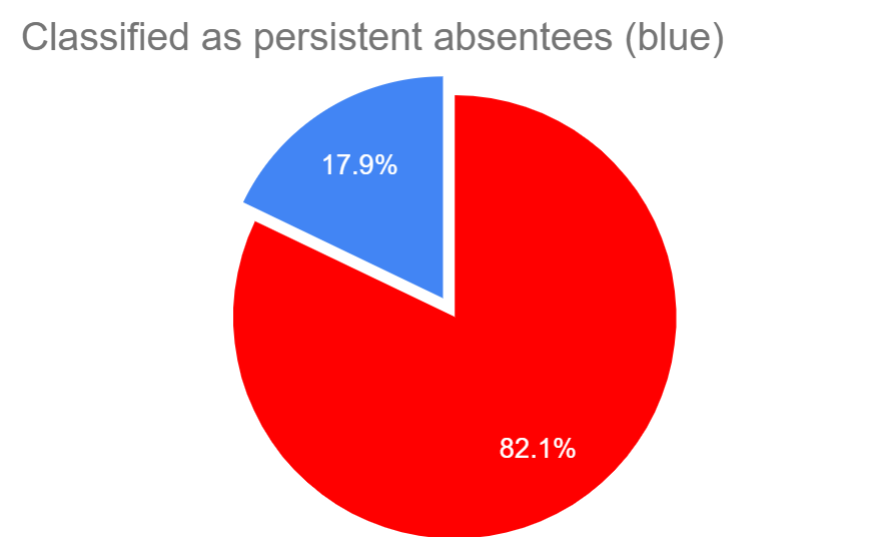
Figure 6 shows 17.9% of children were classified as persistent absentees.
Challenges
For young people in the National Youth Strategy Survey, school, college or university[footnote 10] is one of their top daily worries (42%). Those from the South of England (excluding London) are more likely than those from the Midlands, North or London to worry about school. In the survey, 76% of young people agreed that they could get help about their education and career if they needed it. However, those with SEN/D and those in the lower socioeconomic group (C2DE) were less likely to agree with almost all statements about getting help and advice.
Some young people in the research project said that the education system creates stress and pressure. The stress comes from different things depending on their age. School-age students often worried about daily things like exams, choosing GCSE subjects, or not getting along with teachers. Older students often talked about bigger worries like how expensive university is and how it makes it harder for everyone to have the same chances in life. The pressure of exam culture was a very important topic for 14 to 16 year olds. Young people said they feel a lot of pressure at school.
Some young people in our research and engagement say that what they learn in schools does not prepare them for real life outside of education – they felt it was not ‘practical’ enough. Some young people said they want more real world subjects and want the curriculum to be ‘tailored to reality’. They talked about the need for schools to teach skills like how to manage money (for example, taxes, insurance and interest rates); cooking; and how to create CVs. Young people also said they need more practical lessons focusing on trades, not just academic success.
Many young people also felt that education is underfunded. Some young people said that schools are under a lot of pressure to do many different things and have limited resources. They believed that these pressures then affect the students. Young people noticed schools having to close or merge, many teachers leaving and a lack of basic things in school (for example, paint for art lessons).
Spotlight: Young people with SEN/D
Young people with SEN/D see this underfunding in other ways as they do not feel that teachers and other responsible adults have enough training to give good support to those who are neurodiverse. Although not as prominent in the qualitative data as the insufficient provision for neurodiverse young people, and mainly raised in regards to schools, there was a perception that those that had physical disabilities did not have access to much-needed amenities. Some cited the same issues for universities too.
I’ve met so many people and teachers that don’t know what ADHD is, or sometimes don’t even know what autism is, or what it’s like or what the symptoms are, or how to react to it. I feel like there should be more stuff in place, especially with teachers, because I have come across some teachers that don’t know what ADHD is, and then it’s been hard for them to help me when they don’t know what they’re trying to help.
F, SEN/D (younger)
It’s hard growing up as someone neurodiverse in education at schools because you’re trying to fit into a system that wasn’t made for you at all.
F, Newcastle
For participants of the research project mainly – but not exclusively – in the online focus groups with young people with SEN/D, the time it takes to receive a diagnosis is the salient educational challenge (also discussed in Chapter 1). Those on a waiting list feel like their progression is ‘on hold’ during that time, creating a sense of stagnancy and frustration.
Some young people we talked to said they are treated differently than others, and this is a problem they face in education. They said they need a balance between getting the help they need, without feeling left out. This is especially true for care-experienced young people, who sometimes feel the standard, ‘tick-box’ support they get from teachers feels like interference rather than meaningful support.
It’s hard growing up as someone neurodiverse in education at schools because you’re trying to fit into a system that wasn’t made for you at all. But even someone with, like, a mental health condition, anxiety, depression, all that kind of thing. You know, I personally had a whole year of my high school life off school because I was anxious and there was absolutely no support given to me. I don’t know if it’s any different now, but I’m only a few years out of high school and I know that the support was really limited. My mum’s a teacher, there was no training given for neurodiverse students.
F, Newcastle
The problem is with every new teacher I have, in school or even any like, learning assistant, on the school record, any student that’s ever been in care or is currently in care, it kind of flags up. And without fail, every single teacher has always mentioned something about it. And I don’t know, it’s a bit annoying when you’re just minding your business and yes, you want to forget it, but they make a massive deal out of it.
M, care-experienced (older)
I don’t tell a lot of my teachers about my disorder, because I don’t always like being treated differently to the rest of my class.
F, SEN/D (younger)
There was a feeling among some young people that schools ‘push’ university as the only option for more education. This was seen as a problem because university may not be the best choice for everyone. One report about 6 to 18 year olds in England found that children often feel unequipped with the advice and support they need to pursue their dreams and the right skills they think they will need as adults (Children’s Commissioner, 2024).
Also, many young people felt that university is too expensive for them. This is because they believe that student loans are not enough to live on during university, that the student debt will be too much, and that prestigious universities often encourage students to attend expensive summer camps to boost their chances of admission. The problem, whether it is real or perceived, has the same result: it makes people think that university is not for them. Even for those who do go to university, there are still problems, for example, the belief that universities are for a certain type of person, based on the economic inequity between students.
This is one of my big worries with hoping to get into a Russell Group uni. I’m not going to be anything like the people are there. […] I’m going to be scrimping and saving every penny that my parents are giving me and that I’ve been saving since I was a young child. […] There’s not enough economic support for young people, especially not from universities.
F, Blackpool
Money is a big issue. Even if- I’m care-experienced, so I don’t have parents, I get the maximum amount of maintenance loan. Even that’s not big enough to, kind of, support myself, but then also I’m going to have bigger loans once I graduate. Which is going to financially disadvantage me compared to my peers in the future.
F, Cambridge
Some young people believe that academic success is not a guarantee of financial stability in the future (which has been highlighted as a key challenge in this report). Young people talked about how hard it is to get a job and learn the right skills, and the cost of university and/or training.
Connected to the earlier finding that young people feel schools – and, to a lesser extent, universities – do not properly prepare young people for adult life, several young people said that the change from teenager to adult is a challenge. This was often explained as being because of financial pressures that educational institutions face. These problems force them to reduce staff and resources for services like careers advice, which young people view as important in making this change easier. In particular, participants in the SEN/D online groups emphasised the difficulty of this change for them.
You’re just thrown in the deep end and expected to know how to float.
M, SEN/D (older)
The biggest struggle, for my age, is definitely finding out how to live an adult life.
M, SEN/D (older)
The change from being a teenager to an adult is a bigger concern. When becoming an adult, young people lose the support and familiarity of school, but other sources of help and advice, such as youth clubs and other youth services are also lost.
Hopes for the future
Looking to the future, young people said that they want more opportunities to learn skills outside of schools, such as through enrichment activities, volunteering, enterprise, and youth clubs to help them get ready for the world of work. Also, young people want to see a broader curriculum in schools – allowing them to learn practical skills which would be helpful when they become adults. When 16 to 25 year olds taking part in the National Youth Strategy Survey were asked what they wanted the government to do, the second most popular answer was for the government to provide more job and/or work experience opportunities (16%).
Through our engagement, young people also told us that they would like to see more access to mental health support in schools, as well as highlighting that they would see benefits from youth services and youth workers being part of the education system.
Education has the power to drive social mobility, improve employment opportunities and tackle the most pressing issues in our society. However, this report highlights the systemic challenges and difficulties facing the education systems - it’s time to ensure these issues are tackled to build an equitable, inclusive and sustainable education system.
Thomas Williams, Youth Collaborator
Economic and financial wellbeing
This section focuses on the economic and financial challenges young people face. This includes unemployment, high living costs, and insecurity around housing. We found that while education and apprenticeship participation is high, a stubborn minority of young people are not in education, employment, or training (NEET). There are big differences in how well young people fare financially, with certain groups facing greater problems, especially for those from disadvantaged backgrounds and certain ethnic groups. Overall, the section shows that young people often feel unsure about their financial future and want more stable jobs and affordable places to live.
Growing up in a single-parent family in West Yorkshire, I saw early on how stacked the odds can be. Ambition wasn’t in short supply — but opportunity was, and financial anxiety was a fact of life. When I got into Oxford University in 2015, it wasn’t the prestige that hit me — it was the cost. The bursary I received was the only reason I could afford to stay. Without it, I’d have been choosing between food, rent and studying. That support didn’t make things easy, but it made it possible. Today, many young people face even tougher conditions. Youth unemployment is high, real wages have barely moved, and owning a home feels out of reach. Add student debt, insecure work and the sheer cost of getting started — and it’s no wonder so many are stuck. What I experienced wasn’t unique then, and it’s even less so now. The danger is we start to normalise that struggle. If we want to restore faith in progress, we need to make sure talent isn’t blocked by background. Without urgent action, we risk breaking the social contract that each generation should be able to climb higher than the last.
Joe Seddon, Morley, West Yorkshire, Youth Advisory Group Member
Summary of current trends and patterns
Even though the number of young people in education and apprenticeships has been stable in the past few years, there has been an increase in the number of NEET young people. There are nearly 1 million young people in the UK who are NEET, there are more NEET young people in the UK than in many international counterparts. Research shows that those who experience childhood poverty have fewer employment opportunities, which then affects their mental health and wellbeing. Some groups of young people are less likely to afford essential living costs, and there is a general worry among young people about the economy.
Employment, education and training
-
The latest estimates for the end of 2024 show that the number of 16 to 17 year olds in England who are in education and apprenticeships has stayed the same (DfE, 2025a). More 16 to 17 year olds in England are studying full time than before, and a record number are studying for GCSEs as their highest qualification (DfE, 2025a).
-
An estimated 12.5% of all young people aged 16 to 24 in the UK were NEET in May 2025. This was 1 percentage point higher than in 2024 (ONS, 2025b). In numbers, this means that 948,000 young people were NEET, up from 923,000 in 2024 (ONS, 2025b).
-
The number of 16-24 year olds who are NEET is lowest in the South East and West Midlands (11.8% and 11.6% respectively) and highest in London at 15.2% (DfE, 2025a).
-
Recent research also shows that young people (18 to 24) from disadvantaged backgrounds in the UK are 66% more likely to be NEET than the average young person (Impetus, 2025).
-
Estimates of NEET rates show that more young men than young women are NEET among 16 to 24 year olds in the UK (14.5% and 12.6%, respectively) (ONS, 2025c).
-
People who were eligible for free school meals and attended school in London are more likely to earn more than those who were eligible for free school meals and attended school in other regions. While 18% of free school meal students from London are in the top 20% of earners at the age of 28, only 7% of those from the North East are, as are 7% from the North West and 7% from Yorkshire and the Humber (Holt-White and others, 2025).
-
The chart below shows rates of unemployment in particular, not NEET levels.
Figure 7: Unemployment amongst young people
| Location | % of unemployment amongst young people |
|---|---|
| OECD | 11.50% |
| UK | 14.80% |
| EU | 14.70% |
Source: House of Commons, 2025a. Unemployment in the UK among young people is 14.8% (12.8% in 2024); in comparison to 14.7% for the European Union and 11.5% for the OECD.
Cost of living and housing
-
Engagement with young people showed that the cost-of-living crisis and poor mental health affect one another. Research shows that those who experience childhood poverty in the UK have fewer employment opportunities, which then affects their mental health and wellbeing (ONS, 2020).
-
In April 2024, real median pay for 18 to 21 year olds was 9% higher than 2008’s level (House of Commons, 2024a).
-
At the end of September 2024 there were 164,040 children living in temporary accommodation in England (Shelter, 2025), up from 145,780 in December 2023 (MHCLG and others, 2025).
-
The Youth Voice Census found that some groups of young people (aged 11 to 30) in the UK were less likely to have been able to afford essential living costs (Youth Employment UK, 2024). Compared to heterosexual respondents, bisexual respondents were 8 percentage points more likely to ‘strongly disagree or disagree’ that they have been able to cover essential living costs over the last 12 months. Those eligible for free school meals were 10 percentage points more likely to ‘strongly disagree or disagree’ with the same statement, in comparison to those not eligible for free school meals (Youth Employment UK, 2024).
-
One survey found that 19% of young people in the UK had to seek financial help in the last 12 months. Also, 41% of young people aged between 11 to 30 Said that their top concern for our country was the economy. This was felt strongest by Black, Black British, Caribbean or African respondents at 48% (Youth Employment UK, 2024).
-
40% of young people (aged 11-24) from low income families in the UK said they were worried about their own or their families finances and the cost of living (Street Games, 2023).
-
Between financial year ending (FYE) 2022 and FYE 2023, relative low income before housing cost for children in the UK increased by 2 percentage points to 22%. The relative after housing cost measure increased by 1 percentage point to 30% (DWP, 2025).
Challenges
Many young people told us their financial situation feels uncertain. Economic and financial wellbeing consistently shows up as a big worry for young people. This is partly perceived to be because of the cost of living crisis and how it makes them feel insecure. In one study, 19% of the young people (11 to 30) in the UK had to ask for financial help in the past 12 months. This shows that worries about money and financial wellbeing are real problems, meaning young people are facing economic insecurity, as well as feelings of concern and worry (Youth Employment UK, 2024). Young people who are Black, Black British, Caribbean or African are especially worried about the economy (Youth Employment UK, 2024).
When it comes to daily worries, money is one of the things young people in the National Youth Strategy Survey were the most concerned about (41%). However, this was closely followed by ‘what they want to do in the future’ (40%). Young people from the South of England (excluding London) were more likely than those from the Midlands, North or London to worry about what they want to do in the future (43% vs 38% vs 40% vs 37%). Young people in lower socioeconomic groups (C2DE) are more likely than those in higher socioeconomic groups (ABC1) to worry about money (43% vs 40%). With the exception of friendships and social life, and school/college/university, young people with SEN/D are more likely than those without to be concerned about money and what they want to do in the future.
Money is probably a big worry and challenge for young people, like, to balance between living costs, and then just doing things for your own enjoyment, like going to the cinema, or hanging out with friends and getting a coffee, but then also being able to make sure you have enough money for food and rent and everything. I think that’s a worry for a lot of people, to balance out the enjoyment, yet also living costs.
F, SEN/D (older)
Growing up on a council estate, I think obviously the challenges we face growing up are way different to someone that grows up in, like, Sloane Square for example. […] A lot of them are just more in the present and just getting through the day, getting through the week or the month and what not. Whereas, like, someone else would just be like, you know, ‘I’m comfortable. Now I just need to focus ahead and so on.
M, London
Job security and finding good jobs are big challenges for young people, especially for students and those old enough to work. This uncertainty can make them stressed and affects how they see their future. Young people outside of big cities felt there was a lack of job opportunities beyond low-paying jobs. This made young people feel stressed about money as they wanted a good career that is stable and in their own local area. In general, young people feel that having good financial wellbeing is extremely important, but hard to get. Young people feel that balancing their education, working part-time, and their own dreams makes them feel unsure about their future.
I would say the biggest worry for me is not doing well at school. Even though I do well, I’m constantly worrying about my future. And, it kind of links to money, stability, so if I don’t get a certain degree, or if I don’t get a certain point, I wouldn’t be earning good money in the future, or I wouldn’t be stable.
F, care-experienced (older)
Other research also supports this. One report shows how the cost-of-living crisis and poor mental health in young people affect each other and can have specific impacts for those from vulnerable backgrounds (King’s Trust, 2024). For example, young people in the UK who are NEET report the lowest wellbeing scores and over half say that the longer they are unemployed, the worse they feel about themselves.
Throughout the engagement in the research project, no matter their age or where they were from in England, young people said that financial security was one of the most basic and important things for a happy life. They felt that when you have financial security, you can start thinking about bigger things such as climate change. During our engagement, young people talked about not being able to afford basic things, from school supplies to food and having a safe home. They also talked about not being able to save for the future and the negative impact this is having on families.
Even though the climate crisis is obviously important, it’s not as obvious in your life as if you’re at the real blunt end of poverty.
F, Cambridge
In both big cities and smaller towns, the lack of access to housing was reported to be a big problem. For those who are the most vulnerable, this can make other feelings like instability and insecurity even worse, and can lead young people into situations they do not want, like temporary or shared living arrangements. Many young people think that the housing situation is likely to worsen. With young people only ever having experienced increasing housing and rental prices, they expect this challenge to persist and worsen over the coming decade. UK estimates also show that there has been a 10% increase of those aged 16 to 24 presenting to their local authority as homeless or at risk of homelessness in April 2023 to March 2024 from the previous financial year (118,000 in 2023 to 2024) (Centrepoint, 2024). It is clear from this engagement that young people want to feel more financially secure and therefore more confident about their futures.
I’m in supported accommodation and I’ve been in there for 2 years, and for me it’s a hard thing to get a flat or a house, somewhere that’s safe and warm, a roof over your head.
F, Blackpool
I think there needs to be a much better understanding about homelessness as a wider societal issue. So, I think as well as, sort of, having housing, temporary housing when people become homeless, protecting tenants to not become homeless in the first place.
F, Cambridge
Hopes for the future
Young people said that better social housing, affordable rent, and being able to access a home in the future are important for them. Those who have experienced homelessness felt they were not given enough priority for social housing. The policy engagement found that ‘lower cost of living’ was a hope for the future as was making things cheaper, for example through more bursaries to access opportunities or connecting funding to areas where young people are most in need.
A clear majority of young people in the National Youth Strategy Survey (61%) said lower living costs would most improve their daily lives; no other answer scored this high. A third (33%) of young people in the National Youth Strategy Survey also said that having a secure job[footnote 11] would improve their daily lives. The data shows us that young people aged 16 to 25 are the group most likely to want the government to provide more affordable housing (19%) and more job and/or work experience opportunities (16%).
We know that financial stability and literacy give young people the freedom to dream bigger and plan for the future. In a cost-of-living crisis, supporting young people to access good jobs, affordable housing, and real financial knowledge is more important than ever.
Gajaan Sugumar, Youth Collaborator
Priority challenges and conclusions
As has been highlighted across the report, our generation has so much to offer and so much potential. However young people face a range of challenges, something which is amplified by a lack of spaces for joy, or which foster happiness, throughout their lives. Young people report a lack of access to fun and fulfilling activities that would enable them to have fun outside of school. This is serious as many report exam stress and stress around friends and relationships impinging on their happiness at school and climate change and economic uncertainty dampening their hopes for the future. When they do struggle, young people are not able to access mental health care and support at the speed required or in the places, such as schools, where it could have a big impact.
Such findings reflect my experiences of growing up in a country whose support services and community’s resources were stretched beyond breaking point. Much harm that happens to young people can be prevented or mitigated given the provision of safe well-funded spaces and programmes with trained adults who have the time and resources to really get to know young people. We need the space and encouragement to learn to trust and believe in ourselves and the possibilities of our future. Fun is a great vehicle for this! Whether this be through Outdoor learning activities or participation in play or sports activities, it can allow people to develop confidence in themselves and their abilities as well as in specific skills for the future. The lack of access to and engagement with fun, in person activities in their communities especially by SEN/D young people and those from lower socio economic backgrounds is troubling as opportunities to grow and develop are a necessity and should be accessible to all.
Significant steps need to be taken to ensure there are the structures and resources available in local communities to give young people regardless of background of access support, the space to have fun, find connections and develop at their own pace. Such opportunities are key for creating a future where young people are safe and happy and optimistic about their ability to go out into the world and find joy.
Lauren Roberts-Turner, Lambeth, Youth Advisory Group Member
Growing up well means developing emotional maturity (understanding and managing feelings), becoming independent, building cognitive skills, and having good physical and mental health. This report has looked at many of these things, but we do not know the full picture, especially for things that are harder to see or measure about how a person grows and develops. Many aspects of a young person’s life are connected and affect how they experience growing up and becoming an adult, especially their family background. These things are also affected by wider societal issues such as how strong the economy is and the quality of the physical environment.
To assess the main challenges and priorities for action, the report starts by looking at what young people themselves worry about (see Figure 8).
Figure 8: Which of the following issues, if any, do you worry about in your day to day life?/Everyone thinks about different things. Which of these do you sometimes worry about?
| Issue | Total percentage of all respondents |
|---|---|
| Friendships and social life | 42% |
| School/college/university | 42% |
| Money | 41% |
| What you want to do in the future (e.g., getting a job) | 40% |
| Mental health and wellbeing | 36% |
Source: Savanta (2025), n=14,134 young people (10 to 21, up to 25 for SEN/D) in England.[footnote 12]
Many young people said their friendships and social life were among their main worries. Throughout our engagement, loneliness and isolation has emerged as a key problem even though young people are more connected through phones and computers than ever before. Loneliness is a feeling of being alone or cut off from others, while isolation is actually being physically or socially separated from others. For example, care-experienced young people’s main priority is to feel less isolated because of being in care. Many young people are spending more time alone, for example, just under half (48%) of young people in England spent most of their free time in their bedroom (OnSide, 2024).
Young people who responded to the National Youth Strategy Survey said their mental health and wellbeing was a major worry. Other research shows that there has been a large increase in the number of mental health referrals for children and young people in England (Darzi, 2024). There has also been an increase in probable mental health disorders in England (NHS England, 2023). While most of the young people in the survey agreed that they could get help and advice with their mental and physical health, these were the lowest ranked statements when asked if they could get help and advice on various topics. As we have seen in earlier chapters, the UK has a lower wellbeing score in children than many similar countries.
Young people worry about school, college and university. They talk about the pressure they feel at school, and believe that the curriculum should be broader and include more practical life skills. Whilst students in the UK do well at school by international standards, fewer young people in the UK feel like they belong than the average in other similar countries. (OECD, 2022). There are also some young people who regularly miss (persistent absentees).
Young people also worry about their future, especially about getting a good job and a decent home when they become adults. A big worry for young people is money, and it was the single most common daily concern. This has been clear in many ways – for example worries about the cost of transport and everyday living costs.
Wider research also points out big problems for young people of isolation, low wellbeing, lack of resources and worries about future prospects. Wellbeing is affected by many things, including money worries and the support they get for the problems they face. One particular problem that stands out is not having enough opportunities to engage in local activities and connect with their friends and community in-person, and not feeling like they belong.
There are many other problems too – for example young people not feeling like they have a voice or worrying about their safety. These kinds of issues are often linked to each other and the priorities set out above.
These findings on major challenges are mostly the same as many of the ideas for what the Government should focus on (as shown by young people in the National Youth Strategy Survey – see Figure 8). These priorities will be looked at more closely in ‘Youth Matters: Your National Youth Strategy’.
Young people have asked the government to focus on:
-
Lower living costs. Our research shows that worrying about money can impact a young person’s mental health. Young people want more job opportunities and work experience – they want access to fulfilling jobs in the future and have the skills to successfully move to work.
-
More fun activities. Less than half of young people in the National Youth Strategy Survey agreed that they are happy with the activities and services in their local area, and less than 2 in 5 agree that the activities and services in their local area are made for young people like them. There are many reasons to do these activities, and many good things come from them, but one is to build in-person connections and opportunities.
-
More mental health support in schools. Young people showed a clear ability to discuss their own mental health in the research and engagement. They told us that they want better mental health and wellbeing support and that it would make their lives better.
Figure 9: Which of the following things, if any, would most improve your day-to-day life?/Which of these things would make your life better?
| Improvement | Total % of respondents |
|---|---|
| Lower living costs | 61% |
| Having access to more recreational and leisure activities | 46% |
| Better mental health and wellbeing support | 37% |
| Having a secure job | 33% |
| Having access to good-quality healthcare | 29% |
Source: Savanta (2025), n=14,134 young people (10 to 21) (up to 25 for SEN/D in England)[footnote 13]
By looking at the survey results with other research and insights in this report, we can see several key priorities that are important to young people in England. These priorities have helped to inform and create ‘Youth Matters: Your National Youth Strategy’, which aims to guide the future direction for young people in England. This report shows how different things are connected. For example, access to enriching, fun activities and supportive trusted adults like youth workers and mentors can help young people to learn important life skills, make friends, and support personal development. These benefits go beyond academic and job prospects, they also make young people feel better overall. Young people have said they want more free and easy-to-reach spaces outside of their homes and schools, along with increased awareness of opportunities like enriching activities, volunteering, work experience, and youth clubs. They also said it is really important to get mental health and wellbeing support quickly and to make mental health services better in both schools and communities.
Whilst many of these problems affect most young people, some groups of young people are more likely to have worse outcomes or worry more. When we looked at the national survey responses, two main groups stood out in all areas: young people from lower (C2DE) socioeconomic groups and young people with SEN/D.
Both of these groups show statistically significant variances compared to others, like those from higher socioeconomic groups and those without SEN/D. Big differences were especially seen in things like how much they took part in local activities, how happy they were with community services, how much they feel they can influence decisions at local and national levels, and how confident they are in getting advice and support. The qualitative findings and other evidence also show other groups that are important, sometimes matching the main groups from the survey.
As well those with SEN/D, and those from lower socioeconomic background (for example those on free school meals), the wider research included in this report suggests that girls, and young people from ethnic minority backgrounds are more likely to experience and/or worry about different parts of their lives than other groups. There are also regional differences in several areas, such as NEET rates being higher in the North of England.
Age is a really important factor to understand the challenges and views of young people. What young people worry about changes a lot depending on their age. For example:
- School, college, or university is a big worry for younger kids: 58% of those aged 10-15 are concerned about it, compared to only 31% of 16-21 year olds.
- Older teens and young adults are more focused on the future: 49% of 16-21 year olds worry about what they want to do later in life, while only 30% of 10-15 year olds do.
The older age group is more worried about money, mental health and wellbeing, physical health, their living situation, talking to new people, making friends who understand them, being independent, getting the right support for work/education, and using public transport by themselves. The younger age group is more worried than the older age group about friendships and social life, global issues, family relationships, climate change and the environment, social media and being online, discrimination and bullying or peer pressure.
Groups of key interest from the wider qualitative insights and evidence base.
| Issue | Groups of key interest |
|---|---|
| Physical and mental health and wellbeing | Girls and young women have lower wellbeing than boys and young men. Girls and young women and the older age groups (15-year olds) are more likely to use e-cigarettes. Young people commented on long referral times and less health support given to young carers and LGBTQ+ young people. Those in care, care leavers, or those with parents who have less means were also groups of interest in this outcome area, specifically linked to support for mental health challenges. There has also been a decline in youth mental health since 2010 across the North East and the East of England, with pre-existing stark inequalities. Of those aged 5 to 15 in England, young people who are from less affluent or Black or Asian backgrounds are less active. NEET young people report the lowest wellbeing score. |
| Youth voice | Young women and non-binary young people are less likely to think there are enough opportunities available to share their views than young men. But boys and young men are less likely to believe that young people in the UK can make a difference in global issues. Young people from ethnic minority backgrounds feel there are specific problems that stop them from being heard, often because institutional bias leading to a sense of disempowerment. Black, African, Black British or Caribbean backgrounds were most likely to say they had no opportunities to share their views (46%) compared to all other ethnic groups. Young Muslims (16 to 25 in urban England) feel constrained by systemic Islamophobia, exclusionary narratives in public life, and limited access to decision-making platforms. |
| Economic and financial wellbeing | Bisexual young people and those on free school meals were more likely to ‘strongly disagree or disagree’ that they could pay for their basic living costs over the last 12 months than some other groups. Black, Black British, Caribbean or African young people felt more strongly about the economy being a top worry for our country. Research also shows that young people (18 to 24) from disadvantaged backgrounds are 66% more likely to be NEET than the average young person. |
| Skills and opportunities for life and work | NEET rates are highest in the North East at 15%. Young people aged 14-16 feel more stressed about exams than some other age groups. More boys than girls are NEET in the UK, and on average, girls in England score higher on their attainment 8 than boys. While 18% of students who get free school meals from London are in the top 20% of earners at the age of 28, only 7% of those from the North East are, as are 7% from the North West and 7% from Yorkshire and the Humber. And whilst comparing those students who get free school meals in the highest ranked area of East Ham in London to the lowest ranked area of Newcastle upon Tyne Central and West in the North East – there is a 30 percentage point gap in achievement of GCSE grade 5 in English and maths. Free school meal students from East Ham are more than three times more likely to have a degree by age 22 compared to those in Newcastle upon Tyne Central and West. Students with mental health problems are seven times more likely to miss more than 15 days of school. |
| Community cohesion, connection and belonging | Young people aged 16 to 24 in England and Wales had the second highest prevalence of being a victim of crime. Worry about becoming victims of crime is the highest among children from Black and mixed ethnic backgrounds. Young women and transgender people are more likely to say they felt unsafe in their local area compared to their counterparts. Young women are much more likely to be sent explicit pictures/videos of things they did not want to see than boys. Care leavers are less likely to have a support network and feel like they belong. |
| Positive activities in the community | Those with long term illnesses and disabilities, those in the most deprived IDACI quintile, and those aged 16 to 19 are more likely to feel like there are not enough clubs and activities for young people in their local area. Black, Black British, Caribbean or African young people score lower than all other groups when asked about availability of amenities in their local area. Transport to and from activities was mainly an issue for those in small towns and rural areas. The perception that buses can be unsafe was flagged by some participants, especially among young women. Young Muslims (16 to 25 in urban England) often fall through the cracks due to underfunding, siloed services, and a lack of strategic investment in Muslim-majority neighbourhoods. |
| Healthy relationships | Children from vulnerable groups are noticeably more likely to be unhappy with life at home than others. Boys are more likely to not have an adult they can trust in their life. For younger age groups (aged 10 to 12), bullying at school (or worrying about it) is a bigger problem than for other groups (this came out of the qualitative research project). The qualitative research project also shows us how care experience and isolation are connected. Self-reported findings also show us how young women are more likely to be victims of IPVA, but they are also slightly more likely to perpetrate abuse than young men (according to their own accounts versus young men). |
Conclusions
Being a teenager is a unique and special time of change. This report starts from the position that today’s youth are the builders of our country’s future. While many young people have good experiences growing up, this report shows a mixed picture, with both successes to be built on, and a number of new and old challenges.
The main purpose for this report is to truly understand what young people in England are experiencing and to bring their voices to the forefront of policy making. It is really important to note that young people have identified numerous challenges requiring action, many of which are strongly supported by the wider evidence. In particular, a big focus of ‘Youth Matters: Your National Youth Strategy’ is to enable young people to thrive through positive, in-person connections.
Addressing the key challenges in this report is not only vital for young people’s wellbeing but it will also bring benefits to everyone in society. What we have learnt here has helped create and put our strategy into action, making sure it truly addresses what young people in England need and hope for.
-
Gen-Z are normally defined as those born between 1997 to 2012, meaning that a few age groups that are in scope of this study are not included in this definition. ↩
-
The UK was one of the countries that did not meet all sampling requirements for PISA 2022 (the study that the above finding is taken from). This means that the above should be interpreted with caution. ↩
-
Data tables published by DCMS as a part of this publication. ↩
-
Statement only asked to those who are currently in education. ↩
-
Indicators used: mental health: suicide rate, age 15 to 19 years and % of children with high life satisfaction at age 15. Physical health: Child mortality rate, age 5 to 14 years and % overweight, age 5 to 19 years. Skills: The % who make friends easily at school at age 15 and he % proficient in reading and mathematics at age 15 was also used. ↩
-
In the cited report this refers to “children in care, those with a social worker or young carers”. ↩
-
Brook’s report covers England and Wales, so although not specified, it is believed the statistics presented here covers England and Wales too. ↩
-
Indicators used for skills: The % who make friends easily at school at age 15 and the % proficient in reading and mathematics at age 15 was also used. ↩
-
Those missing more than 10% of school. ↩
-
Only shown to those who are currently in education. ↩
-
Only shown to those aged 13 and above. ↩
-
Data tables published by DCMS as a part of this publication. ↩
-
Data tables published by DCMS as a part of this publication. ↩