Working Lives: the scale and nature of labour market non-compliance and other work-based harms in the UK – executive summary (web version)
Published 11 May 2026

© Crown copyright 2026
This publication is licensed under the terms of the Open Government Licence v3.0 except where otherwise stated. To view this licence, visit nationalarchives.gov.uk/doc/open-government-licence/version/3 or write to the Information Policy Team, The National Archives, Kew, London TW9 4DU, or email: psi@nationalarchives.gov.uk.
Where we have identified any third party copyright information you will need to obtain permission from the copyright holders concerned.
This publication is available at https://www.gov.uk/government/publications/working-lives-the-scale-and-nature-of-labour-market-non-compliance-in-the-uk-final-report/working-lives-the-scale-and-nature-of-labour-market-non-compliance-and-other-work-based-harms-in-the-uk-executive-summary-web-version
Foreword
This landmark and innovative research project was commissioned in 2022 by the former Office of the Director of Labour Market Enforcement (ODLME). Responding to a statutory obligation under ODLME’s founding legislation, the objective was to help fill a major evidence gap in our understanding of labour market non compliance relating to minimum wage enforcement, employment agency standards, gangmaster licensing and more serious labour exploitation.
Following the introduction of the Employment Rights Act (ERA) in 2025, since April 2026, operational compliance and enforcement activity in these areas as well as strategy and analytical functions carried out by the former ODLME now fall within the remit of the Fair Work Agency (FWA).
The project’s findings are highly relevant to the FWA’s work in the near term as it develops its first strategy for publication in early 2027, aligning with the strategic steer set by government. That this report identifies 1 in 7 workers affected by non-compliance with employment laws in the FWA space demonstrates the scale of the challenge for us.
Longer-term, the remit of the FWA will expand to include new areas, such as holiday pay, for state enforcement. The FWA will also need to work closely and collaboratively with those responsible for tackling other labour market issues and harms. This research also brings valuable insights around the gig economy, health and safety, bullying and harassment and worker voice, and where these can overlap with core FWA interests.
The FWA will itself have a similar obligation to the former ODLME to continue to provide a robust assessment of labour market risks. This will help inform how the FWA can make best use of its resources and demonstrate impact and value for money. Fundamental to this is striking the right balance between FWA support for employers to become more compliant and strong enforcement to address more deliberate and recidivist behaviour.
I therefore wish to thank the researchers for such an important and timely report. The Working Lives data set will be made available through the UK Data Service. I hope this will spur further analysis and research to inform future FWA thinking and wider policymaking.
Matthew Taylor CBE
FAcSS Advisory Board Chair
Fair Work Agency
Introduction
How many workers have their rights breached in the UK labour market? What issues do they experience most often, and is there an overlap between them? How are they affected by each of these issues? Who is at higher or lower risk? Are there any differences between workers in more precarious positions and the full workforce? What are the implications for enforcement and other responses? These are some of the questions this research project was designed to help answer.
We gained quantitative insights from the tailor-made Working Lives survey, representative of precarious workers in particular and the wider workforce in general. We combined that with in-depth qualitative data from worker focus groups about perceptions and experiences around organised labour and interviews with precarious workers about their lived experiences at work.
Our survey data offers a targeted snapshot into working conditions, focusing on the period between spring/summer 2023 and spring/summer 2025. This postdates intense but largely temporary COVID-19 related disruptions to the labour market, so our results speak to ‘the new normal’, post-covid and post-Brexit. Our interviews and focus groups often incorporated longer working histories.
We benefitted from 6 project advisory groups, comprised of:
- worker representatives (including trade unions and non-governmental organisations (NGOs))
- business representatives
- legal experts
- policy makers and operational staff
- academic specialists
- precarious workers (with thanks to Focus on Labour Exploitation)
These advisory groups and the government’s own Technical Advisory Group (TAG) all provided invaluable consultation, feedback and constructive challenge at important junctures, survey conceptualisation, survey operationalisation, co-determining the focus for the qualitative elements and developing recommendations based on the results.
In the rest of this executive summary, we highlight headline findings overall and from each of the final report’s empirical chapters (chapters 4 to 11). Recommendations and methods are not covered here but can be found in chapters 12 and 3 respectively.
Headline findings
The Working Lives survey was designed to capture clear legal violations, potential violations, and other work-related harms (see Table 1 for the areas we examined through this project and the relevant laws and state enforcement remits).
We present our headline findings here in 2 parts. First, we focus on 4 clear breaches of employment law that are either directly within the remit of the FWA or are closely associated with their work (in brief, those related to National Minimum Wage (NMW), payslips, contracts and key information documents (KIDs), and work-finding fees). Second, we consider a broader range of issues that includes clear legal violations, potential legal violations, and other work-based harms.
Overall, our results point to pervasive non-compliance and other work-related harms across the UK labour market. In the 2 years prior to our survey, 14% of workers experienced at least one clear legal violation out of the 4 in question here. At a minimum then, around 5.4 to 5.8 million workers have had these relatively straightforward employment rights breached. This is of particular and immediate importance to the FWA’s work.
Even more concerningly, 7 in 10 workers experienced at least 1 of the 8 main issues in focus,[footnote 1] which together cover a range of clear legal violations, potential legal violations and other harmful practices at work. That equates to an estimated 26.6 to 28.7 million workers in the UK affected.
The table indicates the legal status of the practices involved and where responsibility for state enforcement sits in government. Some of these categories cover practices that are broadly unlawful and many more can be unlawful, potentially breaching various laws, regulations and individual contractual terms.
Some of these (such as most instances of unpaid extra hours of work) represent a regulatory gap. Taken together, even when laws are not breached, the experiences in question are undesirable and can be detrimental to people’s economic, social, psychological and physical wellbeing, and overall experiences of work (such as ‘lawful but awful’).
This is a complex and fragmented legal area (Pósch et al., 2024) and establishing a breach definitively requires information about employment status, individual contractual terms, and other context that is simply not measurable within a general survey, especially as respondents themselves may not know.
Whenever statutory rights do not apply to certain workers, however, we exclude them from the prevalence estimates to the greatest extent possible, even when that means our estimates are conservative as a result (for example, NMW violations are analysed for employees only). Details on relevant legislation can be found in the empirical chapters (Chapters 4 to 11).
Overall, the sheer prevalence of violations and other issues experienced over a relatively short period of time challenges received wisdom that most businesses are compliant, and only a few ‘bad apples’ undermine labour standards. We cannot speak to businesses’ intent – some breaches may be deliberate, others negligent, and others genuinely accidental.
Regardless of intent, the identified scale of unlawful and potentially unlawful but certainly harmful behaviour suggests that in practice workers’ rights are likely breached at scale. Our in-depth interviews also revealed how workers navigate unlawful and poor treatment, including when few alternatives exist and trying to challenge it proves difficult, frustrating and ineffective.
At a minimum, 5.4 million workers had these basic employment rights breached.
Table 1: work-related issues, state enforcement and legal status of the practice
| Work-related issue | State enforcement | Legal status of the practice |
|---|---|---|
| 1. Not receiving contract or KID ahead of starting the job (or, only, for workers in Northern Ireland not within the first 2 months of the job) | FWA, under certain circumstances only (such as for agency workers) | Unlawful. Breach of Employment Rights Act 1996 and Employment Rights (NI) Order 1996 or, for agency workers, the Conduct of Employment Agencies and Employment Businesses Regulations 2003 and Conduct of Employment Agencies and Employment Businesses Regulations (Northern Ireland) 2005. |
| 2. Agency workers being charged work-finding fees | FWA | Unlawful. Breach of Employment Agencies Act 1973 and Employment (Miscellaneous Provisions) (Northern Ireland) Order 1981.[footnote 2] |
| 3. Payment below the NMW/National Living Wage | FWA | Unlawful. Breach of National Minimum Wage Act 1998. |
| 4. Not receiving a payslip | No state enforcement | Unlawful. Breach of Employment Rights Act 1996 and Employment Rights Order (NI) 1996. |
| 5. Unfair deductions | FWA, under certain circumstances only (mainly NMW-related) | May be unlawful. May breach NMW legislation, legislation pertaining to agency workers,[footnote 3] and individual contractual terms. |
| 6. Unpaid extra hours of work | FWA, under certain circumstances only (mainly NMW-related) | May be unlawful. May breach the Working Time Regulations 1998 and its 2016 equivalent in Northern Ireland (NI), the National Minimum Wage Act 1998, and individual contractual terms. |
| 7. Leave-related difficulties | Currently very limited state enforcement[footnote 4] (FWA will assume enforcement responsibilities for holiday pay and likely Statutory Sick Pay (SSP)) | May be unlawful. May breach the Employment Rights Act 1996, Employment Rights Order (NI) 1996, Employment Rights Act 2025, Working Time Regulations 1998 and its NI equivalent, and individual contractual terms. |
| 8. Physical injuries at the workplace (to self or co-workers) | Primarily Health and Safety Executive (HSE)/HSE NI. Police if criminally negligent. | May be unlawful. May breach the Health and Safety at Work Act 1974 and the Health and Safety at Work (NI) Order 1978.[footnote 5] |
| 9. Negative mental health due to work | Primarily HSE/HSE NI. | May be unlawful. May breach the Health and Safety at Work Act 1974 and the Health and Safety at Work (NI) Order 1978.[footnote 6] |
| 10. Bullying and harassment at work | Primarily Equality and Human Rights Commission (EHRC)/Equality Commission for NI. Police in some cases. | May be unlawful. May breach the Equality Act 2010, or equivalent NI legislation. May breach criminal laws (for example, around physical, sexual, verbal abuse or harassment).[footnote 7] |
Prevalence rates at a glance
Our results indicate UK workers are widely impacted by financial harms, administrative violations, and health and safety-related issues alike.
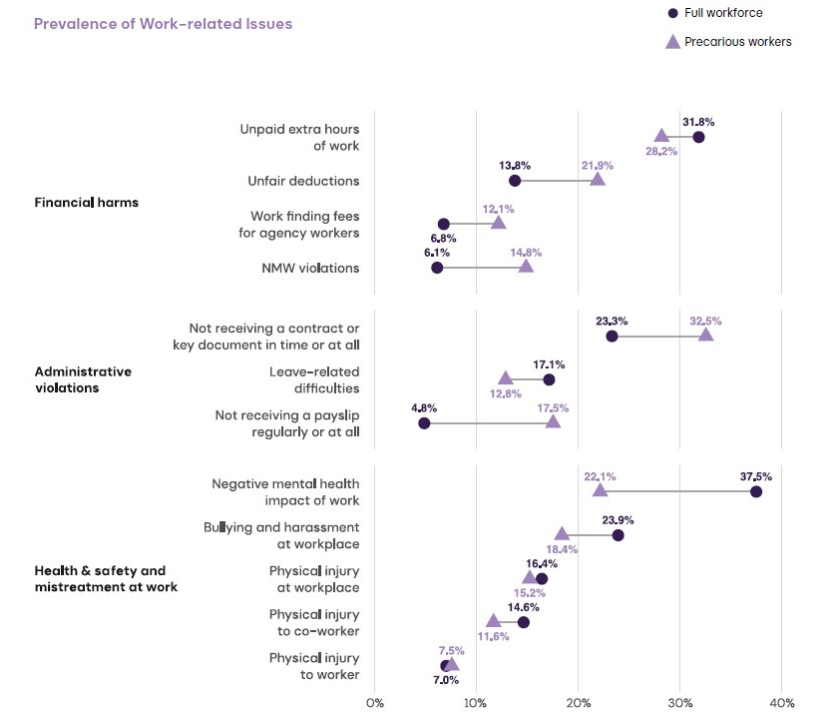
Prevalence rates varied substantially, however, depending both on the issue and population in question. Some were more common among precarious workers, others in the wider workforce. Table 2 and Figure 1 provide an overview for the 8 main issues in focus, with estimates of the proportions of workers affected in each population.
Overall, the least common issue was physical injury to self, and the most common was negative mental health due to work. The 3 next most prevalent issues were unpaid extra hours of work, not receiving a contract or KID, and bullying and harassment at the workplace.
Table 2: prevalence of key issues, as shown by the Working Lives survey (weighted estimates)
| Issue | Full workforce | Precarious workers |
|---|---|---|
| Financial harms: unfair deductions | 13.75% | 21.89% |
| Financial harms: NMW violations (as % of employees only) | 6.11% | 14.85% |
| Financial harms: unpaid extra hours of work | 31.84% | 28.19% |
| Financial harms: work-finding fees (as % of agency workers only) | 6.75% | 12.14% |
| Administrative violations: not receiving a payslip regularly or at all (where applicable) | 4.84% | 17.51% |
| Administrative violations: not receiving a contract or key document (at all or within the legally required time) | 23.3% | 32.54% |
| Administrative violations: leave-related difficulties | 17.12% | 12.84% |
| Health and Safety and mistreatment at work: physical injury experienced due to work (total experienced by the worker or co-worker) | 16.4% | 7% |
| by the worker | 14.61% | 15.21% |
| by a co-worker | 7.55% | 11.65% |
| Health and Safety and mistreatment at work: negative mental health impact of work | 37.49% | 22.14% |
| Health and Safety and mistreatment at work: bullying and harassment at the workplace | 23.91% | 18.38% |
Figure 1: prevalence figures for the key issues, as shown by the Working Lives survey (weighted estimates, sorted by prevalence in the full workforce)[footnote 8]
Overall distribution of work-related issues
As stated earlier, our survey was designed to distinguish between clear legal violations and other potential violations and harms.
Clear legal violations were:
- NMW violations (for employees)
- not receiving a payslip regularly or at all (when eligible)
- not receiving a contract or KID ahead of starting a job or within the time period stipulated by the law (asked only of those who started a new job in the last 2 years)
- being charged work-finding fees by employment agencies (among agency workers) (see rows 1 to 4 inclusive of Table 1)
These 4 issues were also of special interest to the FWA, and the ODLME before it.
We found that around 14% of the full workforce and around 26% of precarious workers experienced at least one clear legal violation in the past 2 years (see Table 3). As discussed in Chapter 8, this is very likely to be a considerable underestimate and should be treated as a floor estimate when it comes to violations.
Notably, based on this, the typical worker did not experience any clear legal violations, and the vast majority of those who did were only impacted by one type.
Table 3: distribution of clear legal violations (weighted proportions)
| Number of work-related issues | Full workforce | Precarious workers |
|---|---|---|
| 0 | 85.71% | 74.39% |
| 1 | 13.14% | 22.57% |
| 2 | 1.09% | 3.02% |
| 3 | 0.06% | 0.01% |
Contract and KID-related violations were only measured for those who had started a new job in the preceding 2 years, and unlawful agency fees only applied to agency workers. As such, we did not deem these sufficiently general to be considered alongside the other 8 work-related issues in our main analysis of the overlaps between different violations, potential violations and other harms and multivariate modelling of the same (Chapter 8).
Focusing on the remaining 8 issues (rows 3 to 10 inclusive of Table 1), another core finding of our research is their sheer ubiquity in workers’ experiences. In the 2 years preceding our survey, around 7 in 10 workers in the full workforce experienced at least one such issue, as did around two-thirds of precarious workers (the difference is largely attributable to lower rates of negative mental health impacts of work and leave-related difficulties among precarious workers).
In essence then, most workers in the mid-2020s UK labour market experience at least some form of work-related legal violations, potential violations or other harms at the workplace.
To stress, this analysis focuses purely on the numbers for each type of issue (for example, prevalence) not on the incidence of repeat breaches. For certain issues, we could also delve deeper into the severity and impact of the problems experienced.
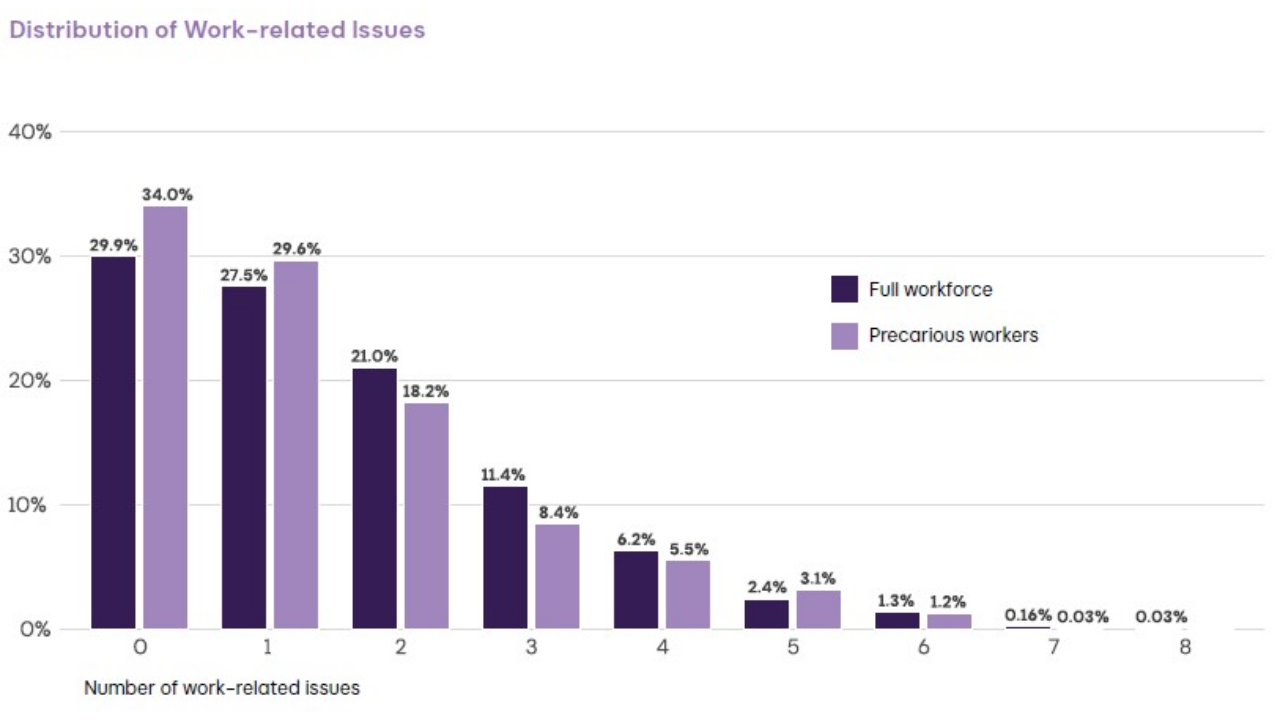
The issues tended to be relatively dispersed, as shown in Table 4 and Figure 2. By that, we mean that while most workers experienced some sort of problem, relatively few were exposed to many or most different problems. The typical worker experienced only 1 of the 8 categories of issues.
Around 1 in 10, however, experienced 4 or more different types of violations and harms over this relatively short period. These figures applied for both precarious workers and the wider workforce.
Table 4: percentage of 8 main work-related issues in focus (weighted proportions)
| Number of work-related issues | Full workforce | Precarious workers |
| 0 | 29.90% | 33.98% |
|---|---|---|
| 1 | 27.50% | 29.62% |
| 2 | 20.99% | 18.17% |
| 3 | 11.45% | 8.41% |
| 4 | 6.25% | 5.46% |
| 5 | 2.41% | 3.11% |
| 6 | 1.32% | 1.23% |
| 7 | 0.16% | 0.03% |
| 8 | 0.03% | 0.00% |
Around 14% of the full workforce and 26% of precarious workers experienced at least one clear legal violation.
Figure 2: distribution of work-related issues as shown by the Working Lives survey (weighted estimates)[footnote 9]
We also examined associations between different work-related violations and other issues. We found the strongest clustering between leave-related difficulties, negative mental health effects of work, physical injuries, and work-related bullying and harassment. Crucially, many of these areas are not within the FWA’s remit.
Yet, these are clear indicators of practices that are at least unpleasant, at worst illegal (breaching other laws, regulations or individual contractual terms outside the FWA’s scope). Either way, these practices are clearly undesirable if the goal is to make work better. In contrast, NMW violations appeared to be isolated from most other issues – a surprising and notable finding.
Unpaid extra hours of work and bullying and harassment at the workplace were the strongest candidates for ‘canary in a coalmine’ type indicators such as, ones that could help point towards likely concentrations of other problems. Negative mental health effects due to work also showed a strong association with the other variables. Although they might well be a consequence of other harms, they could still help pinpoint those.
We also identified factors that could explain variation between workers in the number of different issues experienced (using multivariate statistical analysis). Having a disability and trade union or staff association presence at the workplace were both associated with experiencing more categories of work-related issues both for precarious workers and in the full workforce alike.
Age also played a role, but only in the full workforce. The older someone got, the more likely it was that they reported a higher number of issues, although the youngest and oldest workers were the least affected.
Implications for targeted enforcement
Our results indicate that labour market non-compliance and other work-based harms appear to present very different distribution than crime (in general) does, as shown in the wider criminological literature.
That has implications for targeting labour market enforcement. Not only is the context different from that of policing, but the detection and enforcement strategy may need to differ substantially.
Breaches of criminal law tend to concentrate heavily in a small number of victims, but most people are not directly affected over a similar study period (ONS, 2025 and 2026). For the clear work-related legal violations, our results indicate prevalence rates of 155 violations per 1,000 workers in the full workforce and 287 violations per 1,000 precarious workers. Notably, these rates should be considered as a floor/minimum estimate due to the conservative and restrictive measures used to calculate them.
More broadly, when we consider the 8 main issues in focus (a mix of clear legal violations, potential legal violations and other work-related harms), these amount to 1,502 issues per 1,000 workers at large and 1,362 per 1,000 precarious workers.
These latter figures are far higher than crime victimisation rates: 313 crimes per 1,000 adults in September 2023 to September 2025, based on the Crime Survey for England and Wales (closest comparator for self-reported data). There are limits to direct comparison (for example, differences in populations, thresholds).
Nevertheless, it clearly indicates that enforcement bodies regulating the labour market face far higher prevalence rates (7 in 10 workers affected) and more diffused harms (with a typical worker affected by at least one category of harm).
Addressing such widespread problems presents clear operational challenges. In short, it is likely there are simply too many labour market-related violations and other work-based harms for state enforcement bodies to tackle them effectively. Moreover, there is too little concentration to make harm reduction focused on those worst affected a viable strategy.
Lastly, there are challenges here in establishing whether and to what extent the various issues addressed here actually violate the law (which can depend on contractual as well as statutory rights, complex situations around employment status, and contextual specifics that are hard to generalise).
Prior to the FWA’s inception, the main state enforcement bodies tended to target enforcement based on industry and geographical characteristics or the combination of the 2. We assessed a variety of alternative enforcement strategies to help understand what might work best, given the patterns of non-compliance and other work-based harms identified in the Working Lives survey (Chapter 8).
We found some empirical evidence for industry-level targeted enforcement. Although industry itself does not explain the patterns observed, but rather the characteristics of workers and work within that industry, industry-focused enforcement may be a viable strategy for the FWA to pursue. In contrast, the empirical data did not support regional targeting except in the case of unfair deductions and NMW violations specifically.
Around 7 in 10 workers experienced at least one work-related problem.
From precarious workers to the wider UK workforce
The project was originally designed to focus on people in precarious work, as they were thought to be at particular risk of breaches and harms (see Cockbain et al., 2019; Pósch et al., 2022a, 2024). We were later able to expand our scope to deliver robust estimates for the wider UK workforce too, which enabled comparisons across the 2 populations of interest: precarious workers and the full workforce.
We defined precarious workers as those meeting at least 2 of the following 3 criteria (for details, see Pósch et al., 2024):
- low income (under £24,000, or less than two-thirds of the approximate median pre-tax earnings of workers in the UK in March 2025)
- working in non-traditional work (defined as any paid work other than being an employee in a single job, such as having multiple jobs, being self-employed, agency worker, working in the gig economy, doing an apprenticeship, or any combination of these)
- coming from an immigrant or ethnic minority background and working at a small workplace (less than 50 people)
We had expected precarious workers to be at higher risk of most if not all the issues in focus, informed by the existing literature on precarious work and labour market exploitation (see Chapter 2 in the report). In fact, our results challenged and complicated this picture.
As shown in the previous sections, for some issues precarious workers were indeed at significantly higher risk than UK workers at large, whereas for others the opposite was true, and for others, rates were similar.
While our primary focus was prevalence, where it was possible to quantify the severity and impacts of various harms that also often revealed a similarly mixed and sometimes contradictory picture.
We examined whether various demographic, socio-economic status-related, and work-related variables were associated with differential risks. Again, it was notable how varied the picture was. Rather than there being a single profile for those most (or least) at risk, it was highly dependent on the issue in question.
Surprisingly few variables had statistically significant associations with the likelihood of experiencing the various legal violations and other harms. There were few risk or protective factors that recurred across issues, and even those that did were not consistent or applicable across the board.
For example, having a disability or longstanding illness or health condition was a risk factor for several issues, but occasionally a protective factor, and often had no significant relationship. Having a permanent job stood out as it tended to be associated most strongly with lower likelihood of experiencing various issues, but even its protection did not always apply.
Financial harms to workers
Financial harms are a pressing issue that can have serious and directly quantifiable impacts on workers and their families. Of these, we looked at NMW violations, unfair deductions, and unpaid extra hours of work (Chapter 4).
Depending on context, ‘unfair deductions’ are often perceived by workers as an unfair cost, based on our survey testing. They tended to affect higher proportions of precarious workers (21.89% compared to 13.75% of the full workforce). Some unfair deductions were more likely to be ongoing (for example, paying for fuel or insurance), while others were typically one-off expenses (for example, paying for a uniform).
Their relative impact varied, depending on both frequency and cost. Non-traditional workers were significantly more likely to incur unfair deductions and those in permanent jobs reported smaller financial impact than those whose jobs were not permanent (in the full workforce and among precarious workers).
We estimated NMW violations in a variety of ways, finding prevalence rates for employees of between 6.11 to 11.28% in the full workforce and 14.85 to 25.25% among precarious workers. These wide ranges reflect alternative approaches to measurement. Regardless of the method of estimation, precarious workers were consistently at significantly higher risk of NMW violations.
We think the most reliable estimate is the one at the lower bound of these ranges (6.11% and 14.85% respectively), although even this is substantially higher than the previous best available estimates (from the Low Pay Commission (LPC), which are 1.3% in 2024 and 1.5% in 2025, based on data from the Annual Survey of Hours and Earnings (ASHE)).
Typical (median) losses due to NMW violations averaged £0.68 to £0.78 per hour, using the mean gave higher rates of £0.96 to £1.13 per hour. Each year affected workers typically each lose £858 to £1,217 due to NMW underpayment, or £1,248 to £1,763 on average.
We found that workers with a pre-settled, settled, or indefinite leave status suffered larger losses than did UK-born British or Irish citizens, as did non-traditional workers (as compared to traditional workers). In contrast, workers with 2 or more jobs had reduced losses (compared to those with one job). Job location and industry mattered across the board, but they differed in terms of which locations and industries emerged as influential.
Unpaid extra work was the most common financial harm (and the second most common problem overall), affecting around 3 in 10 workers (31.84% of full workforce, 28.19% of precarious workers). Unlike the other financial harms, there was a high degree of consistency across the 2 populations in the scale and patterns of unpaid extra work.
Although the total number of unpaid extra hours per week was relatively similar in the 2 populations (full workforce 1.94, precarious workers 1.6), due to differences in the typical and average paid hours worked, the share of unpaid extra hours of work was much larger among precarious workers. In fact, a typical precarious worker worked around one-third more time for free (8 unpaid hours for every 100 paid hours) than a worker in the full workforce (6 unpaid hours for every 100 paid hours).
For the average worker, that meant 15 and 13 unpaid hours for every 100 paid hours respectively. Having a disability was significantly associated with a higher likelihood of unpaid extra work, and job location was also significantly associated with differential rates.
‘Administrative violations’
‘Administrative violations’ encompassed breaches of employment rights related to payslips, contracts and KIDs, and leave-related difficulties (see Chapter 5).
Among those for whom receiving a payslip was applicable, 3.5 times as many precarious workers experienced not receiving a payslip (at all or routinely) than did workers in the full workforce (17.51% versus 4.84% respectively). Of those able to access payslips, a much higher proportion of precarious workers had issues with their payslips always or frequently lacking accurate itemisation (17.78% versus 9.09% in the full workforce).
For contracts and KIDs, we also found a significant divide between (potential) violation rates affecting precarious workers and the full workforce, albeit the gap was smaller here. Among those who had started a new job in the preceding 2 years, 20.24% of precarious workers and 8.91% of the full workforce had not received such documents at all.
Even more concerningly, nearly a third of precarious workers (32.54%) and nearly a quarter of the full workforce (23.3%) had not received contracts or KIDs within the legally required timeframe (that is ahead of starting a job in England, Wales, and Scotland, or within the first 2 months in Northern Ireland).
For leave-related difficulties, problems were instead more common in the full workforce than among precarious workers (17.12% versus 12.84%), which was largely driven by differences in difficulty taking annual leave (nearly twice as common in the full workforce).
Having analysed the open-ended responses for the most common categories of leave (annual leave, sick leave, leave for training or education purposes, and bereavement leave), we identified 7 themes around the difficulties reported. Managerial barriers and constraints were a cross-cutting theme pertinent to most leave types.
Health and safety and mistreatment at work
Health and safety and bullying and harassment are not within the FWA’s remit, but of clear and complementary importance to working conditions. We analysed 4 interconnected aspects of health and safety (Chapter 6):
- physical injury to the worker or a co-worker
- negative mental health impacts of work
- bullying and harassment at the workplace
- workers’ concerns for their physical and mental health due to work
Levels of physical injury overall were similar for both the full workforce (16.4%) and precarious workers (15.21%), although for those in the full workforce, injuries to co-workers contributed a higher share of the overall injury rate. Younger workers were more likely to experience or be exposed to more serious injuries. Job location and industry also played a role in relation to injury rates.
For negative mental health impacts of work (which we asked workers to report only for themselves), we found a sizable and statistically significant gap between the full workforce and precarious workers, with the former around 1.7 times more likely to report this issue (37.49% versus 22.14%).
The symptoms among those affected were largely similar in kind and frequency between these 2 populations:
- most commonly, feeling sad or down (full workforce: 66.27%, precarious workers: 68.37%)
- strong anxiety or worry (full workforce: 67.81%, precarious workers: 57.28%)
- struggling to sleep through the night (full workforce: 53.75%, precarious workers: 46.73%)
- unmanageable level of stress (full workforce: 51.46%, precarious workers: 46.07%)
Workers in the full workforce were also significantly more likely than precarious workers to have experienced bullying and harassment at work (23.91% versus 18.38%). We also found notable differences in its source, with managers and supervisors being the most common culprits in the full workforce (57.55%, compared with 33.53% among precarious workers) and customers or equivalent (for example, patients) the most common among precarious workers (46.59% versus 20.19% in the full workforce).
The results suggest that probably the most common manifestations of bullying and harassment are unfair treatment and verbal abuse, with between 37 and 50% of the participants who reported bullying and harassment also mentioning one of these.
Finally, we also considered people’s concerns regarding their mental and physical health in relation to work, which can be an indicator of underlying hazards and possible future problems. Levels of concern were high in general, although higher among workers in the full workforce than among precarious workers (41.26% versus 30.73%). This difference was largely attributable to different levels of concern around work-related mental ill health.
The reasons for concerns were dominated by issues related to high intensity work (full workforce: 49.26%, precarious workers: 34.6%) and inadequate work-life balance (full workforce: 40.22%, precarious workers: 29.66%).
Notably, traditional physical safety concerns, such as fire hazards (around 1% in both populations), being asked to do dangerous jobs (full workforce: 5.35%, precarious workers: 4.28%), or inadequate health and safety training (full workforce: 4.49%, precarious workers: 6.42%) featured far less frequently.
Deep dive into non-traditional work
We provide a deep dive into the experiences of 2 groups of non-traditional workers: agency workers and the self-employed and workers in the gig or platform economies (Chapter 7). Non-traditional work is one of the key components of what can make work precarious, both according to the broader academic literature (see Chapter 2) and our study’s definition of a precarious worker.
Among agency workers, we found only limited evidence of third-party organisations or ‘umbrella companies’ being used to pay workers, with only 8.09% of agency workers in the full workforce and 3.65% of those in precarious work reporting being paid in this manner.
However, many workers were not clear where their payments came from, speaking to a potential lack of transparency. Most agency workers (over 90%) reported working exclusively for UK-based agencies, and it was rare to work exclusively for overseas-based agencies. Yet, around a quarter of agency workers paid fees to agencies (most commonly work-finding fees). These are generally illegal for UK-based agencies to charge, but almost everyone thus affected reported working for a UK-based agency.
Among the self-employed and gig workers, around 40% reported that their work was enabled by a website, platform or app (here proportions were similar among precarious workers and the wider workforce). Despite widespread concern in the literature about platform-driven pricing, only around 16 to 17% reported their fees being set in this way. Instead, around 57 to 58% reported being able to set their own rates and another 24 to 25% being able to negotiate their fees.
We asked self-employed, gig and platform workers why they chose to work this way. The most common reason given by self-employed/gig/platform workers for working this way was love for the job (mentioned by more than half of them), followed by building a business, supplementing income, and caring responsibilities. Concerningly, around 1 in 10 said they did this type of work for lack of a better alternative.
Precarious workers’ lived experiences of issues at work
We also conducted 24 in-depth interviews with people in precarious work, using their survey responses to shape personalised interview guides to explore their lived experiences in more depth and nuance.
The first analysis (Chapter 9) concentrated on factors that appeared to mediate (influence) their experiences of precarious work, non-compliance and other work-based harms. We identified 6 main themes that appeared to exacerbate or alleviate negative impacts of these phenomena, namely:
- household and family socio-economic position
- maternity and motherhood
- workplace resourcing, intensity and stress
- agency and autonomy
- community and isolation
- awareness and confidence to challenge issues
An important implication of the interviews is that labour market enforcement strategy would benefit from being sensitive not only to the absolute prevalence of different breaches, but also to subjective experiences of them. Depending, for example, on their opportunities and constraints, individuals and groups of workers can vary in how they experience, perceive and are impacted by issues at work.
The second analysis (Chapter 10) explored how people responded in practice to breaches of their legal rights and other work-related harms.
We identified 4 main themes:
- tolerating issues
- getting advice
- complaining or otherwise challenging
- leaving
These themes were not mutually exclusive but could interact and iterate, with response pathways evolving and adapting depending on a variety of circumstances and events. For example, that included issues compounding (something could then be the ‘last straw’), life circumstances and priorities shifting (for example, caring responsibilities), and changing perspectives on the use of raising problems at work (why bother if past management responses have been disappointing?).
Future attempts to quantify how workers respond to breaches of their rights (for example, via a survey on access to justice) would do well to account for the complexities, contingencies and context-sensitivities identified here.
Crucially, we found that management handling of problems and attempts to address them can alleviate or exacerbate the impacts of non-compliance or other work-based harms on workers. Notably, very few of the responses recounted went beyond internal or informal challenge, and there was no mention of the main state labour market enforcement bodies at all.
An important implication is that external and formal complaints are just the tip of the iceberg and a poor indicator of the scale of the problems faced by workers.
Trade unions and staff associations
We also examined how workers in the UK perceive and experience trade unions and staff associations, using integrated survey and focus group data (Chapter 11).
Fifty workers earning at or under the median wage took part in focus groups, segmented by individual membership and workplace presence of organised labour.
We found 8 main themes in their attitudes towards trade unions and staff associations:
- trade unions were widely seen as ‘personal protection’
- positive attitudes and experiences around trade unions outweighed negatives
- a keen sense of declining trade union power
- anti-trade union stigma, silence and pro-trade union norms
- perceptions of the relevance and necessity of trade union membership
- affordability of trade union membership: absolute cost and relative value
- considerable uncertainty and mixed views around staff associations
- a varied and fragmented picture on other sources of support for workers
These findings helped explain a core tension in the survey findings. Although people were generally (mildly) positive towards trade unions and staff associations, actual membership and workplace coverage rates were both low.
That was particularly true of precarious workers, who were less likely to be members (only 8.97%, compared with 20.12% in the full workforce) or to have colleagues who were (only 26.09%, versus 42.71% in the full workforce).
Membership was more likely among those who had colleagues who were members and those in permanent jobs. Conversely, workers born outside the UK were significantly less likely to be members than UK-born British or Irish citizens.
Focus group reactions to survey findings around differential membership rates helped unpack some potential drivers behind the patterns observed, and increased confidence in the survey results’ validity (since they strongly resonated with on-the-ground experiences and expectations).
This analysis highlights the benefits of enabling attempts to grow trade union coverage and worker representation (as provisions in the Employment Rights Act 2025 allow for), while also investing in other sources of support to provide a vital backstop for unrepresented workers, and enabling other routes for worker voice to be heard.
Conclusions
Overall, this report contains numerous and varied insights that advance understanding of labour market non-compliance and other work-based harms. It is particularly strong at estimating the prevalence of various violations of workers’ rights and other work-based harms (survey work) and identifying some of the underlying mechanisms at play (survey and qualitative work).
Our study also raises many questions that future research could usefully address, such as further mapping and explaining the severity and impacts of various issues, and investigating access to justice further.
There is also a clear and pressing need to build stronger evidence on what is effective in tackling different forms of labour market non-compliance and other work-based harms. We advocate for a realist approach: asking not just ‘what works?’, but what works under what conditions, for whom, by what mechanisms, and at what cost.
This report delivers much-needed empirical data to help inform and support efforts to prevent labour market exploitation, reduce its harms, encourage compliance with labour laws and regulations, and deliver more effective and equitable enforcement. In many respects, our findings show a challenging picture for workers in the UK, with widely distributed issues and harms across the UK.
We have entered a new era for workers’ rights and their enforcement, as signalled by the Employment Rights Act 2025 and its accompanying rollout of the FWA. There is now a real opportunity to work towards a better future, in which workers’ rights are enhanced and widely respected, and breaches are acted on swiftly and decisively.
This includes providing incentives for compliance, deterrents and sanctions for non-compliance, enhanced communications, and sufficient funding to enforce the law. Achieving the right mix of ‘carrots, sticks and sermons’ (Bemelmans-Videc et al., 2011) is the key task ahead. This report offers crucial insights into the scale and nature of the work-related issues involved, and a baseline for tracking changes over time.
-
These 8 are NMW violations, payslip-related violations, unfair deductions, unpaid extra hours of work, leave-related difficulties, physical injuries at the workplace, negative mental health impacts of work, and bullying and harassment at work. ↩
-
Applies to UK-based employment agencies and employment businesses only. See also footnote 11 for more details. ↩
-
For work-finding fees, the legislation is outlined in row 2. The Conduct of Employment Agencies and Employment Businesses Regulations 2003 and Conduct of Employment Agencies and Employment Businesses Regulations (Northern Ireland) 2005 cover withholding of pay and charging for additional services. ↩
-
SSP is currently enforced by HMRC’s Statutory Payment Dispute Team, as is maternity and paternity pay. ↩
-
It may also give rise to a violation of an employer’s contractual obligations and duties in tort law. ↩
-
It may also give rise to a violation of an employer’s contractual obligations and duties in tort law. ↩
-
It may also give rise to a violation of an employer’s contractual obligations and duties in tort law. The relevant NI equalities legislation is the Employment Equality (Age) Regulations (NI) 2006, Disability Discrimination Act 1995, Sex Discrimination (NI) Order 1976, Race Relations (NI) Order 1997, Fair Employment & Treatment (NI) Order 1998, Employment Equality (Sexual Orientation) Regulations (NI) 2003, and the Equality Act (Sexual Orientation) Regulations (NI) 2006. S.75 Northern Ireland Act 1998). ↩
-
Figure 1 description: Connected dot plot comparing the prevalence of 12 forms of labour market non-compliance between the full UK workforce and precarious workers, based on the Working Lives survey. Items are ordered by ascending prevalence in the full workforce and grouped into 3 categories.
Financial harms: NMW violations (full workforce 6.1%, precarious 14.9%), work finding fees for agency workers (6.8%, 12.1%), unfair deductions (13.8%, 21.9%), unpaid extra hours (31.8%, 28.2%).
Administrative violations: not receiving a payslip (4.8%, 17.5%), leave-related difficulties (17.1%, 12.8%), not receiving a contract in time or at all (23.3%, 32.5%).
Health and safety and treatment at work: physical injury to worker (7.0%, 7.6%), physical injury to co-worker (14.6%, 11.6%), physical injury at workplace (16.4%, 15.2%), bullying and harassment (23.9%, 18.4%), negative mental health impact (37.5%, 22.1%).
Precarious workers report notably higher rates of unfair deductions, NMW violations, work finding fees, not receiving payslips, and not receiving contracts, while the full workforce reports higher rates of negative mental health impact, unpaid extra hours, and bullying. ↩ -
Figure 2 description: Grouped bar chart showing the distribution of the number of work-related issues experienced, comparing the full UK workforce and precarious workers (Working Lives survey, weighted proportions). The x-axis shows the number of issues (0 to 8), and the y-axis shows the percentage of workers.
For the full workforce: 0 issues (29.9%), 1 (27.5%), 2 (21.0%), 3 (11.5%), 4 (6.3%), 5 (2.4%), 6 (1.3%), 7 (0.2%), 8 (0.03%).
For precarious workers: 0 issues (34.0%), 1 (29.6%), 2 (18.2%), 3 (8.4%), 4 (5.5%), 5 (3.1%), 6 (1.2%), 7 (0.03%), 8 (0.0%).
Both distributions are right-skewed with a mode at 0 issues. Precarious workers have a slightly higher concentration at 0-1 issues and lower rates at 2 to 3 issues compared to the full workforce. ↩