UK public's concerns, perceptions and understanding of corruption
Published 8 December 2025

© Crown copyright 2025
This publication is licensed under the terms of the Open Government Licence v3.0 except where otherwise stated. To view this licence, visit nationalarchives.gov.uk/doc/open-government-licence/version/3 or write to the Information Policy Team, The National Archives, Kew, London TW9 4DU, or email: psi@nationalarchives.gov.uk.
Where we have identified any third party copyright information you will need to obtain permission from the copyright holders concerned.
This publication is available at https://www.gov.uk/government/publications/uk-publics-concerns-perceptions-and-understanding-of-corruption/uk-publics-concerns-perceptions-and-understanding-of-corruption
Authors
Abby Pearce, Katherine Weaver, Abe Sweiry and Samantha Dowling.
Acknowledgements
Home Office Analysis and Insight commissioned Ipsos UK to deliver this survey. We would like to thank Hannah Shrimpton and Waseem Meghjee at Ipsos UK for their support in delivering this.
Executive summary
The Home Office commissioned Ipsos UK to deliver a nationally representative survey using the iOmnibus Online panel. The sample included 2,293 members of the UK public aged 16 and over. The survey explored the public’s understanding, perceptions and concerns about corruption.
The findings indicated that respondents:
- had widespread concern about the possibility of corruption across the public sector
- had high levels of concern about the impact of corrupt actors from abroad on UK public affairs, particularly politics
- showed significant concern about the possibility of UK professional enablers and businesses facilitating the actions of corrupt actors from abroad
- greatly overestimated the frequency of bribery in both the public and private sector when compared to estimates derived from experience-based surveys (Economic Crime Survey 2024 and World Bank Formal Sector Enterprise Survey 2024)
- had a broad view of what constituted corruption and frequently viewed unethical behaviours and instances of other types of economic crime such as money laundering and fraud as corruption
- were less likely to view behaviours constituting bribery in the business environment as corruption (compared to other scenarios of potential bribery) and more likely to think they were acceptable
- viewed the prevention of bribery amongst UK businesses as a shared responsibility across many organisations
- had low confidence in the government’s response to corruption risks
1. Introduction
Homeland Security Analysis and Insight (HSAI) commissioned Ipsos UK in March 2025 to conduct a nationally representative survey with the UK public. This survey assessed the public’s concerns, perceptions and understanding of corruption across both the public and private sector.
Key findings from this survey are presented in this report, focussing on:
- Concern about corruption
- Perceptions of the frequency of corruption
- Understanding and attitudes towards corruption
- Views on the response to corruption
2. Methodology
2.1 Recruitment
Ipsos UK were commissioned to carry out an online survey. This survey was carried out between 28 March and 2 April 2025. In total, Ipsos UK surveyed 2,293 UK individuals aged 16 and over, which included a sample boost of 100 adults aged 76 and over.
Ipsos UK iOmnibus panel members opt-in to participation in the panel. Quotas were set on age, gender, working status and standard geographical regions. The data was then post weighted to the profile of the UK population aged 16 and over (including non-telephone owning households) to account for any shortfalls in quotas using key demographic variables: gender by age, region, social grade, education and working status. Quotas and post weighting were used with the aim of producing a nationally representative sample.
Ipsos UK iOmnibus panellists were not paid to complete this survey but were instead incentivised through being given points (the value of which varies on a survey-by-survey basis). Once panellists accrue enough points, they can exchange them for vouchers.
As the survey used non-probability sampling, it may be subject to different forms of bias that can limit generalisation to the wider population. While the data provides insight into public perceptions, it does not capture the underlying reasons behind these views. Further qualitative or exploratory research would be required to explore these.
2.2 Survey design
Respondents answered 12 questions which explored various topics including their awareness, understanding, concerns, and perception of corruption, as well as their views on the response to corruption. Analysts from the Home Office and Ipsos collaboratively developed the questions, along with input from other government departments (HM Treasury and the Foreign, Commonwealth and Development Office).
Public attitudes were measured using scaled response options. For example, concern was measured on a 4-point scale: ‘not at all concerned’, ‘not very concerned’, ‘fairly concerned’, and ‘very concerned’. For reporting purposes, responses were aggregated into 2 categories: ‘not concerned’ (combining the first 2 options) and ‘concerned’ (combining the latter 2 options). A similar approach was used for frequency-based questions, with ‘very’ and ‘fairly often’ grouped as ‘often’, and ‘never’ and ‘rarely’ grouped as ‘not often’.
In the survey, participants were asked how acceptable and how common they thought bribery was in various contexts in the UK. For this set of questions, the term bribery was not used, and the survey design instead adapted best practice guidance outlined in the UNODC Corruption Manual. Drawing on this guidance, the term ‘bribery’ was instead expressed as ‘giving a gift, favour, or extra money other than the official fee to secure a business deal’. This wording was used to reduce social desirability bias associated with the term ‘bribery’ and to clearly define what behaviours should be considered. This also aligns with the terminology used in bribery related questions in the Home Office’s Economic Crime Survey 2024 of UK businesses. This alignment allows for comparisons to be made between the 2 studies.
There is limited consensus on the definition of corruption which causes challenges for both developing policies and establishing an evidence base for corruption. To address these challenges, the Home Office, alongside the University of Sussex, developed a government conceptual definition of corruption, which aimed to establish consistency in understanding across government. In this survey, an adapted version of this government conceptual definition was used and read:
‘Corruption is defined as the abuse of entrusted power for private benefit that usually breaches laws, regulations, standards of integrity and/or standards of professional behaviour. This can take many forms, including bribery, inappropriate conflicts of interest and people being unfairly favoured in recruitment.’
To avoid influencing initial responses, respondents were not provided with this definition of corruption before questions exploring their own understanding of corruption. However, later in the survey, this definition of corruption was introduced to ensure there was consistency in interpretation. This was ahead of questions measuring concern about corruption and views on the response to corruption.
The full survey script and data tables can be found in Annex A and Annex B, respectively.
3. Key findings
- Concern about corruption
- Perceptions of the frequency of corruption
- Understanding and attitudes towards corruption
- Views on the response to corruption
3.1 Concern about corruption
There was widespread concern amongst respondents about:
- the possibility of corruption across the public sector, including both politicians and public sector employees
- the impact of corrupt actors from abroad on UK public affairs, particularly politics
- the possibility of UK professional enablers and businesses facilitating the actions of corrupt actors from abroad
3.1.1 Concern about the possibility of corruption amongst the public sector
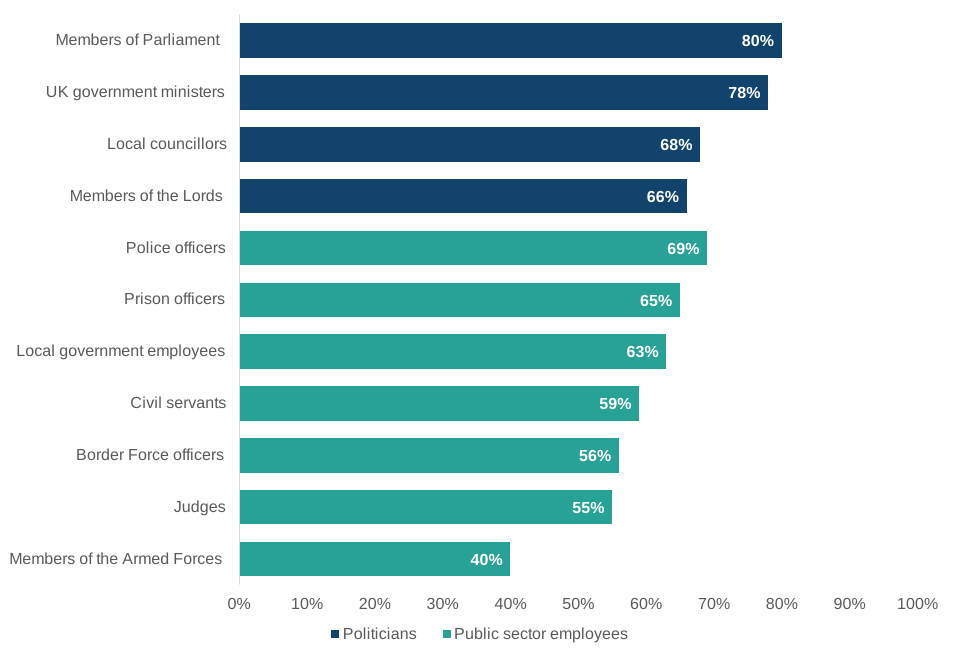
This survey aimed to better understand what level of concern the public hold about corruption and identify the areas they are most concerned about. Respondents were asked how concerned they were about the possibility of corruption across different groups in the public sector. These groups can be broadly categorised into “politicians” and “public sector employees”. The types of politicians asked about were Members of Parliament, UK government ministers, local councillors and Members of the Lords. The types of public sector employees asked about were police officers, prison officers, local government employees, civil servants, border force officers, judges and members of the armed forces.
Concern about the possibility of corruption in the public sector was high: almost 9 in 10 respondents (87%) were concerned about the possibility of corruption in at least one group of politicians, and a similar proportion (86%) reported concern in at least one group of public sector employees.
A sizeable proportion of respondents showed widespread concern about the possibility of corruption across multiple groups in the public sector. Over half of those surveyed (52%) were concerned about all types of politicians. A smaller, but still noteworthy, proportion (just over 1 in 4, 26%) were concerned about all types of public sector employees.
Of the politicians asked about, respondents were most concerned about the possibility of corruption amongst Members of Parliament (80% concerned) and least concerned about Members of the Lords (66%). See Figure 1.
Of the public sector employees asked about, respondents showed the highest levels of concern for the possibility of corruption amongst police officers (69%), prison officers (65%) and local government employees (63%). Respondents were least concerned about members of the armed forces, though even for this group 40% were concerned about the possibility of corruption.
Figure 1: Proportion of respondents who were concerned about the possibility of corruption amongst the following politicians and public sector employees
Base: All UK adults (n=2,293), aged 16 and over
3.1.2 Concern about impacts of corrupt actors from abroad
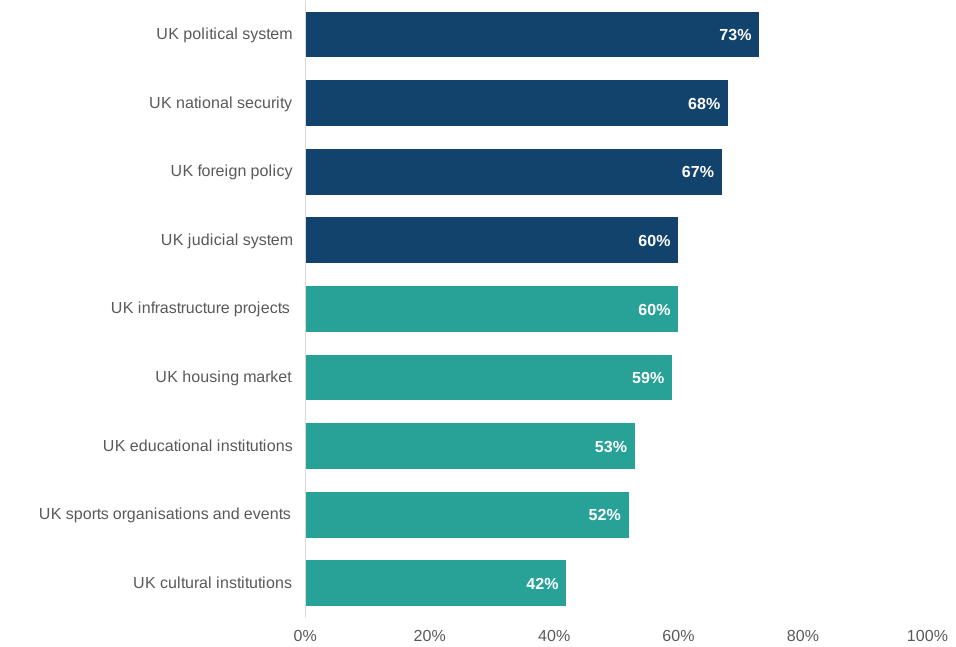
There were also high levels of concern for the impact of corrupt actors from abroad on key areas of UK life. The highest levels of concern were directed towards areas associated with public affairs, such as their impact on the UK political system (73% concerned), national security (68%), foreign policy (67%) and the judicial system (60%).
Many of those surveyed also expressed concern about the impact of corrupt actors from abroad on other areas of UK life, as follows: infrastructure projects (60% concerned), the housing market (59%), educational institutions (53%), sports organisations and events (52%) and cultural institutions (42%). See Figure 2.
Figure 2: Proportion of respondents who were concerned about the impact of corrupt actors from abroad on the following areas of UK life
Base: All UK adults (n=2,293), aged 16 and over
3.1.3 Concern about the possibility of UK actors facilitating the actions of corrupt actors from abroad
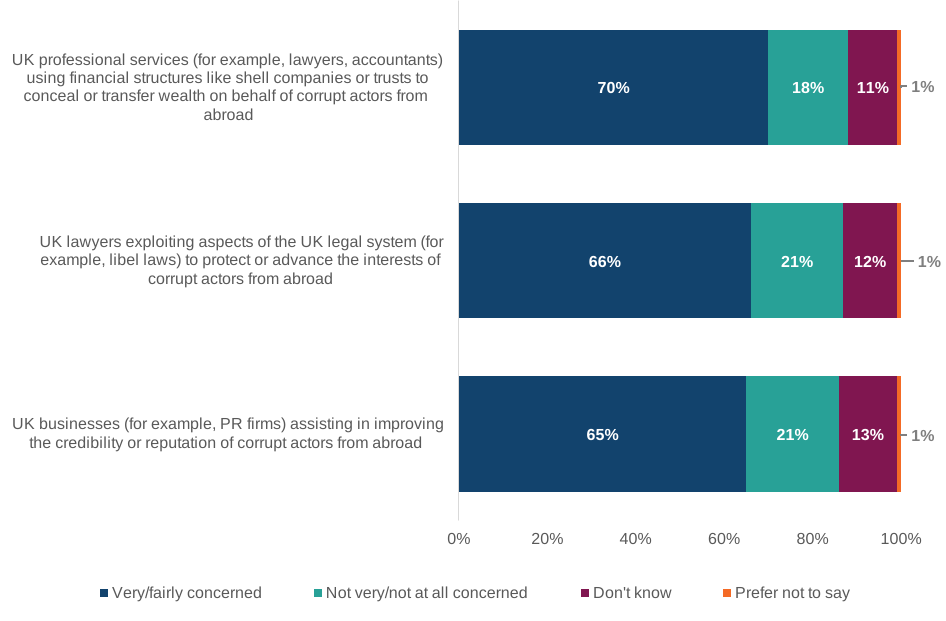
In addition to concerns about impacts of corrupt actors from abroad on UK life, respondents also demonstrated strong concern about the possibility of UK actors facilitating the actions of corrupt actors from abroad (see Figure 3).
Respondents were asked about their concern across 3 different scenarios. Two of the scenarios covered the role of professional enablers. These were “UK professional services (for example, lawyers, accountants) using financial structures like shell companies or trusts to conceal or transfer wealth on behalf of corrupt actors from abroad” and “UK lawyers exploiting aspects of the UK legal system (for example, libel laws) to protect or advance the interests of corrupt actors from abroad”. The third scenario was “UK businesses (for example, PR firms) assisting in improving the credibility or reputation of corrupt actors from abroad”.
Across each scenario, at least 3 in 5 of those surveyed (between 65 and 70%) were concerned about the possibility of UK actors facilitating the actions of corrupt actors from abroad. The highest level of concern (70% concerned) was for the possibility of UK professional services using financial structures to conceal wealth on behalf of corrupt actors from abroad.
Figure 3: How concerned respondents were about the possibility of UK professional services and businesses facilitating the actions of corrupt actors from abroad across the following scenarios
Base: All UK adults (n=2,293), aged 16 and over
Collectively, respondents demonstrated high levels of concern about the possibility of corruption across many areas. This included concern for the possibility of corruption in many areas of the public sector, the impacts of corrupt actors from abroad on UK life as well as the possibility of UK actors facilitating the actions of corrupt actors from abroad.
3.2 Perceptions of the frequency of corruption
Respondents greatly overestimated the frequency of bribery in both the public and private sector compared to estimates of the prevalence of bribery from experience-based surveys.
3.2.1 Perceptions of the frequency of bribery in the UK private sector
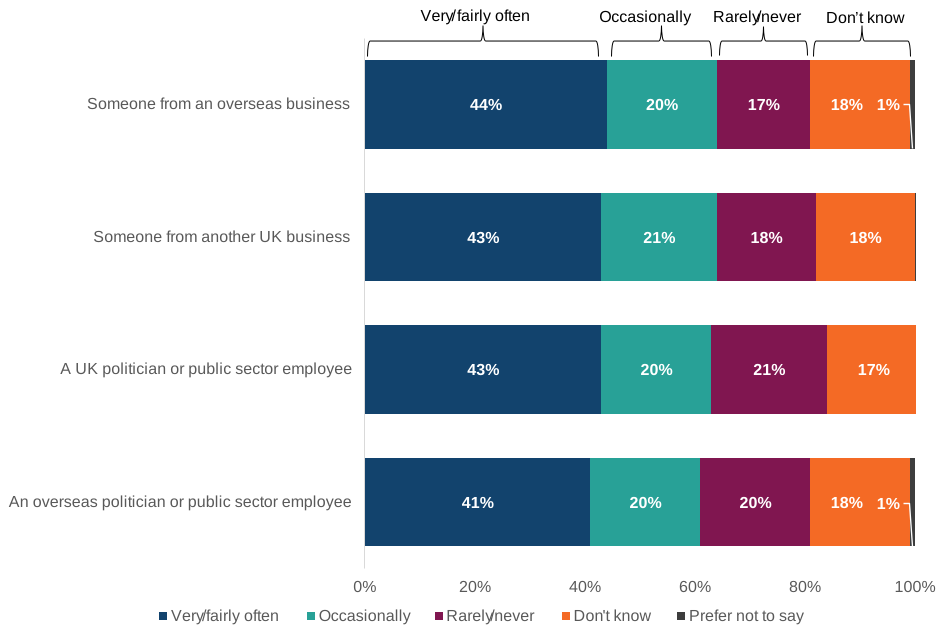
Respondents were asked how often they think UK businesses give bribes across 4 different scenarios:
- to someone from another UK business
- to someone from an overseas business
- to a UK politician or public sector employee
- to an overseas politician or public sector employee
In this question, bribery was expressed as ‘giving a gift, favour, or extra money other than the official fee to secure a business deal’.
Across each of the 4 scenarios, over 2 in 5 (41% to 44%) of those surveyed believed that UK businesses give bribes often. This perception held across contexts, regardless of whether the bribe was given in the public or private sector, in the UK or overseas (see Figure 4). Notably, almost 1 in 5 respondents (17 to 18%) reported that they ‘don’t know’ across each scenario, reflecting the challenges associated with asking the general population about perceptions of a clandestine activity such as bribery.
Figure 4: How often respondents thought UK businesses engage in giving bribes across public, private, domestic and international contexts
Base: All UK adults (n=2,293), aged 16 and over
Moreover, this perception does not align with estimates of the actual prevalence of bribery amongst businesses. By using similar language to the Economic Crime Survey 2024 when discussing bribery, this study offers a unique opportunity to directly compare perceptions with estimates of actual prevalence. The nationally representative Economic Crime Survey 2024 estimated that approximately 3% of UK businesses with employees had experienced at least one bribery incident in the 12 months prior to the survey. This demonstrates a large difference between the public perception of the frequency of bribery in the UK business environment and estimates of actual prevalence. The difference is even more stark for the public sector. The Economic Crime Survey 2024 found that less than 0.5% of businesses in the UK had to give or were asked to give a bribe to a UK public official in the 12 months prior to the survey. Other sources also contribute to the evidence base for the actual prevalence of bribery. For example, the World Bank Formal Sector Enterprise Survey 2024 reported 2.1% of UK firms across the surveyed sectors had experienced at least one bribe payment request.
There could be multiple causes of this misalignment between perceptions of frequency of bribery, and estimates of its actual prevalence. For example, it may be influenced by media coverage, which can amplify the visibility of rare but high-profile cases, and result in a perception that these behaviours occur frequently. The large discrepancy between perception and experience based prevalence estimates demonstrates that despite widespread reliance on perceptions in corruption research as an indicator of scale, there are significant limitations in doing so.
3.2.2 Perceptions of the frequency of corruption in the public sector
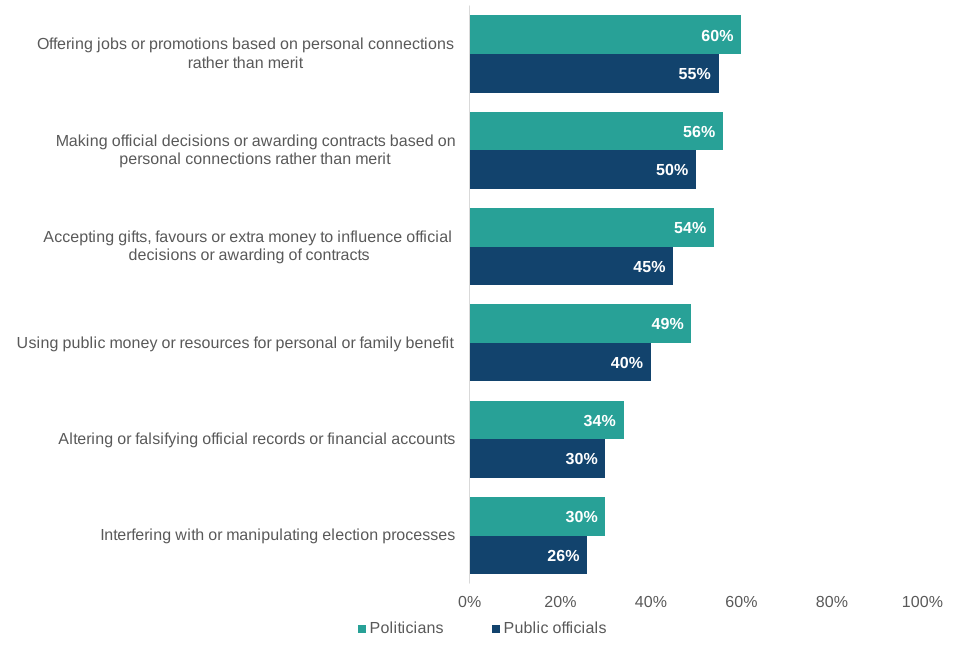
Respondents were asked about a broader range of corrupt practices in the public sector, and a sizeable proportion also thought these were common. Between one-quarter and three-fifths of those surveyed believed that various corrupt practices – such as accepting bribes, nepotism, cronyism and misuse of public funds – occurred often among politicians and public officials (see Figure 5).
Respondents most commonly perceived practices associated with nepotism and cronyism to occur often. 60% of respondents believed that “Offering jobs or promotions based on personal connections rather than merit” occurred often amongst politicians, compared to 55% for public officials. 56% of respondents believed that “Making official decisions or awarding contracts based on personal connections rather than merit” occurred often amongst politicians, compared to 50% amongst public officials.
Figure 5: Proportion of respondents who believed that politicians and public officials engage in the following practices often
Base: All UK adults (n=2,293), aged 16 and over
These findings indicate that high proportions of the public are not only concerned about the possibility of corruption within the public sector, but also think various corrupt practices occur frequently.
3.3 Understanding and attitudes towards corruption
Respondents had a broad view of what constitutes corruption and frequently viewed unethical behaviours and instances of other types of economic crime such as money laundering and fraud as corruption.
Respondents were less likely to view behaviours constituting bribery in the business environment as corruption (compared to other scenarios of potential bribery) and more likely to think they were acceptable.
3.3.1 Knowledge and understanding of corruption
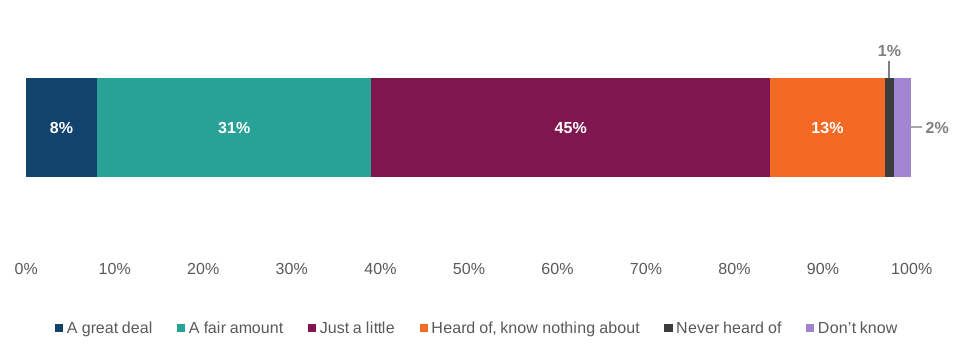
Respondents generally reported at least some knowledge of corruption. The public most commonly reported to know ‘just a little’ (45%) about corruption. Over a third (38%) said they knew ‘a fair amount’ or ‘a great deal’. See Figure 6.
Figure 6: Respondents’ self-reported knowledge about corruption
Base: All UK adults (n=2,293), aged 16 and over
However, this self-reported knowledge did not necessarily reflect a clear or consistent understanding of what constitutes corruption. In the survey, respondents were presented with 12 scenarios and asked to select those that they considered to be corruption. At this point in the survey, respondents had not yet been presented with the government’s conceptual definition of corruption outlined in Section 2.2. Six of the scenarios aligned with the government’s conceptual definition of corruption. They included various examples of bribery and other abuses of entrusted power. The other 6 scenarios described possible instances of other types of economic crime, including money laundering, fraud and tax evasion. They also included scenarios in which holders of entrusted power engaged in potentially unethical behaviours which did not directly involve abuses of their position of trust, and therefore fell outside the scope of the government’s conceptual definition of corruption.
Many respondents considered the scenarios which met the government’s conceptual definition of corruption as such. For example, almost 9 in 10 (86%) thought a police officer accepting money to overlook a crime was corruption. However, the context in which corrupt behaviours were described appeared to influence perceptions on what was considered corruption. Respondents were less likely to view a bribe within the business environment as corruption than bribes given in other scenarios. Around half (55%) identified “A business owner giving a gift to someone from another UK company to secure a business deal” as corruption, compared to at least three-quarters (75%+) for the other potential bribery scenarios (see Table 1a).
Additionally, respondents viewed a much wider set of scenarios as corruption than would meet the government’s conceptual definition, including other types of economic crime. This included potential money laundering (a business owner accepting investment from known criminals, 71%) and tax evasion (a business owner asking for payment in cash to avoid paying taxes, 63%). They also viewed potentially criminal or unethical behaviours by individuals in positions of trust as corruption, even where those behaviours did not involve a direct abuse of their position of trust or entrusted powers. For example, a false insurance claim by a police officer (74%) or a civil servant travelling first class to a work meeting (55%) (see Table 1b).
Table 1a: Respondents’ views on what constitutes corruption for scenarios which meet the government’s conceptual definition of corruption
| Corruption scenarios | Proportion of respondents who view scenario as corruption |
|---|---|
| A police officer accepting money to overlook a crime | 86% |
| A referee accepting a gift to help one team win by making unfair decisions during a football match | 80% |
| A politician receiving money from a business to advocate for their commercial interests in parliament | 76% |
| A charity employee using proceeds from charitable fundraising for personal expenditure | 76% |
| A local government employee accepting a gift from a business bidding for a public service contract | 75% |
| A business owner giving a gift to someone from another UK company to secure a business deal | 55% |
Base: All UK adults (n=2,293), aged 16 and over
Table 1b: Respondents’ views on what constitutes corruption for scenarios which do not meet the government’s conceptual definition of corruption
| Non-corruption scenarios | Proportion of respondents who view scenario as corruption |
|---|---|
| A police officer making a false insurance claim for an injury at work which didn’t happen | 74% |
| A business owner accepting investment from known criminals | 71% |
| A business owner asking for payment in cash to avoid paying taxes | 63% |
| A civil servant using taxpayer money to travel first class to a work meeting | 55% |
| A private contractor delivering a substandard housing repairs service for a local council | 46% |
| An MP declaring receipt of a large speaking engagement fee on the register of financial interests | 35% |
Base: All UK adults (n=2,293), aged 16 and over
Overall, respondents were more likely to select the scenarios which did meet the government’s conceptual definition as corruption, including just over 2 in 5 (43%) who labelled all 6 of the scenarios which met the government’s conceptual definition as corruption. However, many respondents also thought additional scenarios that fell outside of the government’s conceptual definition were corruption. As a result, only 1% of those surveyed had an understanding of corruption that exactly aligned with the government’s conceptual definition.
The varied interpretation about what constitutes corruption compounds challenges in its measurement. The lack of consensus about which behaviours are corruption demonstrates the importance of specifying behaviours of interest in experience or perception-based research methods. Without specificity, respondents are likely to be considering a broad range of behaviours, some relevant and others not, when asked about either their experience or perceptions of corruption. This also has implications for the reliability of data potentially collected from public reporting routes for corruption.
3.3.2 Views on the acceptability of bribery amongst the UK private sector
This survey also explored the public view on the acceptability of behaviours. Respondents were asked how often they thought it might be acceptable for a UK business to give a bribe to the following:
- a UK business
- an overseas business
- a UK politician or public sector employee
- an overseas politician or public sector employee
In this question, bribery was expressed as ‘giving a gift, favour, or extra money other than the official fee to secure a business deal’ as described in Section 2.2.
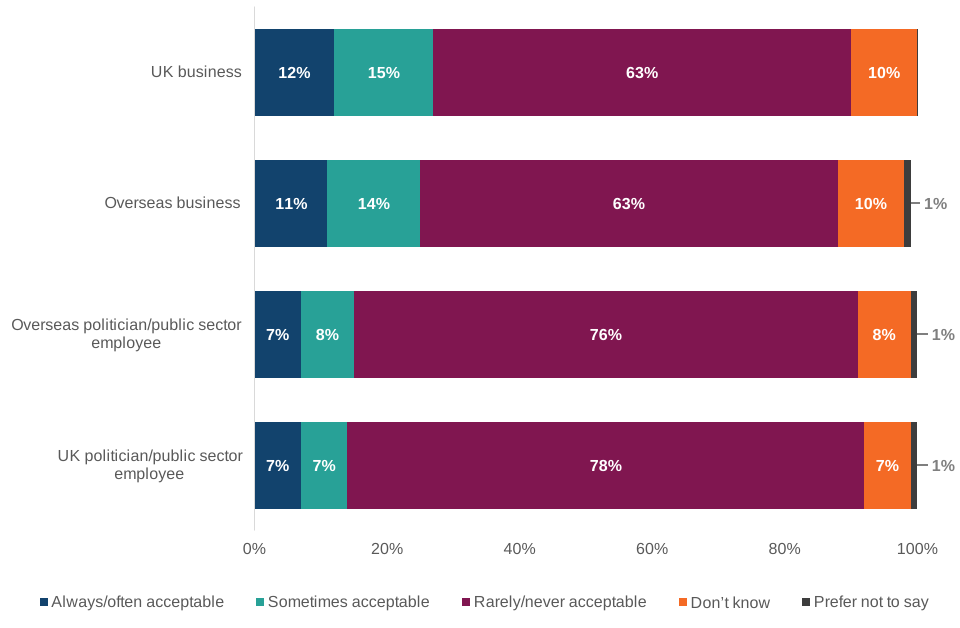
Context affected whether actions constituting bribery were seen as acceptable. Over 1 in 4 (27%) of those surveyed believed that actions which constituted bribery between UK businesses were at least sometimes acceptable. A smaller, though still sizeable, proportion (14%) thought a UK business giving a bribe to the UK public sector would be at least sometimes acceptable (see Figure 7). This demonstrates a more lenient view amongst the public about what is acceptable practice in the business environment compared to the public sector.
There was also greater uncertainty around what was acceptable in the business environment, further demonstrating the influence of context. A small but significantly higher proportion of respondents reported not knowing if a UK business giving a bribe was acceptable when it was to another UK business (10% don’t know) compared to when to the UK public sector (7%).
These findings suggest that the public holds more permissive, and less certain views about corruption in the private compared to the public sector.
There were no differences in views on the acceptability of giving bribes between the domestic and overseas scenarios.
Figure 7: How often respondents believe it is acceptable for a UK business to give a bribe to the following to secure a business deal
Base: All UK adults (n=2,293), aged 16 and over
3.4 Views on the response to corruption
Respondents viewed the prevention of bribery in the private sector as a shared responsibility across many organisations.
They also had low confidence in the government response to corruption risks.
3.4.1 Views on responsibility of organisations for the prevention of bribery amongst UK businesses
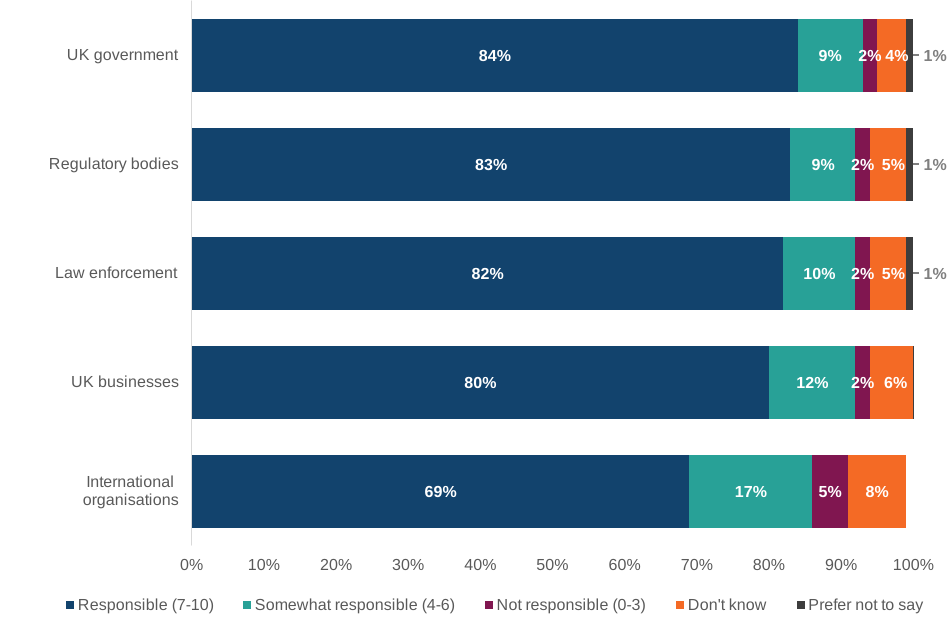
Respondents viewed preventing bribery amongst UK businesses as a shared responsibility. They were asked to rate the responsibility of various organisations - UK government, UK businesses themselves, relevant international organisations, relevant regulatory bodies and law enforcement – on a scale from 0 (not at all responsible) to 10 (fully responsible). Respondents assigned high levels of responsibility across the board (see Figure 8). The UK government was seen as the most responsible, with 84% of those surveyed rating its responsibility as 7 out of 10 or higher. However, all other groups were also widely seen as accountable. Even international organisations, which received the lowest ratings, were still considered responsible (7 out of 10 or higher) by 69% of the public.
Figure 8: Proportions of respondent rated responsibility of organisations for the prevention of bribery amongst UK businesses
Base: All UK adults (n=2,293), aged 16 and over
3.4.2 Views on the government response to corruption risks
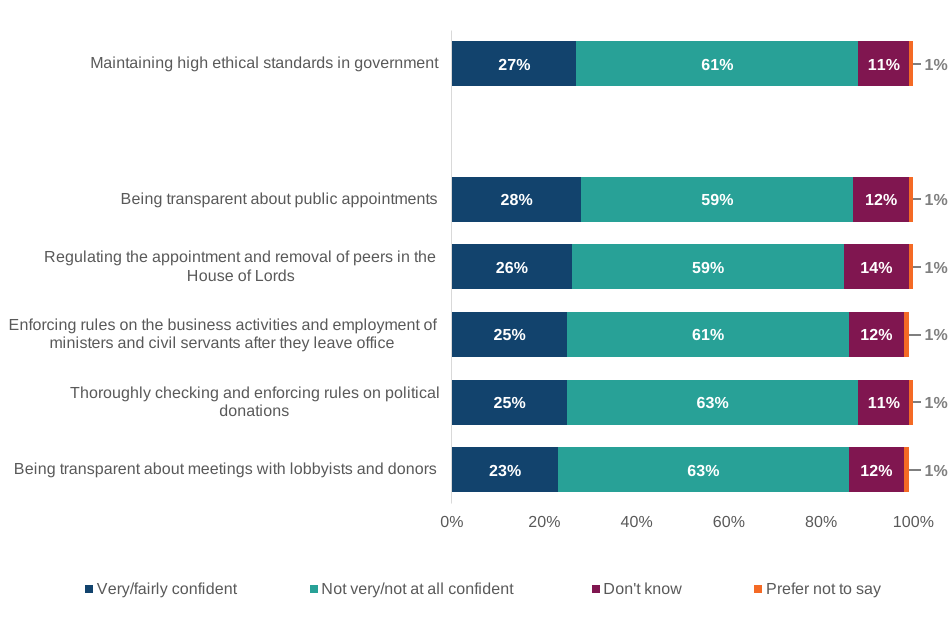
When considering the measures the UK government can employ to reduce the risk of corruption and increase transparency within government, confidence in how effectively the government implement these measures was low. Three in 5 of those surveyed (61%) were not confident that the UK government effectively maintains high ethical standards in government. Confidence was similarly low across other areas, including transparency around public appointments (59% not confident) and meetings with lobbyists and donors (63%); enforcing rules on business appointments (61%) and political donations (63%); and regulating appointment and removal of peers in the House of Lords (59%) (see Figure 9).
Figure 9: Respondents’ confidence in effective implementation of measures by the UK government to reduce the risk of corruption and increase transparency
Base: All UK adults (n=2,293), aged 16 and over
This lack of confidence in government response may contribute towards the high levels of concern about the possibility of corruption across the public sector and the perception of corrupt behaviours occurring frequently.