Metamaterials Commercialisation Roadmap
Published 22 October 2026

© Crown copyright 2026
This publication is licensed under the terms of the Open Government Licence v3.0 except where otherwise stated. To view this licence, visit nationalarchives.gov.uk/doc/open-government-licence/version/3 or write to the Information Policy Team, The National Archives, Kew, London TW9 4DU, or email: psi@nationalarchives.gov.uk.
Where we have identified any third party copyright information you will need to obtain permission from the copyright holders concerned.
This publication is available at https://www.gov.uk/government/publications/uk-metamaterials-commercialisation-strategic-roadmap/metamaterials-commercialisation-roadmap
Building on UK academic research excellence
Forewords
“Metamaterials represent a significant opportunity to strengthen the UK’s technology and industrial base, supporting economic growth, and solving societal challenges. Realising this opportunity will depend on our ability to translate cutting-edge research into commercially viable products and new industrial solutions. I welcome the publication of the Metamaterials Commercialisation Roadmap and its vision for accelerating innovation, attracting investment and building the partnerships needed to position the UK at the forefront of the transformative potential of metamaterials.”
Chris McDonald MP, Minister for Science, Innovation and Investment
“Metamaterials have evolved from elegant theory into a powerful means of developing the materials of the future. By structuring matter on sub-wavelength scales, we have shown that properties once thought impossible – negative refraction, cloaking, unprecedented wave control – can be realised. Over the last decade, I have seen the UK build a world-leading research base in metamaterials that now sits prominently on the global stage, advancing both the fundamental physics and its experimental realisation. Looking ahead, I believe the UK can continue this trajectory to translate discovery into impactful metamaterials innovations. The science is now well established; the task now is to translate this into widespread technological impact. This roadmap captures a significant moment of opportunity. I strongly encourage policymakers to engage with this report and consider the opportunities it outlines to support the research and innovation community.”
Sir John Pendry HonFInstP
“The potential of metamaterials is profound. As the UK confronts challenges in national security, healthcare and sustainable energy, these advanced materials offer innovative solutions for medical diagnostics, data processing, sensing and communications. However, barriers to their commercialisation persist. Their manufacture at volume can only be realised with sustained long-term investment if the UK is to fully realise the economic and societal benefits that the government’s Modern Industrial Strategy aims to secure. The UK is at a critical juncture. One path limits the development of metamaterial technologies, inhibits their commercialisation in the UK and disadvantages an emerging industry against international competition. The alternative presents a vision for the UK at the vanguard of a world-class global metamaterials industry. I believe the coordinated approach across government, industry and academia set out in the roadmap and supported by initiatives such as the National Materials Innovation Programme, provides a clear plan for accelerating the commercial development of metamaterials. I strongly encourage policymakers to study this report and implement the actions needed to bring to fruition the possibilities that metamaterials presents for the UK.”
Professor Robert Lamb FInstP, IOP Vice-President for Business and Chief Research and Technology Officer, Leonardo
Executive Summary
The UK’s world-leading metamaterial research has demonstrated functional advantages that cannot be achieved using incumbent materials. The development of metamaterials products offers a significant opportunity to transform the UK’s technological and industrial landscape through these unique functional properties. These advantages are evident across applications including telecommunications antennas, solar panels with improved thermal management and health-sensing wearables that support better health outcomes. Although technical feasibility has been proven across a range of applications, challenges relating to scale-up, manufacturing readiness and commercial adoption continue to limit the transition from research and development to widespread industrial deployment.
This roadmap sets out how the UK can connect, scale and focus its existing strengths in research, innovation infrastructure and emerging industry to realise the opportunities offered by metamaterials. Metamaterials are a distinctive platform technology, enabling engineered control of waves, fields and physical responses across an unusually broad range of applications, from defence and communications to healthcare, energy, transport, the built environment and advanced manufacturing. The UK has a strong academic base, an active national community, growing industrial interest and emerging public investment through programmes such as the National Materials Innovation Programme. However, the pathway from discovery to commercial deployment remains fragmented, with gaps in coordination, infrastructure, and investment. This roadmap sets out a framework to align public and private activity and establish the conditions for long-term UK leadership in the commercialisation of metamaterials over the next decade and beyond.
Developed through community consultation, expert workshops and with input from government, academia, industry and delivery partners, it identifies the conditions needed to move from world-leading but fragmented research capability towards a coherent UK ecosystem. It is intended to align activity across government, industry, investors and the research base, supporting national priorities and government growth ambitions.
The roadmap identifies 5 mutually reinforcing priorities recommended by the community:
- The UK must strengthen the ecosystem by creating clearer coordination, visible leadership and a more connected value chain across academia, start-ups, SMEs, primes, end users, investors and public bodies.
- An innovation pathway must be made more effective through demonstrators, prototypes, software tools and pilot capabilities that make the value of metamaterials tangible and de-risk adoption.
- Manufacturing and scale-up capability must be developed so that technologies can move beyond laboratory proof-of-concept into repeatable, cost-effective and quality-assured production.
- Delivery of ‘assured products’ through testing, standards and regulation must be advanced to build confidence in performance, safety, reliability and interoperability.
- The UK must build a metamaterials-confident workforce with the requisite competencies and capacity to grow the pipeline from discovery to market exploitation (including doctoral, engineering, manufacturing, commercial and entrepreneurial pathways).
The community has proposed that these priorities be delivered in phases according to the following timeline: - By 2030, the UK should establish the foundations for coordinated delivery: clearer priority domains, stronger networks, mapped fabrication and skills capability, early demonstrators, targeted standards activity and a more visible funding pipeline.
- By 2035, the ambition is to move to scaled delivery, with centres of excellence, pilot-line and manufacturing capabilities, innovation pathways, international standards engagement and training routes that support industrial adoption.
- Beyond 2035, the goal is a self-sustaining UK metamaterials ecosystem in which private investment, company growth, manufacturing capability, trusted assurance frameworks and skilled people combine to drive global leadership.
The UK does not need to build metamaterials capability from scratch: it needs to connect, scale and focus what already exists. Without coordinated national leadership, fragmentation across funding, infrastructure, manufacturing, skills and standards will continue to slow commercial potential. With it, metamaterials can become a platform for economic growth, strategic resilience and global industrial leadership.
1. Introduction
The publication of this roadmap marks the beginning of a shared mission across government, industry, academia, investors and public-sector partners to deliver market-ready metamaterial solutions that address national priorities and global challenges. The UK government is publishing the roadmap on behalf of the metamaterials community, which has played a central role in developing and prioritising its vision for the sector. The objective of this roadmap is to establish a shared ambition for metamaterials across academia, innovators, industry and end users, with a framework to establish an agenda.
Advanced materials is a prioritised frontier industry in the Modern Industrial Strategy. The Advanced Manufacturing Sector Plan commits the government to addressing fragmentation in the sector and accelerating the pull-through of materials from research and development to manufacturing. Advanced materials businesses drive innovation and economic growth across all UK regions. Approximately 2,700 UK companies are active in materials innovation, employing more than 630,000 people and contributing £45 billion to the economy every year, equivalent to around 2% of the UK total. Of these companies, 90% are SMEs and 70% are located outside London and the Southeast.
The newly established National Materials Innovation Programme represents over £80 million of funding to focus on translating cutting-edge research across the materials sector. This includes accelerating the development and adoption of new and improved strategically important materials, with metamaterials identified as a focus for funding opportunities.
The UK Metamaterials Network (UKMMN) has brought together a thriving community, but the ecosystem remains fragmented, with uneven connections between academia, industry, investors and end users. A more integrated ecosystem would improve commercial pull-through and strengthen alignment with government priorities in areas such as energy, defence and healthcare. This opportunity and mission are strongly aligned with UK government’s Modern Industrial Strategy and Advanced Manufacturing Sector Plan, with the objective of positioning the UK as a leader in commercialisation of metamaterial technologies for economic growth across all cities and regions of the UK. This roadmap will seek to demonstrate the value and impact of metamaterials and the possibilities to produce goods and products that deliver multi-domain impact and multi-application opportunities. The commercial success of metamaterial goods and products is only possible if the sector is able to unlock unique properties that conventional materials on the market cannot currently provide.
What are metamaterials?
- A metamaterial is an engineered material whose properties arise primarily from its internal structure rather than its chemical composition. This structure can create responses and functions that are difficult or impossible to achieve using conventional materials. By enabling new combinations of form and performance, metamaterials can overcome established design and engineering trade-offs, constraints and limitations.
- The UK Metamaterials Network defines a metamaterial as ‘a 3D structure with a response or function due to the collective effect of meta-atom elements that is not possible to achieve conventionally with any individual constituent material’. It defines a metasurface as ‘a 2D version of a metamaterial where the structural elements are confined to a 2D plane’. For the purposes of this report, references to metamaterials include metasurfaces.
- Metamaterials were co-discovered in the UK in 2000, building on the pioneering work of Prof Sir John Pendry. From the beginning, the UK has established world-leading academic strength, ranked 1st globally for research impact and quality by field citation ratio over the period 2018-2021 and 4th globally for overall research output in 2018-2022; as well as being strongly supported by grant investments by UKRI.
-
EPSRC identified Metamaterials as a “Big Idea” in 2020, supporting the formation of a network, now with more than 1200 members spanning academia, industry, the public sector and government. This is a highly cohered, committed and motivated community, which is observed by international colleagues spanning academia, investment and national measurement institutes as being unique and enviable.
- The UK has a rich and thriving research base. Breakthrough concepts are emerging at pace, strengthening the evidence that metamaterials can deliver impact across high-value sectors and help address national, societal and global challenges.
- A growing array of first in market start-up companies have been forming in the UK and abroad, indicating that the promise of metamaterials is real and that metamaterials are ready to be commercialised at scale across a number of applications.
Why is an intervention necessary at a national level?
-
Several strategic reports preceded the publication of this roadmap. These include the Government Office for Science’s Rapid Technology Assessment, the Institution of Mechanical Engineers’ (IMechE) Unlocking the Potential of Metamaterials and the Institute of Physics’ (IOP) Impact Project Pathfinder. The latter identified 4 key barriers to commercialisation through consultation with the community:
- Alignment of academia and industry: Bridge the gap between academia and industry to align research with market needs.
- Investment and finance: Integrate financial strategies and strengthen public and private investment.
- Value chain and scale-up: Strengthen the value chain, including addressing gaps and access to industrial-scale manufacturing infrastructure.
- Skills and workforce: Build a suitably trained and equipped workforce across the full skills pipeline.
- Whilst the ranking of UK academic output is high, the UK files fewer patents than other leading nations, highlighting the growing gap in the UK between academia, applied research, translation, and commercialisation.
- Normal market forces and investment conditions in the UK are not driving a globally competitive rate and scale of commercialisation of metamaterial-enabled technology. This presents both a significant and growing risk of missed opportunity in many key industrial sectors, such as advanced manufacturing, clean energy and frontier technologies, as well as risks to UK national security, resilience and defence.
- The adjacency and convergence of metamaterials with recently prioritised frontier technologies, including advanced connectivity technology, quantum, semiconductors and engineering biology, mean that this roadmap must cohere with other national strategies and action plans. This alignment will help maximise the efficiency and value of future interventions and the collective return on investment across these domains.
Why should we exploit the opportunities that metamaterials offer?
The global metamaterials race has started and for now the outcome is open; however, the window of opportunity is closing for a number of reasons:
- UK academic strength as the feeder of the growth pipeline will not sustain without tangible demand from industry. This demand needs stimulating due to the novelty and diversity of metamaterials capabilities.
- The global race to exploit the potential offered by metamaterials is attracting a growing number of countries, notably across Asia, Europe and North America, which are competing with the UK to harness the economic and national security opportunities offered by metamaterial technologies and products. In the USA, substantial and concerted investor support to create first-to-market businesses has already been in place for 10 years. These investor activities should give the UK confidence to take steps to be the first to build a value-chain presence at scale.
- At the technology level, metamaterials have significant potential to meet both civilian and defence needs. Defence is often an early adopter of technologies that offer strategic advantage; as a result, many metamaterial applications may initially be driven by defence end users before wider civilian adoption.
What’s possible with metamaterials: case studies
Photonics
Metamaterials are emerging as a key enabling technology for next-generation defence sensing, communications and photonic computing. By precisely controlling electromagnetic waves, engineered metamaterials can support multifunctional systems that combine sensing, communications and electronic warfare capabilities, while enabling advances in LiDAR, optical communications and high-speed target tracking.
Leonardo, working with CORNERSTONE and the Universities of Exeter and Durham, is helping to develop the manufacturing capabilities required to realise these technologies. By combining reconfigurable metamaterials with photonic computing, the approach has the potential to deliver faster, lower-power processing and more integrated sensing systems, supporting future defence and security applications while strengthening UK capability in a strategically important technology area.
Medical Implants
OSSTEC Ltd, an Imperial College London spin-out, is developing next-generation knee replacement implants using additively manufactured titanium metamaterials. The porous lattice structure mimics the internal architecture of bone, promoting bone ingrowth, enabling cementless fixation and supporting more natural load distribution across the joint.
Designed to improve outcomes for patients with knee osteoarthritis, the technology aims to reduce implant failure rates, accelerate recovery and improve long-term quality of life. Having secured venture capital investment, the company is progressing towards regulatory approval and first clinical use, demonstrating the potential for metamaterials to transform orthopaedic implants and regenerative healthcare.
Wearable Metamaterials
RHEON Labs, an Imperial College London spin-out, is commercialising mechanical metamaterials that remain soft and flexible during normal use but stiffen instantly under impact. Manufactured using scalable processes and integrated into textiles and protective equipment, the technology enables lightweight, adaptable protection and energy management across a range of applications.
Working with leading consumer and sports brands, RHEON’s metamaterials are already being deployed in body armour, helmets, performance apparel and sports equipment. The company demonstrates how advanced material design can deliver enhanced protection, comfort and performance while supporting large-scale commercial adoption.
Metamaterial-enabled spectral imaging
Cambridge-based start-up Prospectral Ltd is commercialising compact spectral-imaging cameras based on nanophotonic metamaterial filters integrated directly onto image sensors. The technology enables real-time material identification across visible and short-wave infrared wavelengths in a form factor small enough for mobile devices and drones. Applications range from recycling and food safety to medical diagnostics and mineral exploration.
By replacing mechanical scanning and bulky optical components with scalable metamaterial filter stacks manufactured using standard photolithography, Prospectral’s approach delivers ultra-compact, robust and cost-effective spectral imaging systems suitable for high-volume production and deployment across multiple sectors.
Sound and Noise Management
Metasonixx, a spin-out from the Universities of Sussex and Bristol, is commercialising acoustic metamaterial panels that reduce unwanted noise while allowing light and airflow to pass through. Unlike conventional soundproofing, the lightweight panels are particularly effective at reducing low-frequency noise, with applications in hospitals, offices, industrial facilities and public spaces.
Built on a patented modular metamaterial design, the technology has been deployed in products such as office desk separators. The company’s innovations have been recognised through awards including the Armourers and Brasiers Venture Prize and the IOP Business Start-Up Award, demonstrating the growing commercial impact of UK-developed acoustic metamaterials.
Advanced Connectivity Technologies
Future 5G and 6G networks will require improved coverage, capacity and energy efficiency without relying solely on additional base stations. The National Physical Laboratory (NPL) has developed and demonstrated a patented reconfigurable intelligent surface (RIS) on a commercial 5G network at BT’s Adastral Park, showing how metamaterials can direct wireless signals into coverage “not-spots” and improve network performance.
By using engineered reflecting elements to steer and control electromagnetic waves, the technology can enhance wireless reach, spectral efficiency and energy efficiency while reducing infrastructure costs. Combined with NPL’s advanced THz communications testing capabilities, the work highlights the role of metamaterials in enabling next-generation 6G communications and future critical national infrastructure. NPL will also provide an important role in developing a path to assuring such systems, establishing industry and user confidence.
Thermal management for EV batteries
UK battery manufacturer AceOn Group partnered with the University of Wolverhampton through a UKRI-funded Knowledge Transfer Partnership to develop mechanical metamaterials for advanced battery thermal management. Using computational design and additive manufacturing, the team created a copper metamaterial structure that improves heat distribution while maintaining mechanical strength.
The technology has progressed from proof of concept to validation in a relevant environment, demonstrating a scalable approach to safer, lighter, longer lifespan and more thermally efficient batteries. With potential applications across electric vehicles, aerospace and other high-performance sectors, the project highlights how metamaterials can accelerate the translation of research into commercial technologies.
2. Roadmap
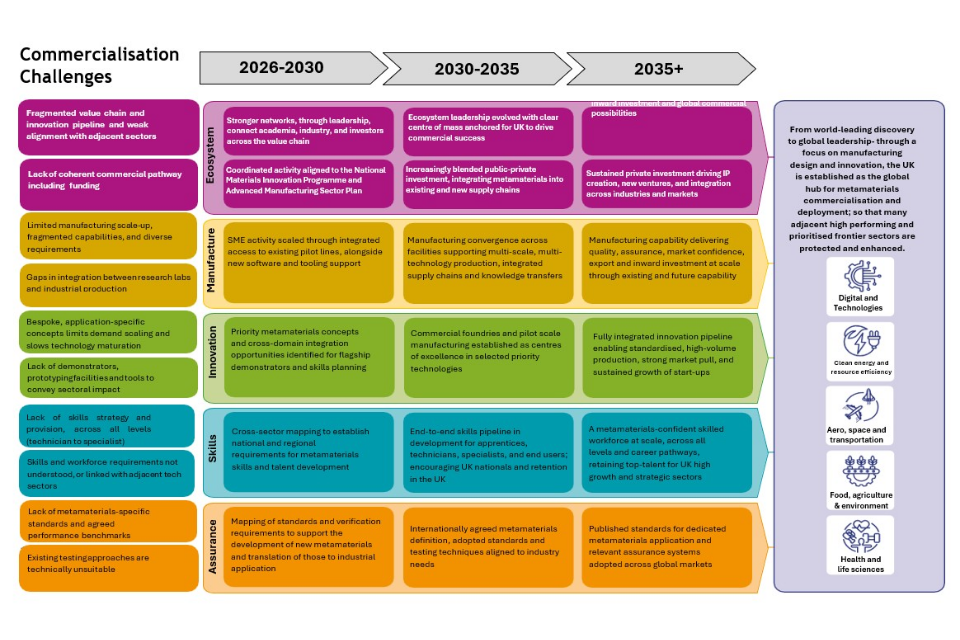
The high-level view of the UK roadmap for metamaterial commercialisation is presented visually in Figures 1 and 2. Figure 1 frames the strategic opportunity, while Figure 2 presents the integrated national roadmap and signals the need for coherent action at scale by stakeholders across government, industry and academia. This section provides a narrative to guide the interpretation of both, as well as the strategic opportunity and the integrated national roadmap.
Strategic opportunity
The UK is competing internationally to secure access to and capitalise on metamaterials technology. This roadmap therefore reflects the UK’s ambition to establish the world’s first integrated, globally leading manufacturing value chain for metamaterials.
Metamaterial technologies could support the renewal of the UK’s industrial base by enabling new products, processes and performance characteristics that cannot be achieved using conventional materials. Research capability is distributed across the UK, with regional clusters centred on universities undertaking multidisciplinary metamaterials research and generating a growing number of spinouts and start-ups. Successful regional clusters will be fundamental to building an innovative ecosystem that can commercialise applied metamaterials research and translate it into transformative products.
Potential first-to-market businesses have emerged in the UK and abroad over the last decade, which inspires an innovation trajectory where ‘metamaterial inside’ products will become prolific. There is expectation of multiple generational waves or levels of metamaterial enhancements that will unfold. Benefits will accrue in many key ‘adjacent’ sectors, including:
- Digital and Technologies
- Clean Energy, Energy and Resource Efficiency
- Health and Life Sciences
- Space and Aerospace
- Transportation and the Built-Environment
- Food, Agriculture and the Environment
Industry opportunity
Industrial demand across emerging sectors such as telecommunications, sensing, coatings and thermal management is fundamental to the successful commercialisation of metamaterials. The industrial ecosystem has a notable dual-use element, with defence applications leading early adoption of metamaterial goods and products. Metamaterials can enable a growing range of applications that reshape industrial development and technology priorities, including emerging hardware such as photonics.
This roadmap was developed using information and conclusions gathered from multiple sources, as described in Annex 2. Further detail on the roadmapping process can be found in this report’s Annex 2 and in the accompanying technical annex. Participants in the roadmapping workshops identified cross-cutting opportunity areas to unlock commercial and industrial potential. The 12 industry opportunity themes are grouped below:
- Radio Frequency, Microwave and Antenna Technologies
- Optical, Photonic and Electro-Optical/Infra-Red Metasurfaces
- Sensing & Imaging Technologies
- Thermal and Thermoelectric Management
- Energy Harvesting and Conversion
- Acoustic, Noise and Vibration Control
- Advanced Manufacturing and Tooling
- Medical and Bio-Integrated technologies
- Safety, Protection and Resilience Systems
- Food, Agriculture and Environment Systems
- Human-Machine Interface and Immersive Technologies
- Computation, Switching and Waveform Engineering
These 12 industry opportunities closely align with the 5 adjacent strategic opportunity sectors that are highlighted in the section above.
The industry opportunities coupled with the strategic opportunities are substantial when viewed in terms of the contributions these sectors make to the economy today and will make into the future, such that even protecting or enhancing just 1% of existing market share would be economically significant. Figures 1 and 2 highlight examples of specific areas of high-value impact in these sectors. They range from energy efficient advanced connectivity and AI compute systems, through to improved patient outcomes enabled by longer lifetime replacement joints and fast, accurate, less invasive detection and diagnosis of cancers and other illnesses.
Across these examples in particular, in the optics and microwave domains, it is essential to recognise the synergy of this roadmap for metamaterials to strategies, roadmaps and action plans for semiconductors, quantum, future compute and AI. It should also recognise that engineering biology is one of many methods through which to create metamaterials.
Confidence in this projection is derived from 25 years of continuously expanding academic research, with origins and world-leading strength in the UK, and embryonic commercialisation successes. The goal is to be first to embed this opportunity at scale across diverse UK value chains, supply chains, and partnerships.
Figure 1. The Strategic Opportunity of Metamaterials
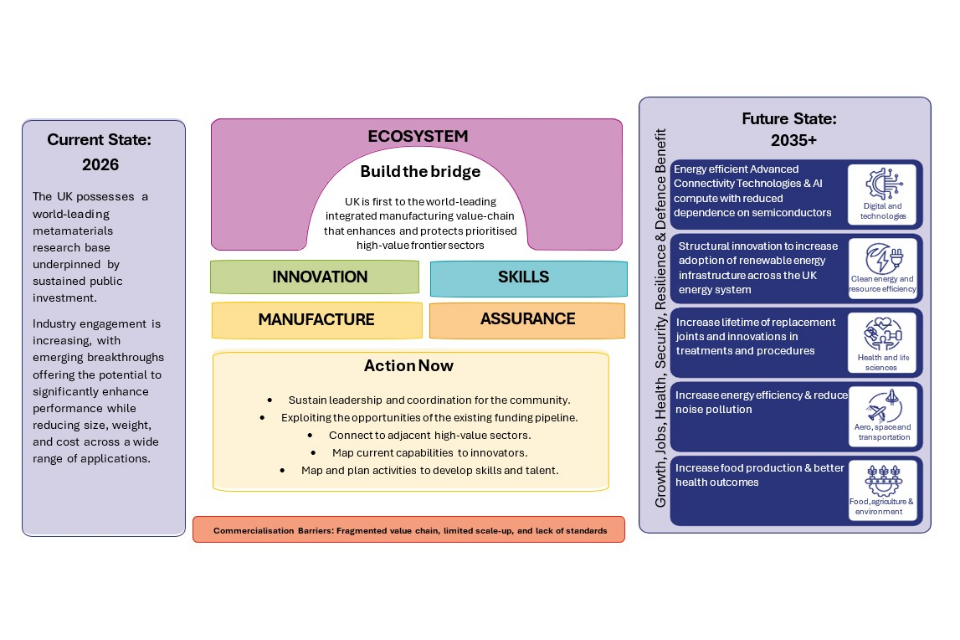
Figure 2: Integrated National Commercialisation Roadmap
Metamaterial Commercialisation Roadmap Pillars
Metamaterials represent a paradigm shift in how materials are exploited to create value, but the opportunities cannot be realised without first establishing joined-up manufacturing and innovation capabilities within a coherent ecosystem.
Although metamaterials use existing materials and manufacturing processes, these typically need to be applied in new or extended ways. Future interventions should, therefore, draw on the full range of established manufacturing themes, as required. The know-how needed to design, manufacture, assure and exploit metamaterials is not yet widespread across industry; instead, it remains isolated and fragmented. This creates an open global race to secure leadership at scale across all parts of the value chain.
At the current stage of maturity of the global metamaterials ecosystem/market, the UK still has opportunities to grow world-leading positions in downstream and higher value elements of the value chain, including in end-application specialisms such as photonics and telecommunication technologies.
The first steps to establish a leading ecosystem, identified by the community are:
- to establish design and prototype/pilot manufacturing strengths that are especially accessible to start-ups and SMEs as the engine through which to scale innovation,
- to raise market awareness and confidence,
- to establish international standards where appropriate, and
- to prepare the skills and talent pipeline.
The high-level roadmap presented in Figure 1 breaks down key features across 5 intervention themes related to these steps and indicates stages of progress required in phases over the next 10 years. The thematic interventions are explained further in later sections of this report. These have been built out of the methodology and community engagement activities summarised in annexes and the accompanying technical annex.
Given the diversity of metamaterial forms, applications and sectors, the challenge is to focus and prioritise interventions and their associated financial and resource costs while maximising return on investment. This challenge is also recognised across the wider materials and manufacturing sector. The roadmap uses focus and prioritisation to accelerate progress in key application areas while raising awareness of, and confidence in, the full breadth of metamaterial-enabled opportunities. From a technical perspective, integrated product design and market and industry opportunity determine that the priorities could be:
- electromagnetic (microwave and optical), mechanical and thermal metamaterials and applications, and
- establishing the sustainability and circularity credentials of these metamaterials.
The following sections provide detailed roadmaps underpinning the 5 key pillars. Each roadmap is presented in tabular form with an accompanying narrative explanation.
3. Ecosystem
Vision:To establish the UK as the global leader in metamaterials. The sector must transform its world-leading research strengths into a coherent, established and integrated ecosystem that enables the seamless translation of discovery into industrial deployment, ensuring that innovation is accelerated, commercialised, and retained within the UK at pace and at economic scale.
| By 2030 | By 2035 | 2035+ | |
|---|---|---|---|
| Targets | Identify priority industry opportunities for UK leadership. Align community activities with priority opportunities of the UK Modern Industrial Strategy and identify opportunities for regional investment/growth. Attract new industrial entrants into the metamaterials market through sustained, visible support. | The ecosystem leadership should have a clear centre of mass anchored in the UK to drive roadmap mission success. Support “concept to commercialisation” activity across domains with the greatest potential. Promote blending of public and private investment, stimulated by robust and demonstrable IP. Utilise government-backed instruments (e.g., Innovate UK, British Business Bank) to effectively de-risk investment. | Establish the UK as a global leader in the commercialisation of metamaterials, in selected domains. Achieve a self-propelling ecosystem enabling widespread integration of metamaterials across high value and nationally important adjacent sectors, industries and supply chains. Achieve scaled private and inward investment supporting new business creation. |
Challenges: The lack of a coherent translation pathway from research to commercialisation including coordination across programmes and integration with other frontier technologies. Fragmentation across academia, start-ups, industry, and adjacent sectors.
| Before 2030 | After 2030 | |
|---|---|---|
| Actions | Strengthen and sustain networks that enable applied research, design, manufacturing and skills capability growth and promote value-chain development and integration. Prioritise high-impact frontier industry domains to drive ecosystem development and investment. Coordinate and supplement fragmented funding opportunities to create a coherent funding pipeline. Align stakeholders across the value chain through coordinated programmes and partnerships. Improve communication to demystify metamaterials. | Anchor the UK to a critical mass of metamaterials excellence across the TRLs, delivery towards manufacturing and market readiness of technology and products. Drive ecosystem leadership and roadmap mission success to unlock direct growth from metamaterials and multiply growth in high-value adjacent sectors. |
The ‘Ecosystem’ pillar captures the cross-cutting conditions required for the sector to thrive through a vision for a coherent, end-to-end UK metamaterials ecosystem. This includes the academic networks, technical capabilities, infrastructure, industry associations, investment environment and policy levers that enable collaboration, translation and growth across the metamaterials landscape. It provides a system-level view of how different actors and enablers must align to support a resilient, internationally competitive UK ecosystem that enables innovation to progress from discovery to deployment while ensuring that economic, industrial and strategic value is retained in the UK. This requires greater alignment, visibility and integration across the value chain, supported by sustained public-private investment and alignment with national priorities.
The UK has a strong, highly effective and well-connected research base in metamaterials, but the broader ecosystem remains fragmented across academia, start‑ups, industry, end users, and adjacent technology domains. This fragmentation constrains collaboration and slows translation into deployed applications. Since 2021, the UK Metamaterials Network (UKMMN) has provided a national coordination function, bringing together academia and increasingly wider stakeholders from industry to support alignment, knowledge exchange, and engagement with funding and policy; forming a community ready for the transition inspired by this roadmap.
The UK already has strong foundations on which to build an effective end-to-end ecosystem. These include the unique UKMMN community and national infrastructure such as the Henry Royce Institute, Catapult network and National Physical Laboratory; strengths in adjacent fields including semiconductors, photonics, quantum technologies and advanced manufacturing; and strategic funding mechanisms such as UKRI, the British Business Bank, the National Wealth Fund and the National Security Strategic Investment Fund.
Despite these strengths, there is currently no coherent translation pathway from discovery to deployment. Funding is often episodic rather than structured as a continuous pipeline, limiting industrial confidence and slowing scale-up. Manufacturing capability is a key enabler for unlocking economic value but is not yet fully integrated into a coordinated ecosystem approach.
A further challenge is demonstrating clear user value. Industry needs compelling, application-led evidence of “what can this do for me?” supported by credible case studies and integration pathways into existing supply chains. Adoption will depend on embedding metamaterials into manufacturing systems rather than creating standalone structures, requiring early engagement with industry and systems integration.
Addressing these challenges requires a structured ecosystem approach. In the near term, the priority is to evolve existing networks, improve discoverable applied research and better connect communities to near-term funding opportunities. A coherent community should continue to link public R&D, collaborative programmes and private investment, enabling progression from early-stage research through validation, integration, and deployment. This will reduce risk progressively as technologies mature and improve alignment across stakeholders.
A successful ecosystem must also support IP commercialisation through entrepreneurial capability, early industry engagement, and improved access to capital, with greater focus on generating investment-ready ventures. Private investment plays a critical role, particularly for long-cycle technologies like materials. As successful applications and companies emerge, they will provide visible validation and attract further investment reinforcing the cycle of growth.
Across all phases, demonstrators, manufacturing capability, skills development, design tools, and standards frameworks are essential system enablers (which are covered specifically in the other pillars). Their value lies in how well they are aligned and integrated, rather than as standalone initiatives.
Looking ahead, the roadmap sets out a phased ambition:
- By 2030: establish a coherent community aligned with shared ambitions, attracting investment and identifying priority domains for UK leadership.
- By 2035: achieve a balanced mix of public and private investment for research and innovation, supported by de-risking mechanisms such as the British Business Bank and National Wealth Fund, enabling scaled commercialisation.
- Beyond 2035: achieve sustained private investment, widespread IP commercialisation, integration into existing industries, and long-term UK leadership in metamaterials.
Ultimately, the success of metamaterials technologies depends on the sectors ability to translate existing strengths into a coordinated system. This requires moving from fragmentation to a coherent, aligned system that enables reliable translation from discovery to deployment, and ensures that economic, industrial, and strategic value is retained within the UK.
4. Manufacturing
| Vision: To establish a UK-anchored, integrated manufacturing ecosystem that enables the transition from pilot-scale prototyping to industrial-scale production, delivering high-value metamaterials products with assured quality and scalability. |
| By 2030 | By 2035 | 2035+ | |
|---|---|---|---|
| Targets | Map national design and fabrication capability. Promote targeted manufacturing training initiatives. Improve awareness of available facilities and access routes to support SME scale-up activity. Inform future investment by understanding limitations in access, capacity and capability. | Explore the feasibility of flagship demonstrator and pilot-line programmes to de-risk manufacturing scale-up. Embed manufacturing capability and expertise within solution centres to support knowledge transfer between academia and industry. | Enable manufacturing convergence across multi-scale and multi-technology fabrication plants as part of a national manufacturing capability supported by established standards and quality frameworks. |
Challenges: The lack of a clear domestic commercial opportunity to attract broad commercial investment outside telecommunications and defence. Immaturity of manufacturing scale-up pathways and downstream capabilities due to limited commercial demand signals. Fragmentation of fabrication capabilities across institutions. Gaps in integration between research laboratories and industrial production.
| Before 2030 | After 2030 | ||
|---|---|---|---|
| Actions | Map existing fabrication capabilities and identify critical gaps. Align skills development with manufacturing needs. Promote interoperability with other advanced manufacturing technologies. | Align existing activities to promote join-up of pilot-line infrastructure and integrator organisations. Explore opportunities to build strategically important fabrication facilities and national design and manufacturing hubs. Understand and act on manufacturing enablers for the most complex metamaterials supporting future waves of impact for high-value end-use sectors. | Manufacturing is key to the future exploitation of metamaterial technologies. It is vital to build a UK-anchored metamaterials manufacturing ecosystem that turns world-leading science into scaled, multifunctional products, with identified clear performance advantages and competitive cost. |
The manufacturing targets are:
- By 2030, activities are established to de-risk investment in the manufacture of metamaterial discoveries. These should be supported by manufacturing skills and training initiatives to ensure sufficient skilled personnel and closely linked to metrology and modelling facilities.
- By 2035, economically sustainable manufacturing should be established across fabrication plants that support multiple scales and technologies. These facilities should be complemented by activities that foster entrepreneurial academics and establish manufacturing centres of excellence.
- After 2035, an operational UK-wide manufacturing capability, supported by established standards, should be in place to ensure quality and confidence across emerging markets.
While manufacturing capacity remains uneven across the UK, prototyping capabilities (both physical fabrication and virtual) will support this pillar. Then, the establishment of pilot lines must be appropriate to the TRL level of different metamaterial technologies, including for higher TRL lines the ability to enable market-testing of materials, components and devices for sectors such as aerospace and medical technology. Those which have more commonality with existing manufacturing routes can be accelerated to higher TRLs, whereas those using newer manufacturing routes may at first require a lower TRL scale-up facility to enable batch production initially. Metrology must also be developed so that metamaterials can be measured during manufacture at an appropriate speed in a non-destructive way, paving a route towards certification (as covered by the Assurance Pillar).
The community identified significant challenges to overcome in establishing a national manufacturing capability. First, the overarching challenge is that metamaterials do not constitute a single, unified manufacturing problem; instead, they span an enormous range of length scales, material systems, and functional domains. This diversity means that the UK must think in terms of multiple parallel and sequential manufacturing challenges, each requiring different capabilities, equipment, and skills, seeing this diversity as a strength rather than seeking a monolithic solution.
Second, because many metamaterials in the academic literature were not developed with manufacturing routes in mind, significant applied work on the science of scale-up is required to develop the manufacturing pipeline. In some cases, this involves incremental scale-up at different technology readiness levels, supported through staged scale-up and pilot-line activity. In others, existing manufacturing routes will not operate at the required length scales, so radically different solutions must be devised. Third, metamaterials rarely constitute standalone products and must be engineered into heterogeneous assemblies that also meet environmental, safety and regulatory requirements.
To overcome these challenges, action before 2030 should focus on building a clearer national picture of UK metamaterials manufacturing capability and using this evidence to guide targeted intervention. This should include mapping existing fabrication capability, identifying critical gaps across the TRL pathway, and assessing where metamaterials can be aligned with existing manufacturing processes or where bespoke solutions will be required.
This mapping should inform the development of pilot-line infrastructure and help identify the organisations best placed to act as integrators at different stages of technology maturity. It should also improve visibility of available facilities, access routes and capabilities for start-ups and SMEs, supporting scale-up activity and informing future investment decisions.
There is also a need to coordinate metamaterials design and manufacturing activity at a national level. Early activity should use exemplars and demonstrators to show what future manufacturing capability could enable, illustrating functionality, integration routes and system-level benefits for priority sectors.
In the longer term, the UK should expand design and manufacturing activities in line with the capabilities identified through the national mapping exercise. This should include embedding skills pipelines that meet manufacturing requirements, increasing private investment into manufacturing capability, and developing integration roadmaps for cross-sector domains where metamaterials have strong potential but face challenges around deployment, regulation and safety.
Where required, dedicated manufacturing activities should be established to enable scale-up across TRLs for key strategic and high-growth opportunity platforms. These should support the transition from prototype and pilot-scale production towards repeatable, quality-assured manufacture, while enabling compatibility with wider advanced manufacturing technologies and future industrial demand.
The end goal should be to establish a self-sustaining metamaterial market with multi-functional manufacturing modalities, having wide compatibility with other technologies’ manufacturing processes.
5. Innovation
Vision: To establish a self-sustaining innovative environment for commercial adoption supported by integrated demonstrator and prototype facilities and software developments for technology scale-up, enabling rapid transition from concept to market. The integrated innovation model will de-risk adoption and increase industry investment in the development and production of marketable metamaterial products.
| By 2030 | By 2035 | 2035+ | |
|---|---|---|---|
| Targets | Promote demonstrators and concept devices to drive industry excitement and engagement. Exploit existing innovation systems and infrastructure capable of supporting SMEs to commercialise. Identify software tools to enable multi-physics design and optimisation. | Establish thriving commercial-scale pilot lines and centres of excellence. Demonstrate industry value and support start-up formation and innovation-led growth. Explore feasibility of open-access software tools and technical data platforms. | Achieve a fully integrated innovation ecosystem supporting high-volume production. Use demonstrators for new and emerging discoveries to build confidence and drive market demand. Develop resilient software and digital tools to scale domestic research and development. |
Challenges: The need to catalyse intervention at critical mass in the short term to maximise impact. Bespoke and application-specific nature of metamaterial integration. Weak commercial demand signals and stifled translation of scientific developments. Fragmented innovation pathways and limited coordination across scale-up interventions. Shortage of skilled workforce to support innovation scaling.
| Before 2030 | After 2030 | ||
|---|---|---|---|
| Actions | Promote high-impact demonstrators to showcase capabilities, market opportunities and investor confidence. Integrate innovation, manufacturing and research capabilities across the ecosystem, supporting SMEs as agents of change. | Promote platform-based approaches to enable scalability and reuse through prototyping technology platforms. Strengthen links between software development, prototyping and manufacturing. |
Building a commercial market for metamaterials in the UK requires an integrated innovation value chain linking discovery, design, prototyping, pilot manufacturing, scale-up and market demand. The Innovation pillar focuses on demonstrators, prototypes and software capabilities that can bridge the gap between laboratory success and repeatable industrial delivery. These activities would build on significant public investment in advanced materials through the National Materials Innovation Programme and the Henry Royce Institute. Formally launched in 2026 with more than £80 million in funding, the National Materials Innovation Programme supports the translation and adoption of advanced materials across the UK, with an emphasis on commercialising innovations that deliver economic and societal benefits. Metamaterials have been identified as a strategic funding theme within the programme, which recognises applied research, demonstrators and digitalisation as essential stages in the innovation pipeline.
Since 2015, EPSRC has funded the infrastructure and activities of the Henry Royce Institute, the UK’s national institute for advanced materials. The Institute enables collaboration and strategic coordination across the materials research community, provides access to state-of-the-art facilities and capabilities, and supports skills development, innovation and public engagement. Its national network of facilities is fundamental to the UK’s materials innovation landscape. To commercialise metamaterials in goods and products, innovators will need to draw on these world-leading resources and capabilities across the UK.
To meet the moment, the UK must capitalise on existing expertise, current funding opportunities and joined-up infrastructure to create a complete innovation value chain which enables commercial adoption and integration of metamaterials across the priorities of the Modern Industrial Strategy.
-
By 2030, the UK should aspire to see the first examples of industrial volume, UK manufactured products containing metamaterials and embed foundational capability needed to support scale-up. Demonstrators and prototypes are essential to showcase the value proposition to key audiences and end users, with an immediate requirement for closer to market applications to support growth of companies adopting metamaterials, balanced with promoting visionary concepts essential to transforming high value sectors, resilient infrastructure and defence. This includes supporting the development of software tools capable of handling the complex, multi-dimensional character of metamaterial products.
-
By 2035, the ambition is to move from capability creation to consolidation. Commercial foundries, pilot-line manufacturing at scale and centres of excellence in selected technologies should provide the infrastructure and expertise needed for reliable innovation in next-generation technologies. At this stage a large number of UK industrial companies should be producing and delivering commercial products containing metamaterials.
-
Beyond 2035, the desired outcome is a self-reinforcing innovation pipeline in which high-volume production becomes more standardised, market demand becomes more visible and sustained, and the broader ecosystem can pull promising companies and technologies through to commercial adoption more efficiently.
The actions in this roadmap chapter provide practical mechanisms for overcoming these barriers. Concept demonstrators make the opportunity tangible by showing investors, manufacturers and end users what metamaterial technologies can enable. Coordination is required to integrate capabilities across the ecosystem by aligning research institutions, pilot manufacturing facilities, software developers, standards bodies, supply chains and end users around shared priorities and application opportunities. Existing platform-based demonstrators and prototypes should be strengthened and connected, rather than treated as isolated exemplars, so that they form part of a broader national capability.
The roadmap presents an innovation landscape that goes beyond developing individual technologies: it creates the conditions for a durable metamaterials innovation value chain capable of delivering multiple solutions at scale. Software capability, demonstrator programmes, prototype development, pilot manufacturing and coordinated scale-up are interdependent elements of the integrated system needed to capitalise on cutting-edge science and research. Such an ecosystem can reduce technical and commercial risk, improve investor confidence, support the growth of start-ups and SMEs and provide industry with clearer entry points for adoption. In the longer term, shared infrastructure and a workforce equipped to meet demand will strengthen the UK’s resilience and competitiveness by accelerating innovation and translating it through credible pathways into products and markets. This innovation roadmap sets out how capability can be organised so that scientific promise is converted into sustained commercial and societal value aligned with government priorities.
6. Skills
Vision: To build and retain a metamaterials-confident, interdisciplinary workforce across all career pathways and levels in the UK, capable of designing, manufacturing and commercialising technologies at scale, and integrated with adjacent high-value sectors.
| By 2030 | By 2035 | 2035+ | |
|---|---|---|---|
| Targets | Explore and map requirements for skills and talent pipelines to support metamaterial activity. Align metamaterials skills development with related frontier technology domains. | Identify pathways to attract and retain top domestic and international talent across the UK. Implement scalable training pathways spanning apprenticeships, technical roles and specialist expertise. | Develop a metamaterials-confident workforce comprising thousands of skilled individuals across career pathways and levels. |
Challenges: Absence of a coordinated national skills strategy for metamaterials and their manufacture. Limited understanding of skills requirements across the value chain and adjacent sectors. Doctoral training is not yet fully aligned with later-stage innovation, spin-out creation and commercialisation. Very limited provision beyond PhD level, including technical, manufacturing and mid-level skills pathways.
| Before 2030 | After 2030 | ||
|---|---|---|---|
| Actions | Establish a community-led working group to coordinate skills stakeholders, industry and government. Assess research and innovation workforce needs across the metamaterials landscape and related technology domains. Create and embed metamaterials content into future skills and training activities at all levels. | Scale training activities in line with the skills and workforce plan, including apprenticeships, technician training and CPD programmes. Strengthen knowledge transfer mechanisms between academia, catapults and industry. |
A ‘metamaterials-confident’ workforce, with skills across all career pathways and levels and the capability to design, manufacture and commercialise metamaterials at scale, is required to realise the UK’s ambition to become a global leader in metamaterials commercialisation. Mechanisms to develop a strong skills pipeline, anchored by a coherent strategy that is driven nationally but delivered locally, are critical to ensuring that metamaterials are adopted across the full breadth of industry sectors.
The UK has pockets of deep capability and expertise. However, considering how to mobilise and retain local talent and drive opportunity at a national level, with alignment to a sector-specific strategy, is key to ensure the UK has the necessary skills for metamaterials technical development and adoption. One of the largest challenges facing skills is ownership: currently there is no coherent skills strategy for UK metamaterials and no single entity driving its delivery. This presents a significant challenge given the number of sectors and frontier technologies for metamaterials. A leading voice is required to engage key stakeholders and orchestrate demand signals, training pathways and retention measures. Establishing a cross-sector steering group to drive metamaterials skills strategy and delivery has therefore been highlighted in this roadmap as a priority by 2030.
Mechanisms to develop the skills pipeline, including for apprentices, technicians, industry specialists and end users, are key enablers of the UK’s metamaterials commercialisation capability over the next 10 years. To date, the only dedicated investment in metamaterials skills has been through the EPSRC Centre for Doctoral Training in Metamaterials, a fixed-term intervention designed specifically to train highly skilled scientists and engineers in the field.
Centre for Doctoral Training
The EPSRC-funded Centre for Doctoral Training (CDT) in Metamaterials at the University of Exeter has played a key role in developing the UK’s metamaterials talent pipeline, training over 100 doctoral researchers since 2014. Alongside technical expertise, students develop transferable professional skills that support careers across academia, industry and government.
Graduates have progressed into roles at leading defence and technology organisations including Leonardo, QinetiQ, BAE Systems, Dstl, Snap Inc. and Quantum Brilliance. With around half of graduates moving into industry while maintaining links with the UK research community, the CDT demonstrates how sustained investment in skills can strengthen the UK metamaterials ecosystem, support knowledge transfer and drive long-term innovation.
Whilst the current workforce mainly comprises PhDs, gaps across the spectrum remain and training mechanisms at level 7 or below are limited. The community-led discussions and workshops highlighted the need to benchmark the current landscape and understand the skills requirements across all metamaterial types, the value chain and industry sectors. For example, in addition to technical skills, it has been recognised that commercialisation skills are necessary to support the translation of academic research into business. The community has advocated for a skills roadmap to quantify what skills are needed, when and where. In the medium term, securing and retaining ‘top talent’ by 2035, including people trained to work across multiple metamaterial domains and industry sectors, has also been identified as a key target. Multiple routes and opportunities into high-value roles and innovative companies of all sizes are critical – building the UK’s industrial base is therefore as much a skills-retention strategy as it is an innovation strategy.
The community has identified the lack of understanding around integration of metamaterials skills requirements with adjacent technologies as a further challenge. An assessment of the cross-over between quantum, semiconductors, photonics and metamaterials skills strategies is required to provide insights around the potential opportunities for alignment.
Developing and embedding metamaterials modules across training programmes, including apprenticeships and professional education, is a clear priority. Action in this area will support the long-term ambition of developing a ‘metamaterials-confident’ UK workforce across all career pathways and skills levels, capable of designing, manufacturing and commercialising metamaterials at scale.
7. Assurance
Vision: To position the UK as a global leader in metamaterials standards, testing and regulation, enabling trust, certification and accelerated commercial adoption through robust quality assurance frameworks.
| By 2030 | By 2035 | 2035+ | |
|---|---|---|---|
| Targets | Map existing activity and future requirements for standards and regulation. Initiate international collaboration to build consensus on standards. Develop and disseminate new measurement techniques required by industry. | Develop and implement standards tailored to metamaterial-specific requirements. Establish internationally recognised definitions of metamaterials. Establish and disseminate best practice for measurement and testing. | Publish standards for key metamaterial applications. Implement integrated quality assurance frameworks covering performance validation and lifetime testing. |
Challenges: Lack of metamaterials-specific standards and best practice frameworks for characterisation and performance testing. Lack of agreed performance benchmarks and measurement requirements. Existing testing approaches are often unsuitable for complex structures. Need for improved understanding of critical performance characteristics, tolerances and scalable measurement techniques.
| Before 2030 | After 2030 | |
|---|---|---|
| Actions | Establish and empower a Metamaterials Standards and Regulation Working Group. Conduct a gap analysis of testing and standards requirements across sectors. Support pre-normative research to develop new measurement methodologies. | Develop and disseminate best practice guidance on materials handling, sampling, testing and compliance. Secure international and cross-sector consensus for priority standards. Develop testing approaches and standards for the most complex metamaterials. |
Realising the significant economic and industrial opportunities available through the commercialisation of metamaterial technologies depends on industry confidence in material performance, quality, and reproducible manufacture at scale. This confidence underpins investment, speeds up time to market, and enables widespread adoption.
This industrial confidence relies on robust testing, verification, and standards that provide a harmonised framework for assessing performance and durability. However, emerging metamaterials lack reliable, traceable data across domains, creating uncertainty in design, simulation, and manufacturing, and limiting transition from research to industry.
Authoritative metrology is therefore essential. Measurement tools, reference structures, shared datasets linking structure to function, and agreed metrics reduce risk, improve design fidelity, and support manufacturing integration. These capabilities accelerate innovation, enable scale-up, and unlock commercial applications.
The UK is well positioned to lead in this area, combining a strong metamaterials ecosystem with global expertise in testing and standards through the National Physical Laboratory (NPL). Establishing a comprehensive national capability will position the UK as a global leader, ensuring confidence across the lifecycle and accelerating commercialisation and industrial competitiveness. This approach will strengthen supply chain integration, support standards adoption internationally, attract investment, and create high-value jobs across advanced materials, manufacturing, defence, aerospace, energy, and telecommunications sectors for long-term growth.
To achieve market acceptance, metamaterials must credibly demonstrate advantages over incumbent materials, requiring trusted testing and validation together with compliance with established product-testing and regulatory requirements. Building on existing initiatives to identify industrial metrology needs, the short-term priority is a systematic gap analysis of industrial testing requirements to identify challenges and opportunities. This should be complemented by stakeholder mapping to identify instrument manufacturers whose technologies align with, or could be adapted for, metamaterials. In the short to medium term, the relationship between metamaterial quality and functional performance must be defined more clearly to provide practical guidance on manufacturing tolerances and determine ‘how good is good enough’ across different modalities. In the medium term, new measurement best practice is needed, including agreed performance metrics and benchmark datasets. As activity shifts towards scale-up, greater emphasis on in-line measurement will require close collaboration between industry, research and technology organisations, and instrument suppliers to demonstrate scalable, high-confidence measurement methodologies. Engagement with instrument manufacturers will also support the development of high-throughput, high-resolution tools and create opportunities for convergence with in-line metrology approaches used in semiconductor and related sectors.
To deliver this, sustained investment in pre-normative research is essential to underpin measurement technologies, methods and capabilities. As these capabilities develop, effective dissemination will be critical to increasing uptake of best practice, supporting the adoption and embedding of new measurement methodologies and enabling workforce upskilling.
While the UK has a widely accepted definition of a metamaterial, as provided earlier in this roadmap, there is currently no internationally standardised definition or other agreed terminology. This lack of global consistency presents challenges for regulation, interoperability, and market adoption. To address this, and to create a coherent standards and regulatory environment that supports commercialisation, it is proposed that the community should map requirements for standards and regulation. In parallel, international engagement would continue, building on early discussions with stakeholders in Germany led by NPL, to promote alignment and comparative activities. In the medium term, industrial requirements would drive formal standards engagement through bodies such as VAMAS and ISO, with the expectation that an international definition and supporting terminology - rooted in the UK definition - would be established, alongside any necessary revisions to standards.
These activities will give industry the confidence to accelerate innovation, commercialisation, and scale‑up of metamaterials technologies across multiple domains. This confidence will be underpinned by robust testing and verification capabilities, alongside internationally aligned standards and regulations that are shaped by industrial requirements. Together, these elements will be critical to realising the UK’s ambition to become the world’s leading location for the manufacture, commercialisation, and deployment of metamaterials.
8.Conclusion
The UK has a significant opportunity to convert its cutting-edge metamaterials research base into a coherent commercial and industrial advantage. This roadmap sets out the conditions needed to move from strong but distributed capability towards a coordinated national ecosystem that can translate discovery into deployable technologies, scalable manufacturing and investible businesses. By aligning government, industry, academia, investors and end users around shared priorities, the UK can accelerate commercialisation while retaining more of the economic, strategic and societal value created by its world-leading research strengths.
The roadmap identifies a clear set of 5 priority pillars of intervention across the ecosystem, innovation, manufacturing and scale-up, assurance and skills. These are mutually reinforcing:
- stronger networking and coordination will increase visibility and investor confidence,
- demonstrators and prototypes will make the value proposition tangible,
- manufacturing capability will enable technologies to move beyond the laboratory,
- standards and testing will build confidence in performance, and
- a skilled workforce will ensure that the UK can design, produce and deploy metamaterials at scale.
Taken together, these actions provide a practical pathway for building a resilient and internationally competitive sector. Delivery will require: - sustained commitment,
- clear leadership, and
- coordinated action across the public and private sectors.
Without this, the UK risks generating world-leading intellectual property that is scaled and commercialised elsewhere. With the right interventions, however, metamaterials can become a platform for long-term economic growth, strategic resilience and industrial renewal, supporting priority sectors from defence and communications to healthcare, energy and advanced manufacturing.
This roadmap should therefore be seen not as an endpoint, but as the foundation for a shared national effort to establish the UK as a global leader in metamaterials commercialisation.
Acknowledgments
Metamaterials Strategy Action Group
MSAG is a government-led consortium convened to provide strategic leadership and coordination across the emerging metamaterials innovation ecosystem. Sponsored by the Department for Business, Innovation, Science and Trade and co-chaired with the Ministry of Defence through Professor Ian Youngs, Chief Scientist for Advanced Materials at Dstl. MSAG brings together strategic stakeholders from government, delivery organisations and community representatives to:
- facilitate leadership and coordination for metamaterials at the highest levels nationally,
- identify opportunities for metamaterials innovation and commercialisation aligned with government priorities set out in the Modern Industrial Strategy, and
- advise where government policy needs to better support metamaterial innovation in the UK and commercialise world-leading discoveries.
Members below were selected to reflect the breadth of the UK metamaterials ecosystem.- UK Metamaterials Network (UKMMN)
- Engineering and Physical Sciences Research Council (EPSRC)
- High Value Manufacturing Catapult (HVMC)
- Innovate UK (IUK)
- Innovate UK Business Connect (IUKBC)
- Institute of Physics (IOP)
- National Physical Laboratory (NPL)
The MSAG formed in January 2025, with the group agreeing that a coherent approach to commercialisation was missing for metamaterial technologies and that there was a requirement for a national roadmap for the whole ecosystem to shape and align with. This was in response to a number of ‘call-to-action’ reports that included the IOP’s Impact Project Pathfinder which noted the requirement of a comprehensive ‘vision’ for metamaterials. The roadmap is the product of the MSAG’s message that academia, investors and industry are ready to exploit the commercial opportunities offered by metamaterials, but that a national roadmap is required to set the strategic direction.
MSAG gratefully acknowledges the support of the following organisations in developing the roadmap:
And thanks to the many more individuals and organisations that participated in shaping this report.
Annexes
A1. About metamaterials in the UK
Defining the potential
Metamaterials are a paradigm level development in the field of materials. Metamaterials are an advance similar to nanomaterials and nanotechnology, rather than being a singular material or material class, like by analogy, graphene as an example of a nanomaterial.
Metamaterials uniquely rely on their internal form and sub-structure on diverse and multiple length scales, more than chemical composition, to be able to realise disruptive advances beyond existing materials. Enhanced and new products will be enabled with disruptive outcomes because metamaterials re-write long-held perceptions about design and engineering trade-offs, constraints and limitations (such as size and shape, weight and performance). Impossible property combinations and form factors become possible in the metamaterial paradigm.
Whilst metamaterials rely on using existing materials and manufacturing processes, these typically need to be used in new or extended ways. Similarly, testing and assurance of metamaterials and metamaterials-enhanced products, will require extensions to existing methods and standards.
From a scientific and technical perspective, a metamaterial is a 3D structure whose response or function arises from the collective effect of meta-atom elements and cannot be achieved conventionally using any individual constituent material. Metamaterials can combine properties in distinctive ways; for example, their optical, electrical and mechanical characteristics can be engineered within a single system. This roadmap includes:
- metasurfaces, which are two-dimensional versions of metamaterials in which the structural elements are confined to a two-dimensional plane, and
- reconfigurable metamaterials whose performance may be software or otherwise controlled and varied in situ as a function of time, or other external conditions.
Significant investments to date.
Launched in 2025, the EPSRC Hub for 3D Nanoscale Metamaterials to Deliver a Sustainable Future (“MetaHub”) is a transformative new hub focused on 3D nanoscale metamaterials. Backed by £19.6m in public and private investment and supported by more than 40 public-private partners, its programme of work will drive innovation across sectors from healthcare to clean energy.
In 2013, University of Exeter secured £5.1m funding from EPSRC for a Centre for Doctoral Training (CDT) in Metamaterials, bringing together researchers working across physics, engineering and related disciplines. This programme has attracted attention from civil and defence industrialists and increased investments from industry in spinning out science and research, with over 100 students recruited, now advocates for metamaterials within industry and wider society.
UK Metamaterials Network:
Since 2021, the UK Metamaterials Network (UKMMN) has fostered collaboration and sustainability with targeted public investment. Receiving EPSRC Network Plus status in 2024, EPSRC have funded the Network through a combined award of £3.4m (with further support from Dstl) including funding Pump Prime Projects and small grants, to support community initiatives and pilot projects. Today, with over 1,300 members from academia, research and industry, the UKMMN is integral to the UK’s innovation landscape, promoting coordination and interdisciplinary partnerships.
A2. About the roadmap
Background
The UK government has prioritised advanced materials through the Modern Industrial Strategy 2025, recognising metamaterials as an emerging technology with disruptive potential across strategically important sectors and as a key contributor to national strategic objectives and economic growth.
The UK government announced in February 2026 an investment of over £80m in the National Materials Innovation Programme (NMIP). The programme aims to establish a nationally coordinated approach to the UK advanced materials sector, driving the translation and adoption of materials across key industrial sectors and investing in strategic materials enablers, including metamaterials.
To inform national activities through programmes such as the NMIP, BIST and strategic partners from the community launched an evidence-gathering exercise to set out a clear plan for achieving the UK’s ambitions to become a global leader in metamaterials innovation and commercialisation.
This roadmap builds on specifically commissioned work and an extensive evidence base developed by the community since the UK Metamaterials Network was convened in 2021 and renewed as a Network Plus in 2024. This evidence base draws on the following recent publications and activities:
- the Government Office for Science Rapid Technology Assessment (2025),
- recognition of metamaterials within the Royce Institute’s National Materials Strategy (published in 2025),
- the Institute of Physics’ Impact Pathfinder Project in partnership with the UKMMN (2025), that sets out the need for a national roadmap as a next step to address the barriers to establishing a metamaterials industry,
- the Institution of Mechanical Engineering (IMechE) report ‘Unlocking the potential of metamaterials’ (2025),
- a set of technical roadmaps developed via the UK Metamaterial Network community and leading international collaborators, published in peer reviewed scientific journals,
- and through the focused activities of the UK Metamaterials Network via its Special Interest Groups and strategic Challenge Areas
The purpose of the roadmap
The purpose of the roadmap is to set out the long-term vision for the UK to become a global leader in metamaterials. To that end, the roadmap presents:
- The industry opportunities that the UK is positioned to realise through metamaterials commercialisation in the UK over the next 10 years across advanced connectivity, transport and the built environment, energy and net zero, healthcare, aero and space, defence and security applications.
- The challenges that must be addressed to enable the UK to be a global leader in commercialisation, together with resources and enablers that are needed across research, manufacturing, infrastructure, skills and investment to realise this ambition.
How the roadmap was created
The Department for Business, Innovation, Science and Trade (BIST) conducted this work in partnership with the Institute of Physics (IOP) with support from the Institute for Manufacturing at the University of Cambridge (IfM) and the Metamaterials Strategy Action Group (MSAG; see earlier description). This included engagement with members of the UK Metamaterials Network and others across the community who contributed to the content and prioritisation of this roadmap.
Between November 2025 and April 2026, extensive community consultation was undertaken through a survey and 3 workshops facilitated by the IOP and IfM. A working group composed of MSAG members and domain experts provided technical guidance to the roadmapping process, development of final outputs and report authorship.
Community insights and findings underpinning the roadmap
A record of the approach and outputs from the survey and workshops is published by the Institute of Physics in the accompanying technical annex.