The National Minimum Wage in 2026
Published 1 April 2026

© Crown copyright 2026
This publication is licensed under the terms of the Open Government Licence v3.0 except where otherwise stated. To view this licence, visit nationalarchives.gov.uk/doc/open-government-licence/version/3 or write to the Information Policy Team, The National Archives, Kew, London TW9 4DU, or email: psi@nationalarchives.gov.uk.
Where we have identified any third party copyright information you will need to obtain permission from the copyright holders concerned.
This publication is available at https://www.gov.uk/government/publications/the-national-minimum-wage-in-2026/the-national-minimum-wage-in-2026
Introduction
The Low Pay Commission (LPC) is the independent public body that advises the Government on the rates of the National Minimum Wage (NMW), including the National Living Wage (NLW). We are a social partnership body, made up of nine Commissioners representing employers, workers and independent experts. Every year since 1998, Commissioners have unanimously agreed the LPC’s recommendations to the Government.
This report sets out our estimates of some of the immediate impacts of the minimum wage upratings on 1 April 2026. This includes the increase in the value of the NMW relative to inflation, the impact on household incomes for NLW workers, and the likely number of jobs affected. However, our estimates do not account for the potential impacts and consequences of the current conflict in the Middle East.
This report should be read in conjunction with our letter and summary report to the Government, which summarises the rationale for our recommendations. Our full report sets out in greater detail the evidence and analysis we used when making our recommendations in October 2025. All sources and references for charts and data in this report are included in the data tables published alongside this report.
Our remit from Government for the 2027 upratings was published on 16 March 2026. It says that two-thirds of median hourly earnings should continue to be the key reference point for future NLW rates, so here we provide indicative estimates of the increases required to achieve this for the 2027 NLW uprating. Estimates of future wage growth are uncertain, and the recent conflict in the Middle East has yet to filter through to forecasts of wage growth, so these estimates should be treated with even more caution than usual.
The NLW and NMW rates effective from 1 April 2026 are shown below.
National Minimum Wage rates to apply from 1 April 2026
| NMW rate | Annual increase (£) | Annual increase (per cent) | |
| National Living Wage (for those aged 21 and over) | £12.71 | £0.50 | 4.1 |
| 18-20 Year Old Rate | £10.85 | £0.85 | 8.5 |
| 16-17 Year Old Rate | £8.00 | £0.45 | 6.0 |
| Apprentice Rate | £8.00 | £0.45 | 6.0 |
| Accommodation Offset | £11.10 | £0.44 | 4.1 |
Summary
The Low Pay Commission (LPC) is the independent body which advises the Government on the levels of the National Minimum Wage (NMW), including the National Living Wage (NLW). New rates of the NMW come into force on 1 April 2026, based on recommendations we made in October 2025. This report considers some of the potential impacts of these increases, looks at our remit for the year ahead and sets out our evidence-gathering plans for the rest of the year. We are keen to hear from workers and employers affected by the rates; more details can be found on page 14.
The National Living Wage
The NLW rises by 4.1 per cent in April 2026 to £12.71. We expect this rate to stay ahead of changes in the cost of living up to March 2027 and therefore provide an increase in real terms for minimum wage workers. However, this real terms rise may be affected by the current conflict in the Middle East. The uprating is also expected to boost NLW workers’ household incomes, although the exact impact varies by household circumstances because of interactions of household incomes with the tax and benefit system.
This year, in addition to the NLW increase, the Government will implement an above-inflation increase to the Universal Credit standard allowance, which will further boost household incomes for many NLW workers.
We expect NLW coverage (the number of jobs paid up to 5 pence above the NLW) to fall this year to around 5.9 per cent of jobs.
Youth Rates of the National Minimum Wage
The 18-20 Year Old Rate increases by 8.5 per cent in April to reach £10.85. Our recommendations for this age group balanced labour market conditions with the Government’s commitment, as stated in our 2025 remit, to reduce and eventually eliminate the difference between the NLW and the 18-20 Year Old Rate. The 18-20 Year Old Rate is now at 85 per cent of the NLW rate – a similar proportion to the early years of the NMW.
The 16-17 Year Old Rate and the Apprentice Rate will increase by 6 per cent to £8.00 in April. These increases ensure that pay for these workers does not become too detached from the rates for older workers.
As a result of these increases we expect youth coverage to rise. However, the impacts on effective coverage (the number of jobs paid below the NLW) are more uncertain.
Our remit for 2026
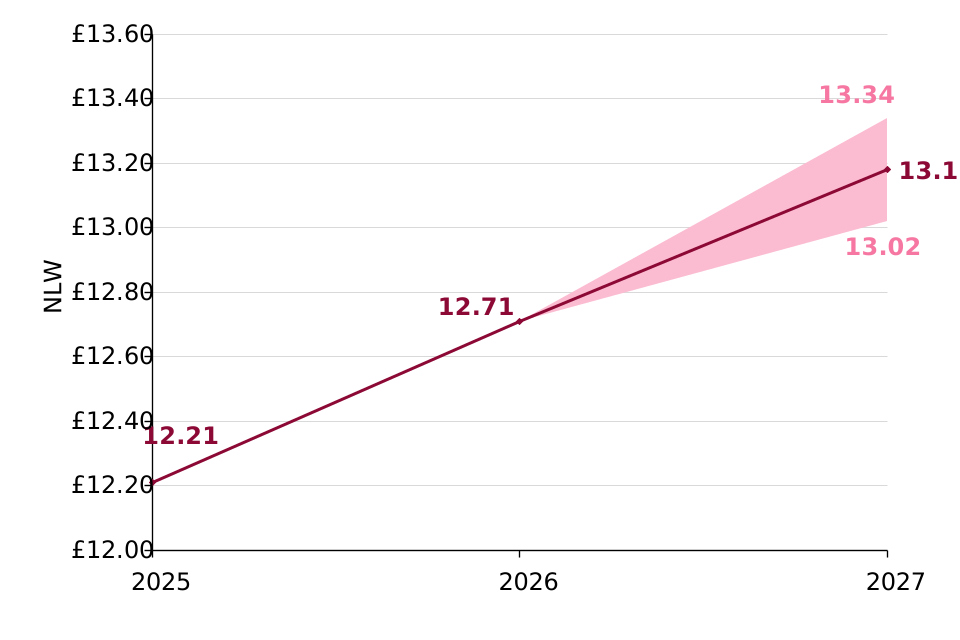
Our 2026 remit asks us to recommend an NLW that takes into account the condition of the labour market, the cost of living, the impact on businesses and competitiveness, and wider macroeconomic conditions. The remit also states that two-thirds of median hourly earnings should continue to be “the key reference point for future rates”. We project that two-thirds of median earnings for those aged 21 and over in October 2027 will fall somewhere in the range of £13.02 to £13.34, with a central estimate of £13.18.
Our remit for 2026 restates the Government’s commitment to lower the NLW age to 18 but gives the Commission “full flexibility to determine the pace and ultimate timing of that alignment, with priority being given to the employment prospects of younger workers.”
The NLW increase should deliver an increase in real hourly pay
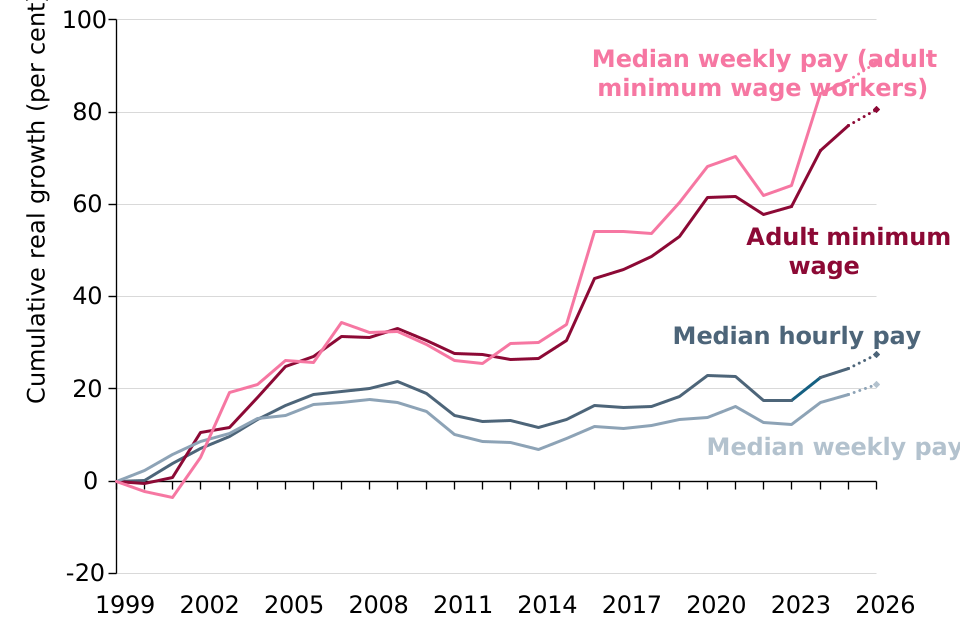
Since its introduction in 1999, the adult rate of the minimum wage has grown faster than median hourly pay. This reflects the policies of successive governments to increase the ‘bite’ of the minimum wage (the minimum wage’s share of median hourly earnings) to 60 per cent and then to two-thirds of median hourly pay.
The real value of the NLW has increased by more than 75 per cent since 2009 (first chart below). We expect the April 2026 uprating to £12.71 to ensure another real terms increase in the NLW by March 2027.
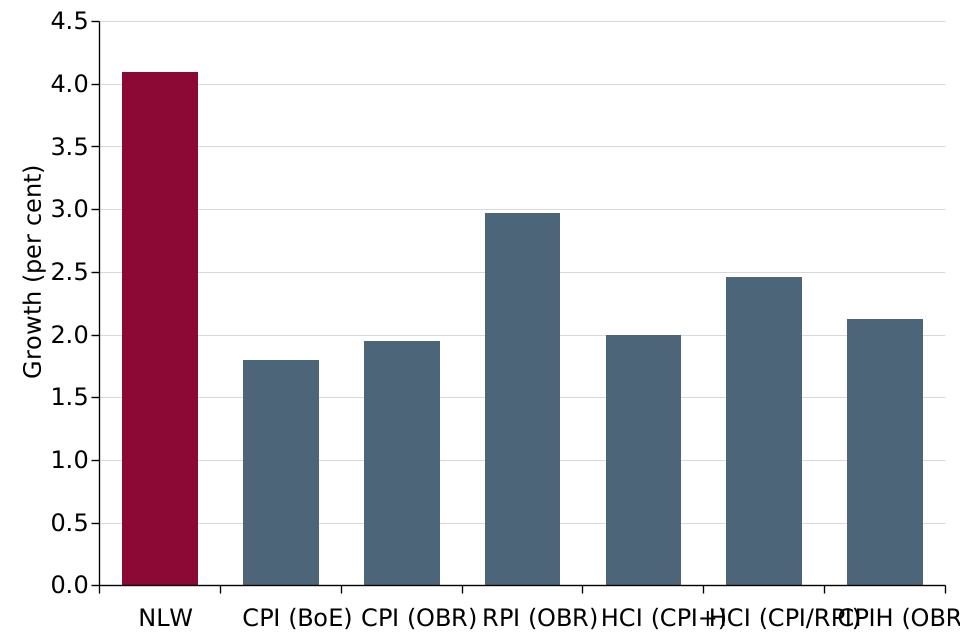
While the NLW will increase by 4.1 per cent this year, CPI inflation is currently expected by forecasters to increase by 1.8-2.0 per cent over the course of the minimum wage year (second chart below). Other measures of inflation are also expected to remain below 4.1 per cent over the minimum wage year. The forecasts on which this analysis is based may have been overtaken by recent events. However, they are the best we currently have available.
Cumulative growth in real hourly and weekly pay for workers aged 21 and over, UK, 1999-2026
Projected growth in price indexes and NLW, UK, March 2026-March 2027
The increase to household incomes will depend on interactions with the tax and benefit system
The impact of April’s minimum wage increase on household incomes depends on its interaction with each household’s taxes, benefits and hours of work.
This year the Government will implement an above-inflation increase to the standard allowance of Universal Credit (UC) of 6.2 per cent – higher than the 4.1 per cent increase in the NLW. These changes mean that NLW workers who receive UC will benefit from a greater increase in their take-home income than the 4.1 per cent increase in the NLW. In contrast, NLW workers who pay tax, but do not receive UC will receive a smaller increase to their take home income than the headline 4.1 per cent. This is because tax thresholds remain frozen, resulting in an increase to workers’ average tax rates under the new NLW.
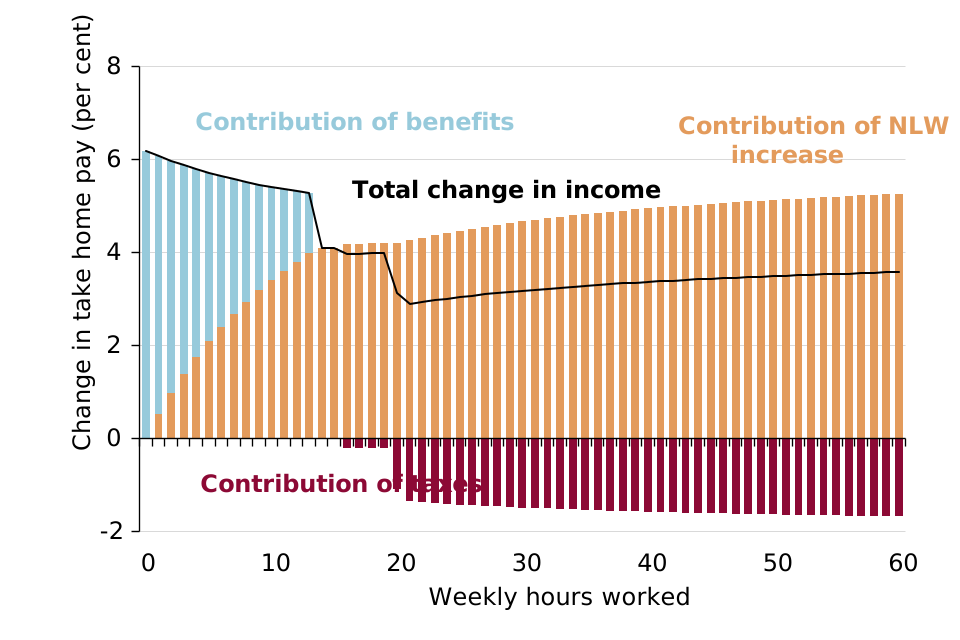
The first chart below shows the increase in take-home pay for a single person paid at the NLW, depending on the number of hours they work. NLW workers earn too much to be eligible for UC if they work more than 14 hours per week (assuming they are only eligible to the standard allowance) and start paying tax and national insurance if they work more than 20 hours per week. A full-time worker (working 35 hours per week) would receive a 3.3 per cent (or £11.90) increase to their weekly take-home income.
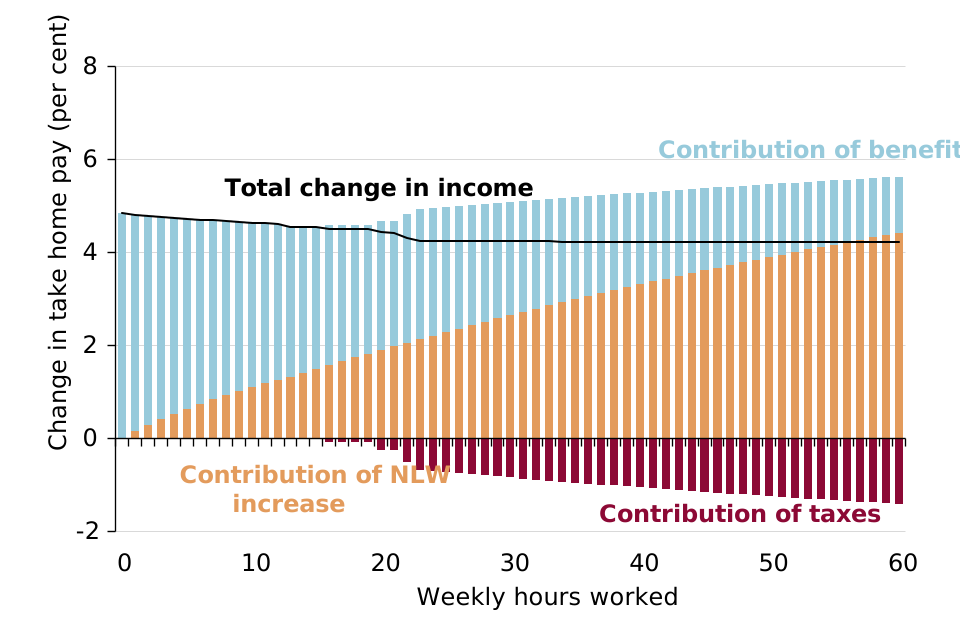
The second chart shows the same information for a couple household with two school-aged children, where only one member of the couple works. Because this household would still receive Universal Credit regardless of how many hours the worker in the family works, this household’s take-home income increases by at least 4.2 per cent.
Increase in take-home pay for NLW workers by hours worked as a result of this year’s uplift, single person working full-time, England
Increase in take-home pay for NLW workers by hours worked as a result of this year’s uplift, couple (one full-time worker) with two children, England
The number of jobs paying the NLW is expected to fall slightly
Our estimate of projected coverage is based on the historic relationship between growth in the bite and coverage. The bite is the ratio of the minimum wage to median hourly pay. In years when the bite has grown quickly, we have tended to see larger increases in the number of people paid the minimum wage, but this relationship is not straightforward. For example, in the tight labour market that followed the pandemic, employers paid wage rates above the minimum to attract and retain workers, so coverage fell even as the bite rose.
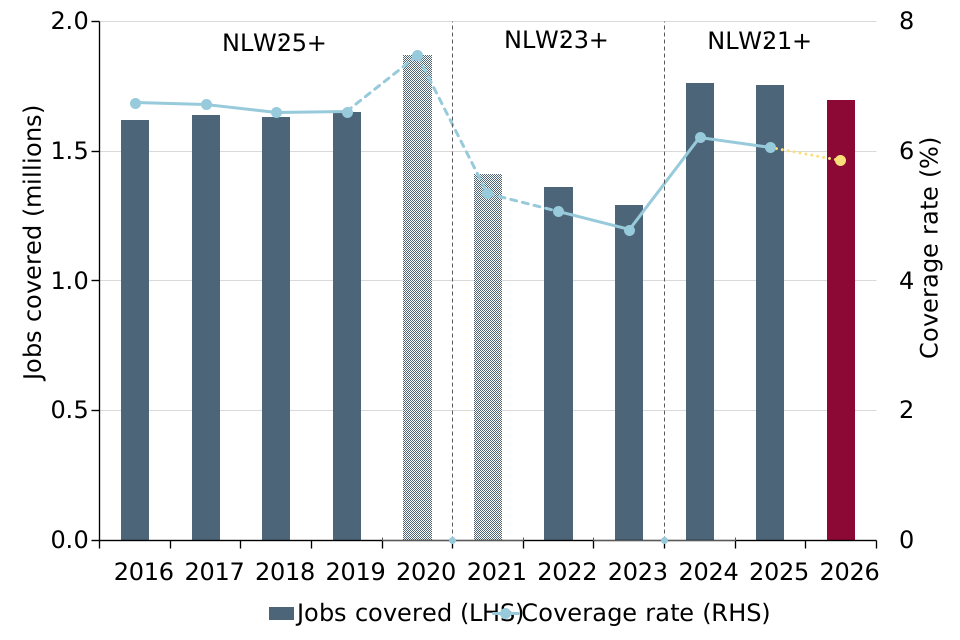
Because of stronger than forecast wage growth in the second half of 2025, we now expect the bite in April 2026 to be a little lower than we anticipated when we made our recommendation in October last year. This in turn means that we now expect the April 2026 upratings will lead to a fall in NLW coverage – the number of jobs paid up to 5 pence above the NLW. The total number of covered jobs is now projected to fall from 1.76 million in April 2025 to 1.70 million in April 2026. This would mean that around 5.9 per cent of jobs would be paying the NLW.
Actual and projected number and share of jobs paid the NMW/NLW, by rate population, 2025-2026
| April 2025 | April 2026 projection | |||
| Rate | Share of jobs (per cent) | Number of jobs (thousands) | Share of jobs (per cent) | Number of jobs (thousands) |
| NLW (21+) | 6.1 | 1,756 | 5.9 | 1,698 |
| 18-20 | 15.1 | 162 | 18.2 | 195 |
| 16-17 | 21.8 | 68 | 22.9 | 71 |
| Apprentice | 17.2 | 32 | 17.6 | 33 |
| Total | 6.6 | 2,019 | 6.5 | 1,997 |
Number and share of jobs paid the NLW, 2016-2026
We expect the inflationary impacts of the April 2026 NLW increase to be minimal
Businesses adapt to minimum wage increases in a combination of ways. Firms say that price increases are one of the main ways they deal with minimum wage increases, and this has become a more common reported response in recent years.
However, at the aggregate level we estimate that NLW increases only make a small contribution to the economy-wide wage bill and therefore overall inflation. This is because:
- Minimum wage workers are the lowest-paid workers in the economy, and because they tend to work part-time, they account for a relatively small share of the economy-wide weekly wage bill.
- Other factors, such as inflation expectations, productivity growth, and the degree of slack in the labour market would also push up wages in the absence of the NLW increase.
- Increases in the pay bill are only one factor which contribute to overall inflation. Other factors include the cost of imports, and, for goods made in the UK, input costs like energy, raw materials and rent.
We estimate that last year’s NLW increase contributed between 0.1 and 0.5 percentage points of the 8.1 per cent increase in the total wage bill, and between 0.1-0.2 percentage points to inflation.
As a result of stronger than forecast pay growth in the second half of 2025, we now expect this year’s increase in the NLW will be broadly in line with median pay growth between April 2025 and April 2026. As a result, we do not expect the NLW will contribute further upward pressure to the economy-wide wage bill or inflation this year. This is consistent with the Bank of England’s assessment that the NLW will have a “negligible” effect on overall wage growth this year.
Increases in the 18-20 Year Old Rate will further narrow the gap with the adult rate
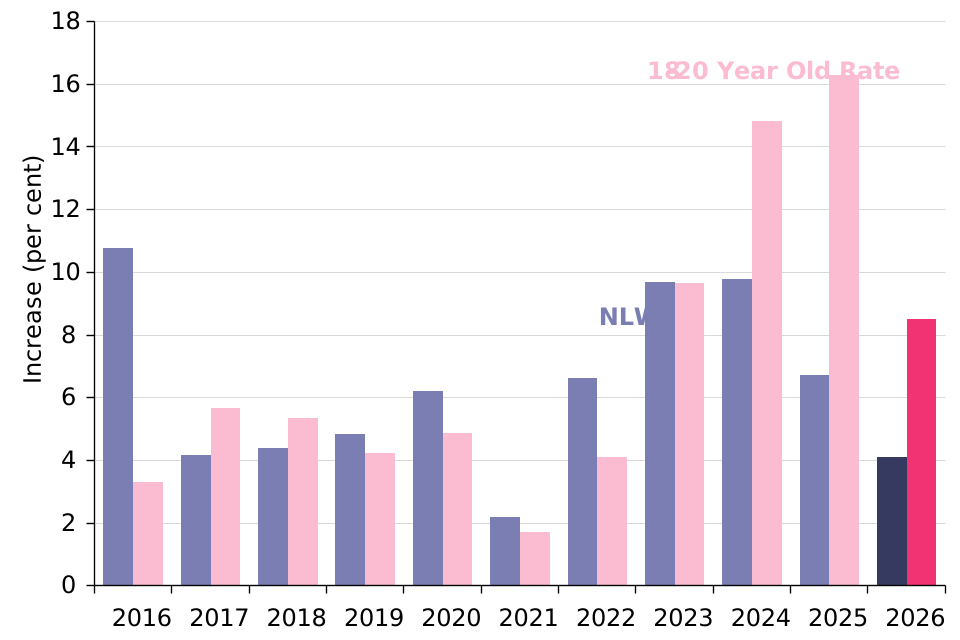
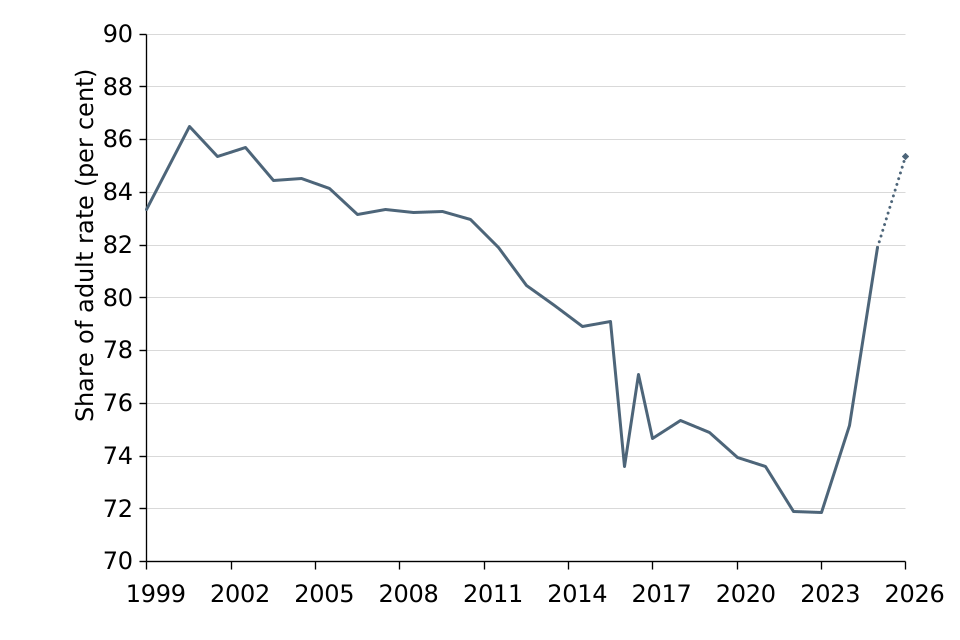
The 8.5 per cent increase to the 18-20 Year Old Rate in April 2026 represents the third consecutive year in which the 18-20 Year Old Rate has increased by substantially more than the NLW (first chart below). The second chart shows that these increases have reduced the gap between the 18-20 Year Old Rate and the NLW, as set out in our remit from the Government. This reverses the pattern of a widening gap since the youth rates were introduced. In advice to the previous Government, we noted that the gap between the youth and adult rates was high by international and historic standards. We argued that there was scope to reduce the gap, albeit cautiously as there is potential for risks to employment. The 18-20 Year Old Rate is now at 85 per cent of the NLW rate – a similar proportion to the early years of the NMW.
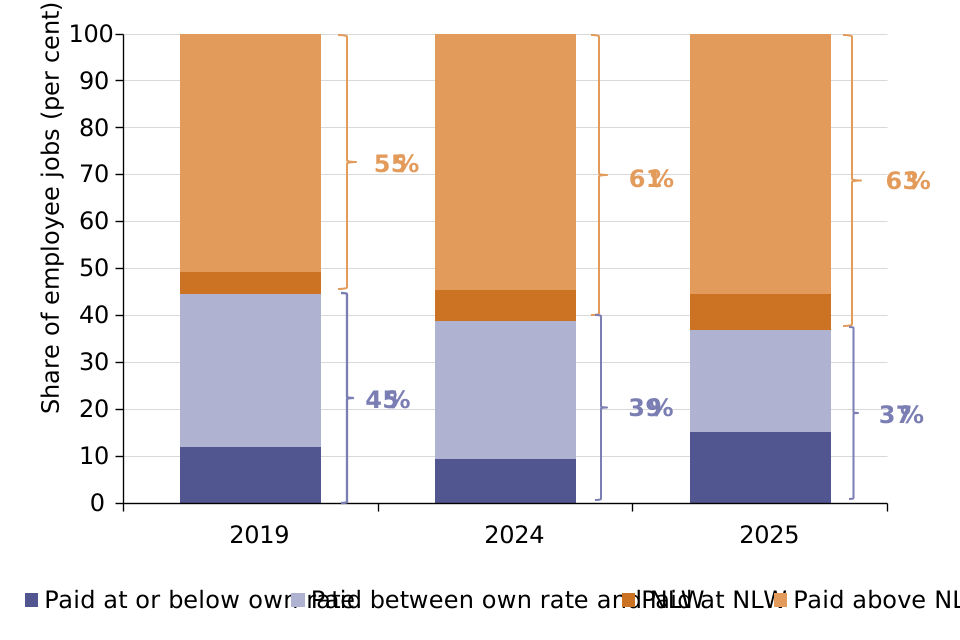
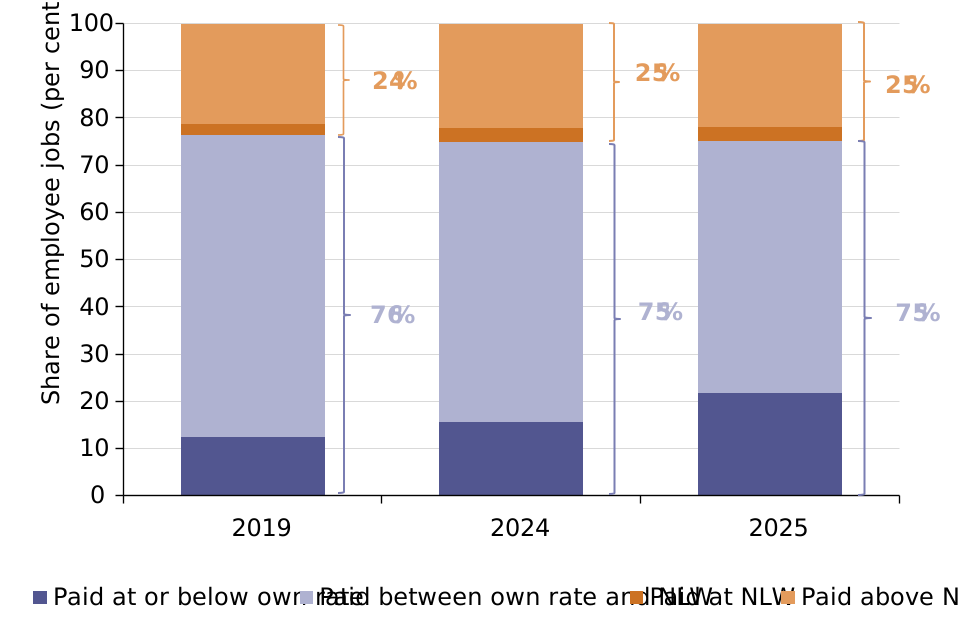
As a result of this increase, we expect coverage of the 18-20 Year Old Rate to increase from around 15 per cent to over 18 per cent (or almost 200,000 jobs), the highest it has ever been. We are less certain about the increase to effective coverage – the share of jobs paid below the NLW. Despite the large increase in coverage in 2025, effective coverage fell. It may be that effective coverage is not particularly sensitive to changes in the youth rates, instead being driven by other factors, such as compositional changes to the youth workforce and changes to the NLW rate.
Annual increases in 18-20 Year Old Rate and NLW (April-April), UK, 2016-2026
18-20 Year Old Rate as a proportion of the adult rate, UK, 1999-2026
Coverage of own minimum wage rates and NLW, 18-20 year olds, UK, 2019, 2024 and 2025
We are alert to concerns about young people’s employment prospects
In making its recommendations for the 18-20 Year Old Rate, the Commission pays particular attention to whether increases in the youth rates have caused youth employment to fall.
While the Commission recognises that labour market outcomes for young people have deteriorated over the past two years, we are not aware of any robust evidence that higher youth rates have contributed to these falls. However, this remains an important question to ask.
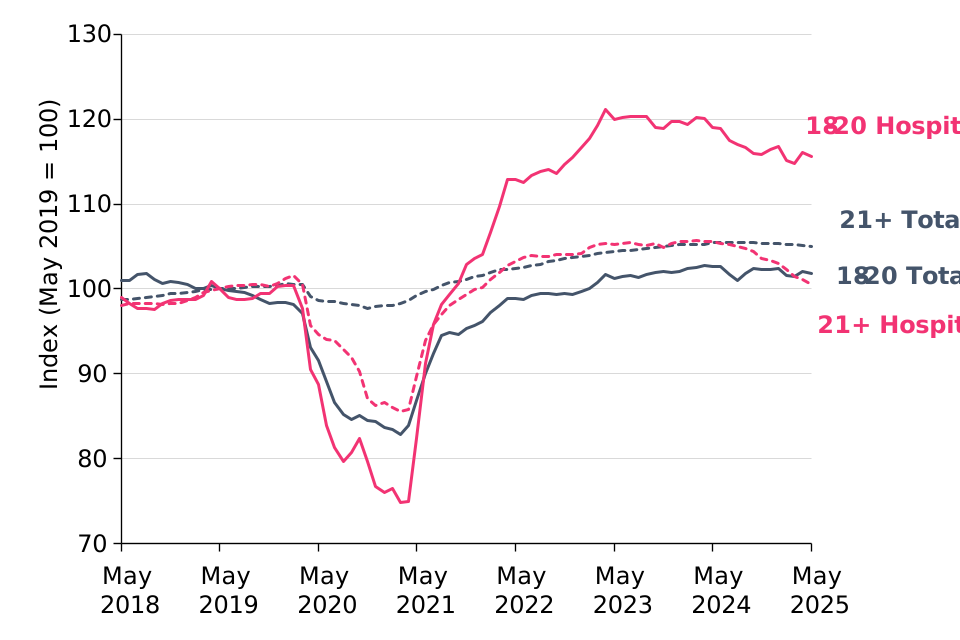
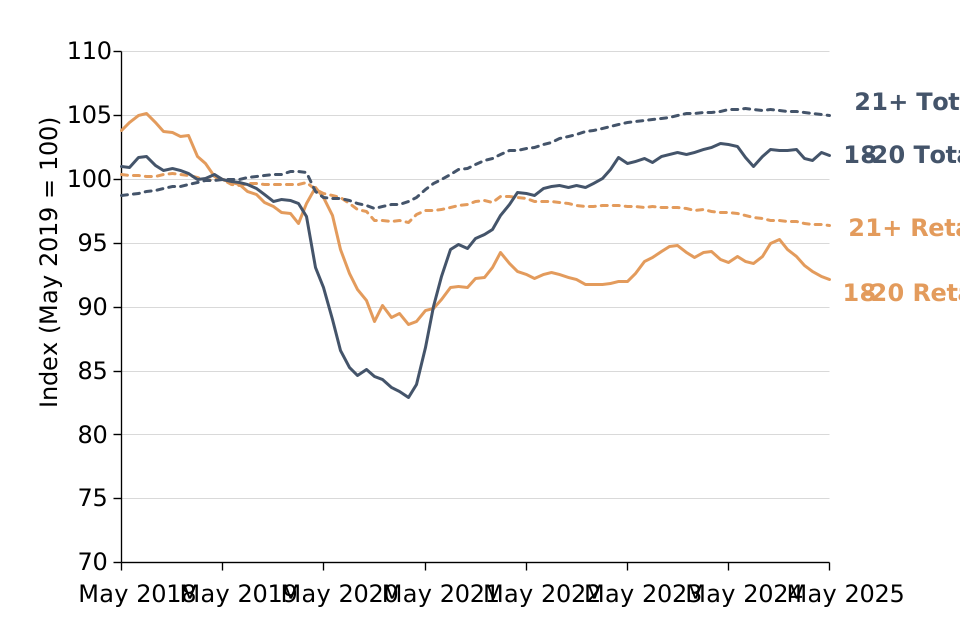
Outcomes for young people are largely driven by the recent trends in the industries in which they work. Hospitality and retail are particularly important as they are the largest employers of young people. The tight labour market that followed the pandemic meant businesses (particularly in hospitality) struggled to find workers and so recruited more young people. Subsequently, labour market conditions have weakened and youth employment has fallen.
New analysis based on data received since we made our recommendations in October 2025 suggests a nuanced picture. Despite recent falls, 18-20 year olds’ employment in hospitality – where use of the youth rates is common – remains significantly higher than it was pre-pandemic (first chart below). We find the opposite in retail, where use of youth rates is less widespread – 18-20 employment has fallen by more than for older workers (second chart). In other sectors, employment for 18-20 year olds has, in recent years, increased at a similar pace to that of older workers. We plan to undertake further analysis to differentiate between the impact of the minimum wage and other factors that may be disproportionately affecting the sectors that young people are most likely to work in.
Change in hospitality employment by age, 2018-2025
Change in retail employment by age, 2018-2025
Employment for young people has done better where minimum wage coverage is highest
Geographical differences are key to assessing the impact of increases to youth rates.
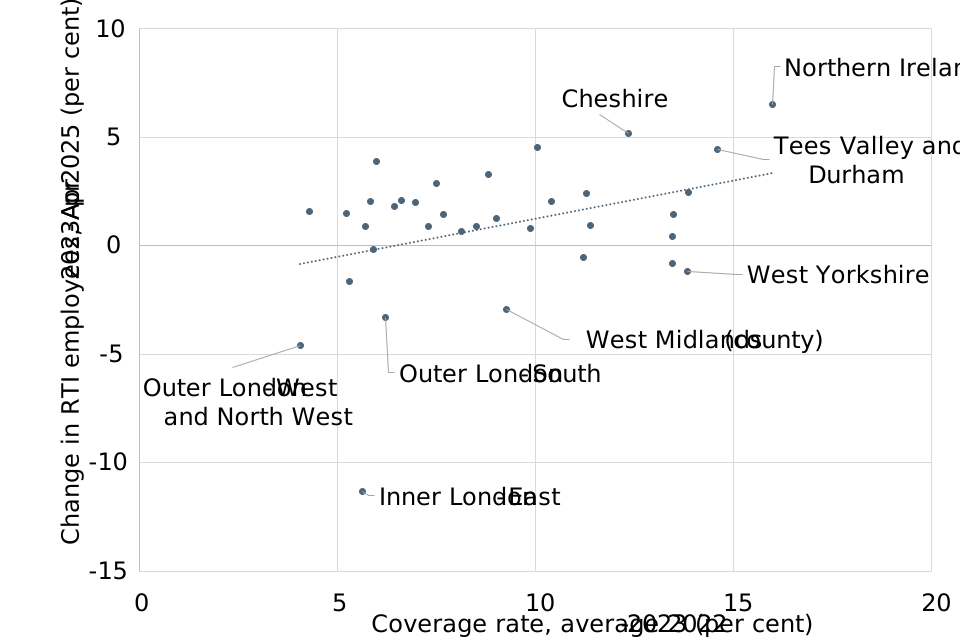
If the increases to the youth rates were damaging youth employment, we would expect to see bigger falls in the areas with higher youth coverage rates. However, the chart shows that even over the period where youth rates have been rising at least as fast as the NLW, we find the opposite – youth employment fell more in areas with the lowest youth coverage and the largest falls in youth employee numbers have been in London where youth coverage is low. However, other dynamics, such as population and migration changes, may also play an outsized role in London.
While these initial findings are reassuring as to the role of the minimum wage in youth employment prospects so far, we remain alert to the possibility that this will change in future. Indeed, this analysis only runs to spring 2025. We will continue to monitor the youth labour market and deepen our analysis of the available evidence as we prepare to make our recommendations in October this year. As with the previous page, the analysis here is new and was not available to the LPC at the time we made our recommendations to Government.
Coverage rate and change in employment, 18-20 year olds, by area, 2023-2025
Increases in the 16-17 Year Old Rate and Apprentice Rate balance competing considerations
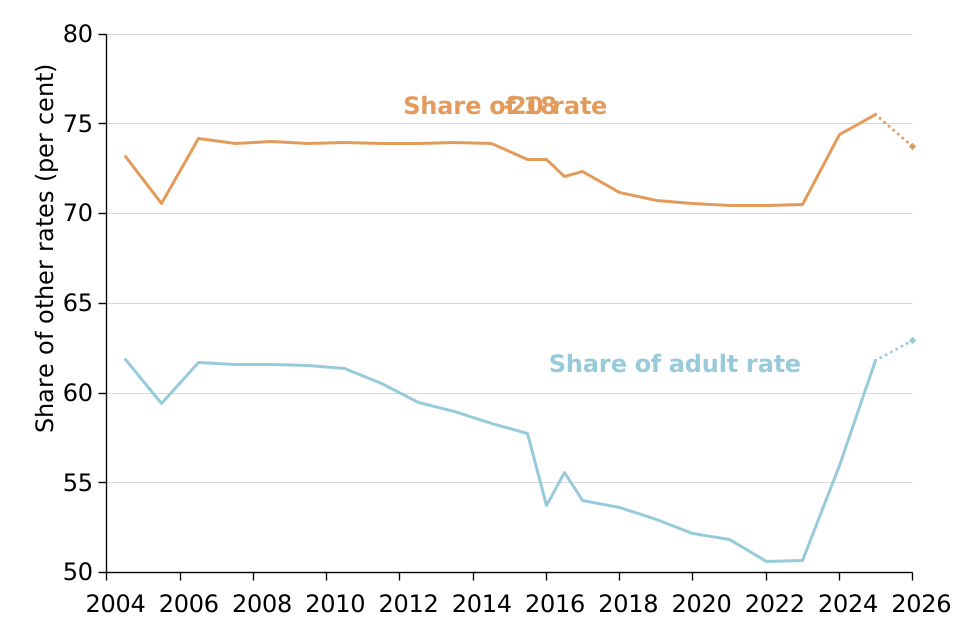
This year, the 16-17 Year Old Rate and the Apprentice Rate will increase by 6 per cent to £8.00.
The recommendation for 16-17 year olds balances the weaker labour market for this age group with the need to ensure their rate does not become unmoored from the adult rate, particularly as Government policy is to remove the 18-20 Year Old Rate.
Having increased significantly in 2025, we expect coverage for 16-17 year olds to increase again this year, from 22 to 23 per cent. Coverage for apprentices is also expected to increase from 17 to 18 per cent.
16-17 Year Old Rate as a proportion of other rates, UK, 2004-2026
Coverage of own minimum wage rates and NLW, 16-17 year olds, UK, 2019, 2024 and 2025
Our new remit for rates that will take effect in 2027 has been published
The Government provided us with our remit for this year on 16 March.
This year’s remit states that two-thirds of median hourly earnings should continue to be “the key reference point for future rates”, and, in making its recommendations, the Commission should consider the following factors:
- the condition of the labour market;
- the cost of living (including inflation forecasts between April 2027 and March 2028);
- the impact on businesses and competitiveness; and
- wider macroeconomic conditions.
These factors are similar to those mentioned in the remit over the past two years and the Commission has a strong history of balancing these and other factors in coming to a unanimous recommendation.
Based on current wage forecasts, we expect the rate needed to stay at two-thirds of median hourly earnings will be in the range of £13.02 and £13.34, with a central estimate of £13.18. This range represents a 2.4-5.0 per cent increase over the current NLW, with a central estimate of 3.7 per cent.
This range is provided as an illustrative guide and incorporates new data and forecasts released since October. However, earnings forecasts are inherently uncertain and changes in economic conditions (including from the impact of the conflict in the Middle East) mean that these numbers could change. As discussed above, the Commission is required to take a range of factors into account when recommending NLW rates; it is not purely formulaic. We will make our recommendation in October based on the evidence we collect over the year.
For 18-20 year old workers, the remit repeats the Government’s commitment to lowering the NLW’s age of eligibility from 21 to 18. Were we to recommend lowering the NLW age to 20 next year, this would reduce the median wage of the NLW-eligible population, resulting in a roughly 10 pence reduction in estimates of the NLW key reference point given above. However, the remit also says that the LPC has full flexibility to determine the pace and timing of that change and asks us to give priority to employment prospects of young workers. The rates for those aged under 18 and apprentices should be set at a level that supports the employment prospects of each group.
Our evidence strategy
We have begun gathering evidence in support of the recommendations we will make to the Government in the autumn for the 2027 minimum wage rates. We are keen to hear first-hand views from workers, businesses and other interested parties. You can contribute to our evidence-gathering in a number of ways:
We will be launching our written call for evidence alongside this report. Among other things, we will be looking for evidence on:
- the economy and labour market;
- the experiences of workers on low pay;
- how employers have responded to changes in minimum wage rates;
- views on the future of the NLW;
- views on the future of the NMW youth rates, in particular the transition to an NLW for all workers aged 18 and over;
- views on the future of the Apprentice Rate, and whether the current Apprentice Rate is fit for purpose.
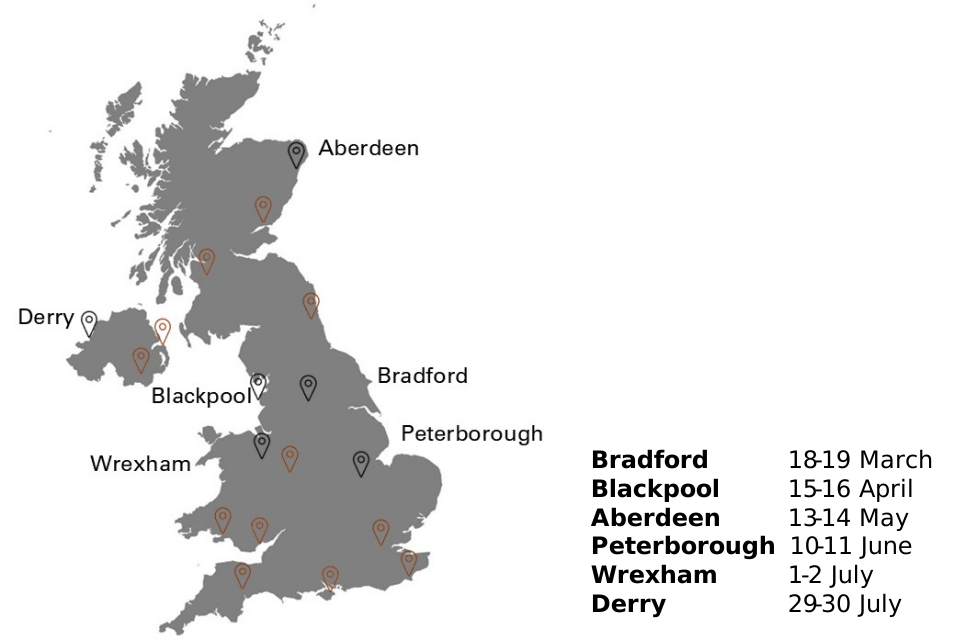
We are visiting businesses and workers up and down the UK, to talk about their views on the minimum wage. We select visit locations based on minimum wage coverage and employment levels. We aim to balance a programme between rural locations, towns and cities, and over the medium-term to ensure coverage of all regions of the UK. The map on the right shows the locations for this year’s visits (in black), as well as the places we visited in 2024 and 2025 (in orange). You can read more about our visits programme here.
We invite meetings with any and all other interested parties. If you have something to contribute, please get in touch with us via lpc@lowpay.gov.uk.