The Big Ambition Analysis for the National Youth Strategy
Published 10 December 2025

© Crown copyright 2025
This publication is licensed under the terms of the Open Government Licence v3.0 except where otherwise stated. To view this licence, visit nationalarchives.gov.uk/doc/open-government-licence/version/3 or write to the Information Policy Team, The National Archives, Kew, London TW9 4DU, or email: psi@nationalarchives.gov.uk.
Where we have identified any third party copyright information you will need to obtain permission from the copyright holders concerned.
This publication is available at https://www.gov.uk/government/publications/the-big-ambition-analysis-for-the-national-youth-strategy/the-big-ambition-analysis-for-the-national-youth-strategy
Introduction
Background
The Children’s Commissioner for England is responsible for promoting and protecting the rights of children, particularly the most vulnerable. This includes making sure that children’s views are heard and considered when it comes to the policies and services that affect them.
In 2024, the Big Ambition survey found that only 22% of children agreed that people who run the country listen to what they have to say. For this reason, the Commissioner advocates for children’s voices to be central to the work of government; that every strategy, consultation and Act that impacts children’s lives should include their voices in the process.
The project
The Children’s Commissioner’s Office was commissioned by the Department for Culture, Media and Sport (DCMS) to conduct a new ‘deep dive’ of data from The Big Ambition. This large-scale consultation of children in England was carried out between September 2023 and January 2024 and focused on their experiences, priorities and hopes for young people and the future of the country. This paper presents findings from analysis of qualitative responses, which are largely solution-focused, and sets out what children want the government to do to make their lives better. Findings in this report have been structured by the areas of interest from the National Youth Strategy:
- Physical, Mental, and Digital Wellbeing
- Community Connection, Cohesion, and Belonging
- Skills and Opportunities for Life and Work
- Safety and Security
- Youth Voice
Findings
This paper shows how much children want to: be listened to, be treated fairly, feel supported, have more opportunities for fun, build positive relationships with peers, feel prepared for the future, and feel safe.
Examples of some key asks from young people include more opportunities to inform the development of policies that will affect them, equal access to support and activities, better physical and mental health services, more parks, playgrounds and sports, more spaces to socialise with friends, better financial and practical education and careers advice, and increased community and online safety.
The contents of this paper present what England’s children said in response to the Big Ambition Survey which was conducted by the Office of the Children’s Commissioner in 2023-24 without necessarily reflecting the office’s policy positions.
It is essential that we listen to young people’s views and share what they say even when they may be contradictory or do not align with our wider evidence base.
Methodology
The Big Ambition Survey
Between September 2023 and January 2024, the Children’s Commissioner’s office conducted The Big Ambition survey, which aimed to capture children’s experiences, ideas, and priorities ahead of the general election. All children in England aged 6 to 17-years-old, as well as 18-year-olds in education, were invited to take part.
Overall, 253,000 responses were received, either directly from children, or from adults reporting on their behalf. The following analysis focuses on responses to the open-text question: “What do you think the government should do to make children’s lives better?”.
For the following analysis, comments from adults on behalf of children were removed from the dataset to focus on children’s views and solutions in their own words, and the age range was limited to those within scope of Youth Matters: Your National Youth Strategy. The analysis in this paper is therefore based on 115,153 qualitative responses from children aged 10 to 17, or who are 18 and attending school or college.
Original Framework
Initial analysis of The Big Ambition data was based on seven themes provided by DCMS in the early stages of this project. These were later refined to focus on five key areas, around which our final qualitative analysis is structured. The original seven themes were:
- Health and Wellbeing
- Voice, Volunteering, and Civic Participation
- Economic and Financial Wellbeing
- Education, Skills, and Personal Development
- Community Safety, Identity, and Belonging
- Access to Positive Activities
- Healthy Relationships
Scoping Quantitative Analysis
The first step was to identify comments which related to each of the original seven themes of Youth Matters: Your National Youth Strategy . A list of relevant key words was developed using an iterative process:
-
Firstly, key word lists for the published The Big Ambition analysis were reviewed and adapted[footnote 1]. The Children’s Commissioner’s ‘pillars’ were mapped onto DCMS’s original themes (Table 1).
-
These were then supplemented by key words drawn from DCMS’s Express Order Themes document which was shared with analysts at the Children’s Commissioner’s office. The Express Order methodology is set out in Savanta’s report called The National Youth Strategy Research Project that informs Youth Matters: Your National Youth Strategy.
-
Finally, a random sample of comments which included key words from the themes’ titles were drawn from the full dataset and reviewed to identify and add supplementary key words to the lists.
This manual process means that the key word lists include common misspellings and slang terminology which may be widely understood and used by children and young people, but not adults.
Table 1. Big Ambition Pillars mapped to Original DCMS Themes
| Original DCMS Theme | Big Ambition Pillar | |
|---|---|---|
| Health and wellbeing | Health | |
| Voice, volunteering and civic participation | Better World, Politics | |
| Economic and financial wellbeing | Family, Jobs and Skills | |
| Education, skills and personal development | Education, Jobs and skills | |
| Community safety, identity and belonging | Community, Fairness | |
| Access to positive activities | Community, Education, Better World | |
| Healthy relationships | Family, Care |
Once the thematic key word lists were constructed, all free text responses were searched for mentions of these (see Appendix 1 for full list).
Table 2. Example key words by original theme
| Health and wellbeing | Voice, volunteering, & civic participation | Economic & financial wellbeing | Education, skills, and personal development | Community safety, identity, & belonging | Access to positive activities | Healthy relationships |
|---|---|---|---|---|---|---|
| “mental” | “volunt” | “afford” | “curriculum” | “communit” | “active” | “bully” |
| “nhs” | “participate” | “poverty” | “homework” | “violence” | “play” | “friends” |
| “medical” | “voting” | “money” | “school” | “local” | “sport” | “trust” |
| “wellbeing” | “policy-mak” | “employ” | “vocational” | “inclusion” | “leisure” | “consent” |
| “health” | “listen” | “price” | “work exp” | “prejudice” | “fun” | “respect” |
The following section outlines the overall proportion of comments which related to each theme. It also presents this data broken down by four demographic variables - responses are compared by age group, gender, region of England, and SEN/D status (see Appendix 2 for full breakdowns by theme).
Health and Wellbeing
Overall, 15% of children and young people spoke about health and wellbeing.
-
SEN/D: A larger proportion of children with SEN/D mentioned this topic (18.6%) than those without SEN/D (14.0%).
-
Region: There was some regional variation in the proportion of young people who spoke about this topic. For example, whilst 16.2% of children from the South East mentioned this topic, only 13.1% of those from the North East spoke about it.
-
Gender: A larger proportion of girls mentioned this topic (18.5%) than boys (10.2%).
-
Age: This topic was more common among older respondents, with a larger proportion of 16-18-year-olds mentioning this topic than other age groups (see Figure 1).
Figure 1. Proportion of responses containing ‘Health and Wellbeing’ key words, by child’s age
| Child’s Age | Proportion of responses (%) |
|---|---|
| Age 10 - 12 | 11.9% |
| Age 13 - 15 | 17.0% |
| Age 16 - 18 | 19.6% |
Voice, Volunteering, and Civic Participation
Overall, 15% of children and young people spoke about voice, volunteering, and civic participation.
-
SEN/D: A larger proportion of children without SEN/D mentioned this topic (15.2%) than those with SEN/D (13.8%).
-
Region: There was also some regional variation in the proportion of children who spoke about this topic. For example, whilst 15.5% of children from the South West mentioned this topic, only 11.6% of those from the North East spoke about it.
-
Gender: A larger proportion of girls mentioned this topic (16.7%) than boys (11.8%).
-
Age: This topic was more common among older respondents, with a larger proportion of 16-18-year-olds mentioning this topic than other age groups (see Figure 2).
Figure 2. Proportion of responses containing ‘Voice, Volunteering, and Civic Participation’ key words, by child’s age
| Child’s Age | Proportion of responses (%) |
|---|---|
| Age 10 - 12 | 11.5% |
| Age 13 - 15 | 15.7% |
| Age 16 - 18 | 22.3% |
Economic and Financial Wellbeing
Overall, this was the second most common theme, with 23% of children and young people speaking about economic and financial wellbeing.
-
SEN/D: A similar proportion of those with SEN/D (22.8%) and without SEN/D (22.9%) mentioned this topic.
-
Region: There was very little difference in the proportion of young people who mentioned this topic across regions.
-
Gender: A larger proportion of girls mentioned this topic (23.2%) than boys (21.6%).
-
Age: This topic was more common among 16-18-year-olds than other ages (see Figure 3).
Figure 3. Proportion of responses containing ‘Economic and Financial Wellbeing’ key words, by child’s age
| Child’s Age | Proportion of responses (%) |
|---|---|
| Age 10 - 12 | 23.3% |
| Age 13 - 15 | 20.2% |
| Age 16 - 18 | 26.3% |
Education, Skills, and Personal Development
Overall, this was the most common theme, with 45% of children and young people submitting responses about education, skills, and personal development
-
SEN/D: A similar proportion of those with SEN/D (45.0%) and without SEN/D (45.8%) mentioned this topic.
-
Region: There was some regional variation in the proportion of respondents who spoke about this topic. For example, whilst 47.5% of children from the South West mentioned this topic, only 42.4% of those from the North East referred to it.
-
Gender: A larger proportion of girls mentioned this topic (see Figure 4).
-
Age: This topic was most common among 13-15-year-olds (50.3%), followed by 16-18-year-olds (45.1%), and then 10-12-year-olds (41.5%).
Figure 4. Proportion of responses containing ‘Education, Skills, and Personal Development’ key words, by child’s gender
| Child’s gender | Proportion of responses (%) |
|---|---|
| Girl | 48.1% |
| Boy | 42.2% |
Community Safety, Identity, and Belonging
Overall, this was the third most common theme, with 18% of children and young people speaking about community safety, identity, and belonging.
-
SEN/D: A larger proportion of children with SEN/D mentioned this topic (18.9%) than those without SEN/D (17.9%).
-
Region: There was some regional variation in the proportion of respondents who spoke about this topic, with the greatest percentage of comments from London (see Figure 5).
-
Gender: A larger proportion of girls mentioned this topic (18.6%) than boys (16.4%).
-
Age: This topic was more common among 16-18-year-olds (21.9%), followed by 10-12-year-olds (17.8%), and then 13-15-year-olds (16.4%).
Figure 5. Proportion of responses containing ‘Community Safety, Identity, and Belonging’ key words, by region
| Region | Proportion of responses (%) |
|---|---|
| London | 19.8% |
| West Midlands | 19.0% |
| Yorkshire and The Humber | 18.4% |
| South West | 17.7% |
| North East | 17.6% |
| North West | 17.6% |
| East Midlands | 17.5% |
| South East | 17.3% |
| East of England | 17.2% |
Access to Positive Activities
Overall, 13% of children and young people spoke about access to positive activities.
-
SEN/D: A larger proportion of children without SEN/D mentioned this topic (13.6%) than those with SEN/D (11.5%).
-
Region: There was some regional variation in the proportion of respondents who spoke about this topic. For example, whilst 14.8% of children from London mentioned this topic, only 11.7% of those from the East Midlands referred to it.
-
Gender: A slightly larger proportion of boys (13.4%) than girls (12.7%) mentioned this topic
-
Age: This topic was most common among 10-12-year-olds (see Figure 6).
Figure 6. Proportion of responses containing ‘Access to Positive Activities’ key words, by child’s age
| Child’s Age | Proportion of responses (%) |
|---|---|
| Age 10 - 12 | 14.5% |
| Age 13 - 15 | 11.4% |
| Age 16 - 18 | 10.9% |
Healthy Relationships
Overall, this was the least common theme, with 4% of children and young people speaking about healthy relationships
-
There were limited demographic differences, with minimal variations across age groups, geographical regions, and SEN/D status.
-
However, this theme was slightly more common among girls than boys (see Figure 7).
Figure 7. Proportion of responses containing ‘Healthy Relationships’ key words, by child’s gender
| Child’s gender | Proportion of responses (%) |
|---|---|
| Girl | 4.2% |
| Boy | 2.8% |
Qualitative Analysis
An iterative thematic analysis was conducted on 1,400 free text responses – a random sample of 200 per original theme – to provide further insight into the topics discussed by children and young people. Two researchers initially coded the first 10 responses in each theme independently. They then discussed and resolved any discrepancies to develop the coding scheme. Sub-themes were then identified from the full 200 responses.
Following the refinement of the National Youth Strategy’s outcomes, this initial analysis and write-up was restructured to better represent the five new areas of focus. Sub-themes were re-allocated to the new key areas and are presented in this order in the report. The quotes included in this report are illustrative of the points that were made and representative of the patterns in the data.
A conceptual map was also devised to visually present the themes and sub-themes discussed. Links across themes are shown, highlighting some of the most frequently recurring topics, and illustrating that, for children and young people, there are often no clear distinctions between the themes around which this analysis is structured. Instead, they represent intersecting and overlapping facets of their lived experience.
Qualitative Findings from The Big Ambition Survey
Figure 8. Conceptual map of themes
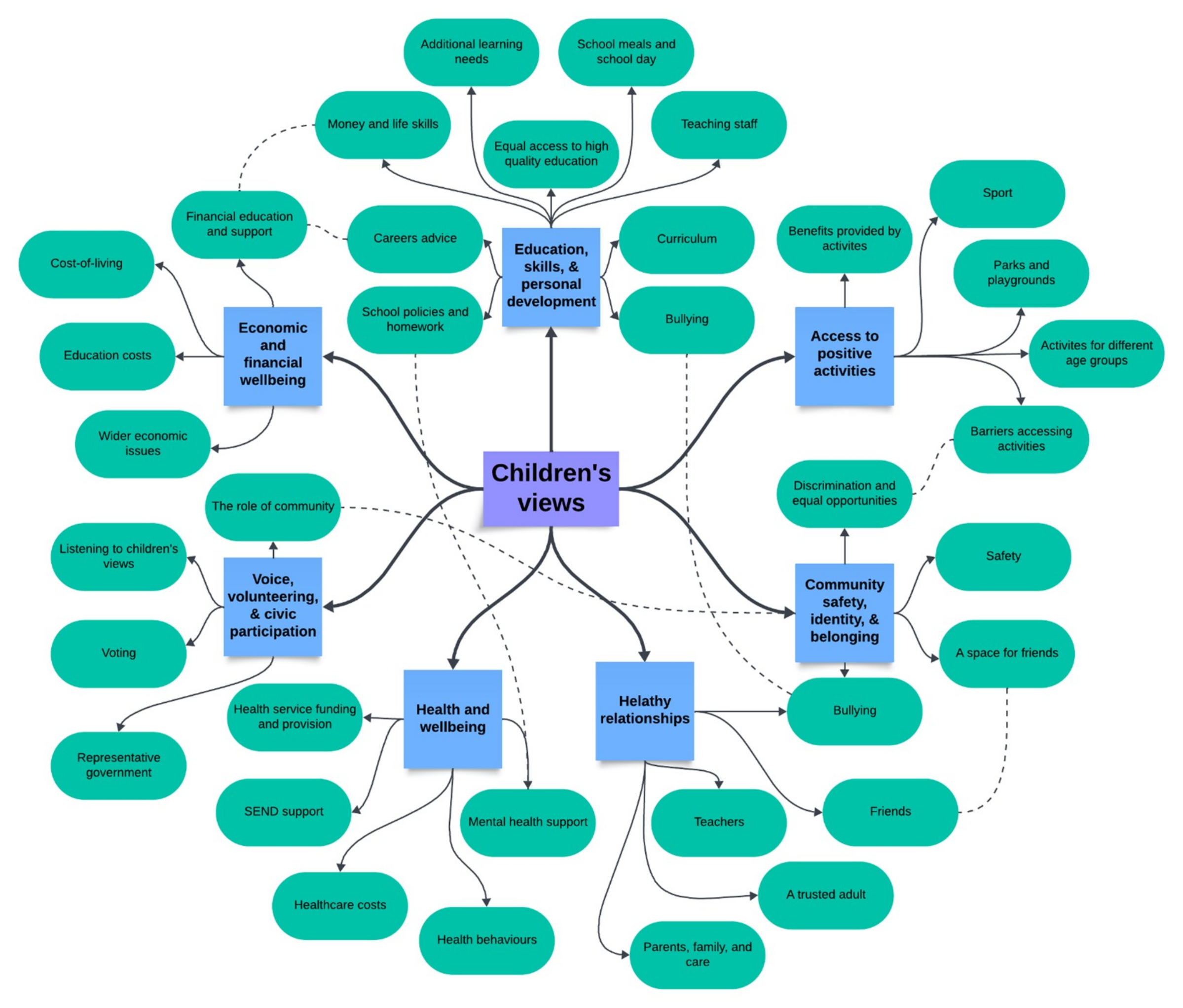
As mentioned above, the conceptual map visually presents the themes and sub-themes discussed. Please zoom in on your browser to view the image in detail.
Physical, Mental, and Digital Wellbeing
Health service funding and provision
Children and young people whose responses focused on physical and mental health highlighted the need for better funding of, and improved access to, services and support.
Ensure universal access to healthcare services for children, including regular check-ups, vaccinations, and treatments, to promote their physical well-being.
– Boy, 17
The government needs to better fund healthcare, particularly mental health services.
– Child of unspecified gender, 17
Some respondents focussed on specific services that should be improved, including pharmacies, GPs, dentistry, vaccinations, and mental health support.
…make sure that pharmacies have enough stock as many cannot give medicine that is prescribed because they don’t have it.
– Girl, 13
Better dental care…
– Girl, 11
Healthcare costs
Several children and young people spoke about how the costs associated with healthcare should be reduced. Children are aware that some people rely on private health services for both physical and mental health treatments, and they suggested that this results in disparities in access to care.
Make it cheaper for children to have healthcare and GP because some parents may not have enough money to pay lots of money for healthcare.
– Boy, 13
This is a blockquote - I really enjoyed it! Improve emotional and mental support, lower the cost of therapists and counsellors.
– Girl, 14
Some respondents also spoke about the cost of specific products or services. For example, one comment in the sample of responses reviewed for this report suggested that young people should not have to pay for sanitary products.
I think under 18 year old girls should get free sanitary products because they cannot be expected to buy essential products when they have no job, it is relied on the parents/carers.
– Girl, 12
Mental health support
Many of the comments about wellbeing focussed on ways to improve the mental health support that is available to children and young people.
School as a contributing factor
Some respondents talked about how educational experiences can have a negative impact on the mental health of children and young people.
There should be more attention to children’s mental health and especially how school affects that and it should be taken into more consideration
– Girl, 16
School isn’t safe if kids are having panic attacks over school.
– Girl, 14
Several sources of school-related stress were identified, including large amounts of homework, pressure to perform well in examinations, experiences of bullying, and a lack of understanding from school staff.
They should make life more fun because during our childhood we are living for school and the amount of work we have to do will pile onto the stress we have.
– Girl, 13
I think that they should actually think about bullying. The teachers don’t pay attention and simple teasing can become very serious and could even cause depression, anxiety or even suicide.
– Girl, 11
Forms of support
Several respondents provided specific suggestions for types of mental health support that could be provided. This included support groups, school counsellors, and mental health check-ins.
Better mental health support e.g. have a support group for those who need it…
– Girl, 13
All schools should have at least one available councillor that can help talk about mental health…
– Child of unspecified gender, 17
They should send out Mental Health Check ins to every single child because some children struggle with it.
– Girl, 10
Some respondents also spoke about the importance of preventative approaches. This included supporting children to talk about their mental health, increasing awareness and education of the topic, and encouraging parents to help their children to express and manage their emotions.
That the school should prioritise early intervention, emotional intelligence education, accessible counselling services, mental health education, supportive environments, and accessible resources…
– Girl, 17
Comments identified specific groups for whom targeted support is particularly important, for example boys.
That the school should prioritise early intervention, emotional intelligence education, accessible counselling services, mental health education, supportive environments, and accessible resources…
– Girl, 17
Mental health awareness for boys mainly as boys still suffer in silence no matter what and the issues has to be addressed more than anything as it is the biggest killer of men under 30
– Boy, 15
Service improvements
Several children and young people who focussed on mental health, also spoke about how existing support could be improved. This included increased accessibility and reduced waiting times.
More easily accessible free mental health care with less waiting time.
– Girl, 15
…the government should pay attention to the fact care for mental health is more then just a PowerPoint about stress and is inaccessible to most young people when they need it most…
– Child of unspecified gender, 14
Some respondents also discussed the importance of inclusive service design, highlighting how all children and young people should be able to access this support. In particular, there were several mentions of trans youth, and those with disabilities.
Ensuring that every child is given the same equal opportunities as [their] peers no matter [their] background or family or local environment and that every child has access to help of any kind be it mental health or identity and shouldn’t feel that they are excluded for who they are
– Boy, 17
Health behaviours
Encouraging healthy habits
Several respondents spoke about the need to encourage children and young people to engage in healthy eating and physical activity. They often highlighted the role of schools in facilitating this.
We should have P.E 2 times every week so we stay healthy …
– Girl, 11
Encourage healthy eating patterns in schools
– Girl, 16
Some children and young people also identified barriers to healthy living. For example, one girl mentioned the price of healthier food.
The unhealthy food is cheaper but the healthier food is expensiver in the shop
– Girl, 10
Preventing unhealthy habits
Other respondents spoke about the need to discourage children and young people from engaging in unhealthy behaviours, such as excessive screen time, vaping or smoking, and recreational drug use.
Our generation needs less screens, and more of the real world, as our world is getting more advanced with technology and AI, and we can’t be permanently staring into electronic devices.
– Girl, 11
Ban smoking/vaping for people under the age of 21
– Girl, 11
Some respondents offered suggestions for how this could be done. For example, one boy highlighted how children’s access to certain items should be restricted, and this should be monitored more closely by the police.
Help limit the availability of children being able to purchase vapes/cigarettes or any other recreational drug/ illegal drug, 1 thing they could potentially do is add more police out to find drugs with police dogs
– Boy, 14
Another boy discussed how the government could prevent young people from vaping.
I think that the government should keep thing that children/teenagers shouldn’t see away. For example vapes. They have bright packaging and names that encourage teenagers to buy it. What the government should do is change the packaging to plain black/white and make sure that there aren’t any teenagers illegally buying vapes from people who don’t ask for an id. Another way to keep vapes away would be to increase the price so that it wouldn’t be worth buying the vape in the first place.
– Boy, 14
Support for Additional Needs
Some of the respondents who chose to speak about this theme highlighted the need for better support for children and young people with additional needs, such as special educational needs and disabilities (SEN/D).
The government should put more support in place for children with disabilities or SEN/D needs such as autism or ADHD as many of us/them don’t have the right support…
– Girl, 13
Several of the respondents who mentioned this topic spoke about reducing the stigma and discrimination experienced by those with additional needs. This was characterised by the need to increase understanding amongst school staff and peers. For example, one girl suggested how this could be embedded into the school curriculum.
Support kids and young people with SEN/D needs better and get schools to teach about learning and mental disabilities or less noticeable disabilities in general more in PSHE.
– Girl, 15
Digital Wellbeing
Another aspect of wellbeing highlighted by some children and young people was digital wellbeing. This was characterised by discussions of online safety, with respondents identifying several dangers associated with the internet, particularly social media, such as cyberbullying, cybercrime, and deepfakes.
The internet isn’t safe for kids anymore and there should be more security because other kids can get scared and so can I because of deep fakes, cyberbullying, AI and cybercrime. People shouldn’t have to feel like that everyone should be able to feel safe and secure!!!
– Boy, 10
Make social media safer, educate about its dangers and try to get children to spend more time outside or playing games rather than being on devices
– Girl, 15
Overall, children and young people called for greater security, increased awareness of online safety, and promotion of alternative activities.
Community Connection, Cohesion, and Belonging
Equal opportunities and discrimination
Children and young people spoke about the importance of fairness in everyday life, highlighting how everyone should receive equitable treatment and opportunities.
They should make people be treated fairly and equally
– Boy, 11
Show care and understanding to people of differing backgrounds. There is a large amount of hidden prejudice within government and it shows itself in very small but largely impactful ways.
– Boy, 17
Some respondents also talked about how children and young people should not experience stigma or prejudice based on their identity. This included mentions of racism, sexism, ableism, homophobia, and transphobia. Some children also provided practical suggestions of how to address these issues, such as improving education and understanding, adapting the language used to refer to certain groups, or increasing police responses to discrimination.
I think that the government should send police out onto the local streets of others for awareness of racist activity. I myself is a victim of harsh racism as I was walking home, and you see, there was no one there to help me and my [siblings]
– Girl, 10
Stop calling neurodivergent people disordered
– Boy, 12
Trans rights! More LGBTQIA+ education, help kids feel seen…
– Child of unspecified gender, 13
Some respondents also talked about the importance of equal access to services and opportunities, including education, leisure activities, and healthcare.
I think the government could make sure all children get an equal chance to attend and afford education.
– Girl, 14
I think that the government should create equal opportunities for all students. Especially when it comes to creating equal sporting opportunities and equal opportunities for students to learn languages and make friends.
– Girl, 17
As a transgender youth, I’m becomingly increasingly insecure with regard to whether I can actually live a life where I don’t suffer with hate and a lack of access to services in healthcare all because of who I am
– Girl, 17
Improving accessibility was also highlighted as a key factor in achieving this.
There should be more inclusive parks for people with disabilities
– Boy, 11
Positive Activities
Spaces for friends
Several children and young people expressed a desire for more spaces and activities within their local area to strengthen communities. This would provide them with opportunities to spend time with their peers, and to make new friends.
Making community halls for children so they can interact and they won’t feel shy when they go to school.
– Boy, 11
Building safe places like libraries and museums to encourage children to spend time with other kids where they can study or play game
– Girl, 15
Giving children more opportunities to sign up for outside of school clubs, in case their parents don’t think about things like that, to help them get out and make friends
– Girl, 16
Parks, playgrounds, and sport
Many children and young people talked about opportunities for fun, and wanted more parks in more places, and better upkeep of the ones that already existed.
…start working on children play parks being renewed.
– Girl, 11
The government should put more parks around different places so people can have the same amount as fun I have
– Girl, 11
In line with earlier themes of equality and fairness, some children and young people were concerned about the accessibility of parks and playgrounds for all children, including those with disabilities.
Make parks for [disabled] children so [they] can have as much fun as other children do…
– Girl, 11
Furthermore, many children and young people expressed a desire for more opportunities to play sports. They talked about the need for more facilities and equipment, both in public spaces and in schools, and greater government funding to provide these.
Have more public places to play sports
– Boy, 12
They could also give schools more money so they can have better facilities, e.g. a new football astro-turf pitch or some tennis courts.
– Boy 12
There was a recognition that for some groups of children, there are greater barriers to participating in sport, including those in rural areas and those from lower-income families.
Schools and rural areas’ sports facilities need to be improved, children aren’t active enough anymore and available opportunities are not cheap or accessible through public transport.
– Girl, 17
Access to sport for less privileged.
– Boy, 14
Some of these children and young people often spoke about the importance of encouraging and facilitating children and young people’s inclusion and participation in physical activity through a range of sporting opportunities.
…I also think that children should be more included in sports, like if you don’t get picked for the school team maybe you could do some other events instead as the children who don’t have that opportunity might be put off and never like sports again.
– Girl, 12
I…think we should…have new sports for all genders to explore and enjoy because not all children have a favourite…sport they like to go to so we could get children together to make a sport they would like and want to play.
– Girl, 12
Activities for different age groups
Whilst younger respondents were more likely to mention access to play spaces like parks, some young people raised the issue of a lack of provision for older teens specifically.
They should provide more activities for children older than 14 as there is a lack of good activities to keep the youth engaged
– Girl, 16
Benefits of youth activities
Several respondents spoke about the benefits of taking part in youth activities, including enhancing their wellbeing and feeling included in the community. They called on the government to ensure all children and young people could experience these.
That they should provide more community activities/ promote said activities. I attend church [and] take part in the youth groups there, but feel that if I was not a part of that community, I would be even more isolated/ have less people to talk to/ make friends with.
– Child of unspecified gender, 16
They should make more outdoor activities for people to go and clear their minds.
– Girl, 12
For some children and young people, having activities and facilities such as youth clubs would provide alternatives to spending time online or in unsafe public spaces.
Have more youth clubs open in my local area instead of online gaming I want to spend time in youth clubs, sports
– Boy, 17
To create more youth clubs for the youth to go to instead of places full of drug addicts and other things like that
– Boy, 14
Amongst these comments, clubs and groups for children and young people were identified as safe spaces - there was concern that without adequate investment many of these may cease to exist.
I believe that the government should invest into social clubs. Many groups/clubs don’t have enough money to take the children places or to do stuff. These groups/clubs create a sense of comfort and happiness in a child and if these groups can’t continue that’ll effect the child deeply.
– Girl, 11
Barriers to accessing activities
Within comments about community and fun, children and young people identified barriers to engaging in activities and spending time with friends, including the expense, the distance required to travel, and safety concerns. They called for greater provision of free activities in their local areas.
…My parents need to drive a long way so I can go to indoor skatepark. During the winter there is nothing for children to do in my area or most of the things are very expensive.
– Boy, 12
I believe that the government should put some more free activities near to where I live as there is only one free to play on football pitch and it is always crowded by Year 9s and men on motorbikes. As of these people my mum has decided for my safety to disallow me to go there anymore and I now struggle to find something fun in my local area.
– Boy, 11
Better leisure facilities and public transport in rural areas would be appreciated…
– Boy, 13
Skills and Opportunities for Life and Work
Money and life skills
Several respondents spoke about the importance of improving the quality and quantity of lessons on money and life skills taught in schools. They expressed a desire to learn about a range of financial topics, including taxes, benefits, investments, budgeting, debt, mortgages, time management, contracts, insurance, and bills. They also wanted to learn practical skills that they were concerned about acquiring for adulthood, such as cooking and parenting.
Change curriculums to a more direct take on what will be most useful in life. For example, take more care in how to budget, time management, how to be a good parent and how to analyse contracts, so that you understand what you are signing off on.
– Child of unspecified gender, 13
Money management lessons, not just on the dangers of credit cards and debt which is all I’ve learnt, but how to get a mortgage, pay taxes, learning about benefits, universal credit, working tax credit, what is investing, the best and safest ways, etc.
– Girl, 15
Introducing a more structured approach to teaching young people about income, money management and careers in school, so that we, as young people, feel more prepared and confident entering the wider world.
– Girl, 16
Some of these respondents highlighted how this would be particularly important for certain groups. For example, one boy suggests that children in care would benefit from this in particular.
Ensure that children who are in care are prepared and have all the right life skills to be educated and get successful jobs.
– Boy, 12
Additional curriculum reforms
Many of the other comments about the school curriculum centred on increasing how much choice pupils have over what they study – expressing a desire for the ability to align their education with their interests and goals for the future.
They should make the education system better where children get a say in what topic they learn about for that subject when it comes to GCSE
– Child of unspecified gender, 17
Other suggestions included increasing the amount of teaching time spent of current affairs, with some children and young people expressing a desire to be better informed about politics.
We should learn more about current affairs and what is happening in the world with wars etc.
– Girl, 12
I think schools should teach about current politics in our country just as much as history.
– Girl, 16
Some respondents also spoke about required improvements to the relationships, sex and health education (RSHE) curriculum; highlighting an absence of useful, representative, and inclusive content.
Change what children are taught in [RSHE] lessons as at the minute it is useless information…
– Boy, 17
…teach about other sexualities than heterosexuality in schools…
– Child of unspecified gender, 16
Across all subjects, children expressed a desire for teaching that was more “fun”. Some respondents provided suggestions of how this could be achieved, such as incorporating more sports or games into lessons, or having more practical, skills-based assessments.
Learning could game based
– Child of unspecified gender, 14
More sport opportunities in lesson
– Girl, 13
This is a blockquote - I really enjoyed it!…change GCSE structure for lessons like drama, cooking, dance, PE etc. to have more practical work than written.
– Girl, 14
Careers advice
Many children and young people also called on the government to ensure that they had access to quality careers advice from an early age, enabling them to understand their options for the future and make informed decisions about their study choices. Younger children broadly focussed on wanting to learn about how to get a job, and highlighted the importance of getting a good education to achieve this.
Learn things about how you can achieve your job when your a grown up.
– Girl, 10
…support the children so that they get a good education and a job when they’re older…
– Girl, 11
Older children instead spoke about the need for specific and practical information about career paths, including advice that did not just focus on academic routes into employment.
Children should be able to access more information on their future and how college education or apprenticeships work and how they get you to the next step – employment.
– Boy, 14
Educate children on important things they need to navigate their lives e.g., buying houses, loans financial stability other careers paths other than academic
– Girl, 16
Employment opportunities
In addition, some comments mentioned the need for better access to employment opportunities for young people.
The government should be able to provide adequate housing and jobs for young people. They shouldn’t have to worry about where they are going to live and struggle on benefits. The government needs to promote ways to get more young people in jobs that are suitable and understanding to the young person’s situation.
– Boy, 13
In one specific example of why this is needed, a young boy suggested that allowing young people to gain employment from an earlier age could prevent them from seeking alternative sources of income which may be associated with criminal activity or exploitation.
Allow a younger working age and means to make money to prevent drug dealing
– Boy, 12
Cost as barrier to future success
Many of the children and young people highlighted how economic and financial wellbeing affected both their childhood experiences and their goals for the future.
…most of my problems growing up were caused by my family being poor and us not having enough money for things that we should be able to afford.
– Girl, 16
Many spoke about the range of costs faced by families and called on the government to reduce the price of basic items, such as food and bills, as well as transport and activities.
Importantly, several children and young people also spoke of the costs associated with the school day, including uniform, school supplies, and food, highlighting how this may act as a barrier to education. Justifications for mitigating these costs included increasing the accessibility of education, the need for fairness and equality, and reducing the negative emotional impacts experienced by disadvantaged pupils.
They should make sure that education is free and accessible to everyone e.g. making school uniform cheaper so families with less can give their child a fairer start
– Girl, 12
Lower school dinner prices because lots of children stress about having enough money in their accounts for school lunches. I have been asked by some people to help them buy a lunch.
– Girl, 12
Further and Higher education
Some older respondents also spoke about the cost of university, and how this acts as a barrier to higher education, particularly for those from disadvantaged backgrounds.
I think that the government should reduce the cost of higher education facilities to make degrees more accessible for everyone including those who are more economically disadvantaged. The cost of university is extremely high and has recently been increasing which makes it harder for those with difficult backgrounds to achieve degrees.
– Girl, 15
Make university education funded by the government, the high costs makes it difficult or impossible for people not born into wealth, making university education more accessible will improve the country with more skilled workers…
– Boy, 16
Some respondents also identified the need to address regional variations in higher education opportunities.
Better quality university/ apprenticeship opportunities in the North.
– Boy, 16
Financial support
Several comments identified ways in which the government could improve children and young people’s economic and financial wellbeing, and therefore expand their future opportunities.
Financial aid
Firstly, some children and young people suggested that more financial aid should be available for families. This included removing a cap on support and increasing benefits.
The government should give more financial support to families that need it even if their annual income goes past a certain level
– Girl, 16
I think the government should give adults more child benefits to make a good impact on children’s lives for the better.
– Boy, 11
Funding for public services
Secondly, several comments related to funding for public services. Analysis of comments across all themes shows that children feel strongly that spending on public services should be prioritised by the government.
Spend more money funding schools, the NHS and councils
– Boy, 13
In particular, several children discussed how increasing school funding could result in a range of benefits, including better playground and sports facilities, more classroom equipment and technology, and greater availability of school trips. Some respondents made direct links between funding and how this would positively impact how they felt about the school.
Put more funding into the education system because at the moment schools cannot afford heating or pens or books, along with many other essentials… My school is going bankrupt and can’t afford teachers and new equipment and has the most horrible looking places that make it feel unsafe and poor, but if they had more money they could fix it.
– Girl, 15
Some other children and young people also talked about the importance of having teachers who were both skilled and supportive. They identified the need for the government to ensure that there was funding to recruit and retain this calibre of teacher.
Only accept supportive teachers that motivate by praise, not punishment. Only accept teachers that want to teach to impact a life positively.” - Child of unspecified gender, 13.
“Hire and train better school staff
– Boy, 14
Similarly, some children and young people spoke about the need for more funding for youth provision outside of schools, to support community engagement and future skill development.
To put more money in to community centres and for young children
– Girl, 12
…Fund Universal Youth Services
– Boy, 14
Safety and Security
Across the original themes, many children and young people spoke about the importance of safety. This was described in several contexts, including ensuring that children have a nurturing home environment, that they feel safe in their local area and school, and that they are protected from online harms (see Digital Wellbeing section above).
Feeling safe at home
Children and young people spoke about how every child should have a safe and loving home.
Children shouldn’t have to be worried about what it’s going to be like when they get home…
– Child of unspecified gender, 14
Make sure everyone has a safe home and food.
– Girl, 15
Some respondents highlighted the need for protections and support to be in place for children who do not have these things.
… children should have a loving family that cares for them and that are supportive…
– Girl, 10
…there should be better laws in place to protect children from abusive/neglective households, and that police, social workers and teachers should have better chains of communication so children may live with a more caring and supportive household…
– Boy, 16
One element mentioned in responses from children and young people was social workers. For example, one girl spoke about the need for social workers to have the time to build meaningful relationships with the young people they are supporting:
This is a blockquote - I really enjoyed it!
– Member of public
“…reduce caseloads for social workers - frees up more time for them to spend with [young people] - make sure social workers are here to stay - most of the time we have them for a couple of weeks tops, and then they leave, which makes it harder for [young people] to trust and gain…relationships with future social workers… ” – Girl, 17.
Some young people also spoke about the difficulty of disagreeing with parents about important decisions in their lives, particularly for LGBTQ+ children.
…For a lot of the law, what a child can do is determined by the quality of their parents. For transgender children, this means that [whether] they get to receive a diagnosis of gender dysphoria and medically transition is solely determined by the thoughts of their parents. This may be made even worse with the new guidance on gender questioning students which will lead to increased levels of bullying and domestic abuse for innocent transgender children. This attitude about children in our society and our government harms people and has to change.
– Girl, 17
Feeling safe in the local area
Many children and young people talked about the need to increase safety on the streets and within their local communities.
We can’t even play out without being worried about fights or knives or drugs
– Boy, 14
Ensuring that all young people feel safe in their environment and can walk through streets without feeling scared
– Girl, 15
Improve public spaces and make parks, train, school, etc more safe for young children so it is fun for all people to enjoy.
– Boy, 13
Some respondents suggested possible strategies, such as an increased police presence, and providing community spaces to encourage children to engage in positive activities. They also spoke about the importance of encouraging students to view their schools as a safe space.
I think the government should employ more police to make places more safe.
– Girl, 10
Making sure that all students know that school is a safe place to learn and have fun
– Girl, 12
That the government should put free places to go to stop causing trouble like community centres
– Boy, 14
Feeling safe at school
Almost all children spend a significant proportion of their time in school. As such, it is the locus of many of children’s most formative relationships, including those with teachers. Several children and young people therefore spoke about the importance of positive, respectful relationships between teachers and students.
We should be kind to teachers and carers who look after children who are not their own. Every child deserves to have the opportunities and support I have.
– Boy, 11
Some children highlighted ways that would enhance positive relationships between teachers and pupils, and increase their sense of security in school. They emphasised the need for all teachers to be understanding and care about a young person’s wellbeing beyond just academic attainment.
Make teachers more understanding and also so they know that respect goes both ways and if they don’t respect us we are unlikely to respect them back…
– Girl, 11
…teachers do not care about us in fact most of the time they only care about your education…
– Girl, 12
For example, one boy spoke about the difference having one particular supportive teacher has made, both in terms of his education and his life more broadly:
The Assistant Head at my school Mr [NAME] has been inspirational (you need more teachers like him) really supportive and even attended appointments with various agencies in school holidays when I was finding life very tough. I am lucky - no other school would have been interested in investing in me…
– Boy, 16
A trusted adult
There was a recognition that not all children and young people have parents or teachers who they can talk to, and there were calls for the government to ensure that all children and young people have a trusted adult who can support them.
I would also like if the government could make special child therapists so if children feel uncomfortable…talking to their parents, they can talk about the worries whether it be in school, at home, with friends…
– Boy, 11
All children should have access to somebody they feel comfortable talking to, but not every child may want to tell their parents or carers everything, and we need to respect that…
– Girl, 14
I think the government should think about the child who don’t have anyone to trust…not even [their] teacher.
– Girl, 12
Bullying
The need for more action to be taken against bullying was a recurring theme across many children and young people’s responses. They highlighted how it affects their learning, their mental health, and their feelings of safety. Several respondents discussed how consistent and effective school behaviour policies could be used to manage the issue.
They should do more on bullying because it would make a better community and help others in self-confidence.
– Boy, 11
Control bullying at school. Create a safe environment at school. There [is] too much aggression at school, the government could do something about it. Detentions and isolations are failed punishment systems at school. They make kids aggressive and violent, that causes bullying and aggression at school.
– Boy, 13
Aligning with earlier comments regarding online safety, some children and young people were particularly concerned about cyberbullying. Suggestions for making the online environment feel safer for children included increasing controls over the types of content that users can send.
I think the government can improve with children’s lives by making them feel safer online. Although the government does support us in many ways, some children do not always feel safe online. This is because many inappropriate messages are sent to children that are targeted by adults or other kids. There have also been many incidents with cyber bullying. In order for the government to solve this problem, they should put a setting on all devices where if someone would attempt to write an inappropriate message, it would not show or block it. I believe this would make children feel more safe online.
– Girl, 11
Youth Voice
Listening to children’s views
Respondents who chose to speak about this topic were largely concerned about the government paying more attention to, and acting on, children and young people’s views and opinions. There was a concern that, too often, young people’s views are not taken into consideration or not taken seriously enough.
More young people need to be taken seriously when they try explain their point of view on any subject and they should stop being dismissed simply because they are younger, they can provide insight on issues from different perspectives that adults may not think about and therefore should not be undermined or talked down to simply for expressing and idea or opinion.
– Girl, 15
Suggestions included creating more opportunities for children’s voices to be heard, such as through surveys, parliamentary outreach in schools, and better engagement with the Youth Parliament.
This is a blockquote - I really enjoyed it! I want to be part of youth parliament one day, but I don’t feel that I am heard and I want there to be more opportunities for someone like me that can be a part of something where I can make a good change, even if it’s a small change it will help someone…
– Girl, 11
The government should do surveys more often and allow children to show their views and opinions on particular subjects.
– Girl, 13
They should encourage children more to write letters to them and come into more different schools and write down all the children’s ideas. They should include children more in politics and allow children to experience parliament and get children to speak in front of parliament so that the government can hear what it is like in the UK from a child’s perspective.
– Girl, 11
Voting
Some children and young people felt that one way to address this would be to grant children the right to vote.
Children should be more heard. I think children should have a child-friendly vote for the prime minister.
– Boy, 10
I think he should make a fund for the children and then each child in the UK can vote and that fund goes to what the children vote for.
– Boy, 12
More specifically, the sample of comments reviewed for this report contained a number of mentions of lowering the voting age to 16.
That people over 16 should be able to vote, so that they can have a say in the in how the country they live in will be run during their lifetime.
– Boy, 13
I think that if the voting age was lowered from 18 to 16 than more people would feel heard as adults are making decisions that in the long-term will affect us more and we have no control over it…
– Girl, 15
Common topics that children particularly wanted their voices to be heard on included those which they felt most affected by, such as climate change, the education system, LGBTQ+ rights, mental health, Brexit and the government’s Covid-19 response.
Do more about climate change!!… Environmentally friendly policies may make you marginally less popular, but they are good for the world and for our future. We are tired of you all not listening to us
– Girl, 16
The government should hear the views of students and younger people before they enforce change which can affect their education…
– Girl, 13
You should listen to us! the views and best wishes of children and young people are often completely disregarded in place for policies that favour older people. For example the Covid 19 pandemic and the closing of schools, this had an immense impact of so many students and it was all in the name of protecting the older minority, whilst putting young people in a terrible position…
– Girl, 15
Representative government
As well as having their voices heard more, some children and young people expressed a desire to see a government that was more diverse and representative of the whole population.
…I think we need more women, more people of colour, more people who are representative of the correct, ethical point of views …
– Girl, 15
…make the government have a wider range of backgrounds rather that getting rich people who don’t care about us at all…
– Girl, 17
The role of community
Some children and young people specified that having their voices heard is an important part of feeling connected to their communities, and helping those around them.
We’re part of the community too, we’re the future to the decisions they’re making, it affects us just as much as [adults]…
– Girl, 12
I think that they should listen to children’s voices too, as we might have good ideas to help the community…
– Girl, 11
As demonstrated in later thematic sections of this paper, several children and young people expressed a desire to engage in positive activities within their communities. For example, one young person called for more opportunities to volunteer for causes that benefit others in her area.
Have opportunities for Children to help within their local community so they feel more included and have a sense of responsibility, e.g. Food banks, council work, etc.
– Girl, 13
Summary: Children told us they want to…
-
Be listened to: Children and young people want their views to inform the development of policies that will affect them. They want a diverse and representative government that listen to their opinions.
-
Be treated fairly: Children and young people called for the government to address the disadvantage or discrimination faced by some groups, thereby increasing community cohesion. This included ensuring equal access to support and opportunities, removing barriers to activities, such as costs or accessibility.
-
Feel supported: Children and young people called for improvements to physical and mental health services. They also want to build trusting relationships with adults at home and at school.
-
Have more opportunities for fun: Children and young people want better youth provision, including more parks, playgrounds, youth clubs, and sports. They also called for more funding to improve existing services.
-
Build positive relationships with peers: Children and young people called for more spaces to socialise with their friends and to build relationships in their communities. They also want more to be done to prevent bullying.
-
Feel prepared for the future: Children and young people want better financial and practical education, careers advice, and employment opportunities.
-
Feel safe: Children and young people want to be protected from harm at home, in their local area, at school, and online.
Appendix 1. Full list of key words
Health and wellbeing
| “obes” | “adhd” | “anxiety” | “anxious” | “anxious” | “camhs” |
| “cams” | “cancer” | “clinic” | “corona” | “coronavirus” | “counselling” |
| “covid” | “cronavirus” | “cypmhs” | “dental” | “dentist” | “depress” |
| “diet” | “disabilit” | “disabled” | “doctor” | “dyslexi” | “eating disorder” |
| “germ” | “health” | “hospital” | “illness” | “junk food” | “lockdown” |
| “medical” | “mental” | “mentally” | “metal health” | “metal heath” | “neurodivergent” |
| “nhs” | “nurse” | “pandemic” | “pandemics” | “cigarettes” | “prescribe” |
| “sanitary” | “smoking” | “stress” | “stressful” | “suicid” | “therapy” |
| “vape” | “vaping” | “virus” | “well being” | “wellbeing” | “wellness” |
| “waiting time” | “struggl” | “cigerates” | “trauma” | “inpatient” | “diagnoses” |
| “physical health” | “someone to talk to” |
Voice, volunteering, and civic participation
| “volunt” | “protest” | “campaign” | “vote” | “voting” | “voice” |
| “policy-mak” | “policy mak” | “government decision” | “listen” | “advocate” | “politic” |
| “civic engagement” | “election” | “civic activities” | “MP” | “constituent” | “council” |
| “parliament” | “empower” | “views” | “participate” | “included” | “decision-making” |
| “petitions” |
Economic and financial wellbeing
| “afford” | “bills” | “cheaper” | “child benefit” | “cost of food” | “cost of living” |
| “debt” | “food for free” | “food price” | “free food” | “income” | “income” |
| “living cost” | “mortgage” | “pay” | “poor” | “poverty” | “social class” |
| “wealth” | “better house” | “house” | “housing” | “living conditions” | “material deprivation” |
| “nice food” | “wages” | “rent” | “minimum wage” | “employ” | “landlord” |
| “financial support” | “financial wellbeing” | “welfare” | “financial problem” | “economic” | “loan” |
| “money” | “price” | “rich” | “buy” | “morgage” | “electric” |
| “eletric” |
Education, skills, and personal development
| “rse” | “academic” | “academy” | “attainment” | “attend” | “attendance” |
| “boarding” | “bunk” | “classmate” | “classroom” | “college” | “curriculum” |
| “educat” | “education” | “exam” | “exclude” | “free school meal” | “gcse” |
| “grade” | “headteacher” | “home work” | “homework” | “in class” | “independent school” |
| “learn” | “lesson” | “lessons” | “levels” | “maths” | “mock” |
| “nursery” | “pastoral” | “phse” | “private school” | “pshe” | “pupil” |
| “results” | “sats” | “school” | “science” | “skills” | “study” |
| “subject” | “teach” | “teacher” | “teaching assistant” | “test” | “tuition” |
| “uniform” | “sen” | “send” | “ehcp” | “senco” | “special need” |
| “language” | “work exp” | “personal development” | “life skills” | “vocational” | “mainstream” |
| “career” | “provision” | “specialist” | “coursework” | “future” | “job” |
| “gcse” |
Community safety, identity, and belonging
| “abuse” | “alcohol” | “arrest” | “bully” | “communit” | “crime” |
| “criminal” | “drug” | “feel unsafe” | “gang” | “hmp” | “illegal” |
| “knife” | “lawyer” | “local area” | “neighbourhood” | “offend” | “patrol” |
| “police” | “prison” | “remand” | “road m” | “roadm” | “safe place” |
| “shank” | “stab” | “violence” | “yoi” | “yot” | “area” |
| “local” | “park” | “play” | “safety” | “street” | “surroundings” |
| “town” | “identity” | “belonging” | “ageism” | “ageist” | “belief” |
| “inclusion” | “inclusiv” | “accessible” | “accessibility” | “bias” | “bisexual” |
| “black lives matter” | “blm” | “disability” | “disabled” | “discrimination” | “harassment” |
| “ethnicity” | “gay” | “equalit” | “equity” | “phobia” | “oppression” |
| “prejudice” | “privilege” | “protected characteristic” | “child right” | “unfair” | “ableis” |
| “skin colour” | “discrimination” | “diverse” | “diversity” | “equal” | “fairly” |
| “fairness” | “gender” | “homophobia” | “gender” | “queer” | “lesbian” |
| “lgbt” | “misogny” | “non binary” | “nonbinary” | “prejudice” | “race” |
| “racial” | “racis” | “religion” | “sexis” | “sexual orientation” | “sexuality” |
| “society” | “stereotype” | “trans” | “individuality” | “accepted” | “vandalise” |
| “speed” | “muggings” | “kinfe” | “nife” |
Access to positive activities
| “activit” | “club” | “local park” | “play” | “playground” | “skate park” |
| “skatepark” | “sport” | “youth facilit” | “youth service” | “youth work” | “mentor” |
| “youth club” | “youth centre” | “nature” | “tennis” | “football” | “basketball” |
| “swimming” | “cycle” | “bike” | “fields” | “extracurricular” | “extra curricular” |
| “fun” | “holiday” | “outdoor” | “trips” | “leisure” | “gym” |
| “camp” | “adventure” | “drama” | “music” | “instrument” | “creative” |
| “art” | “danc” | “libraries” | “library” | “community centre” | “hub” |
| “game” | “badminton” | “boxing” |
Healthy relationships
| “bullies” | “bully” | “sex ed” | “friends” | “relationship” | “consent” |
| “self-esteem” | “respect” | “sexual health” | “network” | “supportive” | “trust” |
| “assaulted” | “assulted” |
Appendix 2. Proportion of respondents mentioning each theme, split by demographics
Health and wellbeing
| Demographic group | Percentage of comments mentioning key words | |
|---|---|---|
| 10-12-year-olds | 11.9 | |
| 13-15-year-olds | 17.0 | |
| 16-18-year-olds | 19.6 | |
| Girls | 18.5 | |
| Boys | 10.2 | |
| SEN/D | 18.6 | |
| No SEN/D | 14 | |
| London | 15.1 | |
| South East | 16.2 | |
| North West | 14.3 | |
| North East | 13.1 | |
| Yorkshire and The Humber | 13.3 | |
| East Midlands | 14.9 | |
| East of England | 15.8 | |
| South West | 16.2 | |
| West Midlands | 14.9 |
Voice, volunteering, and civic participation
| Demographic group | Percentage of comments mentioning key words | |
|---|---|---|
| 10-12-year-olds | 11.5 | |
| 13-15-year-olds | 15.7 | |
| 16-18-year-olds | 22.3 | |
| Girls | 16.7 | |
| Boys | 11.8 | |
| SEN/D | 13.8 | |
| No SEN/D | 15.2 | |
| London | 15.3 | |
| South East | 15.5 | |
| North West | 15.1 | |
| North East | 11.6 | |
| Yorkshire and The Humber | 13.3 | |
| East Midlands | 14.6 | |
| East of England | 14.8 | |
| South West | 15.5 | |
| West Midlands | 14.4 |
Economic and financial wellbeing
| Demographic group | Percentage of comments mentioning key words | |
|---|---|---|
| 10-12-year-olds | 23.3 | |
| 13-15-year-olds | 20.2 | |
| 16-18-year-olds | 26.3 | |
| Girls | 23.2 | |
| Boys | 21.6 | |
| SEN/D | 22.8 | |
| No SEN/D | 22.9 | |
| London | 23.4 | |
| South East | 22.4 | |
| North West | 21.6 | |
| North East | 23.3 | |
| Yorkshire and The Humber | 21.6 | |
| East Midlands | 23.2 | |
| East of England | 22.9 | |
| South West | 23.9 | |
| West Midlands | 23.1 |
Education, skills, and personal development
| Demographic group | Percentage of comments mentioning key words | |
|---|---|---|
| 10-12-year-olds | 41.5 | |
| 13-15-year-olds | 50.3 | |
| 16-18-year-olds | 45.1 | |
| Girls | 48.1 | |
| Boys | 42.2 | |
| SEN/D | 45.0 | |
| No SEN/D | 45.8 | |
| London | 46.4 | |
| South East | 46.6 | |
| North West | 43.3 | |
| North East | 42.4 | |
| Yorkshire and The Humber | 43.2 | |
| East Midlands | 45.5 | |
| East of England | 46.9 | |
| South West | 47.5 | |
| West Midlands | 44.4 |
Community safety, identity, and belonging
| Demographic group | Percentage of comments mentioning key words | |
|---|---|---|
| 10-12-year-olds | 17.8 | |
| 13-15-year-olds | 16.4 | |
| 16-18-year-olds | 21.9 | |
| Girls | 18.6 | |
| Boys | 16.4 | |
| SEN/D | 18.9 | |
| No SEN/D | 17.9 | |
| London | 19.8 | |
| South East | 17.3 | |
| North West | 17.6 | |
| North East | 17.6 | |
| Yorkshire and The Humber | 18.4 | |
| East Midlands | 17.5 | |
| East of England | 17.2 | |
| South West | 17.7 | |
| West Midlands | 19.0 |
Access to positive activities
| Demographic group | Percentage of comments mentioning key words | |
|---|---|---|
| 10-12-year-olds | 14.5 | |
| 13-15-year-olds | 11.4 | |
| 16-18-year-olds | 10.9 | |
| Girls | 12.7 | |
| Boys | 13.4 | |
| SEN/D | 11.5 | |
| No SEN/D | 13.6 | |
| London | 14.8 | |
| South East | 12.3 | |
| North West | 13.3 | |
| North East | 12.4 | |
| Yorkshire and The Humber | 12.9 | |
| East Midlands | 11.7 | |
| East of England | 12.6 | |
| South West | 12.3 | |
| West Midlands | 13.2 |
Healthy relationships
| Demographic group | Percentage of comments mentioning key words | |
|---|---|---|
| 10-12-year-olds | 3.7 | |
| 13-15-year-olds | 3.6 | |
| 16-18-year-olds | 3.5 | |
| Girls | 4.2 | |
| Boys | 2.8 | |
| SEN/D | 4.1 | |
| No SEN/D | 3.5 | |
| London | 3.8 | |
| South East | 3.8 | |
| North West | 3.4 | |
| North East | 4.0 | |
| Yorkshire and The Humber | 3.4 | |
| East Midlands | 3.7 | |
| East of England | 3.8 | |
| South West | 3.7 | |
| West Midlands | 3.6 |