Survey of disadvantaged groups on Universal Credit covering: care experience, ex-offenders, homelessness and substance dependency
Published 30 October 2025

© Crown copyright 2025
This publication is licensed under the terms of the Open Government Licence v3.0 except where otherwise stated. To view this licence, visit nationalarchives.gov.uk/doc/open-government-licence/version/3 or write to the Information Policy Team, The National Archives, Kew, London TW9 4DU, or email: psi@nationalarchives.gov.uk.
Where we have identified any third party copyright information you will need to obtain permission from the copyright holders concerned.
This publication is available at https://www.gov.uk/government/publications/survey-of-disadvantaged-groups-on-universal-credit-covering-care-experience-ex-offenders-homelessness-and-substance-dependency/survey-of-disadvantaged-groups-on-universal-credit-covering-care-experience-ex-offenders-homelessness-and-substance-dependency
Voluntary statement of compliance with the Code of Practice for Statistics
The Code of Practice for Statistics (the Code) is built around 3 main concepts, or pillars, trustworthiness, quality and value:
-
trustworthiness – is about having confidence in the people and organisations that publish statistics
-
quality – is about using data and methods that produce assured statistics
-
value – is about publishing statistics that support society’s needs for information
The following explains how we have applied the pillars of the Code in a proportionate way.
Trustworthiness
This survey fieldwork and analysis was carried out by IFF Research, and the segmentation analysis conducted The Stats People. Fieldwork and analysis were carried out impartially and in compliance with the Market Research Society code of conduct and Government Social Research code of practice. This report was written by the research team at IFF Research and has been checked thoroughly by analysts at the Department for Work and Pensions to ensure it meets the highest standards of analysis and drafting.
Quality
The survey was carried out using established quantitative research methodology and statistical methods. Details of these methods are in the accompanying technical report. The research has been quality assured using IFF Research internal quality checking processes, which have been shared with the Department for Work and Pensions. The Stats People also implemented a robust Quality Assurance structure involving internal peer review and sign-off of the segmentation model, following ISO:9001 2015, ISO 20252, and the 2023 MRS Code of Conduct principles. All work conducted by The Stats People was also quality assured by IFF Research as lead contractors. The analysis of findings and report writing has been quality assured by analysts at the Department for Work and Pensions.
Value
This survey provides insight into the motivations and barriers to work for Universal Credit claimants who have experienced at least one of the following forms of disadvantage: experience of homelessness, experience of a substance dependency, experience of the care system as a child, or being an ex-offender. The findings of this survey provide robust data on the support needs of these claimants, to inform future policy development.
Executive summary
Incidence and profile of the four disadvantaged groups within the UC claimant population
The disadvantaged groups that were the focus of this research were: those who are care experienced, ex-offenders (who received a custodial, suspended or community sentence, exclusive of fines), those who have experienced substance dependency in the past 2 years, or those who have experienced homelessness in the past 2 years.
The main aim of this study was to establish the incidence rate of these four disadvantages within the Universal Credit (UC) claimant population, as well as to better understand the motivations and barriers to work for those who experience them.
Overall, 1 in 5 (21%) claimants had experienced at least one of these four disadvantages, with 6% having experienced 2 or more. The incidence rate of each disadvantage was as follows:
-
9% of UC claimants had experienced homelessness in the past 2 years
-
7% of UC claimants were care experienced
-
7% of UC claimants had experienced substance dependency in the past 2 years
-
6% of UC claimants were ex-offenders
Substance dependency more commonly co-occurred with other disadvantages, particularly being an ex-offender and having experienced homelessness in the past 2 years. The four specific disadvantages that this study focussed on also overlapped with other forms of disadvantage; for example, a third of claimants in these groups had also experienced domestic abuse (35%).
Around a quarter of claimants in the four disadvantaged groups were in employment, including self-employment (27%) and just under 3 quarters were not (72%). Almost a quarter of those in the four disadvantaged groups had spent most of their time since leaving education not working (23%), and just one in twelve had spent most of their time working (8%). Across all disadvantaged claimants, the most common employment status was to be long-term sick or disabled (37%).
Claimants in the four disadvantaged groups were more likely to rate their health as bad (44%) than good (30%). The proportion rating their health as bad was considerably higher among claimants who had experienced substance dependency in the past 2 years (57%) or who were ex-offenders (50%). 7 in 10 disadvantaged UC claimants had a physical or mental health condition lasting or expected to last 6 months or more (70%), and two-thirds (64%) had conditions or illnesses that reduced their ability to conduct day-to-day activities.
Disadvantaged groups in employment
UC claimants in the four disadvantaged groups who were employed (including self-employment) were less likely to have experienced substance dependency (23%) in the past 2 years or be an ex-offender (22%). Claimants in employment were also less likely to have multiple disadvantaged experiences (17%) than those not in employment (31%).
Among those in employment, it was most common to be in permanent jobs (55%), though a sizable minority had less predictable work through zero-hours contracts (12%) and temporary and/or seasonal contracts (9%).
The most common goal over the next 2 years for those in employment was to change jobs (36%). While a third of claimants (31%) reported no barriers to staying in work, a similar proportion felt that physical or mental health conditions or disabilities had acted as barriers to staying in work over the past 6 months (34%). Of claimants facing health-related barriers, 26% were already receiving support with this, and a further 27% said they would be interested in receiving support.
Of the four disadvantaged groups, the disadvantage that was most likely to be considered a barrier to staying in work was experience of homelessness in the past 2 years: 41% of this group felt that this experience had made staying in work more difficult. In line with this, 41% of claimants with experience of homelessness were interested in receiving support with finding stable housing.
Perhaps in line with it being common to want to change job, employed claimants in the four disadvantaged groups were most interested in receiving support related to increasing their earnings, which 46% were interested in and 8% were already receiving.
Disadvantaged groups not in employment
UC claimants from the four disadvantaged groups who were not in employment had a different profile to those in employment. A higher proportion of those not in employment had experienced substance dependency in the past 2 years (35%) and were ex-offenders (32%) than among those in employment (23% and 22% respectively). A higher proportion had also experienced multiple types of disadvantage (31% compared to 17%). It was also more common for disadvantaged claimants not in employment to have no qualifications (30%) than for those who were in employment (14%).
The most common aspiration for disadvantaged claimants not in employment over the next 2 years was to get a job (33%). This was more of a priority for those who had experienced homelessness in the previous 2 years (39% compared with 28% for all others). Being physically healthy was also a key priority for those not in employment (17%).
In terms of employment prospects, over half (55%) of those not in employment felt that returning to work was a possibility with the right support, with 1 in 5 (20%) feeling they were ready to return to work immediately. In terms of attitude to work, half of claimants not in employment agreed that they would be happier and more fulfilled if they were working (51%).
Two in five claimants in the No Work-Related Requirements regime felt that employment was a possibility for them in the future if they had support (41%). On the other hand, 50% of claimants in the Intensive Work Search regime did not feel ready to work immediately.
The most common barrier to work for disadvantaged claimants who were not in employment related to physical or mental health conditions or disabilities (72%). In addition, around a third felt that not having the right skills or qualifications for the jobs available (33%), and a lack of confidence in applying for jobs (30%) were barriers to employment. Over two fifths (41%) felt that jobs on offer weren’t flexible enough for their circumstances and a third felt that the jobs on offer did not pay enough to make working financially worthwhile (33%).
Some claimants felt their experience of being in one of the four disadvantaged groups had affected their ability to work: 59% of claimants with experience of homelessness in the past 2 years felt this had made it more difficult to get a job.
Despite these barriers, claimants in these four groups tended not to be interested in support related to moving towards employment: just 31% were interested in support related to improving their confidence and 27% related to accessing education or training. There was more interest in support with specific disadvantages they faced, particularly finding stable housing (44% of those who had experienced homelessness in the past 2 years) and mental health issues (34% of those with a mental health condition).
Segmentation analysis
Segmentation analysis was used to better understand how attitudes towards, and barriers to, employment and support needs varied among those claimants who were not in employment.
The result was a segmentation model made up of 8 different segments who varied in distance from the labour market. This analysis identified a sizable group of – mainly younger - claimants who were motivated to work, which comprised four of the 8 segments. These claimants were often looking for support with accessing opportunities in their local area and building their skills and/or experience, although some were allocated to the ‘No Work-Related Requirements’ regime so may not have been receiving this support.
The remaining four segments represented claimants who were further away from work, with lower proportions feeling they would be ready to work immediately or in the future. Being in poor health, an ex-offender, or having experience with a substance dependency were barriers mentioned by claimants in each of these segments. Claimants in these segments had often been out of work for longer, so lacked recent experience, qualifications, and confidence to engage with work.
Glossary and acronyms
Care experienced
Claimants (across all age groups) with any experience of the care system before the age of 18, covering: foster care; residential children’s home; supported accommodation; and living with parents, grandparents, other family or friends with support from social services.
Care leaver
Claimants (across all age groups) with experience of the care system, covering: foster care; residential children’s home; supported accommodation; and living with parents, grandparents, other family or friends with support from social services) who were in care for a period of at least 13 weeks from the age of 14 and ending after their 16th birthday.
Claimants
People who claim benefits. In this context, it refers to people in receipt of Universal Credit.
Conditionality group
Conditionality groups determine what the claimant must do to find work (where applicable), what is required of them in relation to their Universal Credit payment and the type of work-related activities they can be set as part of their Claimant Commitment.
Every claimant is allocated to one of 6 Labour Market regimes – see Labour Market Regime. The conditionality group and allocated Labour Market regime explains the level of support the claimant can expect to receive and the framework of what is expected of them.
The conditionality groups are as follows:
-
All Work-related Requirements
-
Work Preparation
-
Work Focused Interview
-
No Work-related Requirements
Disadvantaged Group
In this report, this term is used to describe individuals who belong to at least one of the following four disadvantaged groups:
- care experienced or care leaver
- ex-offender
- homeless in the past 2 years
- substance dependent in the past 2 years
Domestic abuse
In the context of the survey, domestic abuse was defined as: having had a partner or ex-partner, or a member of your family you were living with at the time, who has ever used controlling, coercive or threatening behaviour; violence; or abuse.
DWP
Means: The Department for Work and Pensions
Ex-offenders
In this survey ex-offenders are defined as: a claimant that has ever received a criminal conviction resulting in either a custodial, suspended or community sentence (exclusive of fines and cautions).
Homelessness
In this survey experience of homelessness is defined as, in the past 2 years, having experienced homelessness. This covers: staying overnight in a bed and breakfast or hotel arranged by a local authority, staying overnight in temporary rented accommodation or room in a shared house arranged by a local authority, staying overnight in a hostel, refuge, shelter or supported housing, having sofa surfed or temporarily stayed with family or friends, or having slept rough.
Intensive Work Search (IWS)
One of the labour market regimes claimants in the All Work Related Requirements conditionality group can be placed in. It contains Universal Credit claimants who earn below the Administrative Earnings Threshold, and who are expected to take intensive action to secure work or more work.
Jobcentre Plus (JCP)
A government-funded employment agency and social security office that can be found in most population centres, whose aim is to provide benefits payments to people of working age and help them find employment.
Labour Market regime
Every UC claimant is allocated to a Labour Market regime based on their individual circumstances, household information and where applicable, earnings.
The claimant’s circumstances must be established and understood for the appropriate regime to be allocated. There are 6 Labour Market regimes, and each regime aligns to one of four conditionality groups. The Labour Market regimes are: Working Enough, No Work-related Requirements, Work Focused Interview, Work Preparation, Light Touch and Intensive Work Search.
Multiple disadvantage
Claimants who are in more than one of the four disadvantaged groups.
Random probability sampling (RPS)
A sampling method that allows for randomisation of sample selection, with each record having an equal chance of being selected at the sampling stage. In market research, RPS approaches also involve putting rules in place around contacting the sample of possible respondents (in this instance, participants were contacted a maximum of 8 times).
Substance dependency
In this survey experience of substance dependency is defined as: the need to drink alcohol and/or drugs is too strong to control, and coping with life without it is difficult. To be classed as substance dependent in this research, this must have been experienced in the past 2 years.
DWP Verified care leaver
A UC claimant whose self-reported care leaver status has been verified by DWP and was aged 16 to 30 at the time of making their claim.
Universal Credit (UC)
A single monthly benefit payment for people of working age who are out of work or on low incomes. Introduced to replace 6 other benefits from 2013 onwards.
DWP Unverified care leaver
A UC claimant whose self-reported care leaver status has not been verified by DWP, or was aged over 30 at the time of making their claim.
Work coach
The work coach is responsible for providing claimants with personalised support, guidance, and advice to help them find work, as well as reviewing their work search and preparation obligations.
1. Introduction
1.1 Background and aims
DWP commissioned IFF Research to conduct a large-scale quantitative survey of Universal Credit claimants who have experienced at least one of four forms of disadvantage. This research was designed to:
1. Measure the incidence rate and profile of the four groups within the Universal Credit claimant population, and the overlap between them (those facing ‘multiple disadvantage’);
2. Understand current and past experiences of working, and attitudes to work;
3. Identify barriers to work faced by these claimants; and
4. Explore the types of support that claimants were accessing or would be interested in accessing in the future.
1.2 Definitions of the four disadvantaged groups
The definitions used for the four disadvantaged groups that were the focus of this research were developed in collaboration with the DWP.
Those who had experienced homelessness
Whether claimants met this definition was established through asking them whether they had experienced a number of different types of homelessness in the past 2 years. The definition was based around the past 2 years as this was considered to be recent enough for impacts on the ability to find and stay in work still to be felt. The forms of homelessness that were included were having:
-
stayed overnight in a bed and breakfast or hotel arranged by your local authority
-
stayed overnight in temporary rented accommodation or room in a shared house arranged by your local authority
-
stayed overnight in a hostel, refuge, shelter or supported housing
-
sofa surfed or temporarily stayed with family or friends
-
slept rough
Ex-offenders
Claimants who have ever received a criminal conviction resulting in either a custodial, suspended or community sentence (exclusive of fines). The decision to only focus on custodial, suspended or community sentences was taken as these were deemed to have a much more significant effect on claimants’ ability to find and stay in work than fines or cautions. Criminal convictions over any time period were deemed relevant as the impact of having a criminal conviction on the ability to find and stay in work can be long-lasting.
Those who had experienced a substance dependency
Claimants who have been dependent on either alcohol, drugs, or both, in the past 2 years. For the purposes of the survey, dependence was described as ‘feeling the need to drink / take drugs is too strong to control and having difficulty coping with life without it / them’. Again, a 2 year timeframe was agreed as it was felt that this was an appropriate amount of time for the impact on a person’s ability to find and stay in work to be substantial.
The care experienced
Claimants (across all age groups) with any experience of the care system before the age of 18. Whether or not a respondent met this definition was determined through a series of questions asking about their experiences of different forms of care, including:
-
foster care
-
a residential children’s home;
-
supported accommodation
-
while living with family with support from social services
Care leavers
Claimants (across all age groups) with experience of the care system (covering foster care; residential children’s home; supported accommodation; and living with parents, grandparents, other family or friends with support from social services) who were in care for a period of at least 13 weeks from the age of 14 and ending after their 16th birthday.
1.3 Report structure
Methodology
Brief methodological overview of the way that the survey was carried out and analysed. A technical report has been published separately to this findings-led report.
Incidence and profile of the four disadvantaged groups within the Universal Credit population
Presenting findings around the incidence of each of the four disadvantages within the Universal Credit claimant population, as well as co-occurrence of these disadvantages. This chapter also presents a profile of claimants who have experienced these disadvantages covering their: employment status and employment history, mental and physical health, ethnicity, qualifications, and access to the internet.
Disadvantaged groups in employment
Covering a profile of employed claimants in the four disadvantaged groups, analysis of their future aspirations, the barriers they face to staying in employment, and their experience and interest in receiving support.
Disadvantaged groups not in employment
Covering a profile of claimants not in employment in the four disadvantaged groups, analysis of their work aspirations, the barriers they face to finding employment, and their experience and interest in receiving support.
Segmentation
Segmentation analysis was conducted amongst claimants in the four disadvantaged experiences who were not in employment. The analysis focuses on an 8 segment model, covering the full spectrum of attitudes and distances from work amongst those not in employment.
Annexes
Profiles of individual disadvantaged groups.
2. Methodology
This chapter details the methodology used in this research. This includes details on the sampling and quantitative techniques deployed, how data was collected, and how the findings have been weighted, analysed, and interpreted.
2.1 Sample design
Random probability sampling (RPS)
The starting sample for the survey contained 93,131 UC claimants. Most of these (81,870) were drawn at random from DWP’s UC claimant database.
Care leaver boost sampling
The remainder (11,261) were drawn for the boost sample among care leavers. The targets set for this element of the research were 500 verified care leaver responses and 125 unverified care leaver responses.
2.2 Screener and questionnaire development
The survey began with an extensive screener section to establish the incidence rate of the four disadvantaged groups, and to establish the relevance of the remaining survey for respondents. Any respondents that were in the four disadvantaged groups then completed the main survey which covered topics such as barriers to work and support needs. These 2 aspects will be referred to as the screener survey and main survey throughout this report.
The core topics covered in each element of the survey are detailed below.
Screener survey
This established if claimants had experienced any of the forms of disadvantage, covering:
-
experiences of homelessness including time since last experience, types of homelessness experienced, and risk of homelessness in the next 2 months
-
history of offending including sentences received and time since last custodial or community sentence experience
-
experiences of care, including in which settings this was experienced, age when claimants entered and left care, and length of care experience from the age of 14
-
experiences of dependency on alcohol or drugs in the past 2 years
Main survey
-
main goals or aspirations over the next 2 years
-
experience of work, including current working status and employment history
-
attitudes to work
-
barriers to work
-
mental and physical health of claimants
-
support needs
-
experiences of Jobcentre Plus work coach support
-
access to services, including access to the internet and confidence using it
-
demographics
2.3 Data collection
Fieldwork for this research took place between 14th May and 13th October 2024
Participants were initially invited to take part in an online survey. After 2 reminders, a follow-up telephone survey was conducted, with respondents contacted a minimum of 4 times (if they did not complete the survey or opt-out).
A breakdown of screener and main survey responses by RPS and care leaver boost samples is provided in Table 2.1 below.
Table 2.1 Breakdown of survey responses by RPS and care leaver boost samples
| Responses | Total | RPS sample | Boost sample |
|---|---|---|---|
| Screener survey responses | 14,321 | 13,598 | 723 |
| Main survey responses | 3,340 | 2,617 | 723 |
The 13,598 screener responses from the RPS sample were used to measure the incidence of each disadvantage in the UC claimant population. The 3,340 main survey responses were used for analysis of the main survey.
2.4 Data Weighting and Analysis
Weighting has been applied to make the analysis representative of the UC claimant population and to correct for non-response bias during the data collection process.
There were 2 stages to this weighting process as described below.
Stage one weight
The first weight applied to the data was a non-response weight. This was applied to all screener survey completes from the RPS sample and was designed to correct for non-response bias amongst survey respondents. Non-response weighting is designed to ensure that the achieved survey responses reflect the population’s characteristics, improving representativeness and accuracy of results for unbiased conclusions.
This weight was calculated using the UC population statistics that were shared by DWP. It was used for all analysis of incidence rates of disadvantage presented in this report.
The first weight took account of the following characteristics:
-
age
-
household type
-
UC Labour Market Regime
-
claim length
-
sex
-
region
Stage two weight
The second weight allowed the interviews obtained from the boost sample with care leavers to be incorporated into the dataset of interviews from the main survey without them being over-represented.
This weight has been used for analysis of all findings other than incidence rates, that is, all the analysis based just on those experiencing one of the 4 types of disadvantage who completed the main survey.
Further details of the weighting approach used has been provided in the technical report, published separately, including all weighting targets used.
Details on the survey margins of error are included in the technical report.
2.5 Comparison between disadvantaged groups
Because of the scale of overlaps between the four disadvantaged groups, direct comparison between them can be misleading. When comparisons have been made in this report regarding experiences of disadvantage, it is between claimants who have that experience and those that do not. An example of this is that comparison may be made between ex-offenders and those who are not ex-offenders.
Differences between subgroups have been tested for statistical significance at the 95% confidence level, whereby only those differences found to be statistically significant are commented on. Throughout this report upwards arrows (↑) to indicate ‘more likely’ and downwards (↓) arrows to indicate ‘less likely’ are used on tables and charts to indicate statistically significant subgroup differences. Percentages in charts and tables may not always add to 100 per cent due to rounding.
2.6 Segmentation Analysis
Segmentation analysis has been used to identify key groups amongst disadvantaged groups not in employment. The segmentation drew on data from the RPS sample of all UC claimants as well as the boost sample of care leavers.
Segmentation examines similarities and differences in people’s attitudes and/or experiences (for example attitudes towards employment, experience of barriers and interest in support) and clusters people with similar attitudes together.
The purpose of the segmentation was to understand the attitudes and experiences of UC claimants in the four disadvantaged groups, and how that relates to their distance from work.
The segmentation was conducted using a Latent Class Analysis (LCA), because the questionnaire contained a rich amount of information, spread across different question types, from simple attitudinal scale questions to more complex multi-coded questions, which LCA is best suited to handle.
3. Incidence and profile of disadvantage in the Universal Credit population
This chapter provides an overview of the incidence rate of the four disadvantaged groups within the UC claimant population and explores the co-occurrence of these disadvantages. To generate the incidence rate, this chapter draws on data from the random probability sample of all Universal Credit claimants. This chapter also profiles claimants in the four disadvantaged groups in terms of their health, ethnicity, and qualifications. It also explores their access to the internet and general confidence using online services.
Key findings
-
A fifth of all Universal Credit claimants had experienced at least one of the four disadvantages (21%).
-
Out of the four disadvantaged groups, it was most common for UC claimants to have experienced homelessness in the past 2 years (9%). 7 per cent of all UC claimants were care experienced, or had experienced substance dependency in the past 2 years, while 6% were ex-offenders.
-
The largest co-occurrence of disadvantage was between ex-offenders and those with a substance dependence in the past 2 years (2.1% of all UC claimants).
-
A quarter of Universal Credit claimants in the four disadvantaged groups were in employment (27%) and just under three quarters were not (72%). The most common working status among claimants in the four disadvantaged groups was to be long-term sick or disabled (37%).
-
Almost a quarter of claimants in the four disadvantaged groups had spent most of their time since education not working (23%).
-
A third of claimants in the four disadvantaged groups had also experienced domestic abuse (35%).
-
More disadvantaged claimants rated their health as bad (44%) than good (30%).
-
While most claimants in the four disadvantaged groups were confident using the internet (76%), a substantial minority were not (22%).
3.1 Incidence rate of each of the four disadvantages in the UC population
A fifth of UC claimants (21%) were in one of the four disadvantaged groups, with 6% belonging to more than one of them, as shown in Figure 3.1.
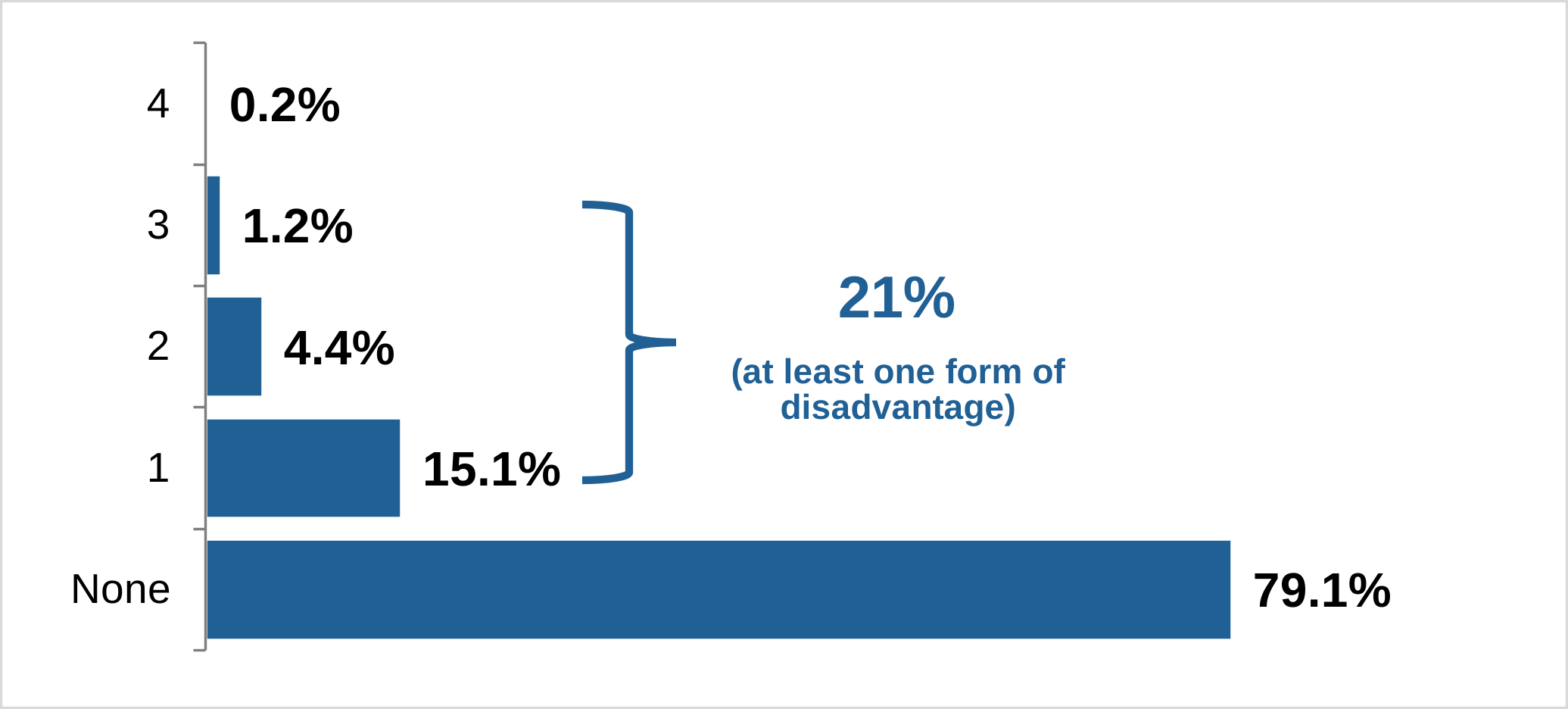
Figure 3.1 Number of disadvantages experienced
Figure 3.1 Number of disadvantages experienced
| Number of disadvantages experienced | Percentage | Notes |
|---|---|---|
| 4 | 0.2% | |
| 3 | 1.2% | 21% (at least one form of disadvantage) |
| 2 | 4.4% | 21% (at least one form of disadvantage) |
| 1 | 15.1% | 21% (at least one form of disadvantage) |
| None | 79.1% |
Base: All RPS UC claimants (13,598).
The incidence rate of each disadvantaged group within the UC population is shown in Figure 3.2.
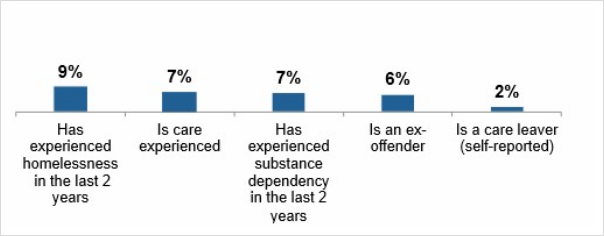
Figure 3.2 Incidence rates of disadvantaged groups
Figure 3.2 Incidence rates of disadvantaged groups
| Category | Percentage |
|---|---|
| Has experienced homelessness in the last 2 years | 9% |
| Is care experienced | 7% |
| Has experienced substance dependency in the last 2 years | 7% |
| Is an ex-offender | 6% |
| Is a care leaver (self-reported) | 2% |
Base: All RPS UC claimants (13,598).
Table 3.1 displays the forms of the four disadvantages, both within each disadvantaged group and within the UC claimant population as a whole.
Among those who had experienced homelessness in the past 2 years, sofa surfing or temporarily staying with family or friends was the most common experience (68% of all homeless claimants).
For those who were care experienced, the most common forms of care were to have been in foster care and to have been with family members supported by social services (both 44% of care experienced claimants).
For those with experience of a substance dependency, two-thirds had been dependent on drugs (66%) and just over half had been dependent on alcohol (52%)[footnote 1].
Among ex-offenders, an equal number had spent time in prison, had received a community sentence or had received a suspended sentence (49% for all 3 groups).
Table 3.1 Forms of disadvantage by disadvantaged group and all UC claimants
| Homelessness | % of disadvantaged group | % of all UC claimants |
|---|---|---|
| Sofa surfed or temporarily stayed with family or friends | 68% | 6% |
| Slept rough | 36% | 3% |
| Stayed overnight in temporary rented accommodation or room in a shared house arranged by your local authority | 33% | 3% |
| Stayed overnight in a hostel, refuge, shelter or supported housing | 29% | 2% |
| Stayed overnight in a bed and breakfast or hotel arranged by your local authority | 24% | 2% |
| Care experienced | % of disadvantaged group | % of all UC claimants |
|---|---|---|
| Foster care | 44% | 3% |
| Residential children’s home | 27% | 2% |
| Supported accommodation | 32% | 2% |
| With your parents, grandparents, other family or friends with support from social services | 44% | 3% |
| Substance dependency | % of disadvantaged group | % of all UC claimants |
|---|---|---|
| Dependent on alcohol but not dependent on illegal drugs or addicted to prescription drugs in the last 2 years | 34% | 2% |
| Dependent on illegal drugs or addicted to prescription drugs but not dependent on alcohol in the last 2 years | 48% | 3% |
| Dependent on alcohol and illegal drugs or addicted to prescription drugs in the last 2 years | 18% | 1% |
| Ex-offenders | % of disadvantaged group | % of all UC claimants |
|---|---|---|
| Time in prison | 49% | 3% |
| Time in a young-offender institutions | 21% | 1% |
| A community sentence | 49% | 3% |
| A suspended sentence | 49% | 3% |
Base: All RPS UC claimants (13,598); claimants who had experienced homelessness in the past 2 years (1,051); care experienced claimants (875); claimants who had experienced substance dependency in the past 2 years (810); ex-offenders (741).
3.2 Co-occurrence of disadvantages
Across all UC claimants, 6% had experienced more than one of the four forms of disadvantage. The most common co-occurrence of disadvantage was between ex-offenders and those with experience of a substance dependency in the past 2 years, who made up 2.1% of the whole UC claimant population.
The second most common co-occurrence was between homelessness and those who had experienced a substance dependency in the past 2 years, with this group making up 1.7% of the UC population.
In general, there was a pattern of substance dependency correlating more frequently with other disadvantages (Table 3.2). Conversely, care experience tended to co-occur less frequently with other forms of disadvantage.
Table 3.2 Co-occurrence of disadvantages for all UC claimants and all UC claimants in the four disadvantaged groups
| Co-occurrence of disadvantage | Co-occurrence of disadvantage | % of all UC claimants who have experienced one of the four disadvantages | % of all UC claimants |
|---|---|---|---|
| Ex-offender | Substance dependency in the past 2 years | 9.9% | 2.1% |
| Homelessness in past 2 years | Substance dependency in the past 2 years | 8.2% | 1.7% |
| Care experienced | Homelessness in past 2 years | 7.3% | 1.5% |
| Ex-offender | Homelessness in past 2 years | 7.2% | 1.5% |
| Care experienced | Ex-offender | 6.6% | 1.4% |
| Care experienced | Substance dependency in the past 2 years | 5.2% | 1.1% |
Base: All RPS UC claimants (13,598); All UC claimants in the four disadvantaged groups (RPS sample) (2,617).
3.3 Profile of disadvantaged groups
This section will primarily compare the characteristics of UC claimants in the four disadvantaged groups with claimants who are not in any of the four disadvantaged groups (using data from the screener survey). This section also includes analysis of key differences between claimants with experience of different types of disadvantage.
When differences concern those with multiple disadvantaged experiences, the comparison is between those with multiple disadvantaged experiences, and those in one disadvantaged group.
Age
UC claimants in the disadvantaged groups were more likely to be younger, with 18% of this group being aged 16 to 24, compared to 11% of other UC claimants who did not identify as belonging to one of the four disadvantaged groups.
Differences within the four disadvantaged groups by age
Ex-offenders were comparably older (37% aged 50 and over compared to 23% of those with other disadvantaged experiences). It is worth noting that the definition of ex-offenders includes convictions from any point in time, rather than within a 2 year timeframe, as for those with experience of a substance dependence or homelessness. This may explain the older age demographic of this group.
Care experienced claimants were comparatively younger (30% aged 16 to 24 compared to 11% of those with other disadvantaged experiences).
Gender
The majority of UC claimants within the four disadvantaged groups were male (57%; 43% were female), based upon data held on the UC database. Among UC claimants not in one of the four disadvantaged groups, only 37% were male (63% female).
Differences within the four disadvantaged groups by gender
-
ex-offenders were particularly likely to be male (80% compared to 38% of claimants with other disadvantaged experiences)
-
claimants with experience of multiple disadvantage were more likely to be male (69%) than those with only one disadvantaged experience (52%)
Household composition
In terms of household type, UC claimants who had experienced at least one of the four disadvantages were more likely to be single (90% compared to 78%) and have no children (68% compared to 43%).
Differences within the four disadvantaged groups by household composition
Multiple disadvantage: more likely to be single (93%) and without children (79%) than those in just one disadvantaged group (88% and 64% respectively).
Region
Compared to the geographic distribution of the UC population as a whole, UC claimants in the four disadvantaged groups were slightly more likely to be residing in the North West of England (16% compared to 14% of UC claimants not in one of the four disadvantaged groups).
UC Health Journey
UC claimants in the four disadvantaged groups were more likely to be on the UC health journey (48% compared to 28% of other UC claimants who did not identify as belonging to one of the 4 disadvantaged groups).
Differences within the four disadvantaged groups by household composition
Multiple disadvantage: Claimants in more than one disadvantaged group were more likely to be on the UC Health Journey (57%) than those with one disadvantaged experience (44%).
UC claim length
The overall profile of UC claim length for claimants in the four disadvantaged groups was relatively similar to the profile for claimants not in a disadvantaged group. The only difference was disadvantaged claimants were less likely to have a claim length of 2 to 4 years (23% compared with 27% for all claimants). The full profile of UC claim length is provided in Figure 3.3.
UC Labour Market Regime
Looking at their UC Labour Market Regime, UC claimants in the four disadvantaged groups were more likely to belong to the No Work Related Requirements Conditionality Regime (44%), or the Intensive Work Search conditionality regime (33%) compared to UC claimants who do not have experience of these disadvantages.
Differences within the four disadvantaged groups by UC Labour Market Regime
-
Substance dependent in last 2 years: more likely to be in the No Work Related Requirements regime (55% compared to 35% of claimants with other disadvantaged experiences)
-
Ex-offenders: more likely to be in the No Work Related Requirements regime (53% compared to 35% of claimants with other disadvantaged experiences)
-
Homeless in the last 2 years: more likely to be in the Intensive Work Search regime (43% compared to 25% of claimants with other disadvantaged experiences)
-
Claimants with multiple disadvantaged experiences: more likely to be in the No Work Related Requirements regime (51%) than those with one disadvantaged experience (41%)
More information on the profile of the four disadvantaged groups is provided in Annex 1.
The following infographic summarises the key demographic differences between UC claimants with one or more of the four disadvantages, and those without.
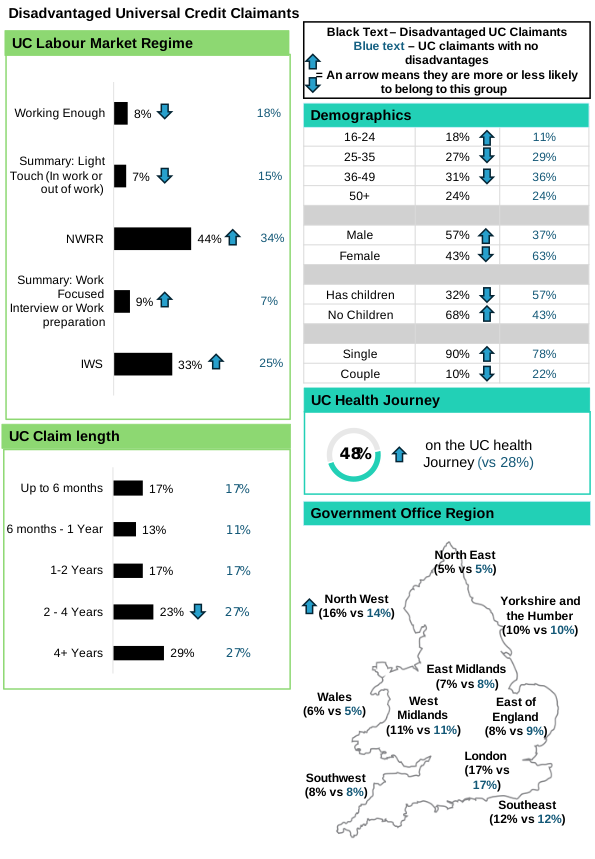
Figure 3.3 Profile of UC claimants in the four disadvantaged groups compared to those not in a disadvantaged group
Figure 3.3 Profile of UC claimants the four disadvantaged groups compared to those not in a disadvantaged group
| UC Labour Market Regime | In a disadvantaged group | Significant difference compared with those not in a disadvantaged group | Not in a disadvantaged group |
|---|---|---|---|
| Working Enough | 8% | Less likely | 18% |
| Summary: Light Touch in work or Out of Work) | 7% | Less likely | 15% |
| NWRR | 44% | More likely | 34% |
| Summary: Work Focused Interview or Work Preparation | 9% | More likely | 7% |
| IWS | 33% | More likely | 25% |
| UC claim length | In a disadvantaged group | Significant difference compared with those not in a disadvantaged group | Not in a disadvantaged group |
|---|---|---|---|
| Up to 6 months | 17% | Not applicable | 17% |
| 6 months to 1 Year | 13% | Not applicable | 11% |
| 1 to 2 Years | 17% | Not applicable | 17% |
| 2 to 4 Years | 23% | Less likely | 27% |
| 4+ Years | 29% | Not applicable | 27% |
| On the UC Health Journey | In a disadvantaged group | Significant difference compared with those not in a disadvantaged group | Not in a disadvantaged group |
|---|---|---|---|
| On the UC Health Journey | 48% | More likely | 28% |
| Government Office Region | In a disadvantaged group | Significant difference compared with those not in a disadvantaged group | Not in a disadvantaged group |
|---|---|---|---|
| On the UC Health Journey | 48% | More likely | 28% |
| North East | 5% | Not applicable | 5% |
| North West | 16% | More likely | 14% |
| Yorkshire and the Humber | 10% | Not applicable | 10% |
| East Midlands | 7% | Not applicable | 8% |
| West Midlands | 11% | Not applicable | 11% |
| Wales | 6% | Not applicable | 5% |
| East of England | 8% | Not applicable | 9% |
| London | 17% | Not applicable | 17% |
| Southwest | 8% | Not applicable | 8% |
| Southeast | 12% | Not applicable | 12% |
| Demographics | In a disadvantaged group | Significant difference compared with those not in a disadvantaged group | Not in a disadvantaged group |
|---|---|---|---|
| 16 to 24 | 18% | More likely | 11% |
| 25 to 35 | 27% | Less likely | 29% |
| 36 to 49 | 31% | Less likely | 36% |
| 50+ | 24% | Not applicable | 24% |
| Male | 57% | More likely | 37% |
| Female | 43% | Less likely | 63% |
| Has children | 32% | Less likely | 57% |
| No children | 68% | More likely | 43% |
| Single | 90% | More likely | 78% |
| Couple | 10% | Less likely | 22% |
3.4 Employment status of the four disadvantaged groups
The majority of claimants in the four disadvantaged groups were not in employment (72%). Over a third of all claimants in the four disadvantaged groups were long-term sick or disabled (37%). In total, 15% were unemployed and looking for work and 8% were unemployed but not job seeking.
Around a quarter of claimants in the four disadvantaged groups were in employment (27%). A fifth were employed full-time or part-time (21%), 4% were self-employed and 2% were employed but not working at the time. Figure 3.4 shows the employment status of disadvantaged claimants.
Differences of employment status within the four disadvantaged groups
Ex-offenders: more likely not to be in employment than claimants with other disadvantaged experiences (79% vs. 69%). They were also more likely to be long-term sick or disabled (49% compared to 32% of those in other disadvantaged groups).
Substance dependent in the past 2 years: more likely not to be in employment than claimants in the other 3 disadvantaged groups (79% vs. 69%). They were also more likely to be long-term sick or disabled (53% compared to 29% of those in other disadvantaged groups).
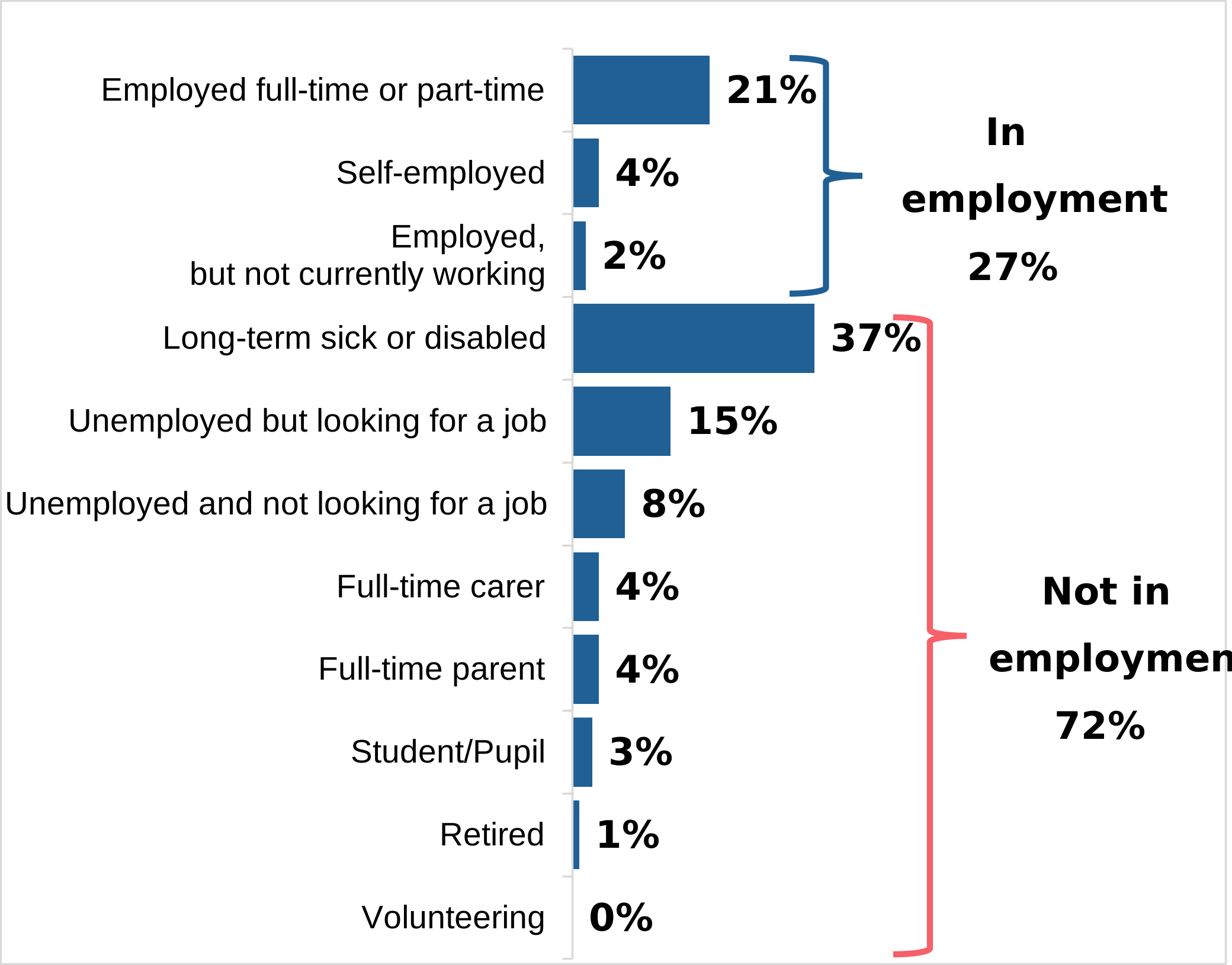
Figure 3.4 Employment status of disadvantaged UC claimants
Figure 3.4 Employment status of disadvantaged UC claimants
| Category | Percentage | In employment or not in employment |
|---|---|---|
| Employed full-time or part-time | 21% | In employment 27% |
| Self-employed | 4% | In employment 27% |
| Employed, but not currently working | 2% | In employment 27% |
| Long-term sick or disabled | 37% | Not in employment 72% |
| Unemployed but looking for a job | 15% | Not in employment 72% |
| Unemployed and not looking for a job | 8% | Not in employment 72% |
| Full-time carer | 4% | Not in employment 72% |
| Full-time parent | 4% | Not in employment 72% |
| Student or Pupil | 3% | Not in employment 72% |
| Retired | 1% | Not in employment 72% |
| Volunteering | 0% | Not in employment 72% |
Q. How would you describe your current working status?
Base: All UC claimants in the four disadvantaged groups (3,340).
3.5 Employment history of claimants in the four disadvantaged groups
In terms of their employment history, just under half of Universal Credit claimants in the four disadvantaged groups had worked relatively consistently (45% had worked with at most a few breaks of 3 months or more since leaving education). Just under a quarter had spent most of their employment history not working (23%).
Figure 3.5 below shows the employment history of claimants in the four disadvantaged groups.
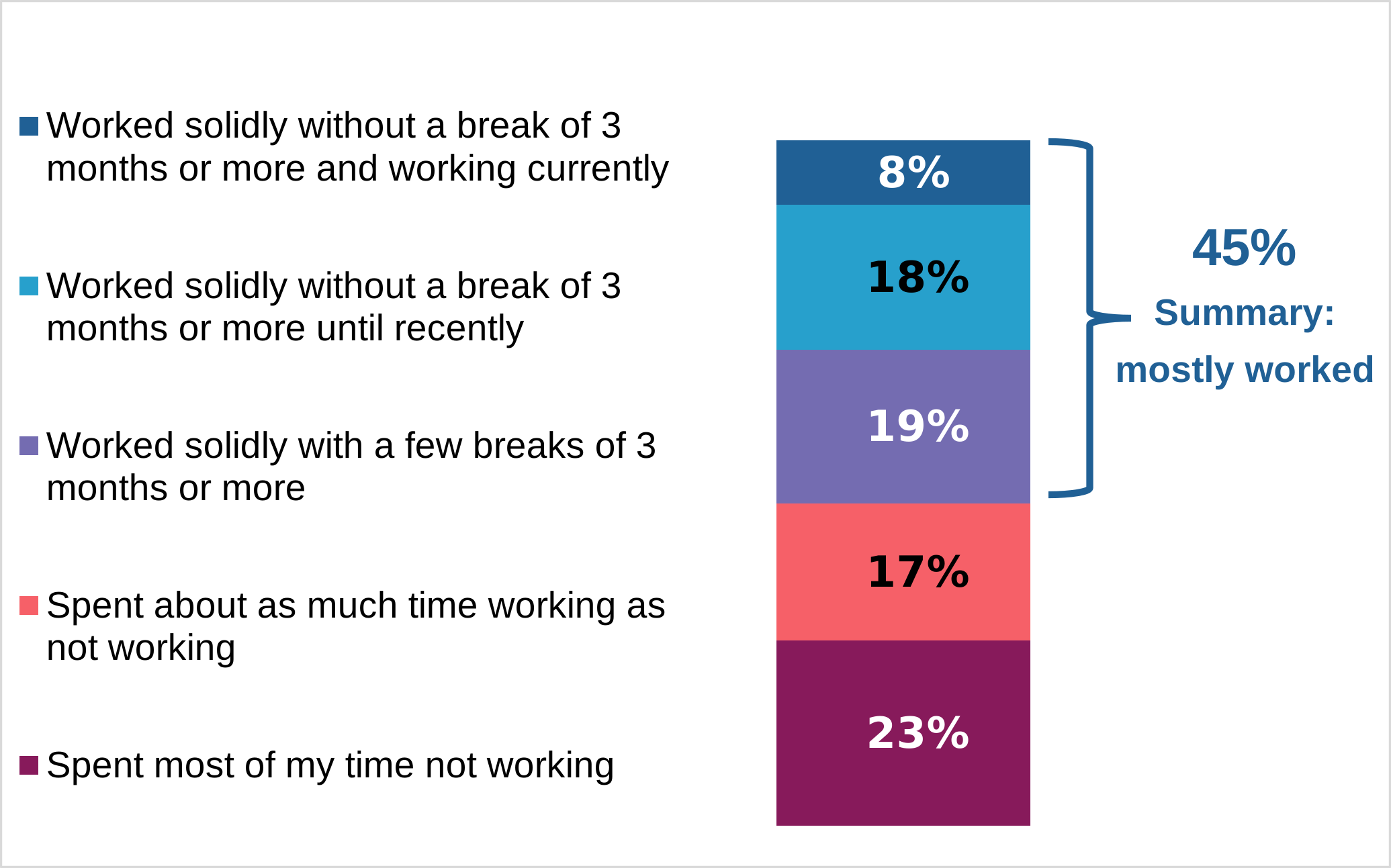
Figure 3.5 Employment history of claimants in the four disadvantaged groups
Figure 3.5 Employment history of claimants in the four disadvantaged groups
| Employment history | Percentage | Notes |
|---|---|---|
| Worked solidly without a break of 3 months or more and working currently | 8% | 45% Summary: mostly worked |
| Worked solidly without a break of 3 months or more until recently | 18% | 45% Summary: mostly worked |
| Worked solidly with a few breaks of 3 months or more | 19% | 45% Summary: mostly worked |
| Spent about as much time working as not working | 17% | Empty cell |
| Spent most of my time not working | 23% | Empty cell |
Q. Which of the following best describes your experience of any paid work since leaving education?
Base: All UC claimants in the four disadvantaged groups (3,340).
Differences of employment history within the four disadvantaged groups
Care experienced: more likely to have spent most of their time not working since leaving education (30%) than claimants in the other 3 disadvantaged groups (20%). This may be related to their younger age profile.
3.6 Overlap with other experiences of disadvantage
Whilst this study focuses on just four forms of disadvantage, in the main survey, disadvantaged claimants were also asked about other experiences that could disadvantage them in the labour market. Around 1 in 3 (35%) disadvantaged UC claimants had also experienced domestic abuse, while more than one in 8 (13%) had experienced financial abuse or exploitation from a non-family member. In total, 7% had been a refugee.
The incidence of these other disadvantages is shown in Figure 3.6, alongside the number of each of these disadvantages experienced by claimants in the four disadvantaged groups.
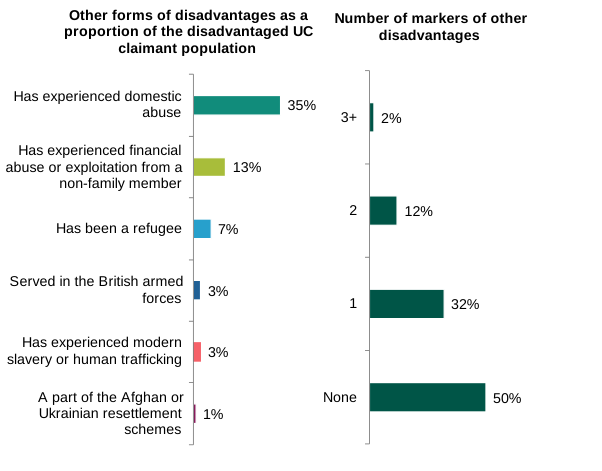
Figure 3.6 Experience of other types of disadvantage and number of other disadvantages experienced
| Other forms of disadvantage as a proportion of the disadvantaged UC claimant population | Percentage | Number of markers of other disadvantages | Percentage |
|---|---|---|---|
| Has experience of domestic abuse | 35% | 3+ | 2% |
| Has experienced financial abuse or exploitation from a non-family member | 13% | 2 | 12% |
| Has been a refugee | 7% | 1 | 32% |
| Served in the British armed forces | 3% | None | 50% |
| Has experienced modern slavery or human trafficking | 3% | Not applicable | Not applicable |
| A part of the Afghan or Ukrainian resettlement schemes | 1% | Not applicable | Not applicable |
Q. Since you were 16, have you experienced any of the following?
Base: All UC claimants in the four disadvantaged groups (3,340).
In total, almost half of all claimants in the four disadvantaged groups had experienced at least one of these other forms of disadvantage (46%). This breaks down to a third (32%) who had experienced one other type of disadvantage, 12% who had experienced 2, and 2% had experienced 3 or more.
Differences of experiences of other types of disadvantage within the four disadvantaged groups
Care experienced claimants: more likely to have experienced domestic abuse (41%) than those in the other 3 disadvantaged groups who were not care experienced (32%).
Substance dependent in the past 2 years: more likely to have experienced domestic abuse than claimants in the other 3 disadvantaged groups who had not experienced substance dependency in the past 2 years (40% vs. 32%). They were also less likely to have been refugees (2%) than other claimants in disadvantaged groups (9%).
Claimants who had experienced homelessness in the past 2 years: more likely to have been a refugee (12%) than those in the other 3 disadvantaged groups who had not experienced homelessness in the past 2 years (4%).
Ex-offenders: particularly likely not to have experienced any of these disadvantages (58%) compared to those in the other 3 disadvantaged groups (46%).
3.7 Mental and physical health
Overall health
Overall, Universal Credit claimants in the four disadvantaged groups were more likely to rate their health as bad (44%) than good (30%), with around a quarter rating their health neutrally at 3 out of 5 (24%). Figure 3.7 displays the rating that claimants in the four disadvantaged groups gave for their health.
Figure 3.7 How would you rate your health?
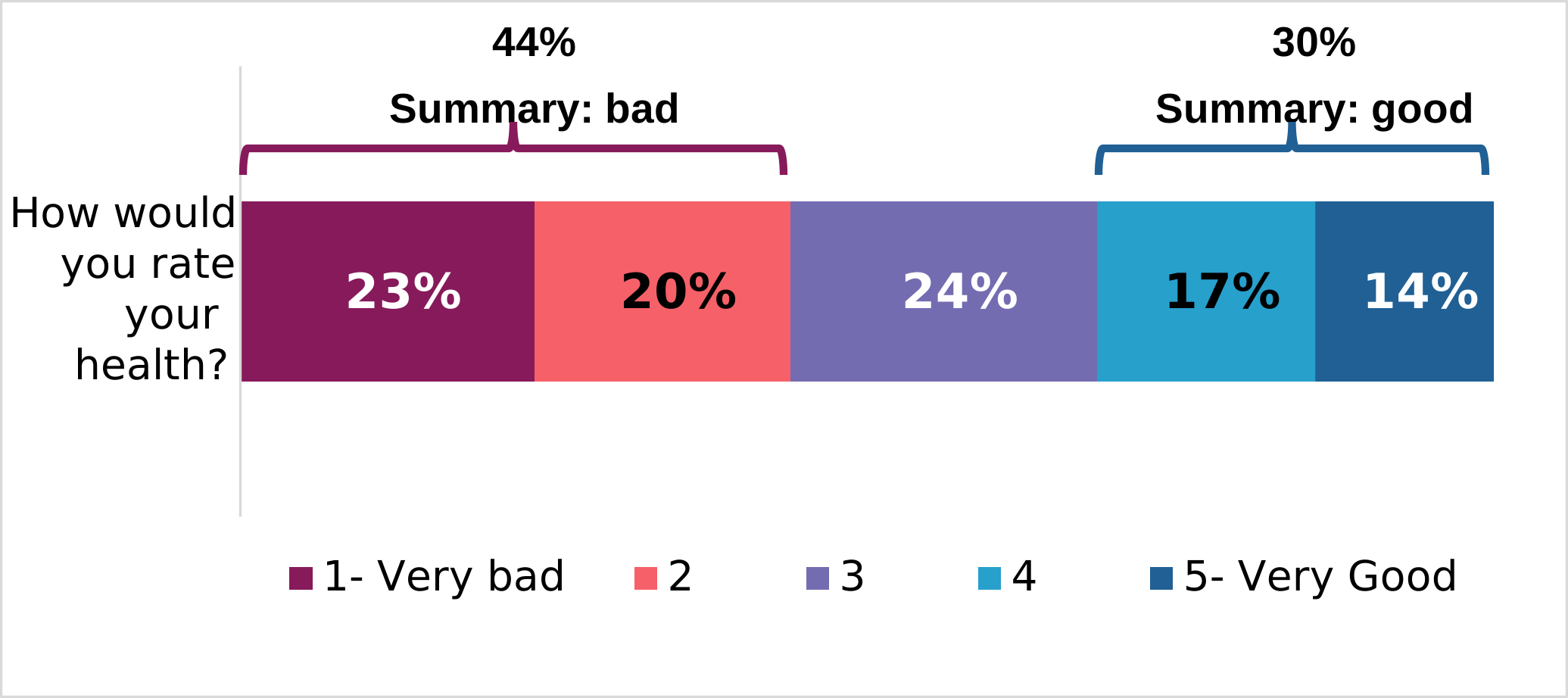
Figure 3.7 How would you rate your health?
| Response | Percentage | Notes |
|---|---|---|
| 1 – Very bad | 23% | 44% Summary: bad |
| 2 | 20% | 44% Summary: bad |
| 3 | 24% | Empty cell |
| 4 | 17% | 30% Summary: good |
| 5 – Very good | 14% | 30% Summary: good |
Q. Firstly, on a scale of 1 to 5, where 1 is very bad and 5 is very good, how would you rate your health?
Base: All UC claimants in the four disadvantaged groups (3,340).
Differences of overall health rating within the four disadvantaged groups
-
substance dependency in past 2 years: around 6 in 10 (57%) rated their health as bad compared to 37% of disadvantaged claimants not in this group
-
ex-offenders: half (50%) rated their health as bad compared to 41% of disadvantaged claimants not in this group
-
care experienced: a third rated their health as good (33%) compared to 29% of disadvantaged claimants not in this group
-
homelessness in the past 2 years: 33% rated their health as good compared to 28% of disadvantaged claimants not in this group
Long-term health conditions and disabilities
Seven in ten (70%) UC claimants in the four disadvantaged groups had a physical or mental health condition lasting or expected to last 6 months or more.
The specific health conditions and disabilities experienced are shown in Figure 3.8.
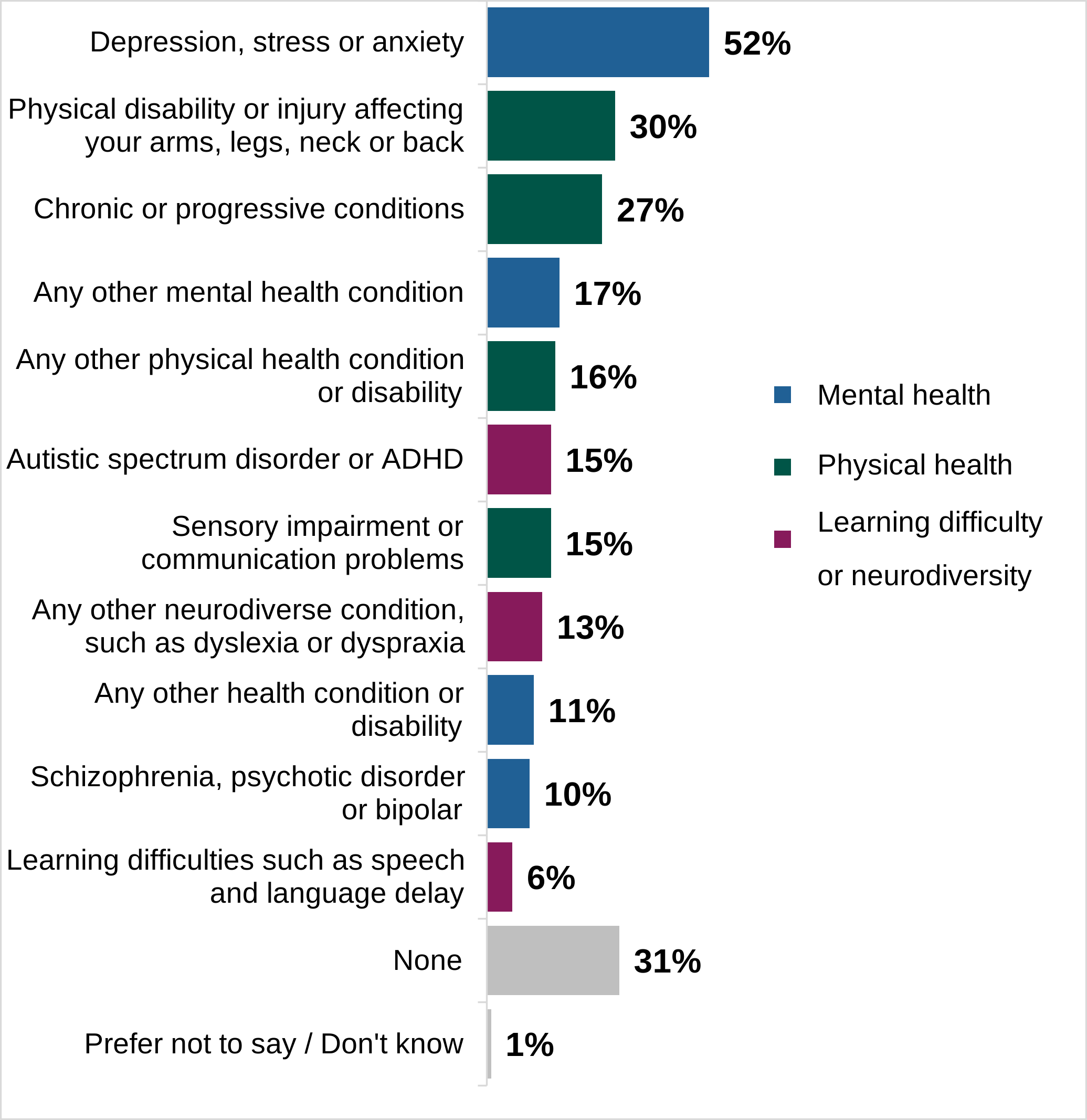
Figure 3.8 Incidence of illnesses, health conditions or disabilities lasting or expected to last 6 months or more
Figure 3.8 Incidence of illnesses, health conditions or disabilities lasting or expected to last 6 months or more
| Illness, health condition or disability | Percentage | Type |
|---|---|---|
| Depression, stress or anxiety | 52% | Mental health |
| Physical disability or injury affecting your arms, legs, neck or back | 30% | Physical health |
| Chronic or progressive conditions | 27% | Physical health |
| Any other mental health condition | 17% | Mental health |
| Any other physical health condition or disability | 16% | Physical health |
| Autistic spectrum disorder or ADHD | 15% | Learning difficulty or neurodiversity |
| Sensory impairment or communication problems | 15% | Physical health |
| Any other neurodiverse condition, such as dyslexia or dyspraxia | 13% | Learning difficulty or neurodiversity |
| Any other health condition or disability | 11% | Mental health |
| Schizophrenia, psychotic disorder or bipolar | 10% | Mental health |
| Learning difficulties such as speech and language delay | 6% | Learning difficulty or neurodiversity |
| None | 31% | Empty cell |
| Prefer not to say or Don’t know | 1% | Empty cell |
Q. Do you have any of the following illnesses, health conditions or disabilities lasting or expected to last 6 months or more?
Base: All UC claimants in the four disadvantaged groups (3,340).
Differences in long-term health conditions and disabilities within the four disadvantaged groups
-
substance dependency in the past 2 years: 8 in 10 had a physical or mental health condition lasting or expected to last 6 months or more (80%), compared to 65% of those who did not have substance dependency experiences in the past 2 years
-
ex-offenders: more likely to have had a physical or mental health condition lasting or expected to last 6 months or more (76%) than among claimants with other disadvantaged experiences (67%)
-
homelessness in the past 2 years: lower rates of having had a physical or mental health condition lasting or expected to last 6 months or more (65%) than those who had not experienced homelessness in this time frame (73%)
Physical health
Claimants were only asked about specific physical or mental health conditions, learning difficulties or neurodiversity if they stated that they had physical or mental health conditions, disabilities, or illnesses lasting or expected to last for 6 months or more.
Half of all claimants in the four disadvantaged groups had a physical health condition lasting or expected to last 6 months or more (51%): most commonly this was a physical disability or injury affecting their arms, legs, neck or back (30%) or a chronic or progressive condition (27%).
Differences in physical health conditions within the four disadvantaged groups
-
ex-offenders: 6 in 10 had physical health conditions (60%), compared to 47% of other claimants with disadvantaged experiences
-
substance dependency issues in the past 2 years: more likely to report physical health issues (59%) than other claimants with disadvantaged experiences (47%)
Mental health
Almost 6 in 10 claimants in the four disadvantaged groups had a mental health condition lasting or expected to last 6 months or more (57%). Half of all claimants in the four disadvantaged groups had depression, stress or anxiety (52%).
Differences in mental health conditions within the four disadvantaged groups
Substance dependency in past 2 years: particularly likely to have a mental health condition (73% compared to 50% of claimants with other disadvantaged experiences). They were also more likely to have experienced depression, stress or anxiety (66% compared to 46% of claimants with other disadvantaged experiences). They were also more likely to have schizophrenia, psychotic disorder or bipolar (16% compared to 7% of other disadvantaged claimants).
Ex-offenders: 13% of ex-offenders had schizophrenia, psychotic disorder or bipolar, compared to 9% of other disadvantaged claimants.
Learning difficulty or neurodiversity
A quarter of claimants with disadvantaged experiences had a learning difficulty or neurodiversity (26%)[footnote 2]. Across all claimants in the four disadvantaged groups, 15% had autistic spectrum disorder or ADHD, 6% had learning difficulties such as speech and language delay; and 13% had any other neurodiverse condition, such as dyslexia or dyspraxia.
Differences within the four disadvantaged groups related to learning difficulty or neurodiversity
Substance dependency: 31% of this group had a learning difficulty or neurodiversity (compared to 23% of all other disadvantaged claimants).
Impact of health on day-to-day activities
Overall, two-thirds of UC claimants in the four disadvantaged groups had conditions or illnesses that reduced their ability to conduct day-to-day activities (64% overall; 17% a little and 47% a lot).
Differences in the impact of health on day-to-day activities within the four disadvantaged groups
Substance dependency in the past 2 years: three quarters had conditions or illnesses that reduced their ability to conduct day-to-day activities (76% compared to 59% of claimants in the other 3 disadvantaged groups).
Ex-offenders:7 in 10 had conditions or illnesses that reduced their ability to conduct day-to-day activities (70%, compared to 62% of those who are not ex-offenders).
Homeless in the past 2 years: less likely to have had conditions or illnesses that reduced their ability to conduct day-to-day activities (59%) than those who had not (68%).
3.8 Ethnicity
Close to 3 quarters (72%) of UC claimants in the four disadvantaged groups were white.
Figure 3.9 breaks down the ethnicity of UC claimants the four disadvantaged groups by disadvantage.
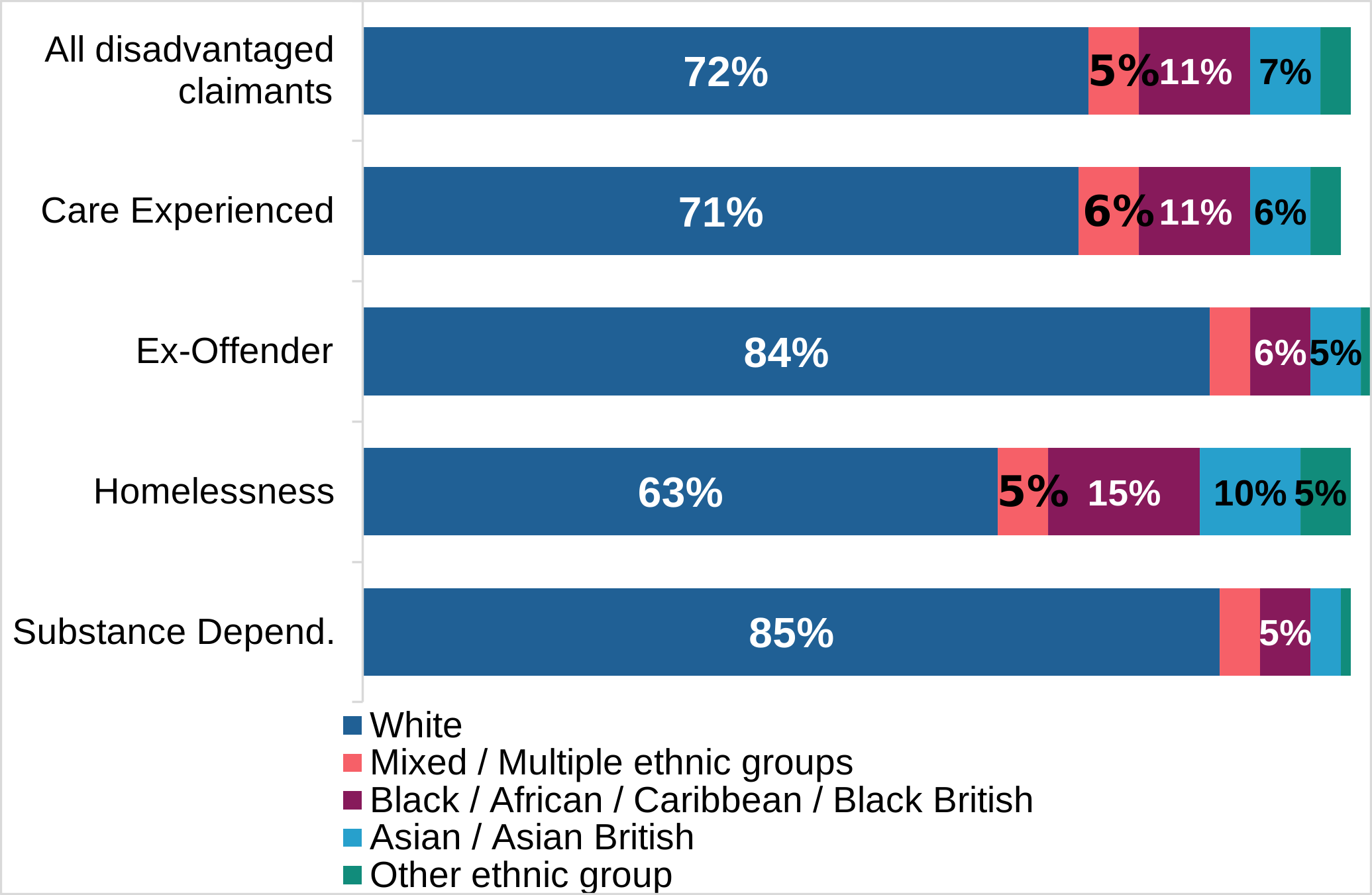
Figure 3.9 Ethnicity profile of UC claimants in the four disadvantaged groups, broken down by disadvantage
Figure 3.9 Ethnicity profile of UC claimants in the four disadvantaged groups, broken down by disadvantage
| Disadvantage group | White | Mixed or Multiple ethnic groups | Black or African or Caribbean or Black British | Asian or Asian British | Other ethnic group |
|---|---|---|---|---|---|
| All disadvantaged claimants | 72% | 5% | 11% | 7% | 3% |
| Care Experienced | 71% | 6% | 11% | 6% | 3% |
| Ex-Offender | 84% | 4% | 6% | 5% | 1% |
| Homelessness | 63% | 5% | 15% | 10% | 5% |
| Substance Dependent | 85% | 4% | 5% | 3% | 1% |
Q. How would you describe your ethnicity?
Base: All UC claimants in the four disadvantaged groups (3,340). Figures below 5% not shown in chart.
Differences of ethnicity within the four disadvantaged groups
-
homeless in the past 2 years: more likely to be black (15% compared to 8% of claimants with other disadvantaged experiences)
-
substance dependency in the past 2 years: more likely to be white (85% compared to 67% of claimants with other disadvantaged experiences)
-
ex-offenders: more likely to be white (84% compared to 67% of claimants with other disadvantaged experiences)
3.9 Qualifications
A quarter (26%) of all UC claimants in the four disadvantaged groups had no qualifications. The full qualification profile of UC claimants with disadvantaged experiences is provided in Figure 3.10.
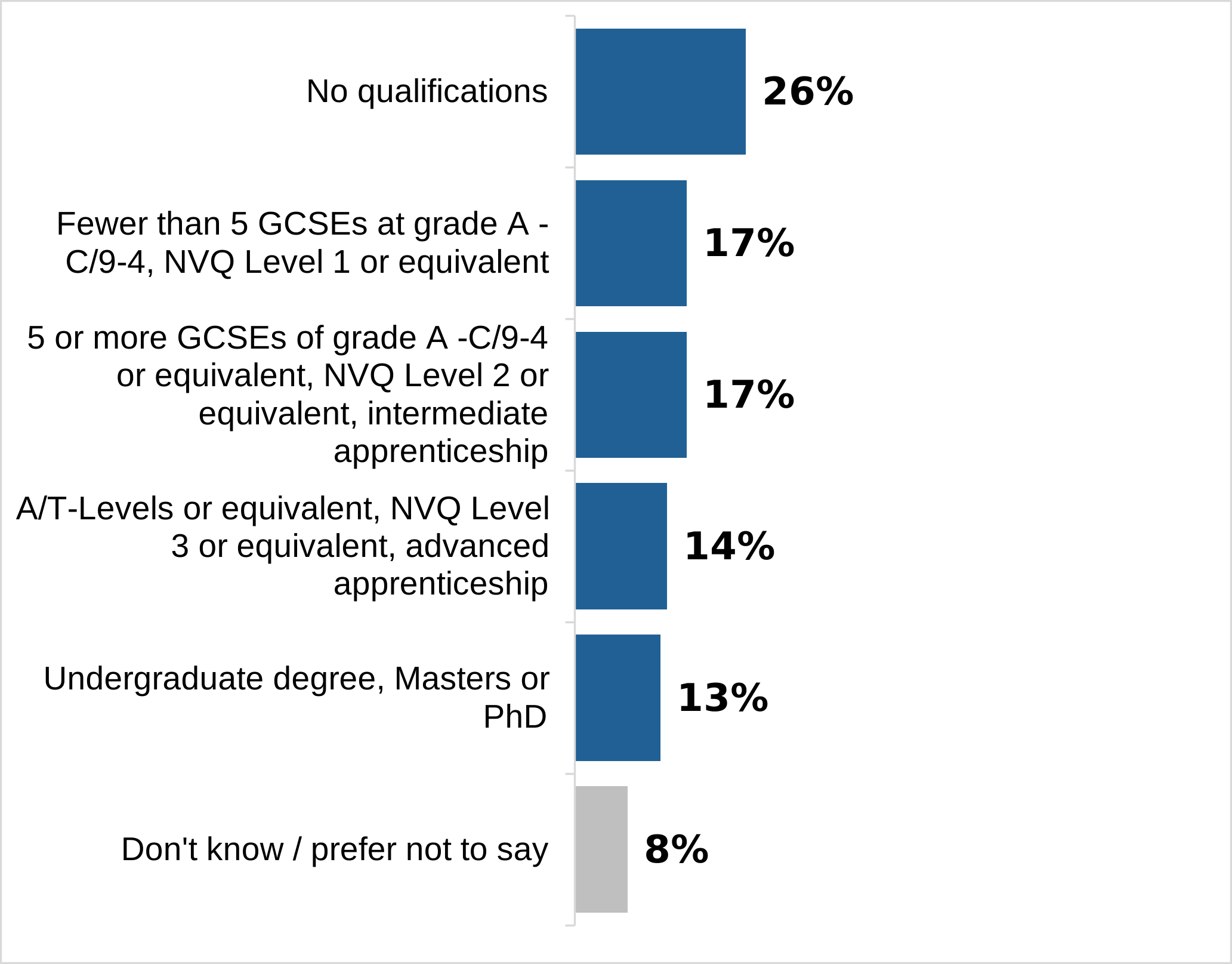
Figure 3.10 Qualification profile of UC claimants with disadvantaged experiences
Figure 3.10 Qualification profile of UC claimants with disadvantaged experiences
| Qualification level | Percentage |
|---|---|
| No qualifications | 26% |
| Fewer than 5 GCSEs at grade A to C or 9 to 4, NVQ Level 1 or equivalent | 17% |
| 5 or more GCSEs of grade A to C or 9 to 4 or equivalent, NVQ Level 2 or equivalent, intermediate apprenticeship | 17% |
| A or T-Levels or equivalent, NVQ Level 3 or equivalent, advanced apprenticeship | 14% |
| Undergraduate degree, Masters or PhD | 13% |
| Don’t know or prefer not to say | 8% |
Q. Which of the following reflects the highest qualification that you have attained?
Base: All UC claimants in the four disadvantaged groups (3,340).
Differences related to qualifications within disadvantaged groups
Ex-offenders: had the greatest proportion of individuals with no qualifications among the 4 disadvantaged groups (34% compared to 22% of claimants with other disadvantaged experiences.
Homeless in the past 2 years: less likely to have no qualifications (24% compared with 27% of claimants from the other 3 disadvantaged groups who had not experienced homelessness in the past 2 years). They were also more likely to have A or T-Levels or equivalent as their highest qualification (16%) and to hold a degree (17%) compared to claimants with other disadvantage experiences.
3.10 Digital skills and confidence
Access to the internet
The vast majority (92%) of UC claimants in the four disadvantaged groups had access to the internet through a personal device or computer.
-
ex-offenders (7%) were more likely to have no means of accessing the internet than claimants in the other 3 groups who were not ex-offenders (3%)
-
those who had experienced a substance dependency in the past 2 years (6%) were more likely to have no means of accessing the internet (compared to 3% of claimants in the other 3 groups who had not experienced substance dependency in the past 2 years).
Confidence using the internet
The majority of Universal Credit claimants in the four disadvantaged groups said they felt confident using the internet (76%), although a fifth (22%) were not confident.
Figure 3.11 shows the confidence of UC claimants in the four disadvantaged groups.
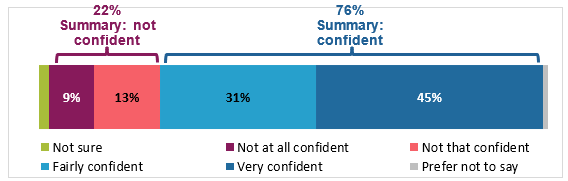
Figure 3.11 Confidence using the internet
Figure 3.11 Confidence using the internet
| Response | Percentage | Notes |
|---|---|---|
| Not sure | 2% | Empty cell |
| Not at all confident | 9% | 22% Summary: not confident |
| Not that confident | 13% | 22% Summary: not confident |
| Fairly confident | 31% | 76% Summary: confident |
| Very confident | 45% | 76% Summary: confident |
| Prefer not to say | 1% | Empty cell |
Q. How confident, if at all, do you feel in your ability to use the internet?
Base: All UC claimants in the four disadvantaged groups (3,340). Figures below 5% not shown.
Differences related to confidence using the internet within the four disadvantaged groups
Ex-offenders: less likely to be confident using the internet (66% compared to 80% of other disadvantaged claimants).
Experience of substance dependency in the past 2 years: less likely to be confident using the internet (69% compared to 79% of other disadvantaged claimants).
Ease of managing UC online accounts
Nearly 1 in 5 UC claimants in the four disadvantaged groups found it difficult to manage their UC online account (18%).
Differences related to ease of managing UC online accounts within the four disadvantaged groups
Substance dependent in last 2 years: a higher proportion (25%) had difficulty managing their benefit claim using their UC online account than those who had not experienced substance dependency in the past 2 years (15%).
Ex-offenders: a higher proportion (21%) had difficulty managing their benefit claim using their UC online account than other disadvantaged claimants (17%).
4. Disadvantaged groups in employment
This chapter explores the experiences of UC claimants in the four disadvantaged groups who were in employment (including self-employment), analysing their future aspirations, the barriers they faced to staying in employment, and their experience and interest in receiving support.
Summary
-
A quarter of UC claimants in the four disadvantaged groups were in employment, including self-employment (27%).
-
Disadvantaged claimants in employment were less likely to have experienced substance dependency (23%) or be an ex-offender (22%) than those not in employment (35% and 32% respectively). They were also more likely to be aged 25 to 35 (32% compared to 25%), female (54% compared to 39%) and from ethnic minority backgrounds (66% were white compared to 75%). A greater proportion had achieved some level of qualification, and they tended to have better health than those not in employment.
-
In terms of types of employment, it was most common for employed claimants to have a permanent, open-ended contract (55%), while a minority (21%) were on zero hours or temporary contacts and 15% were self-employed. Ex-offenders were more likely to be self-employed (28%) than those who were not ex-offenders (12%).
-
The most common goal for the next 2 years amongst those in employment was to change jobs; this coincides with the fact that around half of claimants in employment were interested in receiving support to increase their earnings (46%) or were already receiving it (8%).
-
A third of those in employment reported that physical or mental health conditions or disabilities were a barrier to staying in employment (34%). Those with the experience of substance dependency in the past 2 years were more likely to report this as a barrier (58%).
-
Of the four disadvantages, those who had experienced homelessness in the past 2 years were most likely to consider their experience as a barrier to staying in employment. They were also most likely to be interested in receiving support (42% interested in support to find stable housing).
4.1 Profile
Around a quarter (27%) of claimants in the four disadvantaged groups were in employment. Those in employment were less likely to have experienced substance dependency than those not in employment (23% compared to 35%). There was also a lower proportion of ex-offenders among those in employment (22%), compared with those not in employment (32%). UC claimants from the four disadvantaged groups in employment were also less likely to have multiple disadvantaged experiences (17%) than those not in employment (31%).
Age
UC claimants in the four disadvantaged groups in employment had a younger age profile than those not in employment. Almost a third of those in employment were between 25 to 35 (32%) and just 16% were 50 and over, compared with 25% aged 25 to 35 and 27% aged 50 and over among those not in employment.
Gender
A higher proportion of UC claimants in the four disadvantaged groups in employment were female (54%) than for those not in employment (39%).
Household composition
UC claimants in the four disadvantaged groups in employment were more likely to have children (51%) than those not in employment (25%).
Mental and physical health issues
UC claimants in the four disadvantaged groups in employment were less likely to have mental and physical health conditions:
-
48% rated their health as good (compared to 24% of those not in employment)
-
48% had a health condition expected to last 6 months or more (compared to 78% of those not in employment)
-
40% were limited to in their ability to carry out their day-to-day activities (compared to 73% of those not in employment)
-
30% had a physical health condition and 36% had a mental health condition (compared to 59% and 65% respectively of those not in employment)
Learning difficulty and neurodiversity
Fourteen per cent had a learning difficulty or neurodiversity (compared to 30% of those not in employment).
Ethnicity
UC claimants in the four disadvantaged groups in employment were also more likely to be from an ethnic minority background. Over 1 in 10 (15%) of those in employment were black, compared with 9% not in employment and 66% were white compared with 75% for those not in employment.
Qualifications
There was a higher level of educational attainment among those in employment, with only 14% having no qualifications, compared with 30% of those not in employment.
Internet access and confidence
Claimants in the four disadvantaged groups in employment were more likely to have access to the internet (98%) and feel confident using it (90%) than those not in employment (93% and 71% respectively).
Figure 4.1.1 and Figure 4.1.2 shows the demographics of claimants in the four disadvantaged groups in employment compared with those not in employment.
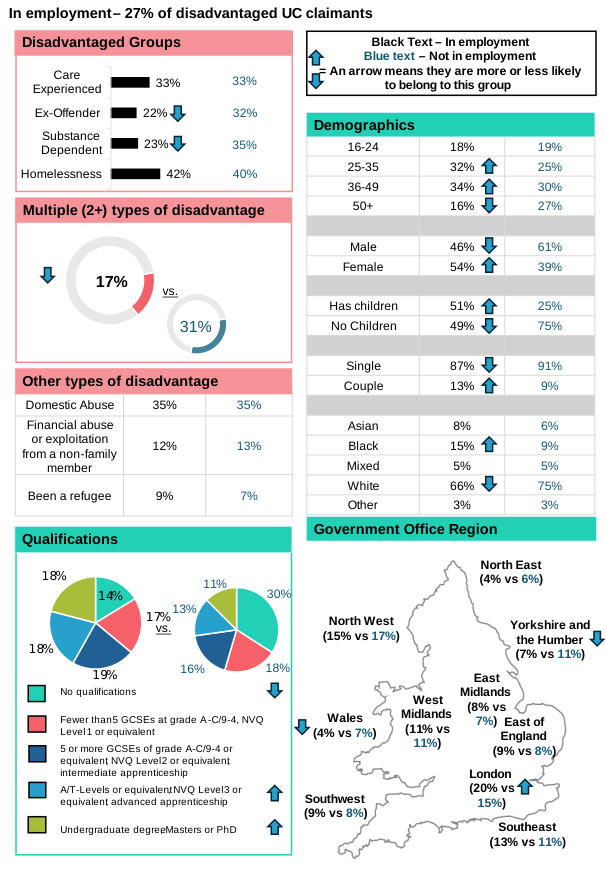
Figure 4.1.1 Profile of claimants in the four disadvantaged groups in employment compared to those not in employment
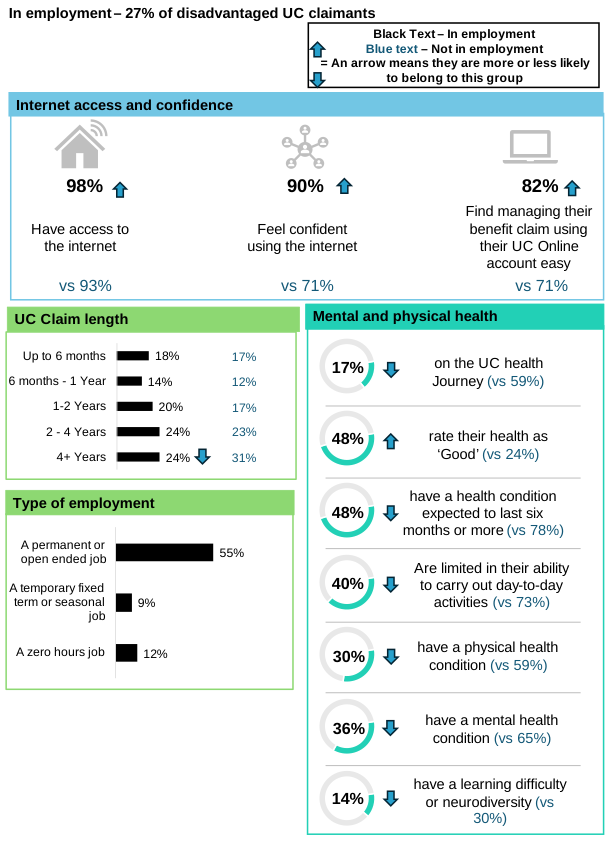
Figure 4.1.2 Profile of claimants in the four disadvantaged groups in employment compared to those not in employment
| Disadvantaged Groups | In employment | Significant difference compared with those not in employment | Not in employment |
|---|---|---|---|
| Care Experienced | 33% | Empty cell | 33% |
| Ex-Offender | 22% | Less likely | 32% |
| Substance Dependent | 23% | Less likely | 35% |
| Homelessness | 42% | Empty cell | 40% |
| Multiple types of disadvantage | 17% | Less likely | 31% |
| Other types of disadvantage | In employment | Significant difference compared with those not in employment | Not in employment |
|---|---|---|---|
| Domestic Abuse | 35% | Empty cell | 35% |
| Financial abuse or exploitation from a non-family member | 12% | Empty cell | 13% |
| Been a refugee | 9% | Empty cell | 7% |
| Government Office Region | In employment | Significant difference compared with those not in employment | Not in employment |
|---|---|---|---|
| North East | 4% | Empty cell | 6% |
| North West | 15% | Empty cell | 17% |
| Yorkshire and the Humber | 7% | Less likely | 11% |
| London | 20% | More likely | 15% |
| Southwest | 9% | Empty cell | 8% |
| Southeast | 13% | Empty cell | 11% |
| Qualifications | In employment | Significant difference compared with those not in employment | Not in employment |
|---|---|---|---|
| No qualifications | 14% | Less likely | 30% |
| Fewer than 5 GCSEs at grade A to C or 9 to 4, NVQ Level 1 or equivalent | 17% | Empty cell | 18% |
| 5 or more GCSEs of grade A to C or 9 to 4 or equivalent, NVQ Level 2 or equivalent, intermediate apprenticeship | 19% | Empty cell | 16% |
| A or T-Levels or equivalent, NVQ Level 3 or equivalent, advanced apprenticeship | 18% | More likely | 13% |
| Undergraduate degree, Masters or PhD | 18% | More likely | 11% |
| Demographics | In employment | Significant difference compared with those not in employment | Not in employment |
|---|---|---|---|
| 16 to 24 | 18% | Empty cell | 19% |
| 25 to 35 | 32% | More likely | 25% |
| 36 to 49 | 34% | More likely | 30% |
| 50+ | 16% | Less likely | 27% |
| Male | 46% | Less likely | 61% |
| Female | 54% | More likely | 39% |
| Has children | 51% | More likely | 25% |
| No children | 49% | Less likely | 75% |
| Single | 87% | Less likely | 91% |
| Couple | 13% | More likely | 9% |
| Black | 15% | More likely | 9% |
| Mixed | 5% | Empty cell | 5% |
| White | 66% | Less likely | 75% |
| Other | 3% | Empty cell | 3% |
| Internet access and confidence | In employment | Significant difference compared with those not in employment | Not in employment |
|---|---|---|---|
| Have access to the internet | 98% | More likely | 93% |
| Feel confident using the internet | 90% | More likely | 71% |
| Find managing their benefit claim using their UC Online account easy | 82% | More likely | 71% |
| UC claim length | In employment | Significant difference compared with those not in employment | Not in employment |
|---|---|---|---|
| Up to 6 months | 18% | Empty cell | 17% |
| 6 months to 1 Year | 14% | Empty cell | 12% |
| 1 to 2 Years | 20% | Empty cell | 17% |
| 2 to 4 Years | 24% | Empty cell | 23% |
| 4+ Years | 24% | Less likely | 31% |
| Mental and physical health | In employment | Significant difference compared with those not in employment | Not in employment |
|---|---|---|---|
| On the UC health Journey | 17% | Less likely | 59% |
| Rate their health as ‘Good’ | 48% | More likely | 24% |
| Have a health condition expected to last 6 months or more | 48% | Less likely | 78% |
| Are limited in their ability to carry out day-to-day activities | 40% | Less likely | 73% |
| Have a physical health condition | 30% | Less likely | 59% |
| Have a mental health condition | 36% | Less likely | 65% |
| Have a learning difficulty or neurodiversity | 14% | Less likely | 30% |
| Type of employment | In employment | Significant difference compared with those not in employment | Not in employment |
|---|---|---|---|
| A permanent or open ended job | 55% | Empty cell | Empty cell |
| A temporary fixed term or seasonal job | 9% | Empty cell | Empty cell |
| A zero hours job | 12% | Empty cell | Empty cell |
4.2 Employment type
Employment status and type
Most UC claimants in the four disadvantaged groups who were in employment were in full-time or part-time work (79%). The proportion of those in self-employment was 15%, rising to 28% for ex-offenders, as shown in Table 4.1
Table 4.1 Current working status
| Employment status | Total | Homeless | Substance Dependent | Ex-Offender | Significant difference compared with those not in employment | Care Experienced |
|---|---|---|---|---|---|---|
| Base | 873 | 324 | 173 | 157 | Empty cell | 407 |
| Employed full-time or part-time | 79% | 80% | 83% | 68% | Less likely | 79% |
| Employed but not currently working – e.g. on sick leave, maternity leave | 6% | 6% | 4% | 4% | Empty cell | 7% |
| Self-employed | 15% | 14% | 13% | 28% | More likely | 14% |
Q. How would you describe your current working status?
Base: All UC claimants in the four disadvantaged groups in employment (873).
The most common contract type for employed UC claimants in the four disadvantaged groups was being in a permanent or open-ended job (55%). A further fifth (21%) were in relatively ‘insecure’ work, where the amount of work they get may vary (12% had a zero-hours contract) or only cover a fixed period (9% had a temporary or seasonal contract) as shown in Figure 4.2.
Differences of working status within different demographics
Claimants aged 16 to 24 were more likely to be working on zero-hours contracts (19%) or temporary contracts (17%) than those 25 and over.
White claimants were less likely to be working zero-hours contracts (10%) and on temporary contracts (6%) than the overall population.
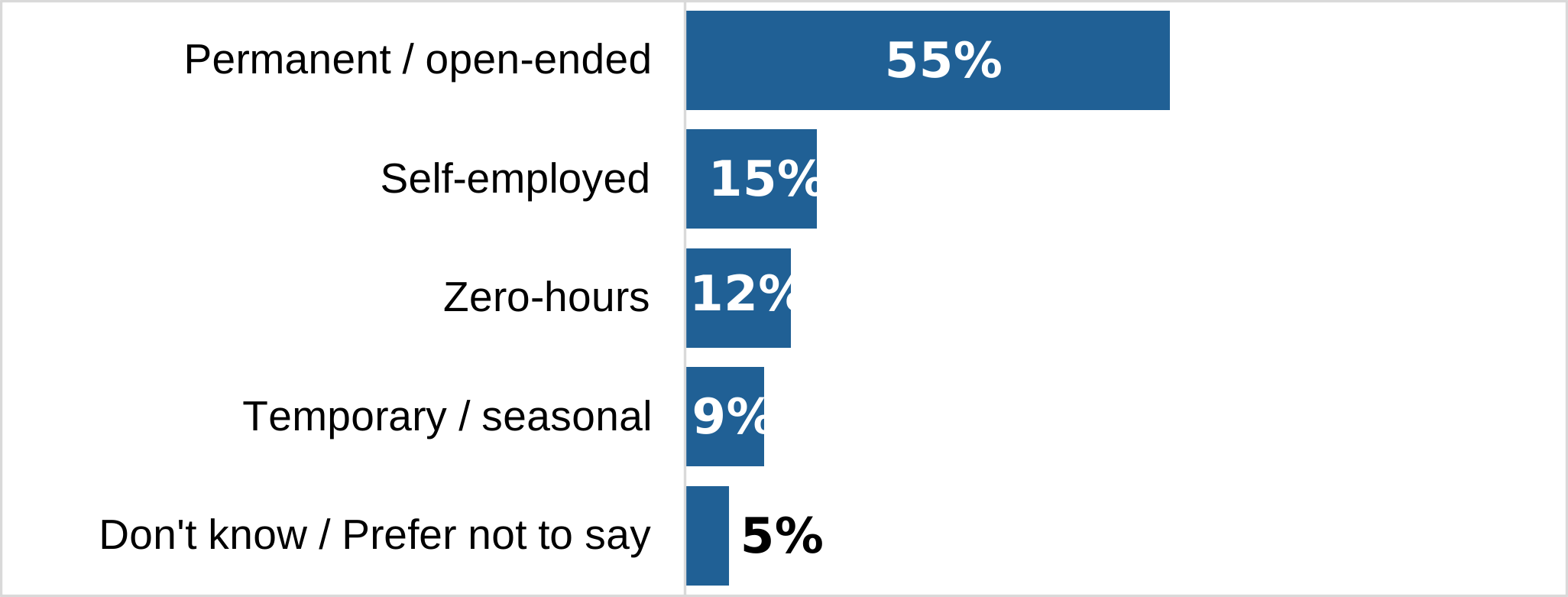
Figure 4.2 Type of employment contract
| Type of employment contract | Percentage |
|---|---|
| Permanent or open-ended | 55% |
| Self-employed | 15% |
| Zero-hours | 12% |
| Temporary or seasonal | 9% |
| Don’t know or Prefer not to say | 5% |
Q. What type of contract is your current job?
Base: All UC claimants in the four disadvantaged groups in employment (873).
Around a third of employed UC claimants in the four disadvantaged groups had worked solidly since leaving education without a break (31%) (Figure 4.3). Work history was correlated with employment status, as they were more likely than those not in employment to have mostly worked since leaving education (62% compared to 39% respectively).
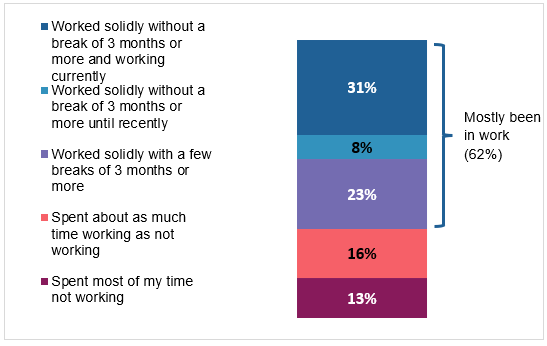
Figure 4.3 Experience of work since leaving education
Figure 4.3 Experience of work since leaving education
| Experience of work since leaving education | Percentage |
|---|---|
| Worked solidly without a break of 3 months or more and working currently | 31% |
| Worked solidly without a break of 3 months or more until recently | 8% |
| Worked solidly with a few breaks of 3 months or more | 23% |
| Spent about as much time working as not working | 16% |
| Spent most of my time not working | 13% |
| Summary: mostly been in work | 62% |
Q. Which of the following best describes your experiences of any paid work since leaving education?
Base: All UC claimants in the four disadvantaged groups in employment (873).
4.3Future aspirations
When asked about their goals and aspirations for the next 2 years, work-related goals were the most common focus for those in employment with over a third (36%) reporting that their goal was to change jobs or to get a job (Figure 4.4). This was followed by moving or buying a home (19%), caring for family (17%) and studying (14%). Many claimants were also interested in improving their finances and getting out of debt (14%), as well as keeping their job (12%), and starting a business or becoming self-employed (8%).
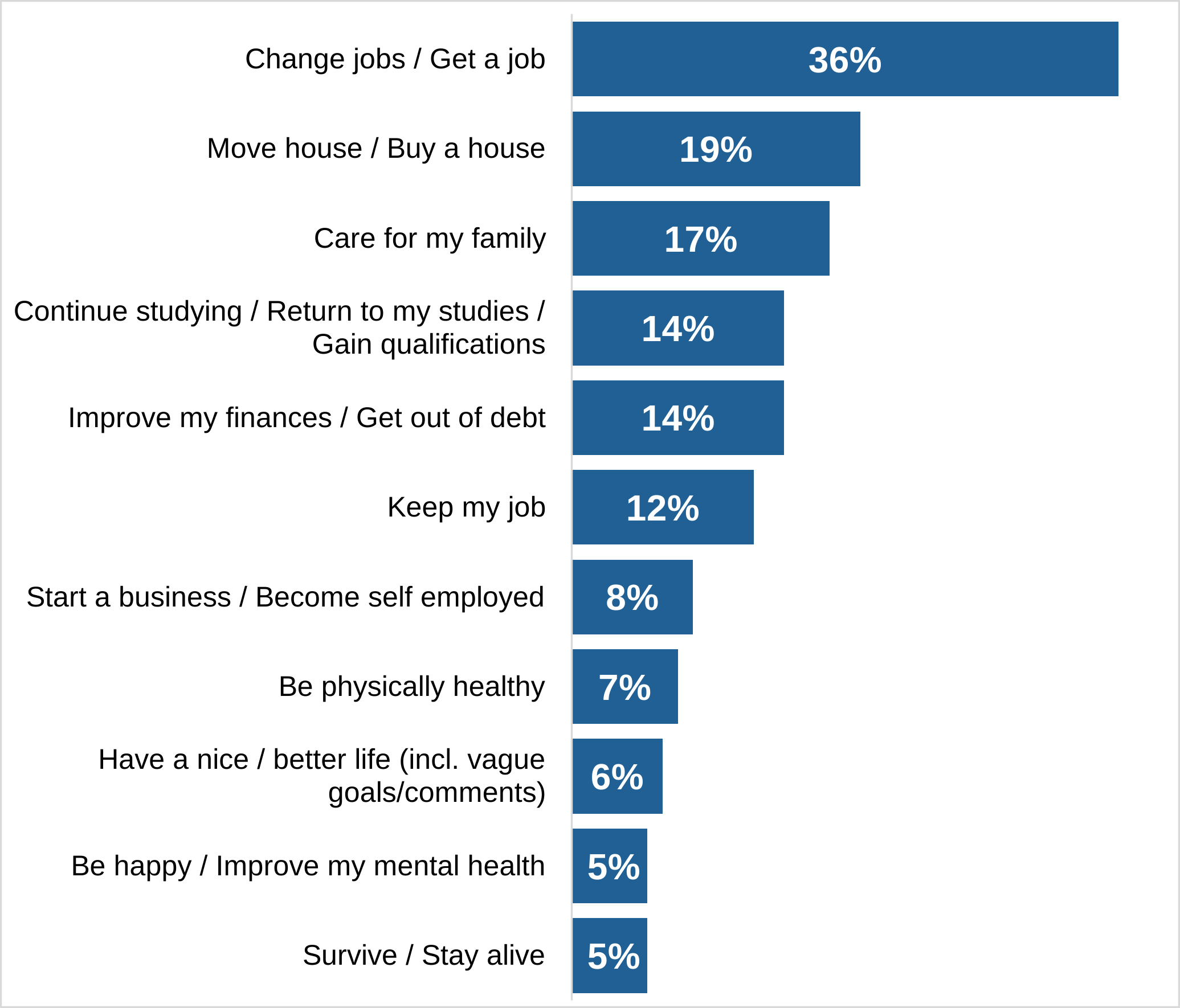
Figure 4.4 Future goals
Figure 4.4 Future goals
| Future goals | Percentage |
|---|---|
| Change jobs or get a job | 36% |
| Move house or buy a house | 19% |
| Care for my family | 17% |
| Continue studying or return to my studies or gain qualifications | 14% |
| Improve my finances or get out of debt | 14% |
| Keep my job | 12% |
| Start a business or become self employed | 8% |
| Be physically healthy | 7% |
| Have a nice or better life (including vague goals or comments) | 6% |
| Be happy or improve my mental health | 5% |
| Survive or stay alive | 5% |
Q. What are your main goals or aspirations for the next 2 years?
Base: All UC claimants in the four disadvantaged groups in employment who shared a goal (764).
Differences within the four disadvantaged groups regarding future goals
Homelessness
Those with experience of homelessness in the past 2 years were more likely to report changing jobs or getting a job to be their main goal (41% compared with 31% all others).
I am looking for a better job. If I find it, I will stop working in food delivery and start the new job to pay for the house and my special needs.
(Male UC claimant, 25 to 34, Experienced homelessness in the past 2 years)[footnote 3].
These claimants were also more likely to aspire to study (19% compared with 10% of all others).
Secure a home, financial security, having savings for emergencies. Generally, be secure and stable.
(Female UC claimant, 25 to 34, Experienced homelessness in the past 2 years).
Ex-offenders
Ex-offenders were more likely to be self-employed (28% compared with 12% of all others) and, in relation to their future goals, were more likely to have an aspiration to start a business or become self-employed (13% compared with 6% of all others).
I can’t get a full-time job because of my age and other things. I went back to education, but it helped me but didn’t help me get jobs. I’m looking to open a business and try that now. I’m tired of applying for jobs that get rejections.
(Male UC claimant, 45 to 54, Ex-offender).
Substance dependency
Those with experience of substance dependency in the past 2 years were more likely to have the goal of improving their physical health (11% compared with 5% of all others). This aligns with their increased likelihood of rating their health bad, as discussed in Chapter 5.
4.4 Barriers to staying in work
UC claimants in the four disadvantaged groups in employment were asked about the types of barriers that have made it difficult for them to stay in their job over the last 6 months (Figure 4.5). A third (31%) reported no barriers to staying in work. The most common reported barrier was physical or mental health conditions or disabilities, with a third (34%) feeling this impacted their ability to stay in employment.
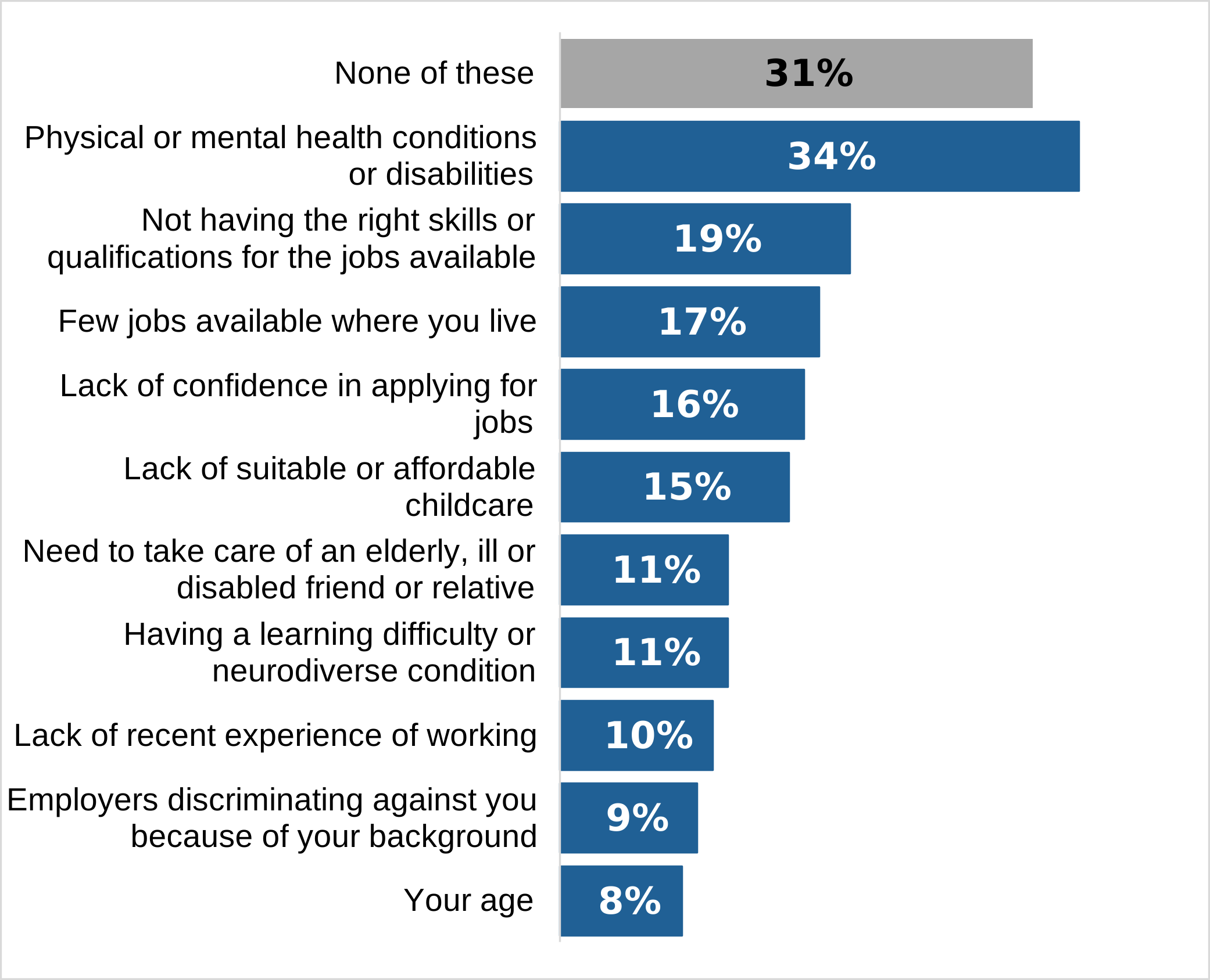
Figure 4.5 Barriers to staying in work
Figure 4.5 Barriers to staying in work
| Barriers to staying in work | Percentage |
|---|---|
| None of these | 31% |
| Physical or mental health conditions or disabilities | 34% |
| Not having the right skills or qualifications for the jobs available | 19% |
| Few jobs available where you live | 17% |
| Lack of confidence in applying for jobs | 16% |
| Lack of suitable or affordable childcare | 15% |
| Need to take care of an elderly, ill or disabled friend or relative | 11% |
| Having a learning difficulty or neurodiverse condition | 11% |
| Lack of recent experience of working | 10% |
| Employers discriminating against you because of your experiences or background | 9% |
| Your age | 8% |
Q. Over the last 6 months, have any of the following made it difficult for you to get a job or stay in your job?
Base: All UC claimants in the four disadvantaged groups in employment (873).
Differences related to barriers to work within the four disadvantaged groups
Substance dependency in the past 2 years: more likely to cite a physical or mental health condition or disability as a barrier to staying in work (58% compared with 27% of all others). This aligns with mental or physical health conditions being more common within this group, as discussed in Chapter 3.
Ex-offenders: more likely to report employer discrimination because of their background (16% compared with 7% of all others).
Claimants with multiple disadvantages: more likely more likely to report employer discrimination because of their background (7% for one disadvantage, 19% for 2 and 29% for 3 to 4 disadvantages).
Claimants with a learning difficulty or neurodivergence: also more likely to report employer discrimination because of their background (17%).
Claimants were also asked about whether they felt their experience of disadvantage had made it more difficult to stay in employment (Figure 4.6). On balance, claimants were more likely to say this had not made it more difficult to stay in work, than say it had done. The exception to this was the experience of being homeless, with 2 in 5 (41%) of those who had faced this in the past 2 years saying it had made staying in work more difficult.
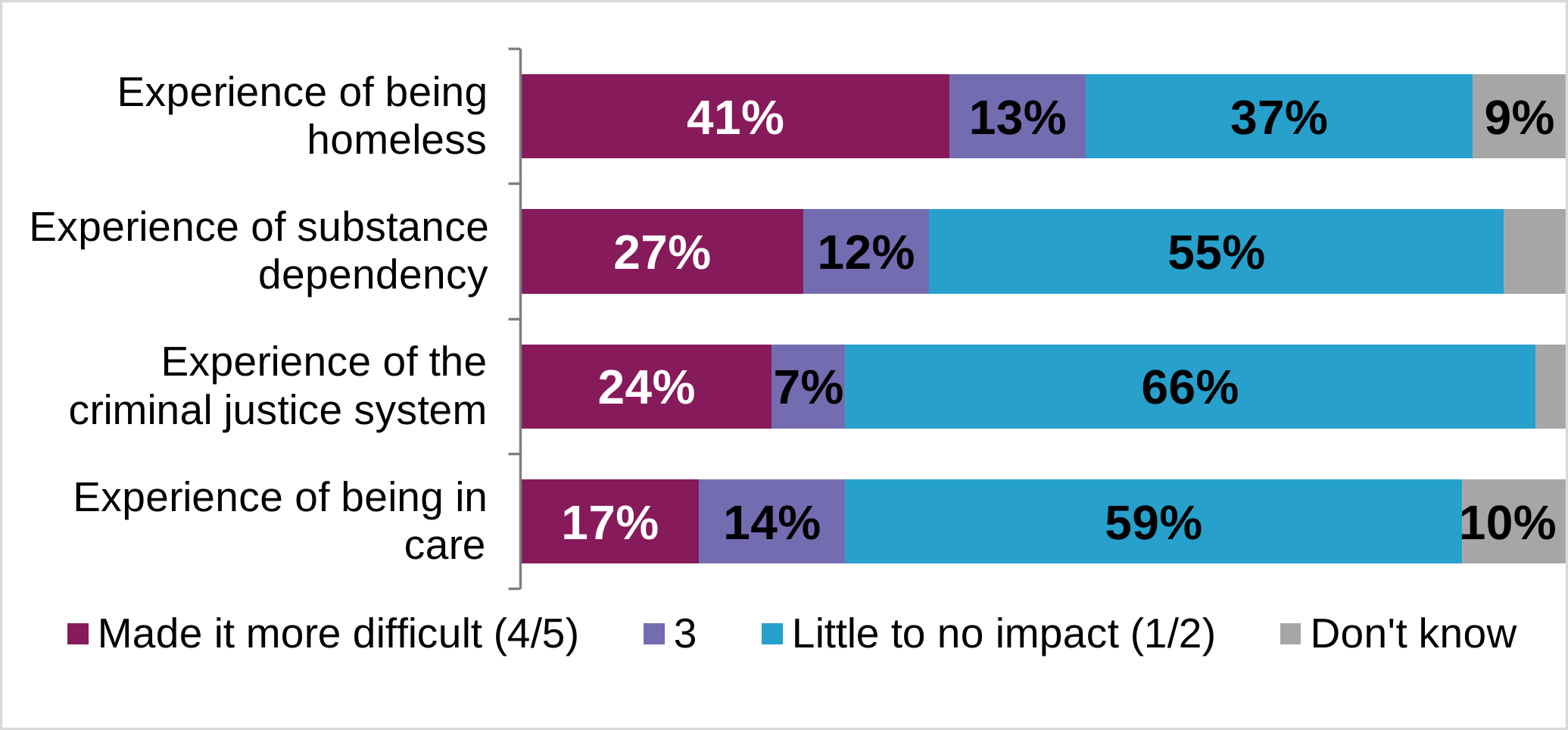
Figure 4.6 Disadvantages and whether they acted as a barrier to stay in a job
Figure 4.6 Disadvantages and whether they acted as a barrier to stay in a job
| Disadvantages and whether they acted as a barrier to stay in a job | Made it more difficult (4/5) | 3 | Little to no impact (1/2) | Don’t know |
|---|---|---|---|---|
| Experience of being homeless | 41% | 13% | 37% | 9% |
| Experience of substance dependency | 27% | 12% | 55% | 6% |
| Experience of the criminal justice system | 24% | 7% | 66% | 3% |
| Experience of being in care | 17% | 14% | 59% | 10% |
Q. To what extent has your experience of [disadvantage] made it more difficult to stay in your job on a scale of 1 to 5?
Base: Base: All UC claimants in the four disadvantaged groups in employment that experienced specific disadvantages: Homelessness (324), Substance Dependency (173), Ex-Offender (157), Care Experienced (407).
4.5 Support needs
Access to support
A clear majority (80%) of UC claimants in the four disadvantaged groups in employment had people they could trust and go to for help and support, if they had a serious problem.
More than half (56%) said they could go to a family member, with a similar proportion saying they had a friend or friends they could trust for support (53%). Around a quarter (27%) said there was a professional they could approach, and 13% said their trusted person was someone else. Almost a fifth (18%) said they had no one they could go to if they had a serious problem.
Whether claimants had a support network also varied by certain characteristics:
-
white claimants were less likely to have no-one they could approach for help (15%) compared to other claimants (23%)
-
a fifth of claimants without children (21%) had no-one for support compared to 15% of those with children
-
UC claimants with experience of homelessness in the past 2 years were less likely to have at least one person they could approach for help (76% compared to 83% of claimants with the other 3 disadvantaged experiences)
GP registration
Almost all employed UC claimants in the four disadvantaged groups were registered with a GP (97%).
Differences related to GP registration
Those who were younger, aged 16 to 24, were less likely to be registered with a GP (92% vs 100% for those aged 36 and over).
Interest in future support
UC claimants in the four disadvantaged groups in employment were asked if they would be interested in receiving support specific to their disadvantage, or their health if living with a disability or health condition.
The levels of interest in support is shown in Figure 4.7.
-
Homelessness in the past 2 years: highest levels of interest in support related to their disadvantages. Over two-fifths of this group (41%) were interested in support with finding stable housing.
-
Ex-offenders: lowest rates of interest in support with disadvantages. Less than 1 in 12 (7%) were interested in support to help them stay away from crime.
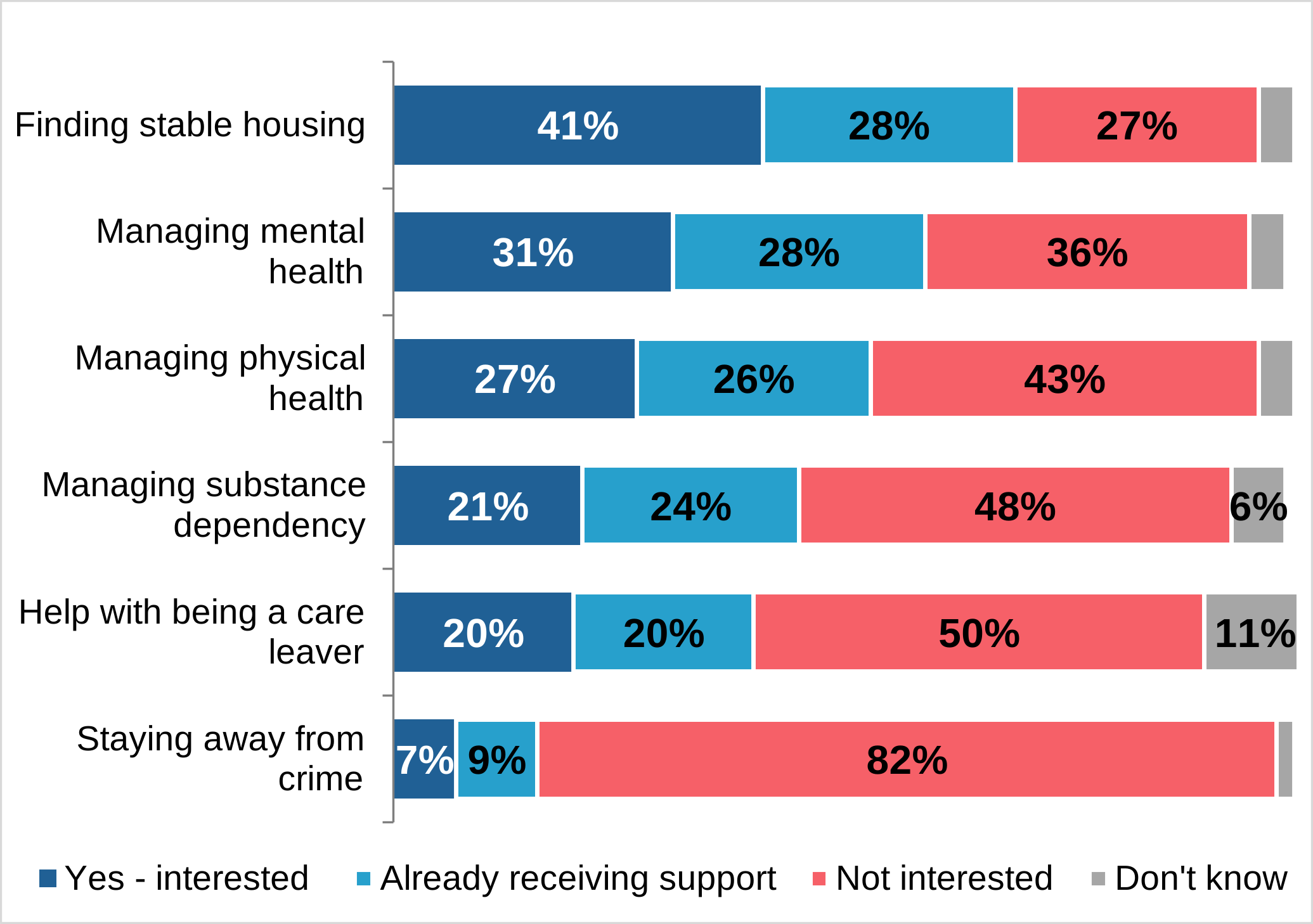
Figure 4.7 Interest in support with disadvantages (in employment)
Figure 4.7 Interest in support with disadvantages (in employment)
| Disadvantage support | Yes - interested | Already receiving support | Not interested | Don’t know |
|---|---|---|---|---|
| Finding stable housing | 41% | 28% | 27% | 4% |
| Managing mental health | 31% | 28% | 36% | 4% |
| Managing physical health | 27% | 26% | 43% | 4% |
| Managing substance dependency | 21% | 24% | 48% | 6% |
| Help with being a care leaver | 20% | 20% | 50% | 11% |
| Staying away from crime | 7% | 9% | 82% | 2% |
Q. Would you be interested in receiving the following type of support to help you: [disadvantage]. Figures below 5% not shown.
Base: All UC claimants in the four disadvantaged groups in employment who: have experienced homelessness in the last 2 years (324); health condition (413); care leavers (166); substance dependency in the last 2 years (173); ex-offenders (157).
Interest in support related to work
In terms of support related to work, as can be seen Figure 4.8. UC claimants in the four disadvantaged groups in employment were most likely to be interested in receiving support to increase their earnings (46%), possibly indicating why many had goals and aspirations around changing job.
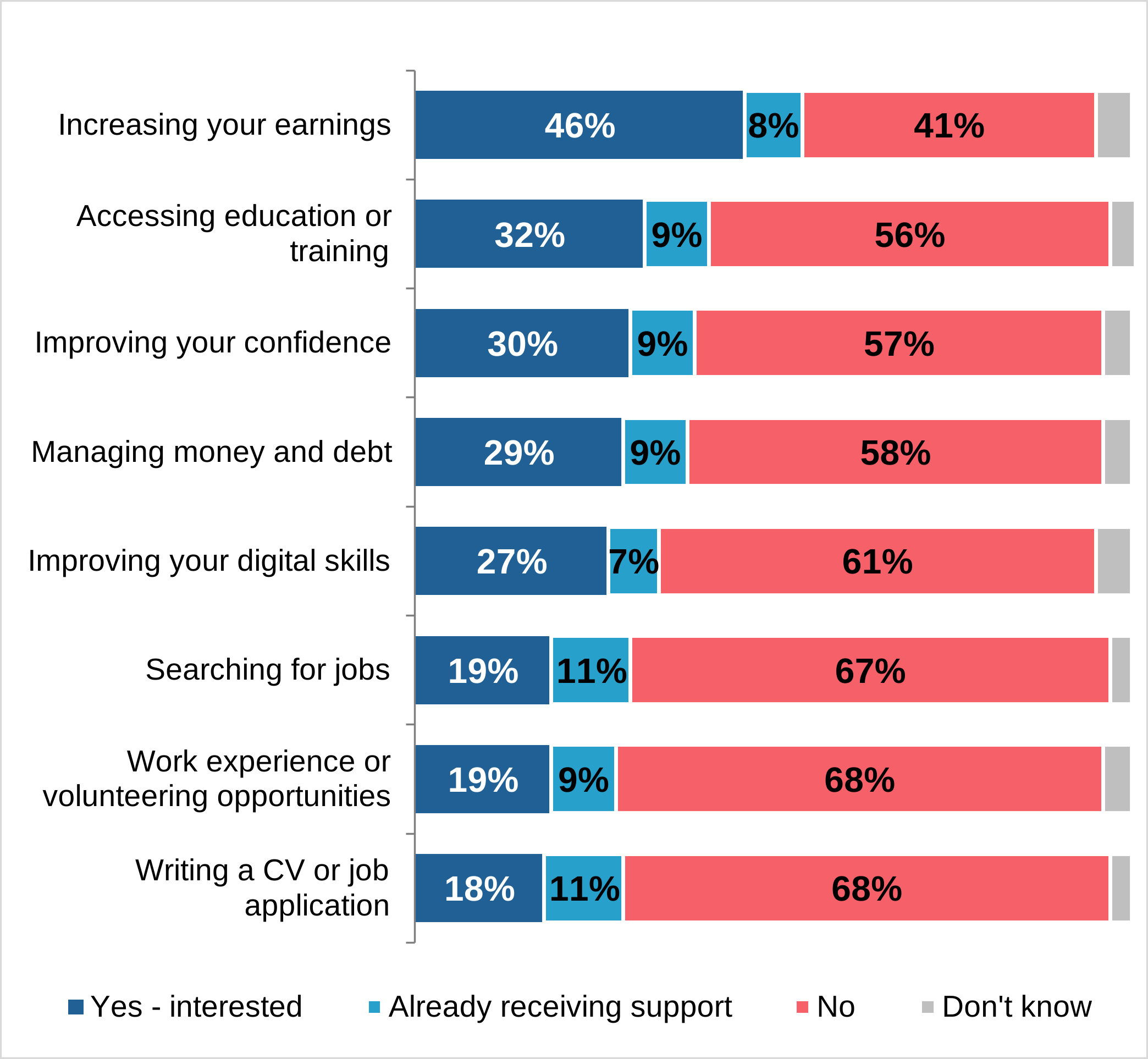
Figure 4.8 Interest in support with work (in employment)
Figure 4.8 Interest in support with work (in employment)
| Support with work | Yes - interested | Already receiving support | No | Don’t know |
|---|---|---|---|---|
| Increasing your earnings | 46% | 8% | 41% | 5% |
| Accessing education or training | 32% | 9% | 56% | 4% |
| Improving your confidence | 30% | 9% | 57% | 4% |
| Managing money and debt | 29% | 9% | 58% | 4% |
| Improving your digital skills | 27% | 7% | 61% | 5% |
| Searching for jobs | 19% | 11% | 67% | 3% |
| Work experience or volunteering opportunities | 19% | 9% | 68% | 4% |
| Writing a CV or job application | 18% | 11% | 68% | 3% |
Q. Would you be interested in receiving the following type of support?
Base: All UC claimants in the four disadvantaged group in employment (873); Increasing your earnings: All UC claimants in the four disadvantaged groups in employment, excluding those who stated ‘Other’ when asked about their employment status (842).
Beyond earnings, interest in support with work was relatively low among those in employment. That said, there was evidence of some unmet need in terms of skills and confidence. Around 3 in 10 said they were interested in accessing education or training (32%) or improving their confidence (30%). Around a quarter (27%) expressed interest in improving their digital skills.
Differences in interest in future work-related support within the four disadvantaged groups
Homelessness in the past 2 years: more likely to express interest in every form of employment support except improving confidence. For example, interest in receiving support to increase their earnings was 51% compared to 43% among those who had not experienced homelessness.
Substance dependent in the past 2 years: more likely to show interest in managing money and debt (36% compared to 27% of claimants in the other three disadvantaged groups).
Care experienced: less likely to show interest in managing money and debt (23% compared to 32% of claimants in the other 3 disadvantaged groups).
Ex-offenders: less likely to be interested in all work-related support options discussed, with the exceptions of increasing their earnings, and managing money and debt.
Differences in interest in future work-related support within demographic groups
Interest in accessing education or training was significantly lower among those aged 50 or older (21%), although this was not the case for improving digital skills (28%).
Claimants from a black ethnic minority background were more interested in receiving support with accessing education or training (50% compared with 24% of white claimants). This difference may be explained by the higher proportion of Black / Black British claimants aged 16 to 24 (22% compared with 14% of white claimants). Black or Black British claimants were also more interested in receiving digital skills support (48% compared with 18% of white claimants).
4.6 Experience of Jobcentre Plus
Contact with work coaches
In total, 54% of employed claimants had contact with their work coach over the previous 6 months. This was particularly common for those experiencing homelessness in the past 2 years (61% compared to 50% of those in one of the four disadvantaged groups who had not).
Perceptions of work coaches
Just over half (55%) of claimants in employment who had spoken with their work coach in the previous 6 months felt their work coach understood their needs
Overall, 6 in 10 employed claimants who had spoken to their work coach in the previous 6 months felt comfortable discussing their circumstances with their work coach (62%) (Table 4.2).
Three quarters (74%) of employed claimants in one of the four disadvantaged groups expressed satisfaction with the support they had received from their work coach (34% very satisfied).
Differences in perceptions of work coaches
Claimants who saw the same work coach consistently were more satisfied with their support than claimants who saw different work coaches (89% satisfied compared with 54% satisfied).
Male claimants were more likely to feel that their work coach understood their needs (62% compared to 49% of women).
Table 4.2 Statements about work coaches, broken down by disadvantage
| Statement | Total | Homeless | Substance Dependent | Ex-Offender | Care Experienced |
|---|---|---|---|---|---|
| Base | 470 | 189 | 96 | 78 | 218 |
| I speak with the same work coach every time I have an appointment (% agree) | 44% | 42% | 44% | 49% | 44% |
| I feel comfortable discussing my circumstances with my work coach (% agree) | 62% | 62% | 57% | 66% | 61% |
| My work coach understands my needs (% agree) | 55% | 55% | 47% | 57% | 55% |
| I am satisfied with the support I have received from my work coach (% agree) | 74% | 73% | 72% | 77% | 69% |
Q. How much do you agree or disagree with the following statement: [Statement]
Base: All UC claimants in the four disadvantaged groups in employment that have spoken to their work coach in the past 6 months (470).
Perceptions of work coach support
Employed claimants with disadvantaged experiences who had spoken with their work coach in the past 6 months were also asked if their work coach had provided help or referrals specific to their disadvantage.
Differences in perceptions of work coach support within the four disadvantaged
Homelessness in the past 2 years: most likely to have received help or referrals relating to their disadvantage (15%), which aligns with the finding that this group was most interested in receiving support with finding stable housing.
Experience of managing Universal Credit claim
Employed claimants who had experienced disadvantage were asked if they had experienced problems with their benefit claim in the previous 6 months, and had to contact DWP about it. A quarter (25%) said they had, and there was no difference in relation to the disadvantage that they had experienced.
Differences in experience of managing a Universal Credit claim between demographic groups
Claimants more likely to have experienced a problem with their UC claim included those aged 25 to 35 (31%); and black claimants (36%).
This was followed by the care experienced group (9%), those with a substance dependency (8%) and ex-offenders (4%).
5. Disadvantaged groups not in employment
This chapter reports on UC claimants in 1 of the four disadvantaged groups who are not in employment, covering their work aspirations, their barriers to finding employment, and the types of support they were interested in.
Summary
-
Nearly three-quarters of UC claimants in one of the four disadvantaged groups were not in employment (72%).
-
Most UC claimants in 1 of the four disadvantaged groups who were not in employment said this was because of long-term sickness or a disability (51%). This was more common for those that had experienced substance dependence in the past 2 years (67%) and ex-offenders (62%).
-
The most common goal for the next 2 years was gaining employment (33%), followed by getting physically healthy (17%), and moving or buying a house (16%).
-
Mirroring this, over half (55%) of those not in employment thought that work was a possibility with the right support. One in 5 (20%) thought they were ready to work now. However, the longer a claimant’s claim length, the less likely they were to feel that it was an option (67% for a UC claim of up to 6 months, 46% for a claim of 4 years or more).
-
The majority of those not in employment stated that physical or mental health conditions or disabilities were the main barrier for finding employment (72%).
-
Of the four disadvantages, experience of homelessness in the past 2 years was most commonly reported as a barrier to employment (59% of this group said that this experience had been a barrier to finding work). This was followed by substance dependency in the past 2 years (47%), being an ex-offender (44%) and being care experienced (31%).
-
Most claimants in one of the four disadvantaged groups were not interested in support for handling disadvantages, or were already receiving this support. The group most commonly interested in support was those that had experienced homelessness in the past 2 years: 44% were interested in support with finding stable housing. Among those with health conditions, 34% were interested in receiving support for managing their mental health and 29% for their physical health.
-
The majority of those not in employment were not interested in receiving support with skills that could help them move towards employment.
5.1 Profile
The majority (72%) of UC claimants in one of the four disadvantaged groups were not in employment.
Differences in proportion not in employment within the four disadvantaged groups
Substance dependency: a higher proportion of claimants in one of the four disadvantaged groups who were not in employment had experienced substance dependency in the past 2 years (35%) than among those who were in employment (23%).
Ex-offenders: a higher proportion of those not in employment were ex-offenders (32%) than amongst disadvantaged claimants in employment (22%).
Multiple disadvantages: a higher proportion of those not in employment had experienced multiple disadvantages (31%) than for those in employment (17%).
Age
Claimants in one of the four disadvantaged groups not in employment were more likely to be aged 50 or over (27%) than claimants in one of the four disadvantaged groups who were in employment (16%).
Sex
Claimants in one of the four disadvantaged groups who were not in employment were noticeably more likely to be male (61%) than those who were in employment (46%).
Household composition
Claimants in one of the four disadvantaged groups who were not in employment were also more likely to have no children (75% vs 49%).
UC Claim length
Claimants in one of the four disadvantaged groups who were not in employment were more likely to have a claim length of 4 years or more (31%) than those in employment (24%).
UC Labour Market Regime
The majority of UC claimants in one of the four disadvantaged groups who were not in employment were in the No Work Related Requirements (54%) or Intensive Work Search (33%) UC Labour Market Regimes. A further 10% were in the Work Focused Interview or Work Preparation Labour Market Regimes.
Mental and physical health
Claimants in one of the four disadvantaged groups not in employment were more likely to be affected by mental or physical health conditions, and to rate their health less positively:
-
just 24% rated their health as good (compared to 48% of those in employment)
-
78% had a health condition expected to last 6 months or more (compared to 48% of those in employment): 59% had a physical health condition and 65% had a mental health condition
-
73% had a health condition that significantly limited their ability to carry out day-to-day activities (compared to 40% of those in employment)
Learning difficulty and neurodiversity
Around a third of claimants in one of the four disadvantaged groups not in employment had a learning difficulty or neurodiversity (30%, compared to 14% of those in employment).
Ethnicity
A higher proportion of claimants in one of the four disadvantaged groups not in employment were white (75%) than among those in employment (66%).
Qualifications
A higher proportion of claimants in one of the four disadvantaged groups not in employment had no qualifications (30%) than for those who were in employment (14%).
Internet access, confidence and ability to use UC online account
Claimants in one of the four disadvantaged groups not in employment were also less likely to have access to the internet (93%) and to be confident in using it (71%) than those in employment (98% and 90% respectively).
A full profile of claimants in one of the four disadvantaged groups not in employment is provided in Figure 5.1 below, with comparisons provided to those who are in employment.
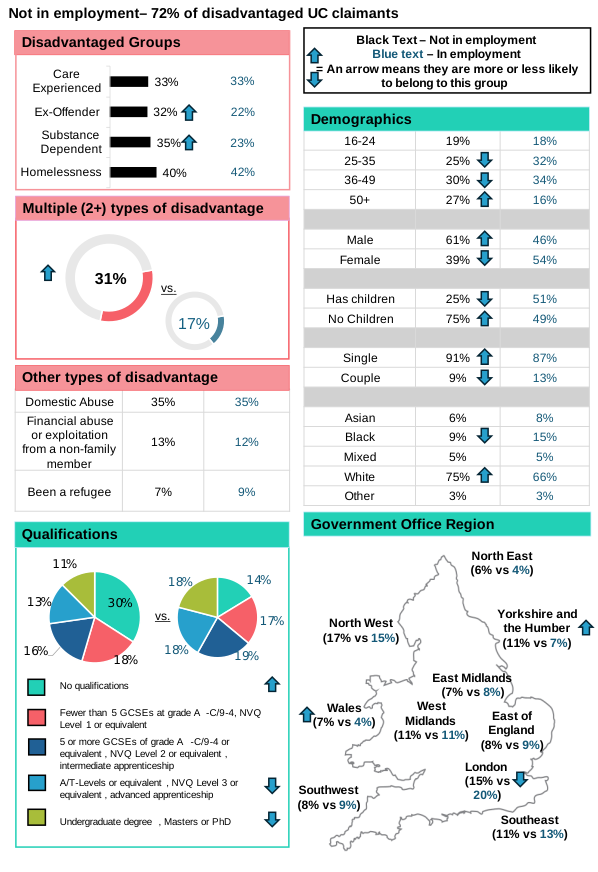
Figure 5.1 Profile of claimants in one of the four disadvantaged groups not in employment compared to those in employment: Not in employment - 72% of disadvantaged UC claimants
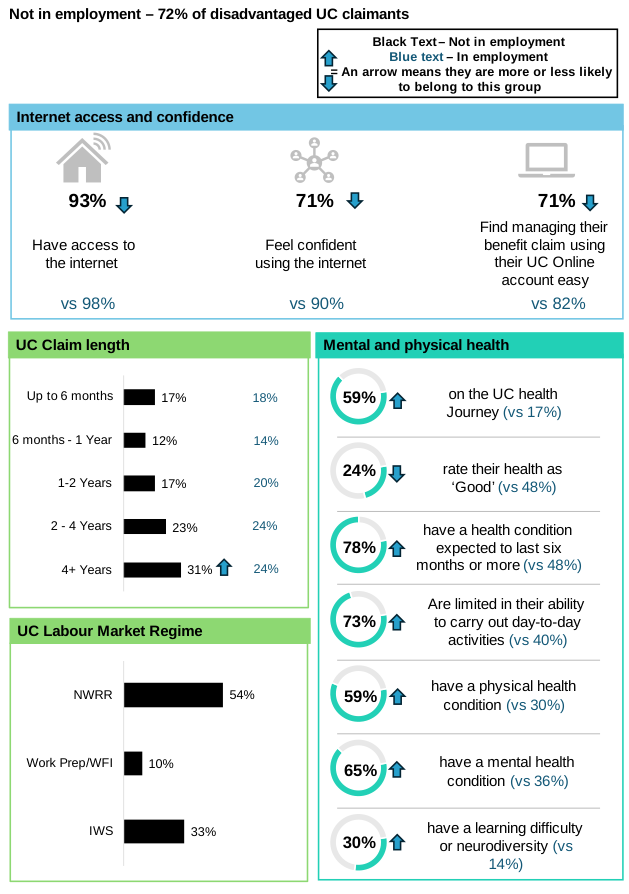
Figure 5.1 Profile of claimants in one of the four disadvantaged groups not in employment compared to those in employment: Not in employment - 72% of disadvantaged UC claimants
Figure 5.1 Profile of claimants in one of the four disadvantaged groups not in employment compared to those in employment
| Disadvantaged Groups | Not in employment | Significant difference compared with those in employment | In employment |
|---|---|---|---|
| Care Experienced | 33% | Empty cell | 33% |
| Ex-Offender | 32% | More likely | 22% |
| Substance Dependent | 35% | More likely | 23% |
| Homelessness | 40% | Empty cell | 42% |
| Multiple types of disadvantage | 31% | More likely | 17% |
| Other types of disadvantage | Not in employment | Significant difference compared with those in employment | In employment | |
|---|---|---|---|---|
| Domestic Abuse | 35% | Empty cell | 35% | |
| Financial abuse or exploitation from a non-family member | 13% | Empty cell | 12% | |
| Been a refugee | 7% | Empty cell | 9% |
| Government Office Region | Not in employment | Significant difference compared with those in employment | In employment |
|---|---|---|---|
| North East | 6% | Empty cell | 4% |
| North West | 17% | Empty cell | 15% |
| Yorkshire and the Humber | 11% | More likely | 7% |
| East Midlands | 7% | Empty cell | 8% |
| West Midlands | 11% | Empty cell | 11% |
| Wales | 7% | More likely | 4% |
| East of England | 8% | Empty cell | 9% |
| London | 15% | Less likely | 20% |
| Southwest | 8% | Empty cell | 9% |
| Southeast | 11% | Empty cell | 13% |
| Qualifications | Not in employment | Significant difference compared with those in employment | In employment |
|---|---|---|---|
| No qualifications | 30% | More likely | 14% |
| Fewer than 5 GCSEs at grade A to C or 9 to 4, NVQ Level 1 or equivalent | 18% | Empty cell | 17% |
| 5 or more GCSEs of grade A to C or 9 to 4 or equivalent, NVQ Level 2 or equivalent, intermediate apprenticeship | 16% | Empty cell | 19% |
| A or T-Levels or equivalent, NVQ Level 3 or equivalent, advanced apprenticeship | 13% | Less likely | 18% |
| Undergraduate degree, Masters or PhD | 11% | Less likely | 18% |
| Demographics | Not in employment | Significant difference compared with those in employment | In employment |
|---|---|---|---|
| 16 to 24 | 19% | Empty cell | 18% |
| 25 to 35 | 25% | Less likely | 32% |
| 36 to 49 | 30% | Less likely | 34% |
| 50+ | 27% | More likely | 16% |
| Male | 61% | More likely | 46% |
| Female | 39% | Less likely | 54% |
| Has children | 25% | Less likely | 51% |
| No children | 75% | More likely | 49% |
| Single | 91% | More likely | 87% |
| Couple | 9% | Less likely | 13% |
| Asian | 6% | Empty cell | 8% |
| Black | 9% | Less likely | 15% |
| Mixed | 5% | Empty cell | 5% |
| White | 75% | More likely | 66% |
| Other | 3% | Empty cell | 3% |
| Demographics | Not in employment | Significant difference compared with those in employment | In employment |
|---|---|---|---|
| Have access to the internet | 93% | Less likely | 98% |
| Feel confident using the internet | 71% | Less likely | 90% |
| Find managing their benefit claim using their UC Online account easy | 71% | Less likely | 82% |
| UC claim length | Not in employment | Significant difference compared with those in employment | In employment |
|---|---|---|---|
| Up to 6 months | 17% | Empty cell | 18% |
| 6 months to 1 Year | 12% | Empty cell | 14% |
| 1 to 2 Years | 17% | Empty cell | 20% |
| 2 to 4 Years | 23% | Empty cell | 24% |
| 4+ Years | 31% | More likely | 24% |
| Mental and physical health | Not in employment | Significant difference compared with those in employment | In employment |
|---|---|---|---|
| On the UC health Journey | 59% | More likely | 17% |
| Rate their health as ‘Good’ | 24% | Less likely | 48% |
| Have a health condition expected to last 6 months or more | 78% | More likely | 48% |
| Are limited in their ability to carry out day-to-day activities | 73% | More likely | 40% |
| Have a physical health condition | 59% | More likely | 30% |
| Have a mental health condition | 65% | More likely | 36% |
| Have a learning difficulty or neurodiversity | 30% | More likely | 14% |
| UC Labour Market Regime | Not in employment | Significant difference compared with those in employment | In employment |
|---|---|---|---|
| NWRR | 54% | Empty cell | Empty cell |
| Work Prep / WFI | 10% | Empty cell | Empty cell |
| IWS | 33% | Empty cell | Empty cell |
5.2 Employment status
The most common employment status for UC claimants in one of the four disadvantaged groups not in employment was long-term sick or disabled (51%), as shown in Table 5.1. The second most common employment status was unemployed but currently looking for a job (21%). A minority (11%) of UC claimants in one of the four disadvantaged groups stated they were unemployed and not looking for a job.
By far the 2 largest labour market regimes for UC claimants in one of the four disadvantaged groups who were not in employment were No Work-Related Requirements (54%) and Intensive Work Search (33%). One in 10 were in the Work Focused Interview or Work preparation regimes (10%).
Table 5.1 Summary of employment status amongst claimants not in employment broken down by disadvantage type
| Employment status | Total | Homeless | More or less likely | Substance Dependent | More of less likely | Ex-Offender | More or less likely | Care Experienced | More or less likely |
|---|---|---|---|---|---|---|---|---|---|
| Base | 2,427 | 882 | Empty cell | 713 | Empty cell | 638 | Empty cell | 1,148 | Empty cell |
| Unemployed but looking for a job | 21% | 28% | More likely | 14% | Less likely | 16% | Less likely | 22% | Empty cell |
| Unemployed and not looking for a job | 11% | 13% | More likely | 11% | Empty cell | 11% | Empty cell | 11% | Empty cell |
| Long-term sick or disabled | 51% | 42% | Less likely | 67% | More likely | 62% | More likely | 44% | Less likely |
| Full-time parent | 6% | 8% | More likely | 2% | Less likely | 2% | Less likely | 9% | More likely |
| Full-time carer | 6% | 4% | Less likely | 4% | Less likely | 7% | Empty cell | 7% | Empty cell |
| Student or pupil | 3% | 4% | Empty cell | 1% | Less likely | 1% | Less likely | 7% | More likely |
Q. How would you describe your current working status?
Base: All UC claimants in the four disadvantaged groups not in employment (2,427).
Differences in employment status within disadvantaged groups
Substance dependent in last 2 years: particularly likely to be long-term sick or disabled (67% compared with 43% of claimants with other disadvantaged experiences).
Ex-offenders: this group were more likely to be long-term sick or disabled (62% compared with 46% of claimants with other disadvantaged experiences).
Homeless in the last 2 years: claimants in this disadvantaged group were more likely to be unemployed but currently looking for a job (28% compared with 17% of claimants with other disadvantaged experiences).
Care leavers: more likely to be unemployed but currently looking for a job (26% compared with 21% of claimants with other disadvantaged experiences).
Time since employment
The length of time since their last paid work varied among claimants in one of the four disadvantaged groups not in employment (Table 5.2). Nearly two-fifths had last been in employment under one year ago (17%). Over half were long term unemployed, having not been in work for 3 years or more (53%).
Table 5.2 Summary of last time in employment broken down by disadvantaged group
| Last time in employment | Total | Homeless | More or less likely | Substance Dependent | More or less likely | Ex-Offender | More or less likely | Care Experienced | |
|---|---|---|---|---|---|---|---|---|---|
| Base | 2,350 | 850 | Empty cell | 695 | Empty cell | 626 | Empty cell | 1,105 | Empty cell |
| Less than 1 year ago | 17% | 22% | More likely | 14% | Less likely | 11% | Less likely | 16% | Empty cell |
| Between 1 year and less than 3 years ago | 21% | 27% | More likely | 20% | Empty cell | 18% | Less likely | 19% | Less likely |
| Between 3 years and less than 5 years ago | 16% | 16% | Empty cell | 20% | More likely | 17% | Empty cell | 13% | Less likely |
| Between 5 years and less than 10 years ago | 16% | 11% | Less likely | 18% | Empty cell | 22% | More likely | 15% | Empty cell |
| More than 10 years ago | 17% | 11% | Less likely | 19% | Empty cell | 24% | More likely | 18% | Empty cell |
| I have never worked before | 4% | 5% | Empty cell | 2% | Less likely | 3% | Less likely | 6% | More likely |
Q. How long is it since you last had paid work (either full or part time)?
Base: All UC claimants in the four disadvantaged groups who stated that they were not in employment in the survey (2,350).
Differences in time since employment within disadvantaged groups
-
Homelessness in the past 2 years: more likely to have been in employment within the last 3 years (49% compared with 31% for all others).
-
Ex-offenders: were more likely to have never worked before or been out of employment 5 years or more (49% compared with 31% for all others).[footnote 4]
Employment history
Looking at employment history more broadly, just under 3 in 10 (28%) of UC claimants in one of the four disadvantaged groups not currently in employment had spent most of their time since leaving education not working. One in 5 (21%) had worked solidly without a break of 3 months or more until recently.
Figure 5.2 shows the employment history of UC claimants in one of the four disadvantaged groups not in employment.
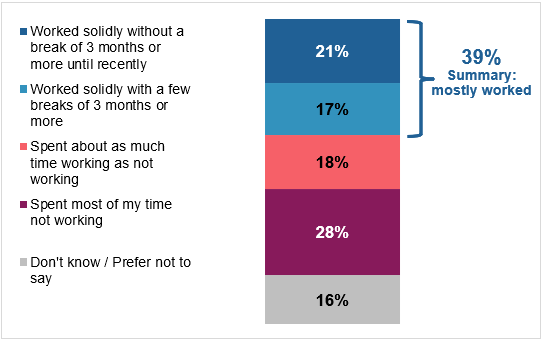
Figure 5.2 Employment History
Figure 5.2 Employment History
| Employment history | Percentage | Notes |
|---|---|---|
| Worked solidly without a break of 3 months or more until recently | 21% | 39% Summary: mostly worked |
| Worked solidly with a few breaks of 3 months or more | 17% | Empty cell |
| Spent about as much time working as not working | 18% | Empty cell |
| Spent most of my time not working | 28% | Empty cell |
| Don’t know or Prefer not to say | 16% | Empty cell |
Q. Which of the following best describes your experiences of any paid work since leaving education?
Base: All UC claimants in the four disadvantaged groups not in employment (2,427).
Differences in employment history within disadvantaged groups
Care experienced: more likely to have spent most of their time since leaving education not working (35% compared with 24% for those in one of the four other disadvantaged groups who were not care experienced). It is worth noting that this group were also younger (60% being 35 and under compared to 36% of UC claimants not in employment in one of the other disadvantaged groups), which may influence their employment history.
5.3 Future aspirations
Overall goals and aspirations
When asked about their goals and aspirations for the next 2 years, employment was the most common goal for those not in employment, with one third (33%) stating their goal was to get a job.
Complete a couple of online courses within social care - the aim is to get some qualifications in that industry. Get myself a full-time job and start enjoying life! Understand more about the social care sector and whether specific job roles would be a fit for me.
(Female UC claimant, 16 to 19, Care Experienced).
Physical wellbeing was another key area claimants not in employment were focused on, with 17% stating their goal was to ‘be physically healthy’.
To complete my therapy, become stable enough to go back to college. To be happy and healthy and not spiral back into mental health crisis. To find out what is wrong with my physical health and be able to manage it better.
(Female UC claimant, 20to 24, Care Experienced, Experienced homelessness in the past 2 years).
The next most common goal was to move house or buy a house (16%). The full list of the main goals of UC claimants in one of the four disadvantaged groups not in employment is provided in Figure 5.3.
Buying a house, it’s the dream. I would like to buy a 3 to 4 bed Bungalow with green garden, around £150k maximum up to £200k in a quiet area but not too quiet. I am looking for mortgage so the first priority for the next 2 years [is] to get together the deposit.
(Male UC claimant, 35 to 44, Experienced homelessness in the past 2 years).
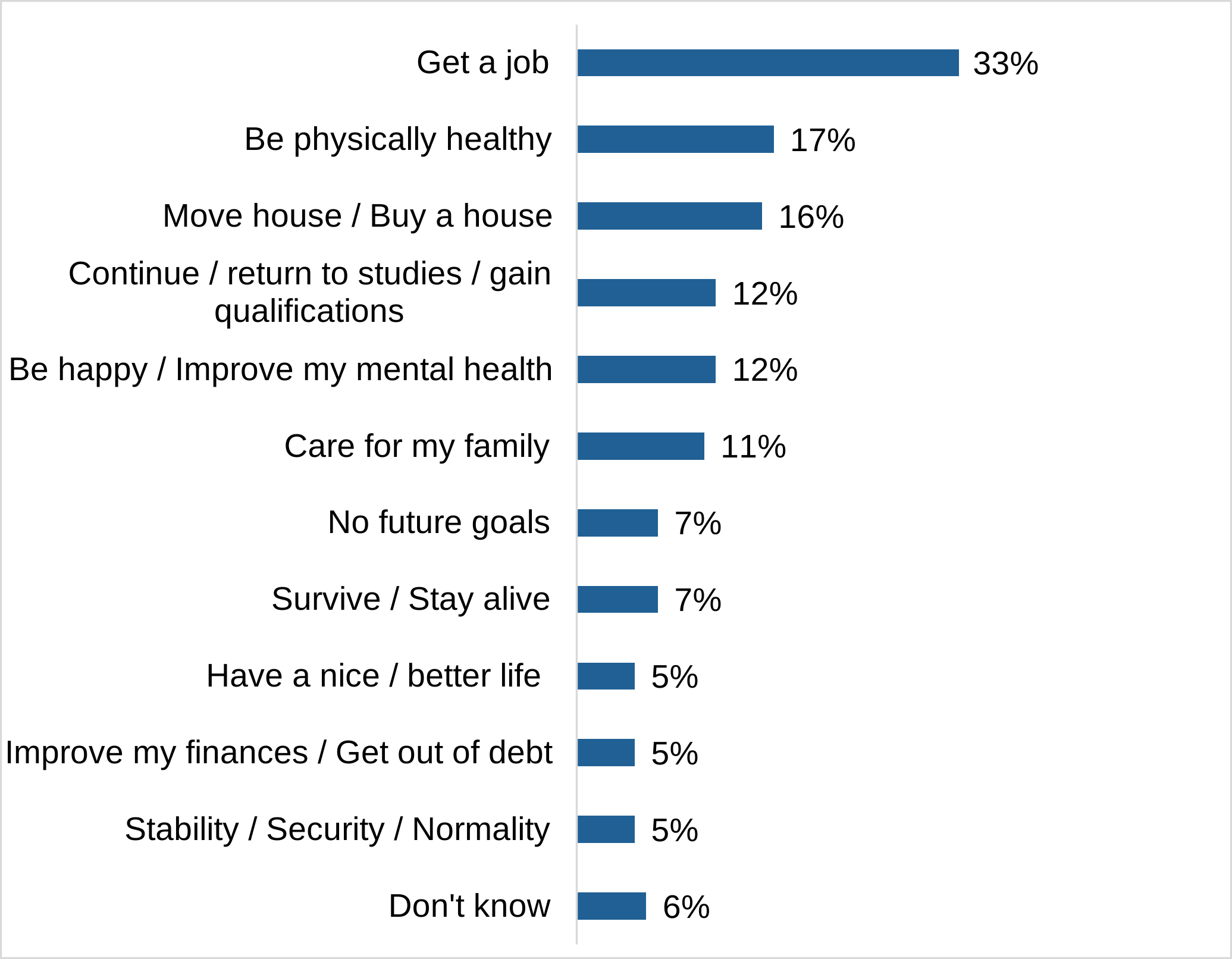
Figure 5.3 Future goals
Figure 5.3 Future goals
| Future goals | Percentage |
|---|---|
| Get a job | 33% |
| Be physically healthy | 17% |
| Move house or buy a house | 16% |
| Continue or return to studies or gain qualifications | 12% |
| Be happy or improve my mental health | 12% |
| Care for my family | 11% |
| No future goals | 7% |
| Survive or stay alive | 7% |
| Have a nice or better life | 5% |
| Improve my finances or get out of debt | 5% |
| Stability or security or normality | 5% |
| Don’t know | 6% |
Q. What are your main goals or aspirations for the next 2 years?
Base: All UC claimants in the four disadvantaged groups not in employment who shared a goal (2,155).
Differences in overall goals and aspirations within disadvantaged groups
Homeless in the past 2 years: employment was more commonly a priority for this group (39% compared with 28% for all others). This group were also more likely to have a goal of moving or buying a house (27% compared with 8% for those in other disadvantaged groups).
Ex-offenders: more likely to note being physically healthy as a goal and aspiration (20% compared with 15% for those in other disadvantaged groups).
Substance dependent in the past 2 years: more likely to have a goal and aspiration related to being physically healthy (20% compared with 15% for those in other disadvantaged groups).
Work aspirations
Over half (55%) of those not in employment felt that returning to work was a possibility with the right support, with 1 in 5 (20%) feeling they were ready to return to work immediately. A third of UC claimants in one of the four disadvantaged groups who were not in employment felt that paid work was not a realistic goal for them (34%).
A full breakdown of views around proximity to work across disadvantaged groups can be seen in Table 5.3 below.
| Self-reported distance from employment | Total | Homeless | More or less likely | Substance Dependent | More or less likely | Ex-Offender | More or less likely | Care Experienced |
|---|---|---|---|---|---|---|---|---|
| Base | 2,350 | 850 | Empty cell | 695 | Empty cell | 626 | Empty cell | 1105 |
| Paid work is not a realistic goal for me, my circumstances rule it out as an option now and in the future | 34% | 25% | Less likely | 40% | More likely | 43% | More likely | 32% |
| With the right support work is a realistic goal for me within the next 12 months | 15% | 19% | More likely | 14% | Empty cell | 11% | Less likely | 14% |
| With the right support work is a realistic goal for me, but not in the next 12 months | 19% | 20% | Empty cell | 20% | Empty cell | 19% | Empty cell | 21% |
| I could return to work now if the right job was available or if I had the right support | 20% | 26% | More likely | 14% | Less likely | 16% | Less likely | 19% |
| Summary: Returning to work is a possibility | 55% | 65% | More likely | 48% | Less likely | 46% | Less likely | 54% |
Table 5.3 Self-Reported distance from employment broken down by disadvantaged group
Q. Which of the following is closest to how you currently feel about paid work?
Base: All UC claimants in the four disadvantaged groups who stated that they were not in employment in the survey (2,350).
Differences in work aspirations between disadvantaged groups
Ex-offenders: more likely to feel that paid work was not a realistic goal for them (43% compared with 29% for all others).
Substance dependent in last 2 years: more likely to view paid work as an unrealistic goal for them (40% compared with 30% for all others).
Differences in work aspirations by Labour Market Regime
Around half (47%) of unemployed claimants in the four disadvantaged groups who were in the No Work Related Requirements Labour Market Regime thought work was not a realistic goal for them. Conversely, one-third (33%) said employment was a possibility in the future if they had support, with a further 8% of claimants in this Labour Market Regime stating that they could be ready to work now with the right support.
Half (50%) of disadvantaged claimants in one of the four disadvantaged groups who were not in employment in the Intensive Work Search regime did not feel ready to work at the time of the survey (16% felt that their circumstances ruled out work as an option now and in the future).
Views on proximity to work broken down by UC Labour Market Regime can be seen below in Figure 5.4.
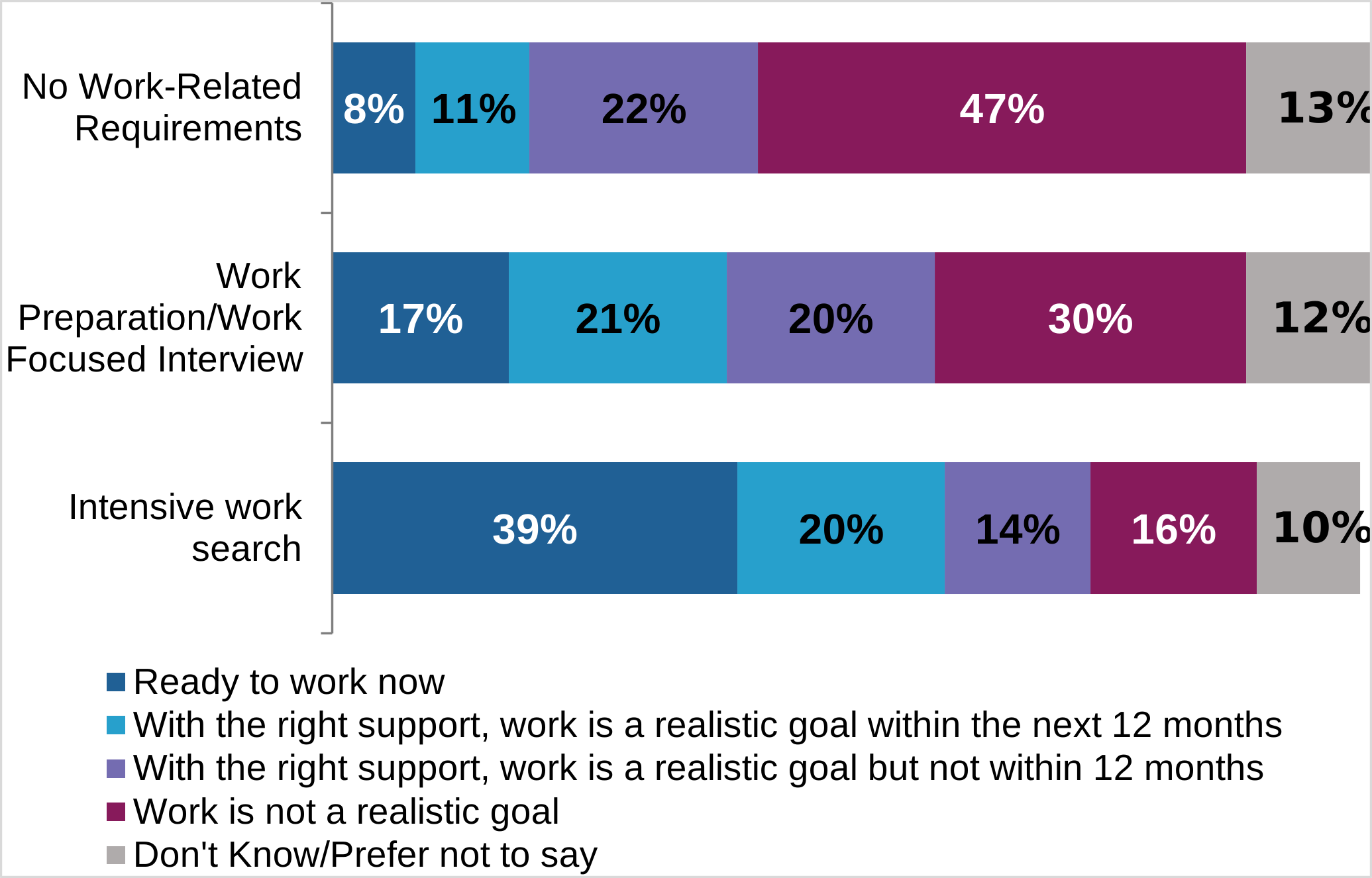
Figure 5.4 Self-reported distance from employment broken down by UC Labour Market Regime
Figure 5.4 Self-reported distance from employment broken down by UC Labour Market Regime
| Self-reported distance from employment | Ready to work now | With the right support, work is a realistic goal within the next 12 months | With the right support, work is a realistic goal but not within 12 months | Work is not a realistic goal | Don’t Know or Prefer not to say |
|---|---|---|---|---|---|
| No Work-Related Requirements | 8% | 11% | 22% | 47% | 13% |
| Work Preparation/Work Focused Interview | 17% | 21% | 20% | 30% | 12% |
| Intensive work search | 39% | 20% | 14% | 16% | 10% |
Q. Which of the following is closest to how you currently feel about paid work?
Base: All UC claimants in the four disadvantaged groups who stated that they were not in employment in the survey: No Work-Related Requirement (1,194), Work Preparation/Work Focused Interview (226), Intensive Work Search (857).
Differences in work aspirations by claim length
Two thirds (67%) of claimants with a UC claim length of up to 6 months felt returning to work was a possibility, compared to 46% of those who had a claim length of 4 years or more. It is worth noting that those with shorter UC claims tended to be younger (31% of those with a claim length of up to 6 months were aged 16-24), whereas those with a longer claim tended to be older (35% of those with a claim length of 4 years or over were aged 50+).
5.4 Barriers to work
Perceived barriers to work
Physical or mental health conditions or disabilities were the barriers to work most commonly faced by UC claimants in one of the four disadvantaged groups in the previous 6 months (mentioned by 72%). This was particularly the case among those who felt paid work was not a realistic goal for them (88%).
Other barriers to employment included:
-
not having the right skills or qualifications for the jobs available (33%)
-
lack of confidence in applying for jobs (30%)
-
lack of recent work experience (28%)
-
having a learning difficulty or neurodiverse condition, for example, dyslexia or dyspraxia (26%)
-
few jobs available where they lived (26%)
-
employers discriminating against them as a result of their experiences or background (19%)
Claimants who believed they could work immediately most commonly cited their lack of skills, qualifications and experience as a barrier to gaining employment (49%), as well as a lack of jobs available where they lived (45%). While less prevalent, around two-fifths of those ready to work immediately still referenced their physical or mental health condition or disability as a barrier to employment (43%). Figure 5.5 shows the work-related barriers faced by claimants in one of the four disadvantaged groups who were not in employment.
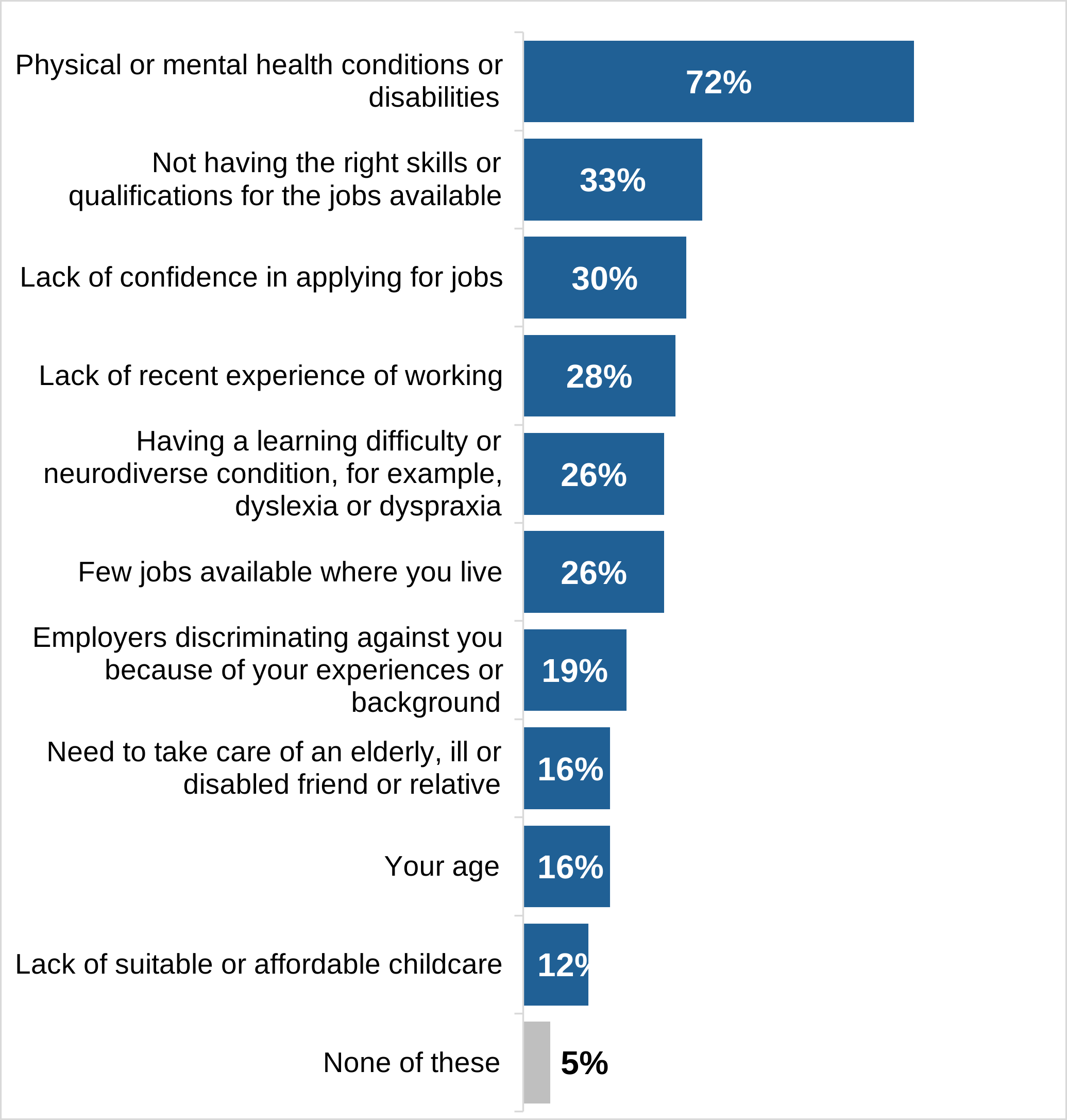
Figure 5.5 Barriers to work over the last six months for claimants in the four disadvantaged groups not in employment
Figure 5.5 Barriers to work over the last 6 months for claimants in the four disadvantaged groups not in employment
| Barriers to work over the last 6 months | Percentage |
|---|---|
| Physical or mental health conditions or disabilities | 72% |
| Not having the right skills or qualifications for the jobs available | 33% |
| Lack of confidence in applying for jobs | 30% |
| Lack of recent experience of working | 28% |
| Having a learning difficulty or neurodiverse condition, for example, dyslexia or dyspraxia | 26% |
| Few jobs available where you live | 26% |
| Employers discriminating against you because of your experiences or background | 19% |
| Need to take care of an elderly, ill or disabled friend or relative | 16% |
| Your age | 16% |
| Lack of suitable or affordable childcare | 12% |
| None of these | 5% |
Q. Over the last 6 months, have any of the following made it difficult for you to get a job?
Base: All UC claimants in the four disadvantaged groups not in employment (2,427).
Differences in barriers to work by the four disadvantaged groups
Substance dependent in last 2 years: having a physical or mental health condition or disability was more commonly reported as a barrier to work over the last 6 months (84% compared with 65% for all others). This group was also more likely to report a lack of confidence in applying for jobs (35% compared with 28% for all others).
Ex-offenders: more likely to have physical or mental health conditions or disabilities as a barrier to work over the past 6 months (77% compared with 69% for all others).
Homeless in the past 2 years: more likely not to have the right skills or qualifications for the jobs available (37% compared with 30% for all others).
Care Experienced: more likely to have a learning difficulty or neurodiverse condition (31% compared with 24% of all others).
Table 5.4 displays the barriers to employment experienced by claimants in the four disadvantaged groups, broken down by group.
Table 5.4 Barriers to employment broken down by the four disadvantaged groups
| Barriers to employment | Total | Homeless | More or less likely | Substance Dependent | More or less likely | Ex-Offender | More or less likely | Care Experienced | More or less likely |
|---|---|---|---|---|---|---|---|---|---|
| Base | 2427 | 882 | Empty cell | 713 | Empty cell | 638 | Empty cell | 1148 | Empty cell |
| Physical or mental health conditions or disabilities | 72% | 64% | Less likely | 84% | More likely | 77% | More likely | 70% | Empty cell |
| Not having the right skills or qualifications for the jobs available | 33% | 37% | More likely | 31% | Empty cell | 29% | Less likely | 35% | Empty cell |
| Few jobs available where you live | 26% | 28% | Empty cell | 25% | Empty cell | 25% | Empty cell | 28% | Empty cell |
| Lack of confidence in applying for jobs | 30% | 30% | Empty cell | 35% | More likely | 30% | Empty cell | 30% | Empty cell |
| Lack of suitable or affordable childcare | 12% | 15% | More likely | 7% | Less likely | 8% | Less likely | 14% | More likely |
| Having a learning difficulty or neurodiverse condition | 26% | 25% | Empty cell | 27% | Empty cell | 27% | Empty cell | 31% | More likely |
| Need to take care of an elderly, ill or disabled friend or relative | 16% | 16% | Empty cell | 13% | Less likely | 15% | Empty cell | 17% | Empty cell |
| Lack of recent experience of working | 28% | 30% | Empty cell | 28% | Empty cell | 27% | Empty cell | 31% | Empty cell |
| Employers discriminating against you because of your experiences or background | 19% | 22% | More likely | 21% | Empty cell | 28% | More likely | 18% | Empty cell |
| Your age | 16% | 14% | Empty cell | 18% | Empty cell | 18% | Empty cell | 15% | Empty cell |
Q. Over the last 6 months, have any of the following made it difficult for you to get a job or stay in your job?
Base: All UC claimants in the four disadvantaged groups not in employment (2,427).
Attitudinal barriers to work
Just over half (51%) of those not in employment agreed that they would be happier and more fulfilled if they were working.
However, some UC claimants in disadvantaged groups who were not in employment had concerns about whether the jobs available met their needs. When it came to flexibility, 2 in 5 (41%) felt that jobs on offer were not flexible enough for their circumstances, and this was more common for claimants with a health condition (43%) and single parents (58%).
A third (33%) of those not in employment felt that jobs on offer did not pay enough to make working financially worthwhile. Again, single parents (38%) were more likely to agree that this was the case.
Differences in attitudinal barriers to work by disadvantaged group
Homeless in the past 2 years: more likely to agree that they would be happier and more fulfilled if they were working (58% compared with 47% all others). UC claimants that had experienced homelessness also felt that jobs on offer did not pay enough to make working financially worthwhile (36% compared with 31% for all others).
A full breakdown of views by each disadvantaged group can be found in Table 5.5.
Table 5.5 Statements on job flexibility, pay and fulfilment broken down by disadvantage.
| Statements on job flexibility, pay and fulfilment | Total | Homeless | More or less likely | Substance Dependent | More or less likely | Ex-Offender | More or less likely | Care Experienced |
|---|---|---|---|---|---|---|---|---|
| Base | 2350 | 850 | Empty cell | 695 | Empty cell | 626 | Empty cell | 1105 |
| Jobs on offer do not pay enough to make working financially worthwhile (% agree) | 33% | 36% | More likely | 34% | Empty cell | 30% | Empty cell | 32% |
| I would be happier and more fulfilled if I was working (% agree) | 51% | 58% | More likely | 46% | Less likely | 52% | Empty cell | 49% |
| The jobs on offer are not flexible enough for my circumstances (% agree) | 41% | 44% | Empty cell | 42% | Empty cell | 38% | Less likely | 40% |
Q. How much do you agree with the following statement [Statement]
Base: All UC claimants in the four disadvantaged groups who stated that they were not in employment in the survey (2,350).
Disadvantage as a barrier to work
Disadvantaged UC claimants were also asked whether their disadvantages were a barrier to gaining employment, as shown in Figure 5.6 below. Views on this were mixed, but of the four disadvantages, those who had had experienced homelessness in the past 2 years were more likely to say that it had made finding work more difficult (59%). This was followed by substance dependency in the past 2 years (47%) and being an ex-offender (44%). Those with experience of being in care were less likely to say this disadvantage had made it more difficult to get a job (31%).
Those that had experienced three or four disadvantages, were more likely to report that each disadvantage had impacted their ability to get into work.
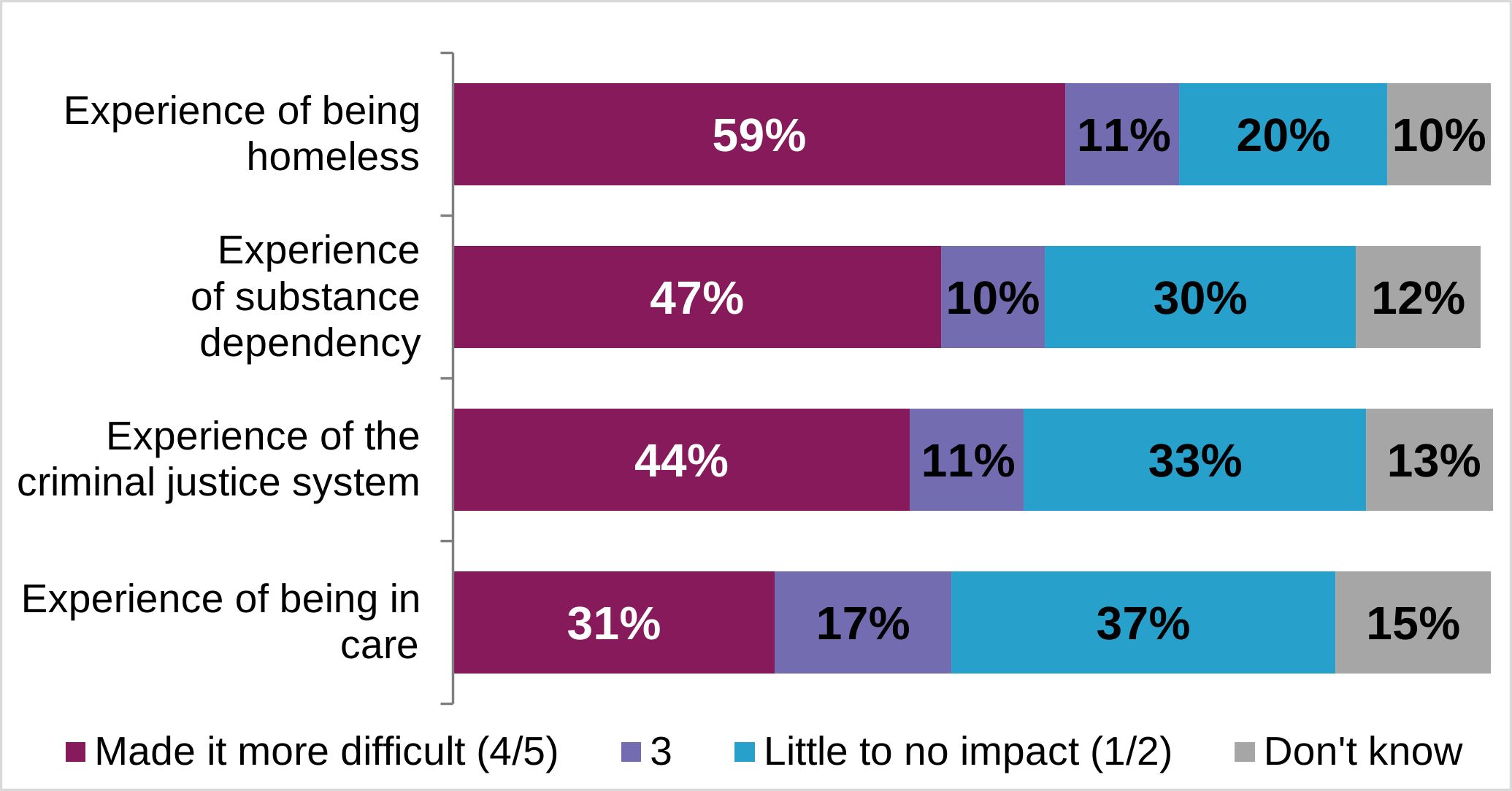
Figure 5.6 Disadvantages and whether they acted as a barrier to employment
Figure 5.6 Disadvantages and whether they acted as a barrier to employment
| Disadvantage | Made it more difficult (4/5) | Percentage | Little to no impact (1/2) | Don’t know |
|---|---|---|---|---|
| Experience of being homeless | 59% | 11% | 20% | 10% |
| Experience of substance dependency | 47% | 10% | 30% | 12% |
| Experience of the criminal justice system | 44% | 11% | 33% | 13% |
| Experience of being in care | 31% | 17% | 37% | 15% |
Q. To what extent has your experience of [disadvantage] made it more difficult to get a job on a scale of 1 to 5?
Base: All UC claimants in the four disadvantaged groups not in employment that experienced specific disadvantages: homelessness (882), substance dependency (713), ex-offender (638), care experienced (1,148).
5.5 Support needs
Access to support
The majority of those not in employment (82%) felt that they had someone they could trust and go to for help if they had a serious problem. This support came from:
-
family members (55%)
-
a friend or friends (45%)
-
a professional (37%)
-
someone else (12%)
Almost all of those not in employment were currently registered with a GP (96%).
Differences in access to support by disadvantaged group and profile
There were certain groups that were less likely to have access to some kind of support network, this included:
-
those that had experienced homelessness (79% compared with 85% of all others)
-
those who faced multiple disadvantages (79%)
-
those from mixed ethnicity or Black backgrounds (68% and 71% respectively)
Claimants in certain disadvantaged groups were also less likely to be registered with a GP:
-
those who had experienced homelessness in the past 2 years (4% not registered compared with 2% of all others)
-
claimants with multiple disadvantages (4% not registered compared to 2% for those in one group)
-
black claimants (7% not registered compared with 2% among other ethnicities)
-
male claimants (4% not registered compared with 1% for female claimants)
Interest in future support
UC claimants not in employment were asked about their interest in support in managing their disadvantage, as well as their physical and mental health (for those with a health condition).
The most common areas of unmet support were: finding stable housing (44% of those that had experienced homelessness were interested in receiving support); managing mental health (34% of those with a health condition); and managing physical health (29% of those with a health condition). These were also among the areas where it was more common for claimants to already be receiving support. In addition, 33% of those who had experienced substance dependency were already receiving support with this, and a further 15% were interested in receiving support.
Figure 5.7 provides a breakdown of interest in support for handling disadvantages.
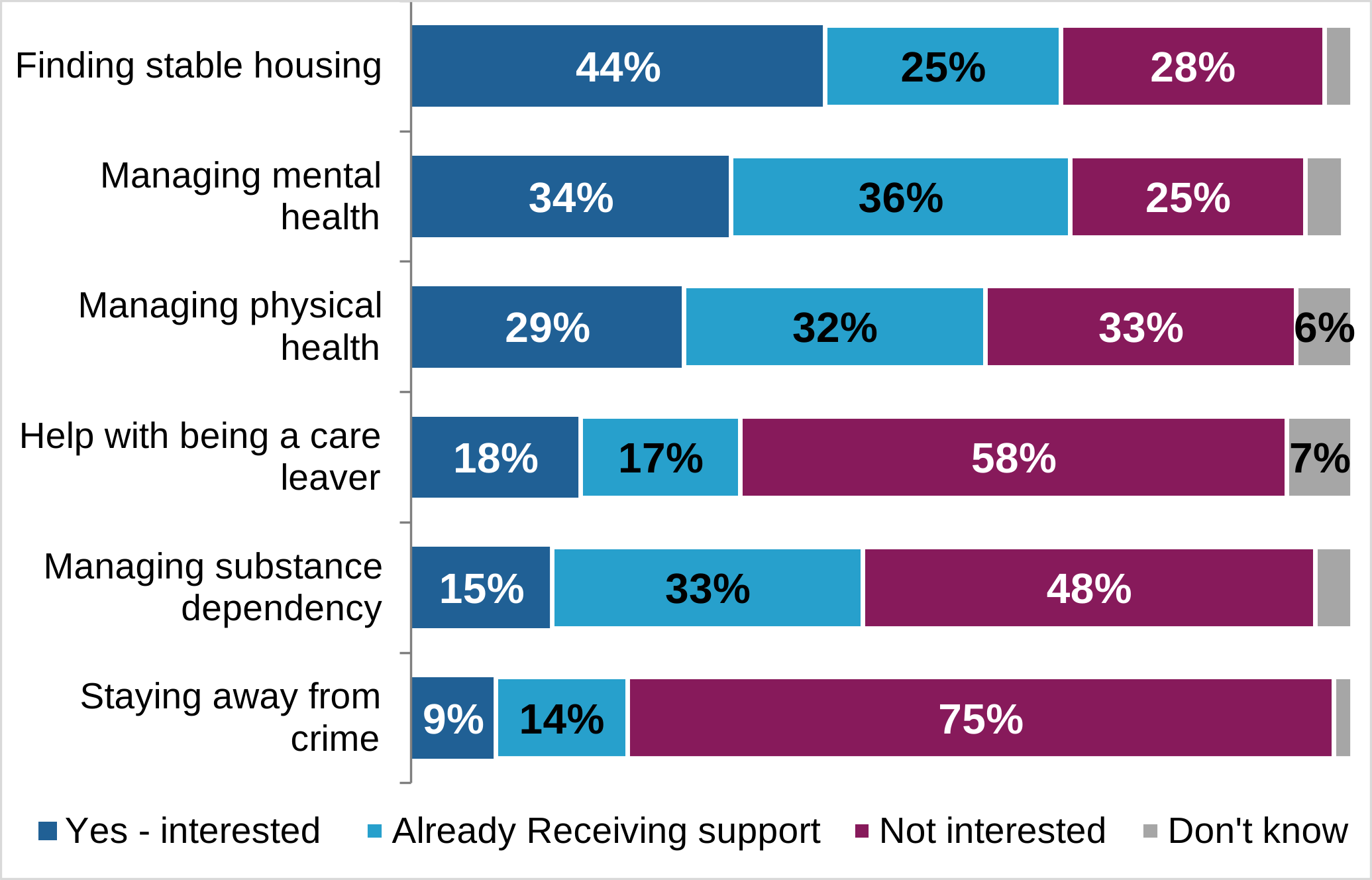
Figure 5.7 Interest in support for handling disadvantages
Figure 5.7 Interest in support for handling disadvantages
| Support for handling disadvantages | Yes - interested | Already Receiving support | Not interested | Don’t know |
|---|---|---|---|---|
| Finding stable housing | 44% | 25% | 28% | 3% |
| Managing mental health | 34% | 36% | 25% | 4% |
| Managing physical health | 29% | 32% | 33% | 6% |
| Help with being a care leaver | 18% | 17% | 58% | 7% |
| Managing substance dependency | 15% | 33% | 48% | 4% |
| Staying away from crime | 9% | 14% | 75% | 2% |
Q. Would you be interested in receiving the following type of support to help you: [disadvantage]. Figures below 5% not shown.
Base: All UC claimants in the four disadvantaged groups not in employment who: have experienced homelessness in the last 2 years (882); health condition (1,786); care leavers (525); substance dependency in the last 2 years (713); ex-offenders (638).
Levels of interest in receiving support with moving towards employment are shown below in Figure 5.8.
The areas claimants tended to be most interested in were improving confidence (31%), accessing education or training (27%) or managing money and debt (24%). However, the majority of those not in employment were not interested in this kind of support at this stage. Interest in this kind of support amongst those that felt they were close to work was higher than others, but the majority still were uninterested.
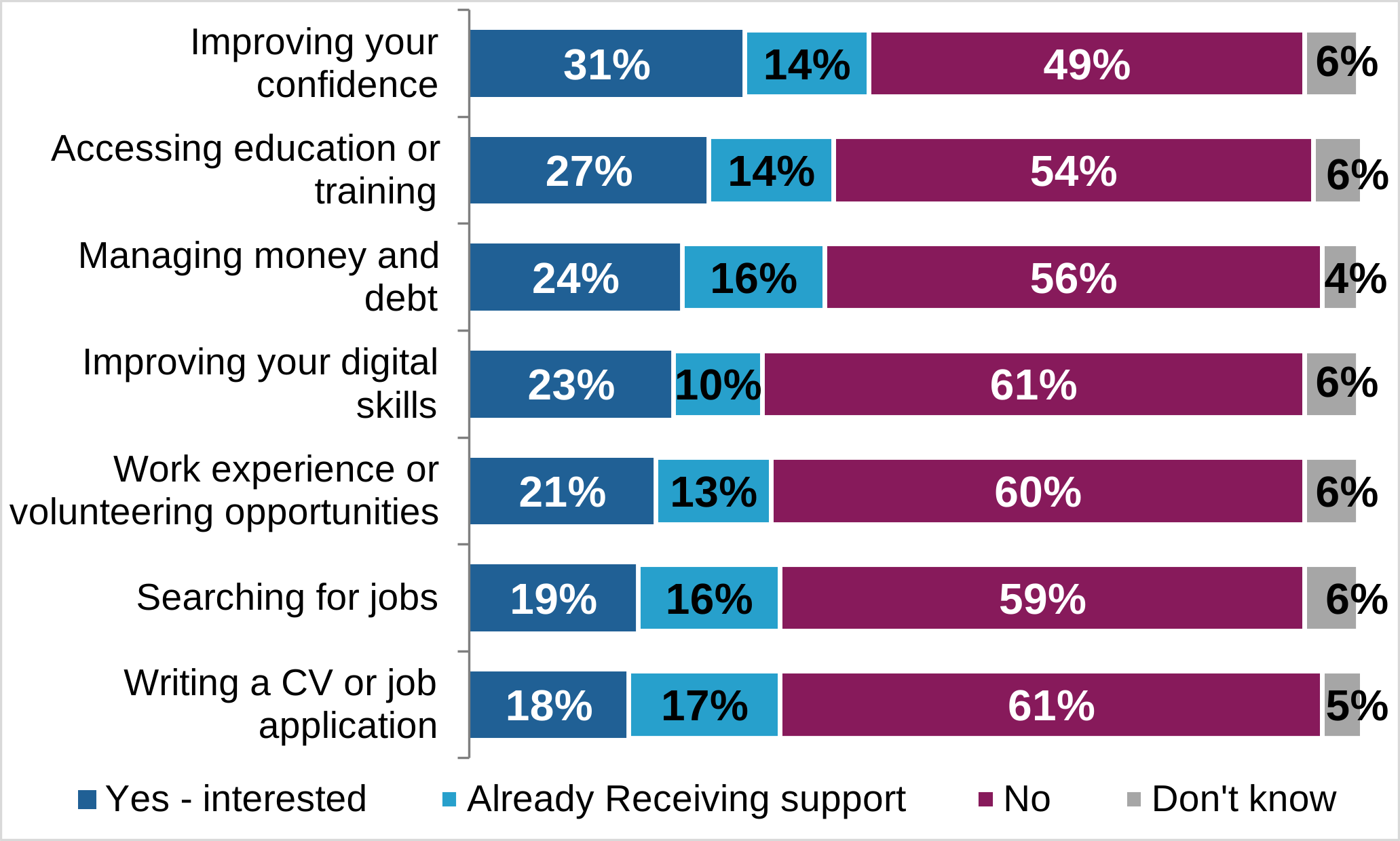
Figure 5.8 Interest in support with moving towards employment
Figure 5.8 Interest in support with moving towards employment
| Support with moving towards employment | Yes - interested | Already Receiving support | No | Don’t know |
|---|---|---|---|---|
| Improving your confidence | 31% | 14% | 49% | 6% |
| Accessing education or training | 27% | 14% | 54% | 6% |
| Managing money and debt | 24% | 16% | 56% | 4% |
| Improving your digital skills | 23% | 10% | 61% | 6% |
| Work experience or volunteering opportunities | 21% | 13% | 60% | 6% |
| Searching for jobs | 19% | 16% | 59% | 6% |
| Writing a CV or job application | 18% | 17% | 61% | 5% |
Q. Would you be interested in receiving the following type of support: [Statement]
Base: All UC claimants in the four disadvantaged groups not in employment (2,427).
5.6 Experience of Jobcentre Plus
Perceptions of work coaches
Among UC claimants in one of the four disadvantaged groups not in employment, 47% had seen a work coach in the last 6 months. Overall, three quarters (76%) of claimants who have spoken to their work coach in the past 6 months were satisfied with the support they have received from them.
Of those who had seen a work coach in the last 6 months, just under half (48%) reported speaking to the same one every time they had an appointment. Just under three fifths (59%) of UC claimants in one of the four disadvantaged groups not in work that had seen a work coach in the last 6 months felt that their work coach understood their needs.
Speaking to the same work coach every time was correlated with whether UC claimants felt comfortable sharing their circumstances with them; those that saw the same one were much more likely to agree that they felt comfortable (82% compared with 64% overall).
Those who saw their work coach weekly or fortnightly also felt more comfortable sharing their circumstances with their work coach (68% compared with 64% overall).
Differences in perceptions of work coaches by disadvantaged group
Experiences of homelessness in past 2 years: less likely to be satisfied with the support that they received from their work coach (72% compared with 79% of all others).
Care experienced: less likely to feel comfortable sharing their circumstances than other disadvantaged claimants (58% compared to 67% of all others).
Substance dependent in past 2 years: less likely to feel comfortable sharing their circumstances than those in a disadvantaged group who had not experienced substance dependency (56% compared to 67% of all others). They were also less likely to feel that their work coach understood their needs (50% compared with 63% for all others).
Levels of agreement with all 3 statements for the different disadvantage groups are shown in Table 5.6.
Table 5.6 Statements about work coach, broken down by disadvantage
| Statements about work coach | Total | Homeless | More or less likely | Substance Dependent | More or less likely | Ex-Offender | Care Experienced | More or less likely |
|---|---|---|---|---|---|---|---|---|
| Base | 1,138 | 457 | Empty cell | 290 | Empty cell | 256 | 571 | Empty cell |
| How satisfied or dissatisfied are you with the support you have received from your work coach? (% satisfied) | 76% | 72% | Less likely | 72% | Empty cell | 75% | 77% | Empty cell |
| I speak with the same work coach every time I have an appointment (% agree) | 48% | 47% | Empty cell | 44% | Empty cell | 48% | 50% | Empty cell |
| I feel comfortable discussing my circumstances with my work coach (% agree) | 64% | 65% | Empty cell | 56% | Less likely | 63% | 58% | Less likely |
| My work coach understands my needs (% agree) | 59% | 57% | Empty cell | 50% | Less likely | 59% | 60% | Empty cell |
Q. How satisfied or dissatisfied are you with the support you have received from your work coach? How much do you agree or disagree with the following statement: [Statement]?
Base: All UC claimants in the four disadvantaged groups not in employment that have spoken to their work coach in the past 6 months (1,138).
Perceptions of work coach support
Small proportions of claimants in one of the four disadvantaged groups reported that they had received support from their work coach specifically for support with their disadvantages, which can be seen below in Figure 5.9. It was most common for claimants that had experienced homelessness in the past 2 years to have received support specifically with being homeless (23%). A minority of care experienced claimants received support in relation to their disadvantage (12%), although this figure rises to 16% among self-reported care leavers.
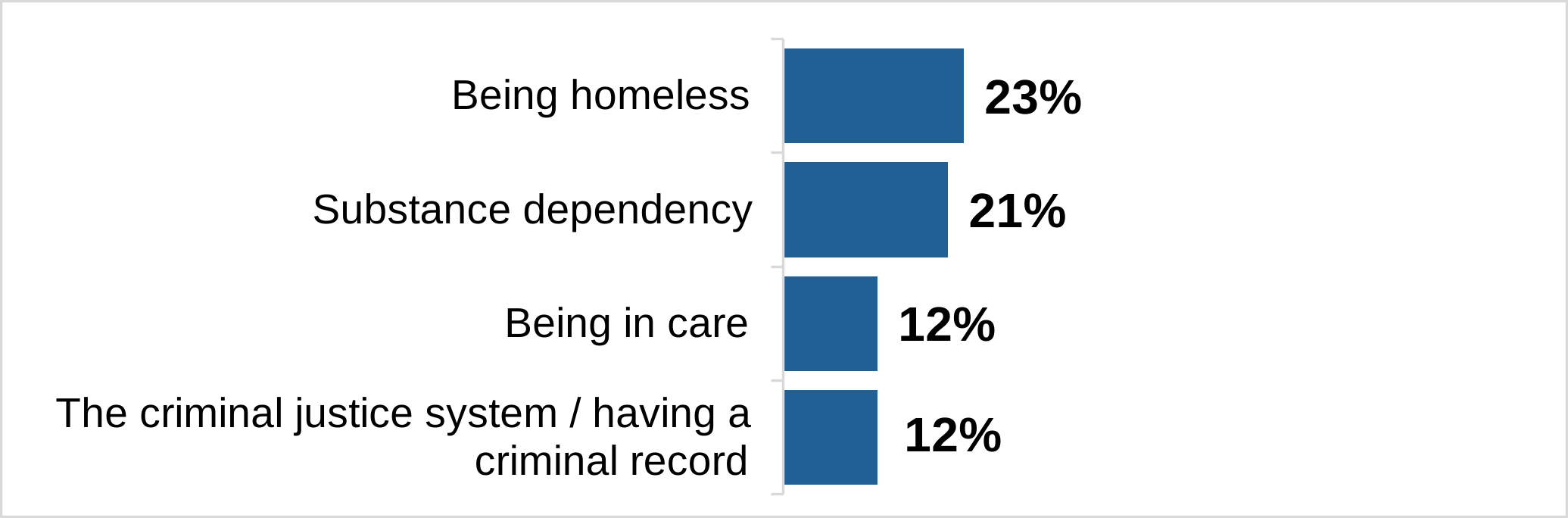
Figure 5.9 Proportion that received support in relation to their disadvantage from their work coach in the past 6 months
Figure 5.9 Proportion that received support in relation to their disadvantage from their work coach in the past 6 months
| Disadvantage | Percentage |
|---|---|
| Being homeless | 23% |
| Substance dependency | 21% |
| Being in care | 12% |
| The criminal justice system / having a criminal record | 12% |
Q. In the past 6 months, have you received support from your work coach with the following?
Base: All UC claimants in the four disadvantaged groups that have spoken to their work coach in the past 6 months who are not in employment and: homelessness (457); care experienced (571); substance dependency (290); ex-offenders (256).
Experience of managing Universal Credit claim
One in five (22%) of claimants in one of the four disadvantaged groups not in employment had experienced a problem with their benefit claim and needed to contact DWP about it.
Differences in experiences of managing Universal Credit claim by disadvantaged group and other characteristics
As shown in Table 5.7 some groups were more likely to encounter problems, including:
-
those that had experienced homelessness in the past 2 years (25% compared with 20% for all others)
-
those with multiple disadvantages (25%)
-
those who were in employment less than 1 year ago (30%)
-
newer claimants with a claim length of 6 to 12 months (29%)
-
those in the Intensive work search Labour Market Regime (28%)
Table 5.7 Whether had to contact DWP due to a problem with benefit claim in the past 6 months, broken down by disadvantage
| Contact with DWP? | Total | Homeless | More or less likely | Substance Dependent | Ex-Offender | Care Experienced |
|---|---|---|---|---|---|---|
| Base | 2,427 | 882 | Empty cell | 713 | 638 | 1,148 |
| Yes | 22% | 25% | More likely | 24% | 22% | 22% |
Q. In the past 6 months have you had any problems with your benefit claim that you needed to contact DWP about?
Base: All UC claimants in the four disadvantaged groups not in employment (2,427).
6. Segmentation - UC claimants in one of the four disadvantaged groups not in employment
This chapter describes a segmentation analysis that was conducted among claimants in the four disadvantaged groups who were not in employment.
6.1 Approach
Throughout this report, we have discussed the profile of claimants, including their employment status, barriers to employment and interest in future support. This chapter discusses a different type of analysis known as segmentation, which looks at patterns in answers given across several different questions. This analysis examines similarities and differences in people’s attitudes and experiences, and clusters people with similar attitudes together. Demographic characteristics were not included in the segmentation, so the profiles were defined exclusively by people’s attitudes and experiences, rather than their characteristics. A Latent Class Analysis was used for this segmentation.
The aim of this segmentation was to create a more detailed understanding of the attitudes and experiences of disadvantaged UC claimants and how that relates to their distance from work. To achieve this, this segmentation focused only on UC claimants in one of the four disadvantaged groups who were not in employment.
The result was a segmentation model of 8 different segments which reflect patterns in responses across multiple different survey questions. This means that the segments describe tendencies towards certain attitudes and characteristics, and so the summaries below will not describe every individual placed into a segment perfectly.
6.2 Profiles of segments
The 8 segmentation profiles display the full spectrum of attitudes and distances from work amongst those not in employment. Four of these segments, (segments A to D) were broadly positive about their work prospects, and the majority thought they could return to work at some point. These four segments varied in the number of barriers they felt they were experiencing, and the extent to which they needed support.
Segment E’s distance from work was more complex, as they felt that it was an achievable goal in the long term, but they were not currently able to seek it out due to the barriers they felt they were experiencing.
In contrast to the first four segments (Segments A, B, C and D), the final 3 segments (Segments F, G and H) contained those who were less likely to be focused on employment. These segments commonly faced health conditions that prevented them from moving towards employment. Again, claimants in the segments that were further from work varied with the number of barriers they were facing and whether they were receiving some form of support.
As the segments progress from A to H, the age profiles tend to get older, reflecting the correlation between age and confidence in ability to work and length of time out of work.
The infographics below outline each of these segment profiles in detail. All comparison figures in these infographics are compared against all disadvantaged UC claimants.
Segments progress from closest to employment to furthest from employment
Segment A (11%)
Younger UC claimants, interested in employment, no interest in work support.
Individuals in this segment have only recently started claiming UC (28% with a claim length of up to 6 months) and are broadly interested in employment, either now (55%) or in the future (38%). They do not think they are experiencing many barriers towards employment and are not interested in additional support. The difficulties they do face are due to a lack of suitable employment opportunities in their area. This segment is closest to the labour market.
Segment B (5%)
Younger, interested in employment and additional support from DWP, more likely to be London-based.
This segment is more likely to be made up of younger people from ethnic minority backgrounds, living in London (33%); they are more likely to have experience of being a refugee (25%) and to have experienced homelessness. As with other young segments, their goals are around creating a foundation for themselves: wanting to get jobs, qualifications and buy a house. They have the most positive attitude about employment, but they are more likely to cite barriers around qualifications and lack of recent experience working.
Segment C (7%)
Younger, only recently become UC claimants, very interested in employment and support.
This is a group of people (often younger), who only recently became UC claimants (18% with a UC claim length of 6 months to a year), are more likely to have experienced homelessness and substance dependency, and believe they are facing multiple barriers 8 in 10 stated their physical or mental health conditions or disabilities are a barrier (80%). Despite these barriers, more than half spontaneously say getting a job is a goal for the next 2 years: 43% are ready to work now, and 47% say working in the future is a possibility with the right support. They may be receiving support from DWP but have unmet support needs.
Segment D (3%)
Younger, interested in employment and currently receiving support.
Individuals in this segment tend to be younger and already receiving additional support in several areas to help them develop their skills, self-confidence and employability. Their goals revolve around creating a foundation for themselves (by getting a job), getting qualifications, and being happy. They are more likely to be lacking in confidence in applying for jobs, a key barrier for this segment alongside few jobs being available where they live.
Segment E (12%)
Long-term sick or disabled, experienced substance dependence, interested in support to get back into employment.
Individuals in this segment are more likely to have experienced substance dependence in the past 2 years and have experienced forms of domestic (44%) and financial abuse (19%). They experience challenges with their mental health (85%), which is the main barrier for them getting into employment. If they receive support, they believe employment could be a more attainable goal in the long term. Reflecting the barriers they face; they are most likely to be interested in support to manage their mental and/or physical health.
Segment F (9%)
Long-term unemployed (LTU), health conditions, facing barriers but no interest in work support.
Individuals in this segment are more likely to be substance dependent and/or be ex-offenders, the 2 disadvantages that appear to have the strongest correlation with being far from work (32% last worked 10+ years ago). This segment tends to be older and have a long-term sickness or disability. They have experienced the largest number of barriers compared to any other segment.
Segment G (5%)
Long-term unemployed (LTU), health conditions that make employment difficult, but currently receiving support.
Individuals in this segment are long-term unemployed (29% last worked 10+ years ago) and experience a multitude of illnesses, health conditions and disabilities, which was the most commonly reported barrier to employment. In addition, around half of this segment have experienced domestic abuse (46%). As a result, these individuals are not focused on employment and instead care about being healthy, surviving, and caring for their family. These people are more likely to already be receiving support from DWP. This segment were also more likely to cite learning difficulties or neurodiversity as a barrier to employment.
Segment H (16%)
Long-term unemployed (LTU), health conditions, no interest in work or work support.
This segment typically have been out of work for a long time (26% last worked 10+ years ago) – possibly due to being more likely to have a criminal conviction (48%) and be older (46% aged 50+). Their motivation to work is very low, despite being less likely to identify concrete barriers outside of the physical or mental health conditions (which they are more likely to be facing). They are mostly focused on the ‘here and now’ – being physically healthy and having a better life or simply surviving. They show little interest in receiving support to help any difficulties they’re facing.
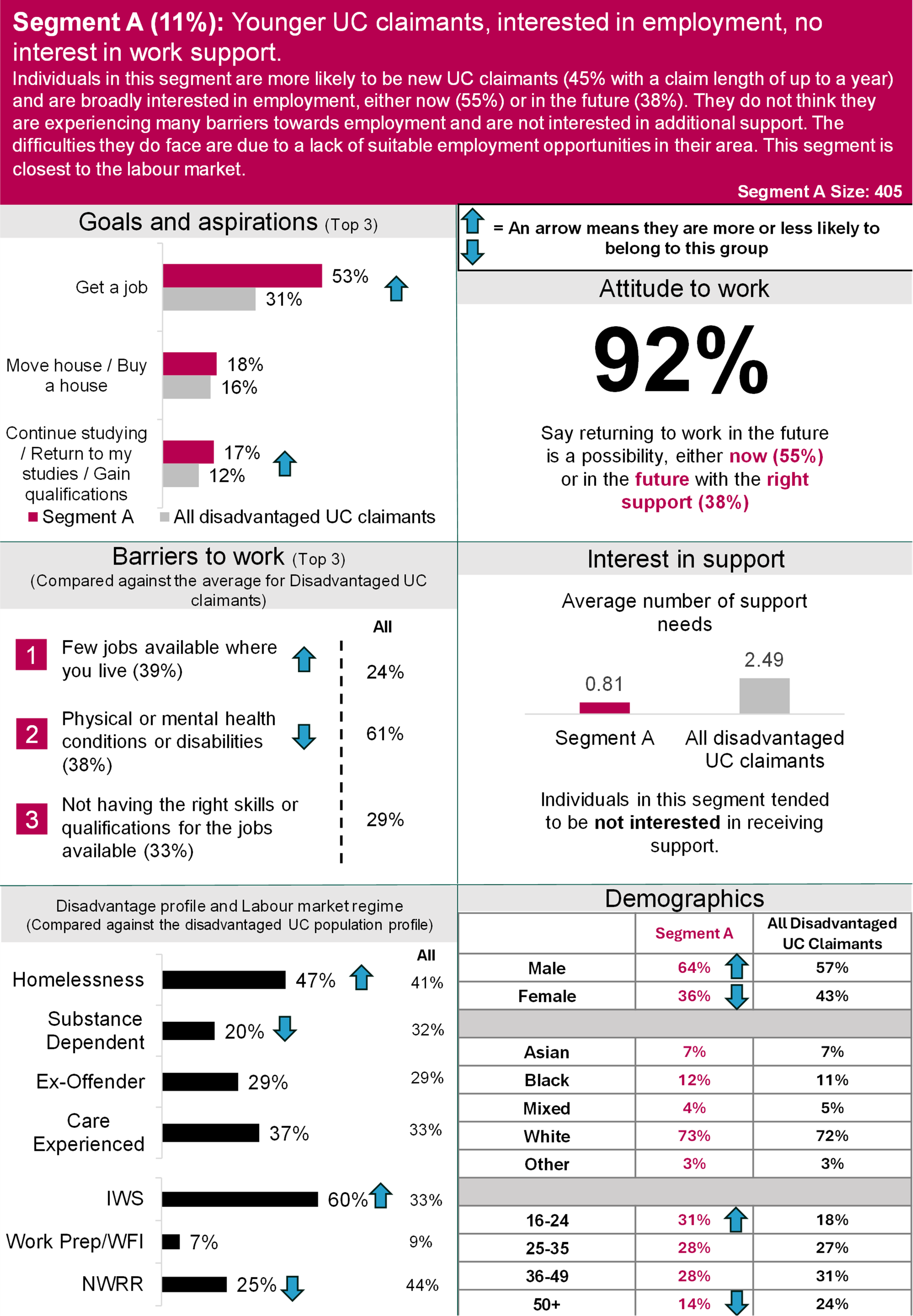
Figure 6.1 Segment A profile
Figure 6.1 Segment A profile
| Goals and aspirations | Segment A | Significant difference compared with all disadvantaged UC claimants | All disadvantaged UC claimants |
|---|---|---|---|
| Get a job | 53% | More likely | 31% |
| Move house or buy a house | 18% | Empty cell | 16% |
| Continue studying / Return to my studies / Gain qualifications | 17% | More likely | 12% |
Figure 6.1 Segment A profile
| Attitude to work | Segment A | Significant difference compared with all disadvantaged UC claimants | All disadvantaged UC claimants |
|---|---|---|---|
| Returning to work is a possibility now | 55% | Empty cell | Empty cell |
| Returning to work Is a possibility in the future with the right support | 38% | Empty cell | Empty cell |
| Total | 92% | Empty cell | Empty cell |
| Barriers to work | Segment A | Significant difference compared with all disadvantaged UC claimants | All disadvantaged UC claimants |
|---|---|---|---|
| Few jobs available where you live | 39% | More likely | 24% |
| Physical or mental health conditions or disabilities | 38% | Less likely | 61% |
| Not having the right skills or qualifications for the jobs available | 33% | Empty cell | 29% |
| Disadvantage profile and labour market regime | Segment A | Significant difference compared with all disadvantaged UC claimants | All disadvantaged UC claimants |
|---|---|---|---|
| Homelessness | 47% | More likely | 41% |
| Substance Dependent | 20% | Less likely | 32% |
| Ex-Offender | 29% | Empty cell | 29% |
| Care Experienced | 37% | Empty cell | 33% |
| IWS | 60% | More likely | 33% |
| Work Prep/WFI | 7% | Empty cell | 9% |
| NWRR | 25% | Less likely | 44% |
Figure 6.1 Segment A profile
| Demographic | Segment A | Significant difference compared with all disadvantaged UC claimants | All disadvantaged UC claimants |
|---|---|---|---|
| Male | 64% | More likely | 57% |
| Female | 36% | Less likely | 43% |
| Asian | 7% | Empty cell | 7% |
| Black | 12% | Empty cell | 11% |
| Mixed | 4% | Empty cell | 5% |
| White | 73% | Empty cell | 72% |
| Other | 3% | Empty cell | 3% |
| 16 to 24 | 31% | More likely | 18% |
| 25 to 35 | 28% | Empty cell | 27% |
| 36 to 49 | 28% | Empty cell | 31% |
| 50+ | 14% | Less likely | 24% |
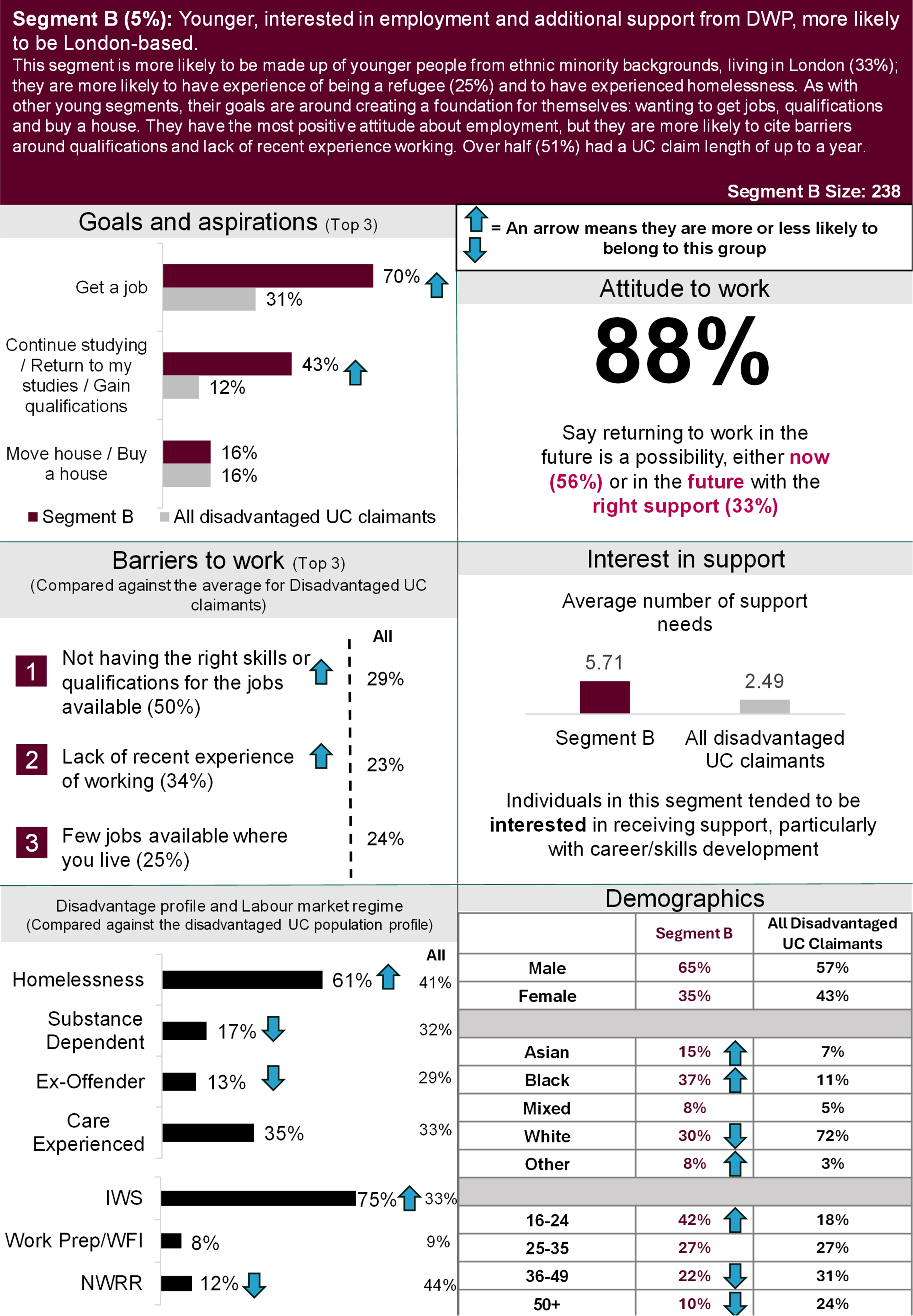
Figure 6.2 Segment B profile
Figure 6.2 Segment B profile
| Goals and aspirations | Segment B | Significant difference compared with all disadvantaged UC claimants | All disadvantaged UC claimants |
|---|---|---|---|
| Get a job | 70% | More likely | 31% |
| Continue studying or Return to my studies or Gain qualifications | 43% | More likely | 12% |
| Move house or Buy a house | 16% | Empty cell | 16% |
| Attitude to work | Segment B | Significant difference compared with all disadvantaged UC claimants | All disadvantaged UC claimants |
|---|---|---|---|
| Returning to work is a possibility now | 56% | Empty cell | Empty cell |
| Returning to work Is a possibility in the future with the right support | 33% | Empty cell | Empty cell |
| Total | 88% | Empty cell | Empty cell |
| Barriers to work | Segment B | Significant difference compared with all disadvantaged UC claimants | All disadvantaged UC claimants |
|---|---|---|---|
| Not having the right skills or qualifications for the jobs available | 50% | More likely | 29% |
| Lack of recent experience of working | 34% | More likely | 23% |
| Few jobs available where you live | 25% | Empty cell | 24% |
| Disadvantage profile and labour market regime | Segment B | Significant difference compared with all disadvantaged UC claimants | All disadvantaged UC claimants |
|---|---|---|---|
| Homelessness | 61% | More likely | 41% |
| Substance Dependent | 17% | Less likely | 32% |
| Ex-Offender | 13% | Less likely | 29% |
| Care Experienced | 35% | Empty cell | 33% |
| IWS | 75% | More likely | 33% |
| Work Prep or WFI | 8% | Empty cell | 9% |
| NWRR | 12% | Less likely | 44% |
| Demographic | Segment B | Significant difference compared with all disadvantaged UC claimants | All disadvantaged UC claimants |
|---|---|---|---|
| Male | 65% | Empty cell | 57% |
| Female | 35% | Empty cell | 43% |
| Asian | 15% | More likely | 7% |
| Black | 37% | More likely | 11% |
| Mixed | 8% | Empty cell | 5% |
| White | 30% | Less likely | 72% |
| Other | 8% | More likely | 3% |
| 16 to 24 | 42% | More likely | 18% |
| 25 to 35 | 27% | Empty cell | 27% |
| 36 to 49 | 22% | Less likely | 31% |
| 50+ | 10% | Less likely | 24% |
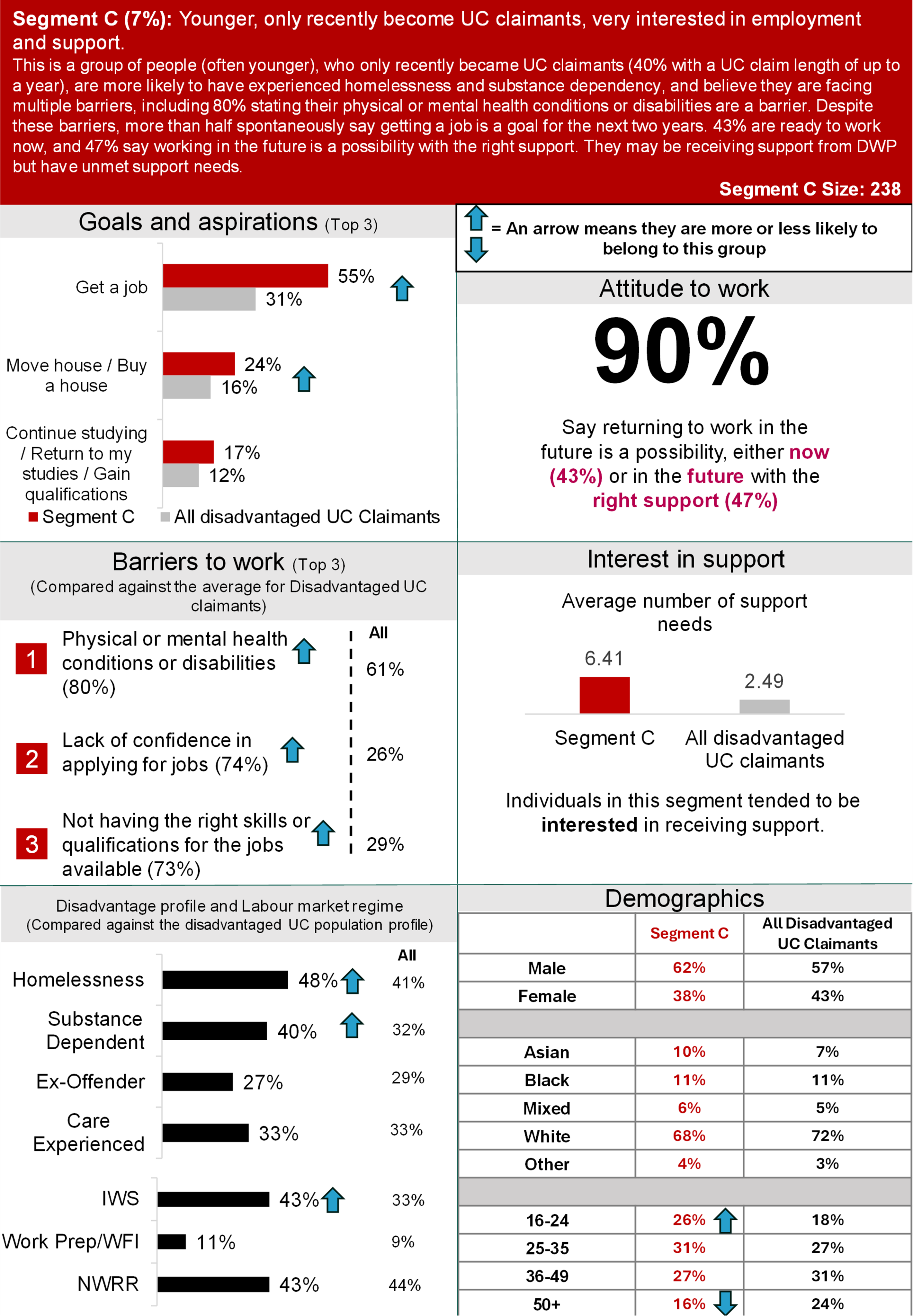
Figure 6.3 Section C profile
Figure 6.3 Section C profile
| Goals and aspirations | Segment C | Significant difference compared with all disadvantaged UC claimants | All disadvantaged UC claimants |
|---|---|---|---|
| Get a job | 55% | More likely | 31% |
| Move house or Buy a house | 24% | More likely | 16% |
| Continue studying or Return to my studies or Gain qualifications | 17% | Empty cell | 12% |
Figure 6.3 Segment C profile
| Attitude to work | Segment C | Significant difference compared with all disadvantaged UC claimants | All disadvantaged UC claimants |
|---|---|---|---|
| Returning to work is a possibility now | 43% | Empty cell | Empty cell |
| Returning to work Is a possibility in the future with the right support | 47% | Empty cell | Empty cell |
| Total | 90% | Empty cell | Empty cell |
| Barriers to work | Segment C | Significant difference compared with all disadvantaged UC claimants | All disadvantaged UC claimants |
|---|---|---|---|
| Physical or mental health conditions or disabilities | 80% | More likely | 61% |
| Lack of confidence in applying for jobs | 74% | More likely | 26% |
| Not having the right skills or qualifications for the jobs available | 73% | More likely | 29% |
| Disadvantage profile and labour market regime | Segment C | Significant difference compared with all disadvantaged UC claimants | All disadvantaged UC claimants |
|---|---|---|---|
| Substance Dependent | 40% | More likely | 32% |
| Ex-Offender | 27% | Empty cell | 29% |
| Care Experienced | 33% | Empty cell | 33% |
| IWS | 43% | More likely | 33% |
| Work Prep or WFI | 11% | Empty cell | 9% |
| NWRR | 43% | Empty cell | 44% |
| Demographic | Segment C | Significant difference compared with all disadvantaged UC claimants | All disadvantaged UC claimants |
|---|---|---|---|
| Male | 62% | Empty cell | 57% |
| Female | 38% | Empty cell | 43% |
| Asian | 10% | Empty cell | 7% |
| Black | 11% | Empty cell | 11% |
| Mixed | 6% | Empty cell | 5% |
| White | 68% | Empty cell | 72% |
| Other | 4% | Empty cell | 3% |
| 16 to 24 | 26% | More likely | 18% |
| 25 to 35 | 31% | Empty cell | 27% |
| 36 to 49 | 27% | Empty cell | 31% |
| 50+ | 16% | Less likely | 24% |
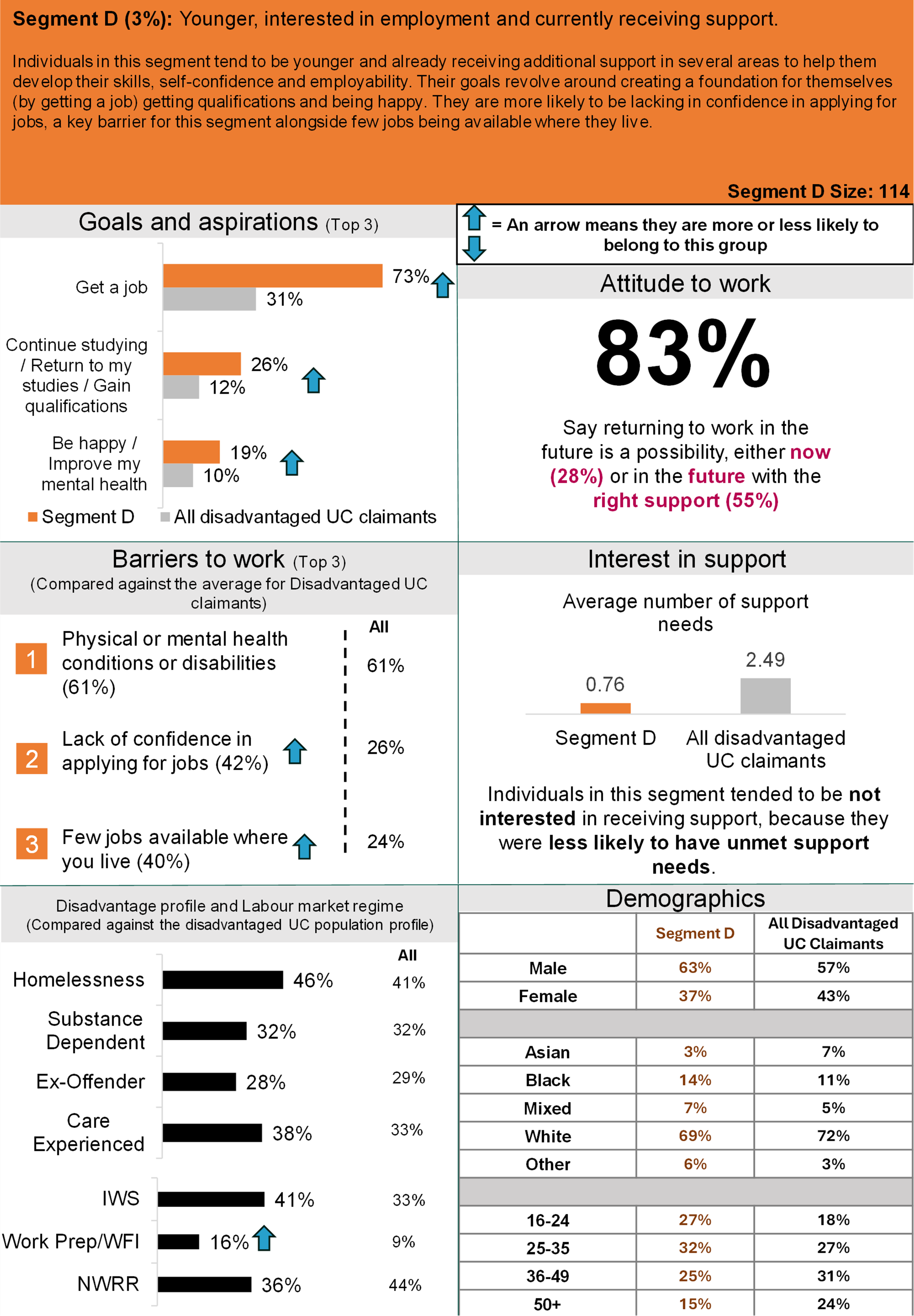
Figure 6.4 Segment D profile
Figure 6.4 Segment D profile
| Goals and aspirations | Segment D | Significant difference compared with all disadvantaged UC claimants | All disadvantaged UC claimants |
|---|---|---|---|
| Get a job | 73% | More likely | 31% |
| Continue studying or Return to my studies or Gain qualifications | 26% | More likely | 12% |
| Be happy or Improve my mental health | 19% | More likely | 10% |
| Attitude to work | Segment D | Significant difference compared with all disadvantaged UC claimants | All disadvantaged UC claimants |
|---|---|---|---|
| Returning to work is a possibility now | 28% | Empty cell | Empty cell |
| Returning to work is a possibility in the future with the right support | 55% | Empty cell | Empty cell |
| Total | 83% | Empty cell | Empty cell |
| Barriers to work | Segment D | Significant difference compared with all disadvantaged UC claimants | All disadvantaged UC claimants |
|---|---|---|---|
| Physical or mental health conditions or disabilities | 61% | Empty cell | 61% |
| Lack of confidence in applying for jobs | 42% | More likely | 26% |
| Few jobs available where you live | 40% | More likely | 24% |
| Interest in support | Segment D | Significant difference compared with all disadvantaged UC claimants | All disadvantaged UC claimants |
|---|---|---|---|
| Average number of support needs | 0.76 | Empty cell | 2.49 |
| Disadvantage profile and labour market regime | Segment D | Significant difference compared with all disadvantaged UC claimants | All disadvantaged UC claimants |
|---|---|---|---|
| Homelessness | 46% | Empty cell | 41% |
| Substance Dependent | 32% | Empty cell | 32% |
| Ex-Offender | 28% | Empty cell | 29% |
| Care Experienced | 38% | Empty cell | 33% |
| IWS | 41% | Empty cell | 33% |
| Work Prep or WFI | 16% | More likely | 9% |
| NWRR | 36% | Empty cell | 44% |
| Demographic | Segment D | Significant difference compared with all disadvantaged UC claimants | All disadvantaged UC claimants |
|---|---|---|---|
| Male | 63% | Empty cell | 57% |
| Female | 37% | Empty cell | 43% |
| Asian | 3% | Empty cell | 7% |
| Black | 14% | Empty cell | 11% |
| Mixed | 7% | Empty cell | 5% |
| White | 69% | Empty cell | 72% |
| Other | 6% | Empty cell | 3% |
| 16 to 24 | 27% | Empty cell | 18% |
| 25 to 35 | 32% | Empty cell | 27% |
| 36 to 49 | 25% | Empty cell | 31% |
| 50+ | 15% | Empty cell | 24% |
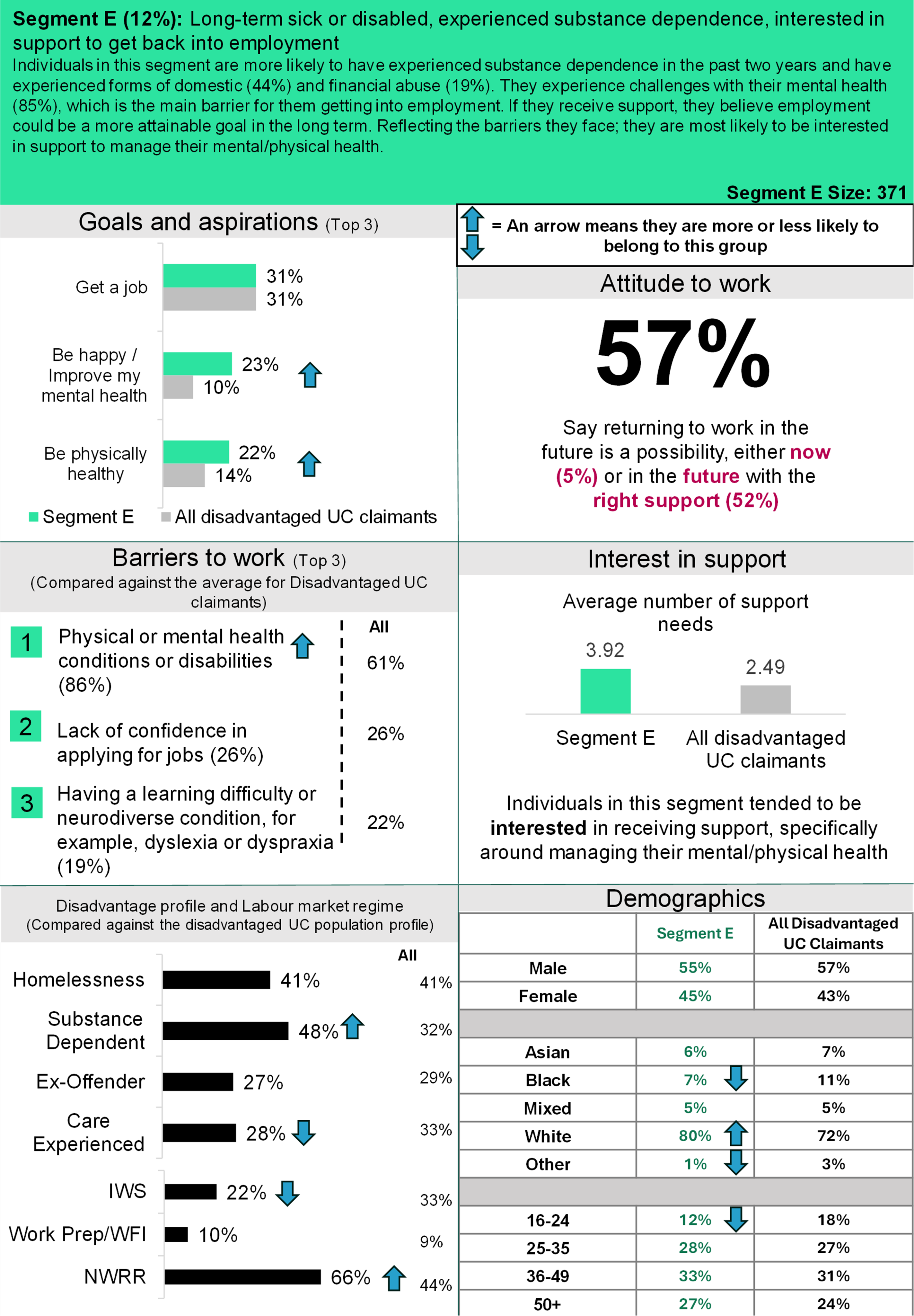
Figure 6.5 Segment E profile
| Goals and aspirations | Segment E | Significant difference compared with all disadvantaged UC claimants | All disadvantaged UC claimants |
|---|---|---|---|
| Get a job | 31% | Empty cell | 31% |
| Be happy or Improve my mental health | 23% | More likely | 10% |
| Be physically healthy | 22% | More likely | 14% |
| Barriers to work | Segment E | Significant difference compared with all disadvantaged UC claimants | All disadvantaged UC claimants |
|---|---|---|---|
| Physical or mental health conditions or disabilities | 86% | More likely | 61% |
| Lack of confidence in applying for jobs | 26% | Empty cell | 26% |
| Having a learning difficulty or neurodiverse condition, for example, dyslexia or dyspraxia | 19% | Empty cell | 22% |
| Interest in support | Segment E | Significant difference compared with all disadvantaged UC claimants | All disadvantaged UC claimants |
|---|---|---|---|
| Average number of support needs | 3.92 | Empty cell | 2.49 |
| Disadvantage profile and labour market regime | Segment E | Significant difference compared with all disadvantaged UC claimants | All disadvantaged UC claimants |
|---|---|---|---|
| Homelessness | 41% | Empty cell | 41% |
| Substance Dependent | 48% | More likely | 32% |
| Ex-Offender | 27% | Empty cell | 29% |
| Care Experienced | 28% | Less likely | 33% |
| IWS | 22% | Less likely | 33% |
| Work Prep or WFI | 10% | Empty cell | 9% |
| NWRR | 66% | More likely | 44% |
| Demographic | Segment E | Significant difference compared with all disadvantaged UC claimants | All disadvantaged UC claimants |
|---|---|---|---|
| Male | 55% | Empty cell | 57% |
| Female | 45% | Empty cell | 43% |
| Asian | 6% | Empty cell | 7% |
| Black | 7% | Less likely | 11% |
| Mixed | 5% | Empty cell | 5% |
| White | 80% | More likely | 72% |
| Other | 1% | Less likely | 3% |
| 16 to 24 | 12% | Less likely | 18% |
| 25 to 35 | 28% | Empty cell | 27% |
| 36 to 49 | 33% | Empty cell | 31% |
| 50+ | 27% | Empty cell | 24% |
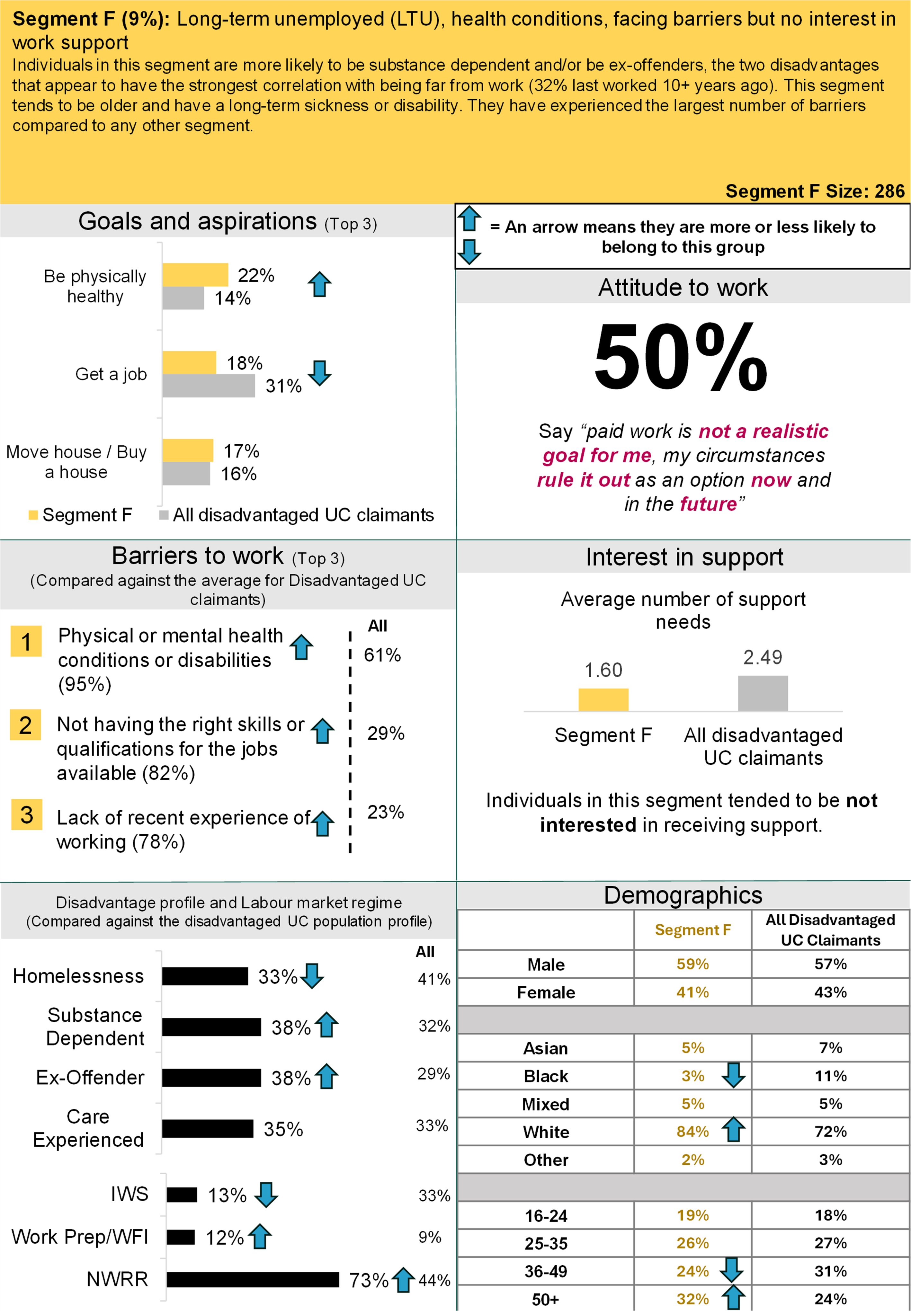
Figure 6.6 Segment F profile
Figure 6.6 Segment F profile
| Goals and aspirations | Segment F | Significant difference compared with all disadvantaged UC claimants | All disadvantaged UC claimants |
|---|---|---|---|
| Be physically healthy | 22% | More likely | 14% |
| Get a job | 18% | Less likely | 31% |
| Move house or Buy a house | 17% | Empty cell | 16% |
| Attitude to work | Segment F | Significant difference compared with all disadvantaged UC claimants | All disadvantaged UC claimants |
|---|---|---|---|
| Paid work is not a realistic goal for me, my circumstances rule it out as an option now and in the future | 50% | Empty cell | Empty cell |
| Barriers to work | Segment F | Significant difference compared with all disadvantaged UC claimants | All disadvantaged UC claimants |
|---|---|---|---|
| Physical or mental health conditions or disabilities | 95% | More likely | 61% |
| Not having the right skills or qualifications for the jobs available | 82% | More likely | 29% |
| Lack of recent experience of working | 78% | More likely | 23% |
| Interest in support | Segment F | Significant difference compared with all disadvantaged UC claimants | All disadvantaged UC claimants |
|---|---|---|---|
| Average number of support needs | 1.60 | Empty cell | 2.49 |
| Disadvantage profile and labour market regime | Segment F | Significant difference compared with all disadvantaged UC claimants | All disadvantaged UC claimants |
|---|---|---|---|
| Homelessness | 33% | Less likely | 41% |
| Substance Dependent | 38% | More likely | 32% |
| Ex-Offender | 38% | More likely | 29% |
| Care Experienced | 35% | Empty cell | 33% |
| IWS | 13% | Less likely | 33% |
| Work Prep or WFI | 12% | More likely | 9% |
| NWRR | 73% | More likely | 44% |
| Demographic | Segment F | Significant difference compared with all disadvantaged UC claimants | All disadvantaged UC claimants |
|---|---|---|---|
| Male | 59% | Empty cell | 57% |
| Female | 41% | Empty cell | 43% |
| Asian | 5% | Empty cell | 7% |
| Black | 3% | Less likely | 11% |
| Mixed | 5% | Empty cell | 5% |
| White | 84% | More likely | 72% |
| Other | 2% | Empty cell | 3% |
| 16 to 24 | 19% | Empty cell | 18% |
| 25 to 35 | 26% | Empty cell | 27% |
| 36 to 49 | 24% | Less likely | 31% |
| 50+ | 32% | More likely | 24% |
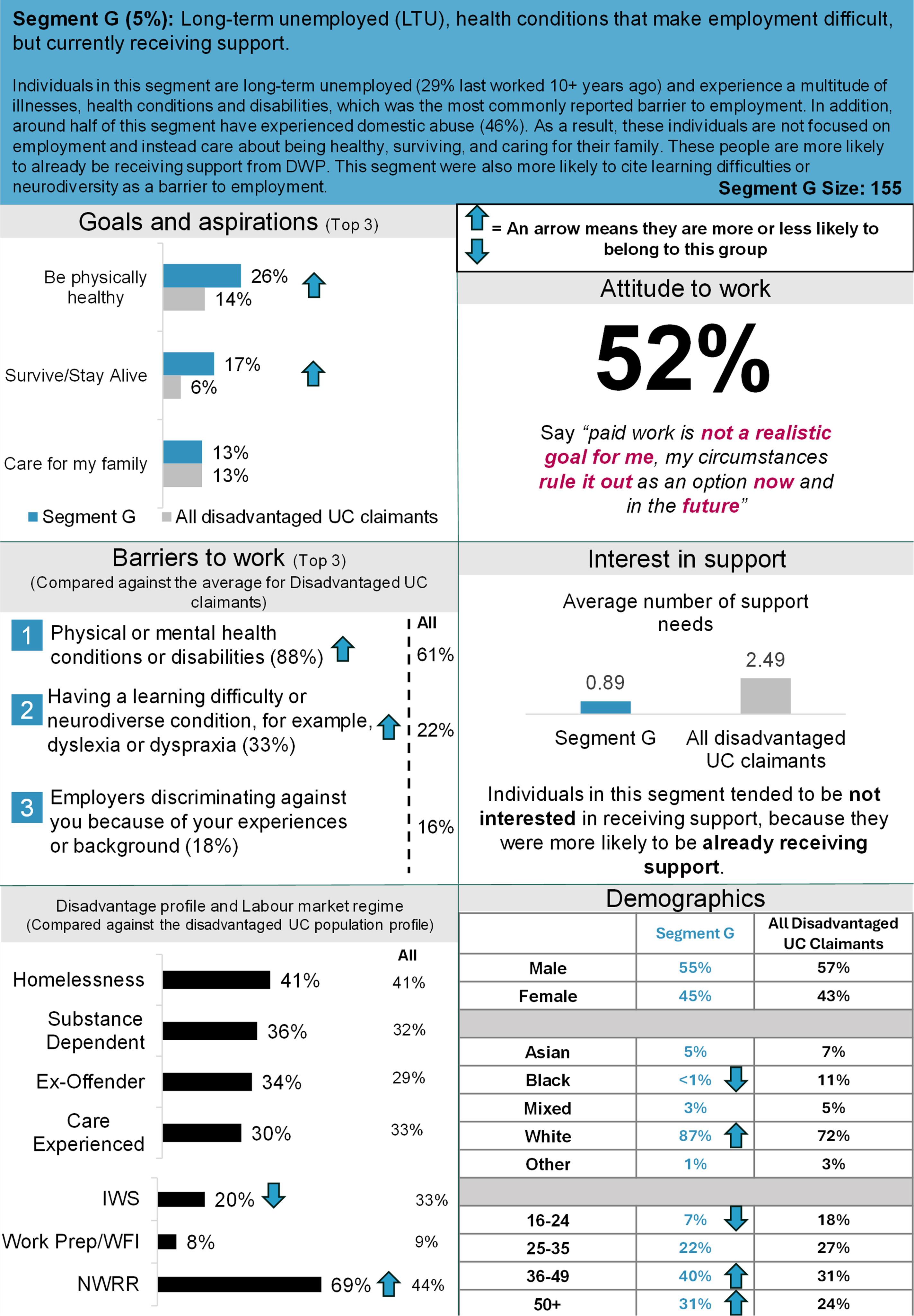
Figure 6.7 Segment G profile
Figure 6.7 Segment G profile
| Goals and aspirations | Segment G | Significant difference compared with all disadvantaged UC claimants | All disadvantaged UC claimants |
|---|---|---|---|
| Be physically healthy | 26% | More likely | 14% |
| Survive or Stay alive | 17% | More likely | 6% |
| Care for my family | 13% | Empty cell | 13% |
| Attitude to work | Segment G | Significant difference compared with all disadvantaged UC claimants | All disadvantaged UC claimants |
|---|---|---|---|
| Paid work is not a realistic goal for me, my circumstances rule it out as an option now and in the future | 52% | Empty cell | Empty cell |
| Barriers to work | Segment G | Significant difference compared with all disadvantaged UC claimants | All disadvantaged UC claimants |
|---|---|---|---|
| Physical or mental health conditions or disabilities | 88% | More likely | 61% |
| Having a learning difficulty or neurodiverse condition, for example, dyslexia or dyspraxia | 33% | More likely | 22% |
| Employers discriminating against you because of your experiences or background | 18% | Empty cell | 16% |
| Interest in support | Segment G | Significant difference compared with all disadvantaged UC claimants | All disadvantaged UC claimants |
|---|---|---|---|
| Average number of support needs | 0.89 | Empty cell | 2.49 |
| Disadvantage profile and labour market regime | Segment G | Significant difference compared with all disadvantaged UC claimants | All disadvantaged UC claimants |
|---|---|---|---|
| Homelessness | 41% | Less likely | 41% |
| Substance Dependent | 36% | More likely | 32% |
| Ex-Offender | 34% | Empty cell | 29% |
| Care Experienced | 30% | Empty cell | 33% |
| IWS | 20% | Less likely | 33% |
| Work Prep or WFI | 8% | Empty cell | 9% |
| NWRR | 69% | More likely | 44% |
| Demographic | Segment G | Significant difference compared with all disadvantaged UC claimants | All disadvantaged UC claimants |
|---|---|---|---|
| Male | 55% | Empty cell | 57% |
| Asian | 5% | Empty cell | 7% |
| Black | Greater than 1% | Less likely | 11% |
| Mixed | 3% | Empty cell | 5% |
| White | 87% | More likely | 72% |
| Other | 1% | Empty cell | 3% |
| 16 to 24 | 7% | Less likely | 18% |
| 25 to 35 | 22% | Empty cell | 27% |
| 36 to 49 | 40% | More likely | 31% |
| 50+ | 31% | More likely | 24% |
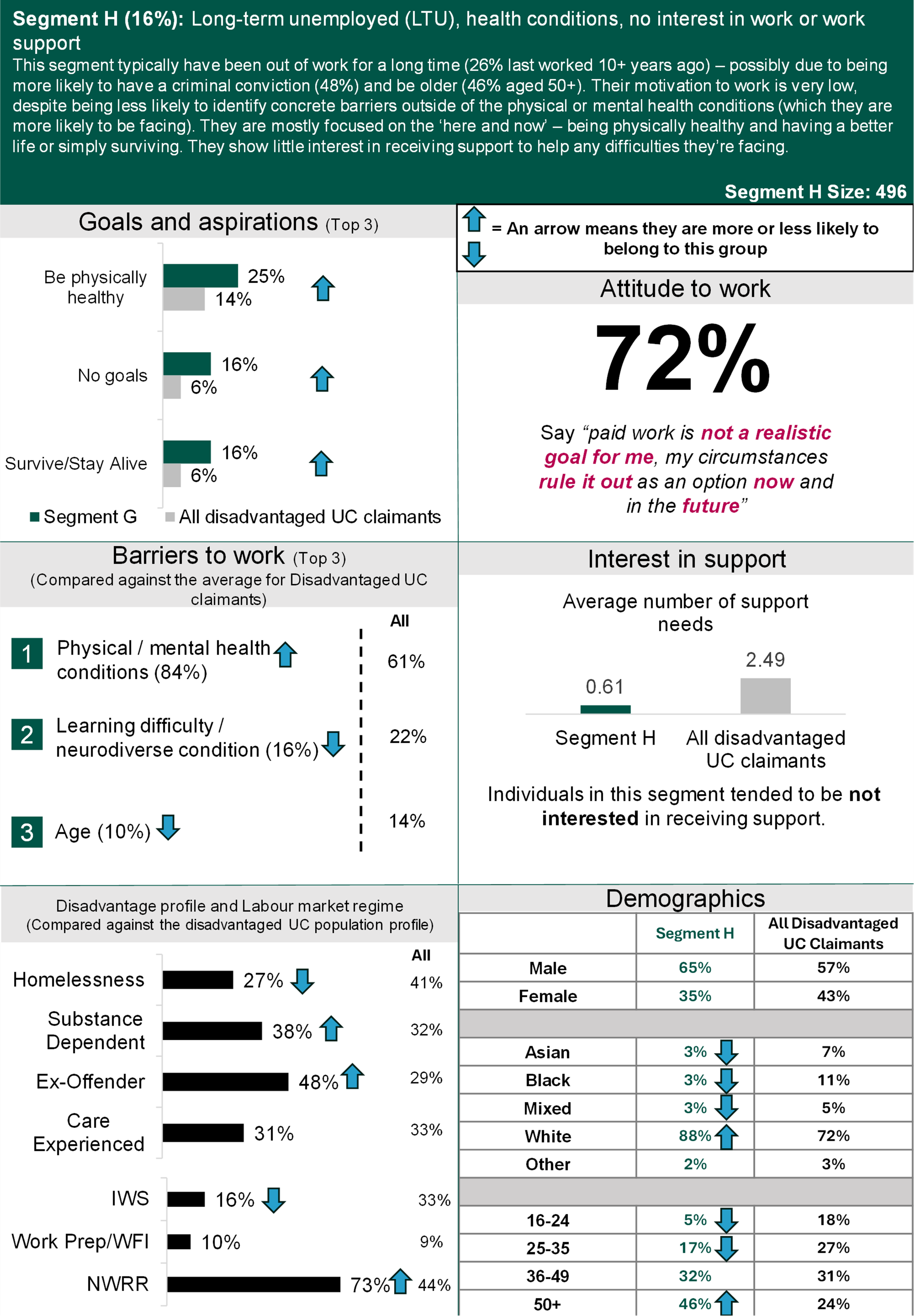
Figure 6.8 Segment H profile
Figure 6.8 Segment H profile
| Goals and aspirations | Segment G | Significant difference compared with all disadvantaged UC claimants | All disadvantaged UC claimants |
|---|---|---|---|
| Be physically healthy | 25% | More likely | 14% |
| No goals | 16% | More likely | 6% |
| Survive or Stay alive | 16% | More likely | 6% |
| Attitude to work | Segment G | Significant difference compared with all disadvantaged UC claimants | All disadvantaged UC claimants |
|---|---|---|---|
| Paid work is not a realistic goal for me, my circumstances rule it out as an option now and in the future | 72% | Empty cell | Empty cell |
| Barriers to work | Segment G | Significant difference compared with all disadvantaged UC claimants | All disadvantaged UC claimants |
|---|---|---|---|
| Physical or mental health conditions or disabilities | 84% | More likely | 61% |
| Learning difficulty or neurodiverse condition | 16% | Less likely | 22% |
| Age | 10% | Less likely | 14% |
| Interest in support | Segment G | Significant difference compared with all disadvantaged UC claimants | All disadvantaged UC claimants |
|---|---|---|---|
| Average number of support needs | 0.61 | Empty cell | 2.49 |
| Disadvantage profile and labour market regime | Segment G | Significant difference compared with all disadvantaged UC claimants | All disadvantaged UC claimants |
|---|---|---|---|
| Homelessness | 27% | Less likely | 41% |
| Substance Dependent | 38% | More likely | 32% |
| Ex-Offender | 48% | More likely | 29% |
| IWS | 16% | Less likely | 33% |
| Work Prep or WFI | 10% | Empty cell | 9% |
| NWRR | 73% | More likely | 44% |
| Demographic | Segment G | Significant difference compared with all disadvantaged UC claimants | All disadvantaged UC claimants |
|---|---|---|---|
| Male | 65% | Empty cell | 57% |
| Female | 35% | Empty cell | 43% |
| Asian | 3% | Less likely | 7% |
| Black | 3% | Less likely | 11% |
| Mixed | 3% | Less likely | 5% |
| White | 88% | More likely | 72% |
| Other | 2% | Empty cell | 3% |
| 16 to 24 | 5% | Less likely | 18% |
| 25 to 35 | 17% | Less likely | 27% |
| 36 to 49 | 32% | Empty cell | 31% |
| 50+ | 46% | More likely | 24% |
7. Conclusions
This research found that 1 in 5 (21%) Universal Credit claimants have experienced at least one of four types of disadvantage (being an ex-offender, being care experienced, experiencing homelessness in the past 2 years, or experiencing substance dependency in the past 2 years), and that 6% of claimants have experienced multiple forms of disadvantage.
Only a minority (27%) were in employment, and around half of this group had jobs with permanent or open ended contracts (55%); but more unpredictable work is not uncommon, through zero-hours contracts (12%) or temporary or seasonal work (9%). Around a third reported no challenges to staying in work, but a further third said that their mental and physical health has caused difficulties (the main challenge for this group). Of the four disadvantages, experience of homelessness was most likely to be cited as a barrier to staying in work. In line with this, disadvantaged claimants in employment tended to be most interested in support with finding stable housing, and their mental or physical health. Over the next 2 years, these claimants were most likely to say a primary goal is getting or changing job (36%); this aligns with relatively strong interest in support to increase earnings (46% interested in this support).
The vast majority (72%) of disadvantaged claimants were not in work, but again the most common goal over the next 2 years was getting a job (33%). Over half of this group of claimants in the four disadvantaged groups who were not in employment felt that returning to work was a possibility with the right support (55%).
The most common barrier to work for those claimants in one of the four disadvantaged groups who were not in employment related to physical or mental health conditions or disabilities (72%). Skills (33%) and a lack of confidence in applying for jobs (30%) were also significant barriers to employment for this group. When asked what help they would like with the specific barriers they faced, it was most common for there to be an appetite for support relating to finding stable housing (44% of those who had experienced homelessness in the past 2 years) and mental health issues (34% of those with a health condition). This was more likely to be of interest than support regarding moving towards employment: 31% were interested in support related to improving their confidence and 27% related to accessing education or training.
As shown in the segmentation analysis, there is a broad range of experiences, backgrounds, support needs, and attitudes within the population of UC claimants in the four disadvantaged groups. Support regarding moving these claimants towards employment will need to address those who are closer to work, as well as those for whom support may be more varied, cross-cutting, and complex to deliver. For many claimants, addressing health issues as well as providing support related to specific disadvantaged experiences, alongside providing employment support, would be important for moving claimants towards work.
8. Annex 1 - Profiles of individual disadvantaged groups
This section provides profiles of each of the disadvantaged groups as well as for UC claimants in multiple disadvantaged groups. This covers:
-
overlaps with other disadvantaged groups
-
experiences of other forms of disadvantage
-
qualifications
-
demographics including age, sex, household composition and ethnicity
-
Government Office Region
-
UC Labour Market Regime
-
UC claim length
-
mental and physical health
-
internet access and confidence in using it
-
employment status
-
employment history
-
breakdown of specific disadvantaged experience
-
attitude to work
-
top 3 goals and aspirations
-
sources of support
8.1 Substance dependent profile compared to all UC claimants in a disadvantaged group who are not substance dependent
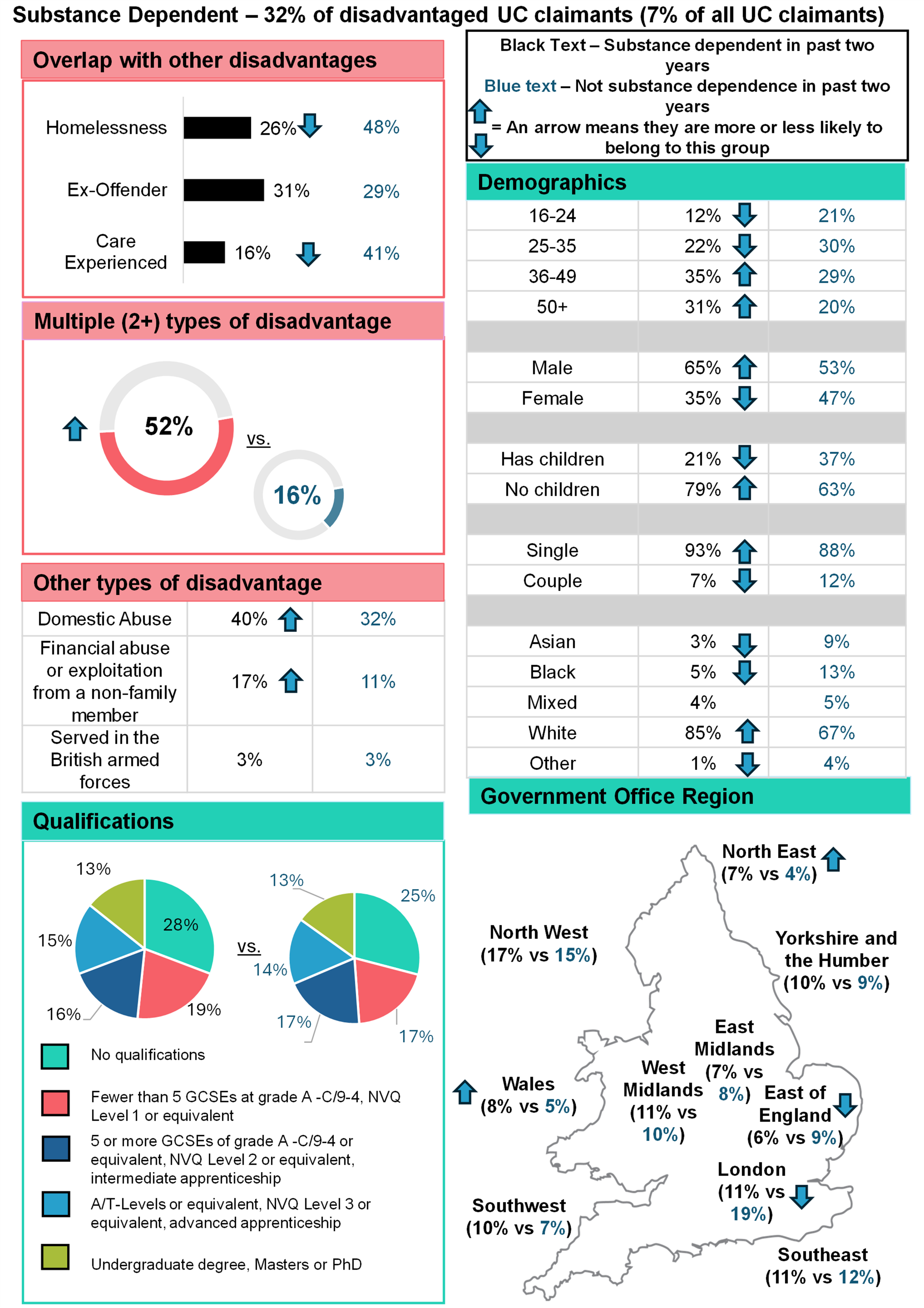
8.1.1 Substance dependent profile compared to all UC claimants in a disadvantaged group who are not substance dependent
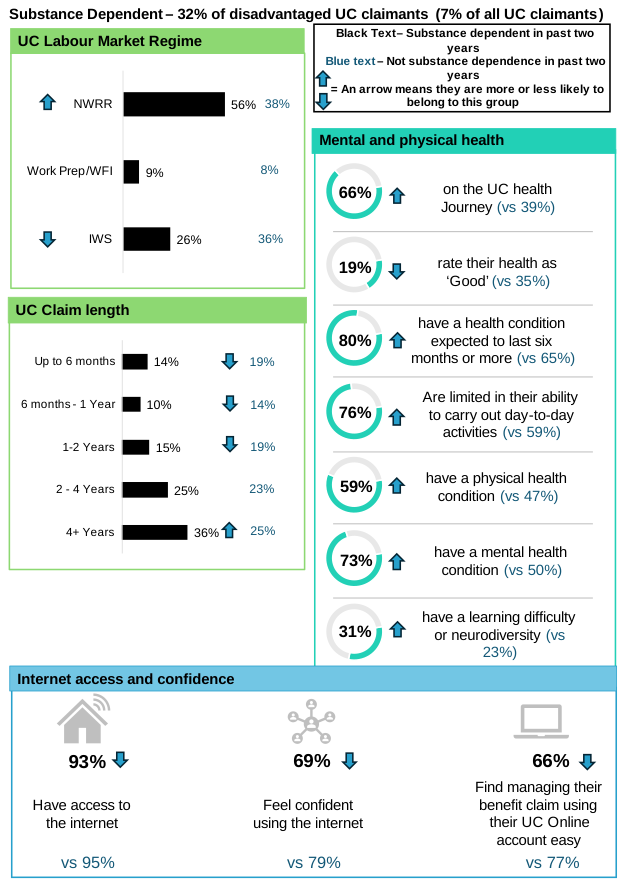
8.1.2 Substance dependent profile compared to all UC claimants in a disadvantaged group who are not substance dependent
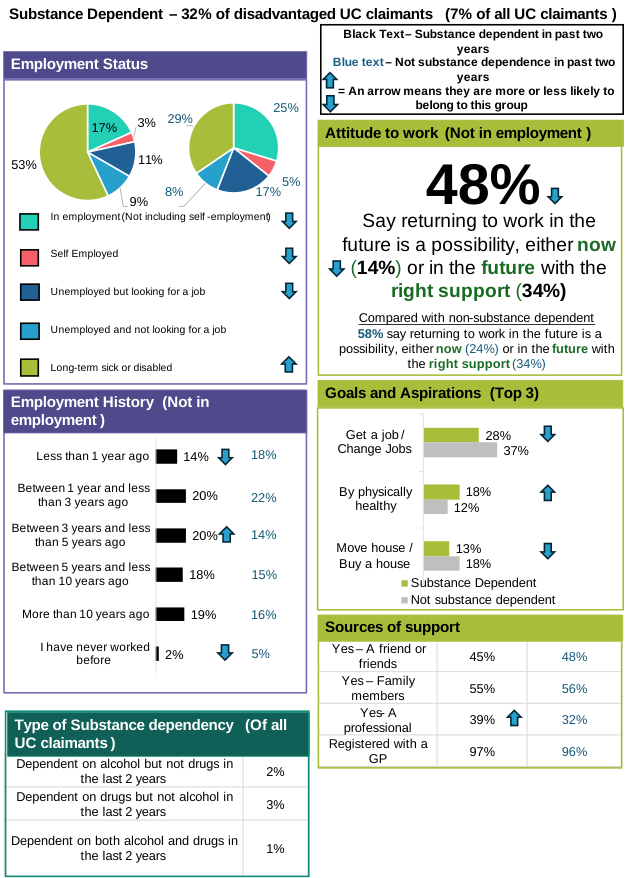
8.1.3 Substance dependent profile compared to all UC claimants in a disadvantaged group who are not substance dependent
| Disadvantaged Groups | Substance dependent | Significant difference compared with those who are not substance dependent | Not substance dependent |
|---|---|---|---|
| Homelessness | 26% | Less likely | 48% |
| Ex-Offender | 31% | Empty cell | 29% |
| Care Experienced | 16% | Less likely | 41% |
| Disadvantaged Groups | Substance dependent | Significant difference compared with those who are not substance dependent | Not substance dependent |
|---|---|---|---|
| Multiple types of disadvantage | 52% | More likely | 16% |
| Other types of disadvantage | Substance dependent | Significant difference compared with those who are not substance dependent | Not substance dependent |
|---|---|---|---|
| Domestic Abuse | 40% | More likely | 32% |
| Financial abuse or exploitation from a non-family member | 17% | More likely | 11% |
| Served in the British Armed Forces | 3% | Empty cell | 3% |
| Qualifications | Substance dependent | Significant difference compared with those who are not substance dependent | Not substance dependent | |
|---|---|---|---|---|
| No qualifications | 28% | Empty cell | 25% | |
| Fewer than 5 GCSEs at grade A to C or 9 to 4, NVQ Level 1 or equivalent | 19% | Empty cell | 17% | |
| 5 or more GCSEs of grade A to C or 9 to 4 or equivalent, NVQ Level 2 or equivalent, intermediate apprenticeship | 16% | Empty cell | 17% | |
| A or T-Levels or equivalent, NVQ Level 3 or equivalent, advanced apprenticeship | 15% | Empty cell | 14% | |
| Undergraduate degree, Masters or PhD | 13% | Empty cell | 13% |
| Demographics | Substance dependent | Significant difference compared with those who are not substance dependent | Not substance dependent |
|---|---|---|---|
| 16 to 24 | 12% | Less likely | 21% |
| 25 to 35 | 22% | Less likely | 30% |
| 36 to 49 | 35% | More likely | 29% |
| 50+ | 31% | More likely | 20% |
| Male | 65% | More likely | 53% |
| Female | 35% | Less likely | 47% |
| Has children | 21% | Less likely | 37% |
| No children | 79% | More likely | 63% |
| Single | 93% | More likely | 88% |
| Couple | 7% | Less likely | 12% |
| Asian | 3% | Less likely | 9% |
| Black | 5% | Less likely | 13% |
| Mixed | 4% | Empty cell | 5% |
| White | 85% | More likely | 67% |
| Other | 1% | Less likely | 4% |
| Government office region | Substance dependent | Significant difference compared with those who are not substance dependent | Not substance dependent |
|---|---|---|---|
| North East | 7% | More likely | 4% |
| North West | 17% | Empty cell | 15% |
| Yorkshire and the Humber | 10% | Empty cell | 9% |
| East Midlands | 7% | Empty cell | 8% |
| West Midlands | 11% | Empty cell | 10% |
| Wales | 8% | More likely | 5% |
| East of England | 6% | Less likely | 9% |
| London | 11% | Less likely | 19% |
| Southwest | 10% | Empty cell | 7% |
| Southeast | 11% | Empty cell | 12% |
| Internet access and confidence | Substance dependent | Significant difference compared with those who are not substance dependent | Not substance dependent |
|---|---|---|---|
| Have access to the internet | 93% | Less likely | 95% |
| Feel confident using the internet | 69% | Less likely | 79% |
| Find managing their benefit claim using their UC Online account easy | 66% | Less likely | 77% |
| UC Labour Market Regime | Substance dependent | Significant difference compared with those who are not substance dependent | Not substance dependent |
|---|---|---|---|
| NWRR | 56% | More likely | 38% |
| Work Prep or WFI | 9% | Empty cell | 8% |
| IWS | 26% | Less likely | 36% |
| UC claim length | Substance dependent | Significant difference compared with those who are not substance dependent | Not substance dependent |
|---|---|---|---|
| Up to 6 months | 14% | Less likely | 19% |
| 6 months to 1 Year | 10% | Less likely | 14% |
| 1 to 2 Years | 15% | Less likely | 19% |
| 2 to 4 Years | 25% | Empty cell | 23% |
| 4+ Years | 36% | More likely | 25% |
| Employment status | Substance dependent | Significant difference compared with those who are not substance dependent | Not substance dependent |
|---|---|---|---|
| In employment | 17% | Less likely | 25% |
| Self employment | 3% | Less likely | 5% |
| Unemployed but looking for a job | 11% | Less likely | 17% |
| Unemployed and not looking for a job | 9% | Empty cell | 8% |
| Long-term sick or disabled | 53% | More likely | 29% |
| Type of substance dependency (of all UC claimants | Substance dependent | Significant difference compared with those who are not substance dependent | Not substance dependent |
|---|---|---|---|
| Dependent on alcohol but not drugs in the last 2 years | 14% | Less likely | 18% |
| Dependent on drugs but not alcohol in the last 2 years | 20% | Empty cell | 22% |
| Dependent on both alcohol and drugs in the last 2 years | 20% | More likely | 14% |
| Attitude to work (Not in employment) | Substance dependent | Significant difference compared with those who are not substance dependent | Not substance dependent |
|---|---|---|---|
| Returning to work is a possibility now | 14% | Less likely | 24% |
| Returning to work is a possibility in the future with the right support | 34% | Empty cell | 34% |
| Goals and aspirations (Top 3) | Substance dependent | Significant difference compared with those who are not substance dependent | Not substance dependent |
|---|---|---|---|
| Get a job or Change Jobs | 28% | Less likely | 37% |
| By physically healthy | 18% | More likely | 12% |
| Move house or Buy a house | 13% | Less likely | 18% |
| Support of sources | Substance dependent | Significant difference compared with those who are not substance dependent | Not substance dependent |
|---|---|---|---|
| Yes - A friend or friends | 45% | Empty cell | 48% |
| Yes - Family members | 55% | Empty cell | 56% |
| Yes - A professional | 39% | More likely | 32% |
| Registered with a GP | 97% | Empty cell | 96% |
8.2 Care Experienced profile compared to all UC claimants in a disadvantaged group who are not care experienced
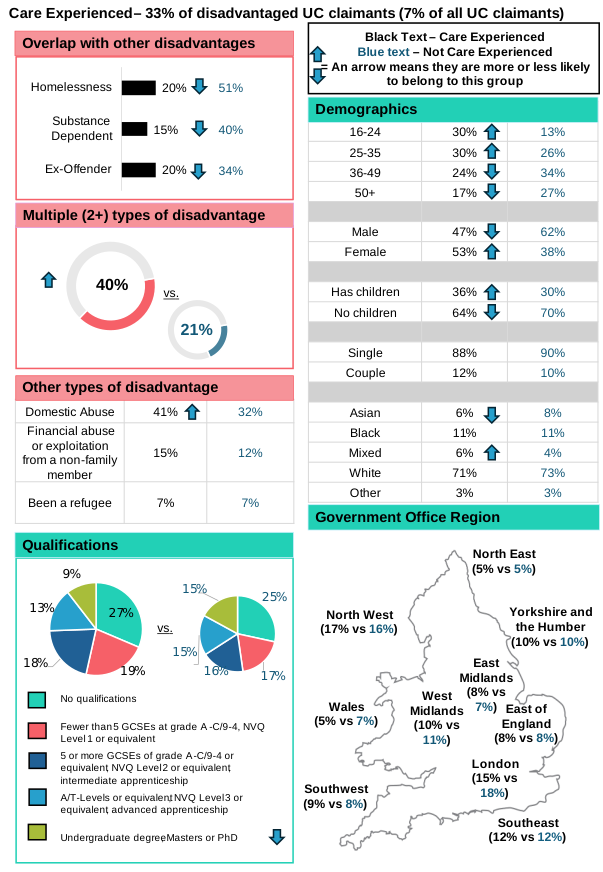
8.2.1 Care Experienced profile compared to all UC claimants in a disadvantaged group who are not care experienced
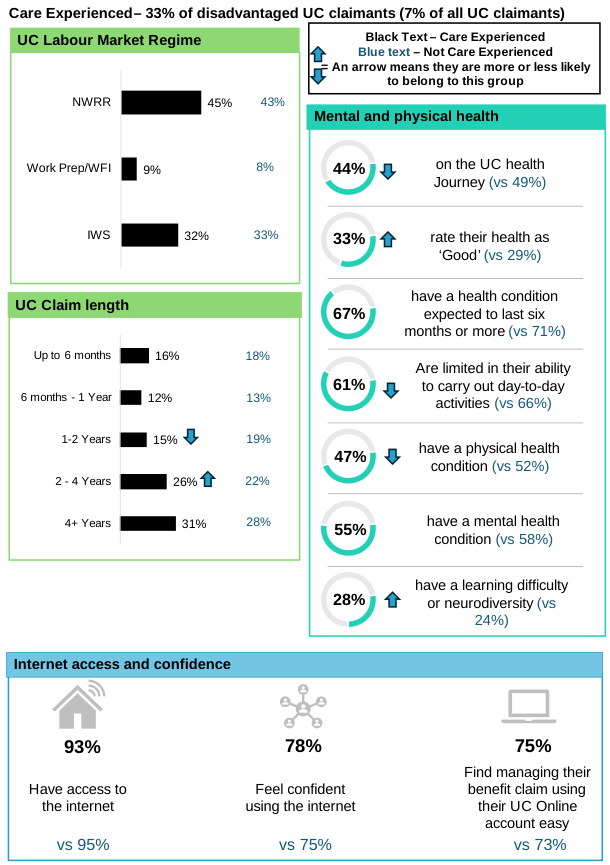
8.2.2 Care Experienced profile compared to all UC claimants in a disadvantaged group who are not care experienced
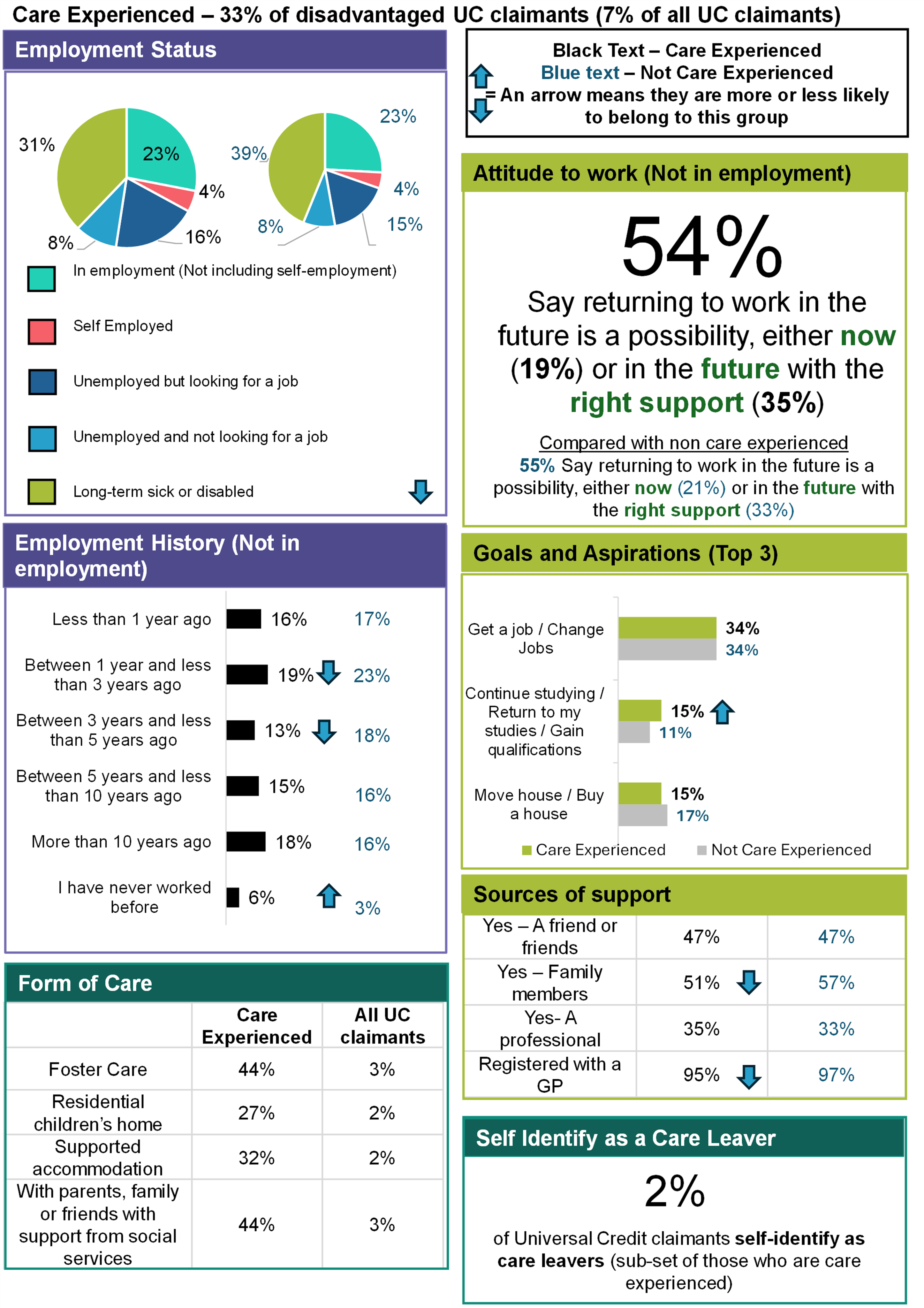
8.2.3 Care Experienced profile compared to all UC claimants in a disadvantaged group who are not care experienced
| Disadvantaged Groups | Substance dependent | Significant difference compared with those who are not substance dependent | Not substance dependent |
|---|---|---|---|
| Homelessness | 20% | Less likely | 51% |
| Substance Dependent | 15% | Less likely | 40% |
| Ex-Offender | 20% | Less likely | 34% |
| Disadvantaged Groups | Substance dependent | Significant difference compared with those who are not substance dependent | Not substance dependent |
|---|---|---|---|
| Multiple types of disadvantage | 40% | More likely | 21% |
| Other types of disadvantage | Substance dependent | Significant difference compared with those who are not substance dependent | Not substance dependent |
|---|---|---|---|
| Domestic Abuse | 41% | More likely | 32% |
| Financial abuse or exploitation from a non-family member | 15% | Empty cell | 12% |
| Been a refugee | 7% | Empty cell | 7% |
| Qualifications | Substance dependent | Significant difference compared with those who are not substance dependent | Not substance dependent |
|---|---|---|---|
| No qualifications | 27% | Empty cell | 25% |
| Fewer than 5 GCSEs at grade A to C or 9 to 4, NVQ Level 1 or equivalent | 19% | Empty cell | 17% |
| 5 or more GCSEs of grade A to C or 9 to 4 or equivalent, NVQ Level 2 or equivalent, intermediate apprenticeship | 18% | Empty cell | 16% |
| A or T-Levels or equivalent, NVQ Level 3 or equivalent, advanced apprenticeship | 13% | Empty cell | 15% |
| Undergraduate degree, Masters or PhD | 9% | Less likely | 15% |
| Demographics | Substance dependent | Significant difference compared with those who are not substance dependent | Not substance dependent |
|---|---|---|---|
| 16 to 24 | 30% | More likely | 13% |
| 25 to 35 | 30% | More likely | 26% |
| 36 to 49 | 24% | Less likely | 34% |
| 50+ | 17% | Less likely | 27% |
| Male | 47% | Less likely | 62% |
| Female | 53% | More likely | 38% |
| Has children | 36% | More likely | 30% |
| No children | 64% | Less likely | 70% |
| Single | 88% | Empty cell | 90% |
| Couple | 12% | Empty cell | 10% |
| Asian | 6% | Less likely | 8% |
| Black | 11% | Empty cell | 11% |
| Mixed | 6% | More likely | 4% |
| White | 71% | Empty cell | 73% |
| Other | 3% | Empty cell | 3% |
| Government Office Region | Substance dependent | Significant difference compared with those who are not substance dependent | Not substance dependent |
|---|---|---|---|
| North East | 5% | Empty cell | 5% |
| North West | 17% | Empty cell | 16% |
| Yorkshire and the Humber | 10% | Empty cell | 10% |
| East Midlands | 8% | Empty cell | 7% |
| West Midlands | 10% | Empty cell | 11% |
| Wales | 5% | Empty cell | 7% |
| East of England | 8% | Empty cell | 8% |
| London | 15% | Empty cell | 18% |
| Southwest | 9% | Empty cell | 8% |
| Southeast | 12% | Empty cell | 12% |
| Internet access and confidence | Substance dependent | Significant difference compared with those who are not substance dependent | Not substance dependent |
|---|---|---|---|
| Have access to the internet | 93% | Empty cell | 95% |
| Feel confident using the internet | 78% | Empty cell | 75% |
| Find managing their benefit claim using their UC Online account easy | 75% | Empty cell | 73% |
| UC Labour Market Regime | Substance dependent | Significant difference compared with those who are not substance dependent | Not substance dependent |
|---|---|---|---|
| NWRR | 45% | Empty cell | 43% |
| Work Prep or WFI | 9% | Empty cell | 8% |
| IWS | 32% | Empty cell | 33% |
| UC claim length | Substance dependent | Significant difference compared with those who are not substance dependent | Not substance dependent |
|---|---|---|---|
| Up to 6 months | 16% | Empty cell | 18% |
| 6 months to 1 Year | 12% | Empty cell | 13% |
| 1 to 2 Years | 15% | Less likely | 19% |
| 2 to 4 Years | 26% | More likely | 22% |
| 4+ Years | 31% | Empty cell | 28% |
| Mental and physical health | Substance dependent | Significant difference compared with those who are not substance dependent | Not substance dependent |
|---|---|---|---|
| On the UC health Journey | 44% | Less likely | 49% |
| Rate their health as ‘Good’ | 33% | More likely | 29% |
| Have a health condition expected to last 6 months or more | 67% | Empty cell | 71% |
| Are limited in their ability to carry out day-to-day activities | 61% | Less likely | 66% |
| Have a physical health condition | 47% | Less likely | 52% |
| Have a mental health condition | 55% | Empty cell | 58% |
| Have a learning difficulty or neurodiversity | 28% | More likely | 24% |
| Employment status | Substance dependent | Significant difference compared with those who are not substance dependent | Not substance dependent |
|---|---|---|---|
| In employment | 23% | Empty cell | 23% |
| Self employment | 4% | Empty cell | 4% |
| Unemployed but looking for a job | 16% | Empty cell | 15% |
| Unemployed and not looking for a job | 8% | Empty cell | 8% |
| Long-term sick or disabled | 31% | Less likely | 39% |
| Employment history | Substance dependent | Significant difference compared with those who are not substance dependent | Not substance dependent |
|---|---|---|---|
| Less than 1 year ago | 16% | Empty cell | 17% |
| Between 1 year and less than 3 years ago | 19% | Less likely | 23% |
| Between 3 years and less than 5 years ago | 13% | Less likely | 18% |
| Between 5 years and less than 10 years ago | 15% | Empty cell | 16% |
| More than 10 years ago | 18% | Empty cell | 16% |
| I have never worked before | 6% | More likely | 3% |
| Form of Care | Care Experienced | Empty cell | All UC claimants |
|---|---|---|---|
| Foster Care | 44% | Empty cell | 3% |
| Residential children’s home | 27% | Empty cell | 2% |
| Supported accommodation | 32% | Empty cell | 2% |
| With parents, family or friends with support from social services | 44% | Empty cell | 3% |
| Goals and aspirations (Top 3) | Care experience | Significant difference compared with those who are not care experienced | Not care experienced |
|---|---|---|---|
| Get a job or Change Jobs | 34% | Empty cell | 34% |
| Continue studying or Return to my studies or Gain qualifications | 15% | More likely | 11% |
| Move a house or Buy a house | 15% | Empty cell | 17% |
| Support of sources | Care experience | Significant difference compared with those who are not care experienced | Not care experienced |
|---|---|---|---|
| Yes - A friend or friends | 47% | Empty cell | 47% |
| Yes - Family members | 51% | Less likely | 57% |
| Yes - A professional | 35% | Empty cell | 33% |
| Registered with a GP | 95% | Less likely | 97% |
8.3 Ex-offenders profile compared to all UC claimants in a disadvantaged group who are not ex-offenders
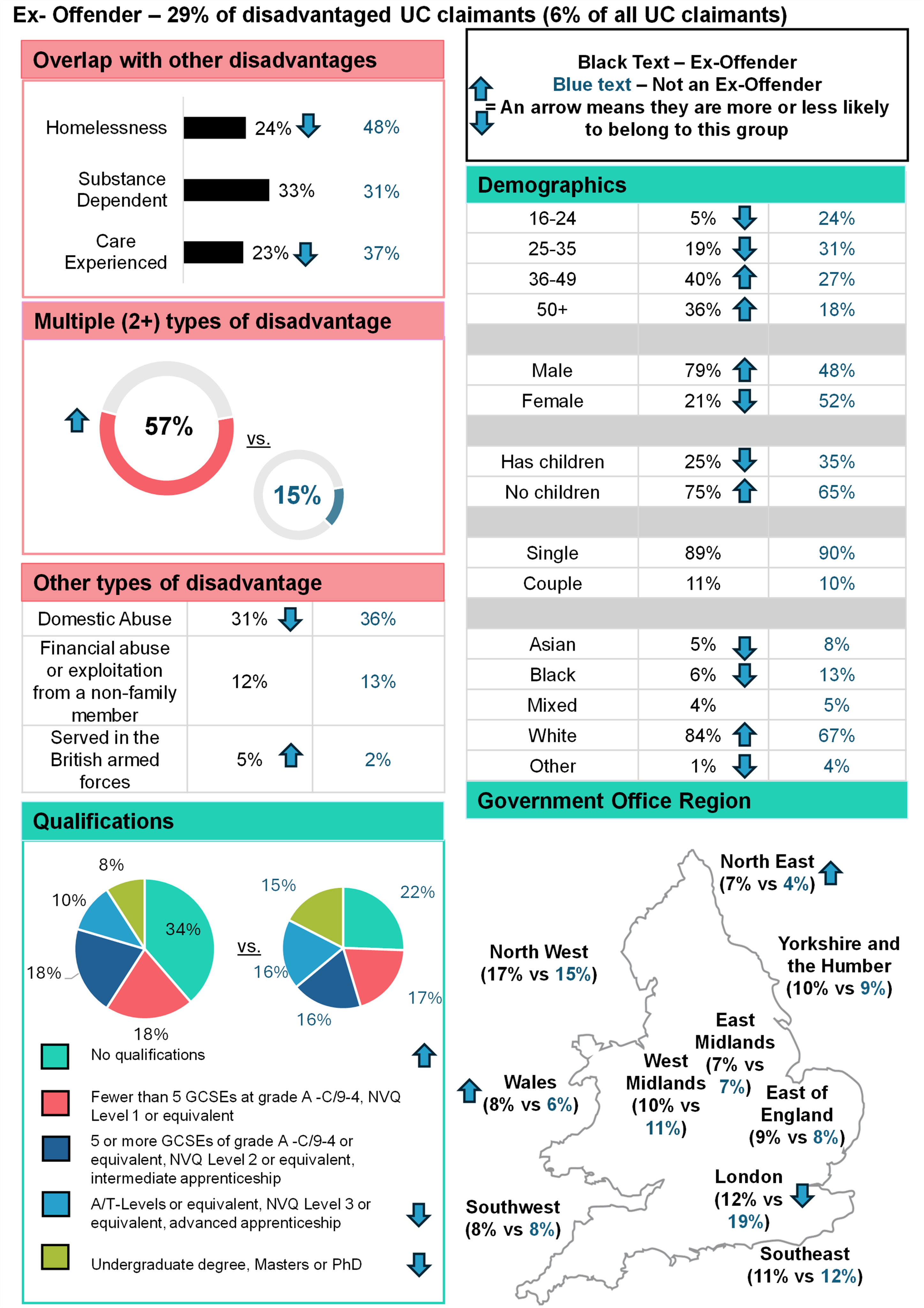
8.3.1 Ex-offenders profile compared to all UC claimants in a disadvantaged group who are not ex-offenders
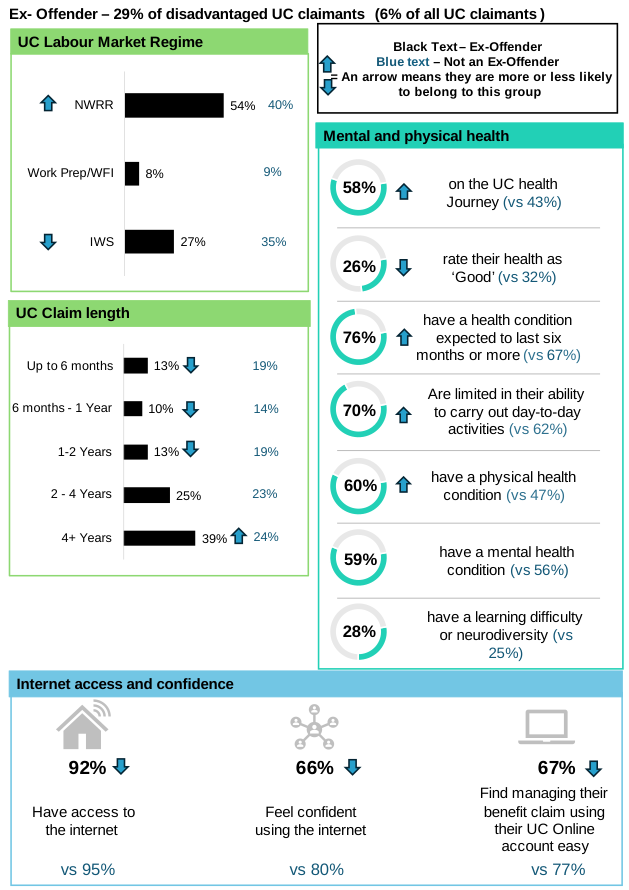
8.3.2 Ex-offenders profile compared to all UC claimants in a disadvantaged group who are not ex-offenders
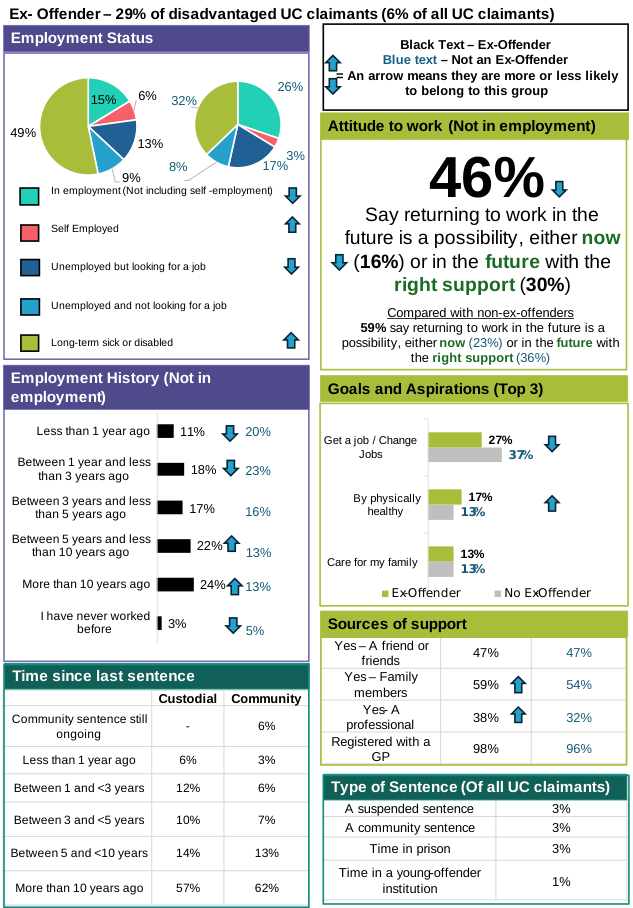
8.3.3 Ex-offenders profile compared to all UC claimants in a disadvantaged group who are not ex-offenders
| Disadvantaged Groups | Ex-offenders | Significant difference compared with those who are not ex-offenders | Not ex-offenders |
|---|---|---|---|
| Homelessness | 24% | Less likely | 48% |
| Substance dependent | 33% | Empty cell | 31% |
| Care Experienced | 23% | Less likely | 37% |
| Disadvantaged Groups | Ex-offenders | Significant difference compared with those who are not ex-offenders | Not ex-offenders |
|---|---|---|---|
| Multiple types of disadvantage | 57% | More likely | 15% |
| Other types of disadvantage | Ex-offenders | Significant difference compared with those who are not ex-offenders | Not ex-offenders |
|---|---|---|---|
| Domestic Abuse | 31% | Less likely | 36% |
| Financial abuse or exploitation from a non-family member | 12% | Empty cell | 13% |
| Served in the British armed forces | 5% | More likely | 2% |
| Qualifications | Ex-offenders | Significant difference compared with those who are not ex-offenders | Not ex-offenders |
|---|---|---|---|
| No qualifications | 34% | More likely | 22% |
| Fewer than 5 GCSEs at grade A to C or 9 to 4, NVQ Level 1 or equivalent | 18% | Empty cell | 17% |
| 5 or more GCSEs of grade A to C or 9 to 4 or equivalent, NVQ Level 2 or equivalent, intermediate apprenticeship | 18% | Empty cell | 16% |
| A or T-Levels or equivalent, NVQ Level 3 or equivalent, advanced apprenticeship | 10% | Less likely | 16% |
| Undergraduate degree, Masters or PhD | 8% | Less likely | 15% |
| Demographics | Ex-offenders | Significant difference compared with those who are not ex-offenders | Not ex-offenders |
|---|---|---|---|
| 16 to 24 | 5% | Less likely | 24% |
| 25 to 35 | 19% | Less likely | 31% |
| 36 to 49 | 40% | More likely | 27% |
| 50+ | 36% | More likely | 18% |
| Male | 79% | More likely | 48% |
| Female | 21% | Less likely | 52% |
| Has children | 25% | Less likely | 35% |
| No children | 75% | More likely | 65% |
| Single | 89% | Empty cell | 90% |
| Couple | 11% | Empty cell | 10% |
| Asian | 5% | Less likely | 8% |
| Black | 6% | Less likely | 13% |
| Mixed | 4% | Empty cell | 5% |
| White | 84% | More likely | 67% |
| Other | 1% | Less likely | 4% |
| Government Office Region | Ex-offenders | Significant difference compared with those who are not ex-offenders | Not ex-offenders |
|---|---|---|---|
| North East | 7% | More likely | 4% |
| North West | 17% | Empty cell | 15% |
| Yorkshire and the Humber | 10% | Empty cell | 9% |
| East Midlands | 7% | Empty cell | 7% |
| West Midlands | 10% | Empty cell | 11% |
| Wales | 8% | More likely | 6% |
| East of England | 9% | Empty cell | 8% |
| London | 12% | Less likely | 19% |
| Southwest | 8% | Empty cell | 8% |
| Southeast | 11% | Empty cell | 12% |
| Internet access and confidence | Ex-offenders | Significant difference compared with those who are not ex-offenders | Not ex-offenders |
|---|---|---|---|
| Have access to the internet | 92% | Less likely | 95% |
| Feel confident using the internet | 66% | Less likely | 80% |
| Find managing their benefit claim using their UC Online account easy | 67% | Less likely | 77% |
| UC Labour Market Regime | Ex-offenders | Significant difference compared with those who are not ex-offenders | Not ex-offenders |
|---|---|---|---|
| NWRR | 54% | More likely | 40% |
| Work Prep or WFI | 8% | Empty cell | 9% |
| IWS | 27% | Less likely | 35% |
| UC claim length | Ex-offenders | Significant difference compared with those who are not ex-offenders | Not ex-offenders |
|---|---|---|---|
| Up to 6 months | 13% | Less likely | 19% |
| 6 months to 1 Year | 10% | Less likely | 14% |
| 1 to 2 Years | 13% | Less likely | 19% |
| 2 to 4 Years | 25% | Empty cell | 23% |
| 4+ Years | 39% | More likely | 24% |
| Mental and physical health | Ex-offenders | Significant difference compared with those who are not ex-offenders | Not ex-offenders |
|---|---|---|---|
| On the UC health Journey | 58% | More likely | 43% |
| Rate their health as ‘Good’ | 26% | Less likely | 32% |
| Have a health condition expected to last 6 months or more | 76% | More likely | 67% |
| Are limited in their ability to carry out day-to-day activities | 70% | More likely | 62% |
| Have a physical health condition | 60% | More likely | 47% |
| Have a mental health condition | 59% | Empty cell | 56% |
| Have a learning difficulty or neurodiversity | 28% | Empty cell | 25% |
| Employment status | Ex-offenders | Significant difference compared with those who are not ex-offenders | Not ex-offenders |
|---|---|---|---|
| In employment | 15% | Less likely | 26% |
| Self employment | 6% | More likely | 3% |
| Unemployed but looking for a job | 13% | Less likely | 17% |
| Unemployed and not looking for a job | 9% | Empty cell | 8% |
| Long-term sick or disabled | 49% | More likely | 32% |
| Employment history | Ex-offenders | Significant difference compared with those who are not ex-offenders | Not ex-offenders |
|---|---|---|---|
| Less than 1 year ago | 11% | Less likely | 20% |
| Between 1 year and less than 3 years ago | 18% | Less likely | 23% |
| Between 3 years and less than 5 years ago | 17% | Empty cell | 16% |
| Between 5 years and less than 10 years ago | 22% | More likely | 13% |
| More than 10 years ago | 24% | More likely | 13% |
| I have never worked before | 3% | Less likely | 5% |
| Time since last sentence | Custodial | Community |
|---|---|---|
| Community sentence still ongoing | Empty cell | 6% |
| Less than 1 year ago | 6% | 3% |
| Between 1 and more than 3 years | 12% | 6% |
| Between 3 and more than 5 years | 10% | 7% |
| Between 5 and more than 10 years | 14% | 13% |
| More than 10 years ago | 57% | 62% |
| Attitude to work (Not in employment) | Ex-offenders | Significant difference compared with those who are not ex-offenders | Not ex-offenders |
|---|---|---|---|
| Returning to work is a possibility now | 16% | Less likely | 23% |
| Returning to work is a possibility in the future with the right support | 30% | Empty cell | 36% |
| Goals and aspirations (Top 3) | Ex-offenders | Significant difference compared with those who are not ex-offenders | Not ex-offenders |
|---|---|---|---|
| Get a job or Change Jobs | 27% | Less likely | 37% |
| Be physically healthy | 17% | More likely | 13% |
| Care for my family | 13% | Empty cell | 13% |
| Support of sources | Ex-offenders | Significant difference compared with those who are not ex-offenders | Not ex-offenders |
|---|---|---|---|
| Yes - A friend or friends | 47% | Empty cell | 47% |
| Yes - Family members | 59% | More likely | 54% |
| Yes - A professional | 38% | More likely | 32% |
| Registered with a GP | 98% | Empty cell | 96% |
| Type of sentence (of all UC claimants) | Ex-offenders |
|---|---|
| A suspended sentence | 3% |
| A community sentence | 3% |
| Time in prison | 3% |
| Time in a young-offender institution | 1% |
8.4 Homelessness in the past 2 years profile compared to all UC claimants in a disadvantaged group who had not experienced homelessness
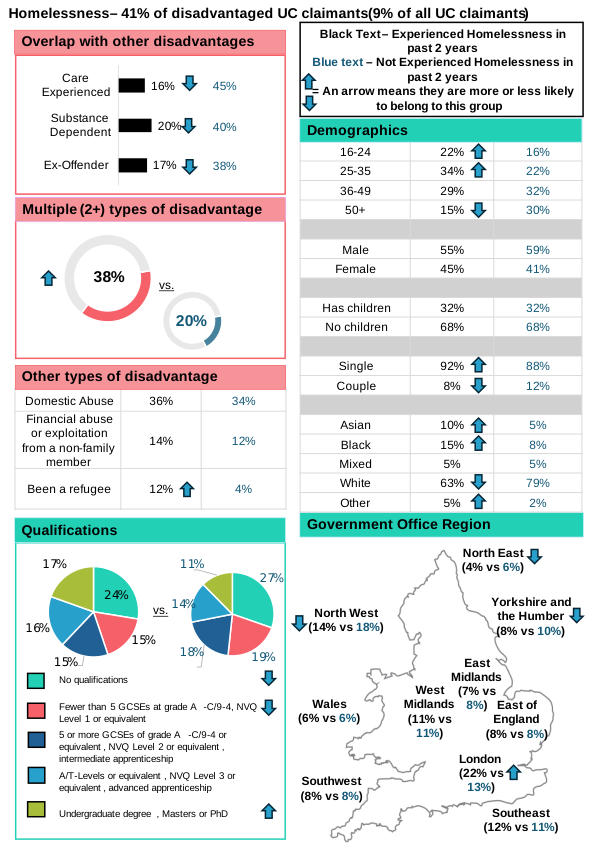
8.4.1 Homelessness in the past two years profile compared to all UC claimants in a disadvantaged group who had not experienced homelessness
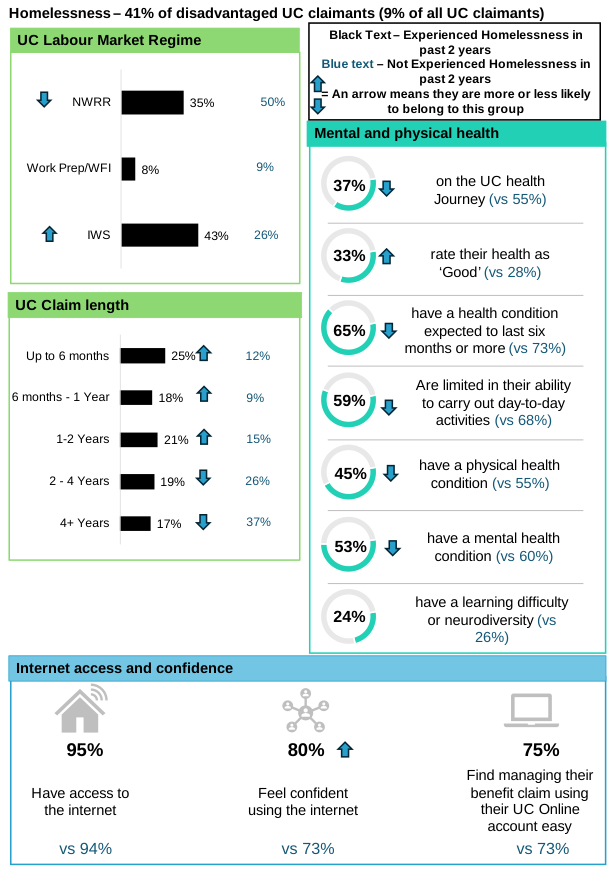
8.4.2 Homelessness in the past two years profile compared to all UC claimants in a disadvantaged group who had not experienced homelessness
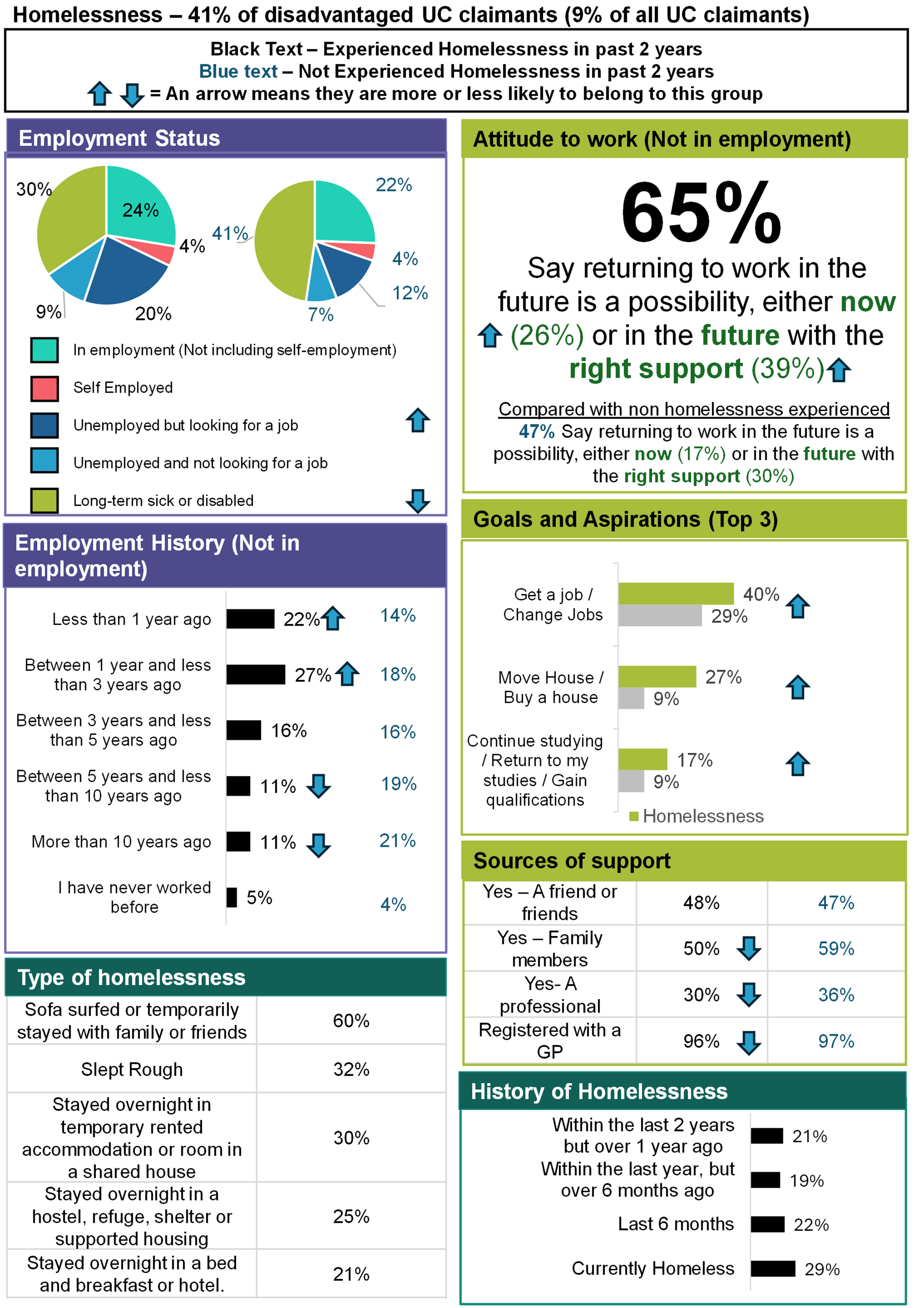
8.4.4 Homelessness in the past two years profile compared to all UC claimants in a disadvantaged group who had not experienced homelessness
| Disadvantaged Groups | Experienced homelessness | Significant difference compared with those who have not experienced homelessness | Not experienced homelessness |
|---|---|---|---|
| Care Experienced | 16% | Less likely | 45% |
| Substance Dependent | 20% | Less likely | 40% |
| Ex-Offender | 17% | Less likely | 38% |
| Disadvantaged Groups | Experienced homelessness | Significant difference compared with those who have not experienced homelessness | Not experienced homelessness |
|---|---|---|---|
| Multiple types of disadvantage | 38% | More likely | 20% |
| Other types of disadvantage | Experienced homelessness | Significant difference compared with those who have not experienced homelessness | Not experienced homelessness |
|---|---|---|---|
| Domestic Abuse | 36% | Empty cell | 34% |
| Financial abuse or exploitation from a non-family member | 14% | Empty cell | 12% |
| Been a refugee | 12% | More likely | 4% |
| Qualifications | Experienced homelessness | Significant difference compared with those who have not experienced homelessness | Not experienced homelessness |
|---|---|---|---|
| No qualifications | 24% | Less likely | 27% |
| Fewer than 5 GCSEs at grade A to C or 9 to 4, NVQ Level 1 or equivalent | 15% | Less likely | 19% |
| 5 or more GCSEs of grade A to C or 9 to 4 or equivalent, NVQ Level 2 or equivalent, intermediate apprenticeship | 15% | Empty cell | 18% |
| A or T-Levels or equivalent, NVQ Level 3 or equivalent, advanced apprenticeship | 16% | Empty cell | 14% |
| Undergraduate degree, Masters or PhD | 17% | More likely | 11% |
| Qualifications | Experienced homelessness | Significant difference compared with those who have not experienced homelessness | Not experienced homelessness |
|---|---|---|---|
| 16 to 24 | 22% | More likely | 16% |
| 25 to 35 | 34% | More likely | 22% |
| 36 to 49 | 29% | Empty cell | 32% |
| 50+ | 15% | Less likely | 30% |
| Male | 55% | Empty cell | 59% |
| Female | 45% | Empty cell | 41% |
| Has children | 32% | Empty cell | 32% |
| No children | 68% | Empty cell | 68% |
| Single | 92% | More likely | 88% |
| Couple | 8% | Less likely | 12% |
| Asian | 10% | More likely | 5% |
| Black | 15% | More likely | 8% |
| Mixed | 5% | Empty cell | 5% |
| White | 63% | Less likely | 79% |
| Other | 5% | More likely | 2% |
| Government Office Region | Experienced homelessness | Significant difference compared with those who have not experienced homelessness | Not experienced homelessness |
|---|---|---|---|
| North East | 4% | Less likely | 6% |
| North West | 14% | Less likely | 18% |
| Yorkshire and the Humber | 8% | Less likely | 10% |
| East Midlands | 7% | Empty cell | 8% |
| West Midlands | 11% | Empty cell | 11% |
| Wales | 6% | Empty cell | 6% |
| East of England | 8% | Empty cell | 8% |
| London | 22% | More likely | 13% |
| Southwest | 8% | Empty cell | 8% |
| Southeast | 12% | Empty cell | 11% |
| Internet access and confidence | Experienced homelessness | Significant difference compared with those who have not experienced homelessness | Not experienced homelessness |
|---|---|---|---|
| Have access to the internet | 95% | Empty cell | 94% |
| Feel confident using the internet | 80% | More likely | 73% |
| Find managing their benefit claim using their UC Online account easy | 75% | Empty cell | 73% |
| UC Labour Market Regime | Experienced homelessness | Significant difference compared with those who have not experienced homelessness | Not experienced homelessness |
|---|---|---|---|
| NWRR | 35% | Less likely | 50% |
| Work Prep or WFI | 8% | Empty cell | 9% |
| IWS | 43% | More likely | 26% |
| UC claim length | Experienced homelessness | Significant difference compared with those who have not experienced homelessness | Not experienced homelessness |
|---|---|---|---|
| Up to 6 months | 25% | More likely | 12% |
| 6 months to 1 Year | 18% | More likely | 9% |
| 1 to 2 Years | 21% | More likely | 15% |
| 2 to 4 Years | 19% | Less likely | 26% |
| 4+ Years | 17% | Less likely | 37% |
| Mental and physical health | Experienced homelessness | Significant difference compared with those who have not experienced homelessness | Not experienced homelessness |
|---|---|---|---|
| On the UC health Journey | 37% | Less likely | 55% |
| Rate their health as ‘Good’ | 33% | More likely | 28% |
| Have a health condition expected to last 6 months or more | 65% | Less likely | 73% |
| Are limited in their ability to carry out day-to-day activities | 59% | Less likely | 68% |
| Have a physical health condition | 45% | Less likely | 55% |
| Have a mental health condition | 53% | Less likely | 60% |
| Have a learning difficulty or neurodiversity | 24% | Empty cell | 26% |
| Employment status | Experienced homelessness | Significant difference compared with those who have not experienced homelessness | Not experienced homelessness |
|---|---|---|---|
| In employment | 24% | Empty cell | 22% |
| Self employment | 4% | Empty cell | 4% |
| Unemployed but looking for a job | 20% | More likely | 12% |
| Unemployed and not looking for a job | 9% | Empty cell | 7% |
| Long-term sick or disabled | 30% | Less likely | 41% |
| Employment history | Experienced homelessness | Significant difference compared with those who have not experienced homelessness | Not experienced homelessness |
|---|---|---|---|
| Less than 1 year ago | 22% | More likely | 14% |
| Between 1 year and less than 3 years ago | 27% | More likely | 18% |
| Between 3 years and less than 5 years ago | 16% | Empty cell | 16% |
| Between 5 years and less than 10 years ago | 11% | Less likely | 19% |
| More than 10 years ago | 11% | Less likely | 21% |
| I have never worked before | 5% | Empty cell | 4% |
| Type of homelessness | Experienced homelessness |
|---|---|
| Sofa surfed or temporarily stayed with family or friends | 60% |
| Slept rough | 32% |
| Stayed overnight in temporary rented accommodation or room in a shared house | 30% |
| Stayed overnight in a hostel, refuge, shelter or supported housing | 25% |
| Stayed overnight in a bed and breakfast or hotel. | 21% |
| Attitude to work (Not in employment) | Experienced homelessness | Significant difference compared with those who have not experienced homelessness | Not experienced homelessness |
|---|---|---|---|
| Returning to work is a possibility now | 26% | More likely | 17% |
| Returning to work is a possibility in the future with the right support | 39% | More likely | 30% |
| Goals and aspirations (Top 3) | Experienced homelessness | Significant difference compared with those who have not experienced homelessness | Not experienced homelessness |
|---|---|---|---|
| Get a job or Change Jobs | 40% | More likely | 29% |
| Move house or Buy a house | 27% | More likely | 9% |
| Continue studying or Return to my studies or Gain qualifications | 17% | More likely | 9% |
| Support of sources | Experienced homelessness | Significant difference compared with those who have not experienced homelessness | Not experienced homelessness |
|---|---|---|---|
| Yes - A friend or friends | 48% | Empty cell | 47% |
| Yes - Family members | 50% | Less likely | 59% |
| Yes - A professional | 30% | Less likely | 36% |
| Registered with a GP | 96% | Less likely | 97% |
| History of homelessness | Experienced homelessness |
|---|---|
| Within the last 2 years but over 1 year ago | 21% |
| Within the last year, but over 6 months ago | 19% |
| Last 6 months | 22% |
| Currently Homeless | 29% |
8.5 Multiple (2+) Disadvantages profile compared to all UC claimants in just one disadvantaged group
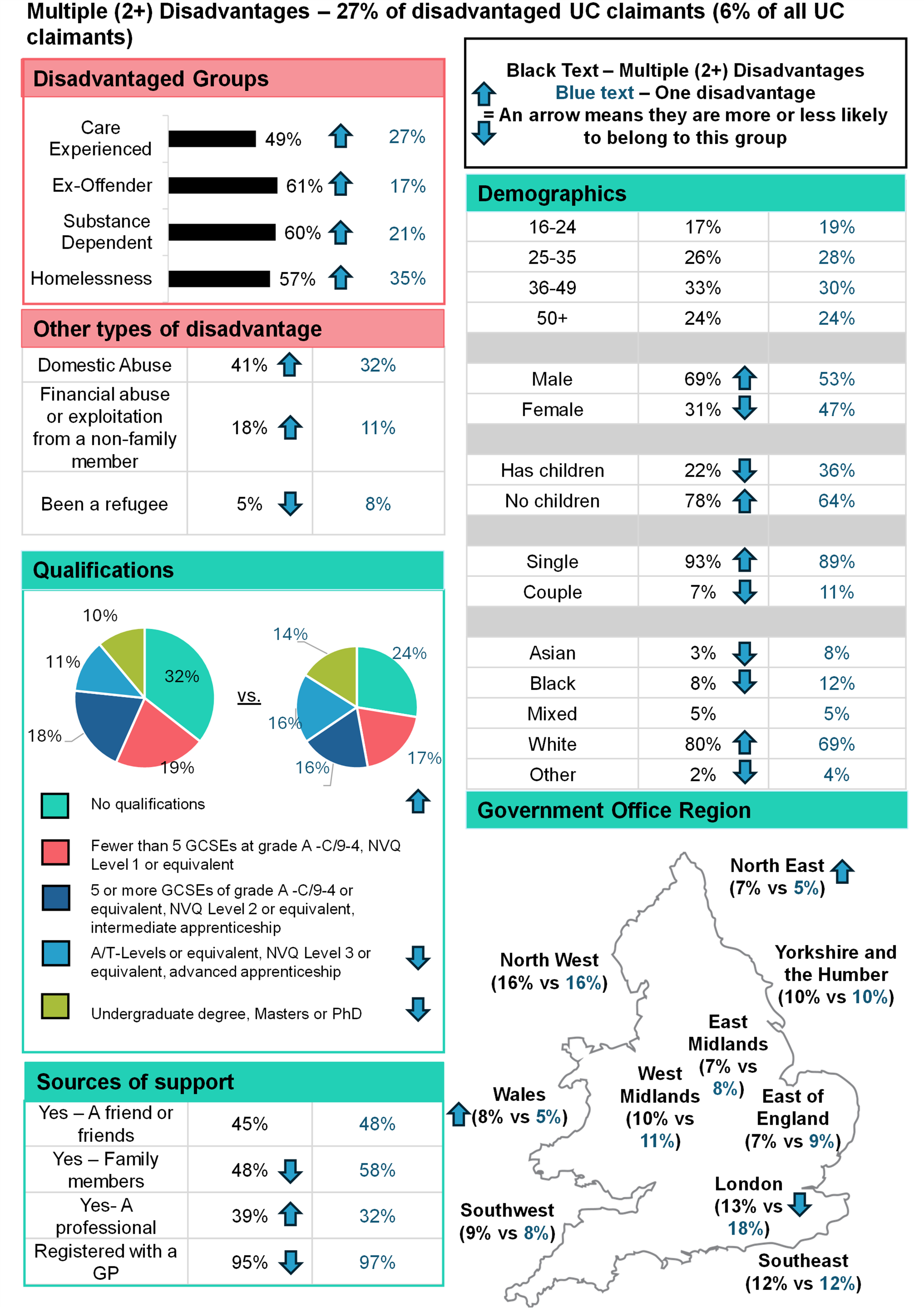
8.5.1 Multiple (2+) Disadvantages profile compared to all UC claimants in just one disadvantaged group
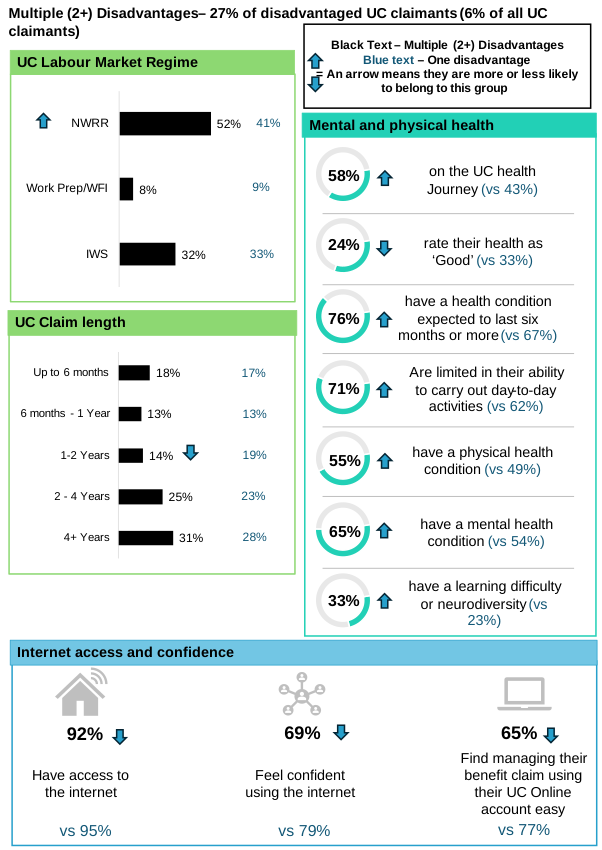
8.5.2 Multiple (2+) Disadvantages profile compared to all UC claimants in just one disadvantaged group
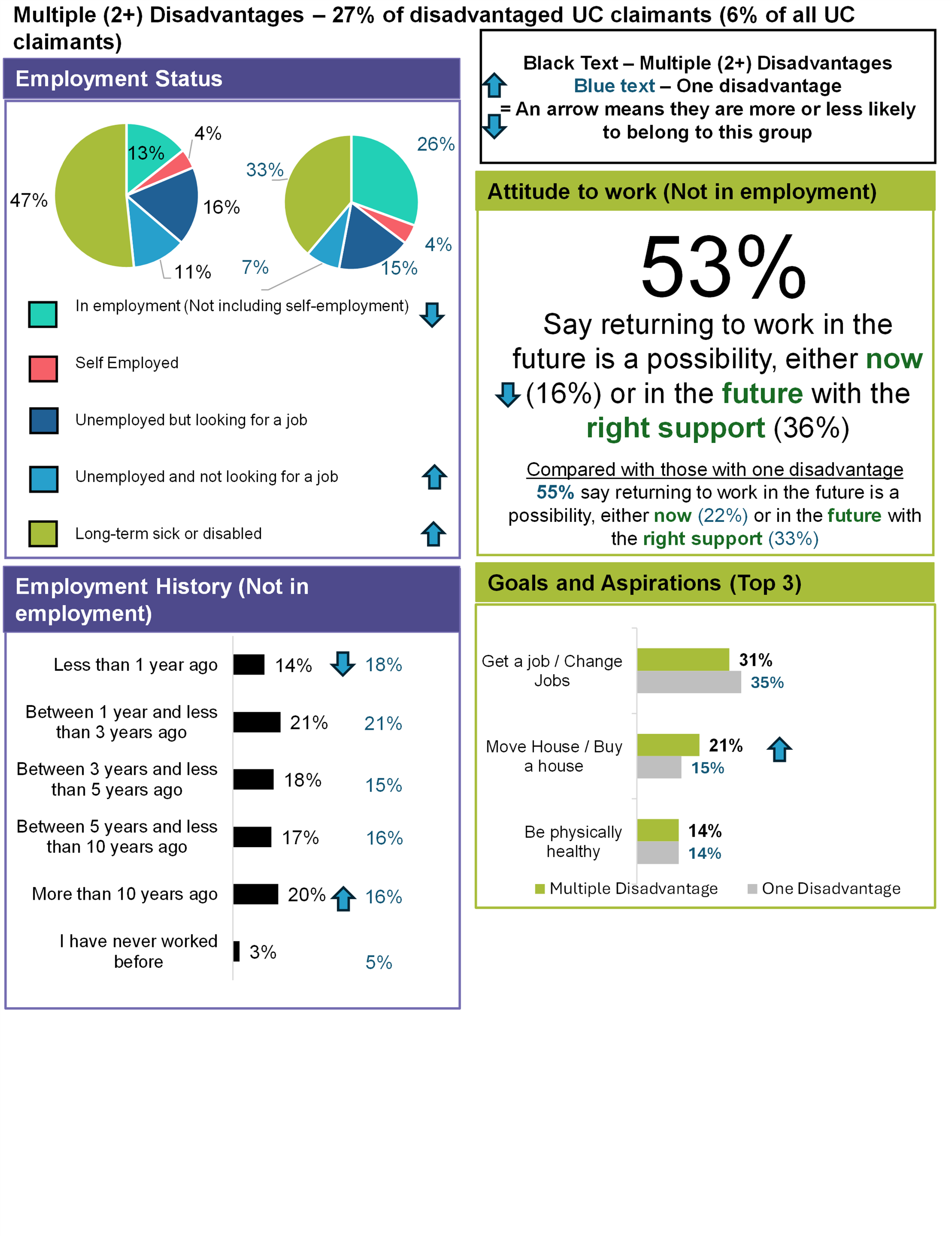
8.5.3 Multiple (2+) Disadvantages profile compared to all UC claimants in just one disadvantaged group
| Disadvantaged Groups | Multiple disadvantages | Significant difference compared to those with one disadvantage | One disadvantage |
|---|---|---|---|
| Care Experienced | 49% | More likely | 27% |
| Ex-Offender | 61% | More likely | 17% |
| Substance Dependent | 60% | More likely | 21% |
| Homelessness | 57% | More likely | 35% |
| Other types of disadvantage | Multiple disadvantages | Significant difference compared to those with one disadvantage | One disadvantage |
|---|---|---|---|
| Domestic Abuse | 41% | More likely | 32% |
| Financial abuse or exploitation from a non-family member | 18% | More likely | 11% |
| Been a refugee | 5% | Less likely | 8% |
| Qualifications | Multiple disadvantages | Significant difference compared to those with one disadvantage | One disadvantage |
|---|---|---|---|
| No qualifications | 32% | More likely | 24% |
| Fewer than 5 GCSEs at grade A to C or 9 to 4, NVQ Level 1 or equivalent | 19% | Empty cell | 17% |
| 5 or more GCSEs of grade A to C or 9 to 4 or equivalent, NVQ Level 2 or equivalent, intermediate apprenticeship | 18% | Empty cell | 16% |
| A or T-Levels or equivalent, NVQ Level 3 or equivalent, advanced apprenticeship | 11% | Less likely | 16% |
| Undergraduate degree, Masters or PhD | 10% | Less likely | 14% |
| Support of sources | Multiple disadvantages | Significant difference compared to those with one disadvantage | One disadvantage |
|---|---|---|---|
| Yes - A friend or friends | 45% | - | 48% |
| Yes - Family members | 48% | Less likely | 58% |
| Yes - A professional | 39% | More likely | 32% |
| Registered with a GP | 95% | Less likely | 97% |
| Demographics | Multiple disadvantages | Significant difference compared to those with one disadvantage | One disadvantage |
|---|---|---|---|
| 16 to 24 | 17% | Empty cell | 19% |
| 25 to 35 | 26% | Empty cell | 28% |
| 36 to 49 | 33% | Empty cell | 30% |
| 50+ | 24% | Empty cell | 24% |
| Male | 69% | More likely | 53% |
| Female | 31% | Less likely | 47% |
| Has children | 22% | Less likely | 36% |
| No children | 78% | More likely | 64% |
| Single | 93% | More likely | 89% |
| Couple | 7% | Less likely | 11% |
| Asian | 3% | Less likely | 8% |
| Black | 8% | Less likely | 12% |
| Mixed | 5% | Empty cell | 5% |
| White | 80% | More likely | 69% |
| Other | 2% | Less likely | 4% |
| Government Office Region | Multiple disadvantages | Significant difference compared to those with one disadvantage | One disadvantage |
|---|---|---|---|
| North East | 7% | More likely | 5% |
| North West | 16% | Empty cell | 16% |
| Yorkshire and the Humber | 10% | Empty cell | 10% |
| East Midlands | 7% | Empty cell | 8% |
| West Midlands | 10% | Empty cell | 11% |
| Wales | 8% | More likely | 5% |
| East of England | 7% | Empty cell | 9% |
| London | 13% | Less likely | 18% |
| Southwest | 9% | Empty cell | 8% |
| Southeast | 12% | Empty cell | 12% |
| Internet access and confidence | Multiple disadvantages | Significant difference compared to those with one disadvantage | One disadvantage |
|---|---|---|---|
| Have access to the internet | 92% | Less likely | 95% |
| Feel confident using the internet | 69% | Less likely | 79% |
| Find managing their benefit claim using their UC Online account easy | 65% | Less likely | 77% |
| UC Labour Market Regime | Multiple disadvantages | Significant difference compared to those with one disadvantage | One disadvantage |
|---|---|---|---|
| NWRR | 52% | More likely | 41% |
| Work Prep or WFI | 8% | Empty cell | 9% |
| IWS | 32% | Empty cell | 33% |
| UC claim length | Multiple disadvantages | Significant difference compared to those with one disadvantage | One disadvantage |
|---|---|---|---|
| Up to 6 months | 18% | Empty cell | 17% |
| 6 months to 1 Year | 13% | Empty cell | 13% |
| 1 to 2 Years | 14% | Less likely | 19% |
| 2 to 4 Years | 25% | Empty cell | 23% |
| 4+ Years | 31% | Empty cell | 28% |
| Mental and physical health | Multiple disadvantages | Significant difference compared to those with one disadvantage | One disadvantage |
|---|---|---|---|
| On the UC health Journey | 58% | More likely | 43% |
| Rate their health as ‘Good’ | 24% | Less likely | 33% |
| Have a health condition expected to last 6 months or more | 76% | More likely | 67% |
| Are limited in their ability to carry out day-to-day activities | 71% | More likely | 62% |
| Have a physical health condition | 55% | More likely | 49% |
| Have a mental health condition | 65% | More likely | 54% |
| Have a learning difficulty or neurodiversity | 33% | More likely | 23% |
| Employment status | Multiple disadvantages | Significant difference compared to those with one disadvantage | One disadvantage |
|---|---|---|---|
| In employment | 13% | Less likely | 26% |
| Self employment | 4% | Empty cell | 4% |
| Unemployed but looking for a job | 16% | Empty cell | 15% |
| Unemployed and not looking for a job | 11% | More likely | 7% |
| Long-term sick or disabled | 47% | More likely | 33% |
| Employment history | Multiple disadvantages | Significant difference compared to those with one disadvantage | One disadvantage |
|---|---|---|---|
| Less than 1 year ago | 14% | Less likely | 18% |
| Between 1 year and less than 3 years ago | 21% | Empty cell | 21% |
| Between 3 years and less than 5 years ago | 18% | Empty cell | 15% |
| Between 5 years and less than 10 years ago | 17% | Empty cell | 16% |
| More than 10 years ago | 20% | More likely | 16% |
| I have never worked before | 3% | Empty cell | 5% |
-
These percentages include those that were dependent on both alcohol and drugs. ↩
-
These figures may be an underestimation as this question was only asked to those who stated that they had physical or mental health conditions, disabilities, or illnesses lasting or expected to last for 6 months or more. ↩
-
Quote attributions identify the source of a quote and explain where the source fits into the population and sampling scheme, for example by stating sex, age and disadvantaged group. ↩
-
It is worth noting that those who have “never worked before” includes those from younger age groups who may have been out of employment for comparatively shorter periods of time alongside those who may be older who have never had employment before. They therefore cover a range of different periods of time. ↩