Strengthening leading practice in the animals in science sector report (accessible)
Updated 10 February 2026

© Crown copyright 2026
This publication is licensed under the terms of the Open Government Licence v3.0 except where otherwise stated. To view this licence, visit nationalarchives.gov.uk/doc/open-government-licence/version/3 or write to the Information Policy Team, The National Archives, Kew, London TW9 4DU, or email: psi@nationalarchives.gov.uk.
Where we have identified any third party copyright information you will need to obtain permission from the copyright holders concerned.
This publication is available at https://www.gov.uk/government/publications/strengthening-leading-practice-in-the-animals-in-science-sector/strengthening-leading-practice-in-the-animals-in-science-sector-accessible
Abbreviations
- 3Hs, Housing, Handling and Habituation
- 3Rs, Replacement, Reduction and Refinement
- ASC, Animals in Science Committee
- ASPA, Animals (Scientific Procedures) Act 1986
- ASRU, Animals in Science Regulation Unit
- AWERB, Animal Welfare and Ethical Review Body
- CPD, Continuous Professional Development
- DEFRA, Department for Environment, Food and Rural Affairs
- DSIT, Department for Science, Innovation and Technology
- HSE, Health and Safety Executive
- IAT, Institute of Animal Technology
- LASA, Laboratory Animal Science Association
- MHRA, Medicines and Healthcare products Regulatory Agency
- NC3Rs, National Centre for the Replacement, Refinement and Reduction of Animals in Research
- NIO, Named Information Officer
- RSPCA, Royal Society for the Prevention of Cruelty to Animals
1. Executive Summary
The Animals in Science Committee (ASC) was commissioned by the Home Office to provide recommendations for “strengthening the development and sharing of leading practice throughout the regulated sector”. The ASC defines leading practice to be “the continuous, iterative process of evolving practices surrounding the use of animals in science which, in the context of the delivery of the scientific outcome, are considered to be at forefront for the protection and welfare of the animal based on scientific evidence and understanding at the present time, aligned with 3Rs principles”. The Home Office asked the ASC to make recommendations specifically to the Animals in Science Regulation Unit (ASRU) and the regulated sector.
This review identified significant gaps in the system of leading practice, including unclear roles and responsibilities, the absence of a structured framework for emerging practices to transition to the expected standard, and insufficient incentives for establishments to innovate and adopt improvements. It also highlighted barriers such as limited time, funding and expertise, alongside risks (whether real or perceived) to funding and publication which have further hindered progress.
This report makes eleven recommendations. Nine recommendations relate to strengthening leading practice in the animals in science system to enable faster uptake of improvements, and two recommendations relate to further work needed.
The main recommendation of this report is to establish a structured framework that sets out the roles and responsibilities of key actors in the leading practice system for the use of animals in science. The framework outlines four key stages: creating the environment, identification and exploration, transition, and embedding and assessing. This aims to create a mechanism by which stakeholders can signal to the ASC, and ASC to signal to ASRU, when a practice is sufficiently well evidenced that it can become the new expected standard. The majority of the remaining recommendations are directly related to improving the landscape for leading practice, seeking to create an environment which supports and incentivises innovation. For the regulated sector, this includes implementing strategies and processes in establishments to support leading practice. For ASRU, this includes developing clear assessment criteria for establishments to be considered “leading”, to identify annual themes for improvement, and to provide regulatory incentives. Many of the recommendations require collaboration with other key actors, such as the ASC and NC3Rs.
Finally, two of the recommendations ask for further work to be conducted: on leading practice for replacement in establishments (especially in the context of the cross-government strategy), and on ensuring that the recommendations of this report are fully supported by funding.
2. Introduction
In 2024, the Animals in Science Committee (ASC) established a task-and-finish group for Leading Practice. This was in response to the annual commissioning letter from the then Home Office Minister, Lord Sharpe of Epsom (Home Office (UK), 2024a), outlining his intention to commission this workstream, and the detailed commission that followed (Home Office (UK), 2024b).
The detailed commission states that: “the government wishes to receive advice from the Committee on the following: a) to conduct a review of how leading practice is currently developed, shared, and used across the animals in science system, identifying the role of key actors, any current gaps/opportunities for improvement and recommended areas of focus, b) to provide recommendations on how the sector can collaborate to create a landscape and culture in which leading practice is effectively developed, shared, and adopted at pace, and c) to provide recommendations for the role of ASRU in leading practice, and how it might recognise establishments demonstrating leading practice and incentivise uptake of leading practice through the audit framework.”
3. Methodology
The ASC was asked to provide independent, balanced and objective advice on strengthening leading practice in relation to the use of animals in the science sector, drawing on the available evidence. Our findings were also informed by stakeholder responses to our evidence gathering exercises.
The ASC published an open call for evidence on its website (Animals in Science Committee, 2025) on 28 February 2025. The deadline for responses was 6pm 23 March 2025. The aim of the call for evidence was to gather stakeholder views on leading practice in the animals in science sector and to inform the scope of this report. The survey can be found at Annex A. A full breakdown of respondents by stakeholder group and the quantitative results can be found at Annex B.
Respondents to the survey who agreed to be contacted for further engagement were subsequently invited to an evidence gathering workshop via Microsoft Teams on 29 April 2025. The aim of this workshop was to further interrogate some of the barriers experienced by stakeholders in adopting leading practice, and to receive suggestions for potential solutions. The ASC would like to thank everyone who contributed evidence so constructively for this report and acknowledge the breadth and depth of opinions received.
4. Parameters
i. Definitions
The Home Office asked the ASC to provide recommendations on how the sector can collaborate to create a positive landscape and culture of leading practice.
In this context, the “sector” is defined as the establishments and associated individuals involved in conducting scientific procedures using animals. Therefore, this report broadly focuses on making recommendations to those directly involved in scientific procedures using animals. The ASC recognises the importance of the wider system (for example, funding bodies and publishers), so include some discussion on their roles and responsibilities, but recommendations have not been made directly to maintain the focus of the report.
In the detailed commission provided by the Home Office, leading practice is defined as the following: “all practices surrounding the use of animals in science which, in the context of the delivery of the scientific outcome, are considered to be at the forefront for the protection and welfare of the animal based on scientific evidence and understanding at the present time, aligned with 3Rs principles. Leading practice continuously evolves, and so it is essential for those seeking to adopt leading practice to maintain knowledge of ongoing research and current techniques.”
The ASC discussed the definitions used in this report extensively to avoid potential confusion between similar terms and concepts. The Home Office definition of “leading practice” refers to both the most up-to-date “best” individual practices themselves, and the continuous process of these practices evolving. The ASC considers that leading practice should be thought of as a continuous process rather than a single, static practice. Therefore, through this report, we will be referring to these new or developing individual practices, which lack an evidence base at an early stage, as “emerging practices” (see Figure 1).
As the evidence base becomes sufficient to show that emerging practices are an improvement, they can begin to transition to “best practice” as they are disseminated and implemented by others, and the relevant training and resources are developed. At the stage that the evidence base and uptake is sufficiently strong, this can then be signalled to ASRU for adoption as the expected standard.
Once ASRU has adopted a practice as the expected standard, ASRU will expect that all licence holders should implement this, unless evidence-based justifications are provided for any exception.
This continuous, iterative process of leading practice demonstrates that what is considered to be best practice should evolve with the science and, over time, should become the expected standard if the evidence base supports this. The ASC has laid out this process, and the definitions that we are using in this report, in Figure 1. Development of emerging practices, and early adoption of best practice is an indicator that an establishment is “leading”.
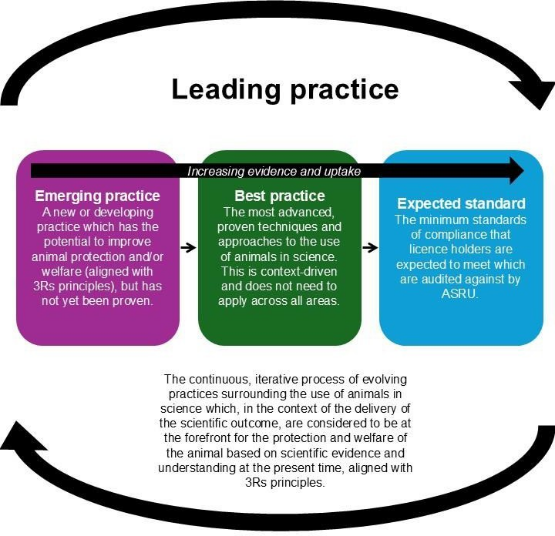
Figure 1: The definitions of emerging practice, best practice and expected standard, and how they relate to each other as a single practice evolves, and the definition of the wider continuous process of leading practice.
The ASC initially consulted on an alternative definition which placed more emphasis on the culture of continuous improvement. Following the call for evidence responses and further engagement with stakeholders, the ASC has decided to focus largely on the definition of leading practice given in the detailed commission, but to separate the process from the individual practices as described. The ASC considers that the recommendations within this report directed at ASRU and sector will help to shape the culture and cycle of leading practice.
ii. Scope
In conducting its research and evidence gathering for this report, the ASC noted that the subject of leading practice is broad and complex, and therefore not well defined (hence the attention given to this in Figure 1 for the purpose of this report). Therefore, in preparing this report, the ASC has limited the scope exclusively to the questions asked by the commission but has identified and made recommendations as to where further work should be commissioned. This report makes recommendations to ASRU and the regulated sector – those directly involved in the use of animals in scientific procedures – rather than to all actors in the landscape. The roles and responsibilities of other key actors have been represented in the relevant section, but recommendations have not been made directly to, for example, funders and publishers.
The detailed commission provided by the Home Office, while referring to all 3Rs, focuses specifically on the principles of reduction and refinement. The ASC decided that it would be remiss not to include all 3Rs in our evidence gathering (see “3. Methodology”) and subsequent report. However, while there were some cross-cutting barriers and potential solutions, our findings did demonstrate a distinction between reduction/refinement and replacement. Replacement often operates under different drivers and contexts, and the scientists working on replacement may be operating separately to those working with animals, and vice versa.
Given that this report focuses on the respective roles of both the sector and ASRU, the scope of recommendations that have been made specifically on replacement are limited to ensuring that alternatives that are currently available are implemented to the fullest, and by ensuring that a framework is available for ASRU to recognise that newly developed alternatives are sufficiently evidence-based. While encouraging the development of new alternative replacement technologies is considered to be an integral part of a leading practice culture, it is a much broader topic that is out of scope of this commission. The ASC looks forward to conducting work on this in future, and would expect to play a key role in implementing the cross-government alternatives strategy (DSIT, Home Office (UK) and DEFRA, 2025).
Recommendation 1: The Home Office and the Department for Science, Innovation and Technology should provide a commission (e.g. to the ASC) focused on what leading practice in replacement might look like, including for establishments specifically, in the context of the cross-government strategy.
Notably, as it is outlined in the detailed commission that “ASPA describes the role of the AWERB […] in leading practice”, and as the ASC has received a separate commission requesting advice on AWERBs (Home Office (UK), 2025), the specific role of AWERBs in leading practice has not been considered in-depth in this report but will feature much more prominently in the response to the AWERBs commission.
iii. Issue
The ASC’s call for evidence (see “3. Methodology”) asked respondents, “To what extent do you agree with the following statement: The culture of leading practice for the 3Rs in the animals in science sector needs to be improved.” 87% of respondents – which included representatives from academia/research, industry, funders, government, animal welfare and veterinary/animal care, among others – strongly agreed or agreed with this statement.
The detailed commission provided by the Home Office identifies several areas where the current system for promoting leading practice in the use of animals in science could be improved.
A key issue is the lack of clarity around the roles and responsibilities of both ASRU and other actors such as establishments and representative organisations, which hinders the implementation of new expected standards. The existing advice above minimum standards, primarily found in section 3 of the Home Office Code of Practice, is outdated and focuses narrowly on care, husbandry, environment and accommodation, lacking the dynamism needed to keep pace with evolving leading practice. Any fixed code of practice will be unable to evolve in a dynamic way in a culture of leading practice. Moreover, sector-led initiatives may be more effective at enhancing uptake, with ASRU playing a supportive role in assessing, recognising and promoting these efforts. An example of a sector-led initiative, which was hindered by a lack of framework for implementation by ASRU and the sector, would be in relation to evolving the handling practice for mice to avoid picking them up by the tail. This case study will be discussed further in Section 5.iii. and Section 6.ii.
As outlined in Figure 1, leading practice can drive further improvement from the current baseline to establish new expected standards (compliance) in the future. Currently, there are a number of challenges. There is no agreed framework for assessing when the evidence base for new emerging practices is significant enough to warrant wider uptake. There is a lack of mechanisms for recognising and incentivising establishments that exceed compliance requirements, potentially discouraging innovation. In addition, there is no mechanism or organisation identified to be able to signpost to ASRU that an emerging practice is supported by enough evidence to become best practice, such that it can, over time, change the baseline for audit to become the expected standard.
It should also be recognised that there are barriers acting as disincentives to drive leading practice. An independent report commissioned by the National Centre for the 3Rs (NC3Rs) to assess the 3Rs landscape identifies these as a lack of time, financial resources and expertise to take up new techniques; taking up new techniques potentially leading to the applicant becoming “uncompetitive” due to their lack of track record; a lack of validation of alternative replacement technologies compared to established animal models; disrupting compatibility with earlier data; and poor access to information on 3Rs advances (Rawle, 2023).
This aligns closely with the findings of the ASC’s call for evidence (see “5. Review of leading practice across the animals in science system”), though noting that benchmarking alternatives against established animal models may have its limitations (see, for example, Sewell et al., 2024). Four of the most frequently recurring themes in responses were knowledge gaps, inertia, insufficient funding (including perceived risks to publication), and a lack of time.
In summary, there are insufficient direct incentives (and no regulatory incentives) to develop, share, or adopt emerging practices, there is no mechanism for driving change in practice through dynamic regulation and there is no consequence for not taking up a leading practice culture.
To address these gaps, a structured framework is needed to integrate improved expected standards into regulation over time, ensuring continuous improvement and the elevation of regulatory standards as practices evolve.
5. Review of leading practice across the animals in science system
The Home Office asked the ASC to review the existing landscape of leading practice across the animals in science system, identifying the role of key actors, any current gaps/opportunities for improvement and recommended areas of focus. The ASC sought information on this using our call for evidence.
i. How do you currently seek information on leading practice for the 3Rs when planning or reviewing projects using animals?
The researcher has a responsibility to seek information on leading practice when planning a project. Searching the scientific literature, attending conferences, workshops and training, and using resources primarily from the NC3Rs, but also RSPCA, LASA, IAT and Norecopa, were noted by almost all respondents as methods for seeking information.
Given the strength of evidence collected during stakeholder engagement that recognised the NC3Rs as already playing a key role in this system, throughout this report, the ASC refers to the NC3Rs and its role in leading practice accordingly. The ASC considers that the NC3Rs is best placed in the landscape to fulfil this role due to its specific remit, its expertise, credibility and reputation both in the UK and internationally, and its independence and neutrality. Its dedicated 3Rs funded schemes (e.g. CRACK IT Challenges, partnership and impact awards, development of resources and training) have also provided the necessary resources to fulfil this role.
Additional methods used by many respondents included making use of in-house expertise and professional networks, as well as regulatory/ethical guidelines and online databases.
The importance of the AWERB was identified in response to this question, particularly the Named Information Officer (NIO), who was responsible for sourcing and sharing relevant advances in the 3Rs with facility staff and researchers. However, it was also frequently noted that AWERBs typically have a high workload and insufficient time/resources to fulfil all of their tasks; this has been covered extensively by the RSPCA (for example, RSPCA, 2019) so the issues raised will not be covered in-depth here. While the AWERB is out of scope of this report (see “4.ii. Scope”), the ASC will be responding to a separate commission on strengthening the functioning of the AWERB and NIO (Home Office (UK), 2025), and we will be further and more fully exploring the role of the AWERB as a key actor and the gaps/opportunities here.
ii. How do you and/or your organisation currently share information on leading practice for the 3Rs with other organisations?
Formal collaborative networks, professional meetings or conferences, and training/workshops, as well as more informal meetings and communications, were the primary methods of information sharing. Written guidance and digital platforms were also mentioned by many respondents.
The role of the AWERB Hubs in information sharing was highlighted, as this is the current primary mechanism for interactions between AWERBs.
iii. What examples of a good culture of leading practice are you aware of, if any?
The role of key organisations such as the NC3Rs, RSPCA and LASA were mentioned here more generally in terms of the resources they produce.
An initiative that was mentioned by multiple respondents as a good example of a positive culture of leading practice was the 3Hs initiative (housing, handling and habituation). This framework, developed by the University of Bristol, quantified animals’ emotional experiences to build the evidence base for refinements to the 3Hs. This was broadly considered to be an excellent example of how the evidence base for new baselines could be built and disseminated through the sector.
One example referred to, as an example where an emerging practice had not been implemented as the expected standard, relates to mouse handling. In 2010, a researcher identified that picking mice up by the tail induced aversion and high anxiety levels, whereas use of tunnels or an open hand led to low anxiety levels. Following this, the evidence base for this approach as a refined handling practice continued to grow, and the NC3Rs provided resources and support for its implementation such that it is now considered best practice. However, to this day, this practice is still not set as the expected standard.
In Section 6.ii. and Figure 3, below, we discuss this case study and how our recommended framework could improve the implementation process and timescales.
iv. Role of key actors
Unclear roles and responsibilities were frequently cited during the call for evidence, aligning with the issues set out in the commission. Respondents specifically highlighted the lack of join-up between various key actors in the landscape.
One example of this is a lack of join-up and clear roles and responsibilities of the organisations that run workshops or produce resources for AWERBs and researchers, such as the NC3Rs, RSPCA, ASC and LASA. The number of different resources can be overwhelming and confusing to individuals when it is unclear which are endorsed by ASRU. In addition, different stakeholder groups may engage with these organisations differently from one another.
Another area where a lack of join-up was highlighted was between researchers and funders and/or peer reviewers. Respondents to the call for evidence expressed a key barrier as being risks to funding and publication if their research did not align with their track record or the in-use animal methods widely considered to be “gold standard”. The term “gold standard” is often used for established methodologies as there is comparative data available. However, when the science is continuously evolving, entrenched “gold standard” practices should not be used by default where there are more scientifically robust or ethical alternatives.
The role of funders and peer reviewers has already been considered at length in Rawle (2023). The ASC strongly supports the recommendations made by Rawle. In particular, the ASC endorses the recommendations made to funders to ensure that animal research is only funded if there are no replacements available, which would support downstream processes of AWERB licence review and licence approval.
The third area of lack of join-up commonly identified was between scientists working with animals in the regulated sector, and those working outside of it with non-animal expertise. This systemic lack of awareness, collaboration and communication between different scientists in the system is one of the potential challenges to replacing animal use, as researchers in different fields may be working in isolation, and those successfully utilising alternative methods may not engage extensively with the animals in science sector. Further engagement with continuous professional development, particularly networks, may help to promote this join-up.
Finally, respondents were concerned that regulators in the wider landscape were not joined up, citing barriers (whether real or perceived) that regulators of medicines and chemicals would not accept alternative methods or refinements as sufficient evidence for safety and efficacy. It will be imperative for the Home Office to facilitate two-way dialogue with regulators in the wider landscape to overcome these barriers.
6. Recommended framework for leading practice
i. Framework for roles and responsibilities of key actors
Following the review of leading practice across the animals in science system, one of the aims of the ASC in this report is to make the roles and responsibilities of key actors clear in the system of leading practice.
A recommended framework has been illustrated in Figure 2. Many of the recommendations made in this report are related to creating this framework, and the relevant numbered recommendations are included in Figure 2, in brackets, at each stage of the process.
Recommendations focus specifically on the role of the sector and ASRU, who are highlighted in the commission. However, the framework illustrated in Figure 2 includes other key actors in the landscape for completeness, with the exception of AWERBs (see “4.ii. Scope”) to avoid pre-empting the findings of the ASC’s commission focused on AWERBs.
The specific recommendations for the regulated sector and ASRU will be discussed in more detail in Section 7 and Section 8 respectively. This framework specifically will be discussed further in “8.i. Adopting the new baseline”.
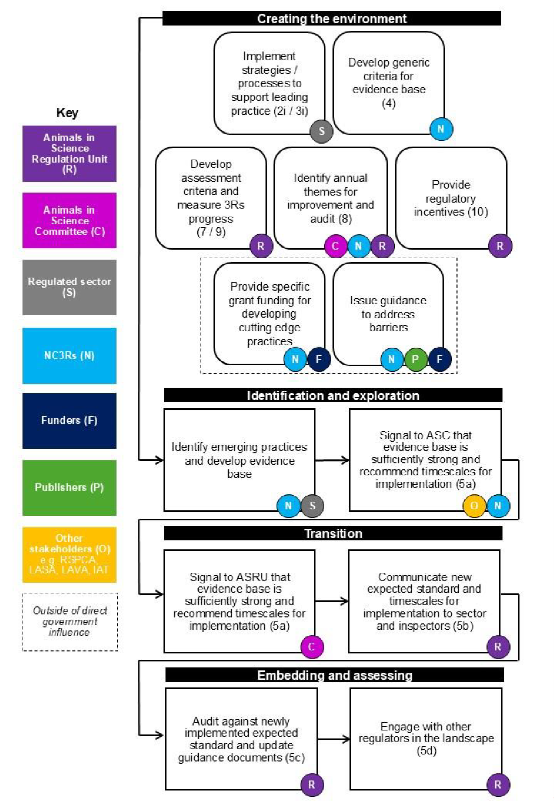
Figure 2: Recommended framework for the roles and responsibilities of key actors in a system of leading practice. Numbers in brackets represent the relevant recommendation of this report.
ii. Case study Following discussion of the mouse handling example in Section 5.iii., we have used this example as a case study to illustrate how a structured framework may have shortened the timescales for implementing improved mouse handling.
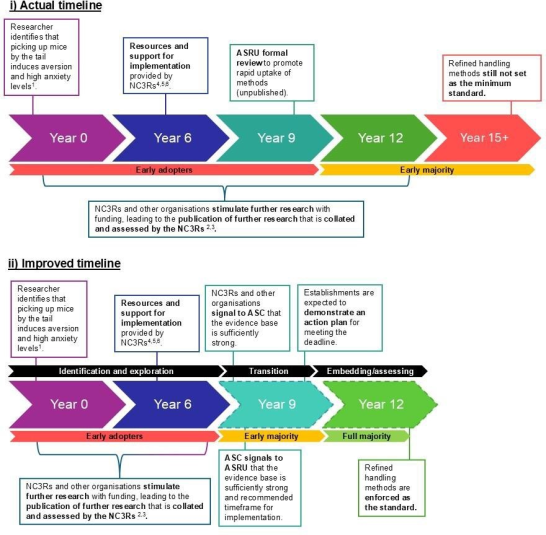
Figure 3: A case study of evolving mouse handling practices, with two timelines showing the i) actual and ii) ASC-suggested improved timeline of events.
1 Hurst & West (2010), 2 Gouevia & Hurst (2013), 3 NC3Rs (2017b) 4 NC3Rs (2017a) 5 NC3Rs (no date) 6 NC3Rs (2017c).
In Figure 3, we have outlined the high-level timeline as events actually transpired, and an improved timeline of what might have happened if the process outlined in Figure 2 had been implemented, alongside the proposed roles and responsibilities for different key actors.
It is hoped that learning from previous experiences, such as the mouse handling example in Figure 3, and the implementation of the framework set out in this report in Figure 2, could lead to faster uptake than has been observed for new methods in the past.
7. Role of the sector
The Home Office asked the ASC to provide recommendations on how the sector can collaborate to create a positive landscape and culture of leading practice (see “4.i. Definitions” for our definition of “sector”).
More broadly, we will focus on the role of the sector in effectively developing, sharing and adopting emerging practices and best practice at pace.
Ultimately, the sector is leading the development of emerging practices, and many of the mechanisms for sharing this information are already in place, as identified during the call for evidence. For example, the sector has access to existing collaborative networks, including the AWERB Hubs and the NC3Rs networks, as well as their existing training, workshops and conferences, all of which should be considered examples of continuous professional development (CPD).
However, one of the issues is that individual researchers may have different networks from the AWERBs, or from other key actors in the landscape. This fragmentation and siloing can hinder information sharing on the 3Rs and developing emerging practices. These networks could be more fully utilised to share information on the emerging practices they are trialling or have had success with, as well as those that have not been successful. Networks should be promoted as CPD within scientific associations to ensure inclusivity of all those with relevant interest and to maintain the profile of the 3Rs as an integral part of the progressive research. Where there are gaps, for example in networks for specific subject matters, the sector might consider establishing communities of practice to fulfil this. Organisations with convening powers, such as the NC3Rs, RSPCA, LASA and learned societies, should support sector demand for such networks where they are able.
There are currently no regulatory incentives for developing, sharing and adopting emerging practices or best practice, and there is no consequence for failing to do so. This will be addressed more fully in “8. Role of ASRU”. For the sector, the implementation of recommendations made in this section (including on demonstrating strong evidence of CPD related to the 3Rs) should be used as evidence when assessing and providing incentives for leading practice.
Recommendation 2i: All licence holders, AWERB members and those involved in frontline animal work should be expected to meet minimum continuous professional development (CPD) requirements specifically in relation to the 3Rs, and the completion of this CPD should be documented and recognised by the establishment.
Recommendation 2ii: ASRU should make expectations of minimum CPD requirements clear and audit against this.
It is not enough for continuous professional development (such as training or involvement with networks and forums) to be completed, however; the learning needs to be implemented. All licence holders have a standard condition to “ensure that regulated activities carried on at the establishment are carried out in / act at all times in a manner that is consistent with the principles of replacement, reduction and refinement.” Implementation of improved standards should be considered and implicit at all levels of animal research, which includes design (including consideration of the necessity of animal use and available alternatives), funding, review and conduct of studies, in order to expedite uptake.
Recommendation 3i: All licence holders should demonstrate how they implement the 3Rs and support leading practice:
a) Establishment licence holders should ensure there is a strategy including annual goals on how they will implement the 3Rs principles in their establishment and record these outcomes. b) Project licence holders should define, and make explicit in licences, their process for changing practices as new best practice and expected standards become available. c) AWERBs should retrospectively assess the progress against the 3Rs during their reviews and share learning more widely. Recommendation 3ii: ASRU should be auditing against these processes for assurance that standard conditions are being met.
8. Role of ASRU
The Home Office asked the ASC to provide recommendations for the role of ASRU in leading practice, and how it might recognise establishments demonstrating leading practice and incentivise leading practice through the audit framework.
i. Adopting the new baseline
One of the key issues highlighted by stakeholders is the knowledge gaps and/or inertia preventing best practice from being effectively picked up. An example that is frequently cited on this is related to the handling of mice, as discussed in Section 6.ii. above and in Figure 3. Uptake of this technique was observed to be incredibly slow and is still not completely implemented.
The ASC notes that there is no current system or framework for determining when new best practices should become the new expected standard. This has resulted in ambiguity as to the point at which there is considered to be sufficient evidence for a practice’s effectiveness, and thereby that this should be the new baseline for ASRU to expect.
This framework must be defined and implemented in collaboration with key actors in the landscape if there is to be any improvement in the speed of implementation of emerging practices that have been demonstrated to be effective and are to become the new expected standard over time.
Where applicable, ASRU must then engage effectively with regulators in the wider landscape, including the Medicines and Healthcare products Regulatory Agency (MHRA) and Health and Safety Executive (HSE), and maintain an ongoing two-way dialogue on how new expected standards align with existing regulatory frameworks. Guidance notes should be updated accordingly over time.
The ASC has provided a recommended framework in Figure 2 to demonstrate what this may look like in practice, but this may be refined in consultation with the key actors involved.
Not all expected standards will have such broad applicability or be as straightforward to implement as the mouse handling example given above, however, and this should be considered by ASRU in its expectations. It is reasonable to expect that all establishments should be meeting their obligations under ASPA to implement the 3Rs principles so far as practically possible, but it is also reasonable to expect that not all practices are appropriate in all circumstances. If there is any case in which new expected standards are not applicable to a project, the onus should be on the applicant to justify to the AWERB why this cannot be implemented, and it should be expected that ASRU will audit against these exceptions.
Importantly, when refinements are identified that reduce harm and that an establishment feels able to implement immediately, they should not be fettered by an amendment process if the refinement was not specifically named in their original project licence.
Recommendation 4: ASRU should commission the NC3Rs to develop a generic set of criteria to enable organisations to determine when the evidence base for an emerging practice is sufficiently strong to be considered ready for broader implementation, leading to it becoming the expected standard.
Recommendation 5: ASRU should implement a structured framework for leading practice, by which:
a) The ASC can signal to ASRU that an emerging practice has sufficient evidence to be considered best practice and is ready to transition to the expected standard. Stakeholders in the landscape, such as the NC3Rs, will be responsible for signalling to the ASC when this is the case, and the ASC will independently review the evidence. The ASC will include a recommendation on timeframe for implementation of the new expected standard at pace, dependent on factors such as complexity and cost. b) ASRU will communicate the new expected standard and timescales for implementation to the regulated sector and its inspectors. Establishments are expected to demonstrate an action plan to meet any deadlines for implementation. AWERB-approved exceptions can be audited by ASRU. c) New expected standard is implemented by the recommended deadline. This process should include effective lines of communication about the new expected standard to establishments (including updated guidance documents). d) ASRU should engage effectively with regulators in the wider landscape where relevant and maintain a two-way dialogue as regulations are updated.
Recommendation 6: ASRU should ensure that amendment processes for refinements are streamlined in the case of potential 3Rs benefits.
ii. Assessing leading practice
The ASC has identified that there are limited incentives to develop or share emerging practices, and that there are no consequences for not taking them up. Further, there are barriers to developing, sharing and implementing emerging practices that act as disincentives, including lack of time and funding. Without a system of accountability, reward and pull-through, there is less incentive or drive for the sector to innovate for emerging practices and to adapt to the changing expected standard.
On the latter point of implementing new expected standards, ASRU should be using the system recommended above and its existing regulatory regime to assess that establishments are meeting their obligations under ASPA to fully implement the 3Rs. This section considers the assessment of establishments who are “leading” by way of going above and beyond to develop and share emerging practices, and adopt best practice early.
When asked, “Who should be the key actor(s) in assessing establishments for leading practice in the 3Rs?”, 73% of respondents to the call for evidence identified ASRU as the best-placed organisation. ASRU already has responsibility for assessing licence applications and auditing establishments; it stands to reason that it should also assess establishments who are going above and beyond the legislative minimums to support a system of leading practice.
The criteria against which establishments should be assessed will need to be developed, and the ASC believes that this should be done in collaboration with the NC3Rs, and other stakeholders where appropriate. The animals in science sector is diverse; a one-size-fits-all approach would not be appropriate and risks disadvantaging some establishments based on their size, resources or type of research, for example.
As discussed in the introduction to this report (see “4.i. Definitions”), culture is complicated, yet critical to success. It involves join-up throughout the entire system and encouraging interdisciplinary working. It can be difficult to directly make recommendations on improving culture; as identified in Rawle (2023), there is a risk that these expectations will become a box-ticking exercise rather than a genuine cultural commitment to advancing the 3Rs. The ASC considers that the recommendations in this report will go some way to support a culture of leading practice, but the positive indicators of cultural traits should be considered as part of these criteria.
Importantly, the ASC strongly believes that the criteria should be performance-based and suitably flexible to allow establishments a range of ways to meet them.
Central organisations are often needed to promote dissemination and build resources/training for the regulated community. This needs to be a body that is credible, respected and has specific allocated resources for these activities. The NC3Rs, for example, has fulfilled this role to date and would be well-placed to do this in collaboration or consultation with the ASC, given its 3Rs self-assessment tools for researchers and facilities which are currently undergoing redevelopment (NC3Rs, 2024).
“Audit” and “inspection” were the two most suggested methods for ASRU to assess leading practice during the call for evidence, and the ASC agrees that this could be built into the existing audit programme. As already discussed, the practices that are considered to be “best” are constantly changing. As such, ASRU may wish to implement thematic audits annually that ask establishments to demonstrate their progress or innovations within that theme to drive improvements in priority areas.
Recommendation 7: ASRU should collaborate with the NC3Rs, ASC, and other stakeholders (as appropriate) to develop criteria, including positive indicators of cultural traits, against which establishments are assessed for leading practice. ASRU should utilise its existing audit programme to assess leading practice against the criteria that have been developed.
Recommendation 8: ASRU should consider implementing annual thematic improvement areas to drive focused progress. The theme should be determined in consultation with the NC3Rs and the ASC.
Establishments should be required to demonstrate how they are continuously improving both during their audits, and in their project licence applications. Project licences typically last for a duration of 5 years. It is reasonable to expect that, when a new project licence is applied for, there should have been progress made in the 3Rs. It can be difficult for ASRU to draw out of the licence where improvements have been implemented. As such, the ASC believes that applicants should be asked directly about progress towards replacement, reduction and refinement in their previous licences. The provision of a significant amount of evidence related to this should be considered when assessing establishments as “leading”. Examples of positive answers to this question could be included in the guidance, and may be developed in collaboration with the ASC and NC3Rs, for example.
Where significant advances in replacement have been made, it is possible that a previous licence holder will not apply for a new licence upon the expiry of their project licence, because animal research in this area may no longer be necessary. However, it cannot be assumed that this is the case, as there may be other reasons why the work is not continuing (e.g. lack of funding). To begin to understand how progress in replacement is affecting animal research, these data should be collected at the end of each licence.
Recommendation 9: ASRU should collect data related to progress in the 3Rs. This should include evidence from licence holders of their engagement with the 3Rs in the previous five years, including a meaningful reflection on their progress and learnings and what they have done to promote this more widely. This should also include data collected upon expiration of a licence as to whether the licence holder will be applying for a new licence and, if not, the reasons for this.
iii. Incentivising leading practice
While thematic audits may help to focus the development of emerging practices, they are not an incentive. Providing incentives would support a more positive culture of going above and beyond.
When asked, “Who should be the key actor(s) in motivating or incentivising establishments to go beyond legislative minimums when considering leading practice in the 3Rs?”, more than half of respondents to the call for evidence said that ASRU has a role. When asked what the incentives might be, it is unsurprising that the top response was funding. Funding is considered to be out of the scope of this report, as recommendations are aimed at the sector and ASRU, but the ASC would like to acknowledge the importance of such funding (especially funding that supports practical uptake, such as further model development, training resources and/or dissemination) in a system of leading practice.
The NC3Rs has consistently provided funding opportunities focused on incentivising and stimulating progress in the 3Rs, including funding 3Rs model development and the subsequent characterisation to determine reliability, reproducibility, transferability and scalability that are essential for 3Rs approaches to be shared and used widely.
However, funding was not the only significant suggestion. Others included regulatory incentives (such as a lower regulatory burden), recognition and/or awards, and priority access to training, information sharing and pilot schemes. It is up to ASRU to consider which of these incentives are most appropriate and implement them accordingly.
Recommendation 10: ASRU should consider appropriate regulatory incentives for establishments assessed to be demonstrating leading practice.
It would be remiss of the ASC not to mention that funders, journals, establishment leadership and wider regulators were also suggested by respondents to have a key role in motivating and incentivising the development of emerging practices and uptake of new expected standards in a system of leading practice.
There is a perception within the community that the system is not set up in a way that incentivises innovation. Funding and publication are so competitive that many individuals and organisations feel disincentivised to try different approaches, and establishment leadership may not be supportive of them doing so in the current system. Different approaches may additionally not be accepted by other regulators. Funding is essential for the implementation of leading practice across the whole system, including the development of models, and the development of the evidence base of their reliability, reproducibility, transferability and scalability to ensure that they can be taken up effectively. Changes within the system are necessary to support this, such as grants (to support the development of new emerging practices, e.g. NC3Rs CRACK IT Challenges, and the evidence base of their effectiveness, e.g. NC3Rs partnership and impact awards), clear regulatory encouragement and/or collaborative networks focused on innovation.
Recommendations to funders specifically are considered to be out of scope of this report (see “4.i. Scope”), but the government might consider conducting further work to ensure that the recommendations in this report are fully supported by funding.
Recommendation 11: Department for Science, Innovation and Technology should consider how funding schemes can support the implementation of leading practice across the whole framework, including both the development of emerging practices and the building of the evidence base of their effectiveness.
9. Summary of recommendations
The recommendations in this section have been grouped by theme, rather than chronologically, to make the purpose of each recommendation clear.
Establishing a framework
Recommendation 5: ASRU should implement a structured framework for leading practice, by which:
a) The ASC can signal to ASRU that an emerging practice has sufficient evidence to be considered best practice and is ready to transition to the expected standard. Stakeholders in the landscape, such as the NC3Rs, will be responsible for signalling to the ASC when this is the case, and the ASC will independently review the evidence. The ASC will include a recommendation on timeframe for implementation of the new expected standard at pace, dependent on factors such as complexity and cost. b) ASRU will communicate the new expected standard and timescales for implementation to the regulated sector and its inspectors. Establishments are expected to demonstrate an action plan to meet any deadlines for implementation. AWERB-approved exceptions can be audited by ASRU. c) New expected standard is implemented by the recommended deadline. This process should include effective lines of communication about the new expected standard to establishments (including updated guidance documents). d) ASRU should engage effectively with regulators in the wider landscape where relevant and maintain a two-way dialogue as regulations are updated.
Creating the environment
Recommendation 2i: All licence holders, AWERB members and those involved in frontline animal work should be expected to meet minimum continuous professional development (CPD) requirements specifically in relation to the 3Rs, and the completion of this CPD should be documented and recognised by the establishment.
Recommendation 2ii: ASRU should make expectations of minimum CPD requirements clear and audit against this.
Recommendation 3i: All licence holders should demonstrate how they implement the 3Rs and support leading practice: a) Establishment licence holders should ensure there is a strategy including annual goals on how they will implement the 3Rs principles in their establishment and record these outcomes. b) Project licence holders should define, and make explicit in licences, their process for changing practices as new best practice and expected standards become available. c) AWERBs should retrospectively assess the progress against the 3Rs during their reviews and share learning more widely.
Recommendation 3ii: ASRU should be auditing against these processes for assurance that standard conditions are being met. Recommendation 4: ASRU should commission the NC3Rs to develop a generic set of criteria to enable organisations to determine when the evidence base for an
emerging practice is sufficiently strong to be considered ready for broader implementation, leading to it becoming the expected standard.
Recommendation 6: ASRU should ensure that amendment processes for refinements are streamlined in the case of potential 3Rs benefits. Recommendation 7: ASRU should collaborate with the NC3Rs, ASC, and other stakeholders (as appropriate) to develop criteria, including positive indicators of cultural traits, against which establishments are assessed for leading practice. ASRU should utilise its existing audit programme to assess leading practice against the criteria that have been developed.
Recommendation 8: ASRU should consider implementing annual thematic improvement areas to drive focused progress. The theme should be determined in consultation with the NC3Rs and the ASC.
Recommendation 9: ASRU should collect data related to progress in the 3Rs. This should include evidence from licence holders of their engagement with the 3Rs in the previous five years, including a meaningful reflection on their progress and learnings and what they have done to promote this more widely. This should also include data collected upon expiration of a licence as to whether the licence holder will be applying for a new licence and, if not, the reasons for this.
Recommendation 10: ASRU should consider appropriate regulatory incentives for establishments assessed to be demonstrating leading practice.
Further work
Recommendation 1: The Home Office and the Department for Science, Innovation and Technology should provide a commission (e.g. to the ASC) focused on what leading practice in replacement might look like, including for establishments specifically, in the context of the cross-government strategy.
Recommendation 11: Department for Science, Innovation and Technology should commission from an appropriate independent body (for example, the ASC) a review of funding that would identify what is needed to encourage innovation by developing systems that actively engage animal researchers and alternatives researchers in collaborations aimed at making progress across all 3Rs.
10. References
Animals in Science Committee, Strengthening leading practice in the animals in science sector: 2025b
Davies, J., Purawijaya D., Bartlett, J. and Robinson, S. 2022. Impact of Refinements to Handling and Restraint Methods in Mice. Animals 12(17), 2173.
Department for Science, Innovation and Technology, Home Office (UK), and Department for Environment, Food and Rural Affairs: Replacing animals in science: A strategy to support the development, validation and uptake of alternative methods: 2025
Goueveia, K. and Hurst, J. 2013. Reducing mouse anxiety during handling: effect of experience with handling tunnels. PLoS ONE 8(6).
Home Office (UK), Animals in Science: ministerial commission 2024: 2024a
Home Office (UK), Commission on leading practice in the animals in science sector: 2024b
Home Office (UK), Commission on AWERBs and Named Information Officer: 2025
Hurst, J. and West, R. 2010. Taming anxiety in laboratory mice. Nature Methods 7, 825–826.
NC3Rs, Mouse handling: tutorial: 2017a
NC3Rs, Mouse handling: research papers: 2017b
NC3Rs, Mouse handling: tips for implementation: 2017c
NC3Rs, 3Rs self-assessment tools: 2024. 3Rs self-assessment tools - NC3Rs
NC3Rs, Mouse handling: no date
Rawle, F. 2023. The role of review and regulatory approvals processes for animal research in supporting implementation of the 3Rs. Animal Technology and Welfare 22(3), 175–188.
RSPCA, Animal Welfare and Ethical Review Bodies – moving forward: 2019
Robinson, E. 3Hs Initiative: 2024
Sewell F, Alexander-White C, Brescia S, Currie RA, Roberts R, Roper C, Vickers C, Westmoreland C, and Kimber I. 2024. New approach methodologies (NAMs): identifying and overcoming hurdles to accelerated adoption. Toxicol Res (Camb) 13(2).