Technical annex
Published 18 December 2025

© Crown copyright 2025
This publication is licensed under the terms of the Open Government Licence v3.0 except where otherwise stated. To view this licence, visit nationalarchives.gov.uk/doc/open-government-licence/version/3 or write to the Information Policy Team, The National Archives, Kew, London TW9 4DU, or email: psi@nationalarchives.gov.uk.
Where we have identified any third party copyright information you will need to obtain permission from the copyright holders concerned.
This publication is available at https://www.gov.uk/government/publications/state-of-the-nation-2025-the-evolving-story-of-social-mobility-in-the-uk/technical-annex
1. Data sources
In the State of the Nation 2025 and the accompanying online Data Explorer Tool, we use a range of data sources to construct the components of the Social Mobility Index. We draw on the Office for National Statistics (ONS) Labour Force Survey (LFS) for the majority of indicators, including both drivers and outcomes. The LFS is a representative sample survey with a large sample size, which covers the whole of the UK. This enables us to chart trends over time and across the regions of the UK from 2000 onwards. We supplement the LFS with a range of other large-scale and authoritative data sources.These include other government surveys such as the Department for Culture, Media, and Sport (DCMS) Community Life Survey (CLS), the ONS Annual Survey of Hours and Earnings (ASHE), and the ONS Vacancy Survey. We also draw on data sources based on governmental administrative data such as the Department for Work and Pensions’ (DWP) Housing Below Average Incomes (HBAI) statistics and, for England only, the Department for Education’s (DfE) Education Statistics. We also draw on authoritative non-governmental studies such as the UK Household Longitudinal Study (UKHLS) and the European Social Survey (ESS).
All of these data sources are constructed according to high methodological standards. For example, all the administrative data that we use are Designated National Statistics. However, we should emphasise that all data sources are subject to various limitations and potential biases. So ‘hard to reach’ groups (such as undocumented residents) will tend to be under-represented both in administrative datasets and in sample surveys of the population. In the case of sample surveys, all our data sources use weighting techniques in order to mitigate known biases (although weighting does not necessarily correct for all sources of potential bias). Weighting is not however used in the case of administrative data.
Sample surveys will also be subject to sampling error, and we therefore show confidence intervals wherever possible.
Some of the data sources used in the Data Explorer Tool have not been updated this year (1.17 to 1.19), either because there has not been a new release of the data since the update of the Data Explorer Tool last year, or because they are used for the measures of mobility outcomes. We do not update mobility outcome measures on a yearly basis because social mobility outcomes take significant time to change and there is little difference between results year-on-year.
Please note, the description of most of our data sources this year remain unchanged from our 2024 State of the Nation report.[footnote 1]
1.1 Office for National Statistics (ONS) Labour Force Survey
The Labour Force Survey (LFS) is a survey of households living at private addresses in the UK. Its purpose is to provide information on the UK labour market which can then be used to develop, manage, evaluate and report on labour market policies. The survey is managed by the Office for National Statistics (ONS) in Great Britain, and the Northern Ireland Statistics and Research Agency (NISRA) in Northern Ireland. The LFS excludes certain people, such as those resident in communal establishments, the homeless, or those who are not living in private households. While response rates to the LFS have fallen considerably over the years (down to around 50% just before the COVID-19 pandemic), comparisons between the results from the LFS and those obtained by the Census suggest that, after weighting,the extent of response bias is quite small.[footnote 2]
The LFS is a nationally-representative government survey that covers England, Wales, Scotland and Northern Ireland. The survey has a rolling panel design over 5 quarterly waves, with one-fifth entering the survey and one-fifth leaving at each wave. The July to September wave has been used in each year for our analyses, as this wave has questions on respondents’ socio-economic background. It asks about the household composition, the main wage earner (including if no parent was earning), and the occupation of the main wage earner when the respondent was age 14 years. This has been included in each July to September wave since 2014, meaning that there is now 11 years’ worth of data. Since 2018 the LFS has also included questions in this wave on where respondents were living when aged 14. This data permits a granular measure of socio-economic background based on the official National Statistics Socio-economic Classification – NS-SEC).
A quarterly main LFS dataset typically contains around 75,000 individuals. However during the COVID-19 pandemic, from July to December 2020, some important temporary changes were made to the methodology of the LFS as a result of the COVID-19 pandemic, with a move from face-to-face to telephone interviewing (in order to minimise social contact). This had implications both for response rates and for response bias. Weighting methods were also changed in order to address the potential biases.[footnote 3]
Weights are used throughout the analysis. These weights ensure that estimates reflect the sample design so that cases with a lower probability of selection will receive a higher weight to compensate. They also compensate for differences in the non-response rate among different sub groups of the population. The LFS provides person weights, household weights and income weights. For most analyses we use person weights, but income weights are used when the outcome variable relates to income or earnings.[footnote 4] We use these weights to help make our estimates derived from the LFS more representative of the actual population. We refer to these weights as person weights in our report and throughout this annex.
In some instances indicated in the report (notably geographical and intersectional analyses), data is pooled across multiple years in order to achieve sufficient sample sizes. As discussed in the geographical analysis section of this annex, the large sample size of the pooled LFS’s means that the data can be disaggregated into International Territorial Levels regions and into Local Authority areas.
The version of the LFS that we have been given access to for this report includes some measures which are not available through the UK Data Archive, such as where the respondent was living at age 14.
1.2 ONS Annual Survey of Hours and Earnings (ASHE)
The Annual Survey of Hours and Earnings (ASHE) is managed by the Office for National Statistics. It is based on a 1% sample of employee jobs taken from HM Revenue and Customs’ (HMRC’s) Pay As You Earn (PAYE) records. It started in 2004, replacing the New Earnings Survey, and is carried out in April of each year with a sample of approximately 300,000. Earnings of the self-employed are excluded.
ASHE is the most comprehensive source of information on the structure and distribution of earnings in the UK. ASHE provides information about the levels, distribution, and make-up of earnings and paid hours worked for employees in all industries and occupations. The ASHE tables contain estimates of earnings for employees by sex, full-time or part-time status and other characteristics.
More information: Annual Survey of Hours and Earnings (ASHE) methodology and guidance.
1.3 ONS Vacancy Survey
The ONS Vacancy Survey produces monthly estimates of job vacancies across Great Britain. Questionnaires are sent to a sample of approximately 6,100 businesses every month, approached mainly via head offices. Responses are collected via an electronic questionnaire. The survey covers all sectors of the economy and all industries in England, Scotland and Wales (Great Britain) with the exception of employment agencies (to avoid double-counting of vacancies) and agriculture, forestry and fishing. Northern Ireland businesses are not approached because of the risk of overlap with other surveys conducted by Northern Ireland departments. Overall, in 2019, the average response rate for the Vacancy Survey was 80.2%.
More information: ONS Vacancy Survey methodology and guidance
1.4 ONS Business Enterprise Research and Development (BERD)
The Business Enterprise Research and Development (BERD) data set is produced by the ONS, and is based on data collected from the BERD survey. The BERD survey collects information about employment and expenditure on research and development (R&D) performed by businesses in the UK, for both civil and defence purposes. All UK trading and profit-making businesses that are registered for VAT and or PAYE are eligible for selection, and the sample size is approximately 19,000 businesses. Responses to the survey are weighted to represent the whole population of businesses. Northern Ireland R&D statistics are compiled by the Northern Ireland Statistics Research Agency (NISRA) and compiled with BERD.
More information: Business Enterprise Research and Development: Data Sources and Quality
1.5 ONS Regional Gross Value Added (GVA) by Industry
Gross Value Added (GVA) is a measure of the increase in the value of the economy due to the production of goods and services. Estimates are derived by balancing the income and production approaches to measuring GVA.
Income Approach: This approach involves adding up all the income earned by resident individuals or corporations in the production of goods and services. This excludes transfer payments (for example, state benefits) which are redistributive and do not add to current economic activity.
Production Approach: This approach is calculated as the total of all goods and services that are produced during the reference period, less goods and services used up or transformed in the production process (intermediate consumption).
They show economic activity for ITL1, ITL2 and ITL3 regions of the United Kingdom as current price (nominal or value) and ‘real’ (chained volume) measures. Regional GVA is compiled using a “top-down” approach, whereby the national aggregate for each component is allocated to regions using the most appropriate regional indicator available.
More information: Regional accounts methodology guide
1.6 ONS Nomis Population Estimates
Population estimates are based on results from the latest Census of Population, with allowance for under-enumeration. The estimates for each country and local authority of the UK are rebased to the results of the 2021/2022 Censuses across the UK. Estimated resident populations include all people who usually live there, regardless of nationality. Arriving international migrants are included in the “usually resident” population if they remain in the UK for at least a year. Emigrants are excluded if they remain outside the UK for at least a year. This is consistent with the United Nations definition of a long-term migrant. Armed forces stationed outside of the UK are excluded. Students are taken to be resident at their term time address.
Please note that this data has been used in our analysis to adjust some regional estimates for the size of their population, and has not been used directly in the Social Mobility Index.
More information: Nomis Population Estimates
1.7 The Department for Digital, Culture, Media and Sport (DCMS) Community Life Survey
The Department for Digital, Culture, Media and Sport (DCMS) took on responsibility for publishing results from the Community Life survey (CLS) for 2016 to 17 onwards, after it was commissioned by the Cabinet Office in 2012. The survey is representative of adults in England aged 16+ and living in private residences. The CLS is a key evidence source for understanding more about community engagement, volunteering, and social cohesion, sampling adults (aged 16+) throughout England. The CLS moved to a self-completion online and paper mixed method approach from 2016 to 17 onwards, with an end to the previous face-to-face method. The data collection for the CLS is based on Address-Based Online Surveying (ABOS), a type of ‘push-to-web’ survey method. A stratified random sample of addresses was drawn from the Royal Mail’s postcode address file and an invitation was sent to each one, containing usernames and passwords along with the URL of the survey website. Sampled individuals were able to log on using this information to complete the survey. Paper questionnaires were also available upon request. In 2023/24 the survey was conducted over 2 quarters (October to December 2023, and January to March 2024), rather than over 4 quarters as in previous waves of the survey, due to delays in commissioning the survey. Please see the CLS technical annex for analysis of the resultant seasonality effects. In 2023/24, the survey sample consisted of approximately 175,000 interviews. There was no release of the CLS In 2022 to 2023.
More information: Community Life Survey October to December 2024: Technical Note
1.8 Department for Education (DfE) Early Years Foundation Stage Profile (EYFSP) results in England
The EYFSP is a teacher assessment of children’s development in England at the end of the early years foundation stage (the end of the academic year in which the child turns 5 years old – this is typically at the end of the reception year). All providers of state-funded early years education in England are within the scope of the EYFSP teacher assessments including academies, free schools, and private, voluntary, and independent (PVI) providers. However, the proportion of the age group that is covered by the EYFSP is not reported.
Data is collected by the DfE from local authorities covering state-funded schools, and private, voluntary and independent (PVI) providers (including childminders) as part of the EYFS profile return. This data is then matched to other data sources, including the school and early years censuses, to obtain information on pupil characteristics such as ethnicity and eligibility for Free School Meals (the main measure of socio-economic background that is available in the dataset). It is likely that there is some missing data on characteristics and eligibility for Free School Meals but this is not reported. The results are published by the DfE.
More information: Early years foundation stage profile results.
1.9 Income Deprivation Affecting Children Index (IDACI)
IDACI is a supplementary index of the English indices of deprivation. This is calculated by DfE as part of their Early years foundation stage profile results. Each lower-layer super output area (LSOA), or neighbourhood, is given a score showing the percentage of pupils aged 5 that live in income deprived households. These neighbourhoods are grouped into deciles so that the 10% of neighbourhoods with the highest scores (that is, with the most deprived children) make up decile 1, and the 10% of neighbourhoods with the lowest scores (that is, with the fewest deprived children) make up decile 10.
More information: Income deprivation affecting children index.
1.10 DfE National Curriculum Assessments at KS2 in England
Statutory testing and assessment for pupils in primary schools in England is the responsibility of the Standards and Testing Agency (STA), an executive agency of the Department for Education. KS2 tests must be administered by state-funded schools, which are then marked and graded externally by the STA. KS2 teacher assessments are also collected by the STA and the information is collated and passed on within the department. Independent schools, non-maintained special schools, and pupil referral units may take part in the KS2 assessments if they wish to do so. The position of home-schooled children is not specified and the proportion of the age group taking part in the KS2 assessments is not reported.
The attainment data is combined with information on pupil characteristics such as ethnicity and eligibility for Free School Meals (the main source of socio-economic background available in the dataset) taken from the school census. Details of this data are provided in a separate quality and methodology document. It is likely that there is some missing data on ethnicity and eligibility for free school meals but this is not reported. In addition, eligibility for Free School Meals is only known for students at state-funded schools. So those who are in private education and those who are home schooled are excluded from any analyses which take account of disadvantage status. However, the DfE does not report what proportion of the age group are excluded in this way. Given that pupils in private education may be less likely to be disadvantaged than those in state-funded education, measures such as the disadvantage gap may consequently underestimate the true extent of inequality among children and young people in English schools.
More information: Attainment in primary schools in England: Quality and methodology information (PDF).
1.11 DfE National Curriculum Assessments at KS4 in England
The ‘total’ includes pupils for whom Free School Meal eligibility (FSM), Special Educational Needs status (SEN provision) or SEN primary need could not be determined. This figure also includes pupils at further education colleges: as FE colleges do not complete the school census, we do not have matched pupil characteristics data of pupils in FE colleges and therefore these pupils are not included in characteristics breakdowns. This means that there are some cases where the individual characteristics breakdowns will not add up to the ‘all pupils’ figure. From 2014/15, disadvantaged pupils include pupils known to be eligible for free school meals (FSM) in any spring, autumn, summer, alternative provision or pupil referral unit census from year 6 to year 11 or are looked after children for at least one day or are adopted from care.
More information: Key stage 4 performance: methodology.
1.12 DfE Participation in education, training and employment age 16 to 18 statistics
These statistics from the Department for Education cover young people who reside in England, and are based on their age at the start of the academic year on the 31st August (“academic age”). The data is at the national level only and cannot be disaggregated to sub-national levels, or by characteristics other than gender.
The population at each age is based on Office for National Statistics (ONS) mid-year estimates, adjusted so that they relate to academic age and the end of the calendar year. Participation data from administrative sources is then subtracted from this total. Participation estimates are made by combining administrative data from schools, further education, work-based learning (apprenticeships) and higher education. Procedures are included to identify young people in more than one form of provision, to give a view of the cohort as a whole.
The labour market status (whether a young person is employed, unemployed or economically inactive) is then estimated from the Labour Force Survey (LFS) for each of the major groups:
- full time education (FTE)
- work-based learning (WBL), comprises solely of apprenticeships from 2013
- employer funded training (EFT)
- other education or training (OET)
- not in education or training (NET)
Those in the NET group whose labour market status is economically inactive or ILO[footnote 5] unemployed are classed as not in employment, education, or training (NEET).
1.13 Department for Work and Pensions (DWP) Households Below Average Income (HBAI) statistics
The Department for Work and Pensions’ (DWP) Households Below Average Income (HBAI) report presents information on living standards in the United Kingdom, and provides data and information about household income and inequality in the UK. It has provided annual estimates on the number and percentage of people living in low-income households since 1995. The HBAI statistics report on the percentage of children living in low income households both before and after housing costs. However, data after housing costs are not published by the DWP for local authorities in their release on Children in Low Income Families: local area statistics.
The HBAI statistics are based on the Family Resources Survey (FRS). The FRS is a continuous household survey which collects information on a representative sample of private households in the United Kingdom. The sample size in the 2023 to 2024 survey year was 17,000 households, with a response rate of approximately 29%.
More information: Households below average income series: quality and methodology information report FYE 2024
1.14 Organisation for Economic Cooperation and Development (OECD) online education database
This database includes raw data used for the computation of indicators published in Education at a Glance. The database is compiled on the basis of national administrative sources, reported by Ministries of Education or National Statistical offices according to international standards, definitions and classifications. The collected annual data cover the outputs of educational institutions, the policy levers that shape educational outputs, the human and financial resources invested in education, structural characteristics of education systems, and the economic and social outcomes of education.
More information: OECD Education and Skills Data Explorer
1.15 European Social Survey (ESS)
The European Social Survey is an academically driven cross-national survey that has been conducted across Europe since 2001. The ESS was awarded European Research Infrastructure Consortium (ERIC) status in November 2013. It is directed by a Core Scientific Team led from City, University of London (UK) alongside 6 other partner institutions. The UK has participated in every round since the inception of the ESS. The survey has been funded in the UK by the ESRC.
ESS round 1 was published in 2002, and subsequent rounds were published every 2 years up to Round 10 in 2020. ESS Round 11 was released after 3 years, in 2023, due to previous delays arising from the COVID-19 pandemic.
ESS samples are representative of all persons aged 15 and over resident within private households in the UK, regardless of their nationality, citizenship or language. Individuals are selected by strict random probability methods at every stage and a minimum effective achieved sample size of 1,500 is aimed for after discounting for design effects.
The ESS sample design in the UK is a clustered and stratified 2-stage random probability design and excludes the following areas: Highlands and Islands, the Isle of Man and the Channel Islands. The sampling frame used is the Post Office Address File and is a sample of addresses. 5885 issued sample units in round 10 yielding 1249 valid interviews, a response rate of 21%.
More information: European Social Survey
1.16 Ofcom Connected Nations Report
Connected Nations is Ofcom’s annual report on progress in the availability of broadband and mobile services in the UK, including the roll-out of fixed gigabit-capable networks and mobile 5G networks. The report contains data from or about the companies that Ofcom regulates.
More information: Ofcom Connected Nations Report
The following data sources have not been updated in the Social Mobility Index this year, either because there has not been a new release of the data since last year, or because they are used for our measures of mobility outcomes which we do not update on a yearly basis. Please note that the drivers and intermediate outcomes that use the following data can still be found in this year’s Data Explorer Tool.
1.17 OECD online education database and the Programme for International Student Assessment (PISA)
The OECD manages the Programme for International Student Assessment (PISA). This is a worldwide study in OECD member and non-member countries designed to evaluate educational systems by measuring 15-year-old school pupils’ performance on mathematics, science, and reading. The tests and procedures are centrally designed and harmonised but are implemented by the participating countries. PISA was first conducted in 2000 and then repeated every 3 years (apart from during the COVID-19 pandemic). Results are available for the UK from 2003 onwards, however caution is required when interpreting the 2003 estimates for the UK because PISA sampling standards were not met.
More information: Programme for International Student Assessment
1.18 UK Household Longitudinal Study
Some indicators that form the basis for the Index draw on Understanding Society, also known as the UK Household Longitudinal Study (UKHLS). The UKHLS is a longitudinal survey of the members of approximately 40,000 households in the UK with a household response rate of 57% at round 1.
The study is based at the Institute for Social and Economic Research at the University of Essex and is funded by the Economic and Social Research Council (ESRC) and the British Academy. The study covers the whole of the UK and also has booster samples for ethnic minority and immigrant groups. Information is collected on all members of each household, and each year recruited households are visited to collect information on changes to their individual and household circumstances.
The purpose of the UKHLS is to provide high-quality longitudinal data on subjects such as health, work, education, income, family, and social life. This helps to understand the long-term effects of social and economic change, as well as policy interventions designed to impact the general wellbeing of the UK population. To do this the study collects both objective and subjective indicators and offers opportunities for research within and across multiple disciplines including sociology, economics, geography, psychology and health sciences.
The UKHLS started with a representative sample of households in 2009/10. It also incorporated respondents who had previously participated in the British Household Panel Study (see further below). Since 2009/10 there have been annual waves with repeat interviews of sample members. As with all panel studies of this kind, there is attrition over time, with some participants dropping out of the study. The sample is however replenished, through existing sample members who leave the original household and establish a new household of their own.
The attrition of the original sample members is not random but tends to be greater among some ethnic minority groups and among those from disadvantaged backgrounds. Weighting is therefore used in order to mitigate any resulting bias. However, weighting cannot guarantee that there will be no biases with respect to particular subgroups of the population.
The greatest strength of the UKHLS for social mobility research is that it follows up as many young people as possible from their original households where they lived as children into adulthood and the new household that they establish. This enables us to link data on parents with that on their adult children and so permits analysis of intergenerational educational and income mobility.
More information: Panel attrition in the General Population Sample and the Immigrant and Ethnic Minority boost of Understanding Society (PDF).
1.19 Higher Education Statistics Agency (HESA) UK performance indicators
The Higher Education Statistics Agency (HESA) produced UK performance Indicators from 2002/3 but these were discontinued after the 2020/21 statistics were published in 2022.
UK Performance Indicators (UKPIs) were statistics which compared universities and colleges against benchmarks for Widening participation, Non-continuation, and the Employment or further study of graduates. All the tables were based on undergraduate students who were residents of England, Scotland, Wales or Northern Ireland before starting their course. The statistics appear to have been based on returns from HE providers.[footnote 6]
More information: Higher Education Statistics Agency (HESA) UK performance indicators
1.20 ONS Wealth and Assets Survey (WAS)
The wealth and assets survey is a longitudinal survey, which aims to address gaps identified in data about the economic well-being of households by gathering information on level of assets, savings, and debt, savings for retirement, wealth distribution, and financial planning. The WAS is conducted every 2 years, and utilises a dual mode survey (both face to face and telephone interviewing). It covers Great Britain, excluding the Scottish Islands, the Isles of Scilly, and addresses north of the Caledonian Canal. In round 8 (2020 to 2022) the survey covered around 32,000 people aged 16 or over, and around 15,000 households.
More information: Wealth and Assets Survey Quality and Methodology Information
2. Methodology and analysis
Not all indicators and drivers in the Social Mobility Index are included in the State of the Nation report this year. To avoid repetition with our 2024 report, we have only included indicators in which we found an interesting development compared to last year. For the indicators we do include in the report, we have selected the most interesting breakdowns, and not all breakdowns by protected characteristics or region are included.
The Social Mobility Index contains regional analysis. For all intermediate outcomes, we use the region in which people grew up in. For the intermediate outcomes derived using the LFS, this is the area where they lived at age 14. In contrast, all of our drivers are based on the area where people were living at the time of data collection. This is due to the fact that through the intermediate outcomes we want to understand the outcomes of people who grew up in different areas, whereas through the drivers we want to take a forward look at which areas are likely to have different conditions for enabling social mobility for those growing up there now.
To see the most up to date version of our Social Mobility Index, please look at our Data Explorer Tool, which contains updated intermediate outcomes and drivers. We have not updated the mobility outcomes this year because these are mainly based on cohort surveys, which are conducted on an irregular basis spanning long time periods. Furthermore, we do not expect mobility outcomes to change significantly year-on-year.
Table 1. Name and Code of Measures in the Social Mobility Index
| Indicator Type | Indicator Number | Name |
|---|---|---|
| Intermediate outcome | 1.1 | Level of development at age 5 |
| Intermediate outcome | 1.2 | Attainment at age 11 |
| Intermediate outcome | 1.3 | Attainment at age 16 |
| Intermediate outcome | 1.4 | Skills at age 15 |
| Intermediate outcome | 2.1 | Destinations following the end of compulsory full-time education |
| Intermediate outcome | 2.2 | Entry to higher education |
| Intermediate outcome | 2.3 | Highest qualification |
| Intermediate outcome | 3.1 | Economic activity |
| Intermediate outcome | 3.2 | Unemployment |
| Intermediate outcome | 3.3 | Occupational level of young people aged 25 to 29 years |
| Intermediate outcome | 3.4 | Earnings of young people aged 25 to 29 years |
| Intermediate outcome | 3.5 | Income returns to education |
| Intermediate outcome | 3.6 | Direct effect of social origin on earnings |
| Intermediate outcome | 4.1 | Further training and qualifications |
| Intermediate outcome | 4.2 | Occupational progression |
| Intermediate outcome | 4.3 | Income progression |
| Driver | 1.1 | Distribution of earnings |
| Driver | 1.2 | Childhood poverty |
| Driver | 1.3 | Distribution of parental education |
| Driver | 1.4 | Distribution of parental occupation |
| Driver | 1.5 | Parental income |
| Driver | 2.1 | Further education and training opportunities |
| Driver | 2.2 | Availability of high-quality school education |
| Driver | 2.3 | Access to higher education |
| Driver | 2.4 | Availability of high-quality higher education |
| Driver | 3.1 | Job vacancy rate |
| Driver | 3.2 | Youth unemployment |
| Driver | 3.3 | Type of employment opportunities for young people |
| Driver | 3.4 | Labour market earnings of young people |
| Driver | 4.1 | Civic engagement |
| Driver | 4.2 | Level of trust, fairness and helpfulness |
| Driver | 5.1 | Broadband speed |
| Driver | 5.2 | Business expenditure on research and development |
| Driver | 5.3 | University research students |
| Driver | 5.4 | New economy occupations |
| Driver | 5.5 | Gross value added per capita |
| Composite Index | Promising Prospects | Promising Prospects |
| Composite Index | Labour Market Opportunities for young people | Labour Market Opportunities for young people |
| Composite Index | Conditions of Childhood | Conditions of Childhood |
| Composite Index | Innovation and Growth | Innovation and Growth |
2.1 Indicators methodology
Mobility outcomes
As mentioned previously, we have not updated the mobility outcomes this year because the data comes from long-term and irregular cohort surveys. These surveys are not carried out every year, and we do not expect the outcomes to change significantly on an annual basis. For a full breakdown of the methodology for mobility outcomes, refer to the State of the Nation 2024 Technical Annex.
Intermediate outcome 1.1: Level of development at age 5 years
Definition: Percentage of students in England achieving a ‘good level of development’ at age 5 years, by eligibility for free school meals (FSM).
Unit of measurement: Percent
Time period covered: Data Explorer Tool by year covers academic years 2012/13 to 2023/24. Other Data Explorer Tool splits cover the academic year 2023/24.
Methodology: This indicator measures the percentage of students achieving a good level of development at age 5 years in England. Children are defined as having a good level of development if they are at or above the expected level for the 12 early learning goals within the 5 areas of learning relating to:
- communication and language
- personal, social and emotional development
- physical development
- literacy
- mathematics
The early years foundation stage profile (EYFSP) is a teacher assessment of children’s development at the end of the early years foundation stage (the end of the academic year in which the child turns 5 years old – this is typically at the end of the reception year). All providers of state-funded early years education in England are within the scope of the EYFSP teacher assessments, including academies, free and private schools, and voluntary and independent (PVI) providers. To capture socio-economic background, results are split by claimed eligibility for free school meals (FSM). Pupils are defined as eligible for FSM if both of the following are true:
- they meet the eligibility requirements by receiving one or more qualifying benefits[footnote 7]
- they make a claim for FSM
To look at attainment by level of neighbourhood deprivation in England we also used the income deprivation affecting children index (IDACI). Deciles are calculated based on the percentage of children living in income-deprived households within a certain neighbourhood. 1 = 10% of neighbourhoods with the highest percentage of children living in income-deprived households nationally, and 10 = 10% of neighbourhoods with the lowest percentage of children living in income-deprived households nationally.
Data source: Department for Education. Early years foundation stage profile results from the academic years 2012/2013 to 2023/2024.
Notes: The EYFS was significantly revised in September 2021, meaning that results from the academic year 2020/2021 cannot be directly compared with earlier years. Due to the COVID-19 pandemic, the publication of EYFSP results in England was cancelled in 2019/2020.
Figure(s): This indicator is not in the report this year. See our Data Explorer Tool for the latest version: Level of development at age 5.
Intermediate outcome 1.2a: Attainment at age 11 years
Definition: Percentage of students in England reaching the expected standard in reading, writing and maths at key stage 2 (KS2) (age 11) by disadvantage status.
Unit of measurement: Percent
Time period covered: Data Explorer Tool by disadvantage status over time covers academic years 2015/16 to 2023/24. Other Data Explorer Tool splits cover the academic year 2023/24.
Methodology: This indicator measures the proportion of pupils who meet the expected standard in all 3 subjects (reading, writing and maths) at key stage 2 (age 11 years).[footnote 8] Pupils are defined as disadvantaged if any of the following apply:
- they were registered as eligible for free school meals (FSM) at any point in the last 6 years
- they are looked after by a local authority
- they left local authority care in England or Wales through adoption, a special guardianship order, a residence order, or a child arrangements order
Data source: Department for Education. National curriculum assessments at KS2 in England, 2024.
Notes: Attainment in all of reading, writing and maths is not directly comparable to some earlier years (2016 and 2017) due to changes to teacher assessment frameworks in 2018. No data was collected for the 2 academic years starting in 2019 and 2020 due to the COVID-19 pandemic.
Figure(s): This indicator is not in the report this year. See our Data Explorer Tool for the latest version: Attainment at age 11.
Intermediate outcome 1.2b: Disadvantage attainment gap index at age 11
Definition: Disadvantage attainment gap index in England at key stage 2 (KS2) (age 11).
Unit of measurement: Disadvantage gap index units
Time period covered: Academic years 2010/11 to 2023/24.
Methodology: To create the index, pupil scores in reading and maths assessments at the end of key stage 2 (age 11) are put in order, and the difference in the average position of disadvantaged pupils and other pupils is assessed. The mean rank of pupils in the disadvantaged group and other pupil groups are subtracted from one another and multiplied by a factor of 20 to give a value between -10 and +10 (where 0 indicates that both groups have the same mean rank). Pupils are defined as disadvantaged if any of the following apply:
- they were registered as eligible for free school meals (FSM) at any point in the last 6 years
- they are looked after by a local authority
- they left local authority care in England or Wales through adoption, a special guardianship order, a residence order, or a child arrangements order
Data source: Department for Education. National curriculum assessments at KS2 in England, 2010/11 to 2023/2024.
Notes: Between the academic years 2019 to 2020 and 2021 to 2022, there was a break in assessments due to the COVID-19 pandemic.
Figure(s): This indicator is not in the report this year. See our Data Explorer Tool for the latest version: Attainment at age 11.
Intermediate outcome 1.3a: Attainment at age 16 years
Definition: Percentage of students in England achieving a grade 5 or above in both GCSE English and maths by disadvantage status.
Unit of measurement: Percent
Time period covered: Report figure 4.1 (disadvantage status over time) covers academic years 2018/19 to 2023/24. Report figures 4.3 and 4.4 (by sex and by ethnicity) cover the academic year 2023/24. Data Explorer Tool split by area covers the academic year 2023/24.
Methodology: This covers the attainments in maths and English GCSEs of students at state-funded schools using a positional measure of attainment (students achieving a pass at grade 5 or above in both subjects). Pupils are defined as disadvantaged if any of the following apply:
- they are known to have been eligible for Free School Meals (FSM) FSM at any point in the past 6 years (from year 6 to year 11)
- they are recorded as having been looked after for at least one day
- they are recorded as having been adopted from care[footnote 9]
Data source: Department for Education (DfE). National curriculum assessments at key stage 4 in England, 2018/19 to 2023/24.
Notes: The 2021 to 2022 year assessment returned to the summer exam series, after they had been cancelled in 2020 and 2021 due to the impact of the COVID-19 pandemic. During this time alternative processes were set up to award grades (centre assessment grades, and teacher assessed grades).
Figure(s): 4.1, 4.3, 4.4
Intermediate outcome 1.3b: Disadvantage attainment gap index at age 16
Definition: Disadvantage attainment gap index in England at age 16 (key stage 4).
Unit of measurement: Disadvantage gap index units
Time period covered: Academic years 2010/11 to 2023/24.
Methodology: The disadvantage gap index is intended to provide a more resilient measure of changes over time in attainment, that may have been affected by policies such as the 2017 GCSE reforms and associated changes to headline measures (for example, moving away from 5 or more GCSEs to average attainment 8 scores). The disadvantage gap index summarises the relative attainment gap (based on the average grades achieved in English and maths GCSEs) between disadvantaged pupils and all other pupils. The index ranks all pupils in state-funded schools in England and asks whether disadvantaged pupils typically rank lower than non-disadvantaged pupils. A disadvantage gap of zero would indicate that pupils from disadvantaged backgrounds perform as well as pupils from non-disadvantaged backgrounds. We measure whether the disadvantage gap is getting larger or smaller over time. While the absolute differences (in English and maths GCSE grades) may differ between years, the gap index measures results in terms of how disadvantaged pupils are ranked in comparison to non-disadvantaged pupils. Therefore, it offers greater comparability between years.
Pupils are defined as disadvantaged if any of the following apply:
- they are known to have been eligible for Free School Meals (FSM) at any point in the past 6 years (from year 6 to year 11)
- they are recorded as having been looked after for at least one day
- they are recorded as having been adopted from care[footnote 10]
Data source: Department for Education (DfE). National curriculum assessments at key stage 4 in England, 2010/11 to 2023/24.
Notes: The 2021 to 2022 year assessment returned to the summer exam series, after they had been cancelled in 2020 and 2021 due to the impact of the COVID-19 pandemic. During this time alternative processes were set up to award grades (centre assessment grades, and teacher assessed grades).
Figure(s): 4.2
Intermediate outcome 1.4: Skills at age 15
Definition: Average pupil attainment scores in mathematics, science and reading by highest level of education of parents, UK and Organization for Economic Cooperation and Development (OECD) average, for 2022
Unit of measurement: Program for International Student Assessment (PISA) score
Time period covered: 2022
Methodology: PISA scores were used as they aim to assess the knowledge and skills of students in maths, science and reading. It uses an internationally agreed metric to collect data from students, teachers, schools and systems to understand performance differences between OECD countries at age 15 years. Parental education level is used as a measure of socio-economic status, as no direct measure of parental occupational class background is available. Parental educational attainment refers to the highest educational qualification ever reported by either of the parents.
Data source: OECD, PISA, 2022.
Notes: ISCED refers to the international classification for organising education programmes and related qualifications by levels. Missing data has not been explicitly accounted for. The results for those with parents educated to level 8 (doctoral degree) have been omitted, as this is a small group. Level 1 = primary education, level 2 = lower secondary education (lower than GCSE level but having gone to secondary school), level 3.3 = upper secondary education with no direct access to tertiary education, level 3.4 = upper secondary education with direct access to tertiary education, level 4 = post-secondary non-tertiary education (such as a HE Access course), level 5 = short-cycle tertiary education (below degree-level qualifications of a minimum of 2 years study such as a level-4 apprenticeship), level 6 = bachelor’s degree or equivalent, level 7 = master’s degree or equivalent. PISA scores do not have a maximum or minimum, instead they are scaled so that the mean for OECD countries is around 500 score points and one standard deviation is around 100 score points. This driver has not been updated in the data explorer tool this year.
Figure(s): This indicator is not in the report this year. See our Data Explorer Tool for the latest version: Skills at age 15.
Intermediate outcome 2.1: Destinations following the end of compulsory full-time education
Definition: Proportion of young people aged 16 to 24 years in the UK who are in education and training, employment, or not in education and training or employment (NEET) by socio-economic background (SEB)
Unit of measurement: Percent
Time period covered: Report figure 4.5 (changes over time) covers 2014/2016 to 2022/2024. Data Explorer Tool by socio-economic background covers 2024. Other Data Explorer Tool splits cover 2014 to 2024 combined.
Methodology: Education and training is defined as people aged 16 to 24 years who are in full-time education or training of any type. Those in training were included with those in education due to small sample sizes. Employment is defined as people aged 16 to 24 who worked for at least one hour in the reference week, as well as those who had a job that they were temporarily away from (for example, if they were on holiday). Employment includes employees, the self-employed, unpaid workers in family businesses, and participants in government-supported training schemes
NEET is defined as ‘not in employment, education or training’ in the week before the survey.
SEB refers to the main wage earner’s occupation when the respondent was aged 14 years. Where there was no earner in the family, SEB is included in the lower working class.
For changes over time, the percentages are calculated using 3-year moving averages. The data spans from 2014 to 2024, with the first data point covering 2014 to 2016 and the final data point covering 2022 to 2024. A significance test was conducted for differences in the socio-economic background gap between 2014/2016 and 2022/2024.
Data source: Office for National Statistics, Labour Force Survey (LFS) 2024, respondents aged 16 to 24 years in the UK. For sex, ethnicity and disability breakdowns: Office for National Statistics, pooled Labour Force Survey 2014 to 2024, respondents aged 16 to 24 years in the UK.
Notes: The data used is weighted using the LFS person weights.
Figure(s): Figure 4.5: See our Data Explorer Tool for additional intersectional analysis: Destinations following the end of compulsory full-time education.
Intermediate outcome 2.2: Entry of young people into higher education
Definition: Percentage of young people aged 18 to 20 years in the UK enrolled in higher education by socio-economic background (SEB)
Unit of measurement: Percent
Time period covered: Data Explorer Tool by socio-economic background cover 2024. Data Explorer Tool by changes over time covers 2014/16 to 2022/24.
Methodology: This indicator measures the proportion of young people aged 18 to 20 years studying in higher education by socio-economic background. Studying in higher education is defined as those that are currently studying for a degree-level qualification, including foundation degrees. Parental social class is measured by the main wage earner’s occupation when the respondent was aged 14 years. For changes over time, the percentages are calculated using 3-year moving averages. The data spans from 2014 to 2024, with the first data point covering 2014 to 2016 and the final data point covering 2022 to 2024. A significance test was conducted for differences in the socio-economic background gap between 2014/2016 and 2022/2024.
Data source: Office for National Statistics, Labour Force Survey (LFS) 2024, respondents aged 18 to 20 years in the UK.
Notes: The data used is weighted using the LFS person weights.
Figure(s): This indicator is not in the report this year. See our Data Explorer Tool for the latest version: Entry to higher education.
Intermediate outcome 2.3: Highest qualification of young people
Definition: Highest level of qualification achieved by young people aged 25 to 29 years in the UK by socio-economic background (SEB)
Unit of measurement: Percent
Time period covered: Report figure 4.6 (changes over time) covers 2014/2016 to 2022/2024. Data Explorer Tool by socio-economic background covers 2024. Data Explorer Tool by ITL2 region covers 2018 to 2024 combined. Other Data Explorer Tool splits cover 2014 to 2024 combined.
Methodology: For this indicator we distinguish 6 levels of educational qualification: Higher degree, First degree, Further education below degree, A level and equivalent, O level, GCSE and equivalent, Lower level (below GCSE grade 1). This indicator includes breakdowns by sex, ethnicity, disability status, and area of the percentage of the highest qualifications achieved by socio-economic background. Parental social class is measured by the main wage earner’s occupation when the respondent was aged 14 years.
For the ethnicity breakdown the outcome measure is simplified to whether the respondent does or does not have a university degree, due to the small sample sizes of some ethnic groups. The estimated percentages and confidence intervals are derived from a logistic regression model on the likelihood of attaining a degree by ethnic group and SEB, controlling for sex. The model assumes that class effects are the same within each ethnic group. The percentages shown are those 27 year old men. Percentages are shown only for those with lower working-class and higher professional-class backgrounds for illustrative purposes. For regional analysis, people are classified according to the area where they lived at age 14. For changes over time, the percentages are calculated using 3-year moving averages. The data spans from 2014 to 2024, with the first data point covering 2014 to 2016 and the final data point covering 2022 to 2024 A significance test was conducted for differences in the socio-economic background gap between 2014/2016 and 2022/2024.
Data source: Office for National Statistics, Labour Force Survey (LFS) 2024, respondents aged 25 to 29 years in the UK. For sex, ethnicity and disability breakdowns: Office for National Statistics, pooled Labour Force Survey (LFS) from 2014 to 2024, respondents aged 25 to 29 years in the UK.
Notes: The data used is weighted using the LFS person weights.
Figure(s): Figure 4.6: See our Data Explorer Tool for additional intersectional analysis: Highest qualification.
Intermediate outcome 3.1: Economic activity of young people
Definition: Percentage of young people aged 25 to 29 years in the UK who were economically active by socio-economic background (SEB)
Unit of measurement: Percent
Time period covered: Report figure 4.7 (changes over time) covers 2014/2016 to 2022/2024. Data Explorer Tool by socio-economic background covers 2024. Data Explorer Tool by ITL2 region covers 2018 to 2024 combined. Other Data Explorer Tool splits cover 2014 to 2024 combined.
Methodology: This indicator measures the proportion of people aged 25 to 29 years who were economically active by socio-economic background. Economically active is defined as either being in work, or available for and actively looking for work. Parental social class is measured by the main wage earner’s occupation when the respondent was aged 14 years. For ethnicity, the estimated percentages and confidence intervals are derived from a logistic regression model on the likelihood of being economically active by ethnic group and SEB, controlling for sex. The model assumes that class effects are the same within each ethnic group. The estimated percentages are those for men. Percentages are shown only for those with lower working-class and higher professional-class backgrounds for illustrative purposes. For regional analysis, people are classified according to the area where they lived at age 14. For changes over time, the percentages are calculated using 3-year moving averages. The data spans from 2014 to 2024, with the first data point covering 2014 to 2016 and the final data point covering 2022 to 2024. A significance test was conducted for differences in the socio-economic background gap between 2014/2016 and 2022/2024.
Data source: Office for National Statistics, Labour Force Survey (LFS) 2024, respondents aged 25 to 29 in the UK. For sex, ethnicity and disability breakdowns: Office for National Statistics, pooled Labour Force Survey (LFS) from 2014 to 2024, respondents aged 25 to 29 years living in the UK.
Notes: The data used is weighted using the LFS person weights.
Figure(s): 4.7. See our Data Explorer Tool for additional intersectional analysis: Economic activity.
Intermediate outcome 3.2: Unemployment among young people
Definition: Percentage of young people aged 25 to 29 years in the UK who were unemployed by socio-economic background (SEB)
Unit of measurement: Percent
Time period covered: Data Explorer Tool by changes over time covers 2014/2016 to 2022/2024. Data Explorer Tool by socio-economic background covers 2024. Data Explorer Tool by ITL2 region covers 2018 to 2024 combined. Other Data Explorer Tool splits cover 2014 to 2024 combined.
Methodology: Proportions of people aged 25 to 29 years who were unemployed by socio-economic background. Unemployment refers to those without a job, who have actively sought work in the last 4 weeks and are available to start work in the next 2 weeks. Parental social class is measured by the main wage earner’s occupation when the respondent was aged 14 years. For ethnicity, the estimated percentages and confidence intervals result from a logistic regression model on the likelihood of being unemployed by ethnic group and SEB, controlling for sex. The model assumes that class effects are the same within each ethnic group. The estimated percentages are those for men. Percentages are shown only for those with lower working-class and higher professional-class backgrounds for illustrative purposes. For regional analysis, people are classified according to the area where they lived at age 14. For changes over time, the percentages are calculated using 3-year moving averages. The data spans from 2014 to 2024, with the first data point covering 2014 to 2016 and the final data point covering 2022 to 2024. A significance test was conducted for differences between those from a higher professional socio-economic background and those from other backgrounds.
Data source: Office for National Statistics, Labour Force Survey (LFS) 2024, respondents aged 25 to 29 in the UK. For sex, ethnicity and disability breakdowns: Office for National Statistics, pooled Labour Force Survey (LFS) from 2014 to 2024, respondents aged 25 to 29 years in the UK.
Notes: The data used is weighted using the LFS person weights.
Figure(s): This indicator is not in the report this year. See our Data Explorer Tool for the latest version: Unemployment.
Intermediate outcome 3.3: Occupational level of young people
Definition: Percentage of young people aged 25 to 29 years in the UK in different occupational class positions by their socio-economic background (SEB)
Unit of measurement: Percent
Time period covered: Report figure 4.8 (changes over time) covers 2014/2016 to 2022/2024. Data Explorer Tool by socio-economic background covers 2024. Data Explorer Tool by ITL2 region covers 2018 to 2024 combined. Other Data Explorer Tool splits cover 2014 to 2024 combined.
Methodology: Proportions of people aged 25 to 29 years in different occupational class positions in 2024 by socio-economic background. Parental occupational class is measured by the main wage earner’s occupation when the respondent was aged 14 years. For ethnicity, because of small sample sizes, the outcome measure is whether the respondent has a professional occupation (either higher or lower professional). The estimated percentages and confidence intervals are derived from a logistic regression model on the likelihood of being in a professional occupation by SEB and ethnic group, controlling for sex. The model assumes that class effects are the same within each ethnic group. For regional analysis, people are classified according to the area where they lived at age 14. For changes over time, the percentages are calculated using 3-year moving averages. The data spans from 2014 to 2024, with the first data point covering 2014 to 2016 and the final data point covering 2022 to 2024. A significance test was conducted for whether the gap between socio-economic classes has changed between 2014/2016 and 2022/2024.
Data source: Office for National Statistics, Labour Force Survey (LFS) 2024, respondents aged 25 to 29 in the UK. For sex, ethnicity and disability breakdowns: Office for National Statistics, pooled Labour Force Survey (LFS) from 2014 to 2024, respondents aged 25 to 29 years in the UK.
Notes: The data used is weighted using the LFS person weights.
Figure(s): 4.8. See our Data Explorer Tool for additional intersectional analysis: Occupational level of young people aged 25 to 29 years.
Intermediate outcome 3.4: Earnings of young people
Definition: Mean hourly earnings of young people aged 25 to 29 years in the UK by socio-economic background.
Unit of measurement: British Pound (£)
Time period covered: Report figure 4.9 (changes over time) covers 2014/16 to 2022/24. Data Explorer Tool by socio-economic background covers 2024. Data Explorer Tool by ITL2 region covers 2018 to 2024 combined. Other Data Explorer Tool splits cover 2014 to 2024 combined.
Methodology: We have used hourly earnings in the analysis. This is to avoid the potential for data to be skewed by people of one socio-economic background being more likely to work part-time than people from other backgrounds. Self-employed respondents and those without earnings are excluded. Parental occupational class is measured by the main wage earner’s occupation when the respondent was aged 14 years. For ethnicity, the estimated means and confidence intervals are derived from a linear regression model of log hourly earnings by SEB and ethnic group, controlling for sex. The model assumes that class effects are the same within each ethnic group. Means are shown only for men from lower working-class and higher professional-class backgrounds, but all SEBs and women were included in the sample. Earnings are adjusted for inflation by using 2024 as the base year and the Consumer Price Index including owner occupiers’ housing costs (CPIH). Due to a change in the base year used for inflation adjustment, results are not comparable to those shown in last year’s report. For regional analysis, people are classified according to the area where they lived at age 14. For changes over time, the percentages are calculated using 3-year moving averages. The data spans from 2014 to 2024, with the first data point covering 2014 to 2016 and the final data point covering 2022 to 2024.
Data source: Office for National Statistics, Labour Force Survey (LFS) 2024, respondents aged 25 to 29 years in the UK. For sex, ethnicity and disability breakdowns: Office for National Statistics, pooled Labour Force Survey (LFS) from 2014 to 2024, respondents aged 25 to 29 years in the UK.
Notes: The data used is weighted using the LFS income weights.
Figure(s): 4.9. See our Data Explorer Tool for additional intersectional analysis: Earnings of young people aged 25 to 29 years.
Intermediate outcome 3.5a: Returns in earnings to education for young people (percentage differences)
Definition: Percentage differences in hourly earnings of young people with different levels of highest qualification (aged 25 to 29 years in the UK) relative to those with lower level (below GCSE grade 1 or equivalent), controlling for socio-economic background (SEB), sex and age.
Unit of measurement: Percent
Time period covered: 2022/2024
Methodology: The percentage differences estimates are derived using a linear regression model. This model takes the log of hourly pay as the dependent variable. We use hourly pay rather than monthly pay, to avoid the potential for data to be skewed by people of one socio-economic background being more likely to work part-time than people from other backgrounds. The explanatory variables included in the model are educational attainment, socio-economic background, sex, and age. The returns by educational attainment and socio-economic background are derived from their respective coefficients for each 3-year period. The reference group from which the estimates are derived is 27 year old men from a lower working-class background with lower level qualifications (below GCSE grade 1 or equivalent). The data is pooled across 3 years to increase the sample size and obtain more accurate estimates.
Data source: Office for National Statistics, pooled Labour Force Survey (LFS) from 2022 to 2024, respondents aged 25 to 29 years in the UK.
Notes: The data used is weighted using the LFS income weights.
Figure(s): This indicator is not in the report this year. See our Data Explorer Tool: Income returns to education.
Intermediate outcome 3.5b: Returns in earnings to education for young people (hourly earnings)
Definition: Hourly earnings in pounds (£) of young people aged 25 to 29 years in the UK by highest qualification, controlling for socio-economic background (SEB), sex and age.
Unit of measurement: British Pound (£)
Time period covered: Figure 4.10 (change over time) covers 2014/2016 to 2022/2024. Data Explorer Tool by sex, ethnicity and disability status cover 2014 to 2024 combined.
Methodology: Hourly earnings were estimated from a linear regression model of log hourly pay, controlling for educational level, SEB, sex, and age. We use hourly pay rather than monthly pay, to avoid the potential for data to be skewed by people of one socio-economic background being more likely to work part-time than people from other backgrounds. The estimates shown refer to the hourly earnings of 27 year old men who were from a lower working-class background. For sex, ethnicity and disability estimates are shown for people aged 27 years from lower working-class backgrounds. Earnings are adjusted for inflation by using 2024 as the base year and the Consumer Price Index including owner occupiers’ housing costs (CPIH). Due to a change in the inflation base year, the results for this indicator are not directly comparable to last year’s. For over-time analysis, income estimates are calculated using 3-year moving averages, derived from a linear regression on hourly earnings, controlling for SEB, sex, and age. The data spans from 2014 to 2024, with the first data point covering 2014 to 2016 and the final data point covering 2022 to 2024. For sex, ethnicity and disability status we used 2014 to 2024 data combined.
Data source: Office for National Statistics, Labour Force Survey (LFS) from 2014 to 2024, respondents aged 25 to 29 years in the UK. For sex, ethnicity and disability: Office for National Statistics, pooled Labour Force Survey (LFS) from 2014 to 2024, respondents aged 25 to 29 years in the UK.
Notes: The data used is weighted using the LFS income weights.
Figure(s): 4.10. See our Data Explorer Tool for additional intersectional analysis: Income returns to education.
Intermediate outcome 3.6a: Direct effect of social origins on hourly earnings (percentage difference)
Definition: Percentage differences in hourly earnings of young people from different socio-economic backgrounds (SEB) (aged 25 to 29 years in the UK) relative to those from lower working-class backgrounds, controlling for highest educational level, sex and age.
Unit of measurement: Percent
Time period covered: 2022 to 2024
Methodology: Percentage differences were estimated from a linear regression model of log hourly pay, controlling for educational level, socio-economic background, sex and age. The reference group is men who were from a lower working-class background and had lower-level qualifications (below GCSE grade 1 or equivalent). Data for the years 2022 to 2024 has been pooled in order to increase the sample size and obtain more accurate estimates. Earnings are adjusted for inflation by using 2024 as the base year and the Consumer Price Index including owner occupiers’ housing costs (CPIH). Due to slight revisions to the methodology and a change in the inflation base year, the results for this indicator are not directly comparable to last year’s.
Data source: Office for National Statistics, pooled Labour Force Survey (LFS) from 2022 to 2024, respondents aged 25 to 29 years in the UK.
Notes: The data used is weighted using the LFS income weights.
Figure(s): This driver is not in the report this year. See our Data Explorer Tool: Direct effect of social origin on earnings - Social Mobility Commission State of the Nation.
Intermediate outcome 3.6b: Direct effect of social origins on hourly earnings (British pounds)
Definition: Estimated mean hourly earnings of young people aged 25 to 29 years in the UK by socio-economic background (SEB), controlling for educational level, age, and sex.
Unit of measurement: British Pound (£)
Time period covered: Data Explorer Tool by changes over time covers 2014 to 2024. Data Explorer Tool by sex, ethnicity and disability status cover 2014 to 2024 combined.
Methodology: Hourly earnings were estimated from a linear regression model of log hourly pay, controlling for educational level, SEB, age, and sex. Estimates are shown for people with the lowest levels of education and aged 27 years. Earnings are adjusted for inflation by using 2024 as the base year and the Consumer Price Index including owner occupiers’ housing costs (CPIH). Due to slight revisions to the methodology and a change in the inflation base year, the results for this indicator are not directly comparable to last year’s.
Data source: Office for National Statistics, pooled Labour Force Survey (LFS) from 2014 to 2022, respondents aged 25 to 29 years in the UK.
Notes: The data used is weighted using the LFS income weights.
Figure(s): This driver is not in the report this year. See our Data Explorer Tool: Direct effect of social origin on earnings - Social Mobility Commission State of the Nation.
Intermediate outcome 4.1: Further training and qualifications
Definition: Percentage of young people born in 1989 and 1992 who had obtained degrees at age 25 and at age 32 in the UK, by socio-economic background (SEB)
Unit of measurement: Percent
Time period covered: 2014 and 2024
Methodology: This indicator is derived by taking the percentage of young people born in 1989 and 1992 cohorts who had obtained university degrees by age 25 and by age 32 respectively. For the split by socio-economic background, we report on the latest available data which is people born in 1992 who were 25 years old in 2017 and 32 years old in 2024. For the over time analysis, we also report on people born in 1989, who were 25 years old in 2014 and 32 years old in 2021. Please note the LFS waves used are independent of each other, and do not follow the same individuals. Hence, the comparison between age 25 and 32 is made between 2 independent surveys.
Data source: Office for National Statistics, pooled Labour Force Survey (LFS) from 2014 and 2024.
Notes: The data used is weighted using the LFS person weights.
Figure(s): This indicator is not in the report this year. See our Data Explorer Tool: Further training and qualifications.
Intermediate outcome 4.2: Occupational progression
Definition: Probability of access to the professional classes for men in the UK by socio-economic background and age
Unit of measurement: Probability (ranging from 0 to 1)
Time period covered: 2014 to 2016 and 2022 to 2024
Methodology: This is derived by taking the average marginal effects from a logistic regression model of access to the professional occupational classes controlling for age, age squared (to account for the changing importance of age as people get older), survey year and social class background.
Data source: Office for National Statistics, pooled Labour Force Survey (LFS) from 2014 to 2024, respondents aged 25 to 44 years in the UK in work at the time of the survey.
Notes: The data used is weighted using the LFS person weights.
Figure(s): This indicator is not in the report this year. See our Data Explorer Tool: Occupational progression.
Intermediate outcome 4.3: Income progression
Definition: Income by age and socio-economic background
Unit of measurement: British Pounds (£)
Time period covered: 2014 to 2016 and 2022 to 2024
Methodology: Estimates are derived from a linear regression of annual income controlling for age, age squared (to account for the changing importance of age as people get older), survey year, number of dependent children and socio-economic background. Earnings are adjusted for inflation by using 2024 as the base year and the Consumer Price Index including owner occupiers’ housing costs (CPIH). Due to slight revisions to the methodology and a change in the inflation base year, the results for this indicator are not directly comparable to last year’s.
Data source: Office for National Statistics, pooled Labour Force Survey (LFS) from 2014 to 2024, respondents aged 25 to 44 years in the UK in paid employment.
Notes: The data used is weighted using the LFS person weights.
Figure(s): This indicator is not in the report this year. See our Data Explorer Tool: Income progression.
Driver 1.1: Distribution of earnings
Definition: The gap in hourly earnings for all employees in the UK
Unit of measurement: Ratio of 90th percentile relative to 10th percentile
Time period covered: 1997 to 2024
Methodology: To calculate the 90th to 10th percentile ratio, values are taken from gross hourly earnings of all employees.
Data source: Office for National Statistics, Annual Survey of Hours and Earnings (ASHE) from 1997 to 2024.
Notes: Values are taken from ‘Earnings and hours worked, place of work by local authority: ASHE table 6.5a, Gross hourly pay for all employees from 1997 to 2024’. The 2024 ratio is derived from provisional data and may be subject to revision in a future update to table 6.5a. 2023 figures have been updated using the latest revision of table 6.5a.
Figure(s): This driver is not in the report this year. See our Data Explorer Tool: Distribution of earnings.
Driver 1.2: Childhood poverty
Definition: Percentage of children in relative poverty after housing costs in the UK, by nation.
Unit of measurement: Percent
Time period covered: 3-year moving averages from financial year 1996/97 to financial year 2023/24.
Methodology: Childhood relative poverty after housing costs is reported for the UK as a whole and for England, Scotland, Wales and Northern Ireland to allow for comparison across countries. Data points are calculated using 3-year moving averages. The data spans from financial year 1996/97 to financial year 2023/24, with the first data point covering financial year 1996/97 to financial year 1998/99 and the final data point covering financial year 2021/22 to financial year 2023/24. Financial years are reported by the year in which they start – for example, the financial year 2023 runs from April 2023 to March 2024. A household is said to be in relative poverty if their equivalised income is below 60% of the median income. ‘Equivalised’ means that the data has been adjusted for the number and ages of the people living in the household. The relevant data is not available at the ITL2 level and consequently we do not provide a breakdown by region.
Data source: Department for Work and Pensions (DWP), Households Below Average Income statistics from 1994 to 2024.
Notes: Data used can be found in Table 4_16ts of the data source.
Figure(s): This driver is not in the report this year. See our Data Explorer Tool: Childhood poverty.
Driver 1.3: Distribution of parental education
Definition: The highest qualification levels of parents in families with dependent children, in the UK.
Unit of measurement: Percent
Time period covered: Data Explorer Tool by year covers 2014 to 2024. Data Explorer Tool by ITL2 region covers 2014 to 2024 combined.
Methodology: The sample was established by selecting the respondents with dependent children (dependent children defined as those aged 0 to 15 years, and those aged 16 to 18 years who are in full-time education) in their household. Respondents who were aged less than 21 years are excluded. The median age of the included respondents is 40 years. The vast majority of the selected respondents are likely to be the parents or carers of the dependent children. However, the dataset could include some adults who are living at home with parents who have dependent children. We also show the data broken down by ITL2 region. Regions correspond to the respondents residence at the time of the survey.
Data source: Office for National Statistics, Labour Force Survey (LFS) from 2014 to 2024
Notes: The data used is weighted using the LFS person weights.
Figure(s): This driver is not in the report this year. See our Data Explorer Tool: Distribution of parental education.
Driver 1.4: Distribution of parental occupation
Definition: The occupation level of adults in families with dependent children in the UK, by socio-economic background (SEB).
Unit of measurement: Percent
Time period covered: Data Explorer Tool by year covers 2014 to 2024. Data Explorer Tool by ITL2 region covers 2014 to 2024 combined.
Methodology: The sample was established by selecting the respondents with dependent children (dependent children defined as those aged 0 to 15 years, and those aged 16 to 18 years who are in full-time education) in their household. This includes:
- opposite or same sex couples in marriages or civil partnerships
- opposite or same sex couples who live together
- single male or female parents
Respondents who are aged less than 21 years are excluded. The median age of the included respondents is 40 years. The vast majority of the selected respondents are likely to be the parents or carers of the dependent children. However, the dataset could include some adults who are living at home with parents who have dependent children. We also show the percentage of adults in families with dependent children in a higher professional and lower working occupation split by ITL2 region. Regions correspond to the respondents residence at the time of the survey.
Data source: Office for National Statistics, Labour Force Survey (LFS) from 2014 to 2024.
Notes: Due to rounding errors, in some instances the totals may not add up to 100%. The data used is weighted using the LFS person weights.
Figure(s): This driver is not in the report this year. See our Data Explorer Tool: Distribution of parental occupation - Social Mobility Commission State of the Nation.
Driver 1.5: Parental Income
Definition: Mean hourly earnings of people with dependent children.
Unit of measurement: British Pound (£)
Time period covered: Data Explorer Tool by year covers 2014 to 2024. Data Explorer Tool by ITL2 region covers 2014 to 2024 combined.
Methodology: The sample was established by selecting the respondents with dependent children (dependent children defined as those aged 0 to 15 years, and those aged 16 to 18 years who are in full-time education) in their household. This includes:
- opposite or same sex couples in marriages or civil partnerships
- opposite or same sex couples who live together
- single male or female parents
Respondents who are aged less than 21 years are excluded. The vast majority of the selected respondents are likely to be the parents or carers of the dependent children. However, the dataset could include some adults who are living at home with parents who have dependent children. We also show the mean hourly earnings of people with dependent children split by ITL2 region. Regions correspond to the respondents residence at the time of the survey. Earnings are adjusted for inflation by using 2024 as the base year and the Consumer Price Index including owner occupiers’ housing costs (CPIH).
Notes: The data used is weighted using the LFS income weights.
Figure(s): This driver is not in the report this year. See our Data Explorer Tool: Parental income.
Driver 2.1: Further education and training opportunities
Definition: Percentage of young people aged 16 to 18 years participating in education, training and employment in England
Unit of measurement: Percent
Time period covered: 2011 to 2023
Methodology: NEET includes those who are not in any form of education or training, and those who are not employed. This means that a person identified as NEET is either unemployed or economically inactive. Historically, there have been very small overlaps of students studying in further education and higher education and WBL at the same time. The total number of young people in training is calculated by omitting these overlaps. Of note, 16 to 17 year olds are required to remain in (at least part-time) education and training in England (but not in Wales, Scotland or Northern Ireland) following raising the participation age legislation in 2013.
Data source: Department for Education, participation in education, training and employment, 2011 to 2023.
Notes: Participation estimates for the 2020 and 2021 cohorts impacted by the COVID-19 pandemic may not fully reflect engagement and attendance. Due to rounding errors, in some instances the totals may not add up to 100%
Figure(s): This driver is not in the report this year. See our Data Explorer Tool: Further education and training opportunities.
Driver 2.2: Availability of high-quality school education
Definition: Average pupil attainment scores on PISA reading, maths, and science assessments over time in the UK and OECD member countries
Unit of measurement: PISA attainment scores
Time period covered: 2003 to 2022
Methodology: Pisa scores are used as a proxy measure of opportunities for high-quality school education. Assessment occurs every 3 years from 2003 to 2022. However, there is no available data for the science assessment in 2003. Due to small sample sizes in the UK, the OECD advises against comparisons between the UK and other countries for the year 2003.
Data source: Organisation for Economic Co-operation and Development (OECD)
Notes: Participation estimates for the 2020 and 2021 cohorts impacted by COVID-19 may not fully reflect engagement and attendance. PISA scores do not have a maximum or minimum, instead they are scaled so that the average score is around 500 points and one standard deviation is around 100 points.
This driver has not been updated this year as the relevant data source has not been updated since last year’s release, and we do not currently have a suitable alternative.
Figure(s): This driver is not in the report this year. See our Data Explorer Tool: Availability of high-quality school education.
Driver 2.3: Access to higher education
Definition: Percentage of 19 year olds enrolled in secondary or tertiary education, UK and average of OECD member countries
Unit of measurement: Percent
Time period covered: 2010 to 2022
Methodology: Proxy measure of the participation rate relative to the number of young people aged 19 years in the population. Enrolment rates in secondary and tertiary education are expressed as net rates. These are calculated by dividing the number of students aged 19 years enrolled in these levels of education by the size of the population of 19 year olds. Generally, figures are based on headcounts and do not distinguish between full-time and part-time study. In some OECD countries, part-time education is only partially covered in the reported data.
Data source: Organisation for Economic Co-operation and Development (OECD)
Figure(s): This driver is not in the report this year. See our Data Explorer Tool: Access to higher education.
Driver 2.4: Availability of high-quality higher education
Definition: Non-continuation (dropout) rates of full-time students during their first year of higher education
Unit of measurement: Percent
Time period covered: 2014/15 to 2019/20
Methodology: The data covers the percentage of UK-based full-time university entrants who did not continue in higher education after their first year. Students who dropped out after the first 50 days of university commencement are not included.
Data source: Higher Education Statistics Agency (HESA) UK performance indicators
Notes: This driver has not been updated this year as the relevant data source is no longer produced. We will update this driver when we find a suitable alternative data source.
Figure(s): This driver is not in the report this year. See our Data Explorer Tool: Availability of high-quality higher education - Social Mobility Commission State of the Nation.
Driver 3.1: Vacancy rate
Definition: Number of job vacancies per unemployed person in the UK (seasonally adjusted)
Unit of measurement: Number of vacancies per unemployed person
Time period covered: 2001 to 2024
Methodology: A proxy for job opportunities is calculated by ONS as the ratio of the number of unemployed (as estimated from the LFS) relative to the number of vacancies (as estimated in the Vacancy Survey). We show this data as the number of vacancies relative to the number of unemployed (the reciprocal). Ratios were calculated using quarter 4 (October to December) from 2001 to 2024. A higher value indicates greater opportunities for job seekers. Respondents are aged 16 to 64 years.
Data source: Office for National Statistics (ONS),Vacancy Survey and Labour Force Survey (LFS).
Notes: Results are not directly comparable to those produced last year due to a revision of the ONS figures.
Figure(s): This driver is not in the report this year. See our Data Explorer Tool: Job vacancy rate - Social Mobility Commission State of the Nation.
Driver 3.2: Youth unemployment
Definition: Percentage of young people aged 16 to 24 years in the UK who were unemployed.
Unit of measurement: Percent
Time period covered: Data Explorer Tool by year covers 2014 to 2024. Data Explorer Tool by ITL2 region covers 2014 to 2024 combined.
Methodology: The LFS follows the internationally-agreed definition for unemployment recommended by the International Labour Organisation (ILO), a UN agency. Unemployed people are those without a job, who have actively sought work in the last 4 weeks and are available to start work in the next 2 weeks – or those who are out of work, have found a job and are waiting to start it in the next 2 weeks. Those who are economically inactive are excluded from the calculations (for example if they are in full-time education, looking after the home, or permanently sick and disabled). We also show the percentage of those who are unemployed broken down by ITL2 region. Regions correspond to the respondents residence at the time of the survey.
Data source: Office for National Statistics, Labour Force Survey (LFS) from 2014 to 2024.
Notes: The data used is weighted using the LFS person weights.
Figure(s): This driver is not in the report this year. See our Data Explorer Tool: Youth unemployment - Social Mobility Commission State of the Nation.
Driver 3.3: Type of employment opportunities for young people
Definition: Breakdown of occupational class of young people aged 22 to 29 years in the UK.
Unit of measurement: Percent
Time period covered: Data Explorer Tool by year covers 2014 to 2024. Data Explorer Tool by ITL2 region covers 2014 to 2024 combined.
Methodology: The 5 social classes distinguished here represent a shortened version of the ONS NS-SEC classification, which has 8 classes. We have grouped the ONS NS-SEC classes as shown in chapter 1 of the report. We also show the percentage of those who are unemployed broken down by ITL2 region. Regions correspond to the respondents residence at the time of the survey.
Data source: Office for National Statistics (ONS), Labour Force Survey (LFS) from 2014 to 2024.
Notes: The data used is weighted using the LFS person weights.
Figure(s): This driver is not in the report this year. See our Data Explorer Tool: Type of employment opportunities for young people.
Driver 3.4: Labour market earnings of young people
Definition: Median real hourly pay for people aged 22 to 29 years in the UK
Unit of measurement: British Pound (£)
Time period covered: 1997 to 2024
Methodology: Earnings are adjusted for inflation by using 2024 as the base year. For inflation adjustment, we have used the Consumer Price Index including owner-occupiers’ housing costs (CPIH). Due to a change in the base year used for inflation adjustment, the results for this indicator are not directly comparable to last year’s. ASHE covers employee jobs in the UK. It does not include self-employed people or employees not paid during the reference period.
Data source: Annual Survey of Hours and Earnings (ASHE) from 1997 to 2024.
Notes: Data can be found in table 6.5a.
Figure(s): This driver is not in the report this year. See our Data Explorer Tool: Labour market earnings of young people.
Driver 4.1: Civic engagement
Definition: Percentage of adults who have engaged in democratic processes within the last 12 months in England
Unit of measurement: Percent
Time period covered: Financial Year 2014/15 to Financial Year 2023/24
Methodology: Data shows the percentages of adults who were civically engaged. This means engagement in democratic processes, both in person and online, including signing a petition or attending a public rally within the last 12 months. This does not include voting. Data for the 2014/2015 survey to the 2020/2021 survey was collected over the corresponding financial year (for example, March April 2014 to March 2015). Data for the 2021/2022 survey was collected from October 2021 to September 2022. There was no release of the Community Life Survey in 2022 to 2023. Data for the 2023/2024 survey was collected over 2 quarters from October 2023 to March 2024. The 95% confidence intervals are available for 2019/20, 2020/21, 2021/22, and 2023/24 only.
Data source: Community Life Survey, Department for Culture Media and Sport from 2014/15 to 2023/24.
Figure(s): This driver is not in the report this year. See our Data Explorer Tool: Civic engagement.
Driver 4.2: Level of trust, fairness and helpfulness
Definition: Mean levels of trust, perceived fairness and helpfulness, 0 to 10 point scales, in the UK
Unit of measurement: Average on a 0 to 10 point scale
Time period covered: 2002 to 2023
Methodology: Fairness was measured on a scale running from 0 (indicating “most people try to take advantage of me”) to 10 (indicating “most people try to be fair”). Helpfulness was measured on a scale running from 0 (indicating “people mostly look out for themselves”) to 10 (indicating “people mostly try to be helpful”). Trust was measured on a scale running from 0 (indicating “you can’t be too careful”) to 10 (indicating “most people can be trusted”).
Data source: European Social Survey, data for the UK, rounds 1 to round 11 (from 2002 to 2023)
Notes: Survey rounds 1 to 10 were released every 2 years, from 2002 to 2020. Survey round 11 was released after 3 years in 2023. This was due to previous delays in data collection arising from the COVID-19 pandemic.
Figure(s): This driver is not in the report this year. See our Data Explorer Tool: Level of trust, fairness and helpfulness.
Driver 5.1: Broadband speed
Definition: The percentage of premises (including residential and business) that have access to a gigabit-capable broadband connection.
Unit of measurement: Percent
Time period covered: Data Explorer Tool by year covers 2020 to 2024. Data Explorer Tool by ITL2 region covers 2024.
Methodology: Data shows the percentage of total UK premises (including both residential and business) that had access to a gigabit-capable broadband connection, as of July 2024. Data for 2020 to 02023 is from September of the corresponding year. We also show the percentage of premises that had access to a gigabit-capable broadband connection by ITL2 region.
Data source: The Office of Communications (Ofcom), Connected Nations Report, 2024.
Figure(s): This driver is not in the report this year. See our Data Explorer Tool: Broadband speed.
Driver 5.2: Business expenditure on research and development (R&D)
Definition: Total business expenditure on research and development
Unit of measurement: British pounds (£)
Time period covered: Data Explorer Tool by year covers 2014 to 2023. Data Explorer Tool by ITL2 region covers 2023.
Methodology: Values are adjusted for inflation using the GDP deflator, with a base year of 2023. A breakdown by ITL2 region is provided. These estimates are adjusted for population size by calculating R&D expenditure per 100,000 people in each region.
Data source: Business Expenditure on Research and Development (BERD). 2014 to 2023.
Notes: Due to a change in the data set used for this driver, results are not comparable to previous iterations of the Data Explorer Tool. We use 2022 population estimates for Northern Ireland in the ITL2 analysis, as 2023 estimates are not available. Annual population changes are small and we do not expect that this will have had a significant impact on the results.
Figure(s): This driver is not in the report this year. See our Data Explorer Tool: Business spending on research and development.
Driver 5.3: Postgraduate education
Definition: Percentage of people aged 25 to 64 with a qualification above undergraduate degree level in the UK, from 2014 to 2024.
Unit of measurement: Percent
Time period covered: Data Explorer Tool by year covers 2014 to 2024. Data Explorer Tool by ITL2 region covers 2014 to 2024 combined.
Methodology: The percentages shown are the percentage of 25 to 64 year olds with a postgraduate degree. A postgraduate degree is defined as a qualification above undergraduate degree level, or a higher degree. We also show the percentage of those with a postgraduate qualification by ITL2 region. Regions correspond to the respondents residence at the time of the survey.
Data source: Office for National Statistics, Labour Force Survey (LFS) from 2014 to 2024.
Notes: The data used is weighted using the LFS person weights. Please note that this driver is restricted to those that are economically active when used in the composite indices analysis.
Figure(s): This driver is not in the report this year. See our Data Explorer Tool: Postgraduate education.
Driver 5.4: Occupations in the ‘new economy’
Definition: Percentage of economically active people aged 25 to 64 who are working in a “new economy” occupation.
Unit of measurement: Percent
Time period covered: Data Explorer Tool by year covers 2014 to 2024. Data Explorer Tool by ITL2 region covers 2014 to 2024 combined.
Methodology: The percentages shown are the percentage of economically active 25 to 64 year olds working in a “new economy” occupation. We define new economy occupations as high-skilled scientific, technical, professional and creative occupations (excluding managerial operations). For a complete list of the Standard Occupational Classification (SOC) codes used to define a new economy occupation, please see section 2.3 of this document. We also show the percentage of economically active 25 to 64 year olds working in a new economy occupation by ITL2 region. Regions correspond to the respondents residence at the time of the survey.
Data source: Office for National Statistics, Labour Force Survey (LFS) from 2014 to 2024.
Notes: The data used is weighted using the LFS person weights. This is a new driver and is not in previous versions of the report or Data Explorer Tool.
Figure(s): This driver is not in the report this year. See our Data Explorer Tool: Occupations in the ‘new economy’.
Driver 5.5: Gross value added per capita
Definition: Total Gross Value Added (GVA) per member of the population.
Unit of measurement: British Pound (£)
Time period covered: Data Explorer Tool by year covers 1998 to 2023. Data Explorer Tool by ITL2 region covers 2023.
Methodology: The values shown are the total Gross Value Added (GVA) from each region, divided by the size of that region’s population. GVA is a measure of the increase in the value of the economy due to the production of goods and services. For more information on the methods used to calculate GVA, please see section 1.5 of this document. Please note that populations reflect place of residence and not place of work.
We also show GVA per capita by ITL2 region. Regions correspond to the respondents residence at the time of the survey. We use 2025 ITL2 regions for this driver, whereas for other indicators in the Social Mobility Index we use 2021 ITL2 regions. This is because the ONS have moved to using 2025 regions for new data releases.
Data source: Office for National Statistics, Regional Gross Value Added (GVA) by Industry from 1998 to 2023.
Notes: This is a new driver and is not in previous versions of the report or Data Explorer Tool.
Figure(s): This driver is not in the report this year. See our Data Explorer Tool: Gross value added per capita.
2.2 Statistical testing
Confidence intervals and tests of significance
In the case of indicators derived from survey data, we calculate tests of statistical significance in order to check whether differences between the estimates for groups are likely to be due to sampling error, rather than due to real differences in the population. We show the 95% confidence intervals when making comparisons between estimates. A confidence interval is a range around a value that conveys how precise the measurement of the value is. A 95% confidence interval shows that, if a sample survey of the given size were conducted 100 times, the true population value would lie within the confidence interval in 95 of the 100 samples, whereas in only 5 samples would the population value lie outside the confidence interval. In general, the smaller the size of the sample, the larger the confidence interval. Confidence intervals for estimates concerning small subgroups of a sample, such as some ethnic minorities or local areas, will tend to be large. In other words, there will be less precision in the estimate. This is because it is less likely that a small sample reflects the whole population than a large sample.
For most analyses of categorical data we show the 95% confidence intervals. The standard formula for the 95% confidence interval of an estimated proportion is:
CI = p ± 1.96 √p(1-p)/N
Where p represents the estimated proportion of the group obtaining a given outcome, and N is the number of respondents in the group under consideration.
We frequently use confidence intervals in order to check whether rates of, for example, upward mobility differ between groups. If the confidence intervals of estimates for 2 groups do not overlap, then there is a statistically significant difference between those 2 groups. That is, if a sample survey of the same size was conducted 100 times, the confidence intervals of the 2 groups would not overlap in 95 of the samples. So it is unlikely that the difference between the 2 groups is due to chance. Note however that a small overlap can also be significant at the 5% level and we therefore use a formal difference of proportions test in these cases. For our indicators derived from LFS data, our confidence intervals are calculated using the unweighted sample.
We also use a range of other formal tests of significance where different statistical techniques are employed.
Testing changes over time
In this year’s Social Mobility Index, we have added additional analysis of changes over time for some indicators, utilising 3-year moving averages. To test for statistical significance in these models, we check the following for each of the relevant indicators.
-
Whether there have been significant changes in the overall trend.
-
Whether there are significant differences between SEB groups in the period.
-
Whether significant differences between SEB groups have changed across the period.
-
Whether changes across the period have widened or narrowed the gap between SEB groups.
To test for significant changes in the overall trend and for significant differences between SEB groups in the period (points 1 and 2), we run a logistic regression on the outcome variable controlling for SEB group and year, where higher professional and 2014 are treated as the reference categories for SEB and year respectively. Significant changes across the time period are indicated by significant coefficients on the year dummies (showing a significant difference between that year and 2014). Significant changes between SEB groups are indicated by significant coefficients on the SEB dummies (showing a significant difference between that SEB group and the higher professional group).
To test whether significant differences between SEB groups have changed across the period, we use a Constant Social Fluidity (CSF) test. This allows us to estimate whether the relationship between SEB and an outcome variable (for example, proportion of people not in Education, Employment, or Training (NEET) is stable over time, by examining whether the odds ratios between SEB groups remain constant over time. We use an F-test to compare 2 models, a “saturated” model which allows for changes in the relationship between SEB and an outcome variable over time, and a “reduced” model which assumes that the odds ratio is constant over time. A significant result indicates that the null hypothesis of constant social fluidity can be rejected, and hence the relationship between SEB and the outcome variable changes over time.
If the previous test yields a significant result, we test for whether the gap between SEB groups has widened or narrowed across the period. To do this, we use a Uniform Difference (UNIDIFF) model, which determines if and how the relationship between 2 categorical variables changes uniformly over time. A significant year coefficient indicates that that year is significantly different from the reference year (in our case 2014). A negative coefficient implies that the relationship between SEB and the outcome variable has become weaker than in the reference year, whereas a positive coefficient implies that the relationship has become stronger.
2.3 Composite index methodology
The updated composite indices featured in State of the Nation 2025 and the 2025 update of the Data Explorer tool are not comparable with the composite indices published in 2024, due to methodological revisions.
Changes in the local authorities
For SON 2024 we developed 3 composite indices of the drivers of social mobility at the Local Authority level, distinguishing just over 200 unitary and upper-tier local authorities using the pooled Labour Force Surveys (LFS) for 2014 to 2022. For SON 2025 we have constructed indices on similar lines enabling us to measure change, at a local authority level, over the period from 2000 to 2024.
Our main data source, the LFS, does not enable us to distinguish local authorities within Northern Ireland, so we have treated Northern Ireland as a single unit (as per SON 2024). The LFS also combines the separate local authorities of Cornwall and the Isles of Scilly into a single unit, and the separate local authorities of Camden and the City of London into a single unit. In addition, we have had to combine the newly created authorities of Cumberland and Westmorland and Furness into a single unit (which we have termed Cumbria) as the LFS coding does not allow us to distinguish the 2 accurately.
These constraints leave 205 geographical units covering the 32 councils of Scotland, the 22 councils of Wales, the 36 Metropolitan Districts of England, the 32 London Boroughs, 61 Unitary authorities of England and the 21 upper tier County Councils of England, along with Northern Ireland as a single unit (but with the 3 exceptions noted above). We have not included the lower-tier district authorities within the 2-tier County Councils as these tend to be relatively small in population (and hence sample size).
Composite index for the intermediate outcomes
The ‘Promising Prospects’ composite index is based on 3 intermediate outcomes – highest qualification, occupational level, and hourly earnings among young people in the UK. As with all intermediate outcomes used in our analysis, we control for socio-economic background and assign respondents to the Local Authority area where they lived when aged 14. This means that the index identifies the local authorities where the young people who grew up there do better (or worse) than people with the same SEB who grew up elsewhere. Hence, this index provides a measure of absolute social mobility chances, and not relative social mobility.
For this year’s analysis, we have split the promising prospects composite index into 2 time periods. The first covers 2018 to 2020, and the second covers 2021 to 2024. Like last year, we have combined the higher and lower professional classes into a single category (‘professional’), and the higher and lower working classes into a single category (‘working’). The data is restricted to those that are aged 25 to 44.
The details of the indicators used in the composite index analysis are as follows:
- IN23: Estimated proportion of university degrees among individuals aged 25 to 44, controlling for socio-economic background.
- IN33a: Estimated proportion of professional class occupations among individuals aged 25 to 44, controlling for socio-economic background.
- IN33b: Estimated proportion of working class occupations among individuals aged 25 to 44, controlling for socio-economic background.
- IN34: Estimated hourly earnings among individuals aged 25 to 44, controlling for socio-economic background.
This composite index has not changed significantly since SON 2024. For further details of the promising prospects composite index, please see the SON 2024 technical annex.
Composite indices for the drivers
Each index is based on 3 or more indicators. As in SON 2023 and 2024, the indicators for drivers are based on area of current residence, not on the area where a person grew up. This is because the drivers are intended to provide a forward look, identifying areas which may provide more or less favourable contexts for the social mobility of future generations.
Because some indicators used in SON 2024 were not available for the full period from 2000 to 2024, we have had to substitute one indicator for the index of Conditions of Childhood and 2 indicators for the index of Innovation and Growth. We have also made one substitution in the Index of Labour Market Conditions for Young People as the original index did not have adequate technical properties for over-time comparisons. The indicators used in SON 2025 to construct each of the 3 composite indices are as follows:
Index of Conditions of Childhood:
- DR12: Estimated hourly pay for individuals aged over 21 with dependent children in their family/household[footnote 11]
- DR13: Estimated proportion of degree-level education among individuals aged over 21 with dependent children in their family/household
- DR14a: Estimated proportion of professional-class occupations among individuals aged over 21 with dependent children in their family/household
- DR14b: Estimated proportion of working-class occupations among individuals aged over 21 with dependent children in their family/household
Index of Labour Market Opportunities for Young People:
- DR33a: Estimated proportion of professional-class occupations among individuals aged 16–29
- DR33b: Estimated proportion of working-class occupations among individuals aged 16–29
- DR34: Estimated hourly pay for economically active individuals aged 16–29[footnote 12]
Index of Conditions for Innovation and Growth:
- DR53: Estimated proportion of higher degrees among economically active individuals aged 25–64[footnote 13]
- DR54: Estimated proportion of ‘New Economy’ occupations among economically active individuals aged 25–64
- DR55: Gross Value Added (GVA) per head, in million pounds
DR54 on ‘new economy’ occupations is a new indicator for SON 2025. It replaces the previous indicator DR51 (proportion of premises with access to a gigabit-capable broadband connection), as it was not available at a local authority level for the earlier periods. We define ‘new economy’ occupations as high-skilled scientific, technical, professional and creative occupations (excluding managerial operations). Following ONS’s decennial revisions to the Standard Occupational Classification (SOC), the list of new economy occupations changes every decade. The lists (using 3/4-digit SOC codes) are shown in table 2.
DR55 is also a new indicator for SON 2025, and replaces the previous indicator DR52 (business expenditure on R&D). DR52 is only available at ITL2 level, not at local authority level, and has not been updated since 2018. It should be noted that GVA is based on the local authority in which the business is located, not in which the employees reside.
Table 2: classification of new economy occupations (SOC codes are based on individuals’ current main job, or their last job if currently unemployed, whichever is available)
| SOC 1990 | SOC 2000 | SOC 2010 | SOC 2020 |
|---|---|---|---|
| 200-219 Natural scientists, engineers and technologists | 2111 Chemists | 2111 Chemical scientists | 2111 Chemical scientists |
| 230 University, polytechnic teachers | 2112 Bio scientists and biochemists | 2112 Biological scientists and biochemists | 2112 Biological scientists |
| 250-253 Business and financial professionals | 2113 Physicists, geologists and meteorologists | 2113 Physical scientists | 2113 Biochemists and biomedical scientists |
| 290 Psychologists | 2121 Civil engineers | 2114 Social and humanities scientists | 2114 Physical scientists |
| 291 Other social and behavioural scientists | 2122 Mechanical engineers | 2119 Natural and social science professionals n.e.c. | 2115 Social and humanities scientists |
| 300-309 Scientific technicians | 2123 Electrical engineers | 2121 Civil engineers | 2119 Natural and social science professionals n.e.c. |
| 320 Computer analysts, programmers | 2124 Electronics engineers | 2122 Mechanical engineers | 2121 Civil engineers |
| 381-383 Graphic, industrial and clothing designers | 2125 Chemical engineers | 2123 Electrical engineers | 2122 Mechanical engineers |
| 2126 Design and development engineers | 2124 Electronics engineers | 2123 Electrical engineers | |
| 2127 Production and process engineers | 2126 Design and development engineers | 2124 Electronics engineers | |
| 2128 Planning and quality control engineers | 2127 Production and process engineers | 2125 Production and process engineers | |
| 2129 Engineering professionals n.e.c. | 2129 Engineering professionals n.e.c. | 2126 Aerospace engineers | |
| 2131 IT strategy and planning professionals | 2133 IT specialist managers | 2127 Engineering project managers and project engineers | |
| 2132 Software professionals | 2134 IT project and programme managers | 2129 Engineering professionals n.e.c. | |
| 2321 Scientific researchers | 2135 IT business analysts, architects, and systems designers | 2131 IT project managers | |
| 2322 Social science researchers | 2136 Programmers and software development professionals | 2132 IT managers | |
| 2329 Researchers n.e.c. | 2137 Web design and development professionals | 2133 IT business analysts, architects and systems designers | |
| 3111 Laboratory technicians | 2139 IT and telecommunications professionals | 2134 Programmers and software development professionals | |
| 3112 Electrical and electronic technicians | 2141 Conservation professionals | 2135 Cyber security professionals | |
| 3113 Engineering technicians | 2142 Environment professionals | 2136 IT quality and testing professionals | |
| 3114 Build and civil engineering technicians | 2150 Research and development managers | 2137 IT network professionals | |
| 3115 Quality assurance technicians | 2311 Higher education teaching professionals | 2139 Information technology professionals n.e.c. | |
| 3119 Science and engineering technicians n.e.c. | 2312 Further education teaching professionals | 2141 Web design professionals | |
| 3121 Architectural technologists and town planning technicians | 2421 Chartered and certified accountants | 2142 Graphic and multimedia designers | |
| 3122 Draughtspersons | 2423 Management consultants and business analysts | 2151 Conservation professionals | |
| 3123 Building inspectors | 2424 Business and financial project management professionals | 2152 Environment professionals | |
| 3131 IT operations technicians | 2425 Actuaries, economists, and statisticians | 2161 Research and development (R&D) managers | |
| 3132 IT user support technicians | 2426 Business and related research professionals | 2162 Other researchers, unspecified discipline | |
| 2311 Higher education teaching professionals | 2429 Business, research, and admin professionals n.e.c. | 2225 Clinical psychologists | |
| 2312 Further education teaching professionals | 2431 Architects | 2226 Other psychologists | |
| 2421 Chartered and certified accountants | 2432 Town planning officers | 2311 Higher education teaching professionals | |
| 2422 Management accountants | 2433 Quantity surveyors | 2312 Further education teaching professionals | |
| 2423 Management consultants, actuaries, economists and statisticians | 2434 Chartered surveyors | 2421 Chartered and certified accountants | |
| 2431 Architects | 2435 Chartered architectural technologists | 2431 Management consultants and business analysts | |
| 2432 Town planners | 2436 Construction project managers and related professionals | 2433 Actuaries, economists and statisticians | |
| 2433 Quantity surveyors | 2212 Psychologists | 2434 Business and related research professionals | |
| 2434 Chartered surveyors (not quantity surveyors) | 2114 Social and humanities scientists | 2435 Professional/Chartered company secretaries | |
| 3521 Estimators, valuers, and assessors | 2119 Natural and social science professionals n.e.c. | 2439 Business, research and administrative professionals n.e.c. | |
| 3522 Brokers | 3111 Laboratory technicians | 2440 Business and financial project management professionals | |
| 3523 Insurance underwriters | 3112 Electrical and electronics technicians | 2451 Architects | |
| 3524 Financial and investment analysts and advisers | 3113 Engineering technicians | 2452 Chartered architectural technologists, planning officers and | |
| 3525 Taxation experts | 3114 Building and civil engineering technicians | 2453 Quantity surveyors | |
| 3526 Importers, exporters | 3115 Quality assurance technicians | 2454 Chartered surveyors | |
| 3527 Financial and accounting technicians | 3116 Planning, process, and production technicians | 2455 Construction project managers and related professionals | |
| 3531 Buyers and purchasing officers | 3119 Science, engineering, and production technicians n.e.c. | 3111 Laboratory technicians | |
| 2212 Psychologists | 3121 Architectural and town planning technicians | 3112 Electrical and electronics technicians | |
| Other Social and Behavioural Scientists (291): | 3122 Draughtspersons | 3113 Engineering technicians | |
| 2322 Social science researchers | 3131 IT operations technicians | 3114 Building and civil engineering technicians | |
| 3111 Laboratory technicians | 3132 IT user support technicians | 3115 Quality assurance technicians | |
| 3112 Electrical and electronic technicians | 2136 Programmers and software development professionals | 3116 Planning, process and production technicians | |
| 3113 Engineering technicians | 2137 Web design and development professionals | 3119 Science, engineering and production technicians n.e.c. | |
| 3114 Build and civil engineering technicians | 2139 IT and telecommunications professionals | 3120 CAD, drawing and architectural technicians | |
| 3115 Quality assurance technicians | 3421 Graphic designers | 3131 IT operations technicians | |
| 3119 Science and engineering technicians n.e.c. | 3422 Product, clothing, and related designers | 3132 IT user support technicians | |
| 3121 Architectural technologists and town planning technicians | 3133 Database administrators and web content technicians | ||
| 3122 Draughtspersons | 3421 Interior designers | ||
| 3123 Building inspectors | 3422 Clothing, fashion and accessories designers | ||
| 2131 IT strategy and planning professionals | 3429 Design occupations n.e.c. | ||
| 2132 Software professionals | |||
| 3131 IT operations technicians | |||
| 3132 IT user support technicians | |||
| 3412 Graphic designers | |||
| 3422 Product, clothing and related designers |
Construction of the indices
To construct the composite indices, we first shrink the individual local authority estimates for each indicator using a random intercept multilevel model, in order to reduce the risk of ‘false positives’ and to ensure that more weight is given to more precisely measured estimates (that is, estimates that were generated from larger samples). This is the same procedure as used for SON 2024.
To create composite indices from the sets of indicators we use Principal Component Analysis (PCA) for each set (again as for SON 2024). PCA is a technique that takes a dataset with several correlated variables (as is the case with our indicators), which it then simplifies by identifying the single scale (dimension) associated with the largest amount of variation in the outcomes of interest. In this way, PCA reduces the complexity of the data. The process allows us to take into account several variables at once, but in a simple way that allows for geographical visualisation. Table 3 shows the weightings of the indicators on the first Principal Component for each driver and period.
Table 3: Weightings of the indicators on the first principal component of each set of indicators
| 2000 to 2005 | 2006 to 2011 | 2012 to 2017 | 2018 to 2024 | |
|---|---|---|---|---|
| Index of Conditions of Childhood | ||||
| Dr12 mean hourly pay where dependent children | -0.48 | -0.49 | -0.50 | -0.48 |
| Dr13 % with degree where dependent children | -0.50 | -0.50 | -0.49 | -0.50 |
| Dr14a % professional class where dependent children | -0.53 | -0.52 | -0.52 | -0.52 |
| Dr14b % working class where dependent children | 0.50 | 0.49 | 0.49 | 0.50 |
| Proportion of variance explained by PC1 | 0.84 | 0.84 | 0.86 | 0.85 |
| Index of Labour Market Conditions for Young People | ||||
| Dr33a % professional class among 16 to 29 year-olds | -0.59 | -0.60 | -0.60 | -0.60 |
| Dr33b % working class among 16 to 29 year-olds | 0.58 | 0.58 | 0.58 | 0.58 |
| Dr34 mean hourly pay among 16 to 29 year-olds | -0.56 | -0.56 | -0.54 | -0.55 |
| Proportion of variance explained by PC1 | 0.90 | 0.89 | 0.86 | 0.88 |
| Index of conditions for Innovation and Growth | ||||
| Dr53 % higher degrees among economically active | -0.62 | -0.62 | -0.63 | -0.65 |
| Dr54 % new economy jobs among economically active | -0.60 | -0.59 | -0.60 | -0.60 |
| Dr55 GVA per head | -0.51 | -0.52 | -0.49 | -0.47 |
| Proportion of variance explained by PC1 | 0.73 | 0.73 | 0.71 | 0.69 |
The PCA enables us to obtain the Z-scores for each of the 205 local authorities on the first principal component of each set of indicators. These z-scores constitute the scores of each local authority for each composite index. The distributions of the scores are bell-shaped but differ to varying degrees from the normal distribution in their extent of skewness and dispersion (kurtosis). The skewness and kurtosis of each composite index and for each period is shown in Table 4.
Table 4: Kurtosis and skewness of the distribution of each composite index over time
| Skewness | Kurtosis | |
|---|---|---|
| Index of Promising Prospects | ||
| 2018 to 2020 | -0.72 | 3.36 |
| 2021 to 2024 | -0.62 | 3.06 |
| Index of Conditions of Childhood | ||
| 2000 to 2005 | -0.80 | 4.07 |
| 2006 to 2011 | -0.65 | 3.44 |
| 2012 to 2017 | -0.65 | 3.26 |
| 2018 to 2024 | -0.44 | 2.60 |
| Index of Labour Market Conditions for Young People | ||
| 2000 to 2005 | -1.22 | 4.56 |
| 2006 to 2011 | -1.68 | 6.95 |
| 2012 to 2017 | -1.54 | 6.14 |
| 2018 to 2024 | -1.74 | 6.67 |
| Index of conditions for Innovation and Growth | ||
| 2000 to 2005 | -2.56 | 14.90 |
| 2006 to 2011 | -2.76 | 16.12 |
| 2012 to 2017 | -2.34 | 12.52 |
| 2018 to 2024 | -2.08 | 10.71 |
When summarising the results, we classify local authorities into 7 ranked groups based on their z-scores. LAs with a z-score on the relevant composite index:
- equal to or greater than 1.5 are classified in the top group, labelled ‘most favourable’
- less than 1.5 but equal to or greater than 1.0 are classified as ‘favourable’
- less than 1.0 but equal to or greater than 0.5 are classified as ‘upper middling’
- less than 0.5 but greater than -0.5 are classified as ‘middling’
- equal to or less than -0.5 but greater than -1.0 are classified as ‘lower middling’
- equal to or less than -1.0 but greater than -1.5 are classified as ‘unfavourable’
- equal to or less than -1.5 are classified in the bottom group, labelled ‘least favourable’
Table 5 shows the number of LAs in each category for each time period.
This classification is based on the classification in SON 2024 but now distinguishes 3 categories within the former ‘middling’ group. We found that there was considerable stability over time within the ‘lower middling’ and ‘upper middling’ categories, making it substantively useful to add these new distinctions.
Table 5: Distribution of Z-scores over time
| most favourable Z ≥ 1.5 |
favourable 1.5 > Z ≥ 1.0 |
upper middling 1.0 > Z ≥ 0.5 |
middling 0.5 > Z < -0.5 |
lower middling -0.5 ≤ Z < -1.0 |
unfavourable -1.0 ≤ Z < -1.5 |
least favourable Z ≤ -1.5 |
|
|---|---|---|---|---|---|---|---|
| Conditions of childhood | |||||||
| 2000 to 2005 | 19 | 11 | 27 | 76 | 43 | 22 | 7 |
| 2006 to 2011 | 17 | 12 | 29 | 78 | 30 | 33 | 6 |
| 2012 to 2017 | 18 | 16 | 27 | 70 | 43 | 23 | 8 |
| 2018 to 2024 | 20 | 15 | 27 | 69 | 43 | 23 | 8 |
| Labour Market Opportunities | |||||||
| 2000 to 2005 | 18 | 17 | 18 | 73 | 58 | 20 | 1 |
| 2006 to 2011 | 14 | 11 | 22 | 88 | 54 | 14 | 2 |
| 2012 to 17 | 18 | 14 | 16 | 86 | 49 | 22 | 0 |
| 2018 to 2024 | 13 | 10 | 21 | 85 | 62 | 14 | 0 |
| Innovation and Growth | |||||||
| 2000 to 2005 | 12 | 16 | 23 | 81 | 61 | 12 | 0 |
| 2006 to 2011 | 12 | 13 | 18 | 95 | 56 | 11 | 0 |
| 2012 to 17 | 13 | 14 | 24 | 80 | 59 | 14 | 1 |
| 2018 to 2024 | 13 | 14 | 24 | 77 | 66 | 11 | 0 |
Concordance between the SON 2024 and 2025 composite indices of drivers
There is considerable similarity between the 2025 revised version of the composite indices of drivers and those on which SON 2024 was based. For the driver Conditions of Childhood the correlation is 0.6, for the driver Labour Market Opportunities for young people the correlation is 0.89, and for the driver Innovation and Growth the correlation is 0.76. All 3 correlation coefficients are significant at the 0.001 level.
It should be noted that some changes between the revised SON 2025 and SON 2024 indices would be expected in any event, as the revised indices cover a somewhat later time period (2018 to 2024) than the SON 2024 indices (2014 to 2022).
3. Exploratory analysis: The relationship between the composite indices of drivers and the index of Promising Prospects
Using the versions of the composite indices reported in State of the Nation 2024: Local to National, Mapping Opportunities for All we have undertaken some exploratory analysis of how well the composite indices of drivers predict which local authorities have more or less favourable mobility prospects for young people (as measured by the index of Promising Prospects).
As described above, in SON 2024 the index of Promising Prospects was a composite index of 3 intermediate outcomes - highest qualification, occupational level, and hourly earnings - among younger people in the UK, controlling for their socio-economic background. The index covered respondents aged 25 to 44 and assigned them to the local authority area where they had lived when aged 14. This means that the index identified the local authorities where the young people who grew up there were faring better (or worse) than people with the same socio-economic background who grew up elsewhere.
SON 2024 focussed on the variation in mobility chances across upper-tier local authorities in the UK. It showed that, among young people aged 25 to 44, those who had grown up in the London boroughs of Barnet, Brent, Camden, Ealing, Harrow, Hillingdon, Hounslow, Redbridge, Richmond upon Thames or in Surrey had particularly favourable prospects while those who had grown up in Barnsley, Cornwall, Dumfries and Galloway, Durham, Gateshead, Northern Ireland, North Lanarkshire, Scottish Borders, South Tyneside and Sunderland had particularly unfavourable prospects.[footnote 14]
SON 2024 also covered the drivers of social mobility – that is to say, the conditions that might be expected to promote (or hinder) social mobility. The report distinguished 3 broad drivers – Conditions of Childhood (such as the extent of childhood poverty), Labour Market Opportunities for young people (such as their unemployment rate), and conditions for Innovation and Growth (such as business expenditure on research and development). These drivers do not control for socio-economic background in the way that the index of intermediate outcomes did. The aim of the drivers is not to measure mobility chances directly but to cover the conditions such as social deprivation and opportunity structures in each area that are expected to be related to young people’s future mobility chances. Drivers of this kind had been the main basis of the SMC’s earlier index of social mobility and of the World Economic Forum’s global measures of mobility opportunities.[footnote 15]
However, for this exploratory analysis we made one major change from the results published in SON 2024: we measured the Conditions of Childhood driver with data from the 2001 Census, so that it corresponds to the period when the people covered by the Index of Promising Prospects would have been growing up.[footnote 16] The indices of Labour Market Opportunities and of Innovation and growth, however, measure recent conditions, using the pooled Labour Force Surveys for 2014 to 2022 (as reported in SON 2024).
In order to explore the relationship between the drivers and the index of Promising Prospects across local authorities, we use regression analysis. The results tell us how strongly local authority scores on each driver predict scores on the index of Promising Prospects (after taking account of the other 2 drivers).
The results reported in table 6 show that for model 1 all 3 drivers have statistically significant associations with the index of Promising Prospects, although by far the strongest association is with the index of Conditions of Childhood.
Table 6: Regressions of the index of Promising Prospects on composite indices of Conditions of Childhood, Labour Market Opportunities and conditions for Innovation and Growth among LAs (parameter estimates)
| Model 1 | Model 2 | |
|---|---|---|
| Intercept | 0.00 | -0.10 |
| Composite indices of drivers | ||
| Conditions of childhood (CoC) | 0.46 *** | 0.37*** |
| Labour Market Opportunities | 0.17 * | 0.09 |
| Innovation and Growth | 0.18 * | -0.06 |
| Northern Ireland | -1.54** | |
| Scotland | -0.78*** | |
| Wales | -0.30 | |
| N-E England | -1.05*** | |
| N-W England | -0.24 | |
| Yorkshire and Humber | -0.60** | |
| East Midlands | -0.17 | |
| East of England | 0.43* | |
| S-W England | -0.20 | |
| S-E England | 0.46* | |
| London | 0.96*** | |
| N | 203 | 203 |
| Percentage of variance explained | 51.1 | 72.4 |
| AIC | 437.0 | 330.9 |
| Log likelihood | -213.5 | -149.4 |
Sources: 2001 Census, 2014 to 2022 LFS. Notes: the regions are those of the official ITL1 classification, with the West Midlands of England used as the reference category. The regional parameter estimates in model 2 tell us how different each region is in its predicted score from the West Midlands.
The Akaike Information Criterion (AIC) is a measure of prediction error and the relative quality of statistical models for a given dataset.
These results suggest, first, that knowledge of a local authority’s score in 2001 on the Conditions of Childhood index is a good guide to how favourable the mobility prospects of people who grew up there were 20 years or so later. Putting this a different way, we find that the local authorities identified in SON 2024 as having particularly favourable mobility prospects (as noted above) had had above average scores on the composite index of Conditions of Childhood in 2001, and in many cases, well above average.
Second, even among LAs with similar conditions of childhood in 2001, those with better current labour market opportunities and those with conditions more conducive to innovation and growth show somewhat better mobility prospects than those with poorer opportunities and less conducive conditions.
Third, these 3 drivers together explain just over 50% of the variation between local authorities in the mobility chances of people who grew up there.
While the regression model does a reasonably good job of predicting which local authorities will have more or less favourable mobility prospects, nearly 50 percent of the variance between local authorities remains to be explained. This implies that there will be additional factors at work over and above the 3 drivers. One potential factor might be the nature of the wider labour market. For example, SON 2024 noted that there appeared to be a broader positive ‘London effect’ and perhaps a broader but negative ‘North-East effect’ too. In line with this idea, we find that model 1 does not do a good job of predicting mobility chances in some London boroughs such as Brent, Hillingdon, and Redbridge - model 1 predicts that these boroughs would have slightly above average mobility chances rather than the especially favourable ones that SON 2024 reported that they had in practice. Similarly, although model 1 correctly predicts that Hartlepool and Hull would have unfavourable mobility chances, it wrongly predicts that Newcastle upon Tyne would be around average in its mobility chances and that North Tyneside would be only slightly worse than average.
Inspection of the full set of predictions suggests that wider regional factors might be at work over and above the specific conditions covered by the 3 drivers. This also raises the question of whether local authorities are the appropriate geographical units for understanding mobility chances.
As a first step towards understanding whether higher-level geographical units are relevant for understanding mobility chances, we expand the statistical model to include the countries and, within England, the regions in which local authorities are located (the official ITL1 regions). The results of this expanded model are shown in the second column (model 2) of table 6.
The results for model 2 show that the percentage of variance explained increases from 51% in the first model to over 70% in the expanded model. In line with this, we see a number of nations and regions where mobility chances are significantly better or worse than the comparator of the West Midlands, controlling for conditions (as measured by the drivers) in each local authority. In particular, the results show that London, the South-East, and the East of England have significantly better scores on the index of Promising Prospects, while Northern Ireland, the North East of England, Scotland, and Yorkshire and the Humber have significantly worse scores.
We can also see that the Conditions of Childhood driver remains significantly associated with mobility chances in model 2, but that neither of the other 2 drivers (labour market opportunities and innovation and growth) are statistically significant once we include regional differences in the model. This does not necessarily mean that labour market opportunities and conditions for innovation and growth are irrelevant to mobility chances. Instead, they may be operating at a higher geographical level than the local authority and their effects may have been swallowed up by the broader measure of regions.
We should also note that this new model resolves some of the anomalies that we had noted above. For example, once we take account of the positive ‘London effect’, we find that both Brent and Redbridge are correctly predicted by the model to have favourable outcomes. Similarly, once we take account of the negative ‘North East England effect’, we find that both Newcastle upon Tyne and North Tyneside are correctly predicted to have unfavourable outcomes.
These regional results make intuitive sense and suggest that processes involving broader geographical areas than the local authority are likely to be important for mobility chances. However, we cannot be sure that the region (or nation in the case of Scotland, Wales and Northern Ireland) is the most appropriate geographical classification for understanding the labour market and other economic processes that are most relevant for social mobility. Travel to Work Areas (TTWA), may be more relevant as they correspond better to labour markets.[footnote 17] This suggests that a good way forward might be to investigate whether TTWAs are a more relevant unit of analysis than LAs or regions.
We must however emphasise that models of this kind cannot establish causality. We can never be sure with observational data whether our findings reflect the causal effects of ‘place’ or are simply the consequences of unobserved differences in the characteristics of the individuals who live in the different areas.
4. Geographical units
Table 7 table shows the names of the 205 local authorities[footnote 18] used in the 2025 composite indices analysis. Please note that due to the addition of 2 new local authorities from last year’s report, the numbering has changed compared to SON 2024 analysis. The “old number” column corresponds to the region’s number from the SON 2024 report.
Table 7: The 205 local authority areas of the UK in our analysis
| Old number | New number | Local Authority name |
|---|---|---|
| North East (England) | ||
| 60 | 1 | Darlington |
| 55 | 2 | Durham |
| 65 | 3 | Gateshead |
| 56 | 4 | Hartlepool |
| 58 | 5 | Middlesbrough |
| 62 | 6 | Newcastle |
| 63 | 7 | North Tyneside |
| 61 | 8 | Northumberland |
| 59 | 9 | Redcar and Cleveland |
| 64 | 10 | South Tyneside |
| 57 | 11 | Stockton-on-Tees |
| 66 | 12 | Sunderland |
| North West (England) | ||
| 43 | 13 | Blackburn with Darwen |
| 44 | 14 | Blackpool |
| 38 | 15 | Bolton |
| 40 | 16 | Bury |
| 46 | 17 | Cheshire East |
| 47 | 18 | Cheshire West and Chester |
| Cumberland – see Cumbria | ||
| 67 | 19 | Cumbria (Cumberland plus Westmorland and Furness) |
| 49 | 20 | Halton |
| 50 | 21 | Knowsley |
| 45 | 22 | Lancashire CC |
| 52 | 23 | Liverpool |
| 33 | 24 | Manchester |
| 41 | 25 | Oldham |
| 42 | 26 | Rochdale |
| 34 | 27 | Salford |
| 53 | 28 | Sefton |
| 51 | 29 | St Helens |
| 36 | 30 | Stockport |
| 37 | 31 | Tameside |
| 35 | 32 | Trafford |
| 48 | 33 | Warrington |
| Westmorland and Furness – see Cumbria | ||
| 39 | 34 | Wigan |
| 54 | 35 | Wirral |
| Yorkshire and The Humber | ||
| 73 | 36 | Barnsley |
| 77 | 37 | Bradford |
| 79 | 38 | Calderdale |
| 74 | 39 | Doncaster |
| 69 | 40 | East Riding of Yorkshire |
| 68 | 41 | Kingston upon Hull |
| 80 | 42 | Kirklees |
| 78 | 43 | Leeds |
| 70 | 44 | North East Lincolnshire |
| 71 | 45 | North Lincolnshire |
| 148 | 46 | North Yorkshire |
| 75 | 47 | Rotherham |
| 76 | 48 | Sheffield |
| 81 | 49 | Wakefield |
| 72 | 50 | York |
| East Midlands (England) | ||
| 82 | 51 | Derby |
| 83 | 52 | Derbyshire CC |
| 86 | 53 | Leicester |
| 88 | 54 | Leicestershire CC |
| 91 | 55 | Lincolnshire CC |
| 85 | 56 | Nottingham |
| 84 | 57 | Nottinghamshire CC |
| 87 | 58 | Rutland |
| 90 | 59 | North Northamptonshire |
| 89 | 60 | West Northamptonshire |
| West Midlands (England) | ||
| 99 | 61 | Birmingham |
| 101 | 62 | Coventry |
| 104 | 63 | Dudley |
| 92 | 64 | Herefordshire |
| 105 | 65 | Sandwell |
| 96 | 66 | Shropshire |
| 103 | 67 | Solihull |
| 98 | 68 | Staffordshire CC |
| 97 | 69 | Stoke-on-Trent |
| 95 | 70 | Telford and Wrekin |
| 107 | 71 | Walsall |
| 94 | 72 | Warwickshire CC |
| 108 | 73 | Wolverhampton |
| 93 | 74 | Worcestershire CC |
| East (England) | ||
| 112 | 75 | Bedford |
| 110 | 76 | Cambridgeshire CC |
| 113 | 77 | Central Bedfordshire |
| 116 | 78 | Essex CC |
| 111 | 79 | Hertfordshire CC |
| 106 | 80 | Luton |
| 102 | 81 | Norfolk CC |
| 109 | 82 | Peterborough |
| 114 | 83 | Southend-on-Sea |
| 100 | 84 | Suffolk CC |
| 115 | 85 | Thurrock |
| London | ||
| 16 | 86 | Barking and Dagenham |
| 26 | 87 | Barnet |
| 14 | 88 | Bexley |
| 27 | 89 | Brent |
| 21 | 90 | Bromley |
| 1 | 91 | Camden plus City of London |
| 22 | 92 | Croydon |
| 28 | 93 | Ealing |
| 20 | 94 | Enfield |
| 15 | 95 | Greenwich |
| 6 | 96 | Hackney |
| 4 | 97 | Hammersmith and Fulham |
| 9 | 98 | Haringey |
| 29 | 99 | Harrow |
| 17 | 100 | Havering |
| 30 | 101 | Hillingdon |
| 31 | 102 | Hounslow |
| 10 | 103 | Islington |
| 3 | 104 | Kensington and Chelsea |
| 24 | 105 | Kingston upon Thames |
| 13 | 106 | Lambeth |
| 11 | 107 | Lewisham |
| 23 | 108 | Merton |
| 7 | 109 | Newham |
| 18 | 110 | Redbridge |
| 32 | 111 | Richmond upon Thames |
| 12 | 112 | Southwark |
| 25 | 113 | Sutton |
| 8 | 114 | Tower Hamlets |
| 19 | 115 | Waltham Forest |
| 5 | 116 | Wandsworth |
| 2 | 117 | Westminster |
| South East (England) | ||
| 118 | 118 | Bracknell Forest |
| 126 | 119 | Brighton and Hove |
| 117 | 120 | Buckinghamshire |
| 127 | 121 | East Sussex CC |
| 133 | 122 | Hampshire CC |
| 132 | 123 | Isle of Wight |
| 135 | 124 | Kent CC |
| 134 | 125 | Medway |
| 124 | 126 | Milton Keynes |
| 125 | 127 | Oxfordshire CC |
| 130 | 128 | Portsmouth |
| 120 | 129 | Reading |
| 121 | 130 | Slough |
| 131 | 131 | Southampton |
| 128 | 132 | Surrey CC |
| 119 | 133 | West Berkshire |
| 129 | 134 | West Sussex CC |
| 122 | 135 | Windsor and Maidenhead |
| 123 | 136 | Wokingham |
| South West (England) | ||
| 137 | 137 | Bath and North East Somerset |
| 141 | 138 | Bournemouth, Christchurch and Poole |
| 136 | 139 | Bristol |
| 142 | 140 | Cornwall plus The Isles of Scilly |
| 143 | 141 | Devon CC |
| 144 | 142 | Dorset |
| 145 | 143 | Gloucestershire CC |
| NA | 144 | North Somerset |
| 138 | 145 | Plymouth |
| 146 | 146 | Somerset |
| NA | 147 | South Gloucestershire |
| 140 | 148 | Swindon |
| 139 | 149 | Torbay |
| 147 | 150 | Wiltshire |
| Scotland | ||
| 171 | 151 | Aberdeen |
| 172 | 152 | Aberdeenshire |
| 173 | 153 | Angus |
| 174 | 154 | Argyll and Bute |
| 176 | 155 | Clackmannanshire |
| 202 | 156 | Dumfries and Galloway |
| 178 | 157 | Dundee |
| 179 | 158 | East Ayrshire |
| 180 | 159 | East Dunbartonshire |
| 181 | 160 | East Lothian |
| 182 | 161 | East Renfrewshire |
| 183 | 162 | Edinburgh |
| 184 | 163 | Eilean Siar |
| 185 | 164 | Falkirk |
| 186 | 165 | Fife |
| 187 | 166 | Glasgow |
| 188 | 167 | Highland |
| 189 | 168 | Inverclyde |
| 190 | 169 | Midlothian |
| 191 | 170 | Moray |
| 192 | 171 | North Ayrshire |
| 193 | 172 | North Lanarkshire |
| 194 | 173 | Orkney Islands |
| 195 | 174 | Perth and Kinross |
| 196 | 175 | Renfrewshire |
| 175 | 176 | Scottish Borders |
| 197 | 177 | Shetland Islands |
| 198 | 178 | South Ayrshire |
| 199 | 179 | South Lanarkshire |
| 200 | 180 | Stirling |
| 177 | 181 | West Dunbartonshire |
| 201 | 182 | West Lothian |
| Wales | ||
| 166 | 183 | Blaenau Gwent / Blaenau Gwent |
| 161 | 184 | Bridgend / Pen-y-bont ar Ogwr |
| 165 | 185 | Caerphilly / Caerffili |
| 170 | 186 | Cardiff / Caerdyff |
| 158 | 187 | Carmarthenshire / Sir Gâr |
| 156 | 188 | Ceredigion / Ceredigion |
| 151 | 189 | Conwy / Conwy |
| 152 | 190 | Denbighshire / Sir Ddinbych |
| 153 | 191 | Flintshire / Sir y Fflint |
| 150 | 192 | Gwynedd / Gwynedd |
| 149 | 193 | Isle of Anglesey/ Ynys Môn |
| 164 | 194 | Merthyr Tydfil / Merthyr Tudful |
| 168 | 195 | Monmouthshire / Sir Fynwy |
| 160 | 196 | Neath Port Talbot / Castell-nedd Port Talbot |
| 169 | 197 | Newport / Casnewydd |
| 157 | 198 | Pembrokeshire/ Sir Penfro |
| 155 | 199 | Powys / Sir Powys |
| 163 | 200 | Rhondda Cynon Taf / Rhondda Cynon Taf |
| 159 | 201 | Swansea / Abertawe |
| 167 | 202 | Torfaen / Torfaen |
| 162 | 203 | Vale of Glamorgan / Bro Morgannwg |
| 154 | 204 | Wrexham / Wrecsam |
| Northern Ireland | ||
| 203 | 205 | Northern Ireland |
Note: 2-tier county councils are indicated by the suffix CC. All other local authorities are single tier.
For the Social Mobility Index indicators analysis, we also provide geographical breakdowns. However, as most of our indicators are based on survey data such as the Labour Force Survey, sample sizes are often too small to undertake cross-sectional analysis by local authority without a very high degree of uncertainty. As such, we break down the UK into its 41 International Territorial Level 2 (ITL2) regions in our indicator analysis, to reduce uncertainty in our results. A full list of these regions is shown in Table 8.
Table 8: The 41 ITL2 regions of the UK in our analysis
| Number | ITL2 region (and corresponding ITL1 region) |
|---|---|
| 1 | Inner London – West (London) |
| 2 | Inner London – East (London) |
| 3 | Outer London – South (London) |
| 4 | Outer London – East and North East (London) |
| 5 | Outer London – West and North West (London) |
| 6 | Bedfordshire and Hertfordshire (East of England) |
| 7 | Berkshire, Buckinghamshire and Oxford (South East England) |
| 8 | Cheshire (North West, England) |
| 9 | Cornwall and Isles of Scilly, (South West England) |
| 10 | Cumbria (North West England) |
| 11 | Derbyshire and Nottinghamshire (East Midlands, England) |
| 12 | Devon (South West England) |
| 13 | Dorset and Somerset (South West England) |
| 14 | East Anglia (East of England) |
| 15 | East Yorkshire and Northern Lincolnshire (Yorkshire and the Humber, England) |
| 16 | Essex (East of England) |
| 17 | Gloucestershire, Wiltshire and Bristol and Bath area (South West England) |
| 18 | Greater Manchester (North West England) |
| 19 | Hampshire and Isle of Wight (South East England) |
| 20 | Herefordshire, Worcestershire and Warwickshire (West Midlands, England) |
| 21 | Kent (South East England) |
| 22 | Lancashire (North West England) |
| 23 | Leicestershire, Rutland and Northamptonshire (East Midlands, England) |
| 24 | Lincolnshire (East Midlands, England) |
| 25 | Merseyside (North West, England) |
| 26 | North Yorkshire (Yorkshire and the Humber, England) |
| 27 | Northern Ireland (Northern Ireland) |
| 28 | Northumberland and Tyne and Wear (North East England) |
| 29 | Shropshire and Staffordshire (West Midlands, England) |
| 30 | South Yorkshire (Yorkshire and the Humber, England) |
| 31 | Surrey, East and West Sussex (South East England) |
| 32 | Tees Valley and Durham (North East England) |
| 33 | West Midlands (West Midlands, England) |
| 34 | West Yorkshire (Yorkshire and the Humber) |
| 35 | West Wales and The Valleys (Wales) |
| 36 | East Wales (Wales) |
| 37 | Highlands and Islands, (Scotland) |
| 38 | Eastern Scotland (Scotland) |
| 39 | West Central Scotland (Scotland) |
| 40 | Southern Scotland (Scotland) |
| 41 | North Eastern Scotland (Scotland) |
For DR55 (GVA per capita) indicator analysis, we have used the new 2025 ITL2 regions, whereas we have used the 2021 ITL2 regions in the rest of the Social Mobility Index. The following table details the regions that have changed from 2021 to 2025. In total, there are 46 ITL2 regions under the 2025 divisions.
Table 9: New 2025 ITL2 regions
| 2025 ITL2 region | 2021 ITL2 region(s) |
|---|---|
| Tees Valley | Tees Valley and Durham |
| Northumberland, Durham, and Tyne and Wear | Tees Valley and Durham Northumberland, and Tyne and Wear |
| Cambridge and Peterborough | East Anglia |
| Norfolk (East Anglia) | East Anglia |
| Suffolk (East Anglia) | East Anglia |
| West of England | Gloucestershire, Wiltshire and Bristol |
| North Somerset, Somerset and Dorset | Gloucestershire, Wiltshire and Bristol Dorset and Somerset |
| Gloucestershire and Wiltshire | Gloucestershire, Wiltshire and Bristol |
| North Wales | West Wales and the Valleys |
| Mid and South West Wales | West Wales and the Valleys |
| South East Wales | West Wales and the Valleys |
| North Wales | East Wales |
| Mid and South West Wales | East Wales |
| South East Wales | East Wales |
| East Central Scotland | Eastern Scotland |
| Highlands and Islands | Highlands and Islands West Central Scotland |
4.1 Local authority maps
The following maps show the 205 local authorities used in the analysis, by ITL1 region.[footnote 19] These are:
- North East of England
- North West of England
- Yorkshire and the Humber
- East Midlands
- West Midlands
- East of England
- London
- South East of England
- South West of England
- Scotland
- Wales
- Northern Ireland
Figure 1: Local authorities in the North East of England
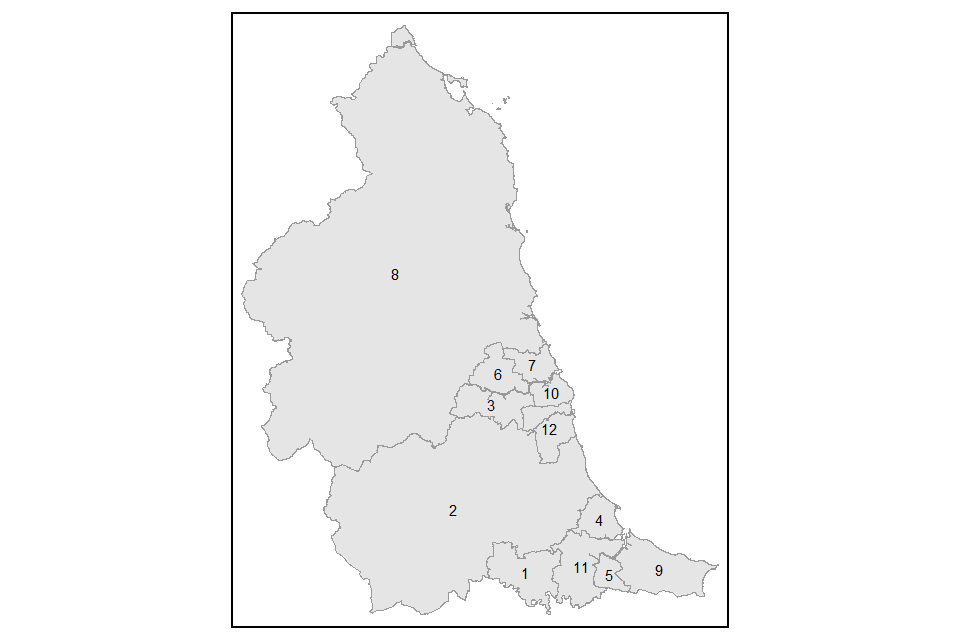
Figure 2: Local authorities in the North West of England
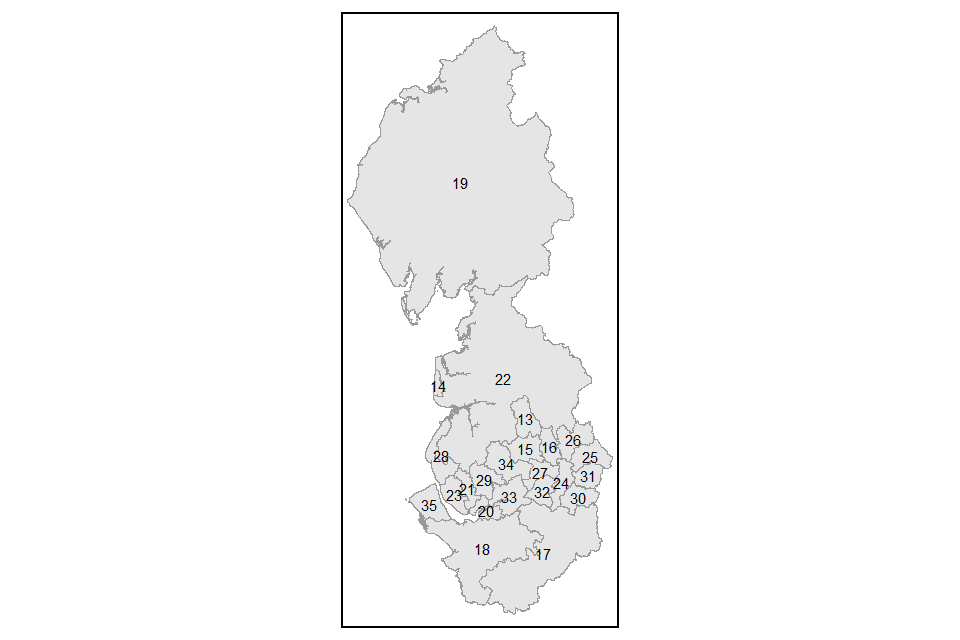
Figure 3: Local authorities in Yorkshire and the Humber

Figure 4: Local authorities in the East Midlands
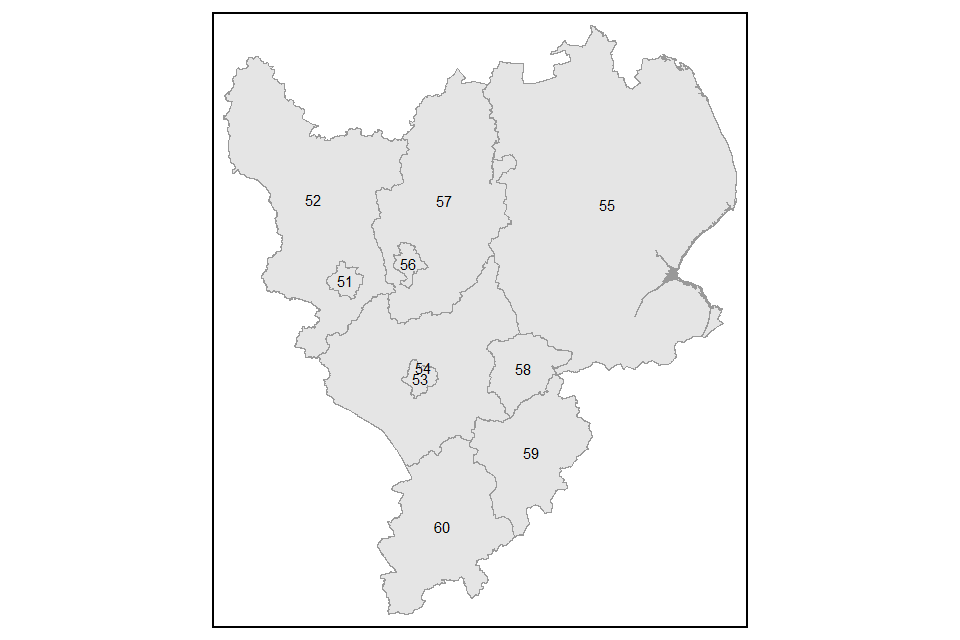
Figure 5: Local authorities in the West Midlands
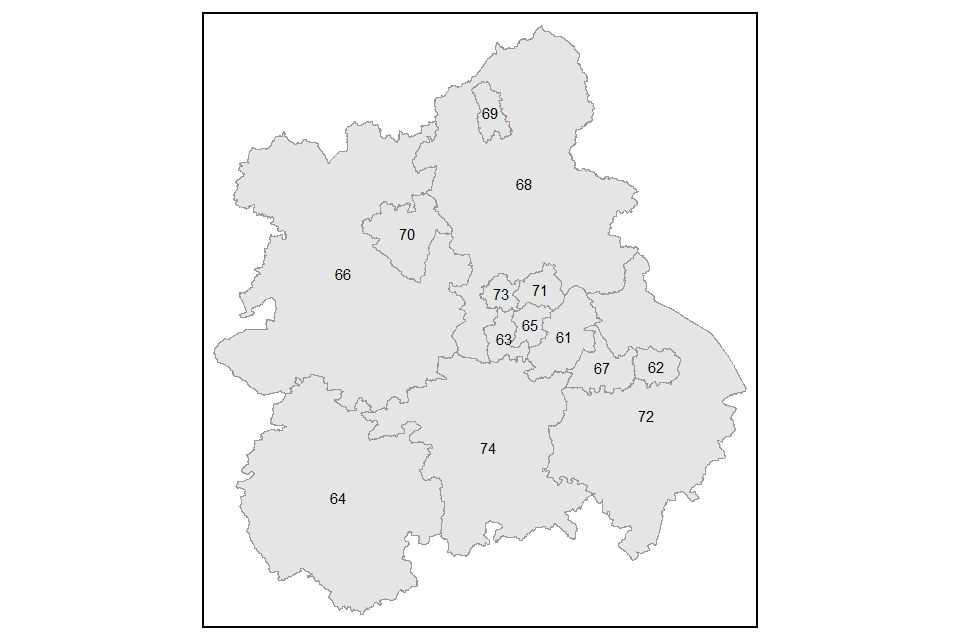
Figure 6: Local authorities in the East of England
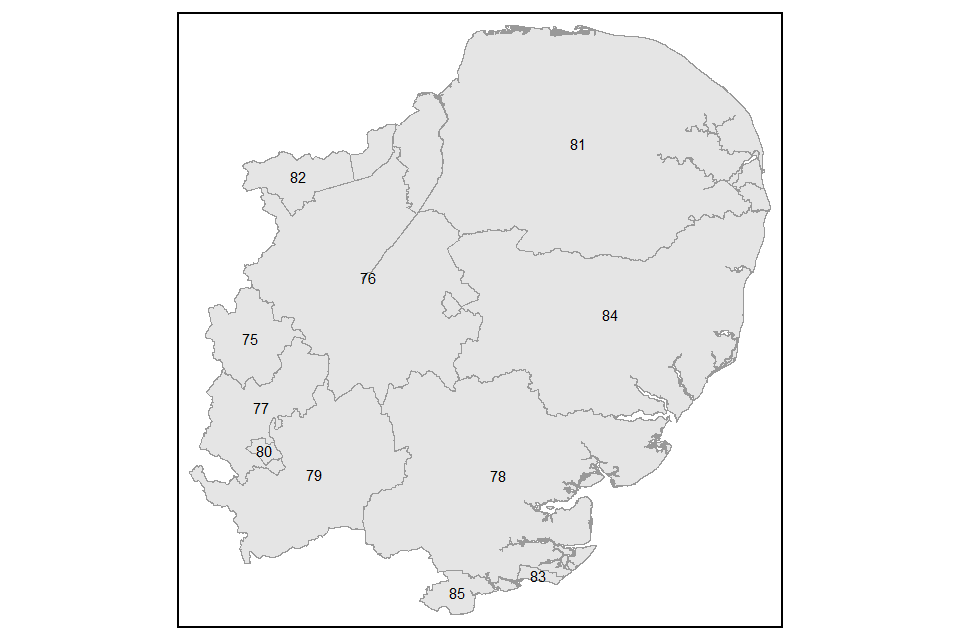
Figure 7: Local authorities in London
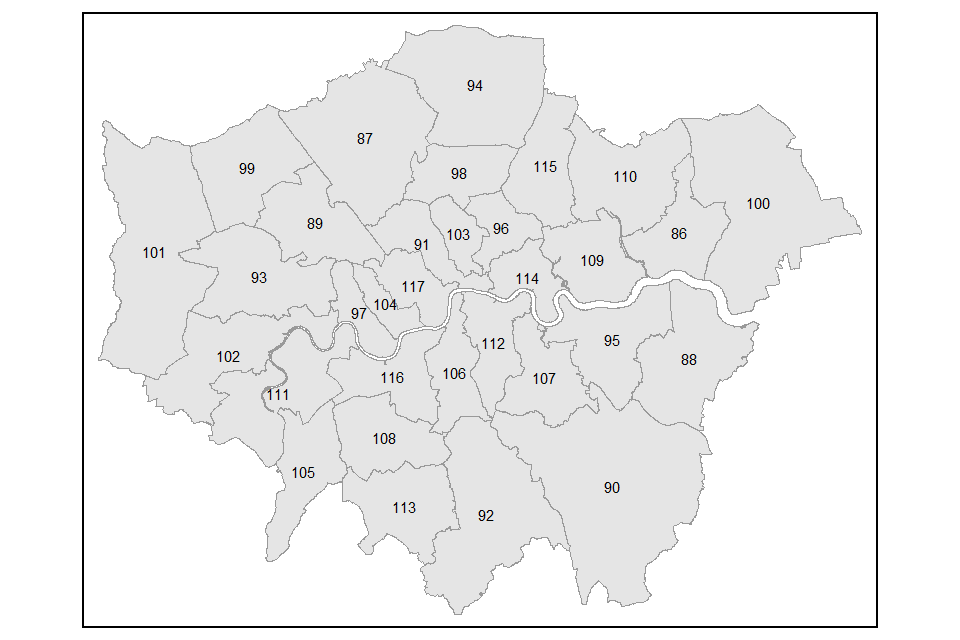
Figure 8: Local authorities in the South East of England
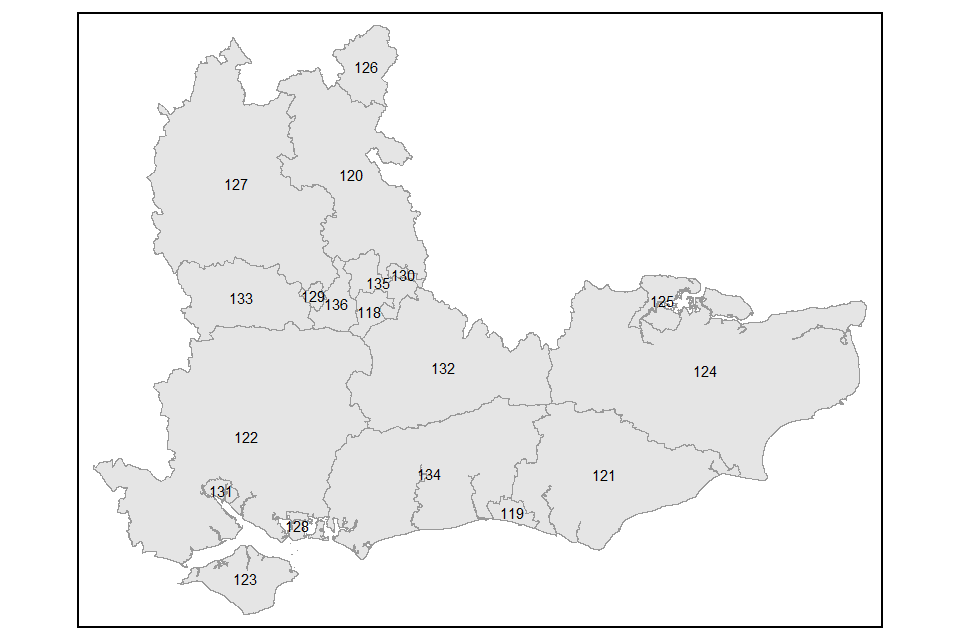
Figure 9: Local authorities in the South West of England
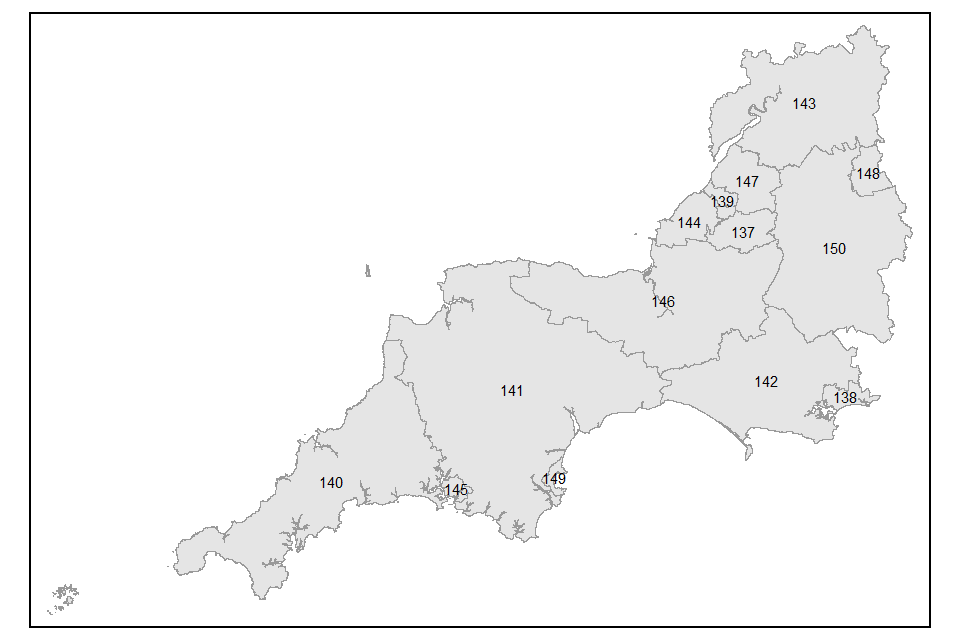
Figure 10: Local authorities in Scotland
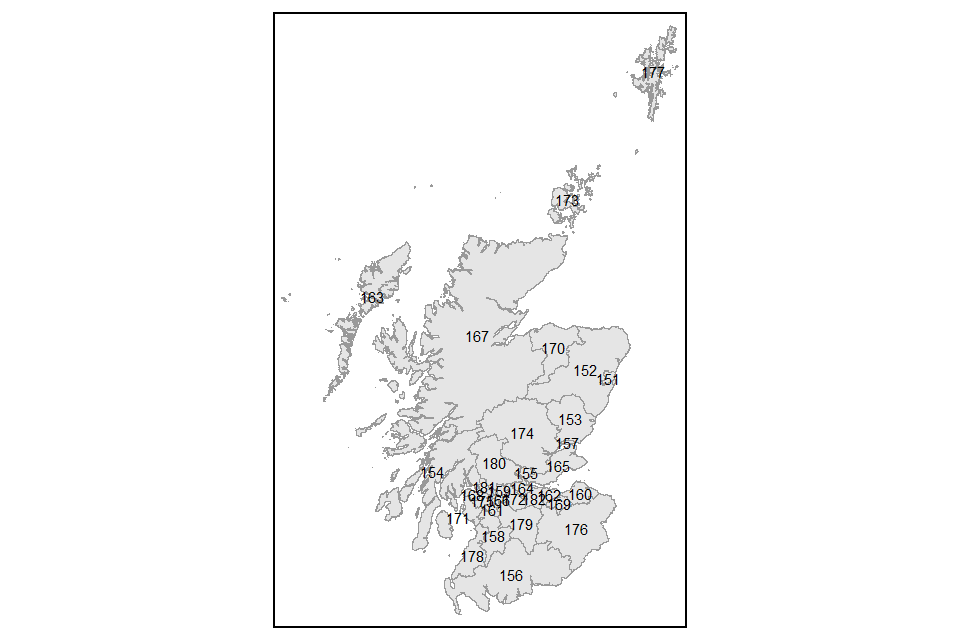
Figure 11: Local authorities in Wales
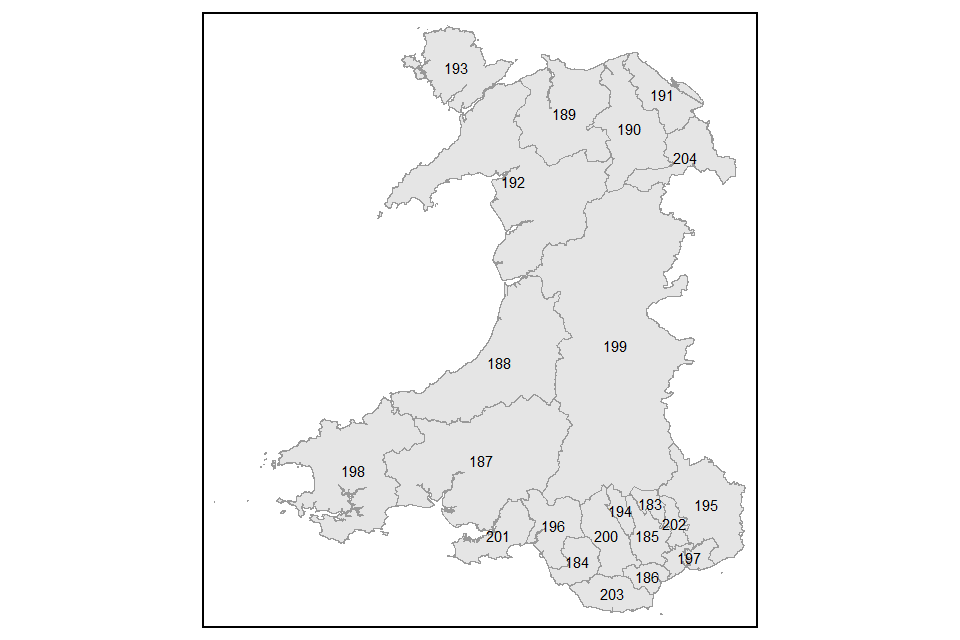
Figure 12: Local authorities in Northern Ireland

5. Limitations of the data and analysis
We have included a list of limitations with our analysis below. Please note, this list is non-exhaustive. Some of these limitations have previously been referenced in our 2023 and 2024 State of the Nation reports.
5.1 Lack of harmonised educational data from administrative sources across the UK
Historically, Scotland has had its own educational system and qualifications separate from the rest of the UK. Since devolution, state education has become a separate responsibility of each of the 4 nations: the Department for Education in England, the Scottish Government through its executive agency, Education Scotland, the Department for Education and Skills in Wales and the Department of Education in Northern Ireland. As a result, there are separate statistical series for each of the 4 nations administrative data on state education, reflecting local needs, with no UK-wide harmonised data.
5.2 Lack of coverage of the full population in the datasets
There are likely to be problems of under-coverage and of response bias both in the sample surveys and in administrative data used in the Social Mobility Index. For example, sample surveys such as the LFS sample private households but exclude residents of communal establishments (such as care homes). Similarly administrative data from the DfE covers children at maintained schools but may exclude those in private schools or children who are home-schooled. In addition, even among children who should be covered by the data in principle,there will be issues of non-response bias. So ‘hard to reach’ groups (such as undocumented residents) will tend to be under-represented in both administrative datasets and in sample surveys of the population. In the case of sample surveys, all of our data sources use weighting techniques in order to mitigate known biases (although weighting does not necessarily correct for all sources of potential bias). Weighting is not, however, used in the case of administrative data.
5.3 Limitations of the variables available in the dataset
The measures in the Social Mobility Index are not an exhaustive set of the potential drivers and outcomes of mobility. When selecting drivers and indicators for inclusion in the index, the main criterion has been whether quantitative data of sufficient quality is available over time for monitoring purposes, and whether there is sufficiently convincing evidence that the concept being measured is likely to have a causal (direct or indirect) influence on aggregate levels of social mobility. However, data on many factors that may be relevant for social mobility, such as social ties and social capital, is not often updated on a regular basis. Moreover, in some cases we have had to rely on proxy measures rather than direct measures of the concept in question (for example, eligibility for free school meals as a proxy for socio-economic background). As research in this area develops and the evidence base improves, we expect that the measures included in the Social Mobility Index will change over time.
5.4 Small sample sizes and imprecision of estimates
While our main administrative and survey data sources have a large number of respondents, the number of respondents in particular categories (for example certain ethnic groups) can occasionally be quite small. Consequently, this can lead to imprecision in the estimates as a result of sampling error (for more information, please see section 2.2 of this document). This is particularly likely to occur in intersectional analysis of geographical data, due to the small sample sizes that occur in small geographical regions. Small sample sizes can also increase the risk that individual respondents can be identified. For this reason the ONS does not release estimates when there are concerns about imprecision and disclosure. Furthermore, small sample sizes also limit the granularity of the data that can be analysed. Such as in the case of ethnic groups where highly simplified and heterogeneous categories have sometimes been used.
In some cases, we have had to report proportions that are estimated from a model, instead of the actual proportions we observed in the data. This is because the sample size in some subcategories is so low that the actual proportions may not be a very reliable indicator. In these cases, we have had to make simplifying assumptions, for example that the socio-economic background effect is similar across all ethnicities.
5.5 Measurement error
In addition to sampling error, our data is also likely affected by other forms of measurement error. If this error is randomly distributed, it will tend to weaken the strength of the measured associations between variables (so for example leading us to underestimate the strength of the association between socio-economic background and mobility outcomes). However, not all measurement error is likely to be random and some types of non-random measurement error may lead to biases in the results. Problems of this kind are likely to be present with data that requires the respondent to recall information from when they were younger, such as their socio-economic background or the geographical area in which they grew up. This is particularly true for questions of these types, which ask the respondent to recall socio-economic background or geographical region at the age of 14 specifically. Respondents whose families moved between areas, or whose parents changed jobs while they were growing up, may recall the most salient one from their youth rather than the one at age 14. A further complication with respect to historic geographical data is that local government regions have been reorganised, and hence respondents’ memories may not correspond with current administrative areas.
5.6 Limitations of descriptive analysis
Descriptive monitoring data on its own cannot tell us why a problem has emerged or what interventions would be successful in mitigating the problem. The primary function of the Social Mobility Index is to identify where more in-depth analyses are required in order to determine any underlying causal relationships, and to develop relevant social mobility policy accordingly.
5.7 Statistical analysis
The State of the Nation report and the Data Explorer Tool mainly rely on relatively simple statistical techniques such as bivariate cross-tabulations. These have the advantage of “staying close” to the data. In some cases, however, we have used modelling techniques in order to obtain reasonably precise estimates for groups with small sample sizes, such as ethnic minorities or geographical areas. These techniques (such as regression and multilevel modelling) borrow strength from the overall pattern of results in order to make estimates for the small group in question. However, they invariably require assumptions which cannot always be rigorously verified, due to, as an example, a lack of statistical power. The results derived from these modelling techniques should therefore be treated with caution.
5.8 Limitations of quantitative analysis
The measurement framework is designed to enable the SMC to fulfil its statutory duty of monitoring social mobility across the UK, and therefore utilises quantitative data. However, in order to fully understand the processes at work, particularly for the most disadvantaged areas or groups, other types of data such as cultural, social and institutional contexts may be needed. Ethnographic work can therefore be a valuable complement to statistical analysis.
6. Glossary
6.1 Absolute social mobility
This is the idea that some people have different life outcomes from their parents.
Absolute mobility rates look at the proportion of the population who are in different positions (often occupational class or income) from their parents, and are usually given as a simple percentage.
For example, a person experiences upward absolute income mobility if their income is greater than their parents’ income. They experience upward absolute occupational mobility if their occupation class is higher than their parents’. Mobility can also be downward.
6.2 Apprenticeships
A work-based training system, where apprentices earn a qualification after completing a blended mix of study and work.
Apprentices must complete 20% of their training off the job, be paid the apprenticeship minimum wage, and pass an end point assessment.
6.3 Caterpillar plots
A chart which shows both an estimate of a data point and a confidence interval (see definition in this glossary), arranged according to the magnitude of the estimates. The confidence interval usually is represented by a line going through the point which itself represents the estimated value in the chart.
6.4 Composite index
An index consisting of multiple indicators. In our report they all consist of 3 different indicators. For example, our composite index on Promising Prospects consists of indicators on the highest level of qualification achieved, occupational class, and hourly earnings.
6.5 Confidence intervals
A range of values for which there is a defined probability (usually 95%) that an estimate lies within this range. For example if we have a confidence interval of 5 to 10 at the 95% level, we are 95% confident that our estimate lies within the range of values from 5 to 10.
6.6 Class pay gap
The difference in average pay between people who occupy the same type of job but come from different class backgrounds.
6.7 Drivers
These capture the background conditions that make social mobility easier. For example, the availability of good education is a driver, because it helps people to be upwardly mobile. So our measures of drivers tell us about these nationwide background conditions. They do not tell us what the UK’s rates of mobility have been, and they are not broken down by socio-economic background.
6.8 Early years foundation stage profile (EYFSP)
The early years foundation stage profile (EYFSP) sets standards in England for the learning, development and care of a child from birth to 5 years old. All schools and Ofsted-registered early years providers must follow the EYFSP, including childminders, pre-schools, nurseries and school reception classes. There are different early years standards in Scotland, Wales and Northern Ireland.
6.9 Economically inactive
Individuals that are out of work and not looking for a job. Reasons for this include sickness, looking after family, and being a student, among others.
6.10 Free school meals (FSM)
In England, a free school meal (FSM) is a statutory benefit available to school-aged children from families who receive other qualifying benefits and who have been through the relevant registration process. FSM eligibility is often used as a proxy measure for disadvantage in school-aged children.
Free school meal eligibility is the only available measure of pupils’ social background in England, Wales and Northern Ireland. In Scotland, a completely different area-based measure of social background is used, the Scottish Index of Multiple Deprivation (SIMD).
FSM only includes those who have both applied for and been deemed eligible by the relevant local authority. It excludes an unknown number of people who might have been deemed eligible had they applied, and may also include some relatively affluent families.
6.11 Further education (FE)
Typically refers to classroom-based learning at further education (FE) colleges or providers. Students can start at age 14 or 16 years, depending on the college.
6.12 General Certificate of Secondary Education (GCSE)
The GCSE is an academic qualification taken in England, Wales and Northern Ireland, normally at age 16. State schools in Scotland use the Scottish Qualifications Certificate instead.
6.13 Higher education (HE)
Typically refers to post-secondary education, or tertiary education, leading to award of an academic degree. Higher education is an optional final stage of formal learning that occurs after completion of secondary education.
6.14 Income mobility
See social mobility, absolute social mobility and relative social mobility.
6.15 Intermediate (occupations)
See NS-SEC.
6.16 Intermediate outcomes
These capture the progress that people make from their starting point to an intermediate point, such as employment in their 20s, or educational attainment at 16. We break outcome measures down by people’s socio-economic background, so that we can see how different starting points affect progress to eventual end points.
6.17 International Territorial Level (ITL)
This is the internationally comparable regional geography for the UK. The regions that we use are part of a system developed by the Office for National Statistics (ONS). The level of the system we use, ITL2, divides the UK into 41 regions. Each region has between 800,000 and 3,000,000 inhabitants and contains about 4 upper-tier local authorities.
6.18 Key stage 2 (KS2)
The 4 years of schooling in England and Wales, described as year 3, year 4, year 5 and year 6, when pupils are aged between 7 and 11 years. Key stage 2 SATs (National Curriculum tests) are taken by pupils aged 11 years at the end of year 6, which is, usually, the final year in primary school.
6.19 Key stage 4 (KS4)
The 2 years from year 10 to year 11, when pupils are aged between 14 and 16 years. Most pupils take their final general certificate of secondary education (GCSE) exams at the end of year 11.
6.20 Labour Force Survey (LFS)
The LFS is a large-scale nationally-representative government survey that covers England, Wales, Scotland and Northern Ireland. The survey is managed by the Office for National Statistics (ONS) in Great Britain, and the Northern Ireland Statistics and Research Agency (NISRA) in Northern Ireland.
Its purpose is to provide information on the UK labour market which can then be used to develop, manage, evaluate and report on labour market policies.
6.21 Multilevel Model
This is a statistical model which takes account of the clustering of individuals within higher-level units such as regions or schools.
6.22 Mobility outcomes
These capture the progress people have made compared to their parents at a later point in life (often in one’s 50s).
6.23 Moving Average Model
A moving average is a method of smoothing data by calculating the average of a set number of recent data points.
6.24 National minimum wage
The minimum wage that an employer must pay its workforce. As of April 2025, the minimum wage is set at £12.21 for those aged over 21 years old. This is also known as the “national living wage”. There are lower national minimum wages amounts for younger people. In this report, this is referred to as the minimum wage.
6.25 Not in education, employment or training (NEET)
The annual publication of national participation figures of young people aged 16 to 18 years includes a measure of those who are NEET (not in education, employment or training).
6.26 The National Statistics Socio-economic Classification (NS-SEC)
This is the best national measure to monitor occupational social mobility. We define an individual’s socio-economic background according to the occupation of their higher- earning parent. This year we use a 5 part grouping:
-
Higher professional: NS-SEC 1. Examples of which include CEOs, doctors and engineers.
-
Lower professional: NS-SEC 2. Examples of which include teachers, nurses and journalists.
-
Intermediate: NS-SEC 3 and 4. Examples of which include shopkeepers, taxi drivers and roofers.
-
Higher working class: NS-SEC 5 and 6. Examples of which include mechanics, electricians and housekeepers.
-
Lower working class: NS-SEC 7 and 8. Examples of which include cleaners, porters and waiters.
6.27 Occupational mobility
See social mobility, absolute social mobility and relative social mobility
6.28 Odds ratio
The odds ratio is a statistic which can be used for comparing the mobility chances of people from different socio-economic backgrounds. It can be thought of as a way of assessing the outcome of a competition between people from 2 different backgrounds to achieve an advantaged outcome and to avoid a disadvantaged outcome.
6.29 The Organisation for Economic Co-operation and Development (OECD)
The OECD is an international organisation of 38 countries committed to democracy and the market economy. We use the 37 other member states as international comparators to the UK.
6.30 Pay As You Earn (PAYE)
Most people pay Income Tax through PAYE. This is the system the employer or pension provider uses to take Income Tax and National Insurance contributions before they pay wages or pension. Your tax code tells your employer how much to deduct.
6.31 Professional, professional/ managerial (occupations)
See NS-SEC.
6.32 Program for International Student Assessment (PISA)
PISA is the OECD’s Programme for International Student Assessment. PISA measures 15-year-olds’ ability to use their reading, mathematics and science knowledge and skills to meet real-life challenges.
6.33 Pupil Premium
A sum of money given by the UK government to schools in England to improve the attainment of disadvantaged children.
6.34 Quintile
20% of a population which is usually ordered in either ascending or descending order of some metric. After being ranked, the population is split into 5 equal sized groups, and each of these groups is one quintile.
6.35 Random effects model
A type of statistical model in which one or more of the model parameters is a random variable.
6.36 Relative poverty
This is one measure of poverty. A household is in relative poverty if its income is below 60% of the average (median) net household income in the same year. In other words, the pound amount of the poverty line changes each year based on current median income in the country.
6.37 Relative social mobility
Relative mobility involves a comparison of the positions of people from different social backgrounds. For example, in the case of income, relative mobility tells us how strongly children’s ranking within their income distribution is associated with their parents’ ranking. Relative mobility is low if almost everyone ends up with a similar rank as their parents. For example, if parents in the bottom decile of earnings have children that mostly end up in the bottom decile of earnings.
While absolute and relative social mobility often go together, they are not the same concept. For example, if a society creates more professional jobs, absolute occupational mobility should improve. But if most of these professional jobs go to people from professional backgrounds, relative social mobility may remain static.
6.38 Social mobility
Social mobility refers to movement within a given stratification system. Social mobility can be either intergenerational (when children move away from their parents’ position) or intra-generational (when people move away from their own initial position). There are different dimensions of stratification – we focus on the key mobility dimension of occupational class, and add further dimensions like income, wealth, education and housing, as the data allows. See also the distinction between relative social mobility and absolute social mobility.
6.39 Social Mobility Index (SMI)
The Social Mobility Index is a long-term measurement framework for social mobility in the UK. It replaces the Commission’s original Social Mobility Index, launched in 2016. This new Index provides a critical starting point to improve the evidence base and goes well beyond solely reporting on the drivers of mobility.
We report on social mobility outcomes which show where people end up in comparison with where they started. This is across a range of outcomes of interest, including occupational class, income, education, and either at an earlier stage in their lives in their 20s and 30s (intermediate outcomes), or a later stage in their 40s and 50s (mobility outcomes).
6.40 Socio-economic classification, background
See NS-SEC.
6.41 Universities and Colleges Admissions Service (UCAS)
The Universities and Colleges Admissions Service – a nonprofit organisation which conducts the application process for UK universities.
6.42 Understanding Society, The UK Household Longitudinal Survey (UKHLS)
The UKHLS is a longitudinal survey of the members of approximately 40,000 households in the UK. The study is based at the Institute for Social and Economic Research at the University of Essex.
The purpose of UKHLS is to provide high-quality longitudinal data on subjects such as health, work, education, income, family, and social life. This helps to understand the long-term effects of social and economic change, as well as policy interventions designed to impact the general wellbeing of the UK population.
6.43 Unidiff parameters
The Unidiff parameter provides a single number to show whether the level of relative mobility (as measured by odds ratios) differs across the tables being compared. This allows us to compare levels of relative mobility across, for example, different years, or different ethnicities.
6.44 Wealth and Assets Survey (WAS)
A longitudinal survey of around 17,000 households conducted by ONS every 2 years. The purpose of the survey is to ‘measure the well-being of households and individuals in terms of their assets, savings, debt and planning for retirement’.
6.45 Working-class occupations
See NS-SEC.
-
Please see our technical annex for the 2024 State of the Nation report for the original publication. ↩
-
See the following ONS paper: ‘Non-response Weights for the UK Labour Force Survey? Results from the Census Non-response Link Study for comparisons based on the 2011 Census’ ↩
-
For further details of the changes, see the ONS Labour Force Survey Performance and quality monitoring report: April to June 2021. ↩
-
For further details see the LFS USER Guide, volume 1, section 10 ↩
-
Based on the methodology used by the International Labour Organisation. ↩
-
Some information about performance indicators and the reasons for discontinuation can be found on the HESA website. ↩
-
For more details see Free school meals: guidance for schools and local authorities - GOV.UK ↩
-
For more details see Methodology of KS2 attainment. ↩
-
For more details see Methodology of KS4 performance. ↩
-
For more details see Statistical working paper measuring disadvantaged pupils’ attainment gaps over time (updated). ↩
-
This replaces the indicator measuring the proportion of children living in relative poverty based on the DWP’s HBAI statistics. Unfortunately, the HBAI statistics are not available at a local authority level for the earlier part of our period. Please note that this driver is called DR15 in the social mobility index. ↩
-
This indicator comes from the pooled LFS and covers the age range 16 to 29 whereas the indicator used in SON 2024 was based on the ASHE dataset and applied to the age range 22 to 29. ↩
-
This indicator is similar to that used for SON 2024 but now is restricted to those who were economically active and aged 25 to 64. The SON 2024 indicator did not have this restriction. ↩
-
See table 3.3 in State of the Nation 2024: Local to National, Mapping Opportunities for All. ↩
-
Social Mobility Commission (2016) The Social Mobility Index. World Economic Forum, The global social mobility report 2020: Equality, Opportunity and a New Economic Imperative. ↩
-
However, we cannot replicate from Census 2001 the exact measures used for the indicators of Conditions of Childhood in SON 2024, and we therefore used the closest available approximations. The main differences are as follows: DR12: In SON 2024 this was a measure of the percentage of children in relative poverty (after housing costs), derived from DWP Housing Below Average Income (HBAI) statistics. For 2001 the nearest equivalent is a measure, based on DWP benefit data and the Census, of the ratio of the number of families with dependent children receiving benefits to the total number of households with dependent children. The 2001 measure therefore does not take account of housing costs (which vary considerably between local authorities). DR13: In SON 2024 this was a measure of the percentage of adults in families with dependent children having degree-level qualifications. For the 2001 Census the published tables by local authority do not distinguish families with dependent children, and the figures are therefore simply the percentage of adults with a higher qualification. DR14a and b: In SON 2024 these were measures of the percentage of adults in families with dependent children having professional and working-class occupations respectively. For the 2001 Census the published tables by local authority do not distinguish families with dependent children, and the figures are therefore simply the percentages of adults with professional and working-class occupations respectively. ↩
-
ONS notes that “TTWAs are built to approximate self-contained labour market areas. They aim to reflect areas where most people both live and work and that have relatively low levels of in- or out- commuting.” ONS goes on to note that, in 2019, productivity per filled job was highest in Slough and Heathrow, London, and Reading TTWAs while rural and coastal areas such as Brecon, Bideford, and Whitby had the lowest. See more in: Productivity in towns and travel to work areas, UK: 2019 ↩
-
These correspond to unitary and upper-tier local authorities, with the exception of Northern Ireland which is treated as a single unit. ↩
-
Map source: ONS Local Authority Districts (December 2023), revised. Published at https://www.data.gov.uk/dataset/6ae5c1ea-b3b6-48f9-adb2-f296e57d3361/local-authority-districts-december-2023-boundaries-uk-bfc ↩