Chapter 5: Conclusions
Published 18 December 2025

© Crown copyright 2025
This publication is licensed under the terms of the Open Government Licence v3.0 except where otherwise stated. To view this licence, visit nationalarchives.gov.uk/doc/open-government-licence/version/3 or write to the Information Policy Team, The National Archives, Kew, London TW9 4DU, or email: psi@nationalarchives.gov.uk.
Where we have identified any third party copyright information you will need to obtain permission from the copyright holders concerned.
This publication is available at https://www.gov.uk/government/publications/state-of-the-nation-2025-the-evolving-story-of-social-mobility-in-the-uk/chapter-5-conclusions
Our report has identified key trends and issues in social mobility across the UK. It highlights the significance of systematic measurement through the Social Mobility Index, helping to give insights into how individuals progress throughout their lifetimes and across generations.
The findings reveal clear patterns, especially from a place-based view, as we see the rise and fall of advantage and disadvantage across the UK. There is more to add to our understanding here, especially in terms of the ‘sorting’ – the migration of people into more and less prosperous areas – that may help to create and sustain that prosperity. But we know that any social mobility strategy must be sensitive to differences of place.
While absolute occupational mobility in the UK is broadly the same as other western European nations, there is a concerning decline over time in absolute income mobility. Relative income mobility also remains lower compared to Nordic countries and others, suggesting that these countries may offer a guide for improvement.
Looking across the UK’s local authorities (LAs), there has generally been stability in their relative positions on the drivers of mobility, with most movements being short-range. Results for the 3 composite indices of drivers show considerable overlap between the 3 lists of disadvantaged LAs. This means that several LA areas are facing disadvantages across 2 or 3 indices.
Entrenched disadvantage, and decline into disadvantage, are particularly evident in the former mining and industrial areas in the North East, Yorkshire and the Humber, the West Midlands, Wales and Scotland. Our results show little sign of the gap closing in the first 2 decades of the 21st century.
In contrast, the advantage is still most evident in London and its commuter belt. London boroughs predominate among areas of persisting advantage on the indices of Conditions of Childhood and Innovation and Growth.
Turning to changes in mobility over time, the widening educational attainment gap during compulsory schooling years, which took hold during the COVID-19 pandemic, continues. Despite increasing enrollment rates in higher education, access to higher degrees remains unequally spread, particularly affecting those from lower socio-economic backgrounds (SEBs).
While youth economic activity has improved, disparities in occupational access and earning potential linked to SEB persist. Minimum wage increases have helped reduce the earnings gap, but fair access to high-paying roles remains a challenge.
Finally, the rise in the number of young people not in employment, education or training shows a need for targeted interventions to support routes into work and education. This is critical for those from lower SEBs.
Case studies
Dan Read
Age 54, Managing Director, Engineered Learning, Derby
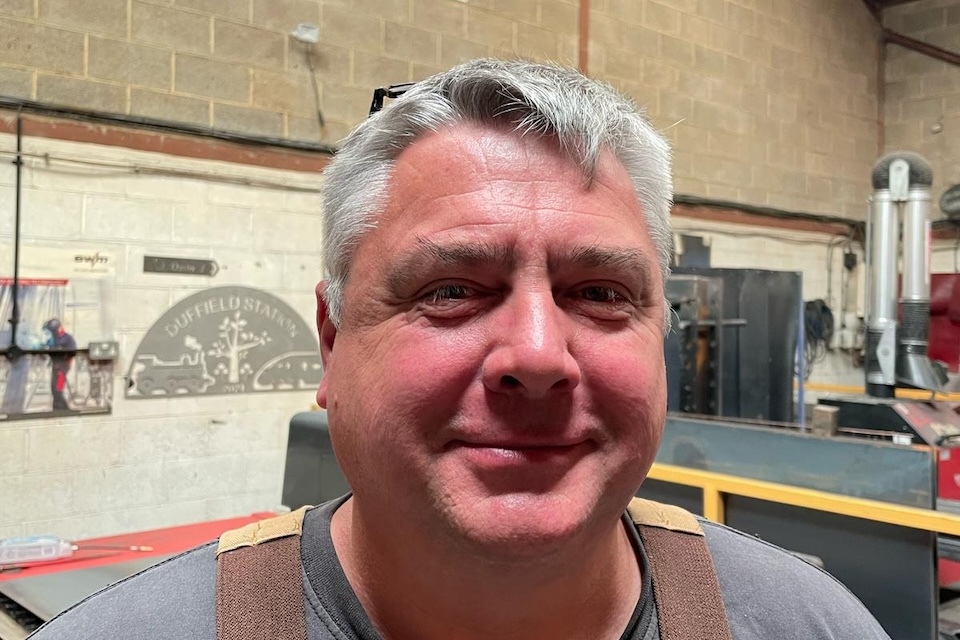
I had a conversation recently with a young person who is not in education, employment or training. I said to him: “Once you’ve got your first job under your belt, your employment history speaks for itself. Employers want to know if you can do the job.”I’m a local estate lad. I moved straight from school into the railways, then moved into youth work. I noticed no one was teaching pre-16 engineering anymore at any level, so I decided to set up welding training for young people. There’s a national shortage of welders and our infrastructure depends on these skills.Our young people are referred to us through Derby City’s Connexions service, usually due to behaviour, academic issues or social barriers. Historically, our students came through [local authority] Pupil Referral Units. The beauty of what we do is that it has instant reward. You see something at the end of each hour, each morning, each day. Your skills and confidence are building, as is the potential for well-paid employment.We start by building a relationship with the young person. Who are you? What’s going on outside education? What do you want? Tell me, no judgment. Let’s build something together.
We deliver accredited level 1 and level 2 training in fabrication and welding, regulated by the Northern Council for Further Education. We always start with health and safety, so we know they’re safe in the workshop. We teach them. And we work with employers constantly: “This young person is worth employing. Give them a shot, they’ll prove themselves.” We also support employers with our former students.
It’s not just a case of making hanging baskets. We’re doing public sculptures and infrastructure. Our mammoth sculpture at Creswell railway station won a national award. Right now, we’re working on a five-by-five-metre dragonfly for Pleasley Pit near Clowne. Our young people aren’t just learning skills, they’re investing in their communities.
The careers advice system is broken. Young people are coming out of mainstream education with good results and then sitting on park benches not knowing what to do because they haven’t been shown what a real career path looks like. We help them get their first job and that’s their ticket to a career.
Ben Sheldon
Age 21, Welder, Eagle Fabrication, Ripley, North Yorkshire
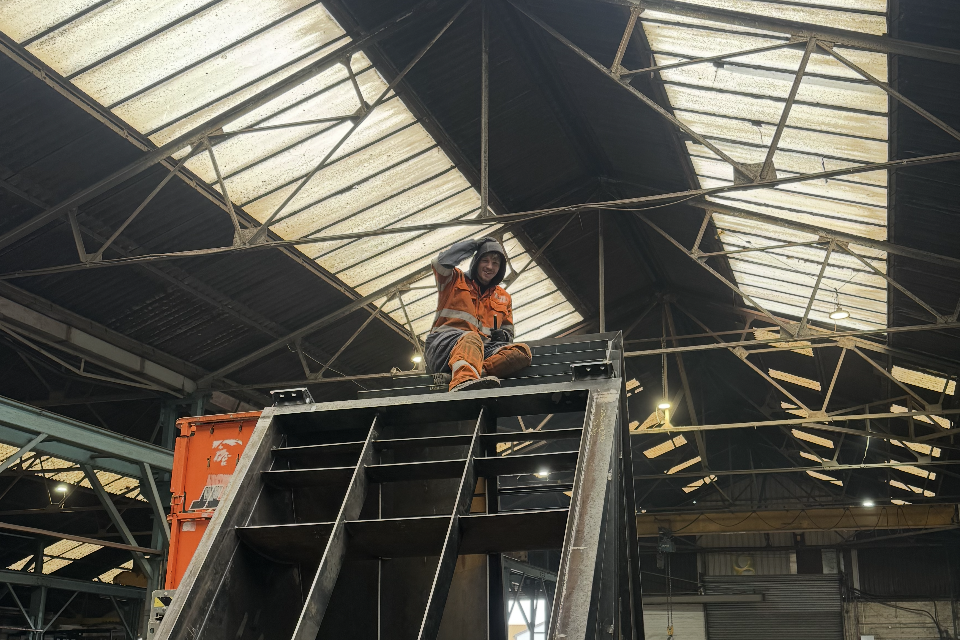
In year 8, I was sent to a Pupil Referral Unit (PRU). I didn’t like mainstream school and I wasn’t very good at maths and English. The only subject I liked was art because it was practical, just drawing. It was better than working out numbers and spelling.
When I went to the PRU, everything changed. I liked it better than mainstream schooling. There weren’t as many students so the teachers had more time for us. From year 10, I did 2 days at school and 3 days in alternative provision. That’s when I started at Engineered Learning.
Straight away, I liked the way Dan put things across. If I didn’t understand the first time, he could show me again in a different way. He’s a good teacher and very skilled at his job. I got a level 1, 2 and 3 in welding and health and safety, then after taking a year out to go to college I got my first job. I had to do a weld test and an interview. I got that job because of the things I learned at Engineered Learning.
I wanted to progress, so now I’ve moved into welding on the nuclear power plant system. The standards we have to work to are unbelievable. You are doing weld tests all the time. But it’s all good practice.
I’ve kind of fallen in love with welding. When I flip that lid down, I just go into my own world. I’m a hands-on person, I like to learn by watching and that’s what Dan’s place did for me. I’m not a very ‘sit there and teach me’ person.
In 10 years, I’d like to be welding on the oil rigs. Last night, I came up against a difficult weld, and I went back to something Dan taught me and the weld went through. I’m still drawing on the things he taught me to this day.