Chapter 2: How does the UK compare with other nations?
Published 18 December 2025

© Crown copyright 2025
This publication is licensed under the terms of the Open Government Licence v3.0 except where otherwise stated. To view this licence, visit nationalarchives.gov.uk/doc/open-government-licence/version/3 or write to the Information Policy Team, The National Archives, Kew, London TW9 4DU, or email: psi@nationalarchives.gov.uk.
Where we have identified any third party copyright information you will need to obtain permission from the copyright holders concerned.
This publication is available at https://www.gov.uk/government/publications/state-of-the-nation-2025-the-evolving-story-of-social-mobility-in-the-uk/chapter-2-how-does-the-uk-compare-with-other-nations
Highlights
The UK probably has similar rates of absolute upward and downward occupational mobility to other major western European countries. It has followed a similar path over time, with a declining rate of upward mobility and an increasing rate of downward mobility. This largely reflects the slowing down in the expansion of the professional and managerial classes.
Different data sources and methodologies produce varying levels of relative occupational mobility, with some studies ranking the UK as a high-fluidity country and others putting it in the middle.[footnote 1]
The UK’s absolute income mobility rate is similar to that of Norway, Finland, Sweden and the Netherlands, and greater than Canada, Denmark and the USA. However, it appears to be declining.
On relative income mobility, we have 2 studies, which place the UK in a group of less mobile countries (along with the USA). The studies also show greater relative mobility in the Nordic countries, Australia, Canada and New Zealand than in the UK.
On educational mobility, 3 groups of countries can be identified:
-
Countries with low conditional probabilities of upward mobility and high levels of intergenerational persistence (strong link between parents’ SEB and their children’s) – Austria, Italy, Poland and Portugal.[footnote 2]
-
Countries with high conditional probabilities of upward mobility and medium levels of intergenerational persistence – Belgium, England, France, Ireland, Japan and New Zealand.
-
Countries with high conditional probabilities of upward mobility and lower levels of intergenerational persistence – Canada, Finland and Switzerland.
On housing mobility, there is just one study, using the European Union Statistics on Income and Living Conditions (EU-SILC 2011), which suggests that the UK was one of the most fluid countries, but this may reflect the Right to Buy scheme from the 1980s and so apply to earlier generations.[footnote 3] It is likely that relative housing mobility in the UK is now much lower.
Unfortunately, there are no cross-national comparisons of wealth mobility.
Table 2.1: Summary table of international comparisons of social mobility.
| Dimension | Type of measure | Important references | Findings | Traffic light | Trend |
|---|---|---|---|---|---|
| Occupation | Absolute mobility | OECD (2018), Erzsébet Bukodi and others (2020) | The UK probably has similar rates of absolute upward and downward occupational mobility to other major western European countries. It has followed a similar path over time, with a declining rate of upward mobility and an increasing rate of downward mobility. This largely reflects the slowing down in the expansion of the professional and managerial classes. | 3 | Downward |
| Occupation | Relative mobility | OECD (2018), Erzsébet Bukodi and others (2020), and Florian Hertel and Olaf Groh-Samberg (2019) | On relative occupational mobility, different sources disagree, with some ranking the UK as a high-fluidity country and others putting it in the middle. | 2 | Upward |
| Income | Absolute mobility | Robert Manduca and others (2023) | The UK’s absolute income mobility rate is similar to that of Norway, Finland, Sweden and the Netherlands, and greater than Canada, Denmark and the USA. However, it appears to be declining. | 2 | Downward |
| Income | Relative mobility | Miles Corak (2013), Jo Blanden and others (2023), and OECD (2018) | On relative income mobility, we have 2 studies, which place the UK in a group of less mobile countries (along with the USA). The studies also show greater relative mobility in the Nordic countries, Australia, Canada and New Zealand than in the UK. | 4 | No agreement or no evidence |
| Education | Absolute mobility | World Bank (2018) and SMC analysis (2025) | The UK had one of the highest rates of upward educational mobility, similar to those in France and Sweden and greater than the USA and Germany. These results reflect the great expansion of higher education in the UK at the end of the 20th century. | 2 | No agreement or no evidence |
| Education | Relative mobility | World Bank (2018), John Jerrim and Lindsey Macmillan (2015), Bastion Betthäuser and others (2021), Sarah McNamara and others (2024), and SMC analysis (2025) | England falls in a middling group along with other western European countries, is more fluid than Austria, Italy, Poland and Portugal but not as fluid as Canada, Japan or Finland. | 3 | No agreement or no evidence |
| Housing | Absolute mobility | No evidence | Downward | ||
| Housing | Relative mobility | Louis Chauvel and Anne Hartung (2019) | On housing mobility, there is just one study, using EU-SILC 2011, which suggests that the UK was one of the most fluid countries, but this may reflect the Right to Buy scheme from the 1980s and so apply to earlier generations. | No agreement or no evidence | |
| Wealth | Absolute mobility | No evidence | No agreement or no evidence | ||
| Wealth | Relative mobility | No agreement or no evidence |
Notes: In the column headed ‘Traffic light’, ‘1’ indicates the most positive outcome and ‘5’ the most negative outcome in terms of international comparisons. In the column headed ‘Trend’, the arrows indicate the direction of the UK national trend, and a red question mark indicates no agreement in the literature or no evidence available.
Introduction
It is very difficult to say what an achievable level of social mobility is without looking at the situation in other countries. For this reason, we have done a comprehensive survey of the research to compare rates and patterns of mobility around the world. This is the starting point for both learning from the best and understanding what has gone wrong in countries where mobility is poor.
Since ‘social mobility’ is a term covering lots of socio-economic outcomes, we’ll consider them one by one. The analysis breaks social mobility into occupation, income, education and housing. Unfortunately, there is very little comparative work on wealth mobility around the world, even though this is likely to be an increasingly important topic as wealth inequality grows. For example, the baby boomer generation is set to transfer a large amount of wealth to their children over the next 20 years.[footnote 4] This will lead to a divide between those who inherit and those who don’t.[footnote 5]
Occupational mobility
Summary
On absolute occupational mobility in the 2000s, we have rather contradictory results from the Organisation for Economic Co-operation and Development (OECD, 2018) and Erzsébet Bukodi and others (2020), despite their main data source being the same (the European Social Survey, ESS).[footnote 6][footnote 7][footnote 8] Our best guess is that the UK has similar rates of absolute upward and downward mobility as other major western European countries. It has also followed a similar path over time to them, with a declining rate of upward mobility and an increasing rate of downward mobility. This largely reflects the slowing down in the expansion of the professional and managerial classes (jobs such as senior executive or office manager).
On relative occupational mobility, various sources also give different results, even when using the same data (ESS). Two analyses suggest that the UK is now a high fluidity country, (OECD 2018, Erzsébet Bukodi and others, 2020) while another (Florian Hertel and Olaf Groh-Samberg, 2019) suggests that the UK is middling.[footnote 9] An analysis of a different source (EU-SILC 2011) also says that the UK is middling (but few details of the method are provided).[footnote 10] Using LFS data to replicate Richard Breen and Walter Müller’s (2020) cross-national comparisons could help to clarify the UK’s position.[footnote 11]
Background
‘Absolute occupational mobility’ refers to changes in an individual’s occupation compared with their main-earning parent’s occupation. Measures generally consist of the percentage of people who experience upward or downward mobility, regardless of the relative distribution of classes.
‘Relative occupational mobility’ instead measures the ease with which individuals can move between different occupational classes. It examines how strongly individuals’ occupational outcomes are influenced by their social class origins, assessing fluidity and barriers within the social structure.
Studies show that absolute occupational mobility is influenced by shifts in the workforce structure, while absolute income mobility depends on the growth rate of real household income.[footnote 12] For instance, during rapid economic growth, like in the 1950s in the UK, there were more high-level jobs, creating more vacancies at the top. If there are more professional-level positions than there are children from professional families to fill them, individuals from working-class backgrounds often fill these roles, resulting in increased upward mobility and decreased downward mobility rates.
In the UK, the job market, education participation, living standards and ethnic diversity have changed significantly over time. Particularly, the share of professional and managerial roles has increased considerably since World War 2, helping more people to advance their living conditions and experience upward occupational mobility. Also, more women have entered professional occupations, leading to a greater number of children growing up in households with both parents in professional roles. However, since 1991, this growth has slowed, and the availability of professional-level positions has expanded more gradually.[footnote 13]
Recent studies depict a consistent picture of absolute occupational mobility trends over the 20th and early 21st centuries. During this period, the total occupational mobility rate in the UK has remained stable, with most men moving into different social classes from those they grew up in.
There is some debate about whether relative occupational mobility has changed over time, with some researchers observing no change and others noting slight improvements.[footnote 14][footnote 15][footnote 16] However, contrary to some public opinion, there’s no strong evidence of declining relative occupational mobility. There is a clear link between a person’s original class and class destination. For instance, a man from a higher-professional family background has around a 20 times better chance than one from a lower working-class background of achieving a higher-professional position rather than a routine working-class one.
Absolute occupational mobility: international studies
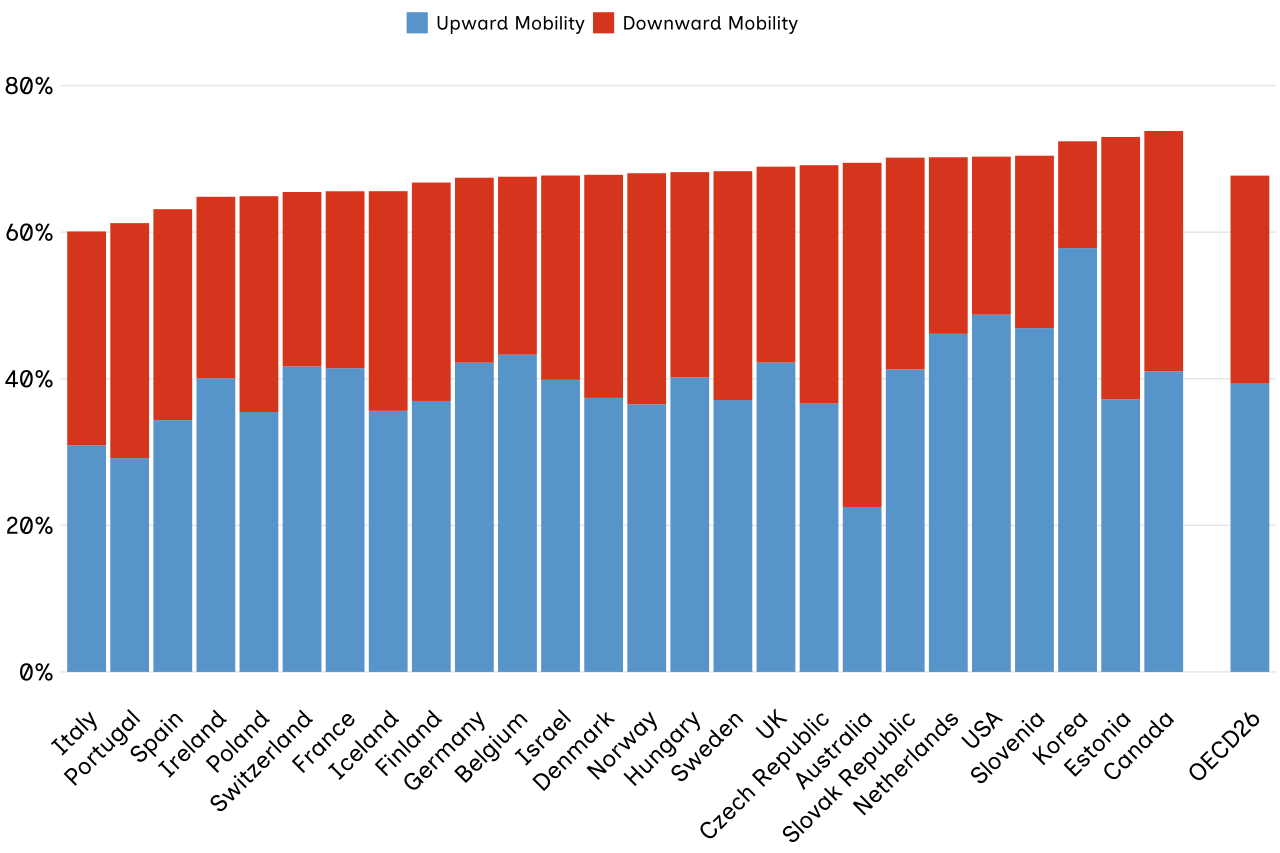
The analysis of absolute social class mobility shows varying trends across different studies and timeframes. Richard Breen and Ruud Luijkx (2004) conducted a comparative study of 11 European countries using harmonised national surveys, highlighting mobility in Great Britain during the 1990s.[footnote 17][footnote 18] Their findings show that 31.7% of British men experienced upward mobility while 19.0% faced downward mobility – both figures below the average for the surveyed countries. This shows fewer men experiencing upward mobility in Britain compared to most other countries during that period.
In contrast, the OECD’s 2018 report, which used data from the ESS 2002 to 2014, presents a more favourable picture for the UK. Figure 2.1 shows that, with one of the higher rates of upward mobility (42.2%) and a lower rate of downward mobility (26.7%), the UK compared well internationally. These findings differ significantly from earlier analyses, showing similar mobility rates for men and women.
Figure 2.1: UK compares well internationally on absolute occupational mobility, with a higher rate of upward than downward mobility.
Percentage of absolute upward and downward mobility for 26 OECD countries.
Source: OECD (2018) calculations based on all 7 waves of the European Social Survey (ESS) (2002 to 2014), Panel Study of Income Dynamics (PSID) for the USA (1999 to 2013), Cross-National Equivalent File (CNEF) for Australia and Korea (2000 to 2014) and the General Social Survey (GSS) cycle 15 for Canada.[footnote 19][footnote 20][footnote 21]
Note: Social class is based on the 9 European Socio-Economic Classification (ESEC) categories based on occupation.[footnote 22]
Erzsébet Bukodi and others (2020) further explored the topic using the ESS 2002 to 2010, concentrating on men and some findings for women in full-time employment.[footnote 23] These results positioned the UK around the average among European countries, with no marked difference between upward and downward mobility rates. This contrasts with the OECD’s analysis and emphasises the complex nature of mobility studies.
Relative occupational mobility: international studies
Relative social class mobility evaluations also show diverse results. Richard Breen and Rudd Luijkx’s (2004) examination places Great Britain in the mid-range concerning fluidity for men in the 1990s, being more fluid than Germany and France but less so than Sweden and the Netherlands. For women, however, the UK was nearly as fluid as the leading countries.[footnote 24]
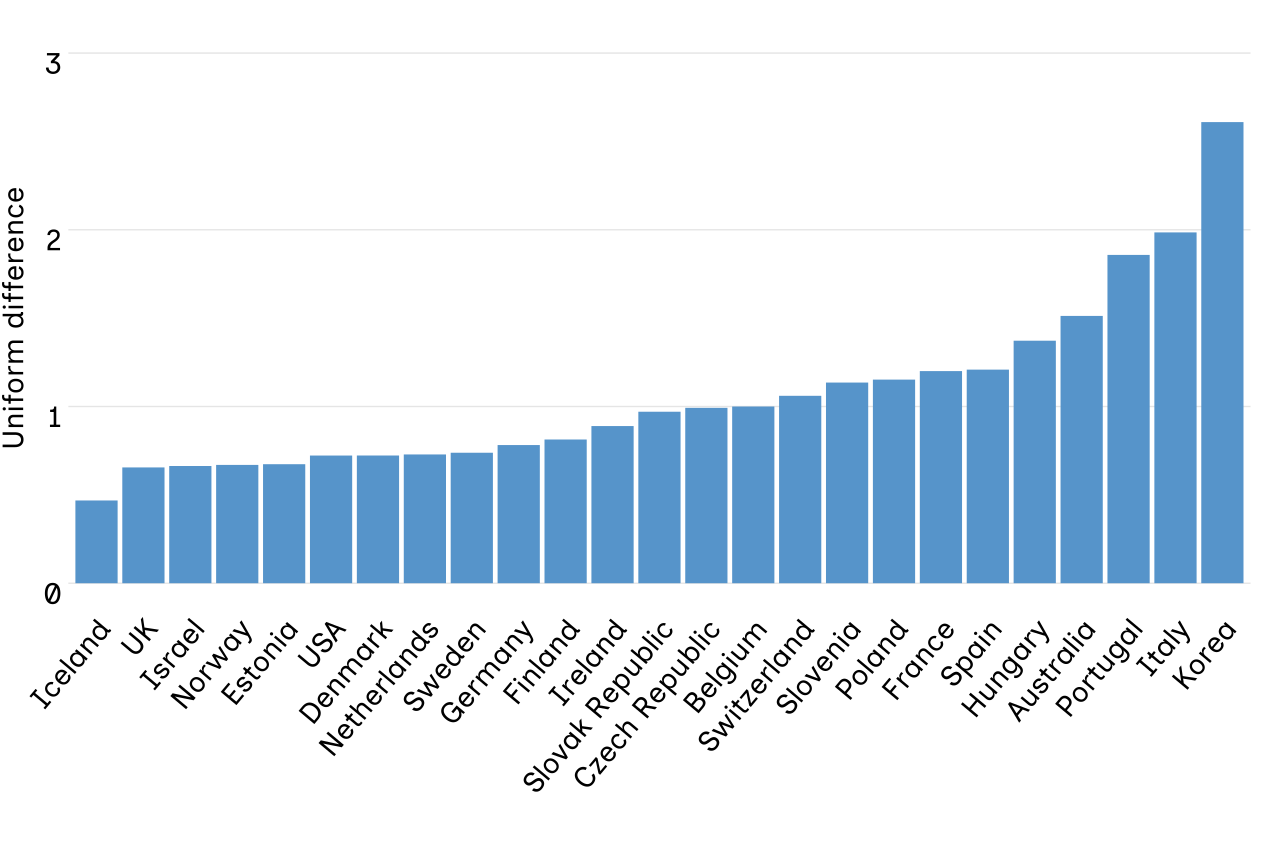
The OECD (2018) identifies the UK as one of the most fluid countries in terms of relative social mobility, a perspective that challenges earlier research like Richard Breen’s findings.[footnote 25] Erzsébet Bukodi and others (2020) also categorised the UK within a group of high-fluidity nations, noting no significant gender differences in mobility.
Figure 2.2: OECD (2018) indicates the UK demonstrates strong relative occupational mobility compared to other countries.
Relative occupational mobility for 25 OECD countries, uniform difference (UNIDIFF) parameter estimates.
Source: OECD (2018). Estimates based on ESS (2002 to 2014), CNEF for Australia and Korea (2000 to 2014) and PSID for the USA (1999 to 2013).
Notes: UNIDIFF parameter estimates, social class coded according to the 9 categories of European Socio-Economic Classification (ESEC). The value of 1 can be thought of as the average across all countries. Countries with a value of less than 1 have better relative occupational mobility (a weaker link between parents’ and children’s occupational classes). Countries with a value of greater than 1 have worse relative occupational mobility (a stronger link between parents’ and children’s occupational classes).
Florian Hertel and Olaf Groh-Samberg (2019) offer a more complex view, suggesting the UK has slightly greater fluidity than average, particularly for women. However, they warn that these results, using a specific model, may not match other findings.[footnote 26]
Income mobility
Summary
On absolute income mobility, we have just one study, which shows that absolute (net) income mobility was similar in the UK to that in Norway, Finland, Sweden and the Netherlands, and greater than that in Canada, Denmark and the USA. The study also shows a decline in absolute income mobility in recent decades in the UK, but not as sharp a decline as that in the USA. The UK result is consistent with findings on declining rates of net social class mobility in recent decades.
On relative income mobility, we have 2 studies, which both place the UK in a group of less mobile countries (along with the USA). Both studies also show greater relative mobility in the Nordic countries, Australia, Canada and New Zealand than in the UK.
Background
‘Absolute income mobility’ refers to the upward or downward movement of an individual’s income compared with their parents’, usually taking inflation into account.[footnote 27] The most typical measure is the percentage of people who earn more than their parents did at a similar age.
‘Relative income mobility’ refers to the strength of the link between parents’ income and their children’s. It could also be thought of as a measure of how well parents’ income predicts their children’s income. In a society with very poor relative income mobility, children’s income will be very similar to their parents’.
Like the rise in professional jobs in the labour market, economic growth and living standards have shown upward trends. However, economic trends tend to be more volatile compared to changes in occupational structure. For example, living standards fell following the 2007 to 2008 financial crisis, and both poverty and unemployment rates have varied noticeably since 1980.[footnote 28] As a result, income mobility trends can be more unstable, at least in the short term, than occupational mobility trends.
Measuring income mobility presents different challenges from measuring occupational mobility. While individuals might remember their parents’ jobs during their childhood, it’s unlikely they could accurately know their parents’ income. This makes large surveys, like the LFS, which rely on memory for childhood data, less suitable for studying income mobility. Instead, panel surveys, which follow the same people over time, are preferred. Another method involves combining panel study results with regular cross-sectional surveys, like the LFS. Unfortunately, an important data gap in the UK is the absence of linked parent-child tax records (researchers could look at the earnings of today’s adults and compare them with their parents’). These are available in the USA. If we had this data, we would be able to carry out much more accurate research into the causes of income mobility and regional variations.
Analysis of these surveys typically shows that, unlike the relative success seen in occupational mobility, the UK has below-average levels of both absolute and relative income mobility compared to other developed countries.[footnote 29]
Absolute income mobility: international studies
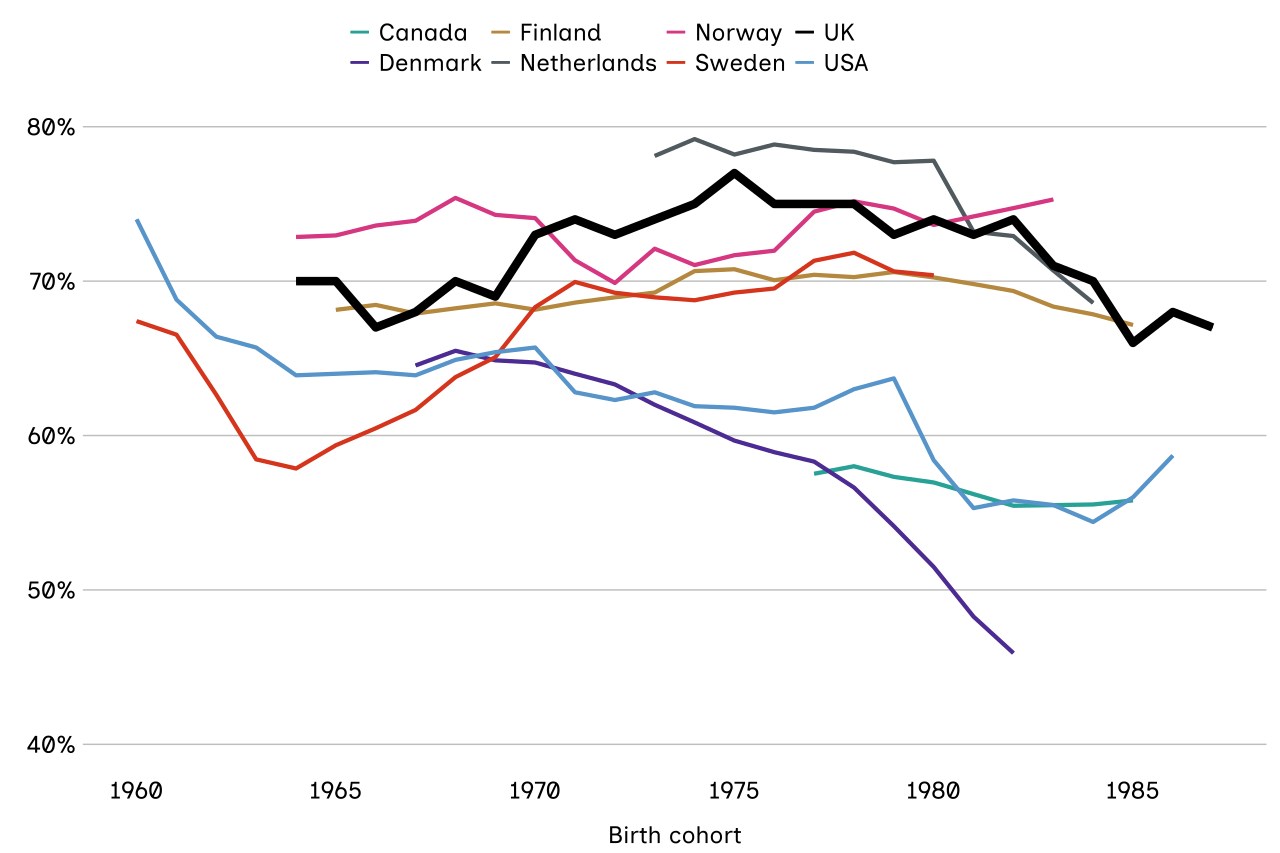
Robert Manduca and others (2023) investigated absolute income mobility utilising the copula and marginals method.[footnote 30] This estimates trends over time across several countries, including the UK. Their results show the UK’s mobility levels are similar to Nordic countries and higher than those observed in the USA, which has experienced a strong decline due to increasing income inequality.
Figure 2.3: Absolute income mobility in the UK was good for those born in the mid-1970s, but has since declined.
Estimates of upward absolute income mobility by country and birth cohort from 1960 to 1987.
Source: Trends in absolute income mobility in North America and Europe.[footnote 31]
Note: The upward absolute mobility rate is the percentage of children in each birth cohort whose pre-tax, post-transfer family income at age 30 years, adjusted for inflation, was higher than their parents’ family income at age 30 years.[footnote 32] Incomes are measured using a combination of register and survey data in each country.
Relative income mobility: international studies
Concerning relative income mobility, Miles Corak (2013) highlighted a relatively high income persistence in the UK, the same as Italy and the USA.[footnote 33] More recent research using different methodologies suggests a lower intergenerational elasticity (IGE) for the UK.[footnote 34] This brings it closer to Germany’s figures but still lagging behind Nordic countries.
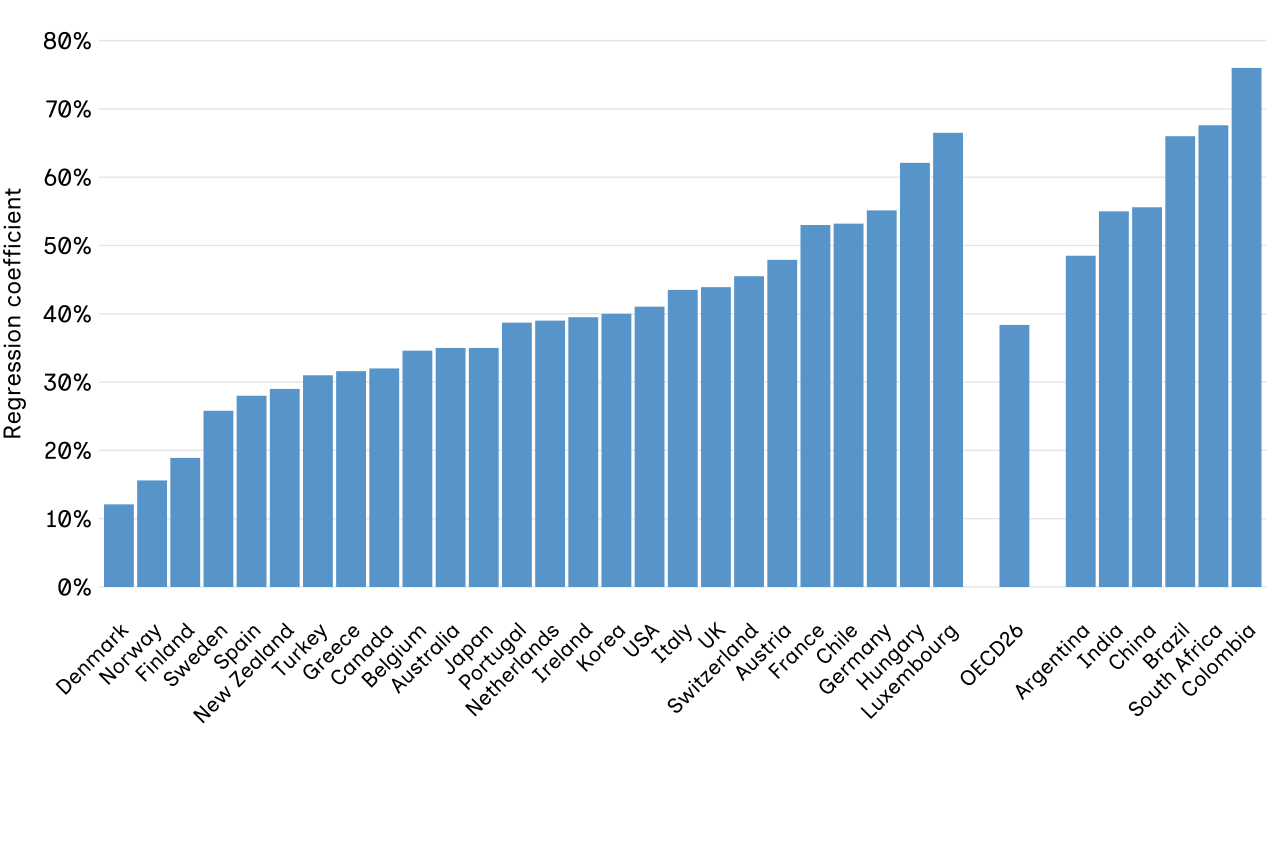
The OECD’s 2018 assessment in figure 2.4 also shows lower fluidity in the UK compared to the OECD average, yet similar to the USA and other comparable nations. The variety of statistical techniques used across studies presents challenges in making direct comparisons.
Figure 2.4: OECD indicates lower fluidity in the UK compared to the OECD average.
Relative mobility measured by IGE for father to son, for the late 2000s in OECD and 6 other countries.
Source: OECD (2018).[footnote 35]
Notes: The higher the parameter, the higher the persistence of earnings across generations and the lower the intergenerational mobility (less change between different family generations).
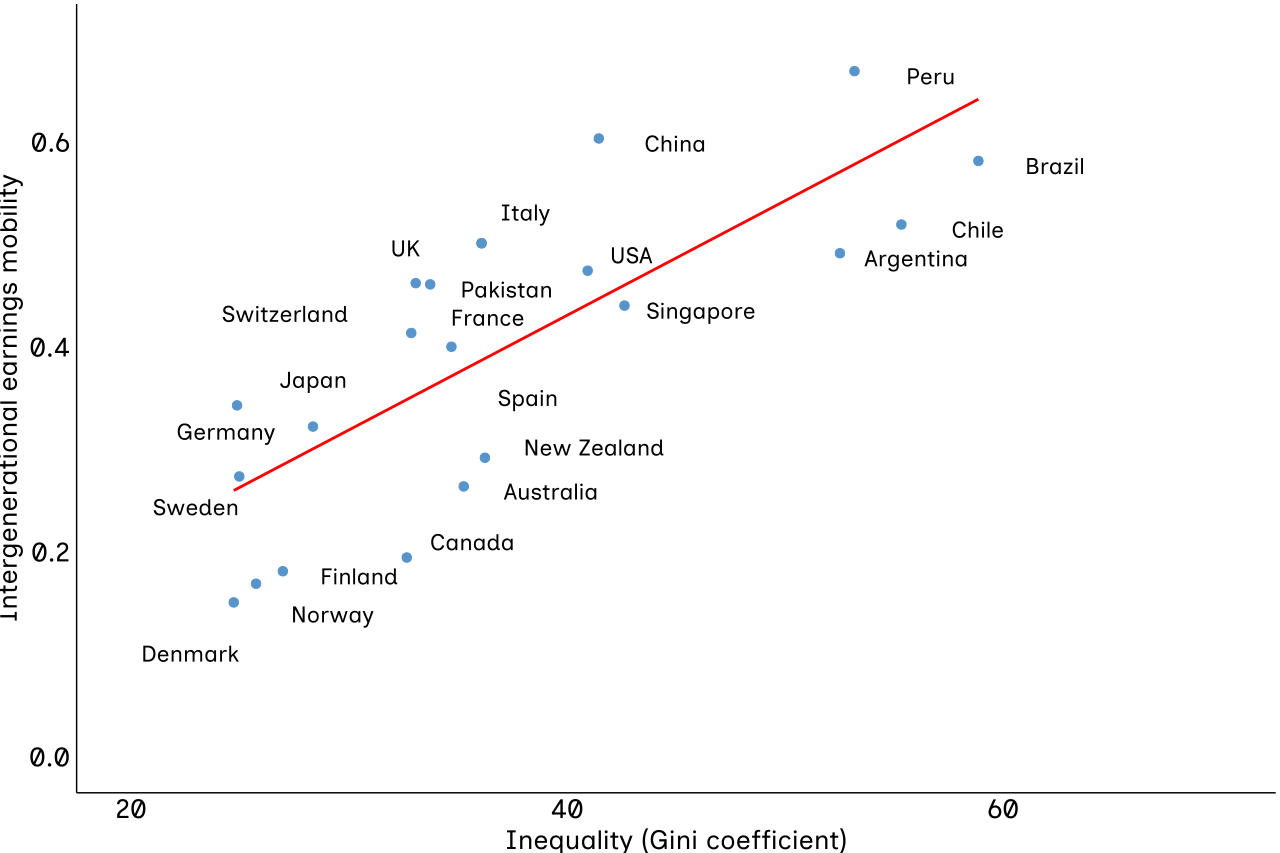
Miles Corak’s (2013) results in figure 2.5 suggest that income persistence is quite high in the UK, similar to Italy, Switzerland and the USA, while the Nordic countries, New Zealand, Australia and Canada have lower levels.[footnote 36] The horizontal axis shows scores on the Gini coefficient, a standard measure of economic inequality (using disposable household income for about 1985 as provided by the World Bank). The vertical axis shows scores on intergenerational earnings mobility. This measures the strength of association between fathers’ and adult sons’ earnings for a cohort of children born during the mid-to-late 1960s and measuring their adult outcomes in the mid-to-late 1990s. The specific measure used in figure 2.4 is the IGE – the coefficient from the regression model described above. So it is affected by changes in income inequality, as well as changes in relative income mobility.
Figure 2.5: Income persistence is high in the UK (like Italy, Switzerland and the USA) but lower in Nordic countries, New Zealand, Australia and Canada.
Great Gatsby Curve for 21 countries.
Source: Miles Corak, ‘Here is the source for the “Great Gatsby Curve” in the Alan Krueger speech at the Center for American Progress on January 12’, 2012. Published on MILESCORAK.COM.
Notes: The Great Gatsby Curve describes an inverse relationship between income inequality and intergenerational social mobility, when higher income inequality is associated with lower social mobility. This means that in countries with larger income gaps, it’s harder for individuals to improve their socio-economic status compared to their parents, regardless of effort.
More recent research by Jo Blanden and others (2023) using the British Cohort Study data from 2000, and a direct measure of a father’s income, shows a lower IGE of 0.27 for men and 0.38 for their daughters.[footnote 37]
Educational mobility
Summary
Three groups of countries can be distinguished:
-
Countries with low conditional probabilities of upward mobility and high levels of intergenerational persistence – Austria, Italy, Poland and Portugal.
-
Countries with high conditional probabilities of upward mobility and medium levels of intergenerational persistence – Belgium, England, France, Ireland, Japan and New Zealand.
-
Countries with high conditional probabilities of upward mobility but lower levels of intergenerational persistence – Canada, Finland and Switzerland.
On absolute educational mobility, we just have one study, using the ESS 2016 for the UK and most European countries (plus our analysis of the Programme for the International Assessment of Adult Competencies (PIAAC), cycle 2 – see table 2.2). The UK had one of the highest rates of upward educational mobility, similar to those in France and Sweden, and greater than in the USA and Germany. These results reflect the great expansion of higher education (HE) in the UK at the end of the 20th century. However, using surveys to measure absolute rates of mobility brings a high risk of response bias, since people’s interpretation and recall are not perfect.
On relative educational mobility, we have 4 studies; 3 using ESS and one using PIAAC 2011 (plus, again, our own analysis of PIAAC 2022 to 2023). The results are rather different depending on the data source, but our new analysis shows a similar pattern to John Jerrim and Lindsey Macmillan (2015) and Sarah McNamara and others (2024) – namely that England falls in a middling group along with other West European countries, is more fluid than Italy, Poland and Portugal, but not as fluid as Canada, Japan or Finland.[footnote 38]
Background
‘Absolute educational mobility’ refers to the situation where individuals achieve higher (or lower) educational levels than their parents. The most typical measure is the percentage of people who go beyond their parents’ education, often showing overall progress in educational attainment across generations.
‘Relative educational mobility’ refers to the degree to which an individual’s education level is influenced, or predicted, by their parents’ education. It assesses how strongly educational attainment is determined by a person’s family background, reflecting equality of educational opportunities and societal barriers.
Just as the growth in the proportion of professional jobs has allowed higher levels of upward absolute occupational mobility, the growth in the number of university places has allowed higher levels of upward absolute educational mobility. The high numbers of first-generation students that result from this also affect relative mobility rates, making it less likely that someone born to non-graduate parents will miss out on university.
However, improvements in relative mobility won’t always follow in this way. For example, as more people took up HE during the late 20th century, the number of first-generation university students grew substantially. However, wealthier families seized these new opportunities quicker than less affluent ones. So although children from poorer families did better in getting to university, those from wealthier backgrounds improved even more, widening the HE participation gap. This situation reflects a decline in relative mobility, while absolute upward educational mobility actually increased.[footnote 39]
Absolute educational mobility: international studies
The World Bank (2018) explores absolute educational mobility, illustrating that the UK’s upward mobility is comparable to many developed countries.[footnote 40] The cohort born in the 1980s exhibited an upward mobility rate of 63.1%, placing it favourably against nations like Germany and the USA.
Initial analyses from PIAAC cycle 2 suggest that England maintains high levels of upward educational mobility, the same as Belgium and France. However, response biases could misrepresent results.
Relative educational mobility: international studies
Relative educational mobility analyses present differing insights. World Bank research estimates favourable results for the UK compared with other countries. In contrast, John Jerrim and Lindsey Macmillan (2015) rank the UK as relatively more immobile, spotlighting significant educational gaps that are influenced by parental background.[footnote 41]
Bastion Betthäuser and others (2021) and Sarah McNamara and others (2024) provided more context, with recent analyses by PIAAC offering evidence of England’s fluidity relative to specific international counterparts.[footnote 42]
Social Mobility Commission new analysis
We use the second cycle of the OECD’s PIAAC data (collected 2022 to 2023) to measure intergenerational educational mobility. The data comes from nationally representative probability surveys in a large number of OECD countries, but the first release only covers 31 countries. For some of these countries the data does not include any measure of respondents’ highest qualification and is therefore unusable. After excluding these countries, we are left with 25 countries of which we have so far analysed 14.[footnote 43] In this second cycle, note that we only have data for England, not for the whole of the UK.
Because of the major expansion of HE in many countries (especially England) in recent years, we restrict the analysis to respondents aged 25 to 44 years. We include respondents who were born in England or who arrived before age 11 years (and received secondary education in England). Migrants who arrived at age 11 years or later are excluded. Because of the relatively small sample sizes, we pool the results for men and women.
Our 2 main variables are the respondent’s highest level of education and the highest level of education of their parent(s). The data shows 3 levels of parental education:
-
At least one parent had a tertiary qualification
-
At least one parent had an upper secondary education but not a tertiary qualification
-
Neither parent had upper secondary or tertiary qualification
Respondents are similarly classified into tertiary, upper secondary and lower secondary or below, along with a more detailed classification in some countries.
Our main measure of absolute educational mobility is the percentage of those from a non-tertiary background (level 1 or 2 of the parental qualification measure) who obtained a tertiary qualification. This is shown in table 2.2 in column 1. This should be thought of as the conditional probability of obtaining a tertiary qualification, not as the overall (unconditional) probability of upward mobility. The unconditional probabilities are shown in column 2 but are harder to understand as the percentages upwardly mobile will depend on the size of the ‘risk set’.[footnote 44] So we concentrate on the conditional probabilities.
We have 2 measures of relative educational mobility. The first measure (shown in column 3) is the odds ratio using a binary measure of tertiary or non-tertiary education both for parents and respondents. The second measure (shown in column 4) is the Spearman Rank Order Correlation between the 3 category measures of highest parental qualification and respondents’ highest qualification.[footnote 45] A larger odds ratio, and a higher correlation, indicate greater intergenerational educational persistence (that is, lesser relative mobility). A smaller odds ratio or correlation indicates lesser intergenerational persistence (that is, greater relative mobility, sometimes described as greater fluidity).
Table 2.2: Absolute and relative educational mobility for men and women aged 25 to 44 years, PIAAC second cycle (2022 to 2023).
| Country | Percentage of people from non-tertiary families who obtained a tertiary qualification | Percentage of people with a higher level of education than their parents | Tertiary: non-tertiary odds ratio (confidence interval) | Rank order correlation between parental and respondent level of qualification | Sample size |
|---|---|---|---|---|---|
| Austria | 29.8% | 30.7% | 6.31 (4.96 – 8.02) | 0.50 (0.52) | 1,641 |
| Belgium (Flemish) | 47.6% | 30.1% | 4.24 (3.26 – 5.52) | 0.34 (0.38) | 1,141 |
| Canada* | 44.0% | 21.5% | 2.44 (2.10 – 2.83) | 0.24 | 3,064 |
| England | 43.6% | 33.7% | 3.87 (3.02 – 4.96) | 0.32 (0.32) | 1,410 |
| Finland | 42.4% | 27.8% | 2.39 (1.90 – 3.00) | 0.20 (0.21) | 1,378 |
| France* | 46.8% | 40.4% | 3.84 (3.05 – 4.83) | 0.30 | 1,715 |
| Ireland | 46.5% | 42.9% | 3.38 (2.53 – 4.51) | 0.29 (0.29) | 1,134 |
| Italy | 23.5% | 46.4% | 7.22 (4.60 – 11.34) | 0.38 (0.40) | 952 |
| Japan | 41.7% | 19.1% | 3.11 (2.52 – 3.81) | 0.27 (0.30) | 1,810 |
| New Zealand | 37.3% | 31.4% | 3.70 (2.81 – 4.87) | 0.31 (0.34) | 919 |
| Poland | 32.3% | 33.6% | 7.60 (5.44 – 10.61) | 0.34 (0.35) | 1,963 |
| Portugal | 30.5% | 49.3% | 8.07 (5.19 –12.57) | 0.40 (0.39) | 859 |
| Spain | 46.7% | 43.4% | 3.41 (2.69 – 4.34) | 0.35 (0.38) | 1,722 |
| Switzerland* | 43.0% | 31.4% | 2.32 (1.89 – 2.86) | 0.21 | 1,701 |
Source: SMC analysis based on OECD’s PIAAC data (collected 2022 to 2023).
Notes: In column 4, the figures in brackets show the correlations when the more detailed scale of respondents’ qualifications is used (if available in the dataset). Those countries marked with an asterisk only have 3 categories for the respondent education level. Percentages are derived from weighted data (column 1 and 2); sample size (column 5), odds ratios and confidence intervals (column 3 and 4) come from unweighted data. The percentage of people with a higher level of education than their parents (column 3) and rank order correlation (column 5) is calculated based on 3 categories for both respondents and parents.
These results are broadly in line with previous research, using the first cycle of PIAAC.[footnote 46] This also found a group with higher levels of persistence (Czechia, Italy, Poland), a large middling group with average levels of persistence (Belgium, UK, France, Ireland, Japan plus Austria, Spain and Germany) and a mainly Nordic group with lower levels of intergenerational persistence (Canada, Finland plus Ireland, Denmark, Norway and Sweden). Results found by Sarah McNamara and others (2024) using the ESS are similar, with a group showing higher levels of intergenerational persistence (Austria, Bulgaria, Poland, Belgium, Hungary, Ireland, Italy), a middling group (France, Germany, Spain, Switzerland, UK, Spain, Portugal, Czechia), and a predominantly Nordic group with lower levels of intergenerational persistence (Denmark, Finland, Iceland, Norway, Sweden).[footnote 47] It should be noted that the positions of individual countries vary from study to study and also within studies, according to the method for estimating relative mobility. But overall results show that the UK belongs to the middling group.
It’s not surprising that countries with high levels of intergenerational persistence see a strong link between parents’ and children’s education. This is found in countries with lower levels of upward mobility from the bottom, but is possibly a new finding. It may reflect the fact that these high-persistence countries are at an earlier stage of tertiary education expansion. The finding that higher conditional probabilities of upward mobility are shared both by the middling-persistence countries like the UK and the low-persistence Nordic countries raises interesting explanatory questions.
We are currently developing our research by analysing data from the joint European Values Survey and World Values Survey (2017 to 2022).[footnote 48] This will allow us to expand our geographical scope and potentially provide a more refined understanding of intergenerational educational mobility across a wider range of countries. We are also refining our methodological approach to enhance the strength and accuracy of our findings. We will report further developments in this research, incorporating the expanded dataset and refined methodology.
Housing mobility
Summary
Louis Chauvel and Anne Hartung (2019), who looked at people aged between 25 and 60 years, show the UK as among the more fluid countries, perhaps due to the 1980s’ Right to Buy schemes.[footnote 49] However, when statistical controls are introduced, the UK falls to an average position among the surveyed countries, stressing variations influenced by different methodological approaches. It is almost certain that relative housing mobility has fallen since the early 1990s, because the Right to Buy scheme gave a one-off boost, which cannot be repeated since a lot of social housing was sold at once.
Background
‘Housing mobility’ refers to the ease with which individuals or families can change their housing tenure, measured by transitions from renting to homeownership, or the other way around. It is an important component of social mobility, influencing and reflecting economic opportunities available to individuals, especially since the majority of most homeowners’ wealth is tied up in their house. Like other forms of social mobility, housing mobility is affected by both individual circumstances and broader structural factors.
Upward absolute housing mobility is normally measured by the percentage of people who grow up in a rented home, but go on to buy their own home. Relative housing mobility compares the homeownership chances of those whose parents rented, against those whose parents owned their home.
Absolute housing mobility: international studies
Unfortunately, there are no studies comparing absolute housing mobility across countries, so we are unable to comment on how the UK might compare internationally.
Relative housing mobility: international studies
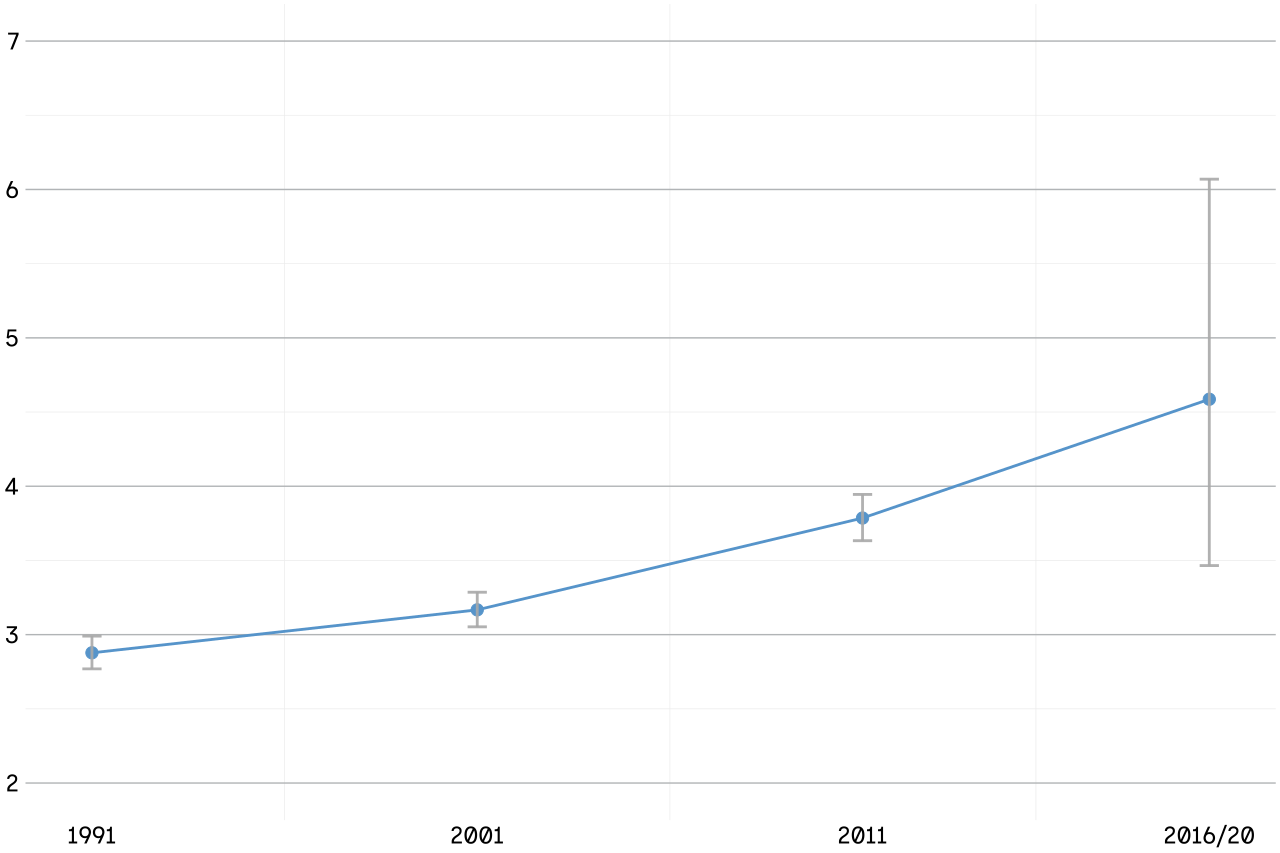
There is just one study, using EU-SILC 2011, which suggests that Britain was one of the most fluid countries, but this may reflect the Right to Buy scheme from the 1980s and so apply to earlier generations.[footnote 50][footnote 51] The SMC reported in 2023 that relative housing mobility has declined in the UK, and other work agrees that relative housing mobility is now much lower.[footnote 52]
Figure 2.6: Relative housing mobility has declined steadily since 1991.
Odds ratios of the relationship between parental and respondent homeownership in the UK, from 1991 to 2016 and in 2020, among younger respondents.
Source: Wealth and Assets Survey (WAS) waves 6 and 7 (respondents aged 30 to 34 years) and Bell and others (2022, table 6, UK respondents aged 28 to 37 years).[footnote 53][footnote 54]
Notes: The error bars show the 95% confidence intervals for each estimate. The odds ratio is a measure of relative mobility. It is the ratio of the odds (of owning a house or not) among those whose parents owned a house to the odds among those whose parents had not. The data used is weighted using the WAS individual weights.
Case study
Jack Matthews
Age 22, Trainee Solicitor, Tozers LLP, Plymouth

I grew up in the south-west of England. My mum was a carer and a housewife, while my stepdad worked as a taxi driver. I lived in a flat with my sister and 3 stepbrothers – one of whom was severely disabled, so we were young carers for him as well. Caring for Alfie was normal for me, but it meant that my upbringing was different. Understandably, lots of my mum’s time was dedicated to caring for Alfie, so it meant I had to develop independence very early on – often getting myself ready for school and assisting with my brother’s medication and tube feeding.
As a child, I struggled with my hearing and was diagnosed with 50% hearing loss in both ears. I wore hearing aids for most of my time at primary school and received therapy to develop my speech and language. I struggled communicating with others and found myself gravitating towards English and drama at school. Looking back, I believe they gave me the tools to express myself and I don’t think I would be as confident a speaker and writer today if it hadn’t been for my love of language and performing.
I decided I wanted to pursue a career in law while I was still quite young. There was a particular documentary I watched which simulated a murder trial using real barristers. I was captivated – not just by the drama of the courtroom, but by the way the defence counsel managed to shape the jury’s perception. It made me realise how powerful a lawyer’s words can be.
Despite my surety that I wanted to be a lawyer, I had no clue how to get there or what a career in law really entailed. Neither of my parents went to university and I had no connections in the legal field. That all changed when I started sixth form. I was fortunate enough to complete widening participation programmes, which developed my soft skills and supported me in accessing higher education and understanding careers in law. I also participated in the Social Mobility Foundation’s Aspiring Professionals Programme, which gave me the opportunity to travel to London for the first time and experience working at a Silver Circle law firm.[footnote 55][footnote 56]
I went on to study law at the University of Exeter. Alongside my studies, I volunteered as the social mobility officer for the university’s Law Society. I also had the privilege of mentoring students from working-class backgrounds and supporting them with their UCAS applications. In my second year I was nominated for a Social Impact Award and realised I could combine my passion for the law and social mobility by introducing new ways to keep the ladder down for the next generation.
I faced challenges at university. I struggled financially and had to work throughout to support myself. Student housing in Exeter was particularly expensive and without a family safety net the pressure was constant. I was also self-conscious of my accent and background. I had never been surrounded by students who had not attended a state school.
In my final year I started applying for training contracts and was offered a job with Tozers LLP. They offered me a bursary to contribute towards the cost of my Legal Practice Course (LPC) and a paralegal role to continue working alongside my postgraduate studies – I would not have been able to continue with a legal career without this.
Having successfully completed my LPC LLM, I’m now a trainee solicitor in my second ‘seat’ with the Property Litigation team.73 I am yet to decide where I wish to qualify but contentious probate, wills and trusts has sparked my interest. These cases are deeply personal – often involving people who have been excluded from a will due to a breakdown in relationships. My upbringing instilled a strong sense of justice, and I try to bring empathy and integrity to every case I work on.
I’d advise anyone from the same background who wanted to work in law to never be afraid to be yourself. Be proud of where you come from, because it has shaped the talented individual that you are today. Your background is not a barrier – it is your strength. The legal profession, like every other, thrives on diversity and you, and your experiences, add value.
-
High relative mobility can be thought of as ‘fluidity’ – when an individual’s outcomes are not strongly determined by their parents’ outcomes. ↩
-
The conditional probability of upward mobility is the likelihood of moving up, for people who start in a lower position. It is not the overall rate of mobility. ↩
-
The Right to Buy scheme was introduced by the Housing Act 1980, allowing council tenants to buy their homes at a significant discount. In England, the scheme continues, although the generosity of the discount and the number of eligible houses have fluctuated and reduced over time. The scheme ended in Wales in 2019 and Scotland in 2016. For more information, UK Parliament, ‘Comparing the Right to Buy in England, Scotland, Wales and Northern Ireland’, 2017. Published on COMMONSLIBRARY.PARLIAMENT.UK. ↩
-
The baby boomers were born in the years following World War 2. ↩
-
Financial Times, ‘The great wealth transfer’, 2024. Published on FT.COM. ↩
-
Organisation for Economic Co-operation and Development, ‘A broken social elevator? How to promote social mobility’, 2018. Published on OECD.ORG. ↩
-
Erzsébet Bukodi and others,‘Intergenerational class mobility in Europe: a new account’, 2020. Published on ACADEMIC.OUP.COM. ↩
-
European Social Survey, ‘New version of Round 9 data now available’, 2018. Published on EUROPEANSOCIALSURVEY.ORG. ↩
-
Organisation for Economic Co-operation and Development, ‘A broken social elevator? How to promote social mobility’, 2018. Published on OECD.ORG; Erzsébet Bukodi and others,‘Intergenerational class mobility in Europe: a new account’, 2020. Published on ACADEMIC.OUP.COM. ↩
-
Florian Hertel and Olaf Groh-Samberg, ‘The relation between inequality and intergenerational class mobility in 39 countries’, 2019. Published on JOURNALS.SAGEPUB.COM. ↩
-
Richard Breen and Walter Müller, ‘Education and intergenerational social mobility in Europe and the United States’, 2020. Published on ACADEMIC.OUP.COM. ↩
-
Richard Breen and Walter Müller, ‘Education and intergenerational social mobility in Europe and the United States’, 2020. Published on ACADEMIC.OUP.COM; Erzsébet Bukodi and John Goldthorpe, ‘Social mobility and education in Britain: research, politics and policy’, 2019. Published on CAMBRIDGE.ORG; Robert Manduca and others, ‘Trends in absolute income mobility in North America and Europe’, 2020. Published on IZA.ORG. ↩
-
Erzsébet Bukodi and John Goldthorpe, ‘Social mobility and education in Britain’, 2019. Published on CAMBRIDGE.ORG. ↩
-
Economists have suggested that there has been a rise in within-class income inequality such as Jo Blanden and others, ‘Intergenerational persistence in income and social class: the impact of within-group inequality’, 2013. Published on RSS.ONLINELIBRARY.WILEY.COM. Although this has been disputed by Erzsébet Bukodi and John Goldthorpe, ‘Social mobility and education in Britain: research, politics and policy’, 2018. Published on CAMBRIDGE.ORG. ↩
-
Robert Erikson and John Goldthorpe, ‘The constant flux: a study of class mobility in industrial societies’, 1992. Published on ACADEMIC OUP.COM; John Goldthorpe and Colin Mills, ‘Trends in intergenerational mobility class mobility in Britain in the late twentieth century’, in Richard Breen (editor), ‘Social mobility in Europe’, 2004. Published on ACADEMIC.OUP.COM. ↩
-
Anthony Heath and Geoff Payne, Social mobility, in Albert Halsey and Josphine Webb (editors), ‘Twentieth-century British social trends’, 2000. Published on SEMANTICSCHOLAR.ORG; John Ermisch and Marco Francesconi, ‘Intergenerational mobility in Britain: new evidence from the British Household Panel Survey’, 2004. Published on CAMBRIDGE.ORG; Paul Lambert and others, ‘By slow degrees: two centuries of social reproduction and mobility in Britain’, 2007. Published on JOURNALS.SAGEPUB.COM; Yaojun Li and Fiona Devine, ‘Is social mobility really declining? Intergenerational class mobility in Britain in the 1990s and the 2000s’, 2011. Published on JOURNALS.SAGEPUB.COM; Erzsébet Bukodi and others, ‘The mobility problem in Britain: new findings from the analysis of birth cohort data’, 2015. Published on DEPARTMENT OF SOCIAL POLICY AND INTERVENTION.OX.AC.UK; Franz Buscha and Patrick Sturgis, ‘Declining social mobility? Evidence from five linked censuses in England and Wales 1971–2011’, 2017. Published on ONLINELIBRARY.WILEY.COM; Brian Bell and others, ‘Where is the land of Hope and Glory? The geography of intergenerational mobility in England and Wales’, 2019. Published on CENTRE FOR ECONOMIC PERFORMANCE LSE.AC.UK. ↩
-
Richard Breen and Ruud Luijkx, “Conclusions’ in social mobility in Europe”, 2004. Published on ACADEMIC.OUP.COM. ↩
-
In this context, harmonised national surveys means that the researchers made sure the different surveys from each country asked similar questions and collected data in a consistent way. ↩
-
The Panel Study of Income Dynamics is the longest-running longitudinal household survey in the world. The study began in 1968 with a nationally representative sample of over 18,000 individuals living in 5,000 families in the USA. For more information see: The Institute for Social Research at the University of Michigan. Published on PSIDONLINE.ISR.UMICH.EDU. ↩
-
The Cross-National Equivalent File is a research project that takes information from large-scale household surveys conducted in different countries (like Australia and Korea) and makes the data comparable. For more information see: The cross-national equivalent file, Published on CNEFDATA.ORG. ↩
-
The General Social Survey in Canada is a series of cross-sectional surveys conducted by Statistics Canada to gather data on social trends and monitor changes in the living conditions and wellbeing of Canadians. For more information see: General social survey: Canadians at work and home. Published on STATCAN.GC.CA. ↩
-
The European Socio-Economic Classification is a system used to group people into different social classes based on their occupation and employment status. The aim is to provide a consistent way to compare social inequalities across European countries. See: European Commission, ‘Final report summary – ESEC (European socio-economic classification)’, 2024. Published on CORDIS.EUROPA.EU. ↩
-
Erzsébet Bukodi and others, ‘Intergenerational class mobility in Europe: a new account’, 2020. Published on ACADEMIC.OUP.COM. ↩
-
Richard Breen and Ruud Luijkx, “Conclusions’ in social mobility in Europe”, 2004. Published on ACADEMIC.OUP.COM. ↩
-
Organisation for Economic Co-operation and Development, ‘A broken social elevator? How to promote social mobility’, 2018. Published on OECD.ORG. ↩
-
Florian Hertel and Olaf Groh-Samberg, ‘The relation between inequality and intergenerational class mobility in 39 countries’, 2019. Published on JOURNALS.SAGEPUB.COM. ↩
-
Inflation measures the rate at which the value of money falls and as a result the price of goods and services increases. ↩
-
Anthony Heath and others, ‘Social progress in Britain’, 2018. Published on GLOBAL.OUP.COM. ↩
-
The Organisation for Economic Co-operation and Development, ‘A broken social elevator? How to promote social mobility’, 2018. Published on OECD.ORG. Erzébet Bukodi and others’ findings based on the European Social Survey. ↩
-
Robert Manduca and others, ‘Measuring absolute income mobility: lessons from North America and Europe’, 2023. Published on AEAWEB.ORG. The copula and marginals method is used when we have the distributions of parents’ and children’s incomes, but we don’t have the linkages between individual parents and children. It is a method of estimating these links. ↩
-
Robert Manduca and others, ‘Trends in absolute income mobility in North America and Europe’, 2020. Published on IZA.ORG. ↩
-
Post-transfer means before paying taxes but after receiving government transfers (known as benefits in the UK). ↩
-
Miles Corak, ‘Inequality from generation to generation: The United States in comparison’, 2016. Published on IZA.ORG. ↩
-
Jo Blanden and others, ‘Intergenerational home ownership’, 2023. Published on LINK.SPRINGER.COM. Intergenerational elasticity is a measure used in economics to understand how much a child’s economic success or standing is influenced by their parents’ economic background. ↩
-
The Organisation for Economic Co-operation and Development, ‘A broken social elevator? How to promote social mobility’, 2018. Published on OECD.ORG. ↩
-
Miles Corak (2013), ‘Inequality from generation to generation: The United States in comparison’, in Robert Rycroft (editor), The Economics of Inequality, Poverty, and Discrimination in the 21st Century, ABC-CLIO. ↩
-
Jo Blanden and others, ‘Intergenerational home ownership’, 2023. Published on LINK.SPRINGER.COM. ↩
-
John Jerrim and Lindsey Macmillan, ‘Income inequality, intergenerational mobility, and the Great Gatsby Curve: is education the key?’, 2015. Published on ACADEMIC.OUP.COM; Sarah McNamara and others, ‘Intergenerational mobility of education in Europe: geographical patterns, cohort-linked measures, and the innovation nexus’, 2024. Published on ECINEQ.ORG. ↩
-
Jo Blanden and others, ‘Educational inequality and intergenerational mobility’, in Stephen Machin and Anna Vignoles (editors) ‘What’s the good of education? The economics of education in the UK’, 2005. Published on PRESS.PRINCETON.EDU. ↩
-
Development Research Group, World Bank. ‘Global Database on Intergenerational Mobility’, 2023. Published on WORLDBANK.ORG. ↩
-
Jerrim John and Lindsey Macmillan, ‘Income inequality, intergenerational mobility, and the Great Gatsby Curve: is education the key?’, 2015. Published on ACADEMIC.OUP.COM. ↩
-
Bastian Betthäuser and others,‘Regional variation in inequality of educational opportunity across Europe’, 2021. Published on JOURNALS.SAGEPUB.COM; Sarah McNamara and others, ‘Intergenerational mobility of education in Europe: geographical patterns, cohort-linked measures, and the innovation nexus’, 2024. Published on ECINEQ.ORG. ↩
-
Due to time constraints and the specific analytical focus, 14 western European comparators were chosen for their existing familiarity and relevance to Britain. This is consistent with other cross-national studies focusing on the UK. ↩
-
The risk set consists of people who, in principle, could be upwardly mobile educationally. This excludes all those who come from the top category of education and who, therefore, cannot be upwardly mobile. But it would include all those from lower categories. ↩
-
The Spearman Rank Order Correlation is a statistical technique that measures strengths and direction between 2 ranked variables. ↩
-
John Jerrim and Lindsey Macmillan, ‘Income inequality, intergenerational mobility, and the Great Gatsby Curve: is education the key?’, 2015. Published on ACADEMIC.OUP.COM ↩
-
Sarah McNamara and others, ‘Intergenerational mobility of education in Europe: geographical patterns, cohort-linked measures, and the innovation nexus’, 2024. Published on ECINEQ.ORG. ↩
-
The European Values Study and World Values Survey are extensive, cross-national research programmes that track changes in people’s values, beliefs and attitudes over time. Both surveys use standardised methods, and their combined data provide researchers and policymakers with comprehensive insights into global value trends. ↩
-
Louis Chauvel and Anne Hartung, ‘Intergenerational mobility in Europe: home ownership as a facet of social reproduction?’, 2019. Published on GESIS.ORG. ↩
-
The EU statistics on income and living conditions is a comprehensive data source used to collect information on income, poverty, social exclusion and living conditions within the EU. ↩
-
The Right to Buy scheme was introduced by the Housing Act 1980, giving council tenants the opportunity to buy their home at a significant discount. In England, the scheme continues, although the generosity of the discount and the number of eligible houses have fluctuated and reduced over time. The scheme was ended in Wales in 2019 and in Scotland in 2016. UK Parliament, ‘Comparing the Right to Buy in England, Scotland, Wales and Northern Ireland’, 2017. Published on COMMONSLIBRARY.PARLIAMENT.UK. ↩
-
Jo Blanden and others, ‘Intergenerational home ownership’, 2023. Published on LINK.SPRINGER.COM. ↩
-
The Wealth and Assets Survey QMI, conducted biennially (every 2 years) by the ONS in Great Britain since 2006, is a key data source on the economic wellbeing of households and individuals. It gathers comprehensive information on assets (property, savings, physical possessions, pensions), debts, and financial planning behaviours to inform policy development and understand wealth distribution over time. ↩
-
Brian Bell and others, ‘Where is the land of hope and glory? The geography of intergenerational mobility in England and Wales’, 2018. Published on CENTRE FOR ECONOMIC PERFORMANCE. ↩
-
The Social Mobility Foundation, ‘Unlock your potential with the Aspiring Professionals Programme’. Published on SOCIALMOBILITY.ORG.UK. ↩
-
A Silver Circle law firm is an industry leader and is often considered a top-tier law firm, working in the corporate and financial industries. ↩